In Germany, the arrival of asparagus, or Spargel, is an eagerly anticipated sign of spring.
Baden-Wuerttemberg is Germany’s third largest state and home to the famed Black Forest, the premier spa town Baden-Baden, Cuckoo clocks, and one of the most productive asparagus regions in Germany. Located in southern Germany and west of Bavaria, Baden-Wuerttemberg also borders France in the west and Switzerland and the Alps in the south.
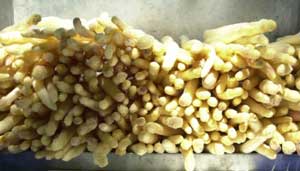
In Germany, the arrival of asparagus, or Spargel, is an eagerly anticipated sign of spring. During the season, which lasts from April until mid-June, almost every eatery in Germany, from the tiniest Brauhaus to the most elegant restaurant offers a Spargelkarte, a special asparagus menu, in addition to their regular menu.
Although there are variations depending on the region, most have the same staples: asparagus with butter or hollandais; with cooked potatoes; and asparagus with salmon or ham. You can also choose between a serving of one pound or a half pound of asparagus; some restaurants even offer an all-you-can-eat feast. In Baden-Wuerttemberg a regional speciality awaits the hungry guest: Black Forest ham, a spiced and smoked version of ham.
Baden-Wuerttemberg has established an “Asparagus Road” which winds through some of the most famous asparagus producing towns in the region, including Schwetzingen, Reilingen, Karlsruhe and Rastatt. Along with asparagus farms, visitors can delight in various asparagus festivals and enjoy local asparagus dishes found along this scenic route. In fact, the sandy soil around Schwetzingen in Baden-Wuertemberg is ideal for growing asparagus, and it has helped this area become famous for its excellent quality of asparagus.
Once a year during the asparagus season Schwetzingen devotes an entire day to the “royal vegetable.” On “Asparagus Saturday” (May 3) a plethora of food stalls tempt visitors with asparagus-based delicacies, while dancing and music keep visitors entertained. The day just wouldn’t be the same without its asparagus peeling competition, and every year the program includes the crowning of the asparagus king. (www.schwetzingen.de – German only)
The Pfaelzer Forest in Baden-Wuerttemberg’s northwest corner is famous for its asparagus production and the spring festival celebrating this. In Buechenau the asparagus season is celebrated with creative and traditional asparagus treats, presented by local and international exhibitors from May 31 to June 2. (www.harmonie-buechenau.de – German only)
Europe’s largest asparagus festival however is held in Bruchsal, near Stuttgart, which lies on the Upper Rhine plain. Local and international vendors offer visitors a tasty delight from May 16 – 18. Visitors can also admire the baroque palace of Bruchsal with its magnificent Balthasar Neumann staircase. (www.germany-tourism.de)
Along with the tasty asparagus dishes goes another specialty of Baden-Wuerttemberg: the famous wines of the region. Mostly known for its red wines, the variety in Baden-Wuerttemberg ranges from the famous reds including “Trollinger” and “Spätburgunder” to white wines such as “Riesling.” The main production area is along the Neckar river between Stuttgart and Heilbronn. More wine is consumed in this region than anywhere else in Germany–actually twice as much! The grape varieties of the red wine Trollinger, Schwarzriesling and Lemberger are well-known even beyond Baden-Wuerttemberg’s borders and have received various international awards.
Rising exchange rates don’t have to put you in the red when traveling in Italy. With record high Euro exchange rates, travelers can stretch their dollar when dining by trying some new dining options.
Eating is a pure pleasure for Italians and visiting guests. Italians take their meals very seriously and a full 3-5 course dinner in a fancy ristaurante can eat into a travel budget quickly. In order to stretch a budget, try these simple tips.
Breakfast is often included in a hotel’s room package. If it is not, follow the locals to a neighborhood bar for your morning coffee and pastry. A bar in Italy is not a place to consume alcohol and dance the night away. They are fancy little candy box establishments, found on nearly every corner. Italian bars are the place where patrons socialize over their morning coffee (sometimes several times each morning), return for a light lunch, and arrive again in the evening for an apertivo or cocktail before dinner.
Bars in busier cities, especially those in tourist areas, traditionally charge one price to stand at the counter (al banco) or a higher price to sit at one of their café-style tables (al tavolo). If you want to sit and enjoy the view, then the price is usually worth it. A coffee that might cost 1.50 Euro at the counter could cost twice as much to sit at a table. During the late morning/afternoon and evening hours, service at a table traditionally includes some salty snacks like potato chips or nuts, even olives, with your beverage.
If you choose to stand at the counter, patrons traditionally pay the cashier, and then present their receipt to the barista who will complete the coffee order.
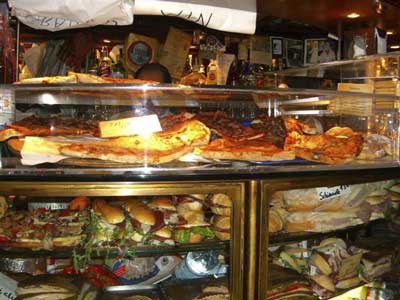
Most bars have a tasty selection of pizza and panini.
ITALIAN COFFEE Italians consume a variety of coffee drinks throughout the day. Most will start the day with a cappuccino which is a shot of espresso served in a large cup with steamed milk and topped with frothy milk foam. Most Italians will not drink cappuccino after mid morning but switch to other coffee drinks. Of course, they’re happy to accommodate tourist requests for cappuccino at any time of the day.
Later in the morning, and throughout the day and into the evening, Italians consume what they call caffe which is espresso, or a small cup of very strong coffee topped with a delicious caramel colored foam called crema. This coffee is rich and strong, and usually sweetened with sugar. Espresso is the basis for most Italian coffee drinks.
If you want a weaker version of coffee that resembles what Americans drink, order a caffe Americano which is a shot of espresso with steamed hot water in a larger cup. This is also called caffe lungo.
If you want to be more adventurous, order a caffe corretto which is espresso corrected with a shot of liquor like grappa, cognac or flavored liquor. Nothing warms your heart faster or settles a full stomach.
EATING AT BARS Besides serving fantastic coffee throughout the day, an Italian bar usually offers a selection of sandwiches called pannini. These can make an affordable option for lunch or dinner. Some bars also offer a limited selection of pre-made one dish meals, like pasta or vegetables. These establishments are referred to as tavolo caldo. A simple one-course meal with a mineral water aqua minerale or a house wine (vino della casa) is an exceptional value for the traveler.
APERTIVO AND ANTIPASTO FOR DINNER Italians traditionally dine relatively late (8-9 p.m.) for dinner. After a long day of touring, visitors might opt for a lighter, less expensive option for dinner. Many of the local bars offer light snacks to entice cocktail business. Some wine bars also offer a variety of little sandwiches, potato croquettes and grilled vegetables either complementary or for a very reasonable price.
In Venice in particular, this selection of snacks is referred to as Cichetti. Combined with a spritz (cocktail made from Campari and Prosecco) or a great glass of local wine, these light snacks can make for a satisfying dinner.
Each region of Italy offers regional food fares, typical for that area. The Cichetti in Venice may include such items as marinated sardines, Bacala which is a salt fish cod spread for bread or polenta and deep friend calamari. Antipasto offerings in Tuscany may be a selection of salamis, cheeses and olives.
In Rome, the antipasto might be crusty bread with tomato, herb and olive oil topping called Buschetta or a sampling of small slices of freshly-made pizza.
Whatever, the region, the food is delicious, fresh and attractively prepared. Even the simple selections from a bar will satisfy your hunger and your quest for a delicious yet affordable meal.
Crave chocolate? Do you salivate when someone utters those sweet syllables? Whether you call it chocolate (Spanish, Portuguese), xocolata (Catalan), chocolat (French), chocola (Dutch), Schokolade (German), Schoggi (Swiss-German), cioccolato (Italian), choklad (Swedish), sjokolade (Norwegian), czekolada (Polish), suklaa (Finnish) or okolaad (Estonian), it’s all the same: delicious!
As a woman at a Swiss chocolate factory told me, “You don’t need to know any other languages to talk about chocolate. Chocolate speaks for itself!”
FROM BEAN TO BAR The Olmecs, Mayans, and Aztecs were enjoying chocolate as a drink for centuries before Christopher Columbus bumped into the Western Hemishphere on his way to the spice-producing lands of the East. Both Columbus and Hernán Cortés are credited with bringing cacao beans (from which chocolate is made) back to Spain in the early 1500s, where the Spanish eventually figured out that the bitter beverage of Central America tasted a lot better with sugar, vanilla and spices such as cinnamon and cloves added to the brew.
Sweet, foamy, dark and thick, hot chocolate soon became a favorite drink of the Spanish nobility, and Spain monopolized the market for cacao beans for nearly a century. In the 1600s, the popularity of chocolate—still consumed only as a beverage—began to spread to other parts of Europe, including France, England, Austria and the Netherlands. By the early 1700s, chocolate-drinking establishments in London were already competing with the popular coffeehouses there.
It was the Europeans who turned a ceremonial drink of the Aztec aristocracy into the affordable chocolate products that we enjoy today: chocolate powder, chocolate candy, chocolate syrup, chocolate spread.
In 1828 a Dutchman named Coenraad van Houten developed a process for removing the natural fat (cocoa butter) from the cacao beans and turning the remaining solids into powder. By the mid-1800s, European chocolatiers had figured out how to combine sugar and cocoa butter with a paste of ground cacao beans to make bars of “eating chocolate.”
The British were also pioneers in the development of chocolate technology, but the Swiss were the leaders in the field. Cailler, the first brand of Swiss chocolates, was established in 1819. In 1875, Daniel Peter in Switzerland invented milk chocolate, soon to be marketed by Nestlé. Four years later, Rodolphe Lindt created the world’s first “melting chocolate” for use in pastry- and candy-making. And in 1913, Jules Séchaud introduced a process for manufacturing filled chocolates. By that time, the Swiss were already the largest producers of chocolate in the world.
SWEET TOOTH Today, the Swiss, Belgians, and Germans lead the world in chocolate consumption, happily eating 24 to 26 pounds of chocolate per person every year. The British, Austrians, and Norwegians are close behind, consuming 18 to 22 pounds each. And what tourist traveling in Europe can resist those triangular Toblerone and purple-packaged Milka bars, square Ritter Sports, round Mozart Kugeln, gold-wrapped Ferrero Rochers, fancy French and Belgian handmade bon-bons, chocolate Santas at Christmas, chocolate bunnies and cream-filled eggs at Easter time?
When I told a Swiss hotelier that I was surprised to learn that the Swiss eat an average of 12 kilograms (over 26 pounds) of chocolate per person annually, she looked surprised, too. “So little?” she asked incredulously. “I eat 200 grams of chocolate every day. Let’s see, that’s…”—she stopped to calculate in her head—”3 pounds each week, which is about 150 pounds a year. And I’m such a happy person!”
CHOCOLATE TOURS Several countries in Europe have fascinating museums that focus on the history and process of making chocolate, from bean to bar. And many chocolate producers—from major multinational companies to small independent artisans—offer tours of their facilities, with a chocolate tasting included. The Swiss even have a Chocolate Train that takes you on a round trip from Montreux to visit the Cailler-Nestlé chocolate factory in Broc, as well as a cheese factory in Gruyères.
For more information on European chocolate museums and factory tours, check out the following sweet links:
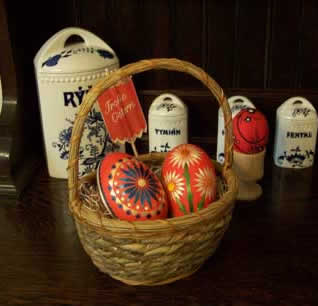
Goose and duck eggs from Poland, decorated with paint and colored straw.
By Sharon Hudgins Photos by the author and courtesy German National Tourist Board
Europeans take their Easter egg traditions seriously.
From Scandinavia and Britain in the north to Italy and Greece in the south, from the Slavic countries to Germany, Romania and Hungary, eggs at Easter time are dyed in many colors, decorated with intricate designs, hung from tree branches, strung onto wires, buried in the ground, featured in games, exchanged among friends, baked into breads and taken to church to be blessed on Easter morning.
Easter egg tree at a Russian Orthodox church.
PRE-CHRISTIAN TRADITION Although colored eggs are the most salient symbol of Easter today, their association with springtime reaches much farther into the past. Archeologists in Europe have uncovered egg-shaped artifacts with ornate designs made thousands of years before the Christian era.
Etched goose and duck eggs from the Czech Republic.
Folklorists say that decorated eggs were part of pagan spring festivals, for which eggs were painted in bright colors to symbolize blossoming plants. So it’s not surprising that the egg, representing the creation of new life, would also find a place in religious celebrations of the resurrection of Christ. The decorating of Easter eggs is a long-established folk art in many parts of Europe, still practiced today. During the 40-day Lenten fast preceding Easter, many Christians abstain from eating certain foods, including eggs. But the hens keep on laying. Some of these excess eggs are dyed a solid color: red is especially symbolic, representing drops of Christ’s blood as well as the regeneration of life.
Others are decorated with intricate floral or geometric motifs. Several countries and regions in Europe—Poland, Ukraine, Belarus, Moravia, Slovakia, Bohemia, Hungary, Slovenia, Romania, Germany, Austria—are well known for their production of beautifully decorated eggs, using age-old techniques and designs, many of which are unique to that particular place. The connoisseur of folk art eggs can tell at a glance whether an egg has come from the eastern or western part of the Czech Republic, from Slovakia, from northern Croatia or from central Austria.
Easter fountain in Ginsheim/Rhine near Mainz, Germany. Photo: Eric Eichberger
MAUNDY THURSDAY In many parts of Europe, Maundy Thursday (the day before Good Friday) is the traditional day for decorating Easter eggs. Up through the 19th century, superstitions from earlier times survived in the belief that eggs laid on Maundy Thursday, Good Friday or Easter Sunday had magical powers: to prevent illness, to bring good luck, to act as an aphrodisiac, to ensure that the next baby will be a boy, to forestall an early death, to foretell the future. In some places, Easter eggs were fed to the livestock to protect the animals, or buried in the fields to help produce abundant crops. And Eastern European bee-keepers put a colored Easter egg under each hive to guarantee a good supply of honey.
A charming custom that dates from the 19th century is the making of an egg tree at Easter. Long branches of budding pussy willows or yellow forsythia are arranged in a vase, and eggs are hung on the branches like Christmas ornaments on an evergreen tree. Traditionally the eggs are hollow chicken or duck eggs, the whites and yolks first removed through pin holes before the eggshells are dyed and decorated, then a loop of ribbon or yarn pulled through the holes for suspending the eggs from the boughs. Sometimes brightly painted wooden eggs are also hung from the branches, along with little wooden birds. These egg trees are especially popular in Germany (where they’re known as Ostersträusse, Easter bouquets, or Osterbäume, Easter trees) and in several other parts of Central Europe, too.
Easter fountain in St. Wendel, in Germany’s Saarland region. Photo: Amt fuer Stadtmarketing, St. Wendel
OUTDOOR EASTER TREES In some regions you’ll even see outdoor Easter trees, with real or plastic eggs suspended from the branches of live bushes or trees. In the Franconian Alps of northern Bavaria, the fountain or well in the center of many villages is decorated with garlands of evergreens, colorful streamers, fresh flowers and hundreds of painted eggs. For two weeks beginning on Good Friday, more than 200 of these traditional Osterbrunnen (Easter wells) are on display in Franconian towns.
In Europe today, Easter eggs are made from a wide variety of materials: natural egg shells—chicken, duck, goose—with the egg white and yolk blown out of the shell; uncooked eggs with their shells intact; hard-boiled eggs; edible substances such as sugar, chocolate and marzipan; precious metals, enameled metals, wood, wax, porcelain, onyx, marble, glass, cinnabar, cardboard and papier-mâché.
Decorations range from solid colors to painted, etched or batiked designs. Beads, lace, straw, colored paper and decals are also glued onto eggshells. The designs can be geometric, floral, symbolic—whatever suits the egg decorator’s fancy. And sizes extend from miniature jeweled eggs made with precious stones to the giant chocolate eggs, up to a meter tall, so beloved by Italian children.
An Easter egg tree decorated with eggs from many Central and Eastern European countries.
You can see hundreds of handcrafted eggs at the many Easter markets held in Europe during the spring. Prices range from just a few euros for simply painted hens’ eggs to several thousand euros for large exotic-bird eggs painted by internationally renowned artists. One of the most stunning eggs I saw at a Munich Ostereiermarkt (Easter egg market) was a huge ostrich egg acid-etched to look like lace. It was priced way beyond my budget, but I still came home with some lovely smaller samples of folk-art eggs by local artists. Now it’s time for me to find some pussy willow boughs and start decorating my own egg tree for the season.
Goose eggs from the Czech Republic, decorated with colored straw.
Liechtenstein is a small country with a big appetite for good food.
Wedged in between Austria and Switzerland, this country of only 62 square miles is bisected south to north by the Rhine River, with majestic mountains rising steeply on both sides of the lush Rhine Valley. Corn, cabbages, beets, onions and asparagus grow on the fertile Rhine plain. Wild game such as deer, boar, pheasant and grouse roam the forests and meadows on the mountainsides, and silvery trout swim in the cold Alpine streams.
Perched high on one of the mountains, the medieval castle of the princely family of Liechtenstein towers over Vaduz, the capital city (population 5,500). Liechtenstein is officially a principality, where the Prince still rules as a hereditary monarch in conjunction with a democratically elected parliament. The Prince also owns the Hofkellerei (Princely Wine Cellars) in Vaduz, where you can taste his excellent wines. Afterward, walk along an educational wine trail in his local vineyard, where detailed signs describe the 50 different grape varieties growing there. More than 100 other vintners throughout the country also produce red and white wines of their own.
ALPINE FUSION FOOD The cooking of Liechtenstein is a creative combination of German, Austrian, Swiss, Italian and French culinary influences, producing a kind of local “Alpine fusion” cuisine. Soups are especially popular, from hearty meat-and-vegetable stews (split pea and sausage, smoked pork and sauerkraut) to elegant foamy white-wine soups served in stemmed glasses. Asparagus is a favorite vegetable, and the primary meats are beef, pork, and mountain trout.
Dumplings and potatoes are the main starches of traditional Liechtensteiner cooking, which includes shredded potato pancakes like Swiss Rösti and a variety of dumplings made from wheat flour, cornmeal or potatoes. Cheese is an important ingredient in the cuisine, from rich Alpine hard and semi-soft cheeses to Sauerkas, a kind of lightly aged fresh cheese made from soured milk. Desserts are as rich as you’d expect in a country situated between Austria and Switzerland. And wine has an important place on the table, befitting a country that prides itself in its small, but high quality, wine industry.
There’s a big difference between farmhouse fare in an Alpine climate and the fine cooking of Liechtenstein’s shrines of haute cuisine, several of which have garnered Michelin stars and high Gault Millau ratings. In the rustic restaurants you’ll find the stick-to-your ribs dishes like breaded pork cutlets, fried chicken, roast pork and Käsknöpfle, a large portion of little egg dumplings (like German-Schwabian Spätzle) tossed with a copious amount of cheese and garnished with plenty of crisply fried onions. Known as Liechtenstein’s “national dish,” Käsknöpfle is usually served with a separate portion of applesauce or a green salad, to counter the richness of the cheese.
FINE DINING Only 36,000 people live in this wealthy little enclave in the heart of Europe, where banking and financial services produce a GDP per capita that puts Liechtenstein in the top tier of the world’s richest countries. Such wealth supports a number of fine restaurants, rated among the best places to dine in Europe. These high-end restaurants tend to focus on lighter fare, artistically arranged on fancy plates—the kind of cuisine that combines respect for the country’s culinary traditions, an emphasis on local, seasonal ingredients and the imaginative use of modern kitchen techniques.
Highly acclaimed by many restaurant guides, chef Rolf Berger’s Restaurant Torkel serves haute cuisine in a beautiful setting. Located in a historic medieval building that was once a wine press, on the grounds of the royal vineyards in Vaduz, Restaurant Torkel is known not only for the quality of its cooking and its delightful ambience, but also for its excellent wine cellar. Choices on a recent daily menu in the summer included a delicious white wine soup with small yakitori dumplings on a skewer, Swiss prime beef filet in Port wine sauce, grilled sea bass in foamy smoked trout sauce, fresh berry parfait garnished with more berries and a good selection of cheeses. In nice weather, the perfect place to dine is on the pleasant stone-paved terrace overlooking the lush vineyards and the dramatic mountains beyond.
Another outstanding restaurant in Vaduz, the Marée at the Park Hotel Sonnenhof has won one Michelin star, two Gault Millau toques, and numerous other accolades. This is the place for fine dining in luxurious surroundings, from the elegantly furnished dining rooms to the large covered terrace facing the mountains and surrounded by gardens. The menu changes seasonally, four times a year, and features both traditional and modern dishes, all prepared with a light touch and plated artistically. Selections at a recent summer lunch included an appetizer of roasted scallops with melon, tomatoes, and fresh basil, followed by a main dish of crispy glazed breast of pork with fresh chanterelle mushrooms and cherries. Notable desserts were the colorful artist’s palette of house-made sorbets, and the basil sorbet with fresh strawberries and elderberry foam.
TRADITIONAL INNS For very good food at reasonable prices, the Landgasthof Mühle is the place to go. Located on the site of an old mill on the edge of Vaduz, this lovely little inn offers an interesting menu that matches the quality of the restaurant’s décor. Try the creamy Vaduz wine soup or the excellent house-made terrine with a large salad, followed by multicolored ravioli with foamy herb sauce, and elderberry sabayon garnished with fresh berries for dessert. Highly recommended for the quality of the food, large portions and friendly staff.
Long a favorite of locals and tourists alike, the Wirtschaft zum Löwen in Schellenberg is a traditional old inn located in a wood-shingled farmhouse with red geraniums blooming in the window boxes. Dine in one of the cozy, wood-paneled dining rooms or on the pleasant terrace with a spectacular view across the border to Austria. House specialties include the head cheese with onion rings and mustard sauce, and classic Käsknöpfle, those cheese-drenched dumplings with applesauce and green salad. Large portions of good traditional food served in a nice setting.
MOUNTAIN HIGHS Located in the Vögeli Alpenhotel in Malbun, a ski resort 5,000 feet above sea level, the Restaurant Alpenhotel is a cozy, rustic, pine-paneled restaurant—just the place where you want to retreat after a long day of hiking in the Alps or skiing down the mountainsides. The food is good here, and the portions are huge, apparently to satisfy those hungry hikers and skiers. The extensive menu seems to have something for every taste, including hearty meat dishes, a variety of big Rösti potato pancakes with garnishes, several pastas and cheese fondue. Warm up with garlic cream soup or creamy pumpkin soup with Styrian pumpkin seed oil, then chow down on the house-made game bratwurst with onion sauce, or deer Schnitzel with mushroom sauce. Be sure to save room for the traditional desserts (crêpes with chocolate sauce and whipped cream, battered-and-fried apple slices with vanilla sauce) or a big slice of the excellent cakes.
The Hotel-Restaurant Galina in Malbun is run by another member of the Vögeli family who owns the nearby Alpenhof hotel and restaurant there. At the Galina, the talented Norman Vögeli wears several hats: the hotel’s manager and falcon master (he stages an interesting falcon show several times a week), as well as the restaurant’s chef and pastry-maker (he supplies the delicious creamy cakes, fresh daily, for the Alpenhof Restaurant down the road). The food is very good here, including several large salads garnished with meats and cheeses, hearty soups, vegetarian main dishes, pizzas, cheese fondue and chef Vögeli’s tempting cakes for dessert.
And finally, down the mountain road from Malbun, stop off at the Cafe-Konditorei Gulfina in Triesenberg, for its luscious cakes and pastries, open-face sandwiches, and good variety of breads, all made fresh daily. Sip a cup of hot coffee and indulge in a slice of rich Engadiner Nusstorte—a regional pastry specialty, filled with caramel and walnuts—while sitting outside on the terrace that hangs precipitously over the mountainside, with a spectacular view of the valley below.