Chocolate Cravings

By Sharon Hudgins
Photos by the author

Crave chocolate? Do you salivate when someone utters those sweet syllables? Whether you call it chocolate (Spanish, Portuguese), xocolata (Catalan), chocolat (French), chocola (Dutch), Schokolade (German), Schoggi (Swiss-German), cioccolato (Italian), choklad (Swedish), sjokolade (Norwegian), czekolada (Polish), suklaa (Finnish) or okolaad (Estonian), it’s all the same: delicious!

As a woman at a Swiss chocolate factory told me, “You don’t need to know any other languages to talk about chocolate. Chocolate speaks for itself!”

FROM BEAN TO BAR
The Olmecs, Mayans, and Aztecs were enjoying chocolate as a drink for centuries before Christopher Columbus bumped into the Western Hemishphere on his way to the spice-producing lands of the East. Both Columbus and Hernán Cortés are credited with bringing cacao beans (from which chocolate is made) back to Spain in the early 1500s, where the Spanish eventually figured out that the bitter beverage of Central America tasted a lot better with sugar, vanilla and spices such as cinnamon and cloves added to the brew.

Sweet, foamy, dark and thick, hot chocolate soon became a favorite drink of the Spanish nobility, and Spain monopolized the market for cacao beans for nearly a century. In the 1600s, the popularity of chocolate—still consumed only as a beverage—began to spread to other parts of Europe, including France, England, Austria and the Netherlands. By the early 1700s, chocolate-drinking establishments in London were already competing with the popular coffeehouses there.

It was the Europeans who turned a ceremonial drink of the Aztec aristocracy into the affordable chocolate products that we enjoy today: chocolate powder, chocolate candy, chocolate syrup, chocolate spread.

In 1828 a Dutchman named Coenraad van Houten developed a process for removing the natural fat (cocoa butter) from the cacao beans and turning the remaining solids into powder. By the mid-1800s, European chocolatiers had figured out how to combine sugar and cocoa butter with a paste of ground cacao beans to make bars of “eating chocolate.”

The British were also pioneers in the development of chocolate technology, but the Swiss were the leaders in the field. Cailler, the first brand of Swiss chocolates, was established in 1819. In 1875, Daniel Peter in Switzerland invented milk chocolate, soon to be marketed by Nestlé. Four years later, Rodolphe Lindt created the world’s first “melting chocolate” for use in pastry- and candy-making. And in 1913, Jules Séchaud introduced a process for manufacturing filled chocolates. By that time, the Swiss were already the largest producers of chocolate in the world.

SWEET TOOTH
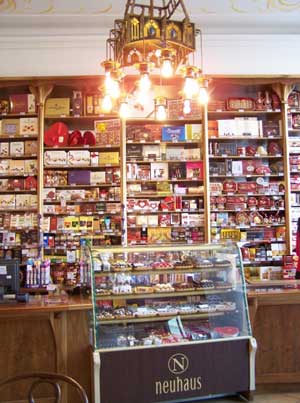
Today, the Swiss, Belgians, and Germans lead the world in chocolate consumption, happily eating 24 to 26 pounds of chocolate per person every year. The British, Austrians, and Norwegians are close behind, consuming 18 to 22 pounds each. And what tourist traveling in Europe can resist those triangular Toblerone and purple-packaged Milka bars, square Ritter Sports, round Mozart Kugeln, gold-wrapped Ferrero Rochers, fancy French and Belgian handmade bon-bons, chocolate Santas at Christmas, chocolate bunnies and cream-filled eggs at Easter time?

When I told a Swiss hotelier that I was surprised to learn that the Swiss eat an average of 12 kilograms (over 26 pounds) of chocolate per person annually, she looked surprised, too. “So little?” she asked incredulously. “I eat 200 grams of chocolate every day. Let’s see, that’s…”—she stopped to calculate in her head—”3 pounds each week, which is about 150 pounds a year. And I’m such a happy person!”

CHOCOLATE TOURS
Several countries in Europe have fascinating museums that focus on the history and process of making chocolate, from bean to bar. And many chocolate producers—from major multinational companies to small independent artisans—offer tours of their facilities, with a chocolate tasting included. The Swiss even have a Chocolate Train that takes you on a round trip from Montreux to visit the Cailler-Nestlé chocolate factory in Broc, as well as a cheese factory in Gruyères.

For more information on European chocolate museums and factory tours, check out the following sweet links:

Multi-country
www.chocolatetourism.com

Switzerland
www.alprose.ch
www.chocolatfrey.ch
www.schoggi-land.ch
www.cailler.ch
www.raileurope.com (search “Swiss Chocolate Train”)
www.goldenpass.ch (search “Swiss Chocolate Train”)

Germany
www.schokoladenmuseum.de

Belgium
www.mucc.be
www.choco-story.be

France
www.planetemuseeduchocolat.com
www.museeduchocolat.fr

Italy
www.museodelcioccolato.com
www.eurochocolate.com

Spain
www.pastisseria.com/en/PortadaMuseu

England
www.cadburyworld.co.uk
Gingerbread Galore!

By Sharon Hudgins
Photos by the author

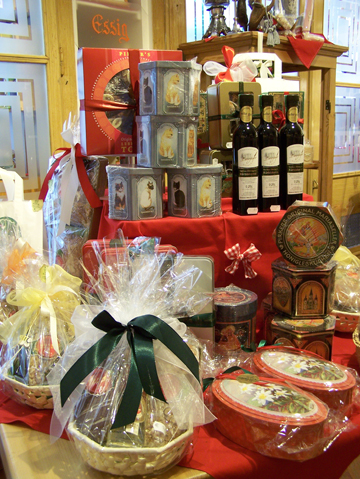
‘Tis the season when a young elf’s fancy turns to thoughts of gingerbread. Although these sweet-spicy cakes and cookies are popular year-round in many countries of Europe, they’re particularly associated with the winter holidays. Bakeries from Sweden to Slovakia to Switzerland turn out tons of commercial gingerbread products, often packaged in brightly colored wrappings and tin boxes. And home bakers dig through kitchen drawers and recipe files to find favorite cookie cutters and family recipes for their own Christmas gingerbreads.

Although flatcakes made with honey and spices were baked by the ancient Egyptians, Greeks, and Romans, the gingerbreads of northern Europe probably date only from the Middle Ages, when honey was still the main type of sweetener available locally, and exotic, expensive spices such as cinnamon, black pepper and ginger were increasingly being imported from faraway lands in the East. A taste for gingerbread eventually spread throughout Europe, with certain cities becoming known for their own particular types: Strasbourg and Dijon in France, Torun in Poland, Tula in Russia, Aachen and Nürnberg in Germany, Basel and St. Gallen in Switzerland.

MANY VARIETIES
Gingerbread recipes evolved over time and in diverse places. Various kinds of gingerbread were, and still are, made with different combinations of honey, sugar, flour, eggs, almonds, hazelnuts, walnuts, raisins, lemons, candied orange peel, candied citron, rosewater, rum, brandy, black pepper, ginger, cinnamon, nutmeg, cloves, allspice, cardamom, coriander, aniseed and saffron. Although these baked goods are often referred to as “gingerbread” in English, some of them don’t contain any ginger at all.

The variety of possible ingredients and textures causes some confusion about what “gingerbread” actually is. A cake, a cookie, or a loaf? Hard or soft? Thick or thin? Glazed or unglazed? Decorated with fancy frostings, or with fruits and nuts, or even with expensive gold leaf? At various times in its history, gingerbread has been all of these.

GERMAN GINGERBREAD
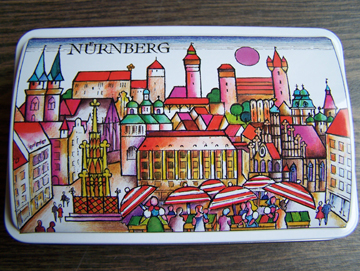
In the Middle Ages, the city of Nürnberg became one of the most famous places for making gingerbreads in Germany, where these seductive sweets have long been known as Lebkuchen (or sometimes Pfefferkuchen, when their spiciness comes from black pepper instead of ginger). Records show that Lebkuchen was being baked in Nürnberg as early as the 14th century. Traditionally, the stiff dough was pressed into highly detailed molds made of wood, metal, or terra cotta, which imprinted intricate designs on the Lebkuchen before it was removed from the molds and baked in a hot oven. Nürnberg Lebkuchen contained such costly ingredients, and was of such high quality, that it was accepted as payment for city taxes and given as gifts to nobles, princes, and heads of state.

Over time, as the prices of ingredients fell and the demand for Lebkuchen increased, faster production methods became necessary. The elaborate handmade molds were replaced by less detailed, often mass-produced, molds. Simpler decorations―such as nuts, candied fruit, and sugar frostings―were applied to the tops of many cookies. And the shapes were simplified, too, evolving into the basic human, animal, and geometric forms common today.

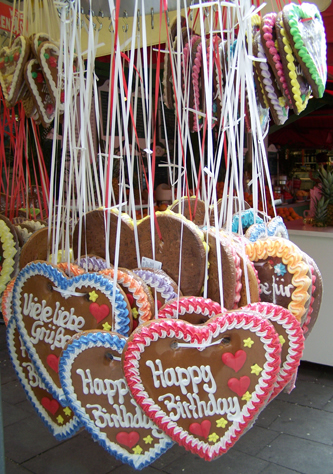
In the early 1800s, gingerbread houses became popular in Germany after the publication of the Grimm brothers’ fairy tale, Hansel and Gretel. And during the 19th century, ornately decorated Lebkuchen hearts also became the rage. Covered with fancy designs and romantic sayings made from colored icing, these large heart-shaped cookies were often exchanged between sweethearts. You can still buy them at almost every German festival and special market, including the Christmas markets held in many German cities throughout December.

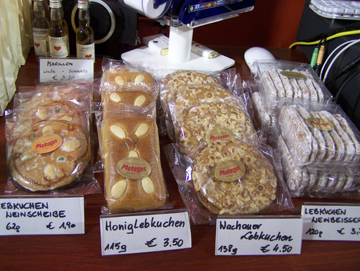
The Lebkuchen produced in Germany today comes in all sorts of sizes, shapes, flavors, colors and textures: rounds, rectangles, squares, hearts, stars, pretzel forms, St. Nicholas (for Christmas), lucky pigs (for New Year) and rabbits (for Easter). The Lebkuchen dough can be “white” (light colored) or different shades of brown. Some Lebkuchen are also covered with white or chocolate icing, and some are filled with marzipan or jam. Honey Lebkuchen is sweetened only (or primarily) with honey. Oblaten Lebkuchen are cookies with the dough mounded on top of a thin wafer before baking. And delicate, elegant Elisen Lebkuchen are made with at least 25% ground almonds, hazelnuts, or walnuts, and no more than 10% flour.

GINGERBREADS ACROSS EUROPE
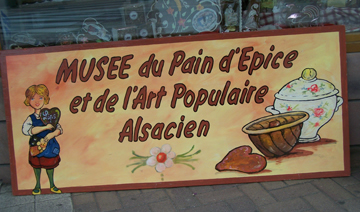
You’ll also find similar spicy cookies of different shapes, colors and textures called Printen (in Aachen, Germany), Pfefferkuchen (in Pulsnitz, Germany), Spekulatius (in the German Rhineland), Leckerli (in Basel, Switzerland), Biberli (in the Appenzell region of Switzerland), speculaas Holland, speculoos in Belgium, pepperkaker in Norway, pepparkakor in Sweden, piperkakut in Finland, pebernǿdder in Denmark, pain d’épices in France, licitar in Croatia, mézeskalács in Hungary, perníky in the Czech Republic and Slovakia, pierniki in Poland and prianiki in Russia. Other towns and regions have their own specific names for the many varieties of gingerbreads produced there.

Europeans also use gingerbread cookies as ingredients in other dishes. You’ll find crumbled gingerbread used as a stuffing for pork and for pasta, as a thickener for sauces, a flavoring for soups, a crunchy texture in salad dressings, and a base for many puddings and desserts. There’s even a German-Italian “fusion” dessert called ” Nürnberger Tiramisu”! And for people who just can’t get enough of that sweet, spicy, Christmasy taste of gingerbread, the Belgians have recently invented a gingery, caramely speculoos spread, similar in texture to Nutella, made from crushed gingerbread cookies.

If I’ve whetted your appetite for these European gingerbreads, my best suggestion is to travel there and taste them for yourself. You can also mail order many of them from the websites listed below. Costard, the clown in Shakespeare’s play, “Love’s Labour’s Lost,” had the right idea when he said, “An’ I had but one penny in the world, thou shouldst have it to buy gingerbread.”

Nürnberg Lebkuchen information www.lebkuchen.nuernberg.de/englische_version/index.html

Lebkuchen-Schmidt, Nürnberg
ww2.lebkuchen-schmidt.com/eng_index.php

Metzger Lebkuchen, Vienna
www.lebkuchenmetzger.at/

Lebkuchen-Pirker, Mariazell, Austria
www.lebkuchen-pirker.at/home/index.php?&lang+eng

Kerner Lebkuchen, Mariazell, Austria
www.lebzelterei-kerner.at/index.htm

Lebkuchen-Gandl, St. Wolfgang, Austria
www.lebkuchen-gandl.com/

Appenzeller Biberli, Switzerland
www.baerli-biber.ch/

Basel Läckerli, Switzerland
www.laeckerli-huus.ch/

French-Alsatian Pain d’Épices
www.paindepices-lips.com
www.fortwenger.fr/

Alte Pfefferkuechlerei (small gingerbread museum in Weissenberg,Germany) www.museum.stadt-weissenberg.de/

Speculoos Spread
www.thenibble.com/zine/archives/speculoos-spread.asp

YouTube video about how to make decorated European gingerbread
www.youtube.com/watch?v=OVX5wiv_oMk

American online sources for ordering European gingerbreads
www.germandeli.com
www.germangrocery.com