Fine Dining in Liechtenstein

By Sharon Hudgins
Photos by the author

Liechtenstein is a small country with a big appetite for good food.

Wedged in between Austria and Switzerland, this country of only 62 square miles is bisected south to north by the Rhine River, with majestic mountains rising steeply on both sides of the lush Rhine Valley. Corn, cabbages, beets, onions and asparagus grow on the fertile Rhine plain. Wild game such as deer, boar, pheasant and grouse roam the forests and meadows on the mountainsides, and silvery trout swim in the cold Alpine streams.

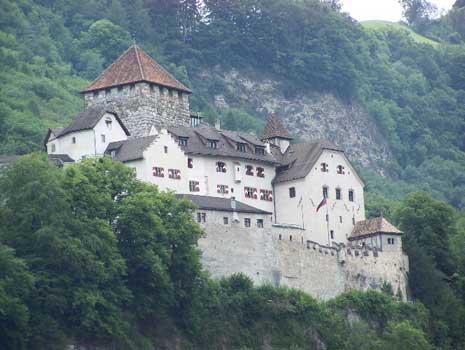
Perched high on one of the mountains, the medieval castle of the princely family of Liechtenstein towers over Vaduz, the capital city (population 5,500). Liechtenstein is officially a principality, where the Prince still rules as a hereditary monarch in conjunction with a democratically elected parliament. The Prince also owns the Hofkellerei (Princely Wine Cellars) in Vaduz, where you can taste his excellent wines. Afterward, walk along an educational wine trail in his local vineyard, where detailed signs describe the 50 different grape varieties growing there. More than 100 other vintners throughout the country also produce red and white wines of their own.

ALPINE FUSION FOOD
The cooking of Liechtenstein is a creative combination of German, Austrian, Swiss, Italian and French culinary influences, producing a kind of local “Alpine fusion” cuisine. Soups are especially popular, from hearty meat-and-vegetable stews (split pea and sausage, smoked pork and sauerkraut) to elegant foamy white-wine soups served in stemmed glasses. Asparagus is a favorite vegetable, and the primary meats are beef, pork, and mountain trout.

Dumplings and potatoes are the main starches of traditional Liechtensteiner cooking, which includes shredded potato pancakes like Swiss Rösti and a variety of dumplings made from wheat flour, cornmeal or potatoes. Cheese is an important ingredient in the cuisine, from rich Alpine hard and semi-soft cheeses to Sauerkas, a kind of lightly aged fresh cheese made from soured milk. Desserts are as rich as you’d expect in a country situated between Austria and Switzerland. And wine has an important place on the table, befitting a country that prides itself in its small, but high quality, wine industry.

There’s a big difference between farmhouse fare in an Alpine climate and the fine cooking of Liechtenstein’s shrines of haute cuisine, several of which have garnered Michelin stars and high Gault Millau ratings. In the rustic restaurants you’ll find the stick-to-your ribs dishes like breaded pork cutlets, fried chicken, roast pork and Käsknöpfle, a large portion of little egg dumplings (like German-Schwabian Spätzle) tossed with a copious amount of cheese and garnished with plenty of crisply fried onions. Known as Liechtenstein’s “national dish,” Käsknöpfle is usually served with a separate portion of applesauce or a green salad, to counter the richness of the cheese.
FINE DINING
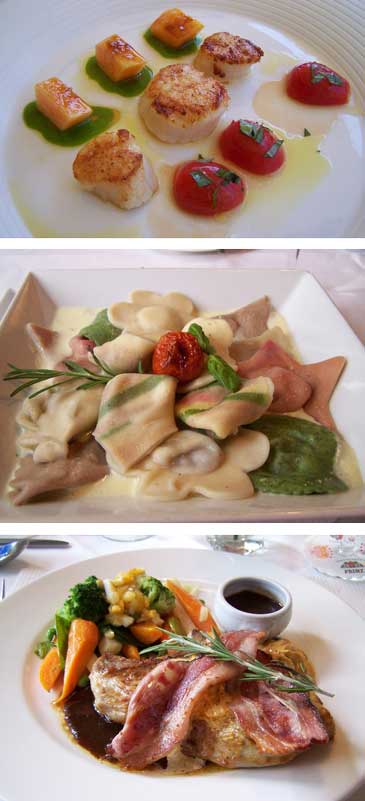
Only 36,000 people live in this wealthy little enclave in the heart of Europe, where banking and financial services produce a GDP per capita that puts Liechtenstein in the top tier of the world’s richest countries. Such wealth supports a number of fine restaurants, rated among the best places to dine in Europe. These high-end restaurants tend to focus on lighter fare, artistically arranged on fancy plates—the kind of cuisine that combines respect for the country’s culinary traditions, an emphasis on local, seasonal ingredients and the imaginative use of modern kitchen techniques.

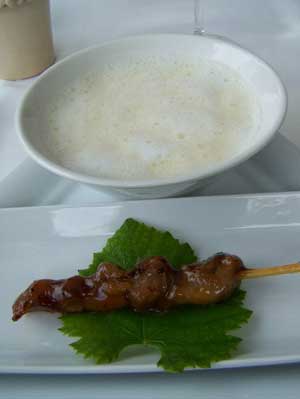
Highly acclaimed by many restaurant guides, chef Rolf Berger’s Restaurant Torkel serves haute cuisine in a beautiful setting. Located in a historic medieval building that was once a wine press, on the grounds of the royal vineyards in Vaduz, Restaurant Torkel is known not only for the quality of its cooking and its delightful ambience, but also for its excellent wine cellar. Choices on a recent daily menu in the summer included a delicious white wine soup with small yakitori dumplings on a skewer, Swiss prime beef filet in Port wine sauce, grilled sea bass in foamy smoked trout sauce, fresh berry parfait garnished with more berries and a good selection of cheeses. In nice weather, the perfect place to dine is on the pleasant stone-paved terrace overlooking the lush vineyards and the dramatic mountains beyond.
Another outstanding restaurant in Vaduz, the Marée at the Park Hotel Sonnenhof has won one Michelin star, two Gault Millau toques, and numerous other accolades. This is the place for fine dining in luxurious surroundings, from the elegantly furnished dining rooms to the large covered terrace facing the mountains and surrounded by gardens. The menu changes seasonally, four times a year, and features both traditional and modern dishes, all prepared with a light touch and plated artistically. Selections at a recent summer lunch included an appetizer of roasted scallops with melon, tomatoes, and fresh basil, followed by a main dish of crispy glazed breast of pork with fresh chanterelle mushrooms and cherries. Notable desserts were the colorful artist’s palette of house-made sorbets, and the basil sorbet with fresh strawberries and elderberry foam.

TRADITIONAL INNS
For very good food at reasonable prices, the Landgasthof Mühle is the place to go. Located on the site of an old mill on the edge of Vaduz, this lovely little inn offers an interesting menu that matches the quality of the restaurant’s décor. Try the creamy Vaduz wine soup or the excellent house-made terrine with a large salad, followed by multicolored ravioli with foamy herb sauce, and elderberry sabayon garnished with fresh berries for dessert. Highly recommended for the quality of the food, large portions and friendly staff.

Long a favorite of locals and tourists alike, the Wirtschaft zum Löwen in Schellenberg is a traditional old inn located in a wood-shingled farmhouse with red geraniums blooming in the window boxes. Dine in one of the cozy, wood-paneled dining rooms or on the pleasant terrace with a spectacular view across the border to Austria. House specialties include the head cheese with onion rings and mustard sauce, and classic Käsknöpfle, those cheese-drenched dumplings with applesauce and green salad. Large portions of good traditional food served in a nice setting.

MOUNTAIN HIGHS
Located in the Vögeli Alpenhotel in Malbun, a ski resort 5,000 feet above sea level, the Restaurant Alpenhotel is a cozy, rustic, pine-paneled restaurant—just the place where you want to retreat after a long day of hiking in the Alps or skiing down the mountainsides. The food is good here, and the portions are huge, apparently to satisfy those hungry hikers and skiers. The extensive menu seems to have something for every taste, including hearty meat dishes, a variety of big Rösti potato pancakes with garnishes, several pastas and cheese fondue. Warm up with garlic cream soup or creamy pumpkin soup with Styrian pumpkin seed oil, then chow down on the house-made game bratwurst with onion sauce, or deer Schnitzel with mushroom sauce. Be sure to save room for the traditional desserts (crêpes with chocolate sauce and whipped cream, battered-and-fried apple slices with vanilla sauce) or a big slice of the excellent cakes.

The Hotel-Restaurant Galina in Malbun is run by another member of the Vögeli family who owns the nearby Alpenhof hotel and restaurant there. At the Galina, the talented Norman Vögeli wears several hats: the hotel’s manager and falcon master (he stages an interesting falcon show several times a week), as well as the restaurant’s chef and pastry-maker (he supplies the delicious creamy cakes, fresh daily, for the Alpenhof Restaurant down the road). The food is very good here, including several large salads garnished with meats and cheeses, hearty soups, vegetarian main dishes, pizzas, cheese fondue and chef Vögeli’s tempting cakes for dessert.

And finally, down the mountain road from Malbun, stop off at the Cafe-Konditorei Gulfina in Triesenberg, for its luscious cakes and pastries, open-face sandwiches, and good variety of breads, all made fresh daily. Sip a cup of hot coffee and indulge in a slice of rich Engadiner Nusstorte—a regional pastry specialty, filled with caramel and walnuts—while sitting outside on the terrace that hangs precipitously over the mountainside, with a spectacular view of the valley below.

● Hofkellerei Liechtenstein, Vaduz, www.hofkellerei.li
● Restaurant Torkel, Vaduz, www.torkel.li
● Restaurant Marée, Park Hotel Sonnenhof, Vaduz, www.sonnenhof.li
● Landgasthof Mühle, Vaduz, www.muehle.li
● Wirtschaft zum Löwen, Schellenberg, www.loewen.li
● Restaurant Alpenhotel, Vögeli Alpenhotel, Malbun, www.alpenhotel.li
● Falknerei Galina Hotel-Restaurant, Malbun, www.galina.li
● Cafe-Konditorei Guflina, Triesenberg, www.guflina.li

Chill Out With Cool Summer Soups

Photos courtesy World Soups

By Sharon Hudgins

Now that global warming seems to be raising temperatures in Europe, you can beat the heat on your next summer trip by eating cold soup. That’s right. If the thought of eating a chilled soup leaves you cold, think again. Chilled soups have been popular in Europe for centuries, from Scandinavia in the north to Spain in the south. Why not try them yourself?

Some of these soups are made with fruits and berries, often combined with milk products. Others are based on vegetables and meat stocks, sometimes spiked with wine. They can be cooked or uncooked, thick or thin, smooth or chunky, sweet or savory, plain or garnished.

Most cold soups are eaten at the start of a meal, but in elaborate dinners they are sometimes served as palate cleansers between courses. In various parts of Europe, chilled soups are also eaten for breakfast, for snacks, as a main dish of a light meal and even for dessert. Some cold soups are considered solely summer fare, whereas others are served year round.

The next time you travel in Europe, look for these classic chilled soups, some of which are regional or national specialties.

SCANDINAVIA
The Scandinavians have a large repertoire of colorful cold soups made from fruits and berries (fresh or dried, bottled or frozen). The bounty of summer’s harvest turns up in many Scandinavian soup bowls: apples, cherries, apricots, plums, peaches and pears; blueberries, cranberries, raspberries, lingonberries, strawberries, blackberries, gooseberries, currants and raisins; and even other ingredients such as rhubarb and rosehips. Often these are combined with buttermilk, soured milk, yoghurt or sour cream, with a little lemon juice, sugar and cinnamon added, too.

Uncooked cold soups of this type are made simply by mixing the fruits and berries with the liquid and other flavorings, which are mashed together or puréed in a blender or food processor (much like a fruit smoothie). Cooked cold soups start with heating the ingredients together, then thickening them with flour, potato starch, cornstarch, arrowroot, sago, tapioca, semolina, ground rice or beaten eggs, before the soup is chilled for serving. Often these cold soups are garnished with a dollop of whipped cream or with heavy cream poured over the top.

The Danes make a cold buttermilk soup, which can be cooked or uncooked, seasoned with sugar and lemon juice and thickened with eggs or ground rice. Sometimes this pale-colored soup is poured over crumbled oatcakes in a bowl, topped with whipped cream and served at the end of a meal.

Surely the most famous Danish cold soup is rødgrød—literally “red groats”—a kind of thin pudding made from red fruits and berries (cherries, red raspberries, strawberries, red currants) cooked together, lightly thickened, then served cold, garnished with milk or cream. Occasionally blueberries, blackberries and black currants are added, which give the mixture a deeper, darker color. Considered a “national dish” of Denmark, this chilled pudding-soup is actually very popular throughout the Nordic countries, where you’ll find it on the table for breakfast, served as a soup before the meat course of the day’s main meal, or eaten as a summer dessert.

GERMANY & AUSTRIA
Rote Grütze is the German version of this same dish. It’s considered a specialty from the northern part of Germany, particularly the region of Schleswig-Holstein (near Denmark), where it’s known as Rodgrütt. You’ll now find Rote Grütze served throughout Germany, especially in the summer, from hotel breakfast buffets to the dessert menus of fancy restaurants, from beer halls to local festivals—the ruby-red mélange is topped with vanilla sauce, whipped cream or vanilla ice cream.

In the German language, cold soups in general are called Kaltschalen (“cold bowls”). Germans and Austrians both enjoy a variety of cold fruit-and-berry soups, at the beginning or end of a meal, as much as their northern neighbors do. Germans also make a chilled beer soup with currants and grated pumpernickel bread, seasoned with lemon, sugar, cinnamon and cloves, and garnished with pumpernickel croutons or little airy egg-white dumplings; cold spiced red or white wine soup, adorned with crunchy almond macaroons; a refreshing buttermilk soup embellished with stewed fruit or whipped cream; and a pale-green sorrel soup containing dill, sour cream, diced cucumbers and chopped hard-boiled eggs, served with an ice cube in each bowl.

The Austrians have their own versions of cold wine soups, such as lemon soup with sugar, egg yolks and white wine, sprinkled with a dusting of ground cloves, and a rich beef consommé (clarified meat stock) spiked with dry white wine, with a thin slice of orange and some finely chopped parsley floating on top. Austrian cold tomato soup combines white wine with a purée of tomatoes and onions cooked in beef stock, spiced with garlic and paprika, and with finely chopped cucumbers stirred into the soup just before serving.

The Austrians also like lightly gelled cold consommés enhanced with chilled green grapes, diced ham and minced herbs (parsley, chives, chervil, tarragon). And the unusual Austrian Kalte Paradeissuppe (Cold Paradise Soup) consists of chilled cantaloupe, cucumber and melon balls in a shallow soup plate surrounded by a cold purée of tomatoes and sour cream with strips of cooked ham, decorated with chopped parsley and mint—a combination worthy of being labeled “Baroque.”

POLAND, UKRAINE & BELARUS
Cold soups are as prevalent in Eastern Europe as in the central and northern parts of the continent. Poland in particular has a rich heritage of chilled soups based on a variety of fruits, berries and vegetables mixed with meat stocks, dairy products and pickled or fermented foods that give a slightly sour taste to some of these soups.

Sweet soups include pear and buttermilk with cloves and lemon rind, as well as soups made of strawberries, gooseberries, blueberries, apples and plums, sometimes partnered with rhubarb, scented with cinnamon or vanilla and garnished with fried bread croutons or little puff-pastry pellets. The Poles also make Zupa Nic (Nothing Soup), a sweet, ice-cold, custardy concoction, with frothy egg-white dumplings, much like the French dessert, Oeufs à la Neige (Snow Eggs).

Polish cold savory soups are often based on cooked or raw vegetables mixed with a sour liquid. In addition to several cold versions of barszcz (borshch) made with red beets and garnished with sour cream, the Poles make beet and buttermilk soup poured over hard-boiled egg slices; buttermilk and pickle brine soup; cold cucumber soup with soured milk, dill pickles, and hard-boiled egg quarters; and a creamy green cold soup of soured milk and buttermilk with sorrel, dill pickles, green onions, parsley, chives, dill weed, garlic and hard-boiled eggs.

Borshch, served hot or cold, is the national dish of Ukraine, where you’ll find as many versions as cooks who prepare it. Usually based on beets, which give it a bright red color, borshch can also contain potatoes, onions, carrots, cabbage, peppers, cucumbers, radishes, dill, garlic, meat stock, buttermilk or sour cream, pickle brine or sauerkraut juice, hard-boiled eggs, chopped beef or ham and even crayfish or shrimp. You name it, and the Ukrainians are likely to throw it into the soup pot. And in the summer they’ll often serve it chilled.

Sweetened fruit soups are popular in Ukraine and Belarus, too. On hot summer days, a light meal in these countries might consist of a bowl of cold fruit soup or chilled borshch, accompanied by a fresh vegetable salad or a fruit compote.

HUNGARY & ROMANIA
Hungarians love cold fruit soups. You’ll find chilled cherry soup on many Hungarian restaurant menus—a pretty pink soup made with tart Morello cherries, flavored with red or white wine, sugar, cinnamon and lemon, with a dash of sour cream or a dollop of whipped cream as a final flourish. Cold raspberry and strawberry soups are also popular, as is the simple but elegant fruit soup composed of puréed peaches and peach seeds, sugar, sparkling wine and Hungarian Riesling wine. Hungarian chilled vegetable soups include beet soups similar to Slavic borshch and a creamy yellow squash soup seasoned with dill.

Romanian fruit and berry soups range from apple, apricot, cherry and plum, to gooseberry and red currant. Some are sweet and creamy, garnished with puffs of sweet meringue and sliced nuts. Others are slightly sour, from lemon juice or soured milk products, and some even contain chopped or slivered smoked meats. The Romanians also make a cold vegetable soup containing cucumbers, carrots, onions, celeriac, veal stock, sour cream and dill.

FRANCE
Surely the most famous “French” cold soup is Vichyssoise—the classic potato and leek cream soup—which was actually created in New York by a French chef, Louis Diat, in the early 20th century. But the French can claim plenty of cold soups on their home soil, from seafood bisques to Crème Cyrano Froid, a cold chicken soup thickened with eggs and seasoned with mustard, tarragon and cayenne pepper, along with pieces of finely diced chicken or ham, all lightened by whipped cream folded into the mixture.

Other cold and creamy French soups include such flavors as broccoli, asparagus, cucumber with tarragon or mint, tomato with garlic and dill, carrot with cayenne, pumpkin with ginger and nutmeg, and green pea with diced chicken or turkey. These are often served in a bowl placed on a bed of crushed ice to keep the soup chilled while you eat.

In summer the French have a penchant for chilled consommés with pieces of cooked meats or vegetables suspended in the slightly gelatinous stock. They also make a lovely cold sorrel soup seasoned with garlic and lemon juice, mixed with heavy cream, chopped hard-boiled eggs, and thin slices of cucumber, then poured over diced black bread for serving.

SPAIN
Gazpacho is the king of cold soups in Spain. A regional specialty from Andalucía, in southern Spain, gazpacho can now be found on tourist menus all over the country, especially in the summer. The most common kind of gazpacho is a reddish-colored purée of tomatoes, cucumbers, onions, bell peppers, white bread, garlic, olive oil and wine vinegar. Served at the beginning of a meal, this type of gazpacho is often garnished with fried croutons and diced raw onions, cucumbers and peppers.

Before tomatoes and peppers arrived in Spain from the Western hemisphere 500 years ago, Andalucían gazpacho was simple peasant fare, made with the cheapest ingredients—only bread, water, salt, garlic, olive oil and vinegar or lemon juice—mashed together in a wooden bowl and eaten as the midday meal by farm workers in the fields. Today you’ll find many kinds of gazpachos in Spain: red, white, green and yellow, thick or thin, containing a wide range of ingredients from fruits and nuts to eggs, fish, meat and milk.

Salmorejo is a version of red, tomato-based gazpacho from Córdoba, where chopped hard-boiled eggs, canned tuna and strips of Spanish serrano ham are added to the cold mélange. Córdoban cooks also concoct a chilled white gazpacho made with almonds and sometimes pine nuts. Granada and Málaga both claim ajo blanco, a smooth white garlic and almond gazpacho garnished with green grapes. And Spanish gazpachuelo frio is another chilled white soup, prepared from thick homemade mayonnaise whisked with plenty of ice water before chopped red tomatoes and black olives are stirred in.

SOUTHERN & SOUTHEASTERN EUROPE
Given the torrid summers in southern Europe, it’s surprising that Italy, Greece and parts of the Balkans don’t have a tradition of many chilled soups in their regional or national cuisines. The Italians do have a minestrone freddo alla milanese, a rice and vegetable soup from Milan, garnished with basil leaves and grated cheese. But even that soup is eaten only at room temperature, not chilled.

Greeks cool off with tzatziki soupa, cold cucumber and yoghurt soup blended with lemon juice, olive oil, garlic and fresh mint. And around Thessaloniki, Greeks eat a sweet cherry soup made with dry white wine, heavy cream, cherry liqueur and cinnamon—much like the fruit soups favored in many northern European countries.

Tarator is a classic Bulgarian cold cucumber-and-yoghurt soup, very similar to the version eaten in Greece. But Bulgarian tarator is enriched with a paste of pounded walnuts, garlic, salt and olive oil swirled into it, often with chopped walnuts or dill sprinkled over the top. Bulgarians make other chilled soups from yoghurt combined with zucchini, sorrel, mushrooms and fresh herbs (especially dill). Cold tomato soups can sometimes be found in the Balkans, too. And on Christmas Eve the Bulgarians even serve a cold soup made of sauerkraut and sauerkraut juice, chopped leeks, onions and paprika, accompanied by a bowl of grilled hot peppers!

Europe’s Fascinating Food Markets

By Sharon Hudgins
Photos by the author

Sweet juicy plums. Pungent goat cheeses. Briny black olives. Homemade pâtés studded with pistachios. Paper-thin slices of farmhouse cured ham. Multi-grain buns and rosemary-scented flatbreads. Chestnut honey and walnut tartes.

Are you hungry yet?

On my first trip to Europe many years ago, I became hooked on shopping for food at the colorful local markets. Not the sterile supermarkets or gargantuan hypermarkets of today, which, except for the package labels in different languages, could be anywhere in the developed world. The markets that captured my imagination—and still keep drawing me back—are the ones where fresh foods are sold by individual vendors hawking their wares from wooden stalls, customized vans, folding tables, or even blankets spread on the ground.

I go. I see. I buy. I eat.

TYPES OF MARKETS
These food markets can be entirely outdoors, in the open air; or inside a cavernous covered market building; or in a combination of settings, with an indoor market surrounded by an open-air market that varies with the season. They can be permanent markets, operating year round at the same location, usually with the same vendors; or temporary events occurring only on specific days, once or twice a week, in a public square or country field, with local vendors as well as those who travel from one market to the next to sell their goods.

Some are truly farmers’ markets, where all the fruits, vegetables, meats and cheeses were grown, raised or processed by the people selling them. Others are outlets run by middlemen selling foods from a variety of suppliers, from small-time farmers to larger commercial companies. And some are a mixture of both.

London, Paris, Vienna, Madrid, Rome, and other major cities have many of these food markets located in neighborhoods throughout each metropolis. Smaller towns might have only one central market, whereas in a village there might be an open-air market only once a week, usually on Saturday. Check with the tourist office for the locations, dates and opening/closing times.

LOCAL SPECIALTIES, GLOBAL CHOICES
At these markets you can see, smell and taste authentic local and regional specialties, some of them found nowhere else. In different regions of France, I’ve bought farmhouse cheeses made just down the road and jams preserved by the woman selling them. In Sicily and Greece, I’ve wandered through markets stocked with fish caught that morning in the nearby seas. At German markets I’ve left with my shopping bags filled with potatoes and apples grown in the surrounding fields, and with big loaves of rye bread still warm from the wood-fired oven in which they were baked.

A visit to a large metropolitan market can also be a lesson in globalization. In addition to local Catalan and regional Spanish food products, Barcelona’s big Boqueria covered market also sells hot sauces from the USA, moles from Mexico, and guavas from South America. At Munich’s central Viktualienmarkt, you’ll find not only Bavarian meats and cheeses but also chermimoyas from North Africa, hot chiles from Southeast Asia, and exotic tropical fruits from the Philippines.

Each season brings its own specialties to European markets: strawberries, cherries and asparagus in spring and early summer; raspberries and blueberries later in the summer; mushrooms, apples and pears in the autumn; and oranges, nuts, and root vegetables in winter. Of course markets have more fresh produce during harvest time from spring through early autumn. And on any day you’ll always find the best selection early in the morning, just after the market opens.

LOOK, DON’T TOUCH
European markets are a great place to buy food for a picnic in your hotel room or in a park on a pretty day. Some even have a section with tables and chairs for public use, and German markets often include a beer garden on the premises, where you can bring your own food.

Tips: Always carry a shopping bag for your purchases. When you stop at a stand to buy fresh fruits or vegetables for your meal, don’t poke around in the produce and pick your own selection. At most markets, customers are expected to tell the vendor what they want, and the vendor chooses the best pieces, based on their ripeness and good condition, then weighs out the amount requested.

Don’t let your lack of the local language deter you from shopping in Europe’s food markets. Just point to the particular food you want and write the amount on a slip of paper: 100 grams (about one-fourth of a pound), 500 grams (close to a pound), 1 kilo (a bit over two pounds). Better yet, learn some basic numbers in that foreign language and let the product labels in the market teach you the names of the foods you want to eat. Soon you’ll be shopping like a European yourself.

LINKS TO FAVORITE FOOD MARKETS IN EUROPE
London Farmer’s Markets
Paris Food Markets
Rome Markets
Barcelona Food Markets
Madrid Markets
Berlin Markets
Munich Fresh Food Market
Hamburg Fish Market
Amsterdam’s Food and Antique Markets Guide
Guide to Seasonal Produce Markets of Brussels
Vienna Food and Farmer’s Markets
Guide to Vienna Food Markets
Budapest Markets
Athens Food and Flea Markets
Athens Farmer’s Markets

Gingerbread Galore!

By Sharon Hudgins
Photos by the author

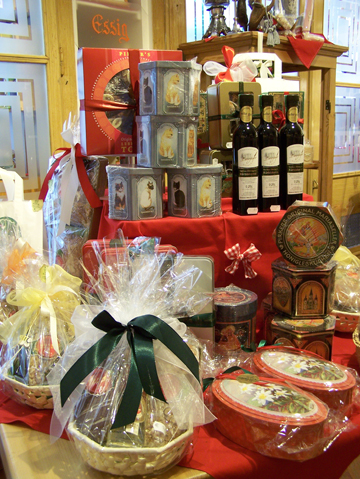
‘Tis the season when a young elf’s fancy turns to thoughts of gingerbread. Although these sweet-spicy cakes and cookies are popular year-round in many countries of Europe, they’re particularly associated with the winter holidays. Bakeries from Sweden to Slovakia to Switzerland turn out tons of commercial gingerbread products, often packaged in brightly colored wrappings and tin boxes. And home bakers dig through kitchen drawers and recipe files to find favorite cookie cutters and family recipes for their own Christmas gingerbreads.

Although flatcakes made with honey and spices were baked by the ancient Egyptians, Greeks, and Romans, the gingerbreads of northern Europe probably date only from the Middle Ages, when honey was still the main type of sweetener available locally, and exotic, expensive spices such as cinnamon, black pepper and ginger were increasingly being imported from faraway lands in the East. A taste for gingerbread eventually spread throughout Europe, with certain cities becoming known for their own particular types: Strasbourg and Dijon in France, Torun in Poland, Tula in Russia, Aachen and Nürnberg in Germany, Basel and St. Gallen in Switzerland.

MANY VARIETIES
Gingerbread recipes evolved over time and in diverse places. Various kinds of gingerbread were, and still are, made with different combinations of honey, sugar, flour, eggs, almonds, hazelnuts, walnuts, raisins, lemons, candied orange peel, candied citron, rosewater, rum, brandy, black pepper, ginger, cinnamon, nutmeg, cloves, allspice, cardamom, coriander, aniseed and saffron. Although these baked goods are often referred to as “gingerbread” in English, some of them don’t contain any ginger at all.

The variety of possible ingredients and textures causes some confusion about what “gingerbread” actually is. A cake, a cookie, or a loaf? Hard or soft? Thick or thin? Glazed or unglazed? Decorated with fancy frostings, or with fruits and nuts, or even with expensive gold leaf? At various times in its history, gingerbread has been all of these.

GERMAN GINGERBREAD
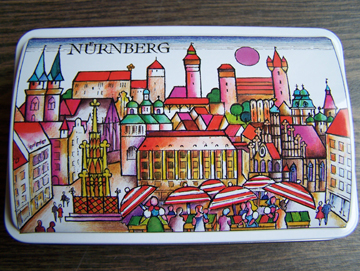
In the Middle Ages, the city of Nürnberg became one of the most famous places for making gingerbreads in Germany, where these seductive sweets have long been known as Lebkuchen (or sometimes Pfefferkuchen, when their spiciness comes from black pepper instead of ginger). Records show that Lebkuchen was being baked in Nürnberg as early as the 14th century. Traditionally, the stiff dough was pressed into highly detailed molds made of wood, metal, or terra cotta, which imprinted intricate designs on the Lebkuchen before it was removed from the molds and baked in a hot oven. Nürnberg Lebkuchen contained such costly ingredients, and was of such high quality, that it was accepted as payment for city taxes and given as gifts to nobles, princes, and heads of state.

Over time, as the prices of ingredients fell and the demand for Lebkuchen increased, faster production methods became necessary. The elaborate handmade molds were replaced by less detailed, often mass-produced, molds. Simpler decorations―such as nuts, candied fruit, and sugar frostings―were applied to the tops of many cookies. And the shapes were simplified, too, evolving into the basic human, animal, and geometric forms common today.

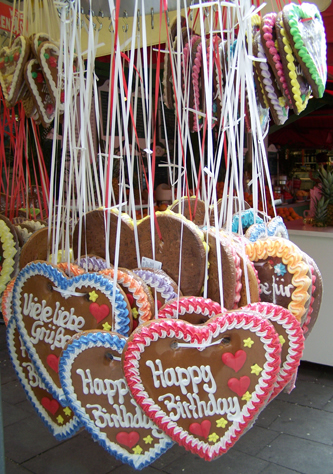
In the early 1800s, gingerbread houses became popular in Germany after the publication of the Grimm brothers’ fairy tale, Hansel and Gretel. And during the 19th century, ornately decorated Lebkuchen hearts also became the rage. Covered with fancy designs and romantic sayings made from colored icing, these large heart-shaped cookies were often exchanged between sweethearts. You can still buy them at almost every German festival and special market, including the Christmas markets held in many German cities throughout December.

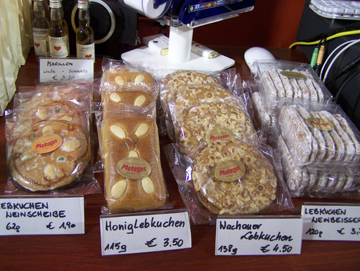
The Lebkuchen produced in Germany today comes in all sorts of sizes, shapes, flavors, colors and textures: rounds, rectangles, squares, hearts, stars, pretzel forms, St. Nicholas (for Christmas), lucky pigs (for New Year) and rabbits (for Easter). The Lebkuchen dough can be “white” (light colored) or different shades of brown. Some Lebkuchen are also covered with white or chocolate icing, and some are filled with marzipan or jam. Honey Lebkuchen is sweetened only (or primarily) with honey. Oblaten Lebkuchen are cookies with the dough mounded on top of a thin wafer before baking. And delicate, elegant Elisen Lebkuchen are made with at least 25% ground almonds, hazelnuts, or walnuts, and no more than 10% flour.

GINGERBREADS ACROSS EUROPE
You’ll also find similar spicy cookies of different shapes, colors and textures called Printen (in Aachen, Germany), Pfefferkuchen (in Pulsnitz, Germany), Spekulatius (in the German Rhineland), Leckerli (in Basel, Switzerland), Biberli (in the Appenzell region of Switzerland), speculaas Holland, speculoos in Belgium, pepperkaker in Norway, pepparkakor in Sweden, piperkakut in Finland, pebernǿdder in Denmark, pain d’épices in France, licitar in Croatia, mézeskalács in Hungary, perníky in the Czech Republic and Slovakia, pierniki in Poland and prianiki in Russia. Other towns and regions have their own specific names for the many varieties of gingerbreads produced there.

Europeans also use gingerbread cookies as ingredients in other dishes. You’ll find crumbled gingerbread used as a stuffing for pork and for pasta, as a thickener for sauces, a flavoring for soups, a crunchy texture in salad dressings, and a base for many puddings and desserts. There’s even a German-Italian “fusion” dessert called ” Nürnberger Tiramisu”! And for people who just can’t get enough of that sweet, spicy, Christmasy taste of gingerbread, the Belgians have recently invented a gingery, caramely speculoos spread, similar in texture to Nutella, made from crushed gingerbread cookies.

If I’ve whetted your appetite for these European gingerbreads, my best suggestion is to travel there and taste them for yourself. You can also mail order many of them from the websites listed below. Costard, the clown in Shakespeare’s play, “Love’s Labour’s Lost,” had the right idea when he said, “An’ I had but one penny in the world, thou shouldst have it to buy gingerbread.”

Nürnberg Lebkuchen information www.lebkuchen.nuernberg.de/englische_version/index.html

Lebkuchen-Schmidt, Nürnberg
ww2.lebkuchen-schmidt.com/eng_index.php

Metzger Lebkuchen, Vienna
www.lebkuchenmetzger.at/

Lebkuchen-Pirker, Mariazell, Austria
www.lebkuchen-pirker.at/home/index.php?&lang+eng

Kerner Lebkuchen, Mariazell, Austria
www.lebzelterei-kerner.at/index.htm

Lebkuchen-Gandl, St. Wolfgang, Austria
www.lebkuchen-gandl.com/

Appenzeller Biberli, Switzerland
www.baerli-biber.ch/

Basel Läckerli, Switzerland
www.laeckerli-huus.ch/

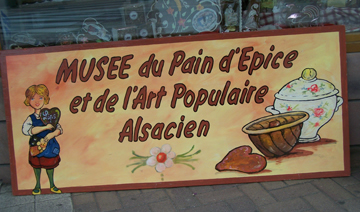
French-Alsatian Pain d’Épices
www.paindepices-lips.com
www.fortwenger.fr/

Alte Pfefferkuechlerei (small gingerbread museum in Weissenberg,Germany) www.museum.stadt-weissenberg.de/

Speculoos Spread
www.thenibble.com/zine/archives/speculoos-spread.asp

YouTube video about how to make decorated European gingerbread
www.youtube.com/watch?v=OVX5wiv_oMk

American online sources for ordering European gingerbreads
www.germandeli.com
www.germangrocery.com

InterCity Hotels: In the Center of the Action

InterCity Hotel in downtown Munich

By Don Heimburger
Photos by the author

My business takes me to European cities several times a year, and I usually end up spending a lot of time in the “old town” or historic part of a city or town. It’s typically my favorite place to spend time, looking at the market squares, visiting hotels and restaurants, asking questions about town festivals and events, or visiting a museum or other local attraction.

When I’m done at the end of a day, I want to stay close to the center of town, because really I’m not done with my work. There’s always more to see and do in the evening, and that means generally after a late afternoon break, I’m back again, interviewing, taking pictures or attending some function. And again it’s usually near the center of town.

CENTER OF TOWN CLOSE TO TRAIN STATION
In Europe, the center of town means it’s in close proximity to the train station, because the railroads are and were instrumental in growing cities.

One company that likes to locate its hotels near the train stations is Steigenberger’s InterCity Hotel group, a chain of 31 facilities in Germany and one in Austria. Their own literature says, “If you are seeking a centrally located, functionally equipped and comfortable domicile, InterCityHotels are your perfect choice.”

In a recent business deal, the Egyptian tourism corporation Travco Group became a majority stockholder in the Steigenberger Hotel Group. “Particular focus will be given to international expansion of the brands Steigenberger Hotels and Resorts and InterCityHotel,” says Hamed El Chiaty, founder and owner of the Travco Group.

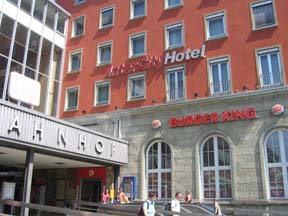
On a recent trip to Munich and Freiburg, I booked rooms at the InterCity Hotel in both cities. From the Munich train station, where I arrived from the airport, I only had a few steps before I saw the familiar InterCity sign at one end of the train station.

FEATURES OF HOTEL
The five-story hotel has 198 rooms and suites, floors for non-smoking, with all rooms sound-proofed and air-conditioned. The soundproofing was a good idea, as next to a train station, it can be fairly noisy at times. Rooms feature a bathroom with shower, toilet, hair dryer, cable television and a writing desk. There was a WiFi connection in the room. The hotel featured two elevators and a restaurant (Fleming’s Brasserie & Wine Bar), where the morning’s complimentary breakfast was served.

I was happy to have room air conditioning when I was there, as it hit 95 degrees in the afternoon in Munich, a rarity for this city so close to the Alps.

A convenient part of any InterCity booking is a complimentary card that allows guests to use local public transportation free of charge. So if you want to go to the Marienplatz, as an example, which I did several times, I just presented my card at the train station when needed, and I enjoyed free transportation. The city center is less than a mile away.

Intercity hotels are mid-range in price, clean and walkable to the inner city. In the morning, a buffet-style breakfast was served with scrambled and hard-boiled eggs, sausage (white Munchener sausages), several types of yogurt, two types of juice, hard rolls, whole grain breads, crossiants and pastries, bacon, large pretzels, a variety of soft and hard cheeses, six types of cereals and a variety of cold cut meats.

There was also dried fruits, fresh fruits such as watermelon, pineapple, and a bowl of mixed apples for guests. I was ready to start my day!

The lobby downstairs was sparse but featured comfortable chairs and couches for guests, as well as a few tables.

THE FREIBURG INTERCITY
Later on, I took the train to Freiburg near the Black Forest, where again a stay at the InterCity there kept me close to the train station and was only a few blocks from downtown. The hotel, in fact, is just a few steps from the entrance to the train station.

This multi-level hotel features 152 guestrooms, had non-smoking rooms, cable television, direct dial telephones, a modem/fax link, a writing desk and a mini-bar. There was no air conditioning, so with the hot weather, keeping the window open was a necessity; I was told the typical summer high temperature doesn’t require air, and it’s not available in most Freiburg hotels.

The room had a shower, toilet, hairdryer, and a restaurant and a bar downstairs. The hotel staff was pleasant and I noticed they was able to answer visitors questions about the train schedules and the city. Again the room was clean and had the basics. The hotel even had rooms for the disabled if needed.

In all, a stay at a InterCityHotel affords travelers a convenient location for a mid-range price, with breakfast included.

MORE HOTELS TO OPEN
More InterCity Hotels are scheduled to open with the merger of the Travco Group. Steigenberger’s Chief Executive Officer André Witschi says that the company will continue to invest in improving the quality of their hotels, and international expansion will help them to increase brand awareness for Steigenberger Hotels and Resorts and InterCityHotels.

In 2010 and 2011 InterCityHotels will open five new locations in Germany: at the Berlin-Brandenburg Airport and in Bonn, Darmstadt, Mannheim and Ingolstadt.

For more information, go to:
www.intercityhotel.com
www.muenchen.intercityhotel.de
www.freiburg.intercityhotel.de

Contact the hotels by e-mail: info@muenchen.intercityhotel.de
info@freiburg.intercityhotel.de

If you are arriving by train:
www.raileurope.com