Destination Erfurt: Germany’s City of Towers

Described as the ‘Thuringian Rome,’ it is steeped in history
By Don Heimburger
Photos by the author
Home page photo by Barbara Neumann, courtesy Erfurt Tourism and Marketing

The reformer Martin Luther once said that Erfurt, Germany “is situated in the best location. It is the perfect place for a city.”

Little did he know 500 years later that Erfurt, the capital of Thuringia, with a population of 200,000 and right in the center of “modern” Germany, would attract large crowds of visitors, many just to see the city in which Luther became an ordained priest.

Erfurt is the capital city of the German state of Thuringia and the main city nearest to the geographical center of modern Germany, located 60 miles southwest of Leipzig. With the Luther Decade ending in 2017, Erfurt has put on its best face to show what is has to offer, and visitors won’t be disappointed.

Erfurt was all spit and polish for the 2015 German Travel Mart in April 2015, when thousands of journalists worldwide, buyers (travel agents and meeting planners) and German suppliers (hotels, Germany’s cities and regions, and commercial attractions) all met in Erfurt (and next-door Weimar) for a three-day-long conference to put Germany on display.

ONE OF LARGEST DOMPLATZ
The town’s domplatz is said to be one of Europe’s largest, and it sits next to the impressive central church in Erfurt, St. Mary’s Cathedral, the oldest ecclesiastic building in the city, founded in the 8th century.

Initially the Romanesque-turned-Gothic cathedral served as the bishop’s seat, and up to the 19th century was the seat of the collegiate chapter of St. Mary. Martin Luther himself was ordained in the church in 1507.
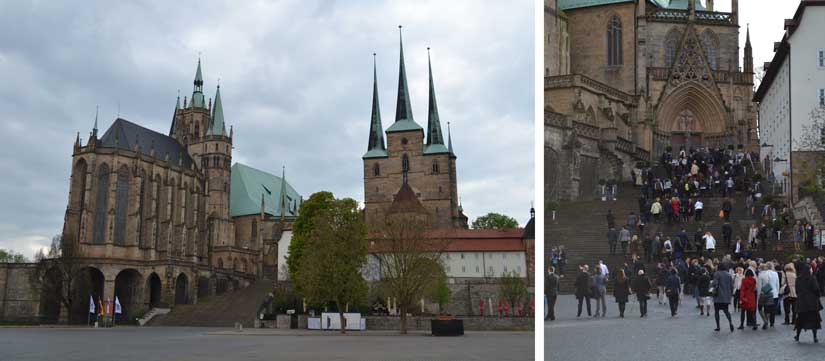
The Mariendom (St. Mary’s) and St. Severi form an imposing backdrop for the annual Cathedral Steps Festival held in Erfurt.

The largest free-swinging bell in the world, the “Gloriosa,” with a diameter of 8 feet, hangs in the church today, but because of its age is only rung occasionally. Inside the cathedral there is an elaborate Gothic chancel with a series of 13 colored stained-glass windows which are 42 feet high and are among the greatest works of medieval stained-glass art. The cathedral contains a number of art treasures from various centuries. Guided tours of the church can be arranged in advance.

A flight of 70 steps that lead to the cathedral date back to the 14th century, and today many concerts and events are held on the steps.

Next to St. Mary’s on the hill is St. Severi Church, and together with St. Mary’s the two churches dominate the heart of this medieval city.

Nicknamed the “Rome of the North” for its profusion of some 30 spires and steeples, Erfurt is unquestionably one of Germany’s most beautiful cities. The old heart of the city with its half-timbered buildings looks like something out of the movies from years ago.

“Erfordia turrita” or “Erfurt, city of towers” is how Luther once praised Erfurt with its 25 parish churches, 15 religious foundations and 10 chapels. This impressive list of ecclesiastical buildings, in conjunction with the magnificent architectural motif of the cathedral and the Church of St. Severus (now the city’s emblem), inspired historians such as Ernst Stida (1585–1632) to refer to the city as the “The Thuringian Rome.”

Most of the churches are still intact and blend in with the beautifully restored half-timbered houses of the Andreas quarter and with the brightly-colored façades of Renaissance buildings. The medieval part of the city is one of the largest and best preserved historical city centers in Germany.
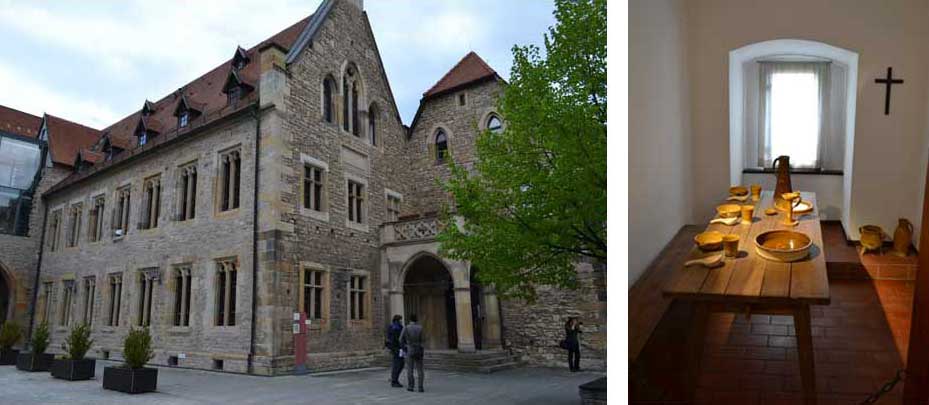
The Augustinian Monastery, built in 1277, is of Gothic design; stained glass windows date from the beginning of the 14th century. The monastery is considered one of the most famous places related to the Reformation.

LUTHER’S MONASTERY
In 1505, Luther became a monk and took up residency at the beautiful and peaceful Augustinian Monastery in Erfurt, built in 1277. Recently renovated, the gothic monastery has functioned as an Evangelical/Lutheran church and school since 1525. Visit the chapter house and enjoy the same wonderful acoustics that Luther did in his day, or see the reconstruction of Luther’s cell. The Augustinerkloster possesses valuable stained glass windows dating to the beginning of the 14th century. Martin Luther lived here as a monk from 1505 to 1511. You can also spend the night in one of the 51 comfortable guest rooms at the monastery. Today the abbey serves as an ecumenical conference center and a memorial to Luther.

The Luther Stone stands to the east of Stotternheim near Erfurt. On July 2, 1505 Martin Luther, then a law student at Erfurt University, was returning to Erfurt after visiting his parents in Mansfeld. He was making the journey on foot, and as he approached Stotternheim he witnessed a severe thunderstorm that put him in fear of his life. He is said to have cried out, “Help, St. Anne, I will become a monk.” The site where the memorial stone now stands is sometimes described as the birthplace of the Reformation.
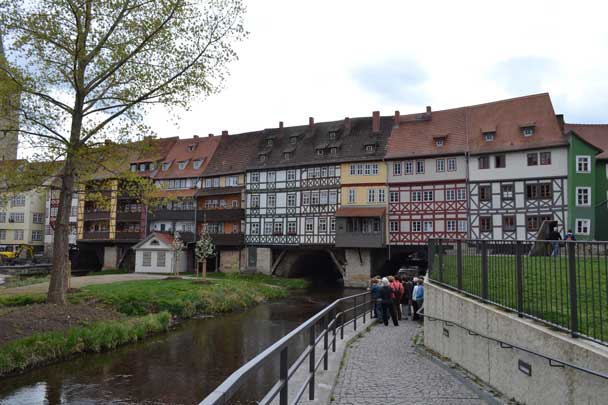
Merchant’s Bridge, a landmark in Erfurt, is the longest bridge in Europe covered by houses that are still inhabited today. In early times, traders sold their wares from this unique bridge.

The Krämerbrücke/Merchants’ Bridge is Erfurt’s most interesting example of secular architecture. This arched stone bridge was constructed in 1325 over the river Gera where the original ford was located along the “via regia” trading route. The Krämerbrücke is the only bridge north of the Alps to be built over entirely with houses that are still used as residences. In medieval times there were two churches built at each end of the bridge, one of which, the Ägidienkirche, is still in existence.

In 1695, the first foundation stone was laid for one of the few remaining 17th century city fortifications to be found in Germany. Today the Petersberg Citadel is an impressive example of European fortification construction dating from the 17th to the 19th centuries. Parts of the fortification were open to the public in 1964, but after 1990 it was extensively renovated, and today the greater part of the casemates, esplanades and bastions inside the fortification area are open to visitors. The completion of the citadel and the Petersberg are Erfurt’s largest undertaking.

(left to right) The Erfurt Rathaus is located at the Fischmarkt; origins of the building go back to the 11th century.; Erfurt city guide Matthias Gose points out aspects of the town on a scale model cast in metal.; Erfurt architecture

Haus zum Breiten Herd, historic Renaissance guild house, Fischmarkt square, Erfurt. In earlier times, rich merchants of the the city decorated the fronts of their homes with delicate carvings.

The neo-Gothic town hall at the Fischmarkt was built between 1870 and 1874. Inside the stairwells and the Festsaal (main function hall) there are numerous wall paintings depicting legends and scenes from the life of Luther, as well as pictures illustrating the history of Thuringia and Erfurt.

Erfurt city guide Matthias Gose points out aspects of the town on a scale model cast in metal

The Old Synagogue is one of very few preserved medieval synagogues in Europe. Thanks to the extensive preservation of the original structure, it has a special place in the history of art and architecture and is among the most impressive and highly rated architectural monuments in Erfurt and Thuringia. The synagogue was constructed during the Middle Ages on the “via regia,” at the heart of the historical old quarter very close to the Merchants Bridge and the town hall.

Many parts of the structure still remain today, including all four thick outer walls, the Romanesque gemel window, the Gothic rose window and the entrance to the synagogue room. After extensive restoration, the building was reopened in 2009. On display in the exhibition rooms is a collection of medieval treasures discovered during archaeological excavations. This includes 3,140 silver coins, 14 silver ingots, approximately 6,000 works of goldsmithery from the 13th and 14th centuries, and an intricate wedding ring of the period, of which only two others are known to exist in the world.

One of the buildings that reflects the history of Erfurt in a special and unique manner is the Kaisersaal in the Futterstrasse, which, after radical reconstruction, was reopened in 1994. It was built out of three patrician houses at the beginning of the 18th century to serve as the university’s ballroom. It is the oldest center for cultural events and meetings in Germany.
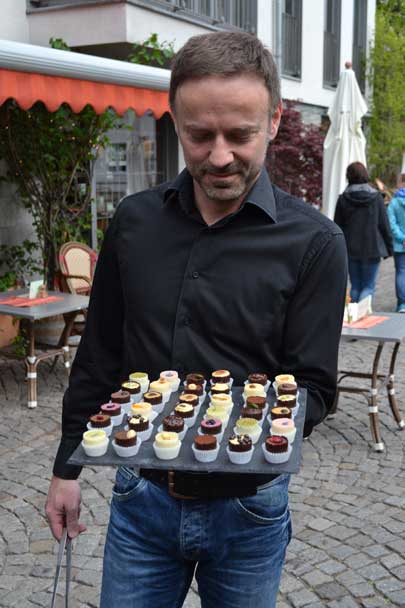
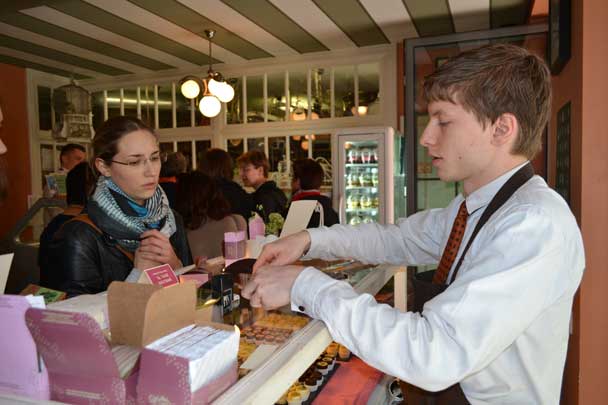
The Goldhelm Schokolade shop in Erfurt provides a selection of fresh chocolates every day

The Anger Museum with its variety of wood and stone sculptures is situated in the middle of the old part of the city. It was built between 1706 and 1712 as a packing and weighing station, both for Philipp Wilhelm Reichsgraf von Boineburg, the governor of the city, and for Archbishop Lothar Franz von Schönborn. It is one of the most important early 18th century buildings.

The Erfurt city museum, in the magnificent Haus zum Stockfisch building, was founded in 1886 to house the artworks that Erfurt inherited from one of its most famous sons, the Romantic painter Friedrich Nerly. The museum’s four floors present the city’s culture, economic development, politics and religion.
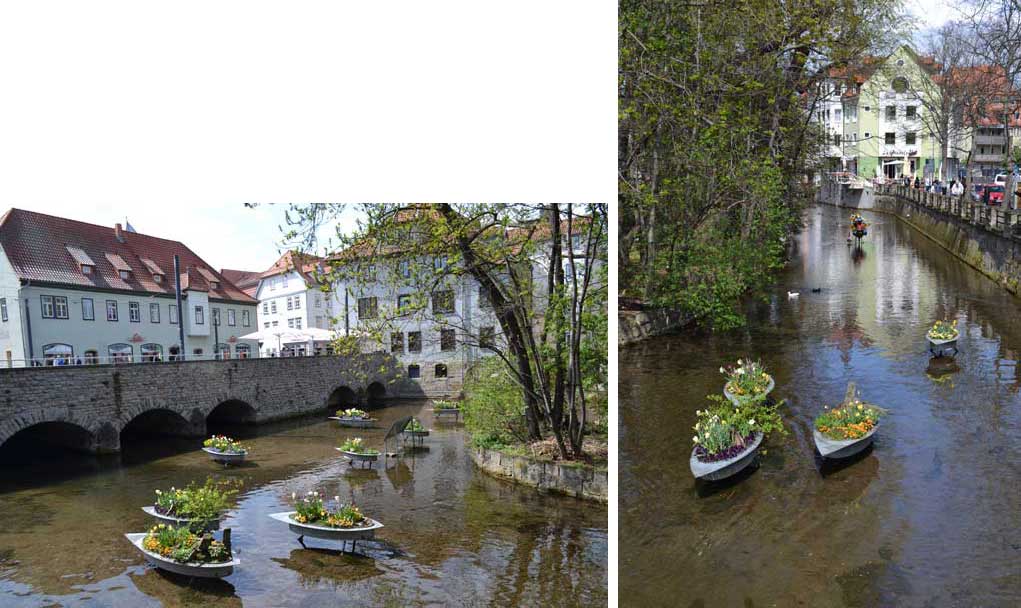
Flowers decorate the Gera River channels in Erfurt.

Erfurt’s last water mill to still be in use is located on the banks of the Gera River near the town hall. Besides the water-driven grinding mill, there are also exhibition rooms displaying historical machines. The museum also contains an illustrated history of Erfurt’s water mills in particular and of the history of hydraulic power in general.

Erfurt, said to be Germany’s largest single heritage site, is a popular destination for tourists, thanks to its medieval ambiance and storied history.

For more information, go to erfurt-tourismus.de or www.germany.travel.
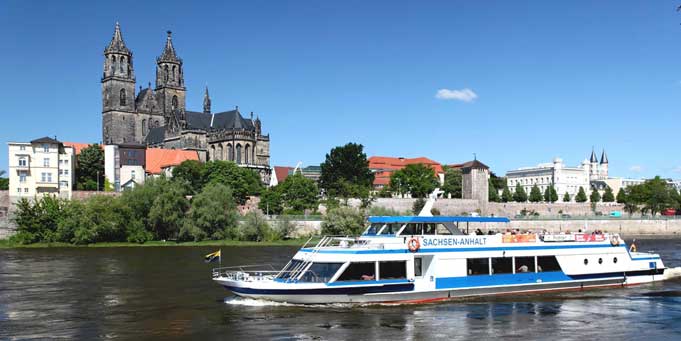
Magdeburg: State Capital of Saxony-Anhalt and the ‘City of Otto’

From an historic Cathedral to a Green Citadel and a Millennium Tower, this city is thriving

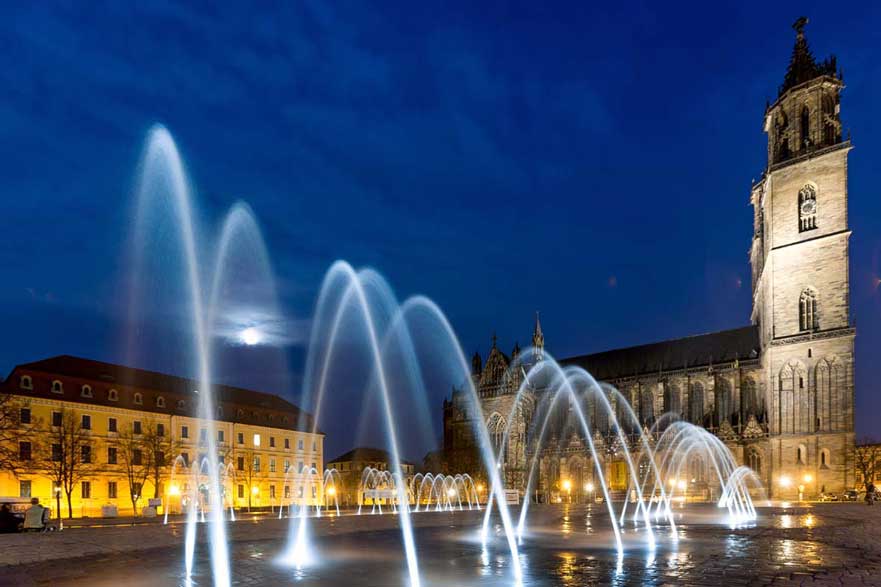
Magdeburg Cathedral ©www.AndreasLander.de

By Don Heimburger
Photos courtesy of the author, German National Tourist Office and Magdeburg Marketing

The Elbe River cuts through the heart of Magdeburg, offering this historic German city an idyllic landscape and picture-perfect views through a camera. But the city has seen its share of severe destruction over the centuries, such as in the Thirty Years War and World War II.

Today, this city of 240,000 in central Germany has rebounded nicely and combines its important and long history with new architecture, innovative cultural events and green spaces to make it an appealing attraction for tourists.

Aerial view of Magdeburg on the Elbe River
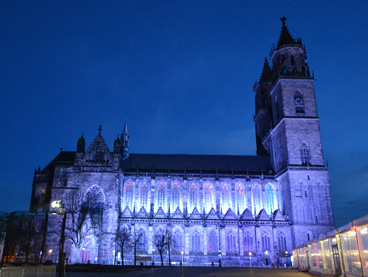
Magdeburg Cathedral shines at night.

MAGDEBURG CATHEDRAL
The town’s huge cathedral is a “must-see” and is the largest church building in this part of Germany. Surprisingly, the Magdeburg Cathedral can be traced back as early as 937, when Emperor Otto the First founded a monastery dedicated to St. Maurice. In 955, the church building was extended before becoming the cathedral of the established bishopric of Magdeburg in 968. Otto the First had a number of high quality pieces of antique art shipped to Magdeburg from northern Italy to the cathedral. These included columns made of purple-red porphyry, marble and granite, many of which still provide finishing touches to the architecture of the cathedral today.

Magdeburg Cathedral architecture

When Emperor Otto died in 973, his remains were brought to Magdeburg Cathedral, where he was buried in a stone sarcophagus. In 1207, the Ottonian cathedral was damaged in a city fire. Archbishop Albrecht II then began construction on a new Gothic cathedral, which was consecrated in 1362. The cathedral’s 341-foot-high west towers were completed in 1520.

Today, visitors to Magdeburg Cathedral can see the rich interior stone work which displays impressive architecture. The building is also full of unique and internationally renowned original exhibits representing nearly all periods of art history, including spolia from the building’s Ottonian predecessor, the original tomb of Emperor Otto I and his first wife Edith.

Magdeburg Cathedral ©www.AndreasLander.de

In addition, there are Romanesque bronze grave markers, early Gothic sandstone sculptures including the famous figures of the “Clever and Stupid Virgins,” the carvings on the choir stalls of the canons dating back to the 14th century, and Renaissance paintings, as well as 20th century art such as the famous war memorial designed by Ernst Barlach. The cathedral, which became protestant in 1567, is now the seat of a Protestant bishopric and home to members of a congregation in the city center.

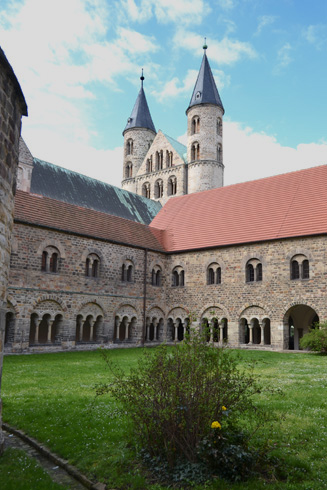
Monastery of Our Lady

MONASTERY OF OUR LADY
Said to be the “pearl of the Romanesque Road,” the Monastery of our Lady in Magdeburg is considered the oldest surviving building in the city.

The unique well-house, magnificent barrel-vaults and sublime monastery church with its slender towers comprise an architectural marvel which is the centerpiece of all Romanesque buildings in Saxony-Anhalt. The structure holds both the Magdeburg Art Museum and the Georg Philipp Telemann concert hall. Archbishop Gero of Magdeburg ordered the erection of the building in 1017-18. However, nothing remained of the original construction, and it was Archbishop Werner (1063-1078) who arranged for the reconstruction which was finally completed in the 12th century by the Premonstratensian order.

The rotunda with its pointing cones, resembling a monk’s tonsure, is a remarkable architectural feature of the eastern wing. Together with its 32 arcades, the rotunda forms an ensemble considered one of the most amazing and interesting structures in European monastery architecture. After 1220, the monastery church was vaulted in early Gothic style. Also deserving a special mention is a collection of sculptures ranging from medieval to contemporary in the museum of the monastery. The surrounding area includes a sculpture park created in 1989.

St. John’s Church is Magdeburg’s oldest parish church, first mentioned in 941. The western section of the church, which features a late Romanesque design, and the Gothic hall church, have both been preserved. A monument of Martin Luther and the crypt of the Otto von Guericke family can be found in front of and inside the church.

The history of the church was marked by many changes: St. John’s fell victim to many city fires and was destroyed when General Tilly’s army invaded Magdeburg in 1631. However, the citizens never tired of rebuilding the church. St. John’s Church left its mark on history when an important and far-reaching event took place: on June 26, 1524, Martin Luther held a famous sermon on right and wrong justice in the greatly overcrowded church, whereupon all parishes of the city center converted to Protestantism, as laid down in the annals of Magdeburg.

Today St. John’s is open to the public and has become a popular venue for a wide variety of events.

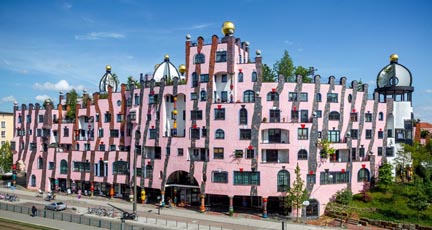
Hundertwasser’s Green Citadel ©www.AndreasLander.de

GREEN CITADEL OF MAGDEBURG
One of Magdeburg’s most eye-catching attractions for visitors is also one of the last architectural masterpieces designed by the artist Friedensreich Hundertwasser. The Green Citadel of Magdeburg is located among a mixture of Baroque facades and examples of modern design and provides the Breiter Weg with a landmark structure and a burst of colorful culture.

This architectural retail/apartment building has been the subject of much discussion since it was constructed in 2005. It was the last building Hundertwasser designed before his death. The artist said the building was an “oasis for humanity and nature within a sea of rational houses” at the heart of the “concrete desert” of Magdeburg.

(left to right) Science demonstration at Millennium Tower; Millennium Tower

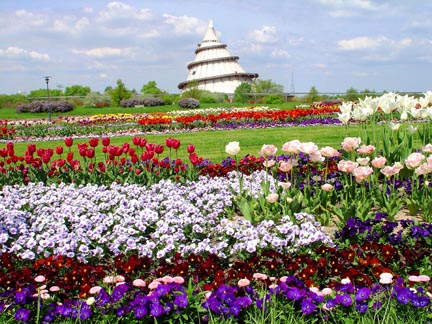
To explore the green of Magdeburg, visitors also want to investigate Elbauenpark. The park, which covers an area of 222 acres and was awarded the title of Germany’s second most attractive park in 2005, is home to many attractions that visitors can explore.

Since being created, the unique park has gained its place as one of Magdeburg’s most important landmarks. It is home to the Millennium Tower (the world’s tallest wooden construction of its kind), Lake Stage, Butterfly House and a number of playgrounds, sports areas, pieces of art, themed gardens and other attractions.

The park is home to a wide range of activities and facilities for sports fans, including golf, skating, rock climbing, hiking, biking, a high-rope park and even a toboggan run.

TOWN HALL OF MAGDEBURG
The Town Hall of Magdeburg dates to the 12th and 13th century, with the oldest remains in the vaults which form part of today’s Ratskeller restaurant. Pelt dressers, tanners and dealers in hides and skins met here in the long hall to trade and stock their goods. After the turmoil of the 30 Years War, a two-story sandstone town hall building was erected in Dutch Renaissance style including Italian Renaissance architecture, and in the 19th century it underwent a number of changes and extensions.

In January 1945, the Town Hall was completely destroyed during an air raid, but reconstruction work on it began in 1965, and it was rebuilt and restored according to its original blueprints. The hall features bronze doors designed by Heinrich Apel and carved with historical figures and stories from the city’s past as well as features an impressive bell carillon with four octaves. The carillon is played on market days and also for concerts.

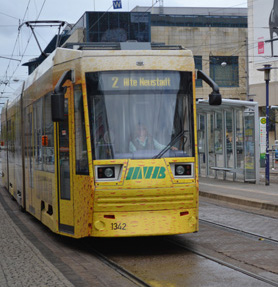
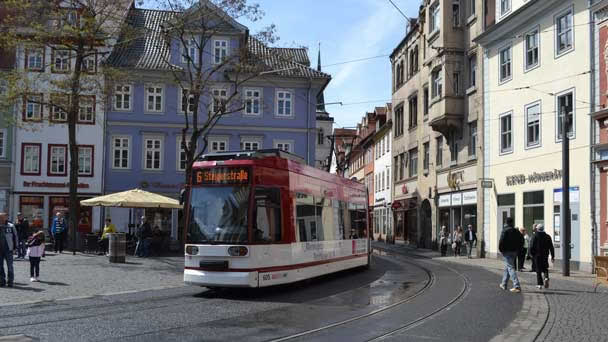
(left to right) Colorful street of buildings on Otto-Richter-Strasse; Magdeburg Town Hall with Statue of Otto I (912 – 973), Magdeburg, Germany. Otto I, or Otto the Great, was the founder of the Holy Roman Empire, reigning as German king from 936 until his death in 973.; Tram system in Magdeburg

NUMEROUS ART VENUES
Today Magdeburg features numerous museums, art galleries, theaters and performing venues including the AMO, a multifunctional complex for shows, concerts and conferences. There is also the Stadthalle Magdeburg, the city’s civic hall. The hall was constructed in the style of the Neues Bauen modern architecture movement in 1927 for use as a showplace on the occasion of the German Theatre Exhibition. It has hosted a wide range of events such as classical concerts, theater performances, musicals, revues, ballets, galas, sports shows and rock and pop concerts.

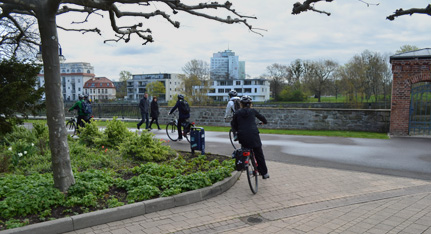
Magdeburg features miles of bike pathsthis one is near the Elbe River.

MAGDEBURG ZOO
Magdeburg Zoo is located at the heart of Vogelgesang Park, a natural and garden landscape that covers 47 acres. The zoo features 835 animals representing 176 different species. The man-made savannah landscape in the zoo covers an area of 215,000 square feet; the Savannah Viewing Point enables visitors to enjoy a panoramic view over the Africa area and the Water Bird Pond.

Magdeburg was the site of the 2016 German Travel Mart, attended by 1,500 participants from all over the world. Editor/Publisher Don Heimburger was on hand and filed this report about the green city of Magdeburg.

Traveling in Time Through Bingen

Bingen, Germany

Photos courtesy Germany TourComm

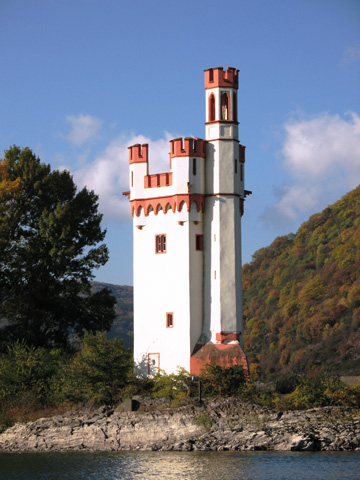
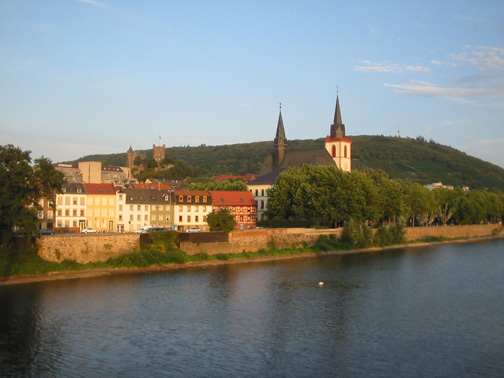
Bingen, Germany, is renowned as the gateway to the Upper Middle Rhine Valley, an official UNESCO World Heritage Site. With its breathtaking landscapes, medieval castles and quaint country towns, the valley is the quintessence of a romantic and picturesque setting. The fully reconstructed Klopp Castle is scenically set atop the Kloppberg in the heart of Bingen. The town’s most famous landmark, the so-called “Mouse Tower,” situated on a small island on the River Rhine, is approximately 1,000 years old.

Bingen’s Rhine embankment is more than where water meets land: it is an historical site of significance, gateway to the Upper Middle Rhine Valley and a UNESCO World Heritage site. With transformation of the grounds into a magnificent cultural embankment, the banks of the River Rhine have been given a new look. Together with its natural, architectural, horticultural and cultural attractions, the embankment invites visitors to enjoy the mixture of culture, nature and recreation. The cultural embankment is a combination of scenery, playground, open-air stage, park, museum and gallery.

BINGEN MÄUSETURM (MOUSE TOWER)
There are historical records and legends about the tower on the small island in the Rhine near Bingen. The Romans built a small defensive fortification here and during the period of the Franks it went into disrepair. Only when Hatto II took over the leadership in Mainz in 968 and ruled over Bingen did the tower awake from its long slumber. In 1298 the tower was part of the customs system involving Ehrenfels Castle.

(left to right) Klopp Castle; Mäuseturm

KLOPP CASTLE
Klopp Castle houses the main administration of the town and the office of the mayor. The hill was once part of a defensive belt surrounded by a wall, in which the small town of Bingium was located. In 355 AD the fortification was a victim of the Alemannen.

It was not until the middle of the last century that the merchant Ludwig Cron from Cologne began reconstruction; in 1897 the castle was placed into the possession of the town of Bingen.

Saint Martin Basilica

SAINT MARTIN BASILICA
The basilica of St. Martin is built on the foundations of a Roman temple. It is here that visitors get an insight into the history of Bingen. The Romans built a temple on this site in the years before Jesus’s birth. The basilica was first mentioned in 793 in a list of gifts of the Abtei (abbey) in Lorsch. A place of worship of special beauty awaits the visitor.

Rochus Chapel

ROCHUS CHAPEL
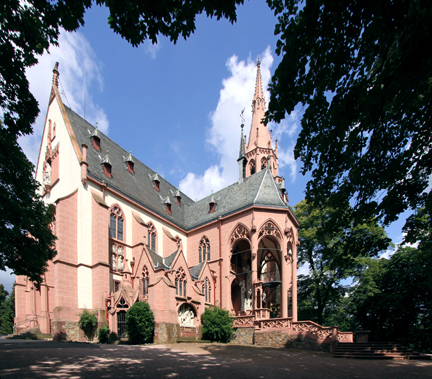
Johann Wolfgang von Goethe went on an annual pilgrimage to Rochus Hill. In 1889 lightning struck the Rochus Chapel, just after elaborate restoration work had been completed and the resulting fire destroyed everything apart from the walls. On the foundations of the former Baroque building a three-nave late Gothic church was built with an exterior choir. That is what is seen today.

DRUSUS BRIDGE AND BRIDGE CHAPEL
One of the oldest stone bridges in Germany is the Drusus Bridge in Bingen.

Bridges have a long tradition at the mouth of the River Nahe. The first was built a decade before the birth of Jesus. A special commando unit blew up the bridge in March 1945 before the approaching Allied troops could reach it. Today Drusus Bridge plays an important part in the appearance of the town.

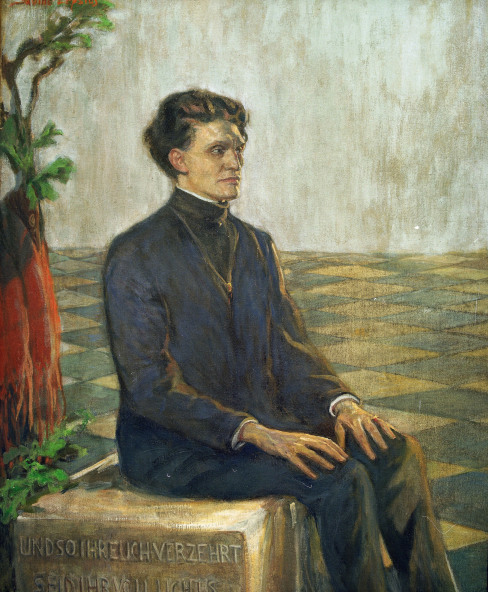
(left to right) Drusus Bridge ceiling detail; Museum; Stefan George portrait

STEFAN – GEORGE MUSEUM
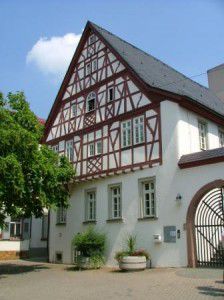
One of the most famous German poets, Stefan George, was born in Bingen-Büdesheim. This museum traces his life in the Stefan-George-Haus in the so-called “Haferkasten,” an impressive half-timbered house from the 18th century.

For more info, go to www.tourcomm-germany.com/en

Leipzig on a Platter

This city is a multi-course meal for visitors

By Don Heimburger
Photos by Don Heimburger and Leipzig Tourism Office

If you were to spoon out Leipzig and put it on a plate, you’d discover a salad, a main meat course, vegetable course, a sorbet interlude and a delicious dessert.

I’d designate the salad course as the city’s unusual green belt at the Auenwald; the meat course is the art, architecture and music; the vegetable course Martin Luther and the Peaceful Revolution; the sorbet interlude is this town’s love of coffee; and the dessert is the city’s zest for living and its nightlife.

The city of Leipzig in central Germany, population 500,000, has a colorful history stretching back more than 800 years, and many events have shaped this former East German city. The city’s people and several major historical events have fashioned this town, and made it what it is.

SORBS FIRST SETTLED HERE

Sorbs first settled here in the 7th century, establishing a trading post known as Lipzk or “place near the lime trees.” After Leipzig was granted a town charter and market privileges around 1165, it quickly developed into an important center of commerce.

Maximilian I decided to award Leipzig imperial trade fair privileges in 1497, which helped turn the city into one of Europe’s leading trade fair centers, and it remains so today. Following the world’s first samples fair held in Leipzig in 1895, the city remained one of the global trading hubs until World War II put a hold on that.

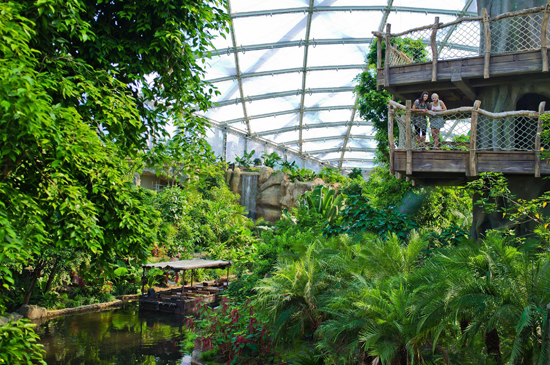
Leipzig Zoo’s Gondowanaland

It’s hard to believe, but Leipzig has a floodplain forest that runs straight through its center, one of the largest of its kind in Europe. Consisting of eight square miles of trees, every year more trees are planted, and the green space is enlarged. A variety of protected plants and animals are found here, including a rare butterfly species.

This “salad area” or greenbelt is easy to spot on a roadmap, with a large green area running north to south through the city. Four streams also flow through the city. Another part of the city that has been “greened up” is the Leipzig Zoo, where tropical Gondowanaland just opened. This lush section of the zoo, larger than two football fields, allows visitors to come into close contact with the tropical rain forests of Africa, Asia and South America. It features 40 exotic animal species and approximately 500 different plant and animal species, and more than 17,000 plants started their journey in nursery gardens in Thailand, Malaysia and Florida to create this tropical environment.

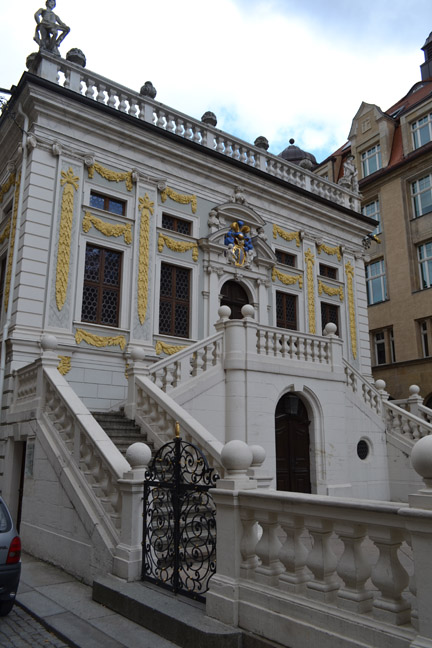
The Alte Börse, built in 1678-87 by Christian Richter, was originally used as a trading floor for merchants.

MAIN COURSE: ART-ARCHITECTURE AND MUSIC
As Leipzigers are fond of saying, for the young and creative Leipzig is no longer an insider’s tip. Word has spread that the city’s working and living conditions are just right, and three universities with an artistic or cultural profile, as well as Leipzig University, constantly feed the pool of ideas. Leipzig is known for its vibrant arts, music and festival scene; this place not only appeals to artists and actors, but is also becoming a trendy destination for leisure travelers.

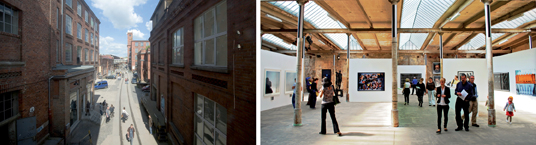
Leipzig’s dynamic art scene enjoys an excellent reputation worldwide. Interestingly, a former cotton mill, Spinnerei, in the trendy Plagwitz district, is home to a number of galleries and studios. Formerly the largest cotton mill in continental Europe, Spinnerei now has the highest density of galleries in Germany. In this old factory complex are 80 artists, 14 galleries and exhibition spaces which house creative professionals like architects, designers, craftspeople, retailers and printers.

Spinnerei Museum

Artist and professor Neo Rauch of the New Leipzig School, whose paintings combine his personal history with the politics of industrial alienation, reflects on the influence of social realism. Hollywood star Brad Pitt recently purchased one of his works.

The GRASSI Museum of Applied Art, with its world class collection, opened as Germany’s second museum of applied arts in 1874. It is considered one of Europe’s leading museums of arts and crafts. The high point of the year within the GRASSI museum’s special exhibition is a trade fair for applied art and design, an international forum of contemporary applied art and experimental design.

Then there’s another part of the Grassimesse, the Designers’ Open, which is a well-established independent design festival. An extensive program including lectures, workshops, movies and fashion shows complete the fair.

In 1996 the Leipzig Fair’s new exhibition complex opened, featuring trailblazing architecture, spacious avenues and the stunning Glass Hall at its core.

THE CITY OF MUSIC

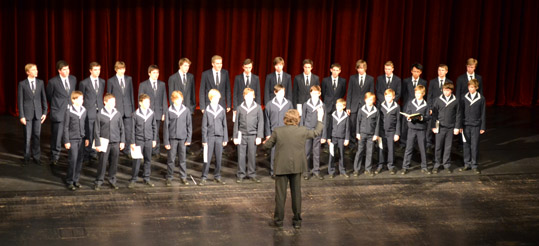
If you go to Leipzig, a visit to St. Thomas’s Church is a must, since it is the home of the world-famous St. Thomas Boys Choir and where Johann Sebastian Bach was employed for 27 years as organist and choirmaster.

His grave can be seen in the chancel. Motets are performed every Friday and Saturday by the choir, and there are concerts in front of the statue of Bach outside in July and August. The Bach Museum is located opposite the church.
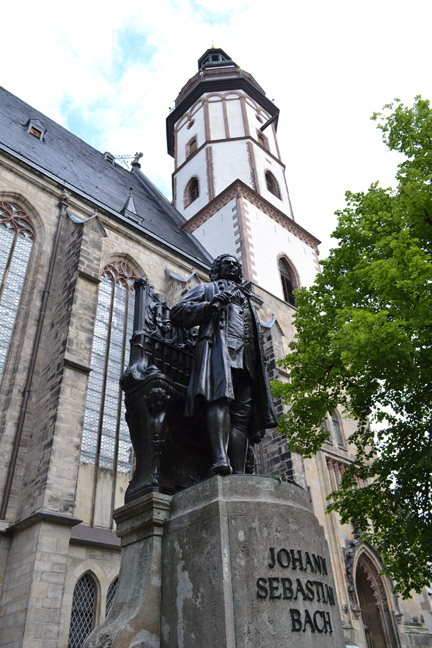
St. Thomas Boys Choir

Another regular musical highlight is the Sunday recitals at Mendelssohn House. Felix Mendelssohn-Bartholdy used to live in the building, which now contains the only museum dedicated to the composer.

There are two additional important centers of music in Leipzig: the Leipzig Opera House and the Gewandhaus Concert Hall.
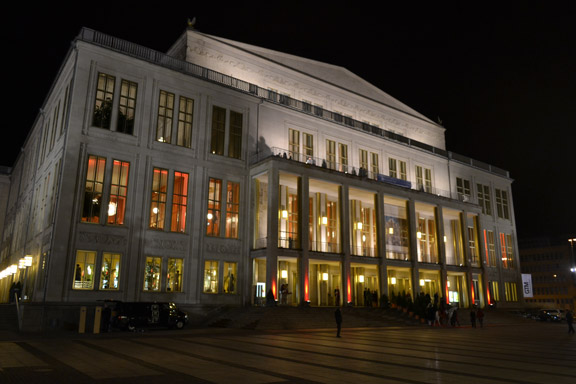
The Gewandhaus Orchestra, dating back more than 250 years, regularly performs in both venues. The Opera House is the third oldest civilian music theater stage in Europe. And Schumann House is dedicated to the memory of Robert Schumann, one of the greatest composers of the 19th century Romantic era.

Bach concert at St. Thomas Church

Leipzig also hosts several music festivals, large and small, including the International Bach Festival, the A Capella Festival, the Leipzig Jazz Festival and the Mendelssohn Festival.

MARTIN LUTHER AND THE PEACEFUL REVOLUTION
Our vegetable course includes reformer Martin Luther, who was known to come to Leipzig to face the Catholic Church hierarchy to explain his ideas about Christianity and indulgences. Martin Luther, who lived in nearby Wittenberg, stayed in Leipzig on no less than 17 occasions. His most important visit was for his participation in the Leipzig Disputation, or series of debates, held in Pleissenburg Castle in the summer of 1519.

After Duke George died, the Reformation was introduced in Leipzig in 1539. On August 12, 1545 Luther inaugurated the former Dominican monastery church of St. Paul’s as a protestant university church.

St. Nicholas Church exterior

Leipzig was particularly significant in the rise of the Reformation movement, because Luther’s writings and numerous evangelical hymn books were distributed in large numbers from this city of printing shops and publishing houses. In Melchior Lotter’s printing shop alone, between 1517 and 1520, more than 40 works written by the great reformer were published.

In the Grafisches Viertel or Graphics Quarter of the city, the publishing industry flourishes. In 1912, 300 printers and nearly 1,000 publishing houses and specialized book shops, as well as 173 bookbinders, operated in Leipzig.

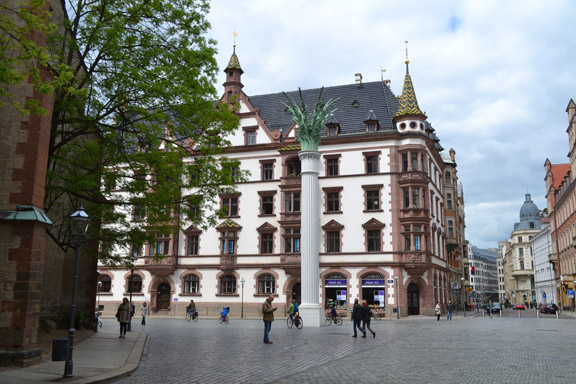
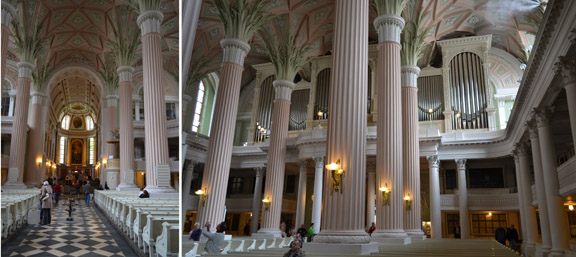
Leipzig is also known for helping overcome the GDR government. St. Nicholas Church—the oldest and biggest church in Leipzig—rose to fame in 1989 as the cradle of the Peaceful Revolution. Services for peace were and still are held there every Monday, and the following demonstrations at the end of the 1980s toppled the East German government, paving the way for German reunification. In the church, note the interior columns: they are designed to resemble palms.

St. Nicholas Church interior

A few other important sights to see in the city include:

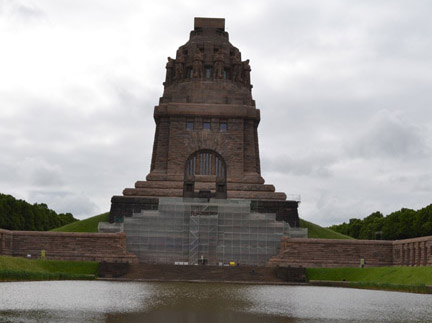
  • The Monument to the Battle of the Nations—the tallest monument in Germany—was erected to commemorate those who fell during the Battle of the Nations (also known as the Battle of Leipzig) fought against Napoleon’s forces in October 1813.
  • In the Battle of the Nations, Austrians, Prussians, Russians and Swedes fought —500,000 soldiers in all— the biggest battle ever in world history, marking the decisive turning point in the war of liberation from Napoleonic rule.

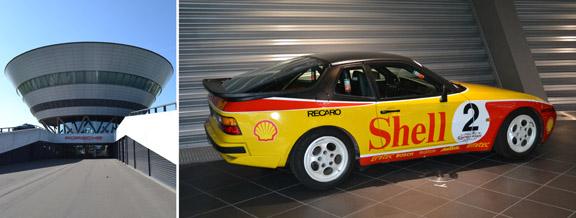
(left to right) Battle of the Nations Monument; Porsche Leipzig Headquarters

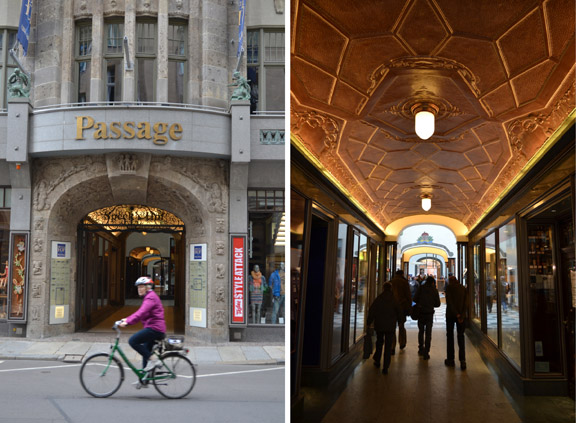
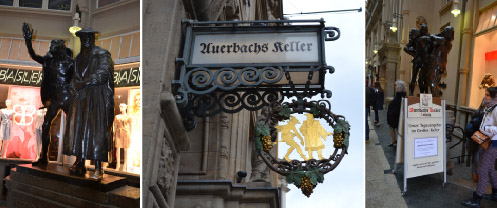
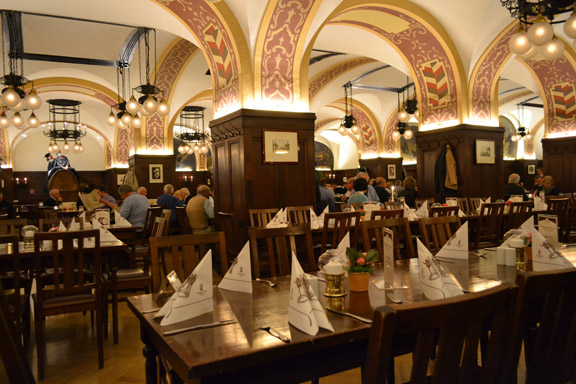
The Mädler Passage, for centuries the city’s most exclusive arcade (one of 30 arcades in the city), is home to the famous Auerbachs Keller. Serving wine since 1525, this tavern/restaurant was immortalized in Faust by Johann Wolfgang Goethe, the father of German literature.

YOUR SORBET IS SERVED
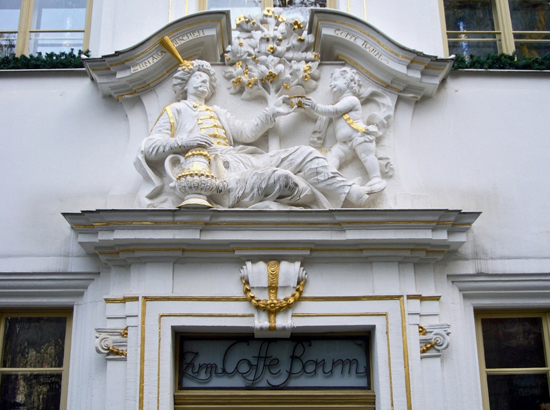
The café-cum-restaurant Zum Arabischen Coffe Baum is one of Europe’s oldest coffee houses (dating from 1694) and it used to number composer Robert Schumann among its regulars. Today the coffee museum on the third floor of the building contains 500 exhibition items on the history of coffee, the Saxons’ “national drink.”

Zum Coffe Baum
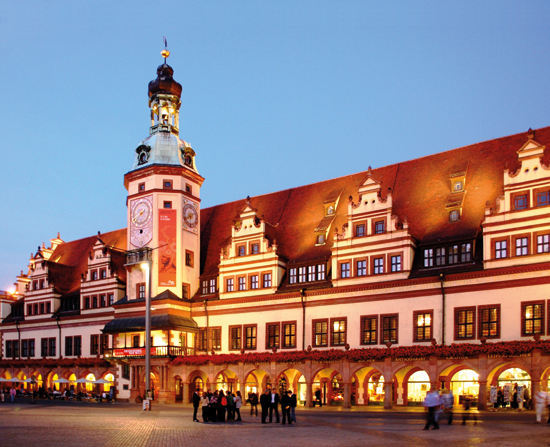
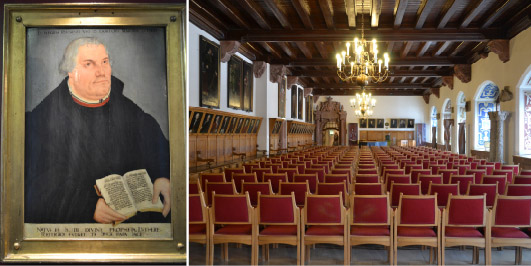
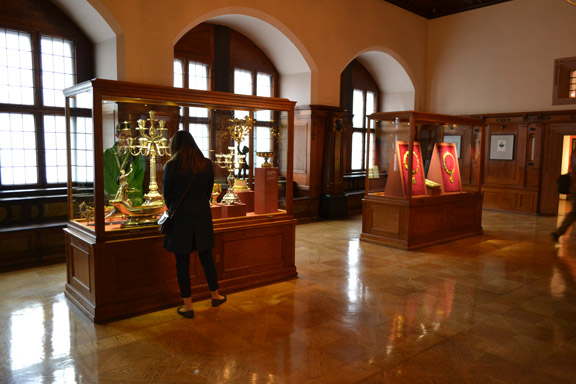
  • The Old City Hall, one of the finest Renaissance buildings in Germany, can be admired on the Market Square; it houses the Museum of City History. Inside is Katharina von Bora’s (Martin Luther’s wife) wedding ring and a pulpit in which Luther preached.

Town Hall Museum where a number of Martin Luther artifacts are exhibited.

NIGHTLIFE ABOUNDS
If you happen to be a night person, there is plenty to do in the evening, with all the city’s theaters, concert halls, variety shows and casinos. There are several dining and nightlife districts as well, such as Drallewatsch, Schauspielviertel, Südmeile, Münzgasse, Gohlis and Plagwitz. And when you arrive in one of the many clubs or bars, you’ll learn that often the term “closing time” is not in the vocabulary. There are 1,400 pubs and restaurants in this city, so dessert is not a problem.


And there you have it: a complete Leipzig meal with all the courses. Emperor Maximilan I knew something in 1497 when he granted the town imperial trade fair rights. He knew that one day Leipzig would be a multi-course city, and he was correct.

Auerbachs Keller Restaurant, located below the Mädlerpassage, is the best known and second oldest restaurant in Leipzig, described in Johann Wolfgang von Goethe’s play Faust I, as the first place Mephistopheles takes Faust on their travels. The restaurant owes much of its fame to Goethe, who frequented Auerbach’s Cellar as a student and called it his favorite wine bar.

For more information, go to www.leipzig.dewww.leipzig.travel, or www.germany.travel


Hotel Fuerstenhof
An upscale Leipzig tradition

Not far from the main train station in Leipzig is the Hotel Fuerstenhof, a five-star gem with marble, gold-rimmed archways, high ceilings and soaring windows.

At one time a classic patrician’s palace, the 92-room air-conditioned hotel with 12 suites, features myrtle wood furniture, marble bathrooms and a friendly, dedicated staff. The staff is geared to making your stay a pleasant one, knowing your name when you come to the registration desk for questions, and providing service with a smile. I had more than a few special requests from the staff which were quickly and pleasantly taken care of.

There’s an indoor 7,000-square-foot pool area, equipped with saunas, fitness room, solarium, cosmetic and massage stations. Also, the hotel features a nice piano bar area with comfortable, plush seats, and tables, fine dining in the 18th-century style neo-classical Villers restaurant (with a choice of more than 200 wines), a complete breakfast area and a wine bar round out some of the amenities of this hotel.

The hotel was first mentioned in 1770 when Karl Eberhard Loehr, a banker, lived in the palatial home, built between 1770 and 1772. It was called the Loehr Haus. It opened as a hotel in 1889, and underwent a complete renovation and restoration in 1993. It is part of the Luxury Collection of Hotels, one of 62 worldwide luxury hotels. 

For more information, go to www.hotelfuerstenhofleipzig.com/en

Hotel Fuerstenhof