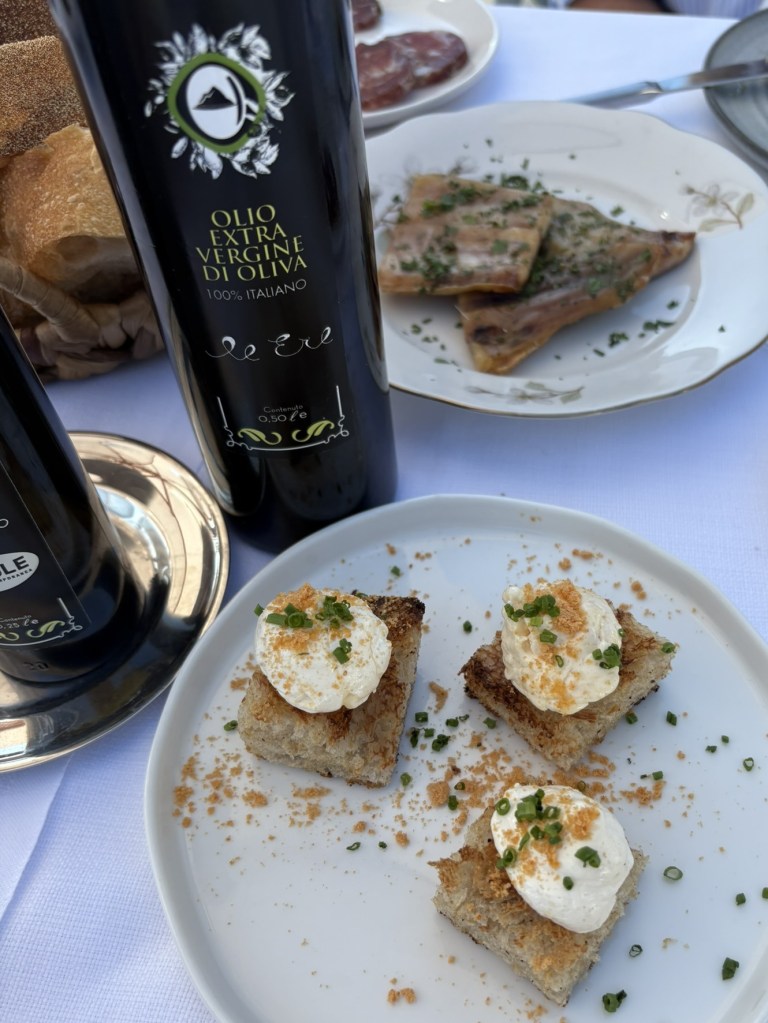
Layers of Time, Living Traditions in Southwest Sardinia

Sardinia’s ancient past survives not only in rock-cut tombs and sacred sites, but is also celebrated through the food, wine, and traditions that shape daily life

Story and photos by Alison Ramsey

Sant’Antioco is Italy’s oldest urban settlement, but its ancient past remains embedded in the island’s living traditions. In the southwestern region of Sardinia, Italy, communities have long been drawn by strategic coastlines, seafood-rich waters, mineral resources, and fertile land in a biodiverse ecosystem. As Mediterranean cultures crossed these shores, they passed along traditions, traded tools and recipes, and introduced influences that are still evident today. The island’s archaeology is not only preserved in excavated tombs and museum exhibits—it remains visibly connected to everyday culture through the food and wine served at family dinners.

Ferruccio Barreca Archaeological Museum

In Sant’Antioco—an island off the coast of southern Sardinia, connected by a manmade isthmus—the Ferruccio Barreca Archaeological Museum is set up for thorough exploration. The museum is arranged by historical timepoint, so visitors can follow the route from Phoenician and Punic origins extending into the Roman era in Italy’s most ancient city, Sulky.
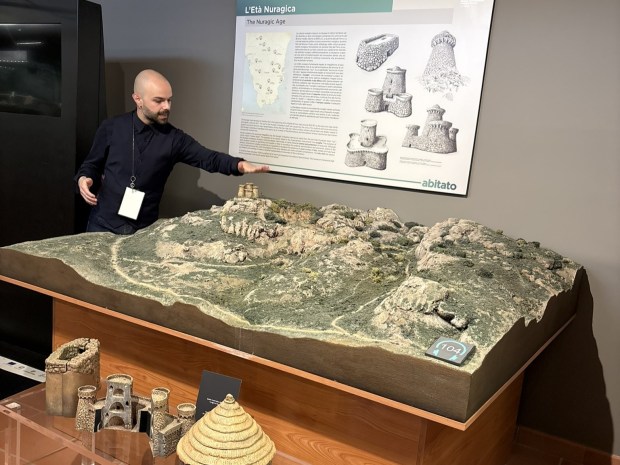
Museum guide points to exhibit model
Knowledgeable guide Matteo Piras walks visitors through exhibitions at the Ferruccio Barreca Archaeological Museum.

Displayed here are artifacts found in excavations that are still in progress at sites on the island, with relics from ancient settlements and necropolises. One exhibition shows items found in a Punic Age water cistern and includes a large bowl used for making couscous (a typical Tunisian meal). Evidence like this indicates the island’s layered historical cultures resulting from its unique waterside location and landscape have influenced cuisine.

Tabarchin Cascà Indicates African Culinary Influence

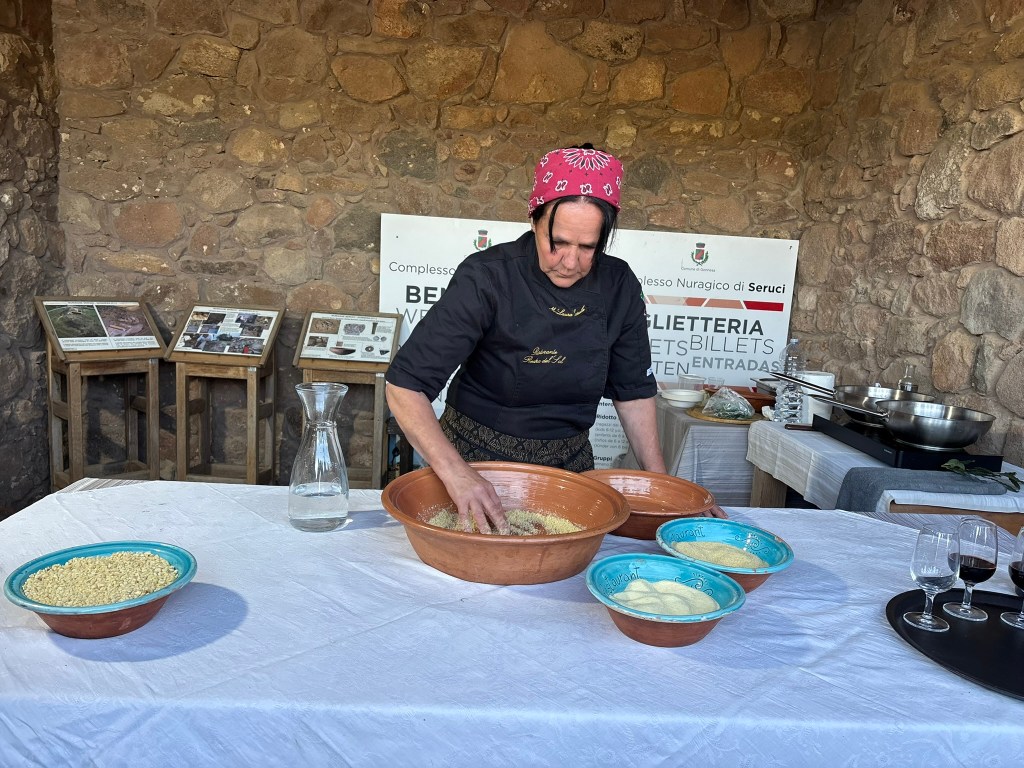
In Calasetta, the Tabarchin couscous called cascà is still traditionally made using hand-prepared semolina. Lines grooved into the sides of the bowl assist in breaking up the moistened, salted grain clumps to form spherical shapes. Made in large batches and cooked with vegetables and aromatic herbs, this couscous can be reheated as savory leftovers, with flavors intensifying for later enjoyment.
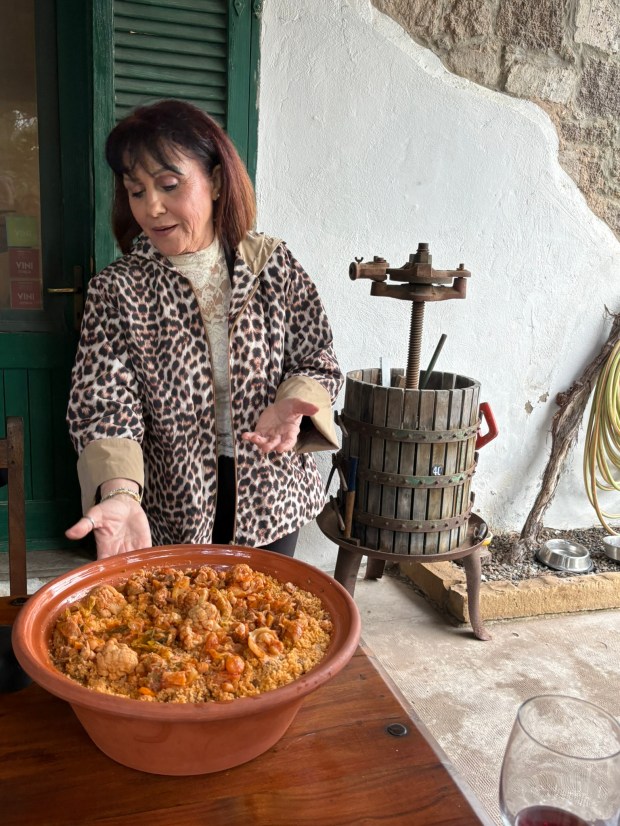
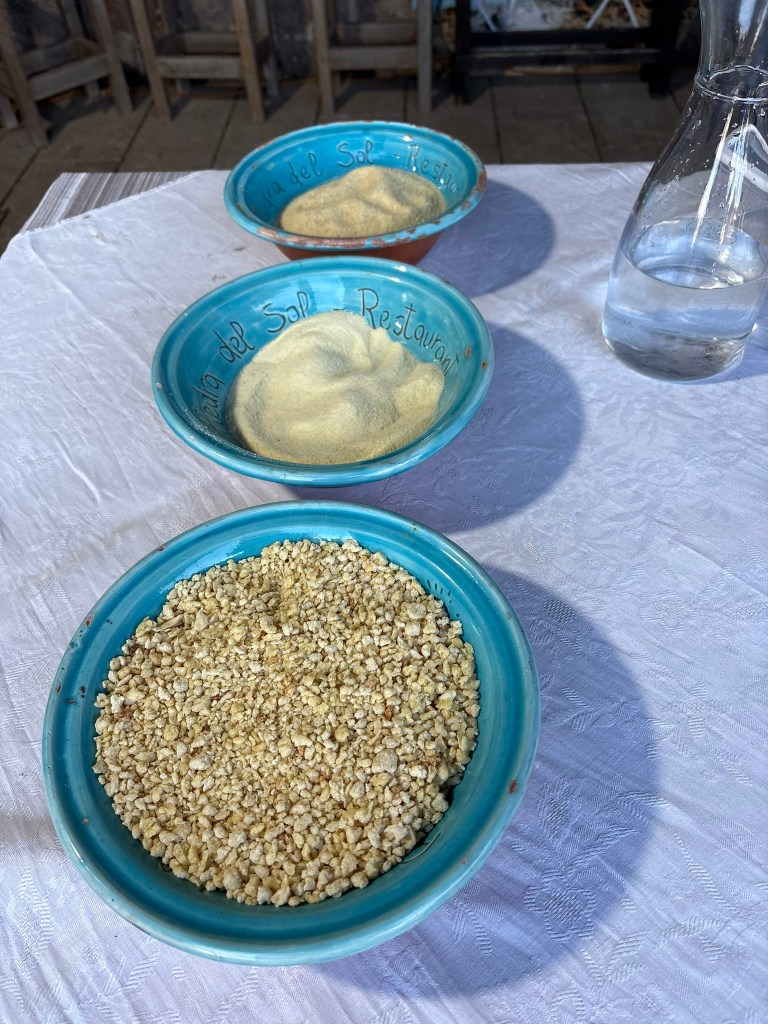
A family recipe of Calasetta couscous is served at the Tenuta La Sabbiosa winery.
Settlement Structures Give Clues to Earlier Lifestyles

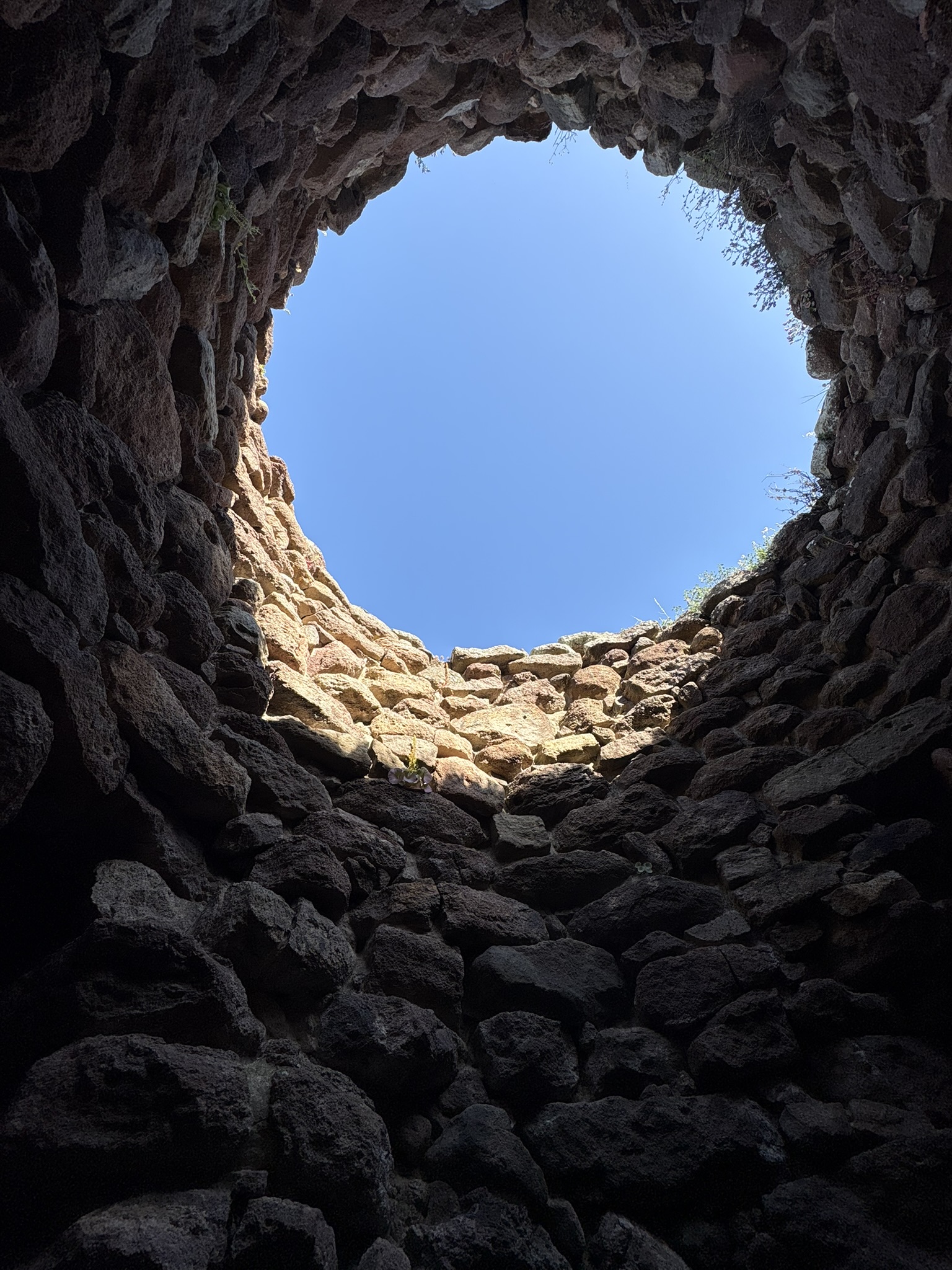
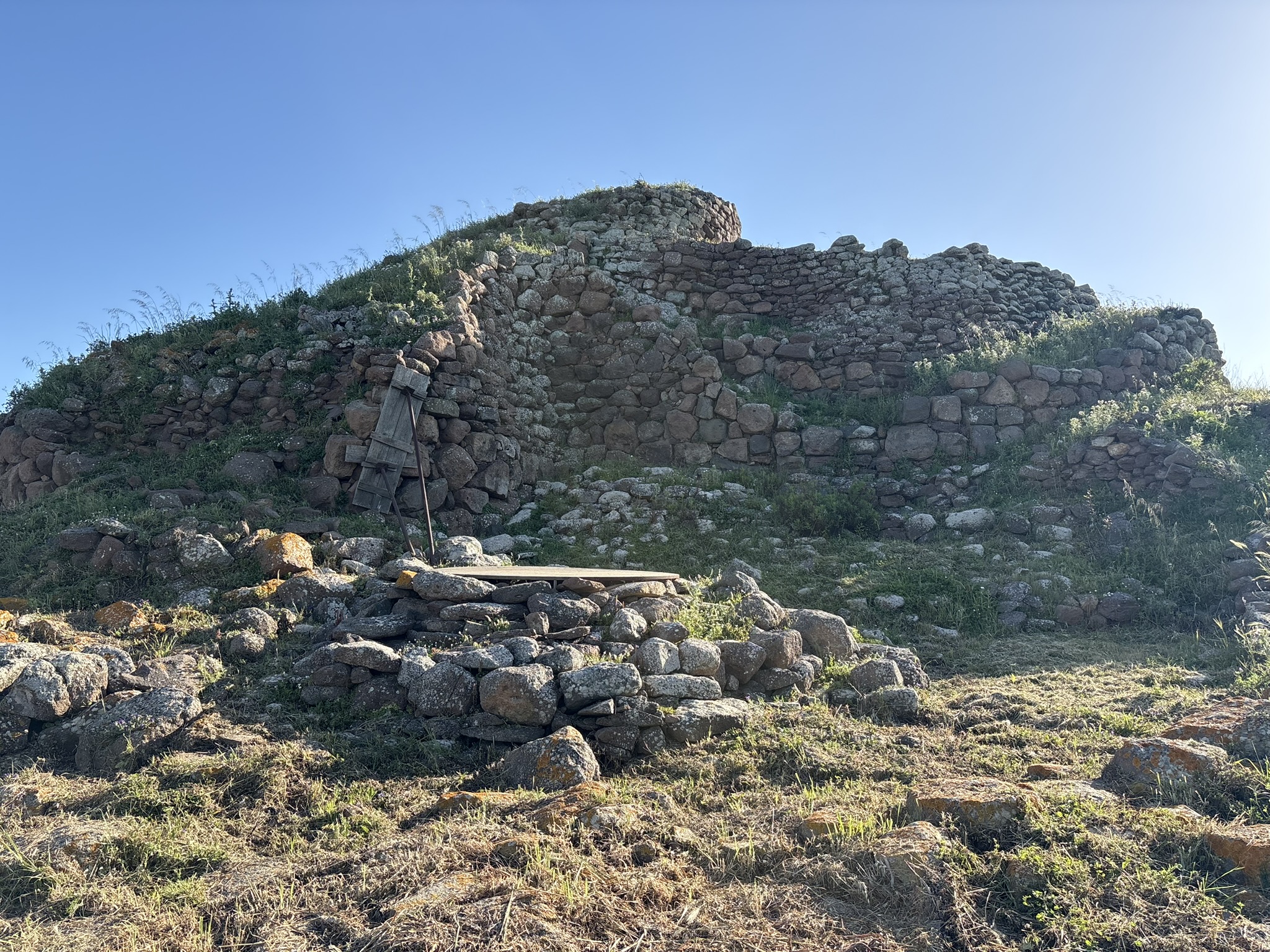
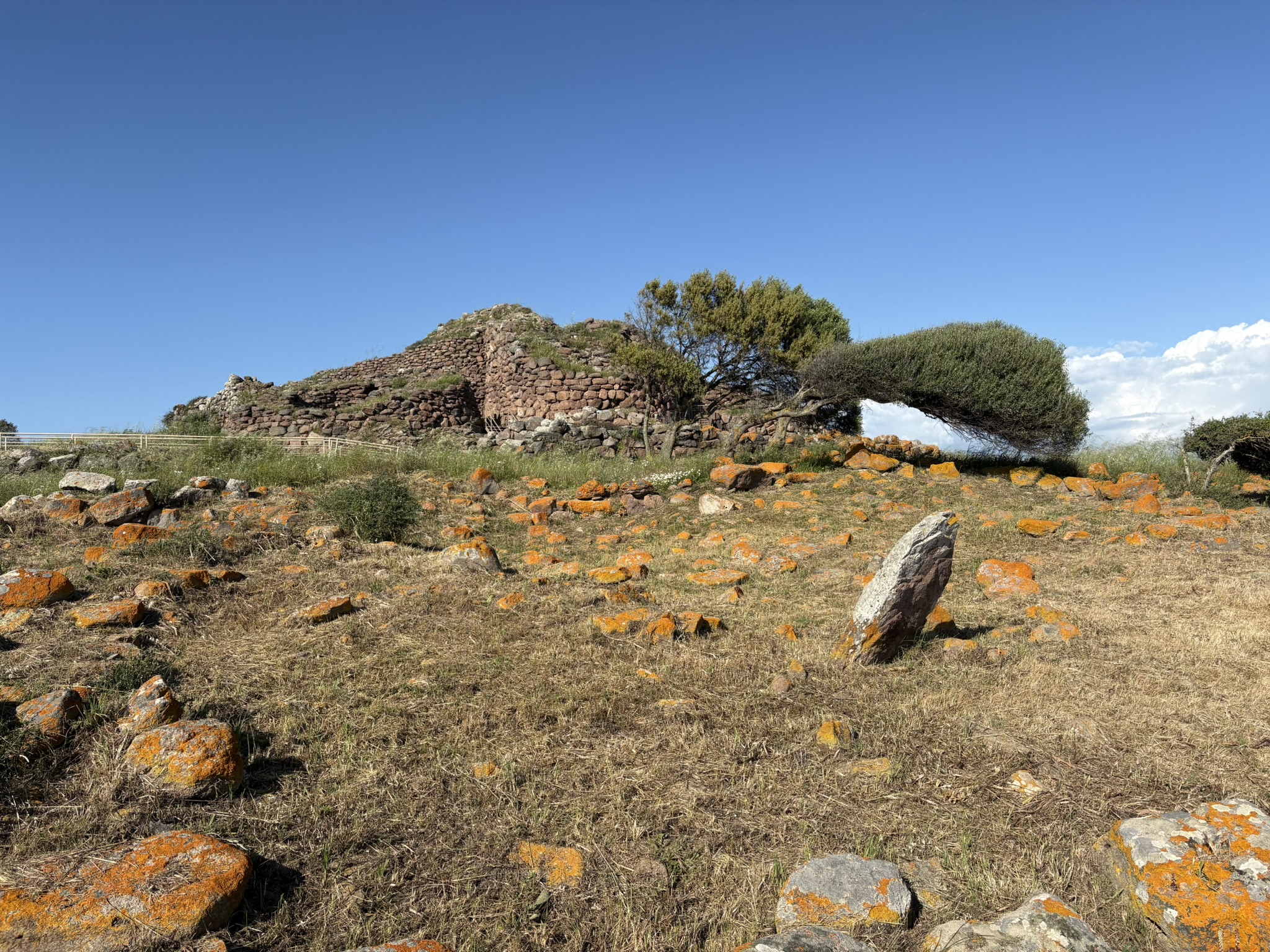
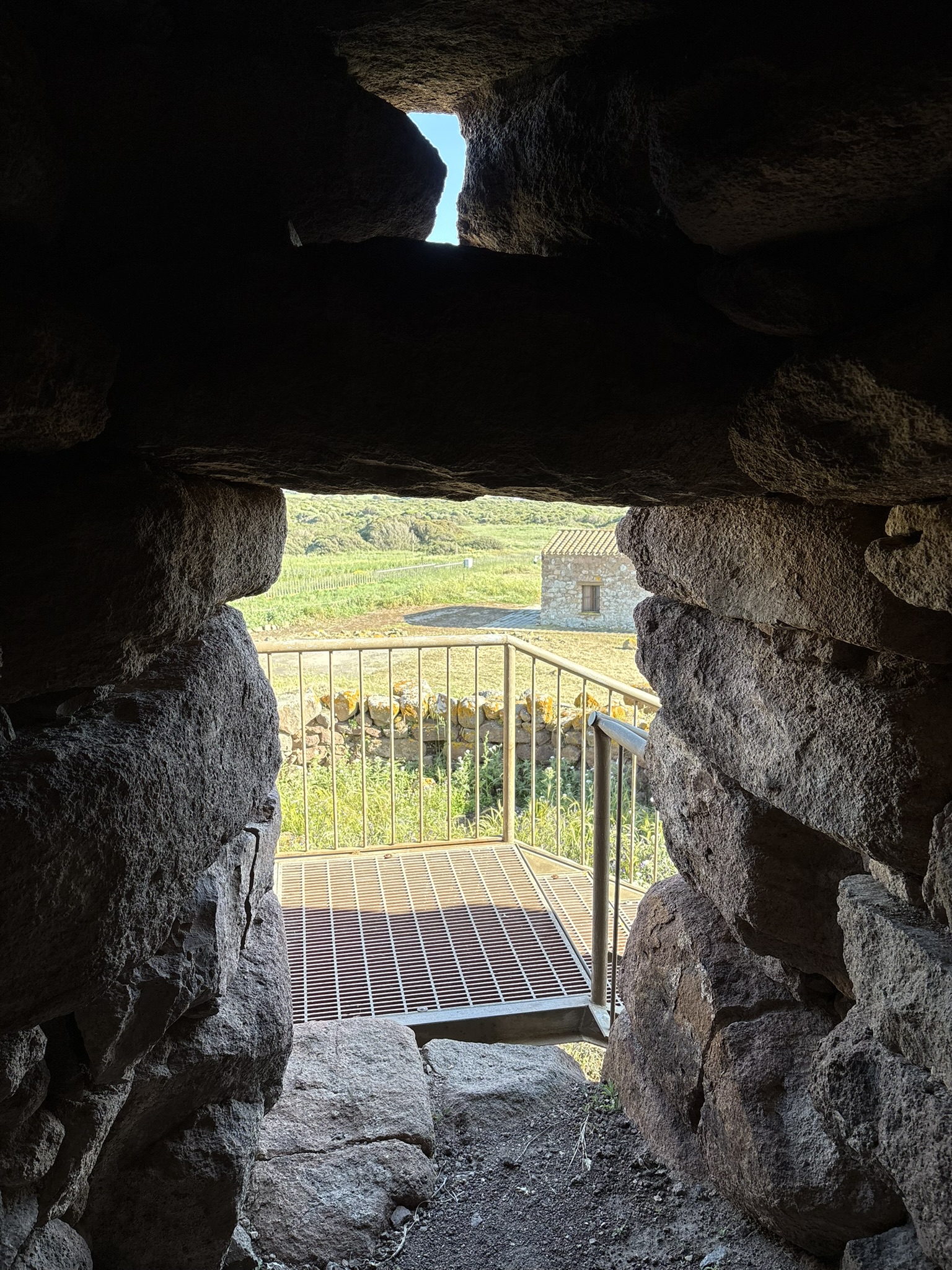
The southwestern portion of Sardinia holds the ruins of many nuraghes (fortress-like buildings) and shows evidence of the existence of Phoenician settlements—some of the oldest on the island. The remains of important Roman and Medieval structures are also found here. Across all of Sardinia, there are 7,000 discovered nuraghi, with 50 on Sant’Antioco island itself. Although the Nuragic Age’s characteristic structures vary in size and format, the strategic locations of these buildings seem to indicate they served as political, economic, and administrative centers of control and protection of resources.

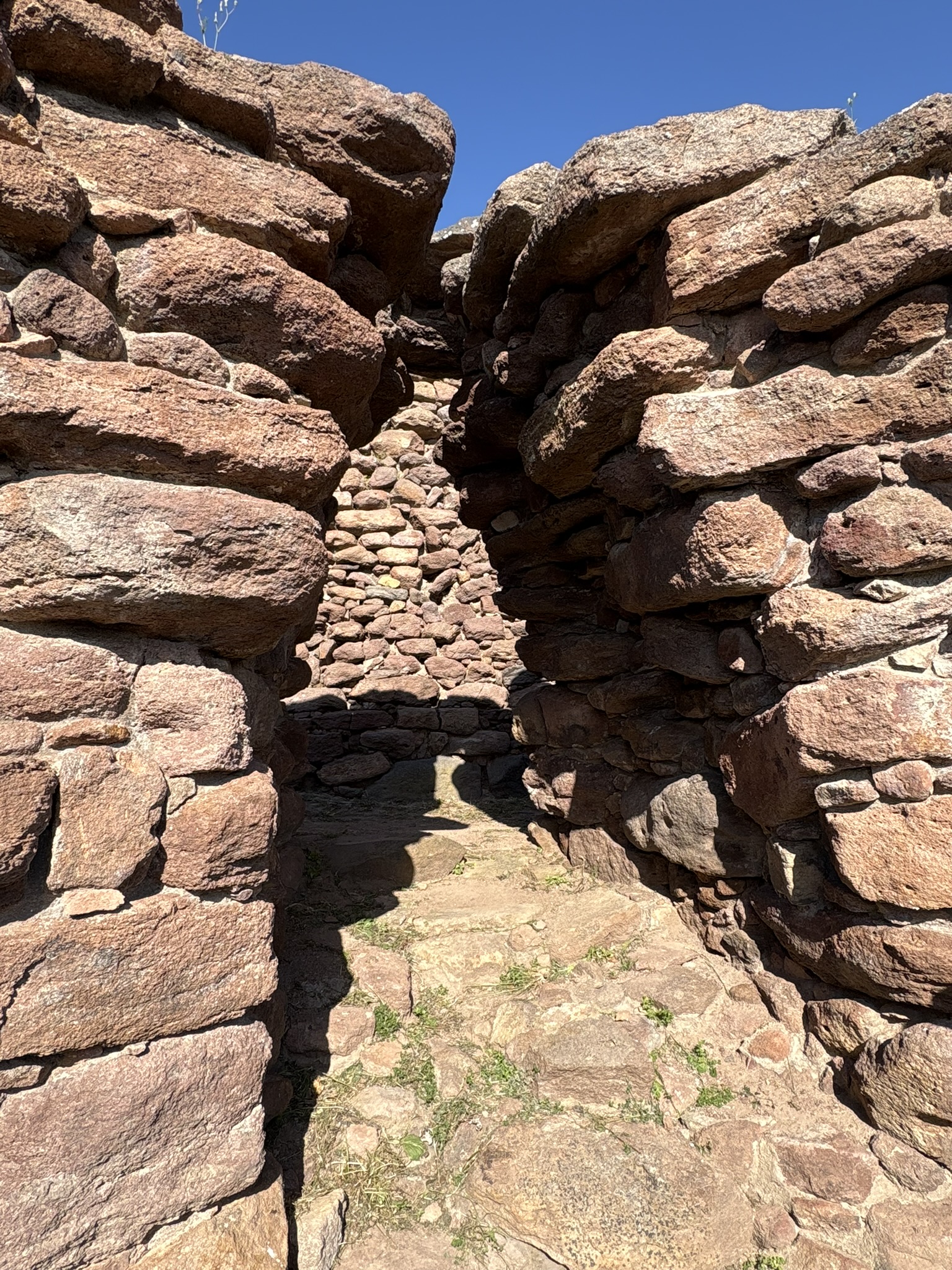
To touch ancient nuraghi monument stones from 1600 B.C., head to the 14-acre Nuragic complex of Seruci in the town of Gonnesa, one of the largest Bronze Age dig sites in Sardinia. Examination of the multi-tower nuraghe and numerous prehistoric artifacts found at this site indicate that the village included about 200 huts. Deposits of zinc, lead, and silver give evidence to the commercial and daily life of the settlement’s early inhabitants.
Grapevines Thrive From Ancient Roots

Protection of the land’s products remains important even today, as Sardinians work hard to retain the natural offerings provided by land and sea. Tenuta La Sabbiosa winery on Sant’Antioco has great respect and passion for the ancient Carignano vineyards the native soil and salty winds used to nourish year-round across the dunes. Having avoided Europe’s late 1800s phylloxera vine disease, these historic grapevines began to dwindle in the 1980s, as low yield and changes in the wine market slackened the wine-growing tradition. La Sabbiosa restored the centuries-old vineyards on their land, using traditional processing techniques combined with modern knowledge. The pure flavors and scents of their wines are unique in that they are a direct product of ancient, pre-phylloxera European roots and grapes grown seaside, in soil containing 99% sand.
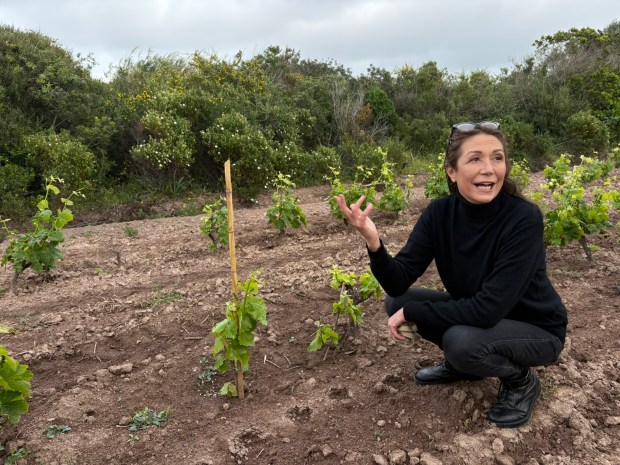
Woman crouched beside grapevine plants
Through grafting original vines and hard manual work, the ancient flavor of European grapes is preserved in the roots at Tenuta La Sabbiosa winery.
Natural Cork Regenerates in Sardinian Ecosystem

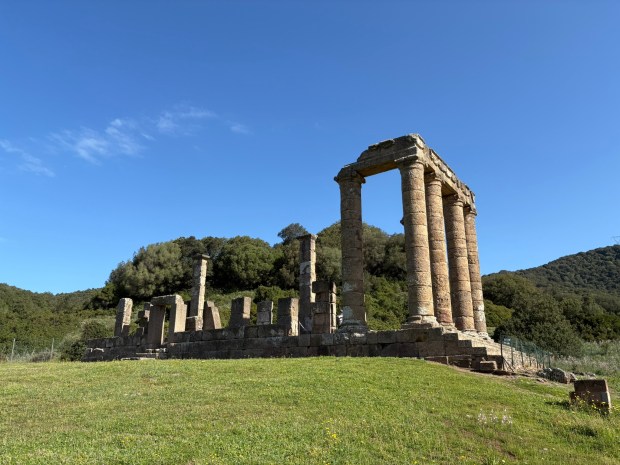
On the uphill road to Fluminimaggiore and the restored Roman Temple of Antas, cork oak trees are prevalent at the high elevation. These trees mark another way Sardinia’s landscape continues to shape local craft and commerce, as the trunks’ distinctive outward-growing bark regenerates in layers, allowing it to be harvested and regrow without harming the tree.

Renewable and sustainable, natural cork is harvested by cork producers to bring to northwest Sardinia and sell to wine producers, jewelry makers, and traditional mask makers, extending the relationship between Mediterranean ecology and everyday material culture.
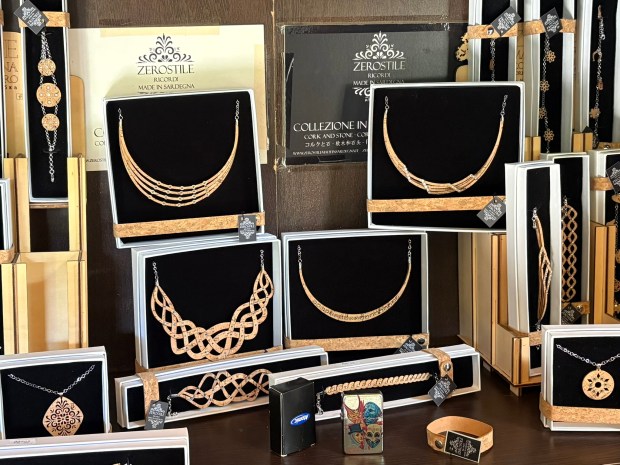
Cork jewelry at a gift shop
Jewelry and souvenirs made from cork are found at some gift shops on the island.
Roman temple ruins in a meadow
The Temple of Antas has been partially reconstructed using original stones and fillers to recreate the front columns and staircase, and the sanctuary sits in the middle of a meadow, at an elevation where cork trees thrive.
Salt Harvested From Lagoon Waters

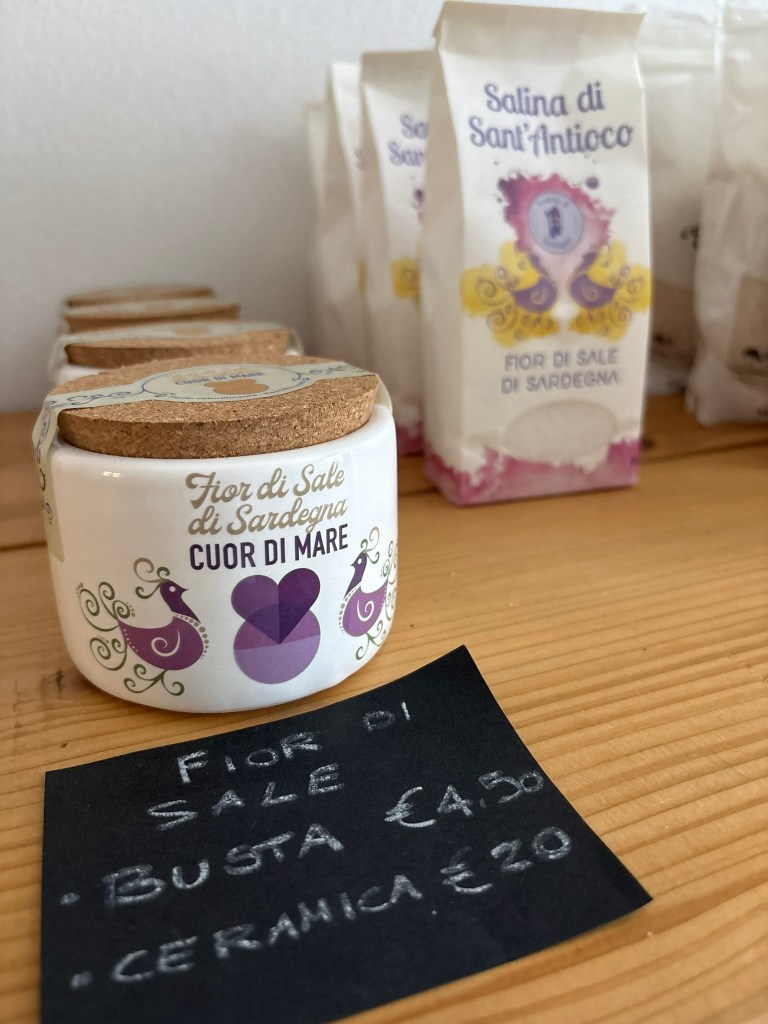
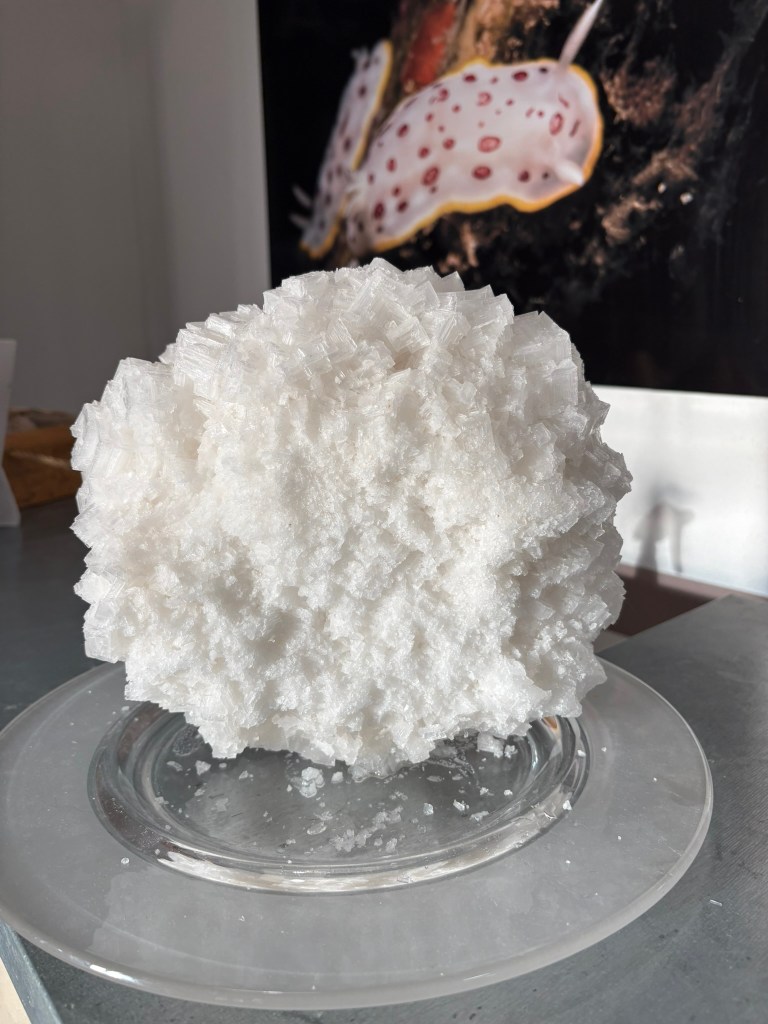
At waterfront MuMa Hostel on Sant’Antioco, the onsite Museum of the Sea and Shipwrights showcases natural habitats of plant and animal species on the island, including those of the herons, egrets, gulls, and pink flamingos that lounge in the Santa Caterina lagoon. These lagoon waters feed the adjacent Sant’Antioco salt pans, which are among the most important in Italy and help meet culinary demands.
Flavorful Food From Flora

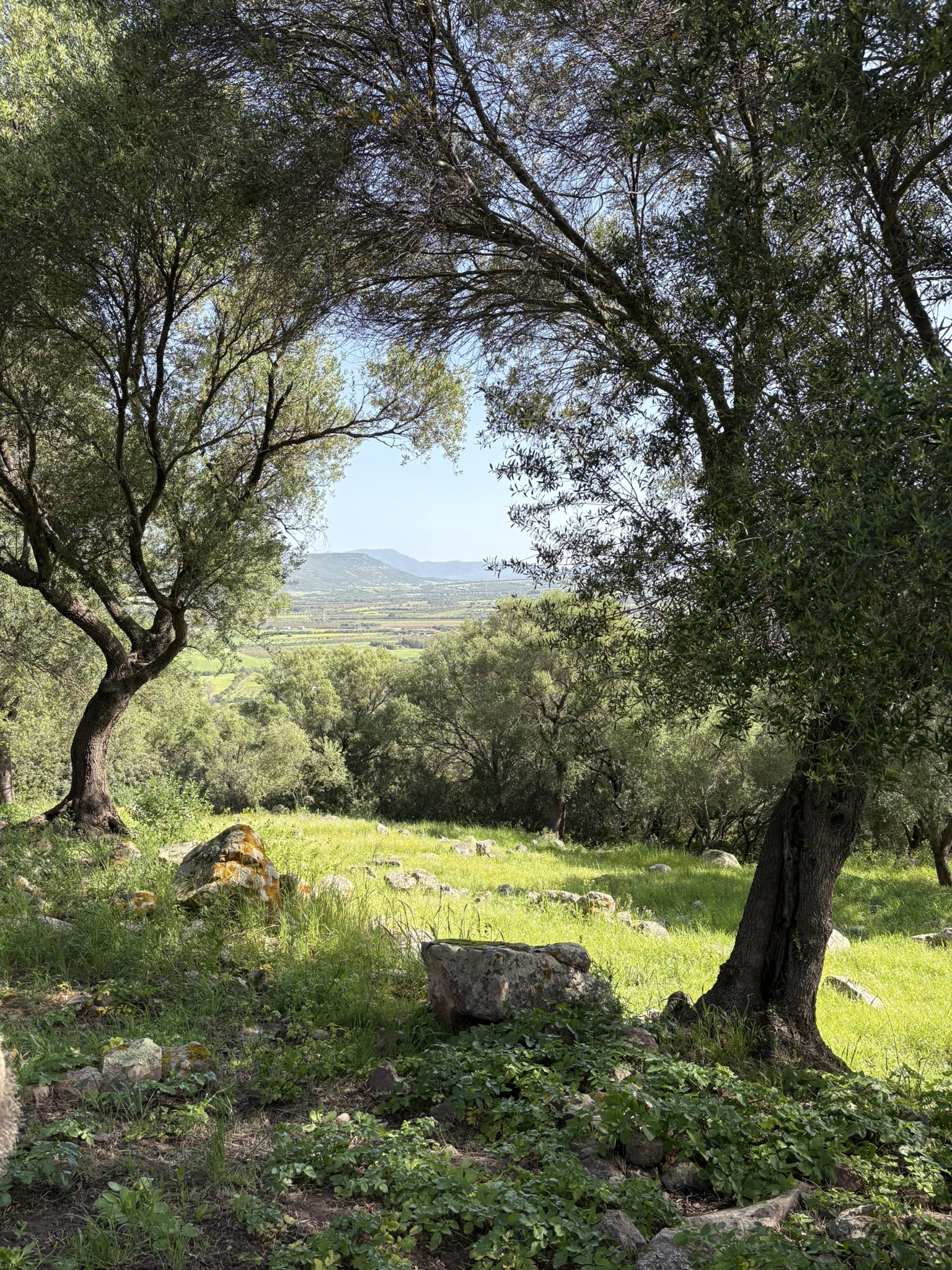
While hiking to archaeological sites for evidence of the past, acknowledge the unspoiled nature painting the hinterland. The pure air is filled with intense, aromatic scents of wild olive trees, prickly pear, wild lilies, chamomile, and myrtle. Although lovely to smell, this scrabbly brush that characterizes the Sardinian countryside is often waxy, dry, and bitter, so animals avoid them. To the enjoyment of many people, however, some of this vegetation from the Mediterranean scrub is used to create delightful food and drink.

Fruit from the myrtle plant is used to make a popular liqueur—mirto—served cold with desserts or after meals in Sardinia. The berries are steeped in high-proof alcohol for several weeks and mixed with simple syrup. The drink’s rich, sweet, and slightly bitter herbal flavor evokes the Mediterranean maquis—the dense shrubland typical of the region. Many households on the island make their own mirto or limoncello to have on hand for dinnertime and to serve to guests.
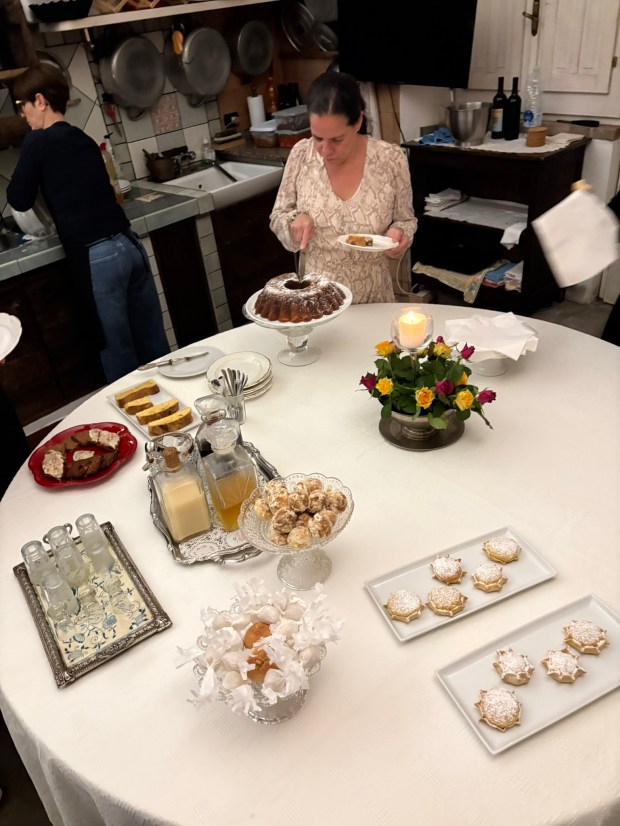
Table full of desserts and drinks
The dessert table at home restaurant Da Zia Pinuccia offers “ladies’ kisses” almond balls and pastries alongside chilled limoncello and mirto.

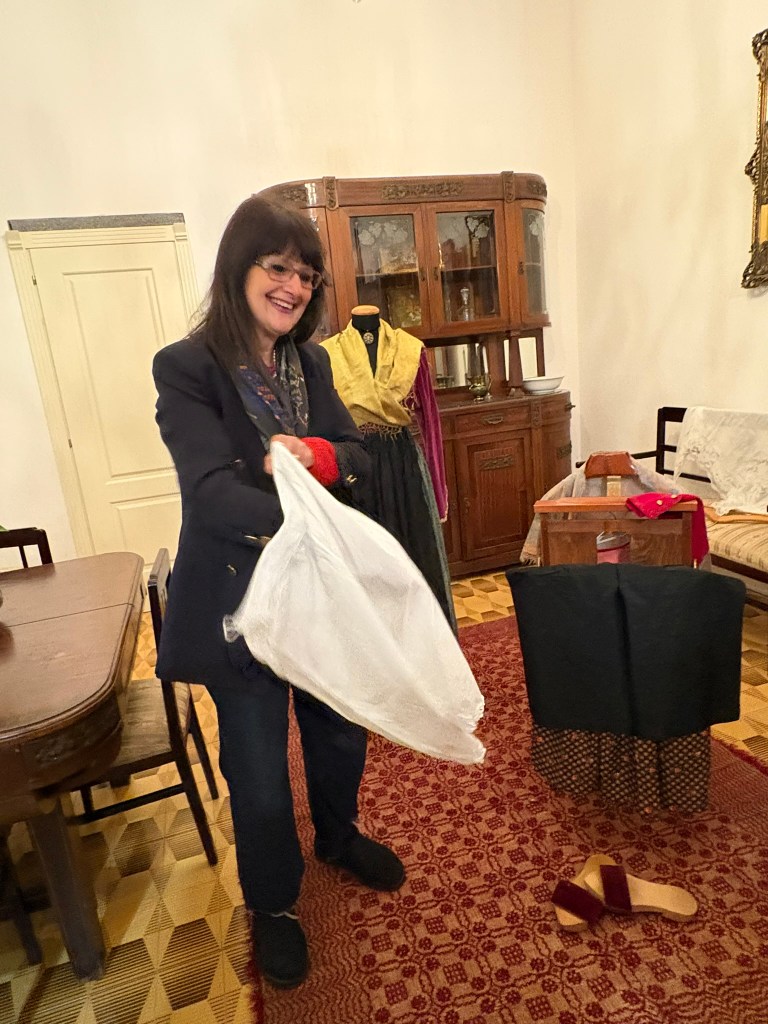
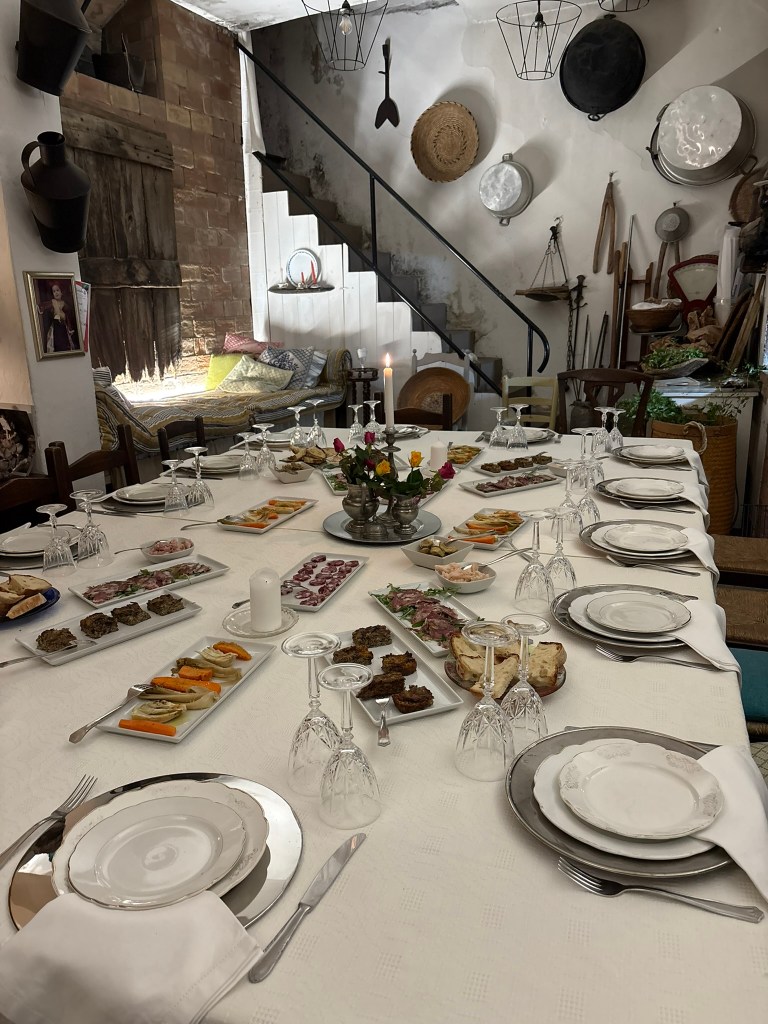
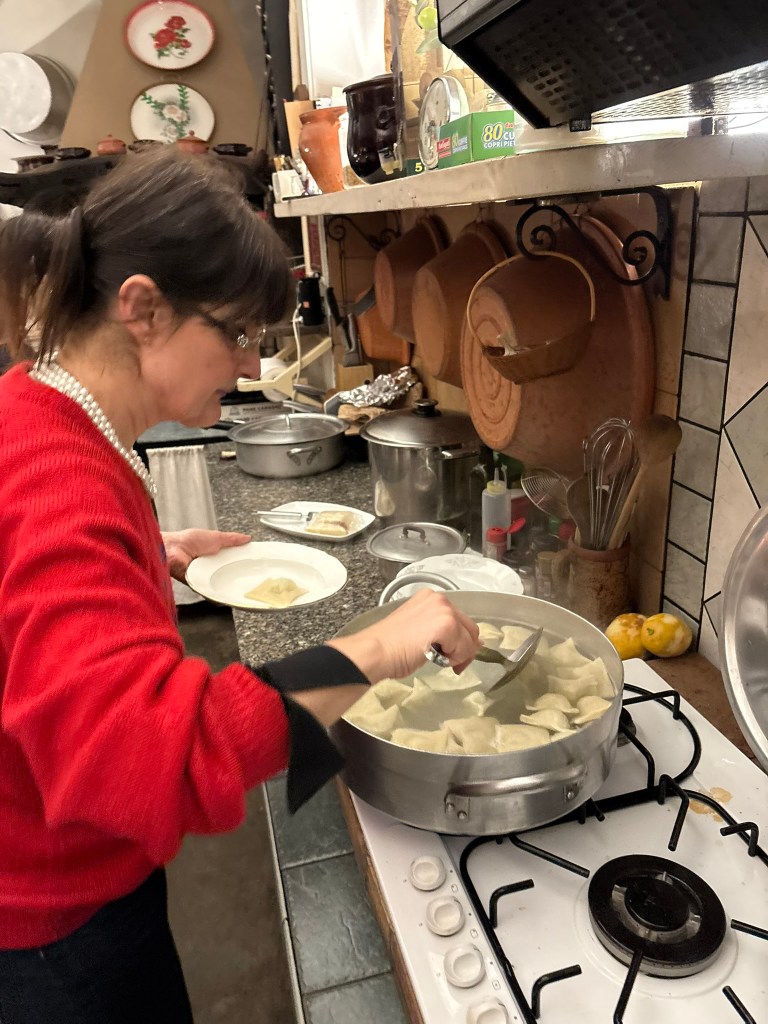
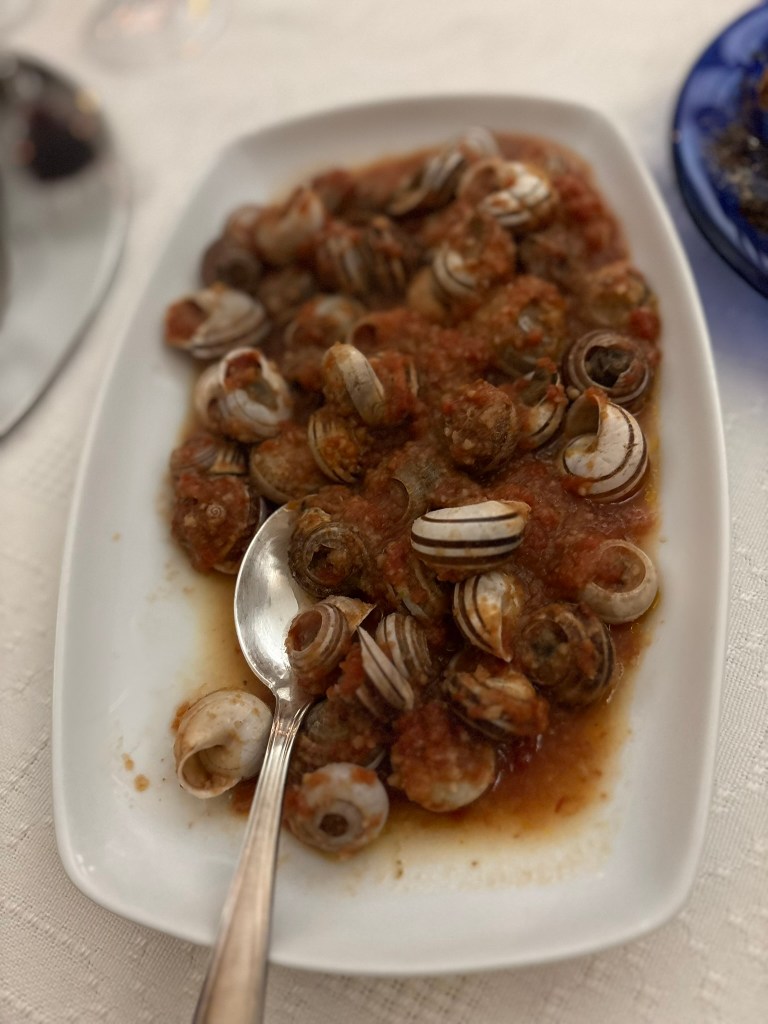
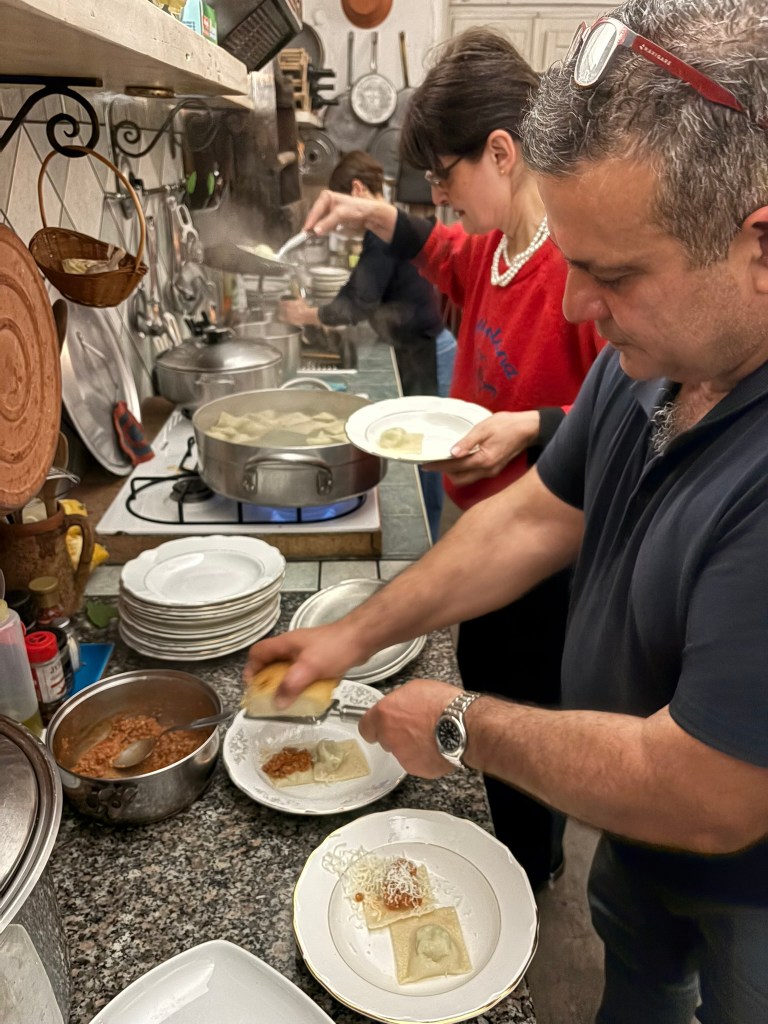
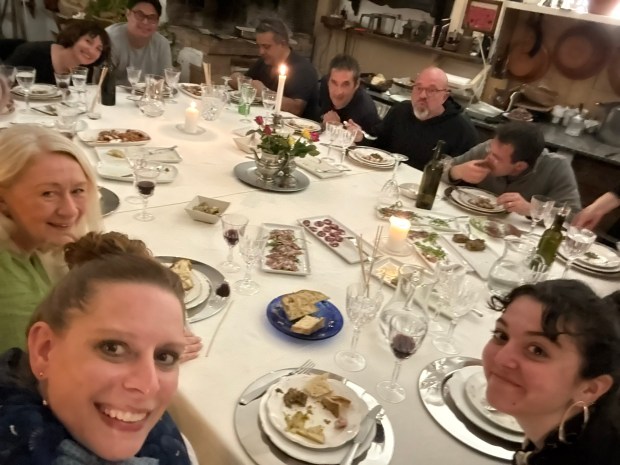
The fragrant branches of the myrtle plant are even used as a colorful garnish for plating suckling pig at home restaurant Da Zia Pinuccia. A family-style dinner at this 19th-century house provides an immersive dining experience with traditional Sardinian recipes passed down from previous generations, using locally sourced seasonal ingredients and ancient flavors.

Dine on homemade bread, vegetables, and meats cooked in the wood-fired oven, all served on antique dishware with years of family history. For dessert, try the “ladies’ kisses,” an almond ball coated in sugar and wrapped in white paper with fringed edges—a popular sweet in the south of Italy.

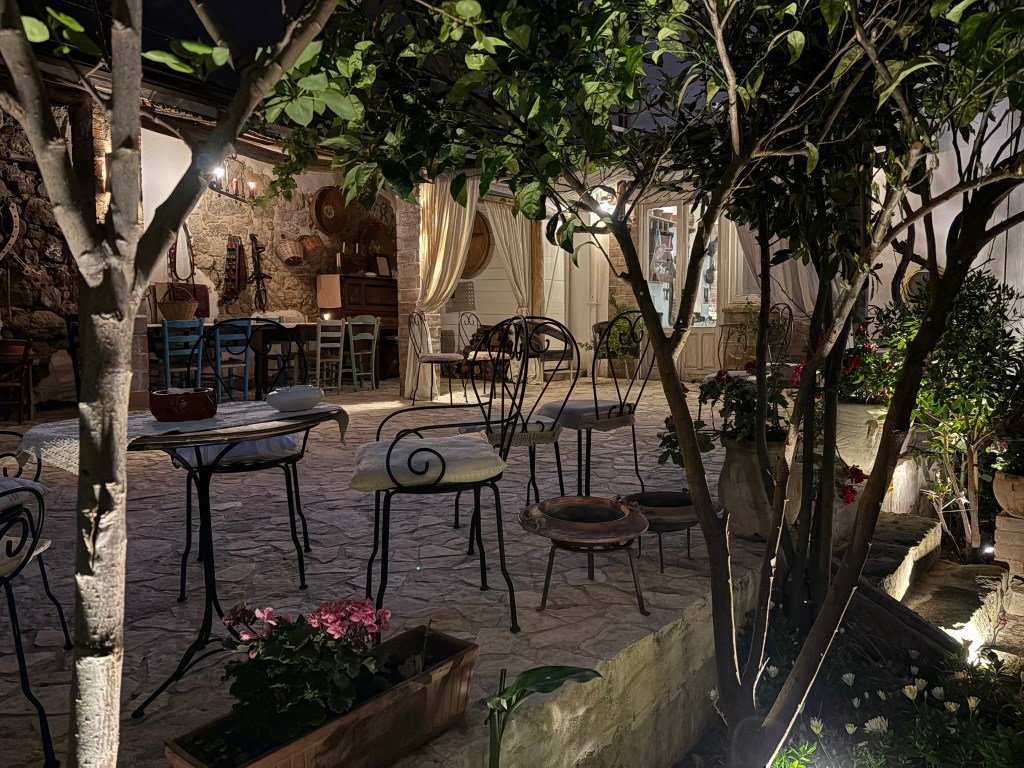
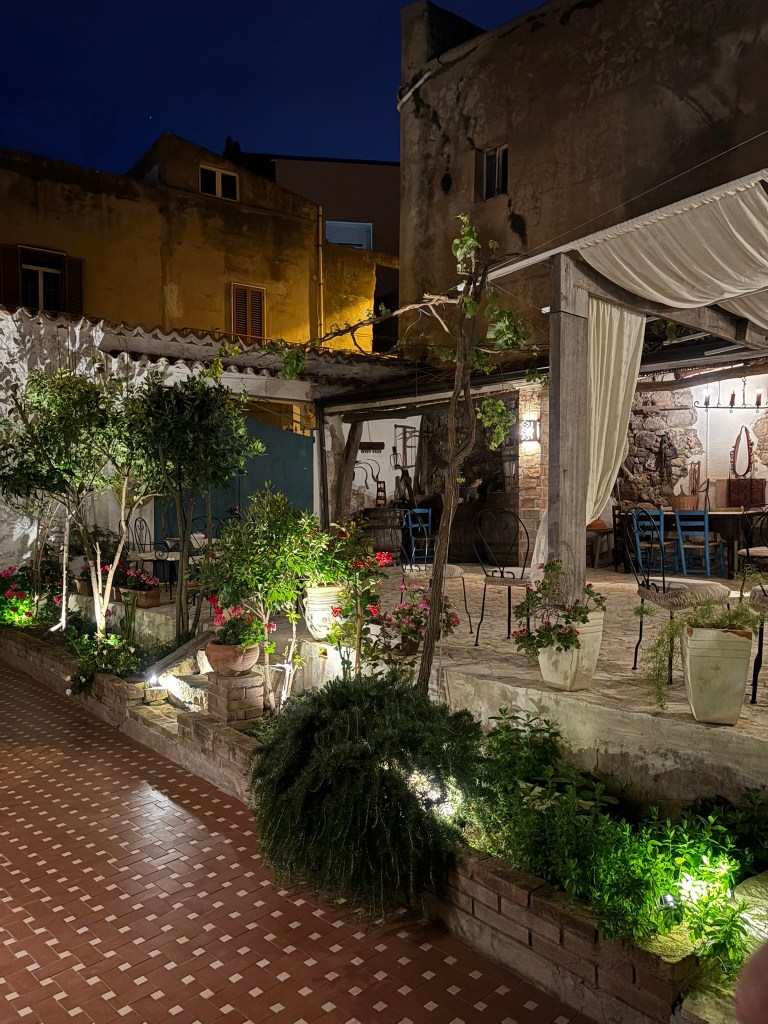
Learn generational stories around the dinner table, mingle with other guests in the gorgeous greenery lined stone courtyard, and enjoy time in a beautiful, warm home full of cultural history and memories.  
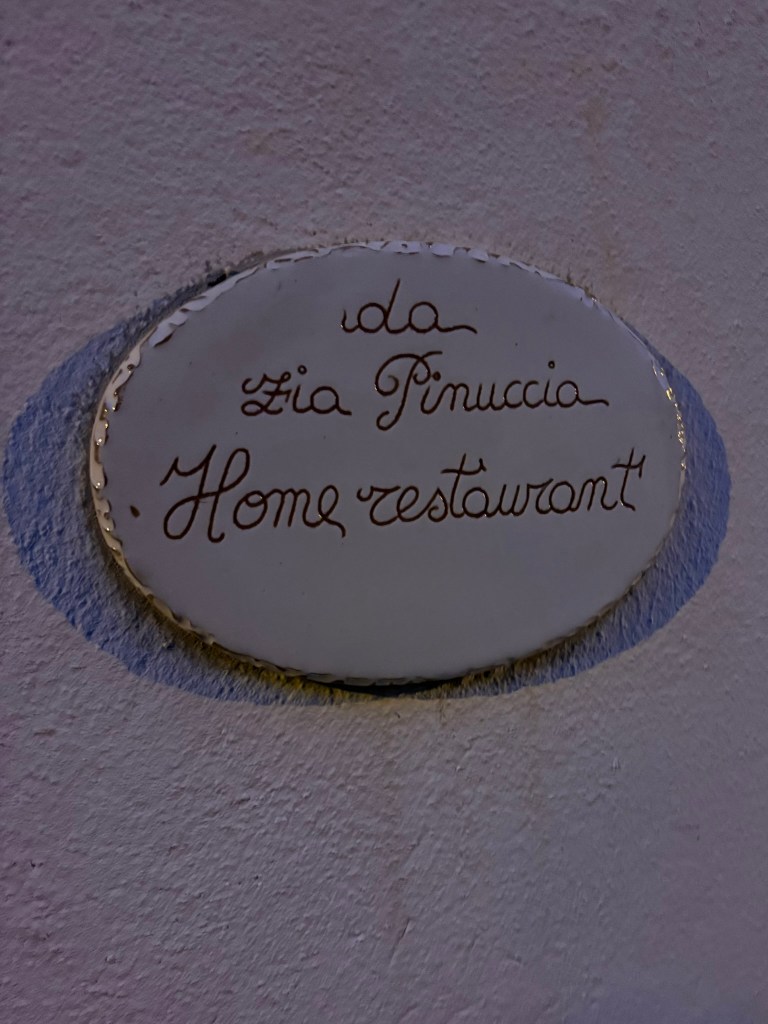
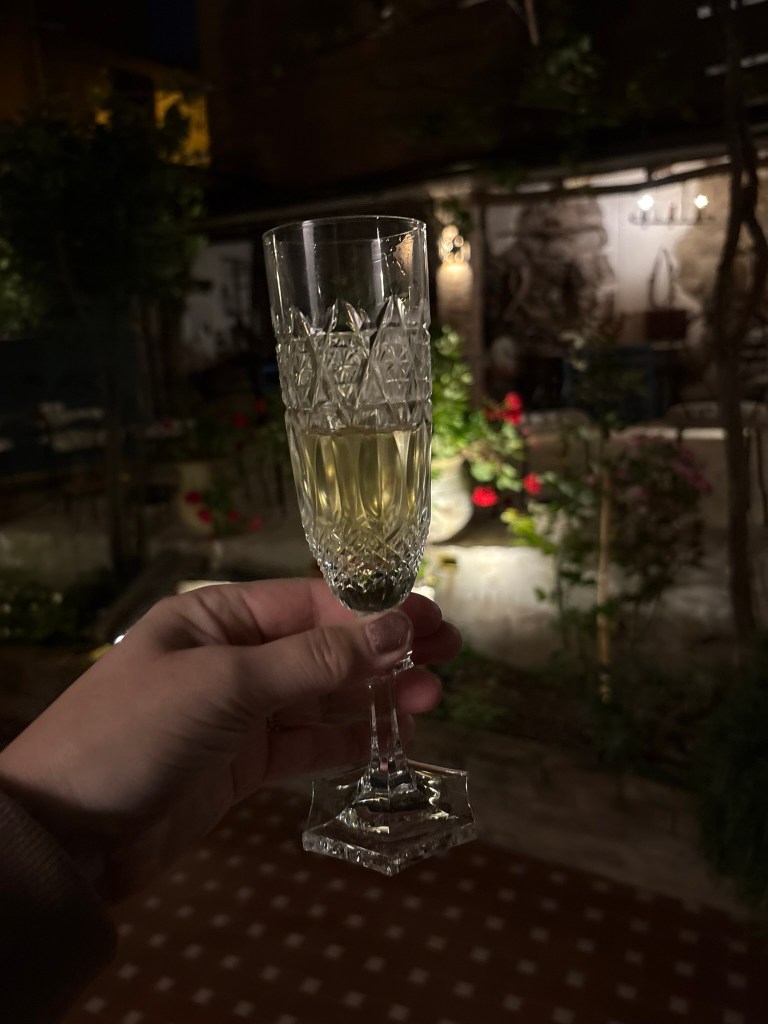
Prepare for lots of food and laughter around the table at home restaurant Da Zia Pinuccia.
Ancient Tombs—Waiting for the Afterlife

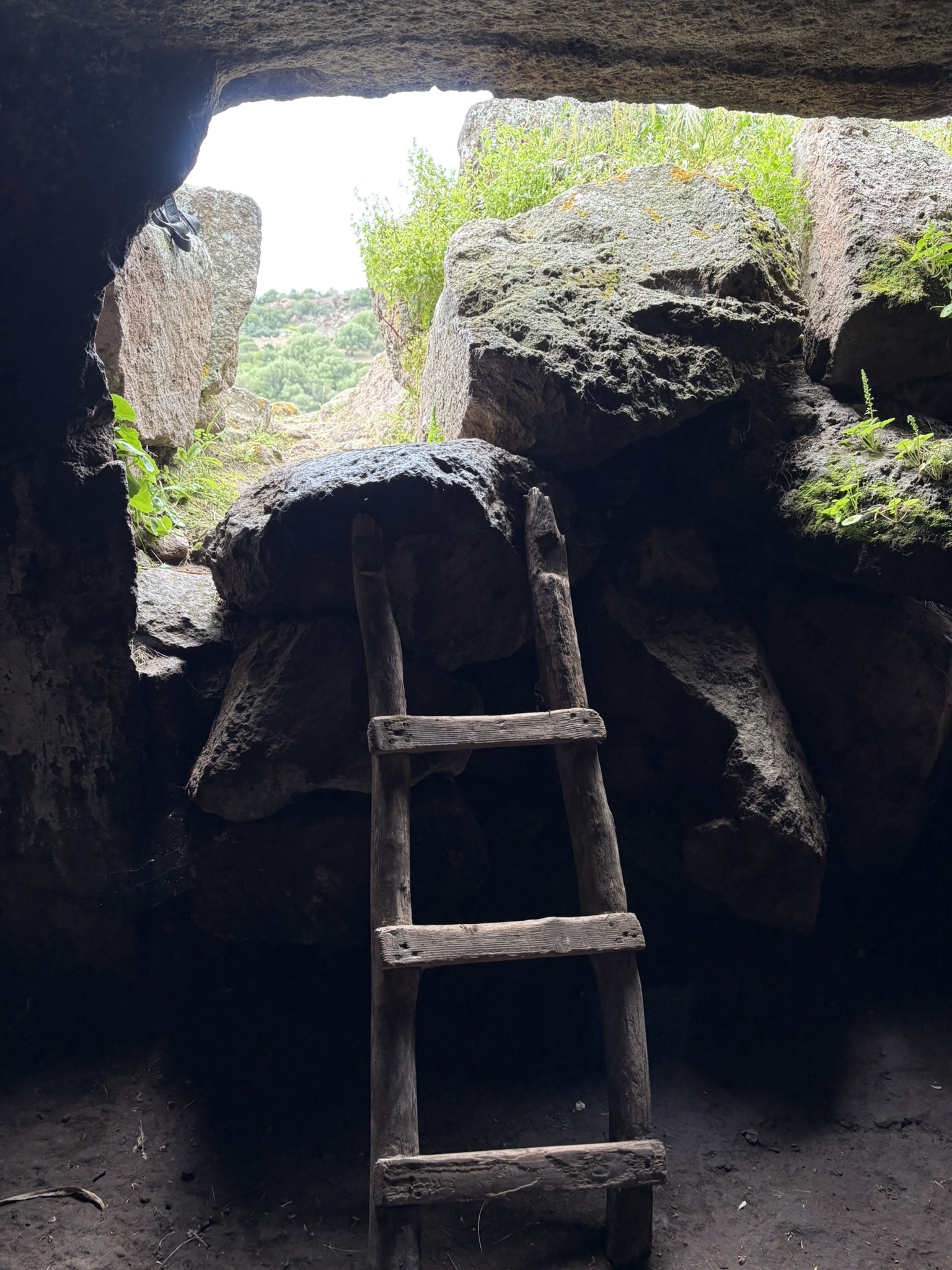
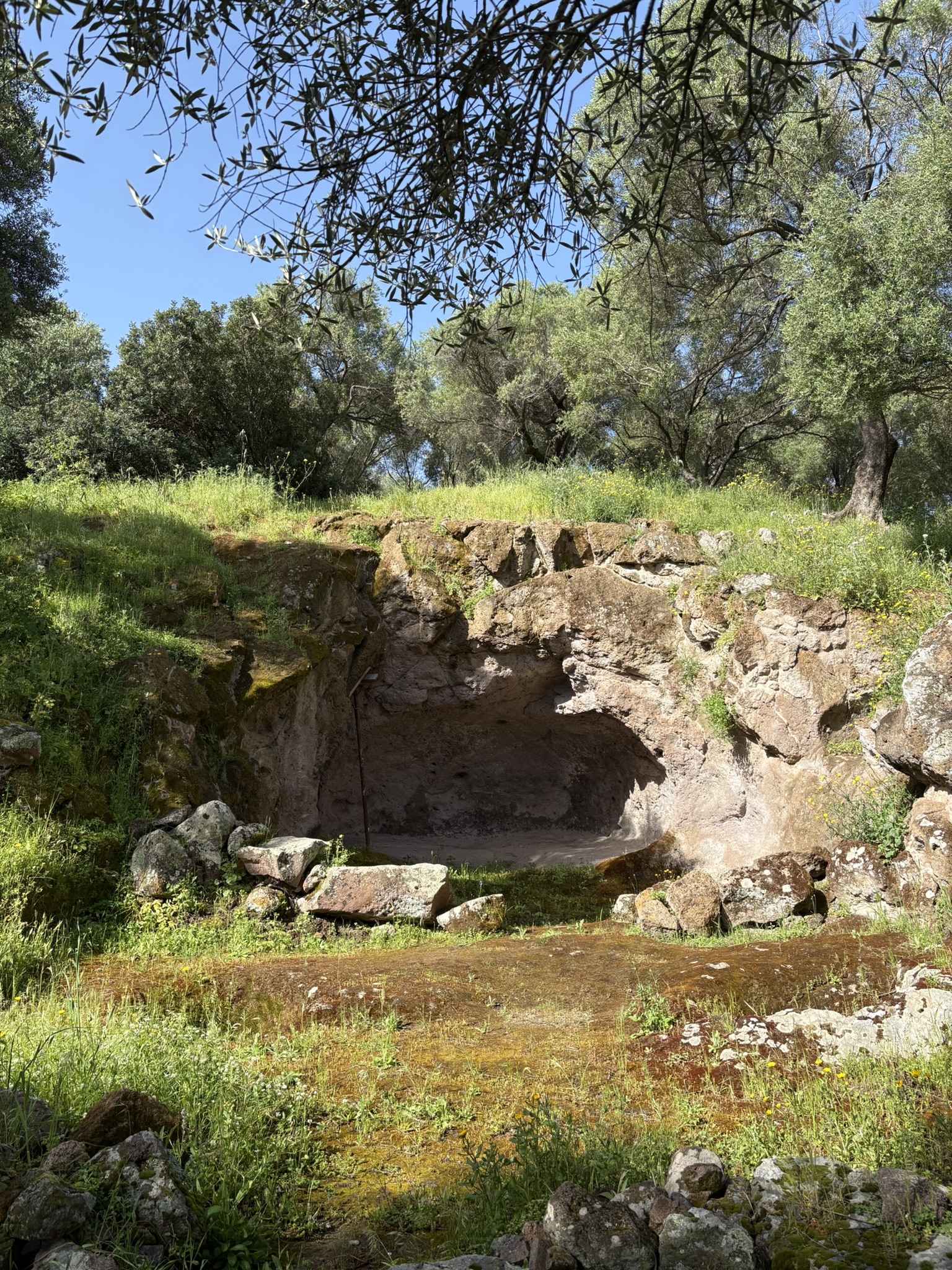
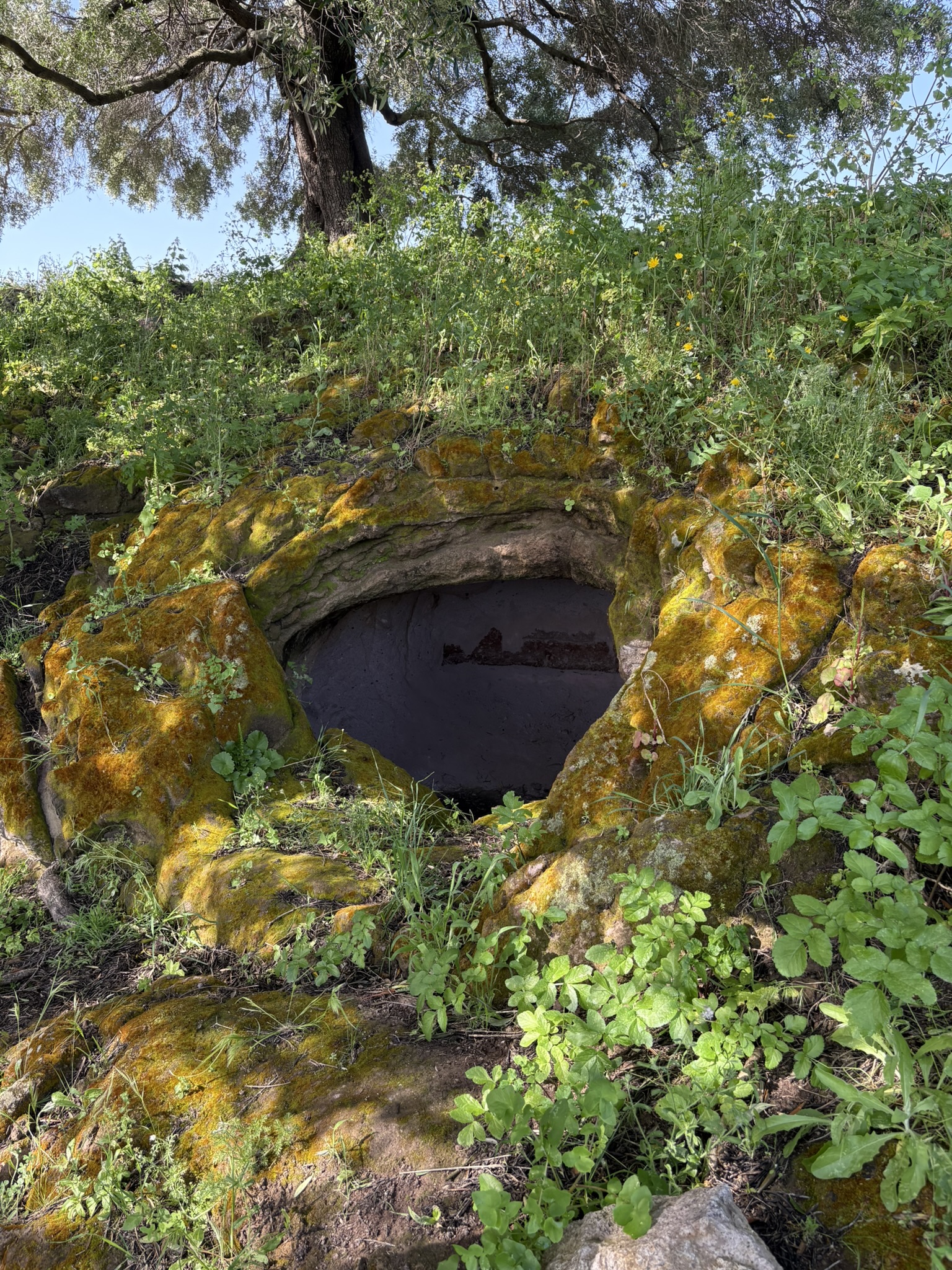
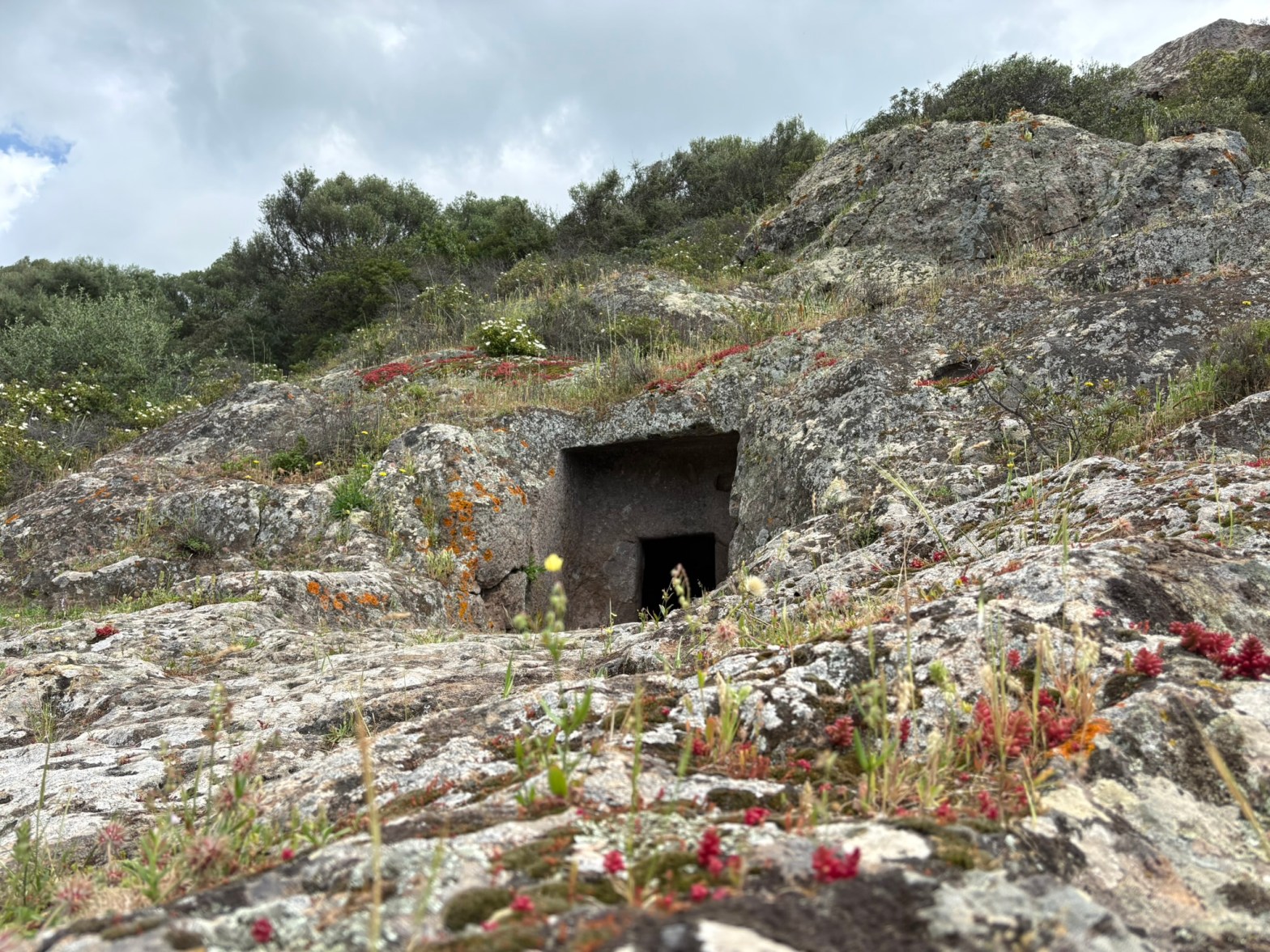
In terms of archaeological history, Montessu is one of the most important dig sites in Sardinia—due to its fascinating position along a moss-covered rockface and its significance in the study of prehistoric funerary rituals. The approximately 40 ancient cave-like tombs here, shaped with stone pickaxes, are called “fairy houses.” Often modeled after houses of the living, with multiple chambers, more than 3,500 of these are scattered across Sardinia, and legend says they belonged to tiny fairies who provided safe havens for the dead while they slept until passage into the afterlife.

Uncovered from the earth at Montessu have been artifacts such as obsidian, bronze, jasper, lead pieces for slingshots, etched coins, silver nails, and knives. Categorized necropolis finds from Montessu are displayed at archaeological museums in nearby Santadi and Cagliari.
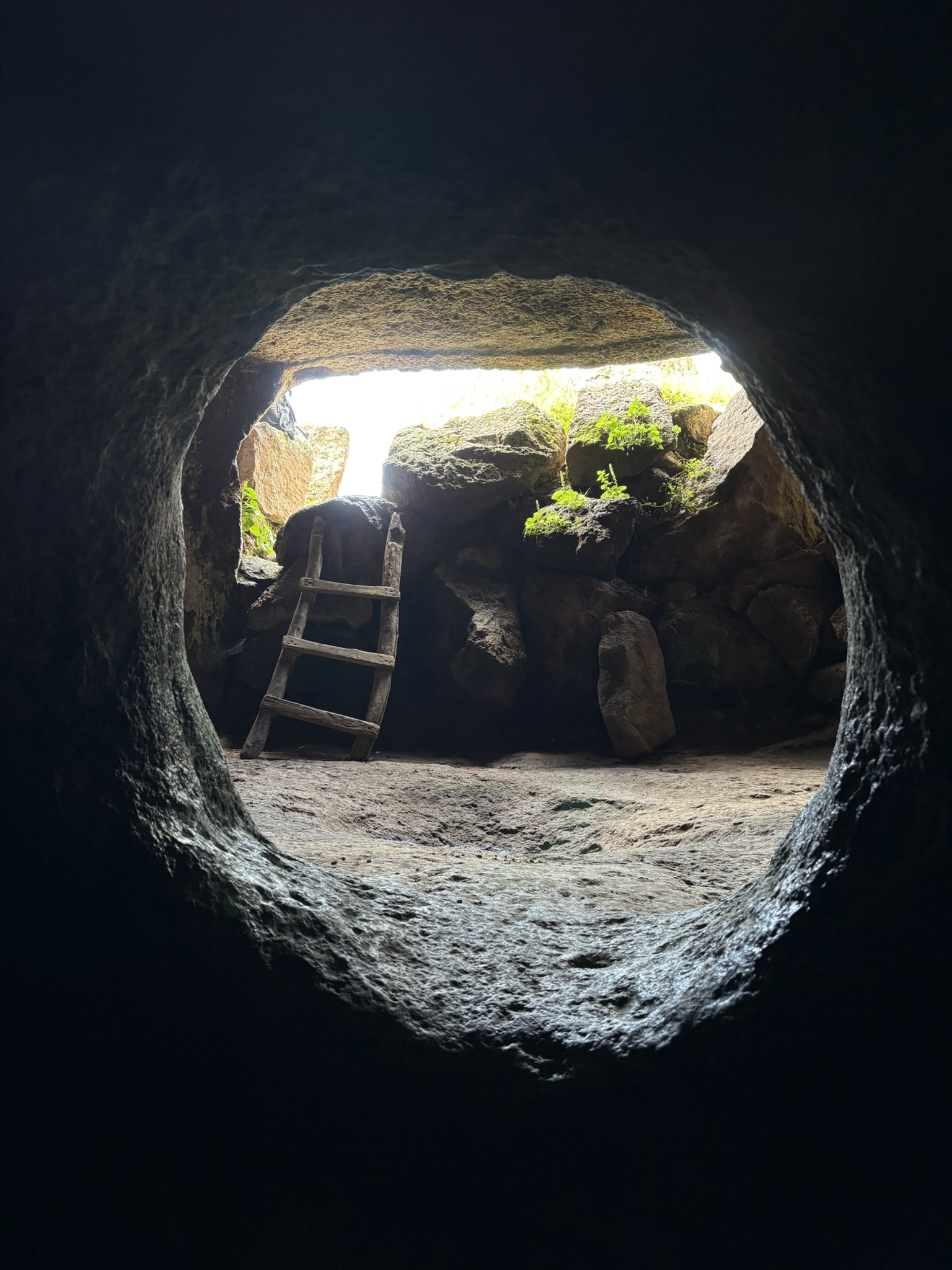
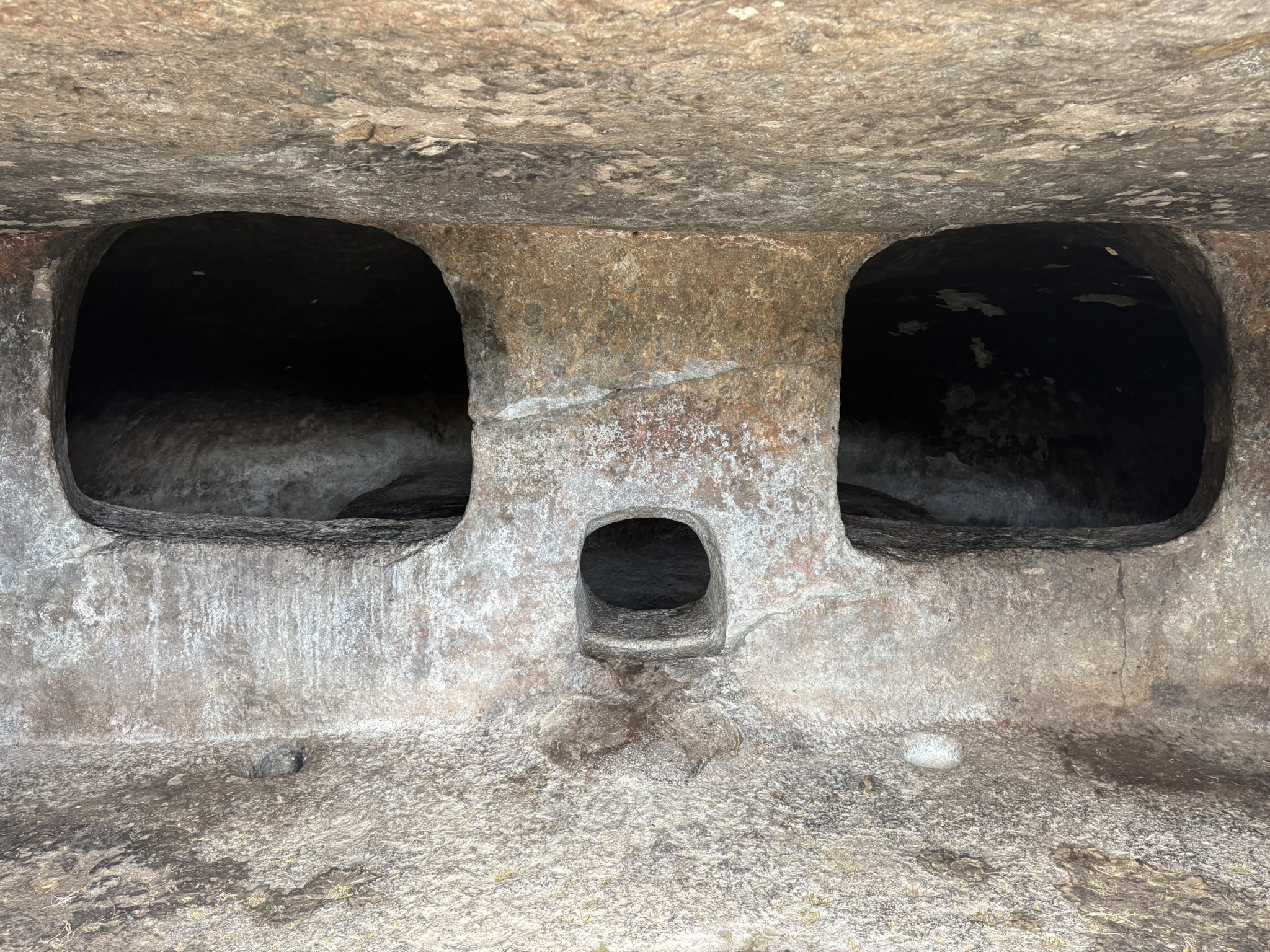
At Montessu, a 124-step stone staircase leads to more than 40 prehistoric tombs set along a rockface. Climb inside Tomb 10 (right and left photos) and down the wooden ladder for a peek inside the hollowed-out formation.

A scenic forest climb at the nearby Pani Loriga archaeological site leads to similarly constructed tombs—with evidence the interiors were painted with pigments—and the remains of a Punic settlement. Hilltop discoveries include masks, jugs, amulets, bracelets, and charms. Also found was a terracotta kernos, an ancient vase with several small cups attached to its rim for the purpose of filling with resins, oil, food, and wine for ritual activities. The walk across these grounds reveals shallow pits in the dirt where wild boars burrow for roots.
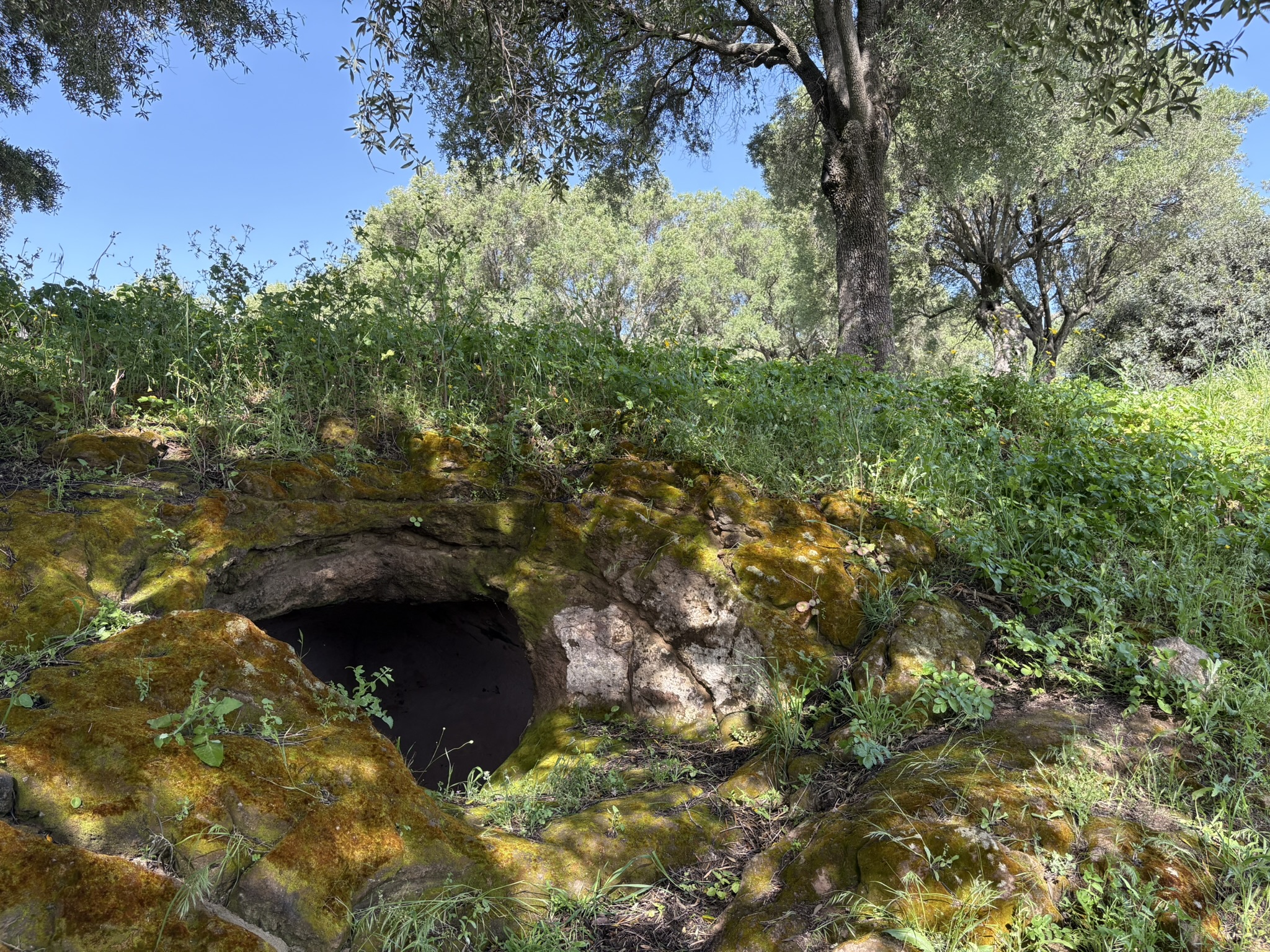
  • tombs cut into rocks

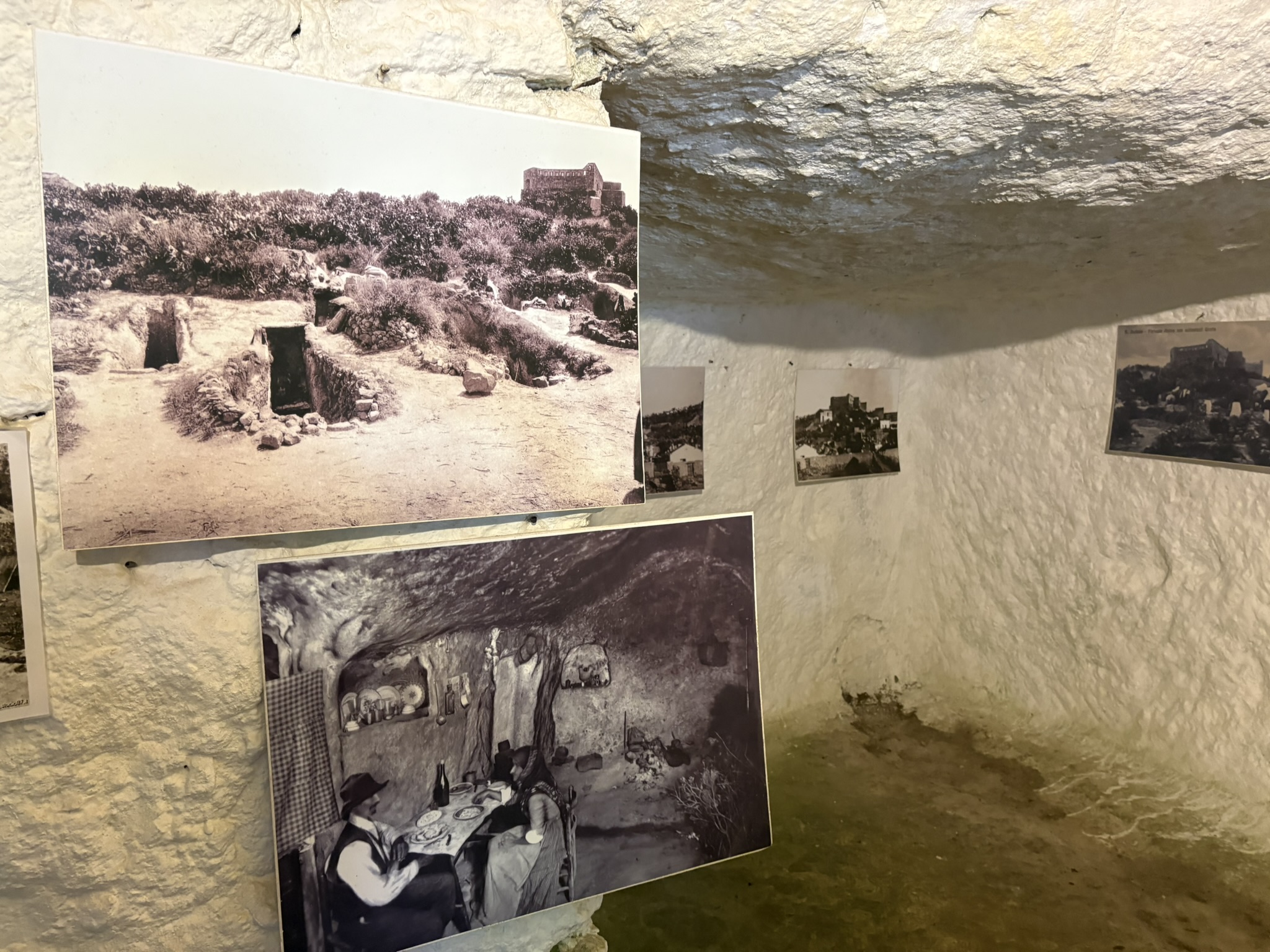
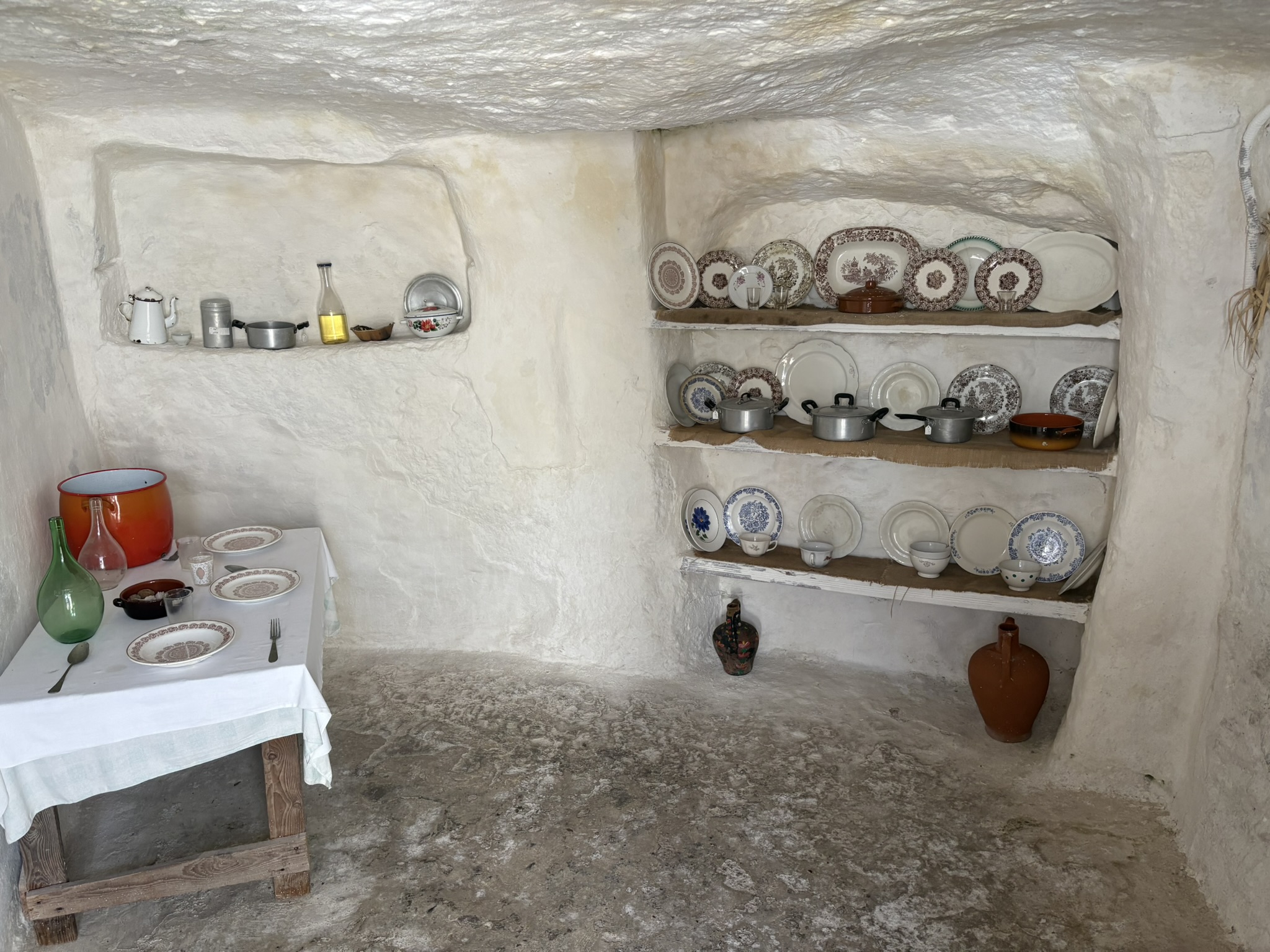
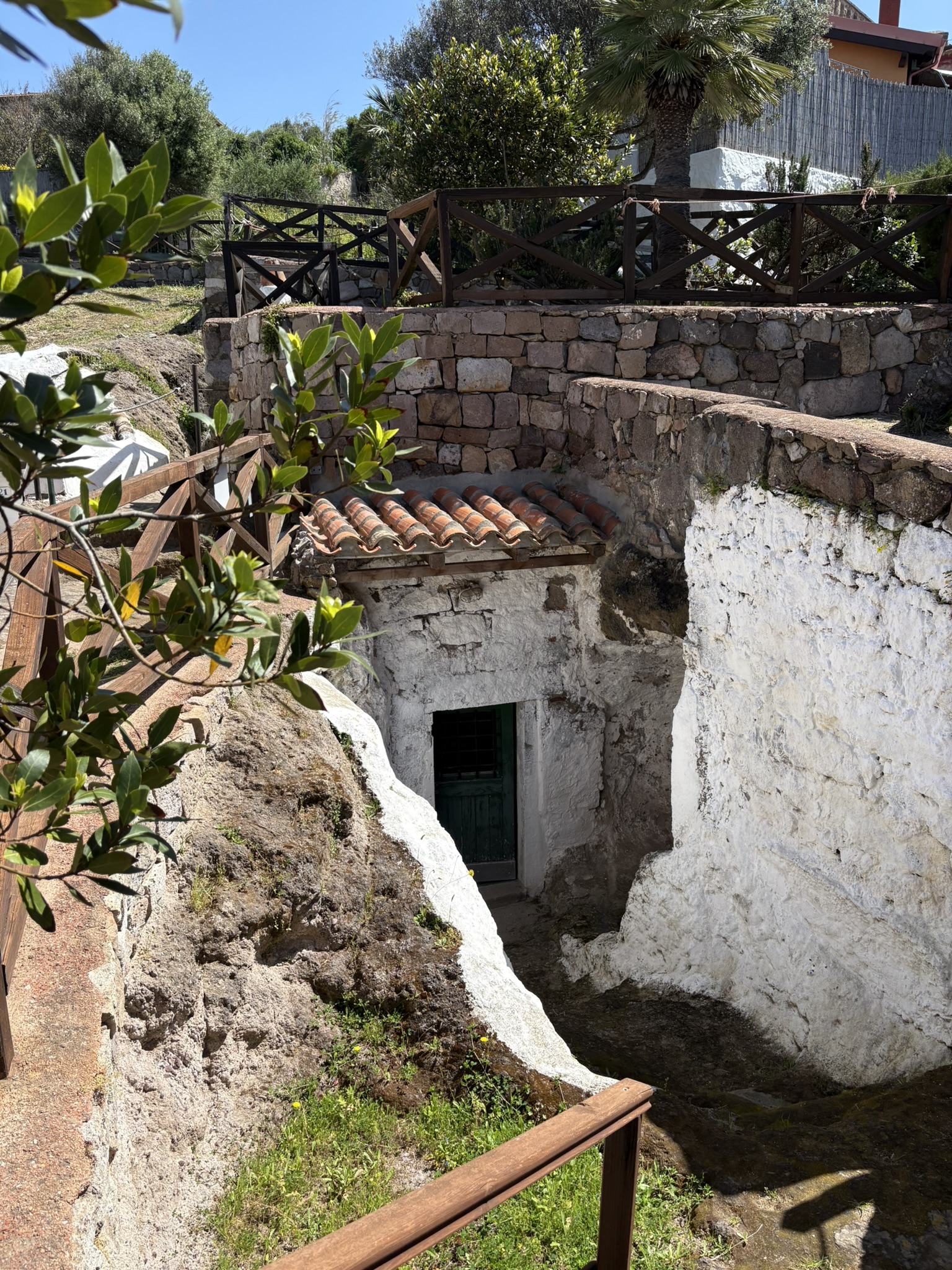
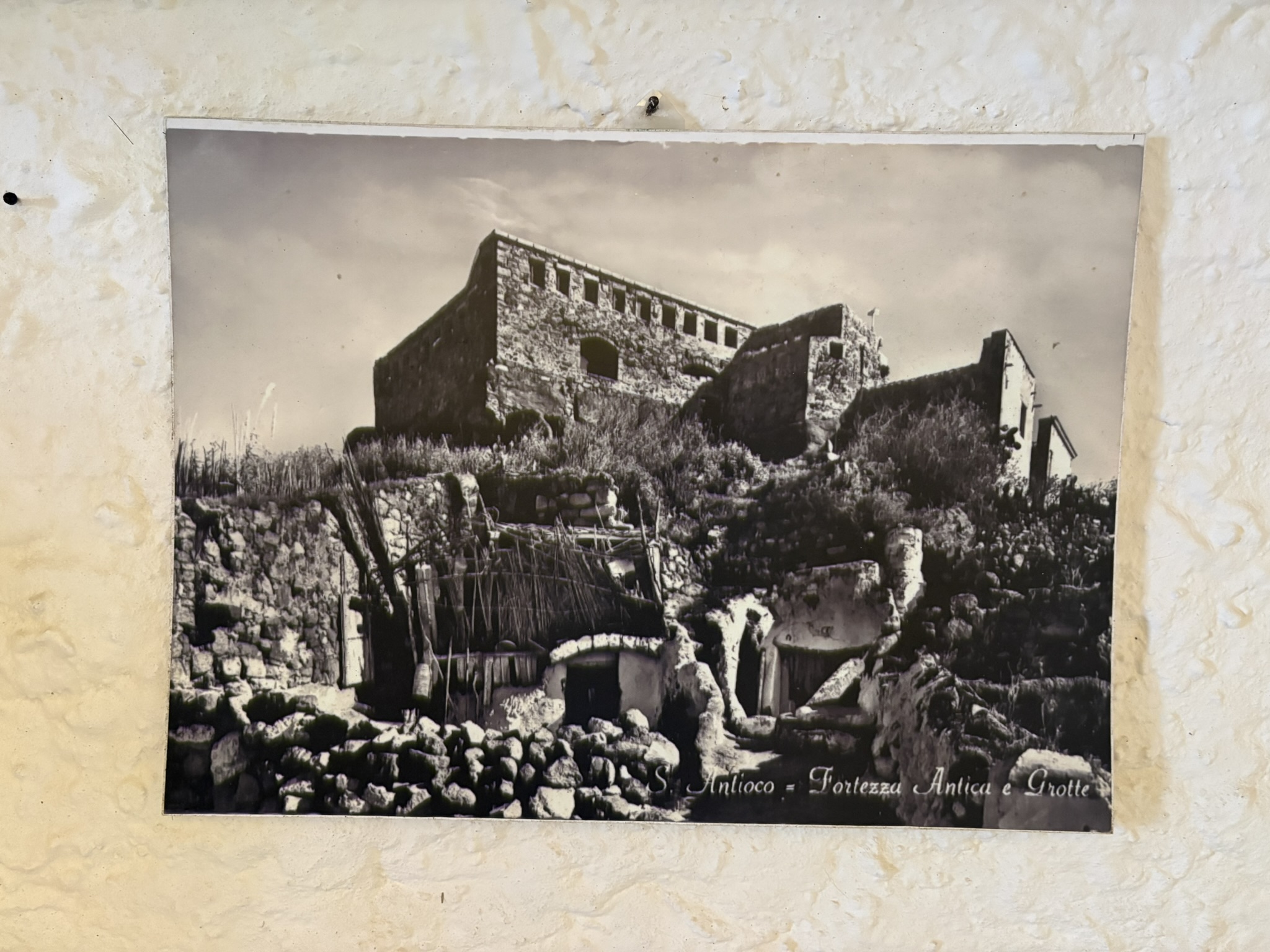
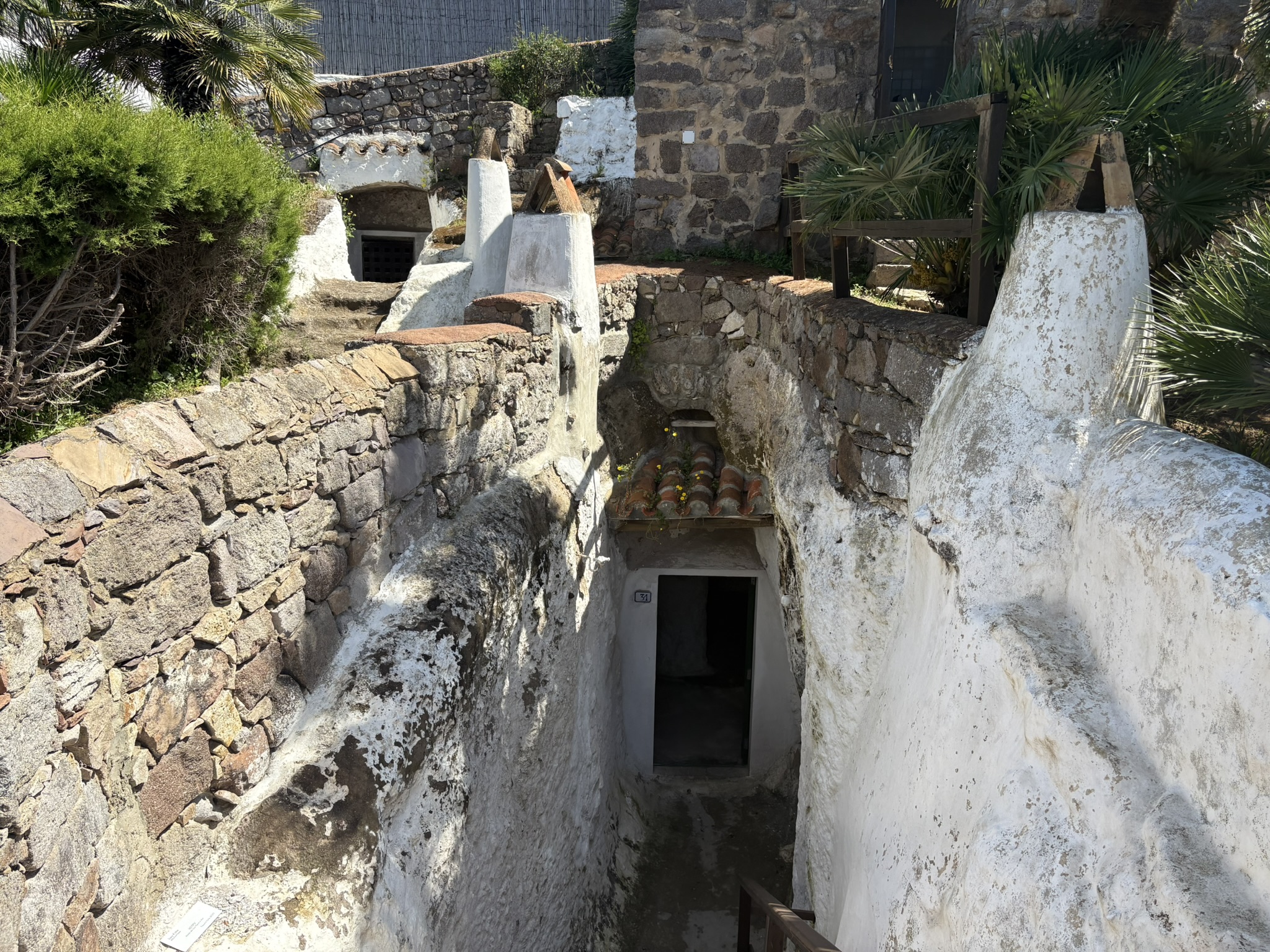
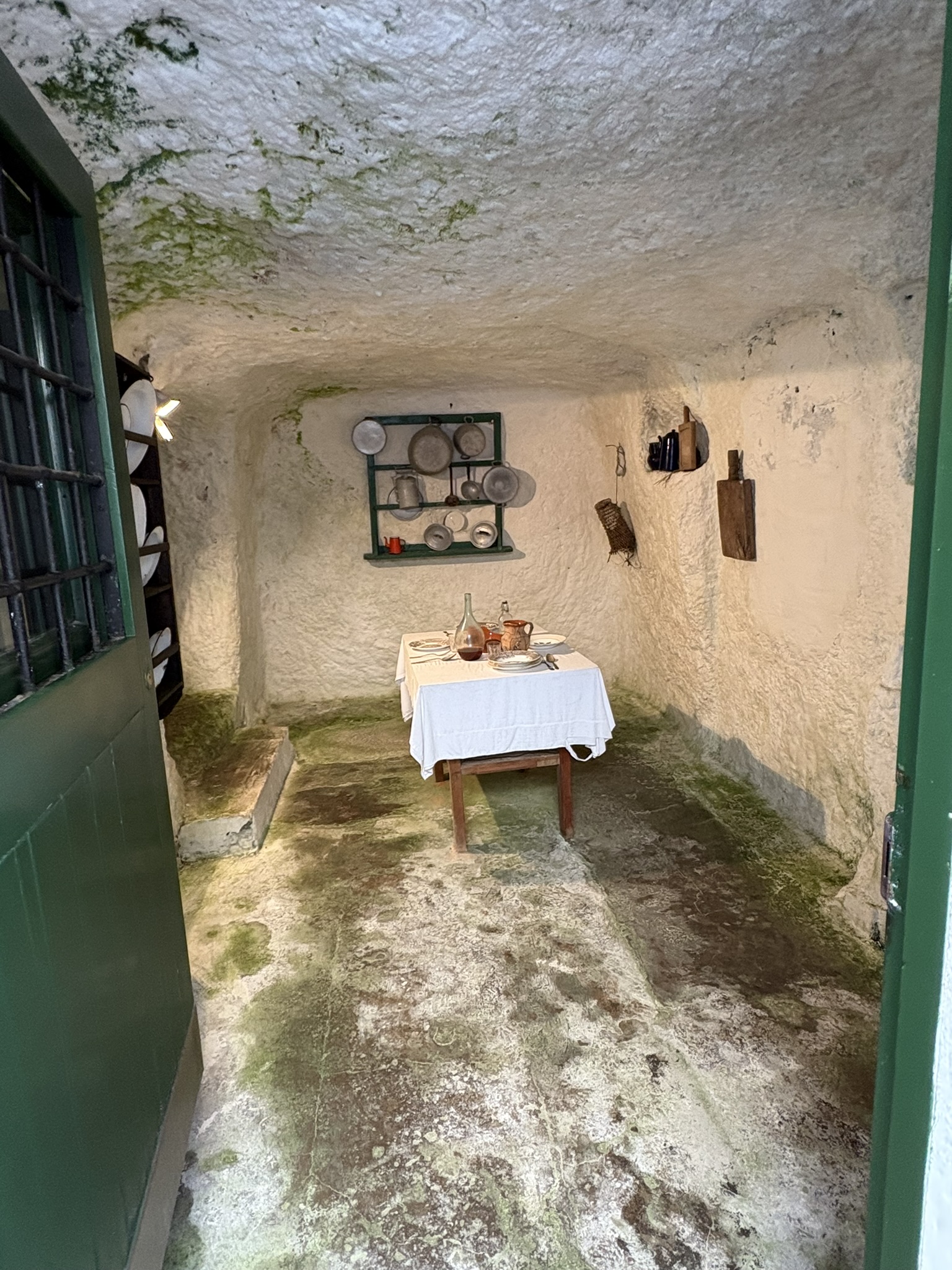
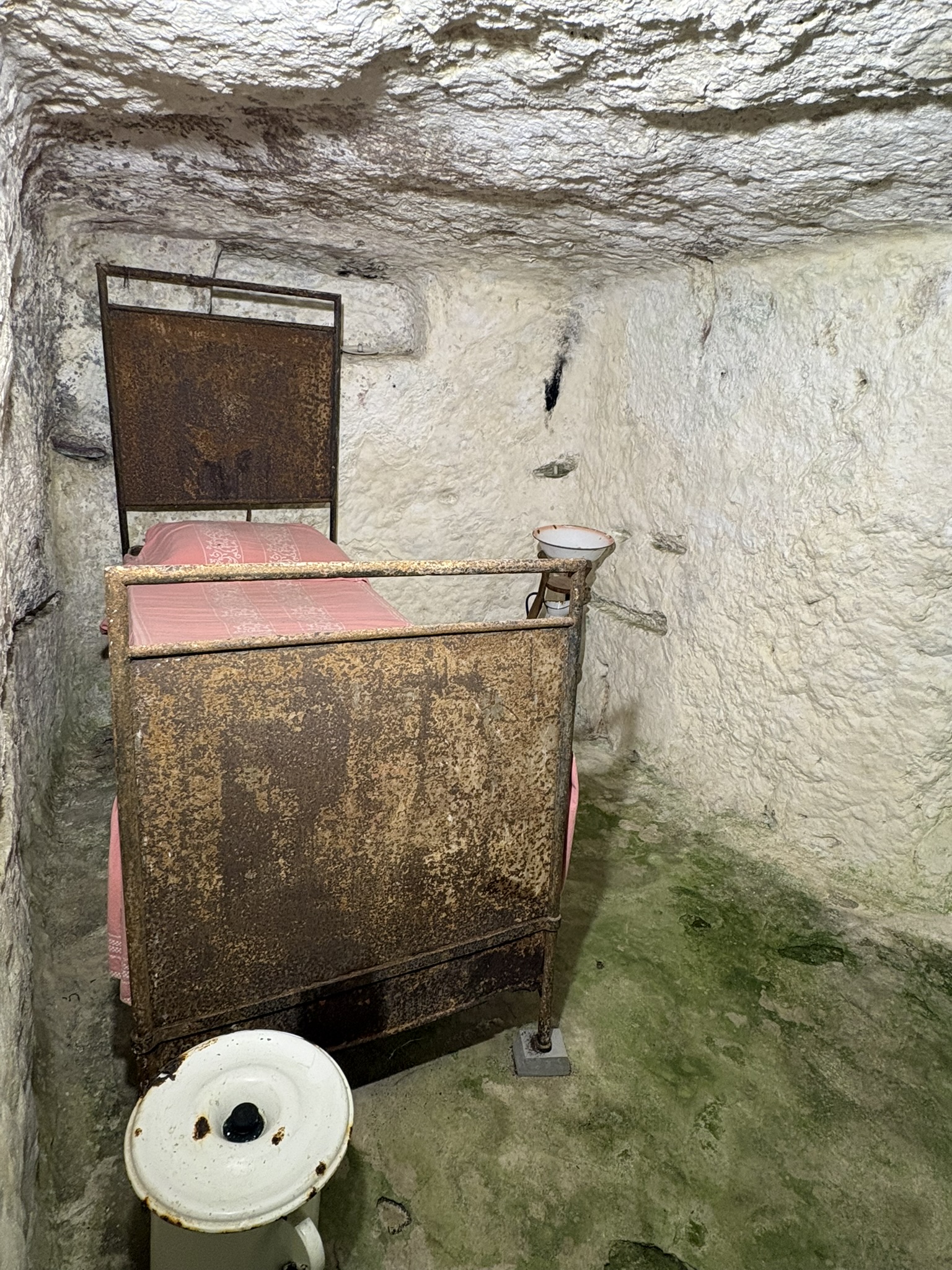
Another intriguing peek into the past can be found at Sant’Antioco’s Hypogeum Village, often called “Is Gruttas” (the caves). This grouping of Punic tombs from the late 6th and late 3rd century B.C. was repurposed as makeshift homes for poor townspeople who lived there by necessity in 1700 and again in 1912. Offering a glimpse into prior, difficult daily lives, these rooms show where the poorest villagers once lived, with some making bags and crafts to sell to rich citizens.
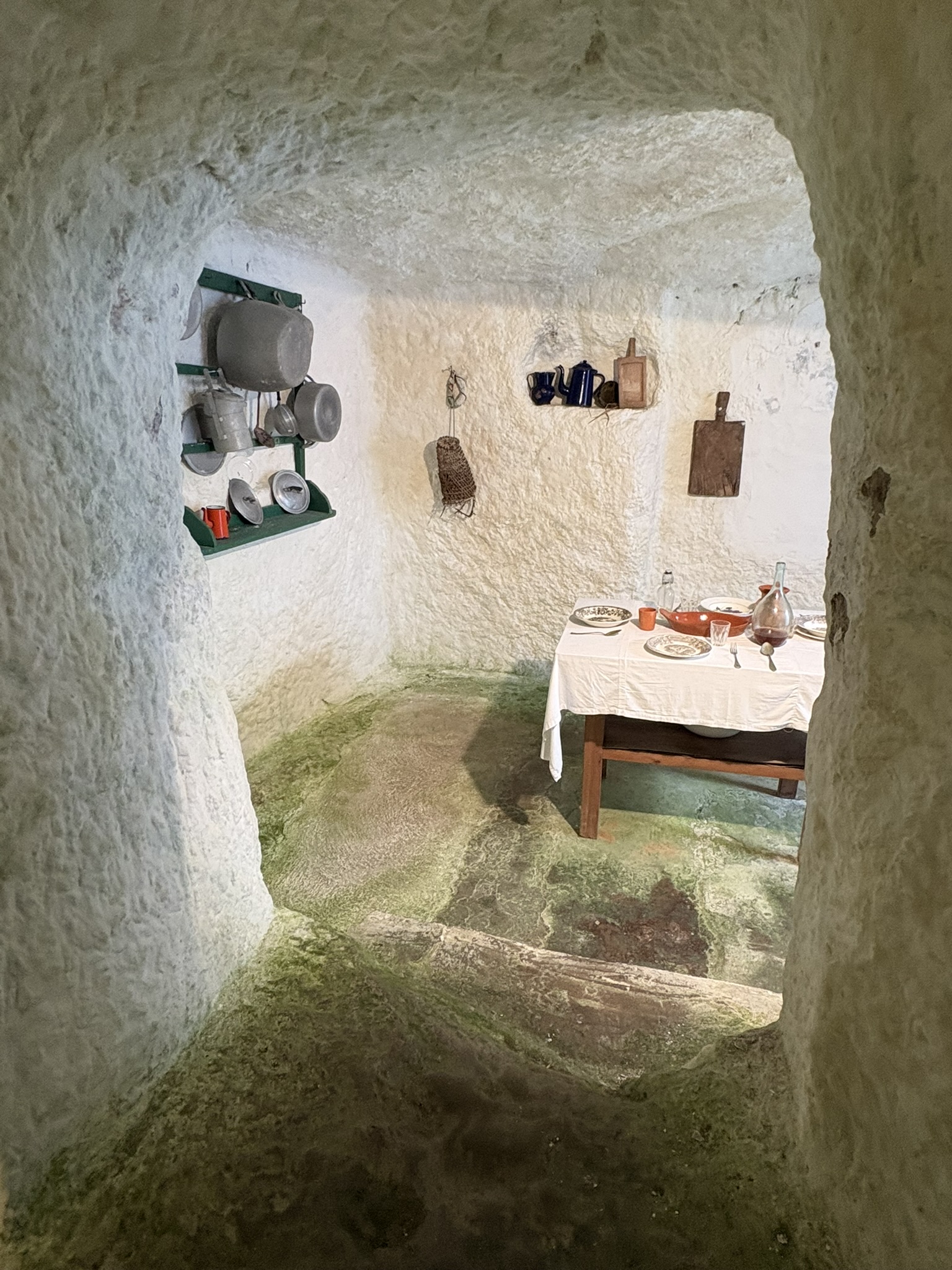
  • Tombs furnished as apartments

Situated on a high plateau, the Archaeological Park of Monte Sirai is divided into three areas—the high-settlement, the necropolises (13 underground family tombs), and the open-air tophet, where the ashes of infants and stillborn children were buried in urns. Enter through the North Gate public area to see the Temple of Ashtart ruins and where a Nuragic tower and water tank were once erected. From here, appreciate a panorama view of the entire region, including the Archipelago of Sulcis comprising Sant’Antioco and San Pietro islands.
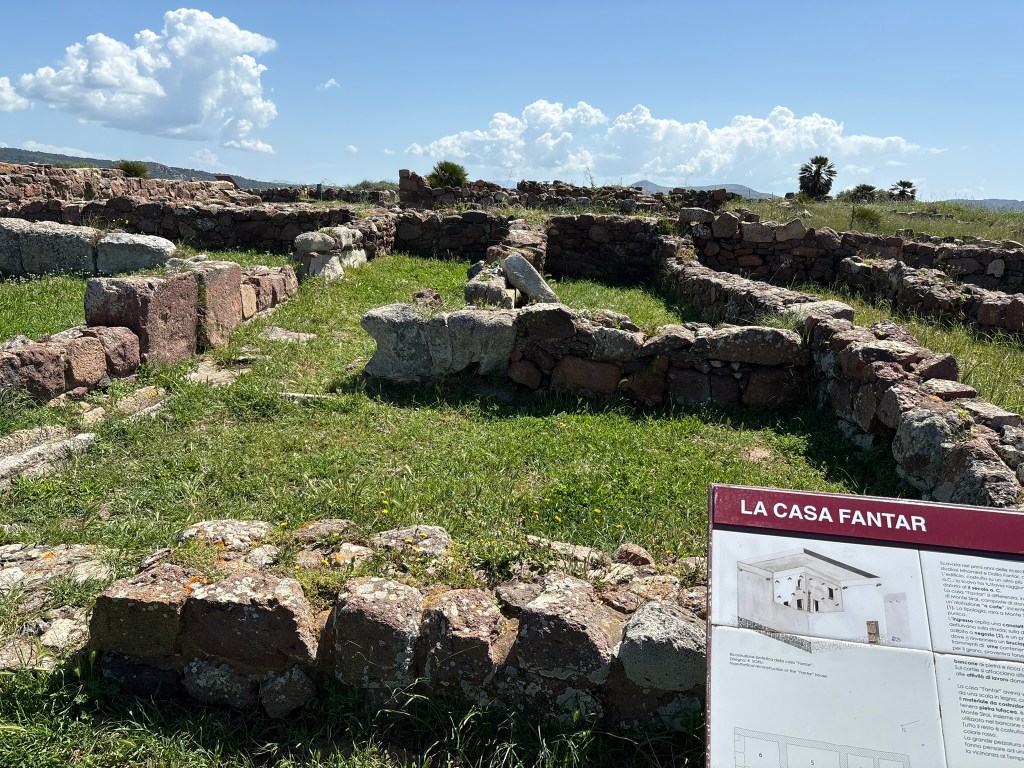
With archaeological sites and sacred cultural complexes set against rugged, unspoiled scenery, Sant’Antioco and Sardinia’s southwest make their layered past feel unusually present—in tombs carved from rock, in salt drawn from lagoon waters, in pre-phylloxera vines, and in the food and drink still served at family tables.
🔍 Search the site to discover more European Traveler feature stories. 🌍

FOLLOW US:

Cruising the Loire River with CroisiEurope

Mouthwatering meals, comfortable accommodations and excursions to grand French chateaux highlight travels on the Loire Princesse, a great way to see France

By Randy Mink

Those who have cruised the Danube, Rhine, Seine and other popular rivers of Europe might put a fresh new destination on their radar—the Loire Valley of western France.

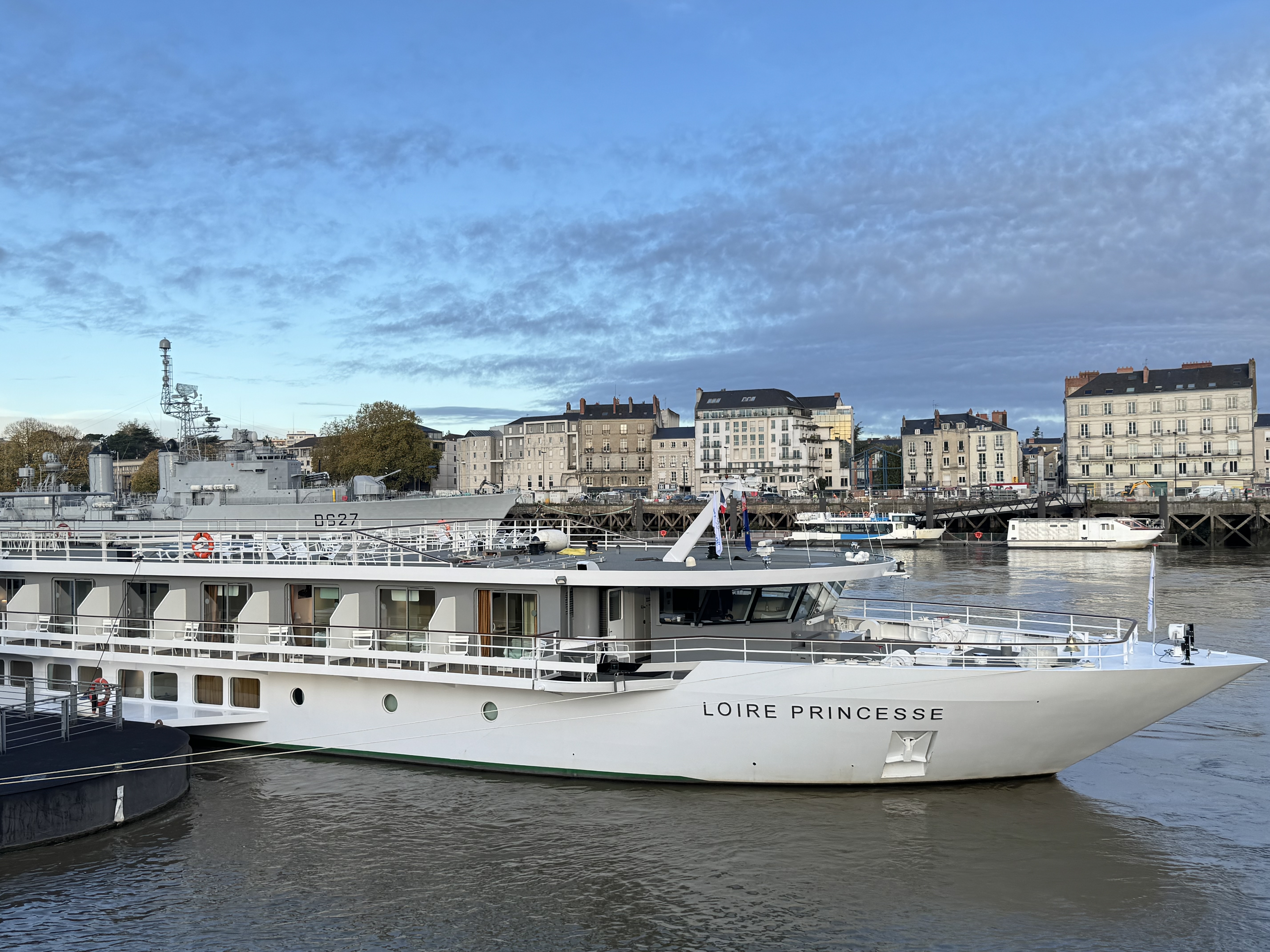
Gliding gently from east to west through the center of France, the Loire River flows past fertile fields, rolling hills and countless palaces and castles. Only one ship—CroisiEurope Cruises’ 96-passenger Loire Princesse—offers this route, and I was onboard November 2025.

On a five-day/four-night itinerary from Nantes, my daughter, her husband and I sailed to the Atlantic port of Saint-Nazaire and then headed east to visit the opulent Renaissance-era chateaux and do some wine tasting. To reach Nantes, we rode for two hours and 19 minutes on a high-speed train from Paris, where we spent three days both before and after the cruise.

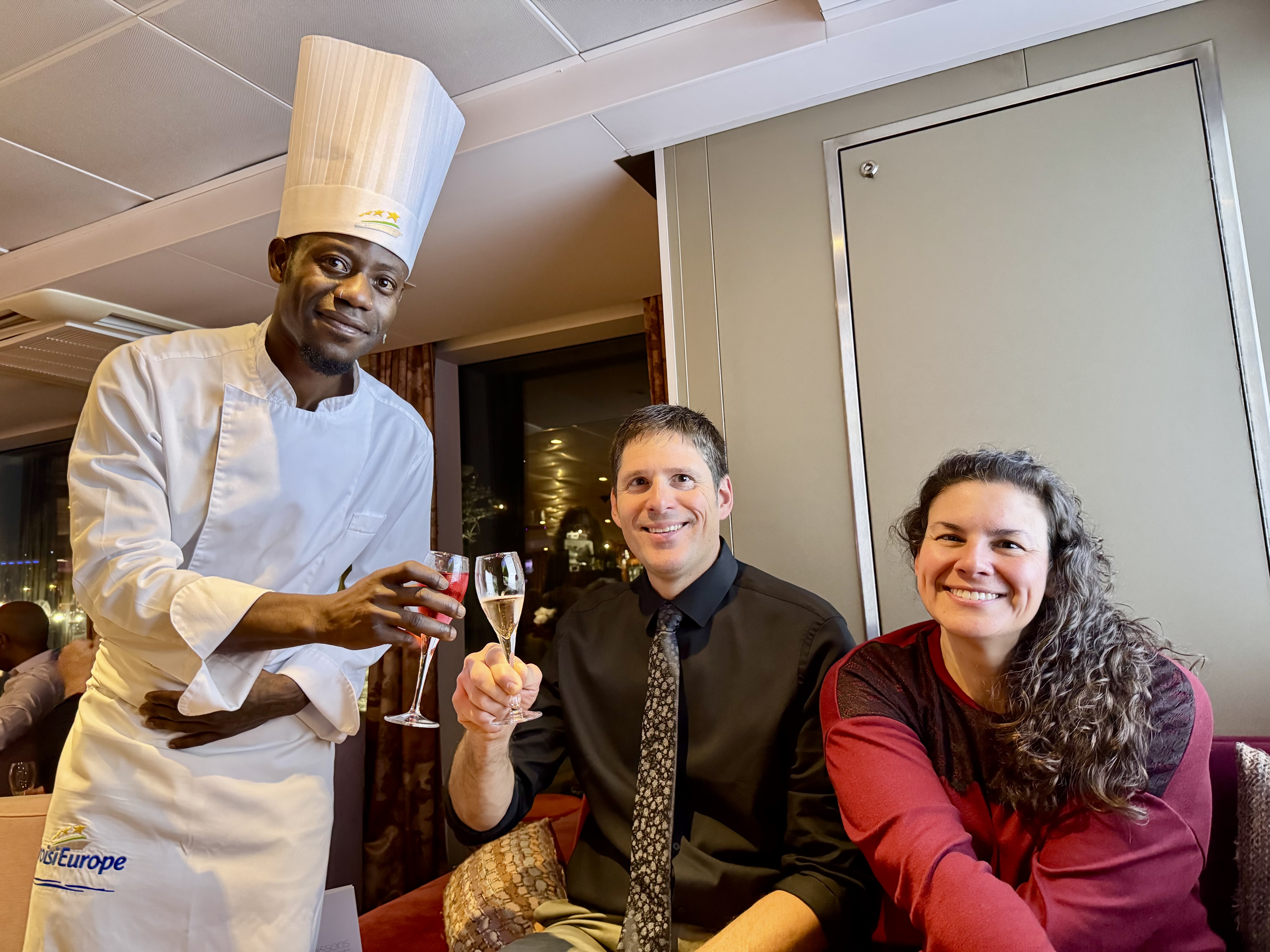
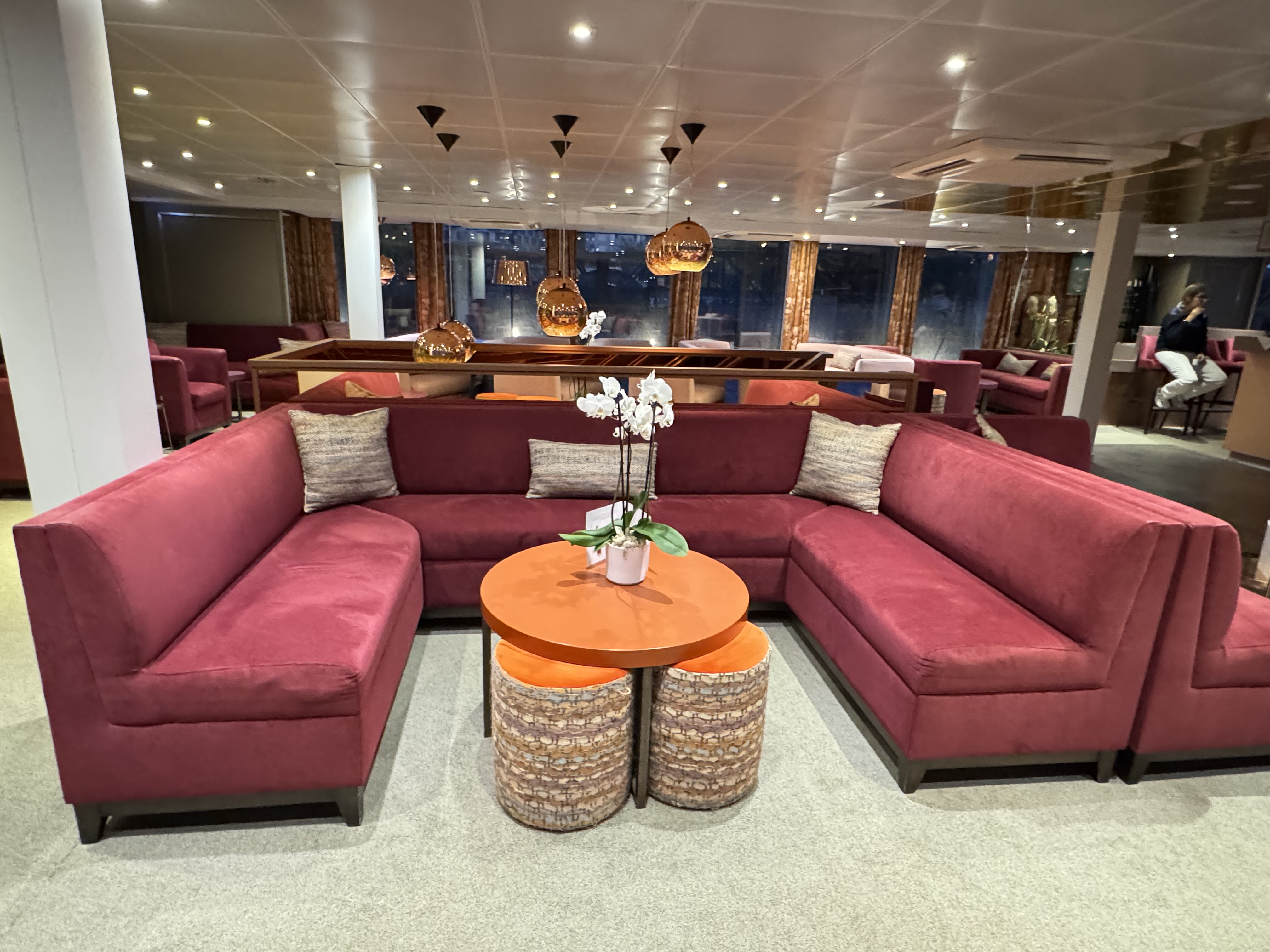
Left: CroisiEurope’s 96-passenger Loire Princesse, shown here in Nantes, is the only ship offering overnight cruises on France’s Loire River. (Randy Mink Photo) Top Right: The lounge/bar is the gathering spot for guests of the Loire Princesse. (Photo credit: CroisiEurope Cruises) Bottom Right: Loire Princesse passengers have a chance to meet the chef and other staff members at a gala cocktail party in the lounge/bar. (Randy Mink Photo)

Enchanting Nantes

A pleasant surprise, Nantes was a highlight of our 10-day trip to France. I had never heard much about it and was expecting just another big city, but the most westerly of France’s large urban centers turned out to be a charmer.  

In the heart of town, just steps from the Loire Princesse dock, lies Les Machines de L’ile, one of Nantes’ premier tourist attractions. At this gallery/workshop where oversized mechanical animals come alive, a group of us from the ship saw demonstrations of a giant spider, ant, heron, sloth, caterpillar, chameleon and other creatures in motion. Occupying former shipyard buildings in a reimagined district that preserves reminders of Nantes’ maritime past, it’s a one-of-a-kind artistic project inspired by the fantasy worlds of science-fiction novelist Jules Verne (a native of Nantes), Leonardo da Vinci’s mechanical aesthetic and the city’s industrial history.

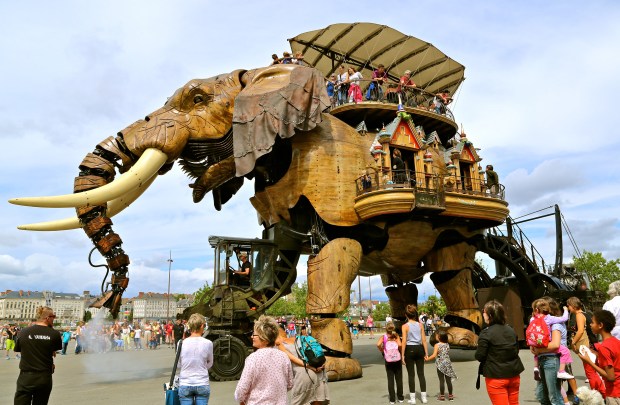
Getting the most attention at Les Machines de L’ile is the Grand Elephant, which can be seen ambling along the quay carrying up to 50 people on its back. Made of steel and wood and fitted with a hybrid engine, the 39-foot-high, 48-ton creation has been offering rides since 2007 and is practically a symbol of modern Nantes, the sixth-largest city in France. Robotic-like, he walks by the project’s massive Marine Worlds Carousel, a three-story, interactive crowd-pleaser populated by sea animals that riders can manipulate with ropes and levers.

mechanical elephant with people aboard
The Grand Elephant, a mechanical wonder at Les Machines de L’ile in Nantes, lumbers along the quayside, just steps from the Loire River. (Photo credit: CroisiEurope)

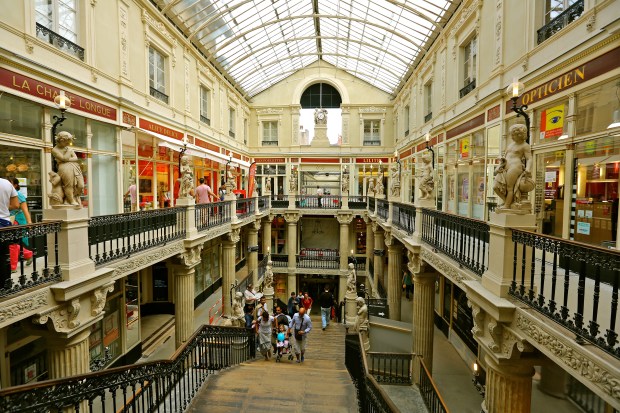
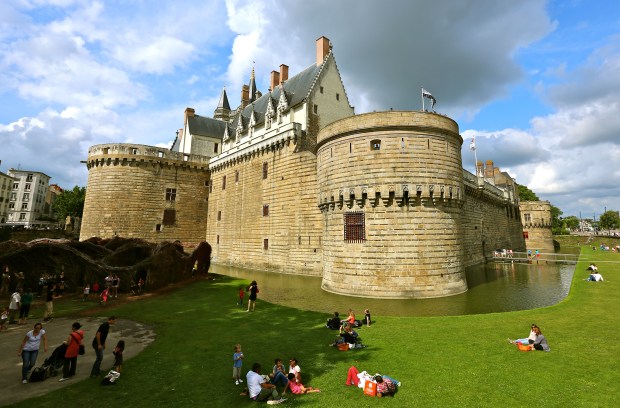
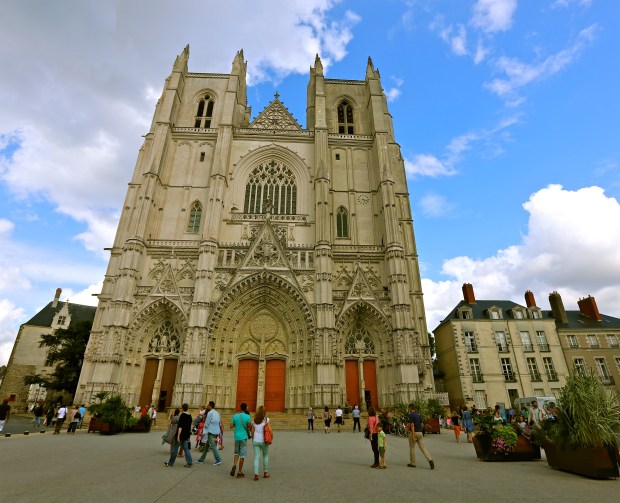
Before boarding the ship, we had a chance to poke around Nantes’ historic core, a compact area dominated by two attractions dating from the 15th century—the Cathedral of St. Peter and St. Paul and Castle of the Dukes of Brittany.  Exhibits in the castle museum chronicle the city’s history. You can stroll the ramparts for free. Also worth a look is the 1843 Passage Pommeraye, a covered shopping gallery with a monumental iron-and-glass roof.

interior of a shopping mall
Tourists exploring Nantes’ historic core will want to take a peek at Passage Pommeraye, a shopping mall dating back to 1843. (Photo credit: CroisiEurope)
people relaxing on lawn outside of a castle
The Castle of the Dukes of Brittany in Nantes houses a museum that chronicles the city’s history. (Photo credit: CroisiEurope)
cathedral with people outside of it
The Cathedral of St. Peter and St. Paul is a Gothic gem in Nantes’ historic district. (Photo credit: CroisiEurope Cruises)

Saint-Nazaire: Shipbuilding Center on the Atlantic

Downstream from Nantes, at the mouth of the Loire, resides the great shipbuilding center of Saint-Nazaire. On our shore excursion, I made good use of touchscreens, videos and a handheld audio guide during an immersive virtual voyage into the heyday of ocean liners at Escal’Atlantique, a museum housed in a German WWII submarine base a short walk from the Loire Princesse’s berth.

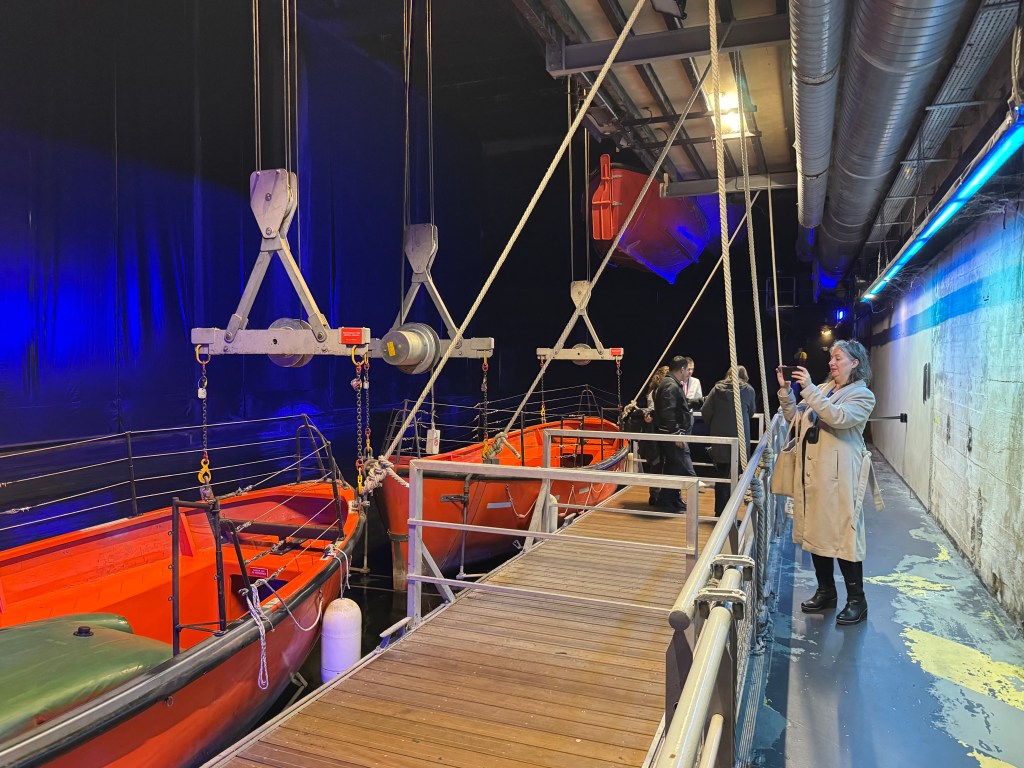
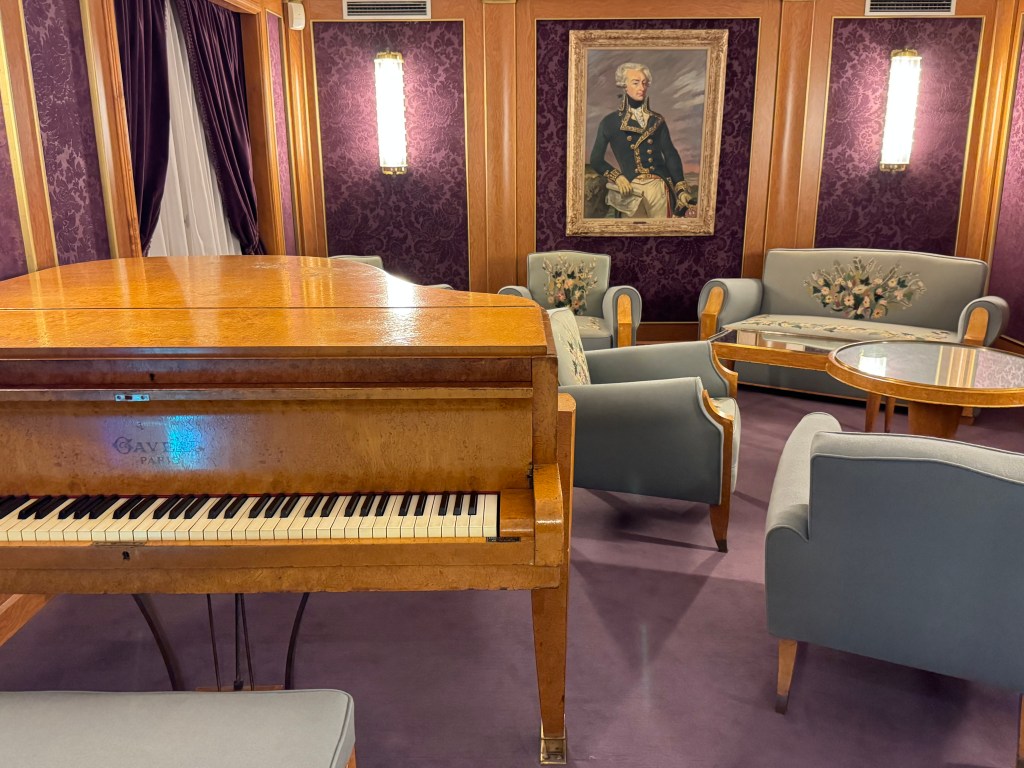
Besides furniture, artwork, dinnerware and large sections of paneling and other decor fragments, the museum showcases re-creations of staterooms and elegant public spaces of legendary French Line ships like the Normandie, a 1930s classic built in Saint-Nazaire. A movie with archival footage provides a timeline of important chapters in trans-Atlantic ship travel and explains how the airlines, beginning in the late 1950s, made ocean crossings a relic of the past. Visions of the ill-fated Titanic surface as your museum visit ends with a ride in a lifeboat that’s lowered to the floor below.

From the roof of the old submarine base, I could see the MSC World Asia under construction at Chantiers de l’Atlantique, one of the few shipyards that builds today’s mega liners. Our cruise did not include a visit there, but normally a shipyard tour is part of the program.

museum lifeboat
Guests of Escal’Atlantique, a Saint-Nazaire museum that chronicles the heyday of trans-Atlantic ocean travel, end their visit by riding in a lifeboat that’s lowered to the floor below. (Randy Mink Photo)
music room with piano and couches
A re-creation of the cozy first-class music room of the French Line’s Liberté, an ocean liner built in 1950, is on display at Escal’Atlantique. (Randy Mink Photo)
coasters and coffee mugs in a souvenir shop
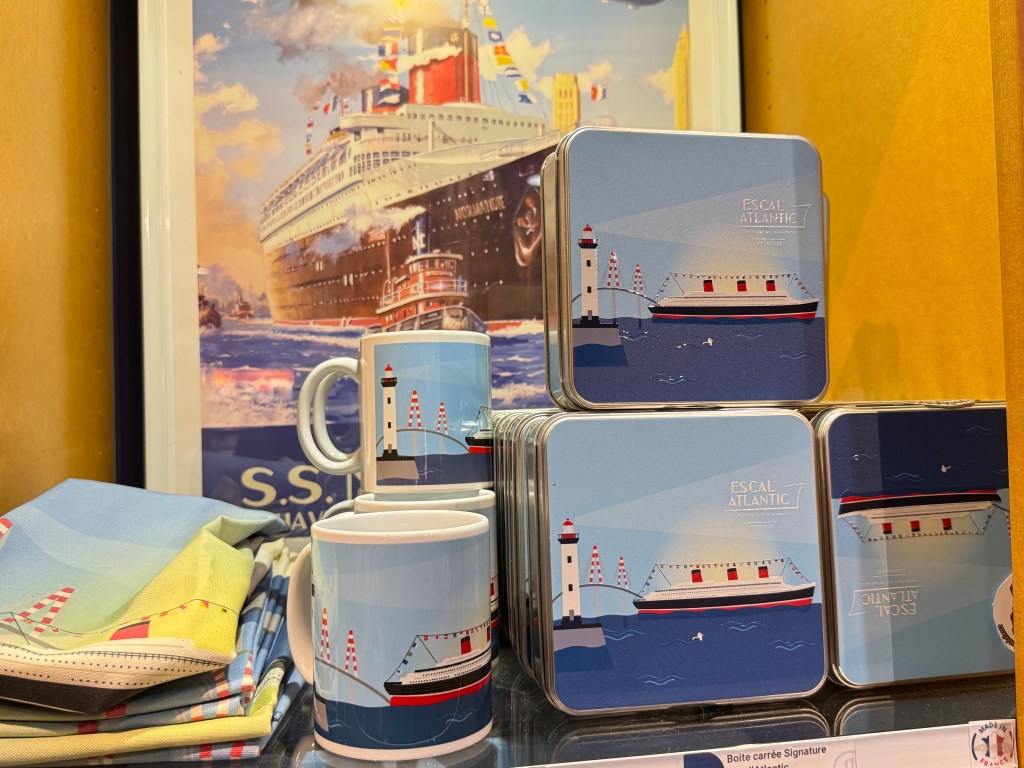
Maritime-themed souvenirs fill the shelves of the gift shop at Escal’Atlantique. (Randy Mink Photo)

Loire Princesse Amenities and Mealtimes

The Loire Princesse, a product of Saint-Nazaire’s shipyards, was built in 2015. Sporting side paddlewheels, the floating hotel is outfitted with a shallow draft suited to Loire River travel.

In fact, “the MS Loire Princesse was engineered specifically for this river,” says Sandrah Gurash, North America general manager for CroisiEurope. “As this is a ‘wild’ river, water levels are not controlled by lock systems and it can impact navigation abilities. The shallow draft and paddlewheels allow her to navigate the river in all but extreme water level conditions.”

The 30 Upper Deck cabins feature a sliding panoramic window and a terrace with two chairs and a table, while the deck below has 18 cabins with high windows. I liked how my bed faced the terrace and appreciated the ample closet space and floor-to-ceiling mirror. Bright and white, the room and bathroom showed no signs of aging.

Large windows grace the Loire Princesse’s lounge/bar, where the fun and music happens. One night in this welcoming living room, we were serenaded with traditional Breton songs performed by a spunky duo that encouraged audience participation. The lounge’s outdoor patio affords great landscape views. One level above, the Sun Deck offers 360° panoramas.

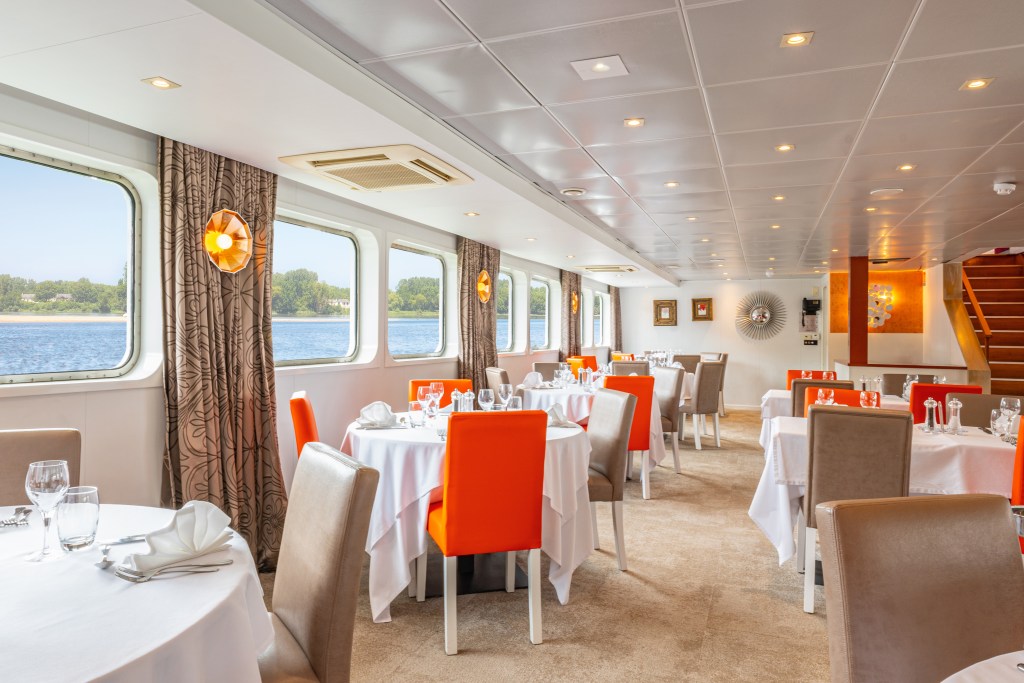
The best part of a CroisiEurope cruise, we had heard, is the refined French cuisine, and the Loire Princesse culinary team did not disappoint. Indeed, mealtimes in the restaurant merited exclamation points. The courses were artfully presented, the ingredients top quality, the sauces phenomenal. Each lunch and dinner (a plated meal orchestrated by a chef from Cameroon) seemed to outdo the previous one. Breakfast was a bountiful buffet. The cruise fare includes all drinks with meals and at the bar.

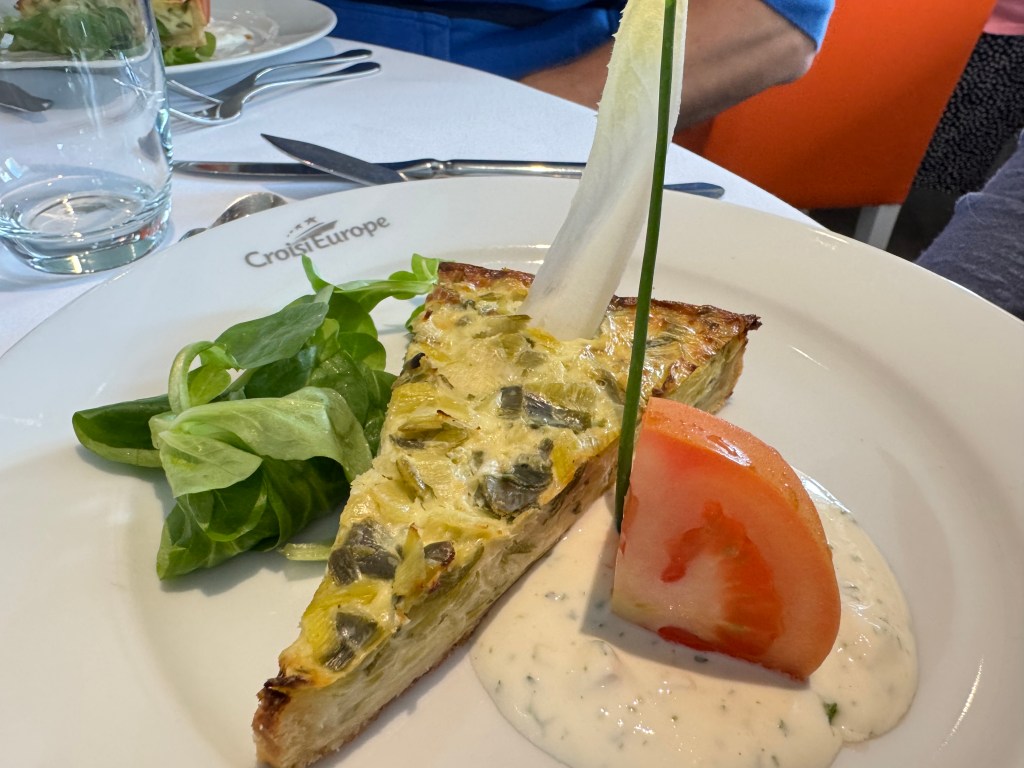
My favorite dinner started with assorted canapes and a silky, melt-in-your-mouth duck foie gras, followed by a quail filet in port wine sauce, brie filled with mascarpone and the grand finale—baked Alaska flambéed in Grand Marnier. A memorable lunch starred leek quiche and salmon steak in a white butter sauce the region is known for.

Our lunches and dinners did not include a choice of main course, but, starting in 2027, a selection of mains will be standard on all CroisiEurope river and canal cruises.

slice of quiche on a plate
Leek quiche is served for lunch in the Loire Princesse’s restaurant. (Randy Mink Photo)
cruise ship dining room
Gourmet meals await passengers in the Loire Princesse’s restaurant. (Photo credit: CroisiEurope Cruises)

Clisson Walking Tour and Muscadet Wine Route

Heading east from Nantes on Day 3, our shore excursion took us to Clisson, a pretty village centered in picturesque castle ruins. Steps away from the medieval fortress is Clisson Market, a timber-framed structure where vendors sell fresh fruit and vegetables and locally caught fish. Rebuilt in the 19th century in the Italian architectural style, Clisson easily could pass for a town in Tuscany.

At our next stop, we gathered in a tasting room at Chateau Cassemichère to try several types of Muscadet, a dry white wine with a fruity bouquet that’s perfect with fish and seafood. The countryside south and east of Nantes has almost 400 wine growers, with Muscadet accounting for 80 percent of everything produced.

Walking tours of historic Clisson include a stop at the covered market. (Randy Mink Photo)

Loire Princesse shore excursions visit the picturesque French village of Clisson. (Photo credit: CroisiEurope)

Chateau Hopping in the Loire Valley

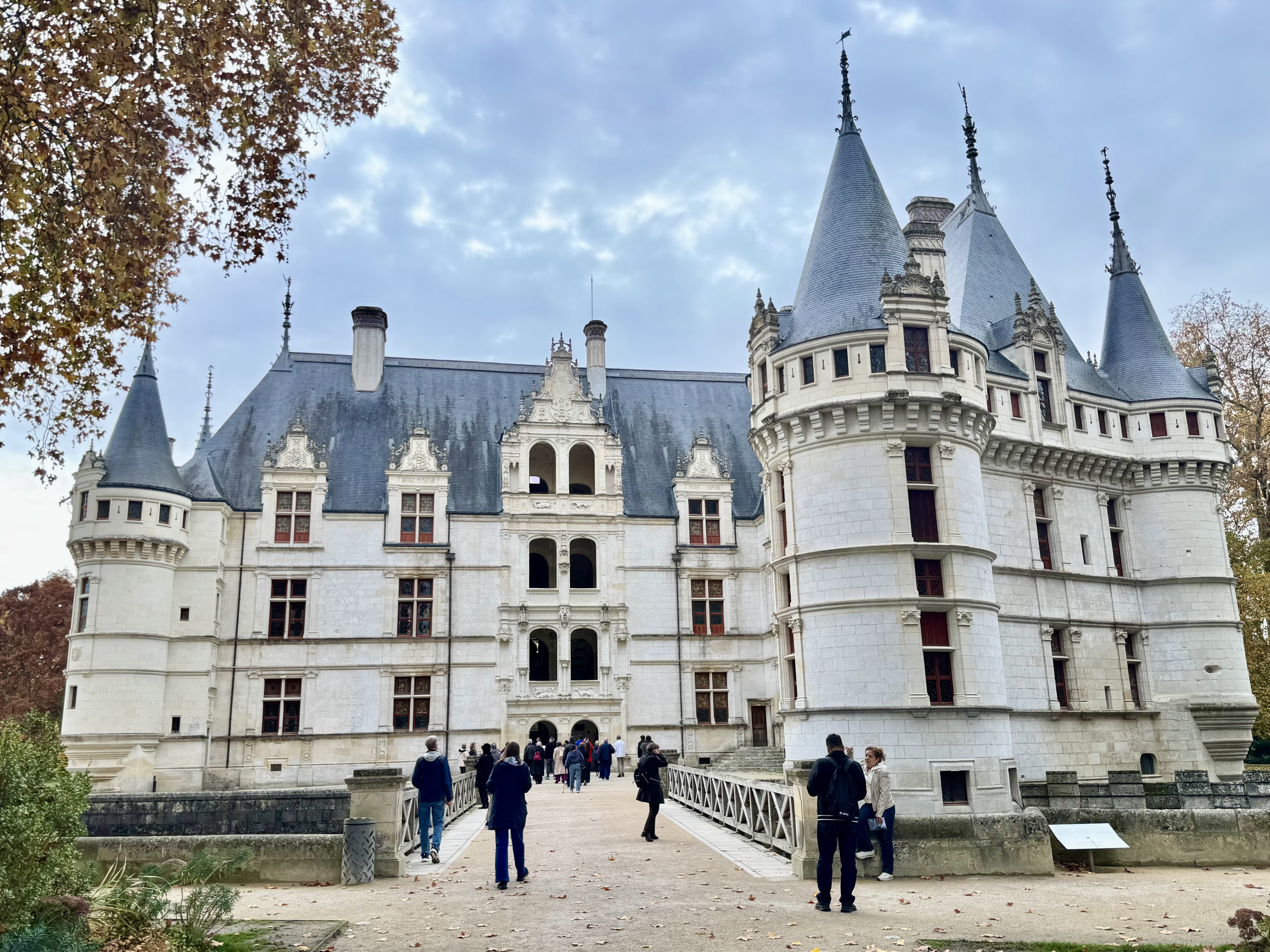
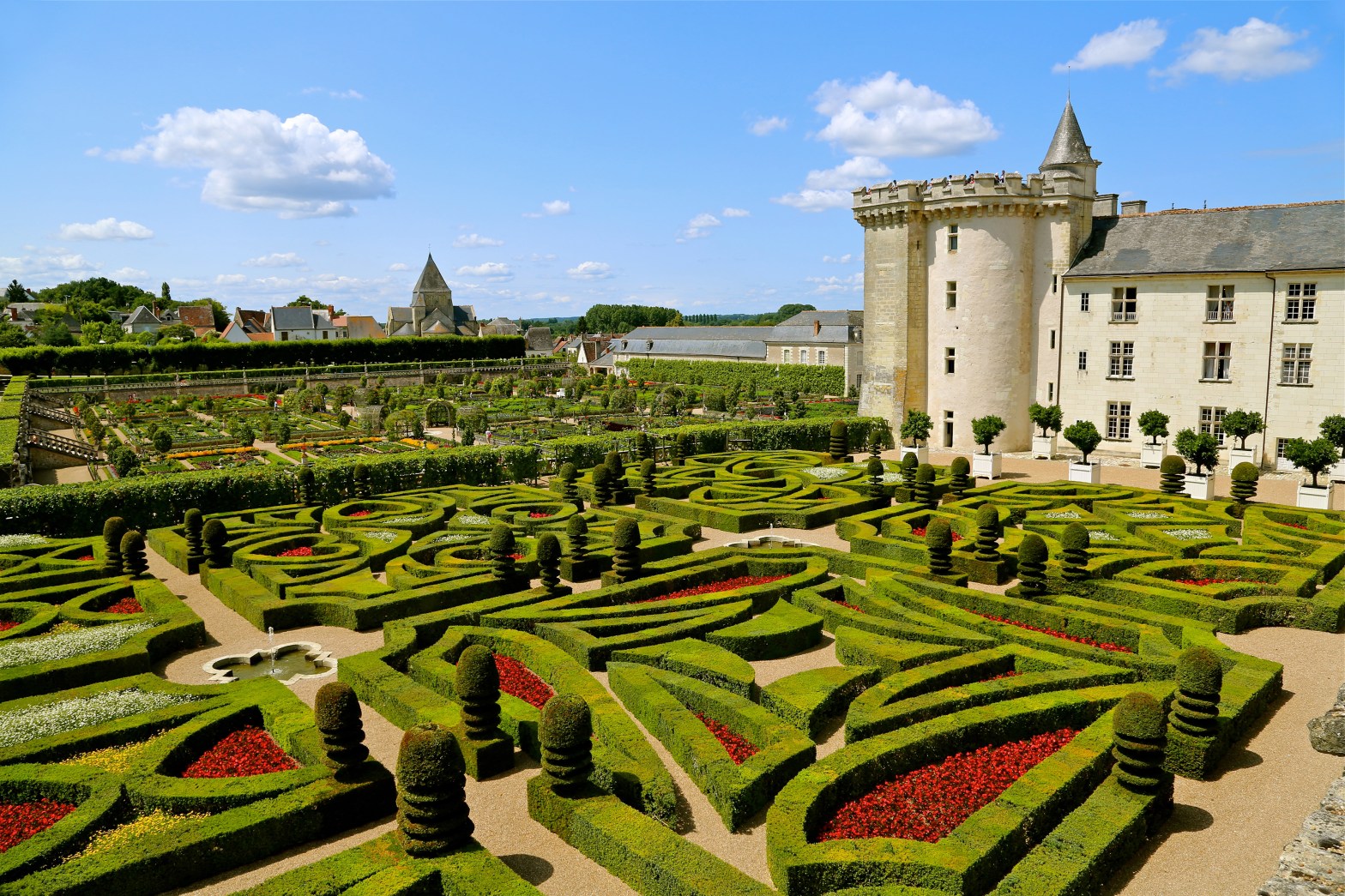
Our last day’s shore tour spotlighted two of the central Loire Valley’s most magnificent country estates—Chateau d’Azay-le-Rideau and Chateau de Villandry. Both fulfilled my visions of stately French manors. But it was the latter that really captured my imagination, thanks to the elaborate geometric patterns of its terraced, Italian-influenced flower, vegetable and herb gardens, a photogenic display attended by 10 full-time gardeners.

A Loire Princesse shore excursion includes a visit to Chateau d’Azay-le-Rideau, one of the Loire Valley’s grand Renaissance-era estates. (Randy Mink Photo)

At Chateau de Villandry, you’ll see tulips, begonias, roses, forget-me-nots and other flowers, depending on time of year. Some of the hedges are shaped into symbols, including hearts, fans and daggers. Planted throughout the estate are 1,015 lime trees.

chateau surrounded by flowering gardens
Chateau de Villandry is famed for its beautiful gardens. (Photo credit: Pixabay)

Panoramic views of the adjacent village and manicured gardens are available from atop the 12th century tower, the walled compound’s only remnant from medieval times. The chateau in its present form was built in 1536 by the finance minister of Francois I. Over the centuries, owners have included an ambassador of Louis XV and a brother of Napoleon I.

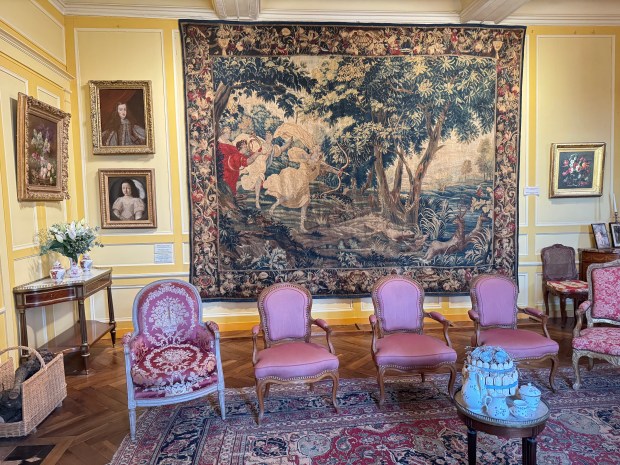
sitting room with large tapestry on the back wall
Sumptuous interiors awe visitors to Chateau de Villandry. (Randy Mink Photo)

In 1906, Joachim Carvallo and his wife, Ann Coleman, scientists from Spain and America respectively, took over Chateau de Villandry and restored its interiors and gardens. They were passionate collectors of old paintings, particularly 17th century Spanish art; some are on display. Of special note is the Oriental Drawing Room’s exquisite ceiling, a creation of Moorish craftsmen that came from a 15th century palace near Toledo, Spain. Joachim and Ann’s great-grandson, Henri Carvallo, now runs the estate and lives with his family in the former stables.
Ah, to be lord of the castle. The thought may be only a dream for us commoners, but it’s fun to fantasize. Having a chance to traipse through the Loire Valley’s aristocratic estates, along with receiving royal treatment onboard the Loire Princesse, is privilege enough for me. For more information on Loire River and other CroisiEurope cruises, log on to www.croisieuroperivercruises.com.


🔍 Search the site to discover more European Traveler feature stories. 🌍

FOLLOW US:

Spain’s Enchanting City of Flowery Patios

Medieval charm and floral beauty captivate visitors to Cordoba

Story and photos by Randy Mink

As you’re exploring the cobbled streets of this sun-kissed city in Southern Spain’s Andalusia region, it’s a smart move to escape the heat by stepping into a leafy courtyard festooned with flowers, draped in greenery and surrounded by thick, whitewashed walls. Harking back to Cordoba’s deep Arabic roots, these cool oases cast a magical spell.

Tucked into the largest urban historic center in Spain, the city’s trademark patios have always been a chief tourist draw. Architectural gems as well as horticultural havens, they mirror the tradition of cultivating flowers and plants introduced by the Moors when the Iberian Peninsula was ruled from Cordoba by Muslim emirs and caliphs. A respected seat of learning and artistic expression during its heyday in the 10th and early 11th centuries, Cordoba reigned as medieval Europe’s cultural capital, a city second in importance only to Constantinople. Christians, under King Ferdinand III of Castile, conquered Cordoba in 1236, ending five centuries of Muslim rule.

  • man looking at flowers
  • people looking at flowers

For two weeks every May, Cordoba celebrates its blooming courtyards during the Patio Festival (Festival de los Patios), an event held annually since 1921. About 50 private homes, competing for awards as the loveliest, open up their inner sanctums to the public—for free.

On my trip to Cordoba this past October, I was still able to view some private patios. In the San Basilio neighborhood, our group booked a tour (offered nearly year-round) that got us into the patios of five houses dating from the 16th to 18th centuries, a time when several poor families shared a communal courtyard. The common kitchen in some patios has been preserved and is on display. But the stars of the show are pots brimming with geraniums, impatiens, petunias, marigolds and other flower varieties, along with vines, shrubbery, rose bushes, and cascades of jasmine and raspberry-red bougainvillea. Orange, lemon, olive and fig trees also set the stage in these lush mini paradises, one of which is occupied by artisan shops specializing in handcrafted leather, ceramics, silver jewelry and perfumes.

FLORA: Blending Art and Nature

My October visit coincided with a relatively new cultural event that nods to Cordoba’s floral and botanical heritage. Called FLORA, the week-long, free-admission festival features five installations in public courtyards within walking distance of each other in the historic center.  Using plants and other natural materials, five international artists vie for monetary prizes. We saw creations by competitors from Mexico, Brazil, the United States and Spain.

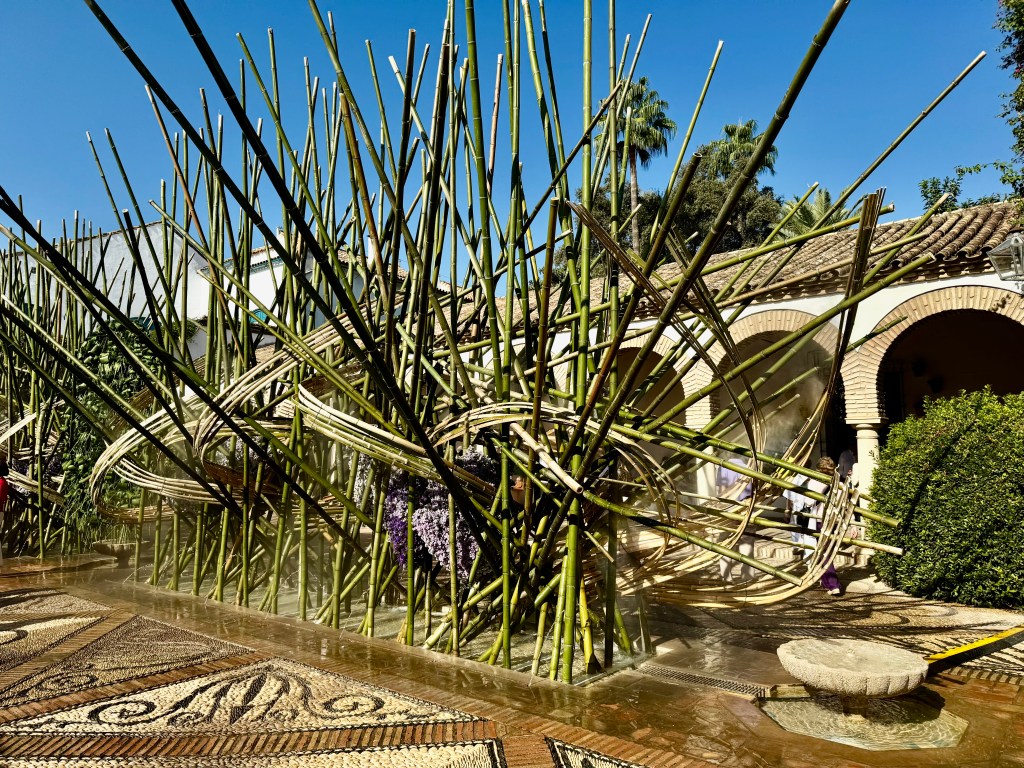
Bamboo canes and fountains in an art installation
Bamboo canes and fountains dominate the winning entry in FLORA 2025, an annual competition between international artists using plants and other natural materials to create large installations in existing patios in Cordoba. 

FLORA 2025’s first-place winner was Wagner Kreusch, a Brazilian who fashioned a monumental structure out of green bamboo canes, fountains, a misting feature, and purple and white aspidistra flowers. Titled Rio Flotante, or “Floating River,” his entry wowed onlookers at Palacio de Viana, the estate of the aristocratic marquises of Viana until 1980. Now a major tourist attraction, the 16th century palace has 12 plant-filled patios, each with a story to tell, and rooms displaying collections of furniture, weapons, porcelain, tapestries and paintings.

Cordoba’s Historic Heart

Threads of Christian and Jewish history, intertwined with vestiges of Roman, Visigoth and Moorish rule, emerge from every corner of Cordoba’s UNESCO-recognized historic quarter, a tourist-friendly maze of narrow lanes snaking between white buildings adorned with iron-grillwork windows, doors and balconies.

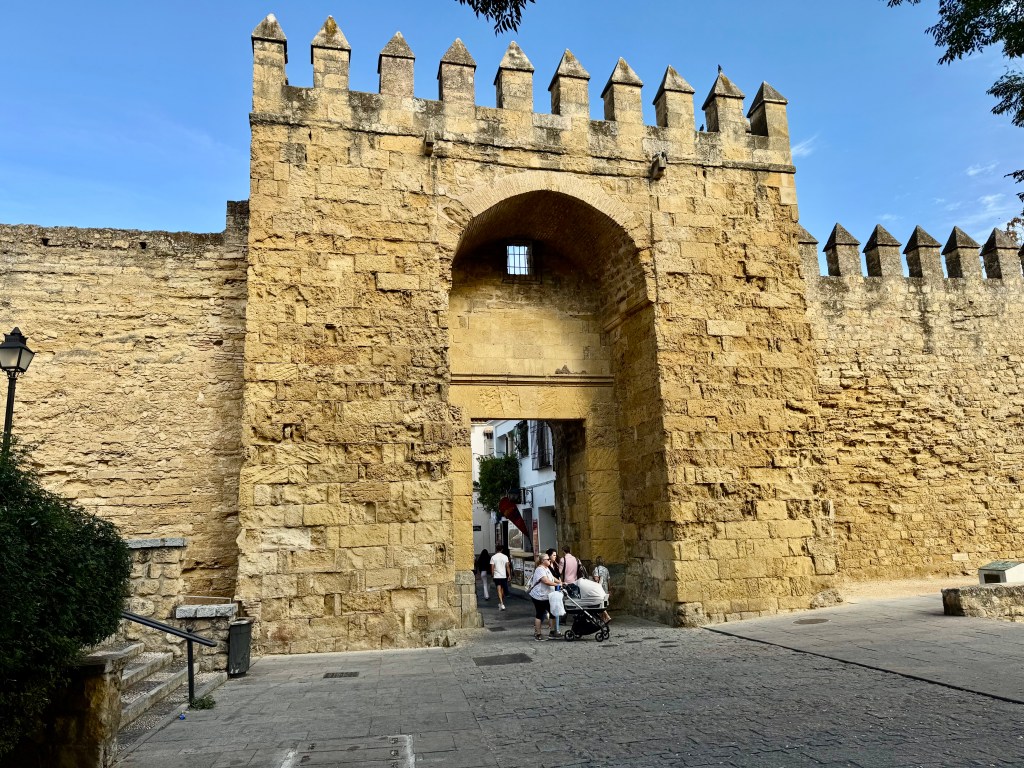
city gate and ancient walls
This surviving city gate provides entry through the ancient walls of Cordoba’s historic center.

Practically all the city’s top sights lie within this easily walkable district, but it’s also fun just to wander and get lost in the labyrinth, where flower-decked patios, orange trees, and festive taverns and outdoor cafes typify the gracious lifestyle of Andalusia, the region that conjures up our most romantic visions of Spain. Within the old city walls, you’ll also find plenty of souvenir shops. A highlight for our group was a rousing flamenco show with dinner at El Jaleo, an intimate room where dancers electrified us with some thunderous stomping.

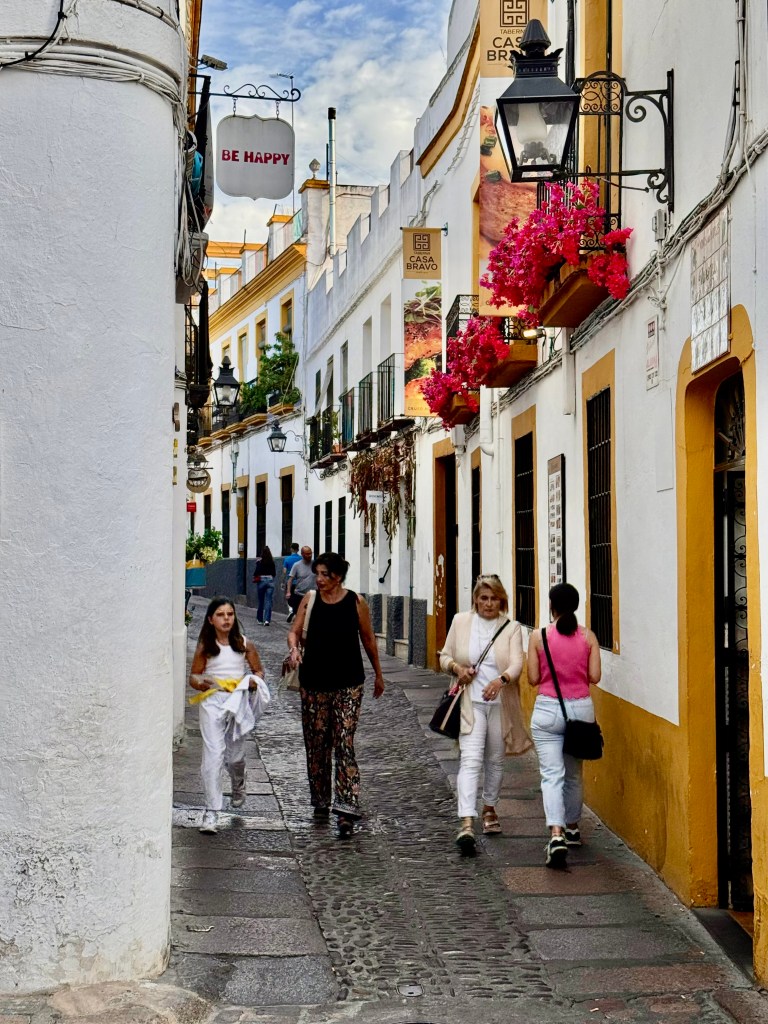
people walking down narrow street of shops
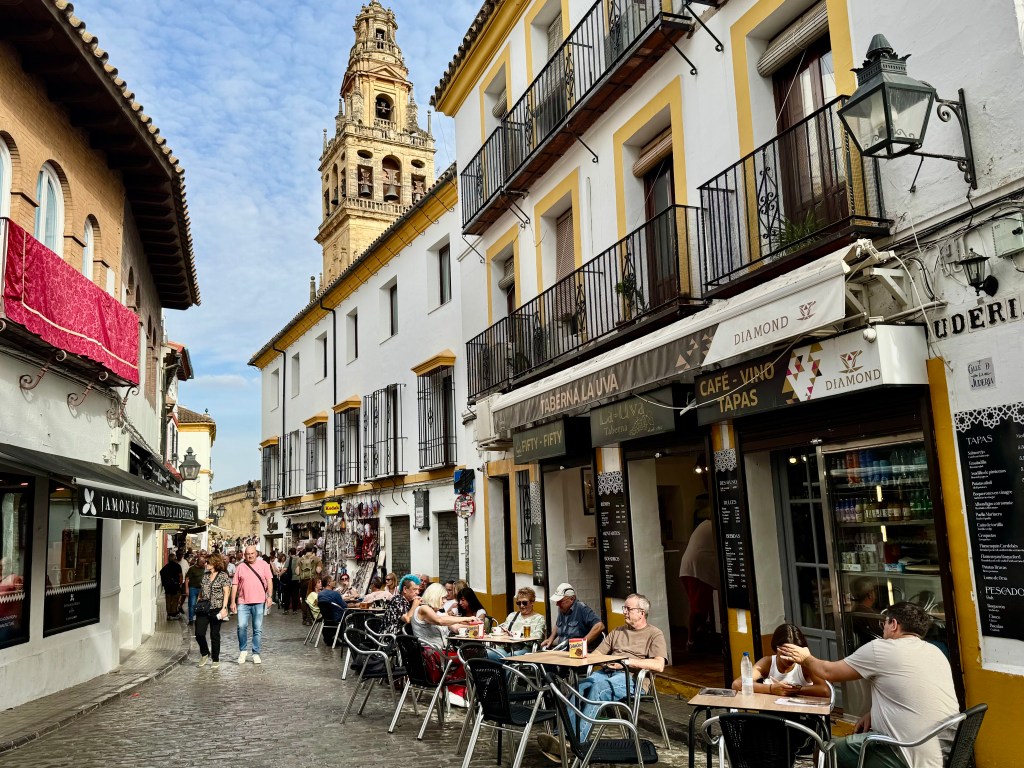
The intimate lanes of Cordoba’s historic center provide ideal settings for shopping, relaxing at cafes and just getting lost in medieval times.
Jewish Quarter

The medieval Jewish Quarter, or Juderia, is the historic core’s most atmospheric neighborhood, and its pleasures lay right outside the door of our hotel, the NH Collection Amistad Cordoba. Featuring flower-decked alleyways and patios, along with reminders of Jewish culture that flourished in Cordoba long ago, the quarter is home to the Synagogue, built in 1315. No longer used for worship, it’s the only Jewish temple in Andalusia to survive the Inquisition in 1492, when Jews were expelled from Spain or forced to convert to Christianity. Inside the small building you see Hebrew inscriptions, Arabic decoration and even a Cross (it was used as a church in the 19th century). For many years the Jews lived in harmony with the Muslims and some held prestigious positions in the government, professions and arts. Toledo claims Spain’s other two remaining medieval synagogues.

town street with people sitting at cafe tables
Cordoba’s atmospheric Jewish Quarter offers souvenir shops, cafes and a cozy medieval feel.

Nearby, in a beautifully restored 14th century house, Casa de Sefarad is a museum that tells the story of the Sephardic Jews in Iberia and other Mediterranean lands (a group differentiated from the Ashkenazi Jews of Central and Eastern Europe).

At the Bullfighting Museum (Museo Taurino), right across the plaza from my hotel, I learned about some of Cordoba’s greatest matadors. Though much of the exhibit text was in Spanish only, the two short audio-visual presentations provided an option in English. With a wrap-around screen, one film puts you right in the middle of the ring with a ferocious bull.

Cordoba’s Crown Jewel: The Mezquita

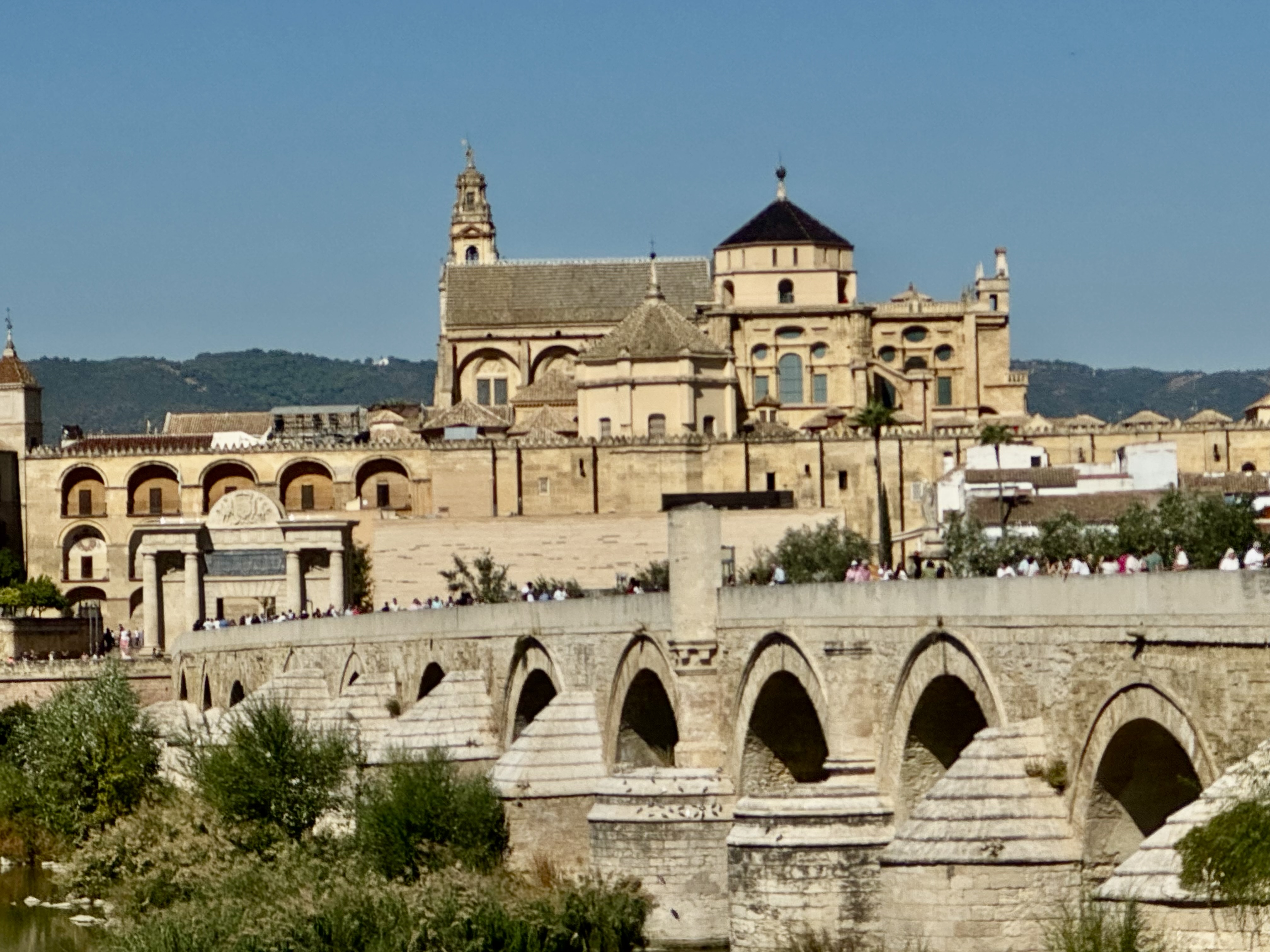
First-time Cordoba visitors make a beeline to the Mezquita, a former mosque that has been a church since the 13th century. Rather than destroy the mosque, the Christians decided to modify it. In fact, the church—complete with an elaborate main altar, a giant nave, an organ, religious artwork, tombs of important citizens and intricately carved Cuban mahogany choir stalls—appears to have been plopped smack into the middle of the mosque. The cavernous Mezquita (Spanish for “Mosque”) was once the second largest mosque in the world after the Great Mosque in Mecca.

  • Arches inside a church
  • bell tower and trees
  • altar items at a church

The Mezquita’s most dazzling sight is the endless forest of marble, granite and onyx columns topped with red-and-white-striped, horseshoe-shaped double arches, Islamic style; many of the pillars were recycled from Roman and Visigothic times. Fashioned over the centuries from a jumble of architectural styles, the dimly lit Mosque-Cathedral, as it’s known, is vast, mysterious and hard to wrap your head around. The columned arcades seem to march on forever, melting into infinity. There is no other building like it.  

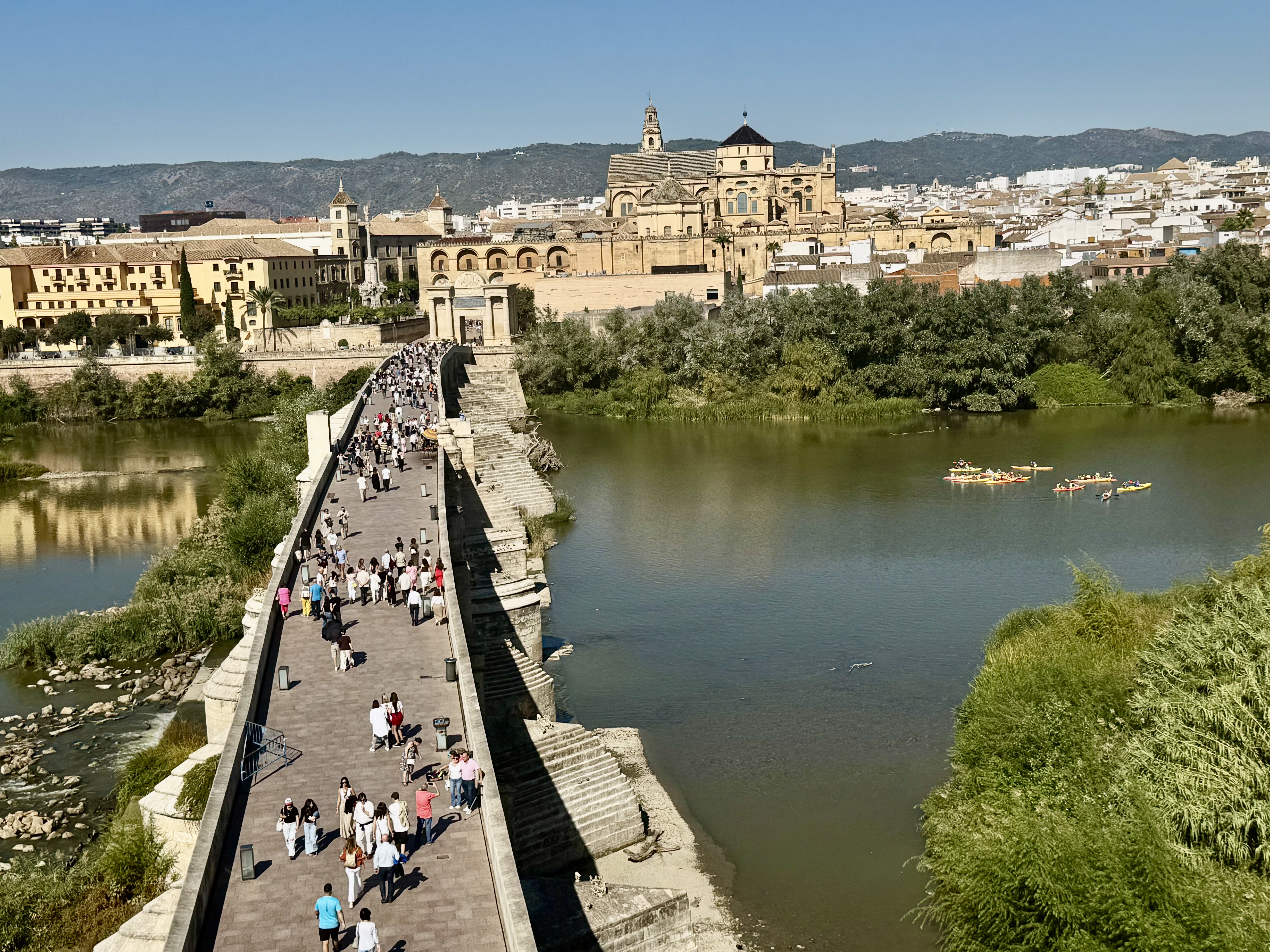
I wanted to climb the Mezquita’s bell tower (built around 1600 over remains of the mosque’s minaret), but tickets for the day were sold out. So, I crossed the Guadalquivir River via the 2,000-year-old Roman Bridge, a wide pedestrian walkway, and took in panoramic views from the rooftop terrace of the Calahorra Tower, a crenellated 1369 structure that houses a museum of Andalusian culture.

  • overhead view of pedestrian walkway over river
  • pedestrian bridge

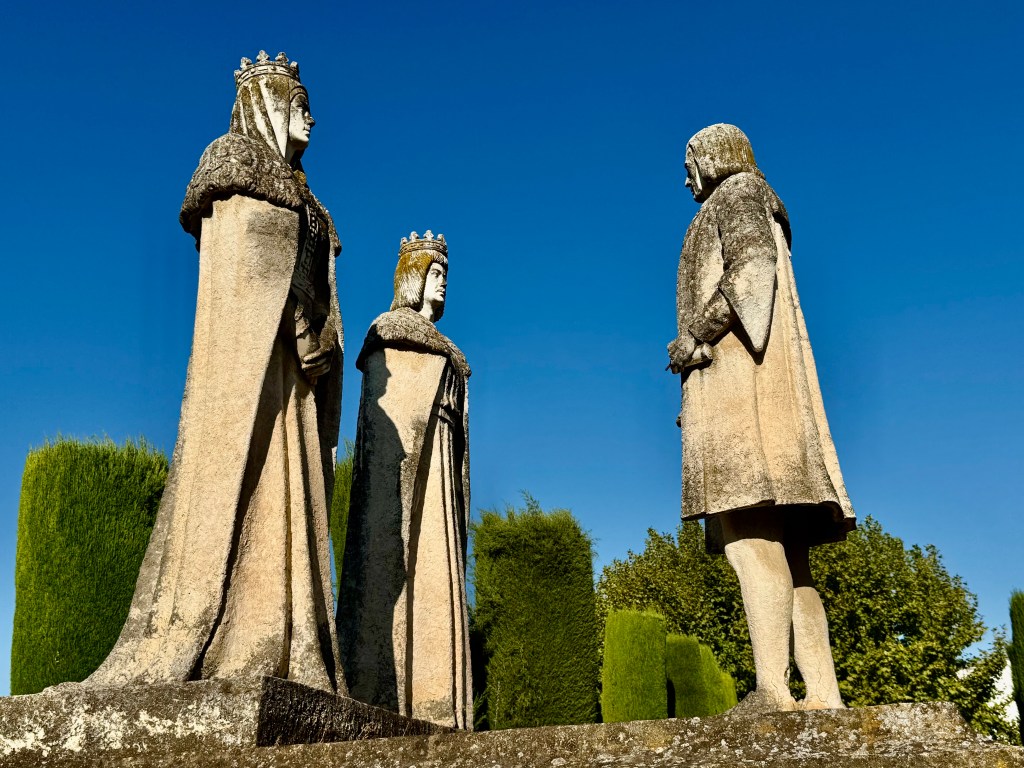
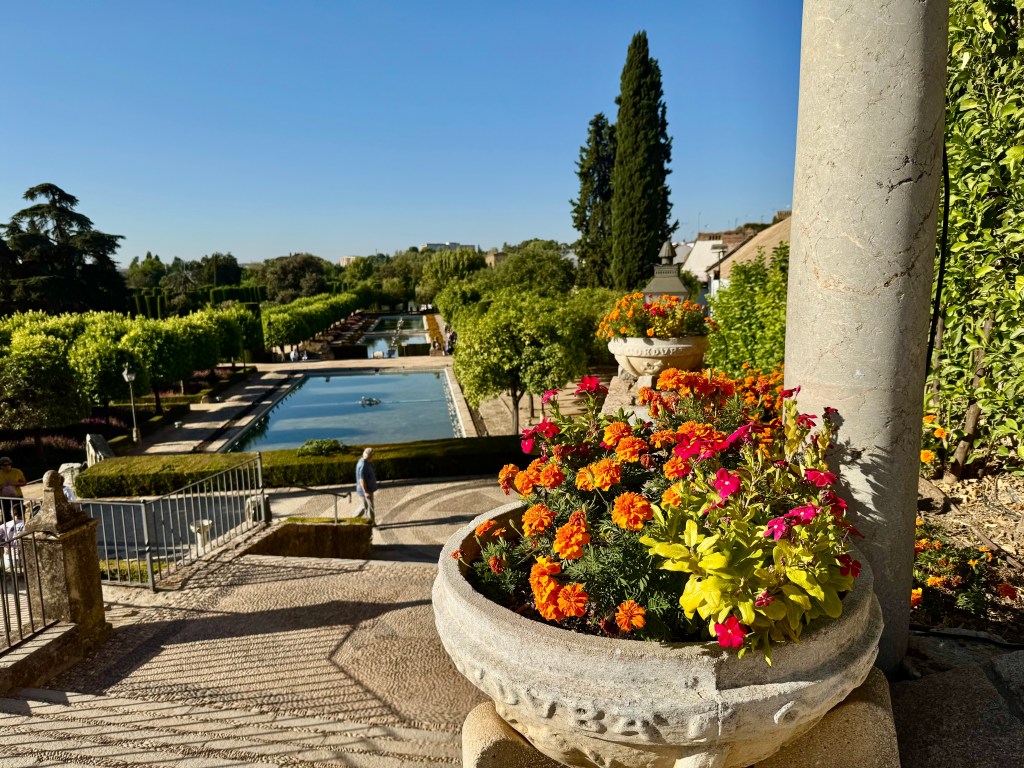
The bridge and Mezquita are a short walk from Alcazar de los Reyes Cristianos, residence of the Christian monarchs. The palace-fortress currently is closed for renovations, but I enjoyed walking through its terraced gardens, admiring the plantings and statuary. One sculpture depicts Christopher Columbus being received by King Ferdinand and Queen Isabella, sponsors of his 1492 voyage to the New World.

three tall statues in a garden
The Alcazar Gardens in Cordoba feature a sculpture of Christopher Columbus being received by King Ferdinand and Queen Isabella.
flower pot with garden and trees
The terraced gardens of the Alcazar palace/fortress are a must-see in Cordoba.

When it comes to destinations in Andalusia, Cordoba often gets short shrift, as Seville and Granada tend to get the most attention. But Cordoba should be on every traveler’s radar. Indeed, this overlooked city merits a day or two for a good looking over.

For more information log on to www.spain.info/en/destination/cordoba/


🔍 Search the site to discover more European Traveler feature stories. 🌍

FOLLOW US:

Exploring Germany: Culture, Cuisine, and History on Viking Cruises

Even a 45-minute lecture can prepare you for the sights and scenes of Germany

Story and photos by Sharon Hudgins

Cruise Lecture Teaches History, Culture
If you watch Masterpiece and other programs on public television in America, you’re probably familiar with the phrase, “Viking. Proud sponsor of…”—accompanied by images from Viking’s “longboat” cruises on the Rhine, Mosel, and Danube rivers in Europe. Other times you see wanderlust-invoking scenes from Viking’s ocean-going fleet, which sails the Atlantic and Pacific oceans, the Baltic and Mediterranean seas, and beyond, encircling the globe. And occasionally you’ll see the two new Viking polar-class expedition ships, the “Octantis” and “Polaris,” that sail to Antarctica in the Southern Hemisphere and the Great Lakes in the Northern Hemisphere.

Since 2017 I’ve had the pleasure of being a guest speaker on Viking Ocean Cruises in Europe, giving lectures on historical, cultural, and culinary topics aboard ships sailing from Viking’s home port in Bergen, Norway, to most of the countries bordering on the Baltic Sea.

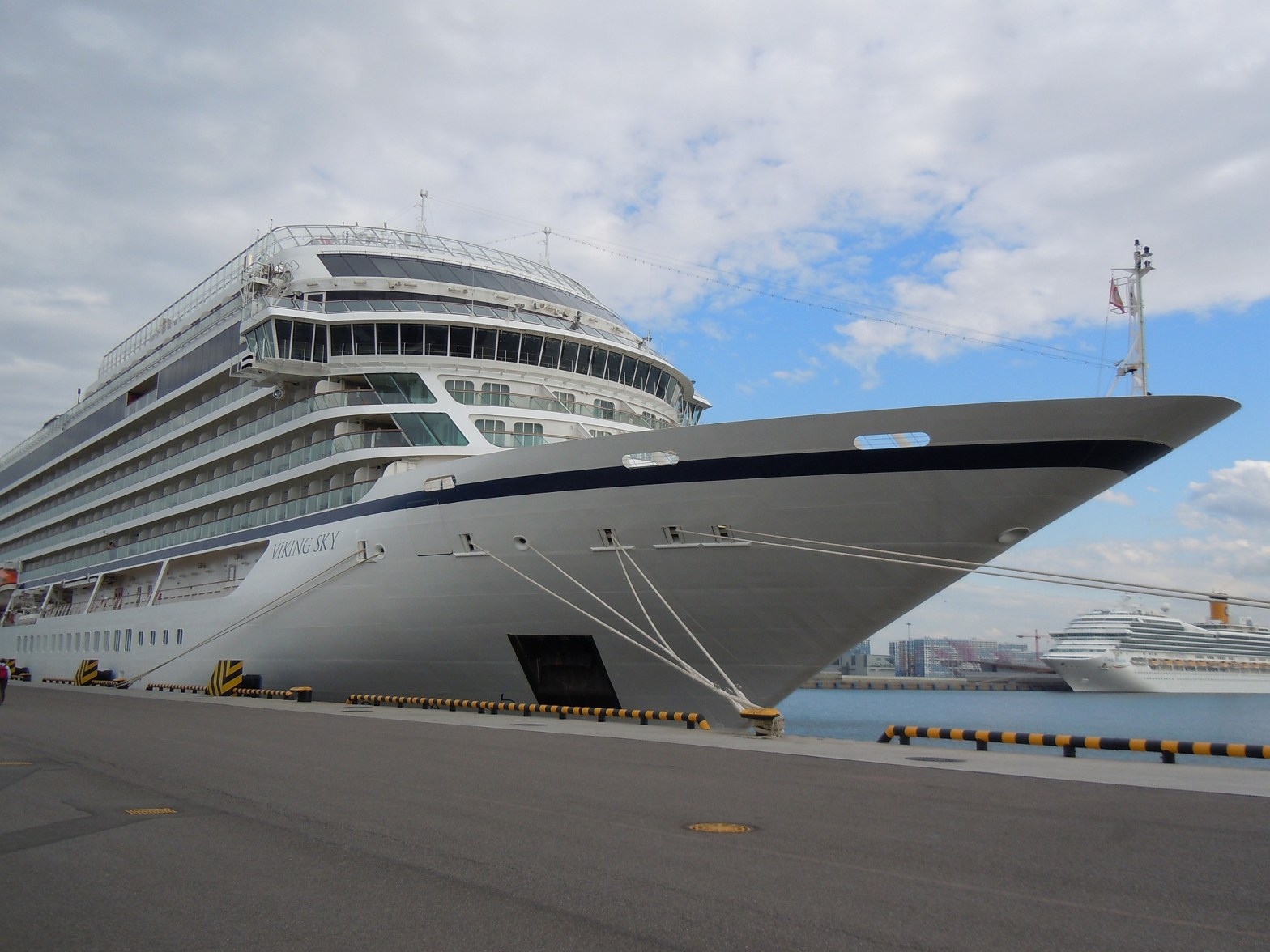
The Viking Sea ship docked at a Baltic port.

The “Viking Sea” ship docked at a Baltic port.

That itinerary follows the routes of the Hanseatic League, the medieval trading confederation that linked the countries of England, northern Europe, and Russia, and also the routes of the earlier, historical Vikings, who plied the waters of the Baltic, too.

Viking prides itself on focusing on the history and cultures of every country on its itineraries. So the cruise director on each ship schedules lectures about those destinations one or two days before the ship arrives in a port, to prepare passengers for the sights, sounds, and tastes of each new country they visit.

While the cruise ship guests are away during the day on shore excursions to a variety of places in those countries, the ship’s staff refills the vessel’s fuel tanks, cleans the guest rooms and public spaces, restocks food supplies, and prepares meals for hungry passengers when they come back on board. The singers, dancers, and musicians also use that time to rehearse their next shows on stage.

Cultural Stereotypes and Truths
So what does that have to do with Germany? Many cruise lines sailing in the Baltic dock at the busy German port of Warnemünde. I’ve lost count of how many times I’ve been to Warnemünde and the surrounding area, as a guest speaker on Viking, National Geographic-Lindblad, and Oceania cruises, as well as on press trips for journalists gathering new material for articles to write. But only on Viking cruises have I had the opportunity to present a 45-minute illustrated lecture about that entire country of Germany, a nation I often think of as “my second home.”

I begin with a short introduction telling how long I lived in Germany (15 years) and what I was doing there (teaching for the University of Maryland’s education programs at U.S. military bases, writing for the Stars and Stripes newspaper). I also mention that for 28 years I was a writer for German Life magazine in America, too. Then I launch into my lecture: “Germany: Land of Laptops and Lederhosen.”

A lecture on “all-of-Germany” in 45 minutes? How is that possible? Not easy without being superficial, I assure you. And that’s exactly how I begin my lecture, showing pictures of the stereotypes that many people have about Germany: Men in Lederhosen. Women wearing Dirndls. Oompah bands and choral groups clothed in traditional Trachten, too. Half-timbered houses and fairy-tale castles. Foaming mugs of beer. Strings of sausages. Pretzels!
Then I point out that stereotypes often contain a grain of truth. But they’re only one part of a many-faceted story (or country), factors that exist side-by-side with all of them being true simultaneously.

Modern Germany – Regions and Festivals
So I segue easily into modern Germany: High-speed highways. High-speed trains. High-tech industries. High fashion. Avant-garde art and architecture. Michelin-starred restaurants and Turkish döner kebab stands. And all those oh-so-wonderful German breads and pastries!

There’s no way anyone could condense centuries of German history into such a lecture. So I focus on Germany today, starting with Berlin and the country’s government (with a nod to the rise and fall of the Berlin Wall), and an overview of Germany’s population, literacy rate, national health insurance program, religions, and economy. The rest of my presentation is about the characteristics of its four main regions, from North to South, East to West, including those regions’ differing landscapes, architecture, industries, and cuisines. Then I conclude with—what else?—Oktoberfest! That world-renowned German beer festival brings me full circle back to the beginning of my lecture: The coexistence of stereotypes and deeper, often contrasting, realities in Germany today, a land of computers and cowbells indeed.

Viking Ships and Excursions
Viking’s ocean vessels carry 960 guests, plus a large, well-trained crew. While in port, most of the passengers head off on shore excursions, and even some of the ship’s employees have a few hours of shore leave, too. When the ship is docked in Warnemünde, Viking offers half-day and full-day excursions to several locations in northern Germany: the Hanseatic cities of Rostok, Lübeck, and Wismar; a classic 19th-century spa town reached by steam train; the magnificent castle in Schwerin; the grim concentration camp at Sachsenhausen.

But the most popular destination is Berlin—six hours round-trip by special train, plus six hours of touring various parts of the city and its historical sites, by chartered buses and on foot with knowledgeable guides, or just exploring Berlin on your own. One excursion even includes lunch at the Reichstag, along with a special tour of that iconic building so important in Germany’s history.

Clockwise from left: The German Reichstag in Berlin, as seen from the Spree River.
The modernistic Marie-Elizabeth-Lueders-Haus government building near the Reichstag in Berlin.
The facades of many Berlin buildings are best viewed from a boat ride on the Spree River.

On my first Baltic cruise with Viking, the only time available for my Germany lecture was at 9 p.m. on the night before we docked at Warnemünde. Since half the 960 guests on that ship had signed up for the 12-hour shore excursions to Berlin the next day—and since they all had to get up at 5 a.m. to board the train at 6 that morning—I expected only a few people to attend my lecture that night. After all, passengers could always watch a video of it on television in their own cabins, any time later during the cruise. So I was surprised when half the ship showed up for that introduction-to-Germany lecture, filling the lecture hall.

The next evening we all returned from Berlin, tired but happy, after a full day of riding the rails through the German countryside, visiting one of the world’s great capital cities, and learning so much about Berlin’s special place in history. But another treat awaited us back in Warnemünde. A red carpet led from the cruise ship terminal across the pier to the ship’s gangway. Lined up along the sides were the ship’s officers and staff, from the captain to the cabin cleaners. At the terminal each guest was handed a glass of sparkling wine, which we all tried to balance in one hand while dancing along the red carpet to lively music, with many of the crew joining in, as we made our way back to the ship.

Top: One of the modernistic fountains in Rostock, a shore excursion destination on Viking Baltic cruises.
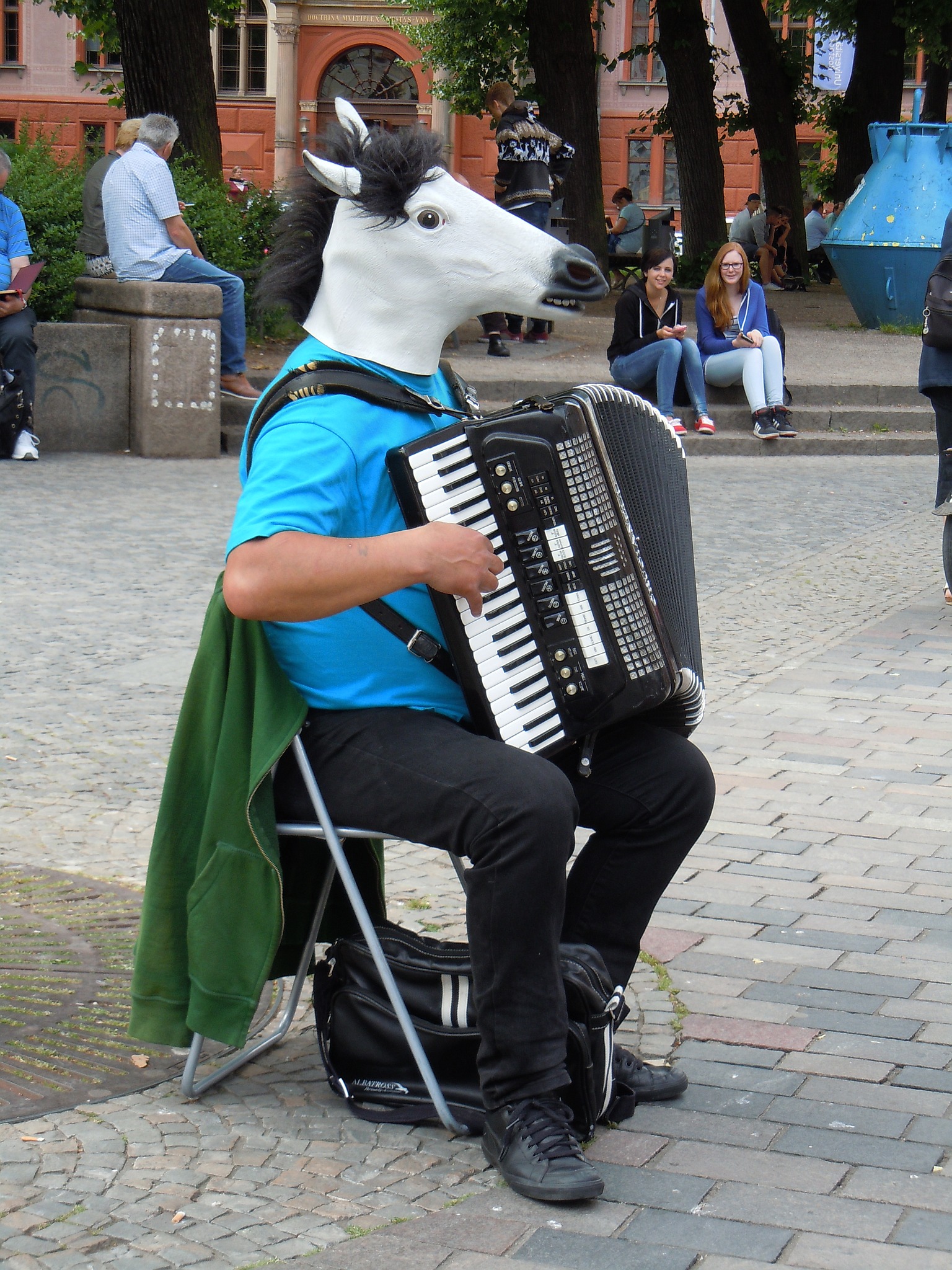
Lower left: Street musician in Rostock, one of the cities on shore excursions from Viking ships docked at Warnemünde, Germany, on Baltic cruises.
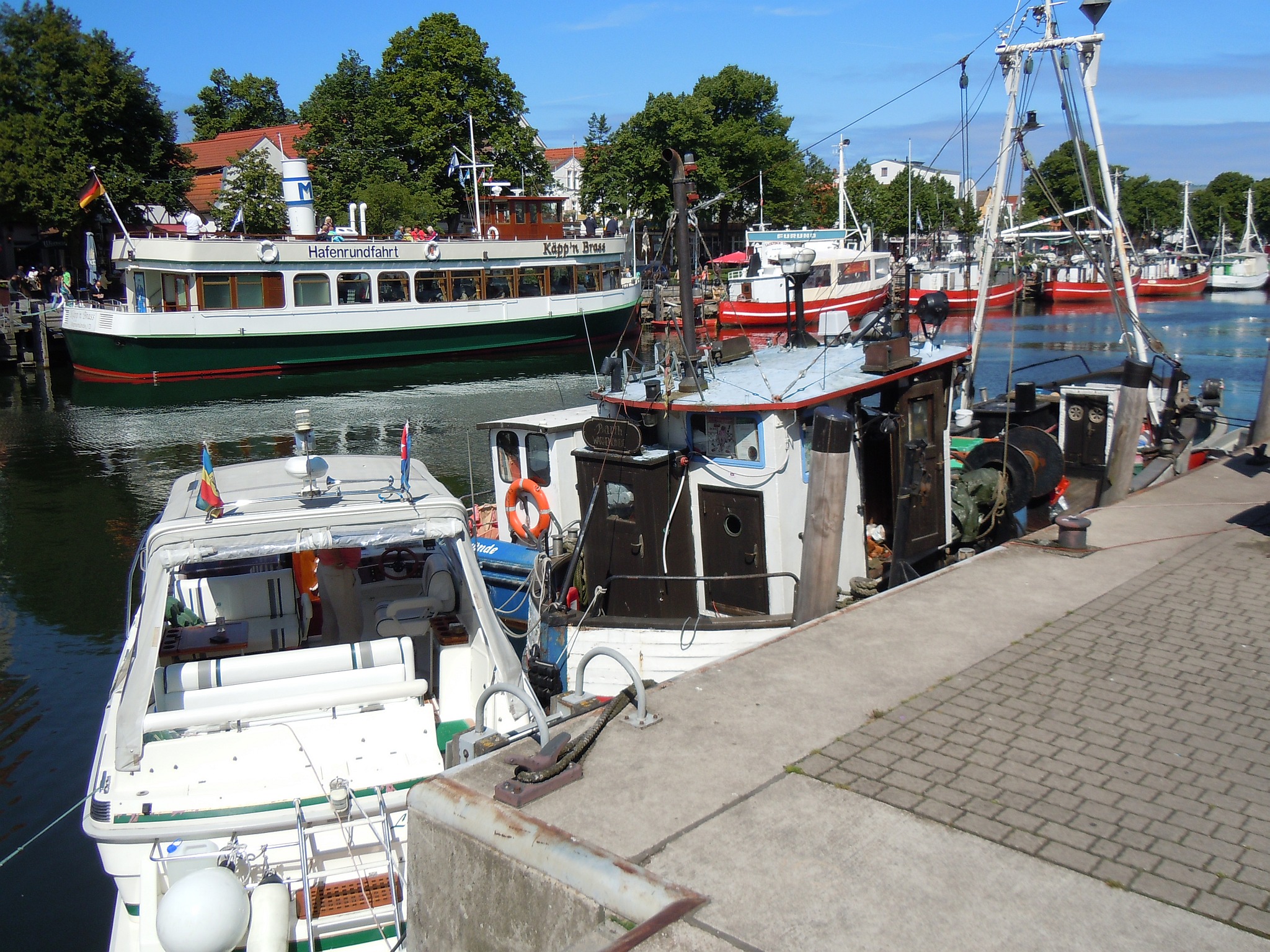
Middle and lower right: The colorful Alter Strom inner harbor at Warnemünde is always filled with small fishing boats and sightseeing boats.

German Culinary Delights on Deck
Dinners on board that evening featured traditional German specialties, from Sauerbraten to Schnitzel, Black Forest Cherry Cake to Bavarian Cream. And of course plenty of German beers and wines, too! As we sailed away from Warnemünde, the only regret for me was leaving a country where I have such deep roots. But we still had five other Baltic countries to visit on that cruise, so who was I to complain about new adventures awaiting the next day? And there was always the prospect of another cruise, or even a different kind of job, bringing me back to Germany in the future.

One of the greatest rewards of working on tours in Germany has been introducing other people to such a fascinating country. Nothing compares with the feeling I get when a member of our tour group comes up to me and says, “Thank you for your lecture about Germany. Because of you, I saw the country with different eyes when we were there.”

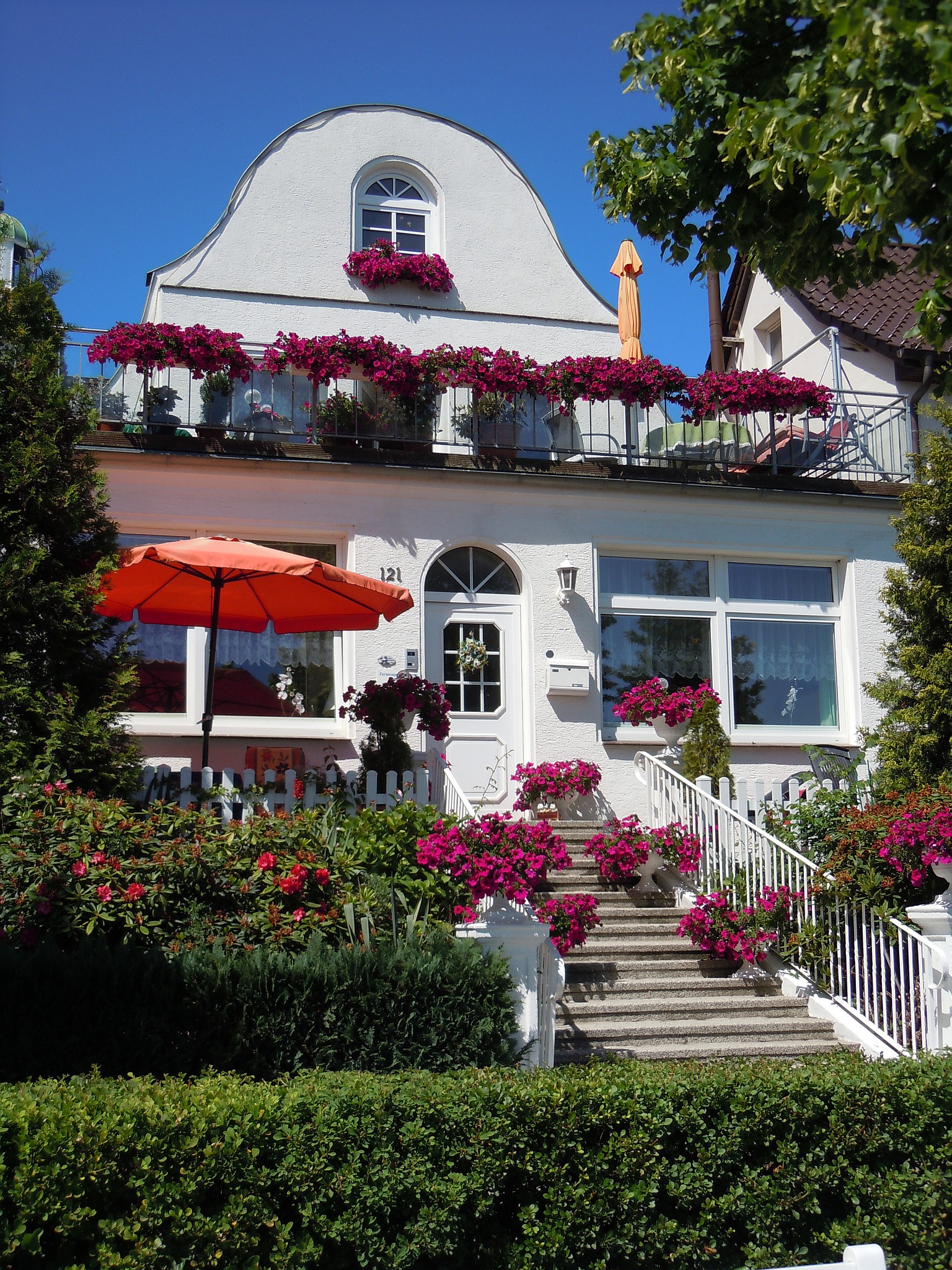
Left: One of the many pretty villas overlooking the waterfront at Warnemünde.
Right: Sand sculpture at the cruise ship dock in Warnemünde.


Sharon Hudgins is a professional writer and a lecturer on educational tours to Europe, Alaska, and North Asia. See more at www.sharonhudgins.com

Visit Viking Cruises to explore cruise destinations and itineraries.


🔍 Search the site to discover more European Traveler feature stories. 🌍

FOLLOW US:

Discover Monte Isola: Fishing Heritage and Local Cuisine

By Alison Ramsey

Northern Italy island cuisine and fishing boats follow tradition

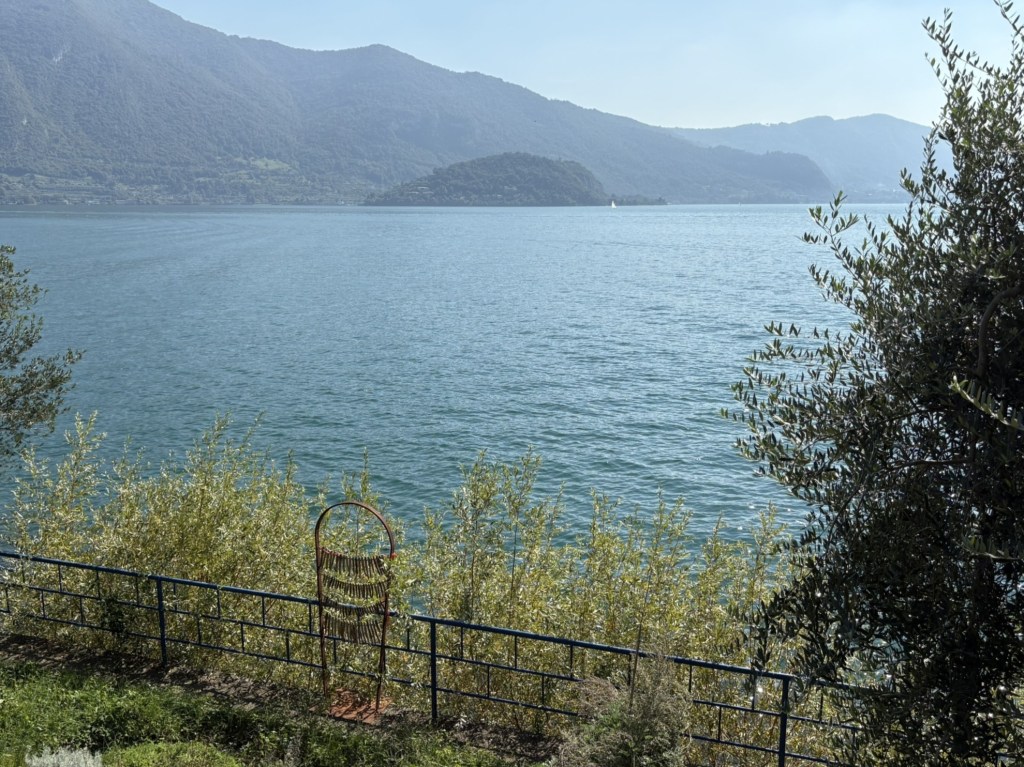
Literally translated to “Mount Island,” the beautiful village of Monte Isola, Italy, rises from the middle of Lake Iseo in the Brescia province in Lombardy. Monte Isola comprises three islands, the principal being Montisola—the largest inhabited lake island in Europe—reachable only by boat (ferries run approximately every 20 minutes during the day). Beneath the glittering cobalt water swims the sea life that, for years, inhabitants relied on for sustenance and livelihood. Montisola’s main industry is now tourism, but in the past, it was fishing.

Montisola island in Lake Iseo has many docks and fishing boats

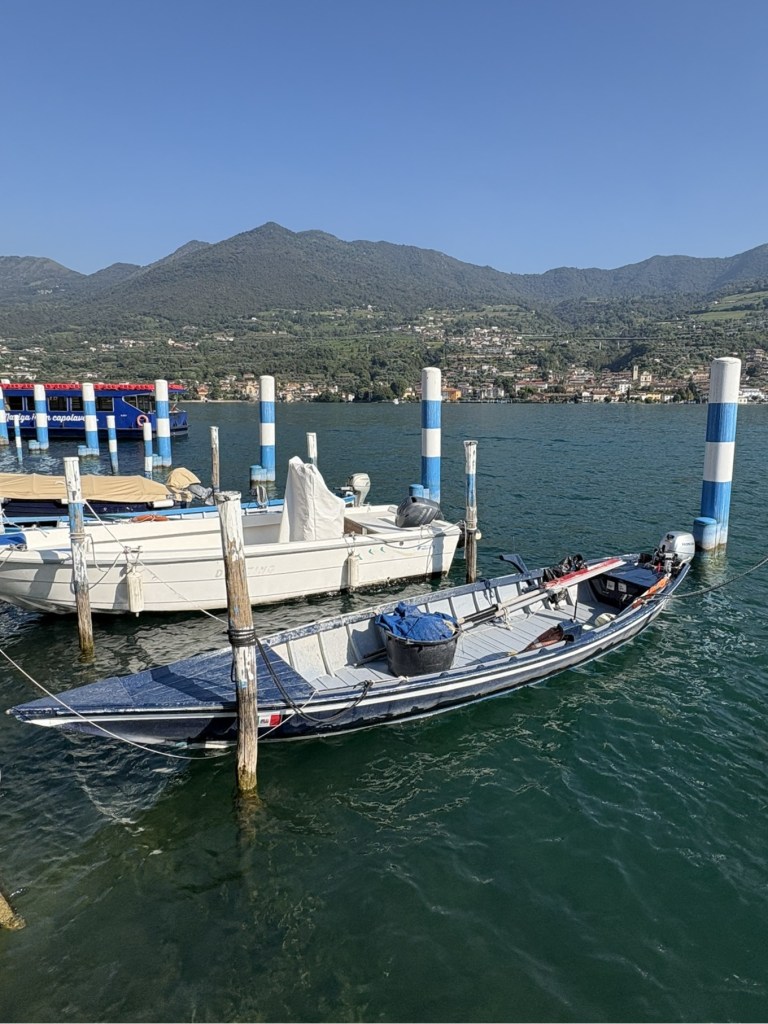
Montisola island in Lake Iseo is lined with docks and fishing boats.

Fishing boats and islands dot Lake Iseo in the Brescia region of Italy

Fishing boats and islands dot Lake Iseo in the Brescia region of Italy.

Unique Wooden Fishing Boats

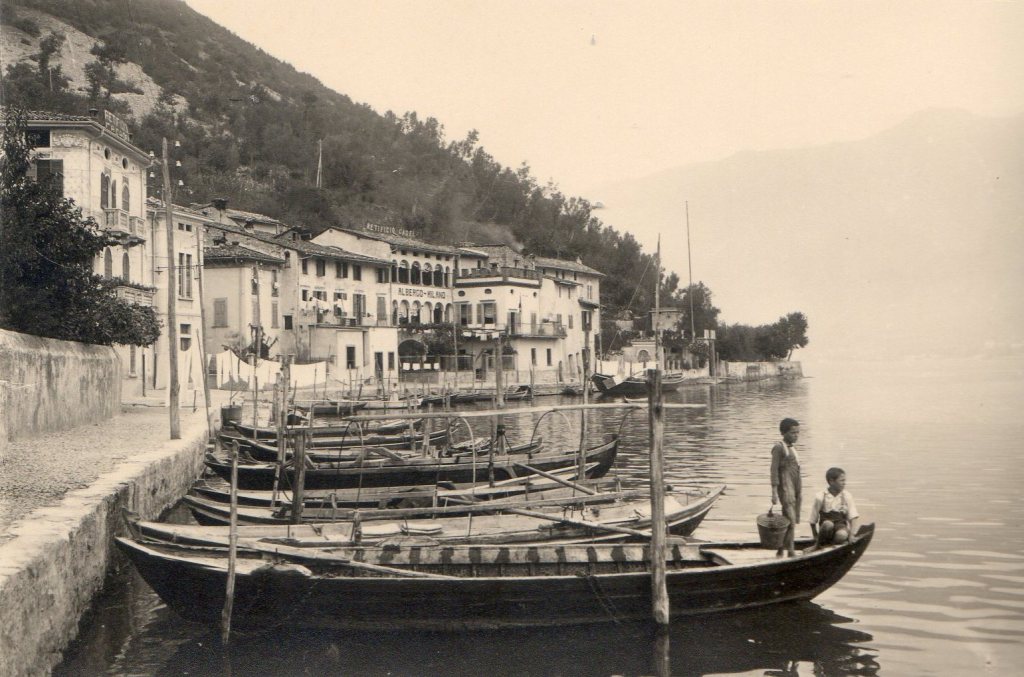
Shipbuilding yards focused heavily on making a typical style of fishing boat called the Naèt—long and narrow wooden boats, similar in style to the famous Venetian gondolas. Islanders depended on these light and agile boats for fast transportation to the mainland as well as for successful fishing. Naèts are difficult to construct and require great skill to make, with builders using an ax, hammer, chisel, and plane to cut and shape chestnut wood for the frame and durable larch wood for the remainder of the body.

The original flat 4.5-foot-wide boats were almost 23 feet long, with sails attached to two intercrossed chestnut wood poles—about 11.5 feet and 13 feet each. Around 1958, builders began removing the sails and adding engines to these boats, which shortened the boat length by about two feet. At the very center depth of the hull, the width remains only 80 cm. Every village uses its own color for their Naèts, so a quick glance at the docks identifies where each boat originated.

The only remaining shipbuilding yard on the island is Cantiere Nautico Ercole Archetti, and this craftsmanship-focused family company has trained five generations of carpenters to reach shipbuilding expertise. Building unique wooden boats since 1600, the team now uses cutting-edge technology but still makes their products entirely by hand, using carefully selected marine wood and employing highly qualified Master Shipwrights. Maintenance, storage, and rental are other offerings from Ercole Archetti Shipyards.

Paolo Archetti, owner of local net manufacturing company Bresciareti, said that nuns used to own property on the island and wanted to be paid for the land they lent out. Renters with limited cash began to pay the nuns in fish instead of funds—children loaded the special two-ended wooden needle with thread and women handwove the nets men used for fishing. Because fishing was most productive during the warm months of April, May, and June, islanders learned how to preserve their catches, drying the fish and conserving them in oil for later payment.

Top left: The color of a Naèt indicates from which village the boat originated.
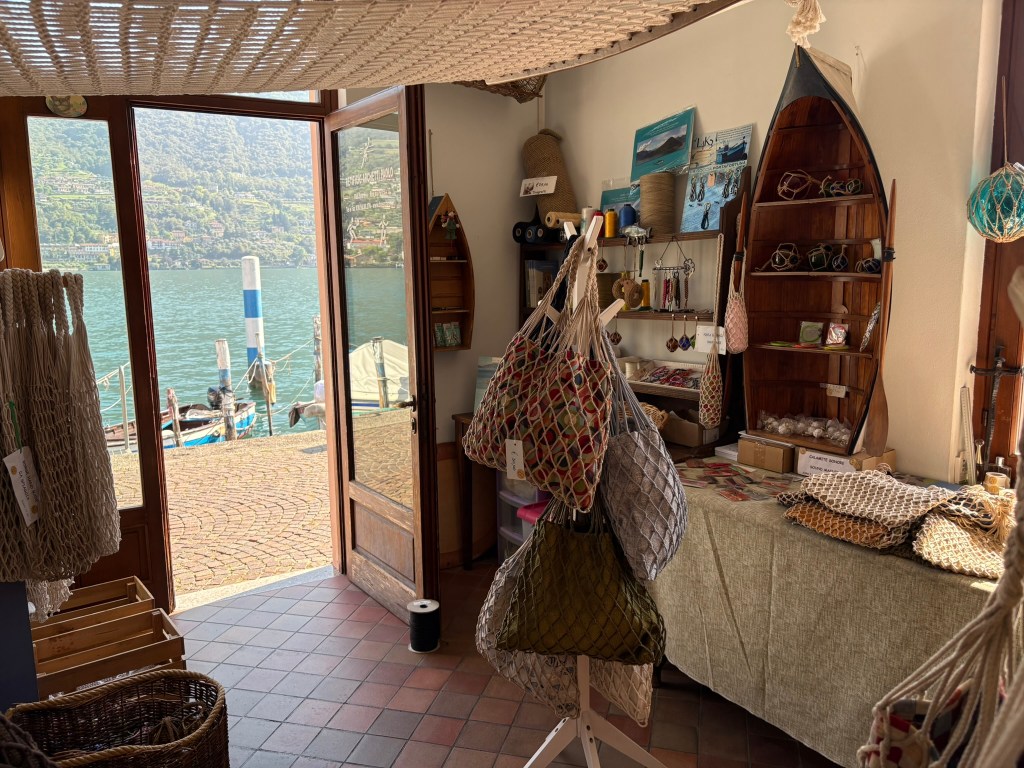
Top right: The Bresciareti storefront sells handwoven net accessories and the company fulfills large orders of machine-created nets for sports, construction, and aviary control.
Bottom (photo courtesy of Michele Turla): Peschiera Maraglio port has always been a hotspot for boat parking.

Island Cuisine Includes Preserved Sardines

The pretty, pink-embellished Church of St. John the Baptist in Carzano, a small lakeside settlement on Montisola, is also known to locals as “St. John of the Sardines.” Independent tour guide Elena Confortini explained that on June 24 residents historically celebrated St. John’s feast day. On this day, which fell during the final seasonal period when sardines came closest to the shore and there was an abundance of fish, the church used to cook sardines in its front square and serve them freely. Although locally referred to as “sardines,” these fish are actually a species of freshwater twaite shad (Alosa fallax locustris) but are called sardèna in Italian because their appearance is similar to true sardines.  

Left (photo courtesy of Michele Turla): Fishing was the primary industry in historical Monte Isola.
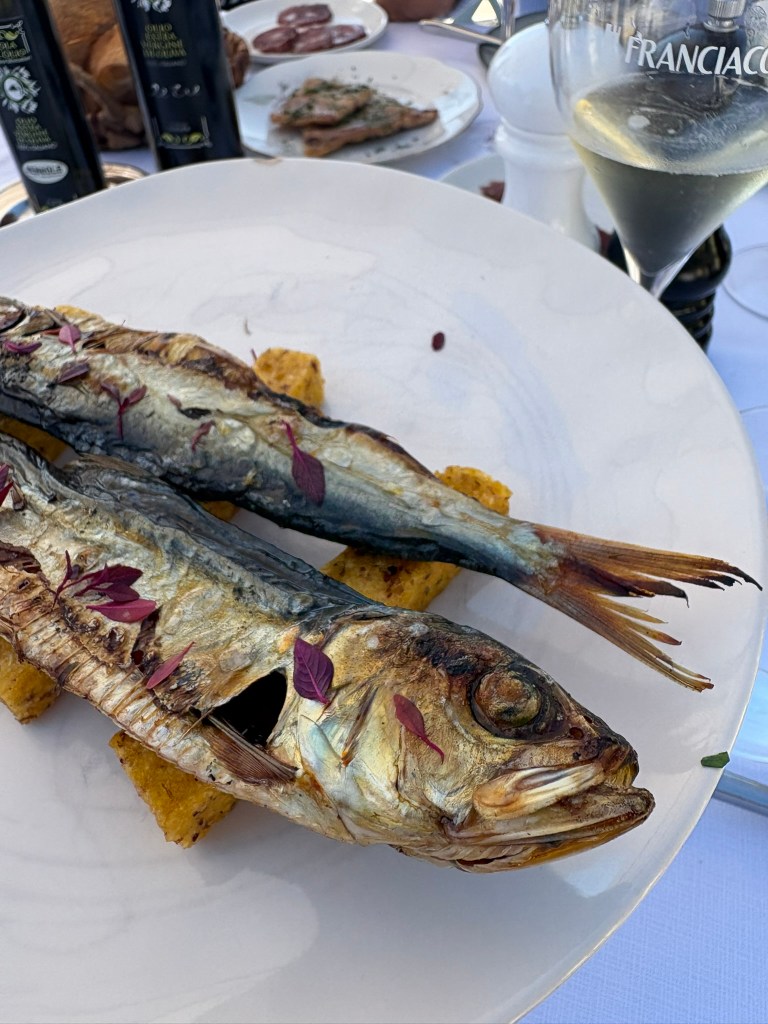
Right: Dried, salted, and preserved sardines on polenta are a traditional treat served by Sensole Locanda Contemporanea restaurant.

For centuries now, island cuisine has included dried, salted, and preserved fish—characteristically sardines, perch, and the common European whitefish (known in Italian as coregone). These fish, cured with salt and dried in the sun for 24 hours, are then washed and strung up in parallel lines dangling from hooks or tacked upon arches of ash branches secured with thread on both ends. After sunning outdoors in the heat for 5-10 days, the fish are removed into iron containers and pressed in olive oil. Several months in this state turns sardines a golden color, and they can then be seasoned simply with garlic, parsley, and oil, and grilled quickly over a hot fire. The surname “Archetti” is one of the more common names on Montisola. Translating to “little bows,” this name is derived from the bowed wooden frames erected all over the island for fish-drying.

Monte Isola fish-preservation techniques from the past are still used today across the island, and garden art pieces imitating fish-drying frames decorate the lakeside. (Black-and-white photo courtesy of Michele Turla)

Only two eateries on the island currently serve sardines, one of which is Sensole Locanda Contemporanea. This charming, yellow-walled lakeside restaurant sits directly down the rocky hillside below Martinengo Fortress, a privately owned castle with a recognizable circular lookout tower. Young restaurant owner, Giovanni Lo Bresti, expertly serves traditional dishes using locally grown products, with each course gorgeously plated. Try the intensely flavorful dried sardines (use fingers, not utensils, to eat it the authentic way!) alongside tasty bars of fried polenta. Enjoy Monte Isola smoked salami, grilled dry coregone fish, fried pike balls, homemade bread, butter sprinkled with perch bottarga (salted, cured fish roe), and spiced salami ragout with bread gnocchi.

The upper outdoor deck of Sensole Locanda Contemporanea restaurant overlooks beautiful Lake Iseo, while the lower outdoor patio invites guests from the pedestrian walk.

Montisola Olive Oil and Franciacorta Wine

At Sensole restaurant, diners can also try the deliciously light local extra virgin olive oil labeled “l’isola dell’olio” (translation: “island of the oil”). One olive grove of just nine trees produced 50 bottles of this particular oil in 2025, the last bottle of which was down to the last drops in late September.

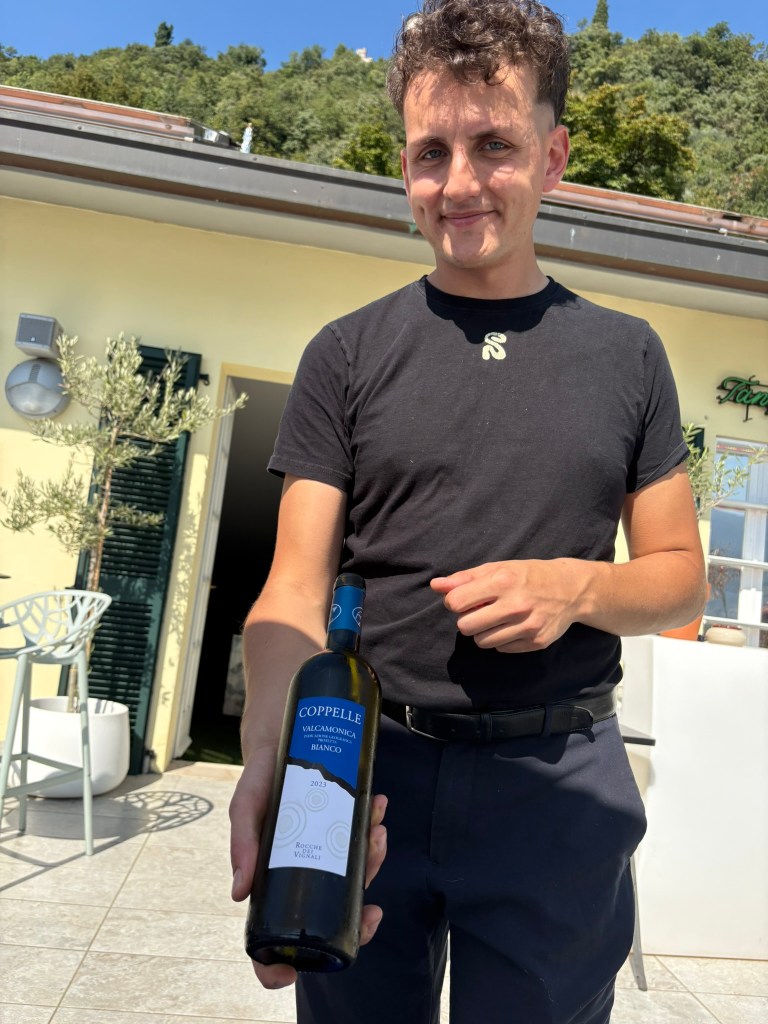
The whole of Monte Isola contains approximately 15,000 olive trees of several varieties, with groves planted on steep terraces to match the upward sloping terrain. Although difficult to harvest mountainside, the olives produced are of high quality and thrive in the unique lake island microclimate. Montisola’s restaurants prepare homegrown products with local oil and pair dishes with DOC “controlled designation of origin” wines from the region, such as Caruna 100% Chardonnay Brut from the Franciacorta region’s vineyards (served only in the Franciacorta-specific tulip-shaped glasses that stimulate bubble longevity).

Tasty local olive oil and flavorful, high-quality wines from the Franciacorta wine-growing region round out a relaxing and delicious meal provided by owner, Giovanni Lo Bresti, at Sensole Locanda Contemporanea.

All along the lakeside, pedestrians and bikers move down the winding path that separates glimmering water from flowering bushes and trees heavy with ripe fruit. Beside this promenade, sunbathers bask in golden rays and swimmers leap into the cool water to paddle amongst ducks and swans.

Here you can feel like you’ve stepped back into bygone times, commune with untouched nature, and enjoy an unhurried and uncrowded getaway. Wander the path to see garden art structures made of metal and wooden fish—imitating the ancient practice of drying the catch-of-the-day on arched racks—and peruse shops and cafes that use sardine and net décor to echo the fishing culture that sustained Monte Isola for so long.   

HOW TO GET THERE… ✈️
Fly NEOS Air from JFK airport in New York to Milan, Italy, and then travel by train or car to Sulzano, on the eastern shore of Lake Iseo. Then, take the 5-minute ferry ride from mainland Sulzano to Peschiera Maraglio on Monte Isola. Visit neosair.com/it for flights and schedules.
Tip: If you follow NEOS Air on social media, you can often score flight discounts and coupons to use toward airfare.

WHERE TO STAY… 🛏️
For a day trip to Monte Isola, stay at the romantic and rich-with-history Cappuccini Resort (Via Cappuccini, 54, 25033 Cologne BS, Italy), a 30-minute drive from the Sulzano ferry dock. This charming monastery-turned-resort is beautiful, clean, peaceful, and tastefully furnished with a blend of vintage relics and modern décor. A separate building with yoga, sauna, steam cave, and bubbling grotto spa with fountains and sun-heated waters provides numerous relaxation opportunities. Wander the sprawling hillside grounds to visit the outdoor pool and explore blooming rose gardens and fruit orchards. For more information, please visit cappuccini.it/en.


🔍 Search the site to discover more European Traveler feature stories. 🌍

FOLLOW US: