With summer approaching, it’s a good time to plan to visit the annual food and vegetable markets that pop up in the United Kingdom. Here are four of them that you might like to put on your “shopping list.”
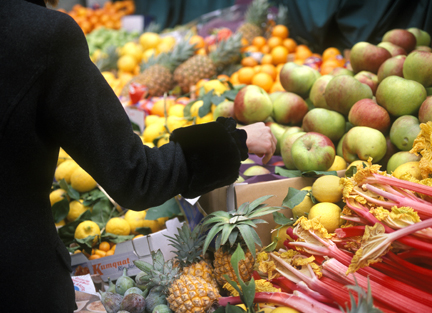
Selection of colorful fruit, Borough Market, London, EnglandPecorino Favoloso, Borough Market, London, England.The farmers’ market in Winchester, England has a great variety of produce, organic vegetables and fruit.
This French province with a strong regional identity has Celtic traditions of food, music and language that make it unique.
The rugged rocky coast of Brittany at San Malo
By Sharon Hudgins Photos by the author
A CONFUSION OF NAMES No, it’s not Great Britain. It’s Brittany—a region in the far northwestern corner of France. It’s also the largest peninsula in France, with a 1,700-mile coastline bordering on the English Channel to the north, the Atlantic Ocean to the west and the Bay of Biscay to the south. The westernmost part of Brittany juts so far into the sea that it’s even called “Finistere”—the end of the earth.
Typical Breton village house.
When I was a kid in the U.S., I was confused by that geographic name. How could something called “Brittany” be in France? Later I moved to Europe and began eating my way through all the regions of France, where I learned that the French term for this region is “Bretagne.” The Bretons living there call it “Breizh” in their own Celtic language, which is related to Irish and Welsh. And they have a strong regional identity that makes Brittany very different from other parts of France—in customs, traditions, costumes, music, language and cuisine.
GIFTS FROM THE SEA The traditional cooking of Brittany is rustic, hardy, elemental. Fresh, local, sustainable ingredients have been the foundation of Breton cuisine for centuries, long before those terms became buzzwords on trendy urban menus. Surrounded by the sea on three sides, Brittany is also a region where fish, shellfish and crustaceans are daily fare.
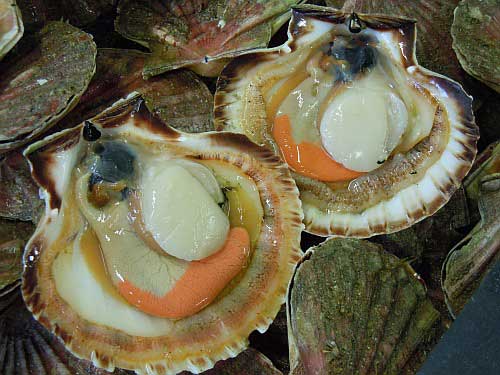
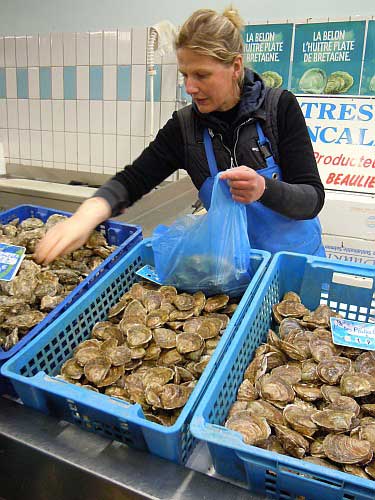
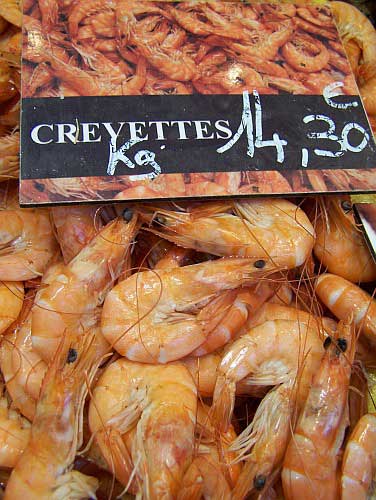
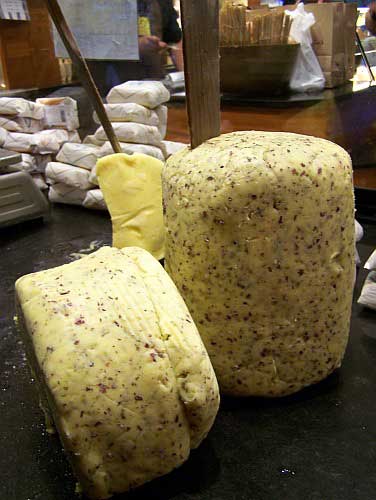
On my first trip to this part of France, I indulged in one of the glories of the Breton table, a plateau de fruits de mer—a huge serving platter heaped with fresh oysters, lobsters, clams, mussels, scallops, langoustines, prawns and periwinkles, all still in their shells and smelling of the sea. This massive meal for two was garnished simply with lemon slices and a bowl of mayonnaise (for dipping), along with slices of baguette and the best salted butter I’d ever tasted. A bottle of crisp white muscadet from the Loire-Atlantique wine region, which borders on Brittany, paired perfectly with the fine food. This classic seafood mélange is also a delightfully messy meal, eaten mostly with your fingers. But novice that I was, I had to watch the French couple at the next table to figure out how to use a straight pin (provided by the waitress) to pry out the flesh from those little periwinkles.
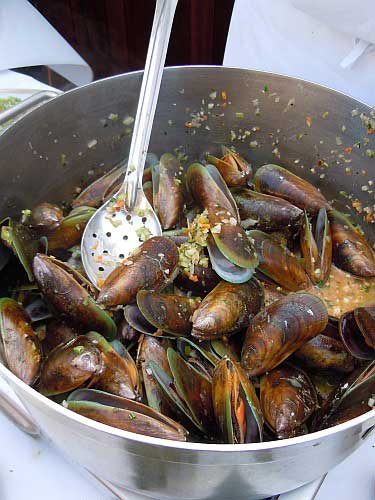
Another notable seafood dish is cotriade, originally a humble fishermen’s stew made with potatoes, onions, garlic, leeks and the catch-of-the-day, all boiled up in a pot of salty water. Modern cooks are likely to throw in some herbs and white wine, too. Whatever the variety of ingredients that find their way into the stew pot, cotriade combines all the characteristics of Breton cooking—freshness, simplicity, nourishment—in one delicious dish. And if you aren’t in the mood for fish stew, then try the local moules marinières, mussels steamed in their shells over a bit of white wine, cider or beer. Or ask for a big bowl of moule frites, steamed mussels with a side dish of perfectly cooked French fries.
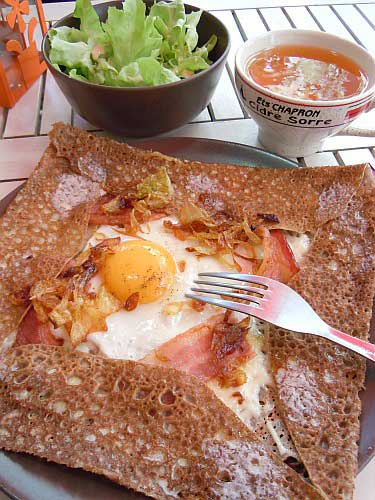
CLASSIC REGIONAL SPECIALTIES Crêpes and galettes are another favorite food in Brittany, sold at street stalls in every town, featured at festivals, and served in restaurants, some of which specialize in these big flat pancakes. Dainty crêpes are made from a thin batter of wheat flour, milk, and eggs, cooked on a large griddle. Usually sprinkled with sugar or slathered with jam, caramel spread, chocolate sauce or sweetened chestnut purée, the crêpes are then folded into quarters for serving. Galettes, which are slightly thicker, are made with a buckwheat-flour batter, cooked like crêpes on a griddle, and often garnished with sliced ham, fried eggs, shredded cheese, browned onions, or other savory ingredients. The classic drink with crêpes and galettes is a cup or ceramic bowl of cold Breton cider, the famous fermented apple juice of this region, in your choice of dry, semi-dry, or sweet.
Pork is a prime product in Brittany’s interior—cured into ham, stuffed into sausages—along with root vegetables grown on the rocky, windswept peninsula. Many of these go into the meat-and-vegetable stew known as kig ha farz (similar to French pot-au-feu), an old-fashioned rural dish. Buckwheat moistened with milk, meat bouillon, and lard is wrapped in a clean cloth and put into the pot to cook in the stew, to make a savory dumpling that’s later broken up with a fork and eaten with the meat, vegetables, and broth.
Nearer the sea, lambs that have grazed on the salt-marsh grasses are considered a delicacy, as are the artichokes, asparagus, strawberries and samphire that grow in the sandy soil. And along the coast, Brittany’s famous fleur de sel—mineral-rich, slightly gray, delicately flaky sea salt—is raked by hand off the top of shallow evaporation ponds flooded with sea water and left to dry in the sun and wind. Travelers to Brittany often return home with a big bag of fleur de sel purchased in one of the colorful open-air markets there.
SWEET FINISH The Bretons have a sweet tooth, too. In every town, shops are filled with pretty tin boxes holding rich butter cookies and creamy caramels made with Brittany’s renowned butter and sea salt. An old farmhouse dish, also sold in pastry shops and restaurants, is far Breton, a simple custardy tart, made with an eggy batter poured over sliced apples, plums, or liquor-soaked prunes or raisins, then baked in a hot oven. And a gateau Breton is another simple (but simply delicious) flat cake, halfway between a shortbread and a pound cake, made with a large proportion of butter and sometimes ground almonds or hazelnuts, too.
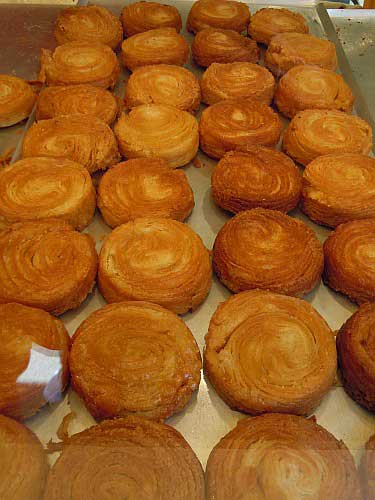
But the most famous Breton pastry is kouign-amann (pronounced queen-ah-MAHN), which just means “butter cake.” This classic Breton sweet is much like my great aunt’s irresistible cinnamon rolls—layers of yeast dough folded around plenty of butter, cinnamon and sugar, cut into large rounds, and pressed into muffin tins. But the Breton recipe differs from hers in leaving out the cinnamon, adding salt and going a step further to heavily butter and sugar those muffin tins. When the kouign-amann bakes, sugar syrup forms between the layers of dough, and a crunchy, chewy, caramelized shell forms on the outside. Tasting these warm, buttery, caramely rolls, fresh from the oven, is reason enough to travel to Brittany.
Swiss cuisine combines influences from France, Northern Italy, Germany and Austria. And specialities vary greatly from region to region closely aligned with the language borders. Many local specialities have become firm favorites throughout Switzerland.
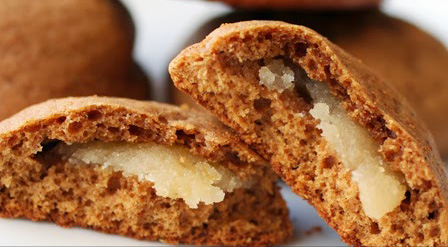
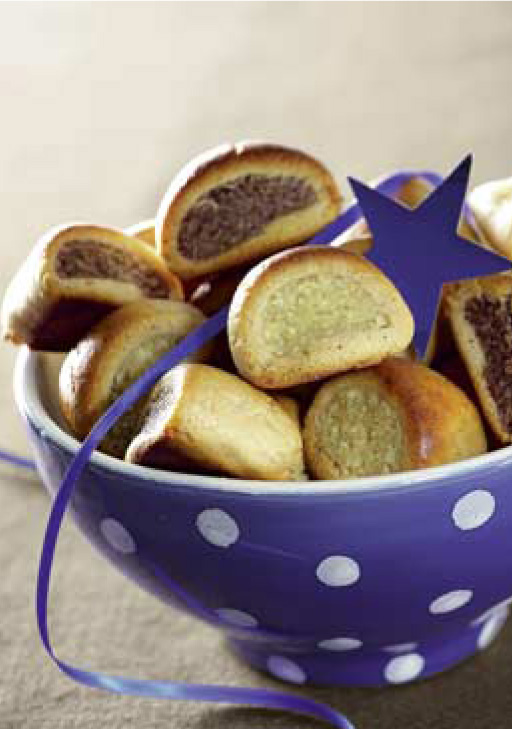
ST. GALLER & APPENZELLER BIBER St. Galler & Appenzeller Biber are two types of gingerbread with filling. One is from St. Gallen, the other from Appenzell. One is loaded with a hazelnut, the other with a white almond filling. But both are called “Biber” (beaver) or “Biberli” (little beaver) and have two layers of soft honey dough and one layer of yummy stuffing, so they might be totally different from the gingerbread you’ve had so far. No matter which one you try, they can be highly addictive.
BIBERLI WITH LEMONGRASS MARZIPAN Preparation time: approx. 50 minutes. Cooling time: approx. 13 hours. Baking time per baking sheet: approx. 8 minutes. Yield: 50 Biberli cookies
FOR DOUGH Mix in a bowl: 1 1/2 c. flour 1 teaspoon spice mix for Lebkuchen zest of 1/2 lime
Heat: 1/4 cup honey 2/3 cup powdered sugar 1 teaspoon water
Add sugar to flour with: 1 tablespoon milk 1 teaspoon baker’s salt (baker’s salt is ammonium bicarbonate and is available at pharmacies)
Knead into a soft, smooth dough and let rest for 12 hours in the refrigerator
FOR LEMONGRASS MARZIPAN Finely chop in a bowl: 2/3 cup peeled almonds 2–3 blades of Lemon grass (only the inside), cut in small pieces 1/4 cup white chocolate, broken up
Add and knead into a dense ball: 50 g Acacia honey ½ tablespoon lime juice
Shaping: Roll the dough with a little flour into a square shape (about 8 x 8″). Halve the squares lengthwise. Moisten edges with water. Halve the marzipan. Form 2 rolls (each about 12″ long, by 3/4″ diameter). Place 1 roll on the long side of the dough, form into a roll, cover and store in a cool place for 1 hour. Form a second roll. Cut the rolls diagonally into 1″ wide trapeze-shaped pieces. Place the Biberli on a baking sheet lined with parchment paper. Glaze with heavy cream.
Baking: Approx. 8 minutes in the center of the pre-heated oven, pre-heated to 400 degrees. Remove from oven and pull the parchment paper with the Biberli onto a wire cooling rack. Glaze once more with cream, let cool completely.
Storage: Biberli can be stored for approx. 1 week in a tin with a close fitting lid.
Alternate hazelnut-cinnamon filling: 2/3 cup hazelnuts, 1 teaspoon of cinnamon, 1/4 cup milk chocolate, broken into pieces; finely chop with a cutter. Add slightly less than 1/2 cup sweetened condensed milk and 1 tablespoon of water; knead until it forms a compact mass.
And grand castles, happy sheep and catchy music aplenty
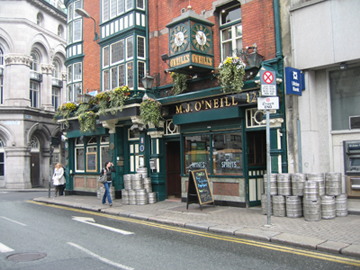
Pub in Temple Bar, Dublin
By Don Heimburger Photos by the author
The Emerald Isle is inviting to first-time European visitors for several good reasons.
Because you’re not traveling to continental Europe, the flight time is from 1-1 ½ hours less from the United States. It’s 3,614 miles between Chicago and Dublin, or 3,187 miles between New York and Dublin. From Chicago to Dusseldorf on the mainland it’s 4,217 miles.
The time zone in Ireland is an hour closer to U.S. time zones.
You needn’t speak a foreign language.
These are a few reasons you may want to place Ireland at the top of your “must visit” list, but there are many other incentives, as well. As many as 40 million Americans claim to have Irish blood―that’s 10 times more than the population of Ireland itself.
How do most visitors get there? You could take a cruise ship across the Atlantic, but most people are in a hurry and fly, and that means American, U.S. Airways, Delta, Continental or Aer Lingus (which sometimes has some really low fares, especially in early spring).
DUBLIN’S ATTRACTIONS Since you’re probably flying into Dublin, where most visitors begin their adventure, you’ll want to spend at least a day there. In fact, I’d recommend two or three days, because there is a lot to discover. Think of St. Stephen’s Green as a center point for your activities. This lush, quiet Victorian garden is located in the main part of the city, yet it is a refuge from the hustle and bustle, and you can always come back to it for solace and relaxation. With ponds, picnicking, wildlife and a playground for kids, it makes an ideal meeting point as well. In the summer, lunch time concerts are given here.
Fanning out from the Green are the National Museum of Archaeology and the National Museum of Natural History. At the first museum, you’ll be transported back to 7,000 B.C. You’ll see examples of Celtic and Medieval art such as the famous Ardagh Chalice, the Tar Brooch and the Derrynaflan Hoard, another old historic chalice. Ireland’s foremost treasure, the Ardagh Chalice, is considered the jewel in the crown of all exhibits there. The beautifully proportioned chalice is the finest example of eighth century metalwork ever to have been found. Standing six inches high, it is made of silver, bronze and gold; the design and decoration indicates technical proficiency of the highest order.
Heading down Nassau Street, you come to Trinity College, the oldest university in Ireland and situated on 40 acres in the heart of the city. Besides strolling the sidewalks around here where you’ll feel like a college student again, you’ll want to see the Book of Kells, a 9th century Gospel manuscript created by Celtic monks. Its lavishly decorated pages in Latin of the four Gospels is a masterpiece of calligraphy and represents the ultimate in Insular illumination. It is definitely worth the trip to see, as is the Long Room of books (215 feet long), which contains more than 200,000 of Trinity’s most ancient volumes. Interestingly, in 1860 the roof of the building was raised higher to accommodate more books. The Long Room is an impressive site, with 14 marble busts commissioned by sculptor Peter Scheemakers lining both sides of the gallery.
TEMPLE BAR AWAITS YOU On the other side of Trinity and bordered by the River Liffey, is the Temple Bar section of the city, where nightlife is abundant. Bar after bar is crowded into the narrow cobblestone streets here, and more than 50 contemporary art and cultural galleries and studios in this section of the city make up a part of what is called “Dublin’s Cultural Quarter.” On weekends, open markets are held in Meeting House Square nearby as well.
On Grafton Street, the main shopping area, you’ll find Molly Malone’s statue where you can have your picture taken to send back to friends and relatives. Molly was a legendary figure, celebrated in the song Cockles and Mussels, a Dublin anthem. Molly Malone is one of the more famous people from Dublin’s past, but whether she really existed is not known.
She’s certainly one of the strangest icons ever officially commemorated by a city government. The statue, erected in 1987, depicts a woman in 17th century dress that shows abundant cleavage. Molly allegedly sold fish by day and sold her body by night. Though she lived in the 1600’s, the song Cockles and Mussels about her does not appear in any historic record before the 1880’s. The familiar lyric goes:
In Dublin’s fair city where the girls are so pretty I first set my eyes on sweet Molly Malone As she wheeled her wheelbarrow Through streets broad and narrow Crying, “Cockles and mussels, alive alive oh!”
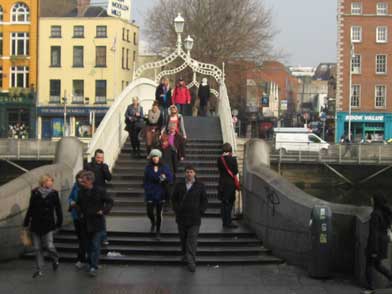
CITY BREWS Ha’Penny Bridge is Dublin’s oldest pedestrian bridge. Erected in 1816, a toll of half a penny was levied on all users of the bridge until 1919. You’ll also want to see the Guinness Storehouse when visiting and take a tour, and then enjoy a fresh glass of Guinness in the Gravity Bar afterward. Cost is €13.50. The Storehouse is located in a section of town called the Liberties, which lay outside the city walls in earlier times.
In the Smithfield Village area, across the Liffey, is the Old 1780 Jameson Distillery, once considered one of the largest and finest distilleries in the world. You will discover the time-honored secret of how three simple ingredients―water, barley and yeast―combine to make whiskey. And you can end your tour with whiskey tasting in the Jameson Bar. The distillery tour is open seven days a week, and if you’re really into it, you can request a tutored whiskey tasting.
FAMOUS DUBLIN WRITERS The Dublin Writer’s Museum, which opened in 1991 and is located in an 18th century mansion, offers visitors a fascinating view of famous Irish writers such as Oscar Wilde, James Joyce, Jonathan Swift and George Bernard Shaw. It’s a small but interesting museum that tells the background of these famous people.James Joyce, the author of Ulysses, has his own museum in Joyce Tower at No. 35 North Great George’s Street. The house was built in 1784 for Valentine Brown, the Earl of Kenmare, and is decorated with plasterwork by Michael Stapleton. Restored in the 1980s, the house opened as the James Joyce Center in 1996, and is run by members of Joyce’s sister’s family.
St. Patrick’s Cathedral on Patrick Street is an important Dublin landmark, with writer and satirist Jonathan Swift its Dean between 1713-1747. In 1742, the first performance of Handel’s Messiah was performed here by the combined choirs of St. Patrick’s and Christ Church, just a block away. (Christ Church is the oldest building in Dublin, dating from c. 1030. Inside are rare artifacts, examples of early gold and silverware, and historic manuscripts.)
CAD E’ AN SCE’AL? (WHAT’S GOING ON?) Many other sights are waiting for the European traveler as well in this city of about 1.5 million. You’ll find the natives very friendly and accommodating. Getting around Old Town Dublin is easy: walking is your best bet.
Maps are available that detail the highlights of the city; the Dublin tourism office is located just past Grafton Street on Suffolk Street where you can pick up free information leaflets and get personal advice on things to do, places to visit and to eat. The tourist office staff speaks seven languages, including English, French, German, Irish, Italian, Polish and Spanish. There are also sightseeing tour buses that will take you around the city. For more information, go to visitdublin.com. Also, the Dublin tram system, called LUAS, is a state-of-the-art light rail system operating on a Green and a Red line. If you stay close to the Old Town, however, the tram won’t be needed. The Green Line starts at St. Stephen’s Green, and a downtown Red Line stop is at Abbey Street.
The Dublin Pass is a cost-saving card will allows you access to more than 30 of Dublin’s top attractions and more. Go to dublinpass.ie for information.
For those who want a five-star hotel experience, the Shelbourne, a Renaissance hotel, is conveniently located on St. Stephen’s Green, and lives up to its reputation. It’s located just a few steps from Dublin’s sights and shops. Founded in 1824, the Irish constitution was drafted here; the hotel retains its original charm and is an oasis in the midst of the city’s clamor. The hotel features a total of 265 rooms, including seven for the physically challenged.
SOUTH COAST ATTRACTIONS There are many areas of Ireland that appeal to visitors. But with Dublin as a starting point, let’s drop down the southeast coast to do more exploring.
If you’re driving, you’ll want to use N11, a major highway that runs along the coast to Wexford. Roads in Ireland are fairly narrow, so be aware of this: it can be a daunting experience. This is where a trained bus driver on a group tour comes in handy.
Glendalough, which translates into “the valley of the two lakes,” is about 90 minutes south of Dublin, and is a totally captivating spot. It contains ruins from a 6th century monastery, some of which remains today.
The short history of Glenalough is thus: St. Kevin was a descendent of one of the ruling families of Leinster. As a young boy he went to live at Glendalough, and founded a monastery there which continued to expand for 600 years, but was destroyed in 1398. In its prime, the land included churches, monastic cells and workshops, guesthouses, a health center, farm buildings and homes. Most of the buildings that survive date from the 10th through 12th centuries. The most famous is the pencil thin round tower which is 112 feet high with a base 52 feet in circumference. A cathedral, stone churches and decorated crosses also survive. Take your camera along, as Glenalough is excellent for snapping unique pictures, especially if it’s a bit foggy. A modern visitor’s center features an informative movie about the ruins and its history, and wandering paths in the surrounding valley offer more exploration.
POWERSCOURT HOUSE AND GARDENS Situated in the picturesque mountains of Wicklow, Powerscourt is a large mansion once owned by powerful families such as the O’Tooles and the FitzGeralds, Earls of Kildare. In 1603, Powerscourt Castle and the surrounding lands were granted to Richard Wingfield, who was Marshal of Ireland (a royal officeholder). His descendants remained there for more than 350 years.
Later the castle was remodeled, creating a magnificent mansion around the shell of the former castle. Large formal gardens, a fish pond, cascading waterfalls, grottoes and terraces all form a striking approach to the mansion. The story is told that Daniel Robertson, a garden architect and a leading proponent of Italianate garden design, suffered from gout and directed his operations from a wheelbarrow, fortified by a bottle of good sherry. When the sherry was depleted, Robertson’s work ceased for the day!
Near the imposing castle is the five-star Ritz-Carlton, overlooking the wooded slopes of Sugar Loaf Mountain. Blending into the countryside, this 200-room, seven-story hotel is ritzy, with a warm Georgian-inspired interior. Afternoon tea, evening cocktails in the Sugar Loaf Lounge, the Gordon Ramsey signature restaurant and a complete Irish pub combine to make a stay here memorable. The hotel’s spa is also available to guests, which is on two floors and boasts a 65-foot long Swarovski crystal-lit swimming pool. There’s also a 36-hole championship golf course as part of the hotel complex.
DUNBRODY SHIP PROJECT In 2011 the JFK Trust launched its replica of a 19th century three-masted sailing ship, the Dunbrody, that brought immigrants to America. This ship is on display in New Ross harbor; an audio-visual experience, guided tours and a convincing performance of costumed actors brings to life the long, difficult journeys made in the 19th century on this ship. A new visitor’s museum will be ready this year as well.
For a night’s rest in this area, check out the Dunbrody Country Hotel and Spa in Arthurstown. It’s a 1830s Georgian manor amid 300 acres of tranquil parklands, not far from Waterford. This four-star hotel, owned by hospitable Catherine and Kevin Dundon, offers 22 rooms. Master chef Kevin Dundon also has a cooking school here and designs one- and two-day cooking courses―there’s even a week-long master class. You’ll feel rejuvenated after a few days in this setting. www.dunbrodyhouse.com
Dunbrody Cookery School’s Edward Hayden
If you want to get up close and personal to the water and the Irish shoreline, here’s your chance. Hook Head Lighthouse in New Ross has been a guiding light for ships for more than 800 years. There’s a visitor’s center offering guided tours of the 13th century tower, a gift shop, cafe, art classes and picnic areas.
Glass blowers and artisans at the Waterford Crystal factory
At Waterford, a stop at the Waterford Crystal factory is a must. Since 1783, the company that George and William Penrose founded has been making stunning glass pieces with a distinctive, silvery white brilliance, which Waterford Crystal’s artists enhance with deeply-cut ornamentation. It’s said that in all of Ireland, no hands have been more patient, more meticulous, or more blessed with the elusive powers of art, than the hands of Waterford Crystal’s craftsmen. Drinkware, serving accessories and decorative crystal from the Waterford factory is still the customary gift for royalty and heads of state. It’s not inexpensive, but a factory tour will show you the secret of why this glass has been so highly prized for all these years.
LISMORE CASTLE GARDENS Heading to Lismore, you can visit the beautiful Lismore Castle gardens and gallery. In the Burlington family for more than 400 years, this fairytale castle, originated in 1185, has seen many changes since. Because the Burlington family stills resides there (Lord and Lady Burlington), only the gardens and gallery are open for touring. The gardens are set on seven acres and provide spectacular views of the castle and the surrounding countryside. You might even see Lord or Lady Burlington on the grounds!
When you’re looking for a place to land for the night, you might try this hotel located next to the sea. The Cliff House has been described as a five-star cascading luxury hotel sewn into Ireland’s coastline, overlooking the small village of Ardmore. Thrown in for good measure is the House Restaurant (one Michelin star), serving both Irish and international cuisine This 39-bedroom jewel is tops for either a holiday (as the Irish call it), or it’s perfect as a hideaway to recoup. www.thecliffhousehotel.com
Kilkenny Castle
At Kilkenny Castle in Kilkenny, you can take a guided tour of this 12th century structure, originally built for William Marshall, the Earl of Pembroke. With many additions and changes over the centuries, this dark gray castle comprises many architectural styles, seen in the various ornate rooms. You’ll see the Drawing Room, Withdrawing Room (reserved for ladies after dinner), the Picture Galley Wing with a hammer-beam roof structure, the Library with silk damask curtains and the elegant Dining Room, among other rooms. Surprisingly, the Marquess of Ormonde sold the sprawling castle to the people of Kilkenny for the sum of €50 in 1967.
Afterward, stroll over to Kyteler’s Inn in downtown Kilkenny, and have lunch or supper in this fun, quaint restaurant, established in 1324. Look for the story of the original owner, Dame Alice le Kyteler, on the first floor.
FLYING BACK TO DUBLIN On the way out of Ireland, reserve a room on the last evening at the four-star Barberstown Castle, a short 30-minute drive from the Dublin airport. Situated on 20 acres of flower gardens, this Irish country house has flourished for eight centuries, opening as a hotel in 1971. Its Victorian and Elizabethan extensions have been melded with the original castle battlement of 1288. Since then, Barbertown Castle has had 37 owners, one of them Eric Clapton. The 59-room hotel is now owned by Kenneth Healy, who lives on the property and who purchased it from Clapton (the names of all 37 owners are painted on the exterior doors of the rooms―Clapton’s room is #61).
We’ve just covered Dublin and the south coast of Ireland. There’s more―much more―to see on the the Emerald Isle, but that will have to wait until another time.
CEAD MILE FAILTE (A HUNDRED THOUSAND WELCOMES) Ireland is welcoming and a friendly place, with old-world charm and more castles than you’d believe possible. The Guinness isn’t too bad, either.









 European Traveler