Over 60% of world trade in flowers and plants takes place via Dutch auctions.
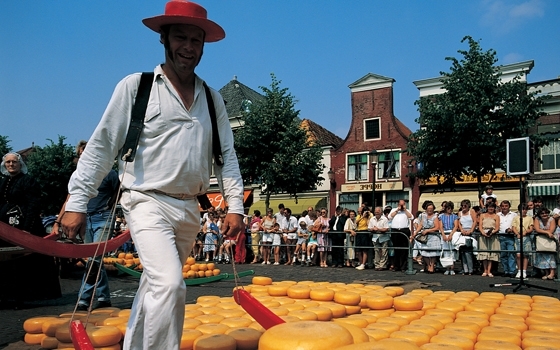
The Netherlands may be a small country, but it’s packed with world famous icons. Discover bulb fields, windmills, cheese markets, wooden shoes, the canals of Amsterdam, masterpieces of the Old Masters, Delft Blue earthenware, innovative water management and millions of bicycles. Find out more about these and other typical Dutch highlights. www.holland.com
Taking a river cruise is always a good idea. A river cruise that includes both historic castles and colorful Christmas Markets along Germany’s Rhine River is the best idea ever. So on Thanksgiving Day I happily ignored Black Friday and escaped the pre-Christmas shopping frenzy of the USA to spend a week on the AmaKristina, cruising from Amsterdam to Basel, Switzerland. Romantic castles and Christmas Markets along the Rhine River ushered in the Christmas spirit for me this year.
The newest AMA ship, the AmaKristina
The AmaKristina is essentially a floating luxury hotel for 158 guests. Our roomy cabin had a queen-sized bed, private bathroom with shower and double sink, desk, large format Apple screen and keyboard for internet, TV, or movies. Built in 2017, the ship’s hallways and guest suites were filled with Gustav Klimt art prints, and seasonally decorated with lights, Christmas trees, wreaths, garlands, and gingerbread houses. We boarded in Amsterdam, unpacked, and had our first dinner on board. Open seating at each meal encourages mingling of guests.
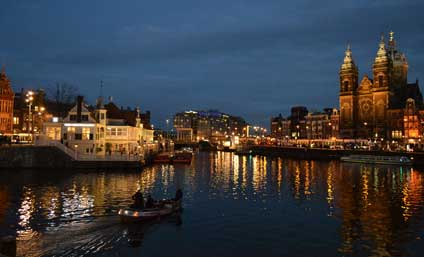
AMSTERDAM ATTRACTIONS Fortified with a sumptuous on-board breakfast buffet, including an omelet station and daily vitamin “shot,” we departed the ship for an informative canal cruise, a panoramic city bus tour of Amsterdam with an up-close look at a local working windmill, and free time for exploring. Although there were no Christmas markets in Amsterdam, there were plenty of opportunities for shopping near the central train station, and street entertainment in Dam Square: a saxophone player, giant bubble maker, dancing dinosaurs, and impromptu yoga. Just be sure to watch out for the numerous killer bicycles that demand the right-of-way.
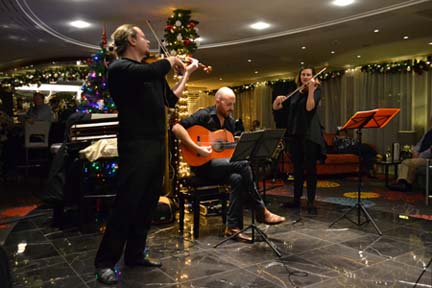
The AmaKristina set sail from Amsterdam in the afternoon, and I had time to explore the ship’s main lounge and bar, massage and hair salon, fitness room, gift shop, and even a heated pool and giant chess set on the sun deck. A cruise overview presented by our cruise director, plus Christmas tree decorating and an evening classical music performance by the three talented string players known as “La Strada” kept passengers entertained. The cruise ships cleverly bring nightly entertainment on and off the ship when stopped at the locks on the river.
Onboard entertainment by La Strada
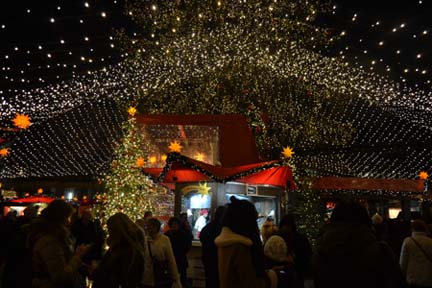
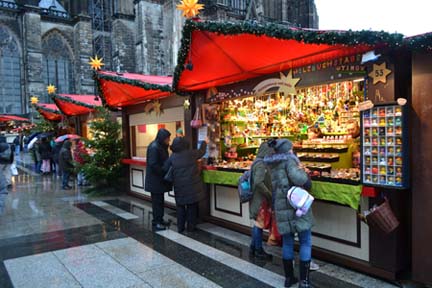
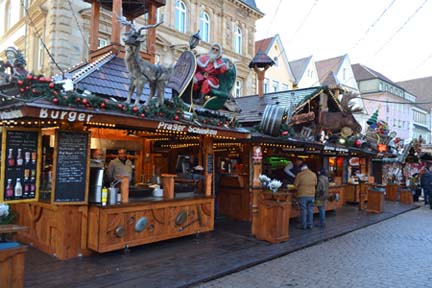
COLORFUL COLOGNE After cruising all morning, we docked in Cologne, Germany, where shuttle buses brought us to our first Christmas Market in Cathedral Square. Although the earliest Christmas Markets in Germany date from the late Middle Ages, the one in the shadow of Cologne’s impressive Cathedral is a relative newcomer, opening in 1995. Under a dazzling canopy of thousands of tiny lights, 150 vendor huts with bright red awnings and brilliant multi-faceted stars displayed handicrafts, comfort foods, gifts of all types, decorations, wooden toys and much more.
Canopy of Christmas lights in Cologne’s Cathedral Square
Cologne Cathedral Square market
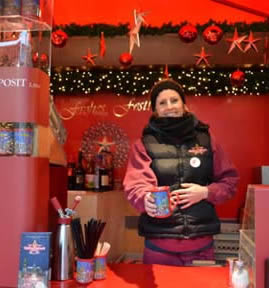
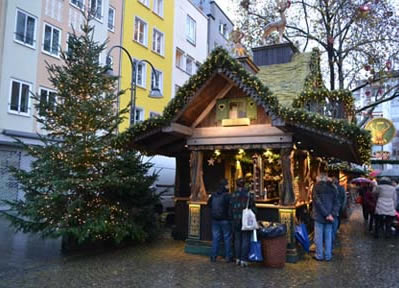
HOME OF THE ELVES A few blocks away in the Altstadt and Heumarkt was an older and much larger Christmas Market called the “Heimat der Heinzel” or Home of the Elves. These were little creatures from a Cologne legend who used to do all the housework until they were annoyed by an inquisitive housewife, and disappeared. I loved this market. Aisles were arranged by theme, and the large wooden huts had Old World, wood-carved details, thick green garlands and costumed vendors. Little “Heinzelmännchen” rode in gondolas above an expansive ice rink. Each souvenir mug of Glühwein (the traditional hot mulled wine so popular at the Christmas Markets) had a different elf pictured on one side, and his particular work specialty described in verse on the other. Cologne boasted three additional smaller markets, but time was too short to visit all of them on this trip.
Home of the Elves’ Market in Cologne
CASTLE DAY ON THE RIVER The morning cruise from Cologne to the next stop in Rüdesheim passed through the UNESCO World Heritage Rhine Gorge. What a treat to sit in the ship’s expansive lounge with panoramic windows, coffee in hand, gazing at vineyard- covered slopes, picturesque villages, historic castles, and the famous Lorelei Rock, with commentary by the cruise director. This romantic part of the trip alone is a highlight of any Rhine River cruise.
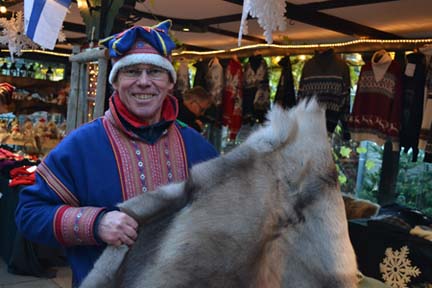
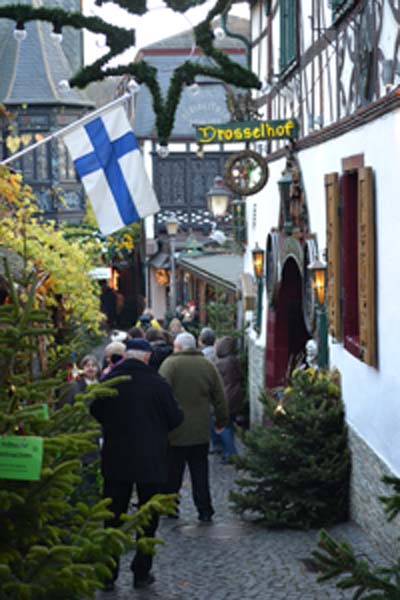
RÜDESHEIM’S CHRISTMAS MARKET OF THE NATIONS After a gourmet lunch of traditional German specialties, we docked in Rüdesheim, where the “Christmas Market of the Nations” wound up and down the narrow streets of this wine town of about 7,000 citizens. Vendors from France sold mushrooms, lavender and cheese, Tunesia vendors brought wares made of olive wood, smoked salmon came from Norway, furs came from Finland and even the United States was represented with a local vendor offering homemade cookies, Dr. Pepper, Fanta, marshmallows, and Hershey’s chocolate. Christmas choir music piped throughout the market added to the festive atmosphere as shoppers strolled past inviting vendor stalls and village shops. A new discovery at this market was hot mulled Glühbier from Belgium.
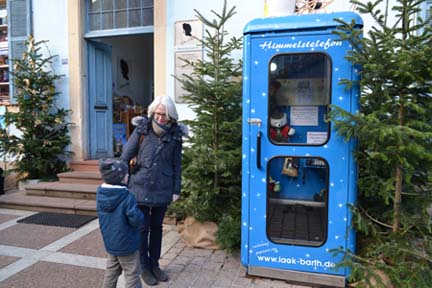
(clockwise) Hot lunch in Rüdesheim; Fur from Finland at Rüdesheim’s Christmas Market of the Nations; “Hallo” from the gnomes in Rüdesheim; Placing a phone call to the Christkind in Speyer
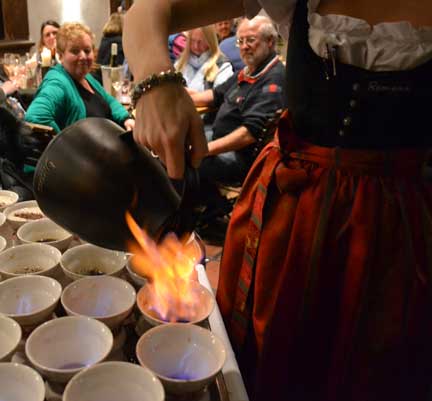
Throughout the ship’s seven-day cruise, each day’s program offered passengers quiet, regular and active excursions. Rüdesheim excursions offered by the AMAKristina included wine tasting, a hike, bike or gondola tour through the vineyards. A late night, fun option was experiencing Rüdesheimer coffee – coffee set on fire with Asbach brandy and sugar, topped with whipped cream and chocolate flakes – at Eiscafe Engel on Rüdesheim’s famous Drosselgasse.
Rüdesheimer coffeeAtmospheric narrow Rüdesheim street
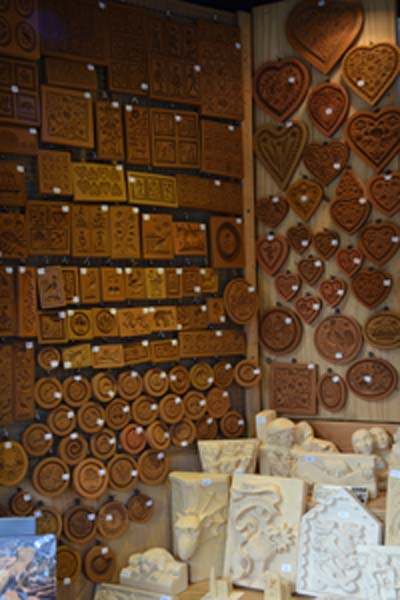
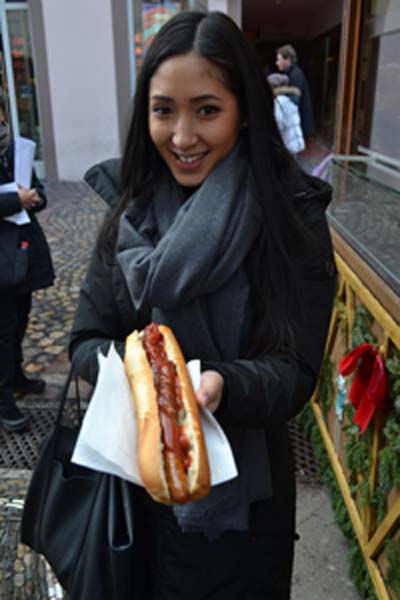
THE IMPERIAL CITY OF SPEYER By noon the next day we docked in Mannheim and could choose a bus excursion to Heidelberg or to Speyer. Having visited Heidelberg several times already, we chose to see the 2,000-year-old Imperial city of Speyer. Here the Christmas Market extended down Maximilianstrasse from the UNESCO World Heritage Speyer Cathedral, the largest Romanesque cathedral in the world. Though smaller than the Cologne Christmas Markets, Speyer’s market had all the requisite comfort foods: Glühwein, grilled sausages, roasted almonds, and even waffles, potato soup and dumplings. Vendors offered wood handicrafts, colorful candles, jewelry, scarves, kitchen gadgets and unique cookie cutters. Especially for children were an ice rink, kiddie car rides and a telephone booth with direct access to the Christkind in Heaven!
Back onboard the AmaKristina we had a tea time treat of traditional Spekulatius cookies and Stollen, while we set sail for our next stop: Strasbourg and Le Petite Alsace in France.
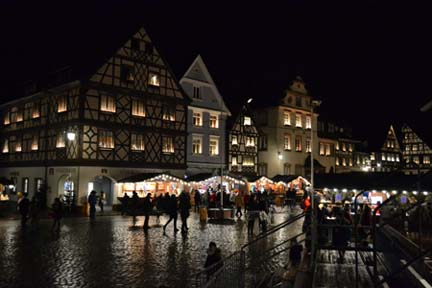
INVITING STRASBOURG AND LE PETITE ALSACE As with each stop on our route, AmaWaterways provided an energetic and knowledgable guide for a walking tour of the area on the way to the Christmas Markets. This morning we learned about the Alsace region, which changed hands between France and Germany four times in 75 years. The name “Alsace” derives from a German phrase meaning “seated on the Ill.” While our guide led us along the Ill River, past the beautiful half-timbered houses lining both sides, she explained that this charming area was historically the least desirable place to live. It had been the site of fortifications and a prison, the home of executioners and the location of the tanning trade, with its smelly byproducts. Today it is a photographic highlight of any trip.
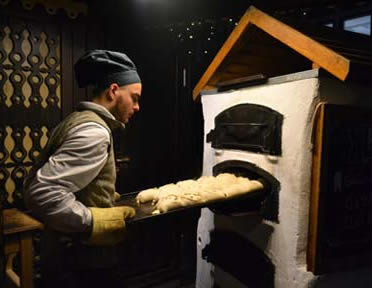
CHRISTMAS MARKETS WITH A FRENCH TWIST Christmas Markets first appeared in Strasbourg in 1570, making this German/French town the location of one of the oldest markets in Europe. Although much was similar to the Christmas Markets we saw in Germany, here the food vendors offered toasted baguettes topped with cheese as the warm comfort food, instead of the ubiquitous wursts in the German markets.
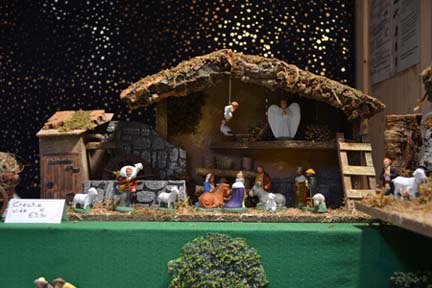
The traditional market was near the cathedral, with some vendor huts topped with storks, that famously nest in Strasbourg’s Parc de l’Orangerie. More than 300 vendor chalets filled the historic city center. Entertaining metal sculptures depicting different professions caught my eye, as did the detailed, intricately carved figures for nativity sets. A market area featuring Strasbourg’s service organizations surrounded a towering decorated Christmas tree and grassy area which was perfect for family photos. A small market in Gutenberg Square annually invites vendors from other countries: this year it welcomed Iceland.
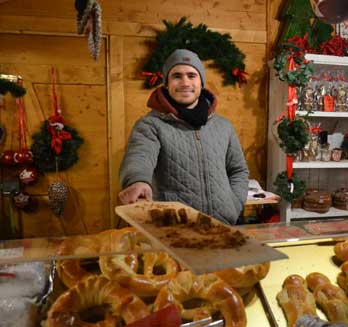
Try some gingerbread in Gengenbach
GENGENBACH’S GIGANTIC ADVENT CALENDAR We were back on the German side of the Rhine River by late afternoon, and on a shuttle bus from the AmaKristina to the beautiful village of Gengenbach. A guided tour down Engelgasse led to the Christmas Market which stretched down the main street from the town hall square.
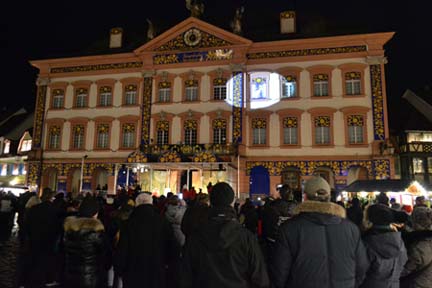
Gengenbach Town Hall Advent Calendar
Gengenbach boasts the world’s largest Advent calendar in its neo-classical town hall, where each night one of its 24 windows is opened to reveal a picture by a famous artist. This year’s calendar featured paintings by Andy Warhol. We arrived just in time for the first night’s opening ceremony: a narrated short skit performed by children from the town. After browsing through the market’s matching vendor huts, with hot Glühwein in a mug depicting the town hall Advent calendar, we returned to the ship to be delightfully entertained by a French cabaret singer and her accordion accompanist.
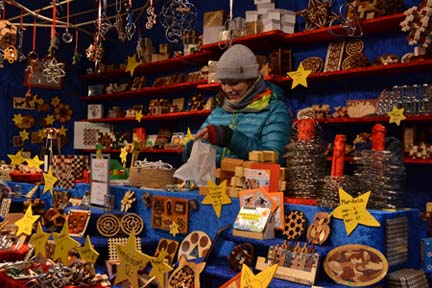
LAST FULL DAY ONBOARD Shuttle busses from the AmaKristina were the order of the day with options to Riquewihr, France, or to Freiburg and Breisach, Germany. Deciding to aim for German-speaking vendors, we took the second option, and explored the market in the heart of Freiburg’s beautiful old quarter. Traditional craft products, including glass blowing and colorful wooden toys were offered beneath the green and white lights that trimmed the roofs of the more than 130 vendor huts.
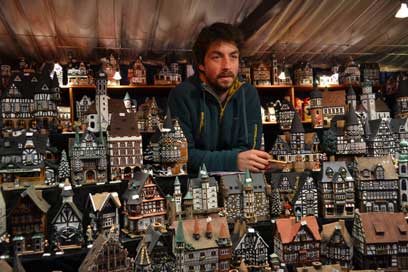
Time was too short to see all of the ceramics, candles, hand puppets, amber jewelry and Christmas decorations, but we enjoyed a quick wurst and Glühwein lunch before leaving for Breisach. Unfortunately this town’s tiny Christmas Market was not yet open for business, so after strolling down the pedestrian-only shopping zone, we walked back to the boat dock, to sail to Basel and enjoy the captain’s farewell dinner and our final evening on board.
Early the next morning, with our luggage packed with Christmas Market treasures, we left for home filled with Christmas spirit and with wonderful memories from this romantic river cruise of Christmas Markets and Castles on the Rhine.
TIPS AND FINAL NOTES An AmaWaterways river cruise makes visiting so many sites along the Rhine extremely easy. You unpack only once in a roomy cabin. Meals are well-planned, complete and delicious, with perfect portions and special dietary options. Wine and beer are included with lunch and dinner. The fabulous coffee bar is open all the time. Special surprises delight passengers as well, such as serving a location’s specialty treats during afternoon tea time, recognizing St. Nicholas Tag by putting treats in passengers’ shoes left outside cabin doors, and providing hot towels and beverages upon re-boarding after cold excursions. The company will cheerfully arrange for your transfers to and from the cruise ship.
The cruise director is the key to having a wonderful time on any cruise, and this AmaWaterways trip had a great one. David Rosell was organized, energetic, accommodating and entertaining.
Most Christmas Markets are open from the beginning of Advent through Christmas, although some larger markets stay open longer, and some smaller ones have limited open hours. Bring euros – most small vendors don’t accept credit cards.
Pack warm layers of clothes, boots and umbrellas. The weather can be chilly and damp during November and December.
AmaWaterways provides a post-cruise option, if you want to extend your trip. This Christmas Market/Rhine River castle cruise offered an excursion to Lucerne and Zurich after disembarkation in Basel. For more AmaWaterways information and schedules, go to: www.amawaterways.com.
If you go: The Mövenpick Hotel Central in Amsterdam is a great place to stay before you board. This new, 4-star hotel is located within walking distance of the train station, the city center and the cruise ship loading docks. A sumptuous breakfast buffet is included with the room, and a knowledgable concierge team can help you plan your free time in Amsterdam before the cruise. For more information go to: www.movenpick.com/en/europe/netherlands/amsterdam.
Manchester, in the United Kingdom, was the first industrialized city in the world, born of cotton. It was here that the Industrial Revolution took hold, and Manchester was the most productive center for cotton processing in the world. Later it was the world’s largest marketplace for cotton. During the Victorian era it was dubbed “Cottonopolis.”
Times have changed. Now this metropolitan area of nearly half a million people, one of the largest urban areas in the United Kingdom outside of London and Edinburgh, is associated with its interesting architecture, culture, music scene, and scientific and engineering endeavors. And its sports teams such as the Manchester United Football Club, the world’s most famous soccer team, is a constant reminder that Manchester is a highly diversified city, and is looking to the future.
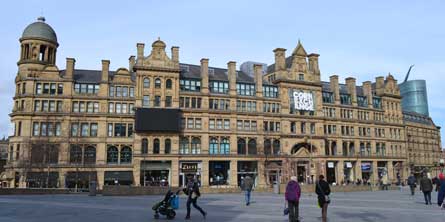
Over the years, the city has reinvented itself from a technological standpoint, but remaining are many of the old historic buildings that attract thousands of tourists each year.
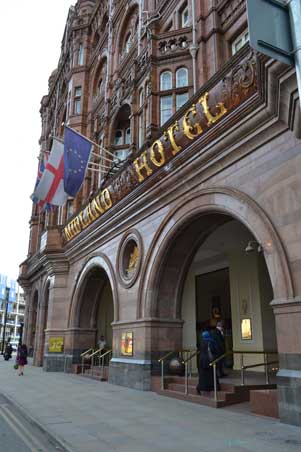
An example is the iconic four-star Midland Hotel on Peter Street, overlooking St. Peter’s Square. This impressive building, built in 1903 by the Midland Railway to serve Manchester Central railway station, stands right in the heart of Manchester city center. Over the course of its 100-year-old history, the hotel has played host to kings, queens, presidents, prime ministers and rock stars, including Winston Churchill, Princess Margaret, the Duchess of York, and the actress Sarah Bernhardt and Jeremy Brett (who played Sherlock Holmes), as well as the Sultan of Zanzibar, who arrived with an entourage of 60 people.
It’s in this 312-room hotel that Charles Rolls met Henry Royce in 1904 to form Rolls Royce. The French Restaurant in the hotel is one of the most important restaurants in the city, and also where a number of films have been shot.
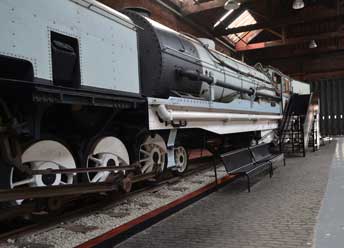
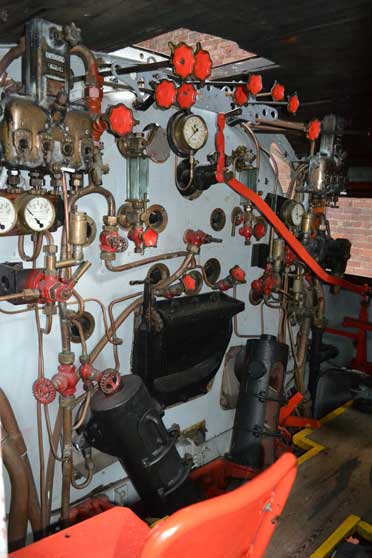
MUSEUM OF SCIENCE AND INDUSTRY Manchester’s Museum of Science and Industry, located at the site of the oldest surviving railway station in the world, is a family-friendly museum with lots to offer. The museum features everything from the first steam-powered mill and to the microcomputer, with lots of hands-on exhibits. There’s a large collection of vintage vehicles and historic working machinery, especially since the Industrial Revolution started in Manchester. You can even take a train ride behind a replica steam locomotive.
The John Rylands Library is less a library in the usual sense and more of a masterpiece of Victorian Gothic architecture: it looks more like a castle or cathedral. Rylands, who died in 1888, was one of Manchester’s most successful industrialists and had a large fortune. This world class collection includes the oldest known piece of the New Testament, the St. John Fragment. Other treasures here include illuminated medieval manuscripts and a 1476 William Caxton edition of Chaucer’s Canterbury Tales.
MANCHESTER ART GALLERY The Manchester Art Gallery on Mosley Street has one of the country’s finest art collections in spectacular Victorian and contemporary surroundings. The gallery’s recent $53 million transformation has enabled the collection to be presented to visitors in new ways. Highlights include outstanding pre-Raphaelite paintings, craft and design, and early 20th century British art. Exhibits are always changing, but I saw a display of French and British Impressionist and post-Impressionist paintings, along with some splendid Victorian paintings.
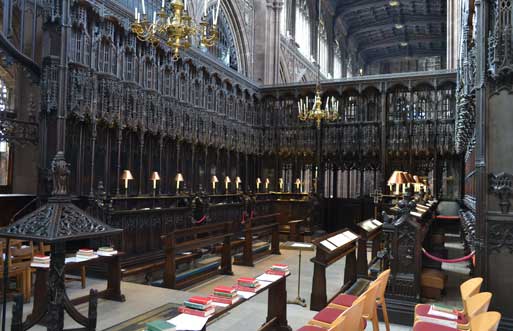
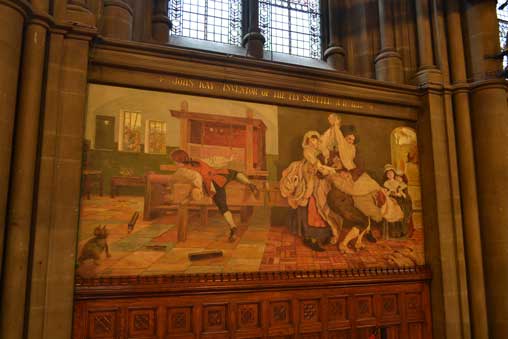
The Gothic-style Manchester Cathedral, in the center of the city and built between 1441-1882, is a medieval church occupied by the Bishop of Manchester. Its official name is the Cathedral and Collegiate Church of St. Mary, St. Denys and St. George in Manchester. It was extensively refaced, restored and extended in the Victorian period, and then again following severe bomb damage in the 20th century; it contains many precious artifacts.
MANCHESTER TOWN HALL A guided tour of Manchester Town Hall is an activity worth doing while here. The hall was designed in Victorian Gothic style by Alfred Waterhouse and opened in 1877. Among its treasures are the Ford Maddox Brown murals which are a monument to the ideas of Victorian Manchester, portraying the science, invention, education, trade and textile industry. Among the impressive rooms is the Sculpture Hall, containing statues of notable Manchester figures from the past, and the Great Hall, featuring a glazed skylight inscribed with the names of every mayor, lord mayor and chair of the town council since 1838. Be sure you see the mosaic pattern of bees on the floor outside the Great Hall. The bee symbolizes Manchester’s industry and is featured on the city’s coat of arms.
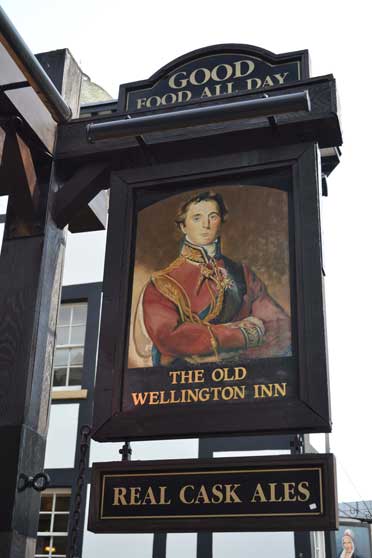
After dark, try out one of Manchester’s “real ale” pubs, or check out Matt & Phred’s Jazz Club, a nightclub where you can hear great jazz from some of the best performers, including Wynton Marsalis. Other clubs include Band on the Wall and Night and Day.
For food, try the Damson, a neighborhood restaurant in Heaton Moor, the relaxed San Carlo Cicchetti’s with delicious small dishes, and the French brasserie called Aubaine, on the top floor of Selfridges, which also offers a great view of Manchester.
Selfridges Department Store, Manchester
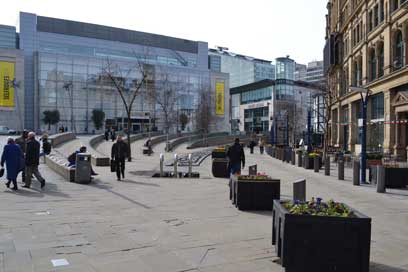
The Romans were known to inhabit the area around Manchester as early as 79 A.D., and the 19th century cotton trade brought great change to this city. Now with new glass buildings and a new development in the northern downtown core where the Industrial Revolution first took root, Manchester keeps re-inventing itself. Visitors will enjoy the mixing of old and new into a masterful blend.


























 European Traveler