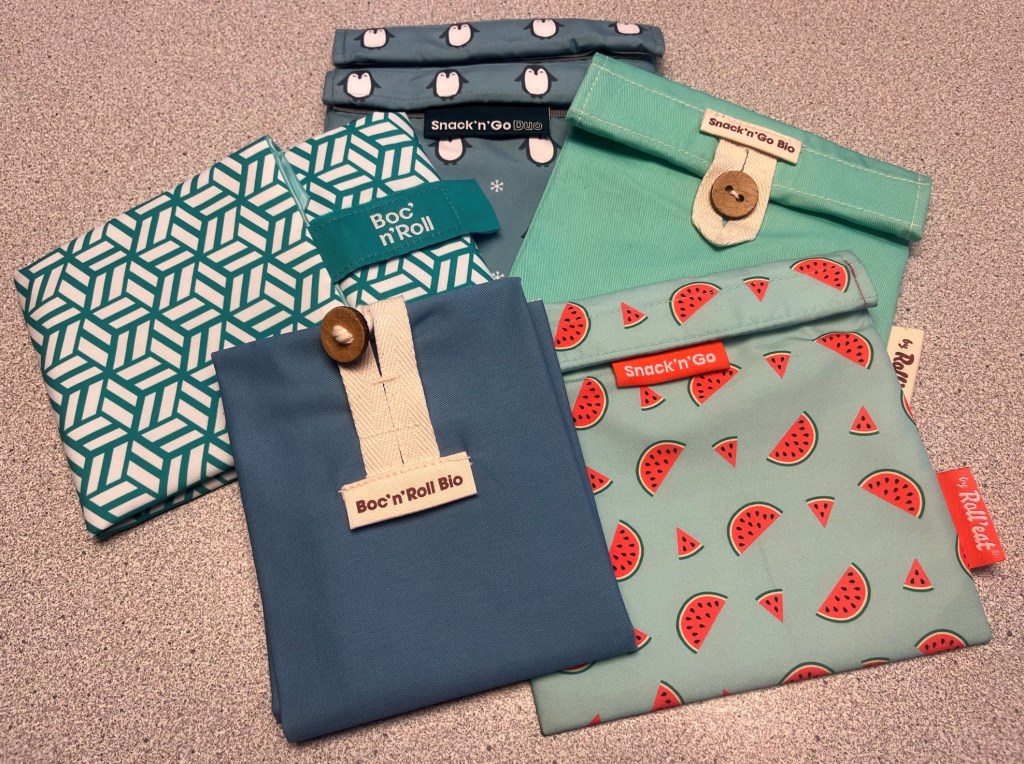
How many plastic sandwich and snack bags do you use in a week? If you pack a lunch and snacks for work or school, probably too many to count! You can help reduce pollution and protect our planet by switching to reusable food wrappers by Roll’eat. These sandwich and snack bags come in a wide variety of fun colors and prints – from animals to fruits to bold solids and flashy patterns, you can pack some personality into your purse or lunch bag!
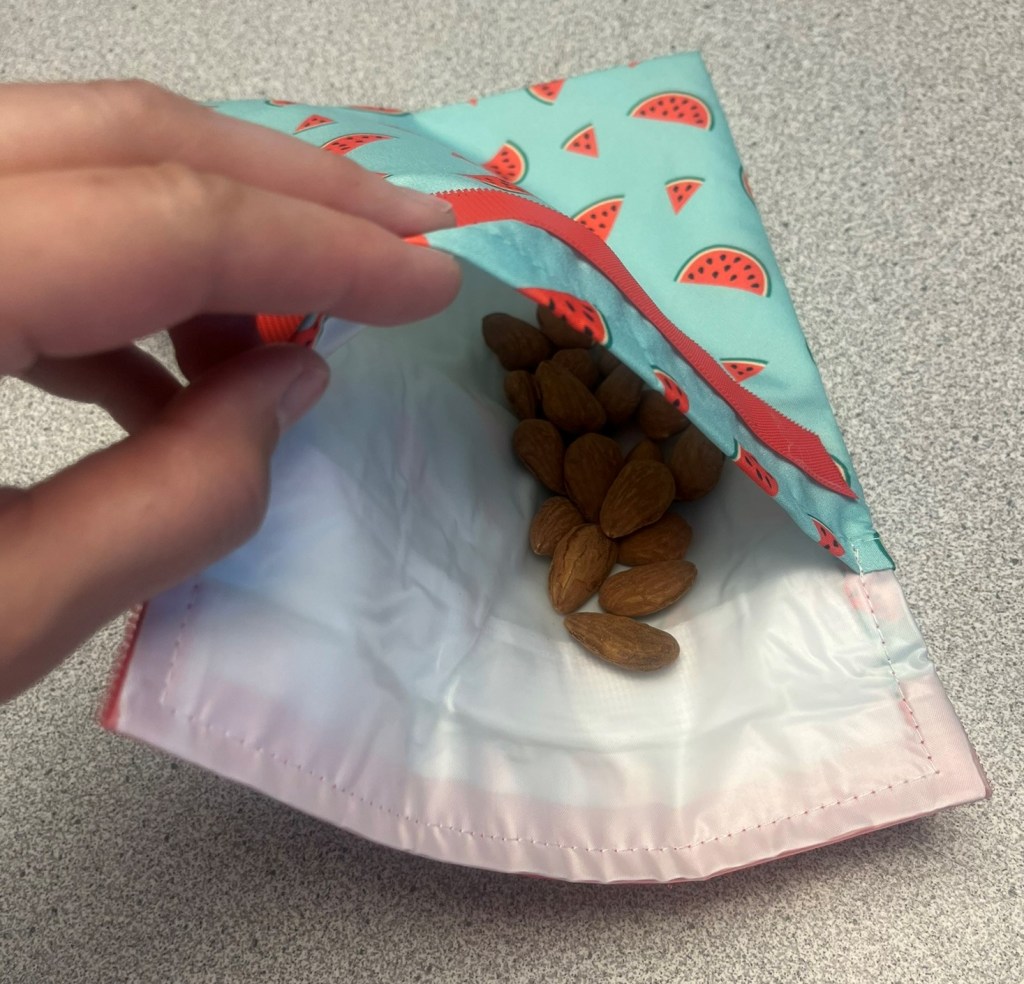
On a recent work trip full of long tours, the hotel’s abundant continental breakfasts were too tempting to ignore. Many colleagues sustained themselves throughout the long days by wrapping mixed nuts or an extra pastry into a tissue-thin napkin in the morning and stuffing it into a pocket or bag. As you know, this rudimentary wrapping often results in a crushed croissant or a pocket of loose, linty legumes. Roll’eat Snack’n’Go and Boc’n’Roll reusable bags are the perfect solution to this problem, protecting your snacks from spilling or squashing, and they provide zero waste!
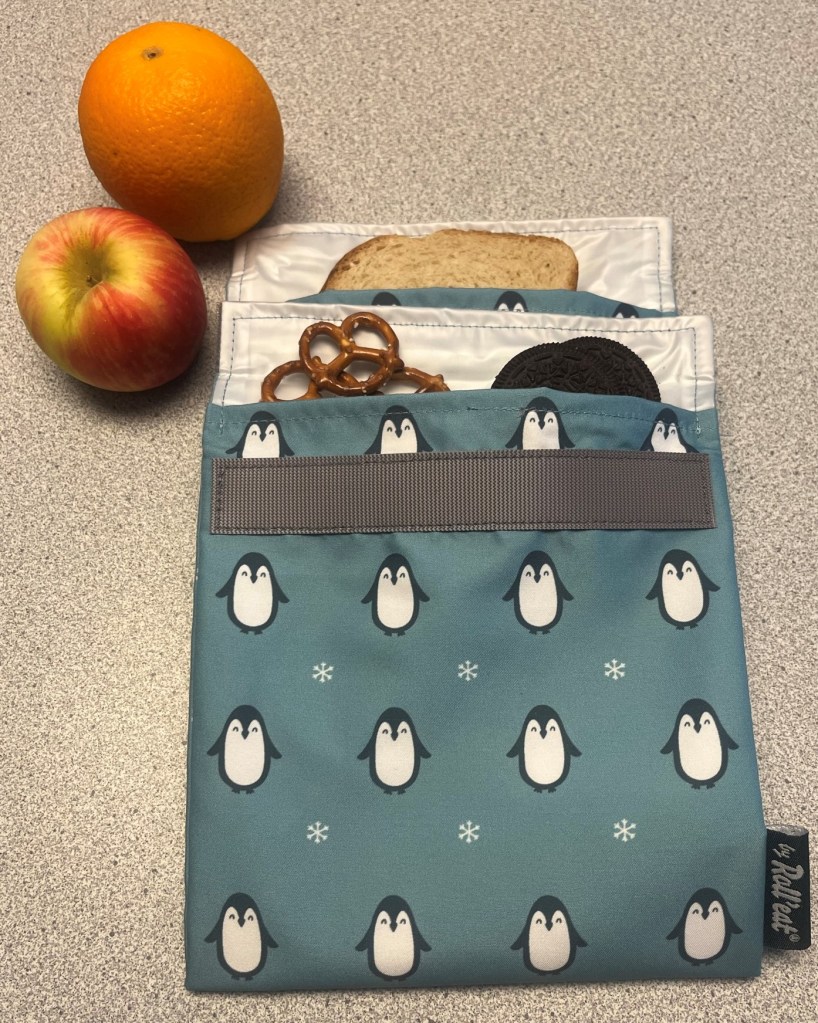
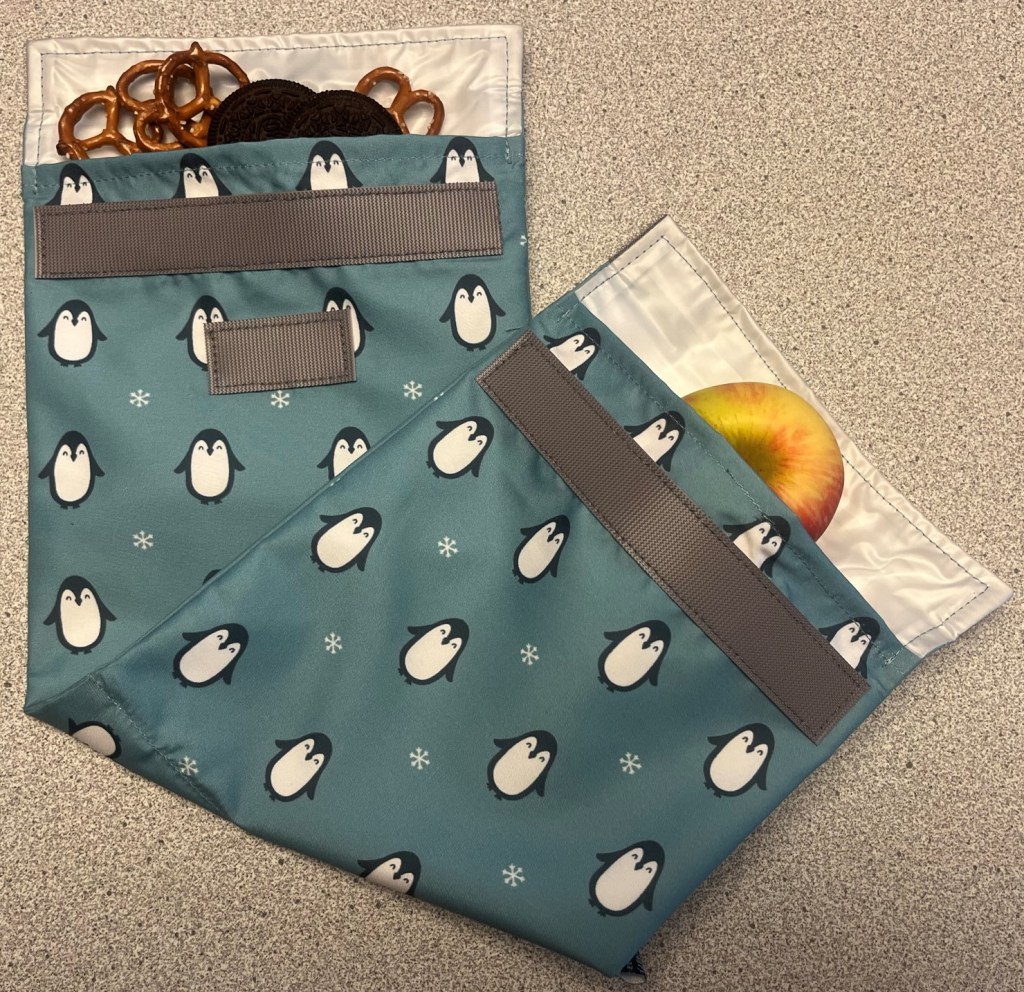
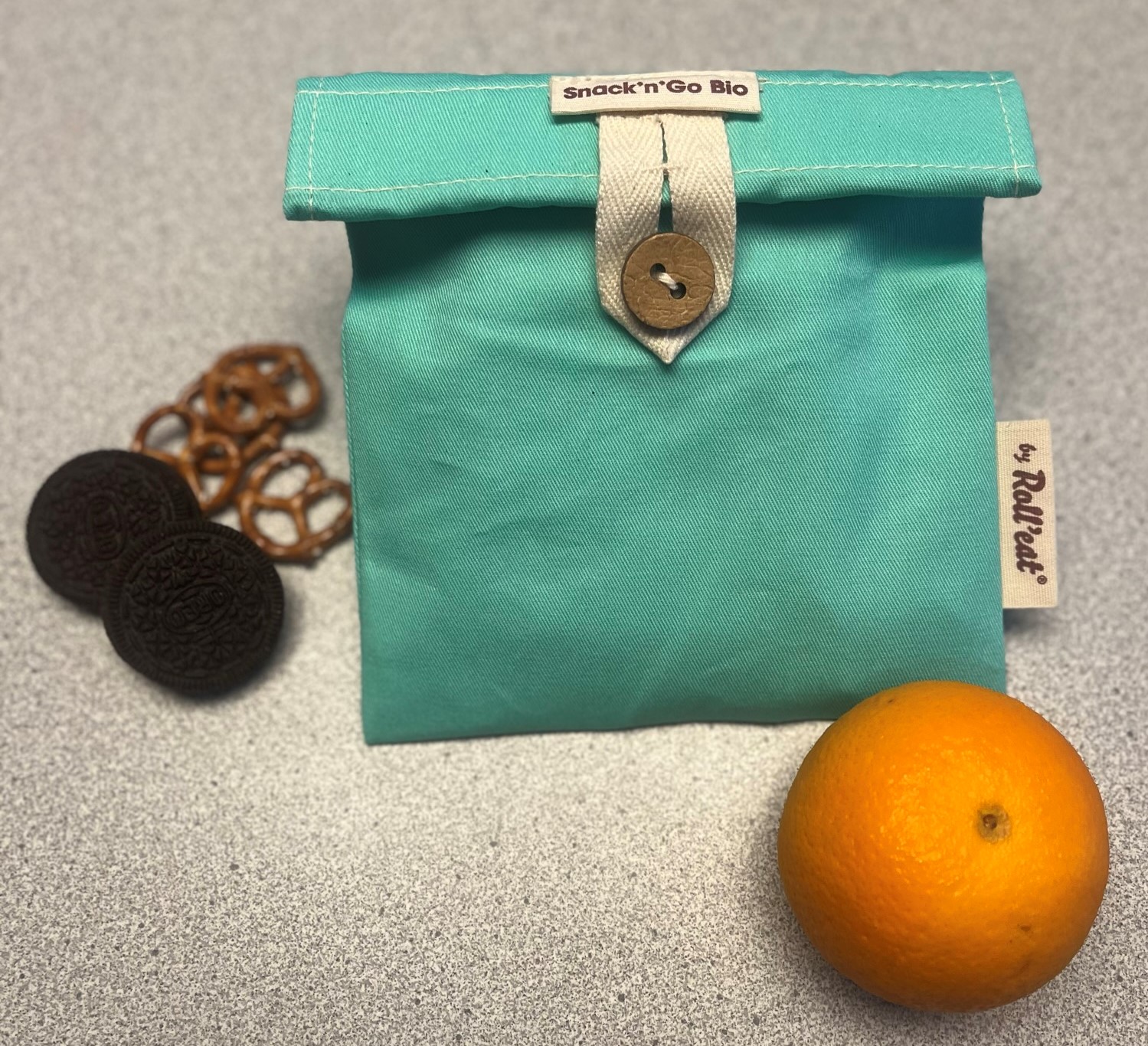
The eco-friendly Snack’n’Go is a 7”x7” soft pouch with a durable upper closure and a leak- and stain-resistant inner layer that ensures your snacks remain fresh. The double-layered fabric can be wiped on the outside and inside with a damp cloth or washed in the washing machine, and the bags can fold down to a small size for easy packability. They are lead-free, BPA-free, and hassle-free for life on the go. There is even a Snack’n’Go Duo that features 2 pockets, so you can slip a saucy sub sandwich into one and some crunchy munchies into another, keeping your food items separated.
Roll’eat bags also give you the option to pack healthy food from home instead of relying on junk food from vending machines or supporting the production of pre-packaged, high-calorie snacks. You can snack on fresh, natural foods that support better health, while using a snack holder made of materials that don’t cause harm to your health or to nature.
The Boc’n’Roll sandwich holder opens flat to turn into an ~18”x13” placemat, protecting your food from dirty surfaces, and it can fold compactly, depending on the food you’re enclosing. I am one who loves wrapping gifts, and each use of the Boc’n’Roll is like preparing a colorful present to open later! You place your sandwich in the center and fold up each side over it until easily securing it with a button or strip of fabric fastener, depending on the model. The fabric is beautiful and tough, but please don’t use sharp utensils around it or try to cut a sandwich in half on top, to avoid puncturing it.
The Bio line by Roll’eat is 100% biodegradable and sustainable. The fabric of these is an organic cotton canvas in solid colors, with a natural wooden button enclosure. These compostable materials are manufactured using fewer fossil sources and will eventually decompose faster while using less energy than other materials – another chance to be kind to Mother Earth and reduce negative effects.
Reduce harmful waste, promote environmental awareness, choose a responsible lifestyle, pack healthy foods – Roll’eat bags help you do all of that while adding style to your snack life! Please visit RolleatUSA.com to shop the collection and learn more about the Roll’eat mission and impact.
From tea in a British buffet car, to luxury dining on the Trans-Siberian Express, eating on trains can be a true culinary adventure.
By Sharon Hudgins Photos by the author
I grew up riding trains across America just before the era of classic passenger service ended on the railroads and before Amtrak was a gleam in the government’s eye. Later I rode trains all over Europe from northern Scotland to central Italy, from the coast of France to the plains of Hungary. And in Russia I’ve logged nearly 40,000 miles on the legendary Trans-Siberian Railroad, crossing the continents of Europe and Asia between Moscow and Vladivostok several times.
That’s also a lot of dining on trains, snacking on railroad station platforms and eating at station buffets.
DINING ON BRITISH TRAINS I remember riding first class on British Rail across England and Scotland many years ago, when smartly uniformed stewards served tea in your private train compartment, first spreading a starched white cloth on the little table under the window, then pouring the hot brown brew from a silver-plated teapot into a porcelain cup (with milk added first or last depending on where you stand on that contentious issue). A small plate of sweet biscuits (cookies, in American English) always accompanied the tea. What a civilized way to spend a morning or afternoon, sipping tea, nibbling on biscuits, and watching the British countryside roll by outside the window.
Morning coffee and afternoon tea were included in the price of the ticket. But like many travelers on trains all over the world, I often chose to save money on meals by purchasing food from station vendors to eat on the train. Once in a while, however, I’d splurge on a meal in the dining car, luxuriating in the “white-tablecloth service” and the selection of foods that were so different from those I’d eaten on American trains.
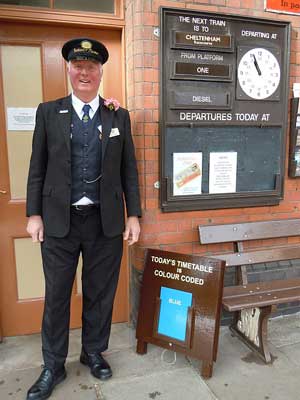
(left) Conductor on the Cheltenham Flyer, historic steam train of the Gloucestershire Warwickshire line of the British Great Western Railway.
Traditional English pork pie from the buffet aboard the Cheltenham Flyer
Alas, in 2011 contemporary trains in Britain did away with the last of their full-service dining cars, replacing them with airline-type meals served at the seats of first-class passengers and microwaved snacks sold in the buffet car for everyone else. But there’s hope for the future: In 2013 the First Great Western Railway re-introduced full-service “Pullman dining,” with fine wines and locally-sourced foods, on the UK’s only remaining regularly scheduled train with a real restaurant car. But, strangely, the dining services don’t operate on weekends or public holidays!
Restored 1950s-era buffet saloon car on the Cheltenham Flyer
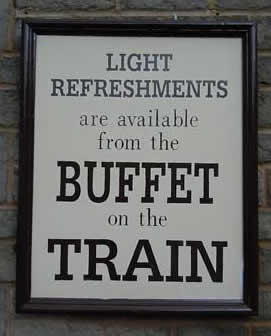
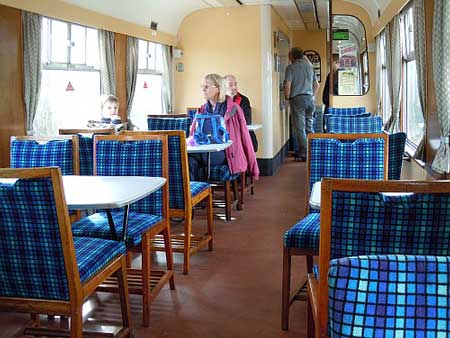
However, special tourist trains in Britain, including many historic trains, still provide a range of enjoyable culinary experiences. Recently I traveled through England’s lovely Cotswolds countryside on the historic Cheltenham Flyer, a 1930s-era steam train that chugs along the Gloucestershire Warwickshire branch of the Great Western Railway, which has been operating trains in western England since 1838. The train included a restored 1950s “buffet saloon car” whose menu offered Scotch eggs, pork pies, bacon rolls, homemade flapjacks and homemade cakes, along with a range of hot and cold drinks, alcoholic and non-. At certain times of the year, the historic trains running on these rails also offer special culinary tours, from Fish & Chips Specials to Ale & Steam Weekends (sampling 24 real English ales) to Luxury Pullman Style Dining Experiences with multi-course meals served on china plates, accompanied by wines poured into crystal glasses.
CONTINENTAL RAILROAD DINING The railroad dining experience on the European continent varies from country to country, type of train, and distance of travel. Some local trains have no dining facilities at all. Others have only a small snack bar or buffet, or vendors who come through the train with a cart stacked with packaged foods and canned drinks. Some have a full-service dining car, with a menu featuring multi-course meals and a selection of wines. If fine food and white-tablecloth dining are an important to you on a rail journey, then you need to seek out the trains that have a separate dining car and well rated menus.
For the ultimate in Old World luxury train travel (and dining), book a journey on the Venice-Simplon Orient Express, a modern revival of that classic train, which operates several tours of different lengths between London and Istanbul. The trains also feature three beautifully restored dining cars from the 1920s, with haute cuisine to match. Wear period dress to dinner, and you’ll feel like you’ve stepped back in time into an Agatha Christie novel.
Who could resist the special Swiss Chocolate Train that takes you on a day trip to a cheese-making factory, Gruyères Castle, and the Cailler-Nestlé Chocolate Factory in Broc for cheese and chocolate tastings at those stops? Travel in a vintage Pullman Belle Epoque-era train car or in a sleek, ultramodern panoramic car with large windows for viewing the Swiss Alps, the vineyards surrounding Montreux and the medieval town of Gruyères along the route. Bring along a shopping bag and leave your calorie counter behind.
Don’t overlook the foods to be found inside train stations, too. If you don’t want to spend big bucks to travel on a luxury train but you still like to eat well, you’ll find plenty of choices at many of Europe’s train stations, particularly those in the larger cities. I’ve been especially impressed with the train station buffets and take-out selections at major Swiss, German and French stations, as well as those in capital cities such as Budapest and Madrid. But for the ultimate in elegant, nostalgic, train-station dining, don’t miss the beautifully restored Le Train Bleu (The Blue Train) restaurant in Paris’s Gare de Lyon—a Belle Epoque-style restaurant with a pricey French menu and a gorgeous decor to match.
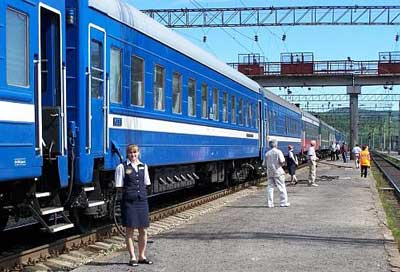
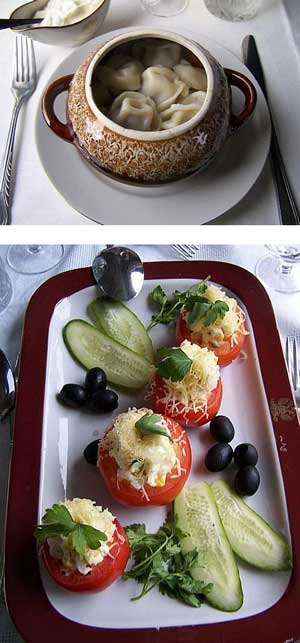
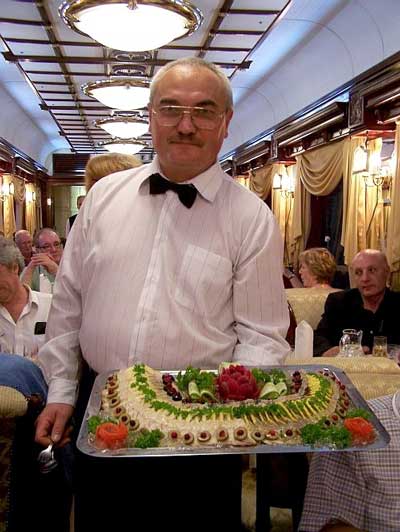
DINING ACROSS CONTINENTS Finally, for the travel adventure of a lifetime, board the British-owned, Russian-operated Golden Eagle Trans-Siberian Express whose route covers nearly 6,000 miles between Moscow and Vladivostok. Almost half that distance is on the European side of Russia, from Moscow to Kazan to the Ural Mountains. Each comfortable cabin on this luxury train has its own private bathroom. And three times a day, professional chefs in the a fully equipped kitchen car turn out freshly cooked meals featuring regional specialties, all served in an elegant dining car designed to evoke the Golden Age of train travel. During the 12-day journey across Europe and Asia, the menu is different at every meal except breakfast. On this longest train trip on earth, you’ll have plenty of time to enjoy the best of Russian cuisine and international wines while watching the fascinating changes of scenery outside the dining car windows.
So wherever you travel by train in Europe, enjoy the experience of dining on (and off) the diner. It’s a great way to taste a wide variety of regional foods and expand your culinary and geographic horizons at the same time.
Sunny climate, ancient ruins…and delicious cuisine on Italy’s largest island
By Sharon Hudgins Photos by the author
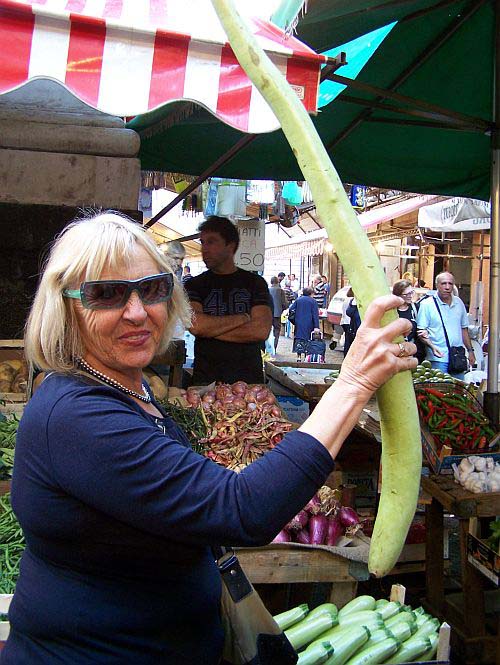
Savvy travelers have long known that Sicily is a part of Italy well worth seeing. But in recent years this largest island in the Mediterranean has suddenly become a popular tourist mecca, attracting visitors from all over the world. They come for Sicily’s sunny climate and rugged scenery, its ancient archeological sites, sleepy villages, historic cities and colorful markets, and to see nature’s own spectacle, Mt. Etna, Europe’s largest volcano, spouting steam from its fumaroles and sometimes spewing lava down its slopes.
Tourists come to taste Sicily, too—whether on short day trips from cruise ships docked near its shores, or on longer culinary tours (often with cooking classes included) that focus in depth on the history and variety of Sicilian cuisine.
CULINARY CROSSROADS Located only two miles from the Italian mainland, Sicily has long been a magnet for invaders, colonizers, and rulers—from the early Phoenicians in 800 BC to the Germans, French, Spanish, Austrians and British at various times over the past one thousand years. But it was the ancient Greeks, Byzantines and Arabs who had the greatest influence on Sicilian cuisine.
The Greeks (800-200 BC) brought advanced agricultural methods and introduced new vegetables, fruits and fowl. They cultivated barley, wheat and millet, planted olive groves and vineyards, kept bees (for honey) and improved the breeding of livestock, especially sheep, which were important for cheese production. Even today, Sicily is famous for its ricotta and pecorino cheeses made from sheep’s milk.
The Romans (200-400 BC) focused on growing wheat on large landed estates, turning Sicily into a granary of the Mediterranean. But the influence of the earlier Greeks remained strong. When the Byzantines annexed Sicily to the Eastern Roman Empire (550-900 AD), Sicily was again immersed in Greek traditions and customs, including the kinds of foods favored on Sicilian tables.
During the relatively short time that Arab Muslims controlled Sicily (900-1100 AD), Sicily became one of the wealthiest and most progressive cultures of medieval Europe. The Arabs also had an important impact on the local cuisine. In addition to upgrading traditional agricultural practices, such as irrigation technology, they added a variety of new crops, including rice and sugar cane. They planted orchards of lemons, oranges, almonds and pistachios, and imported spices from Asia and the Middle East.
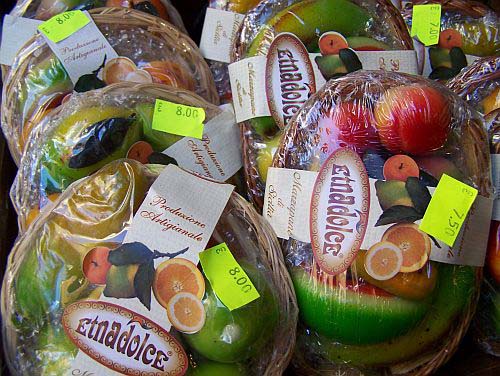
During this time the Sicilians developed their famous “sweet tooth.” Today Sicily is still renowned for its magnificent marzipan confections (crafted from sugar and almond paste); frozen-fruit treats (ice creams, sorbets and granitas); and cannoli dessert, deep-fried tubes of thin pastry made with Sicilian Marsala wine, stuffed with sweetened ricotta cheese combined with candied orange peel, chopped pistachios and chopped chocolate. All these seductive sweets have their roots in medieval Arab cuisine (except the New World chocolate, of course).
Even after the Norman French conquered Sicily at the end of the 11th century—and other Europeans came to rule over Sicily after that—local Arab culinary traditions remained strong on the island. When many Arab Muslims were forced out of Sicily by the Christian conquerors, the arts of Arab confectionery fortunately were not lost. As in Spain, with the later expulsion of Muslims from that country, the recipes were secretly and safely stowed away in Catholic convents, where the nuns made these sinfully sweet treats to give away as presents and later to sell to support their convents. Today these marzipan candies, chewy nougats and sugary pastries are among the most important culinary legacies of the Arabs in Sicily.
FEASTS & FESTIVALS Holidays are often the best times for travelers to taste the special dishes of any country. Like the rest of Italy, Sicily celebrates many religious holidays every year, from small festivals honoring a local saint to national holidays observed throughout all of Italy. Festival foods range from ritual breads for Christmas and New Year, to cannoli during the spring Carnival season just before Lent, to little marzipan confections shaped like lambs for Easter.
For St. Joseph’s Day (March 19), Sicilians build ornate altars adorned with bread-dough decorations and fresh flowers in their homes, and each community prepares a special ritual meal, often with at least a hundred different dishes, to honor the good saint. Since St. Joseph is also the patron saint of pastry cooks, many of the festive dishes are sweet, including the traditional deep-fried, custard-filled “St. Joseph’s pastries.”
Easter is the time for highly decorated candy eggs, sweet breads and fancy cakes, especially Sicily’s cassata, a multilayered baroque concoction of sponge cake, marzipan, pistachio paste and sweetened ricotta cheese, glazed with white icing and ornately decorated with crystallized orange and pear wedges, curving ribbons of candied squash and grated chocolate.
In Palermo, the Feast of Saint Rosalia (July 13-15) features street foods sold from carts colorfully painted like old Sicilian farm carts: salted and sugar-coated nuts, toasted pumpkin seeds, roasted fava beans and pink-white-green-striped nougat candy. The traditional dessert eaten during this festival is gelato di campagna—not ice cream, as its name implies, but an elaborate confection-cake constructed of multicolored fondants. This rich confection looks like an ice cream cake with four layers: white (almond paste), brown (hazelnut paste), green (pistachio paste) and pink (strawberry paste)—all assembled in a cake mold and studded with pistachios and candied fruits.
For All Saints’ and All Souls’ Days at the beginning of November, Sicilian children receive special gifts supposedly from their deceased ancestors: pupi di cena, candy dolls shaped like knights, ballerinas, clowns and even contemporary figures like Batman, all made of melted sugar poured into molds and then painted in bright colors. Other traditional foods include colored marzipan shaped like fruits and vegetables; fava beans, a symbol of death, since this is a holiday honoring the dead; fave dei morti, little cookies shaped like fava beans; and ossi di morto (“bones of the dead”), cookies shaped like leg bones or skeletons, made of ground almonds, egg whites and sugar.
Roasted turkey and roasted chestnuts are traditional for St. Martin’s Day on November 11. Other typical Sicilian treats for this holiday include biscotti di San Martino, little hard, thrice-baked cookies flavored with anise, cinnamon or orange; and sfinci, fried beignets made of mashed potatoes and flour, sometimes filled with custard cream, and usually drizzled with honey.
On Saint Lucy’s Day (December 13), Sicilians eat arancine, potato-and-rice croquettes the size and shape of an orange, filled with meat or cheese and fried until golden. (These are also popular year-round in Sicily, a savory treat not to be missed!) Christmas Eve (December 24) is celebrated with eel or salted swordfish, followed by a large Christmas Day feast that includes nuts (symbols of fertility) and honey (so the coming year will be sweet). And Christmas in Sicily wouldn’t be complete without sweet almond torrone (nougat) and rich buccellato, a special wreath-shaped bread spiced with cinnamon, cardamom and cloves, filled with figs, raisins, almonds, walnuts and apricot jam, and decorated with candied fruits on top—a legacy of the culinary influence of those Greeks and Arabs who ruled Sicily so long ago.
For more information about the foods of Sicily see:
Eat Smart in Sicily, by Joan Peterson and Marcella Croce (Ginkgo Press, 2008), the best portable guidebook to Sicilian food, with a summary of Sicilian culinary history and a very good menu translator. You’ll definitely want to take this little book with you when you travel to Sicily.
Pomp and Sustenance: Twenty-five Centuries of Sicilian Food, by Mary Taylor Simeti (Knopf, 1989), probably the best single book you can read about the history of Sicilian food (republished in 2009 as Sicilian Food: Recipes from Italy’s Abundant Isle).
Bitter Almonds: Recollections and Recipes from a Sicilian Girlhood, by Mary Taylor Simeti and Mari Grammatico (Bantam Books, 2003).
Sweet Sicily: The Story of an Island and Her Pastries, by Victoria Granof (William Morrow Cookbooks, 2001).
Celebrating Italy, by Carol Field (William Morrow, 1990), which covers other regions of Italy, too, but includes much information about the festival foods of Sicily.
For more books about Sicilian cuisine, search “Sicily cooking” on Amazon.com.
Coffee and Leipzig, Germany are inseparable. It was in the Saxon metropolis where the first palm court musicians of Germany entertained their guests: Georg Philipp Telemann made music in the coffee shops at the Market Square together with the collegium musicum, founded in 1701.
For more than two decades Johann Sebastian Bach visited the Zimmermannsche Kaffeehaus on Katharinenstrasse twice a week. His Coffee Cantata is seen as the highlight of Saxon palm court music of the 18th century. The lyrics had been written by the Leipzig poet Christian Friedrich Henrici (pen name Picander) in 1732.
Even the canon “C-a-f-f-e-e” was invented in the coffee country of Saxony. The composer was a concerned music teacher from Zittau, who wrote the song to warn his pupils of the harmful effects of the “brown Turkish drink.”
Coffee beans from Ethiopia
In the first half of the 18th century, while in other places canon balls were cast, Leipzig became the most important place of coffee mill production. After the first load of coffee beans arrived in Leipzig in 1693, more and more coffee shops began to open.
Consequently, Europe’s oldest coffee shop (after the Café Procope in Paris) is in Leipzig. Adam Heinrich Schütze opened the Baroque Coffe Baum on Kleine Fleischergasse 4 in 1694 and sold the first coffee drink.
In the course of the following three centuries this became the place where the intellectual elite of the city met to enjoy the popular drink. Among the guests there was the literature professor Johann Christoph Gottsched, the painter Max Klinger, the poet E. T. A. Hoffmann and the composer Richard Wagner. Also Goethe, Lessing, Bach and Grieg were often here. In a room in the ground-floor (now the Schumann Room) Robert Schumann regularly met his circle of friends between 1828 and 1844. Even revolutionaries like Robert Blum, Karl Liebknecht and August Bebel established their “second living-room” here. In 1990 Helmut Kohl and Lothar de Maizière discussed the possibilities of German unification in this place.
The sandstone relief above the entrance to Coffe Baum is famous. A Turk with a big coffee is proffering a cup of coffee to a cherub. This symbolizes the encounter of Christian occident with Islamic orient. August the Strong is said to have donated of this relief in 1720 in gratitude for amorous services provided by the landlady.
On the third floor there is the coffee museum—one of the most important worldwide. In 15 rooms more than 500 selected exhibits from 300 years of Saxon coffee and cultural history are presented. Among the table roasters and coffee mills from different epochs, a high-tech sample roaster is an attraction for visitors.
Real bean coffee and original Meissen porcelain have always been the most outstanding identification marks of the “Coffee-Saxons,” who received their nickname from Frederic the Great during the Seven Years War. The lack of coffee resulted in a lack of motivation among the Saxon soldiers, and they refused to fight, complaining: “Ohne Gaffee gönn mer nich gämpfn,” which means in English, ” No coffee, no fighting!” The insulting remark of the Prussian monarch, who called them “Coffee Saxons,” did not disturb them in the least, as feasting on cake and coffee suited their taste much better than fighting on Europe’s battlefields.
But how do people like their coffee in Leipzig? “Siesse muss d’r Coffe sein,” says a Saxon proverbial expression, which means that the coffee must be sweet. When the caffeine drink is too weak the spoiled Coffee Saxons despise it as “Plempe” or “Lorke.”
As in hard times, even coffee fans of the wealthier classes had to count their coffee beans; they served so-called “sword coffee” when they had guests. The concentration of the coffee was so low that the blue swords from the bottom of the Meissen porcelain cups could shimmer through. Since 1729 this is also called Blümchenkaffee”—the coffee is so weak that you can see the little flowers (Blümchen) on the bottom of the cup. An anecdote from the 18th century tells about an economical host who roasted and ground 14 beans for 15 “Schälchen Heessen” (cups of the hot drink).
The basic rule for a good Leipzig cup of coffee could be the following historic statement of Cardinal Talleyrand:
“The coffee must be As black as the devil As hot as hell As pure as an angel As sweet as love.”
Leipzig’s guests who visit the cafés and coffee shops can confirm his words: coffee is magic, coffee is erotic and coffee is spirit.
Those who would like to learn more about Leipzig’s coffee history can join a two-hour guided city tours under the headline “Ey, wie schmeckt der Coffee süsse…” (“O, how sweet the coffee tastes …”).
THE SAXONS AND THEIR COFFEE: BLIEMCH’NGAFFEE AND MUGGEFUKK
The first exhibition of coffee beans was the Leipzig Trade Fair in 1670. Lehmann, Chocolatier to the Royal Polish and Saxon courts, opened the first coffee stall in the marketplace in 1694. In 1719 coffee lovers were flocking to a café in the Kleine Fleischergasse, the “Coffe Baum,” which had been made famous by Robert Schumann.
A quick lesson in the Saxon dialect will aid you in understanding these strange terms.
Bliemch’ngaffee is the dialect form of “Blümchenkaffee,” or “flower coffee”—so-called because it has so much water in it that when the coffee was poured into a traditional Meissen porcelain cup, it was still possible to see the typical floral design on the bottom. You could say it’s a coffee that’s easy on the heart.
Muggefukk—”Moka faut” was the call of French soldiers as Napoleon’s troops entered Leipzig. This was a coffee with malt or large amounts of chicory mixed into it. The phrase “moka faut” was mangled by the Saxons into “Muggefukk.”














 European Traveler