Echoes of the Past Enchant Istanbul Hotel Guests

The Pera Palace Hotel, in business since the late 19th century, retains its Old World panache, captivating patrons with elite amenities and Belle Epoque charm

By Randy Mink

Just about every major European city has a historic luxury hotel that begs nostalgia-minded folks like me to come take a peek or maybe bed down for a night or two. I tend to make a beeline to such hostelries—those with a story to tell and grand trappings to go with it—even if it’s just for a brief walk through the lobby or to soak up the ambience over a drink in the bar.

In Istanbul, the Pera Palace Hotel started life in the 1890s when the Turkish city (then called Constantinople) needed a place suitable for hosting wealthy passengers arriving from Paris and other points in Western Europe on the Orient Express, the luxury train made famous by English author Agatha Christie. It’s said that she wrote some of Murder on the Orient Express while staying at the Pera Palace in the 1930s.

The hotel has endured through the reigns of three Ottoman sultans, the fall of the Ottoman Empire and the rise of the new Turkish Republic in the 1920s. Between World Wars I and II, it was at the center of international intrigue in the Pera neighborhood, then a hotbed of espionage and geopolitical machinations involving players from throughout the Continent. Pera, with its numerous military and diplomatic posts, was once called Little Europe.

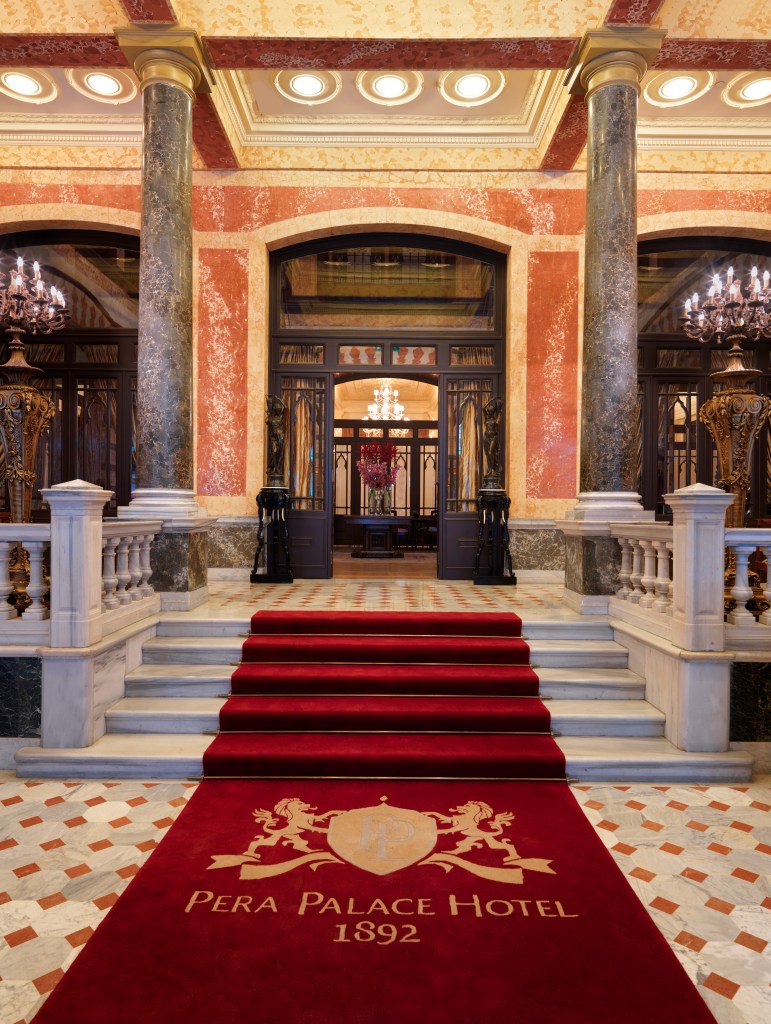
The Pera Palace today retains its lofty position as a place to see and be seen. Trying not to gape, I entered the high-ceilinged lobby on the red carpet inscribed with the hotel’s name in gold letters, glancing up at the crystal chandeliers and plush red draperies on my way to the reception desk.  Gleaming marble walls, floors and balustrades, along with brass urns brimming with palm fronds, set the tone as well.
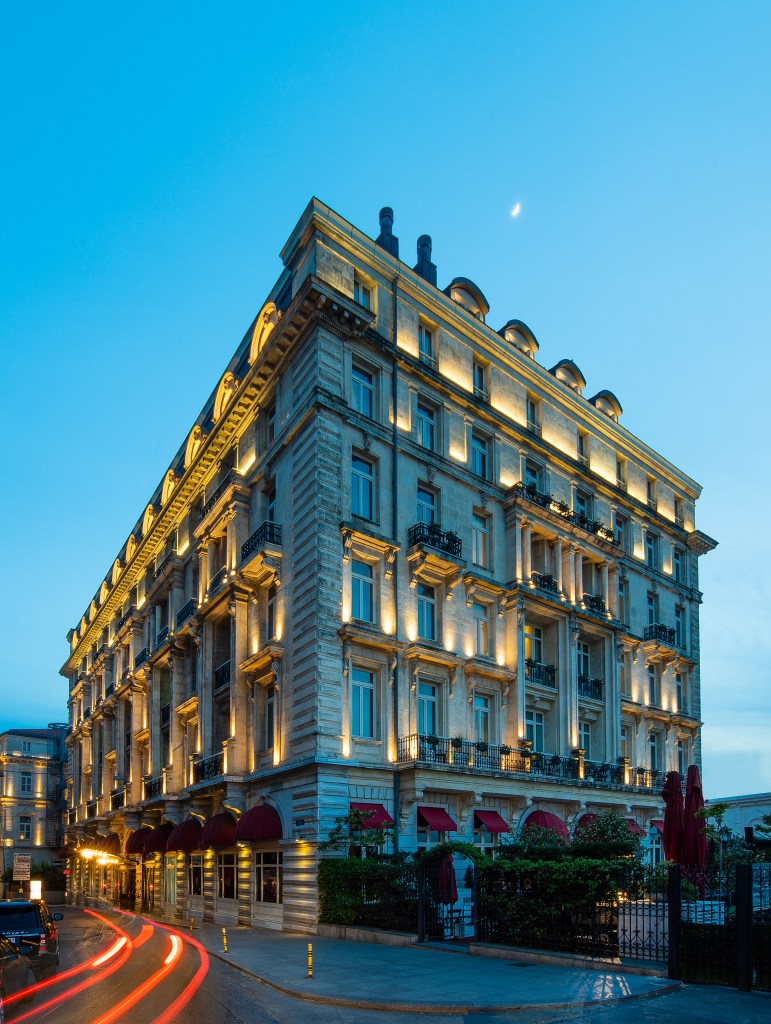
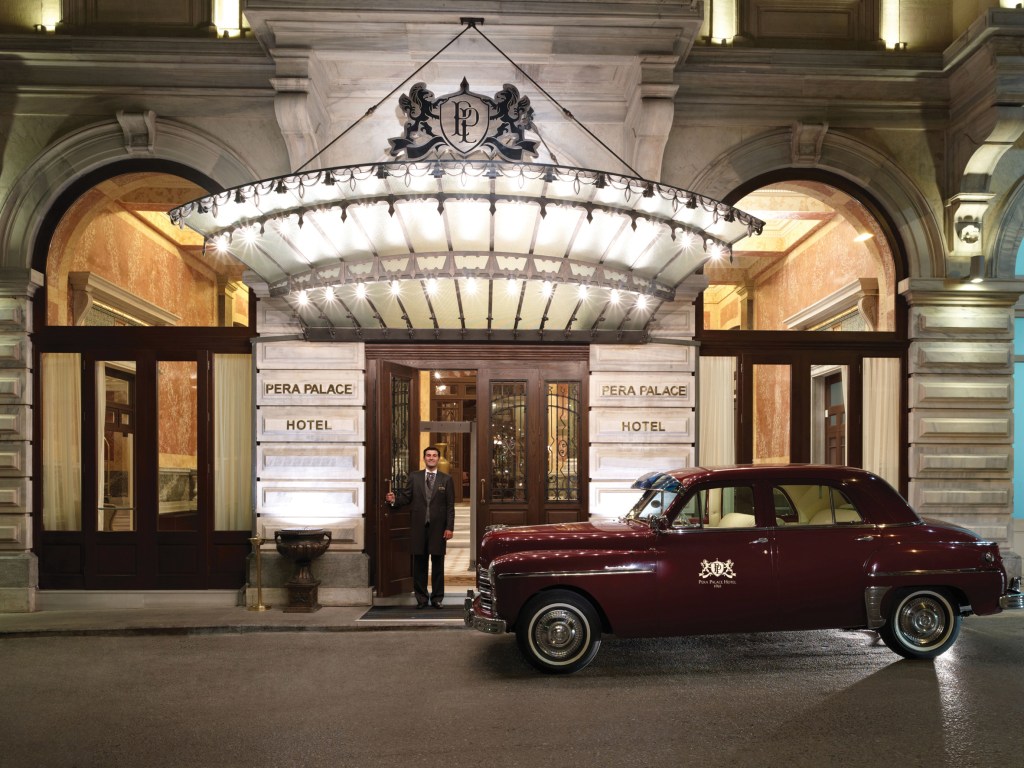
The Pera Palace Hotel is one of Istanbul’s elite addresses. (Photo credit: Pera Palace Hotel)

Famous Guests of the Pera Palace

Over the years, the same grandeur has greeted notables like England’s King Edward VIII and Queen Elizabeth II, Austro-Hungarian Emperor Franz Josef, Shah Reza Pahlavi of Iran, President Tito of Yugoslavia and Jacqueline Kennedy Onassis. Hollywood royalty has included Zsa Zsa Gabor, Greta Garbo and Alfred Hitchcock. As a reporter after World War I, Ernest Hemingway was a hotel resident.

In Turkish eyes, the most important figure to grace the Pera Palace was Mustafa Kemal Ataturk, revered as the father of modern Turkey. When in Istanbul between 1917 and 1926, the country’s first president resided in Suite 101, which is now a museum devoted to him. A stern-looking Ataturk mannequin—holding a cane and dressed in a green army uniform and black cape and hat—stands in the sitting room. Along with vintage photographs, newspaper clippings and a Time magazine cover bearing Ataturk’s image, personal possessions on display include the national hero’s eyeglasses, goggles, pajamas, shoes, white linen suit jacket and black silk prayer rug. The museum, free to hotel guests, is open to the public for a fee.
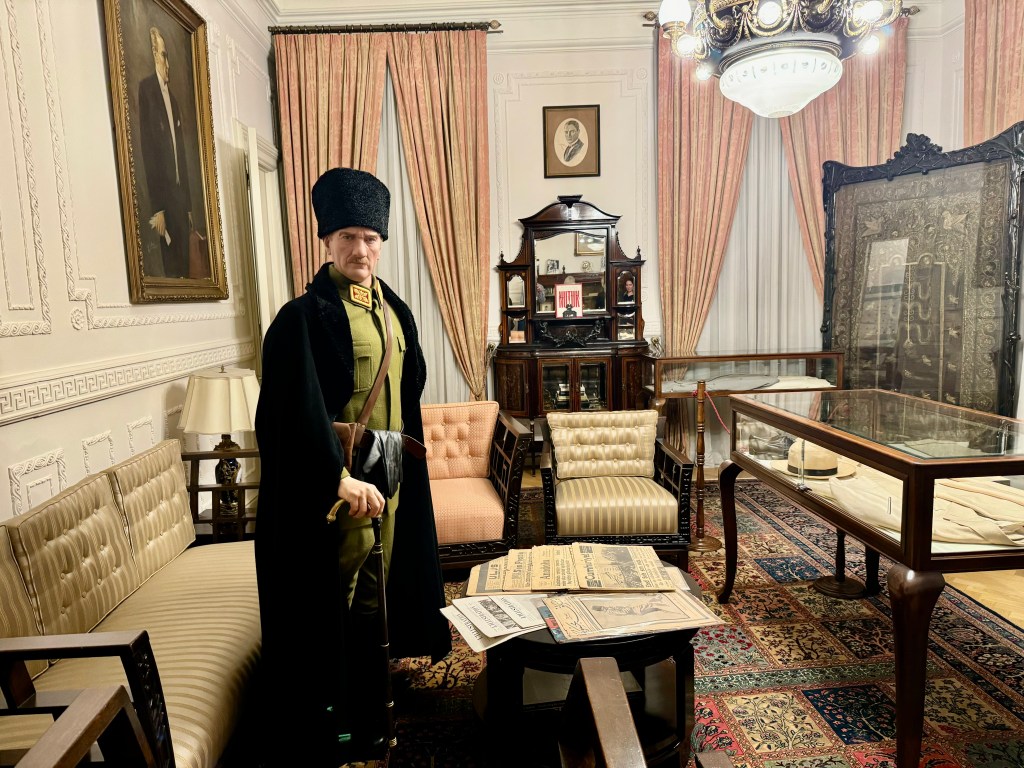
Suite 101 in Istanbul’s Pera Palace Hotel is a museum dedicated to the memory of Mustafa Kemal Ataturk, founder of the modern republic of Turkey. (Randy Mink Photo)

The guest room where Christie stayed, number 411, now carries her name, and the hotel restaurant is named Agatha. Framed black-and-white photographs of past guests, including Garbo, Hemingway, Zsa Zsa and Jackie O, adorn the restaurant’s back wall.

Dining at Istanbul’s Pera Palace Hotel

Agatha Restaurant’s bountiful buffet breakfast offers everything from salads and olives to cheeses, cold cuts and quail eggs. Pastries include mini donuts, mini croissants and simits, the sesame-seeded dough rings found throughout Turkey. For spreading on breads and rolls, I made good use of the honeycomb, tahini, grape molasses, jams and clotted cream. I had more than my share of the cheese balls covered in sesame seeds, black cumin, pistachios or poppy seeds. Among the hot dishes: cheese quiche, cheese soufflé, falafel, artichoke soup, pancakes and porridge.
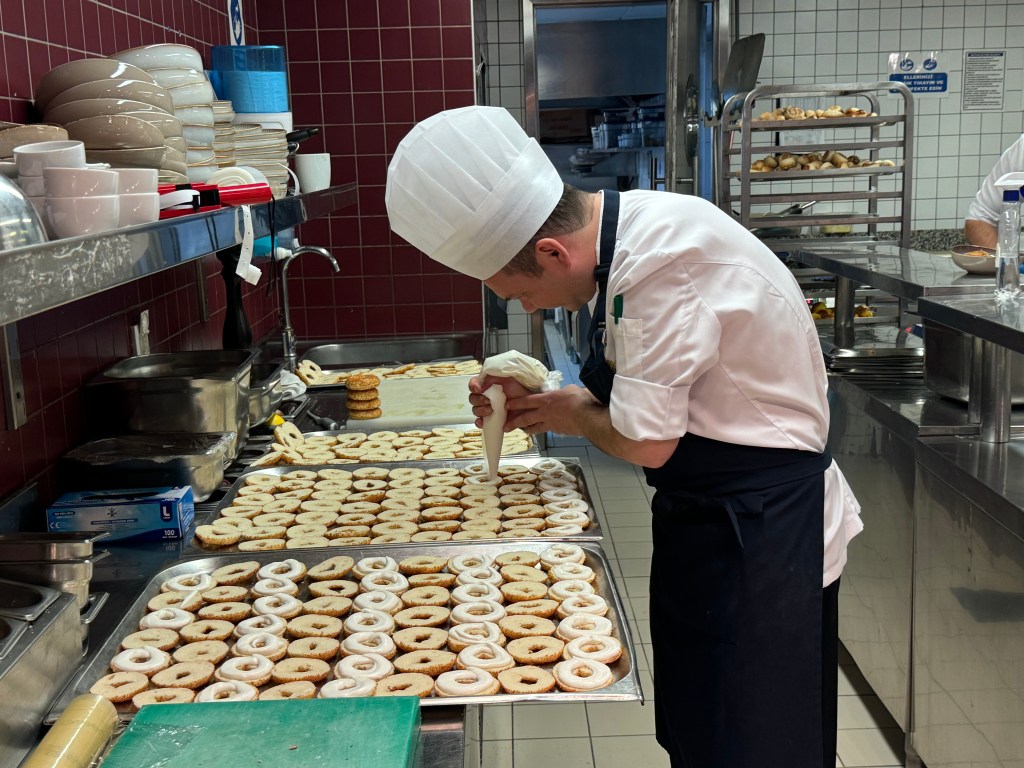
The breakfast buffet at Agatha Restaurant offers many choices, including a wide variety of olives. (Randy Mink Photo)

More treats await at Patisserie de Pera, an intimate cafe reached from the hotel lobby or separate street entrance. Rose-colored walls and furnishings lend a soft touch, and red-accented Venetian glass chandeliers hang from the pink ceiling in each of the two salons. This is the place for a leisurely mid-morning coffee or tea break accompanied by a decadent fruit tart, slice of cheesecake or an assortment of chocolates or macarons.

The gift shop just outside the cafe (actually just a glass cabinet) provides a wide variety of Pera Palace mementoes. Items include socks, umbrellas, bathrobes and other things bearing the hotel logo. There are coasters, coffee mugs and souvenir plates. How about an Ataturk tea set or the paperback Murder on the Orient Express?

Patisserie de Pera is the place to linger over pastries and a cup of coffee or tea. (Randy Mink Photo)

Steps from the merchandise cabinet is an original sedan chair once used to carry Orient Express passengers from the train station to the Pera Palace.

A traditional afternoon tea with piano music is served under the six skylight domes of the Kubbeli Lounge. Featuring elements of Islamic architecture, the two-story-high room is decorated in dark reds and deep plums, as is the nearby Orient Bar, another plush spot to drink in visions of a bygone era. The equally stylish Library Room seating area, complete with bookcases and antique globes, extends from the lounge and bar.
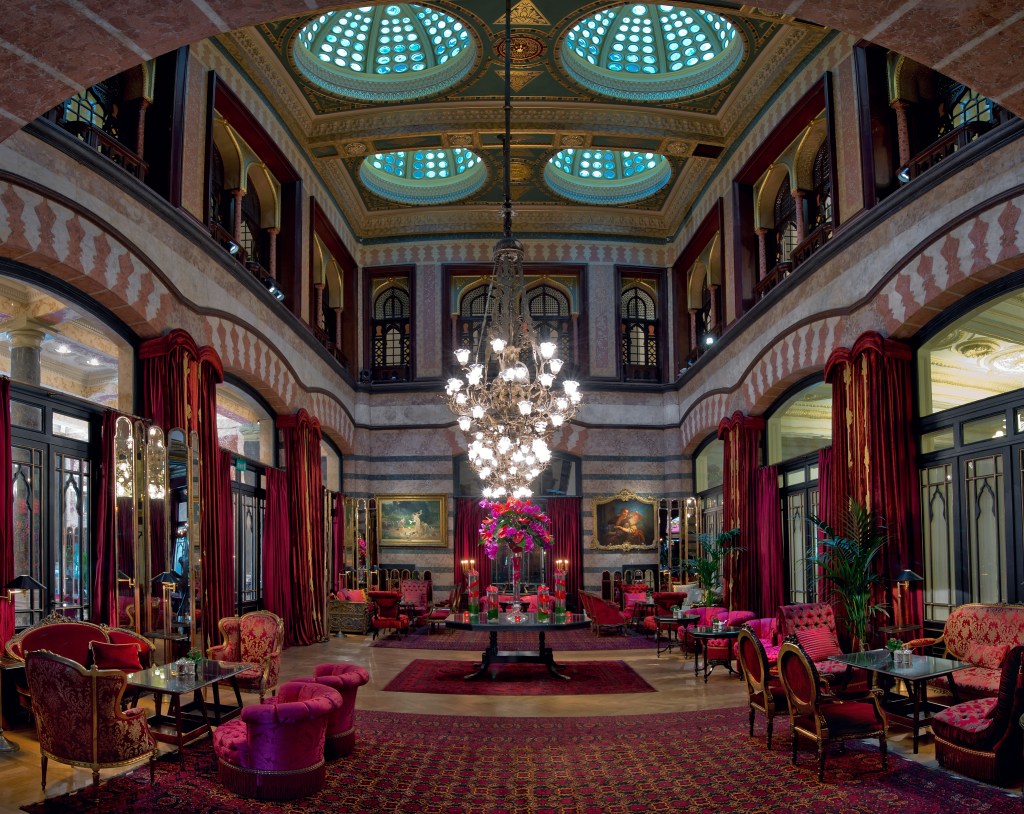
The hotel’s Kubbelli Lounge hosts a traditional afternoon tea. (Photo credit: Pera Palace Hotel)
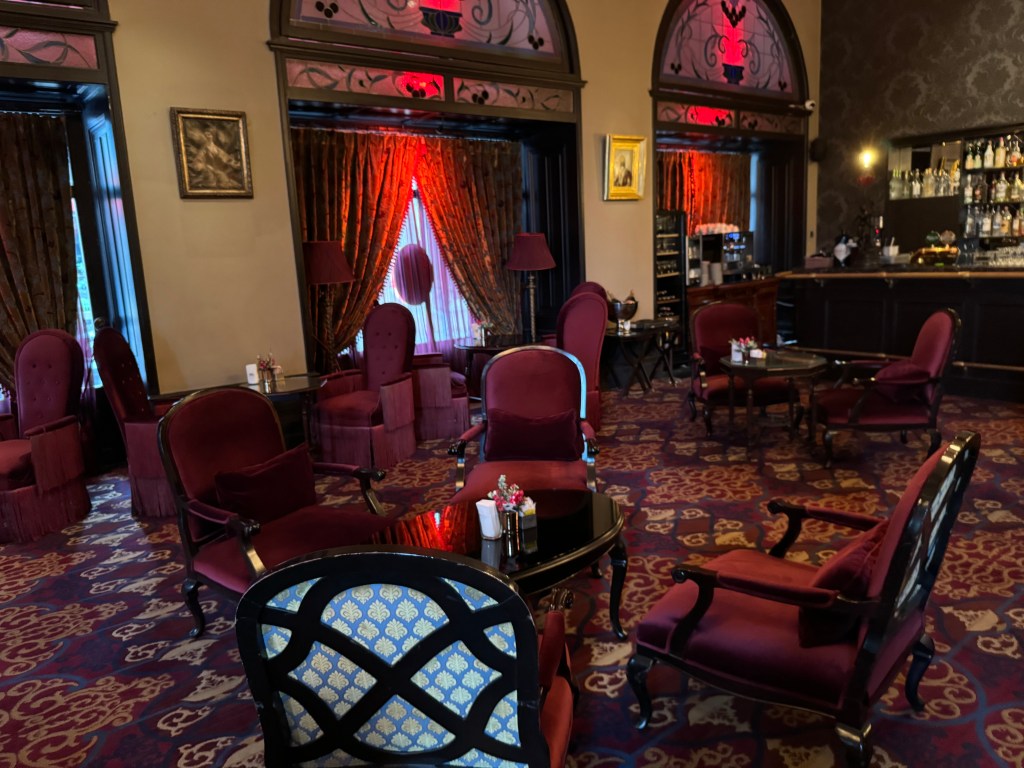
The Pera Palace’s Orient Bar provides an elegant setting for cocktails. (Randy Mink Photo)

Guest Rooms at the Pera Palace Hotel

More flashbacks to yesteryear are in store on a fun ride in the hotel’s original electric elevator, installed only three years after the Eiffel Tower’s elevator. The wood-and-cast-iron cage, operated by a staff member, is used only for arriving hotel guests. For normal use, a set of modern elevators services the six guest room floors.

The original elevator’s wood-and-cast-iron cage is well over a century old. (Photo credit: Pera Palace Hotel)

From tall windows in my room, number 506 in the Deluxe Golden Horn category, I had views of the Golden Horn, the waterway that separates modern Istanbul from the Old City on the other shore—and the primary inlet of the Bosphorus Strait. Amenities in the marble bath included thick white towels and robes. The pillow cases, hand towels and robes all bore the gold Pera Palace heraldic crest.

Deluxe King and Deluxe Twin rooms at the hotel feature pillowcases and plush robes that bear the Pera Palace’s heraldic crest.
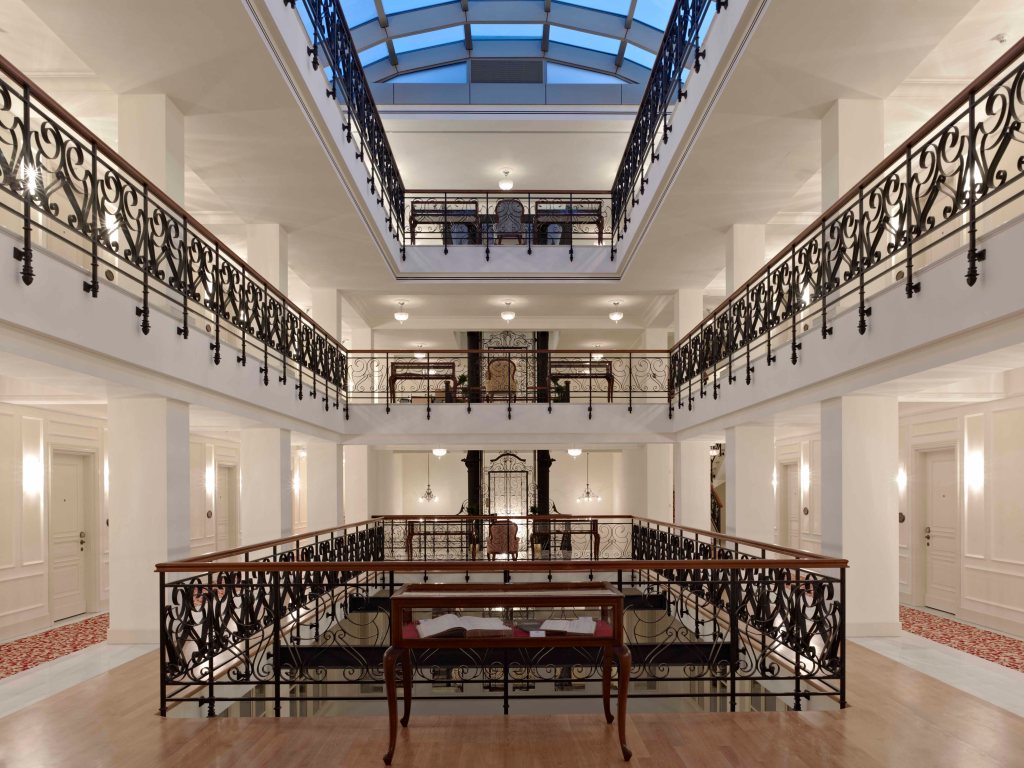
Guest rooms at the Pera Palace are spread across six floors. Each floor has display cases filled with artifacts that illustrate the hotel’s colorful history. (Photo credit: Pera Palace Hotel)

On the morning before checking out, I made a point of visiting all six floors to peruse the display cases exhibiting old photos, menus, ledgers, china and silverware from the hotel and Orient Express. On the fourth floor I found the Agatha Christie Room, wishing the door would be open so I could see inside. For me, it will always be a mystery.

Turkey’s Wild and Rugged Black Sea Coast

Turkey’s Wild and Rugged Black Sea Coast

Photos courtesy the Turkish Tourist and Culture Office of New York

Encompassing much of the country’s northern boundary and isolated by the rugged Kackar mountains, the narrow coastal Black Sea region of Turkey is well off the beaten path of many international travelers but treasured by those who discover its unique charms.

In addition to fascinating reminders of Turkey’s extraordinary history, the region is renowned for its magnificent coastline, scenic seaside and hilltop towns, World Heritage sites, lakes, national parks and some of the wildest natural landscapes in the country that draw intrepid trekkers, climbers and mountaineers from all over.
 
It should not be surprising that the Black Sea’s history was shaped by the nations that ruled the seas. Ancient Greece, the Roman Empire, the Byzantine Empire, Genoese, the Venetians and, until the early 20th century and afterwards Ottoman Empire, all put their cultural imprint on the region. They left behind castles overlooking the sea, churches, monasteries and mosques and distinctive architecture – much still intact or lovingly restored.

Today, visiting Turkey’s Black Sea by cruise ship (a number of lines based in North America offer itineraries that include one or two Turkish Black Sea ports) is one option, but for a more in-depth experience, travelers are advised to fly to Samsun or Trabzon, two of the larger towns, from Istanbul or Ankara, and rent a car or four-wheel drive vehicle. Comfortable and friendly accommodations are plentiful except in some of the more remote mountain villages. 
 
Though the coastal areas are blessed with moderate temperatures year-round, weather in the mountainous interior can be colder, therefore spring time is the most popular season for exploring the mountains.
 
Traveling from west to east through the Black Sea region, you might begin in Bolu. From coastal beaches to its famous multi-colored forests of oak, alder, pine, hazelnut and many more varieties of trees, visitors can virtually travel through all four seasons of the year within the course of a short drive. Yedigoller or Seven Lakes National Park is the centerpiece, but explorers will also discover hot springs, hiking and walking opportunities and, in winter, one of Turkey’s best ski centers.
 
As early as the 6th century BC, the coastal town of Amasra went by the name of Sesamus, and today offers a number of historic attractions, including 14th century Genoese forts, a Roman bridge, Byzantine city walls and historic mosques. Nearby, along the sea, the fishing villages of Cide and Abana are popular excursions, particularly known for their seaside restaurants.

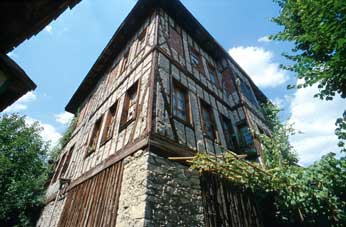
Just inland from Amasra is one of the region’s best known attractions: Safranbolu. Its beautifully preserved and restored buildings from the Ottoman Empire, including konaks, or mansions distinctively made of timber and stone, have earned the town a World Heritage Site designation. Other reasons to visit include the Koprulu Mehmet Pasa Mosque and the Kazdagi Mosque, Turkish baths, Shoemakers Street (the town once supplied the Turkish army with shoes) and the scenic Market Street.
 
Also inland is the town of Kastamonu, with its 12th century castle, ethnographic and archaeology museums, and famous handicrafts, including fabrics, tablecloths, woolens and fruit jams. The expansive pastures in the vicinity offer some of the best trail riding in Turkey, and nearby Ilgaz Mountain National Park is noted for its deer, foxes and bear as well as culinary traditions that include whole lamb cooked slowly in clay ovens.
 
Back on the Black Sea coast, the town of Samsun is where Mustafa Kemal Ataturk drew plans for what became the modern Turkish Republic; the hotel where he stayed became the Gazi Museum. Samsun also offers an Archaeological and Ethnologic Museum, with an impressive collection of antiquities, and not far away, at Bafra, are excavations dating back to the Hittite Iron Age civilization. The thermal springs of Havza, approximately 50 miles away, are another popular day trip.
 
Continuing eastward, Trabzon is the largest city in the region and a cruise port dating back to 7,000 B.C. It remains a major trading port, evolving from an early Greek colony to an important cultural center on the busy Black Sea. Under the Venetians, the town became an important feature of the famous Silk Route before the rule of Ottomans in 1461. Today visitors will find historic churches and mosques as well as other landmarks, including a villa belonging to Ataturk on the town’s periphery. Built by Maneul I in the 13th century, Ayasofia Church sits on top of a hill in the center of the city; the origins of the Church of Saint Eugenios, now the Yeni Cuma Mosque, are lost in time.
 
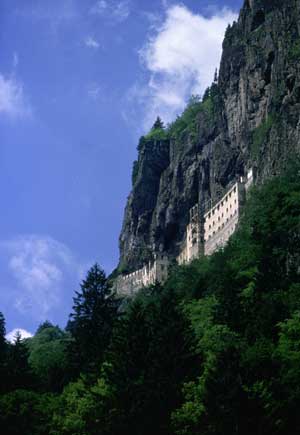
Just inland from Trabzon is the Sumela Monastery, a true treasure of the Black Sea region. Begun in the 4th century by the Greek monks, Barnabas and Sophronius, and built high into the cliffs of Mt. Mela, the monastery has been restored and rebuilt over the centuries.
 
Not far away, the alpine region of Zigana in the Kalkanli Mountains is renowned for its natural beauty and popular for day trips. The 3,200-feet high alpine lake at Uzungol is popular among campers, hikers and fishermen, who prize the lake’s trout. Even more rugged is the Yusufeli designated conservation area inland from the Georgian border. This remote area of lakes and historic Georgian and Armenian churches offers white water rafting as well as ecotours on the famous Coruh River.
 
Offering more cultural comforts is the nearby town of Artvin, which is famous throughout Turkey for its many festivals celebrating regional cultures and featuring music, food, costumes, dancing and other traditional celebrations. The most popular is the Bull Fighting Festival. Visitors will also find other picturesque rural villages in the area as well as the Karagol-Sahara National Park, which is noted for its forests and lakes.
 
Visitors to the region will also discover unique culinary traditions such as Black Sea cuisine, including the roots of the world-famous Turkish tea. Strongly influenced by geography and climate, mountains and sea, food featured in this region includes the black anchovy, or “hamsi,” corn served in endlessly interesting ways, pickled green beans, an abundance of other vegetables and Akcabat Kofte (meatballs). Sweet helva, made with corn, butter and local honey, is another local favorite, as are a great variety of Black Sea and river fish (including farm-raised trout), considered by many to be the tastiest in the world.
 
The Turkish tea industry is based in the town of Rize, where a moist, moderate climate provides perfect growing conditions. While green tea is exported all over the world, travelers should be prepared to enjoy the local favorite, the strong, smoky black variety that, traditionally served with sugar, is as much a social event as it is a beverage. But tea is not the only appeal of Rize and its surroundings. Not far away are the dramatic Kackar Mountains, with their waterfalls, highlands and peaks – magnets for hikers and climbers. Glacial lakes are adorned with yellow rhododendrons, found nowhere else in Turkey at these altitudes, and Mt. Kackar itself, one of the world’s ecological treasures, is home to bears, wolves, lynxes and mountain goats.
 
For more information on Turkey and its Black Sea region, contact the Turkish Culture and Tourist Offices in New York at (212) 687-2194; Washington, D.C. at (202) 612-6800; and Los Angeles at (323) 937-8066. Information is also available at www.tourismturkey.org.