Vilnius, capitol of Lithuania, is not only famous for its old town, which is included in the UNESCO World Heritage list, but also for all its greenery. This city can definitely also be called a cyclist’s dream.
Start the route around the old town from Cathedral Square, considered to be the very heart of Vilnius. Visit the snow-white Cathedral of Vilnius.
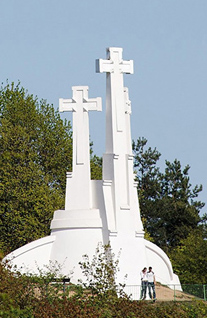
Hill of Three Crosses
From the square you can see Gediminas Hill with its 15th century tower of the Upper Castle and the Hill of Three Crosses. Climb these hills and enjoy an amazing view of the old town.
The cycle path from Cathedral Square leads to Pilies Street, the oldest and the most gorgeous street in the entire city. Pilies Street widens into Didžioji Street, at the end of which stands the white Vilnius Town Hall.
Here you can turn right into Vokiečių Street. Cross over Traku Street to Vilnius Street, which brings you to Gediminas Avenue, the main street of the capital. Turn right and here you are again, standing in front of the cathedral.
Cross the Neris River on the Mindaugas Bridge and you arrive at a section of the cycle path, where you will forget you are in a city. Feel the greenness and quietness surrounding you. All the way around the Neris River is on the right.
Starting at the Santariškės traffic ring, a 3-mile-long asphalt cycle path has been built. It goes along Green Lakes, crosses Verkiai forest, and finally ends at the intersection with Gulbineliai Street.
While on this path don’t miss the architectural complex of Verkiai Palace, built 200 years ago. In ancient times, there was a pagan temple here. Behind the palace, on a cliff, is an observation platform, from which a view of the Neris Valley opens up.
Take forest roads from Verkiai Palace and you arrive at Ežerėliai Geomorphologic Reserve. At the top of the hill you will see Alsas Lake. Go down to Gulbinai Street which leads towards Balsys Lake and cross the small linden forest and finally you arrive at Balsys Lake, where swimming on a hot summer day is refreshing.
If you prefer not to travel alone, you can always join cycling trips around Verkiai Regional Park, organized by the Pavilnys and Verkiai Regional Parks administration. During the warm season you can travel the route Verkiai Palace – Ežerėliai – Green Lakes – Riešė and Turniškėlė – Verkiai Palace.
Photos courtesy Schwabinger Christmas Market and Thomas Gießner
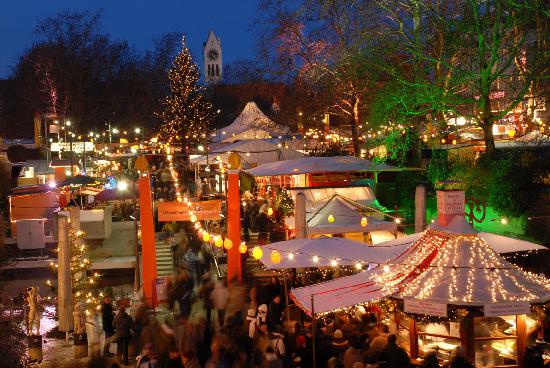
In times of technical developments and mass produced goods, the Schwabing Christmas Market in Munich, Germany strives to lift the focus to the individuality of arts and crafts.
FLYING HIGH, YET DOWN TO EARTH This market has caught the imagination of its visitors for decades with a mix of artisans creating art and crafts. The magical atmosphere of the Christmas market with its many culinary delights give it an unmistakable flair.
In addition, visitors can also expect daily music shows, kids’ entertainment and various culinary delights—and all is free of charge.
MUNICH’S FINEST ARTISTS MARKET More than 100 artists from all over Germany create a place where one can relax and enjoy this unique atmosphere. The concept has been one of an artist’s market from the very beginning. An unmistakable flair can be found here with the high level of artistic talent and craftsmanship. This is further underlined by the quality of the daily cultural programming and fine foods, as well as concerts and various events.
IDEA WAS BORN In the early 1970’s a number of artists who exhibited during the summer on the “Art Mile” on Leopold Street in Munich began to show their work at the former Swiss House prior to Christmas. In 1975 the idea of an artist’s market, with stalls and events, was born. With the backing of the local council, the Schwabing Chistmas Market was founded. A jury is responsible for choosing the work shown, as well as finding new exhibitors. This ensures that all exhibited work comes from the studios and workshops of the artists.
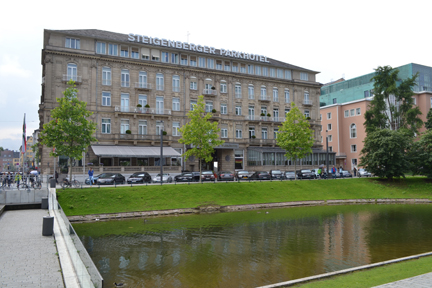
Steigenberger’s elegant five-star Parkhotel in Dusseldorf, Germany—located adjunct to a park—is an oasis in the middle of a popular shopping complex and entertainment strip of the Königsallee.
The prestigious hotel has just completed a multi-million dollar renovation of its entire first floor, kitchen area and more than 90 rooms and suites.
STROLL ALONG THE RIVER The hotel is located at the heart of a number of cultural and entertainment venues which are easily walkable, such as the Opera House, the Old Town, and the Rhine River is just a 10 minute walk away. There you can stroll along the river, regarded as one of the most beautiful of esplanades. Planned by Niklaus Fritschi and built between 1990 and 1997, it “joins” the city to its river. It symbolizes Düsseldorfers’ Rhenish joie-de-vivre and particularly in summer is an expression of the city’s Mediterranean lifestyle.
The Rhine embankment promenade links the traditional Altstad (Old Town) to the modern MedienHafen and is lined by cafés and bars. Thus the Steigenberger Hotel enjoys a prominent position in the life of the city which guests can take full advantage of.
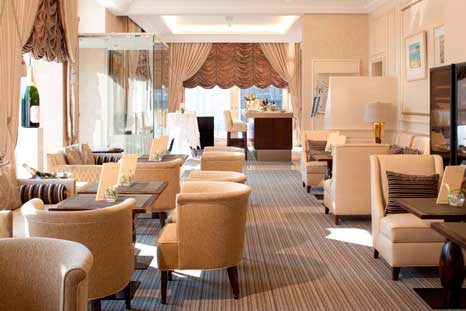
The hotel’s lobby is large and welcoming, with a large vase of eye-catching flowers, a glittering chandelier in the middle, colorful contemporary paintings on the walls and rich wood registration desks, backed on the walls by more rich wood panels. I immediately felt at home in this place, especially with the attentive, personable staff.
The Parkhotel’s 130 rooms, all with high ceilings, are comprised of superior single rooms, deluxe double rooms, grand deluxe rooms and deluxe suites, all neat as a pin, roomy and comfortable. Rooms feature a flat screen television, work desk, air conditioning and access to the spa. Larger rooms include even more amenities. In addition, the rooms are quiet and feature reading lamps on each side of the bed.
HOTEL IS CENTRALLY LOCATED Rooms feature a flat screen television, work desk, air conditioning and access to the sauna and fitness area. The Hauptbahnhof is a few blocks away and guests can easily get there by cab from the hotel. The Dusseldorf trade fair building is about four miles away.
The hotel features six modular function rooms for meetings and conferences with air conditioning and state-of-the art facilities to enable users to make the most of modern multimedia.
Etoile Bar From mid-April the exclusive summer terrace of the hotel offers a chance to enjoy meals or drinks al fresco. Indoors, the dark wood-paneled Etoile Bar, where piano music can be enjoyed, is a good spot to sit a spell. There is also the Steigenberger Eck Lounge, a bistro and bar where one can have Champagne, tea or a drink, and seafood or other meal selections.
Artiste Restaurant
FINE DINING At the fine dining restaurant Artiste, chef Christoph Kaiser provides a varied range of excellent foods and fine table wines. A super appetizer of Colby fish topped with avocado cream was followed by a thick, juicy steak, creamed white asparagus and delicious small potatoes. My wife had the asparagus and new boiled potatoes, but with a delicate, flaky salmon as the main dish. All vegetables are locally grown and personally selected by the chef.
The crème brûlée for dessert, as well as the citrus sponge cake garnished with colorful fruit was the perfect ending to a memorable dinner. The service was impeccable. Another hotel restaurant, the Menuett, is also available for breakfast and special events.
HISTORICAL, STUNNING BUILDING From the outside, the first impression of this hotel is of a magnificent, stunning building, in classical German architectural style. It’s history goes back a long way.
HISTORY The hotel opened in 1902 in conjunction with the industry, trade and art exhibition in Düsseldorf. Soon after it opened aristocracy, famous industrialists and the traveling pubic frequented the hotel. As an example, in 1908 Crown Prince Wilhelm of Prussia and Crown Princess Cecilie visited there.
(left) In 1908, Crown Prince Wilhelm and Crown Princess Cecelie visited the hotel.
From 1936 to 1937 the hotel was reconditioned and modernized but was substantially damaged in 1944 during WWII air attacks, with the upper floors destroyed by fire. Between 1945 and 1951 the Steigenberger hotel was taken over by American and later British occupying forces. Later it served as the Mannesmann AG administrative building until 1953.
Today, English carpets and both modern and antique furniture evoke a synthesis of functionality and noble ambience in the hotel. The elegant interior was designed by architect Bergit Countess of Douglas. The valuable high class furniture imitates the style popular in 18th century’s France ruled by Louis XVI, evoking a sense of comfort and security through its warm wood colors and wooden materials.
In all, the Steigenberger Parkhotel is an island of calm in the midst of a bustling downtown city. Its interesting history and charm make it a prime Steigenberger property.
Berlin, Germany’s capital, is the home to numerous impressive museums. With a section of Berlin dedicated to museums, Museum Island, as well as with museums around the rest of the city, it is easy to see the importance museums have on the cultural landscape of Berlin. The list of museums keeps growing as new ones continue to open and others re-open after renovations.
TSHOBAN FOUNDATION – MUSEUM FOR ARCHITECTURAL DRAWINGS Open since 2013 at the former Pfefferberg Brewery complex, the private Museum for Architectural Drawings houses the renowned Tchoban Foundation’s collection, as well as temporary exhibits from leading international cultural institutions. Conceived by Berlin- and Moscow-based architect Sergei Tchoban, the museum presents three changing exhibitions annually. The architecturally striking building extends from a fire-wall, seemingly latching onto a row of typical Berlin houses. Evoking the image of a set of oversized piled blocks, the four story building’s silhouette is defined by a regression and progression of a colored concrete and glass facade. Open daily, admission is approximately $5.
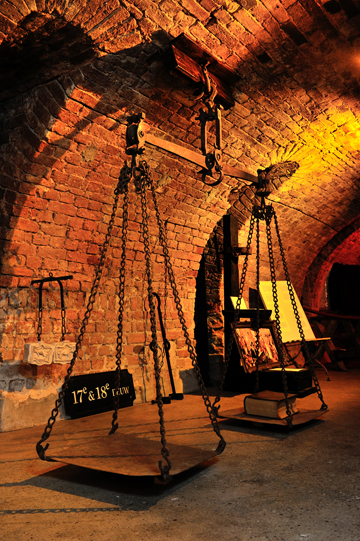
MAGICUM – BERLIN MAGIC MUSEUM Witchcraft and magical powers, mythical knowledge, secrets, the supernatural and ancient wisdom can be explored in the cellars of a historic former blacksmith building close to Berlin’s Hackesche Market. Open since summer 2014, Berlin’s Magic Museum features some 450 exhibits displayed over 6,500 square feet. Included are ritualistic objects and magic devices ranging from a Dutch witches scale and torture instruments to African totem masks, crystal balls and a historic Samurai sword. Curated to be more entertaining rather than strictly academic, the spellbinding exhibition encourages intuitive exploration. Open daily, admission is approximately $8.
Magicum Museum
KUNSTHAUS DAHLEM TO OPEN SUMMER 2015 Following extensive renovations, the Kunsthaus Dahlem will open in the summer of 2015 as an exhibition venue for Postwar German Modernism from East and West Germany (1945-61). The opening exhibition will focus primarily on sculptural works, complemented by paintings, graphics and photography. The historic building was constructed between 1939 and 1942 as a studio for infamous sculptor Arno Breker, who, alongside Josef Thorak, was one of the popular sculptors of the Third Reich, producing ornamental sculptures for Albert Speer’s monumental constructions. In addition to a café and a museum shop, there will also be a permanent exhibition on the building’s eventful past. Free admission.
BERLIN SPY MUSEUM Espionage has been the subject of many movies and books set in Berlin. Now the city is finally getting a museum that focuses on the mysteries of agents, double agents, betrayals, heroes and their stories, as well as the tools they used. The Berlin Spy Museum will feature approximately 21,500 square feet of exhibition space. One of the more well-known pieces on display will be the famous German coding machine “Enigma” from World War II, which was used for enciphering and deciphering secret messages. The exhibition will unveil the mysteries of intelligence services and espionage in the East and the West with a focus on Berlin during WWII and the Cold War. The interactive exhibits cater to all age groups, including children. www.deutsches-spionagemuseum.de/
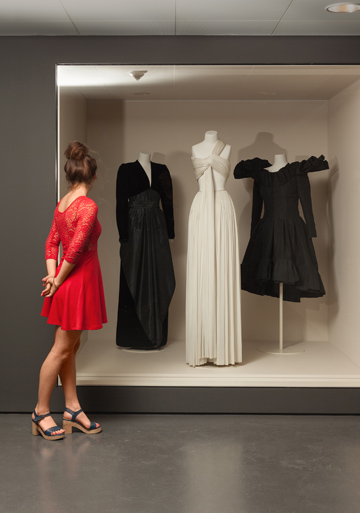
MUSEUM OF DECORATIVE ARTS OPEN AGAIN AT KULTURFORUM After three years of renovations, Germany’s oldest museum of decorative arts, the Kunstgewerbemuseum Berlin, reopened in November 2014 with a new gallery dedicated to the history of fashion. Located at Berlin’s Kulturforum museum complex, the new permanent exhibition of dresses, hats, bags, gloves and accessories from the 18th to the 21st century is based on an international collection acquired by the museum in 2009. Since its re-opening, the Kunstgewerbemuseum has been providing an overview of the key achievements in European design, from the Middle Ages to the present day. In addition to the Fashion Gallery, the museum features new departments of Design and Jugendstil/Art Deco.
Museum of Decorative Arts
BERLINISCHE GALLERY REOPENS MAY 2015 After a year-long modernization, the Berlinische Gallery is scheduled to reopen on May 28, 2015. The gallery’s permanent exhibition focuses exclusively on art in Berlin from 1880-1980, ranging from late 19th century paintings, to Expressionism and the East European avant-garde, to post-war modern architecture and the “wild” works of the 1970s. Reflecting the interdisciplinary nature of the collection, the exhibition will illustrate a diversity of artistic styles and credos, but also tensions, polarization and fresh departures, which remain hallmarks of Berlin as an artistic hub. Two other temporary exhibitions are opening on May 25, 2015: Radically Modern, which focuses on building styles in the 1960s and an exhibition on contemporary German painter Bernhard Martin. A retrospective on Max Beckmann and Berlin will open November 20, 2015 and is poised to be a major highlight of Berlin’s cultural winter for 2015/2016.
Although goulash originated in Hungary, this popular dish later spread beyond its borders, first to the Austrian Empire, Germany, and the Balkans, and finally around the world.
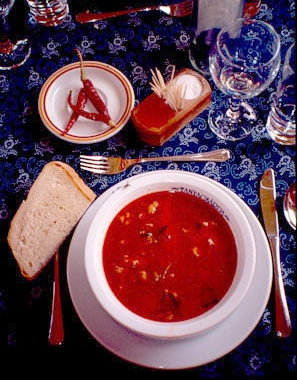
Classic Hungarian goulash at a restaurant on Hungary’s Great Plain
By Sharon Hudgins Photos by the author
Everyone loves a good goulash. But ask a dozen people what a goulash is—and you’ll get a dozen different answers: a soup, a stew, a meat dish served on a plate; brown, red, mild, hot-spicy; made with beef, pork, mutton, game, even vegetarian.
Although goulash originated in Hungary, this popular dish later spread beyond its borders, first to the Austrian Empire, Germany, and the Balkans, and finally around the world. That’s why there are so many versions of goulash today.
GOULASH ROOTS Hungarian goulash traces its roots back to nomadic Magyar herdsmen in the ninth century. Shepherds cut meat into cubes and slowly stewed them in a heavy iron kettle over an open fire until the liquid evaporated. Then they spread the meat out in a single layer to further dry in the sun. This dried meat, an early convenience food, could be carried with them as they followed their flocks across the vast expanse of Hungary’s Great Plain. To reconstitute the meat they simply added water and heated it—sometimes with other ingredients, too—in a pot over a fire. If a lot of liquid was added, the dish was called goulash soup. With less liquid, it was simply goulash meat. In both cases it was eaten with spoons dipped into the communal cooking pot.
Goulash got its name from those early herdsmen, who were called gulyás in Hungarian. But goulash as we know it today did not develop until the end of the 18th century and beginning of the 19th, with the widespread cultivation of peppers in Hungary and the use of paprika as a popular spice. Originally it was considered peasant food, eaten primarily by country folk—farmers, shepherds, cowboys, and swineherds. With the rise of Hungarian nationalism in the second half of the 19th century, paprika-seasoned goulash moved from the campsites and farmhouses to the tables of middle class and wealthy city dwellers, to the menus of fashionable restaurants and eventually across the globe.
GOULASH VARIETIES Goulash is now the Hungarian dish most widely known abroad. But in many parts of the world, dishes called “goulash” bear little resemblance to the gulyás that originated in Hungary and is eaten there today. In Hungary, gulyás is a meat dish halfway between a soup and a stew, made with small cubes of meat (usually beef), no more than 3/4-inch in size, and flavored with bacon or lard, onions and paprika. Gulyás is traditionally served in a bowl and eaten with a spoon.
Over time, Hungarian cooks also developed many variations on this theme, using such ingredients as garlic, tomatoes, mild banana peppers and hot cherry peppers, caraway seeds, root vegetables, cabbage, beans and tiny egg dumplings, as well as pork, mutton, venison and boar meat. Regional recipes abound, with each cook claiming his or her own version of goulash to be the best and most authentic.
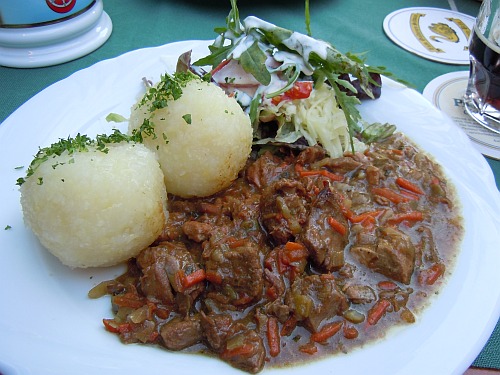
Germans adapted the basic Hungarian goulash recipe to their own tastes, producing the Gulaschsuppe (goulash soup) that is now so popular throughout Germany, where it’s traditionally served with a slice of rye bread and a mug of beer. Germans and Austrians also make a variety of thick, paprika-flavored meat stews called Gulasch, served on a plate and accompanied by boiled potatoes, egg noodles or dumplings. (The Hungarians, however, would call this kind of stew a pörkölt, not a goulash.) And Kesselgulasch (kettle goulash)—cooked outdoors in a pot suspended by an iron tripod over an open fire—is a Hungarian specialty that many Central Europeans now eat at their own backyard dinner parties and local festivals.
German “Beer Goulash” at brewery beer garden in Erfurt
As part of the former Austro-Hungarian Empire, the Austrians certainly love their own versions of Gulasch. There’s even a Cafe-Restaurant Gulaschmuseum in Vienna, where the menu lists more than a dozen varieties of goulash, including turkey or chicken-liver goulash with potatoes, bean goulash with paprika-seasoned sausage, veal goulash with little spinach dumplings, and even a dessert called Schokogulasch (chocolate goulash) containing cake, chocolate sauce and rum. In Prague I purchased a Czech cookbook devoted entirely to the subject of goulash—including versions identified as German, Austrian, Slovakian, Slovenian, Serbian, Bulgarian, even Chinese and Mexican! And recently in New Mexico I came across a Cajun goulash. What a mixture of geography and culinary cultures! From its humble beginnings on the plains of Hungary more than a thousand years ago, this simple peasant food has now become a truly global dish.
GOULASH-SPEAK “Goulash” has also entered several languages as a word meaning more than just “a soup or stew.” In Hungary, “Goulash Communism” was a term for the Hungarians’ attempt in the late 1960s to create their own, more market-oriented, economic system distinct from the Soviet model. In Germany and Switzerland, a “goulash cannon” is military slang for a mobile field kitchen—a big, heavy, black, iron stewpot on wheels, with a cover on the top and a built-in firebox—which is also used for feeding crowds at festivals and other public events. And in the Czech Republic, political parties had a tradition of setting up their own “goulash cannons” in front of polling places at election time, where they dished out free goulash in a blatant attempt to influence voters’ choices on the ballot. As the Czechs said to each other when they headed to the polls to vote, “Have a good goulash!”