Bites of Brittany

This French province with a strong regional identity has Celtic traditions of food, music and language that make it unique.

The rugged rocky coast of Brittany at San Malo

By Sharon Hudgins
Photos by the author
A CONFUSION OF NAMES
No, it’s not Great Britain. It’s Brittany—a region in the far northwestern corner of France. It’s also the largest peninsula in France, with a 1,700-mile coastline bordering on the English Channel to the north, the Atlantic Ocean to the west and the Bay of Biscay to the south. The westernmost part of Brittany juts so far into the sea that it’s even called “Finistere”—the end of the earth.

Typical Breton village house.

When I was a kid in the U.S., I was confused by that geographic name. How could something called “Brittany” be in France? Later I moved to Europe and began eating my way through all the regions of France, where I learned that the French term for this region is “Bretagne.” The Bretons living there call it “Breizh” in their own Celtic language, which is related to Irish and Welsh. And they have a strong regional identity that makes Brittany very different from other parts of France—in customs, traditions, costumes, music, language and cuisine.

GIFTS FROM THE SEA
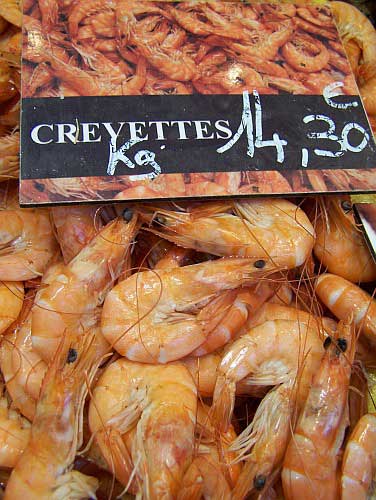
The traditional cooking of Brittany is rustic, hardy, elemental. Fresh, local, sustainable ingredients have been the foundation of Breton cuisine for centuries, long before those terms became buzzwords on trendy urban menus. Surrounded by the sea on three sides, Brittany is also a region where fish, shellfish and crustaceans are daily fare.

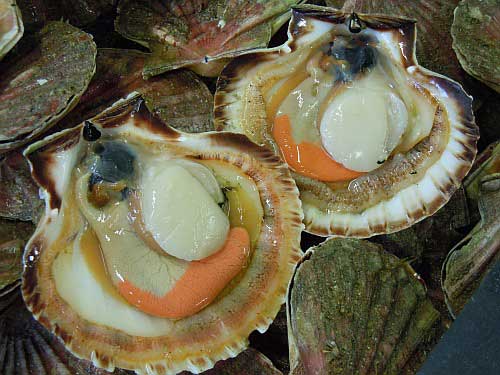
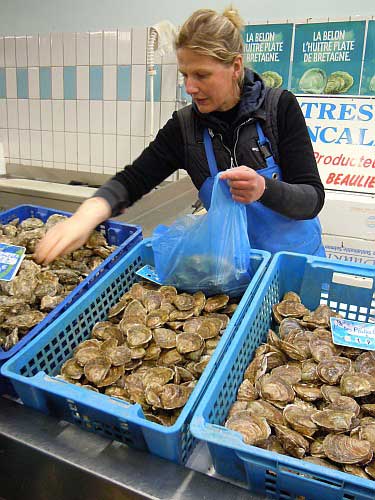
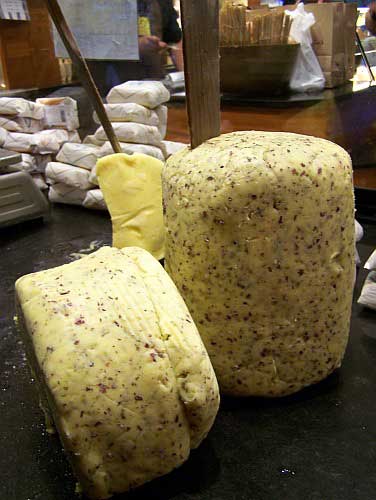
On my first trip to this part of France, I indulged in one of the glories of the Breton table, a plateau de fruits de mer—a huge serving platter heaped with fresh oysters, lobsters, clams, mussels, scallops, langoustines, prawns and periwinkles, all still in their shells and smelling of the sea. This massive meal for two was garnished simply with lemon slices and a bowl of mayonnaise (for dipping), along with slices of baguette and the best salted butter I’d ever tasted. A bottle of crisp white muscadet from the Loire-Atlantique wine region, which borders on Brittany, paired perfectly with the fine food. This classic seafood mélange is also a delightfully messy meal, eaten mostly with your fingers. But novice that I was, I had to watch the French couple at the next table to figure out how to use a straight pin (provided by the waitress) to pry out the flesh from those little periwinkles.

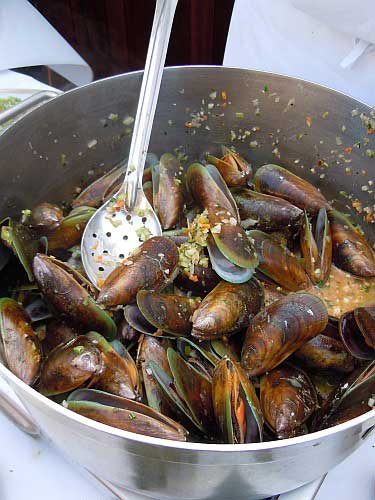
Another notable seafood dish is cotriade, originally a humble fishermen’s stew made with potatoes, onions, garlic, leeks and the catch-of-the-day, all boiled up in a pot of salty water. Modern cooks are likely to throw in some herbs and white wine, too. Whatever the variety of ingredients that find their way into the stew pot, cotriade combines all the characteristics of Breton cooking—freshness, simplicity, nourishment—in one delicious dish. And if you aren’t in the mood for fish stew, then try the local moules marinières, mussels steamed in their shells over a bit of white wine, cider or beer. Or ask for a big bowl of moule frites, steamed mussels with a side dish of perfectly cooked French fries.

CLASSIC REGIONAL SPECIALTIES
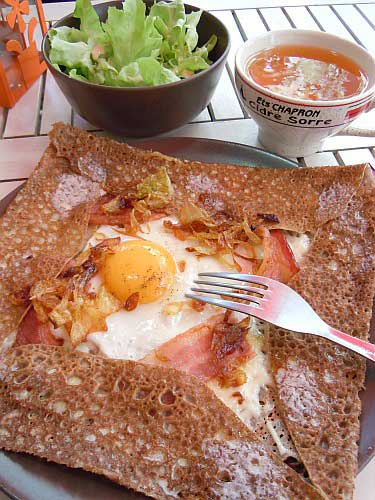
Crêpes and galettes are another favorite food in Brittany, sold at street stalls in every town, featured at festivals, and served in restaurants, some of which specialize in these big flat pancakes. Dainty crêpes are made from a thin batter of wheat flour, milk, and eggs, cooked on a large griddle. Usually sprinkled with sugar or slathered with jam, caramel spread, chocolate sauce or sweetened chestnut purée, the crêpes are then folded into quarters for serving. Galettes, which are slightly thicker, are made with a buckwheat-flour batter, cooked like crêpes on a griddle, and often garnished with sliced ham, fried eggs, shredded cheese, browned onions, or other savory ingredients. The classic drink with crêpes and galettes is a cup or ceramic bowl of cold Breton cider, the famous fermented apple juice of this region, in your choice of dry, semi-dry, or sweet.

Pork is a prime product in Brittany’s interior—cured into ham, stuffed into sausages—along with root vegetables grown on the rocky, windswept peninsula. Many of these go into the meat-and-vegetable stew known as kig ha farz (similar to French pot-au-feu), an old-fashioned rural dish. Buckwheat moistened with milk, meat bouillon, and lard is wrapped in a clean cloth and put into the pot to cook in the stew, to make a savory dumpling that’s later broken up with a fork and eaten with the meat, vegetables, and broth.

Nearer the sea, lambs that have grazed on the salt-marsh grasses are considered a delicacy, as are the artichokes, asparagus, strawberries and samphire that grow in the sandy soil. And along the coast, Brittany’s famous fleur de sel—mineral-rich, slightly gray, delicately flaky sea salt—is raked by hand off the top of shallow evaporation ponds flooded with sea water and left to dry in the sun and wind. Travelers to Brittany often return home with a big bag of fleur de sel purchased in one of the colorful open-air markets there.

SWEET FINISH
The Bretons have a sweet tooth, too. In every town, shops are filled with pretty tin boxes holding rich butter cookies and creamy caramels made with Brittany’s renowned butter and sea salt. An old farmhouse dish, also sold in pastry shops and restaurants, is far Breton, a simple custardy tart, made with an eggy batter poured over sliced apples, plums, or liquor-soaked prunes or raisins, then baked in a hot oven. And a gateau Breton is another simple (but simply delicious) flat cake, halfway between a shortbread and a pound cake, made with a large proportion of butter and sometimes ground almonds or hazelnuts, too.

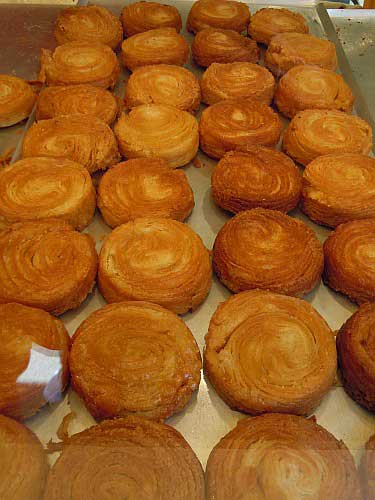
But the most famous Breton pastry is kouign-amann (pronounced queen-ah-MAHN), which just means “butter cake.” This classic Breton sweet is much like my great aunt’s irresistible cinnamon rolls—layers of yeast dough folded around plenty of butter, cinnamon and sugar, cut into large rounds, and pressed into muffin tins. But the Breton recipe differs from hers in leaving out the cinnamon, adding salt and going a step further to heavily butter and sugar those muffin tins. When the kouign-amann bakes, sugar syrup forms between the layers of dough, and a crunchy, chewy, caramelized shell forms on the outside. Tasting these warm, buttery, caramely rolls, fresh from the oven, is reason enough to travel to Brittany.

Learn the Delicious History of Chocolate

A variety of Belgian chocolates

By Danielle Pruger
Photos courtesy Giraffe Childcare and Early Learning

Europe is famous for its decadent chocolate and many countries are known for their tasty treats. However, chocolate was originally only enjoyed in Central America where cacao beans grew. The Olmec Indians were the first to harvest the cacao beans and 1,000 years later the Mayans were the first to bring the cacao tree from the rain forest onto plantations in modern day Mexico and Guatemala. It wasn’t until 1530 that chocolate was introduced to the European population by Hernan Cortes, who added cane sugar to “xocaltl,” a traditional chocolate drink, to make it more appealing to Spanish royalty and aristocracy. From there many new chocolate concoctions were created throughout Europe, such as Pralines and chocolate milk and many other treats we enjoy today. 

For more information visit the timeline created by Giraffe Childcare and Early Learning that covers more than 4,000 years of chocolate’s history: Chocolate History Timeline

Cacao beans

Christmas in Paris

By Sharon Hudgins
Photos by the author

Parisian bakeries sell many versions of the traditional Buche de Noel (Yule Log) Christmas cake.

Paris is a great city to visit any time of the year—for fine foods, outstanding museums, and romantic walks along the Seine in the pink glow that often suffuses the city at twilight.

Many tourists want to see Paris in the spring. Remember the song, “April in Paris”? Or the movie of that name, with Ray Bolger and Doris Day? And who could forget Gene Kelly dancing among the blossoms with Leslie Caron in An American in Paris? But did you know that Paris is also a wonderful place to spend the winter holidays?

WINTER ROMANCE
Paris in winter has something for everyone. Open-air and indoor Christmas markets throughout the city. Nativity scenes and sacred music concerts in historic churches. Menorahs and special Hanukkah foods in the Jewish delis and bakeries. Strings of sparkling lights across the grand boulevards. Outdoor ice-skating rinks decorated with Christmas trees. Children’s noses pressed against the glass of department store windows animated with fanciful displays. Cheerful families toting wrapped packages in the subway. Smiling vendors at the food stalls. Even friendly waiters in the restaurants.

More than a dozen colorful Christmas markets brighten up the city, some open for only a few days in December, others lasting six weeks or longer, from the start of Advent (the fourth Sunday before Christmas) through Epiphany (Three Kings Day on January 6). Some Christmas markets specialize in products from a particular part of France, such as Alsace, whereas others feature handmade crafts by local artisans. Paris’s newest food fair, Noël Gourmand, is also held in December, at the Carrousel du Louvre, a glitzy underground shopping mall in the heart of the city. There you can taste French regional products such as artisanal cheeses from the Basque region, wines from the Loire, meats from the Ardennes, and sweets from Provence. And no Christmas market anywhere in Paris would be complete without roasted chestnuts, chewy nougat, and hot spiced wine.

CHRISTMAS DINNER
If you want to enjoy a special meal at a restaurant on Christmas Eve, make reservations early. Many restaurants are closed on the evening of December 24, and even more are shut on Christmas Day. A fun alternative is to pick up some good wine, cheese, bread, and a traditional French Christmas cake, a bûche de Noël (Yule log), to take back to your hotel for a private holiday picnic in your room. Then head to one of the gorgeous gothic churches for a memorable midnight service by candlelight.

You can feast even more lavishly if you rent an apartment through Airbnb or one of the other agencies that offer apartments in Paris year round. Have fun (and save money) by purchasing foods and wines at little local grocery stores and big open-air markets, then bring them back to your apartment for a cozy dinner at home. Even if you don’t want to cook, you can buy excellent prepared foods such as pâtés, cheeses, rotisserie chickens, cooked seafood, Burgundy beef stew, Spanish paella, North African couscous, fresh breads, and luscious French pastries at the delis, department stores, bakeries, and pastry shops all over Paris. Wine shops will also recommend the best vintages to accompany your store-bought meal. And if you don’t feel like lugging all that food back to your apartment, some stores will even deliver groceries and wines free of charge or for a small fee.

RING IN THE NEW YEAR
New Year’s Eve on December 31 is the time to party at a restaurant, with friends and strangers, until the early hours of the morning. Many Parisian restaurants offer a special Réveillon dinner, a fixed-price, multi-course, New Year’s Eve meal with champagne. Some smaller places charge as little as €50 per person (with wine extra), or you can splurge at the high-end eateries for several hundred euros apiece. Wherever you choose to eat, reservations are a must.

On a recent New Year’s Eve, my husband and I celebrated at Restaurant Polidor, a relic of France’s culinary heritage. Polidor still serves the same kind of simple, old-fashioned, very affordable comfort food like you could find in little Paris bistros half a century ago. Nothing trendy or minimalist-modern here—just small wooden tables covered with red-and-white checked paper tablecloths, bentwood chairs set close together, dark wood wainscoting, big mirrors on the wall, and plenty of nostalgia atmosphere. Filmgoers will recognize Polidor as the place in Woody Allen’s film, Midnight in Paris, where Gil Pender meets Ernest Hemingway back in the 1920s. And indeed, Polidor has been feeding the famous and the not-so-famous ever since it was established in 1845.

If you’re a cat lover and missing your own felines when you’re away from home, you can even celebrate New Year’s Eve in the company of 16 rescue cats at the cozy Cafe des Chats Bastille, one of Paris’s two cat cafes, where the furry friends roam free among the tables. And wherever you choose to party, you don’t have to worry about drinking that extra glass of champagne and staying out really late. From 6 p.m. on New Year’s Eve until 5 a.m. the next day, the Paris subway runs continually overnight, and it’s even free of charge.

GIFTS OF THE MAGI
Finally, finish up your Parisian holiday with a special treat on January 6, Three Kings Day. In all the pastry shop windows you’ll see round, flat pastries with a gold paper crown on top. These are galettes des Rois, the traditional King’s Cakes of northern France. A small porcelain or plastic prize is baked inside the cake, which is made from layers of puff pastry often with a frangipane filling. Whoever gets the slice with the prize inside is crowned “king for a day.” At some Three Kings Day parties, the prize-winner also has to buy drinks for everyone around the table.

So let Paris wish you not only a bon appetit, but also a Joyeux Noël (Merry Christmas), a Bonne Année (Happy New Year), and a Bonne Fête des Rois (Happy Three Kings Day) on your next trip to France!

For more information:

Paris Christmas markets 2016

Noël Gourmand 2016

Restaurant Polidor

Le Cafe des Chats

Apartment rentals in Paris (Airbnb)

Apartment rentals in Paris

Experience Swiss-Style Lebkuchen (Gingerbread)

Photos courtesy Swiss Tourism

Swiss cuisine combines influences from France, Northern Italy, Germany and Austria. And specialities vary greatly from region to region closely aligned with the language borders. Many local specialities have become firm favorites throughout Switzerland.

ST. GALLER & APPENZELLER BIBER
St. Galler & Appenzeller Biber are two types of gingerbread with filling. One is from St. Gallen, the other from Appenzell. One is loaded with a hazelnut, the other with a white almond filling. But both are called “Biber” (beaver) or “Biberli” (little beaver) and have two layers of soft honey dough and one layer of yummy stuffing, so they might be totally different from the gingerbread you’ve had so far. No matter which one you try, they can be highly addictive.

BIBERLI WITH LEMONGRASS MARZIPAN
Preparation time: approx. 50 minutes. Cooling time: approx. 13 hours. Baking time per baking sheet: approx. 8 minutes. Yield: 50 Biberli cookies

FOR DOUGH
Mix in a bowl:
1 1/2 c. flour
1 teaspoon spice mix for Lebkuchen
zest of 1/2 lime

Heat:
1/4 cup honey
2/3 cup powdered sugar
1 teaspoon water

Add sugar to flour with:
1 tablespoon milk
1 teaspoon baker’s salt (baker’s salt is ammonium bicarbonate and is available at pharmacies)

Knead into a soft, smooth dough and let rest for 12 hours in the refrigerator

FOR LEMONGRASS MARZIPAN
Finely chop in a bowl:
2/3 cup peeled almonds
2–3 blades of Lemon grass (only the inside), cut in small pieces
1/4 cup white chocolate, broken up

Add and knead into a dense ball:
50 g Acacia honey
½ tablespoon lime juice

Shaping:
Roll the dough with a little flour into a square shape (about
8 x 8″). Halve the squares lengthwise. Moisten edges with water. Halve the marzipan. Form 2 rolls (each about 12″ long, by 3/4″ diameter). Place 1 roll on the long side of the dough, form into a roll, cover and store in a cool place for 1 hour. Form a second roll. Cut the rolls diagonally into 1″ wide trapeze-shaped pieces. Place the Biberli on a baking sheet lined with parchment paper. Glaze with heavy cream.

Baking:
Approx. 8 minutes in the center of the pre-heated oven, pre-heated to 400 degrees. Remove from oven and pull the parchment paper with the Biberli onto a wire cooling rack. Glaze once more with cream, let cool completely.

Storage:
Biberli can be stored for approx. 1 week in a tin with a close
fitting lid.

Alternate hazelnut-cinnamon filling:
2/3 cup hazelnuts, 1 teaspoon of cinnamon, 1/4 cup milk chocolate, broken into pieces; finely chop with a cutter. Add slightly less than 1/2 cup sweetened condensed milk and 1 tablespoon of water; knead until it forms a compact mass.

All This Country’s Culinary Delights Are There for the Eating…

By Don Heimburger
Photos by the author

Grabbing a “taste” of Germany today doesn’t mean just visiting its Medieval castles like Neuschwanstein or Wartburg Castle, or visiting its thousands of half-timbered buildings such as you’ll find in Wernigerode, Bamberg and Cochem, or being one of the millions who take pictures of the famous Cologne Cathedral.

A “taste” of Germany in 2018 takes on a special meaning: this year Germany’s National Tourist Board officially unlocks its treasure chest of culinary delights as part of its promotion of the country, and there are many appetizing foods to be enjoyed, and 16 federal states in which to enjoy them.

With eight straight years of record growth in tourism, Germany is primed for more tourists in the year ahead who can also appreciate this country’s flavorful foods. In 2017, a total of 83.9 million overnight stays by foreign visitors in establishments with at least 10 beds were recorded, according to Petra Hedorfer, chief executive officer of the German National Tourist Board (GNTB).

The German Tourist Board is trying to get travelers’ attention by saying “Attention foodies: Germany is now open for tasting.” And there are many towns and regions in which to conduct this culinary research, as well as numerous restaurants, wineries, breweries and farms that are eager to show visitors what Germany has to offer.

HANNOVER CURRYWURST
In Hannover you can stop in at an interesting restaurant called the Ständige Vertretung at Friedrichswall 10. The “StäV” as it is named, is not just any cafe, but a political reading book … where the history of political happenings and famous German politicians from past decades can be found on the walls and in photos. But go also for the famous “explosive” currywurst offerings. There’s the German Chancellor Filet “Schröder Art,” the Bundestag Filet, and the Chancellor Tarte, all part of the currywurst menu. All come with spicy sauce.

THE ARISTOCRAT OF VEGETABLES
At Fritz Bormann’s 25-acre asparagus farm near Nienburg in Lower Saxony northeast of Hannover, vast fields of white asparagus (Spargel) covered by large plastic tarps, sit waiting for harvest. In early spring, workers pour into the fine sand-like fields, armed with long, sharp cutting tools and a bucket to pluck the revered savory asparagus stalks from underneath the heaped mounds of dirt.

The “white gold” is then cleaned, graded and quickly delivered to farmstands and markets where it is snapped up by eager eaters. Combined with a hollandaise sauce or hot melted butter, and perhaps a plate of potatoes and pork or ham, the pale, long-stemmed vegetables are a nationwide sensation.

Germany sets aside about 62,000 acres for growing asparagus every year, and it’s estimated the country consumes up to 125,000 tons of it, but some of that is grown in other nearby countries. And nearly every restaurant in the asparagus-growing regions feature Spargel specials on their lunch and dinner menus. The picking season ends promptly on June 24 every year.

If you’re lucky, you can even meet one of the local Spargel queens, like the 2017/2018 queen, Nicole Cybin from Nienburg, or visit the local asparagus museum, part of which is housed in an original 1663 building. The museum displays, among other things, old tools which were once used for harvesting asparagus, dishes and serving plates with asparagus themes painted on them and even molds in the shape of a bunch of asparagus.

ASPARAGUS ROUTE
There’s even an Asparagus Route (Spargelstrasse) which begins in the town of Schwetzingen (it also claims the title of “Asparagus Capital of the World”). When you walk through the city, look for the statue of the Spargelfrau (literally means asparagus woman). The town holds an annual Spargelfest and in 2018 celebrates 350 years as a major Spargel grower.

While you are in Nienburg, be sure to stroll around this fascinating 1,000-year-old village and find the 16th century half-timbered Rathaus built in 1533, as well as the same period St. Martins Church. There are also medieval mansions, other carefully restored half-timbered homes, and a large town center with wide streets. The castle and town of Nienburg were once the residence of the Counts of Hoya, and their tombs can be found in St. Martins Church.

You can also visit the Dobberschuetz Fishery & Smokehouse alongside the banks of the Weser River which flows through the town and get the catch of the day. Eels are their speciality. Get there on a Saturday and enjoy their Saturday fisherman breakfast.

No sleepy little village, Nienberg today has as many as 100 trains a week stop there.

OTHER GERMAN CULINERY DELIGHTS
At the sprawling Rotkäppchen winery in Freyburg, Sekt or sparkling wine is produced, with brothers Moritz and Julius Kloss and a friend establishing a wine store and producing Rotkäppchen champagne as early as 1856. The first 6,000 bottles were bottled in an apartment in the back of the house of the Kloss family.

In the large historic Rotkäppchen building in Freyburg, select grapes are used to make various cuvees, and the brand today is the most successful in Germany, and also holds a 30% international market share. This Sekt takes its name from the unique red cap on its bottles.

Every year the company sponsors a Jungweinprobe, where last years wines are sampled in the courtyard of the Rotkäppchen winery. It’s always a popular and crowded affair with everyone allowed to pour their own glass of wine from a staggering selection. Here, too, you can meet the local Wine Queen, and ask her which cuvees she prefers. In 2017/2018 the reigning queen was Juliana Beer, 22. Not just a queen in name only, she enjoys the aged wines, and can explain the nuances of wine growing and wine-making.

The Rotkäppchen winery boasts one of the largest storage barrels in Germany (from 1856) which can hold 160,000 bottles of wine. And you can also enjoy a great German meal as you sit near the giant wooden barrel and try to figure out how they made such an elaborate wooden vessel.

WEINGUT PAWIS IS A STANDOUT
Also in Freyburg, Weingut Pawis is a standout winery housed in a renovated stone building. As a 10-year-old boy, Bernard Pawis didn’t have much luck with a hoe in his father’s vineyard. But when he learned the wine profession in Radebeul years later, he was on his way to gaining national recognition with his wine production.

Taking over from his father in 1998, he constructed a new wine cellar and later rebuilt an old horse stable into a modern, welcoming and innovative winery with 30 acres of vineyards.

The family produces a number of wine varieties, including Müller-Thurgau, Silvaner, Riesling, Bacchus, Kerner, Pinot Blanc and Pinot Gris, Portuguese, Dornfelder, Pinot Noir and Regent.

Their unique operating philosophy includes sustainable economics, conscious handling of nature, respecting the soil and the vine as their most important commodity, and they work according to environmentally friendly cultivation methods.

The innovative Pawises offer wine tastings, art exhibitions, guided vineyard tours, champagne receptions, a Christmas market, and even a lookout tower on the historic estate.

BLUEBERRY HEAVEN
At Bickbeernhof, you’ll find just about every conceivable way to serve blueberries that you can think of. Owner Sylke Herse has already done the planting, growing, and the packaging for you, and draws upwards of 1,000 visitors a day to her blueberry world in Landesbergen. “Very busy, very organized. Long wait lines at peak times, but worth it. Big juicy blueberries. Every year a must!” are the typical comments from customers.

Blueberry fields are located right behind the processing plant and company store, and there is a wide variety of blueberry-made products offered in the gift shop including blueberry wines, jams, juices, books about blueberries and much more. In their restaurant, customers can order salads with blueberry dressing, blueberry marmalade blueberry pudding, blueberry smoothies and many other blueberry delicacies.

BORN FAMILY VINEYARD
Motorcycle-riding Jochen Born and the small Born Family Weingut in Höhnstedt, located near the famous Luther Walking Trail, produces a variety of wines from its mostly “vertical” vineyards lining the slopes of the area hills. The hills around Höhnstedt contain a lot of limestone, and help from the sun, the wind and the rain make it an ideal place to grow grapes. Jochen is an amicable host and willing to tell his guests about the intricacies of his wine brands and its production in his compact and cozy tasting room adjacent to the wine gift shop.

SCHLOSS WACKENBARTH
Schloss Wackenbarth in Radebeul, is a well-situated, picturesque winery, and one of the oldest sparkling wine producers in Europe. On the well-manicured grounds is a Mediterranean-style palace erected by Augustus the Strong. Since the 18th century Schloss Wackerbarth has attracted hundreds of thousands of visitors because of the charming setting, and of course the delicious wines.

Tours through the winery and grounds are conducted, and many social events, including weddings and banquets, take place on the grounds each year. Interestingly, the federal state of Saxony owns the winery. The winery calls itself an ambassador for the state of Saxony, and indeed it has the stature and appeal of something regal.

While every year Germany is certain to attract millions of visitors for its culture, history, sights and its uniqueness, 2018 calls out for a visit for all of the above, and especially its many and varied succulent, edible delights.
Guten appetit!

For more information go to www.germany.travel.com or www.germany.travel/culinary-germany