Ireland’s Friendly People and Pubs Beckon

And grand castles, happy sheep and catchy music aplenty
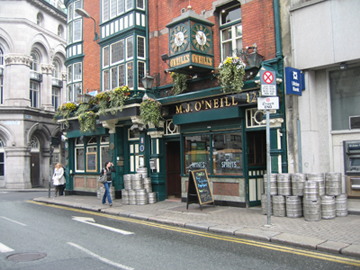
Pub in Temple Bar, Dublin

By Don Heimburger
Photos by the author

The Emerald Isle is inviting to first-time European visitors for several good reasons.

  1. Because you’re not traveling to continental Europe, the flight time is from 1-1 ½ hours less from the United States. It’s 3,614 miles between Chicago and Dublin, or 3,187 miles between New York and Dublin. From Chicago to Dusseldorf on the mainland it’s 4,217 miles.
  2. The time zone in Ireland is an hour closer to U.S. time zones.
  3. You needn’t speak a foreign language.

These are a few reasons you may want to place Ireland at the top of your “must visit” list, but there are many other incentives, as well. As many as 40 million Americans claim to have Irish blood―that’s 10 times more than the population of Ireland itself.

How do most visitors get there? You could take a cruise ship across the Atlantic, but most people are in a hurry and fly, and that means American, U.S. Airways, Delta, Continental or Aer Lingus (which sometimes has some really low fares, especially in early spring).

DUBLIN’S ATTRACTIONS
Since you’re probably flying into Dublin, where most visitors begin their adventure, you’ll want to spend at least a day there. In fact, I’d recommend two or three days, because there is a lot to discover. Think of St. Stephen’s Green as a center point for your activities. This lush, quiet Victorian garden is located in the main part of the city, yet it is a refuge from the hustle and bustle, and you can always come back to it for solace and relaxation. With ponds, picnicking, wildlife and a playground for kids, it makes an ideal meeting point as well. In the summer, lunch time concerts are given here.

Fanning out from the Green are the National Museum of Archaeology and the National Museum of Natural History. At the first museum, you’ll be transported back to 7,000 B.C. You’ll see examples of Celtic and Medieval art such as the famous Ardagh Chalice, the Tar Brooch and the Derrynaflan Hoard, another old historic chalice. Ireland’s foremost treasure, the Ardagh Chalice, is considered the jewel in the crown of all exhibits there. The beautifully proportioned chalice is the finest example of eighth century metalwork ever to have been found. Standing six inches high, it is made of silver, bronze and gold; the design and decoration indicates technical proficiency of the highest order.

Heading down Nassau Street, you come to Trinity College, the oldest university in Ireland and situated on 40 acres in the heart of the city. Besides strolling the sidewalks around here where you’ll feel like a college student again, you’ll want to see the Book of Kells, a 9th century Gospel manuscript created by Celtic monks. Its lavishly decorated pages in Latin of the four Gospels is a masterpiece of calligraphy and represents the ultimate in Insular illumination. It is definitely worth the trip to see, as is the Long Room of books (215 feet long), which contains more than 200,000 of Trinity’s most ancient volumes. Interestingly, in 1860 the roof of the building was raised higher to accommodate more books. The Long Room is an impressive site, with 14 marble busts commissioned by sculptor Peter Scheemakers lining both sides of the gallery.
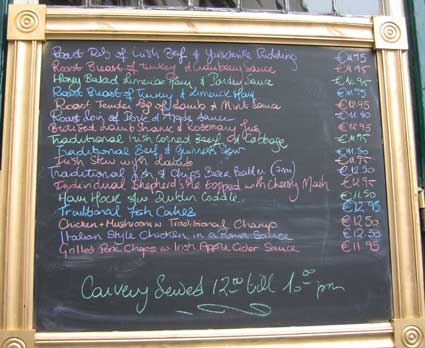
TEMPLE BAR AWAITS YOU
On the other side of Trinity and bordered by the River Liffey, is the Temple Bar section of the city, where nightlife is abundant. Bar after bar is crowded into the narrow cobblestone streets here, and more than 50 contemporary art and cultural galleries and studios in this section of the city make up a part of what is called “Dublin’s Cultural Quarter.” On weekends, open markets are held in Meeting House Square nearby as well.

On Grafton Street, the main shopping area, you’ll find Molly Malone’s statue where you can have your picture taken to send back to friends and relatives. Molly was a legendary figure, celebrated in the song Cockles and Mussels, a Dublin anthem. Molly Malone is one of the more famous people from Dublin’s past, but whether she really existed is not known.

She’s certainly one of the strangest icons ever officially commemorated by a city government. The statue, erected in 1987, depicts a woman in 17th century dress that shows abundant cleavage. Molly allegedly sold fish by day and sold her body by night. Though she lived in the 1600’s, the song Cockles and Mussels about her does not appear in any historic record before the 1880’s. The familiar lyric goes:

In Dublin’s fair city
where the girls are so pretty
I first set my eyes on sweet Molly Malone
As she wheeled her wheelbarrow
Through streets broad and narrow
Crying, “Cockles and mussels, alive alive oh!”

CITY BREWS
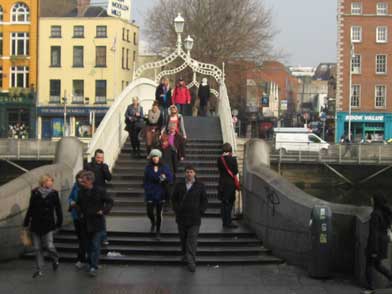
Ha’Penny Bridge is Dublin’s oldest pedestrian bridge. Erected in 1816, a toll of half a penny was levied on all users of the bridge until 1919. You’ll also want to see the Guinness Storehouse when visiting and take a tour, and then enjoy a fresh glass of Guinness in the Gravity Bar afterward. Cost is €13.50. The Storehouse is located in a section of town called the Liberties, which lay outside the city walls in earlier times.

In the Smithfield Village area, across the Liffey, is the Old 1780 Jameson Distillery, once considered one of the largest and finest distilleries in the world. You will discover the time-honored secret of how three simple ingredients―water, barley and yeast―combine to make whiskey. And you can end your tour with whiskey tasting in the Jameson Bar. The distillery tour is open seven days a week, and if you’re really into it, you can request a tutored whiskey tasting.

FAMOUS DUBLIN WRITERS
The Dublin Writer’s Museum, which opened in 1991 and is located in an 18th century mansion, offers visitors a fascinating view of famous Irish writers such as Oscar Wilde, James Joyce, Jonathan Swift and George Bernard Shaw. It’s a small but interesting museum that tells the background of these famous people.James Joyce, the author of Ulysses, has his own museum in Joyce Tower at No. 35 North Great George’s Street. The house was built in 1784 for Valentine Brown, the Earl of Kenmare, and is decorated with plasterwork by Michael Stapleton. Restored in the 1980s, the house opened as the James Joyce Center in 1996, and is run by members of Joyce’s sister’s family.

St. Patrick’s Cathedral on Patrick Street is an important Dublin landmark, with writer and satirist Jonathan Swift its Dean between 1713-1747. In 1742, the first performance of Handel’s Messiah was performed here by the combined choirs of St. Patrick’s and Christ Church, just a block away. (Christ Church is the oldest building in Dublin, dating from c. 1030. Inside are rare artifacts, examples of early gold and silverware, and historic manuscripts.)

CAD E’ AN SCE’AL? (WHAT’S GOING ON?)
Many other sights are waiting for the European traveler as well in this city of about 1.5 million. You’ll find the natives very friendly and accommodating. Getting around Old Town Dublin is easy: walking is your best bet.

Maps are available that detail the highlights of the city; the Dublin tourism office is located just past Grafton Street on Suffolk Street where you can pick up free information leaflets and get personal advice on things to do, places to visit and to eat. The tourist office staff speaks seven languages, including English, French, German, Irish, Italian, Polish and Spanish. There are also sightseeing tour buses that will take you around the city. For more information, go to visitdublin.com.
Also, the Dublin tram system, called LUAS, is a state-of-the-art light rail system operating on a Green and a Red line. If you stay close to the Old Town, however, the tram won’t be needed. The Green Line starts at St. Stephen’s Green, and a downtown Red Line stop is at Abbey Street.

The Dublin Pass is a cost-saving card will allows you access to more than 30 of Dublin’s top attractions and more. Go to dublinpass.ie for information.

For those who want a five-star hotel experience, the Shelbourne, a Renaissance hotel, is conveniently located on St. Stephen’s Green, and lives up to its reputation. It’s located just a few steps from Dublin’s sights and shops. Founded in 1824, the Irish constitution was drafted here; the hotel retains its original charm and is an oasis in the midst of the city’s clamor. The hotel features a total of 265 rooms, including seven for the physically challenged.

SOUTH COAST ATTRACTIONS
There are many areas of Ireland that appeal to visitors. But with Dublin as a starting point, let’s drop down the southeast coast to do more exploring.

If you’re driving, you’ll want to use N11, a major highway that runs along the coast to Wexford. Roads in Ireland are fairly narrow, so be aware of this: it can be a daunting experience. This is where a trained bus driver on a group tour comes in handy.

Glendalough, which translates into “the valley of the two lakes,” is about 90 minutes south of Dublin, and is a totally captivating spot. It contains ruins from a 6th century monastery, some of which remains today.

The short history of Glenalough is thus: St. Kevin was a descendent of one of the ruling families of Leinster. As a young boy he went to live at Glendalough, and founded a monastery there which continued to expand for 600 years, but was destroyed in 1398. In its prime, the land included churches, monastic cells and workshops, guesthouses, a health center, farm buildings and homes. Most of the buildings that survive date from the 10th through 12th centuries. The most famous is the pencil thin round tower which is 112 feet high with a base 52 feet in circumference. A cathedral, stone churches and decorated crosses also survive. Take your camera along, as Glenalough is excellent for snapping unique pictures, especially if it’s a bit foggy. A modern visitor’s center features an informative movie about the ruins and its history, and wandering paths in the surrounding valley offer more exploration.

POWERSCOURT HOUSE AND GARDENS
Situated in the picturesque mountains of Wicklow, Powerscourt is a large mansion once owned by powerful families such as the O’Tooles and the FitzGeralds, Earls of Kildare. In 1603, Powerscourt Castle and the surrounding lands were granted to Richard Wingfield, who was Marshal of Ireland (a royal officeholder). His descendants remained there for more than 350 years.

Later the castle was remodeled, creating a magnificent mansion around the shell of the former castle. Large formal gardens, a fish pond, cascading waterfalls, grottoes and terraces all form a striking approach to the mansion. The story is told that Daniel Robertson, a garden architect and a leading proponent of Italianate garden design, suffered from gout and directed his operations from a wheelbarrow, fortified by a bottle of good sherry. When the sherry was depleted, Robertson’s work ceased for the day!

Near the imposing castle is the five-star Ritz-Carlton, overlooking the wooded slopes of Sugar Loaf Mountain. Blending into the countryside, this 200-room, seven-story hotel is ritzy, with a warm Georgian-inspired interior. Afternoon tea, evening cocktails in the Sugar Loaf Lounge, the Gordon Ramsey signature restaurant and a complete Irish pub combine to make a stay here memorable. The hotel’s spa is also available to guests, which is on two floors and boasts a 65-foot long Swarovski crystal-lit swimming pool. There’s also a 36-hole championship golf course as part of the hotel complex.

DUNBRODY SHIP PROJECT
In 2011 the JFK Trust launched its replica of a 19th century three-masted sailing ship, the Dunbrody, that brought immigrants to America. This ship is on display in New Ross harbor; an audio-visual experience, guided tours and a convincing performance of costumed actors brings to life the long, difficult journeys made in the 19th century on this ship. A new visitor’s museum will be ready this year as well.

For a night’s rest in this area, check out the Dunbrody Country Hotel and Spa in Arthurstown. It’s a 1830s Georgian manor amid 300 acres of tranquil parklands, not far from Waterford. This four-star hotel, owned by hospitable Catherine and Kevin Dundon, offers 22 rooms. Master chef Kevin Dundon also has a cooking school here and designs one- and two-day cooking courses―there’s even a week-long master class. You’ll feel rejuvenated after a few days in this setting. www.dunbrodyhouse.com

Dunbrody Cookery School’s Edward Hayden

If you want to get up close and personal to the water and the Irish shoreline, here’s your chance. Hook Head Lighthouse in New Ross has been a guiding light for ships for more than 800 years. There’s a visitor’s center offering guided tours of the 13th century tower, a gift shop, cafe, art classes and picnic areas.

Glass blowers and artisans at the Waterford Crystal factory

At Waterford, a stop at the Waterford Crystal factory is a must. Since 1783, the company that George and William Penrose founded has been making stunning glass pieces with a distinctive, silvery white brilliance, which Waterford Crystal’s artists enhance with deeply-cut ornamentation. It’s said that in all of Ireland, no hands have been more patient, more meticulous, or more blessed with the elusive powers of art, than the hands of Waterford Crystal’s craftsmen. Drinkware, serving accessories and decorative crystal from the Waterford factory is still the customary gift for royalty and heads of state. It’s not inexpensive, but a factory tour will show you the secret of why this glass has been so highly prized for all these years.

LISMORE CASTLE GARDENS
Heading to Lismore, you can visit the beautiful Lismore Castle gardens and gallery. In the Burlington family for more than 400 years, this fairytale castle, originated in 1185, has seen many changes since. Because the Burlington family stills resides there (Lord and Lady Burlington), only the gardens and gallery are open for touring. The gardens are set on seven acres and provide spectacular views of the castle and the surrounding countryside. You might even see Lord or Lady Burlington on the grounds!

When you’re looking for a place to land for the night, you might try this hotel located next to the sea. The Cliff House has been described as a five-star cascading luxury hotel sewn into Ireland’s coastline, overlooking the small village of Ardmore. Thrown in for good measure is the House Restaurant (one Michelin star), serving both Irish and international cuisine This 39-bedroom jewel is tops for either a holiday (as the Irish call it), or it’s perfect as a hideaway to recoup. www.thecliffhousehotel.com

Kilkenny Castle

At Kilkenny Castle in Kilkenny, you can take a guided tour of this 12th century structure, originally built for William Marshall, the Earl of Pembroke. With many additions and changes over the centuries, this dark gray castle comprises many architectural styles, seen in the various ornate rooms. You’ll see the Drawing Room, Withdrawing Room (reserved for ladies after dinner), the Picture Galley Wing with a hammer-beam roof structure, the Library with silk damask curtains and the elegant Dining Room, among other rooms. Surprisingly, the Marquess of Ormonde sold the sprawling castle to the people of Kilkenny for the sum of €50 in 1967.

Afterward, stroll over to Kyteler’s Inn in downtown Kilkenny, and have lunch or supper in this fun, quaint restaurant, established in 1324. Look for the story of the original owner, Dame Alice le Kyteler, on the first floor.

FLYING BACK TO DUBLIN
On the way out of Ireland, reserve a room on the last evening at the four-star Barberstown Castle, a short 30-minute drive from the Dublin airport. Situated on 20 acres of flower gardens, this Irish country house has flourished for eight centuries, opening as a hotel in 1971. Its Victorian and Elizabethan extensions have been melded with the original castle battlement of 1288. Since then, Barbertown Castle has had 37 owners, one of them Eric Clapton. The 59-room hotel is now owned by Kenneth Healy, who lives on the property and who purchased it from Clapton (the names of all 37 owners are painted on the exterior doors of the rooms―Clapton’s room is #61).

We’ve just covered Dublin and the south coast of Ireland. There’s more―much more―to see on the the Emerald Isle, but that will have to wait until another time.

CEAD MILE FAILTE (A HUNDRED THOUSAND WELCOMES)
Ireland is welcoming and a friendly place, with old-world charm and more castles than you’d believe possible. The Guinness isn’t too bad, either.

For more information, go to www.discoverireland.com.

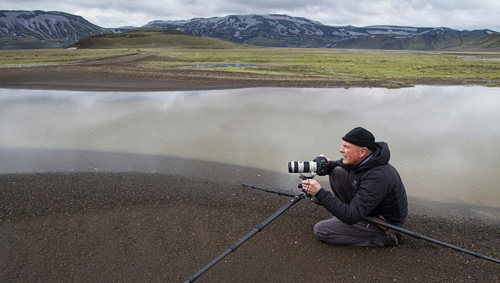
Meet Art Wolfe

I’ve always been enthusiastic about the work I do.

Art Wolfe

ET: Of the many European countries, which country or countries do you like to photograph the most – and why?

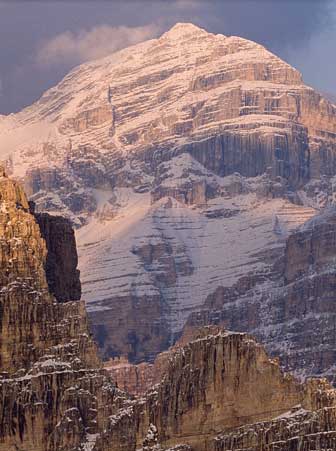
AW: I’ve traveled to Europe a number of times over the years. In fact, my first overseas trip was to England, and 28 days later I wound up in Greece. It was very early on, and one could argue I wasn’t much of a photographer, although I thought I was at the time. Italy definitely has been one of my favorite places to go, not only for the antiquity but for the stunning scenery: the craggy Dolomites in the north, and the south’s rumbling volcanoes of Mt. Etna and Stromboli. These have yielded great opportunities and photographs over the years; I love Italy!

Equally strong for me has been France; photographing in the French Alps, in and around the Rhone River delta and up into Provence has resulted in some of my most delightful photos over the years. Iceland surely is not to be missed―its young landscape is different every time I visit.

There are huge gaps in my coverage of Europe; I dream of the day I can travel through Spain. My long-time photo assistant is from Romania, though I have yet to get to central and eastern Europe. All these places draw my attention, and it’s just a matter of time before I get there.

ET: If you were to recommend to someone to photograph the European landscape, where would you “send” them and why?

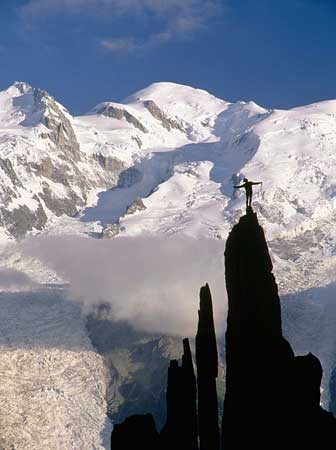
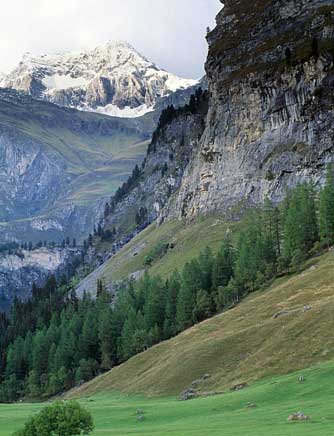
AW: Certainly it’s hard to beat the Alps, both French and Swiss. One of the striking things about the Alps is their verticality; they are very accessible initially but many of the peaks are among the most difficult peaks to climb on earth. One of my best locations has been Lac Blanc just above the ski town of Chamonix, France. I can’t overstate how stunningly beautiful Lac Blanc is as it reflects the extraordinary Chamonix Needles and Mont Blanc rising beyond.

I just love the Italian landscape, too. I love the whimsical ways the Italian farmers in Tuscany and Umbria have separated their fields by rows of cypress and pine. In addition, the rural landscapes of northern Scotland and the Isle of Skye are quite simply stunning; I have been there in the spring, when the forests around the icy, deep lochs are green and studded with bluebells. It is quite enchanting.

ET: Can you remember the first time you realized that maybe you were an “above average” photographer? How did your parents’ commercial artist business help you in your life’s work?

AW: My background initially was drawing and painting from early childhood all the way through graduating from the University of Washington, earning a degree in Fine Arts and Art Education. As far as realizing I was an above average photographer, it’s hard for me to just state that unequivocally; I would address it by saying I always realized I had an above average drive and focus. I’m rapidly approaching year 60 in my life, and the drive has not diminished. I’ve always been enthusiastic about the work that I do and sharing it with others.

Very early on I knew that whatever I wanted to do I could do it. My parents were commercial artists, and I watched my dad run his own small business. It was ingrained in me that I could do this as well. Children very often follow in the footsteps of their parents. Thankfully, my parents allowed me to pursue whatever I wanted. They had nothing but encouragement toward the arts, and in retrospect that was a blessing.

ET: You always seem to have so much fun and enthusiasm when you are photographing. Can you explain how this is?

AW: I think fun and enthusiasm is part and parcel to anyone’s occupation or passion. It’s rare in life for people to truly find their passion, especially when it’s their occupation. I feel blessed. I feel that I was destined to be a storyteller through the photographic medium, and I don’t take that lightly.

I sacrifice a lot being a photographer; I don’t have a family, I don’t have vacations, I don’t have a lot of things that people take for granted. But what I do have is a highly refined passion that gives me a deep sense of fulfillment. I can’t help but be enthusiastic and can’t help but having fun. I have a very impish sense of humor, a very free spirit about the work that I do and that just transfers to my photos. My enthusiasm is infectious; I am able to photograph people without trepidation. I have a very light spirit when I’m working around wild animals, I don’t stress about them, and they pick up on that energy so it’s a very positive experience. I wholly believe it enables me to get close to my subjects.

ET: Bad weather conditions typically thwart photography efforts. What do you think?

AW: My belief is bad weather often makes a shot. Whether it’s high winds, blowing snow or soaking rain, I get out there as long as I can protect myself and my camera. Weather makes for painterly effects: wind can be transferred into long impressionistic exposures where that sense of contrast between blurred motion and sharp focus subjects is often the difference between a mediocre photo and a great photo. So I look at bad weather conditions as the time to bundle up and get out the door!

ET: What is your advice for someone wanting to become a better than average photographer? What does it take to do this?

AW: No restraints! Just do it! There is an amazing amount of education being offered free through the internet. And some of the world’s best photographers offer amazing trips and workshops. I’d take advantage of that. Just jump in and immerse yourself into the world of photography and you will learn quickly.

ET: How do you determine where to go when you’re going to film your next show and how long does it take to arrange each edition of your show?

AW: My location choices for “Art Wolfe’s Travels to the Edge” were based on 30 years of knowledge about the world. After months of research and arrangements, each episode took an average of two weeks to film. The post production process added another couple months. It is a long process to get from idea to actual broadcast.

ET: Where did the name “Travels to the Edge” come from? (It’s a great line!)

AW: “Travels to the Edge” is based on my book Edge of the Earth, Corner of the Sky. It seemed like I traveled to the edges of the earth to photograph for that book. For the show name, my staff and I threw out words and started mixing and matching and ultimately settled upon “Travels to the Edge.” I thank you for the compliment and I agree, it’s a great line!

Traditional Holland

By Don Heimburger

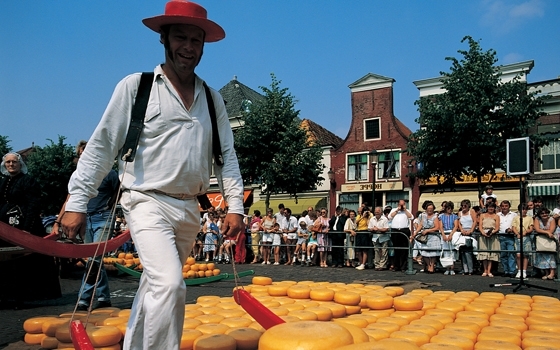
The Netherlands may be a small country, but it’s packed with world famous icons. Discover bulb fields, windmills, cheese markets, wooden shoes, the canals of Amsterdam, masterpieces of the Old Masters, Delft Blue earthenware, innovative water management and millions of bicycles. Find out more about these and other typical Dutch highlights. www.holland.com

Meet Rick Steves

European Traveler chats with travel guru Rick Steves

Why did you choose to start your company, Europe Through the Back Door, rather than do something else, or even work for a travel company?

I was inspired by being a customer of other teachers/tour guides to teach and guide in a way I thought was better. Taking a travel class poorly taught about taking the bus from Istanbul to Nepal showed me the frustration and lost opportunity of a traveler who had the experience but was too lazy and disorganized to share it effectively with his student travelers…So I became a travel teacher. Escorting big bus tours in the 1970s showed me the built-in conflicts of interest between guides and tour members as well as the potential value of a thoughtful and well-organized tour company…So I decided to develop my own formula for a tour company. From the start, I’ve enjoyed making my own rules and having fun with my business.


What one or two reasons do you point to as reasons you’ve been successful?

We have been true to our mission statement since before we had one…to inspire and teach American travelers to enjoy Europe economically, efficiently, and thoughtfully. Nothing I do in my business supports itself. Everything overlaps and is therefore a better value than normal — as well as profitable.


Do you have a personal and/or business philosophy you’d like to share?

Life if too short to drink cheap wine or work with people you don’t respect and enjoy.


Was there ever a time for whatever reason you thought about selling the business or doing something else? If so, what compelled you not to?

A long time ago at that difficult stage when I was transitioning from a single entrepreneurial teacher to someone with a paid staff it was challenging and I considered becoming a high school teacher. Then I realized I am a teacher…free as a bird with the best students anywhere…smart people who slept through their history and art classes before they knew they had a trip coming up. Now they’re Europe-bound and wish they knew who the Etruscans were. I haven’t looked back since.

I’d assume people underestimate how difficult it is to run a travel-related business — that it must be like being on vacation all the time. What is the biggest misperception about your work?

Nobody understands the reality from a footwork point of view of researching and writing good guidebooks.


How did you deal with the challenges of a growing company — I imagine at some point as the company has grown, you have had to relinquish some day-to-day control over some aspects. Was it difficult? How have you dealt with growing pains in the business?

I have learned to delegate. That was tough. Now I happily don’t know how to issue a Eurail pass. I honestly don’t know our store hours…that’s a good thing. I produce in my corner of the building. I am one of five on our “business team” which functions as what I think of as a “virtual ceo.”


What advice do you have for those who have to be on the road when they don’t necessarily want to be away from home and family?

Bring work or reading you enjoy to make the plane ride a blessing. Take a moment to homey up your hotel room (with your favorite munchies, photos of loved ones). Assuming you’re going someplace interesting, get out there and enjoy it. Be a temporary local. Sure you’ve got plenty of reasons to be homesick…but for now you live there. Immerse yourself in it all.


Where do you see yourself and your company in five, ten years?

Exactly where I am now only with much more teaching horsepower.


What are your company’s annual revenues? Can you give me a sense of how that has grown?

I think we’re pushing $30 million gross with 70 employees. While we’ve grown a lot, we are the same culture of travelers.

Any other advice for entrepreneurs or those thinking of starting their own business?

Don’t hire relatives.

York, UK: A Medieval City Ringed With Walls and Featuring Hidden Gems

By Don Heimburger
Photos by the author and courtesy York Tourism

While London plays a key role in tourism in the United Kingdom, there are other cities in the U.K. that, while perhaps not as large in size or offering as many attractions, still rank high on the thrill meter.

One of these is York, which is worth a couple of days to explore and get to know. It’s accessible from Manchester Airport, an international hub that sees hundreds of flights each day from around the world. By train from the airport, York is about an hour’s ride.

Let’s take a tour of the walled city of York.

“I was born in York and grew up there,” says actor Judi Dench, “so I have a great fondness for this remarkable city with its winding, cobbled streets and beautiful architecture.”

“The city has evolved over the years, with…a wealth of interesting shops and a vibrant cafe and evening culture,” she continues.

In the 18th century, York was seen by the monied class as an attractive alternative to London, and today many Georgian townhouses and buildings can be seen in the town because of this. At Fairfax House, for example, you can see what’s called the most distinguished 18th century townhouse in Britain.

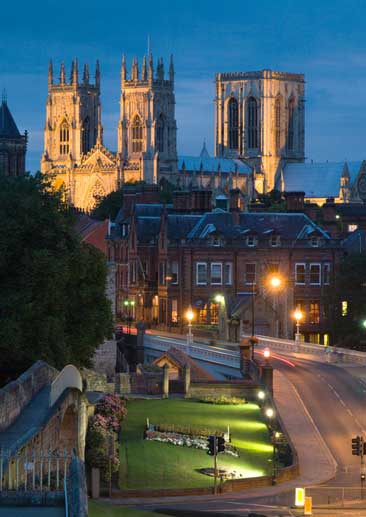
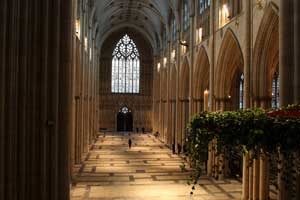
Likely the first thing to grab your attention in York is the Minster, renowned around the world as the largest medieval gothic cathedral in northern Europe. Taking 250 years to build, it dominates the city, with its central tower rising 200 feet skyward. “…That first glimpse of the magnificent Minster towering above the city will never cease to inspire and move me,” states Dench.

The cathedral, 500 feet in length and 100 feet wide, has the largest concentration of medieval stained glass in Britain. While there, you can also visit the undercroft, treasury and crypts. The church’s collections, open to the public, are a rich time capsule of the Minster’s history. The collection consists of silver, textiles, furnishings, monuments, stone and glass objects.

(left) Roman ruins underneath York’s business district

WALK THE WALLS
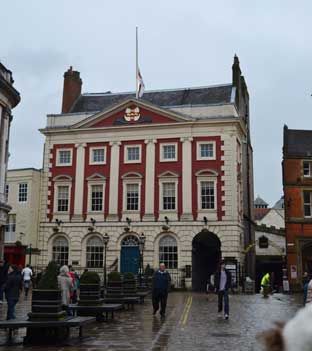
“Walking the walls” is a favorite thing for visitors to do. Since Roman times, these walls have helped defend the city, and now add interest as an attraction. Four main gatehouses, or bars—Monk, Bootham, Micklegate and Walmgate—were once used to extract tolls and act as defensive towers. There are a little more than two miles of walls around the city.

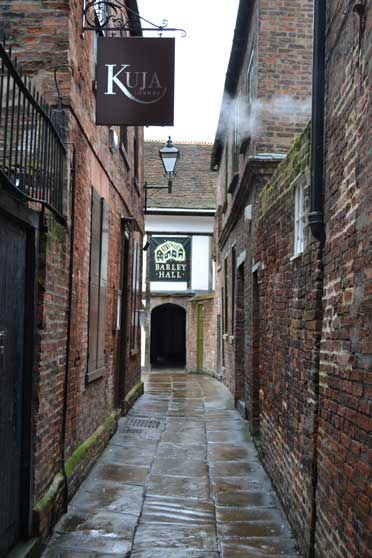
A odd thing about York are the snickelways and ginnels, or passages, some quite narrow and obscure. These short cuts conveniently connect sections of the town, and can save a lot of walking. After a day in York, I started using the snickelways like I was a resident.

The main shopping area is traffic-free, meaning the erratic streets are quiet and pleasant to stroll around, day and night. The medieval streets and buildings are beautifully preserved, especially 2,000-year-old Stonegate and Petergate streets, York’s main shopping arteries. These two streets were used by the Romans, leading to a massive Roman headquarters structure which is now occupied by the Minster.

SHAMBLES STREET
Visitors will enjoy reading the names of streets as they wind through the city. Mad Alice Lane, Grape Lane, Swinegate and Coffee Yard all can be found here, as can Shambles, a former street for butchers: you can still see the wide windowsills used by butchers to display their goods, and in some cases the meat hooks remain above the shop windows, as well.

If you like chocolate—and who doesn’t—York might surprise you. It’s been making the delicious treat now for 150 years, and was named Britain’s Home of Chocolate in 2012. It even has a Chocolate Trail that will take you into York’s Chocolate Story shop and museum, where you can mold and decorate your own chocolate bar, York’s Cocoa House where you can enjoy a cup of hot chocolate and Monk Bar Chocolatiers who hand make every blissful piece. Also, the York Kit Kat factory, one of the largest in the world, turns out six million chocolate bars every day.

The Treasurer’s House, which claims the most haunted cellar in York, is worth a visit to hear about royal visits, servant life and see four centuries of interiors and antiques. When the garden is open, you can also enjoy home-cooked meals here as well.

CLIFFORD’S TOWER
While most of York was the result of Roman and Viking construction, the original mound of Clifford’s Tower, with a timber structure at the top, was constructed by the Norman William the Conqueror in 1068 as a statement of his power over the region. The tower is 50 feet tall and 200 feet in diameter with four overlapping circles, resembling a four-leafed clover. The design pattern was unique in England and after being decimated by fire, wind and even water (the castle sunk into the moat causing the walls to crack in the 1350s) the castle’s jailer began demolishing the tower and selling the stone himself.

Clifford’s Tower

For those with a technical interest, the National Railway Museum near the railway station is a must, and it’s free. Here is the largest railway museum in the world, boasting a host of record-breakers and history makers, attracting 800,000 visitors annually.

National Railway Museum

It is home to a wide range of railway icons and literally millions of artifacts, from the opulent Royal trains to the record-breaking Mallard. Many of the museum’s collection of more than 300 locomotives and pieces of rolling stock are displayed in the Great Hall. Some of the featured pieces include the Flying Scotsman, famous for being the first steam engine to travel at 100 mph, and the collection of royal trains, including the royal carriages used by Queen Victoria to those used today by Queen Elizabeth II.

Permanent displays in the museum include “Palaces on Wheels.” Based in the Station Hall, this exhibition features royal saloons dating to the Victorian era, giving visitors a glimpse into the sumptuous bedrooms, dining rooms and day saloons that were palaces on wheels.

At York’s Art galley, you can view more than 600 years of British and European art, from 14th century Italian panels to 17th century Dutch masterpieces to Victorian narrative paintings.

Also, the Yorkshire Museum houses some of the finest collections of archaeological and geological treasures in Europe, from prehistoric to medieval times. You can also walk on a Roman mosaic floor or kneel at St. William’s medieval shrine while here. This museum features new, interactive galleries and audio-visual shows.

Yorkshire Museum objects

As the locals like to say, York has many “tucked-away” attractions, including museums, bars and restaurants, interesting shops, peculiar old signs, strange stone figures, gateways and medieval battlements.

York is a fun, history-filled city, with numerous attractions that will interest nearly every age group.

WHERE TO STAY IN YORK
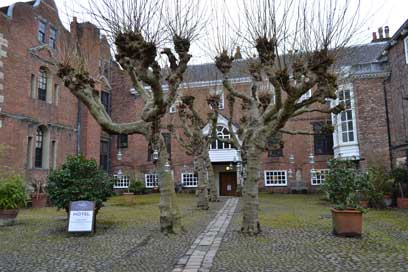
Grays Court in York near the Minster, is probably the oldest continuously occupied house in Britain, and as such, is a special place to stay, if you get the chance. It is built on the site of a Roman legionary fortress.

The staff is small and will likely remember your name after you’ve registered for the night. Grays Court is a family-owned and run country house with seven bedrooms, all filled with antique and contemporary furniture, and you’ll find the atmosphere around Grays Court quiet and friendly. A protected lawn and garden face the rear of the house, and the common areas invite you to wander throughout the house and get to know it.

Grays Court was once owned by the Duke of Somerset, Queen Jane Seymour’s brother, and was visited by King James 1st, James 2nd and the Duke of Cumberland. Sir Thomas Fairfax, Archbishop Robert Holgate and Archbishop Thomas Young have also lived here.

At one time the house was the original Treasurer’s House, commissioned by the first Norman Archbishop of York Minster, Thomas of Bayeux (1070-1100).

James I dined once at Grays Court with Edmond, Lord Sheffield, the Lord President of the North, and knighted eight nobleman in the house’s Long Gallery one evening.

Guests will find breakfast is served in a large open room with good views of the garden, and the wait staff is pleasant and accommodating. In the evening you can curl up on one of the large comfy sofas with a book and a glass of wine in the Long Gallery, or try the quiet Library to relax in.

Located on Chapter House Street, York. www.grayscourtyork.com.

For more information about the city of York, go to www.visityork.org.