Whether it’s your first time to Europe, a romantic vacation for two to Paris or a family trip to London, international travel can seem a little daunting. With proper planning, you can kick off your vacation on the right foot.
1. Educate yourself on the culture: It is important to be mindful of other cultures when travelling internationally. Be sure to study up on any common cultural mistakes that travelers make when entering the country you are visiting. This will safeguard you from making the same embarrassing and offensive mistakes.
2. Review rules on air travel and luggage: Save time (and stress) at the airport by checking the TSA website’s list of prohibited items. No one wants to start a trip having to repack their luggage at the airport or getting stuck in customs.
3. Make copies of important papers: most people know that proper documentation is needed for international travel, but how many people think to bring copies with them? Take the time before you leave to keep a copy of all your documentation in your email, just in case something happens. Have an unlocked mobile phone? Be sure to keep a copy on there too. (If you don’t, think about purchasing one.)
4. Check out the local forecast: in order to know what to pack, it is important to know the typical weather where you are going in the time frame you are going. You should also check the local weather a few days before you leave.
5. Purchase an unlocked cell phone: Stay connected with those at home by purchasing an unlocked mobile phone. Purchasing an unlocked GSM phone will allow you to access pay-as-you-go plans internationally, saving on roaming fees. This kind of connectivity can give you piece of mind in knowing, wherever you are, you are always connected.
If a short break is on your agenda for St. Valentine’s Day, perhaps you need a push from the man himself — St. Valentine. Wouldn’t you know it? The Irish actually have relics (some of the remains) of the patron saint of lovers.
You need to head to Dublin for this. The St. Valentine’s Shrine is in Whitefriar Carmelite Church, Aungier Street, a few minutes walk from Grafton Street, St. Stephen’s Green and the famous Temple Bar, the center of Dublin’s shopping, culture and craic in the Irish capital.
If you can, visit St. Valentine’s Shrine on February 14 itself—the saint’s actual feast day, and the origin of the annual celebration of love, although it’s still a place of pilgrimage for those celebrating love at any time.
You can do a lot in Dublin on a long weekend. In Europe’s friendliest city; you can talk to anyone. It’s said the city is as intimate as a pub. But it’s probably better not to over-prepare for Dublin, or anywhere in Ireland. Be ready to go with the flow, build in one or two key activities and expect the locals to throw a surprise or two your way.
Dublin hotels and restaurants will be pulling out the stops to create a traditional romantic atmosphere on Valentine’s night, so candle-lit dinners will be the norm. Flowers are no problem either— Smithfield Flower Market — and one Dublin temple to the art of all things— chocolate— is actually not far from St. Valentines’ Shrine. Chocolatier Cocoa Atelier on Drury Street oozes handmade Irish chocolate deliciousness.
Finally, the all-important card.The Emerald Isle’s charm is more along the style of literary son Sheridan: “Won’t you come into the garden? My roses should like to meet you.”
Ireland is a land that reaches deep into the heart, lifts spirits and stirs you to your very core.
An imprint of the global publishing giant Wiley, Frommer’s is one of the travel market’s leading authorities and most trusted online content and guide book producers. Every year its editors, authors and experts from around the world select the best cities, islands, beaches and other vacation destinations and decide on the destinations that are going to be big news for travelers in the coming year.
Its Top Destinations list aims to steer travelers clear of too-hot spots or places so under the radar that travelers could find themselves lost. The list also includes the Frommer’s Readers’ Favorite Destination.
“Last year’s favorite Paris was beat out this year by the very tourist-friendly nation of Ireland,” the company says. “During the nominations process, supporters told us why they were putting the Emerald Isle on their wish lists for the following year.”
Those reasons were comments praising Ireland’s rugged beauty, the people, the history, lush countryside and opportunities to ramble and explore.
Ireland received 29% of the overall vote from the 10 destinations up for nomination and pipped Paris in the readers’ vote for best destination by just 1%.
The other places up for nomination were Alaska, Hawaii, Australia, Egypt, Italy, Germany, New Zealand, Greece and Paris. More than 7,300 ballots were cast for the awards.
ET: Are there certain countries where an average tipping amount differs greatly from other countries? Can you point out the countries where tipping procedures are quite a bit different than other countries?
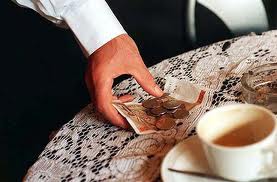
Tipping customs can be very different in other countries, so it’s important to do your homework and get to know the culture you’re visiting before you take off. In some countries, tipping is not expected for most services. In Italy, you’d tip the same as you would tip for a taxi in the States—about 15% to 20% of the fare. But in restaurants over there and in most of Europe, you’d leave a lot less for the waiter than you would here in the U.S. It’s customary to leave just the change from your bill or up to 5% of your pretax bill.
ET: In which country or countries do you believe that waiters, cab drivers, etc. expect the largest tip?
I’m not familiar with enough countries’ customs to say definitively, but the U.S. is pretty generous when it comes to tipping.
ET: Some countries include the tip in the bill. Can you point out which countries do this?
In the U.S., in certain instance, tips are included in the bill. Many hotels, for example, include a tip in the room service bill. And many cruise lines, including Carnival and Celebrity, automatically add daily tips onto your onboard account. You can opt to change the tips at the guest services desk onboard.
ET: Do you have any personal tipping instances or funny stories about tipping from other people that you would like share?
When I went on my honeymoon a few years ago, my husband and I really hadn’t prepared properly for all the little indulgences we were giving ourselves to celebrate. We ordered room service, poolside service, took surf lessons, did a horseback-riding tour, used valet parking when we rented a car one day, ordered show tickets through the concierge, etc.—and wound up overtipping almost everyone we encountered. We even tipped the maintenance guy who came to our room a few times to fix a clogged drain. I wish we had been more familiar with standard tipping policies then and had budgeted for all of it beforehand.
ET: Is there a difference in the amount that you would tip a cab driver versus a waiter?
In the U.S., it’s standard to tip a cab driver 15% to 20% of the fare and a waiter 15% to 20% of the pre-tax bill. You might also tip the driver extra for assistance with any luggage—$1 or $2 each bag.
ET: If you don’t like the service, should you tip at all?
Tipping is always at your discretion. These suggested amounts are just that—suggestions… that are in line with what people typically leave. But before you opt out of tipping, you should keep in mind that the people you are tipping count on those gratuities to make a livable wage. Also remember that a lot of people may be involved with providing your services. So, for example, if your food takes a long time to get to you in a restaurant, there may be a backup in the kitchen for some reason, which is totally out of the control of your waiter. So by not leaving a tip, you may be punishing someone who was not at fault.
ET: Many tip advice columns suggest tipping housekeeping but only 30% of guests do. This is one of the few instances where a guest tips before a service is given, rather than on the quality of a service. Housekeepers are also not front of the house nor a tip-based profession. Could you elaborate a bit on that advice?
Housekeepers are often overlooked because you don’t always see them performing their service like you do with a bellhop or concierge. But they do provide an important service, and many rely on tips to supplement their lower hourly wages. Of course, tipping is always at your discretion. Stories and advice such as mine are just meant as suggested amounts outlining standard protocol.
I’m not really sure how to respond to your point about tips being given prior to services being rendered. But it’s recommended that you leave a daily tip because housekeepers may change shifts, so you want to ensure that you’re tipping each person who tidies up your room. If you’d rather minimize your housekeeping tip, you should avoid receiving the services by putting out the Do Not Disturb sign and then just tip the morning you check out.
ET: What are some of the biggest tipping mistakes and how does tipping differ between cultures?
The biggest tipping mistake people make, I think, is just not thinking about it beforehand. You should be prepared to tip by budgeting it into your travel costs and getting to know the customs of the place you are visiting. Tipping standards vary greatly between different cultures. In Italy and much of Europe, the 15% to 20% tip you’d leave your waiter at a U.S. restaurant would be considered extravagant; it’s more common to leave just the change from your bill, up to 5%. So you could save some money just by getting to know the culture you are visiting better.
ET: What can travelers do to minimize feeling like a slot machine constantly spitting out dollars when traveling?
If you’d rather skip the tip, you can avoid services for which they are expected, such as the housekeeping example I gave above. Or you can pack lightly and plan to carry your own bags, avoiding assistance from bellhops, skycaps and drivers. Or you can opt to vacation to places where tips are included, such as at some all-inclusive resorts or aboard certain cruise lines.
ET: Is there additional information you’d like to share with our readers about tipping in general?
I’d just like to emphasize how important it is to budget for tipping. It’s part of the cost of services, whether it’s included automatically or not. So you should be prepared for it and make sure you can afford it without busting your budget. Stacy Rapacon, Kiplinger Channel Editor
Travel to Scotland can hardly get more luxurious than aboard the Royal Scotsman, the private train that takes its passengers through some of the most spectacular scenery in the British Isles.
In June 2009, join respected British gardening writer Sue Chivers and photographer Patsy Floyd on a memorable journey around some of Scotland’s finest country homes and gardens.
The Royal Scotsman departs from Edinburgh on June 5, and meanders north across the Forth Railway Bridge to Montrose and Edzell Castle. From there the train heads up the east coast to Aberdeen and the whiskey region. Day two takes travelers west towards Inverness, capital of the Highlands, passing through Dingwall before continuing north to Invergordon, where passengers disembark for a visit to Foulis Castle.
The train heads south on Day Three to Carrbridge, where travelers disembark for a visit to Logie House. This estate is privately-owned by Mr & Mrs Alastair Laing, who will conduct a tour of their home and gardens and discuss how they run their estate.
On Day Four, passengers disembark the train at Boat of Garten and take a motorcoach to Rothiemurchus Estate. This estate has been owned by the Grant family for almost 450 years. Philippa and Johnnie Grant, the 17th Laird of Rothiemurchus, invite passengers into their hunting lodge.
The next day the train returns to Edinburgh’s Waverly Station through the former Kingdom of Fife. Price for this rail journey is $7210 and includes all table d’hôte meals and accommodation on board based on two people sharing a twin compartment or one person in a single. Follow this link for more information or to order tickets.







 European Traveler