BASKING IN TASTE: Cuisine of the Basque Country

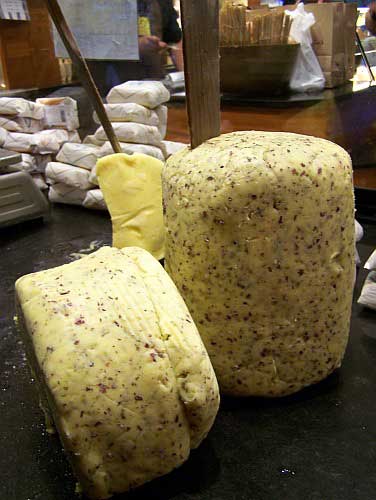
French Basque cheesemonger at the open-air market
in St.-Jean-de-Lu

A special region with a proud history, a distinct language and a unique cuisine

By Sharon Hudgins
Photos by the author

The Basque country of Europe is a region with a special ambiance all its own. Located in northern Spain and southwestern France, it’s a land of green meadows and high mountains, rugged coastlines and white beaches, wooded valleys and dry plains. Bordering on the Bay of Biscay, the Basque country straddles the Pyrenees Mountains and the coastal foothills along the frontier between France and Spain. It includes the Spanish provinces of Álava, Vizkaya, Gipuzkoa and, historically, parts of Navarra, as well as the western part of the French district of Pyrénées Atlantiques.

The Basques are proud of their regional identity and possess a spirit of independence that has often defined their history. An ancient people unrelated to other Europeans, they speak a unique language peppered with x’s, k’s and z’s. Theirs is also a land of contrasts, between rural and urban, past and present, rich and poor: the elegant boulevards of Biarritz and San Sebastián; the functional red-brick highrises and the soaring steel modernism of the Guggeheim Museum in Bilbao; the somber stone buildings of Vitoria and the picturesque fishing villages along the coast; the grimy industrial suburbs of major cities and the pastoral farmhouses of the interior, their walls, doors, and shutters painted white, red and green, the colors of the regional flag.

Passionate for politics and sports, the Basques are also very serious about food. Basque cuisine is famous on both sides of the border, and several Basque chefs have been among the leaders of Spain’s modernist cuisine movement. There are nearly 40 Michelin-starred restaurants in the French and Spanish Basque regions, with San Sebastián boasting a trio of restaurants awarded three Michelin stars (out of only seven 3-star restaurants in all of Spain). Known as the culinary capital of Spain, the city of San Sebastián has more Michelin stars per capita than anywhere else in the world.

The Basques like to cook, and they know how to eat well. Basque cooks of both sexes are renowned in Spain and abroad. Basque women are noted not only for the excellence of their home cooking, but also their success as restaurateurs. And Basque men, as accomplished restaurant chefs and members of local male gastronomic societies first organized in the nineteenth century, have been especially important in perpetuating and promoting Basque culinary traditions.

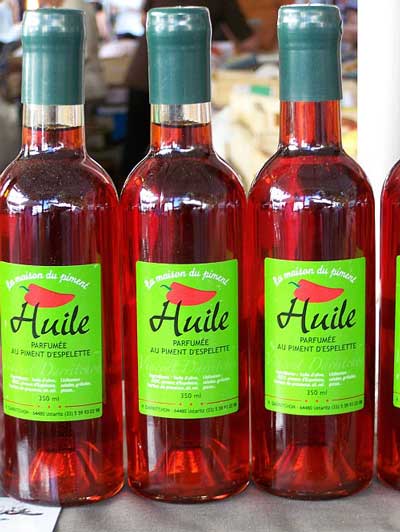
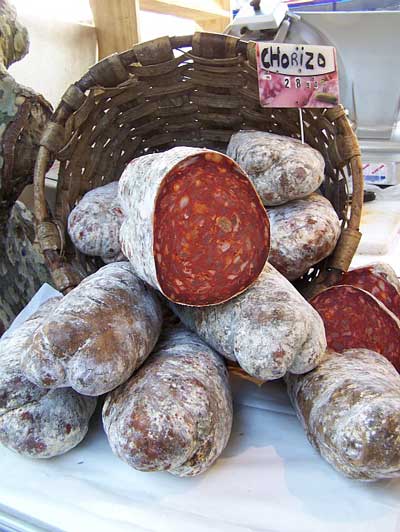
(left to right) Pork sausages flavored with paprika, in a Basque market; French Basque oil flavored with red peppers from Espelette

BASQUE FOOD PRODUCTS
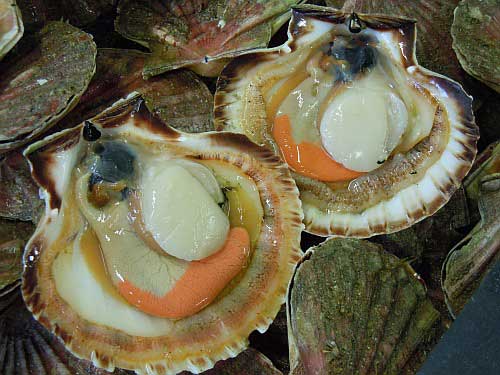
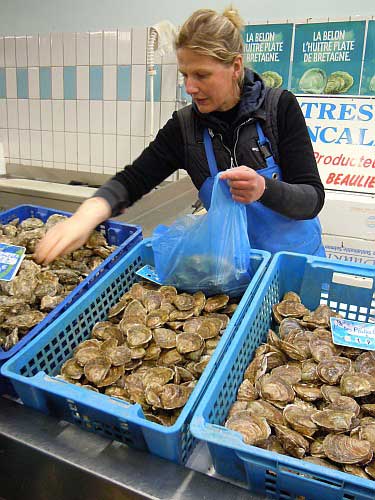
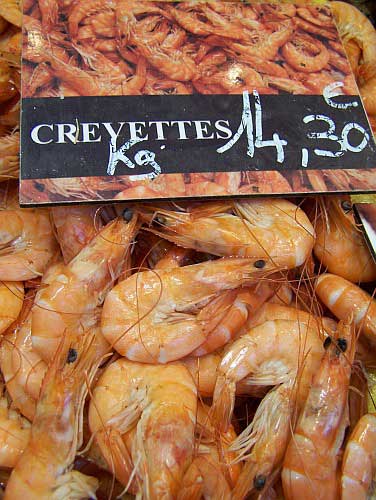
High quality ingredients form the basis of any notable cuisine. Fresh fish and shellfish are the mainstays of Basque cooking, caught in the Bay of Biscay and beyond, as well as in the mountain streams that flow to the sea: cod, hake, sardines, anchovies, herring, sole, sea bream, baby eels, tuna, bonito, bass, red mullet, octopus, squid, lobsters, crabs, clams, mussels, oysters, freshwater salmon and mountain trout.

The interior of the Basque country provides pork, beef, lamb and game, some of which is processed into cured meats like the famous the hams of Bayonne on the French side and the spicy sausages of the Spanish Basque land to the south. Basque dairy products are also of high quality, and the Basques use milk, butter and cream extensively in their cooking. Sheep’s milk goes into the production of several kinds of Basque cheeses made on both sides of the border, many of them matured in caves or huts high in the mountains. And the Basques are crazy about mushrooms. Every spring, summer and fall thousands of Basques head to the forests and meadows to pick the many varieties of wild mushrooms that suddenly pop up in secret places.

Market gardens grow the fresh produce so essential to many Basque regional dishes, including artichokes, asparagus, cabbages, leeks, onions and carrots. With the first Spanish voyages to the Western Hemisphere 500 years ago, tomatoes, potatoes, peppers, beans and cacao (later processed into chocolate) began returning in the holds of the ships and eventually became an important part of the Basque diet. Today several specific places in the Basque country are well known for the New World crops they grow: tomatoes in Deusto near Bilbao, potatoes in the province of Álava, many types of beans in Navarra and Gipuzkoa, and long green peppers from Gernika. Across the border in the French Basque country, paprika made from the bright red peppers grown around Espelette is the first and only spice in France to be awarded an AOC (controlled designation of origin) and APO (protected designation of origin) status.

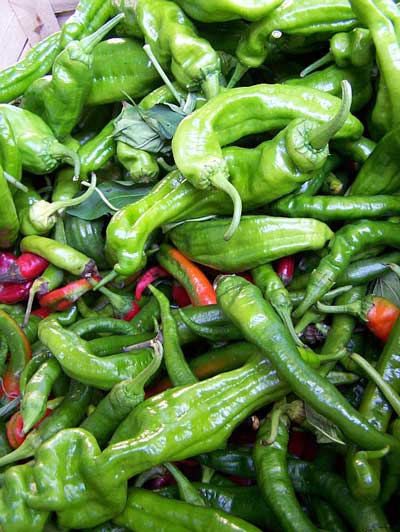
Mild sweet peppers are a popular ingredient in Basque cuisine; peppers are a popular culinary motif in the Basque Country

Spanish Basque meals are often accompanied by excellent red wines from the Alavesa area of the famous Rioja wine region. A different type of Basque wine made near the Spanish coast is txakolí, which is light, slightly effervescent, and fruity but dry. Although the Basques produce white, red and rosé versions of txakolí, the whites are considered the best of these simple table wines, especially good with the fish dishes of the region. Reds are the predominant wines produced on the northern foothills of the Pyrenees in the wine region of Irouléguy, which is the only AOC-certified wine area within the Basque country of France.

Basque sparkling cider is another popular drink on the Spanish side of the border, served not only at home and in restaurants but also at sidrerías, combination cider mills and eating houses where the cider is tapped fresh from the barrels and served as an accompaniment to simple country-style meals.

TRADITIONAL BASQUE DISHES
Fish and seafood dishes—grilled, baked, stewed, sautéed—are an important part of Basque cuisine. One of the most expensive dishes in Spain is the Basque dish of angulas, silvery-white baby eels (which cost up to 1,000 Euros per kilogram!) cooked in a small earthenware casserole containing very hot oil, a clove of garlic and a piece of dried red chile pepper. Much more reasonably priced are the rustic fish stews of this region, including classic marmitako, an oily-rich mélange of white-fleshed bonito and potatoes, usually cooked with tomatoes, garlic, and white wine in an iron pot. And although the Basques have an abundant and continuous supply of fresh fish from the sea, they also love bacalao, dried salt cod that has been split lengthwise, flattened out, heavily salted, and dried in the open air. Reconstituted in water before being prepared in innumerable ways, bacalao has been aptly described as mummified fish brought back to life by the cook.

In the Spanish Basque country, seafood is also paired with classic sauces whose colors reflect those of the Basque flag: red sauce (a la vizcaína, or Biscay-style) made with onions and dried sweet red peppers; green sauce (salsa verde) colored with parsley, peas, and asparagus; and a special kind of white sauce made by cooking the ingredients al pil-pil, in a shallow earthenware casserole set over a low flame, the casserole shaken, not stirred, until the gelatin released by the fish combines with the oil to produce a rich, unctuous sauce. The Basques also prepare baby squid in a thick, creamy, subtly flavored sauce tinted black by the squid’s own ink.

Another classic Basque dish is piparrada (Spanish) or piperade (French). Sweet red or green peppers, roasted and peeled, are sautéed in olive oil, butter, or lard, along with other ingredients such as tomatoes, garlic, onion, and ham. Often beaten eggs are swirled into this sauce just before serving, to make a kind of scrambled egg dish, or the sauce alone is served as an accompaniment to baked, grilled, or roasted meats.

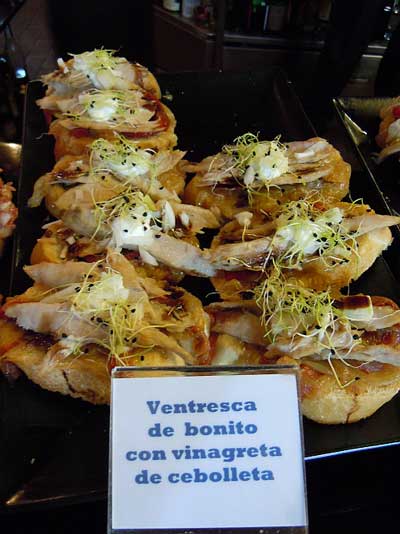
Pintxos are a particularly popular category of foods in northern Spain. The Basque version of Spanish tapas, these are bar snacks that range from traditional potato omelet slices, mayonnaise-bound potato salads, spicy sausages, and stuffed mussels, to more modern variations made from a thick slice of chewy white bread topped with two or three layers of tasty, colorful ingredients, all held together with a toothpick. Miniature masterpieces of the culinary art, these pretty little open-face sandwiches are enticingly displayed on the counter of each bar. No visit to the Spanish Basque country is complete without a poteo, a kind of civilized pub crawl, where you wander from one bar to the next, drinking a glass or two of local wine and tasting the designer pintxo specialties at each place.

But leave room for dessert. Traditional Spanish Basque specialties include leche frita (fried milk), thick custard squares dipped in beaten egg and flour, then fried until crisp; intzaursalsa, walnut cream soup made with crushed walnuts, toasted bread crumbs, milk, and sugar; mamiya, milk curds flavored with lemon and sugar; and colorful fruit compotes made with red wine and spices, such as zurracapote served on Christmas Eve. Spanish pastel vasco and French gateau basque are both classic Basque double-crust tarts filled with custard and sometimes jam. And if these old-fashioned desserts don’t appeal to your more modern palate, then spring for dinner at one of those Michelin-starred restaurants to taste (and marvel at) the futuristic sweets prepared by the Basque Country’s many highly acclaimed chefs.

For more information see:

www.foodsfromspain.com

www.spain.info/en/que-quieres/gastronomia/cocina-regional/pais_vasco/pais_vasco.html

www.travelandleisure.com/articles/exploring-frances-basque-country

Making Tracks to Dinner on the Diner

From tea in a British buffet car, to luxury dining on the Trans-Siberian Express, eating on trains can be a true culinary adventure.

By Sharon Hudgins
Photos by the author

I grew up riding trains across America just before the era of classic passenger service ended on the railroads and before Amtrak was a gleam in the government’s eye. Later I rode trains all over Europe from northern Scotland to central Italy, from the coast of France to the plains of Hungary. And in Russia I’ve logged nearly 40,000 miles on the legendary Trans-Siberian Railroad, crossing the continents of Europe and Asia between Moscow and Vladivostok several times.

That’s also a lot of dining on trains, snacking on railroad station platforms and eating at station buffets.

DINING ON BRITISH TRAINS
I remember riding first class on British Rail across England and Scotland many years ago, when smartly uniformed stewards served tea in your private train compartment, first spreading a starched white cloth on the little table under the window, then pouring the hot brown brew from a silver-plated teapot into a porcelain cup (with milk added first or last depending on where you stand on that contentious issue). A small plate of sweet biscuits (cookies, in American English) always accompanied the tea. What a civilized way to spend a morning or afternoon, sipping tea, nibbling on biscuits, and watching the British countryside roll by outside the window.

Morning coffee and afternoon tea were included in the price of the ticket. But like many travelers on trains all over the world, I often chose to save money on meals by purchasing food from station vendors to eat on the train. Once in a while, however, I’d splurge on a meal in the dining car, luxuriating in the “white-tablecloth service” and the selection of foods that were so different from those I’d eaten on American trains.

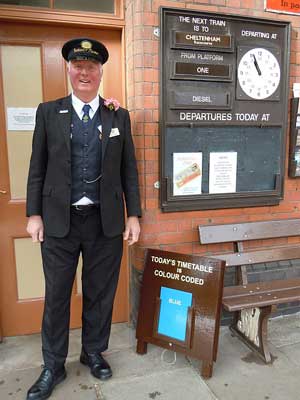
(left) Conductor on the Cheltenham Flyer, historic steam train of the Gloucestershire Warwickshire line of the British Great Western Railway.

Traditional English pork pie from the buffet aboard the Cheltenham Flyer

Alas, in 2011 contemporary trains in Britain did away with the last of their full-service dining cars, replacing them with airline-type meals served at the seats of first-class passengers and microwaved snacks sold in the buffet car for everyone else. But there’s hope for the future: In 2013 the First Great Western Railway re-introduced full-service “Pullman dining,” with fine wines and locally-sourced foods, on the UK’s only remaining regularly scheduled train with a real restaurant car. But, strangely, the dining services don’t operate on weekends or public holidays!

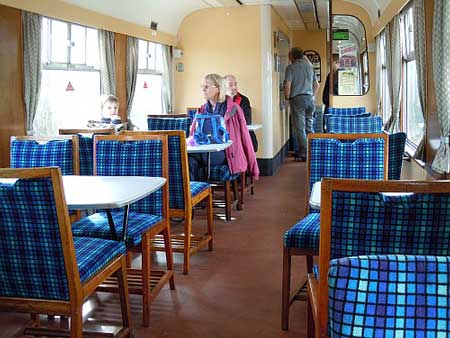
Restored 1950s-era buffet saloon car on the Cheltenham Flyer

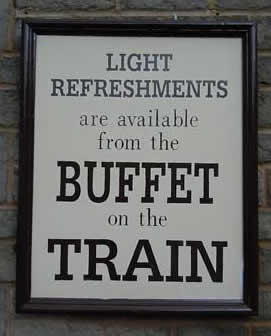
However, special tourist trains in Britain, including many historic trains, still provide a range of enjoyable culinary experiences. Recently I traveled through England’s lovely Cotswolds countryside on the historic Cheltenham Flyer, a 1930s-era steam train that chugs along the Gloucestershire Warwickshire branch of the Great Western Railway, which has been operating trains in western England since 1838. The train included a restored 1950s “buffet saloon car” whose menu offered Scotch eggs, pork pies, bacon rolls, homemade flapjacks and homemade cakes, along with a range of hot and cold drinks, alcoholic and non-. At certain times of the year, the historic trains running on these rails also offer special culinary tours, from Fish & Chips Specials to Ale & Steam Weekends (sampling 24 real English ales) to Luxury Pullman Style Dining Experiences with multi-course meals served on china plates, accompanied by wines poured into crystal glasses.

CONTINENTAL RAILROAD DINING
The railroad dining experience on the European continent varies from country to country, type of train, and distance of travel. Some local trains have no dining facilities at all. Others have only a small snack bar or buffet, or vendors who come through the train with a cart stacked with packaged foods and canned drinks. Some have a full-service dining car, with a menu featuring multi-course meals and a selection of wines. If fine food and white-tablecloth dining are an important to you on a rail journey, then you need to seek out the trains that have a separate dining car and well rated menus.

For the ultimate in Old World luxury train travel (and dining), book a journey on the Venice-Simplon Orient Express, a modern revival of that classic train, which operates several tours of different lengths between London and Istanbul. The trains also feature three beautifully restored dining cars from the 1920s, with haute cuisine to match. Wear period dress to dinner, and you’ll feel like you’ve stepped back in time into an Agatha Christie novel.

Who could resist the special Swiss Chocolate Train that takes you on a day trip to a cheese-making factory, Gruyères Castle, and the Cailler-Nestlé Chocolate Factory in Broc for cheese and chocolate tastings at those stops? Travel in a vintage Pullman Belle Epoque-era train car or in a sleek, ultramodern panoramic car with large windows for viewing the Swiss Alps, the vineyards surrounding Montreux and the medieval town of Gruyères along the route. Bring along a shopping bag and leave your calorie counter behind.

Don’t overlook the foods to be found inside train stations, too. If you don’t want to spend big bucks to travel on a luxury train but you still like to eat well, you’ll find plenty of choices at many of Europe’s train stations, particularly those in the larger cities. I’ve been especially impressed with the train station buffets and take-out selections at major Swiss, German and French stations, as well as those in capital cities such as Budapest and Madrid. But for the ultimate in elegant, nostalgic, train-station dining, don’t miss the beautifully restored Le Train Bleu (The Blue Train) restaurant in Paris’s Gare de Lyon—a Belle Epoque-style restaurant with a pricey French menu and a gorgeous decor to match.

DINING ACROSS CONTINENTS
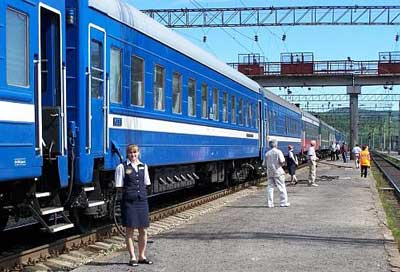
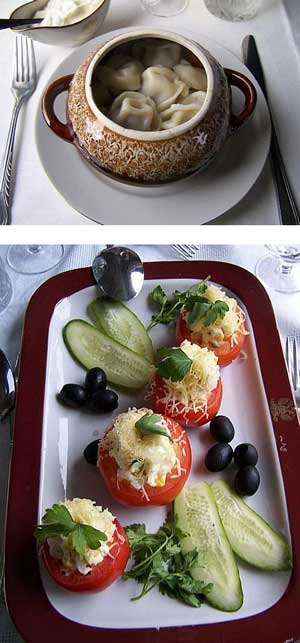
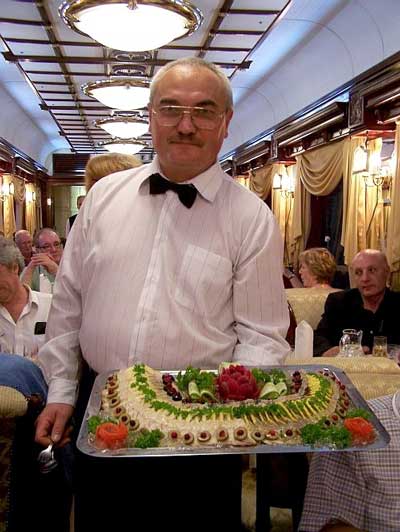
Finally, for the travel adventure of a lifetime, board the British-owned, Russian-operated Golden Eagle Trans-Siberian Express whose route covers nearly 6,000 miles between Moscow and Vladivostok. Almost half that distance is on the European side of Russia, from Moscow to Kazan to the Ural Mountains. Each comfortable cabin on this luxury train has its own private bathroom. And three times a day, professional chefs in the a fully equipped kitchen car turn out freshly cooked meals featuring regional specialties, all served in an elegant dining car designed to evoke the Golden Age of train travel. During the 12-day journey across Europe and Asia, the menu is different at every meal except breakfast. On this longest train trip on earth, you’ll have plenty of time to enjoy the best of Russian cuisine and international wines while watching the fascinating changes of scenery outside the dining car windows.

So wherever you travel by train in Europe, enjoy the experience of dining on (and off) the diner. It’s a great way to taste a wide variety of regional foods and expand your culinary and geographic horizons at the same time.

For more information see:

Bites of Brittany

This French province with a strong regional identity has Celtic traditions of food, music and language that make it unique.

The rugged rocky coast of Brittany at San Malo

By Sharon Hudgins
Photos by the author

A CONFUSION OF NAMES
No, it’s not Great Britain. It’s Brittany—a region in the far northwestern corner of France. It’s also the largest peninsula in France, with a 1,700-mile coastline bordering on the English Channel to the north, the Atlantic Ocean to the west and the Bay of Biscay to the south. The westernmost part of Brittany juts so far into the sea that it’s even called “Finistere”—the end of the earth.

Typical Breton village house.

When I was a kid in the U.S., I was confused by that geographic name. How could something called “Brittany” be in France? Later I moved to Europe and began eating my way through all the regions of France, where I learned that the French term for this region is “Bretagne.” The Bretons living there call it “Breizh” in their own Celtic language, which is related to Irish and Welsh. And they have a strong regional identity that makes Brittany very different from other parts of France—in customs, traditions, costumes, music, language and cuisine.

GIFTS FROM THE SEA
The traditional cooking of Brittany is rustic, hardy, elemental. Fresh, local, sustainable ingredients have been the foundation of Breton cuisine for centuries, long before those terms became buzzwords on trendy urban menus. Surrounded by the sea on three sides, Brittany is also a region where fish, shellfish and crustaceans are daily fare.

On my first trip to this part of France, I indulged in one of the glories of the Breton table, a plateau de fruits de mer—a huge serving platter heaped with fresh oysters, lobsters, clams, mussels, scallops, langoustines, prawns and periwinkles, all still in their shells and smelling of the sea. This massive meal for two was garnished simply with lemon slices and a bowl of mayonnaise (for dipping), along with slices of baguette and the best salted butter I’d ever tasted. A bottle of crisp white muscadet from the Loire-Atlantique wine region, which borders on Brittany, paired perfectly with the fine food. This classic seafood mélange is also a delightfully messy meal, eaten mostly with your fingers. But novice that I was, I had to watch the French couple at the next table to figure out how to use a straight pin (provided by the waitress) to pry out the flesh from those little periwinkles.

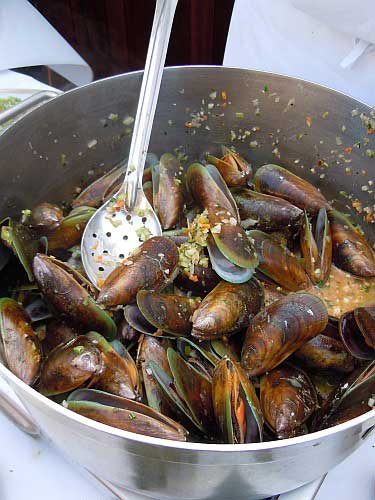
Another notable seafood dish is cotriade, originally a humble fishermen’s stew made with potatoes, onions, garlic, leeks and the catch-of-the-day, all boiled up in a pot of salty water. Modern cooks are likely to throw in some herbs and white wine, too. Whatever the variety of ingredients that find their way into the stew pot, cotriade combines all the characteristics of Breton cooking—freshness, simplicity, nourishment—in one delicious dish. And if you aren’t in the mood for fish stew, then try the local moules marinières, mussels steamed in their shells over a bit of white wine, cider or beer. Or ask for a big bowl of moule frites, steamed mussels with a side dish of perfectly cooked French fries.

CLASSIC REGIONAL SPECIALTIES
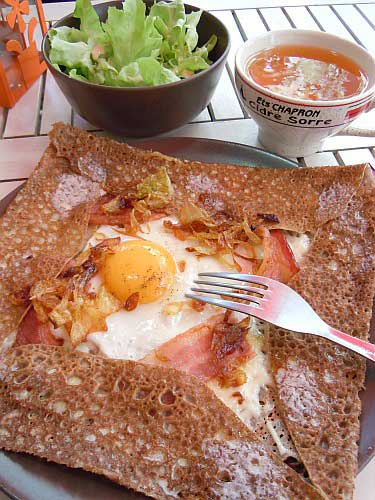
Crêpes and galettes are another favorite food in Brittany, sold at street stalls in every town, featured at festivals, and served in restaurants, some of which specialize in these big flat pancakes. Dainty crêpes are made from a thin batter of wheat flour, milk, and eggs, cooked on a large griddle. Usually sprinkled with sugar or slathered with jam, caramel spread, chocolate sauce or sweetened chestnut purée, the crêpes are then folded into quarters for serving. Galettes, which are slightly thicker, are made with a buckwheat-flour batter, cooked like crêpes on a griddle, and often garnished with sliced ham, fried eggs, shredded cheese, browned onions, or other savory ingredients. The classic drink with crêpes and galettes is a cup or ceramic bowl of cold Breton cider, the famous fermented apple juice of this region, in your choice of dry, semi-dry, or sweet.

Pork is a prime product in Brittany’s interior—cured into ham, stuffed into sausages—along with root vegetables grown on the rocky, windswept peninsula. Many of these go into the meat-and-vegetable stew known as kig ha farz (similar to French pot-au-feu), an old-fashioned rural dish. Buckwheat moistened with milk, meat bouillon, and lard is wrapped in a clean cloth and put into the pot to cook in the stew, to make a savory dumpling that’s later broken up with a fork and eaten with the meat, vegetables, and broth.

Nearer the sea, lambs that have grazed on the salt-marsh grasses are considered a delicacy, as are the artichokes, asparagus, strawberries and samphire that grow in the sandy soil. And along the coast, Brittany’s famous fleur de sel—mineral-rich, slightly gray, delicately flaky sea salt—is raked by hand off the top of shallow evaporation ponds flooded with sea water and left to dry in the sun and wind. Travelers to Brittany often return home with a big bag of fleur de sel purchased in one of the colorful open-air markets there.

SWEET FINISH
The Bretons have a sweet tooth, too. In every town, shops are filled with pretty tin boxes holding rich butter cookies and creamy caramels made with Brittany’s renowned butter and sea salt. An old farmhouse dish, also sold in pastry shops and restaurants, is far Breton, a simple custardy tart, made with an eggy batter poured over sliced apples, plums, or liquor-soaked prunes or raisins, then baked in a hot oven. And a gateau Breton is another simple (but simply delicious) flat cake, halfway between a shortbread and a pound cake, made with a large proportion of butter and sometimes ground almonds or hazelnuts, too.

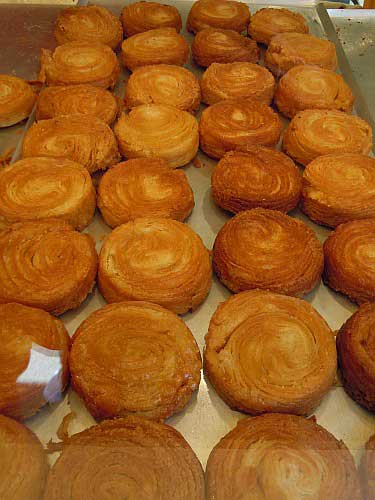
But the most famous Breton pastry is kouign-amann (pronounced queen-ah-MAHN), which just means “butter cake.” This classic Breton sweet is much like my great aunt’s irresistible cinnamon rolls—layers of yeast dough folded around plenty of butter, cinnamon and sugar, cut into large rounds, and pressed into muffin tins. But the Breton recipe differs from hers in leaving out the cinnamon, adding salt and going a step further to heavily butter and sugar those muffin tins. When the kouign-amann bakes, sugar syrup forms between the layers of dough, and a crunchy, chewy, caramelized shell forms on the outside. Tasting these warm, buttery, caramely rolls, fresh from the oven, is reason enough to travel to Brittany.

Christmas in Paris

By Sharon Hudgins
Photos by the author

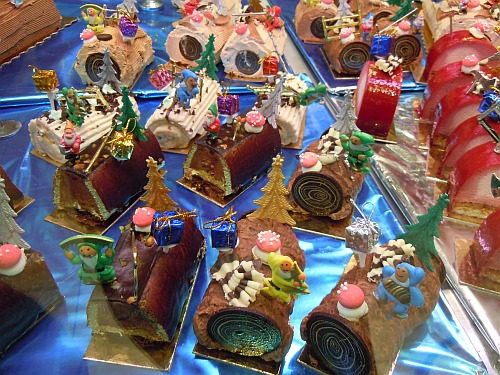
Parisian bakeries sell many versions of the traditional Buche de Noel (Yule Log) Christmas cake.

Paris is a great city to visit any time of the year—for fine foods, outstanding museums, and romantic walks along the Seine in the pink glow that often suffuses the city at twilight.

Many tourists want to see Paris in the spring. Remember the song, “April in Paris”? Or the movie of that name, with Ray Bolger and Doris Day? And who could forget Gene Kelly dancing among the blossoms with Leslie Caron in An American in Paris? But did you know that Paris is also a wonderful place to spend the winter holidays?

WINTER ROMANCE
Paris in winter has something for everyone. Open-air and indoor Christmas markets throughout the city. Nativity scenes and sacred music concerts in historic churches. Menorahs and special Hanukkah foods in the Jewish delis and bakeries. Strings of sparkling lights across the grand boulevards. Outdoor ice-skating rinks decorated with Christmas trees. Children’s noses pressed against the glass of department store windows animated with fanciful displays. Cheerful families toting wrapped packages in the subway. Smiling vendors at the food stalls. Even friendly waiters in the restaurants.

More than a dozen colorful Christmas markets brighten up the city, some open for only a few days in December, others lasting six weeks or longer, from the start of Advent (the fourth Sunday before Christmas) through Epiphany (Three Kings Day on January 6). Some Christmas markets specialize in products from a particular part of France, such as Alsace, whereas others feature handmade crafts by local artisans. Paris’s newest food fair, Noël Gourmand, is also held in December, at the Carrousel du Louvre, a glitzy underground shopping mall in the heart of the city. There you can taste French regional products such as artisanal cheeses from the Basque region, wines from the Loire, meats from the Ardennes, and sweets from Provence. And no Christmas market anywhere in Paris would be complete without roasted chestnuts, chewy nougat, and hot spiced wine.

CHRISTMAS DINNER
If you want to enjoy a special meal at a restaurant on Christmas Eve, make reservations early. Many restaurants are closed on the evening of December 24, and even more are shut on Christmas Day. A fun alternative is to pick up some good wine, cheese, bread, and a traditional French Christmas cake, a bûche de Noël (Yule log), to take back to your hotel for a private holiday picnic in your room. Then head to one of the gorgeous gothic churches for a memorable midnight service by candlelight.

You can feast even more lavishly if you rent an apartment through Airbnb or one of the other agencies that offer apartments in Paris year round. Have fun (and save money) by purchasing foods and wines at little local grocery stores and big open-air markets, then bring them back to your apartment for a cozy dinner at home. Even if you don’t want to cook, you can buy excellent prepared foods such as pâtés, cheeses, rotisserie chickens, cooked seafood, Burgundy beef stew, Spanish paella, North African couscous, fresh breads, and luscious French pastries at the delis, department stores, bakeries, and pastry shops all over Paris. Wine shops will also recommend the best vintages to accompany your store-bought meal. And if you don’t feel like lugging all that food back to your apartment, some stores will even deliver groceries and wines free of charge or for a small fee.

RING IN THE NEW YEAR
New Year’s Eve on December 31 is the time to party at a restaurant, with friends and strangers, until the early hours of the morning. Many Parisian restaurants offer a special Réveillon dinner, a fixed-price, multi-course, New Year’s Eve meal with champagne. Some smaller places charge as little as €50 per person (with wine extra), or you can splurge at the high-end eateries for several hundred euros apiece. Wherever you choose to eat, reservations are a must.

On a recent New Year’s Eve, my husband and I celebrated at Restaurant Polidor, a relic of France’s culinary heritage. Polidor still serves the same kind of simple, old-fashioned, very affordable comfort food like you could find in little Paris bistros half a century ago. Nothing trendy or minimalist-modern here—just small wooden tables covered with red-and-white checked paper tablecloths, bentwood chairs set close together, dark wood wainscoting, big mirrors on the wall, and plenty of nostalgia atmosphere. Filmgoers will recognize Polidor as the place in Woody Allen’s film, Midnight in Paris, where Gil Pender meets Ernest Hemingway back in the 1920s. And indeed, Polidor has been feeding the famous and the not-so-famous ever since it was established in 1845.

If you’re a cat lover and missing your own felines when you’re away from home, you can even celebrate New Year’s Eve in the company of 16 rescue cats at the cozy Cafe des Chats Bastille, one of Paris’s two cat cafes, where the furry friends roam free among the tables. And wherever you choose to party, you don’t have to worry about drinking that extra glass of champagne and staying out really late. From 6 p.m. on New Year’s Eve until 5 a.m. the next day, the Paris subway runs continually overnight, and it’s even free of charge.

GIFTS OF THE MAGI
Finally, finish up your Parisian holiday with a special treat on January 6, Three Kings Day. In all the pastry shop windows you’ll see round, flat pastries with a gold paper crown on top. These are galettes des Rois, the traditional King’s Cakes of northern France. A small porcelain or plastic prize is baked inside the cake, which is made from layers of puff pastry often with a frangipane filling. Whoever gets the slice with the prize inside is crowned “king for a day.” At some Three Kings Day parties, the prize-winner also has to buy drinks for everyone around the table.

So let Paris wish you not only a bon appetit, but also a Joyeux Noël (Merry Christmas), a Bonne Année (Happy New Year), and a Bonne Fête des Rois (Happy Three Kings Day) on your next trip to France!

For more information:

Paris Christmas markets 2016

Noël Gourmand 2016

Restaurant Polidor

Le Cafe des Chats

Apartment rentals in Paris (Airbnb)

Apartment rentals in Paris

Meet Art Wolfe

I’ve always been enthusiastic about the work I do.

Art Wolfe

ET: Of the many European countries, which country or countries do you like to photograph the most – and why?

AW: I’ve traveled to Europe a number of times over the years. In fact, my first overseas trip was to England, and 28 days later I wound up in Greece. It was very early on, and one could argue I wasn’t much of a photographer, although I thought I was at the time. Italy definitely has been one of my favorite places to go, not only for the antiquity but for the stunning scenery: the craggy Dolomites in the north, and the south’s rumbling volcanoes of Mt. Etna and Stromboli. These have yielded great opportunities and photographs over the years; I love Italy!

Equally strong for me has been France; photographing in the French Alps, in and around the Rhone River delta and up into Provence has resulted in some of my most delightful photos over the years. Iceland surely is not to be missed―its young landscape is different every time I visit.

There are huge gaps in my coverage of Europe; I dream of the day I can travel through Spain. My long-time photo assistant is from Romania, though I have yet to get to central and eastern Europe. All these places draw my attention, and it’s just a matter of time before I get there.

ET: If you were to recommend to someone to photograph the European landscape, where would you “send” them and why?

AW: Certainly it’s hard to beat the Alps, both French and Swiss. One of the striking things about the Alps is their verticality; they are very accessible initially but many of the peaks are among the most difficult peaks to climb on earth. One of my best locations has been Lac Blanc just above the ski town of Chamonix, France. I can’t overstate how stunningly beautiful Lac Blanc is as it reflects the extraordinary Chamonix Needles and Mont Blanc rising beyond.

I just love the Italian landscape, too. I love the whimsical ways the Italian farmers in Tuscany and Umbria have separated their fields by rows of cypress and pine. In addition, the rural landscapes of northern Scotland and the Isle of Skye are quite simply stunning; I have been there in the spring, when the forests around the icy, deep lochs are green and studded with bluebells. It is quite enchanting.

ET: Can you remember the first time you realized that maybe you were an “above average” photographer? How did your parents’ commercial artist business help you in your life’s work?

AW: My background initially was drawing and painting from early childhood all the way through graduating from the University of Washington, earning a degree in Fine Arts and Art Education. As far as realizing I was an above average photographer, it’s hard for me to just state that unequivocally; I would address it by saying I always realized I had an above average drive and focus. I’m rapidly approaching year 60 in my life, and the drive has not diminished. I’ve always been enthusiastic about the work that I do and sharing it with others.

Very early on I knew that whatever I wanted to do I could do it. My parents were commercial artists, and I watched my dad run his own small business. It was ingrained in me that I could do this as well. Children very often follow in the footsteps of their parents. Thankfully, my parents allowed me to pursue whatever I wanted. They had nothing but encouragement toward the arts, and in retrospect that was a blessing.

ET: You always seem to have so much fun and enthusiasm when you are photographing. Can you explain how this is?

AW: I think fun and enthusiasm is part and parcel to anyone’s occupation or passion. It’s rare in life for people to truly find their passion, especially when it’s their occupation. I feel blessed. I feel that I was destined to be a storyteller through the photographic medium, and I don’t take that lightly.

I sacrifice a lot being a photographer; I don’t have a family, I don’t have vacations, I don’t have a lot of things that people take for granted. But what I do have is a highly refined passion that gives me a deep sense of fulfillment. I can’t help but be enthusiastic and can’t help but having fun. I have a very impish sense of humor, a very free spirit about the work that I do and that just transfers to my photos. My enthusiasm is infectious; I am able to photograph people without trepidation. I have a very light spirit when I’m working around wild animals, I don’t stress about them, and they pick up on that energy so it’s a very positive experience. I wholly believe it enables me to get close to my subjects.

ET: Bad weather conditions typically thwart photography efforts. What do you think?

AW: My belief is bad weather often makes a shot. Whether it’s high winds, blowing snow or soaking rain, I get out there as long as I can protect myself and my camera. Weather makes for painterly effects: wind can be transferred into long impressionistic exposures where that sense of contrast between blurred motion and sharp focus subjects is often the difference between a mediocre photo and a great photo. So I look at bad weather conditions as the time to bundle up and get out the door!

ET: What is your advice for someone wanting to become a better than average photographer? What does it take to do this?

AW: No restraints! Just do it! There is an amazing amount of education being offered free through the internet. And some of the world’s best photographers offer amazing trips and workshops. I’d take advantage of that. Just jump in and immerse yourself into the world of photography and you will learn quickly.

ET: How do you determine where to go when you’re going to film your next show and how long does it take to arrange each edition of your show?

AW: My location choices for “Art Wolfe’s Travels to the Edge” were based on 30 years of knowledge about the world. After months of research and arrangements, each episode took an average of two weeks to film. The post production process added another couple months. It is a long process to get from idea to actual broadcast.

ET: Where did the name “Travels to the Edge” come from? (It’s a great line!)

AW: “Travels to the Edge” is based on my book Edge of the Earth, Corner of the Sky. It seemed like I traveled to the edges of the earth to photograph for that book. For the show name, my staff and I threw out words and started mixing and matching and ultimately settled upon “Travels to the Edge.” I thank you for the compliment and I agree, it’s a great line!