Budapest: Cultural Continental Capital

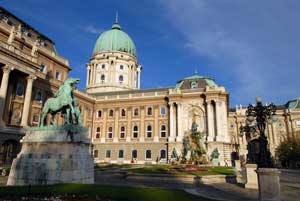
High-domed and in 19th-century neoclassical style, Budapest’s Royal Palace dominates high ground on the Buda side of the river. The complex includes the Hungarian National Gallery.

By Tom Bross
Photos courtesy Budapest Tourism

For a memorable trip combining two culturally rich continental capitals, start in Vienna by immersing yourself in music, fine-arts museums and some of that city’s famous Kaffeehäuser coffee houses.

DAY ONE
At the Vienna’s Westbahnhof, board an ÖBB Austrian Railways EuroCity train (www.oebb.at) headed for Budapest. The journey takes slightly more than three hours, covering 135 miles/217 km. by way of low-level Danube valley terrain. While approaching Hungary’s capital, you’re treated to urban riverbend panoramics meriting their UNESCO World Heritage eminence (as of 2002).

As they cross a high railroad bridge, passengers get wide-angle overviews of the two-part metropolitan layout. Hilly Buda, topped by the Castle District, looms above the river’s west bank. On the opposite side—with the enormous neo-Gothic Hungarian Parliament building as a focal point—flat Pest sprawls toward its parks, squares and buzzing commercial areas. (Regarding multinational Danube terminology, what’s called the Donau back in Vienna flows downstream to become the Duna here). Disembarkation at skylit, 19th-century-ornate Keleti station means you’ve arrived at Baross Square in the heart of Pest. Keleti’s completion in 1867 came when the Austro-Hungarian Empire had maximum geopolitical clout. That explains the two cities’ long-time kinship.


Several upscale hotels are in the station’s immediate vicinity such as the five-star Le Meridien, splendidly converted from a limestone police headquarters, with its 218 rooms (www.lemeridien.com). The comparably cosmopolitan Kempinski Corvinius opened in 2005 (www.keminski-budapest.com). Not as central, but walkably close to colonnaded Heroe’s Square and vast City Park, the Corinthia Grand Hotel Royal dates from Hungary’s 1896 Magyar Millenium and comes complete with deluxe spa amenities (www.corinthiahotels.com). Less pricey, more intimate and decorated with contemporary panache, the four-star, 57-room Atrium Hotel (www.atriumhotelbudapest.com) opened recently on a quiet side street located three blocks south of Keleti.

If Buda’s Old World atmospherics are more to your liking, check into the family-run, 27-room Hotel Victoria (www.victoria.hu), nicely situated for Duna vistas. The newer, four-star Novotel Blue Danube (www.novotel-bud-danube.hu) is another riverfront “recommendable.” A slick, Americanized Hilton (www.budapest.hilton.hu) was added to Buda’s skyline 30 years ago.

The Chain Bridge, one of the city’s beautiful Art Nouveau landmarks.

If you’re exploring Pest at midday, take a lunch break at Mühesz, providing an international menu and Budapest-brewed Dreher beer. Choose this indoor/outdoor restaurant for its location on sophisticated Andrássy Avenue—another UNESCO World Heritage Site, lined with imposing mansions and public buildings. Among them: 1884’s State Opera House, matching its Viennese counterpart for grandiose architecture and lavish interiors (Bertalan Székely’s murals on the foyer’s vaulted ceiling, for instance, and flamboyant Károly Lotz frescoes above the main hall).

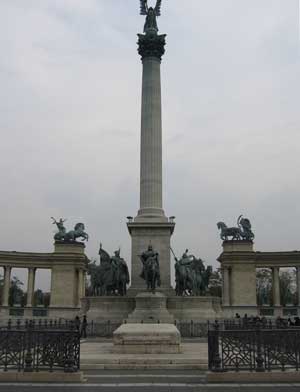
Wrought-iron railings seen on this Parisan-infuenced boulevard frame stairways descending to continental Europe’s earliest subway line, the M-l metro, inaugurated in 1896 to coincide with millennium celebrations. So, sure enough, Andrássy Avenue extends straight ahead toward the Millennium Monument on Heroes’ Square—marble-paved open space.

From there, tree-shaded walkways curve into City Park’s ponds, botanical gardens, Budapest’s zoo and the Széchenyi Spa Baths, Europe’s biggest such complex, fed by thermal springs discovered 150 years ago. Backtracking to the square, make at least a quick tour of the Museum of Fine Arts before closing time at 5 p.m. (Tuesday-Sunday). Collections include Raphael’s The Esterházy Madonna and a Dürer self-portrait, plus paintings by Rembrandt, Tiepolo, El Greco, Picasso and Pieter Bruegel the Elder’s 1556 masterpiece: St. John the Baptist’s Sermon.

For tonight’s meal, choose Belmondo, virtually next door to the Opera House. Singing waiters entertain in this two-level dining salon, where fish and vegetarian courses are on the menu, augmented by an extensive wine list. Here’s your chance to taste-test classic Hungarian beef goulash, served spicey-hot and traditionally accompanied by tarhonya noodles.

Sidewalk cafés line both sides of Pest’s trendy Andrássy Avenue, one of Budapest’s UNESCO World Heritage Sites.


DAY TWO
Make the most of a full day in Pest. No need for a hasty breakfast, because English-language tours of Kossuth Square’s Parliament complex don’t commence until 10 a.m. The crown and coronation regalia of St. Stephen (Hungary’s revered national patron) glimmer in display cases. In nearby St. Stephen’s Basilica, admire jewel-encrusted reliquaries, mosaics and paintings. Then climb to the dome’s 315-ft./96-meter observatory for all-around city-and-river views.

In a museum-going mood? Pest has dozens—ranging from ethnography to agriculture, geology to photography, railroading to contemporary art and natural history. The memorabilia-filled Béla Bartök Memorial House (Csalán Utca 29) was the 20th-century composer’s residence. Bold Art Nouveau design makes the Museum of Applied Arts a visual standout, with aqua and gold Zsolnay ceramics covering the dome and roof in dazzling patterns. Also compelling: north-side Budapest’s Jewish Quarter and its Byzantine-Moorish, twin-turreted Great Synagogue (Dohány Utca 2), consecrated in 1859.

Ponder two lunchtime possibilities. The circa-1897 Central Market Hall (more of those multicolored Zsolnay rooftop zigzags)—jam-packed with stalls purveying produce, breads, meats and cheeses—includes an upstairs niche where drinks, sandwiches and sugar-sprinkled, paprika-seasoned palacsinta pancakes can be ordered. Or, similar vintage but classier ambience: Gerbreaud, the quintessential mid-European pastry shop/coffee house/tea room/casual restaurant, facing Vörösmarty Square’s sculpted stone fountain.

Shopping, people-watching, café-relaxing. Accomplish all three by exploring a popular pedestrian corridor, located two blocks in from Pest’s riverfront. Namely: Váci Utca, hemmed in by neoclassical, Bauhaus and radical new postmodern buildings.

When nightfall approaches, floodlights click on, illuminating the historic Chain Bridge (1849) and Baroque buildings flanking Pest’s riversides. Your cue for a boat ride, therefore time to settle into Spoon, a sociable onboard restaurant. Follow dinner with drinks in the lounge, ideally big-windowed for watching the city lights while cruising the Duna.

DAY THREE
Ride a funicular railway up a 48-degree slope to reach the Buda heights, locale of the Royal Palace. Amidst courtyards, gardens and ornamental gateways, attractions inside this neoclassical include the Hungarian National Gallery, Budapest History Museum and Hungary’s National Library (containing more than two million books).

Beneath the ramparts, rows of Gothic and Baroque housefronts overhang tangles of gaslit streets laid out in the Middle Ages, now loaded with souvenir shops. (You’ll notice pockmarked walls, hit by bullets fired during the 18-day Hungarian Revolution in autumn 1956—Budapest’s heroic populace vs. Soviet troops and tanks). For lunch, find a sidewalk table at Walzer, a chatty little café near Holy Trinity Square. Then stroll upward to the picturesque Fishermen’s Bastion, an arcaded pavilion dating from 1895. A longer walk gets you to Statue Park, hilltop dumping ground for 41 gigantic Communist-era statues, ripped from citywide perches after “comrade” bureaucrats and Russian Red Army soldiers finally departed in 1991.

Guitar-strumming in a 15th-century palm court complements tonight’s candlelit dinner at Alabábardos, within sight of central Buda’s tall-steepled Mátyás Church. Enjoy continental cuisine along with fine Hungarian and Austrian wines.

DEPARTURE
A Hungarian National Railroad line connects Pest’s Nyugati station (a decade “younger” than Keleti) with domestic and international terminals at Ferihegy Airport (BUD), 10 miles/16 km. southeast of town. The transfer takes merely half an hour.

Beginner’s Budapest

By Don Heimburger
Photos by the author

The Eastern European capitals are becoming “closer” to visit each year with better airline routes, and in some cases, reasonably-priced tickets. It’s really not correct to call them “Eastern,” a friend of mine said, because if you look at a map of Europe, they are still close to the “West.” Consider perhaps cities in Belarus, the Ukraine and Romania as “Eastern,” he suggests.

So Budapest, a recent destination of mine and the capital of Hungary, was not particularly hard to reach, after I determined that a Rail Europe train ticket was the most economical form of transportation from Munich. It was, however, a 7 hour and 22-minute train ride from the Bavarian capital, but with trains being an easy and relatively inexpensive form of European travel, I opted for that.

FIRST IMPRESSION
My first impression of this city of about 2 million people (it’s much larger than Prague), came as I departed the train and walked among hundreds of train travelers to the door of the massive train station, where I met hundreds more people on the streets. The city seemed vibrant, active and alive. It also seemed like I should have studied the Hungarian culture a bit more before I arrived, just to ground myself better in what I was about to see.

Divided by the Danube, the city is really two cities in one—hilly Buda in which is located Castle Hill—and Pest, located on the east side, and flat. The most prominent building on the river is the Parliament Building, closed when I was there because of a national holiday. In fact, the whole area was roped off by the police.

Photo by Marilyn Heimburger

My overriding concern about going to Hungary was the language: I didn’t know a word of Hungarian, and I found it hard to pronounce words. I did learn that “Utca” meant “street,” “Hid” meant “bridge,” and “Furdo” meant ”bath.” I also found as I went along that I didn’t necessarily need to know any words in Hungarian. Most of the shopkeepers, hotel personnel and tourist guides knew enough English so that I could communicate well enough.

City trams in Budapest

GUIDEBOOK HELPS
I’d suggest picking up a guidebook at a local travel store before arrival, and then arranging for a city tour of the highlights before attempting to proceed on your own. The reason for the city tour is that because of the size of the city, you’ll not likely be able to find all the attractions yourself, or want to walk to them yourself.

The tour (www.cityrama.hu), will take several hours, but you will have seen the crème of the attractions of the city. If you plan to stay a few days, the Budapest Card provides free services or discounts at more than 100 places, from public transportation and museums, to thermal baths and restaurants.

The three-hour Cityrama “City Tour” costs 28 euro and includes free taxi pickup at your hotel. The tour starts at the Chain Bridge, which is especially beautiful at night; a romantic walk along the river near the Chain Bridge is memorable. The Parliament Building, built in 1896 for the city’s millennium celebration, features a unique Neo-Gothic design, and reminds one of its counterpart in London. At one time a large red communist star was anchored from the tallest spire. Guided tours are available in the portion of the building which was vacated by the House of Lords.

Behind the Parliament is Kossuth Ter, filled with monuments such as the one to Lajos Kossuth who led an uprising in 1848. The Museum of Ethography (focusing on folk art and country life) in the old Supreme Court Building houses artifacts from the pre-WWI days in Hungary.

Shops, theaters, cafes and more line the Andrassy Ut as the road connects the City Park where you’ll find the zoo with its playful buildings, the famous Szechenyi Baths with several different pools to soak in, the Vajdahunyad Castle (a replica of the famous castle in Transylvania), the Museum of Fine Arts, the Palace of Art and Heroes’ Square. At the baths, you’ll soak in water containing calcium-magnesium-hydrogen carbondate and sulphate-cloride.

I spent quite of bit of time in this area of the city, and would have spent more if the weather had cooperated. Heroes’ Square is where you’ll meet the most “historic” Hungarians in statue form; the very large open area has as its backdrop the imposing Millennium Monument. In the adjacent City Park is where the famous Gundel Restaurant is located (see sidebar). During the 19th century, citizens used to ride their horses in this place and take along a picnic lunch. In the winter, the lake is frozen, so ice skating is a popular past time.

In the other direction, the House of Terror, former headquarters of the Nazi-sponsored Gestapo and secret police, Budapest Opera House, with its neo-Renaissance architecture, fits well with the similarly-elegant neighborhood on Andrássy Avenue. Hungary’s greatest architect, Miklós Ybl, designed the building for the Millennium celebrations. Construction started in 1875 and the building was finished in 1884. Ybl oversaw the work himself with painstaking care. Hundreds of statues and paintings decorate the building both inside and out.

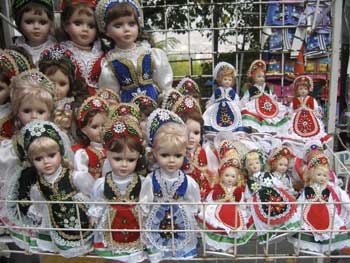
Another attraction in Pest is the Great Market Hall, a multi-level cavernous structure at the end of Vaci Utca, which should take care of most of your food needs if you’re looking for fresh meats, bakery goods, fruits or vegetables or paprika, and it will also satisfy your need for Hungarian souvenirs. This is a good place to hang out for a couple of hours and find lunch at one of the many fast food stalls,

At Buda Hill, you can walk up the hill (about 30 minutes), or take the chairlift to the top of Janos Hill (1,729 feet). The Erzsebet Lookout tower offers a panorama overview of the city below. The area is divided between the “royal” section and the civilian section, with Matthias Church and Fisherman’s Bastion highlights of the civilian section. Streets that lead away from Trinity Square are dotted with Baroque-style buildings and mansions that hide Gothic ruins.

For a rest and refreshment, try ice cream or a pastry at the Ruszmurm Cafe or sit for a while at Kapisztran Square and listen to the bells of the Magdalena Tower. Be sure to see the Royal Place complex. Once the home of lords and royals, it is now the home to museums.

There are more than 200 museums in Budapest, some of which include the Hungarian National Museum, the Budapest History Museum, the Hungarian National Gallery, Museum of Fine Arts, the Museum of Military History and the Ludwig Museum.

An interesting aspect of Budapest that many may not know about are the caves in the area. Monaco is the only other city that can boast a dripstone cave—Budapest has several open to the public: there’s the Palvogy, the Szemlo and Matthias Hill caves (qualified climbers only).

City park on Margaret Island

More highlights:

  • New York Cafe—The most ornate cafe of 320 that operated in the years preceding WWI, and it has remained the most elegant since. Gilded columns, reliefs and shining mirrors evoke the aesthetics of the early 1900s.
  • The square-shaped chocolate cake named after Jancsi Rigo, a gypsy musician, and its original creator Joseph Dobos, is a caramel-covered cake you’ll want to try while you’re in town.
  • Margaret Island, in the middle of the Danube, is a large, lovely park where you can escape the hustle and bustle of the city.

What have I left out? Actually quite a bit, but once there you’ll have plenty to do and see. Hungary’s capital is the hub of political, artistic and social energy. It’s full of history and grandeur, big bridges and wide boulevards. With impressive treasures and friendly people, Budapest is a spot you’ll not want to miss.

Munich to Budapest the ‘Rail’ Way

By Don Heimburger
Photos by the author

As I usually do, before making reservations for any European trip, I study a map to see where I’d like to go. Sometimes I am not aware of towns or attractions near where I’m traveling to, so a map can help identify those in short order.

The European map came in handy again recently when I booked a flight between Chicago and Munich, the first of what was to be a two-part air journey between Chicago and Budapest. When I discovered the Munich to Budapest air fare would be about as much as the Chicago to Munich fare ($746.00), I quickly gave second thoughts to how I would travel there. And who wouldn’t.

I didn’t want to drive through three countries (Germany-Austria-Hungary) because of gas prices, and my unfamiliarity with the laws and the roads. A bus would take too long, but a train, despite a journey of some seven hours, 22 minutes, would be economical and fun. And I had not ridden those rails before. In fact, Hungary was an altogether new adventure for me.

Munich’s Hauptbahnhof

RAIL COST WAS NOMINAL
A check at www.raileurope.com‘s new website quickly showed that a one-way trip to Budapest’s Keleti Station would cost only $171 U.S. dollars 2nd class ($269.00 first class), and once on board I could sleep or relax from my Atlantic crossing. With the new Rail Europe website, all I had to do was key in my departure and arrival cities, and up popped the cost for the date I wished to travel.

I would arrive Munich via Lufthansa at 5:55 a.m. and have plenty of time to travel on the S Bahn (covered by my Rail Europe ticket) from Munich Airport to the main Munich train station (Hauptbahnhof) to catch Train #63 at 9:27 a.m. to Budapest.

The flight over was uneventful, and the plane landed a few minutes early. Not having been in Germany since the spring, I was craving a croissant made the way the Germans make it, so I waited at an airport restaurant, indulging in coffee and croissants, until 7 a.m. and a Deutsche Bahn office opened to have my train ticket validated (you must validate tickets purchased in the U.S. prior to boarding a train in Europe).

I made a small deposit to reserve an assigned seat in first-class just to be sure. If the agent tells you the route can become crowded with passengers, paying a little extra for a reserved first-class seat can save you from transferring to second class if all the first class seats are taken.

LARGE MUNICH STATION DEPARTURE BOARD
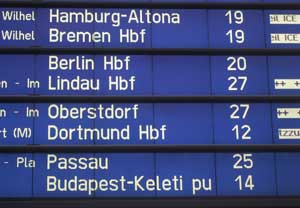
The large train departure board in Munich’s station is fascinating to watch, as new train numbers with boarding tracks pop up every few minutes, and people rush to that platform to board. My train’s notice appears on the board, I see my train roll into the station, and I board car #262 and settle into a comfortable, high-backed leather seat. The train, headed by an electric locomotive, the locomotive of choice in Europe, grabbed onto our string of passenger cars and eased us out of the station on time. Nothing new there—Europe’s trains are almost always on time.

Outside of Munich proper, I look out the window and guess we’re traveling between 95 and 100 miles per hour. I’m likely accurate on this, as European trains can move. A short time later the conductor confirms the train speed at 160 kilometers or 100 miles an hour. One reason trains can travel so fast is that the European track system is much stronger and can hold up much better at high speed. European rail lines have been investing heavily in their train tracks and facilities for years and years, and this is the payoff.

After a while, I note that the heat in the car is a bit excessive, but the conductor enters the car soon enough and announces the heat will be adjusted; it was. By 10 a.m. a porter with a trolley of beer, sandwiches, candy, rolls and chips arrives in the car to ward off any hunger pangs of the passengers.

As we near Salzburg, I can start seeing the snowed-covered Alps that I’ve come to be fond of; I see the Festung on the top of the hill in Salzburg, but only for a moment as the train rolls on. We’ve changed conductors since entering Austria. By the time we arrive at Linz the train is 8 minutes late, and continues to be behind schedule for a while.

Dining in the Speisewagen

TRAIN IS NEARLY FULL
Looking around at the seats and the various cars, I found that 90% of the train was full, and all but about 10 first-class seats had been reserved. If the seat is reserved in the first-class section, a small stub will be attached to the seat with the person’s name on it as well as their boarding and departure stations.

Walking up through the train to the Bord Restaurant, I found it not crowded, and serving Hungarian-style food, including goulash and Hungarian beers. The service was fast and the price was very reasonable.

We roll through St. Polten 10 minutes late, and by Vienna we are 17 minutes late and running into fog. I don’t remember if we arrived late in Budapest, but we were nearly on time nevertheless. The Budapest train station was massive, with a large arching trainshed, similar to many large city trainsheds in Europe.

The trip was as advertised, it allowed me to catch up on my sleep from the flight over, and it allowed me to get into the “European mood” for my travels for the next two weeks. I also saved a lot of money. And in this current rough economy, that’s a good thing.

Christmas Is a Time of Food and Fun

European Traveler has gathered Christmas holiday recipes from around Europe, and we present them here in a special tribute to the countries from which they come. You’ll find a variety of tasty foods in these selections, from desserts and breads to main dishes, to cookies and candies. As December progresses, we plan to add more, so stay tuned!

Please note that some of the recipes are in metric measurements and may need to be converted.

Bon Appetit!

AUSTRIA

VIENNESE VANILLA CRESCENTS (VANILLEKIPFERL)

Eva Draxler / Vienna Tourist Board

INGREDIENTS
1 1/2 sticks (6 ounces) unsalted butter
2/3 cup finely ground nuts (almonds or hazelnuts)
1/2 cup confectioner’s sugar
2 egg yolks
1 1/2 cups all purpose flour
dash of salt

PREPARATION
Knead all ingredients together quickly – keep them cool. Cool in refrigerator for several hours. When forming crescents, take out only the amount of dough you are working with. Form into large, sausage-like rolls with a diameter of about 2 inches. Cut thin slices and quickly roll each of them in the palms of your hands, thus forming small crescents. Place on greased cookie sheet. Bake at 325 degrees Fahrenheit for about 20 minutes. Let cool for no more than five minutes. While still warm, roll in vanilla sugar.

THE AZORES

HOTEL MARINA ATLANTICO
THE AZORES

Courtesy Monica Bensaude Fernandes/Bensaude Turismo

COD “COM TODOS” STYLE

INGREDIENTS
2 cod steaks
300 grs of cooked chickpeas
1 Portuguese cabbage
200 grs carrots chopped in thin circles
2 dls extra virgin olive oil
30 grs fresh coriander
1 salted pickled red pepper cut length wise
6 dry garlic cloves
200 grs crumbed corn bread
100 ml cream
Salt and white pepper
PREPARATION
Boil cod for 5 minutes. Remove skin and bones. Grate chickpeas in a tasse-vite. Add cream and season with salt and pepper. Blanch cabbage, drain and sauté in olive oil and garlic.
Sauté carrots in olive oil and garlic.
PLATE PRESENTATION
Using a rim, first layer chickpeas, and then carrots. On top, place cod, broken apart. Cover it with sautéed cabbage and lastly, the crumbed corn bread. Give it a little color by briefly placing in a very hot oven. Decorate with olive oil and fresh coriander.

DUCK BREAST WITH ORANGE AND DRIED FRUITS
INGREDIENTS
2 boneless duck breasts
300 grs red cabbage, julienned
4 oranges
300 grs potatoes, cut in extra fine rounds (chip style)
50 grs crushed walnuts
50 grs crushed pine nuts
50 grs S.Jorge cheese sliced thin
½ cup Brandy
Salt and white pepper
2 tablespoons balsamic vinegar
10 grs sugar
PREPARATION
Sauté duck in high heat for 5 minutes. Season with salt and pepper. Zest the orange. Set aside. Juice the oranges and add it to pan. Let it reduce and set aside the sauce. Bake potatoes in a fan format with the thinly sliced cheese on top. Sauté cabbage with a little olive oil. Add balsamic vinegar, sugar and dried fruit.
PLATE PRESENTATION
At the top, place the fanned potatoes. In the center, place red cabbage and beneath position the laminated duck. Cover with sauce and orange zest.

VEAL LOIN VERDELHO
INGREDIENTS
400 grs veal loin
300 grs potatoes
400 grs carrots
Verdelho wine from Pico Island
Onions
Leeks
Salt and pepper (local, if possible)
PREPARATION
Season veal with salt and pepper. Blush or sauté loin in high heat for 5 minutes. Remove veal, add onions and leeks and brown. Add red wine and let it reduce. Season and sift sauce. Grate carrots and sauté in a little olive oil. Bake potatoes, which have been previously stuffed with a bay leaf and bacon, in alternating cuts.
PLATE PRESENTATION
Place carrots at the center, potatoes in the back, veal in the front of plate, and cover with sauce.

GERMANY

MULLED WINE
(GLUHWEIN)
Victoria Keefe Larson/German National Tourist Office

Perfect for those dark and cold winter evenings.

INGREDIENTS:
2 bottles red wine
1 cup sugar
3 cups water
1 lemon, sliced
20 whole cloves
6 to 8 cinnamon sticks
1 orange, sliced for garnish

PREPARATION:
Mix water, lemon and spices and simmer for an hour. Strain. Heat but do not boil the red wine. Add wine to hot water mixture. Ladle into cups and serve with half a slice of orange.

HUNGARY

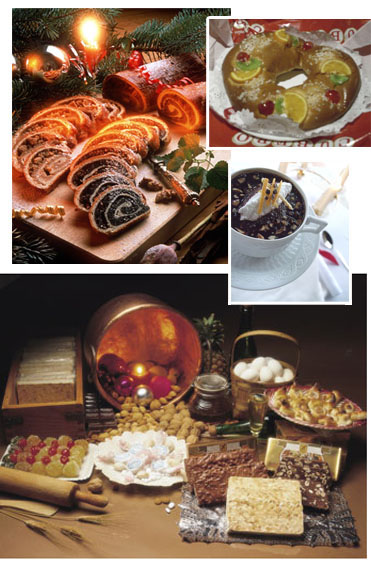
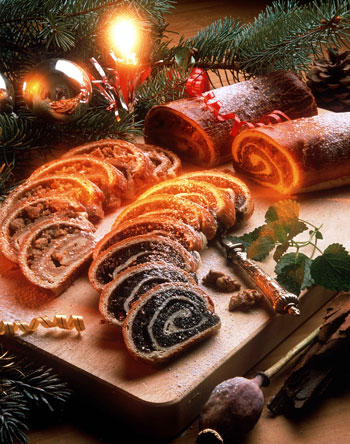
Dios es Makos beigli
Poppy seed and nut rolls (bagels)

From Culinary Hungary/courtesy Elvira Vida/Hungarian National Tourist Office

Makes 4 rolls; the filling ingredients are calculated for 2 rolls respectively.

INGREDIENTS
For the dough:
1 cup sugar
1/2 cup/120 ml milk
1 cake/15 g compressed yeast
1/2 cup/5O g confectioner’s sugar
3 1/4 cup/500 g flour
6 1/2 tbsp/100 g butter
6 1/2 tbsp/100 g lard
2 eggs
1 tsp grated lemon zest
pinch of salt

For the nut filling:
Scant 1/2 cup/100 ml milk
1OO g superfine sugar
1 envelope of vanilla sugar
1/2 tsp grated lemon zest
3 tbsp/30 g raisins
Pinch of cinnamon
3 cups/250 g ground nuts
3-4 tsp honey (or 1-2 apples or 2-3 tsp apricot jam)

For the poppy seed filling:
Scant 1/2 cup/lOO ml milk
1 1/4 cups/250 g confectioners sugar
1 sachet of vanilla sugar
1 2/3 cups/250 g ground poppy seeds
3 tbsp/30 g raisins
1 tsp grated lemon zest
4 tbsp honey

Other:
Butter or lard for the baking sheet
1 egg yolk for glazing

PREPARATION:
Dissolve the sugar in the lukewarm milk, then add the yeast. Mix the remaining dough ingredients wilh the yeast mixture and knead thoroughly. Cover the dough with a dish towel and leave to rise for about 30 minutes.

To make the nut filling, put the milk in a pan with the sugar and vanilla sugar and bring to a boil. Add the lemon zest, raisins, cinnamon, nuts, and honey (or peeled, grated apples or apricot jam).

For the poppy seed filling, mix the milk with the confectioners’ sugar and vanilla sugar. Bring to a boil and add the poppy seeds and raisins. Simmer for a few minutes, stirring constantly, then remove from the heat and stir in the lemon zest and honey.

Divide the dough into four and roll out each piece into a rectangle measuring about 12 x 14 inches/30 x 35 cm. Spread the dough with the nut or poppy seed filling and roll up lengthwise, ensuring that the rolls remain firm. Grease a baking sheet and carefully transfer the rolls onto the sheet and brush with egg yolk.

Bake in a preheated (medium) oven until golden brown. Only remove from the oven when completely cool. If kept covered and stored in a cool, dry place the bagel will stay fresh for a long time. Do not slice until just before serving, arranging the slices like roof tiles on a plate, and sprinkle with confectioners’ sugar.

PORTUGAL

REBANADAS CASA OS MOINHOS

INGREDIENTS

16 egg yolks
500 g sugar
1 kg Portuguese white bread
Cinnamon
Lemon

PREPARATION
Mix the eggs with 16 tablespoons sugar until it is a thick mix — make a thin syrup out of the rest of the sugar. Use one glass of water for this, then slice the bread, — after letting it sit for one day. Dip the slices into the syrup, drain, and dip in the egg yolk mix. Gently pan sear on a medium stove top, and sprinkle with cinnamon and lemon zest.

SPAIN

ROSCON DE REYES
(Holiday Bread)

This recipe is from The Foods and Wines of Spain by Penelope Casas
Courtesy Patricia Wood Winn/Tourist Office of Spain

No holiday is more eagerly awaited in Spain than El Dia de los Reyes Magos-the Day of the Three Kings (Epiphany) on January 6. On this date every year, so the legend goes, the Three Wise Men journey to Spain on camels, bearing gifts for all Spanish children. They use ladders to gain access to city apartments aud leave presents in the children’s shoes, which have been carefully laid out the night before, along with fodder for the hungry camels. Kids who have not been good during the year fear the worst: that the kings will fill their shoes with black coal instead of toys.

Rascon de Reyes is baked and eaten only at this time of year. It is a delicious sweetened bread, coated with sugar and candied fruits, and it always contains a surprise-either a coin or a small ceramic figurine, which is to bring luck for the year to the fortunate person who finds it in his piece of bread.

Makes 1 large bread ring

INGREDIENTS
1 package dry yeast
3/4 cup warm water
1 tablespoon orange flower water (often found in Italian food shops. If unavailable, substitute strong tea)
1/2 teaspoon grated lemon rind 6 cloves
1/4 pound butter
1 tablespoon lard or vegetable shortening
1/2 cup sugar
1/2 teaspoon salt
2 eggs
1 tablespoon brandy, preferably Spanish brandy, or Cognac
1/2 cup milk, scalded and cooled
5 cups unbleached, all-purpose flour
Candied fruit slices (orange, lemon, etc.)
1 egg, lightly beaten
1 1/2 tablespoons sugar, preferably coarse, for sprinkling

PREPARATION
Dissolve the yeast in 1/4 cup of the warm water. Simmer the remaining 1/2 cup of warm water with the orange flower water, lemon rind, and cloves for 10 minutes, covered. Cool. Discard the cloves. Cream the butter, lard, the sugar, and the salt. Beat in the 2 eggs, then add the brandy, milk, the water-and-lemon mixture, and the softened yeast. Gradually mix in the flour with a wooden spoon until a soft and slightly sticky dough is obtained. Knead on a floured working surface, adding more flour as needed, about 5 minutes, until smooth and elastic. Place the dough in a large oiled bowl, turn to coat with the oil, cover with a towel, and place in a warm spot, such as an unlit oven, to double in size, about 2 hours. Punch down and knead again 5 minutes. Insert a good luck coin – perhaps a silver dollar or half-dollar – or some other appropriate object, such as a cute miniature ceramic animal.

Shape the dough into a large ring, pinching the ends to seal. Place on a lightly greased cookie sheet. Decorate with the fruit slices, pushing them slightly into the dough. Let the ring rise in a warm spot about 1 hour, or until double in size. Brush with the egg, which has been mixed with a teaspoon of water, sprinkle with sugar, and bake in a 350° F oven 35-40 minutes, or until a deep golden brown.

European Easter Egg Traditions

Goose and duck eggs from Poland, decorated with paint and colored straw.

By Sharon Hudgins
Photos by the author and courtesy German National Tourist Board

Europeans take their Easter egg traditions seriously.

From Scandinavia and Britain in the north to Italy and Greece in the south, from the Slavic countries to Germany, Romania and Hungary, eggs at Easter time are dyed in many colors, decorated with intricate designs, hung from tree branches, strung onto wires, buried in the ground, featured in games, exchanged among friends, baked into breads and taken to church to be blessed on Easter morning.

Easter egg tree at a Russian Orthodox church.

PRE-CHRISTIAN TRADITION
Although colored eggs are the most salient symbol of Easter today, their association with springtime reaches much farther into the past. Archeologists in Europe have uncovered egg-shaped artifacts with ornate designs made thousands of years before the Christian era.

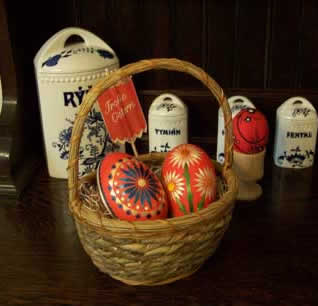
Etched goose and duck eggs from the Czech Republic.

Folklorists say that decorated eggs were part of pagan spring festivals, for which eggs were painted in bright colors to symbolize blossoming plants. So it’s not surprising that the egg, representing the creation of new life, would also find a place in religious celebrations of the resurrection of Christ. The decorating of Easter eggs is a long-established folk art in many parts of Europe, still practiced today. During the 40-day Lenten fast preceding Easter, many Christians abstain from eating certain foods, including eggs. But the hens keep on laying. Some of these excess eggs are dyed a solid color: red is especially symbolic, representing drops of Christ’s blood as well as the regeneration of life.

Others are decorated with intricate floral or geometric motifs. Several countries and regions in Europe—Poland, Ukraine, Belarus, Moravia, Slovakia, Bohemia, Hungary, Slovenia, Romania, Germany, Austria—are well known for their production of beautifully decorated eggs, using age-old techniques and designs, many of which are unique to that particular place. The connoisseur of folk art eggs can tell at a glance whether an egg has come from the eastern or western part of the Czech Republic, from Slovakia, from northern Croatia or from central Austria.

Easter fountain in Ginsheim/Rhine near Mainz, Germany. Photo: Eric Eichberger

MAUNDY THURSDAY
In many parts of Europe, Maundy Thursday (the day before Good Friday) is the traditional day for decorating Easter eggs. Up through the 19th century, superstitions from earlier times survived in the belief that eggs laid on Maundy Thursday, Good Friday or Easter Sunday had magical powers: to prevent illness, to bring good luck, to act as an aphrodisiac, to ensure that the next baby will be a boy, to forestall an early death, to foretell the future. In some places, Easter eggs were fed to the livestock to protect the animals, or buried in the fields to help produce abundant crops. And Eastern European bee-keepers put a colored Easter egg under each hive to guarantee a good supply of honey.

A charming custom that dates from the 19th century is the making of an egg tree at Easter. Long branches of budding pussy willows or yellow forsythia are arranged in a vase, and eggs are hung on the branches like Christmas ornaments on an evergreen tree. Traditionally the eggs are hollow chicken or duck eggs, the whites and yolks first removed through pin holes before the eggshells are dyed and decorated, then a loop of ribbon or yarn pulled through the holes for suspending the eggs from the boughs. Sometimes brightly painted wooden eggs are also hung from the branches, along with little wooden birds. These egg trees are especially popular in Germany (where they’re known as Ostersträusse, Easter bouquets, or Osterbäume, Easter trees) and in several other parts of Central Europe, too.

Easter fountain in St. Wendel, in Germany’s Saarland region. Photo: Amt fuer Stadtmarketing, St. Wendel

OUTDOOR EASTER TREES
In some regions you’ll even see outdoor Easter trees, with real or plastic eggs suspended from the branches of live bushes or trees. In the Franconian Alps of northern Bavaria, the fountain or well in the center of many villages is decorated with garlands of evergreens, colorful streamers, fresh flowers and hundreds of painted eggs. For two weeks beginning on Good Friday, more than 200 of these traditional Osterbrunnen (Easter wells) are on display in Franconian towns.

In Europe today, Easter eggs are made from a wide variety of materials: natural egg shells—chicken, duck, goose—with the egg white and yolk blown out of the shell; uncooked eggs with their shells intact; hard-boiled eggs; edible substances such as sugar, chocolate and marzipan; precious metals, enameled metals, wood, wax, porcelain, onyx, marble, glass, cinnabar, cardboard and papier-mâché.

Decorations range from solid colors to painted, etched or batiked designs. Beads, lace, straw, colored paper and decals are also glued onto eggshells. The designs can be geometric, floral, symbolic—whatever suits the egg decorator’s fancy. And sizes extend from miniature jeweled eggs made with precious stones to the giant chocolate eggs, up to a meter tall, so beloved by Italian children.

An Easter egg tree decorated with eggs from many Central and Eastern European countries.

You can see hundreds of handcrafted eggs at the many Easter markets held in Europe during the spring. Prices range from just a few euros for simply painted hens’ eggs to several thousand euros for large exotic-bird eggs painted by internationally renowned artists. One of the most stunning eggs I saw at a Munich Ostereiermarkt (Easter egg market) was a huge ostrich egg acid-etched to look like lace. It was priced way beyond my budget, but I still came home with some lovely smaller samples of folk-art eggs by local artists. Now it’s time for me to find some pussy willow boughs and start decorating my own egg tree for the season.

Goose eggs from the Czech Republic, decorated with colored straw.

A SELECTION OF EUROPEAN EASTER EGG MARKETS

Germany
www.ostereier-maerkte.de/ (German only)
www.german-easter-holiday.com
www.voelkerkundemuseum.com

www.burgsatzvey.de/eng_index
www.volkskultur.sorben.com (German only)
www.ostereiermarkt.com (German Only)
www.ostern-in-deutschland.de (German only) 
www.stripes.com/

Austria
www.ostermarkt.co.at/
www.tyrol.tl/en/news_141
www.virtualvienna.net/

Czech Republic
www.pragueexperience.com
www.carnifest.com/
www.marys.cz/
www.jizni-morava.cz

Slovakia
www.goeasteurope.about.com

Poland
www.wieninternational.at

Hungary
www.budapesttimes.hu

Switzerland
www.swissinfo.ch