Venice: Queen of the Adriatic

by Kristi Nelson Cohen
Photos by author

One thousand five hundred years of recorded history, and the magic of Venice, Italy continues to captivate our hearts and please our artistic eye.

Venice was built on the water, and this love-hate relationship has challenged the city from her beginnings. She reaps the rewards of the sea (salt, fish, trade and now tourism) but suffer from this same sea lapping at her front steps, eroding the foundations of this architectural marvel. Venice is a beauty, simply fascinating and mysterious, she is the “Queen of the Adriatic!”

Venice was founded in 421, a result of residents of the Veneto (now, northern Italy) who were fleeing the wrath of the Goths. These Goths systematically looted and destroyed cities en route to Rome. The refuges set up villages in a marshy lagoon, on tiny uninhabited islands, where they were safe from invasion. This settlement became known as Venice.

BYZANTIUM LINKS

Due to its location on the sea, trade links with Byzantium were created, exporting salt, and importing exotic spices and fabrics from the Orient. Ships were able to dock right at the city’s front steps, and Venice began to grow in importance and wealth.

Although known as a trade center, Venetian merchants wanted to capitalize on the tourist traffic of Christian pilgrims traveling from Europe to Jerusalem. In 828 two brave merchants traveled to Alexandria, Egypt where they stole the body of Saint Mark, the evangelist. A massive cathedral dedicated to Saint Mark would be built, placing Venice on the map for Christians.

The first cathedral completed in 832, was built of wood, and, sadly, burned in 976. A second cathedral was built, and then torn down to make room for a third, massive, brick, marble and stone structure.

Construction on Saint Mark’s Basilica began in 1063 and was consecrated in 1094. This is the very cathedral whose intricate glass and gold mosaics, hand-carved stone pillars and impressive domes welcome visitors today.

Saint Mark’s Cathedral frames the western end of the Piazza San Marco. The Correr Museum (partially housed in the newest wing of the square called The Ala Napoleonica -built by Napoleon in the 18th century) stands on the eastern end of the square. Once completed, this building framed in the piazza.
DRAWING ROOM
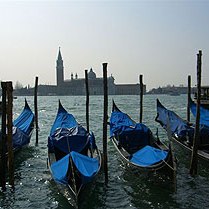
After building his new wing, Napoleon Bonaparte said “Now, this is the most beautiful drawing room in all of Europe!” The Piazza is open to the sea on one portion of the Southside, adjacent to the Doge Palace, where two massive marble columns stand at the original entrance to the city.

These two columns were erected in 1172 but originally stood at Constantinople. Atop one column is a carved statue of a winged lion (the symbol for Saint Mark) and atop the other, is Saint Theodore with an alligator (Venice’s earlier Patron Saint.)

Today visitors to this magical city built on the water, arrive via the Ponte della Liberta, a two and a half mile long bridge from the mainland. The original bridge, built in 1846, accommodated train travelers only, but an auto bridge adjacent was completed in 1933.

When arriving in Venice by train, passengers disembark at the Santa Lucia Train Station, built in the mid 19th century and remodeled in the 1950’s. Don’t make the mistake of getting off the train at the Venice mainland station, as it is an expensive cab ride to Venezia.

BREATHTAKING VIEW
The train station’s front steps open up to a breathtaking view of the Grand Canal. The San Simeon Piccolo church (1718-1738) with its green copper dome, sits directly across the canal from the station. It is here, a visitor realizes, just how unique this city is, as you watch all the boats busily traversing the waterways.

There are Vaparettos (water buses) carrying visitors, locals and commuters around the city. There are trash boats, UPS boats, grocery delivery boats, personal boats and, yes, the famous graceful and elegant black gondolas with gondoliers sporting their time-honored black-and white-striped shirt and wide-brimmed straw hat.

All commerce and travel around Venice depends on these waterways. Venice is built of 117 tiny islands, connected by more than 400 walking bridges and more than 150 canals. There’s only one small area of Venice that is even connected by the Ponte della Liberta for auto traffic, parking and drop-off.

A visitor to Venice can explore the tiny streets boarder the small canals, without the distraction of noisy scooters and fast driving Italian automobiles. The city consists of a labyrinth of tiny streets and canals, and exploring these areas away from the primary tourist stops is calmingly quiet, romantic and simply enchanting.

THREE MILES WIDE
It’s safe to walk in Venice, and getting around is easier than you might think. Yes, you can get lost, but watch the street signs pointing to landmarks like the train station (Ferrovia), Saint Mark’s Cathedral or the Rialto Bridge, or even the Grand Canal, which will help you find your bearings. The entire city is less than three miles wide, and getting away from the most popular tourist sights will lead a visitor to explore this city’s numerous historic cathedrals, museums, parks and palaces.

The Vaparetto (water bus) is an excellent way to see the city. An all-day ticket (12 Euros) allows you on and off passage for a 24-hour period. Multiple day (3 and 7) or single excursion tickets are also available. There are Vaparetto stops all around the island and down the Grand Canal.

The Vaparetto routes also take passengers to the lagoon islands of Murano (known for Venetian glass) and Burano (known for its colorful houses and lace making). From the train station, take Line #1 or #82 for a leisurely two mile ride down the Grand Canal, as it snakes its way through the middle of Venice.

Lining the Grand Canal are impressive palaces, that offer a glimpse into life as it was from the Renaissance time to Casanova’s day. Remember, access to these palaces was primarily by water, so the highly-decorated front entrance was always along a canal, rather than the sidewalk in the rear.

PINEWOOD PILES
How could these early residents build such impressive structures on a swampy lagoon island? Pinewood piles were driven 25 feet into the solid clay ground before building work began. These pilings were closely packed, free from oxygen which inhibits decay.

Above the pilings came brick and then stone creating damp-proof foundations. Mortar on the exterior of buildings is a special Venetian style, which is porous enough for moisture to evaporate. (Keep in mind, the canal tides rise each day and canal boat traffic causes waves to lap onto these foundations.) Of course, there is decay, but it all adds to the beauty, history, the weathered Bettina.

Everything in Venice is worth a picture! A camera is a must to record your memories, but most importantly take, the time to stop at one of the many outdoor cafes, where you can sit in the sun, sip an espresso, listen to the water and immerse yourself in this historic time capsule. It’s a memory you will never forget! ET

Kristi Nelson Cohen is the owner and operator of Bella Italia Trips, leading guided tours to Italy. She has visited Venice numerous times.

WHERE TO STAY IN VENICE
Hotel Gardena 3 STARS
www.hotelgardenavenice.it

Phone: 39-041-220 5000
This hotel is conveniently located near Piazzale Roma (auto taxi and bus service for the airport). The hotel is only a 5 minute walk from the train station on a small and relatively quiet canal. This is a small hotel (14 rooms) with an exemplary staff.

Hotel Principe: 4 star
www.hotelprincipevenice.it
Phone: 39-0410220 4000
This hotel is conveniently located adjacent to the train station (to the left northeast) and this former palace hotel borders the Grand Canal. This is a larger hotel with numerous amenities and a full-service restaurant and piano bar.

Both of these hotels have easy access to Vaparetto or private water taxi service. To purchase multiple day Vaparetto tickets or the Venice Card, (combination Vaparetto and Museum admission) log onto www.venicecard.com.

To see a complete time table of rail schedules in and out of Venice: Venzia Santa Lucia, log onto www.raileurope.com.

For travel tips, packaged trips to Venice and photos, log onto www.bellaitaliatrips.com.
World Renowned Venetian Glass

Discovering the colorful island of Murano, Italy

By Kristi Nelson Cohen
Photos by the author

The renaissance European aristocracy favored it, explorers Lewis and Clark used the beads for trading with the Native Americans and Victorians proudly displayed it. Venetian glass has captured our eye for centuries, and today artisans continue a time-honored tradition to produce some of the world’s most beautiful glass.

The marshy lagoon offers artisans the components necessary for glass making: silica, sand and soda ash. Glass making started in Venice over a thousand years ago, but with the fear of fire from the glowing hot furnaces, and air polluting smoke from these same furnaces, Venetians decreed that all glass making take place on a nearby island. Glass makers moved their furnaces and factories in 1291 to the island of Murano, just two miles north of Venice across the lagoon.

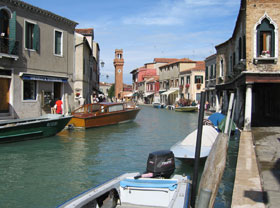
Once these glass artisans moved to Murano, this tiny town prospered and grew to nearly 30,000 residents in the 13th century. This community is similar to Venice, as it is comprised of several small islands, connected by canals and bridges, but on a much smaller scale. Today, Murano is home to only a few thousand permanent residents.

GET AWAY FROM CROWDS

Frankly, it is sometimes a relief to get away from the crowds and busy sidewalks in Venice and take the time to enjoy a slower pace in Murano. There are many glass factories still operating in Murano and most have complimentary demonstrations and tours available. Of course, they also have elegant showrooms with one-of-a-kind glass sculptures, chandeliers, goblets and even glass beads. Prices at the glass factories can seem steep, but each piece is authenticated, insured and shipping is available.

During a demonstration, most factories will show you how an artisan takes a molten glob of glass, orange with heat, and blows through a tube and spins the tube, creating a one-of-a-kind creation. Minerals and precious metals are added to the glass to create colors, just as they would have been 500 years ago. The color blends, and mineral recipes are a highly regarded secrets.

VISIT IS A ‘MUST’

A visit to a glass factory is a must, but when it comes to buying glass, there are also many smaller shops lining Murano’s main canal near the Vaparetto (water bus) stop. Compare prices, as you may find even better bargains in one of the many shops in Venice. The smaller shops don’t usually offer shipping, but they are happy to pack purchases in bubble wrap and tissue to pack in your luggage.

To learn about the history of glass making, visit the Museo Vetrario in the restored Palazzo Giustinian. This museum has exhibits of rare 500-year-old glass and glass/enamel pieces, as well as contemporary sculptures and examples of the entire glass making process. They are open 10 a.m. – 4 p.m. daily (closed Wednesday).

Following a morning glass factory tour, enjoy a leisurely lunch at one of the many eateries located along Murano’s main canal. Al Vetrai Da Adino, located at address number 29, is a personal favorite. Owner Adino and his wife Christina cook up some local favorites including the freshest fish, pastas and vegetables.

Start your meal with a typical Venetian “spritz” which is a refreshing aperitif made with Campari and sparking Prosecco. (If you enter the island via the Vaparetto, simply walk across the first bridge, then continue north about 200 feet and you’ll see the restaurant on your right. A large rooster logo adorns the front window.) Adino doesn’t speak much English, but his hospitality and great food will win you over. Be sure to tell them “Kristi sent me!” and you might be treated to an after-meal glass of Fragolino, a homemade wine that’s simply delicious! For advance lunch reservations,
call 041-739-293.

TAKE THE VAPARETTO

How to reach Murano: Take the public water bus or Vaparetto – #41/42– which takes about 30 minutes (from the train station, or Piazzale Roma ) or take boat # 52 from San Zaccaria which is near Saint Mark’s Square.

In 2007, Vaparetto tickets were available for one trip at 3 Euro, or 12 Euro for a 24 hour multi-trip ticket. The glass factories also have representatives in San Marco Square who sometimes provide a free or discounted fare water taxi in exchange for taking a specific factory tour. Some hotels can also arrange for a boat to pick you up at the hotel and take you directly to one of the factories.

Once in Murano, you may want to continue on to the island of Torcello (whose cathedral was founded in 639) or Burano (distinct for its multi-colored homes and famous for the lace-making crafts). Take Vaparetto #13 from the dock located adjacent Murano’s lighthouse. (This requires walking across the canal and around Murano in order to get to the other Vaparetto stop).

Frankly, after a busy morning and a big lunch in Murano, one might prefer a lazy boat ride back to Venice, a good cup of coffee and or perhaps an afternoon nap. It’s all a part of the Venetian experience.

Kristi’s favorite glass factory offering a one-of-a-kind demonstration and truly unique, contemporary glass art is called Schiavon. Their factory also produces stemware, chandeliers and traditional Murano glass, although the unique pieces by Mr. Massimiliano Schiavon are worth a visit. This glass factory has been in the Schiavon family for three generations.

Vetreria Artistica Di Schiavon
No. 7 – just a few shops north of the Vaparetto stop on the first canal.
Phone: 011-39-041 739 396
http://www.massimilianoschiavon.com
E-mail: info@massimilianoschiavon.com

Kristi Nelson Cohen is the owner of Bella Italia Trips, a small U.S. company offering guided trips to Italy. To reach Kristi or for more information, log onto www.bellaitaliatrips.com.
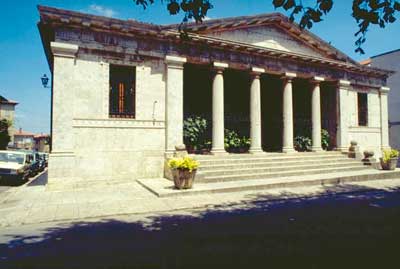
The New Etruscans

By Erla Zwingle
Photos courtesy the Italian Government Tourist Board NA

Say “Etruscan” to most people and they almost certainly know at least something about them: weird language, fabulous frescoed tombs, spectacular gold jewelry (lovers of trivia may also know that they called themselves “Rasna,” which may have meant “citizen,” that they gave the Romans the arch, and that their language had no “O”). This glamorous civilization began to be known about 968 B.C. and was a formidable economic and cultural power until its eventual decline and virtual disappearance in the 1st century B.C. — almost a millennium of indelible influence not only on the Romans, but on the many other Italic peoples who flourished on the Italian peninsula in the seven centuries before Christ. But recent excavations are revealing some surprising new facets of Etruscan life.

Below Massa Marittima, the hills that undulate toward the sea are brick-red from the copper enriching the well-named Colli Metallifere. On the forested slopes rising from the bright waters of the Lago dell’Accesa, archaeologist Stefano Giuntoli and his team have been working in an area of several dozen ettari (hectares), digging up the remains of clusters of small houses. These were the homes of Etruscans who, from the 9th to the 6th centuries B.C., managed the extraction and manufacturing of metals from the nearby mines of Serrabottini and Fenice Capanne.

HOUSES HARD TO FIND
“Houses are hard to find,” Giuntoli explained one sunny June morning; the air was already clinking with the music of many trowels in the stony soil. “The idea of the city was born by the Etruscans,” he said. “And the wealth of this city was due to extraction of metal.” Not only copper, but iron, lead and silver. The city of Vetulonia “had an explosion of wealth because of its bronze,” he said. “Traders came here from all over the Mediterranean. “

“This is the oldest and most extensive site we have,” he continued. “When the idea of a city began in the 6th century, walls come in. Long, communal retaining walls come in Etruria with the idea of democracy, not aristocracy. So here in Accesa it’s very strange to see only houses. Each area contained about 10 houses, which they put wherever they wanted, and its own cemetery. So it is a city, but an anomalous form of a city. A city of the 6th century had a wall, an acropolis, a temple, and streets. Here, no. It’s a strange thing for the period.”

Giuntoli’s team has opened five areas, and the entire site, open to the public as a Parco Tematico della Civilta’ Etrusca, can easily be visited in a morning. There are also some modest tombs dug in the earth, lined with stones, which have yielded treasures. “We’ve found many beautiful objects here,” Giuntoli said. “An iron axe, and a lance, and a strange bronze tool. And a small sort of decorated spatula.” One of the most striking is a 7th century woman’s bronze belt buckle made of two winged horses and sphinxes — common Middle Eastern motifs. Better yet, he shows me a piece of bucchero, a ceramic made only by the Etruscans and people of Asia Minor– dusty, but still distinctively black, and with the dull sheen that made it appear to be metal. It is part of a bowl that held food 2,500 years ago. “We also found a flint arrowhead from Neolithic times,” Giuntoli added, “put under the central post of the house to avert evil, part of the foundation ritual. Like laying the cornerstone. And we had never found tiny votive vessels in a house before — we usually find them in a temple. But we found some in that small room, to venerate the ancestors.”

Chiusi – Museo Nazionale Etrusco
Photo Courtesy Agenzia turismo Chianciano Terme – Valdichiana


CIRCULAR CAPANNA
In Area B, some houses larger than the usual one-room structures indicate how Etruscan society was changing. “Here the houses have walls of stone and tile roofs,” Giuntoli said. “For us, tiles are normal, but in antiquity the circular capanna (a kind of thatched hut) was normal, with a straw roof. In the second half of the 7th century in Etruria you see a rectangular house with many rooms and a roof of tiles. It must have been extremely important for the development of society, because one family could make a capanna, but a house with stones and tiles needs specialized workers who know how to make and to place them.” These workers, along with traders and scholars, also mingled the Etruscan culture with others. “We have a Greek man who worked here and made his fortune, so he was rebaptized with an Etruscan first name: ARNTHE PRAXIAS. And in the 5th century there was another person who had a Celtic last name, AVLE KATACINA.”

From the 5th century, the Etruscans began to struggle, then slowly decline, in the face of the growing power of the Samnites, Romans, Umbrians and Celts, the very people they once had taught. Accesa was abandoned in the 6th century, and commercial routes shifted to the Ionian coast. But in this unsettled period, the Etruscans continued to work, trade, and even fight. This is now visible on a hill outside Montalcino, where Dr. Luigi Donati has been bringing an Etruscan fortress to light.

“In November of 1990 I was walking along a trail from Montalcino to Sant’ Antimo,” Donati recalled, “and I saw on the map the name Poggio Civitella. It’s a name that evokes something, some place that was inhabited in the past. In these woods I saw this hillock, and you realized it wasn’t natural. Rummaging in the chestnut leaves, I found an Etruscan tile from the 6th century BC. So then I understood the name.”

ABANDONED VILLAGE
In the crunchy dry undergrowth, he showed me the remains of houses on the gently sloping sides of the hill; like Accesa, the village was abandoned in the 6th century. “There was a general crisis in the countryside then,” Donati explained. “It was like Italy in the 1960s–the people left the countryside for the city.” But in the second half of the 4th century BC, the Etruscans returned.

“Why was this fort born?” Donati asked. “It was a period of danger for the Etruscans. The Celts and Gauls came from the north, and the Etruscans felt the need to secure their territory, so this was a fort of the confine (border). There were many in the territory of Chiusi. This is our first chance to see an Etruscan fort in detail.”

What is surprising about this fort, among other things, is that it is circular. The builders exploited the previous village’s terraces to gain height, and constructed two walls, four meters apart and 150 meters around. The walls were at least six meters high. Most striking is the realization that they built it in a tremendous hurry to face some imminent danger. “The sandstone was quarried right here; we see the pick marks,” he said. “There were lines of men who passed stones hand to hand, and just put them down as they arrived. You can see it was built without care — they even put bigger stones on stop of smaller ones.”

From this vantage, the embattled Etruscans controlled all of Tuscany. On a clear day you can even see as far as Elba. But their days were ending. According to their sacred texts, the Rasna would live for ten centuries, and so it was. But now they are coming back to us. “Yes, it’s full of spirits,” Stefano Giuntoli admitted, smiling, in the woods at Accesa. “But we’re in amicizia (friendship).”

Stretching Your Dollar in Italy

Dine at the local bar

By Kristi Nelson Cohen

Rising exchange rates don’t have to put you in the red when traveling in Italy. With record high Euro exchange rates, travelers can stretch their dollar when dining by trying some new dining options.

Eating is a pure pleasure for Italians and visiting guests. Italians take their meals very seriously and a full 3-5 course dinner in a fancy ristaurante can eat into a travel budget quickly. In order to stretch a budget, try these simple tips.

Breakfast is often included in a hotel’s room package. If it is not, follow the locals to a neighborhood bar for your morning coffee and pastry. A bar in Italy is not a place to consume alcohol and dance the night away. They are fancy little candy box establishments, found on nearly every corner. Italian bars are the place where patrons socialize over their morning coffee (sometimes several times each morning), return for a light lunch, and arrive again in the evening for an apertivo or cocktail before dinner.

Bars in busier cities, especially those in tourist areas, traditionally charge one price to stand at the counter (al banco) or a higher price to sit at one of their café-style tables (al tavolo). If you want to sit and enjoy the view, then the price is usually worth it. A coffee that might cost 1.50 Euro at the counter could cost twice as much to sit at a table. During the late morning/afternoon and evening hours, service at a table traditionally includes some salty snacks like potato chips or nuts, even olives, with your beverage.

If you choose to stand at the counter, patrons traditionally pay the cashier, and then present their receipt to the barista who will complete the coffee order.

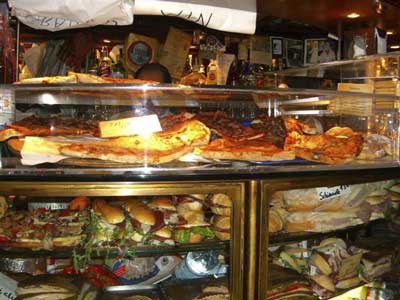
Most bars have a tasty selection of pizza and panini.

ITALIAN COFFEE
Italians consume a variety of coffee drinks throughout the day. Most will start the day with a cappuccino which is a shot of espresso served in a large cup with steamed milk and topped with frothy milk foam. Most Italians will not drink cappuccino after mid morning but switch to other coffee drinks. Of course, they’re happy to accommodate tourist requests for cappuccino at any time of the day.

Later in the morning, and throughout the day and into the evening, Italians consume what they call caffe which is espresso, or a small cup of very strong coffee topped with a delicious caramel colored foam called crema. This coffee is rich and strong, and usually sweetened with sugar. Espresso is the basis for most Italian coffee drinks.

If you want a weaker version of coffee that resembles what Americans drink, order a caffe Americano which is a shot of espresso with steamed hot water in a larger cup. This is also called caffe lungo.

If you want to be more adventurous, order a caffe corretto which is espresso corrected with a shot of liquor like grappa, cognac or flavored liquor. Nothing warms your heart faster or settles a full stomach.

EATING AT BARS
Besides serving fantastic coffee throughout the day, an Italian bar usually offers a selection of sandwiches called pannini. These can make an affordable option for lunch or dinner. Some bars also offer a limited selection of pre-made one dish meals, like pasta or vegetables. These establishments are referred to as tavolo caldo. A simple one-course meal with a mineral water aqua minerale or a house wine (vino della casa) is an exceptional value for the traveler.

APERTIVO AND ANTIPASTO FOR DINNER
Italians traditionally dine relatively late (8-9 p.m.) for dinner. After a long day of touring, visitors might opt for a lighter, less expensive option for dinner. Many of the local bars offer light snacks to entice cocktail business. Some wine bars also offer a variety of little sandwiches, potato croquettes and grilled vegetables either complementary or for a very reasonable price.

In Venice in particular, this selection of snacks is referred to as Cichetti. Combined with a spritz (cocktail made from Campari and Prosecco) or a great glass of local wine, these light snacks can make for a satisfying dinner.

Each region of Italy offers regional food fares, typical for that area. The Cichetti in Venice may include such items as marinated sardines, Bacala which is a salt fish cod spread for bread or polenta and deep friend calamari. Antipasto offerings in Tuscany may be a selection of salamis, cheeses and olives.

In Rome, the antipasto might be crusty bread with tomato, herb and olive oil topping called Buschetta or a sampling of small slices of freshly-made pizza.

Whatever, the region, the food is delicious, fresh and attractively prepared. Even the simple selections from a bar will satisfy your hunger and your quest for a delicious yet affordable meal.

Chocolate Cravings

By Sharon Hudgins
Photos by the author

Crave chocolate? Do you salivate when someone utters those sweet syllables? Whether you call it chocolate (Spanish, Portuguese), xocolata (Catalan), chocolat (French), chocola (Dutch), Schokolade (German), Schoggi (Swiss-German), cioccolato (Italian), choklad (Swedish), sjokolade (Norwegian), czekolada (Polish), suklaa (Finnish) or okolaad (Estonian), it’s all the same: delicious!

As a woman at a Swiss chocolate factory told me, “You don’t need to know any other languages to talk about chocolate. Chocolate speaks for itself!”

FROM BEAN TO BAR
The Olmecs, Mayans, and Aztecs were enjoying chocolate as a drink for centuries before Christopher Columbus bumped into the Western Hemishphere on his way to the spice-producing lands of the East. Both Columbus and Hernán Cortés are credited with bringing cacao beans (from which chocolate is made) back to Spain in the early 1500s, where the Spanish eventually figured out that the bitter beverage of Central America tasted a lot better with sugar, vanilla and spices such as cinnamon and cloves added to the brew.

Sweet, foamy, dark and thick, hot chocolate soon became a favorite drink of the Spanish nobility, and Spain monopolized the market for cacao beans for nearly a century. In the 1600s, the popularity of chocolate—still consumed only as a beverage—began to spread to other parts of Europe, including France, England, Austria and the Netherlands. By the early 1700s, chocolate-drinking establishments in London were already competing with the popular coffeehouses there.

It was the Europeans who turned a ceremonial drink of the Aztec aristocracy into the affordable chocolate products that we enjoy today: chocolate powder, chocolate candy, chocolate syrup, chocolate spread.

In 1828 a Dutchman named Coenraad van Houten developed a process for removing the natural fat (cocoa butter) from the cacao beans and turning the remaining solids into powder. By the mid-1800s, European chocolatiers had figured out how to combine sugar and cocoa butter with a paste of ground cacao beans to make bars of “eating chocolate.”

The British were also pioneers in the development of chocolate technology, but the Swiss were the leaders in the field. Cailler, the first brand of Swiss chocolates, was established in 1819. In 1875, Daniel Peter in Switzerland invented milk chocolate, soon to be marketed by Nestlé. Four years later, Rodolphe Lindt created the world’s first “melting chocolate” for use in pastry- and candy-making. And in 1913, Jules Séchaud introduced a process for manufacturing filled chocolates. By that time, the Swiss were already the largest producers of chocolate in the world.

SWEET TOOTH
Today, the Swiss, Belgians, and Germans lead the world in chocolate consumption, happily eating 24 to 26 pounds of chocolate per person every year. The British, Austrians, and Norwegians are close behind, consuming 18 to 22 pounds each. And what tourist traveling in Europe can resist those triangular Toblerone and purple-packaged Milka bars, square Ritter Sports, round Mozart Kugeln, gold-wrapped Ferrero Rochers, fancy French and Belgian handmade bon-bons, chocolate Santas at Christmas, chocolate bunnies and cream-filled eggs at Easter time?

When I told a Swiss hotelier that I was surprised to learn that the Swiss eat an average of 12 kilograms (over 26 pounds) of chocolate per person annually, she looked surprised, too. “So little?” she asked incredulously. “I eat 200 grams of chocolate every day. Let’s see, that’s…”—she stopped to calculate in her head—”3 pounds each week, which is about 150 pounds a year. And I’m such a happy person!”

CHOCOLATE TOURS
Several countries in Europe have fascinating museums that focus on the history and process of making chocolate, from bean to bar. And many chocolate producers—from major multinational companies to small independent artisans—offer tours of their facilities, with a chocolate tasting included. The Swiss even have a Chocolate Train that takes you on a round trip from Montreux to visit the Cailler-Nestlé chocolate factory in Broc, as well as a cheese factory in Gruyères.

For more information on European chocolate museums and factory tours, check out the following sweet links:

Multi-country
www.chocolatetourism.com

Switzerland
www.alprose.ch
www.chocolatfrey.ch
www.schoggi-land.ch
www.cailler.ch
www.raileurope.com (search “Swiss Chocolate Train”)
www.goldenpass.ch (search “Swiss Chocolate Train”)

Germany
www.schokoladenmuseum.de

Belgium
www.mucc.be
www.choco-story.be

France
www.planetemuseeduchocolat.com
www.museeduchocolat.fr

Italy
www.museodelcioccolato.com
www.eurochocolate.com

Spain
www.pastisseria.com/en/PortadaMuseu

England
www.cadburyworld.co.uk