European Christmas Sweets

From Advent to Three Kings Day
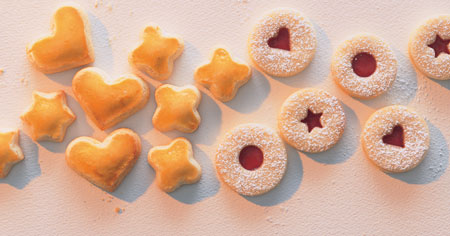
Two famous Swiss Christmas cookies: on the left are the Mailänderli, on the right, Spitzbuebli. Both will be devoured throughout Switzerland this season. Courtesy Swissmilk.ch/Ursula Beamish

by Sharon Hudgins

Christmas is my favorite holiday season in Europe. Advent, the period leading up to Christmas itself, begins on November 30 or on the fourth Sunday before Christmas, whichever comes first on the calendar. And in most places, the Christmas season doesn’t end until six weeks later, on January 6, known as Three Kings Day (or Epiphany).

Special foods are prepared and eaten at this time of year, some of them with roots in Europe’s pre-Christian past. During the cold, dark days leading up to the winter solstice (December 21 or 22) and Christmas (December 25), people have a natural craving for caloric cookies, cakes, and confections to tide them over until warmer, sunnier weather arrives. Yet not so long ago, Advent was a time of fasting for members of the Catholic Church, which forbade the consumption of butter, eggs, and other animal products during this holy period, in solemn preparation for the coming of the Christ Child.

Today, only a few people still deny themselves such temptations during the days leading up to Christmas. In many parts of northern Europe the annual Christmas baking binge begins as early as October, when home cooks make hundreds of cookies and dozens of cakes and puddings whose flavors are better if they “ripen” for several weeks before serving. Commercial bakers and confectioners hire extra help to produce thousands of holiday sweets for this most lucrative quarter of their business year. And colorful open-air Christmas markets in large cities and small towns sell the seasonal specialties of their own particular region.

Bakers in the British Isles start making their Christmas puddings several weeks or even months in advance of the special December day. Old-fashioned Christmas Plum Pudding—originally made with mutton, beefsteak, and fruits, including plums—has morphed in modern times into a dense, rich, dessert full of currants, raisins, and sultanas, with mixed fruit peel and candied cherries, steamed in a covered bowl and served with a brandy hard sauce made from sugar, butter, and brandy beaten together until fluffy. A sixpence coin is cooked inside the pudding, which supposedly brings good fortune to whoever finds it in his or her serving.

Also popular in Britain are a variety of fruit cakes, sometimes covered with a layer of marzipan and decorated with marzipan “fruits” and sprigs of holly—and small mince pies, their pasty cases filled with a fruity mincemeat mixture of apples, raisins, currants, sultanas, almonds, beef suet, brown sugar, and several spices. In earlier times, the oval shape of these mince pies was said to represent Christ’s crib, with the spices symbolizing the gifts from the East that the Three Kings brought to Bethlehem.

In Scotland, slices of densely textured Dundee Cake, filled with dried and candied fruits and decorated with almond halves on top, are served on “Boxing Day” (December 26). Buttery Scottish shortbread, taken with a dram of Scotch whisky, is traditional for the New Year. And in Ireland the holiday season is the time for loaves of fruit-and-nut-filled breads, as well as several kinds of round or oblong puddings made from wheat or potato doughs, sugar, spices, and dried fruits, wrapped in a cloth and boiled in a big cooking pot.

In the Scandinavian countries the Christmas season begins on St. Lucia’s Day (December 13), which is celebrated with coiled yeast buns colored with saffron. You’ll also find a number of yeast-raised Christmas breads (JulekakaJulekage) made with plenty of butter and eggs, filled with raisins, nuts, and candied fruits, and seasoned with cardamom. Norwegian Almond Ring Cake (Kransekake) is a tower of baked almond-paste rings, the largest on the bottom and the smallest on the top, fancily decorated with white icing. Crispy molasses-spice cookies called pepparkakor are popular throughout Scandinavia, where they’re made in many holiday shapes and sometimes hung as ornaments on the branches of a special “pepparkakor tree” made of wooden dowels. And a traditional Christmas Eve dessert is rice pudding, with a whole almond hidden inside. Whoever finds the almond will be married before the next Christmas (in Sweden) or will have a series of lucky adventures throughout the coming year (in Denmark).

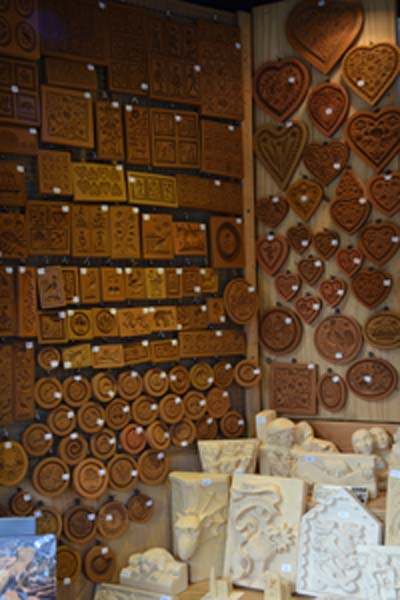
The Netherlands, Belgium, and northern Germany are home to crispy brown Christmas cookies known as Speculaas or Spekulatius, the dough spiked with ginger or black pepper and pressed into special wooden molds that outline the cookies’ shapes and imprint designs on them. Cookies in the form of windmills and little sailor boys are especially popular. And throughout all of Germany, the Christmas season seems to bring out the best in home bakers, whose kitchens are filled with the aromas of sugar, yeast, spices, nuts, and candied fruits combined in myriad ways to produce some of Europe’s best-known holiday treats.

German gingerbread cookies (Lebkuchen) have been famous throughout Central Europe since the Middle Ages, especially those from the city of Nürnberg. The stiff dough made of rye or wheat flour, honey, almonds, hazelnuts, finely chopped candied fruit peel, and spices—ginger, cinnamon, nutmeg, cloves, allspice, cardamom, and coriander—is pressed into wooden molds that imprint intricate designs on the cookies. Other Lebkuchen cookies are made in simple shapes—circles, hearts, squares—and decorated with white or chocolate icing. No German Christmas season would be complete without plenty of Lebkuchen to nibble on during the entire six weeks from Advent to Epiphany.

Other traditional German Christmas sweets include flat, white, anise-flavored cookies (Springerle), made with pretty designs printed on them with wooden molds; spicy, round “pepper nuts” (Pfeffernüsse) containing ginger or black pepper; six-pointed “cinnamon stars” (Zimtsterne), redolent of that spice and covered with thick white icing; marzipan confections made of sweetened almond paste, shaped and colored to resemble tiny fruits, vegetables, animals, and other figures; Stollen, an oblong fruit-nut-raisin bread covered with a thick layer of confectioners’ sugar and said to represent the Christ Child in swaddling clothes; and Striezel, a braided bread whose three strands of dough symbolize the Holy Trinity.

Holiday treats very similar to these can be found throughout Switzerland, Austria, the Czech Republic, Slovakia, Poland, and Ukraine. Many Poles and Ukrainians also begin their Christmas Eve dinner with kutia, an ancient kind of pudding made with whole wheat grains boiled with honey, figs, dates, raisins, nuts, lemon peel, and poppy seeds. And they conclude the meal with a sweet compote containing twelve kinds of dried fruits, symbolizing the Twelve Apostles. In Hungary, poppy-seed rolls and cakes are popular at this time of year, harking back to the pre-Christian era when the tiny seeds were eaten as a fertility charm on the night of the winter solstice to ensure a bountiful harvest in the coming year.

Christmas traditions are a bit different in the Latin lands. In France, especially in the south, it’s customary to have thirteen desserts for the Christmas Eve dinner that follows Midnight Mass—including fruits, nuts, dates, marzipan, nougat, and always a “Jule log cake” (Bûche de Noël), a long cylindrical cake rolled up around a buttercream filling and decorated on the outside with chocolate icing swirled to look like tree bark, with marzipan “leaves” and meringue “mushrooms” attached to the log-shaped cake. The French end the Christmas season with the celebration of Three Kings Day (January 6), when they eat a special “kings’ cake” (galette des Rois), a round, somewhat flat, golden-colored cake made of puff pastry, often enriched with an almond-paste filling, which has a single bean or a porcelain or plastic good-luck charm baked into it. Whoever finds the charm in his or her piece of cake becomes king for the day and gets to wear the gold-foil crown that was perched atop the cake when it was served.

In Italy, bakers turn out a number of yeasty Christmas breads (pane di Natale), full of butter, eggs, nuts, raisins, and dried and candied fruits. Particularly popular throughout the country is panettone from Milan, a tall, delicate, dome-shaped yeast bread studded with raisins, almonds, and candied orange peel. The northern Italians like their own Alpine fruit bread (Zelten), another yeast-raised bread chock full of dates, sultanas, candied citron, almonds, walnuts, and pine nuts, scented with cinnamon and cloves. The Italian sweet tooth finds satisfaction in all the confections traditionally eaten during the Christmas season, too, including chewy almond nougat (torrone) and marzipan; candied orange halves, candied pumpkin slices, and candied whole chestnuts; and medieval panforte from Siena, a flat, dense, highly spiced, confection-like fruit-and-nut cake containing almonds, hazelnuts, walnuts, pine nuts, honey, candied fruit peel, cinnamon, cloves, white pepper, and coriander seeds. And on Three Kings Day the Italians eat puff pastries filled with apricot preserves, as well as a type of sweet focaccia (flat bread) with a single black bean baked inside for the lucky eater who finds it and gets to be “king for the day.”

The Christmas season in Spain is a time for consuming large quantities of the confections for which the country is famous: marzipan from Toledo, often formed in fanciful shapes and sometimes decorated with white icing and colorful candied fruits; almond nougat (turrón), the hard variety from Alicante and the soft version from Jijona, as well as numerous other types of turrón containing hazelnuts, pine nuts, coconut, and chocolate; candied chestnuts; sugar-coated almonds; candied fruits and dried dates; the rich chocolates for which Spain is gaining an international reputation; and “fig bread” (pan de higos), a thick, chewy confection of dried figs, hazelnuts, almonds, and sesame seeds, flavored with grated orange peel and anise liquor.

The special meal on Christmas Eve in Spain often concludes with a sweet soup made of ground almonds, walnuts, or chestnuts, sprinkled with cinnamon. But for children the main event of the holiday season is Three Kings Day, when they receive gifts from the Magi who carried presents to the baby Jesus. As in other Latin countries, the traditional sweet is Three Kings Cake (Roscón de Reyes), a ring-shaped cake studded with raisins, nuts, and candied fruit, and with a coin, a bean, or a small toy baked into it—the lucky charm for the finder, who then gets to wear a king’s paper crown for the rest of the day.

The holiday season in Greece is also a time for indulging in sweets: pencil-thin bread-dough fritters fried in olive oil and drizzled with honey; coiled flaky baklava filled with ground almonds and roasted chick peas; spice cookies made with cinnamon, cloves, and olive oil, then soaked in a sweet syrup; delicate ground-almond cookies (kourabiedes) covered with a thick coating of confectioners’ sugar and with a whole clove baked inside to symbolize the spices that the Three Kings brought to the Christ Child.

Many kinds of special Christmas breads (Christópsomo) are baked in Greece during this season, too. Depending on each family’s own traditions, the Christmas bread might contain walnuts, almonds, raisins, dried figs, lemon or orange zest, cinnamon, cloves, coriander seeds, black pepper, and aniseeds. The shapes of these breads vary according to family preferences, too, as do the decorations on top, which range from symbolic shapes made of dough to sugar glazes and garnishes of chopped candied fruits. After the midnight church service on Christmas Eve, the family and guests gather around the table to share the Christmas bread. The first piece is set aside for Christ, and the rest is distributed among the diners, one of whom will find a coin baked into the bread, bringing that person the blessing of good luck. And on New Year’s Eve, the Greeks share another special bread called Vasilópita (St. Basil’s Bread), a yeast bread flavored with aniseeds or mahlepi seeds, honey, olive oil, and grated orange zest, sprinkled on top with sesame seeds and often decorated with the number of the new year made out of dough. The head of the household breaks the bread at the last stroke of midnight, giving a piece to each person at the table—and whoever finds the coin baked inside will have good fortune throughout the year.
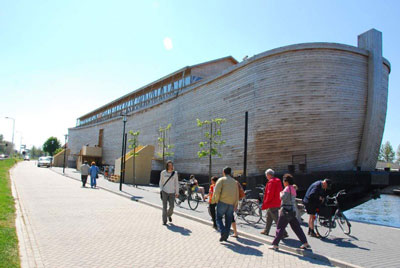
Noah’s Ark in the Netherlands

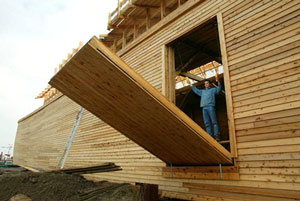
When the massive central door on the side of Noah’s Ark was opened, the first crowd of curious townsfolk was there to behold its wonder.

Of course, it’s only a replica of the biblical Ark, built by Dutch creationist Johan Huibers, as a testament to his faith in the literal truth of the Bible. The ark is 150 cubits long, 30 cubits high and 20 cubits wide. That’s two-thirds the length of a football field and as high as a three-story house.

LIFE-SIZE ANIMAL MODELS
Life-size models of giraffes, elephants, lions, crocodiles, zebras, bison and other animals greet visitors as they arrive in the main hold. A contractor by trade, Huibers built the ark of cedar and pine. Biblical scholars debate exactly what wood was used by Noah for construction.

Huibers did the work mostly with his own hands, using modern tools and with help from his son, Roy. Construction began in May of 2005. On the uncovered top deck — which was not quite ready for the opening– will come a petting zoo, with baby lambs and chickens, and goats and one camel.

Visitors on the first day were stunned. “It’s past comprehension,” said Mary Louise Starosciak, who happened to be bicycling by with her husband while on vacation when they saw the ark looming over the local landscape.

There is enough space near the keel for a 50-seat film theater where kids can watch a video that tells the story of Noah and the ark. Huibers says he hopes the project will renew interest in Christianity in the Netherlands, where church going has fallen dramatically in the past 50 years.

Flanders is a Festival

Flanders is a bucket-list destination for music lovers—big bands, unique scenes and tons of genres. With more than 280 festivals each year, there’s plenty to choose from.

Every summer millions of people gather in Flanders—a region full of history. You can enjoy live music in cities such as Antwerp, Ghent, Brugg and Boom as well as historical sites, exquisite food and shopping possibilities.

JAZZ MIDDELHEIM

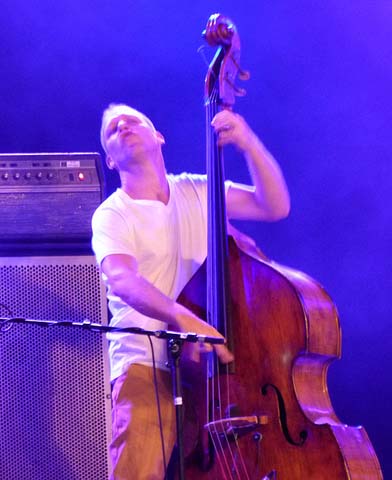
Jazz Middelheim, founded in the late 1960s, has become an iconic jazz festival. The festival grounds in Antwerp are within walking distance of the famous sculpture park. The green surroundings of the Park den Brandt with a high quality infrastructure, including a playground for children and gourmet catering, attract not only a vast jazz crowd but also families with children who love to linger in the park and enjoy the live music.

Jazz Middelheim

GHENT FESTIVALS
After more than 160 years of existence, the Ghent Festivities have become one of the best festivals in Europe. Four international festivals take place there over a period of 10 days, with free music on 10 squares, children’s entertainment at various different locations in the city and hundreds of indoor and outdoor activities.

Ghent Festivals

MAFESTIVAL
One of the oldest classical music festivals with an international reputation takes place in Brugge. Daily concerts, competitions, workshops and lectures focus on the historical performance.

MAFestival

TOMORROWLAND
Yesterday is History, Today is a Gift, Tomorrow is Mystery. What started out in 2005 as a one-day festival has grown into a three-day festival. Two weekends are being organized for the 10th anniversary of Tomorrowland in Boom. Tomorrowland is one of the largest festivals with 360,000 attendees. Tickets sell out in one day for this popular festival.

For more info, go to www.visitflanders.us

Traditional Holland

By Don Heimburger

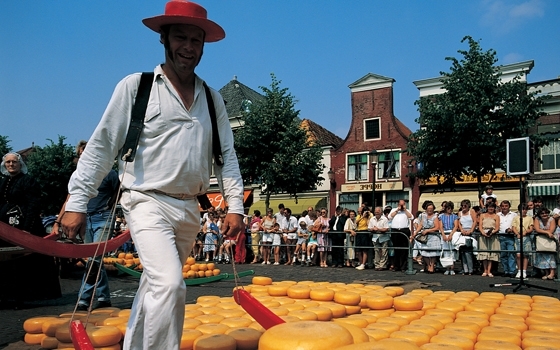
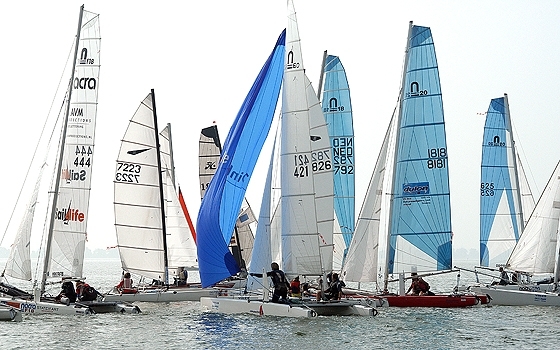
The Netherlands may be a small country, but it’s packed with world famous icons. Discover bulb fields, windmills, cheese markets, wooden shoes, the canals of Amsterdam, masterpieces of the Old Masters, Delft Blue earthenware, innovative water management and millions of bicycles. Find out more about these and other typical Dutch highlights. www.holland.com

Castles, Christmas Markets and Cruising

By Marilyn Heimburger
Photos by Don Heimburger

Taking a river cruise is always a good idea. A river cruise that includes both historic castles and colorful Christmas Markets along Germany’s Rhine River is the best idea ever. So on Thanksgiving Day I happily ignored Black Friday and escaped the pre-Christmas shopping frenzy of the USA to spend a week on the AmaKristina, cruising from Amsterdam to Basel, Switzerland. Romantic castles and Christmas Markets along the Rhine River ushered in the Christmas spirit for me this year.

The newest AMA ship, the AmaKristina

The AmaKristina is essentially a floating luxury hotel for 158 guests. Our roomy cabin had a queen-sized bed, private bathroom with shower and double sink, desk, large format Apple screen and keyboard for internet, TV, or movies. Built in 2017, the ship’s hallways and guest suites were filled with Gustav Klimt art prints, and seasonally decorated with lights, Christmas trees, wreaths, garlands, and gingerbread houses. We boarded in Amsterdam, unpacked, and had our first dinner on board. Open seating at each meal encourages mingling of guests.

AMSTERDAM ATTRACTIONS
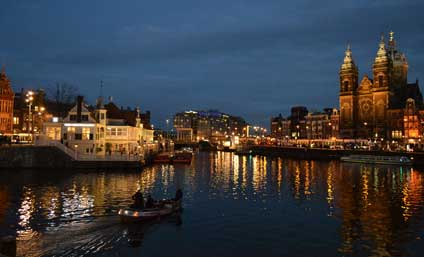
Fortified with a sumptuous on-board breakfast buffet, including an omelet station and daily vitamin “shot,” we departed the ship for an informative canal cruise, a panoramic city bus tour of Amsterdam with an up-close look at a local working windmill, and free time for exploring. Although there were no Christmas markets in Amsterdam, there were plenty of opportunities for shopping near the central train station, and street entertainment in Dam Square: a saxophone player, giant bubble maker, dancing dinosaurs, and impromptu yoga. Just be sure to watch out for the numerous killer bicycles that demand the right-of-way.

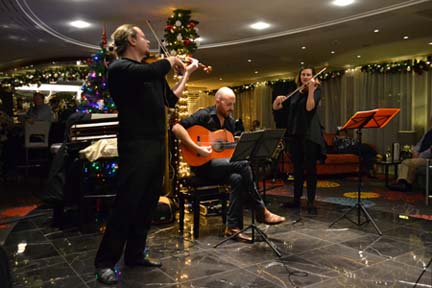
The AmaKristina set sail from Amsterdam in the afternoon, and I had time to explore the ship’s main lounge and bar, massage and hair salon, fitness room, gift shop, and even a heated pool and giant chess set on the sun deck. A cruise overview presented by our cruise director, plus Christmas tree decorating and an evening classical music performance by the three talented string players known as “La Strada” kept passengers entertained. The cruise ships cleverly bring nightly entertainment on and off the ship when stopped at the locks on the river.
Onboard entertainment by La Strada

COLORFUL COLOGNE
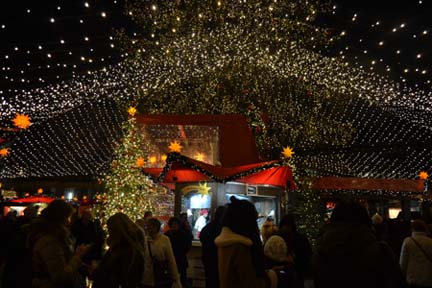
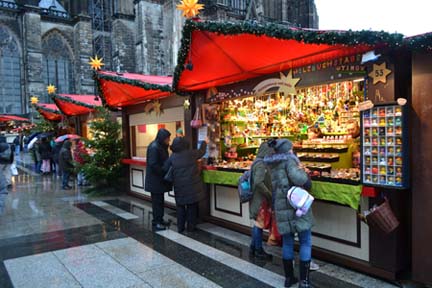
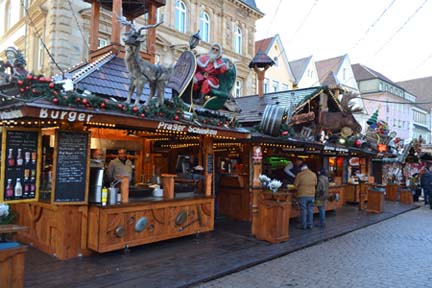
After cruising all morning, we docked in Cologne, Germany, where shuttle buses brought us to our first Christmas Market in Cathedral Square. Although the earliest Christmas Markets in Germany date from the late Middle Ages, the one in the shadow of Cologne’s impressive Cathedral is a relative newcomer, opening in 1995. Under a dazzling canopy of thousands of tiny lights, 150 vendor huts with bright red awnings and brilliant multi-faceted stars displayed handicrafts, comfort foods, gifts of all types, decorations, wooden toys and much more.
Canopy of Christmas lights in Cologne’s Cathedral Square

Cologne Cathedral Square market

HOME OF THE ELVES
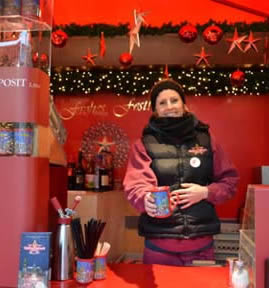
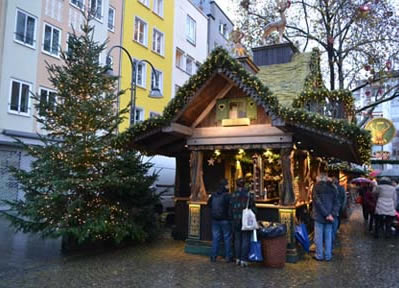
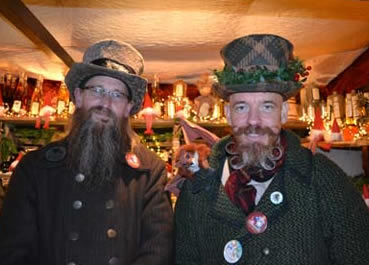
A few blocks away in the Altstadt and Heumarkt was an older and much larger Christmas Market called the “Heimat der Heinzel” or Home of the Elves. These were little creatures from a Cologne legend who used to do all the housework until they were annoyed by an inquisitive housewife, and disappeared. I loved this market. Aisles were arranged by theme, and the large wooden huts had Old World, wood-carved details, thick green garlands and costumed vendors. Little “Heinzelmännchen” rode in gondolas above an expansive ice rink. Each souvenir mug of Glühwein (the traditional hot mulled wine so popular at the Christmas Markets) had a different elf pictured on one side, and his particular work specialty described in verse on the other. Cologne boasted three additional smaller markets, but time was too short to visit all of them on this trip.

Home of the Elves’ Market in Cologne

CASTLE DAY ON THE RIVER
The morning cruise from Cologne to the next stop in Rüdesheim passed through the UNESCO World Heritage Rhine Gorge. What a treat to sit in the ship’s expansive lounge with panoramic windows, coffee in hand, gazing at vineyard- covered slopes, picturesque villages, historic castles, and the famous Lorelei Rock, with commentary by the cruise director. This romantic part of the trip alone is a highlight of any Rhine River cruise.

RÜDESHEIM’S CHRISTMAS MARKET OF THE NATIONS
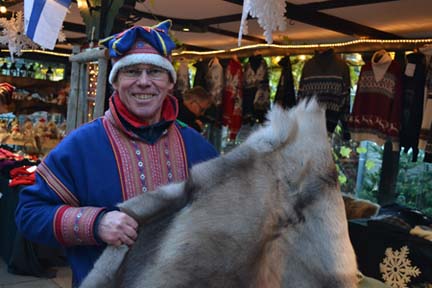
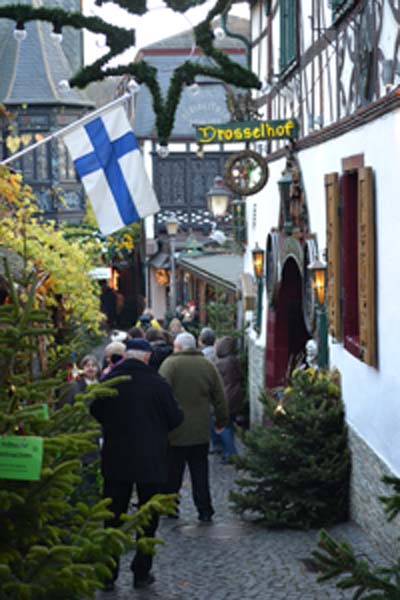
After a gourmet lunch of traditional German specialties, we docked in Rüdesheim, where the “Christmas Market of the Nations” wound up and down the narrow streets of this wine town of about 7,000 citizens. Vendors from France sold mushrooms, lavender and cheese, Tunesia vendors brought wares made of olive wood, smoked salmon came from Norway, furs came from Finland and even the United States was represented with a local vendor offering homemade cookies, Dr. Pepper, Fanta, marshmallows, and Hershey’s chocolate. Christmas choir music piped throughout the market added to the festive atmosphere as shoppers strolled past inviting vendor stalls and village shops. A new discovery at this market was hot mulled Glühbier from Belgium.

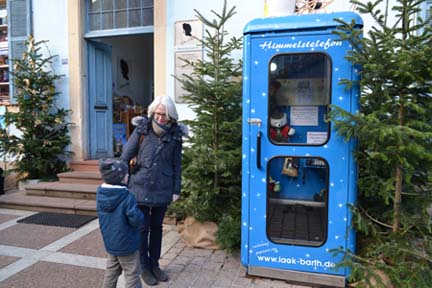
(clockwise) Hot lunch in Rüdesheim; Fur from Finland at Rüdesheim’s Christmas Market of the Nations; “Hallo” from the gnomes in Rüdesheim; Placing a phone call to the Christkind in Speyer

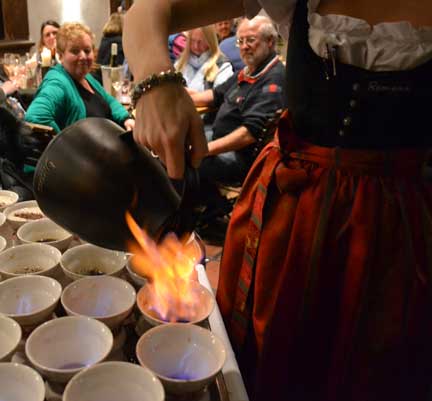
Throughout the ship’s seven-day cruise, each day’s program offered passengers quiet, regular and active excursions. Rüdesheim excursions offered by the AMAKristina included wine tasting, a hike, bike or gondola tour through the vineyards. A late night, fun option was experiencing Rüdesheimer coffee – coffee set on fire with Asbach brandy and sugar, topped with whipped cream and chocolate flakes – at Eiscafe Engel on Rüdesheim’s famous Drosselgasse.

Rüdesheimer coffee
Atmospheric narrow Rüdesheim street

THE IMPERIAL CITY OF SPEYER
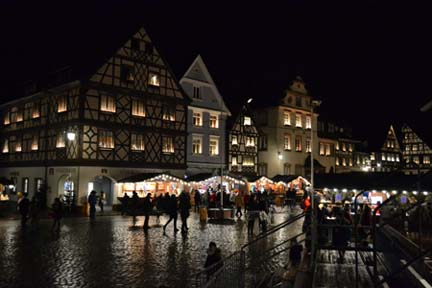
By noon the next day we docked in Mannheim and could choose a bus excursion to Heidelberg or to Speyer. Having visited Heidelberg several times already, we chose to see the 2,000-year-old Imperial city of Speyer. Here the Christmas Market extended down Maximilianstrasse from the UNESCO World Heritage Speyer Cathedral, the largest Romanesque cathedral in the world. Though smaller than the Cologne Christmas Markets, Speyer’s market had all the requisite comfort foods: Glühwein, grilled sausages, roasted almonds, and even waffles, potato soup and dumplings. Vendors offered wood handicrafts, colorful candles, jewelry, scarves, kitchen gadgets and unique cookie cutters. Especially for children were an ice rink, kiddie car rides and a telephone booth with direct access to the Christkind in Heaven!

Back onboard the AmaKristina we had a tea time treat of traditional Spekulatius cookies and Stollen, while we set sail for our next stop: Strasbourg and Le Petite Alsace in France.

INVITING STRASBOURG AND LE PETITE ALSACE
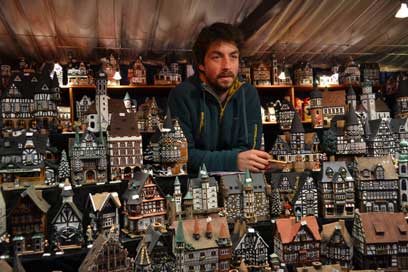
As with each stop on our route, AmaWaterways provided an energetic and knowledgable guide for a walking tour of the area on the way to the Christmas Markets. This morning we learned about the Alsace region, which changed hands between France and Germany four times in 75 years. The name “Alsace” derives from a German phrase meaning “seated on the Ill.” While our guide led us along the Ill River, past the beautiful half-timbered houses lining both sides, she explained that this charming area was historically the least desirable place to live. It had been the site of fortifications and a prison, the home of executioners and the location of the tanning trade, with its smelly byproducts. Today it is a photographic highlight of any trip.

CHRISTMAS MARKETS WITH A FRENCH TWIST
Christmas Markets first appeared in Strasbourg in 1570, making this German/French town the location of one of the oldest markets in Europe. Although much was similar to the Christmas Markets we saw in Germany, here the food vendors offered toasted baguettes topped with cheese as the warm comfort food, instead of the ubiquitous wursts in the German markets.

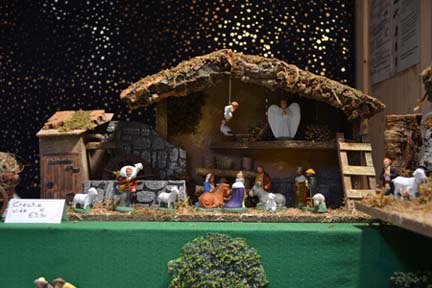
The traditional market was near the cathedral, with some vendor huts topped with storks, that famously nest in Strasbourg’s Parc de l’Orangerie. More than 300 vendor chalets filled the historic city center. Entertaining metal sculptures depicting different professions caught my eye, as did the detailed, intricately carved figures for nativity sets. A market area featuring Strasbourg’s service organizations surrounded a towering decorated Christmas tree and grassy area which was perfect for family photos. A small market in Gutenberg Square annually invites vendors from other countries: this year it welcomed Iceland.

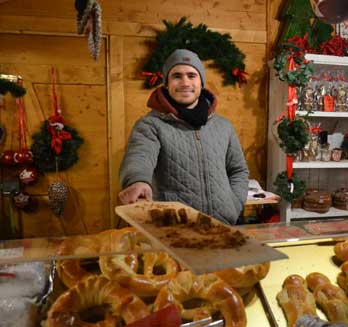
Try some gingerbread in Gengenbach

GENGENBACH’S GIGANTIC ADVENT CALENDAR
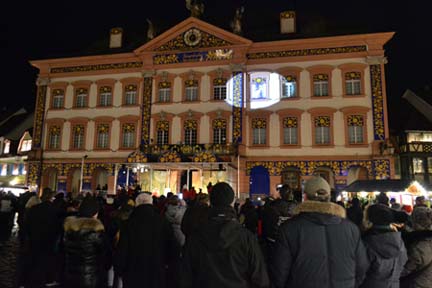
We were back on the German side of the Rhine River by late afternoon, and on a shuttle bus from the AmaKristina to the beautiful village of Gengenbach. A guided tour down Engelgasse led to the Christmas Market which stretched down the main street from the town hall square.

Gengenbach Town Hall Advent Calendar

Gengenbach boasts the world’s largest Advent calendar in its neo-classical town hall, where each night one of its 24 windows is opened to reveal a picture by a famous artist. This year’s calendar featured paintings by Andy Warhol. We arrived just in time for the first night’s opening ceremony: a narrated short skit performed by children from the town. After browsing through the market’s matching vendor huts, with hot Glühwein in a mug depicting the town hall Advent calendar, we returned to the ship to be delightfully entertained by a French cabaret singer and her accordion accompanist.

LAST FULL DAY ONBOARD
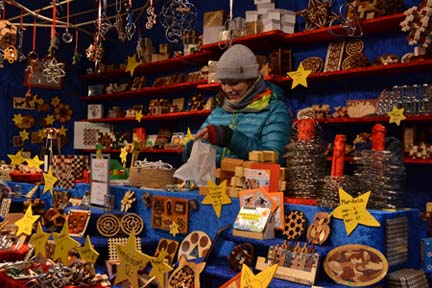
Shuttle busses from the AmaKristina were the order of the day with options to Riquewihr, France, or to Freiburg and Breisach, Germany. Deciding to aim for German-speaking vendors, we took the second option, and explored the market in the heart of Freiburg’s beautiful old quarter. Traditional craft products, including glass blowing and colorful wooden toys were offered beneath the green and white lights that trimmed the roofs of the more than 130 vendor huts.

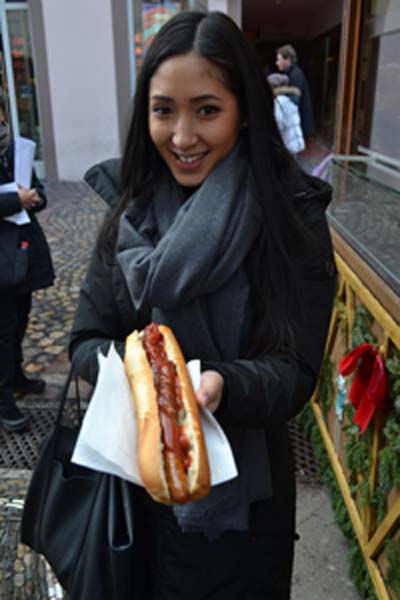
Time was too short to see all of the ceramics, candles, hand puppets, amber jewelry and Christmas decorations, but we enjoyed a quick wurst and Glühwein lunch before leaving for Breisach. Unfortunately this town’s tiny Christmas Market was not yet open for business, so after strolling down the pedestrian-only shopping zone, we walked back to the boat dock, to sail to Basel and enjoy the captain’s farewell dinner and our final evening on board.

Early the next morning, with our luggage packed with Christmas Market treasures, we left for home filled with Christmas spirit and with wonderful memories from this romantic river cruise of Christmas Markets and Castles on the Rhine.

TIPS AND FINAL NOTES
An AmaWaterways river cruise makes visiting so many sites along the Rhine extremely easy. You unpack only once in a roomy cabin. Meals are well-planned, complete and delicious, with perfect portions and special dietary options. Wine and beer are included with lunch and dinner. The fabulous coffee bar is open all the time. Special surprises delight passengers as well, such as serving a location’s specialty treats during afternoon tea time, recognizing St. Nicholas Tag by putting treats in passengers’ shoes left outside cabin doors, and providing hot towels and beverages upon re-boarding after cold excursions. The company will cheerfully arrange for your transfers to and from the cruise ship.

The cruise director is the key to having a wonderful time on any cruise, and this AmaWaterways trip had a great one. David Rosell was organized, energetic, accommodating and entertaining.

Most Christmas Markets are open from the beginning of Advent through Christmas, although some larger markets stay open longer, and some smaller ones have limited open hours. Bring euros – most small vendors don’t accept credit cards.

Pack warm layers of clothes, boots and umbrellas. The weather can be chilly and damp during November and December.

AmaWaterways provides a post-cruise option, if you want to extend your trip. This Christmas Market/Rhine River castle cruise offered an excursion to Lucerne and Zurich after disembarkation in Basel. For more AmaWaterways information and schedules, go to: www.amawaterways.com.

If you go: The Mövenpick Hotel Central in Amsterdam is a great place to stay before you board. This new, 4-star hotel is located within walking distance of the train station, the city center and the cruise ship loading docks. A sumptuous breakfast buffet is included with the room, and a knowledgable concierge team can help you plan your free time in Amsterdam before the cruise. For more information go to: www.movenpick.com/en/europe/netherlands/amsterdam.