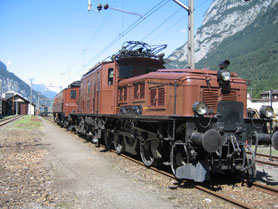
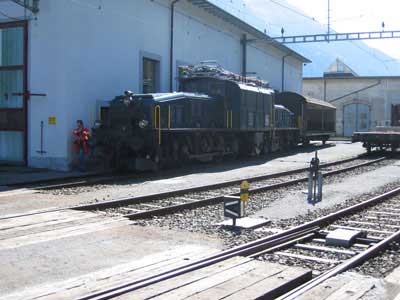
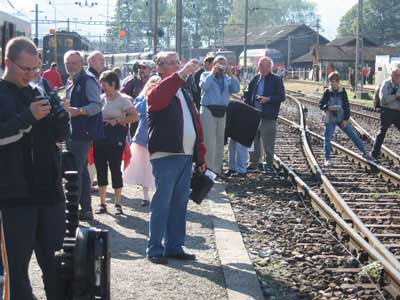
A giant electric Crocodile locomotive was on display September 8 and 9 in Erstfeld, Switzerland when 50,000 visitors showed up there and in Biasca to celebrate the 125th anniversary of the opening of the famous 15-mile-long Gotthard Tunnel. Heimburger’s European Traveler was at the giant party and recorded these photos. As many as seven steam engines and dozens of vintage pieces of equipment were available for viewing. There were also many interactive displays. For more information, go to www.sbbhistoric.ch.
By Marilyn Heimburger Photos by Don and Marilyn Heimburger
As spring approaches, thoughts of chocolate come to mind, just because we’re always looking for an excuse to eat chocolate! As the saying goes, “Chocolate–it’s not just for breakfast anymore!”
After a recent trip to Cologne, Germany, and after visiting the Cathedral and Roman ruins, I added a trip to the Chocolate Museum to my itinerary. You’ll learn all there is to know about this treat and have the opportunity to taste and see why the ancients called chocolate the “food of the gods.”
Opened on Halloween Day in 1993, the museum was the idea of Dr. Hans Imhoff, an entrepreneur who was the head of the Stollwerck Chocolate Company of Cologne. The three-story museum is located on the banks of the Rhine, within sight of the Cologne Cathedral.
Designed to look like a ship in the harbor, its modern glass and metal architecture surrounds the historic central customs office, which was built in the 1890’s. The museum welcomes an average of 1,700 visitors a day and about 650,000 per year.
3,000-YEAR-OLD HISTORY
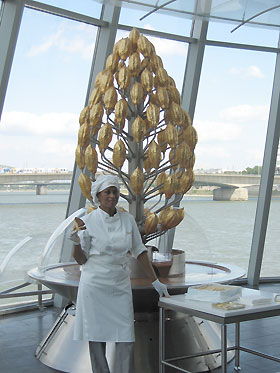
Visitors can see chocolate being made at the museum.
As you walk through the three-story museum, you’ll see exhibits covering the 3,000-year history of chocolate. Growing and harvesting raw cocoa is shown with photographs, harvesting tools and a full size log boat from Ghana. Next is a 100-square-meter tropical greenhouse containing real cocoa plants and more than 60 other rainforest species. You’ll learn that the flowers of the cocoa plant grow directly on the trunk of the tree, so that pollinating insects can find them more easily in the thick jungle!
Chocolate’s popularity began as a luxury drink. An extensive exhibit brings you through the pre-Columbian Olmec, Aztec and Mayan culture, where cocoa was the drink of the gods, and was sometimes used as currency, or “brown gold.”
Next you’ll see the beautiful porcelain and silver cups and pitchers that were crafted to serve this luxury item in 17th and 18th century Europe. The chocolate culture of the 19th and 20th centuries is depicted in a full-sized shop, with chocolate tins and boxes on display, as if you had stepped back in time.
Front and back of a Santa mold
Beautifully preserved chocolate vending machines and advertising posters give insight into the popularity of chocolate. A film room continuously shows old television ads for chocolate. Chocolate packaging from apparently any brand of chocolate that ever existed is on display. Even American brands of chocolate are represented, although Astrid Hage, press representative of the museum, admitted that it was difficult to find someone willing to eat the American-made chocolate in order to empty the packaging. She explained that the Europeans follow a different standard in their chocolate production, and that their formula produces a superior taste.
DECIDE FOR YOURSELF
You’ll have the chance to decide that for yourself in another part of the museum, where, thanks to the Lindt and Spruengli Company, a two-floor exhibit demonstrates the production of chocolate today. From the processing, roasting, grinding of the bean to the pouring of hollow molded chocolate figures and a truffle production line, this small-scale system makes about 400 kg of chocolate every day for visitors to see, smell and finally, to taste.
A nearly 10-foot tall chocolate fountain stands on the production floor, and a museum staff member stands ready to offer a waffle cookie dipped in the warm melted chocolate that pours from the spouts.
THERE’S MORE, TOO
Do you want more of the “food of the gods?” A gift shop offering chocolate, souvenirs and gifts is ready to serve you. The museum also has a restaurant with a view of the Rhine.
Admission fees are 6.50 EUR for adults. Children under six or visiting on their birthdays are free. All exhibit texts are in both German and English.
The museum is closed on Mondays. Check their web page for information on hours, tours and special events: www.schokoladenmuseum.de
Germany is famous for its rivers; they cut through beautiful landscapes from north to south, from east to west, from the sea to the mountains. The rivers have been the modes of mass transportation long before roads and today the Elbe, Rhine, Main, Moselle or Danube invite hundreds of thousands of tourists each year for river cruises. But you cannot only discover Germany’s rivers on a boat. Cycling paths follow them through ever changing landscapes, past old castles, romantic towns and buzzing cities.
The Elbe Cycling Path is one of the most attractive in Germany. It leads for 520 miles from Dresden in the southeast all the way to the North Sea. The route is split in several stages, all easily doable in a day, and you can choose between both sides of the river. Leading through fascinating landscapes from wetlands to hills, connecting UNESCO World Heritage Sites such as the city of Dresden, the Luther town of Wittenberg and the harbor city of Hamburg, there is plenty to discover along the way. The river has historic significance as part of the former West German-East German border and you can still see the transformation of this region in process. Along the way you will find plenty of bike-friendly hotels, hostels and camping grounds, and many package tours make this a very accessible route.
The Moselle Cycling Path in Germany’s west between the wine-growing region of the Elbling wine near Trier, a wine specialty of the Upper Moselle, and Koblenz invites you to a pleasurable bike tour. For 150 miles discover the 2,000-year-old history of the region, from old Roman ruins in Trier and Koblenz, to romantic wine villages such as Bernkastel or Cochem and great spas in Traben-Trabach. The trail is predominantly level, with an excellent network of cycle tracks and rural roads as well as old towpaths and accurate sign-posting, offer optimum conditions for the casual cyclist.
For 360 miles the Main River Cycling path leads from east to west through the northern Bavarian Region of Franconia and the State of Hesse to Frankfurt. Highlights along the way are the majestic Wagner town Bayreuth, the UNESCO World Heritage Site of Bamberg, known as Germany’s beer capital and for its Baroque architecture, the wine growing region around Wuerzburg and the buzzing financial metropolis of Frankfurt. Stop along the way in one of the many local breweries or vineyards and be enchanted by 1,000-year-old castles and cathedrals.
The second longest river in Europe, the Danube, springs unofficially in the park of the princely Fuerstenberg castle in Donaueschingen at the border of the Black Forest in southwestern Germany, contained in a magnificently decorated, circular fountain from the 18th Century. “Mother Bear” presides over the fountain and shows her “daughter,” the young Danube and all cyclists the way.
The Danube Cycling Path leads for 360 miles through the German states of Baden-Wuerttemberg and Bavaria from the Black Forest to Passau in the southeast. The cycling road is signposted and package tours with several itineraries from seven to 15 days are bookable. Highlights along the way are the Sigmaringen and Hohenzollern castles of the Hohenzollern dynasty that ruled Germany in Baden-Wuerttemberg. Also interesting are the cathedral and merchant town of Regensburg, with the largest core of undestroyed medieval houses in Germany, and the three-river city of Passau. Discover the Danube from its fast flowing beginnings until it grows into a wide and impressive river in Bavaria.
The capital of the kingdom, yes kingdom, of Belgium–Brussels–is located pretty much in the center of Belgium, south of Antwerp. Brussels is a cosmopolitan city of more than 2 million people (total area) that loves food.
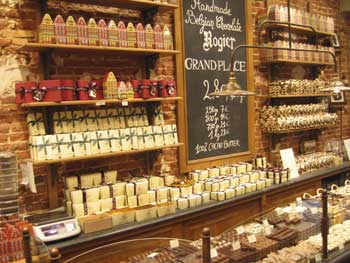
Known for its Grand-Place/Grote Markt with its filigree stonework, the city is fashionable, upscale and village-like all at the same time. Did I mention beer? It’s said Brussels offers 2,000 kinds of beer. Then there’s the food, and the chocolates.
Let’s take a tour through Brussels, using some of the internet sites available:
Both public and private transport are highly developed in the Brussels area, with a network of high-quality roads, airline routes and inland waterways. • Your arrival in Brussels–ways of entering the Brussels-Capital Region • Moving around Brussels–means of traveling, using public transport, on foot, by bicycle, by car, by motorbike, by air, etc. • Finding your way around Brussels–which are the best maps of the city available on the Net.
Brussels is served by Brussels Airport, located in the nearby Flemish municipality of Zaventem, and by the much smaller so-called Brussels South Charleroi Airport, located near Charleroi (Wallonia), some 50 km (30 mi) from Brussels. Brussels is also served by direct high-speed rail links to London by the Eurostar train via the Channel Tunnel (1hr 51 min); to Amsterdam; Paris and Cologne by the Thalys; and to Cologne and Frankfurt by the German ICE (Inter-City Express trains).
The Brussels metro dates back to 1976, but underground lines known as premetro have been serviced by tramways since 1968. A comprehensive bus and tram network also covers the city. Brussels also has its own port on the Willebroek Canal located in the northwest of the city.
An interticketing system means that a STIB/MIVB ticket holder can use the train or long-distance buses inside the city. The commuter services operated by De Lijn, TEC and SNCB/NMBS in the next few years will be augmented by a metropolitan RER rail network around Brussels.
Since 2003 Brussels has had a car-sharing service operated by the Bremen Company Cambio in partnership with STIB/MIVB and local ridesharing company taxi stop. In 2006 shared bicycles were also introduced.
Brussels contains more than 80 museums, including the Museum of Modern Art, and the Royal Museums of Fine Arts of Belgium. The museum has an extensive collection of various painters such as the Flemish painters such as Brueghel, Rogier van der Weyden, Robert Campin, Anthony van Dyck and Jacob Jordaens. Brussel’s museums cover areas such as art, technology, industry, science, folklore, literature, history and many other subjects, each presenting a different face of Brussels. They are astounding in the wealth of their collections and the new perspective they offer of cultures from all over the world.
FOODS Brussels is known for its local waffles, its chocolate, its French fries and its numerous types of beers. The Brussels sprout was first cultivated in Brussels, hence the name.
Brussel’s gastronomic offerings include approximately 1,800 restaurants with very good food and atmosphere. Connoisseurs consider Belgian cuisine among the best in Europe. In addition to traditional restaurants, there is an overwhelming number of cafes and bistros and the usual range of international fast food chains. The cafes are similar to bars that offer beers and small dishes. Also widespread are so-called brasseries that offer a large number of beers and typical national foods.
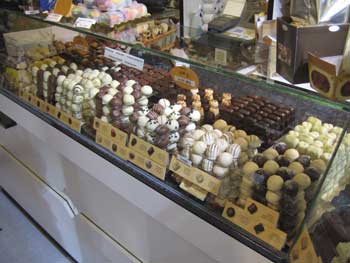
Belgian cuisine is characterized by the combination of French cuisine with more hearty Flemish recipes. Culinary specialties include Brussel’s waffles (Gaufres) and mussels (usually served with “Moules frites”–French fries). The city is a stronghold of chocolate and praline manufacturers, with traditional companies like Godiva, Neuhaus and Leonidas. In addition, the Belgian beer enjoys a good reputation—Hoegaarden, Leffe, Duvel, Jupiler, Stella Artois and Kriek (cherry beer) are all examples.
Brussels has become a significant center for international institutions, notably those of the European Union. The city also plays host to the headquarters of the North Atlantic Treaty Organization (NATO) which is based in the city, along with 1,000 other international organizations and 2,000 international corporations. Brussels is third in the number of international conferences it hosts and is one of the largest convention centers in the world. The presence of the EU and other international bodies means there are more ambassadors and journalists in Brussels than Washington D.C. International schools have also been established to serve this presence.
Usually before arriving in a large European city, I obtain a map of the main “ring” area and study it for hours.
A city map tells me where the Bahnhof (train station) is, the major tourist attractions such as museums, monuments, parks and buildings, as well as major streets and rivers or lakes. What I’m trying to obtain is a general impression of the size of the city and its environs, and the general layout of the city center.
When I first looked at the map of Berlin–the capital of Germany–after a few minutes I realized we were talking about a very large city, the square mileage of which is 552.
It wasn’t until I got to Berlin and starting walking around that I was able to piece together the whole Berlin attractions scene, and after two days there, started to get the picture. Berlin is big (it’s eight times the area of Paris), with 3.4 million people; nearly 140 million visit this northern Deutsche city each year.
Berlin is German’s greenest city, with more space devoted to woods, parks and cultivated areas than any other: there’s the very large English-style Tiergarten (originally a royal hunting reserve), the Botanical Gardens and the Zoological Gardens (the largest zoo in Europe with 13,000 animals representing 1,400 species). In walking the Tiergarten area, I was glad I had on comfortable shoes. In fact, in any larger city, be sure to take along comfortable shoes!
BERLIN ATTRACTS MILLIONS
With the fall of the infamous 13-foot, 99.4-mile-long Berlin Wall (erected August 3, 1961 by the Socialist Unity Party of Germany) in November of 1989, Berlin has come together to preserve its history, and celebrate the future with new, modern buildings of note. Europe by Rail, a Thomas Cook publication, says Berlin “now oozes cosmopolitan chic.”
Founded by traveling merchants as the twin settlements of Berlin and Coelin in the last quarter of the 12th century, the first mention in documents was in 1237 for Coelin and 1244 for Berlin.
Around 1650, and after nearly complete destruction of the city during the Thirty Years’ War, Berlin experienced an unprecedented cultural and economic boom, thanks to Elector Friedrich Wilhelm. He invited immigrants to settle the city, notably Jews and Hugenots, and by 1700 one of every five Berliners was a Hugenot.
In recent history, Berlin proper was divided up between the U.S., Britain, France and the USSR after World War II, with the Soviets instituting the People’s Democratic Republic. In June of 1991, the Bundestag decided by vote that Berlin should become the capital of the unified Germany.
If you go to Berlin for the first time, I suggest you take at least three full days to tour the city. Less than that, you won’t be able to spend much time at any one attraction. You will have gotten a quick overview only. Lines for some of the attractions such as the museums and the Reichstag Parliament Building can be very long, even in the “non-tourist” months.
GNT/Jochen Keute
TOP SIGHTS IN BERLIN
Some of the top sights in Berlin on your travel agenda should be:
–The impressive neo-Renaissance style Reichstag, which features a glass dome by Sir Norman Foster and offers a good overall view of the city. The building was opened in 1999 after restoration. It houses the Bundestag, the Lower House of the German Parliament. It’s open daily from 8 a.m. to midnight, with the last entry at 10 p.m.
–Brandenburg Gate (Tor)—This is Berlin’s most famous landmark and a symbol of the city’s reunification. It’s almost always crowded with people, but it encompasses a large area, and the area which it’s located can accommodate a large number of people. The gate was incorporated into the Wall at one time. Six Doric columns which are incorporated into the stonework support an antique entablature. It was built in 1789.
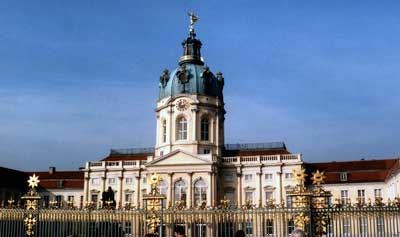
–Charlottenburg Palace is one of the oldest palaces in Berlin, built for Prussian Empress Sophie Charlotte. It’s said to be Berlin’s answer to Versailles, housing a great collection of German Romantic art. The castle offers guided tours only. Be sure to note the Porcelain Room, which contains beautiful vases, figurines and plates, mostly from China. Also note the White Room, which served as a banquet hall and throne room. Next to the castle is the Berggruen Museum which displays a 20th century collection of art, especially Picasso and Matisse. Both the castle and museum are closed on Mondays.
–Berlin Cathedral (Berliner Dom) is the largest 19th century Protestant church with a beautiful Sauer church organ and the Hohenzollern family crypt, part of which is open to the public. The church seats 1,500.
–The Kaiser Wilhelm Memorial Church, built at the end of the 19th century, was destroyed in 1943 during WWII and another new church built next to the ruins. It’s an interesting study in old and new.
–Topography of Terror is an outdoor exhibition on Nazi terror and crimes in the Third Reich, visited by thousands of people every day on Niederkirchnerstrasse. This exhibit is always well attended.
–Memorial to the Murdered Jews of Europe near the Brandenberg Gate is comprised of 2,700 concrete blocks which represent an “uneasy and confusing” atmosphere in an otherwise orderly society. Each concrete slab is between 8” and 15′ 9” tall.
–Checkpoint Charlie at Friedrichstrasse 43-45 in a busy shopping district is a museum that gives the history of the Berlin Wall, tells incidents that happened there, and displays original objects from successful escapes. The several-story museum is open daily from 9 a.m. to 10 p.m.
–New National Gallery at Potsdamer Strasse 50 features 20th century art, the ground floor of the Altes Museum (the first museum in Berlin in 1830) displays a collection of Classical Roman and Greek art and sculpture while the upper floor is devoted to an Egyptian Museum. The Bode-Museum features a sculpture collection and a museum of Byzantine Arts and a coin collection. The German Historical Museum on Unter den Linden is a permanent German history exhibition while the Gemaldegalerie Art Collection is ranked among the most important collections of 13th-to-18th-century European paintings in the world.
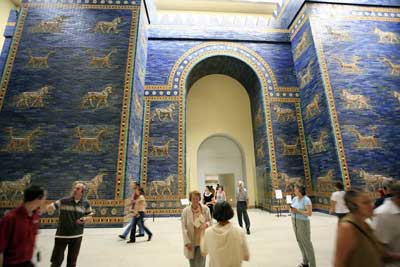
Three more museums of special note are the Museum of Contemporary Art, the Jewish Museum Berlin with an exhibition of on every aspect of German-Jewish history from the end of the Roman area to today, and the Pergamon Museum with its collection of classical antiquities, Museum of Islamic art, and Museum of ancient near-Eastern antiquities.
GNT/Eric Eichberger
170 MUSEUMS TO SEE
Berlin has more than 170 museums, more than enough to keep you interested; you can see why you’ll need extra time in Berlin.
Even the city squares in Berlin evoke interest, such as Alexanderplatz (named after Tsar Alexander’s visit to Berlin in 1805). This important public transportation junction is a focal point of city life in the eastern part of Berlin. The Gendarmenmarkt Square, named after Kind-Sergeant Frederick Wilhelm I’s “Gens d’Armes” regiment, is another location to see.
All sorts of other diversions are available in Berlin as well. There are eight major symphony orchestras including the Berlin Philharmonic, three opera houses, cabaret, variety and revue theaters, musicals and comedy. The Konzerthaus Berlin at Gendarmenmarkt- Mitte was built in 1818-1821 by the renowned Berlin architect Karl Friedrich Schinkel.
Numerous exclusive designer boutiques, international brand name outlet shops and more await shoppers in the Mitte district on Friedrichstrasse. Then there are the flagship stores, malls and the giant KaDeWe, a nearly 200,000-square-foot department store packed with attractive foods, clothing and all kinds of products and goods. It’s like a giant Harrods or the old Chicago Marshall Field’s store, with glitzy displays, helpful sales people and a do-it-right attitude.
Berlin hotels provide upwards of 11,000 beds in the luxury hotel category alone and a total of 88,000 beds overall. A click on http://www.visitBerlin.de will offer you more information and also offer 350 choices of where to stay. A list of youth hostels are also available at www.bock-auf-berlin.de.
GNT/Hans Peter Merten
TAKE A TOUR, SEE THE CITY
To see the city without all the walking necessary to cover the main attractions, try one of the several tour bus companies. You have a choice of BBS Berliner Baren Stadrundfahrt (www.sightseeing.de and www.bbsberlin.de) that offers tours in eight languages; Berlin City Tour, a 1 3/4-hour English and German tour on double-decker buses (www.berlin-city-tour.de), and Berliner City Tour-Eick’s Rundfahrten Berlin with open-topped buses (www.eick-berlin.de). Each tour line allows patrons to hop on and off the bus along the route.
Or, if you take city bus No. 100, which runs between the Zoo station, past the Tiergarten, Brandenberg Gate and along Unter den Linden (the main east-west thoroughfare), you’ll get to see a number of sites. Buses also run in the evening.
You can rent a bike for a city tour from 5 euros a day, with guided bike tours from 10 Euros a day (www.fahrradstation.de). There are also walking tours and boat tours provided by other companies.
Berlin has a new Hauptbahnhof that opened in 2006; it’s a clean railway station and easy to navigate, but the older European railway stations have more character. It’s also said the station lacks enough public toilets and seating for passengers. Shops and cafes are abundant in the station, and they are open seven days a week.
Berlin offers a good system of buses, trams, underground and surface trains (there are 24 different lines), and free maps showing these routes are available at tourist offices and hotel lobbies. A Berlin Welcome Card (valid 48 or 72 hours for 16 euros or 12 euros) allows unlimited travel on all public transportation and also a 50% reduction on city tours, museums, theaters and other attractions in Berlin and Potsdam (www.berlin-welcomecard.de).
There are numerous hotels to choose from in Berlin, with the more up-scale ones located in the center of the city; less expensive hotels and hostels are grouped around the Mitte district in the eastern part of central Berlin.
The #1 rated hotel out of a total of 552 Berlin hotels is the Ritz-Carlton, priced on average at $319 a night, with the Mercure Hotel rated #2 at $304 (average) a night. The Swissotel Berlin rated #3 is $144 a night and the Movenpick at #4 is $277 a night.
Berlin is certainly one of the more interesting cities in Germany, and I’m glad I went. From my visit, I only see Berlin as growing and becoming more popular in the future: it has a lot going for it!








 European Traveler