Spain at Its Best

Straying off the beaten path in Castile-León, a region ripe for discovery 

Story and Photos by Randy Mink

Does your town have a distinct look or personality? Something that really sets it apart from others?

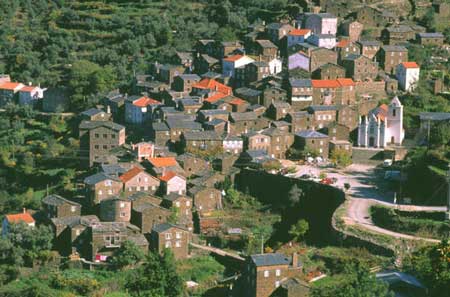
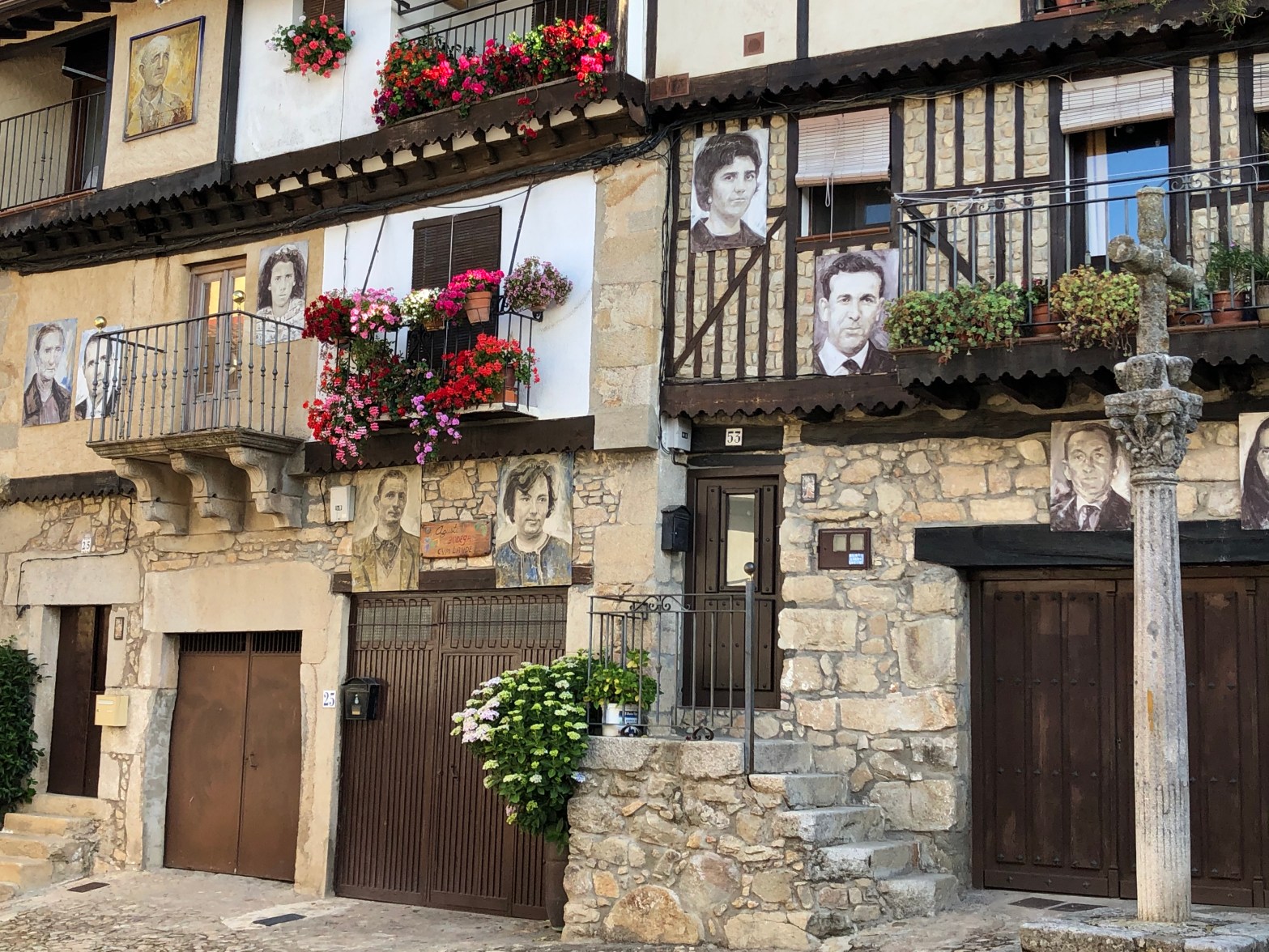
In western Spain, tiny Mogarraz (pop. 250) plasters its personality all over town, festooning houses with pictures of residents past and present. These portraits are large artworks that visitors can’t help noticing as they prowl the little plazas and narrow streets of this obscure town in the Sierra de Francia Mountains of southern Salamanca province.

Overlooked by most travel guidebooks, quirky Mogarraz was one of my favorite discoveries on a recent trip that included some under-the-radar places in Castile-León, one of Spain’s 17 autonomous regions. Our group concentrated on the region’s less-traveled western frontier, dropping in on remote rural areas, sampling three of its designated wine routes and venturing as far as the Portugal border.

This was my first trip overseas in three years, so I was more than revved up. Like a lot of Americans whose international travel plans were stifled by the pandemic, I had been itching to travel abroad. What a joy it was to be in Europe again! Each day was a revelation, a real adventure delving into art history, gastronomy, wine and everything that gets me psyched about Spain. Talk about pent-up wanderlust. The week-long trip provided a much-needed boost indeed.

Castile-León, situated west and north of Madrid, makes up about 20 percent of Spain’s total area but is only its sixth largest region in population (2½ million). Consisting of nine provinces, the vast chunk of real estate is slightly bigger than Portugal. Castile-León claims nine of Spain’s 34 wine routes and counts more than 400 wineries. It boasts three UNESCO World Heritage Sites—Salamanca (which our group visited), Segovia and Ávila.

The quaint medieval village of Mogarraz, on the Sierra de Francia Wine Route, would be a delightful destination if just for the enchanting cobblestone lanes that snake past its stone and half-timbered houses, many with flower-filled balconies. But portraits of the people who live in these ancient buildings add a strange twist.

The novel art project began in the 1960s, when poverty in the area drove many residents to seek jobs in South America, for which they needed a photo ID card. These IDs inspired the idea of decorating houses with photographs of the adults who lived in them. In 2012, local artist Florencio Maíllo took over the project and today he paints each of the 300-some portraits, from wizened grandmothers to young men in military caps.

Mogarraz and other towns in this mountainous region base their economies on tourism and winemaking. The delicate, dark-skinned rufete grape is special to the Sierra de Francia area in southern Salamanca province, where vines have been tended in terraces for centuries.

Our nest for the night, Hotel Spa Villa de Mogarraz, was right in the heart of the fairy-tale town and just steps from Bodega Vinos La Zorra. Under a tent canopy on La Zorra’s streetside patio, bistro patrons savor wines and tapas at tables fashioned from colorfully painted oil drums. We noshed on croquetas (croquettes), those addictive deep-fried balls of mushy goodness, and patatas meneás, mashed sweet potatoes flavored with garlic and paprika and topped with a pork rind.

Our group also went back in time in Miranda del Castañar, another gem on the Sierra de Francia Wine Route. With a guide we wandered the cobbled streets and took in forested panoramas from the 12th century walls of the pretty hilltop village. The medieval castle is now a brewery.
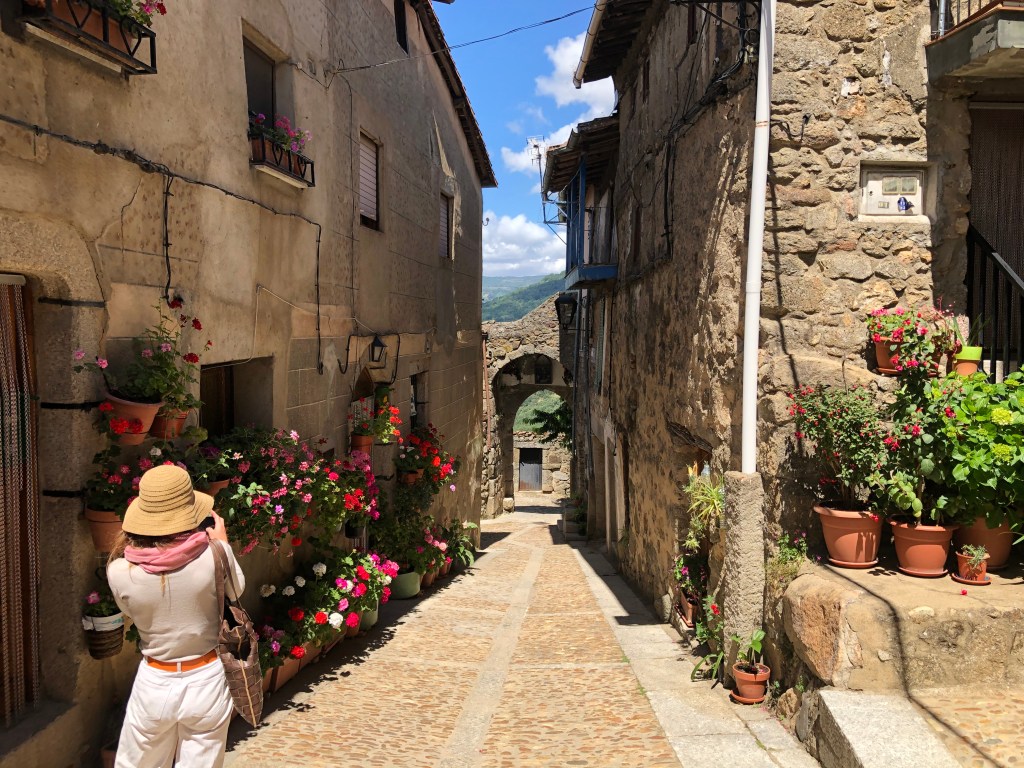
The medieval streets of Miranda del Castañar invite tourists to explore.

The city of Salamanca, unlike sleepy Mogarraz and Miranda del Castañar, is rather well known as a visitor destination, its historical core centering on the venerable buildings of Spain’s oldest university, founded in 1218. With a magnificent central plaza, lively pedestrian streets and youthful vibe, the manageable, medium-sized city of 150,000 residents offers just the right ingredients for a pleasant day or two of seeing the sights and soaking in the ambience. To me, it’s Spain in a nutshell.
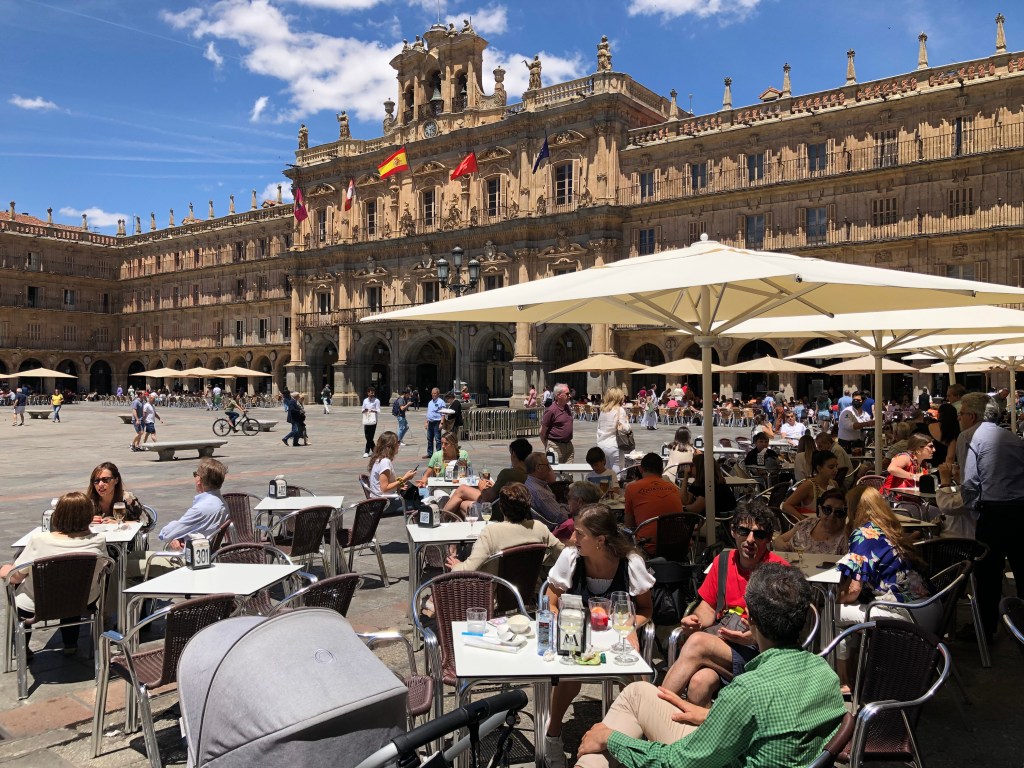
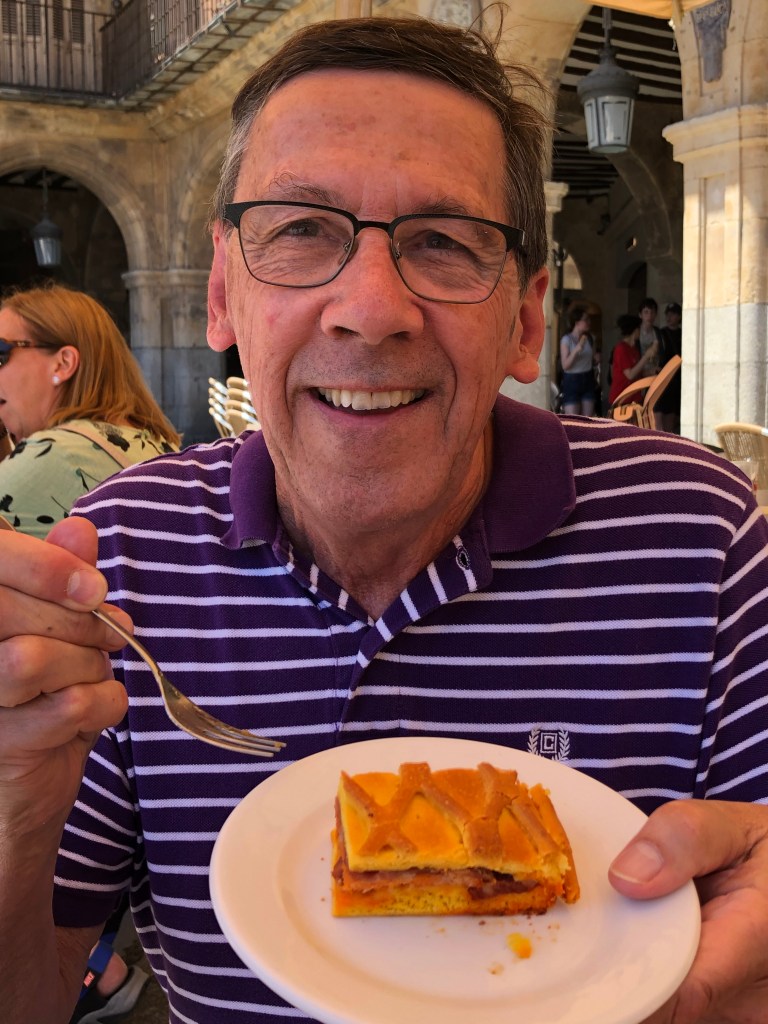
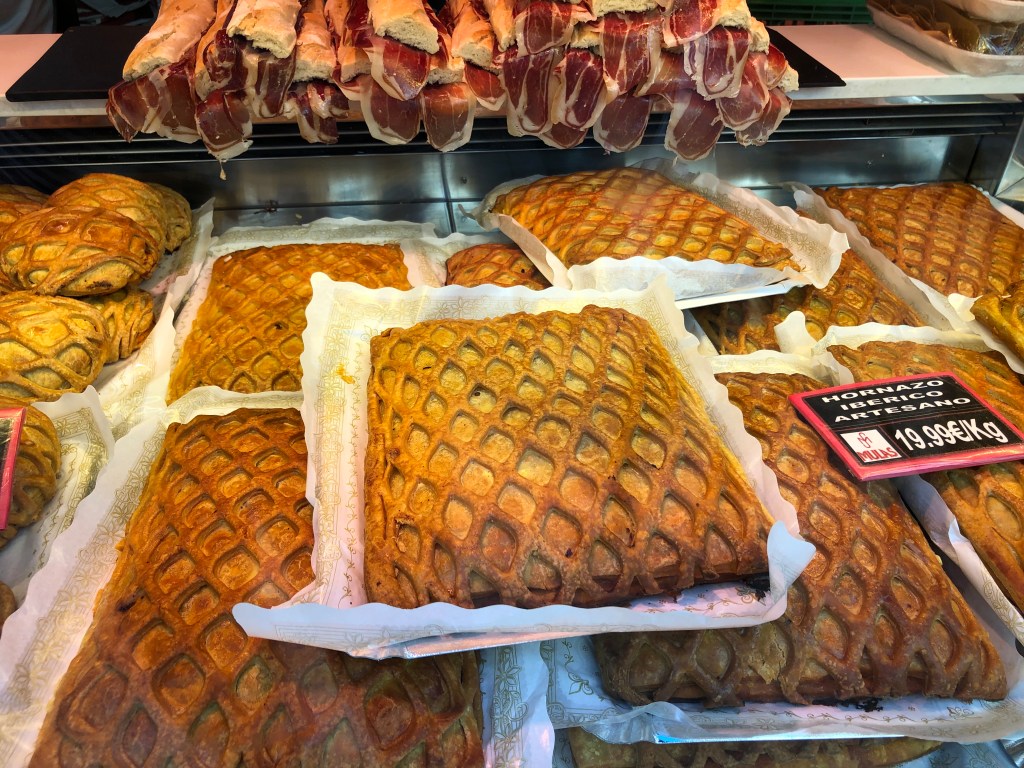
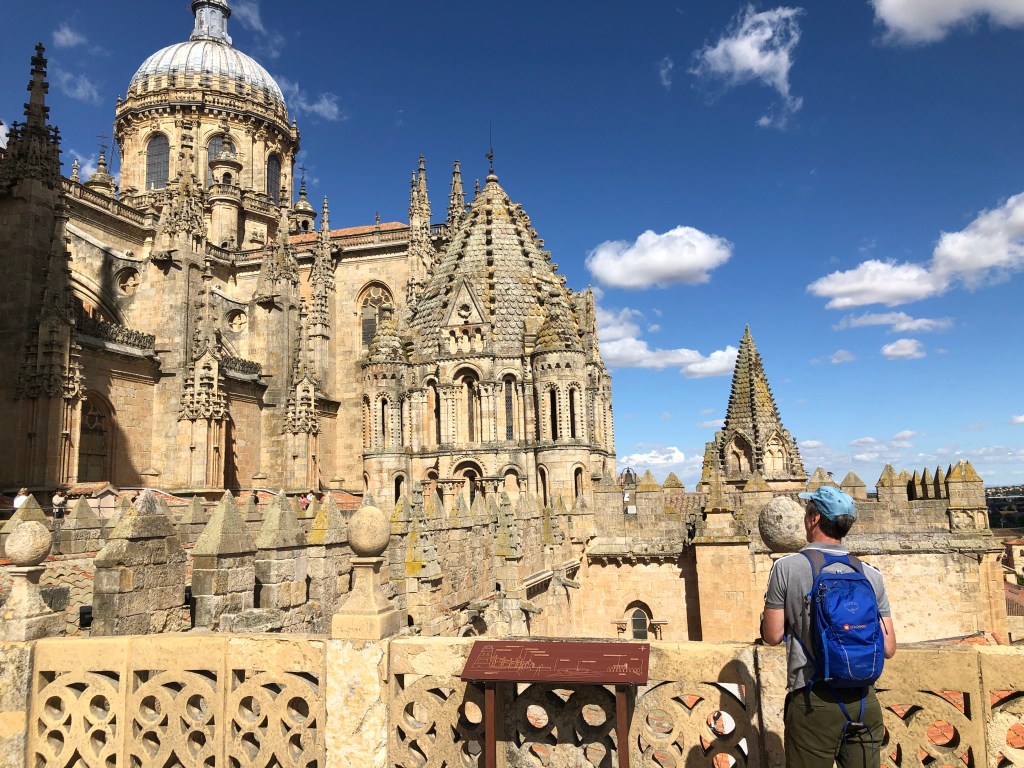
Clockwise from upper left: Relaxing and people-watching on Salamanca’s Plaza Major, one of Spain’s largest and most beautiful squares; The best views of Salamanca’s Old World skyline are from the banks of the River Tormes and its Roman bridge; The author enjoys a hornazo meat pie at a café on Salamanca’s Plaza Major; Hornazo, a meat pie with layers of pork chorizo, pork loin and ham wrapped in lattice-crusted yellow dough, is a specialty of Salamanca province; Exploring Salamanca’s Old and New Cathedrals.

In Salamanca’s Old Town, an open-air museum of radiant sandstone buildings, prime attractions lie within walking distance of each other. I recommend these five experiences:

  1. Touring the Old and New Cathedrals. Built centuries apart, they are attached; you can’t visit the 13th century Romanesque church (Cathedral of Santa Maria) without going through the Cathedral of La Asunción de la Virgen, or New Cathedral, which isn’t new at all. It was built hundreds of years ago in the Gothic, Renaissance and Baroque styles.
  2. Ascending the “Stairway to Heaven” on a 200-step climb up La Clerecía Church’s bell towers for bird’s-eye views of Old Town. The colossal Baroque building, now Pontificia University, began life in 1617 as a training school for Jesuit missionaries.
  3. Walking across the River Tormes’ Roman-era bridge while admiring the classic Old World skyline
  4. Touring the University of Salamanca, a popular place for American and other foreign students to study Spanish. Standing before the main building’s intricately sculpted sandstone façade, tourists try to find the “hidden” frog, said to be a symbol of good luck.
  5. Relaxing over tapas at a café on postcard-perfect Plaza Mayor, one of the largest and most beautiful squares in Spain. Try hornazo, a meat pie with layers of pork chorizo, pork loin and ham wrapped in lattice-crusted yellow dough.

Zamora, a town of 60,000 north of Salamanca, is called the “Romanesque City.” Its 23 Romanesque churches, 10th century walls and Duero River bridge ruins provide a magical setting for communing with the past. The Cathedral of Zamora impresses with its Byzantine-style dome, richly carved choir and 15th century Flemish tapestries.

The Zamora Wine Route in Zamora and Salamanca provinces takes travelers through traditional rural landscapes of sheep pastures, hay fields, vineyards and unspoiled villages with stone houses and Romanesque churches. In Villanueva de Campeán, we did wine tastings in the barrel room and vineyards of Bodegas Viñas del Cenit, which makes Cenit Tradición, an unusual blend of red and white grapes (mostly tempranillo)—a light, refreshing wine with less alcohol. The vines have been mixed since the times of the Franciscan friars who tended them from their 15th century monastery, the ruins of which we saw in the distance. (Older locals remember when monks still inhabited the monastery.)

“They just wanted to make wine, with no worries whether it was red or white. It was just wine for them,” said Ana Belen Hernández, Cenit’s director of marketing. “Cenit Tradición is our commitment to carrying on the tradition and personality of the historic wines of this territory. It’s a wine with no recipe, a wine we think our ancestors would have made.”
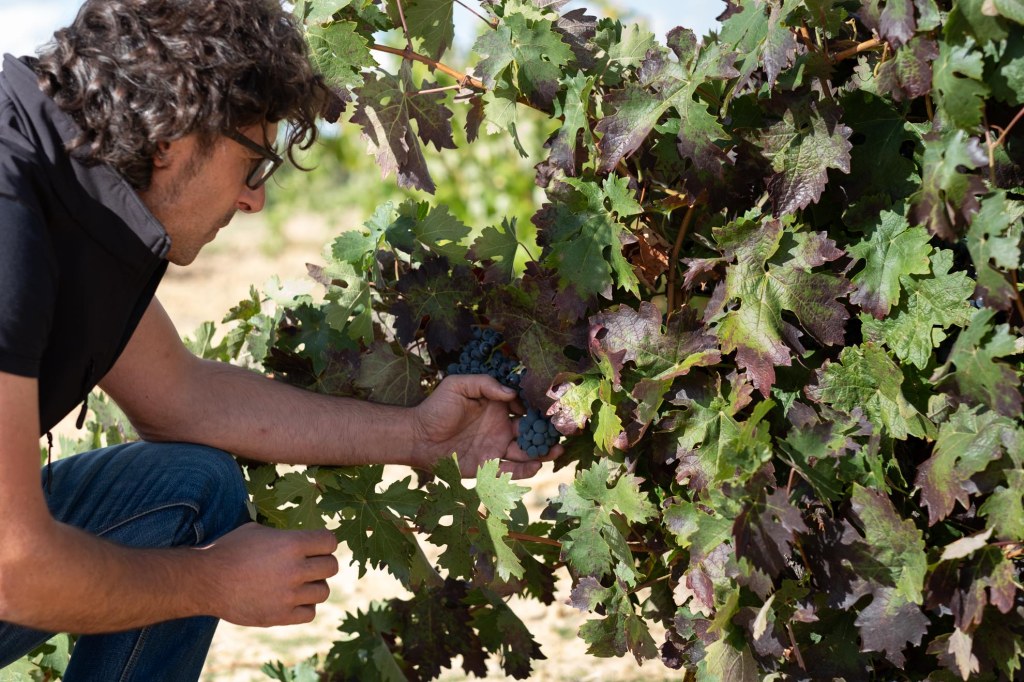
Growing grapes for wine is an age-old tradition in the Castile-León region of western Spain.

Cenit’s 90-year-old vineyards are threaded by the Via de la Plata, or Silver Route, one of the 11 pilgrimage routes to the tomb of St. James in the Cathedral of Santiago de Compostela in Galicia; visitors may encounter pilgrims making the trek.

In the nearby village of Casaseca de Campeán, our group enjoyed an atmospheric wine country lunch at Café de Quintano. Deep underground, we feasted amid the rustic trappings of a vaulted, 200-year-old cellar. The hard-working servers must have made 20 trips each from the upstairs kitchen to our cozy “cave.” Besides wines, the group menu featured platters of cheeses and paper-thin slices of cured ham, chickpea soup, tuna steak in garlic sauce and Iberian pork steak with deep-fried vegetables. At dinner the previous night we had two regional specialties—roast suckling leg of lamb and Zamoran-style rice, a zesty dish with pork and paprika.

My best memory of the Zamora Wine Route was touring Quesería La Antigua, a high-tech dairy in Fuentesaúco. Donning a white plastic coat, hairnet and shoe covers, we followed guides who explained how sheep’s milk is turned into prize-winning cheeses. Afterward, we watched a video and sampled six varieties, including one with tempranillo grape skins in the rind, another flecked with paprika flakes. Under construction is a museum that will showcase La Antigua’s passion for making cheese.
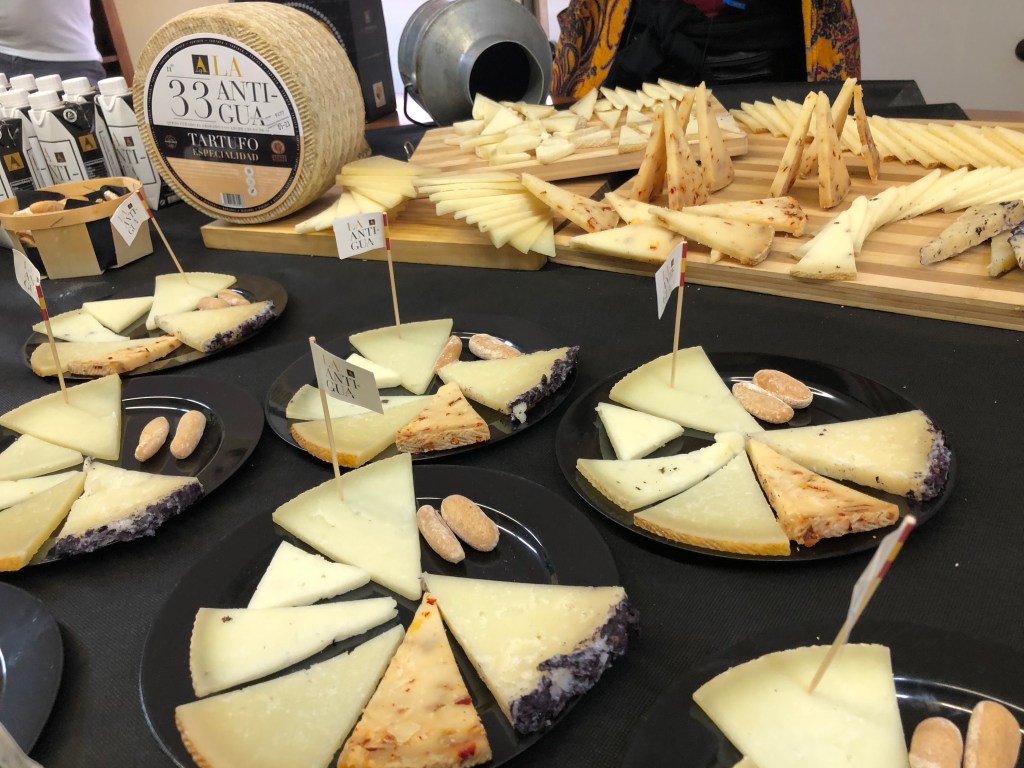
Sampling the product is a highlight on tours of Quesaría La Antigua in Fuentesaúco, a dairy that makes sheep’s milk cheeses.

When our bus passed a shepherd tending his flock later that day, we got giddy and were granted a photo stop. We were en route to the far western stretches of Zamora and Salamanca provinces where the Douro River’s scenic canyonlands straddle the Spain-Portugal border. (“Douro” is the Portuguese spelling; it’s “Duero” in Spanish.) For Spaniards, this remote valley of granite cliffs and outcroppings is considered the “Wild West.”

Our introduction to the Arribes del Duero Wine Route, set against the backdrop of the valley’s Arribes del Duero nature park, involved vineyard and winery visits hosted by Bodega el Hato y el Garabato in tiny Formariz. Dinner and overnight were in the comfortable Posada Doña Urraca in Fermoselle, a quiet Spanish border town famous for its centuries-old network of wine caves (more than 1,000, so they say), a few of which have been opened for tourism. After our subterranean tour and wine tasting, we did more sampling at Bodega Frontio, a winery started by a young Danish entrepreneur who goes by the nicknames “Chus” and the “Crazy Dane.”

A brief foray into Portugal the next day took us to Miranda do Douro, where we boarded an excursion boat for an ecology cruise focusing on the geology, flora and fauna of the UNESCO Meseta Ibérica Biosphere Reserve. Our one-hour journey provided a chance to witness up-close the spectacular gorge topography we had viewed from a lookout point earlier that day.
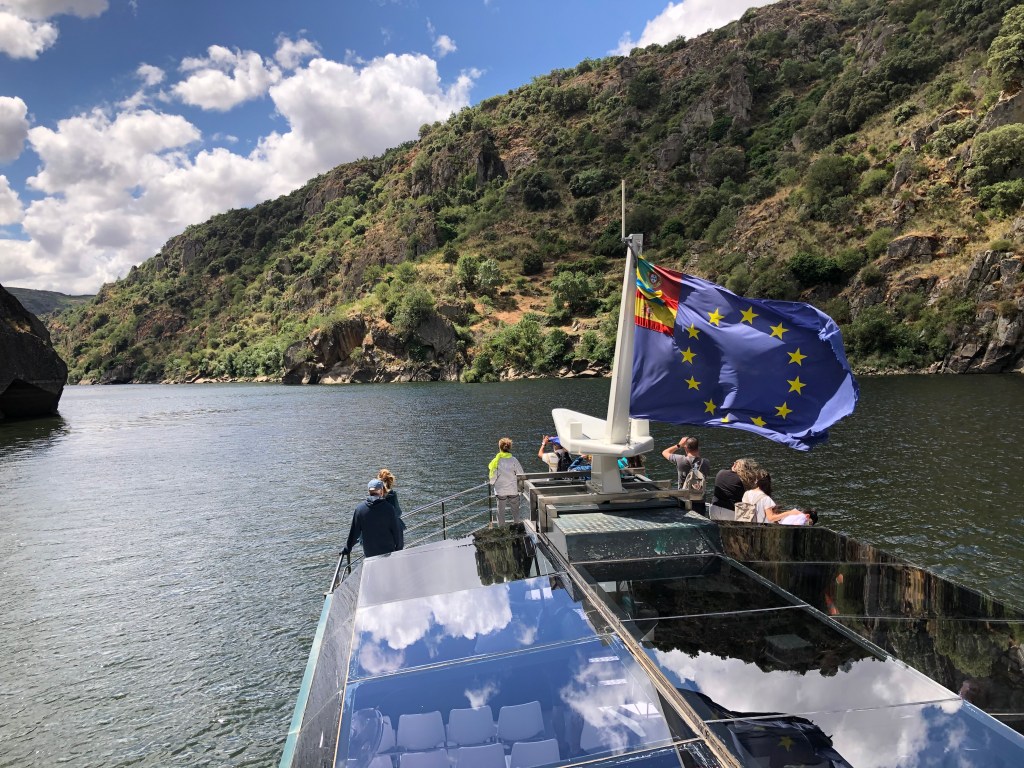
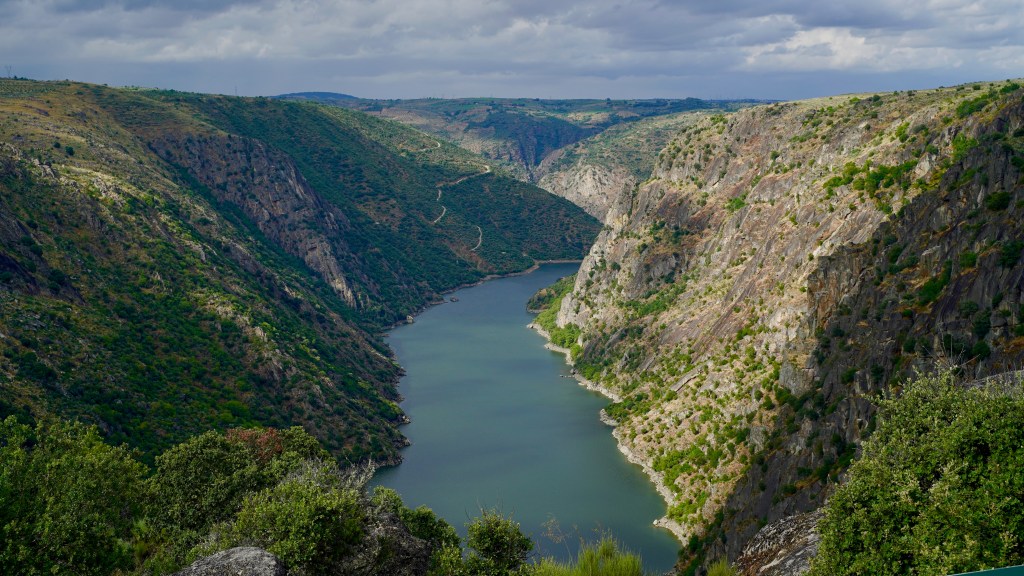
Flying the flag of the European Union, this excursion boat offers a narrated environmental cruise spotlighting the geology, flora and fauna of the Douro River Valley, a land of scenic splendor on the Spain-Portugal border.

Exploring Fermoselle and other villages tucked away from the crowds, we often felt as if we had Castile-León to ourselves. On early morning strolls up and down the twisting, shadowy alleyways, sometimes the only sounds were chirping birds, crowing roosters and our own footsteps. It was good to be back in the Old Country, making new discoveries in corners of Spain off the beaten track.

For tourism information on Castile-León, visit www.turismocastillayleon.com.
Christmas Is a Time of Food and Fun

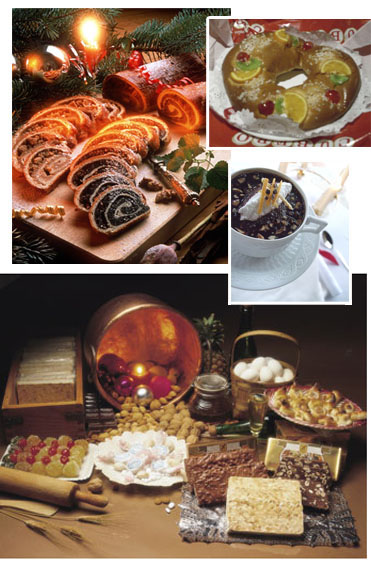
European Traveler has gathered Christmas holiday recipes from around Europe, and we present them here in a special tribute to the countries from which they come. You’ll find a variety of tasty foods in these selections, from desserts and breads to main dishes, to cookies and candies. As December progresses, we plan to add more, so stay tuned!

Please note that some of the recipes are in metric measurements and may need to be converted.

Bon Appetit!

AUSTRIA

VIENNESE VANILLA CRESCENTS (VANILLEKIPFERL)

Eva Draxler / Vienna Tourist Board

INGREDIENTS
1 1/2 sticks (6 ounces) unsalted butter
2/3 cup finely ground nuts (almonds or hazelnuts)
1/2 cup confectioner’s sugar
2 egg yolks
1 1/2 cups all purpose flour
dash of salt

PREPARATION
Knead all ingredients together quickly – keep them cool. Cool in refrigerator for several hours. When forming crescents, take out only the amount of dough you are working with. Form into large, sausage-like rolls with a diameter of about 2 inches. Cut thin slices and quickly roll each of them in the palms of your hands, thus forming small crescents. Place on greased cookie sheet. Bake at 325 degrees Fahrenheit for about 20 minutes. Let cool for no more than five minutes. While still warm, roll in vanilla sugar.

THE AZORES

HOTEL MARINA ATLANTICO
THE AZORES

Courtesy Monica Bensaude Fernandes/Bensaude Turismo

COD “COM TODOS” STYLE

INGREDIENTS
2 cod steaks
300 grs of cooked chickpeas
1 Portuguese cabbage
200 grs carrots chopped in thin circles
2 dls extra virgin olive oil
30 grs fresh coriander
1 salted pickled red pepper cut length wise
6 dry garlic cloves
200 grs crumbed corn bread
100 ml cream
Salt and white pepper
PREPARATION
Boil cod for 5 minutes. Remove skin and bones. Grate chickpeas in a tasse-vite. Add cream and season with salt and pepper. Blanch cabbage, drain and sauté in olive oil and garlic.
Sauté carrots in olive oil and garlic.
PLATE PRESENTATION
Using a rim, first layer chickpeas, and then carrots. On top, place cod, broken apart. Cover it with sautéed cabbage and lastly, the crumbed corn bread. Give it a little color by briefly placing in a very hot oven. Decorate with olive oil and fresh coriander.

DUCK BREAST WITH ORANGE AND DRIED FRUITS
INGREDIENTS
2 boneless duck breasts
300 grs red cabbage, julienned
4 oranges
300 grs potatoes, cut in extra fine rounds (chip style)
50 grs crushed walnuts
50 grs crushed pine nuts
50 grs S.Jorge cheese sliced thin
½ cup Brandy
Salt and white pepper
2 tablespoons balsamic vinegar
10 grs sugar
PREPARATION
Sauté duck in high heat for 5 minutes. Season with salt and pepper. Zest the orange. Set aside. Juice the oranges and add it to pan. Let it reduce and set aside the sauce. Bake potatoes in a fan format with the thinly sliced cheese on top. Sauté cabbage with a little olive oil. Add balsamic vinegar, sugar and dried fruit.
PLATE PRESENTATION
At the top, place the fanned potatoes. In the center, place red cabbage and beneath position the laminated duck. Cover with sauce and orange zest.

VEAL LOIN VERDELHO
INGREDIENTS
400 grs veal loin
300 grs potatoes
400 grs carrots
Verdelho wine from Pico Island
Onions
Leeks
Salt and pepper (local, if possible)
PREPARATION
Season veal with salt and pepper. Blush or sauté loin in high heat for 5 minutes. Remove veal, add onions and leeks and brown. Add red wine and let it reduce. Season and sift sauce. Grate carrots and sauté in a little olive oil. Bake potatoes, which have been previously stuffed with a bay leaf and bacon, in alternating cuts.
PLATE PRESENTATION
Place carrots at the center, potatoes in the back, veal in the front of plate, and cover with sauce.

GERMANY

MULLED WINE
(GLUHWEIN)
Victoria Keefe Larson/German National Tourist Office

Perfect for those dark and cold winter evenings.

INGREDIENTS:
2 bottles red wine
1 cup sugar
3 cups water
1 lemon, sliced
20 whole cloves
6 to 8 cinnamon sticks
1 orange, sliced for garnish

PREPARATION:
Mix water, lemon and spices and simmer for an hour. Strain. Heat but do not boil the red wine. Add wine to hot water mixture. Ladle into cups and serve with half a slice of orange.

HUNGARY

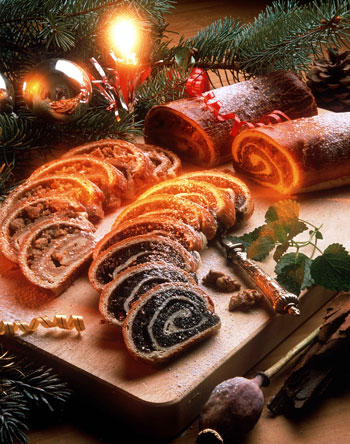
Dios es Makos beigli
Poppy seed and nut rolls (bagels)

From Culinary Hungary/courtesy Elvira Vida/Hungarian National Tourist Office

Makes 4 rolls; the filling ingredients are calculated for 2 rolls respectively.

INGREDIENTS
For the dough:
1 cup sugar
1/2 cup/120 ml milk
1 cake/15 g compressed yeast
1/2 cup/5O g confectioner’s sugar
3 1/4 cup/500 g flour
6 1/2 tbsp/100 g butter
6 1/2 tbsp/100 g lard
2 eggs
1 tsp grated lemon zest
pinch of salt

For the nut filling:
Scant 1/2 cup/100 ml milk
1OO g superfine sugar
1 envelope of vanilla sugar
1/2 tsp grated lemon zest
3 tbsp/30 g raisins
Pinch of cinnamon
3 cups/250 g ground nuts
3-4 tsp honey (or 1-2 apples or 2-3 tsp apricot jam)

For the poppy seed filling:
Scant 1/2 cup/lOO ml milk
1 1/4 cups/250 g confectioners sugar
1 sachet of vanilla sugar
1 2/3 cups/250 g ground poppy seeds
3 tbsp/30 g raisins
1 tsp grated lemon zest
4 tbsp honey

Other:
Butter or lard for the baking sheet
1 egg yolk for glazing

PREPARATION:
Dissolve the sugar in the lukewarm milk, then add the yeast. Mix the remaining dough ingredients wilh the yeast mixture and knead thoroughly. Cover the dough with a dish towel and leave to rise for about 30 minutes.

To make the nut filling, put the milk in a pan with the sugar and vanilla sugar and bring to a boil. Add the lemon zest, raisins, cinnamon, nuts, and honey (or peeled, grated apples or apricot jam).

For the poppy seed filling, mix the milk with the confectioners’ sugar and vanilla sugar. Bring to a boil and add the poppy seeds and raisins. Simmer for a few minutes, stirring constantly, then remove from the heat and stir in the lemon zest and honey.

Divide the dough into four and roll out each piece into a rectangle measuring about 12 x 14 inches/30 x 35 cm. Spread the dough with the nut or poppy seed filling and roll up lengthwise, ensuring that the rolls remain firm. Grease a baking sheet and carefully transfer the rolls onto the sheet and brush with egg yolk.

Bake in a preheated (medium) oven until golden brown. Only remove from the oven when completely cool. If kept covered and stored in a cool, dry place the bagel will stay fresh for a long time. Do not slice until just before serving, arranging the slices like roof tiles on a plate, and sprinkle with confectioners’ sugar.

PORTUGAL

REBANADAS CASA OS MOINHOS

INGREDIENTS

16 egg yolks
500 g sugar
1 kg Portuguese white bread
Cinnamon
Lemon

PREPARATION
Mix the eggs with 16 tablespoons sugar until it is a thick mix — make a thin syrup out of the rest of the sugar. Use one glass of water for this, then slice the bread, — after letting it sit for one day. Dip the slices into the syrup, drain, and dip in the egg yolk mix. Gently pan sear on a medium stove top, and sprinkle with cinnamon and lemon zest.

SPAIN

ROSCON DE REYES
(Holiday Bread)

This recipe is from The Foods and Wines of Spain by Penelope Casas
Courtesy Patricia Wood Winn/Tourist Office of Spain

No holiday is more eagerly awaited in Spain than El Dia de los Reyes Magos-the Day of the Three Kings (Epiphany) on January 6. On this date every year, so the legend goes, the Three Wise Men journey to Spain on camels, bearing gifts for all Spanish children. They use ladders to gain access to city apartments aud leave presents in the children’s shoes, which have been carefully laid out the night before, along with fodder for the hungry camels. Kids who have not been good during the year fear the worst: that the kings will fill their shoes with black coal instead of toys.

Rascon de Reyes is baked and eaten only at this time of year. It is a delicious sweetened bread, coated with sugar and candied fruits, and it always contains a surprise-either a coin or a small ceramic figurine, which is to bring luck for the year to the fortunate person who finds it in his piece of bread.

Makes 1 large bread ring

INGREDIENTS
1 package dry yeast
3/4 cup warm water
1 tablespoon orange flower water (often found in Italian food shops. If unavailable, substitute strong tea)
1/2 teaspoon grated lemon rind 6 cloves
1/4 pound butter
1 tablespoon lard or vegetable shortening
1/2 cup sugar
1/2 teaspoon salt
2 eggs
1 tablespoon brandy, preferably Spanish brandy, or Cognac
1/2 cup milk, scalded and cooled
5 cups unbleached, all-purpose flour
Candied fruit slices (orange, lemon, etc.)
1 egg, lightly beaten
1 1/2 tablespoons sugar, preferably coarse, for sprinkling

PREPARATION
Dissolve the yeast in 1/4 cup of the warm water. Simmer the remaining 1/2 cup of warm water with the orange flower water, lemon rind, and cloves for 10 minutes, covered. Cool. Discard the cloves. Cream the butter, lard, the sugar, and the salt. Beat in the 2 eggs, then add the brandy, milk, the water-and-lemon mixture, and the softened yeast. Gradually mix in the flour with a wooden spoon until a soft and slightly sticky dough is obtained. Knead on a floured working surface, adding more flour as needed, about 5 minutes, until smooth and elastic. Place the dough in a large oiled bowl, turn to coat with the oil, cover with a towel, and place in a warm spot, such as an unlit oven, to double in size, about 2 hours. Punch down and knead again 5 minutes. Insert a good luck coin – perhaps a silver dollar or half-dollar – or some other appropriate object, such as a cute miniature ceramic animal.

Shape the dough into a large ring, pinching the ends to seal. Place on a lightly greased cookie sheet. Decorate with the fruit slices, pushing them slightly into the dough. Let the ring rise in a warm spot about 1 hour, or until double in size. Brush with the egg, which has been mixed with a teaspoon of water, sprinkle with sugar, and bake in a 350° F oven 35-40 minutes, or until a deep golden brown.

Lisbon on a Plate

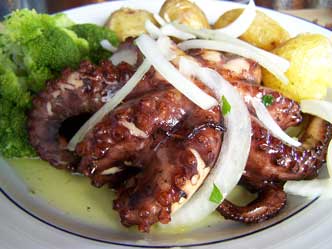
Freshly grilled octopus at Restaurante Leao d’Ouro in Lisbon

By Sharon Hudgins
Photos by the author

Some people travel to climb mountains, swim in the sea, lie on beaches or devour museums. While I’m partial to mountains and museums, I really travel to eat. One of the delights of visiting a new place is discovering its cuisine—from restaurants to home cooking, from street stands to picnic fare, from little food shops to bustling open-air markets that assault your eyes with bright colors and tickle your nose with unexpected aromas.

Although Spanish food gets all the limelight these days, the cuisine of next-door Portugal is well worth exploring, too. It’s not just a variation on Spanish cooking, but a different cuisine on its own, influenced by Portugal’s history, geography and religions. And the best place to begin your culinary journey of discovery is in the capital city, Lisbon.

Shopping at the Mercado de Ribeira

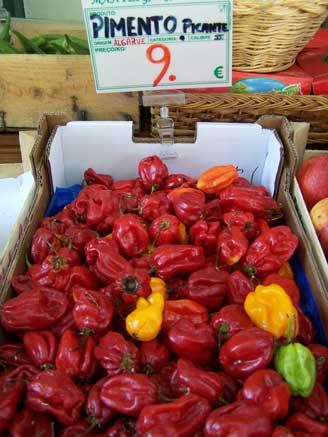
Seafood is supreme in this seafaring country, from fresh sardines and salt cod to octopus and clams. At the Mercado da Ribeira, the largest of several covered food markets in the city, you’re likely to see fish and shellfish that you never dreamed existed. The market also has large sections featuring fruits, vegetables, freshly slaughtered meat and preserved meat products such as sausages and hams. Go early on Saturday mornings for the liveliest action. By noon the vendors are already packing up their wares.

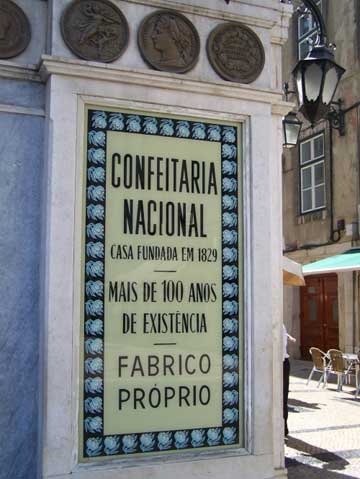
The best way to discover Lisbon’s culinary treasures is to wander through the different districts into which the city is divided, concentrating on one district at a time. In the Baixa commercial district, on the landmark Praça da Figueira square, Confeitaria Nacional is a classic pastry shop that has been selling sweets on that site since 1829. Taste their pasteis de nata (custard tart) or their signature Bolo Rei (King’s Cake), along with a cup of rich coffee. The tea room upstairs also serves a light, reasonably priced lunch. Nearby is a classic old-fashioned food shop, Manuel Tavares, which has been selling hams, sausages, cheeses, wines and confections since 1860. And from this same square, walk up Poço do Borratém Street toward the Martim Moniz tram stop, where you’ll find an excellent kitchenware store with hundreds of local and imported products.

Back at Figueira Square, walk along Rua D. Antão de Amada to visit Manteigaria e Bacahoaria Silva, another classic old shop purveying salt cod, dried beans, hams, cheeses and Portuguese canned products. At the top of that street, on Largo de São Domingos 8, an even smaller shop sells nothing but bottles of ginginha, classic Portuguese cherry liquor. For only one euro, you can taste before you buy.

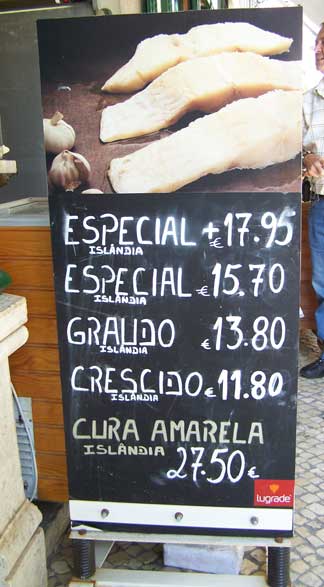
Signboard for Icelandic cod, a popular fish in Portugal
Fishmongers at the Mercado de Ribeira

Around Rossio Square, the hub of the Baixa district, several sidewalk cafes will tempt you to while away the day over a coffee drink (choose from at least eight different types that the Portuguese make). Indulge in excellent gelato at Fragoleto, a couple blocks off the Rua Augusta shopping street that leads into Rossio Square. And just across the street from the main train station near Rossio Square, the Restaurante Leão d’Ouro, built in 1842, serves simple, well prepared Portuguese food (especially seafood), at reasonable prices, in a delightful dining room with walls covered in beautiful blue-and-white ceramic tiles.

The tony Chiado shopping district, adjacent to Baixa, is another good place for palate pleasers. Stop for a freshly made juice drink or your choice of coffees at Quiosque de Refresco, a little old-fashioned iron kiosk in Camões Square. Sip a foaming beer at Cervejaria Trindade, the oldest brewery in Portugal, with its woody interior and beautifully tiled walls. Perk up with an espresso at A Brasileira, one of the city’s most famous old coffeehouses, decorated in Art Nouveau style. And for fine dining make a reservation at Restaurante Largo, a modern restaurant located inside part of an historic convent in the Chiado district. Celebrated Chef Miguel Castro Silva has a refreshingly no-nonsense attitude toward cooking: he prepares good, honest food with an emphasis on traditional Portuguese dishes updated for today’s tastes and artistically plated, but never pretentious.

The proprietor of As Marias com Chocolate makes cookies at her shop in Lisbon

Portuguese chefs are making a name for themselves in other parts of the city, too. At Bocca, an intimate, friendly little restaurant that has garnered rave reviews, one of Lisbon’s top young chefs, Alexandre Silva, presents ultra-modern dishes made from seasonal ingredients and arranged like miniature works of art. On the top floor of the tall Sheraton Hotel tower, the Restaurante Panorama lives up to its name, with stunning views over the city. The five-course “Temptation Menu,” with matching wines, showcases Chef Leonel Pereira’s specialties, which include fish and meat dishes that combine traditional ingredients with contemporary techniques.

Custard tarts from Pasteis de Belem

Outside the central part of Lisbon, in the Belém district along the coast, a magnificent Hieronymite Monastery was built in the early 16th century with money made from the spice trade after Vasco da Gama’s historic voyage around the southern tip of Africa to the lucrative pepper markets of India. A block from the monastery, the Antiga Confeitaria de Belém has been serving its famous custard tarts, pastéis de Belém, since 1837. Farther along the same street, other small pastry shops sell their own special sweet little tarts, one made with beer, another with fresh white cheese and ground almonds. Try them all.

Finally, foodies should also head to the Alfama district (the old Moorish quarter), where they’ll find the 19th-century Mercado Municipal de Santa Clara behind the São Vicente church. The city’s first covered food market has now been transformed into an educational center for culinary arts (in the interior), with several little shops around the outside, including As Marias com Chocolate, a tiny shop specializing in tempting handmade chocolate drinks and desserts. I dare you to eat or drink only one.

As they say in Portugese, bom apetite! Enjoy your meal!

NOTE: Portuguese meal times differ somewhat from neighboring Spain. Breakfast is any time after 7:00 a.m., when many people just stop at a pastry shop for a little custard tart or sweet bun and a galão, a big glass of hot coffee liberally laced with milk. Lunch lasts from 12:30 to 2:00 p.m., and dinner is usually any time from 8:00 or 8:30 p.m. until 10:00 p.m., although fashionable folk are known to arrive at a restaurant at 10:00 p.m. and dine until midnight.

● Lisbon Tourist Office, Rua do Arsenal 23
www.visitlisboa.com

● Mercado da Ribeira, Avenida 24 de Julho, near the Cais do Sodré train station, www.thelisbonconnection.com/market-mercado-da-ribeira-since-1882/

● Confeitaria Nacional, Praça da Figueira 18-B
confeitarianacional.com/english/home.html

● Fragoleto, Rua da Prata 80

● Restaurante Leão d’Ouro, Rua 1 de Decembro 105 www.restauranteleaodouro.com.pt/.

● Quiosque de Refresco, Camões Square quiosquederefresco.blogspot.com/

● Cervejaria Trindade, Rua Mova da Trindade 20-C www.cervejariatrindade.pt/trindade_english.html

A Brasileira, 120 Rua Garrett
en.wikipedia.org/wiki/A_Brasileira

● Restaurante Largo, Rua Serpa Pinto 10-A
www.largo.pt/en/

● Bocca, Rua Rodrigo da Fonseca 87-D
bocca.pt/en/

● Restaurante Panorama, Rua Latino Coelho 1 www.sheraton.com/lisboa

● Antiga Confeitaria de Belém, Rua de Belém 84-92 pasteisdebelem.pt/en.html

New Hotels in Portugal

In a class all its own

Photo credit: Antonio Sacchetti

By Don Heimburger

Portugal is considered Europe’s oldest nation. Lisbon is the capital and the largest city in Portugal, and its history can be traced back to ancient days, first as a Greek trading post and later as a Roman municipium.

In the early Middle Ages, Lisbon was occupied by the Visigoths and later by the Moors. Alfonso I reconquered the city from the Moors in 1147, and during the next several hundred years Lisbon developed as the capital of the kingdom and as a trading center.

So that’s the quick history of Portugal and Lisbon, but what’s new? Well, there are a number of new hotels in Portugal that you may want to keep in mind when traveling there. Here’s a European Traveler rundown:

Photo credit: Antonio Sacchetti

LISBON REGION
Lx Boutique Hotel – Lisbon
The Lx Boutique Hotel is the newest inn in Lisbon, located in the Cais do Sodré district and minutes away from Chiado and Bairro Alto. The $7 million hotel has 45 rooms, each with a theme related to Lisbon, from the Tejo Persona (Fernando Pessoa lived in the building for some time, and it was the once the famed Hotel Bragança), Fado, Seven Hills and Bairro Alto. With its location near the historic districts of Lisbon, it is ideal for those who want to discover the city.
www.lxboutiquehotel.pt

Hotel da Estrela – Lisbon
The Hotel da Estrela, first hotel of the Lagrimas Group in Lisbon and a new hotel for the School of Hospitality and Tourism of Lisbon, is located in the Campo de Ourique, in the historic Palácio dos Condes de Paraty. The four-star project, designed by architect Miguel Cancio Martins, includes 19 rooms with three meeting rooms, a restaurant/bar, a garden and an event space. The training aspect is one of the points highlighted, and part of the staff will be final-year students.
www.hoteldaestrela.com

Oitavos Hotel – Estoril Coast – Lisbon Region
The Oitavos, a new luxury hotel, opened in the fall and is located just 20 minutes from Lisbon. The hotel features 142 guest rooms, a golf course built around sand dunes and saltwater swimming pools. This nature-inspired property is located on the family-owned Quinta da Marinha estate, within the Sintra-Cascais National Park. www.theoitavos.com/

CS Vintage Lisboa Hotel – Lisbon
This five-star hotel includes 55 rooms, vintage restaurant, spa, indoor pool and latest web technology. It is located in the city center, just minutes away from Avenida da Liberdade.
www.cshotelsandresorts.com/eng/cs-hotels/lisboa-cs-hotels

Altis Avenida –Lisbon
The Altis Avenida is a charming new hotel in Restauradores Square, the historic heart of Lisbon’s city center and the main shopping district. All 72 rooms are equipped with the very latest technology and designed with 1940’s décor, maintaining the original combination of styles, fabrics and furniture. The hotel is a place where the past, present and future meet in a glamorous and sophisticated atmosphere. The bar and restaurant on the top floor provide a magnificent view over the city and is the ideal meeting place for those looking for the true feel of Lisbon. www.altishotels.com

Inspira Santa Marta – Lisbon
This four-star, green-designed hotel is in the heart of downtown Lisbon. It provides prime comfort and hospitality, intertwined with the latest in wellness and sustainability. Feng Shui reflects the mood and is the main theme of the hotel. Located just off of Lisbon’s main Avenida da Liberdade, the hotel has a total of 89 stylish guest-rooms designed around Feng Shui themes such as earth, fire and water. The restaurant features Mediterranean cuisine and show cooking, all made with freshly prepared ingredients.
www.inspirasantamartahotel.com

International Design Hotel – Lisbon
This four-star hotel is located at Rua da Betesga in Lisbon. Urban, Tribal, Zen and pop are all design themes exhibited by the hotel’s unique rooms. The hotel is located on one of the oldest streets in Lisbon, Betesga, whose origins go back to the 15th century. www.internacionaldesignhotel.com/

Altis Belém Hotel – Belém – Lisbon
A new boutique hotel in Belém by the Altis Group, known for the quality, sophistication and professionalism, is opening a new hotel in the Lisbon area. It is located near the Bom Sucesso docks, an important tourist area. This new, luxury boutique hotel features 42 high quality rooms and a restaurant serving Portuguese cuisine. Hotel Altis Belém also features a bar and terraced café, spa and meeting rooms. www.altishotels.com

PORTO & NORTH OF PORTUGAL REGION
Six new hotels, restaurants and museums are among a few of the new offerings from the Grand Harbor, located around the World Heritage Center. Hotels include the five-star The Yeatman, the four-star Teatro, the Intercontinental Hotel, the hotel Star Inn Porto, the under-construction four-star Inspira Flores Hotel and the Carris Porto Ribeira.

Hoteles Rail – Porto
Hoteles Rail, a Spanish hotel chain, has a new four-star hotel located in the heart of the historic center and close to the Douro River. It features 90 rooms, with a business-meets-modern concept. The investment created more than 300 jobs in the area, and the project is a part of a focus on the recovery and reuse of historical buildings in Porto.

Vidago Palace – Vidago
Celebrating its centennial, the 70-room and suite Vidago Palace officially reclaims its place as one of Europe’s great historical resorts. Located within a 250-acre estate, an hour from Porto, Vidago Palace has been extensively renovated and restored over the last two years. Embracing its Belle Epoque heritage, Vidago Palace is a majestic Portuguese country house with all the services of a world-class luxury hotel.
www.vidagopalace.com

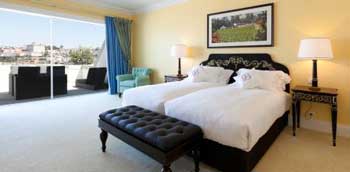
A room at the Yeatman

The Yeatman – Porto
The Yeatman opened its doors as the first five-star hotel in the Portuguese city Vila Nova de Gaia. All the rooms overlook the spectacular Ribeirinha Porto and are decorated in a classical style. The hotel is committed to protecting the environment and devotes half of the property to elegantly-crafted gardens, including an olive tree more than 1,300 years old, a butterfly garden and endangered plants attracting an array of bird species. The hotel is integrated into the landscape, mimicking the slopes of the Douro River. It offers a total of 82 rooms, as well as the master suite hotel that is separated from the rest of the building and can be accessed from the garden. www.the-yeatman-hotel.com

CENTRO DE PORTUGAL REGION
Casa da Insua
This five-star boutique hotel is a converted 18th century, baroque-style manor in Penalva do Castelo. Located southeast of Porto, it features an impressivea façade and gardens. It features 21 rooms, nine suites and three one-bedroom and two two-bedroom apartments. On-site facilities include a restaurant, museum, reading and game rooms, a chapel and a wine-tasting room. The hotel also has a selection of rooms and spaces available for meetings and other events. Prices include breakfast. www.casadainsua.pt

Casa das Penhas Douradas
Located at the heart of Serra da Estrela National Park, this hotel features some additional new rooms totaling 18, a spa, restaurant, heated pool and bikes. The rooms are wood birch-paneled with large windows and verandas, offering a stunning view of the mountains. Each room has an LCD television, a DVD player, and an iPod player, providing a home-away-from-home atmosphere. Casa das Penhas Douradas is located minutes away from the airport. Prices include breakfast.
www.casadaspenhasdouradas.pt

Vila Galé Coimbra
The city of Coimbra has the new four-star Hotel Vila Galé Coimbra. This hotel is located in the Coimbra historical center, overlooking the Mondego River. www.vilagale.pt


ALGARVE REGION
Martinhal Resort
Martinhal Resort was officially inaugurated in what is being touted as Portugal’s first high-luxury family resort in the Algarve town of Sagres. Located on the rocky, southwestern point of Portugal, Sagres is where the first caravels were launched during the Age of Exploration. Today, the town boasts breathtaking views of the Atlantic, many of which can be seen from the Martinhal Resort’s houses, cottages and luxury villas. The theme at this five-star resort is “Barefoot Luxury,” and the staff aims to provide a relaxed experience. All rooms have private terraces with ocean views. The on-site restaurant, O Terraço, sits atop the pavilion and offers guests the option of enjoying a simple coffee or a full gourmet meal while overlooking the sea. Nature enthusiasts will enjoy the protected lagoon, which is part of the Costa Vincentina Natural Park. www.martinhal.com/

Real Marina Hotel & Spa
Real Marina Hotel & Spa is a luxury resort overlooking the Ria Formosa, a protected natural reserve. Contemporary yet traditional, the hotel caters to both the leisure and business traveler with full use of facilities for each segment of the market. Accommodations include 132 double-rooms and 12 suites. Facilities include two restaurants, two bars, heated indoor and outdoor swimming pools (including a children’s pool). www.realhotelsgroup.com

Longevity Wellness Resort Monchique – Condo Hotel
The Longevity Wellness Resort Monchique was inaugurated as being a green facility with a focus on wellness and relaxation. Properties here are a mix of vacation homes and rentals. The development is in the Algarve’s mountains located around the picturesque town of Monchique, with both mountain and coastal views. It has 195 one-bedroom apartments with amenities such as outdoor and indoor swimming pools, restaurant and bars, driving range and putting green, library, cinema and the Longevity Anti-Aging Spa. www.longevitywellnessresort.com/


MADEIRA REGION
Hotel da Vila
Located by the beach, this property offers 16 rooms of simple yet elegant design that mixes blue Portuguese tiles with ancient wood to create a chic and rural concept. www.hoteldavila.com/

For more information on Portugal, go to: InsidePORTUGALtravel.com.