Flavors of Christmas in Spain

Photos courtesy Spain Tourist Office

Christmas delights the palate in Spain. You will have no shortage of opportunities to give way to temptation as you experience Spanish gastronomy during the festive Christmas season.

Dinner on Christmas Eve and New Year’s Eve, lunch on Christmas Day and New Year’s Day, along with January 6, Feast of the Epiphany, are the most essential dates. However, throughout the month of December, bars, restaurants and hotels are decked out for the season. Their tables are decorated with candles, bows and Christmas motifs, and they offer special menus and delicious dishes.

HEAVENLY TABLES
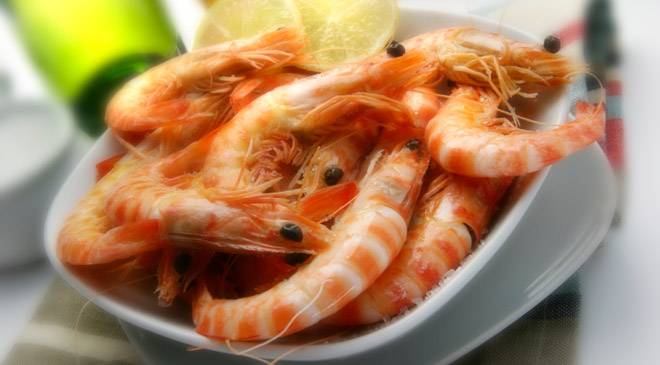
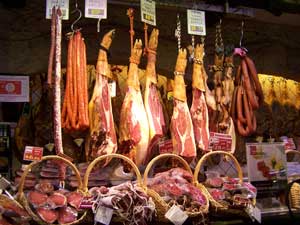
Christmas meals are usually copious. They tend to start with a selection of starters and appetizers, either hot or cold. Then comes several courses and dessert. You can try a bit of everything: shellfish, fish, meat, roasted meat, soups, Iberian cured meats—all prepared in an especially delicious way. Some of the most popular foods include turkey, lamb, red cabbage, sea bream, oysters, elvers and ham. As the dishes are served, you will see how hard it is to resist. And to accompany them are good Spanish wines, both white and red. At the end of the meal, good wishes are toasted with a glass of cava sparkling wine or cider.

SWEETS
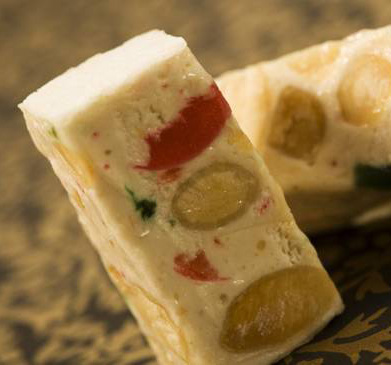
Sweets deserve a mention of their own, filling the table with color when it is time for dessert. Made with almonds, honey, sugar, chocolate and fruit, among other ingredients, they are a real treat for those with a sweet tooth. There is a wide array, and each region of Spain has its own typical recipes. However, the real star at Christmas is “turrón,” with a flavor admired around the world.

There are many different types of turrón, but you should try the Jijona variety—soft and sweet—and the Alicante type, which is hard and crunchy. Other traditional desserts are marzipan, polvorones (a crumbly shortbread) and mantecados (made with almonds and lard). Finally, on January 6, Day of the Three Kings (Epiphany), children are excited to receive their presents, while grownups get to savour a Roscón de Reyes (seasonal cake) with a cup of hot chocolate.

For more info, go to Spain Tourism

Europe’s Fascinating Food Markets

By Sharon Hudgins
Photos by the author

Sweet juicy plums. Pungent goat cheeses. Briny black olives. Homemade pâtés studded with pistachios. Paper-thin slices of farmhouse cured ham. Multi-grain buns and rosemary-scented flatbreads. Chestnut honey and walnut tartes.

Are you hungry yet?

On my first trip to Europe many years ago, I became hooked on shopping for food at the colorful local markets. Not the sterile supermarkets or gargantuan hypermarkets of today, which, except for the package labels in different languages, could be anywhere in the developed world. The markets that captured my imagination—and still keep drawing me back—are the ones where fresh foods are sold by individual vendors hawking their wares from wooden stalls, customized vans, folding tables, or even blankets spread on the ground.

I go. I see. I buy. I eat.

TYPES OF MARKETS
These food markets can be entirely outdoors, in the open air; or inside a cavernous covered market building; or in a combination of settings, with an indoor market surrounded by an open-air market that varies with the season. They can be permanent markets, operating year round at the same location, usually with the same vendors; or temporary events occurring only on specific days, once or twice a week, in a public square or country field, with local vendors as well as those who travel from one market to the next to sell their goods.

Some are truly farmers’ markets, where all the fruits, vegetables, meats and cheeses were grown, raised or processed by the people selling them. Others are outlets run by middlemen selling foods from a variety of suppliers, from small-time farmers to larger commercial companies. And some are a mixture of both.

London, Paris, Vienna, Madrid, Rome, and other major cities have many of these food markets located in neighborhoods throughout each metropolis. Smaller towns might have only one central market, whereas in a village there might be an open-air market only once a week, usually on Saturday. Check with the tourist office for the locations, dates and opening/closing times.

LOCAL SPECIALTIES, GLOBAL CHOICES
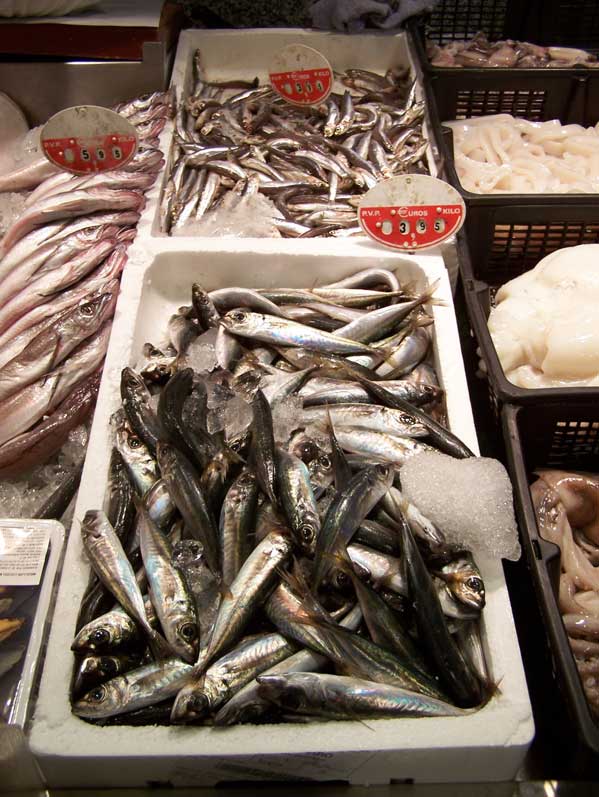
At these markets you can see, smell and taste authentic local and regional specialties, some of them found nowhere else. In different regions of France, I’ve bought farmhouse cheeses made just down the road and jams preserved by the woman selling them. In Sicily and Greece, I’ve wandered through markets stocked with fish caught that morning in the nearby seas. At German markets I’ve left with my shopping bags filled with potatoes and apples grown in the surrounding fields, and with big loaves of rye bread still warm from the wood-fired oven in which they were baked.

A visit to a large metropolitan market can also be a lesson in globalization. In addition to local Catalan and regional Spanish food products, Barcelona’s big Boqueria covered market also sells hot sauces from the USA, moles from Mexico, and guavas from South America. At Munich’s central Viktualienmarkt, you’ll find not only Bavarian meats and cheeses but also chermimoyas from North Africa, hot chiles from Southeast Asia, and exotic tropical fruits from the Philippines.

Each season brings its own specialties to European markets: strawberries, cherries and asparagus in spring and early summer; raspberries and blueberries later in the summer; mushrooms, apples and pears in the autumn; and oranges, nuts, and root vegetables in winter. Of course markets have more fresh produce during harvest time from spring through early autumn. And on any day you’ll always find the best selection early in the morning, just after the market opens.

LOOK, DON’T TOUCH
European markets are a great place to buy food for a picnic in your hotel room or in a park on a pretty day. Some even have a section with tables and chairs for public use, and German markets often include a beer garden on the premises, where you can bring your own food.

Tips: Always carry a shopping bag for your purchases. When you stop at a stand to buy fresh fruits or vegetables for your meal, don’t poke around in the produce and pick your own selection. At most markets, customers are expected to tell the vendor what they want, and the vendor chooses the best pieces, based on their ripeness and good condition, then weighs out the amount requested.

Don’t let your lack of the local language deter you from shopping in Europe’s food markets. Just point to the particular food you want and write the amount on a slip of paper: 100 grams (about one-fourth of a pound), 500 grams (close to a pound), 1 kilo (a bit over two pounds). Better yet, learn some basic numbers in that foreign language and let the product labels in the market teach you the names of the foods you want to eat. Soon you’ll be shopping like a European yourself.

LINKS TO FAVORITE FOOD MARKETS IN EUROPE
London Farmer’s Markets
Paris Food Markets
Rome Markets
Barcelona Food Markets
Madrid Markets
Berlin Markets
Munich Fresh Food Market
Hamburg Fish Market
Amsterdam’s Food and Antique Markets Guide
Guide to Seasonal Produce Markets of Brussels
Vienna Food and Farmer’s Markets
Guide to Vienna Food Markets
Budapest Markets
Athens Food and Flea Markets
Athens Farmer’s Markets

The Silk Exchange: A Jewel of European Gothic Architecture

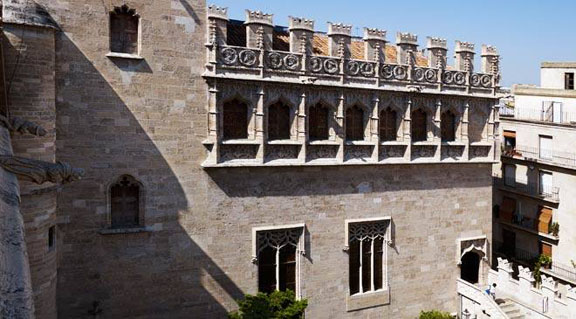
Silk Exchange’s fortress appearance

Photos courtesy Valencia Tourist Office

The Silk Exchange in Valencia, Spain is an exceptional example of a secular building in late Gothic style, which dramatically illustrates the power and wealth of one of the great Mediterranean mercantile cities. It is aesthetically unique because of its fine Gothic architecture combined with Renaissance decoration from the 15th century.

The majority of the Silk Exchange was built between 1482 and 1492 under master mason Pere Compte. The work was completed by a pupil of his after his death, which explains the presence of Renaissance elements.

Its similarity with old medieval castles is based on the fierce, fortress-like appearance of its stone walls. It comprises four parts: the Tower, the Sea Consulate Room, the Orange-tree Patio and the Room of Columns. The site covers more than 6,562 square feet indoors and out.

It is a typical representation of the commercial and financial past of the city of Valencia, and has been used for the same purpose for five centuries. Its original function was as a trading exchange for oil. It developed into the main maritime trading center and the silk exchange. At the present time it is still a major trading exchange, now dealing primarily in agricultural products.

For more info, go to www.turisvalencia.es/

Touring the Castles of Castile-Léon Spain

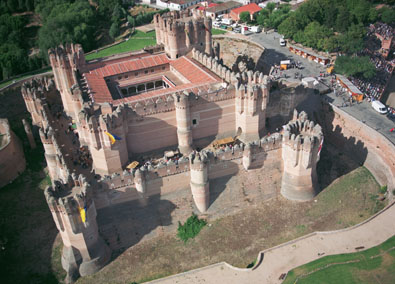
Coca Castle

By Danielle Pruger
Photos courtesy of Castilla-León Regional Tourist Board

Castile-Léon Spain is highlighted in red.

Castile-Léon, an interior region of Spain, is known for its castles (Castile means “land of castles” in Spanish) and provides a look at ancient and medieval forms of architecture. Throughout the Middle Ages, Castile-Léon served as a frontier between Christians and Muslims from the 9th century to the 11th century, which created the initial motivation for building fortresses and castles. Later, the struggle between the various noble families and the royal family from the 12th century to the 15th century made it necessary to build new fortifications. The following six castles, open to the public, can be found in Castile-Léon.

AMPUDIA CASTLE
The municipality of Ampudia is home to a 15th century castle which stands in the center of the village. This castle is well preserved and has been restored. Its sturdy enclosure is protected by four towers, and it has all of the traditional elements of medieval castles: battlements, ramparts, barbicans and a moat. Although it is privately owned, it is open to visitors, and its interior is home to a museum of art and antiquity.

PEÑAFIEL CASTLE
The medieval castle in Peñafiel was built in the 11th century and stands on a rocky spur. The castle was rebuilt around the 14th and 15th centuries and has a peculiar shape because the outline of the walled enclosure conforms to the elongated silhouette of the ridge. This unusual shape has made it one of Spain’s most famous images; from a distance the castle resembles a boat run aground in the midst of a sea of pastures and wheat fields. This castle is also home to the Provincial Wine Museum.

ALCÁZAR FORTRESS
The city of Segovia contains the Alcázar fortress, another one of Spain’s most emblematic images. This imposing Gothic building was built between the 14th and 15th centuries and was later transformed by Philip II in the 16th century into the Herrerrian style seen today. It was the residence of the Castilian and Spanish monarchs for two centuries; its location is on a gorge above the Eresma and Clamores rivers. The location, along with the appearance of the castle, is similar to the castles in fairytales, which evoke the images of princesses, knights, witches and dragons.

COCA CASTLE
The Coca Castle, located in the municipality of Coca, is completely different from other castles; it was built in the Mudejar style of the 15th century using typical red brick. It has three walled enclosures, a moat with a drawbridge, a bailey (courtyard) and a splendid keep. The village of Coca is the descendant of the Celtic-Iberian city of Cauca, which was conquered by the Romans in 151 B.C.

LA MOTA CASTLE
La Mota Castle, also designed in the Mudejar style, is located in the town of Medina del Campo. It was built in the 15th century using concrete and red brick and has four enclosures protected by enormous walls, as well as a monumental keep. It was in the 15th century that Medina del Campo reached its maximum splendor: its fairs were the most important in all of Europe, and it is where bills, instead of coins, were first used as currency. This is also the place where Queen Isabella I of Castile, known as Isabella “la Católica,” died.

Zamora Castle

ZAMORA CASTLE
The city of Zamora, located beside the Duero River, has a medieval castle that was built in the 12th century. This castle was restored in 2009, and the castle is surrounded by three walled enclosures dating from the same period, which encircle the historic center of town.

For more info, go to Spain is Culture

BASKING IN TASTE: Cuisine of the Basque Country

French Basque cheesemonger at the open-air market
in St.-Jean-de-Lu

A special region with a proud history, a distinct language and a unique cuisine

By Sharon Hudgins
Photos by the author

The Basque country of Europe is a region with a special ambiance all its own. Located in northern Spain and southwestern France, it’s a land of green meadows and high mountains, rugged coastlines and white beaches, wooded valleys and dry plains. Bordering on the Bay of Biscay, the Basque country straddles the Pyrenees Mountains and the coastal foothills along the frontier between France and Spain. It includes the Spanish provinces of Álava, Vizkaya, Gipuzkoa and, historically, parts of Navarra, as well as the western part of the French district of Pyrénées Atlantiques.

The Basques are proud of their regional identity and possess a spirit of independence that has often defined their history. An ancient people unrelated to other Europeans, they speak a unique language peppered with x’s, k’s and z’s. Theirs is also a land of contrasts, between rural and urban, past and present, rich and poor: the elegant boulevards of Biarritz and San Sebastián; the functional red-brick highrises and the soaring steel modernism of the Guggeheim Museum in Bilbao; the somber stone buildings of Vitoria and the picturesque fishing villages along the coast; the grimy industrial suburbs of major cities and the pastoral farmhouses of the interior, their walls, doors, and shutters painted white, red and green, the colors of the regional flag.

Passionate for politics and sports, the Basques are also very serious about food. Basque cuisine is famous on both sides of the border, and several Basque chefs have been among the leaders of Spain’s modernist cuisine movement. There are nearly 40 Michelin-starred restaurants in the French and Spanish Basque regions, with San Sebastián boasting a trio of restaurants awarded three Michelin stars (out of only seven 3-star restaurants in all of Spain). Known as the culinary capital of Spain, the city of San Sebastián has more Michelin stars per capita than anywhere else in the world.

The Basques like to cook, and they know how to eat well. Basque cooks of both sexes are renowned in Spain and abroad. Basque women are noted not only for the excellence of their home cooking, but also their success as restaurateurs. And Basque men, as accomplished restaurant chefs and members of local male gastronomic societies first organized in the nineteenth century, have been especially important in perpetuating and promoting Basque culinary traditions.

(left to right) Pork sausages flavored with paprika, in a Basque market; French Basque oil flavored with red peppers from Espelette

BASQUE FOOD PRODUCTS
High quality ingredients form the basis of any notable cuisine. Fresh fish and shellfish are the mainstays of Basque cooking, caught in the Bay of Biscay and beyond, as well as in the mountain streams that flow to the sea: cod, hake, sardines, anchovies, herring, sole, sea bream, baby eels, tuna, bonito, bass, red mullet, octopus, squid, lobsters, crabs, clams, mussels, oysters, freshwater salmon and mountain trout.

The interior of the Basque country provides pork, beef, lamb and game, some of which is processed into cured meats like the famous the hams of Bayonne on the French side and the spicy sausages of the Spanish Basque land to the south. Basque dairy products are also of high quality, and the Basques use milk, butter and cream extensively in their cooking. Sheep’s milk goes into the production of several kinds of Basque cheeses made on both sides of the border, many of them matured in caves or huts high in the mountains. And the Basques are crazy about mushrooms. Every spring, summer and fall thousands of Basques head to the forests and meadows to pick the many varieties of wild mushrooms that suddenly pop up in secret places.

Market gardens grow the fresh produce so essential to many Basque regional dishes, including artichokes, asparagus, cabbages, leeks, onions and carrots. With the first Spanish voyages to the Western Hemisphere 500 years ago, tomatoes, potatoes, peppers, beans and cacao (later processed into chocolate) began returning in the holds of the ships and eventually became an important part of the Basque diet. Today several specific places in the Basque country are well known for the New World crops they grow: tomatoes in Deusto near Bilbao, potatoes in the province of Álava, many types of beans in Navarra and Gipuzkoa, and long green peppers from Gernika. Across the border in the French Basque country, paprika made from the bright red peppers grown around Espelette is the first and only spice in France to be awarded an AOC (controlled designation of origin) and APO (protected designation of origin) status.

Mild sweet peppers are a popular ingredient in Basque cuisine; peppers are a popular culinary motif in the Basque Country

Spanish Basque meals are often accompanied by excellent red wines from the Alavesa area of the famous Rioja wine region. A different type of Basque wine made near the Spanish coast is txakolí, which is light, slightly effervescent, and fruity but dry. Although the Basques produce white, red and rosé versions of txakolí, the whites are considered the best of these simple table wines, especially good with the fish dishes of the region. Reds are the predominant wines produced on the northern foothills of the Pyrenees in the wine region of Irouléguy, which is the only AOC-certified wine area within the Basque country of France.

Basque sparkling cider is another popular drink on the Spanish side of the border, served not only at home and in restaurants but also at sidrerías, combination cider mills and eating houses where the cider is tapped fresh from the barrels and served as an accompaniment to simple country-style meals.

TRADITIONAL BASQUE DISHES
Fish and seafood dishes—grilled, baked, stewed, sautéed—are an important part of Basque cuisine. One of the most expensive dishes in Spain is the Basque dish of angulas, silvery-white baby eels (which cost up to 1,000 Euros per kilogram!) cooked in a small earthenware casserole containing very hot oil, a clove of garlic and a piece of dried red chile pepper. Much more reasonably priced are the rustic fish stews of this region, including classic marmitako, an oily-rich mélange of white-fleshed bonito and potatoes, usually cooked with tomatoes, garlic, and white wine in an iron pot. And although the Basques have an abundant and continuous supply of fresh fish from the sea, they also love bacalao, dried salt cod that has been split lengthwise, flattened out, heavily salted, and dried in the open air. Reconstituted in water before being prepared in innumerable ways, bacalao has been aptly described as mummified fish brought back to life by the cook.

In the Spanish Basque country, seafood is also paired with classic sauces whose colors reflect those of the Basque flag: red sauce (a la vizcaína, or Biscay-style) made with onions and dried sweet red peppers; green sauce (salsa verde) colored with parsley, peas, and asparagus; and a special kind of white sauce made by cooking the ingredients al pil-pil, in a shallow earthenware casserole set over a low flame, the casserole shaken, not stirred, until the gelatin released by the fish combines with the oil to produce a rich, unctuous sauce. The Basques also prepare baby squid in a thick, creamy, subtly flavored sauce tinted black by the squid’s own ink.

Another classic Basque dish is piparrada (Spanish) or piperade (French). Sweet red or green peppers, roasted and peeled, are sautéed in olive oil, butter, or lard, along with other ingredients such as tomatoes, garlic, onion, and ham. Often beaten eggs are swirled into this sauce just before serving, to make a kind of scrambled egg dish, or the sauce alone is served as an accompaniment to baked, grilled, or roasted meats.

Pintxos are a particularly popular category of foods in northern Spain. The Basque version of Spanish tapas, these are bar snacks that range from traditional potato omelet slices, mayonnaise-bound potato salads, spicy sausages, and stuffed mussels, to more modern variations made from a thick slice of chewy white bread topped with two or three layers of tasty, colorful ingredients, all held together with a toothpick. Miniature masterpieces of the culinary art, these pretty little open-face sandwiches are enticingly displayed on the counter of each bar. No visit to the Spanish Basque country is complete without a poteo, a kind of civilized pub crawl, where you wander from one bar to the next, drinking a glass or two of local wine and tasting the designer pintxo specialties at each place.

But leave room for dessert. Traditional Spanish Basque specialties include leche frita (fried milk), thick custard squares dipped in beaten egg and flour, then fried until crisp; intzaursalsa, walnut cream soup made with crushed walnuts, toasted bread crumbs, milk, and sugar; mamiya, milk curds flavored with lemon and sugar; and colorful fruit compotes made with red wine and spices, such as zurracapote served on Christmas Eve. Spanish pastel vasco and French gateau basque are both classic Basque double-crust tarts filled with custard and sometimes jam. And if these old-fashioned desserts don’t appeal to your more modern palate, then spring for dinner at one of those Michelin-starred restaurants to taste (and marvel at) the futuristic sweets prepared by the Basque Country’s many highly acclaimed chefs.

For more information see:

www.foodsfromspain.com

www.spain.info/en/que-quieres/gastronomia/cocina-regional/pais_vasco/pais_vasco.html

www.travelandleisure.com/articles/exploring-frances-basque-country