Pamplona

Worth a visit, even when the bulls aren’t running
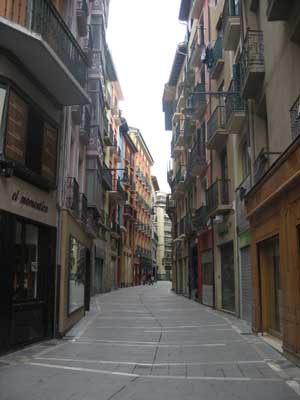
Since ancient Pamplona could not build outside of the city walls, expansion had to be up, resulting in tall, narrow buildings. During the Fiesta de San Fermin the bulls run here on Estafeta Street, where there is no excape for the runners except in the doorways of the buildings.

By Marilyn Heimburger
Photos by Don and Marilyn Heimburger

Mention Pamplona, Spain, and most people will respond, “Oh, the running of the bulls!”

Although the Fiesta of San Fermin (July 6-14), made known internationally by Ernest Hemingway’s novel The Sun Also Rises, is Pamplona’s most familiar claim to fame, the city boasts many other reasons for tourists to visit, even when the bulls aren’t running.

Pamplona is the capital city of the region of Navarre, a beautiful and diverse area in northern Spain, bordering France along the Pyrenees Mountains. It is just one hour by air and a little more than three hours by train from Madrid. Barcelona is a three and a half hour train ride away.

WHERE TO START
Once you’ve arrived and settled into your hotel (the city has one five-star, eight four-star and 20 three-star hotels) start your walking tour at the heart and soul of the city, the Plaza del Castillo.

This tree-lined square was named after the 14th century castle which used to be at one of its corners, and was the site of bullfights from the mid-14th century until 1844 when a bull ring was constructed. Now it has a bandstand in the center and is a popular place for leisure activities and for meeting friends. Cafes line the square, and the streets leading from the square are filled with tapas bars and small shops.

The Cafe Iruna, which looks out onto the Plaza del Castillo, was a favorite meeting place of Ernest Hemingway. It includes the Hemingway Bar, where a life-sized statue of Hemingway leans on the counter, awaiting your Kodak moment. This large cafe was the first location in Pamplona to install electric lights. With its mirrored walls and mirrored mosaic trim bordering the ceiling, the cafe demonstrated the new lights in 1888. Residents gathered inside with anticipation, and as the electric lights were turned on, they rushed in terror to the exits, suspecting witchcraft was responsible for the illumination. The cafe remains an everyday meeting place for the locals. A two-course meal with dessert and beverage costs 13 euros. Or just have coffee while you plan the rest of your route.

SEE THE PAST IN THE PRESENT
Be sure to visit the Cathedral of Santa Maria, in what was the old Borough of La Navarreria. Look for the magnificent alabaster tomb of King Carlos III of Navarre and his wife Eleanor, the 16th century stained glass windows and the 13th-14th century Gothic cloister, which is considered one of the finest in Europe. When the church’s ancient Romanesque exterior collapsed, it was replaced during the 17th century with a Neo-Classical facade, hiding the French-Gothic interior. The figure of Mary in the main altar under the silver canopy has been nicknamed “Mary of the Adopted Child,” since the child in the sculpture is a replacement for the original, stolen during the 16th century. For that reason many families present their adopted children here.

If you visit during the spring, notice the blossom-filled chestnut trees that surround the cathedral. In the fall, pick up a fallen chestnut and put it in your pocket. Locals believe carrying the chestnut will protect you from aches and pains in your bones!

The fortified Church of San Cernin from the ancient borough of that same name also boasts a Gothic interior. The Pocico on the outside of the church marks the location of the well where San Cernin baptized the first Christians in Pamplona. Among those baptized was San Fermin, the son of a Roman general. He became a bishop and was eventually beheaded, giving some historic significance to the red scarves worn around one’s neck during the Fiesta of San Fermin.

The Church of San Nicolas, another fortified church from the 12th century, features a watchtower, a Gothic interior, and the largest Baroque organ in Pamplona.
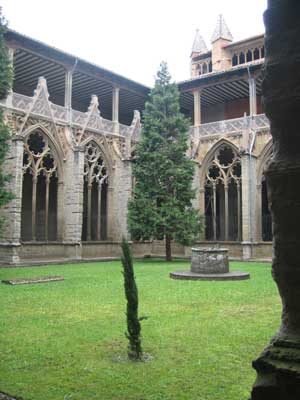
Gothic cloister of the Cathedral of Santa Maria.
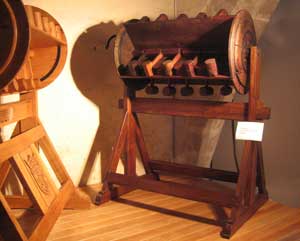
The racket made by turning the crank of this wooden noisemaker still serves as the “Call to worship” at the Cathedral when the bells are silenced from Good Friday until Easter morning.

UNIQUE TOWN HALL
The Town Hall with its remarkable Baroque facade was built between 1753 and 1759 to replace the old one from the 15th century, which was falling into ruin. The launch of a rocket from the upper floor balcony at noon on July 6th each year marks the official beginning of the Festival of San Fermin.

The Navarre History Museum is worth the two-euro cost of admission. A short walk from the Plaza del Castillo, the former 16th century hospital, houses art and archeological exhibits which are arranged from the Prehistoric and Roman ages in the basement through the 20th century on the fourth floor. Included in the collection are intricate Roman mosaics, a Spanish-Muslim casket from the Monastery of Leyere and a painting by Goya.
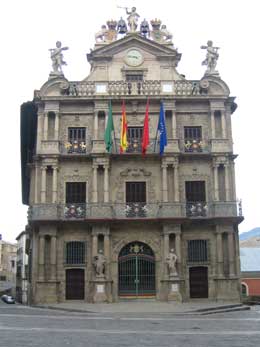
Pamplona’s town hall — a rocket launched from the upper floor balcony marks the beginning of the Fiesta de San Fermin.

WALK THE BULL ROUTE
The route that the bulls run during the Sanfermines is much easier to see without dodging the bulls. Since medieval times the bulls have been driven through the streets to where the bullfights are held, first to the Plaza del Castillo and then to the bullring.

Follow the 1/2-mile route from the corral at the base of Santo Domingo Street to the niche in the wall holding a small statue of San Fermin. Here the runners pause and sing to San Fermin, asking for protection.

Continue up the street to the Town Hall Square, where the area is wider and runners have many places to escape. Make the 90-degree turn where the bulls often slip and fall, onto Estafeta Street, and look up at the second floor balcony of the Gran Hotel La Perla, from which Hemingway watched the action. Here the route is narrow and the only escape from the bulls is in the doorways of buildings.

At the end of the street the route slopes slightly downhill and narrows through wooden fences that funnel the bulls and runners into the bullring. During the few minutes that the bullrun lasts, all stoplights are kept at red to allow quick passage of emergency vehicles, should they be needed.

ONE MILLION VISITORS
One million people come to Pamplona for the Sanfermines, which opens with a rocket blast from the balcony of the Town Hall at noon on July 6. The bulls run every morning at 8 am from July 7-14. Viewing space on private balconies lining the route can sell for 150 euros per tourist per day. Of the 6,000 runners, on average each year three people are gored, 80 injured and one dies about every 10 years. The runners are dressed in white with a red scarf around the neck, and carry a rolled-up newspaper to hold in front of the bull’s eyes, in case they get too close. A Sanfermines museum is being planned for 2012, so tourists can experience the July event throughout the year.

Pamplona’s Plaza de Toros (bullring) is the third largest in the world, after those in Mexico City and Madrid. The caretaker of the bullring lives year-round with his family in an adjoining house. This “concierge of the bull ring” takes great pride in keeping the building and grounds in beautiful condition, including the small chapel where the bullfighters kneel and pray before entering the ring. Tickets to the bullfights, held each day during the week of the Sanfermines, range from 400 euros in the shaded seats to 10 euros in the sun. Rumor has it that those in the sun usually have more fun partying than those watching the bullfight from the expensive seats. The money collected from ticket sales goes to charity, as does half of the meat from the bulls, which are butchered on site after the fights.

The chapel where bullfighters pray before entering the ring.

Outside of the bullring stands a statue of Ernest Hemingway, who made the Fiesta of San Fermin and the running of the bulls internationally famous. On the morning of July 6, the opening day of the Fiesta, a group of young people traditionally tie a huge red scarf around the statue’s neck, declaring that the festivities can now begin, since Hemingway has joined the party.

DRAMATIC STATUE
The Encierro statue, which vividly depicts the excitement of the running of the bulls, is located a short walk from the Plaza del Castillo, in modern Pamplona. First erected with fewer figures, the statue was so well received that the artist was asked to add to it. The enlarged statue was completed in 2006. The artist put his own face on the figure in the front, about to be stepped on by the bull.

TASTY TAPAS
Known here as “pinchos” (the Basque word for tapas) these tasty, unique small portions of seafood, vegetables, meat and pastries are served in bars on the streets that fan out from the Plaza del Castillo. Although pinchos are available all day, eating dinner late is the norm here, so after 9:30 p.m. wander in and out of the small bars and sample a variety of the offerings while standing at the bar with a glass of wine. Many of the recipes are award winners in local and national competitions. Look for the framed certificates proudly displayed on the walls. Baserri won first place for its vegetable Rubik’s cube. Bar Gaucho is also popular with the locals. An award-winning pincho in the “textures” category features slow-cooked salmon topped with a paper-thin loop of raw white asparagus.
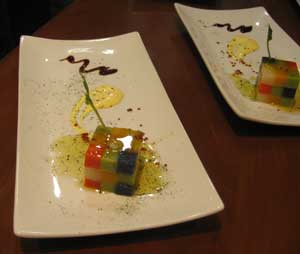
Baserri’s award-winning pincho, the vegetable Rubik’s cube.

FINE DINING
Pamplona and the region of Navarre boast three restaurants with a one-star Michelin rating. One of them is Rodero, located near the bullring and offering a creative tasting menu of an appetizer, three starters, two second courses and two desserts for around 60 euros.

Relatively new to Pamplona is La Mar Salada, featuring chef Martin Iturri, who worked briefly in Chicago with the Lettuce Entertain You organization. His tasting menu, including two types of paella, a rice dish, is outstanding.
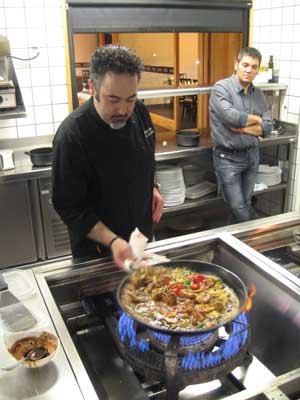
Chef Martin Iturri prepares paella.

A BIT OF HISTORY
Originally a Vasconian settlement called Iruna (meaning “city”), Pamplona was named after Roman General Pompey, who founded the city in 75 BC, complete with drains, walls, moats, public baths, temples and houses. Remains of the Roman baths were recently found under the streets of the old quarter while upgrading the town’s infrastructure.

Occupied by Visigoths and Muslims between the 6th and 9th centuries, the Kingdom of Pamplona was founded in the 10th century by the city’s nobles. The city grew during the next two centuries primarily because of the steady stream of pilgrims trekking over the Pyrenees Mountains through Pamplona to the tomb of St. James at Santiago de Compostela. Travelers who decided to stay in Pamplona, and French traders and free artisans who came to provide services for the pilgrims, founded the Boroughs of San Cernin and San Nicolas. These two boroughs, along with the Borough of the Navarreria, which was inhabited by the locals, were each surrounded by walls, had its own fortified cathedral, and was governed separately.

In 1423 King Carlos III ordered walls between the boroughs to be removed, unified their outer walls, and built a city hall where the current 18th century city hall now stands. Pamplona became a fortress city with the construction of a Citadel and was a stronghold for defending Spain against France. The Citadel, considered the best example of Spanish renaissance military architecture, is now the site of beautiful parks and gardens. More than three miles of the medieval walls are still in beautiful condition, inviting a walk through historic gates, to ancient bastions and over bridges.

Expansion outside of the city walls didn’t begin until the end of the 19th century. Until then, growth within the walls meant not more but taller buildings, an unusual sight in Spanish cities, where 2-3 story structures are the norm. You can see these tall and colorful buildings in the old quarter along the streets that fan out from the Plaza del Castillo.

The symbol of a shell identifies the hostel where pilgrims can spend the night for six euros.
A pilgrim from Canada with her credentials for walking the Way of St. James.

PILGRIMAGE PATH THROUGH PAMPLONA
The Pilgrim’s Way to St. James (Camino de Santiago) has passed through Pamplona for centuries. According to legend, the body of St. James the Apostle was brought by boat to the “end of the western world,” after he was beheaded by in Jerusalem in 44 AD. It is said that his body arrived in the boat covered in scallop shells, and was buried in secret in Compostela, forgotten until re-discovered in 812. Compostela became an important pilgrimage site, with the number of pilgrims reaching its peak in the 12th century.

In the 1980’s interest in the Way to St. James rebounded. A total of 82,000 pilgrims are expected this year because the Feast of St. James (July 25) falls on a Sunday, an event which doesn’t happen again for 11 years. Pilgrims register their name, age, country of origin, and motivation for making the pilgrimage, and carry a credential, which is stamped each time they reach the next destination on their trek. Once spring begins, pilgrims can be seen throughout Pamplona, wearing hiking shoes, large backpacks, and carrying the symbolic scallop shell somewhere on their load. The pathway is marked with the shell symbol and yellow arrows. Hostels provide a place to sleep along the way for a few euros a night.

GREEN CITY
Pamplona, with a population of 180,000, is very proud of its parks, which comprise more than 20% of the city. In fact, the city claims to be the greenest city in Spain, with almost 34 square yards of green space per resident.

An English-style garden (the largest park in the city) is built on the facing of the Citadel. The interior of the Citadel houses the Ciudadela Park. There you’ll find an open-air sculpture museum and military buildings housing art exhibitions. Taconera Park is on a bastion of the ancient walls, and contains a zoo (yes, a zoo) within the moat.

In addition to many other parks, including a Japanese garden, there is a 7-1/2-mile walking path along the Arga River with areas to picnic and fish. Most are easily accessible by foot from the old quarter, ready to explore and enjoy.

EXCURSIONS OUTSIDE OF PAMPLONA
The region of Navarre offers diverse landscapes and opportunities for excursions outside of Pamplona, from the Pyrenees in the north to desert in the south.

The 13th century Romanesque Church of Saint Mary of Eunate is located southwest of Pamplona toward Estella, on the Pilgrim’s Way to St James. The origin of the peculiar octagonal stone building is unclear. Some legends connect it with the Templars, some as a shelter or hospital for 13th century pilgrims, many of whom appear to have been buried there. Some attribute to it the same mystical energies as that of Stonehenge and the pyramids. It continues to be a popular stop for pilgrims today.

HOW ABOUT A WINERY TOUR?
Navarre is known for its fine wines. The Arinzano Winery operated by the Chivite family has been awarded Pago status, which is the highest level of wine in Spain, an achievement shared with only four other estates in the country. The beautiful estate and winery lies along the Ega River, and is open for tours.
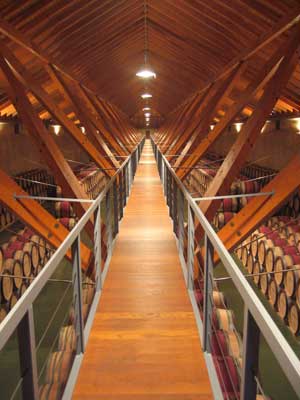
The Arinzano Winery
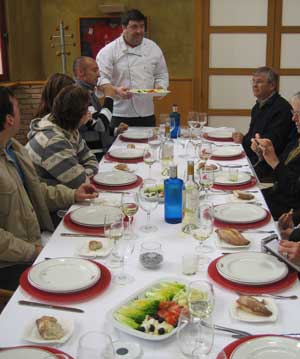
Chef Jose at Restaurante Principe de Viana serves vegetables harvested that morning from his market garden.

The area around Tudela, about 60 miles south of Pamplona, is known for its market gardens, producing excellent vegetables from the rich soils in the flood plain of the Ebro River. Visit Restaurante Principe de Viana in Murchante, where Chef Jose Aguado prepares vegetables harvested that morning from his family’s garden. A local specialty served only in April and May is menestra, a vegetable stew with asparagus, artichokes, lettuce hearts, peas, beans and chunks of ham.

Menestra, a vegetable stew served only in April and May, is a local specialty. Photo courtesy Restaurante Príncipe de Viana

OIL FROM OLIVES
It is a little known fact that Spain produces more olive oil than Italy. To find out how it’s done, visit Hacienda Queiles, an olive oil producer in the Tudela area, that prides itself on green technology and excellent quality. Its olive oil is sold in the United States at Dean and DeLuca, Williams Sonoma and Whole Foods. Tours are available for individuals, families, or groups; e-mail Juan.barral@haciendaqueiles.com
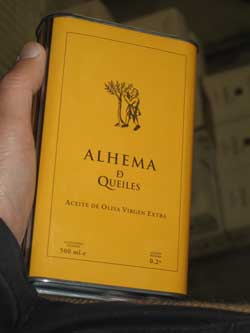
Olive oil from the Hacienda Queiles

WHERE TO STAY
The city’s only five-star hotel is the historic Gran Hotel La Perla, ideally located in the heart of the old quarter on the Plaza del Castillo. Ernest Hemingway stayed here each time he returned to Pamplona. In fact, his room (which was number 217 until the hotel was extensively remodeled and renumbered to 201) is still as it was when he stayed in it. His balcony overlooks Estafeta Street, where he watched the running of the bulls without leaving his room. Only the bathroom has been enlarged and modernized. Other celebrities, including Orson Welles and violinist Pable Sarasate, also stayed here.

Owned by the same family for three centuries, the hotel’s renovated lobby of glass and stainless steel with white marble floors and stairways is punctuated with antiques from its earlier days: among them an original switchboard, mailbox, and the first elevator in Pamplona, which was still in use until 1991. The hotel also purchased some furnishings, including wooden chairs now in the hotel library, and original recipes (still used with some personal touches) in the hotel restaurant, La cocina de Alex Mugica, from Hemingway’s favorite restaurant when it closed.

Among Pamplona’s eight four-star hotels is the elegant Palacio Guendulain, built in the 18th century palace of the Viceroy of New Granada. Located a short walk from the Plaza del Castillo, it was the residence of the Guendulain family (now living in Madrid) for over two centuries until the end of 2008, and opened as a hotel in September 2009. It has 25 guest rooms, a lounge bar and facilities for meetings and events. Some of the guest rooms use furnishings original to the palace. The carriage on the hotel logo pays homage to the exquisite gilded carriage, also original to the palace, which is on display in the lobby.

Antique switchboard from earlier days at the Gran Hotel la Perla

SLEEP IN A PALACE
The Royal Palace of Olite is a beautifully restored 15th century palace, part of which is now a Parador, or hotel. It was commissioned by Carlos III, the king of Navarre who unified Pamplona, and whose alabaster tomb lies in the Cathedral of Santa Maria. It was one of the most luxurious palaces in Europe in its day and contains a hanging garden designed for the king’s wife. Stay in the palace overnight, or for a delightful day trip from Pamplona, take a tour of the palace and the adjoining chapel of St. George, and eat your midday meal at the Parador restaurant.
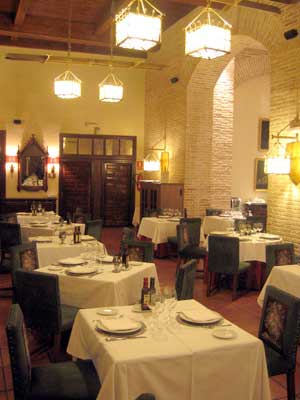
Restaurant at the Parador of Olite

LOCAL GUIDE
For an English-speaking tour guide who can lead you through Pamplona with insight, humor and local anecdotes, contact Francisco Glaria with Novotur guias.
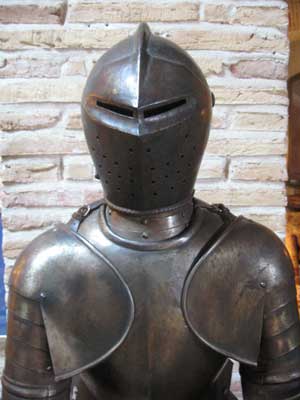
A knight in armor stands guard at
the Parador of Olite.

TRAVELING THROUGH MADRID?
If you stay overnight in Madrid at the beginning or end of your Pamplona adventure, stay at the Hotel Meninas, located a short walk from Madrid’s Royal Palace and the Madrid Opera House. The adjoining El Cafe de La Opera features professional opera singers who serve you and perform arias while you enjoy your meal.

For information about Pamlona, go to: www.pamplona.es; for complete information about accommodations in Pamplona and the region of Navarre see: www.visitnavarra.info, or www.hostelerianavarra.com; for Spain, www.spain.info.
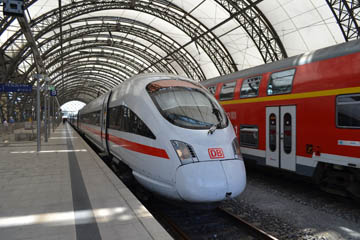
Central Germany’s Fast Trains

A Rail Europe ticket: your key to the country

By Marilyn Heimburger
Photos by Don Heimburger

Trains in Germany are fast, clean and on time. The comprehensive system that includes high speed trains, regional express trains, local trains, street cars and even buses, is so convenient that in the almost two dozen trips I’ve taken to Germany and bordering countries, I’ve never rented a car to get where I needed to be. But I have picked up some tips to make your train travel much easier.

For maximum flexibility in rail travel, a rail pass from Rail Europe is the way to go. Passes can be purchased for the number of days you need to travel over the course of a determined period of time. You must purchase your pass before leaving your country of origin.

On a recent two-week trip, which included a week-long river cruise in central Germany, I traveled by train before and after the boat trip. So my rail pass was for exactly five days of train travel (any days I chose) over the course of one month, starting on the day the pass is validated. Before boarding the train, fill in the date, have your passport with you on the train, and your ticket is valid for travel all day, on as many trains as you like. Some express trains may require an additional reservation fee; ask an agent if you’re unsure.

FIVE DAYS OF TRAIN TRAVEL
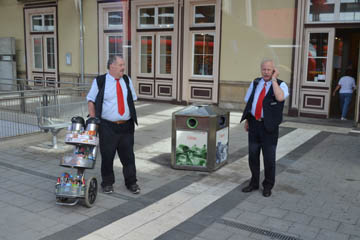
After landing in Frankfurt, I used the first of my five days of train travel to go from the airport to the main Frankfurt train station. Trains leave from the airport to the Frankfurt Hauptbahnhof every few minutes. From the train station I could walk to my hotel. Since the main train stations of major European cities are usually in the historic town centers, you can usually walk to most of the “must see” historic destinations. The historical centre of Hamburg, which is North of Frankfurt, is situated between the Main Station and Gansemarkt and there’s a variety of hotels available if heading that route. Sometimes bicycles are also available for rent from Deutsch Bahn train stations.

The next morning I again filled in the date on my rail pass for the day’s travel, which included an S Bahn train to Mainz, a regional express train to Saarbrucken, a Regionalbahn train to Merzig, and finally, a bus to Remich, Luxembourg, where the river cruise began.

The following local trains are available in Germany:

RegionalExpress (RE)
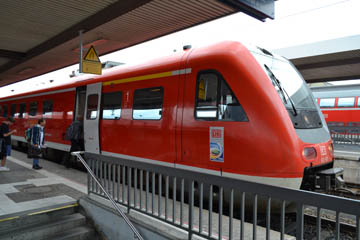
The RegionalExpress connects cities and offers travel in comfortable modern trains. It leaves at regular intervals and links local to long-distance trains.
Regionalbahn (RB)
The Regionalbahn offers a basic service from all local stations. It provides the connection between the regions and city centers. It also connects to the RegionalExpress.
S Bahn
The S Bahn services high-density areas, leaving in quick, regular intervals. Some S Bahn stations have access to longer distance regional trains, making travel within the city and between cities easier.

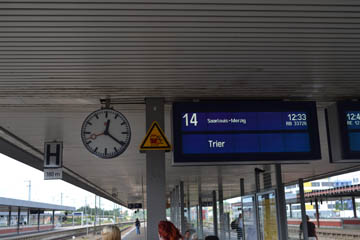
How do you find the right train? The very large train stations will have electronic signboards listing train destinations, the track (Gleis), and time of departure. If your train isn’t listed, wait a few minutes, and check again. The board is constantly updated as trains come and go. It will also list delays and cancellations. At smaller stations, a list of daily arrivals and departures is printed on signage on the platform. Go to the correct track number, and check the sign on the platform to make sure your destination is listed. Then keep an eye on the clock (there’s usually one on the platform at most midsize and major train stations) and watch your train arrive, usually right on time.

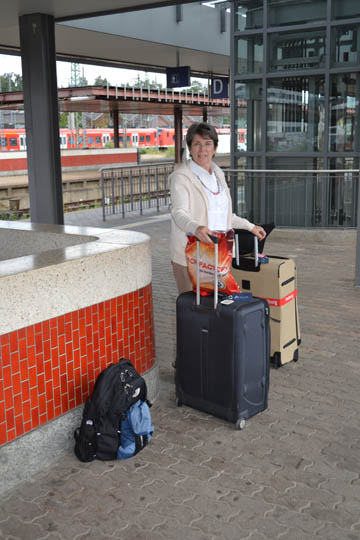
If your rail pass is for first class travel, as the train arrives, look for the cars with a number “1” on the side, indicating first class seating. While even second class sections are comfortable, first class is usually more luxurious, air-conditioned and roomier. Layover time at a station is often short, so it’s important to board quickly. You can move to the first class seating area once you’re on board, but it’s harder if you have a lot of bulky luggage.

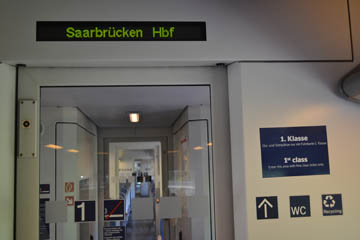
Look for the signs inside the train to learn your next stop.

MAKING CONNECTIONS
When you’ve found a seat, look for the automated sign inside the car that indicates the next stop, and be ready to exit when your destination approaches. Not all trains have this, so having a pre-printed schedule in your hand prior to boarding is helpful. You can print these out from the Rail Europe website before you leave home. To find your next connection at the next station if you need to, check the station train board for the time and track number. If the layover is long enough, stop for a coffee or a snack, or get a sandwich and drink to enjoy on the train at one of the many food shops located in the larger train stations.

The last leg of my day’s travel was by bus to Remich, where the cruise ship was waiting. Since my pass was for travel in Germany only, it was not valid for the bus to Remich. However, the bus ticket was easily purchased from the driver after boarding. Bus stations are usually right next to the train stations, and schedules between trains and busses are coordinated for easy connections.

After disembarking the cruise at Nuremburg, I made my way to the main train station by cab, checked the large signboard, and found the track for my next destination: Dresden. Once again, I wrote the date for my third day of travel in the appropriate square on the rail pass before boarding. You must write in this date prior to each day’s trip.

This inter-regional express train, one-fifth of which was devoted to first class seating, had some cars designated to leave the train at Bayreuth. Look for the signs on the sides and front of each car to be sure the car you’re riding is going all the way to your destination, since some cars may be transferred to other towns en route.

Even though this was a regional train, it traveled at upwards of 90 miles per hour, past farmland, forests, streams and rolling hills and through tunnels, often on super-elevated tracks, and in areas where double tracks allowed for quick, through traffic. The first-class seating area had a table at which I could comfortably eat the sandwiches I bought along. If you don’t have a chance to purchase food at the station, usually a snack cart on long-haul trains is wheeled through periodically, offering coffee, drinks and snacks.

After four days in Dresden, I filled in the fourth travel date on my pass for the trip from Dresden to Frankfurt. In the Dresden Hauptbahnhof, I again bought food to eat on board while waiting for the signboard to list the train to Frankfurt. This trip would be on an ICE (InterCityExpress), one of the premier luxury trains on the Deutsch Bahn rail system. Once on the track platform, I looked for the chart listing the train equipment on this route. Waiting areas on the platform are designated “A”, “B”, “C” and “D”. Check this chart to find where the first class cars are in the train’s consist, and note where they line up in the ABCD waiting areas. You now know where the car you want will be as the train pulls into the station, allowing for quicker boarding.

RESERVATIONS MAY BE NEEED
Reserving a seat is recommended on some heavily-traveled routes, even if you have a first class reservation. Making a reservation costs a small amount and is easily accomplished at a Deutsch Bahn service counter at main train stations. The lines move quickly, most agents speak English and will efficiently take care of your request.

With a reservation you are assigned a specific seat in a specific car. The seat will have a sign above it designating it as “reserved,” and is reserved solely for you. Sometimes seats are reserved for a segment of the route beginning at a station down the line, and these seats must also be kept free for the passenger who reserved them, even if they are empty for the first part of the trip. Sometimes reservations on busy routes fill up quickly, so decide early if you want to be sure to have a seat. I didn’t bother with reservations on another trip from Vienna to Venice once, and ended up clutching my first class ticket while sitting on my suitcase the entire way in the vestibule of the standing-room only car.

Since Dresden was the starting point for this train, the equipment was already at the station ready for boarding when I arrived. I had plenty of time to check the “consist” at the platform, and found the car number and seat that was on the reservation. While I came prepared with sandwiches and snacks, dining car menus in first class offer coffee, tea, soft drinks, beer, wine, hot and cold sandwiches, soup, salads and pastries, which can be ordered and brought to your seat or purchased in the dining car. The menu changes monthly.

The ICE train is truly an express train. Super-elevated tracks allow for fast curves and a smooth ride, often at speeds of 100 to 120 miles per hour. The only stops were at main train stations along the route. As the beautiful German countryside sped by, I could see Wartburg Castle near Eisenach, and noted the exact location where the border and guard towers had at one time divided Germany into East and West.

Upon arrival (right on time) in Frankfurt, I walked to the hotel, and enjoyed another evening of exploring the city center on foot. The next morning I filled in the last date on the rail pass for the trip from Frankfurt’s main train station to the airport. Train travel through central Germany was easy and actually fun. I enjoyed the ride, taking it easy, and leaving the driving to someone else. These iron rails can be such a delight!

For more information, go to: www.raileurope.com or the DB website: www.bahn.com/i/view/USA/en/trains/index.shtml, but you will still need to purchase your ticket from Rail Europe before you go.

The Dazzling Las Fallas Festival

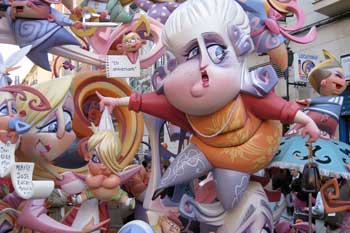
The winning falla, which cost more than 1.2 million to construct.

By Darryl Newman
Photos by the author or as noted

Valencia is probably best known as the birthplace of Valencia oranges and paella, but from March 15-19, you might think Spain’s third largest city was the birthplace of pyromania mixed with pageantry and celebrations. It’s the festival of Las Fallas, and it’s billed as one of Europe’s most spectacular events.

Fallas means “fires,” but is also the word to describe wooden-framed monuments that are placed in squares and key intersections throughout the city. The fallas depict current events, politicians and celebrities, and usually have a satirical tone. On the last night of the festival, the cremà takes place, the burning of all of the fallas, except the winning one.

Winning children’s falla

HISTORY OF FALLAS
Why the burning? Over past centuries, carpenters cleaned out their shops by making bonfires of wood scraps. It coincided with St. Joseph’s Day, the patron saint of carpenters, on March 19. The wood scraps took on doll-like shapes and then became effigies reflecting whatever face was griping the neighborhood. Today the fallas still poke fun but appear as elaborate polystyrene (styrofoam) painted works of art that can tower as high as a six-story building and cost more than $1 million to construct.

MASCLETÀ
At 2 o’clock from March 1-19, there’s the daily pyrotechnic mascletà in the always-packed City Hall Square. For 10 minutes, about 250 pounds of gunpowder explode in a rhythmic cadence of deafening blasts. Different sound artists shoot off a concoction of giant firecrackers, thunderous smoke bombs and screaming rockets to wow the crowds.

The city hall falla turns into an inferno during the crema.

STREET FESTIVAL
Valencia’s Old Town, the largest in Europe, is the ideal place to stroll around looking at the hundreds of captivating fallas (pack comfortable shoes). To accommodate the over one-half million visitors to this coastal city, 700 streets are closed to traffic. Down any street, you may see a 100-member falla commission with women, children and men in 18th century ornate Valencian dress being followed by their lively marching band. The streets are also filled with other kinds of sound. Random firecrackers can be heard everywhere and don’t be surprised to see toddlers, yes toddlers, taking part in the fun.

On a food note, you might see paella being cooked over hot coals in the street. To quell any hunger, temporary food stands are also set up everywhere, serving hot buñuelos de calabaza con chocolate (hot pumpkin donuts with hot chocolate as thick as pudding). For a refreshing drink, you can try the local horchata from the tiger nut legume. It has a pear-like texture and a thirst-quenching sweetness.

Neighbors gather to cook paella in the street.

BULLFIGHTS
As with any good festival in Spain, there’s always a crowd at the Plaza de Toros (bullring). For nine days, the best bullfighters in Spain descend on Valencia. This year, two young superstars, José Tomás and Sebastián Castella, were on the billing among many other talented bullfighters.

It’s said that Spain hasn’t seen a bullfighter like Tomás in decades. He excites the crowd with his poise and fearless entanglement with the bull. Many of his passes let the bull in so close that it actually grazes him. Somehow, Tomás makes what is arguably a cruel sport seem like a graceful and courageous ballet with death.

Superstar bullfighter Jose Tomas

FLOWER OFFERING
Amid the celebrations, there is a solemn aspect of Fallas as well. It is the procession of 105,000 Valencians from the edges of the Old Town to a 40-foot-high statue of Our Lady of the Forsaken, Valencia’s patron saint. Women carry bouquets of white, red or pink carnations that are offered to the Virgin. For two days, the flowers are placed in between wooden slats to fill in the pattern of her super-sized robe. The women become so emotional at seeing the Virgin that many are overwhelmed with tears.

NIT DE FOC
Every night there are fireworks leading up to the 1:30 am Nit de Foc (Night of Fire), the biggest fireworks show of the festival. Thousands walk across the bridges of the city to the Paseo de la Alameda to get a clear view of possibly the world’s noisiest and most colorful 22-minute extravaganza of fireworks. The sky is so bright with fireworks at the finale that it appears as if it is daylight.

CREMÀ
The last night is the cremà with 766 fallas burning throughout the city. At 1 am, the huge falla at the City Hall Square is the last to burn. It is doused with gasoline and packed with fireworks and loud explosives before the immolation. Within minutes it goes up in scorching flames. It’s a sad ending to the festival, but the burning is said to take away the past year’s negativity in order to make room for a new season.

The next morning, the streets are all clean and a calm takes over the city. It seems as if Valencia just simply turned over a fresh new page.

HOW TO GET THERE
Valencia is relatively easy to get to from the US. First, get yourself on a flight to Madrid, Spain’s capital. From Madrid, it’s a quick 40-minute connecting flight to Valencia. Iberia, the national airline of Spain, partners with American.

WHERE TO STAY
Valencia has over 100 hotels to choose from. I stayed at the Hotel Astoria Palace. It is the emblematic hotel of Valencia, ideally situated in the heart of Old Town and a few short minutes walk to the City Hall Square, cathedral and restaurant/shopping areas. Its central location is key for all the main events at Las Fallas.

The hotel itself has a long history of impressive guests from famous Spanish actors to bullfighters. Despite its 204 rooms, it has the elegant charm of a smaller hotel; it was recently renovated with a modern lobby and dining areas as well as with a spacious, high-ceiling bar. The rooms are classic Spain with rich wood furnishings.

During Fallas, the charismatic director Juan Torregrosa was present in the lobby and throughout the hotel to greet guests. He speaks English having had lived with a family in Arkansas for two years.

Vinatea, the hotel’s restaurant, features an extensive menu including a dozen unique rice and paella dishes. Its modern white setting with purple flourishes is the perfect place to dine and to try a bottle of wine from their extensive bodega.

WHERE TO EAT
If seafood is your thing, Civera, near the train station, is a must. You won’t believe their selection of shrimp and lobster in tanks to the scallops and dozens of different kinds of shellfish on display. All of their seafood is either from the bordering Mediterranean or Cantabrian seas. You can try the biggest oysters you’ll ever see — about the size of your fist. If you haven’t tried grilled sepia (local form of calamari) with olive oil, you’re in for a treat.

For a classic Valencian restaurant complete with paella and other typical rice dishes, try La Riuà. It’s one of the oldest establishments in the city with walls decorated with colorful and fascinating plates.

For artistic and mouth-watering tapas or pintxos, there’s Sagardi, a Basque tavern-like setting with an upstairs restaurant for dining including juicy T-bone steaks and popular fish like hake and cod.

WHERE TO START
Here are some key websites for Fallas and Valencia if you want to join in on the fun:
www.fallasfromvalencia.com
www.turisvalencia.es
www.spain.info

Gateway to Connemara

By Susan O’Brien
Photos by the author

The early part of the 21st century has changed Ireland in many ways both good and bad. A building boom (now gone bust in the world-wide recession) had Irish-style mini-mansions going up throughout the beautiful and rugged western part of this once-impoverished country. Many immigrants were returning home to take advantage of the employment opportunities created by the famed “Celtic Tiger” economy.

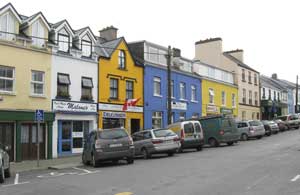
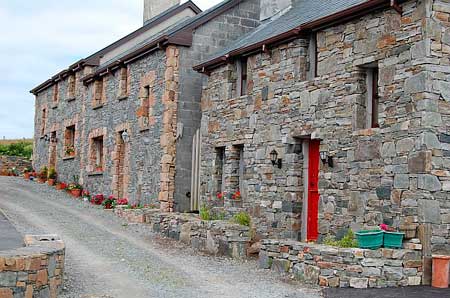
But if you are a visitor looking for a place that still holds the bucolic charm for which Ireland is famous, Clifden in County Galway is a perfect base for exploring beautiful Connemara. This little Irish village is perfectly situated between bustling Galway City and the rolling countryside of western Ireland, which is justly famous for its rugged, desolate beauty.

Kylemore Abbey, Connemara

One of the newest towns in Ireland, Clifden was founded at the beginning of the 19th century by John D’Arcy, who hoped the town would bring prosperity to the poverty-stricken area. Today the village is much as it was built more than 100 years ago, but as a hub for tourists exploring the surrounding countryside, it is home to numerous restaurants, shops, B&Bs and hotels.

Clifden is a logical and pleasant home base or jumping-off point for anyone wishing to explore Connemara and its beautiful coastline, quaint villages and rugged mountains. It is also a convenient hour’s drive into Galway City, with its more cosmopolitan nightlife and shopping scene.

To check out accommodations, restaurants and things to do in Clifden, go to www.clifdenchamber.ie. For information on the region, go to www.connemara.ie or discoverireland.com.

Regensburg: City of Wurst and 1,200 Historic Buildings

By Marilyn Heimburger
Photos by the author and Don Heimburger

The UNESCO World Heritage city of Regensburg, Germany, 90 minutes north of Munich, is more than 2,000 years old, and many of its buildings serve as a testament to its long history.

There’s plenty of reminders of this town’s heritage: located on the Danube, many tour ships dock here and unload visitors for a peek into this German treasure.

Even Mozart liked the city: Regensburg’s hospitality was commended as early as 1790 by Mozart who enjoyed “a sumptuous meal along with divine music” and praised the good wine.

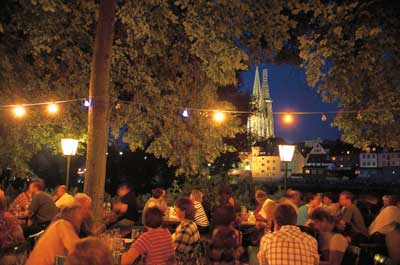
Numerous Roman buildings, such as the Porto Praetorius–an old Roman town gate–can still be seen today. It was preserved because the Bishop’s beer garden was located on the site. An underground museum at Neupfarrplatz displays the history of the Romans and the Jewish community there until 1519.

NEUPFARRPLATZ IN JEWISH QUARTER
At the Neupfarrplatz, houses were built in the Jewish quarter over the old Roman fortress in the 8th century. These were destroyed in 1519 when the Jews were blamed for a downturn in the economy and were driven out.

In 1995 an excavation of the area was begun, and the ruins of the Jewish quarter were found, in addition to the Roman ruins.

Found in the excavation and on display in the underground museum were a second or third century statue of the Roman god Mercury; from the 15th century a statue of Aaron (Mose’s brother); and from 1520 an icon of the Virgin Mary. The museum is called Document Neupfarrplatz; if you walk down a flight of stairs, you can view a video showing the excavation finds. www.regensburg.de.

The city began as a Roman fortification (Castra Regina) in 179 AD by Roman Emperor Marcus Aurelius because it was the northernmost point on the Danube. When the Roman Empire fell, the Romans retreated. The fortress built there was not destroyed, and Bavarians then occupied it. It was the first capital of Bavaria; believe it or not, Munich is 1000 years younger!

Not much was damaged in the town during World War II as there wasn’t much industry in Regensburg, so there was nothing to bomb. Thus, the old buildings were preserved.

‘ITALY’S NORTHERNMOST CITY’
Rich merchants gained wealth from importing goods from far away lands. They built large homes with tall towers (a show of strength and wealth) after the style in Italy. Many of these are still standing in Regensburg; nearly 20 are still well preserved. The town is often called “Italy’s northernmost city” because of this.

One of the big Regensburg attractions is The Old Stone Bridge, built on 16 huge arches, which has been in continuous use for more than 800 years. Built between 1135 and 1146, the Stone Bridge enjoys the status of being a unique masterpiece of medieval engineering. It was for many centuries the only stone bridge spanning the Danube between Ulm and Vienna. It was not only a technological masterpiece of engineering, but of strategic importance in terms of transport and, as a result, of great commercial value.

Another town attraction is the Old Town Hall, where Roman Emperors used to summon princes, bishops and ambassadors to discuss the affairs of state. The Imperial Diet Chamber still contains the same furniture, including the benches that gave rise to the German expression “to put something on the long bench” (meaning to postpone it indefinitely).

‘HISTORIC LUNCH’
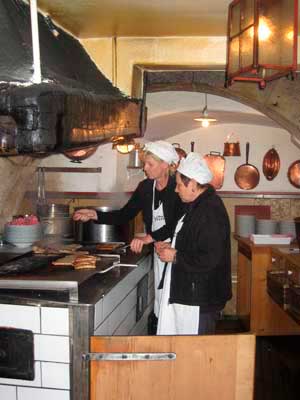
For a quick and tasty lunch, sit down near the Danube and enjoy hot, juicy sausages with kraut and bread in the “Historische Wurstkuchl,” the world’s oldest sausage kitchen. You can actually see them frying the sausages on the grill through a door that leads into the small kitchen. http://www.wurstkuchl.de

Regensburg is a city of churches. Focal points of early Christianity, its ecclesiastical buildings are majestic and typify early Christian architecture. Most famous is St. Peter’s Cathedral, inspired by the French Gothic style and built in the 13th century.

At waterside, Schifffahrt Klinger offers boat trips to many different sights such as the Walhalla, the German Hall of Fame containing busts of famous German personalities.

Regensburg`s remarkable buildings and towers offer an unspoiled look into the past; the wars of the 19th and 20th centuries left this Danubian community virtually unscathed.

The Regensburg Tourism Office is located at the old Rathaus, Rathausplatz 3, D-93047 in Regensburg. Fax is +49 941-507-1919 or e-mail to tourismus@regensburg.de.

For more information about Germany go to www.cometogermany.com.