Meet Art Wolfe

I’ve always been enthusiastic about the work I do.
Art Wolfe

ET: Of the many European countries, which country or countries do you like to photograph the most – and why?
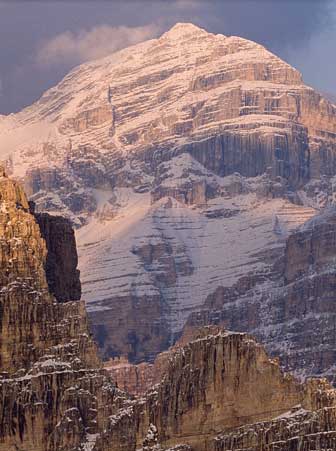
AW: I’ve traveled to Europe a number of times over the years. In fact, my first overseas trip was to England, and 28 days later I wound up in Greece. It was very early on, and one could argue I wasn’t much of a photographer, although I thought I was at the time. Italy definitely has been one of my favorite places to go, not only for the antiquity but for the stunning scenery: the craggy Dolomites in the north, and the south’s rumbling volcanoes of Mt. Etna and Stromboli. These have yielded great opportunities and photographs over the years; I love Italy!

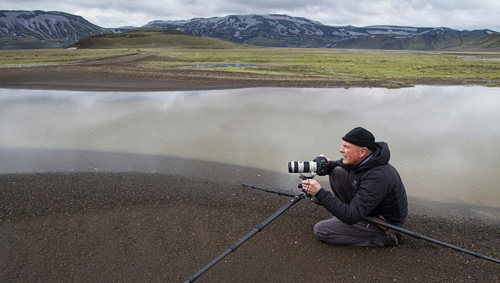
Equally strong for me has been France; photographing in the French Alps, in and around the Rhone River delta and up into Provence has resulted in some of my most delightful photos over the years. Iceland surely is not to be missed―its young landscape is different every time I visit.

There are huge gaps in my coverage of Europe; I dream of the day I can travel through Spain. My long-time photo assistant is from Romania, though I have yet to get to central and eastern Europe. All these places draw my attention, and it’s just a matter of time before I get there.

ET: If you were to recommend to someone to photograph the European landscape, where would you “send” them and why?

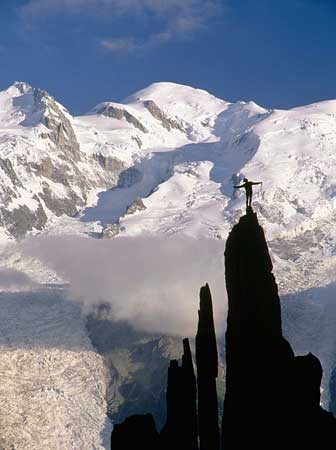
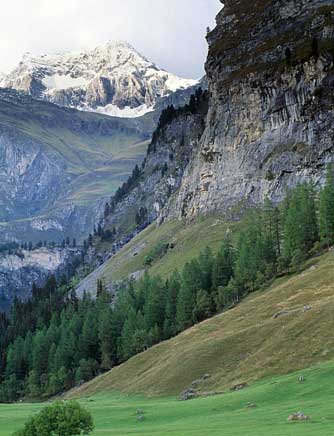
AW: Certainly it’s hard to beat the Alps, both French and Swiss. One of the striking things about the Alps is their verticality; they are very accessible initially but many of the peaks are among the most difficult peaks to climb on earth. One of my best locations has been Lac Blanc just above the ski town of Chamonix, France. I can’t overstate how stunningly beautiful Lac Blanc is as it reflects the extraordinary Chamonix Needles and Mont Blanc rising beyond.

I just love the Italian landscape, too. I love the whimsical ways the Italian farmers in Tuscany and Umbria have separated their fields by rows of cypress and pine. In addition, the rural landscapes of northern Scotland and the Isle of Skye are quite simply stunning; I have been there in the spring, when the forests around the icy, deep lochs are green and studded with bluebells. It is quite enchanting.

ET: Can you remember the first time you realized that maybe you were an “above average” photographer? How did your parents’ commercial artist business help you in your life’s work?

AW: My background initially was drawing and painting from early childhood all the way through graduating from the University of Washington, earning a degree in Fine Arts and Art Education. As far as realizing I was an above average photographer, it’s hard for me to just state that unequivocally; I would address it by saying I always realized I had an above average drive and focus. I’m rapidly approaching year 60 in my life, and the drive has not diminished. I’ve always been enthusiastic about the work that I do and sharing it with others.

Very early on I knew that whatever I wanted to do I could do it. My parents were commercial artists, and I watched my dad run his own small business. It was ingrained in me that I could do this as well. Children very often follow in the footsteps of their parents. Thankfully, my parents allowed me to pursue whatever I wanted. They had nothing but encouragement toward the arts, and in retrospect that was a blessing.

ET: You always seem to have so much fun and enthusiasm when you are photographing. Can you explain how this is?

AW: I think fun and enthusiasm is part and parcel to anyone’s occupation or passion. It’s rare in life for people to truly find their passion, especially when it’s their occupation. I feel blessed. I feel that I was destined to be a storyteller through the photographic medium, and I don’t take that lightly.

I sacrifice a lot being a photographer; I don’t have a family, I don’t have vacations, I don’t have a lot of things that people take for granted. But what I do have is a highly refined passion that gives me a deep sense of fulfillment. I can’t help but be enthusiastic and can’t help but having fun. I have a very impish sense of humor, a very free spirit about the work that I do and that just transfers to my photos. My enthusiasm is infectious; I am able to photograph people without trepidation. I have a very light spirit when I’m working around wild animals, I don’t stress about them, and they pick up on that energy so it’s a very positive experience. I wholly believe it enables me to get close to my subjects.

ET: Bad weather conditions typically thwart photography efforts. What do you think?

AW: My belief is bad weather often makes a shot. Whether it’s high winds, blowing snow or soaking rain, I get out there as long as I can protect myself and my camera. Weather makes for painterly effects: wind can be transferred into long impressionistic exposures where that sense of contrast between blurred motion and sharp focus subjects is often the difference between a mediocre photo and a great photo. So I look at bad weather conditions as the time to bundle up and get out the door!

ET: What is your advice for someone wanting to become a better than average photographer? What does it take to do this?

AW: No restraints! Just do it! There is an amazing amount of education being offered free through the internet. And some of the world’s best photographers offer amazing trips and workshops. I’d take advantage of that. Just jump in and immerse yourself into the world of photography and you will learn quickly.

ET: How do you determine where to go when you’re going to film your next show and how long does it take to arrange each edition of your show?

AW: My location choices for “Art Wolfe’s Travels to the Edge” were based on 30 years of knowledge about the world. After months of research and arrangements, each episode took an average of two weeks to film. The post production process added another couple months. It is a long process to get from idea to actual broadcast.

ET: Where did the name “Travels to the Edge” come from? (It’s a great line!)

AW: “Travels to the Edge” is based on my book Edge of the Earth, Corner of the Sky. It seemed like I traveled to the edges of the earth to photograph for that book. For the show name, my staff and I threw out words and started mixing and matching and ultimately settled upon “Travels to the Edge.” I thank you for the compliment and I agree, it’s a great line!

Castles, Christmas Markets and Cruising

By Marilyn Heimburger
Photos by Don Heimburger

Taking a river cruise is always a good idea. A river cruise that includes both historic castles and colorful Christmas Markets along Germany’s Rhine River is the best idea ever. So on Thanksgiving Day I happily ignored Black Friday and escaped the pre-Christmas shopping frenzy of the USA to spend a week on the AmaKristina, cruising from Amsterdam to Basel, Switzerland. Romantic castles and Christmas Markets along the Rhine River ushered in the Christmas spirit for me this year.

The newest AMA ship, the AmaKristina

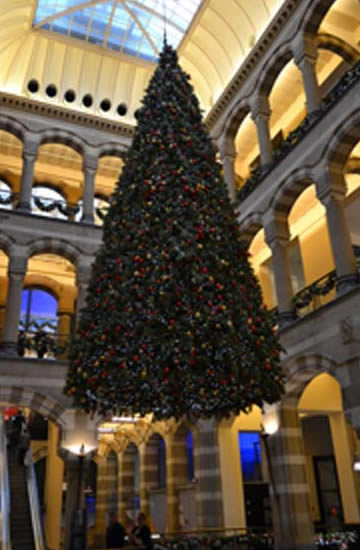
The AmaKristina is essentially a floating luxury hotel for 158 guests. Our roomy cabin had a queen-sized bed, private bathroom with shower and double sink, desk, large format Apple screen and keyboard for internet, TV, or movies. Built in 2017, the ship’s hallways and guest suites were filled with Gustav Klimt art prints, and seasonally decorated with lights, Christmas trees, wreaths, garlands, and gingerbread houses. We boarded in Amsterdam, unpacked, and had our first dinner on board. Open seating at each meal encourages mingling of guests.

AMSTERDAM ATTRACTIONS
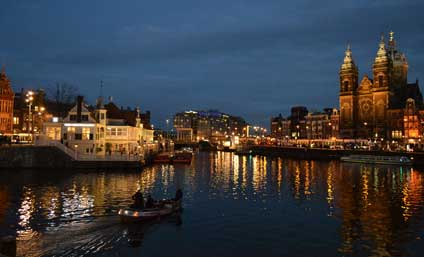
Fortified with a sumptuous on-board breakfast buffet, including an omelet station and daily vitamin “shot,” we departed the ship for an informative canal cruise, a panoramic city bus tour of Amsterdam with an up-close look at a local working windmill, and free time for exploring. Although there were no Christmas markets in Amsterdam, there were plenty of opportunities for shopping near the central train station, and street entertainment in Dam Square: a saxophone player, giant bubble maker, dancing dinosaurs, and impromptu yoga. Just be sure to watch out for the numerous killer bicycles that demand the right-of-way.

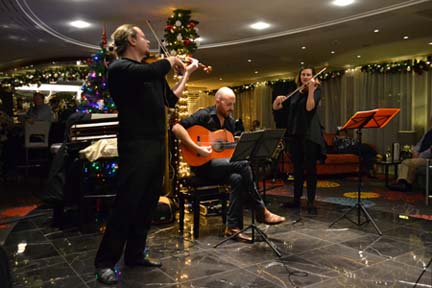
The AmaKristina set sail from Amsterdam in the afternoon, and I had time to explore the ship’s main lounge and bar, massage and hair salon, fitness room, gift shop, and even a heated pool and giant chess set on the sun deck. A cruise overview presented by our cruise director, plus Christmas tree decorating and an evening classical music performance by the three talented string players known as “La Strada” kept passengers entertained. The cruise ships cleverly bring nightly entertainment on and off the ship when stopped at the locks on the river.

Onboard entertainment by La Strada

COLORFUL COLOGNE
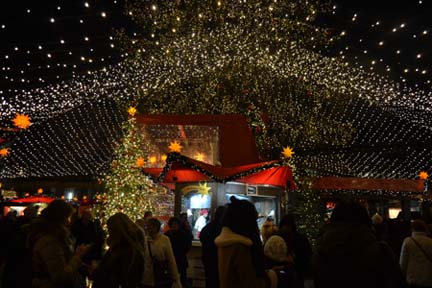
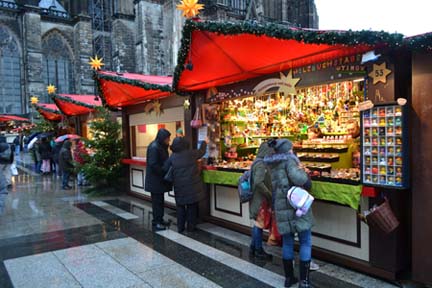
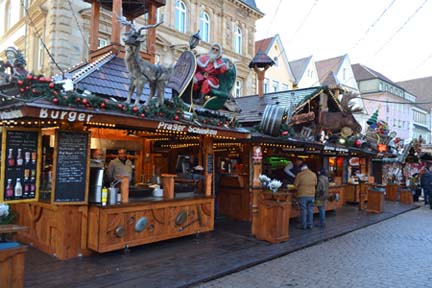
After cruising all morning, we docked in Cologne, Germany, where shuttle buses brought us to our first Christmas Market in Cathedral Square. Although the earliest Christmas Markets in Germany date from the late Middle Ages, the one in the shadow of Cologne’s impressive Cathedral is a relative newcomer, opening in 1995. Under a dazzling canopy of thousands of tiny lights, 150 vendor huts with bright red awnings and brilliant multi-faceted stars displayed handicrafts, comfort foods, gifts of all types, decorations, wooden toys and much more.

Canopy of Christmas lights in Cologne’s Cathedral Square

Cologne Cathedral Square market

HOME OF THE ELVES
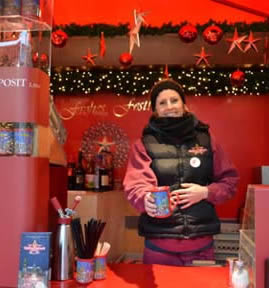
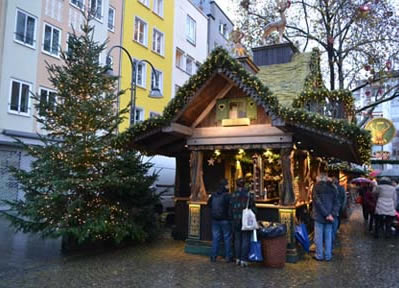
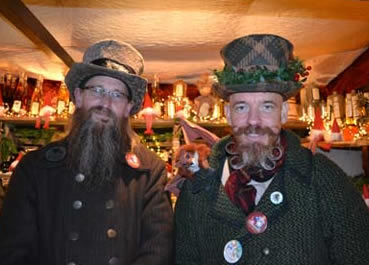
A few blocks away in the Altstadt and Heumarkt was an older and much larger Christmas Market called the “Heimat der Heinzel” or Home of the Elves. These were little creatures from a Cologne legend who used to do all the housework until they were annoyed by an inquisitive housewife, and disappeared. I loved this market. Aisles were arranged by theme, and the large wooden huts had Old World, wood-carved details, thick green garlands and costumed vendors. Little “Heinzelmännchen” rode in gondolas above an expansive ice rink. Each souvenir mug of Glühwein (the traditional hot mulled wine so popular at the Christmas Markets) had a different elf pictured on one side, and his particular work specialty described in verse on the other. Cologne boasted three additional smaller markets, but time was too short to visit all of them on this trip.

Home of the Elves’ Market in Cologne

CASTLE DAY ON THE RIVER
The morning cruise from Cologne to the next stop in Rüdesheim passed through the UNESCO World Heritage Rhine Gorge. What a treat to sit in the ship’s expansive lounge with panoramic windows, coffee in hand, gazing at vineyard- covered slopes, picturesque villages, historic castles, and the famous Lorelei Rock, with commentary by the cruise director. This romantic part of the trip alone is a highlight of any Rhine River cruise.

RÜDESHEIM’S CHRISTMAS MARKET OF THE NATIONS
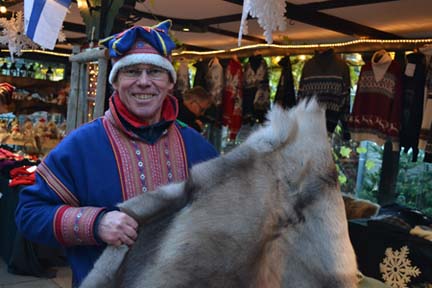
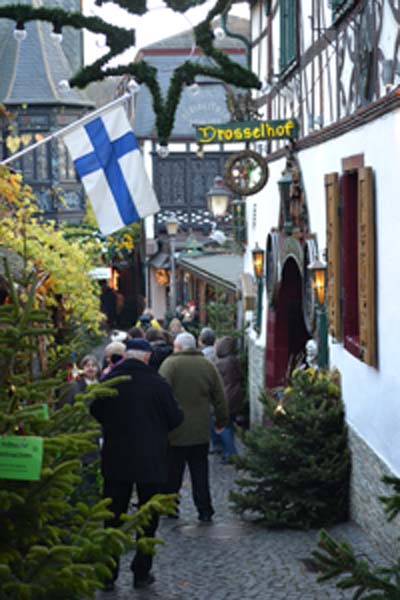
After a gourmet lunch of traditional German specialties, we docked in Rüdesheim, where the “Christmas Market of the Nations” wound up and down the narrow streets of this wine town of about 7,000 citizens. Vendors from France sold mushrooms, lavender and cheese, Tunesia vendors brought wares made of olive wood, smoked salmon came from Norway, furs came from Finland and even the United States was represented with a local vendor offering homemade cookies, Dr. Pepper, Fanta, marshmallows, and Hershey’s chocolate. Christmas choir music piped throughout the market added to the festive atmosphere as shoppers strolled past inviting vendor stalls and village shops. A new discovery at this market was hot mulled Glühbier from Belgium.

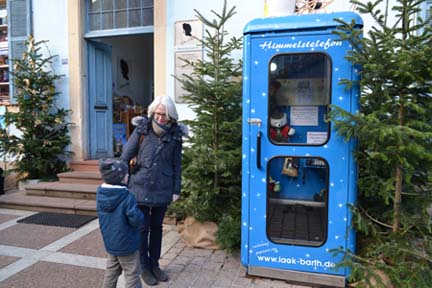
(clockwise) Hot lunch in Rüdesheim; Fur from Finland at Rüdesheim’s Christmas Market of the Nations; “Hallo” from the gnomes in Rüdesheim; Placing a phone call to the Christkind in Speyer

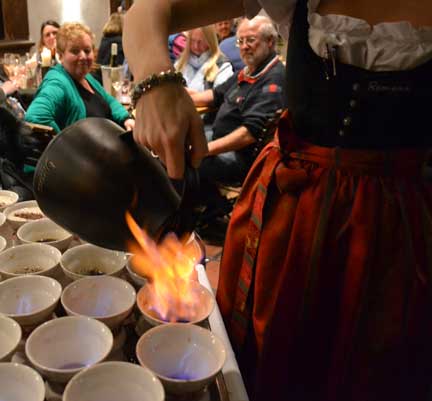
Throughout the ship’s seven-day cruise, each day’s program offered passengers quiet, regular and active excursions. Rüdesheim excursions offered by the AMAKristina included wine tasting, a hike, bike or gondola tour through the vineyards. A late night, fun option was experiencing Rüdesheimer coffee – coffee set on fire with Asbach brandy and sugar, topped with whipped cream and chocolate flakes – at Eiscafe Engel on Rüdesheim’s famous Drosselgasse.

Rüdesheimer coffee
Atmospheric narrow Rüdesheim street

THE IMPERIAL CITY OF SPEYER
By noon the next day we docked in Mannheim and could choose a bus excursion to Heidelberg or to Speyer. Having visited Heidelberg several times already, we chose to see the 2,000-year-old Imperial city of Speyer. Here the Christmas Market extended down Maximilianstrasse from the UNESCO World Heritage Speyer Cathedral, the largest Romanesque cathedral in the world. Though smaller than the Cologne Christmas Markets, Speyer’s market had all the requisite comfort foods: Glühwein, grilled sausages, roasted almonds, and even waffles, potato soup and dumplings. Vendors offered wood handicrafts, colorful candles, jewelry, scarves, kitchen gadgets and unique cookie cutters. Especially for children were an ice rink, kiddie car rides and a telephone booth with direct access to the Christkind in Heaven!

Back onboard the AmaKristina we had a tea time treat of traditional Spekulatius cookies and Stollen, while we set sail for our next stop: Strasbourg and Le Petite Alsace in France.

INVITING STRASBOURG AND LE PETITE ALSACE
As with each stop on our route, AmaWaterways provided an energetic and knowledgable guide for a walking tour of the area on the way to the Christmas Markets. This morning we learned about the Alsace region, which changed hands between France and Germany four times in 75 years. The name “Alsace” derives from a German phrase meaning “seated on the Ill.” While our guide led us along the Ill River, past the beautiful half-timbered houses lining both sides, she explained that this charming area was historically the least desirable place to live. It had been the site of fortifications and a prison, the home of executioners and the location of the tanning trade, with its smelly byproducts. Today it is a photographic highlight of any trip.

CHRISTMAS MARKETS WITH A FRENCH TWIST
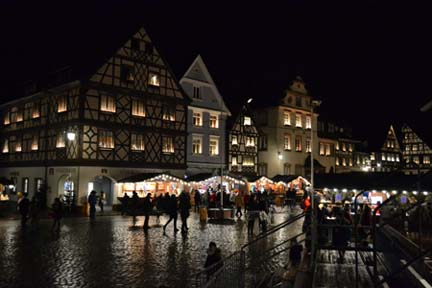
Christmas Markets first appeared in Strasbourg in 1570, making this German/French town the location of one of the oldest markets in Europe. Although much was similar to the Christmas Markets we saw in Germany, here the food vendors offered toasted baguettes topped with cheese as the warm comfort food, instead of the ubiquitous wursts in the German markets.

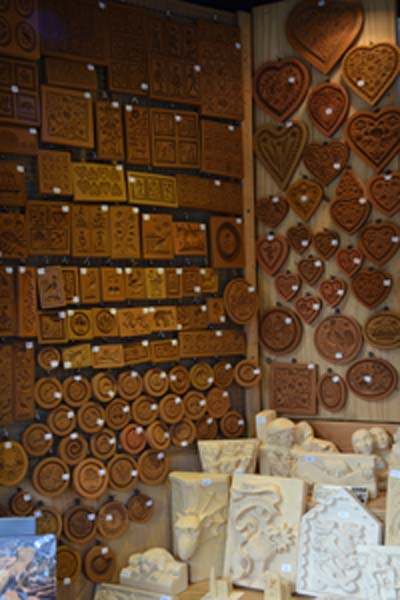
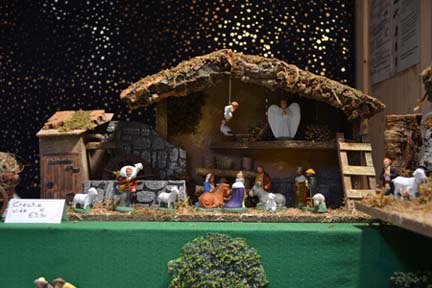
The traditional market was near the cathedral, with some vendor huts topped with storks, that famously nest in Strasbourg’s Parc de l’Orangerie. More than 300 vendor chalets filled the historic city center. Entertaining metal sculptures depicting different professions caught my eye, as did the detailed, intricately carved figures for nativity sets. A market area featuring Strasbourg’s service organizations surrounded a towering decorated Christmas tree and grassy area which was perfect for family photos. A small market in Gutenberg Square annually invites vendors from other countries: this year it welcomed Iceland.

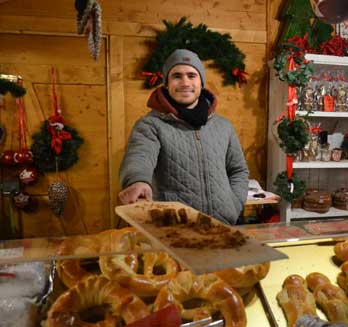
Try some gingerbread in Gengenbach

GENGENBACH’S GIGANTIC ADVENT CALENDAR
We were back on the German side of the Rhine River by late afternoon, and on a shuttle bus from the AmaKristina to the beautiful village of Gengenbach. A guided tour down Engelgasse led to the Christmas Market which stretched down the main street from the town hall square.

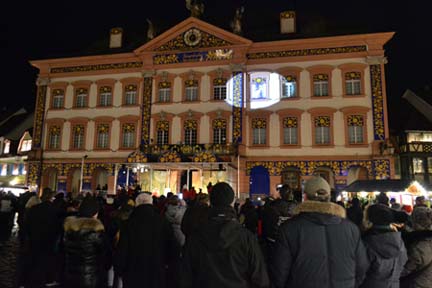
Gengenbach Town Hall Advent Calendar

Gengenbach boasts the world’s largest Advent calendar in its neo-classical town hall, where each night one of its 24 windows is opened to reveal a picture by a famous artist. This year’s calendar featured paintings by Andy Warhol. We arrived just in time for the first night’s opening ceremony: a narrated short skit performed by children from the town. After browsing through the market’s matching vendor huts, with hot Glühwein in a mug depicting the town hall Advent calendar, we returned to the ship to be delightfully entertained by a French cabaret singer and her accordion accompanist.

LAST FULL DAY ONBOARD
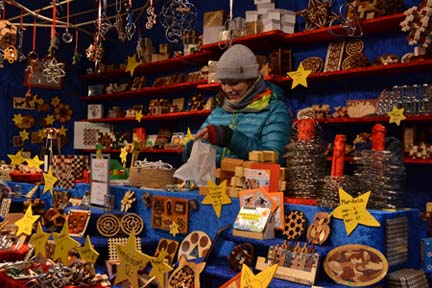
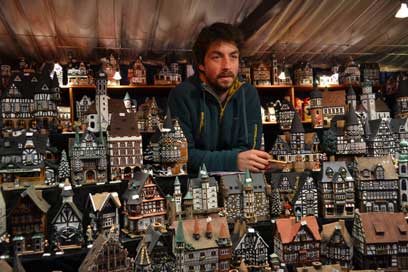
Shuttle busses from the AmaKristina were the order of the day with options to Riquewihr, France, or to Freiburg and Breisach, Germany. Deciding to aim for German-speaking vendors, we took the second option, and explored the market in the heart of Freiburg’s beautiful old quarter. Traditional craft products, including glass blowing and colorful wooden toys were offered beneath the green and white lights that trimmed the roofs of the more than 130 vendor huts.

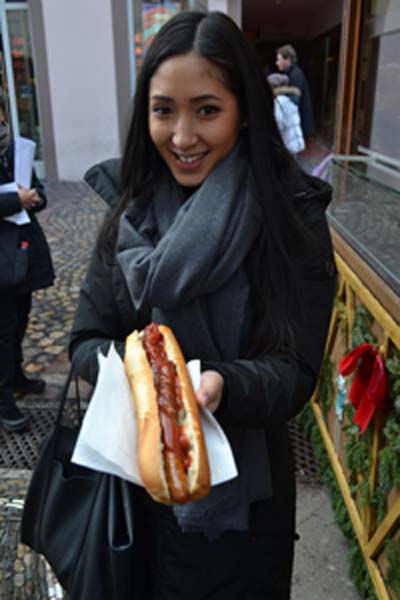
Time was too short to see all of the ceramics, candles, hand puppets, amber jewelry and Christmas decorations, but we enjoyed a quick wurst and Glühwein lunch before leaving for Breisach. Unfortunately this town’s tiny Christmas Market was not yet open for business, so after strolling down the pedestrian-only shopping zone, we walked back to the boat dock, to sail to Basel and enjoy the captain’s farewell dinner and our final evening on board.

Early the next morning, with our luggage packed with Christmas Market treasures, we left for home filled with Christmas spirit and with wonderful memories from this romantic river cruise of Christmas Markets and Castles on the Rhine.

TIPS AND FINAL NOTES
An AmaWaterways river cruise makes visiting so many sites along the Rhine extremely easy. You unpack only once in a roomy cabin. Meals are well-planned, complete and delicious, with perfect portions and special dietary options. Wine and beer are included with lunch and dinner. The fabulous coffee bar is open all the time. Special surprises delight passengers as well, such as serving a location’s specialty treats during afternoon tea time, recognizing St. Nicholas Tag by putting treats in passengers’ shoes left outside cabin doors, and providing hot towels and beverages upon re-boarding after cold excursions. The company will cheerfully arrange for your transfers to and from the cruise ship.

The cruise director is the key to having a wonderful time on any cruise, and this AmaWaterways trip had a great one. David Rosell was organized, energetic, accommodating and entertaining.

Most Christmas Markets are open from the beginning of Advent through Christmas, although some larger markets stay open longer, and some smaller ones have limited open hours. Bring euros – most small vendors don’t accept credit cards.

Pack warm layers of clothes, boots and umbrellas. The weather can be chilly and damp during November and December.

AmaWaterways provides a post-cruise option, if you want to extend your trip. This Christmas Market/Rhine River castle cruise offered an excursion to Lucerne and Zurich after disembarkation in Basel. For more AmaWaterways information and schedules, go to: www.amawaterways.com.

If you go: The Mövenpick Hotel Central in Amsterdam is a great place to stay before you board. This new, 4-star hotel is located within walking distance of the train station, the city center and the cruise ship loading docks. A sumptuous breakfast buffet is included with the room, and a knowledgable concierge team can help you plan your free time in Amsterdam before the cruise. For more information go to: www.movenpick.com/en/europe/netherlands/amsterdam.

Enjoying the Riverbanks of Burgundy

By Danielle Pruger
Photos courtesy Burgundy Tourism

Auxerre, France

Burgundy, France offers more than 600 miles of waterways, making it a perfect destination for sailors of all experience levels. There are many ways to enjoy the rivers of Burgundy – sailing, sightseeing, waterskiing and bicycling along the river are just to name a few.

FUN AND RELAXATION BY THE WATER
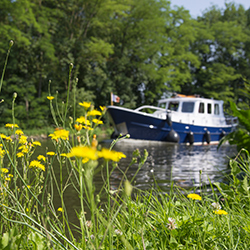
Visitors can relax on a sightseeing boat for a guided tour along the waters of the Burgundy Canal. The Seille, a river flowing between the French departments Tournus and Louhans, also offers cruising opportunities. Hotel barges are also a relaxing way to enjoy the Burgundy Canal.

The city of Clamecy and the medieval village of Cravant on the Nivernais Canal are great small towns to visit and explore. The little town of Semur-en-Auxois is few miles away from Burgundy and includes sights such as the Tour de l’Orle d’Or or the Collegiate Church of Notre-Dame. Large cities also have a lot to offer: the Dijon marina is a lively area with the Péniche Cancale, a boat converted into a floating gourmet bistro and cabaret that hosts concerts, exhibitions, dance performances and theatre.

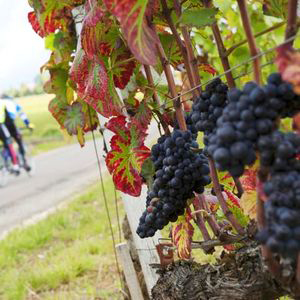
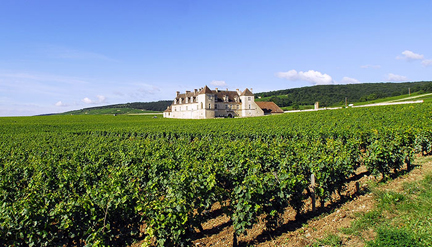
Burgundy, the birthplace of pinot noir and chardonnay, is home to world-class vineyards that produce some of the most prestigious wines in the world. Visitors can taste some of the best wines of Burgundy at the cellars of the vineyards of Auxerrois, Tonnerrois, Maranges or Santenay.

WATER SPORTS
Water sports enthusiasts can choose other activities including water-skiing, sailing and rowing. The developed areas invite swimming in leisure centers in Auxerre or Decize. The tranquility of the waterway can be enjoyed by fishing on the region’s canals or lakes or by big game fishing on the Saône while accompanied by a qualified instructor.

OUTDOOR ACTIVITIES ALONG THE BANKS
The towpaths along the canals and rivers, open to cyclists, are perfect for biking. These paths are also great for enjoying a walk along the waterfront.

The region is full of marked trails so there are plenty of routes to choose from. The Tour of Burgundy by bike runs along the canals of Nivernais and Burgundy, as well as the Canal du Centre. These paths take visitors through the region’s most beautiful landscapes – across vineyards, groves and forests and pass by historic monuments and charming residences.

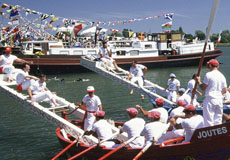
Pardone des mariniers in Saint-Jean de Losne

A region criss-crossed by waterways, every year Burgundy celebrates water with various events. Music, demonstrations, tournaments and tastings punctuate the shorelines all summer long. There are many events to choose from, including the Pardon des mariniers in Saint-Jean de Losne, the Fête du Flottage in Clamecy or the Halles en eaux in Decize.

For more info, go to Burgundy Tourism

Biking and Hiking Through Salzburg Lake District

By Danielle Pruger
Photos courtesy Austrian National Tourist Office

Lake Wolfgangsee

The Salzburg Lake District (Salzkammergut) is said to be one of the most charming regions in Austria: blue lakes, high mountains, green meadows and forests—a storybook landscape. The former emperor Franz Josef and his wife Sissi spent many holidays in this area and hence coined the term “Sommerfrische” (summer health resort).

Aristocracy was easily persuaded, and it was not long until half of Vienna passed the hot summer months in the “healthy” region of the Salzkammergut. The artist Gustav Klimt was yet another regular, spending time on the lakes and trying to capture this stunning natural scenery in his paintings. This area is also known as both a cycling and hiking paradise.

One way to experience this region is through self-guided tours through the company Bike Tours Direct. Trails are well-marked and well-maintained, and the terrain varies from flat lakeside trails to hilly meadows to outright mountains. The region is dotted with gorges, waterfalls and other natural wonders, but it’s also filled with culture and history—quaint villages, medieval towns and imperial villas where the Austrian emperors spent their summers.

The self-guided tour is seven nights long. Highlights of the tour include a bike tour of Lake Wolfgangsee, a train ride into Salzkammergut and a stay at the Hallstatt lake resort.

Although the tour is self-guided, van support is available for transfers and shuttles.

For more info, go to Bike Tours Direct

Four Great Road Trip Destinations in Europe

If you’re looking for a unique kind of European travel experience, consider a road trip. With the freedom of making your own way around the world comes an opportunity to discover things you would have otherwise missed – and you may be surprised at where the world’s best routes lie. Here are just four European destinations where the road trips are some of the best.

Photo by Raul Taciu

IRELAND
It’s perhaps the most unexpected country of all for a road trip, but Ireland actually boasts some of the best, biggest and most beautiful routes in the entire world. Take the Wild Atlantic Way, listed as the best road in the world by The Planet D. It’s also the longest coastal route in the world, too – running for over 1,550 miles along Ireland’s west coast, it’ll definitely make for an adventure.

Photo by Claire Bissell

That isn’t the only road Ireland has to offer, though. From the Burren Loop, surrounding the UNESCO World Heritage Site that is Burren National Park itself, to the scenic Comeragh Mountains, Ireland has some of the most beautiful routes in the world hidden beyond its shores.

ITALY
There’s no denying Italy has some of, if not the most wonderous and beautiful routes, perfect for a road trip. Consider driving by the Amalfi Coast near Naples, a scenic coastline with beautiful views across the turquoise waters from the jutting cliffs above. As an added bonus, towns like Salerno and Amalfi can be visited during your journey.

(left to right) Photo by Chris Holgersson; Photo by Ciprian Boiciuc

And Tuscany simply beckons for a relaxed road trip, with its rolling hills and sprawling countryside to discover. It’s a good opportunity to escape from the outside world as it’s quiet and draped in history and heritage – don’t be surprised if you go hours without seeing another soul. That’s the appeal.

GERMANY
Since Germany is one of Europe’s biggest countries, it’s no surprise it boasts some of the longest roads in the continent. The Huffington Post lists Germany’s Romantic Road as the “ultimate European road trip,” with the sheer variety it offers – from wine tasting to majestic castles in the countryside. “1 Cover” highlights Fussen as a must-see, lying at the end of the Romantic Road, so be sure to pull up and explore this picturesque town.

(left to right) Photo by Ricardo Gomez Angel; Photo by Joseph Argus

Many of Germany’s routes have names that are equally as fascinating and intriguing as the Romantic Road. From the 625-mile-long Castle Road to the Fairytale Road, you have a number of choices when it comes to finding the right route for you – it all comes down to what you’re willing to discover along the way.

ICELAND
It’s safe to say Iceland isn’t a country many tourists are dying to visit – it’s yet to become one of the top hotspots for travelers. It’s a shame, as its offerings, including the incredible Ring Road, are some of the best if you’re looking for a very unique travel experience.

The Ring Road is the route to consider if you’re wanting a road trip like no other. The natural sights offered here are simply incredible – from volcanoes to waterfalls, from icebergs to northern lights, you’ll be overcome by just how beautiful Iceland truly is.

(left to right) Photo by Ivars Krutainis; Photo by Lorenzo Castagnone