Echoes of the Past Enchant Istanbul Hotel Guests

The Pera Palace Hotel, in business since the late 19th century, retains its Old World panache, captivating patrons with elite amenities and Belle Epoque charm

By Randy Mink

Just about every major European city has a historic luxury hotel that begs nostalgia-minded folks like me to come take a peek or maybe bed down for a night or two. I tend to make a beeline to such hostelries—those with a story to tell and grand trappings to go with it—even if it’s just for a brief walk through the lobby or to soak up the ambience over a drink in the bar.

In Istanbul, the Pera Palace Hotel started life in the 1890s when the Turkish city (then called Constantinople) needed a place suitable for hosting wealthy passengers arriving from Paris and other points in Western Europe on the Orient Express, the luxury train made famous by English author Agatha Christie. It’s said that she wrote some of Murder on the Orient Express while staying at the Pera Palace in the 1930s.

The hotel has endured through the reigns of three Ottoman sultans, the fall of the Ottoman Empire and the rise of the new Turkish Republic in the 1920s. Between World Wars I and II, it was at the center of international intrigue in the Pera neighborhood, then a hotbed of espionage and geopolitical machinations involving players from throughout the Continent. Pera, with its numerous military and diplomatic posts, was once called Little Europe.

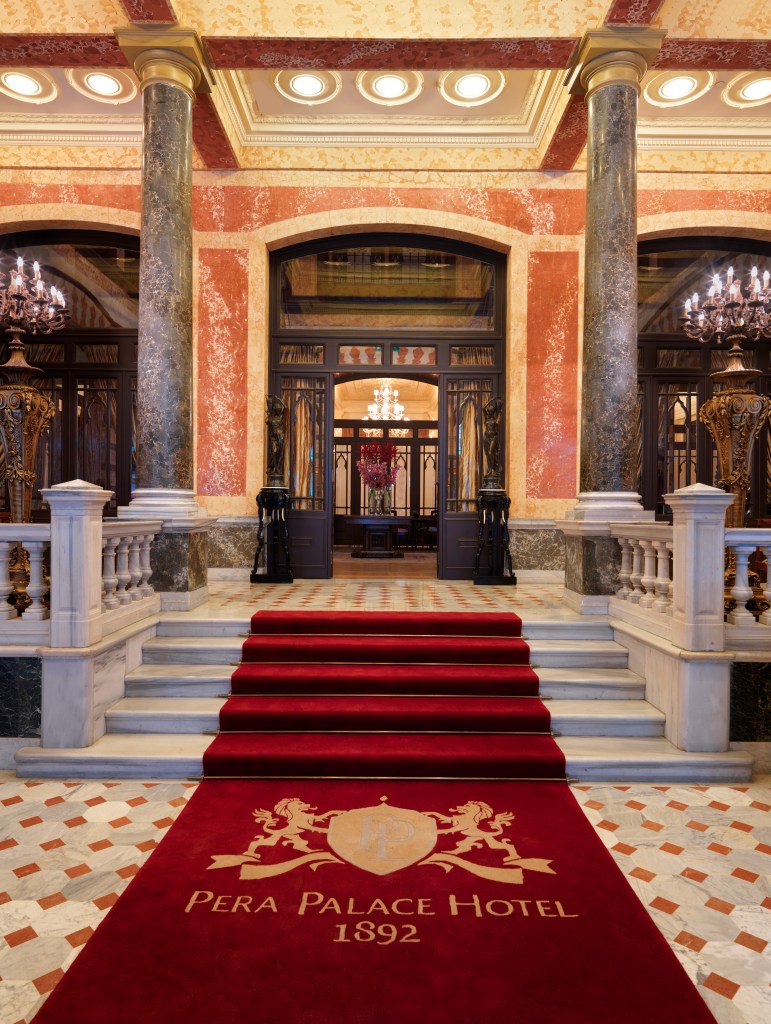
The Pera Palace today retains its lofty position as a place to see and be seen. Trying not to gape, I entered the high-ceilinged lobby on the red carpet inscribed with the hotel’s name in gold letters, glancing up at the crystal chandeliers and plush red draperies on my way to the reception desk.  Gleaming marble walls, floors and balustrades, along with brass urns brimming with palm fronds, set the tone as well.
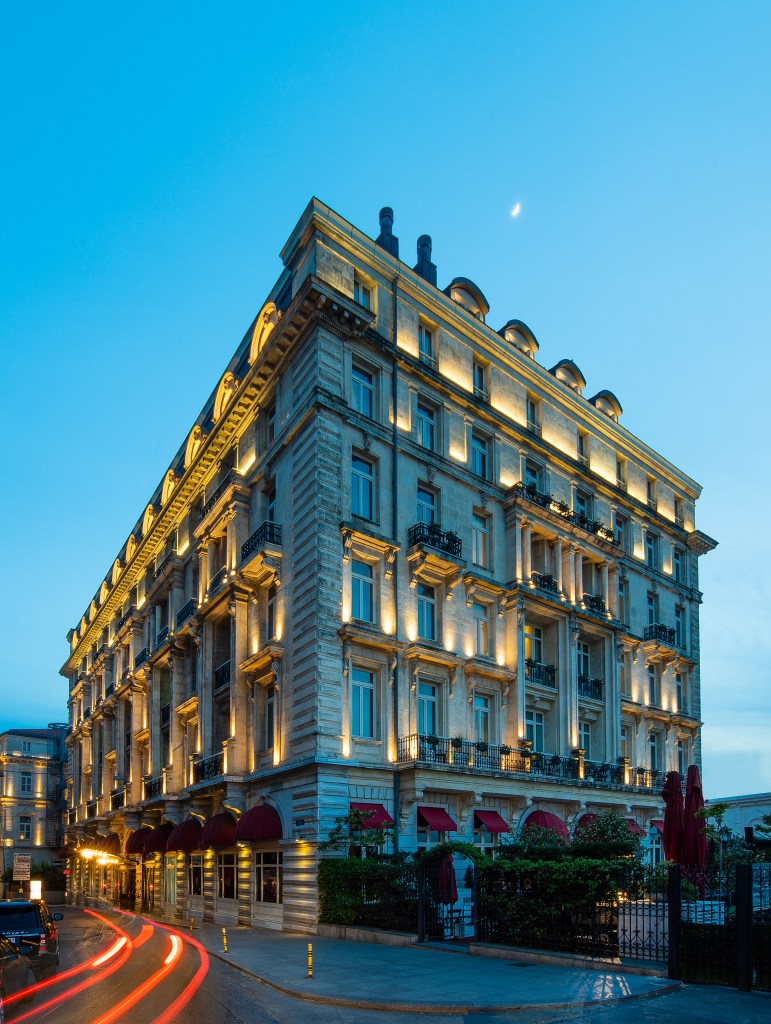
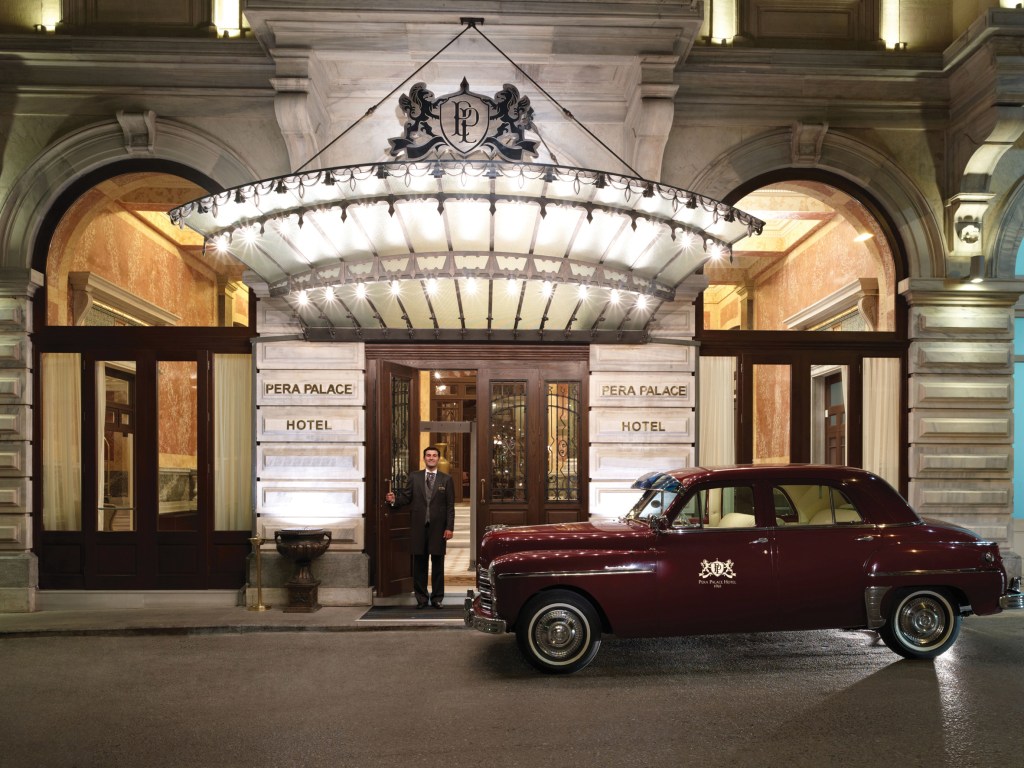
The Pera Palace Hotel is one of Istanbul’s elite addresses. (Photo credit: Pera Palace Hotel)

Famous Guests of the Pera Palace

Over the years, the same grandeur has greeted notables like England’s King Edward VIII and Queen Elizabeth II, Austro-Hungarian Emperor Franz Josef, Shah Reza Pahlavi of Iran, President Tito of Yugoslavia and Jacqueline Kennedy Onassis. Hollywood royalty has included Zsa Zsa Gabor, Greta Garbo and Alfred Hitchcock. As a reporter after World War I, Ernest Hemingway was a hotel resident.

In Turkish eyes, the most important figure to grace the Pera Palace was Mustafa Kemal Ataturk, revered as the father of modern Turkey. When in Istanbul between 1917 and 1926, the country’s first president resided in Suite 101, which is now a museum devoted to him. A stern-looking Ataturk mannequin—holding a cane and dressed in a green army uniform and black cape and hat—stands in the sitting room. Along with vintage photographs, newspaper clippings and a Time magazine cover bearing Ataturk’s image, personal possessions on display include the national hero’s eyeglasses, goggles, pajamas, shoes, white linen suit jacket and black silk prayer rug. The museum, free to hotel guests, is open to the public for a fee.
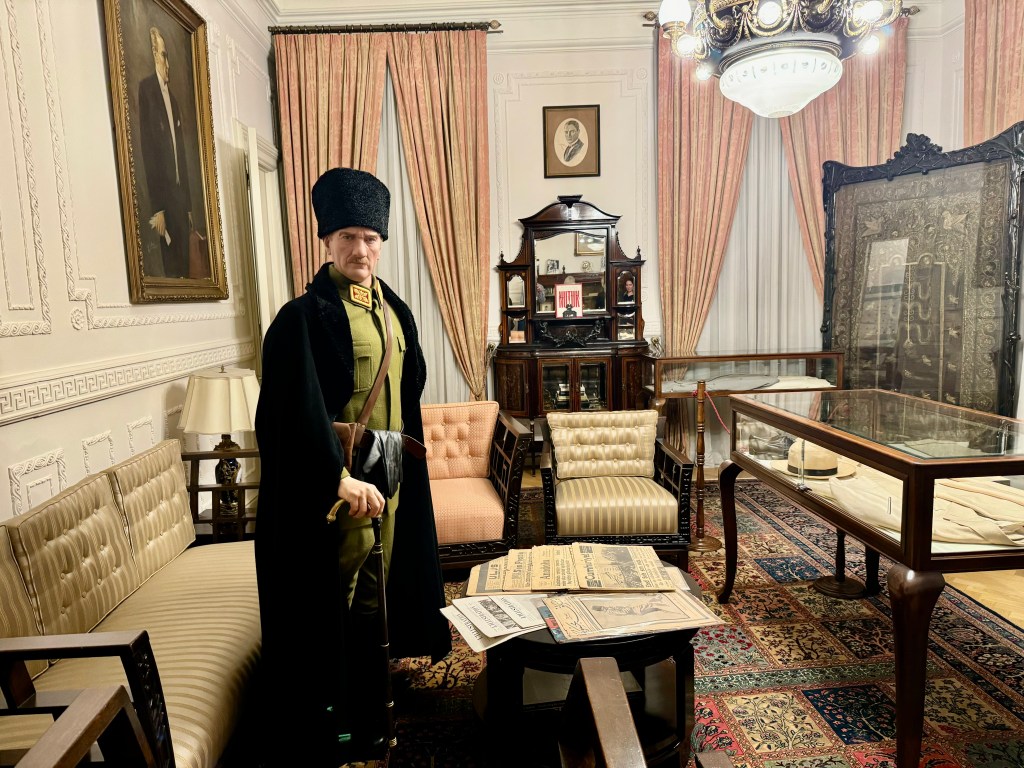
Suite 101 in Istanbul’s Pera Palace Hotel is a museum dedicated to the memory of Mustafa Kemal Ataturk, founder of the modern republic of Turkey. (Randy Mink Photo)

The guest room where Christie stayed, number 411, now carries her name, and the hotel restaurant is named Agatha. Framed black-and-white photographs of past guests, including Garbo, Hemingway, Zsa Zsa and Jackie O, adorn the restaurant’s back wall.

Dining at Istanbul’s Pera Palace Hotel

Agatha Restaurant’s bountiful buffet breakfast offers everything from salads and olives to cheeses, cold cuts and quail eggs. Pastries include mini donuts, mini croissants and simits, the sesame-seeded dough rings found throughout Turkey. For spreading on breads and rolls, I made good use of the honeycomb, tahini, grape molasses, jams and clotted cream. I had more than my share of the cheese balls covered in sesame seeds, black cumin, pistachios or poppy seeds. Among the hot dishes: cheese quiche, cheese soufflé, falafel, artichoke soup, pancakes and porridge.
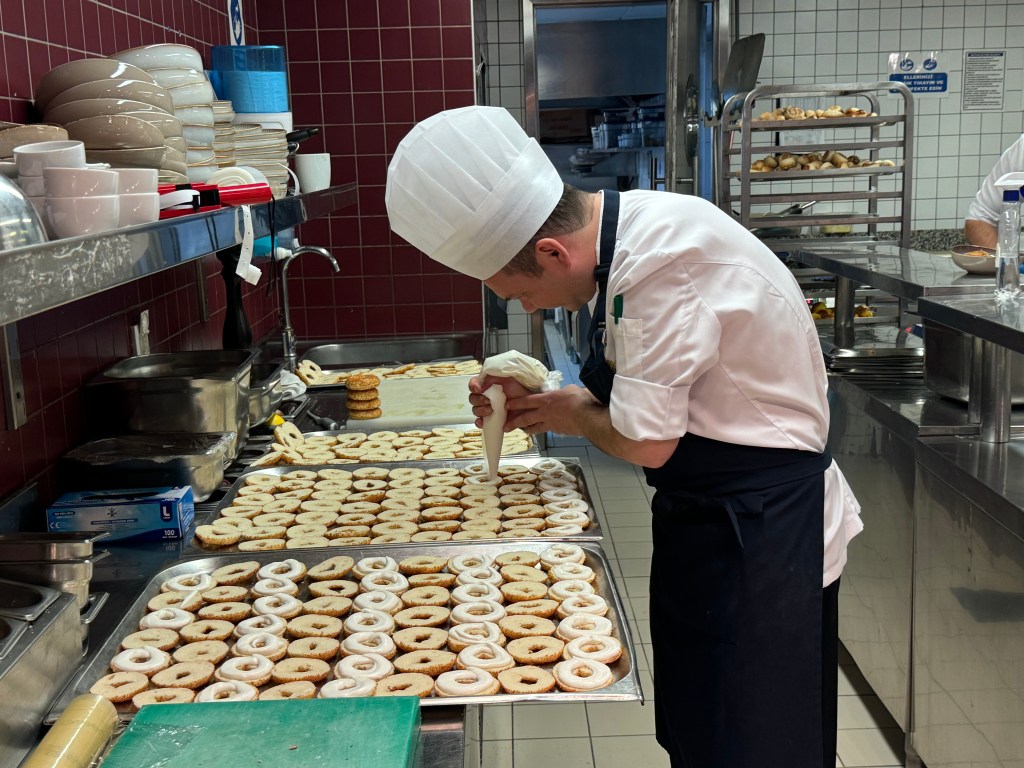
The breakfast buffet at Agatha Restaurant offers many choices, including a wide variety of olives. (Randy Mink Photo)

More treats await at Patisserie de Pera, an intimate cafe reached from the hotel lobby or separate street entrance. Rose-colored walls and furnishings lend a soft touch, and red-accented Venetian glass chandeliers hang from the pink ceiling in each of the two salons. This is the place for a leisurely mid-morning coffee or tea break accompanied by a decadent fruit tart, slice of cheesecake or an assortment of chocolates or macarons.

The gift shop just outside the cafe (actually just a glass cabinet) provides a wide variety of Pera Palace mementoes. Items include socks, umbrellas, bathrobes and other things bearing the hotel logo. There are coasters, coffee mugs and souvenir plates. How about an Ataturk tea set or the paperback Murder on the Orient Express?

Patisserie de Pera is the place to linger over pastries and a cup of coffee or tea. (Randy Mink Photo)

Steps from the merchandise cabinet is an original sedan chair once used to carry Orient Express passengers from the train station to the Pera Palace.

A traditional afternoon tea with piano music is served under the six skylight domes of the Kubbeli Lounge. Featuring elements of Islamic architecture, the two-story-high room is decorated in dark reds and deep plums, as is the nearby Orient Bar, another plush spot to drink in visions of a bygone era. The equally stylish Library Room seating area, complete with bookcases and antique globes, extends from the lounge and bar.
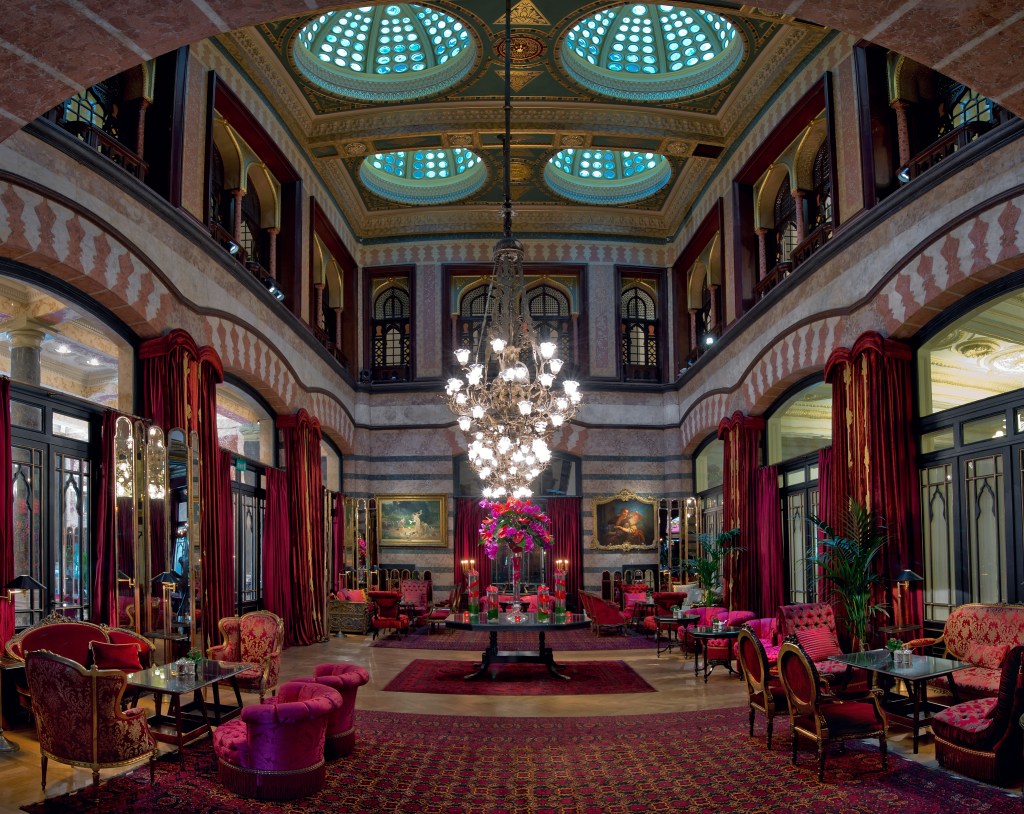
The hotel’s Kubbelli Lounge hosts a traditional afternoon tea. (Photo credit: Pera Palace Hotel)
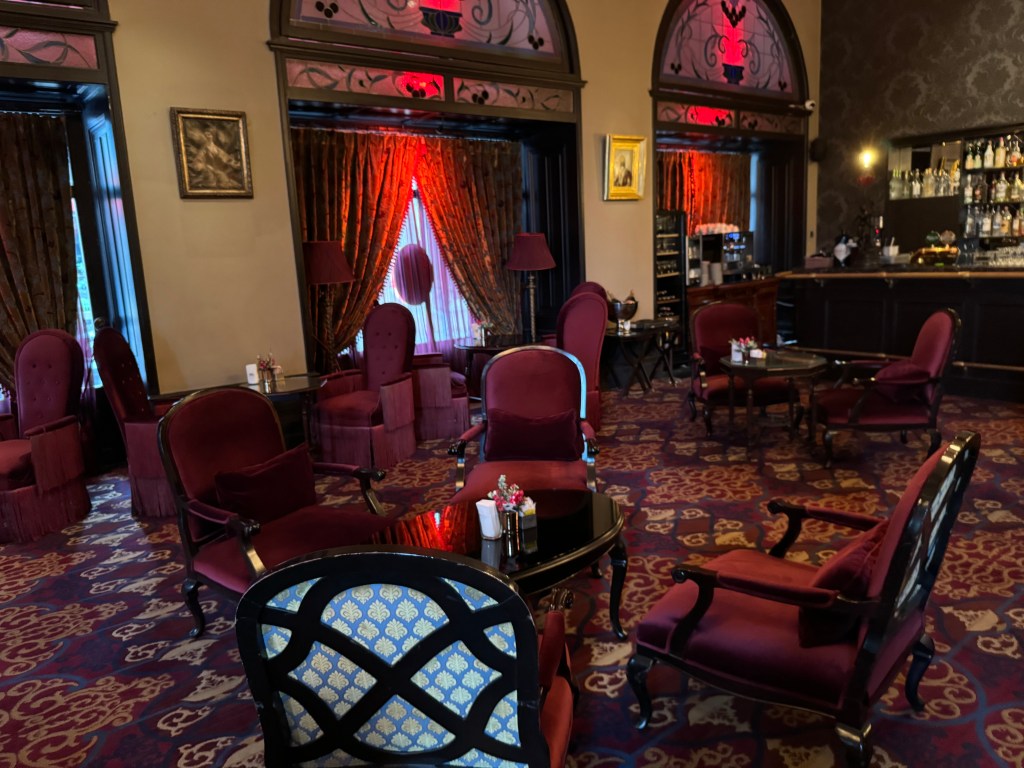
The Pera Palace’s Orient Bar provides an elegant setting for cocktails. (Randy Mink Photo)

Guest Rooms at the Pera Palace Hotel

More flashbacks to yesteryear are in store on a fun ride in the hotel’s original electric elevator, installed only three years after the Eiffel Tower’s elevator. The wood-and-cast-iron cage, operated by a staff member, is used only for arriving hotel guests. For normal use, a set of modern elevators services the six guest room floors.

The original elevator’s wood-and-cast-iron cage is well over a century old. (Photo credit: Pera Palace Hotel)

From tall windows in my room, number 506 in the Deluxe Golden Horn category, I had views of the Golden Horn, the waterway that separates modern Istanbul from the Old City on the other shore—and the primary inlet of the Bosphorus Strait. Amenities in the marble bath included thick white towels and robes. The pillow cases, hand towels and robes all bore the gold Pera Palace heraldic crest.

Deluxe King and Deluxe Twin rooms at the hotel feature pillowcases and plush robes that bear the Pera Palace’s heraldic crest.
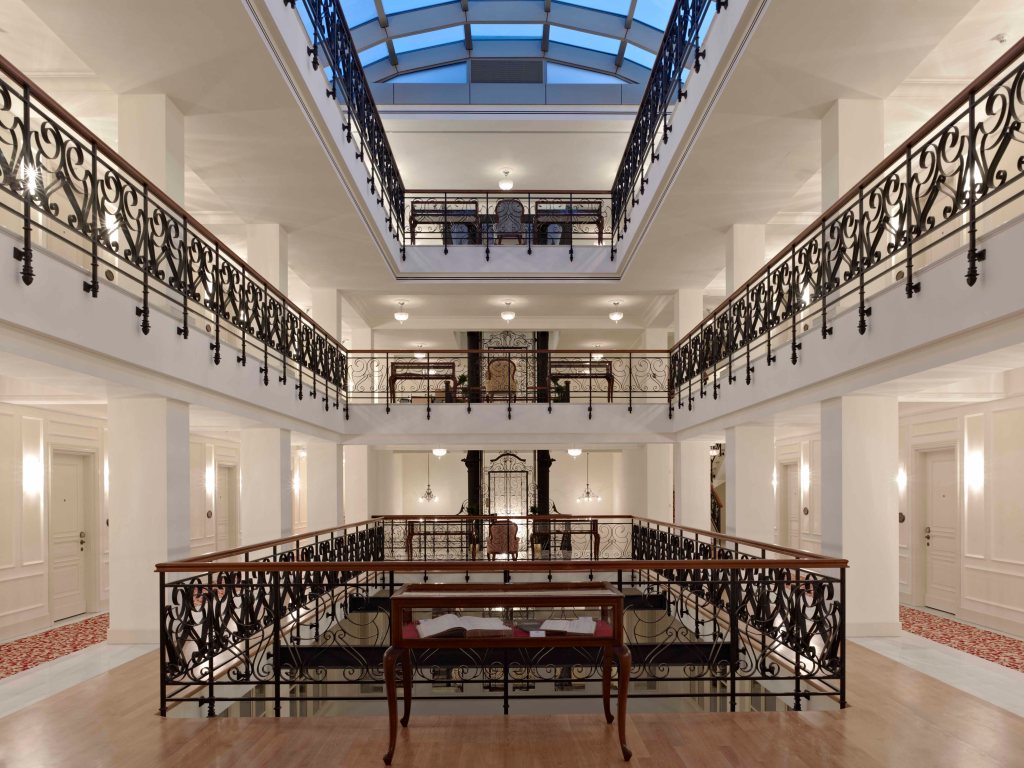
Guest rooms at the Pera Palace are spread across six floors. Each floor has display cases filled with artifacts that illustrate the hotel’s colorful history. (Photo credit: Pera Palace Hotel)

On the morning before checking out, I made a point of visiting all six floors to peruse the display cases exhibiting old photos, menus, ledgers, china and silverware from the hotel and Orient Express. On the fourth floor I found the Agatha Christie Room, wishing the door would be open so I could see inside. For me, it will always be a mystery.
Best Art Museums & Architecture for a Weekend in Barcelona

By Megan Kudla

Barcelona is a haven for art, especially being home to some of Antoni Gaudí’s most famous architectural wonders. The city also has world-class museums, with works that date back from the medieval times to more contemporary eras. If you’ve only got one weekend in Barcelona, but want to see as much art as possible, here’s a guide to the some of the best art museums and architecture tours.

Tip: If you’re extending your trip, you can purchase the ArticketBCN pass, which gets you entry into 6 of the top art museums across the city for a flat fee of 38€. (Plus, it comes in the form of a little red passport that gets stamped along the way. How cute is that?)

Sagrada Familia
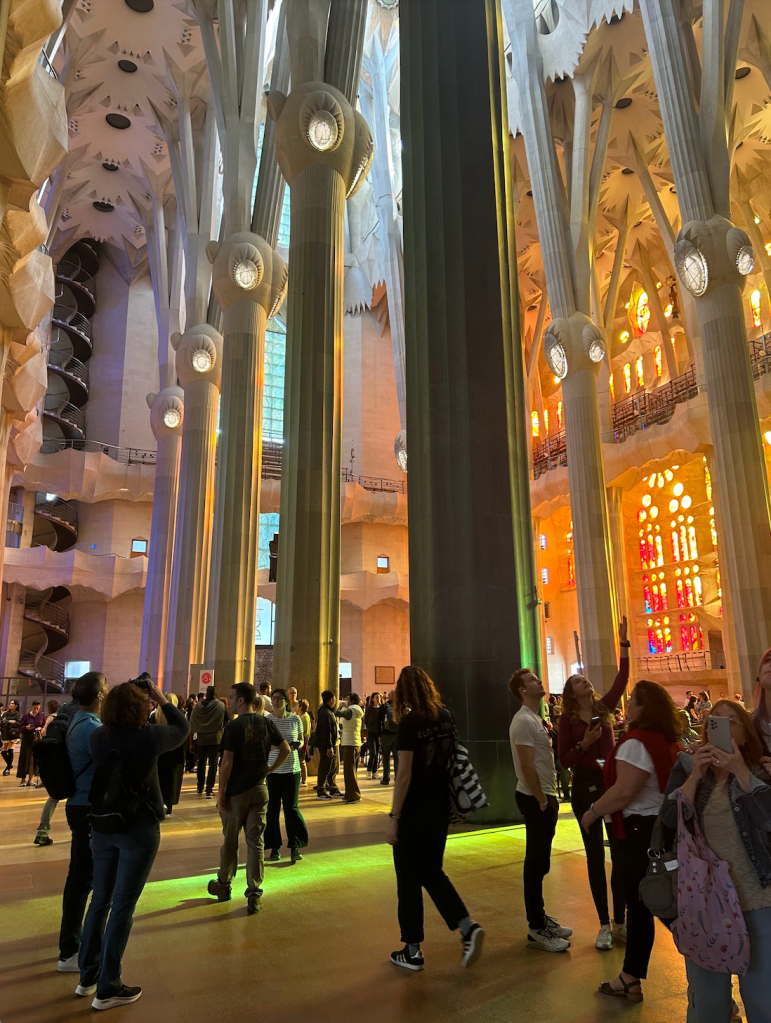
The pinnacle piece of architecture in Barcelona, the Sagrada Familia, should be first on your list. It’s also the most popular attraction in the area—when you are booking your flight and your hotel, go ahead and book this, too. Tickets range from 26€ to 40€. Marvel at the intricate sculptures adorning the outside and the mesmerizing colors that dance below the stained glass on the inside of this architectural monster, which is still under construction to this day.

Tip: The beginning and end of the self-guided tour are located on the outside of the Sagrada Familia, where you can admire the intricacies of Gaudí’s designs that display the Nativity Façade and the Passion Façade. This means that you should bring a jacket if you’re visiting during the fall or winter months.

Gaudí’s designs at the Sagrada Familia feature intricate sculptures.

Park Güell
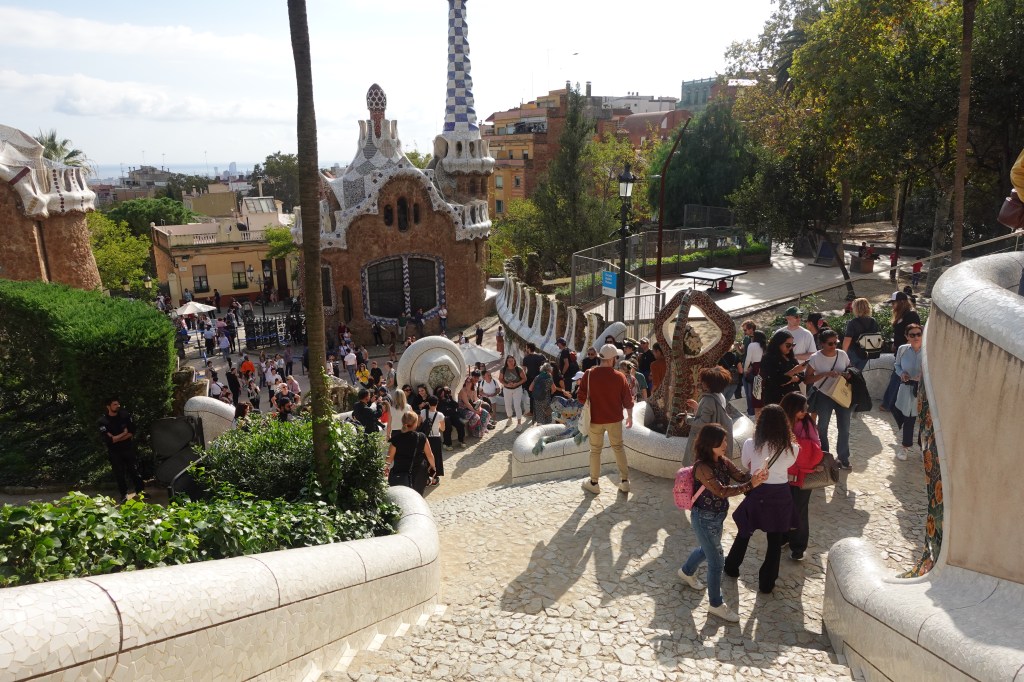
The second most popular Gaudí architectural site is probably Park Güell, a maze of green
spaces, viaducts, terraces, colorful mosaics, and more. Tickets are 18€ starting in 2025, and
you’ll also want to buy these ahead of your trip. As soon as you enter the park, you can
download an app with a helpful map that will direct you to the different parts of the park to
enjoy at your own leisure.

Tip: The Gaudí House Museum, where he lived from 1906 to 1925, is a separate ticket you can add on to your park entrance fee.

The beautiful Park Güell offers much to explore.

Casa Batlló
The final Gaudí tour to book in Barcelona would be Casa Batlló. Gaudí was commissioned by D. Josep Batlló in the early 1900s to redesign this building that would have been otherwise demolished. His inspiration pulled heavily from water, paying heed to organic shapes in the structure, as well as how natural light played with color upon ascending the multiple levels. Budget around 30€ for a general ticket.

Tip: Book an early time slot; the rooms are small, with lots of visitors clamoring to see this one-of-a-kind house. Then, if you find yourself particularly interested in the Gaudí style, put Casa Milá and Casa Vicens on your list.

Gaudí’s redesign of the Casa Batlló building is water-inspired.

Palau de la Música
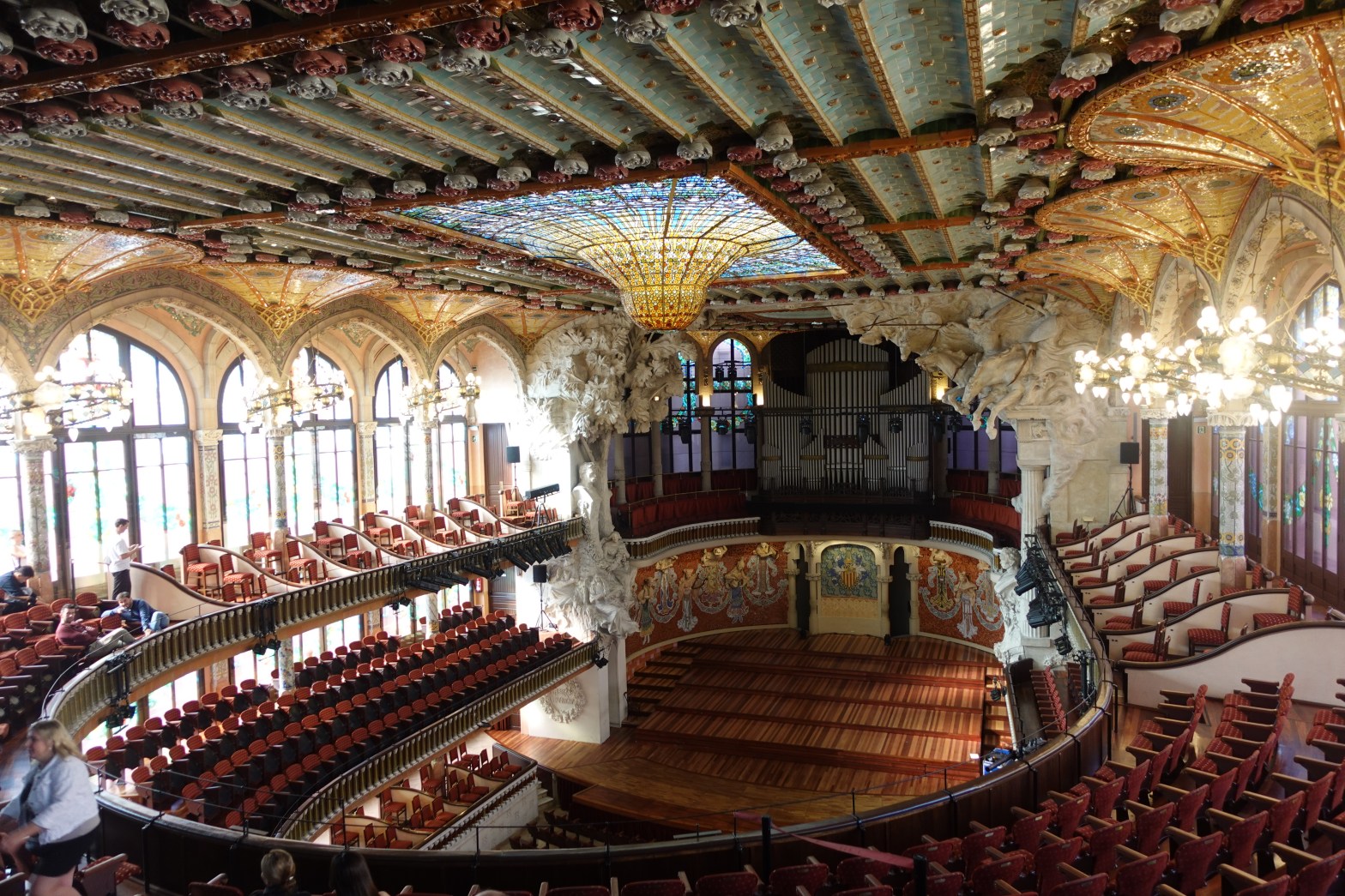
The shorter, slightly cheaper tour of the Palau de la Música was worth the time and money. Tickets are 22€, or only 16€ if you are over 65 or under 35 years old. The guided tour pairs you with an expert who will take you through the beautiful Lluís Millet Room and balcony, the busy foyer (which doubles as a restaurant-cafeteria), and, of course, the colorful and breathtaking Concert Hall.

Tip: The concert schedule is filled with opera, flamenco, coral, symphonic acts, and more. Plan a tour in the afternoon, then buy tickets to see the venue live and in action in the evening.

Palau de la Música’s Concert Hall is an exquisite venue for musical events.

Museu Picasso
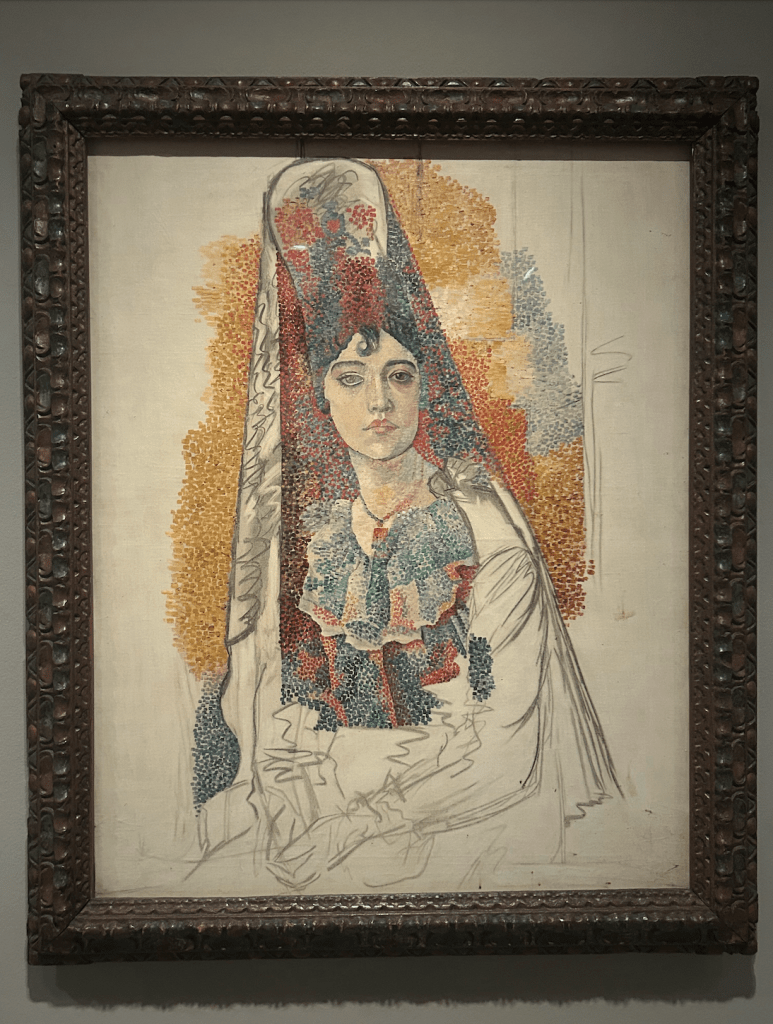
Part of the ArticketBCN, Museu Picasso was one of my favorite art museums. Not only does it house around 5,000 of Picasso’s works, but it’s a great showcase of the wide range of his
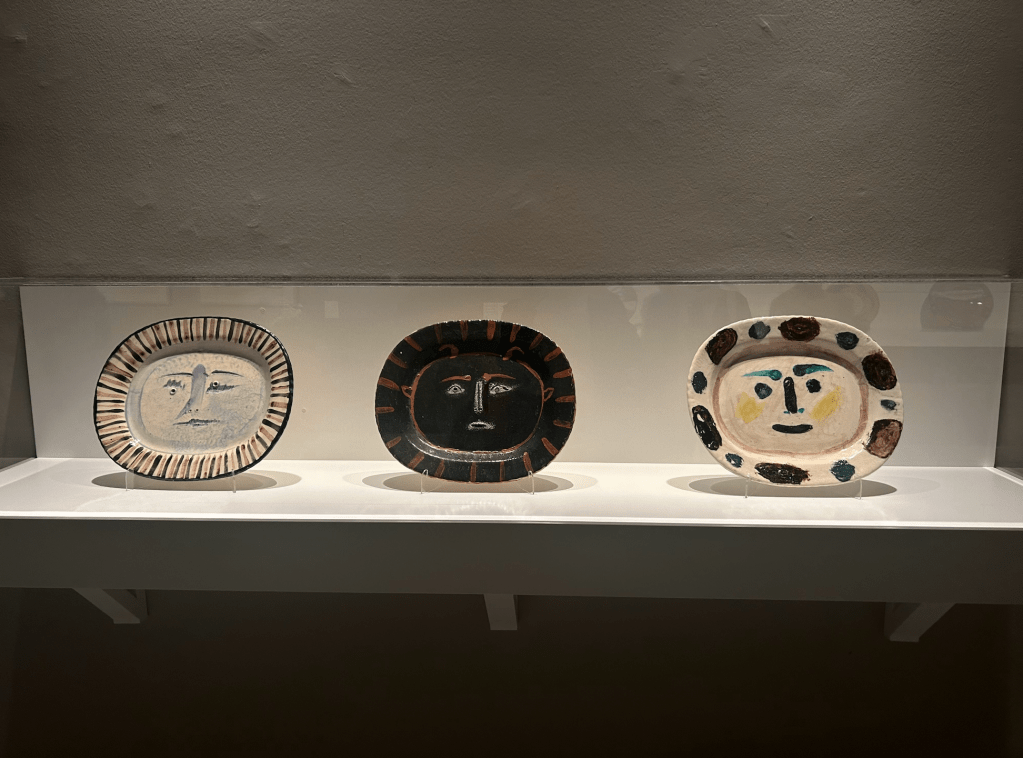
artistic talents. The cubism that Picasso is known for is not the only style he’s mastered. When visiting, you’ll get to see work from all periods of his life, from the classical work when he began studying art, to his Blue Period, and even ceramics.

Tip: It’s right next door to the Modern Contemporary (Moco) Museum and across the small
street from the Museu Etnològic i de Cultures del Món. Why not make it a full day, with a stop at the corner Brunells pastry shop in between?

Museu Picasso features more than 5,000 of Picasso’s works.

Museu Nacional d’Art de Catalunya
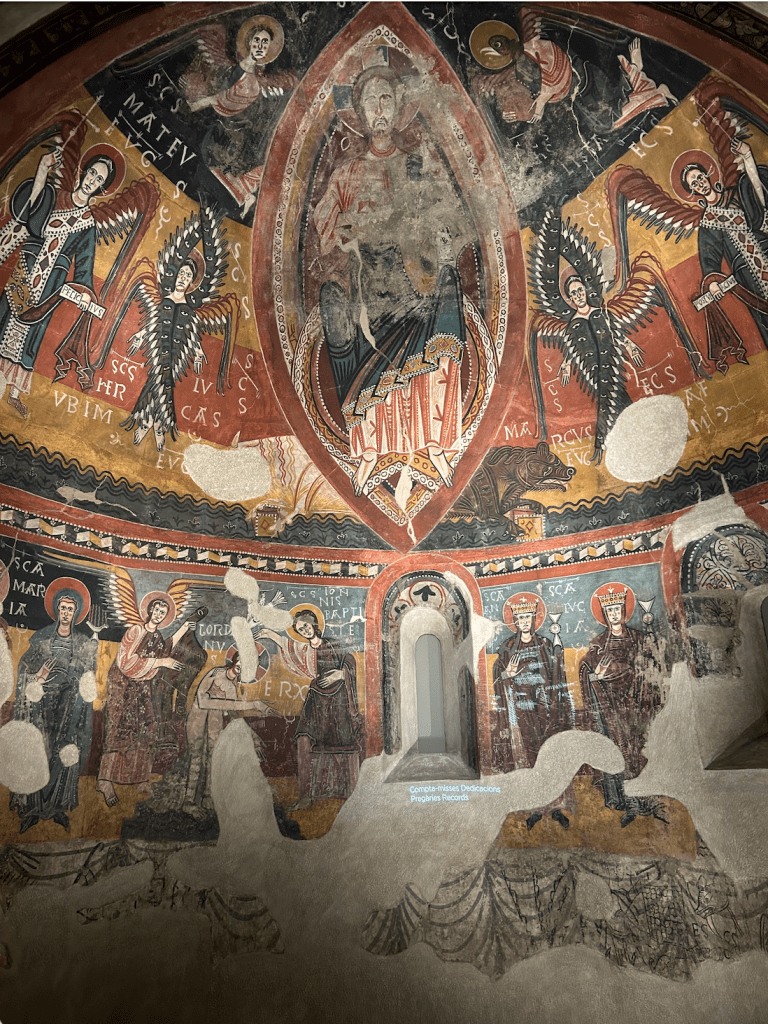
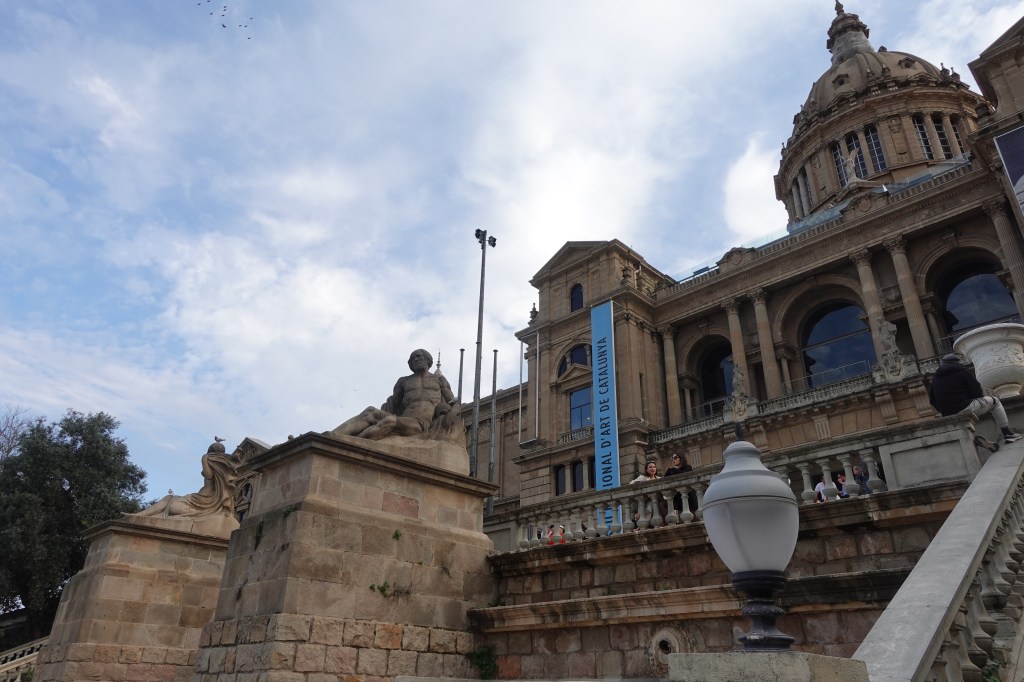
The Museu Nacional d’Art de Catalunya is as much an architectural site as it is an art museum. Located in the Parc de Montjuïc, you won’t miss the towering Palau Nacional on top of a huge hill. Take the many steps (or public escalators!) to the top, and hours of browsing artwork is at your fingertips. A top highlight is the collection of Romanesque art with murals that date back to the 11th to 13th centuries.

Tip: This is also a great stop for an aerial view of the city and mountains. If you’ve been looking for a photo opp, here it is!

Artwork and photo opps abound at Museu Nacional d’Art de Catalunya.

You can make a whole weekend surrounding just the art and architecture of Barcelona.
Between galleries, house tours, and live performances, you’ve got a city that’s filled with
centuries of artistic feats that now make this European city one of the most sought-after tourist destinations. Plan ahead, but don’t overbook each day—you’ll want time to savor each special site.

Hitting the Heights in Cuenca

A medieval gem awaits travelers in the Castilla-La Mancha region of central Spain

Story and Photos by Randy Mink  

With ancient buildings stacked on a steep promontory at the meeting of two deep river gorges, Cuenca projects a dramatic profile, one different from any other city in Spain. Because it’s not on the traditional tour circuit, this somewhat isolated medieval gem, about two hours southeast of Madrid, is off the radar of most North American travelers, a fact that just adds to its beguiling appeal.

In Cuenca it’s all about the heights. Think vertical. Looking up or gazing down, you’ll find yourself constantly taking in the views. Traipsing around narrow meandering streets and passageways, you’ll encounter one vantage point after another that provides a fresh new slant on cliff-clinging houses high above the gorges. There’s a new vista at every turn.

Those afraid of heights get nervous crossing San Pablo footbridge, a wooden plank walkway that spans the Huécar River 200 feet below. But it’s a major attraction in itself, an Instagrammable spot for sure. If you’re staying at Parador de Cuenca, as our group was, the bridge is the most direct way of getting to the core of the enchanting Ciudad Alta, or Old City. We crossed it several times a day, often wondering how many people it could hold at one time.

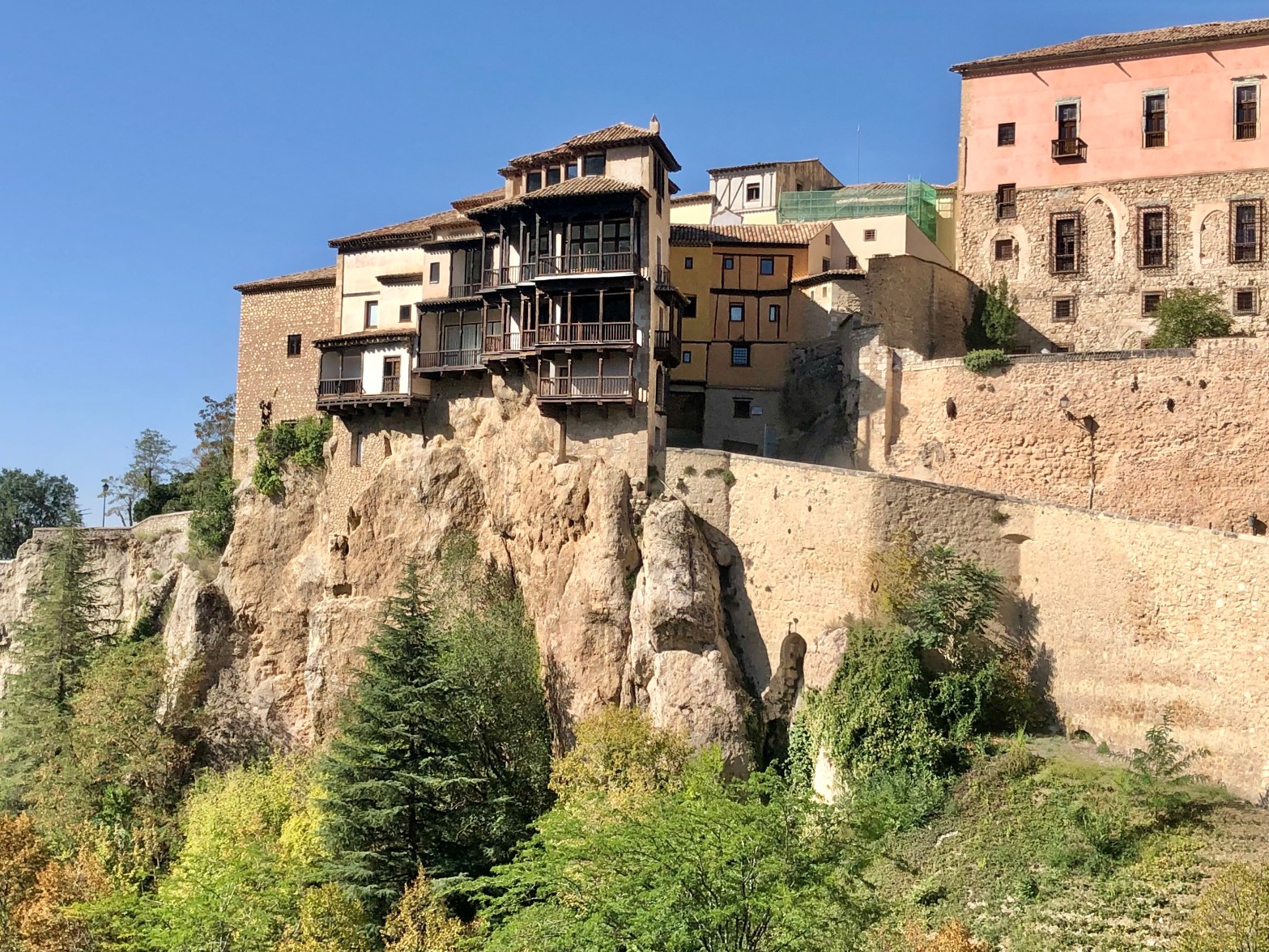
San Pablo footbridge and the Hanging Houses (left) dominate this view of Cuenca’s Old City.

From the bridge you have the best view of Cuenca’s most emblematic attraction—the Hanging Houses, or Casas Colgadas. The wooden balconies of this trio of 14th century dwellings jut out over a sheer cliff. Appearing to defy gravity, the buildings seem about to topple off their perch and into the abyss. You can actually stand on one of the cantilevered balconies if you visit the Museum of Spanish Abstract Art or gourmet restaurant Casas Colgadas Jesus Segura, both tenants of the Hanging Houses. Some art lovers prefer the Antonio Perez Foundation, a museum of modern art housed within a former Carmelite convent, another cliff-hugger.

The Antonio Perez Foundation is a modern art museum housed in a former convent.

In medieval times, why did many builders push to the precipice? The answer: real estate was scarce atop the escarpment and every square foot counted. Because land was at a premium, some houses were built eight to 12 stories high. Constructed of wood and adobe, these “skyscrapers,” many of them painted in bright colors today, were among the tallest buildings in Europe until the introduction of reinforced concrete in the 20th century. At its economic peak in the 15th century, the crowded old quarter had a population of 17,000. Now the number is 2,000.

Cuenca does not have a long checklist of must-see sights, which suits me just fine. I’m happy just wandering and getting lost in the medieval lanes, soaking up all the history that crosses my path—and taking picture after picture. The refreshing lack of tourists in Cuenca makes it even more delightful.

The narrow alleyways of Cuenca’s historic core invite discovery.

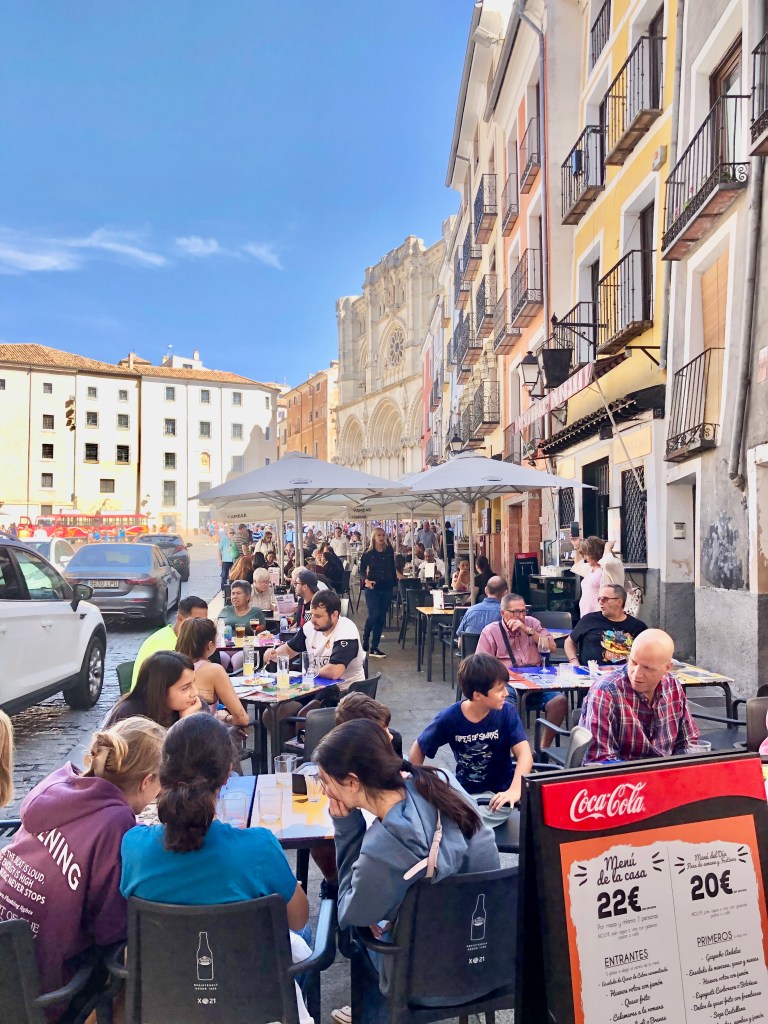
The heart of this UNESCO World Heritage city is the Plaza Mayor, which spreads in a linear fashion from the Cathedral of Cuenca, passing through the arch of the town hall. Outdoor cafes lend a lively air, and the red tram departs from the square for a tour of the Old City, an ideal option for those who want to avoid tackling the steep inclines on foot.

The Plaza Mayor, with its outdoor cafes, is the focal point for tourists in Cuenca’s historic core.

The Cathedral in Cuenca is a treasure house of art and architecture.

Sightseeing trams take tourists up and down the hilly lanes of Cuenca’s Old City.

While Spain has better known churches, the Cathedral of Nuestra Senora de Gracia is truly impressive and worth a look inside. Largely built between 1156 and 1256, it was the first Gothic church on the Iberian peninsula. Statuary, paintings, expanses of marble and lavishly adorned chapels reflected the city’s wealth in medieval days. The two pipe organs date from the 18th century. Our group heard their melodious sounds while seated in the ornately carved wooden choir stalls during an evening concert.

Rock climbers scale the cliffs just down the road from Parador de Cuenca, a monastery-turned-hotel.

If you haven’t had enough in the way of heights after taking in the panoramas from all angles and crossing the footbridge a number of times, consider a zipline ride or go rock climbing. On a short walk from Parador de Cuenca, I came upon harnessed men and women scaling vertical walls and people of all ages whooshing across the valley on a sturdy cable. And on two mornings I saw hot air balloons high in the sky. I wasn’t adventurous enough to pursue those options but wished I’d had time to hike the path that zigzags up to the giant mountaintop statue of Christ, Cerro del Socorro. The two-mile trail is marked by 14 Stations of the Cross. The statue is illuminated at night, as is the entire rock face of medieval Cuenca, a romantic vision that lingers long after your visit to this fascinating city off the beaten path.
Communing With the Past in Tantalizing Toledo

The city of swords, marzipan and El Greco is a perennial favorite with tourists in Spain

By Randy Mink

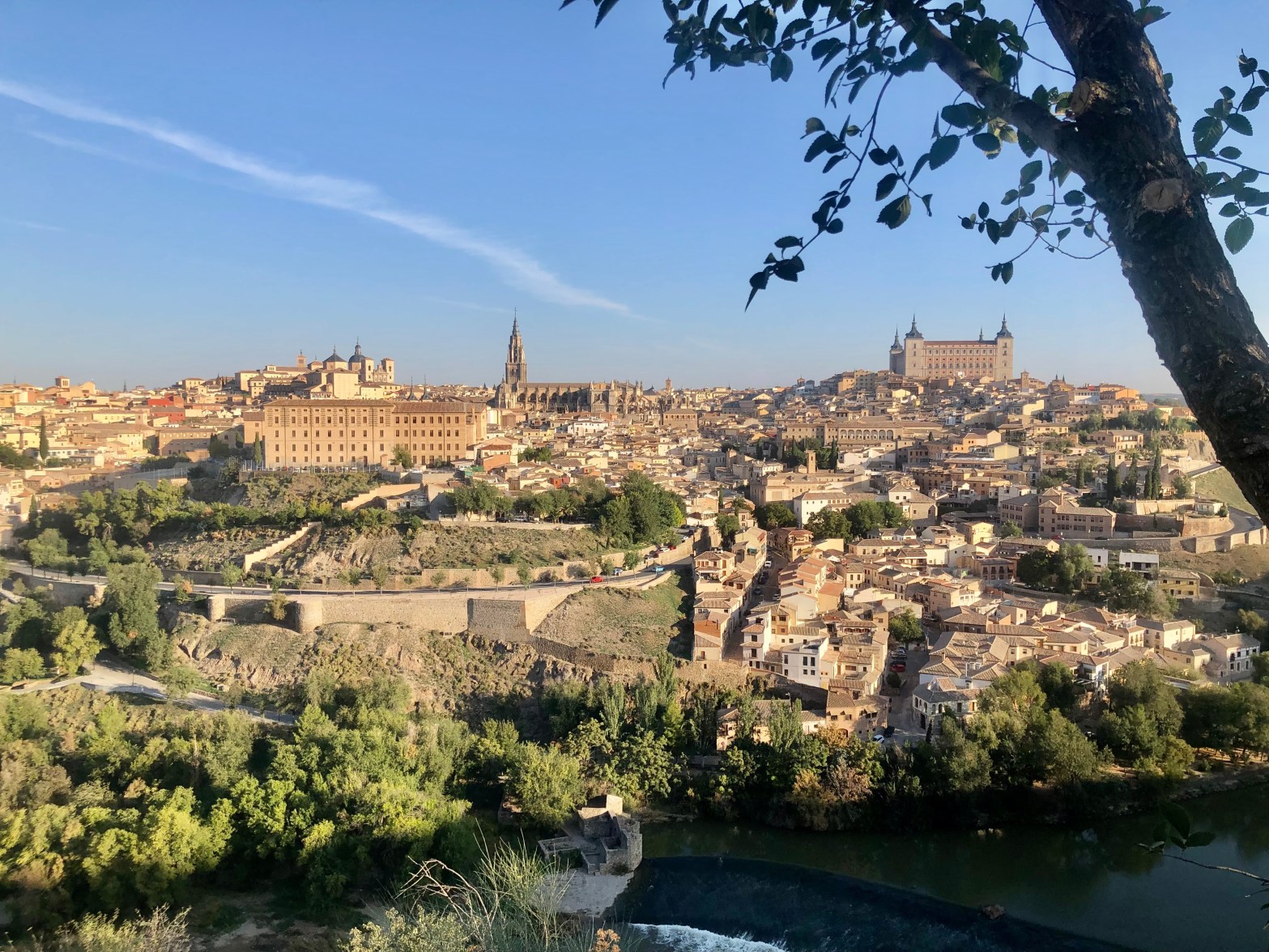
I could spend hours roaming through the tangle of cobbled pathways that thread the historic core of Toledo, one of the best places in all of Europe for getting lost in a medieval dreamscape. Loaded with Old World magic, Toledo projects the very essence of Spain and was once its capital.

On a recent visit to this intriguing city rich in Christian, Jewish and Muslim heritage, I never tired of probing the labyrinth’s nooks and crannies while popping into souvenir stores, touring museums, and traipsing through an ancient synagogue, the world’s fourth-largest cathedral and a former mosque built during the Moorish occupation.

The Mosque of Cristo de la Luz, later a Catholic chapel, was one of 10 mosques in Toledo during the Moorish period. (Randy Mink Photo)

Like the Old City district of Cuenca, another tourist favorite in Spain’s Castilla-La Mancha region, Toledo’s extensive medieval quarter sprawls across a rocky mount bounded by the original city walls and surrounded by a river below.

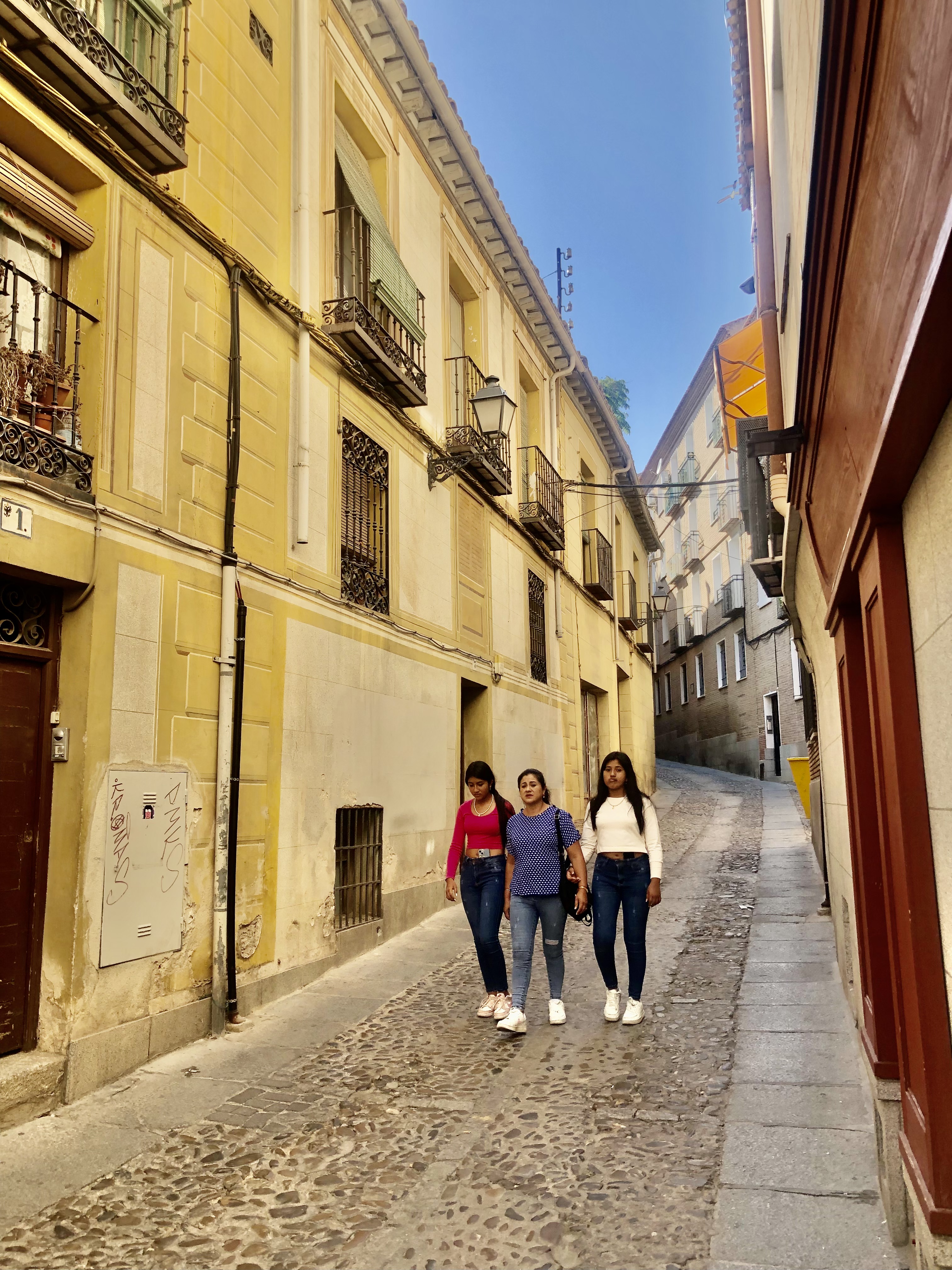
Located 55 miles southwest of Madrid, Toledo (pronounced “to-LAY-do” in Spanish) overflows with tourists—attracting a million of them every year—and its pedestrian alleyways abound with gift shops. I’m not ashamed to say I loved shopping for refrigerator magnets and other tchotchkes in Toledo, but I also liked stepping away from the commercialism to explore shady back lanes and sunlit plazas accented with wrought-iron balconies, grillwork windows and massive, centuries-old wooden doors. Some of Toledo’s narrow winding streets do allow cars, however, so be prepared to stand flat against the buildings to spare your feet from being run over by drivers barreling up and down the steep inclines.

The narrow streets of Toledo’s Old City beckon tourists who relish getting lost in the past. (Randy Mink Photo)

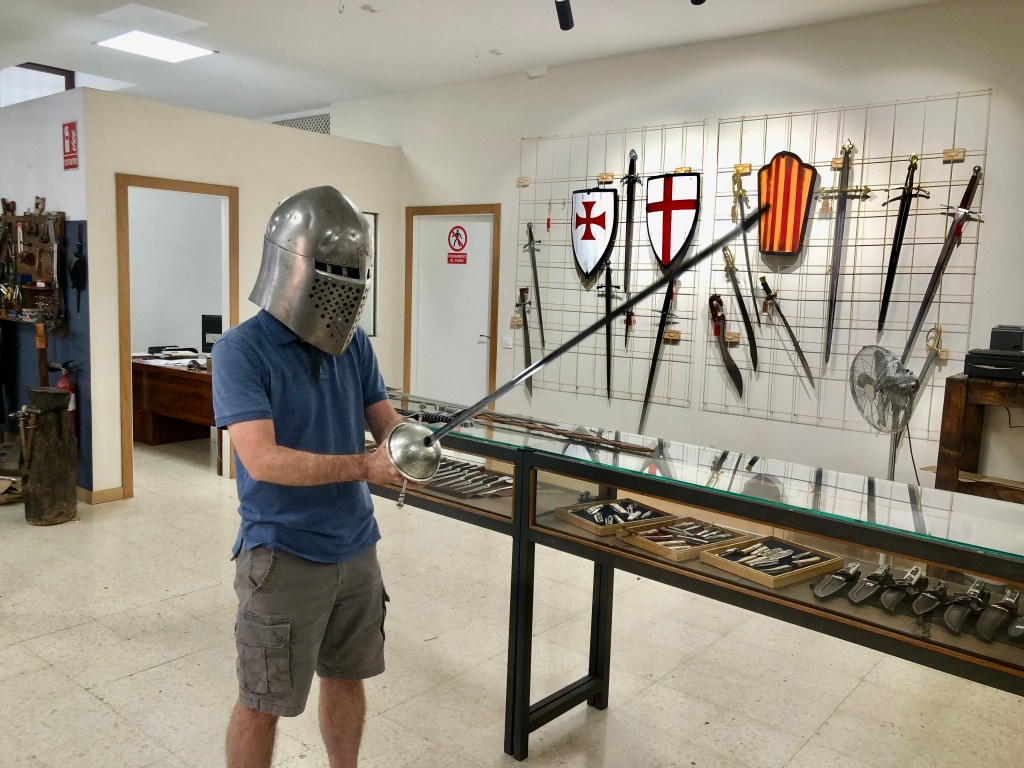
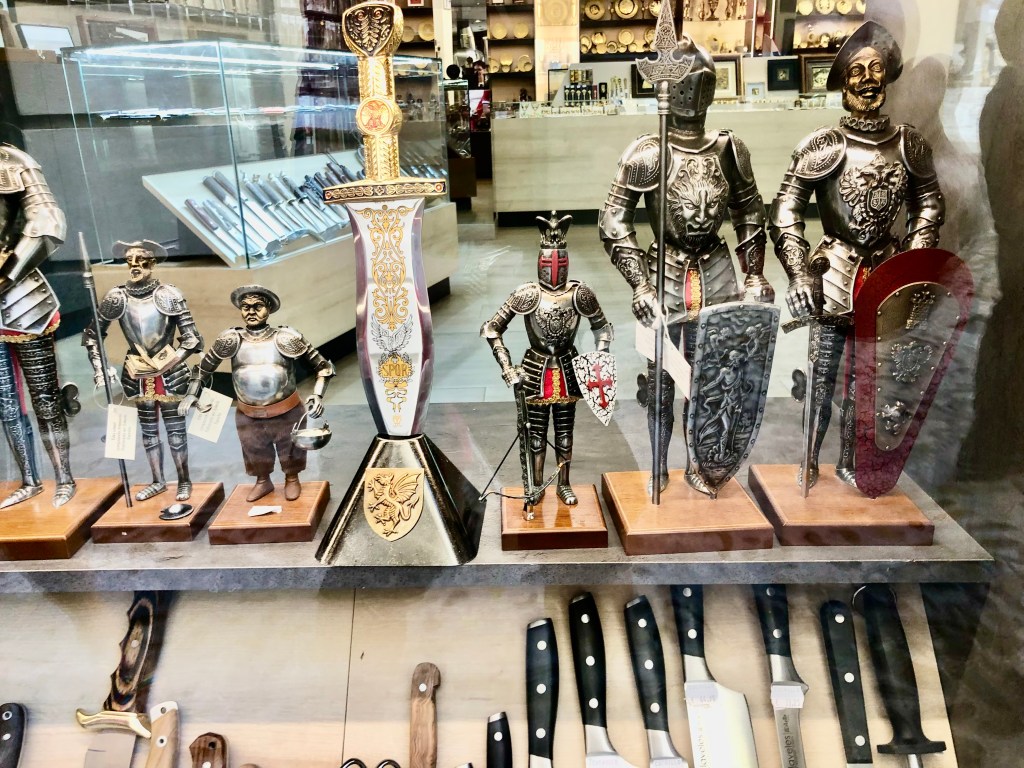
Long known for its quality cutlery, Toledo has many sword stores and calls itself the Sword Capital of the World. At the Zamorano sword factory, where we watched craftsmen at work, one fellow traveler shipped home two swords, fitting reminders of this fortified city that harks back to the days of knights in shining armor. Since the Middle Ages, Toledo has excelled in steel craftsmanship. Stores offer fine selections of knives, letter openers and scissors as well as swords, plus knight figurines in all sizes.

Also catching shoppers’ eyes is the art of damascene—the inlay of intricate gold and silver threads into a steel base. Top sellers include damascene jewelry, scissors and tableware.

Toledo’s historic core counts numerous shops that specialize in swords, daggers, knives, scissors and knights in shining armor. (Randy Mink Photo)

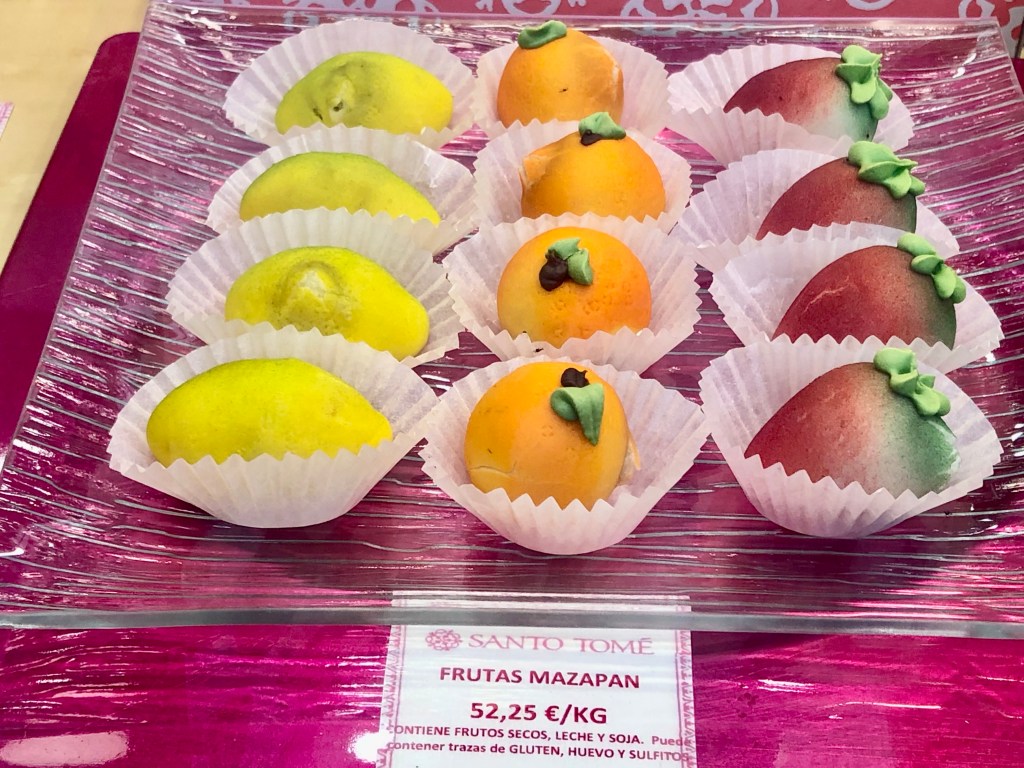
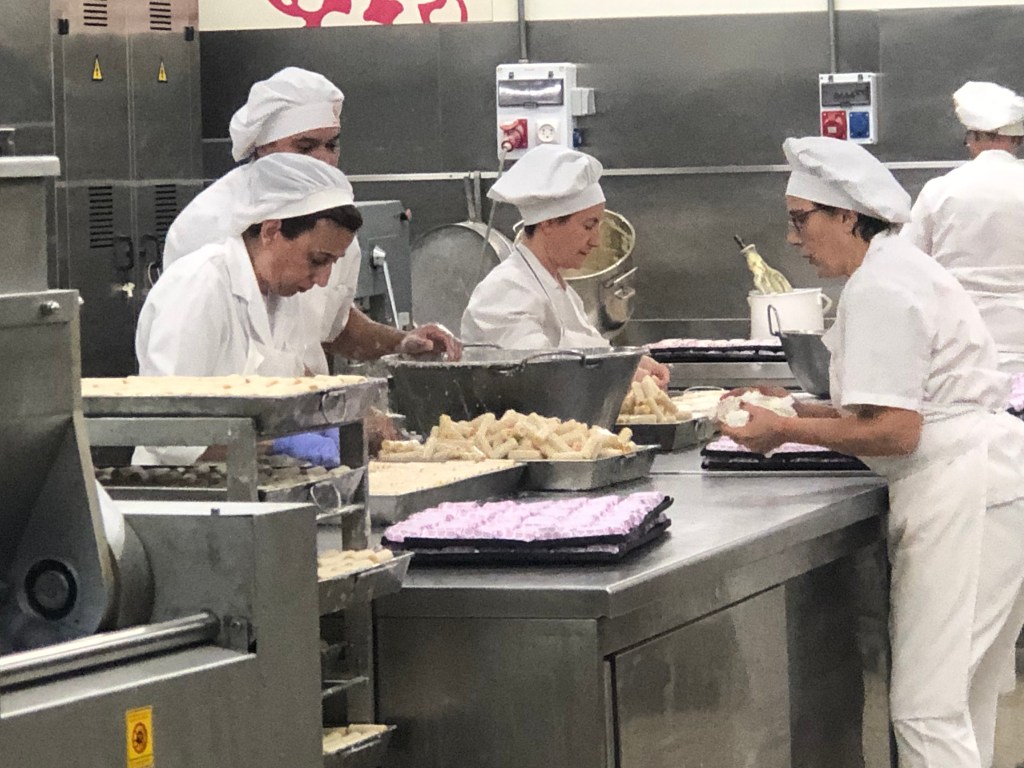
Candy is always a good thing to bring home, and I stocked up on marzipan at Santo Tomé’s flagship store. The seventh-generation family company has been making its famous almond paste confection since 1856. For gift-giving, I bought wrapped boxes of six-inch marzipan bars inscribed “T-O-L-E-D-O,” but my own bag of marzipan pieces was gobbled up before I got to the Madrid airport. (I even started on the bag originally intended for the neighbor watching my cats—it was so irresistibly fresh.)

Santo Tomé marzipan consists of 57 percent crushed almonds, 40 percent sugar and 3 percent honey, with no preservatives or extra ingredients. The most colorful items are in the shape of fruits—oranges, lemons, strawberries, etc. Some pieces are studded with pine nuts or whole almonds or come with a dab of jam. The flagship store/bakery on Calle Santo Tomé occupies a former convent. (Nuns were once the main provider of marzipan, and a few convents in Toledo still sell it.) Santo Tomé has three other locations in town, including one on Plaza de Zocodover, the main square.

Tours of Santo Tomé marzipan bakery include a peek into the kitchen where bakers are making the almond-based confection. (Photo credit: Santo Tomé)

Santo Tomé marzipan is the perfect souvenir of Toledo and makes the perfect gift for those back home. (Randy Mink Photo)

In between shopping and wandering footloose in the dense medieval mazes, I checked off a few places from my must-see list.

The Alcazar, a former fortress and royal residence, crowns the highest point in the city and is now a vast military museum with excellent exhibits on the history of Spain. Rebuilt under dictator Francisco Franco after the Spanish Civil War, the Alcazar had been heavily damaged during the siege by loyalists in 1936. 

At the other extreme, Underground Toledo is worth a look. Archaeologist and tourism guide Diego Esteban Sánchez takes small groups into the bowels of the medieval district, unlocking doors that lead to well-lit restored sites like a Roman bath, a Jewish house and an ancient well.

The same sense of discovery is offered by cozy, atmospheric eateries like Restaurante La Cave, a historic building with brick-lined rooms in cave-like spaces below street level.

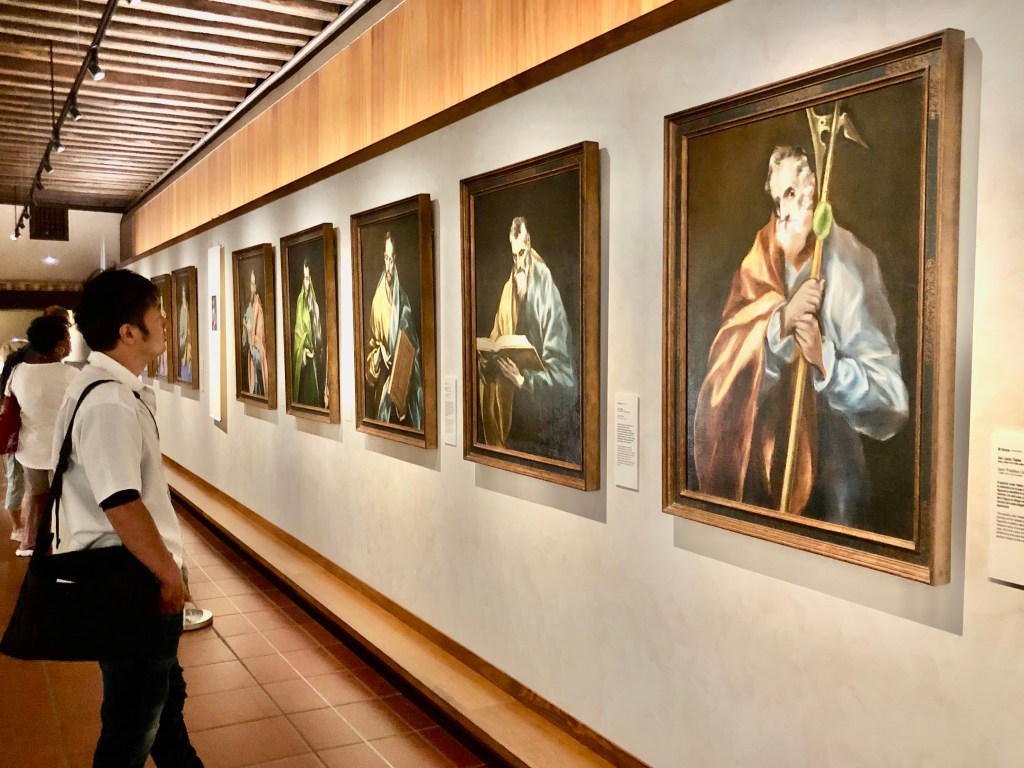
To art lovers, Toledo is virtually synonymous with the Greek-born painter Domenikos Theotokopoulos, better known as El Greco, or “The Greek.” He moved to Spain in 1571 from the island of Crete and, after centuries of neglect, is today venerated as one of the country’s old masters, along with Goya and Velazquez.

The El Greco Museum is one of Toledo’s top visitor attractions. (Randy Mink Photo)

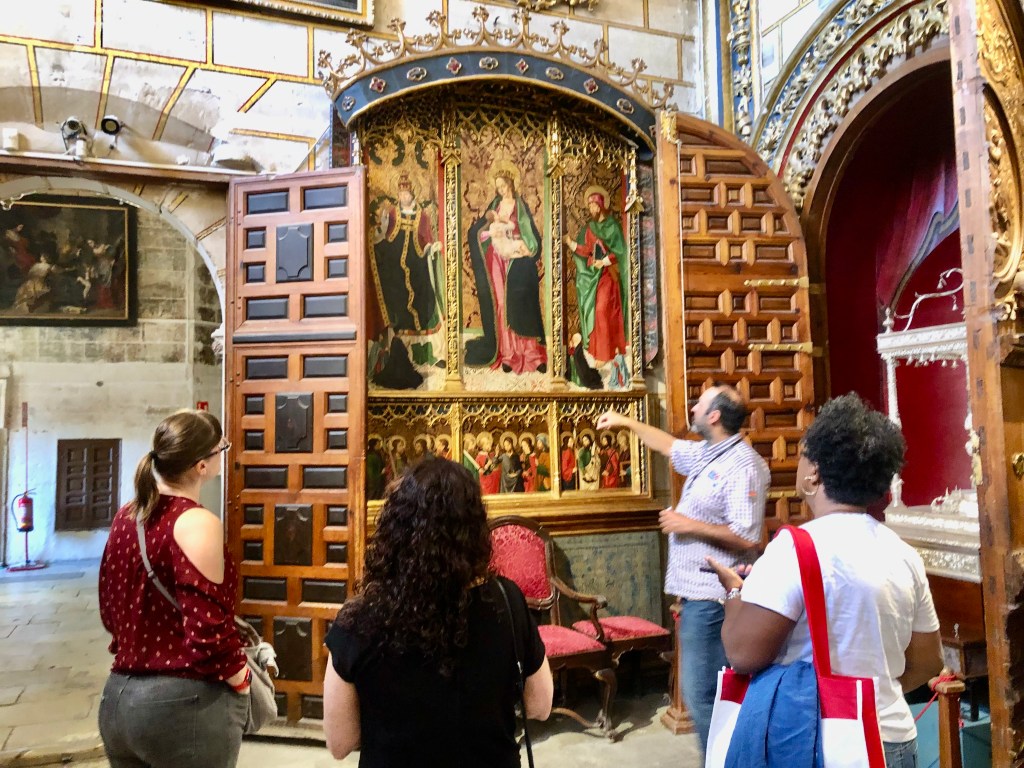
El Greco’s religious canvases, distinguished by bold colors and elongated figures in voluminous robes, can be admired at several locations, including the El Greco Museum. Other El Grecos are found in the Santa Cruz Museum, the Gothic-style Cathedral of Toledo (along with works by Raphael, Titian, Goya and Caravaggio) and the Convent of Santo Domingo el Antiguo, which houses the crypt where the artist is believed to be buried. 

In Toledo’s old Jewish Quarter, El Transito Synagogue is a prime tourist draw. (Randy Mink Photo)

One could a whole morning or afternoon admiring the statuary, artwork and architectural flourishes of the Gothic-style Cathedral of Toledo, one of Spain’s most impressive churches. (Randy Mink Photo)

The El Greco Museum resides next door to the 14th century El Transito Synagogue with its Arabic-influenced interior decoration, magnificent coffered ceiling and museum of Sephardic Jewish culture. Here in the old Jewish Quarter, the park across the street has a memorial to El Greco and a terrace affording panoramic views of the Tagus River (Rio Tajo) and city of Toledo, truly one of the most captivating places in all of Spain.

For more information on Toledo, Cuenca and other cities in Castilla-La Mancha, visit www.turismocastillalamancha.com.

Biting Into Basel

Wedged between Germany and France, this northern Swiss city abounds with traditional restaurants offering classic fare and Old World flair

By Randy Mink

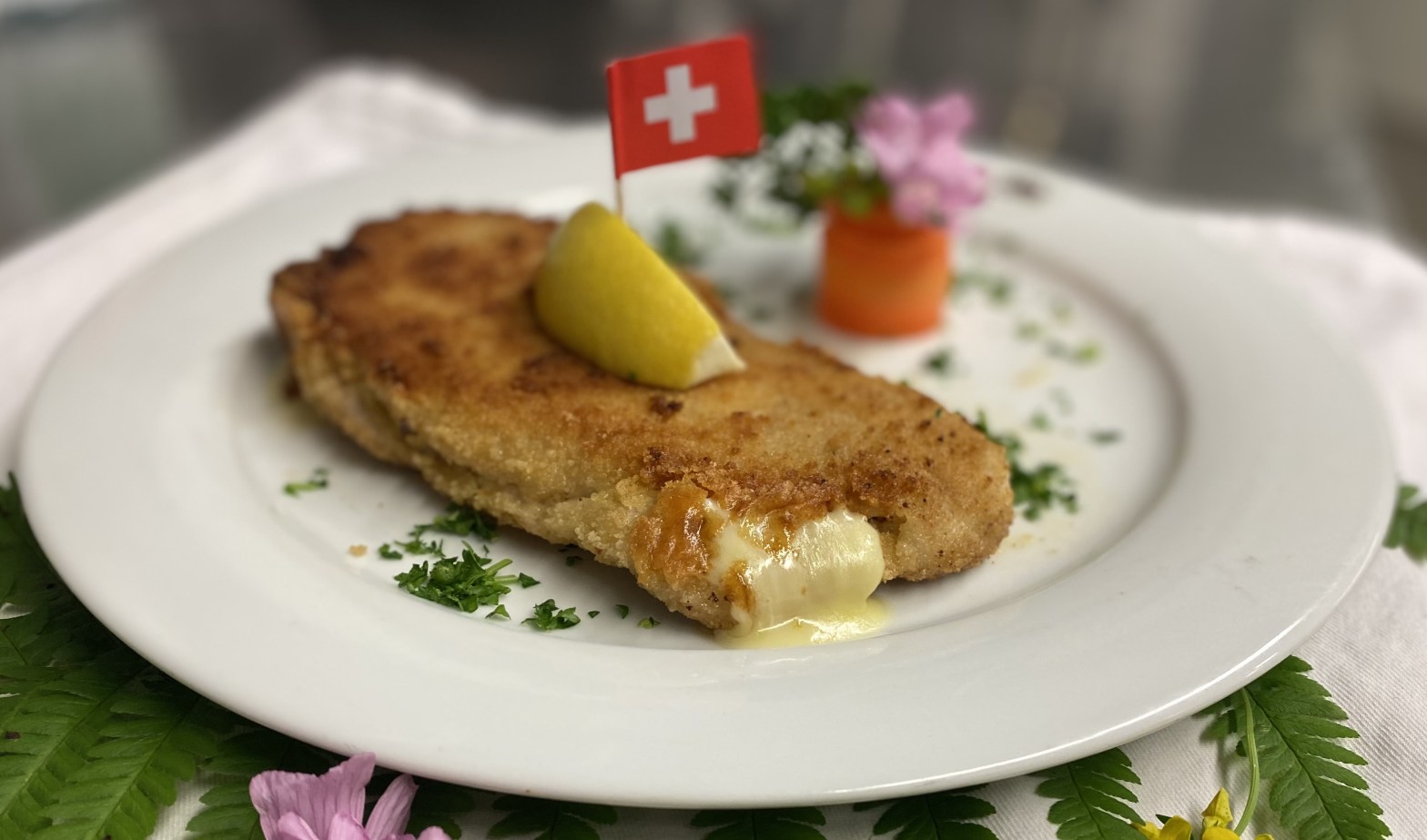
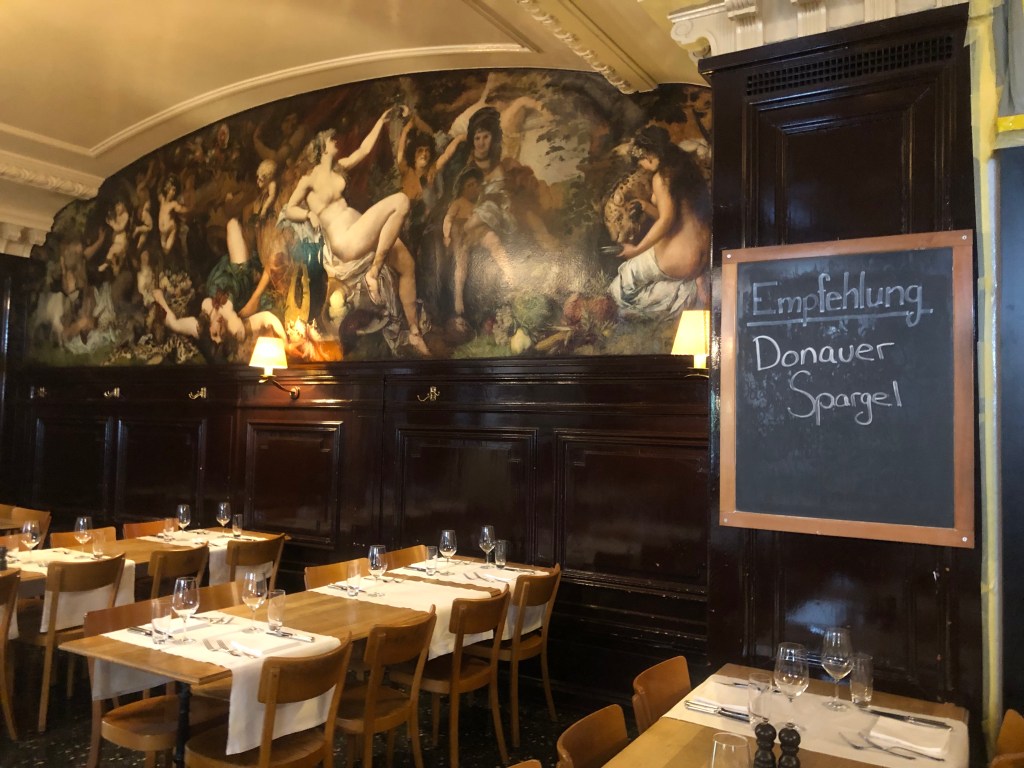
Served piping-hot and oozing with cheesy goodness, the veal cordon bleu at Zum Gifthüttli restaurant is something to savor, even drool over. Lunch in the wood-paneled dining room remains the warmest memory of my visit to Basel, the third-largest city in Switzerland.

After disembarking there from my week-long Rhine River cruise, I was most looking forward to exploring the medieval Old Town with its museums, churches, riverside promenades and specialty shops lining atmospheric alleyways paved with cobblestones. What turned out to be just as inviting, though, were the traditional, pub-style restaurants scattered about the historic core.

Cordon bleu is the house specialty at Zum Gifthüttli. We ordered the Classique, a juicy, golden-breaded schnitzel filled with ham and melted cheese, taking advantage of the Tagesteller (“daily plate”), a deal for 36.50 Swiss francs (about $43) that included french fries, pumpkin soup and dessert.

Gifthüttli, a traditional restaurant in Basel’s atmospheric Old Town, offers dining in the main-floor Bierstube, the upstairs Weinstube and at outdoor tables ideal for people-watching. (Randy Mink Photo)

Zum Gifthüttli’s menu lists cordon bleu variations, like the one with ham, cheese, asparagus, cherry tomatoes and Hollandaise sauce. Another consists of chorizo, mozzarella and herbs. The Florentiner has ham, cheese, spinach and a fried egg on top, while the Schweizer features two Swiss delicacies—Bündner air-dried ham and scrapings of raclette cheese. Opting for pork cordon bleu, instead of veal, can shave a bit off your bill, but any meal in Switzerland will cost much more than at home.

Guests at Gifthüttli can dine in the main-floor Bierstube, upstairs in the white-tablecloth Weinstube or, in warm weather, at outdoor tables offering the bonus of people-watching in Old Town’s pedestrian zone.

The white-tablecloth Weinstube at Gifthüttli offers a refined atmosphere. (Photo credit: Basel Tourism)


Fans of cordon bleu and antique charm also gravitate to Old Town eateries like Zum Braunen Mutz and Restaurant Löwenzorn. The latter offers tables in its historic rooms and in the idyllic courtyard garden, where blankets, furs and electric heaters keep patrons toasty in cooler weather. Löwenzorn favorites include the wienerschnitzel and traditional Swiss fondue.

Löwenzorn, a traditional restaurant in Basel’s Old Town, offers seating in historic rooms and in the courtyard garden. (Photo credit: Basel Tourism)


Restaurant Kunsthalle, a sophisticated but friendly Old World restaurant in the same building as the Kunsthalle Basel contemporary art museum, every winter opens its Fondue Stübli, a cozy fondue chalet next to the landmark Tinguely Fountain. Additional city-center spots for fondue (and other Swiss classics) are Walliserkanne and Safran Zunft.

Patrons at Basel’s Restaurant Kunsthalle enjoy an Old World atmosphere in the vaulted Schluuch room. (Randy Mink Photo)


On our springtime visit to Restaurant Kunsthalle, we had a lunch of pasta amidst dark wood and classical cherub murals in the cozy, vaulted Schluuch room. The more formal “white” room overlooks the chestnut tree-shaded patio, one of Basel’s prime spots for alfresco dining. The Kunsthalle’s menu reveals typical Swiss fare, including Zürcher Geschnetzeltes (veal strips in a sauce of white wine, cream and mushrooms) with rösti, the ubiquitous Swiss version of hash browns offered at most restaurants that serve french fries.

No discussion of traditional dining spots is complete without a mention of Gasthof zum Goldenen Sternen, Basel’s oldest restaurant. Though it’s been at its current riverside location for only 50-some years, it date backs to 1412. In the 1970s the ancient building was dismantled and rebuilt stone by stone along with the original ceiling paintings and all the wood paneling. Highlighting the menu are highly regarded fish dishes—I had the lightly fried salmon filet with linguine. It also offers lamb shank, steaks and wienerschnitzel, among other entrees. The restaurant looks out on the Rhine River, and there’s outdoor seating under trees on the riverfront promenade.

Gasthof zum Goldenen Sternen, Basel’s oldest restaurant, enjoys a setting on the Rhine River. There is seating under trees on the riverfront promenade. (Photo credit: Basel Tourism)


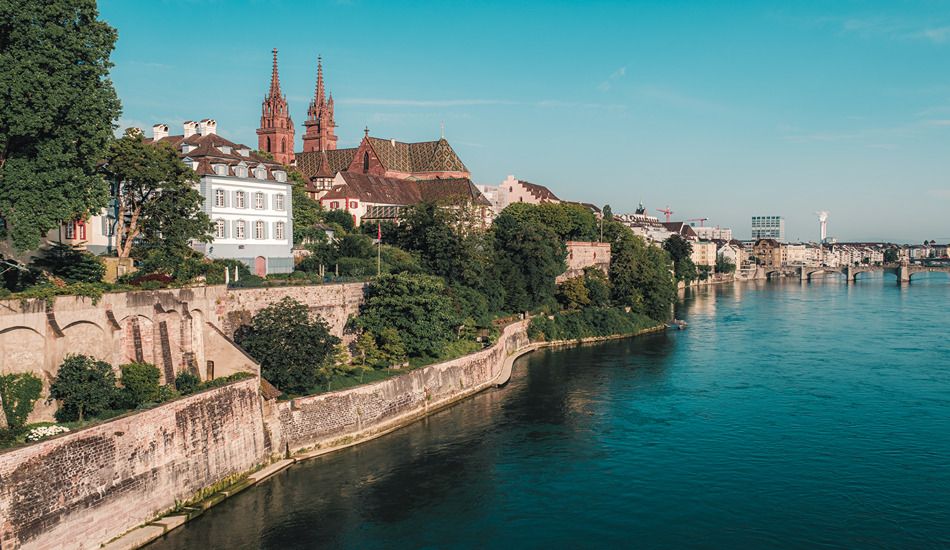
The Goldenen Sternen (“Golden Star”) is located in the picturesque St. Alban quarter, a quiet neighborhood noted for its patrician townhouses, half-timbered buildings, narrow streets and a stream that powers the waterwheel at the Basel Paper Mill. Now a fascinating museum about the history of paper making and printing, the medieval mill, just steps from the Rhine and not far from Old Town, was one of many in St. Alban that made Basel a book publishing center for centuries.

Though skeptical about how interesting a paper museum could be, we found it eye-opening. Especially fun was watching demonstrations of how a pulpy goop is transformed into paper. We had a chance to make our own sheet as a souvenir. And we were surprised to learn that until the 19th century paper was made almost entirely from old rags and ropes that were sorted, cleaned, cut into strips and left to decay in a rag cellar’s rotting vats. There are even exhibits on the evolution of toilet paper, which was considered a luxury product when first introduced in the late 1800s.

Visitors learn about the history of paper and witness the paper-making process at the Basel Paper Mill, a museum housed in a medieval paper mill. (Randy Mink Photo)


Claiming nearly 40 museums, Basel has a museum for every interest, showcasing subjects ranging from cartoons and musical instruments to city history and Jewish culture. Most visited are its two leading art museums.

Kunstmuseum Basel, whose three-building complex holds the world’s oldest municipally owned public art collection, presents seven centuries of European art and boasts the world’s largest collection of paintings by the Holbein family. On the outskirts of Basel, Fondation Beyeler, comprising a main building designed by noted architect Renzo Piano, houses some 400 masterpieces of modern and contemporary art, including pieces by Picasso, Monet, Matisse and Cezanne.

Kunstmuseum Basel holds an impressive collection of paintings by Hans Holbein. (Photo credit: Basel Tourism)


The Basel Historical Museum, with exhibition halls under the vaulted ceilings of a former 13th century church, focuses on the intersection of the cultures of Switzerland, France and Germany. (From Basel, Germany and France are just a hike or bike ride away. Visible on the horizon are the Vosges Mountains of France and Germany’s Black Forest.)

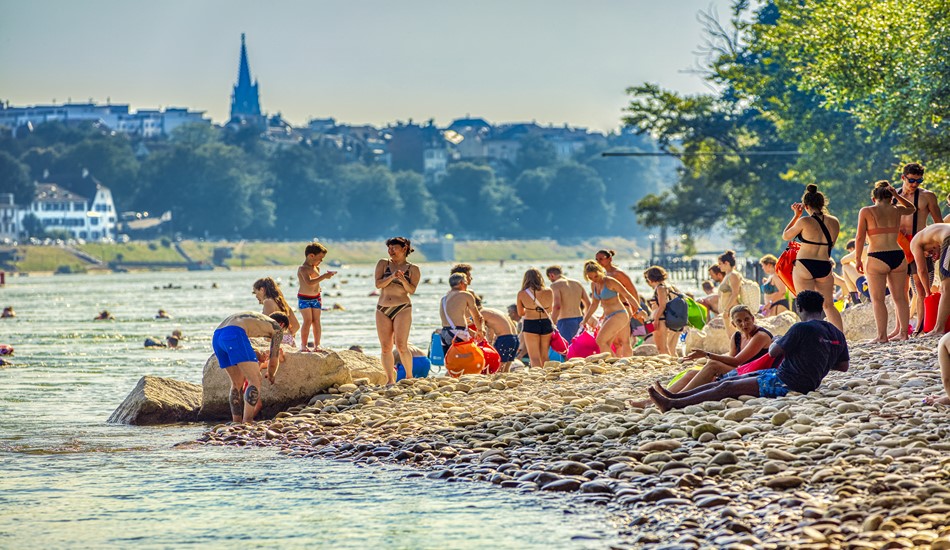
In the summer you’ll see people sunning on the riverbanks and swimming or floating in the river. Basel Tourism offices and retail stores sell something called a Wickelfisch, a brightly colored, fish-shaped waterproof bag for keeping your clothes dry as you whoosh down the river past city landmarks. It’s not to be used as a flotation device.

Frolicking in the Rhine River is a popular pastime with tourists and locals alike. (Photo credit: Basel Tourism)


Sightseeing cruises provide another way of experiencing the Rhine. Or you can take one of the small passenger ferries that shuttle back and forth between the larger southern part of the city (Grossbasel, or Greater Basel) to the northern side (Kleinbasel, or Little Basel) at four crossing points. Attached to a cable that spans the river, the non-motorized boats are guided deftly by expert ferry operators.

We took the five-minute ride from St. Alban to the opposite bank, then walked along the riverside path for 11 minutes before reaching the Museum Tinguely, a showplace for monumental mechanical sculptures created by world-renowned artist Jean Tinguely (1925-1991), who grew up and studied in Basel. Buttons allow visitors to activate some of the playful, mischievous and wacky creations, causing them to rattle, shake and whirl.

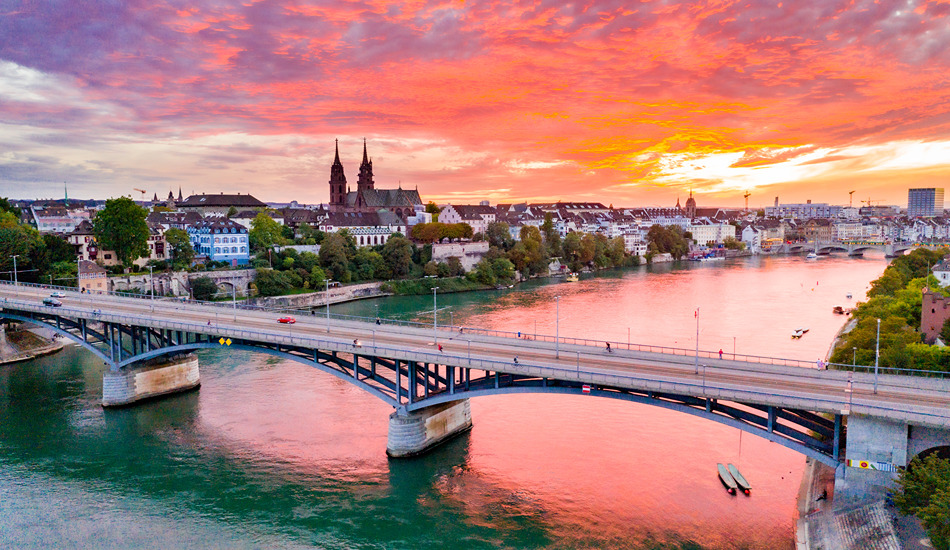
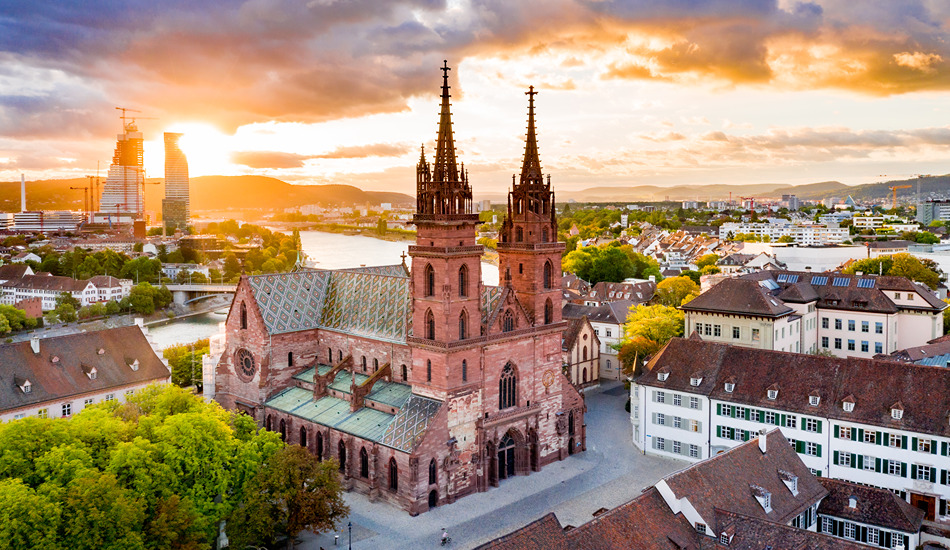
Sweeping views of the Rhine can be enjoyed from the tree-shaded terrace of Basel Cathedral. Sporting impressive twin towers, it is the city’s most prominent landmark. Built mainly in the 12th and 13th centuries, the Romanesque-Gothic church contains the tomb of the Dutch humanist Erasmus (1466-1536), who lived in Basel. Ambitious types can climb the towers’ narrow staircases (about 250 steps).

The twin spires of Basel Cathedral dominate the skyline of Basel, which lies on the Rhine River in northern Switzerland. (Photo credit: Basel Tourism)

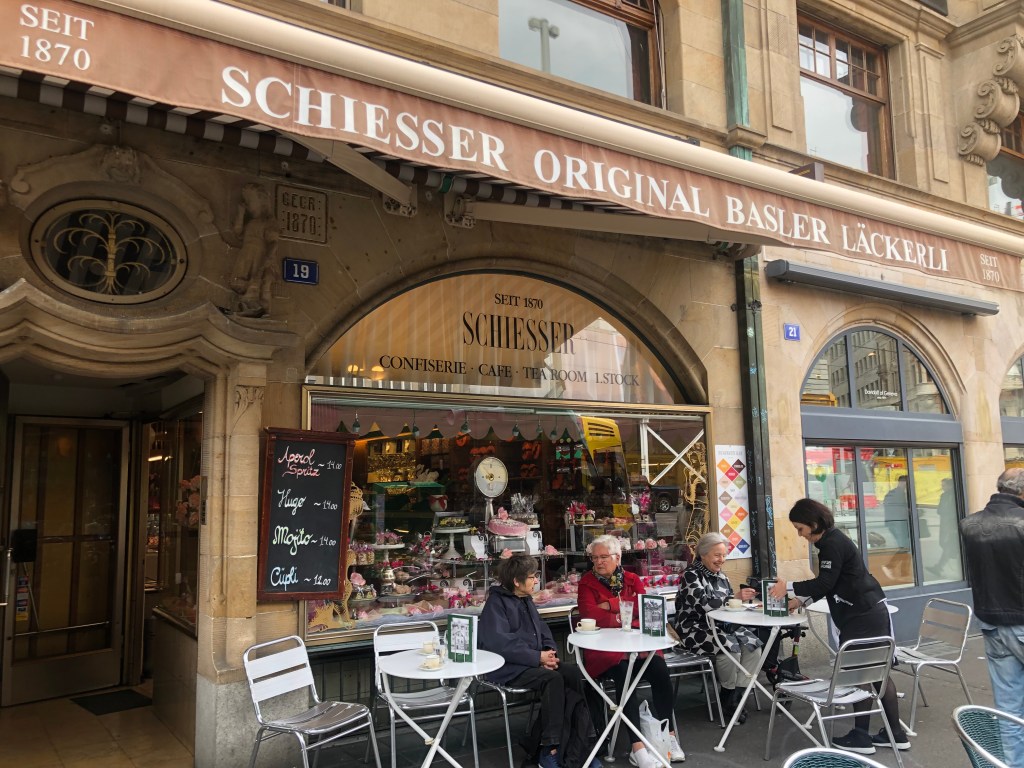
One of the best places to take a break from sightseeing is Confiserie Schiesser, a cafe/tea room/confectionery with an on-site chocolate factory and bakery. Founded in 1870 and now in its fifth generation of family ownership, Schiesser faces Old Town’s vivid red Rathaus (Town Hall) and market square. A tantalizing array of chocolates, cookies and pastries tempts the sweet tooth. Distinctive to Basel are the Basler Läckerli, a ginger cookie made with honey, spices, almonds, and candied orange and lemon peel.

Confiserie Schiesser, a cafe/tea room/confectionery founded in 1870, is famous for its chocolates, cookies and pastries. (Randy Mink Photo)


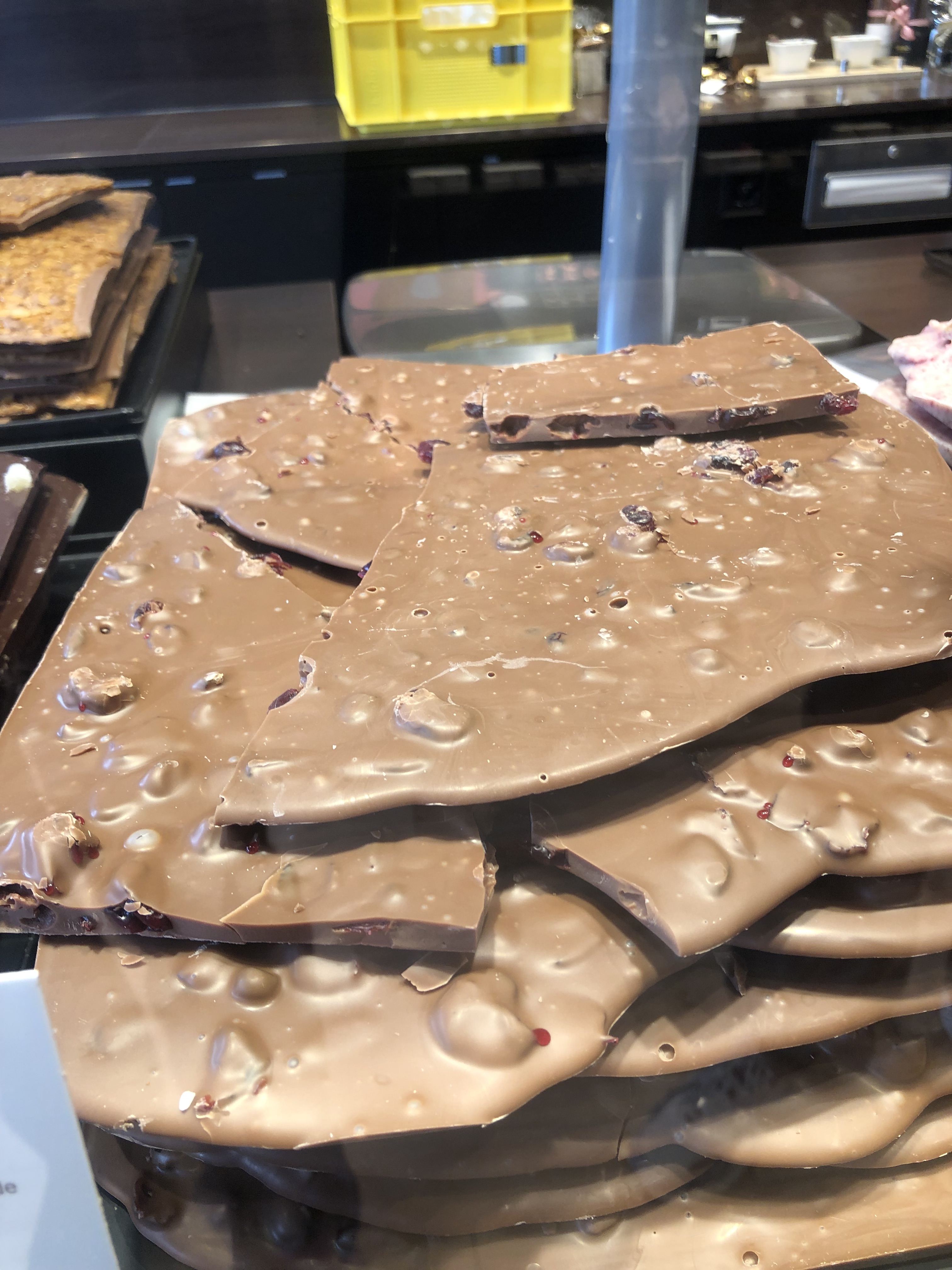
A few doors down from Confiserie Schiesser, high-end Läderach chocolatier sells slabs of melt-in-your-mouth chocolate called Frisch Schoggi. Sold by the gram, the uneven pieces are studded with everything from hazelnuts and almonds to cranberries and cornflakes.

Visitors in Basel’s Old Town can indulge their sweet tooth at Läderach, a high-end Swiss chocolatier. (Randy Mink Photo)


Indulging in Basel’s tasty treats is the epitome of Swiss bliss.

For more information, visit the Basel Tourism website, www.basel.com.