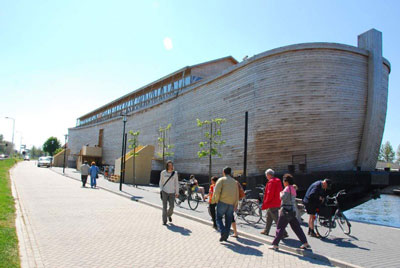
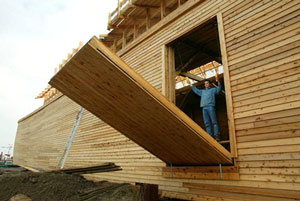
When the massive central door on the side of Noah’s Ark was opened, the first crowd of curious townsfolk was there to behold its wonder.
Of course, it’s only a replica of the biblical Ark, built by Dutch creationist Johan Huibers, as a testament to his faith in the literal truth of the Bible. The ark is 150 cubits long, 30 cubits high and 20 cubits wide. That’s two-thirds the length of a football field and as high as a three-story house.
LIFE-SIZE ANIMAL MODELS Life-size models of giraffes, elephants, lions, crocodiles, zebras, bison and other animals greet visitors as they arrive in the main hold. A contractor by trade, Huibers built the ark of cedar and pine. Biblical scholars debate exactly what wood was used by Noah for construction.
Huibers did the work mostly with his own hands, using modern tools and with help from his son, Roy. Construction began in May of 2005. On the uncovered top deck — which was not quite ready for the opening– will come a petting zoo, with baby lambs and chickens, and goats and one camel.
Visitors on the first day were stunned. “It’s past comprehension,” said Mary Louise Starosciak, who happened to be bicycling by with her husband while on vacation when they saw the ark looming over the local landscape.
There is enough space near the keel for a 50-seat film theater where kids can watch a video that tells the story of Noah and the ark. Huibers says he hopes the project will renew interest in Christianity in the Netherlands, where church going has fallen dramatically in the past 50 years.
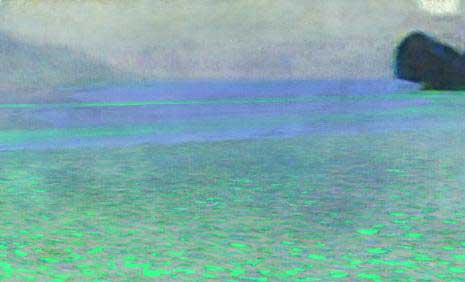
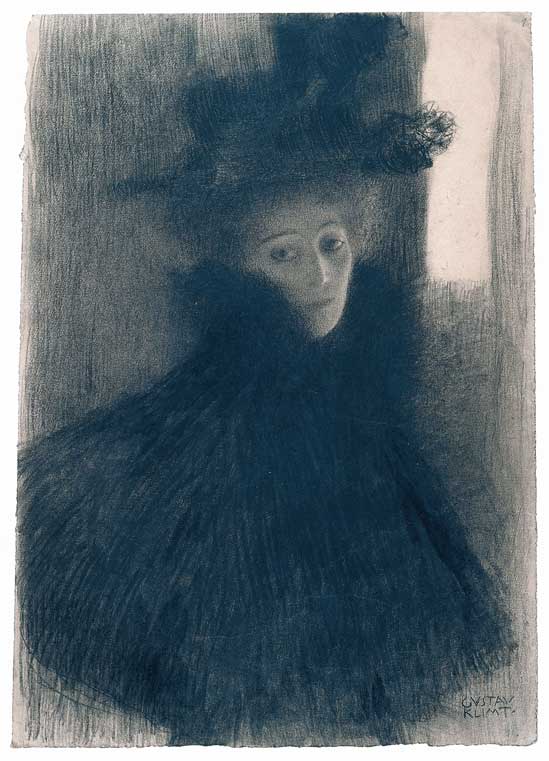
The year 2012 marks the 150th anniversary of the birth of Gustav Klimt (1862-1918). Vienna’s Kunsthistorisches Museum, Leopold Museum and Albertina are all staging major exhibitions dedicated to the work of this great turn-of-the-century modernist pioneer.
The Leopold Museum will be staging an exhibition titled “Gustave Klimt: A (time) Journey,” from February 24 to June 11 which will focus on the museum’s collection of hundreds of postcards, photographs and letters written by Gustav Klimt for over two decades to his partner in life Emilie Flöge. Among them there are art cards designed by the Wiener Werkstätte, tube mail, and telegrams as well as the correspondence that Klimt conducted with his friends and family in Vienna while enjoying his seasonal summer retreat at the Salzkammergut, at the Attersee and in Gastein or during his journeys that led him all across Europe to Italy, Paris, Brussels and London.
From March 16 until October 6, the Albertina Museum will celebrate Klimt’s 150th birthday with the exhibition “Klimt – Drawings” that will present the majority of the museum’s 170 drawings, as well as other items on loan. As a center for research on Gustav Klimt’s drawings, the museum will present pieces from all phases of the artist’s work. The focus will be on the unique drawing talent of Gustav Klimt, whose way of thinking and working is revealed in numerous figure studies and the precisely told allegories.
The Kunsthistorisches Museum in Vienna will hold a special exhibition from February 14-May 6 focusing on the 13 major paintings completed by Klimt for the grand staircase of the museum and the sketches they were based on. In 1890 Klimt, together with his brother Ernst and Franz Matsch, were entrusted with creating spandrel paintings and other narrow pieces to fill the spaces between the columns lining the grand staircase of the Kunsthistorisches Museum.
While Ernst Klimt and Franz Matsch kept to a more conservative style, the first signs of Art Nouveau symbolism can be clearly seen in Gustav Klimt’s pictures. These key paintings set the stylistic tone for Klimt’s world-famous work from about 1900 onwards.
Easter celebrations are among the oldest, most traditional and unique celebrations in Germany. A myriad of differing regional traditions, Easter markets and special celebrations start weeks before the four-day Easter weekend from April 5 to April 9. Many of the American Easter traditions, including egg decorating, Easter trees, Easter egg games and, of course, the chocolate Easter bunny, were brought to America by German immigrants.
In preparation for Easter, towns decorate their fountains and trees with eggs and wind crepe paper around the branches. On the Easter Eve, bonfires are lit celebrating the new and getting rid of the old. Easter markets throughout the country exhibit Easter eggs and spring-themed local arts and crafts in surroundings from historic cities and castles to landscape parks. The markets last either a few weeks or a weekend and are a favorite leisure time activity for locals and tourists alike.
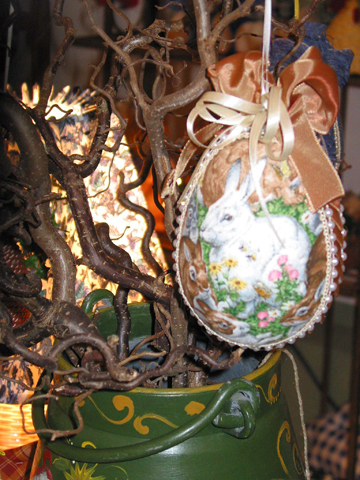
Easter decorations
EASTER MARKETS Being one of the oldest Easter markets in Germany, the Haeferles Market in Nuremberg in Franconia is the first major event of the spring season. With over 80 stalls in the middle of the historic city center, this market offers everything around the Easter holidays, from hand-painted eggs to wooden decorations (March 23 – April 9). Further to the north in the charming town of medieval Wolfenbuettel, about two hours from Frankfurt, the Easter market takes place in a royal surrounding. In the courtyard of the 18th century residence castle of the Guelphs in the city center, over 60 artists and craftsman from the region display their works on the weekend before Easter (March 31 – April 1). Then, on Easter Saturday a huge rabbit emerges from an enormous nest and distributes candy to the children.
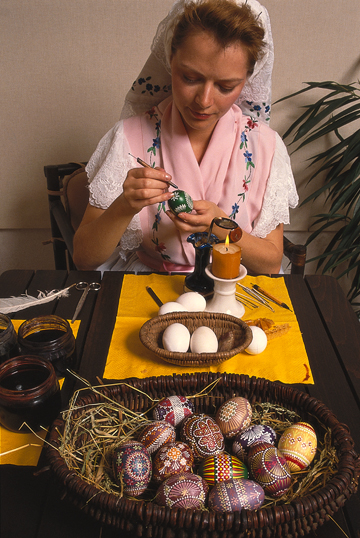
Lady in Sorbian costume handcrafts traditional Easter egg painting using wax-resist techniques.
EASTER DUCK RACE The festivities are closely followed by a duck race where the ducks are thrown into the river and race to the other side. One of the largest Easter Egg Fairs in Germany takes place in the beautiful landscape park Luisenpark in Mannheim from March 31 to April 4. The International Easter Egg Market at Mannheim’s Baumhainhalle hosts over 40 artists from Germany, Russia, France, Switzerland and Hungary.
St. Wendel fountain decorated for Easter
KREUZTRITT WALK PARADE A very special Easter culture exists in eastern Germany near the border with Poland. The Sorbs, a Slavic minority that has lived for generations in this area called Lusatia, celebrate Easter with a parade called the “Kreuztritt” (Cross Walk) on Easter Sunday. The men of the village dressed in traditional costumes of black jackets and top hats, ride horses in a circle from town to town announcing the resurrection of Christ. The Sorbs also are masters in the art of Easter egg painting. Sorbian artists from all over the region exhibit their skills during the Lenten season. The Egg Rolling and colorful Easter Market on Easter Sunday are wonderful highlights during the Easter weekend, April 7 and 8.
Berlin, Germany’s capital, is the home to numerous impressive museums. With a section of Berlin dedicated to museums, Museum Island, as well as with museums around the rest of the city, it is easy to see the importance museums have on the cultural landscape of Berlin. The list of museums keeps growing as new ones continue to open and others re-open after renovations.
TSHOBAN FOUNDATION – MUSEUM FOR ARCHITECTURAL DRAWINGS Open since 2013 at the former Pfefferberg Brewery complex, the private Museum for Architectural Drawings houses the renowned Tchoban Foundation’s collection, as well as temporary exhibits from leading international cultural institutions. Conceived by Berlin- and Moscow-based architect Sergei Tchoban, the museum presents three changing exhibitions annually. The architecturally striking building extends from a fire-wall, seemingly latching onto a row of typical Berlin houses. Evoking the image of a set of oversized piled blocks, the four story building’s silhouette is defined by a regression and progression of a colored concrete and glass facade. Open daily, admission is approximately $5.
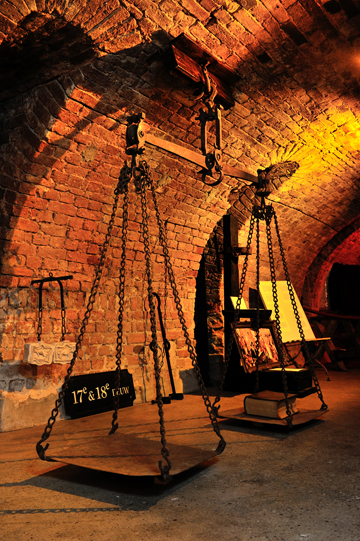
MAGICUM – BERLIN MAGIC MUSEUM Witchcraft and magical powers, mythical knowledge, secrets, the supernatural and ancient wisdom can be explored in the cellars of a historic former blacksmith building close to Berlin’s Hackesche Market. Open since summer 2014, Berlin’s Magic Museum features some 450 exhibits displayed over 6,500 square feet. Included are ritualistic objects and magic devices ranging from a Dutch witches scale and torture instruments to African totem masks, crystal balls and a historic Samurai sword. Curated to be more entertaining rather than strictly academic, the spellbinding exhibition encourages intuitive exploration. Open daily, admission is approximately $8.
Magicum Museum
KUNSTHAUS DAHLEM TO OPEN SUMMER 2015 Following extensive renovations, the Kunsthaus Dahlem will open in the summer of 2015 as an exhibition venue for Postwar German Modernism from East and West Germany (1945-61). The opening exhibition will focus primarily on sculptural works, complemented by paintings, graphics and photography. The historic building was constructed between 1939 and 1942 as a studio for infamous sculptor Arno Breker, who, alongside Josef Thorak, was one of the popular sculptors of the Third Reich, producing ornamental sculptures for Albert Speer’s monumental constructions. In addition to a café and a museum shop, there will also be a permanent exhibition on the building’s eventful past. Free admission.
BERLIN SPY MUSEUM Espionage has been the subject of many movies and books set in Berlin. Now the city is finally getting a museum that focuses on the mysteries of agents, double agents, betrayals, heroes and their stories, as well as the tools they used. The Berlin Spy Museum will feature approximately 21,500 square feet of exhibition space. One of the more well-known pieces on display will be the famous German coding machine “Enigma” from World War II, which was used for enciphering and deciphering secret messages. The exhibition will unveil the mysteries of intelligence services and espionage in the East and the West with a focus on Berlin during WWII and the Cold War. The interactive exhibits cater to all age groups, including children. www.deutsches-spionagemuseum.de/
MUSEUM OF DECORATIVE ARTS OPEN AGAIN AT KULTURFORUM After three years of renovations, Germany’s oldest museum of decorative arts, the Kunstgewerbemuseum Berlin, reopened in November 2014 with a new gallery dedicated to the history of fashion. Located at Berlin’s Kulturforum museum complex, the new permanent exhibition of dresses, hats, bags, gloves and accessories from the 18th to the 21st century is based on an international collection acquired by the museum in 2009. Since its re-opening, the Kunstgewerbemuseum has been providing an overview of the key achievements in European design, from the Middle Ages to the present day. In addition to the Fashion Gallery, the museum features new departments of Design and Jugendstil/Art Deco.
Museum of Decorative Arts
BERLINISCHE GALLERY REOPENS MAY 2015 After a year-long modernization, the Berlinische Gallery is scheduled to reopen on May 28, 2015. The gallery’s permanent exhibition focuses exclusively on art in Berlin from 1880-1980, ranging from late 19th century paintings, to Expressionism and the East European avant-garde, to post-war modern architecture and the “wild” works of the 1970s. Reflecting the interdisciplinary nature of the collection, the exhibition will illustrate a diversity of artistic styles and credos, but also tensions, polarization and fresh departures, which remain hallmarks of Berlin as an artistic hub. Two other temporary exhibitions are opening on May 25, 2015: Radically Modern, which focuses on building styles in the 1960s and an exhibition on contemporary German painter Bernhard Martin. A retrospective on Max Beckmann and Berlin will open November 20, 2015 and is poised to be a major highlight of Berlin’s cultural winter for 2015/2016.
By Don Heimburger Photos courtesy of the author, German National Tourist Office and Magdeburg Marketing
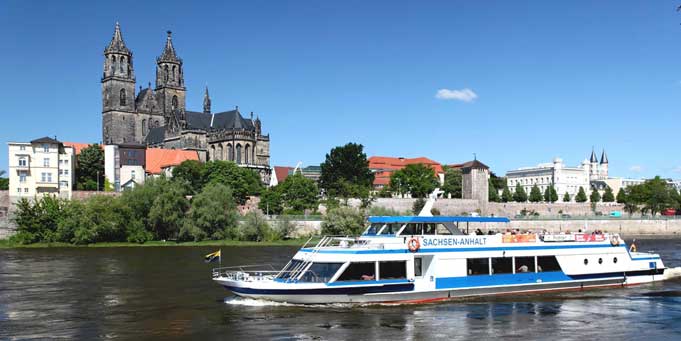
The Elbe River cuts through the heart of Magdeburg, offering this historic German city an idyllic landscape and picture-perfect views through a camera. But the city has seen its share of severe destruction over the centuries, such as in the Thirty Years War and World War II.
Today, this city of 240,000 in central Germany has rebounded nicely and combines its important and long history with new architecture, innovative cultural events and green spaces to make it an appealing attraction for tourists.
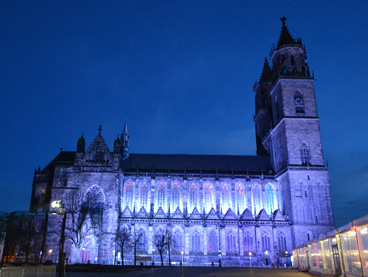
Aerial view of Magdeburg on the Elbe RiverMagdeburg Cathedral shines at night.
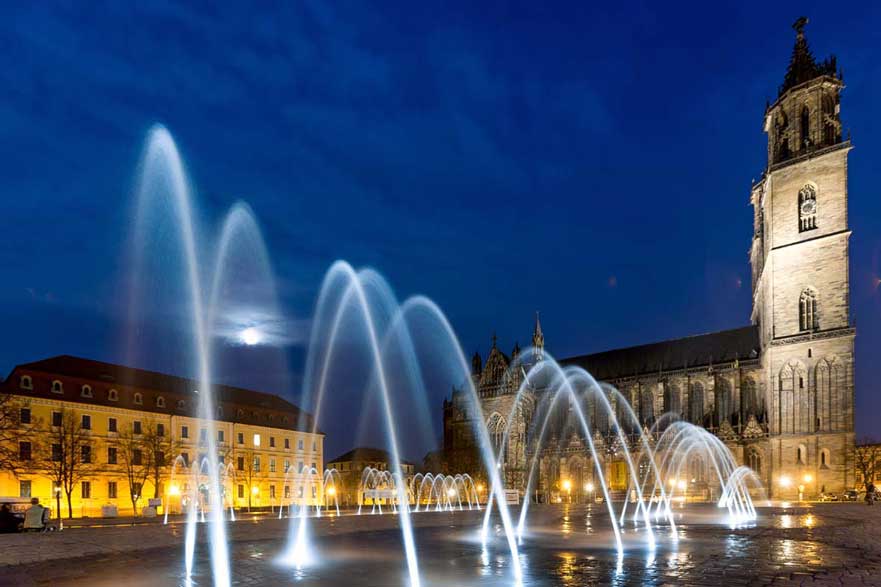
MAGDEBURG CATHEDRAL The town’s huge cathedral is a “must-see” and is the largest church building in this part of Germany. Surprisingly, the Magdeburg Cathedral can be traced back as early as 937, when Emperor Otto the First founded a monastery dedicated to St. Maurice. In 955, the church building was extended before becoming the cathedral of the established bishopric of Magdeburg in 968. Otto the First had a number of high quality pieces of antique art shipped to Magdeburg from northern Italy to the cathedral. These included columns made of purple-red porphyry, marble and granite, many of which still provide finishing touches to the architecture of the cathedral today.
Magdeburg Cathedral architecture
When Emperor Otto died in 973, his remains were brought to Magdeburg Cathedral, where he was buried in a stone sarcophagus. In 1207, the Ottonian cathedral was damaged in a city fire. Archbishop Albrecht II then began construction on a new Gothic cathedral, which was consecrated in 1362. The cathedral’s 341-foot-high west towers were completed in 1520.
Today, visitors to Magdeburg Cathedral can see the rich interior stone work which displays impressive architecture. The building is also full of unique and internationally renowned original exhibits representing nearly all periods of art history, including spolia from the building’s Ottonian predecessor, the original tomb of Emperor Otto I and his first wife Edith.
In addition, there are Romanesque bronze grave markers, early Gothic sandstone sculptures including the famous figures of the “Clever and Stupid Virgins,” the carvings on the choir stalls of the canons dating back to the 14th century, and Renaissance paintings, as well as 20th century art such as the famous war memorial designed by Ernst Barlach. The cathedral, which became protestant in 1567, is now the seat of a Protestant bishopric and home to members of a congregation in the city center.
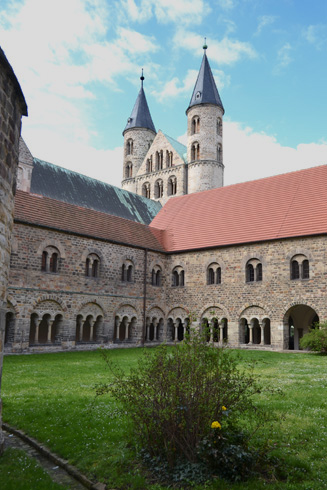
Monastery of Our Lady
MONASTERY OF OUR LADY Said to be the “pearl of the Romanesque Road,” the Monastery of our Lady in Magdeburg is considered the oldest surviving building in the city.
The unique well-house, magnificent barrel-vaults and sublime monastery church with its slender towers comprise an architectural marvel which is the centerpiece of all Romanesque buildings in Saxony-Anhalt. The structure holds both the Magdeburg Art Museum and the Georg Philipp Telemann concert hall. Archbishop Gero of Magdeburg ordered the erection of the building in 1017-18. However, nothing remained of the original construction, and it was Archbishop Werner (1063-1078) who arranged for the reconstruction which was finally completed in the 12th century by the Premonstratensian order.
The rotunda with its pointing cones, resembling a monk’s tonsure, is a remarkable architectural feature of the eastern wing. Together with its 32 arcades, the rotunda forms an ensemble considered one of the most amazing and interesting structures in European monastery architecture. After 1220, the monastery church was vaulted in early Gothic style. Also deserving a special mention is a collection of sculptures ranging from medieval to contemporary in the museum of the monastery. The surrounding area includes a sculpture park created in 1989.
St. John’s Church is Magdeburg’s oldest parish church, first mentioned in 941. The western section of the church, which features a late Romanesque design, and the Gothic hall church, have both been preserved. A monument of Martin Luther and the crypt of the Otto von Guericke family can be found in front of and inside the church.
The history of the church was marked by many changes: St. John’s fell victim to many city fires and was destroyed when General Tilly’s army invaded Magdeburg in 1631. However, the citizens never tired of rebuilding the church. St. John’s Church left its mark on history when an important and far-reaching event took place: on June 26, 1524, Martin Luther held a famous sermon on right and wrong justice in the greatly overcrowded church, whereupon all parishes of the city center converted to Protestantism, as laid down in the annals of Magdeburg.
Today St. John’s is open to the public and has become a popular venue for a wide variety of events.
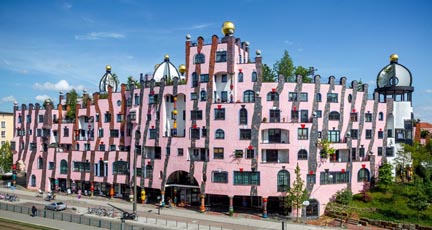
GREEN CITADEL OF MAGDEBURG One of Magdeburg’s most eye-catching attractions for visitors is also one of the last architectural masterpieces designed by the artist Friedensreich Hundertwasser. The Green Citadel of Magdeburg is located among a mixture of Baroque facades and examples of modern design and provides the Breiter Weg with a landmark structure and a burst of colorful culture.
This architectural retail/apartment building has been the subject of much discussion since it was constructed in 2005. It was the last building Hundertwasser designed before his death. The artist said the building was an “oasis for humanity and nature within a sea of rational houses” at the heart of the “concrete desert” of Magdeburg.
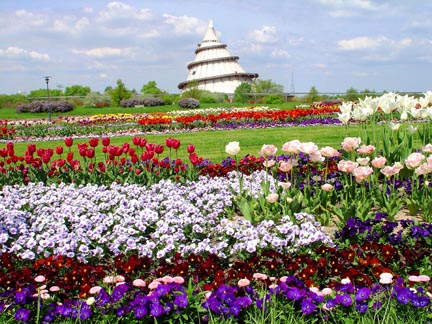
(left to right) Science demonstration at Millennium Tower; Millennium Tower
To explore the green of Magdeburg, visitors also want to investigate Elbauenpark. The park, which covers an area of 222 acres and was awarded the title of Germany’s second most attractive park in 2005, is home to many attractions that visitors can explore.
Since being created, the unique park has gained its place as one of Magdeburg’s most important landmarks. It is home to the Millennium Tower (the world’s tallest wooden construction of its kind), Lake Stage, Butterfly House and a number of playgrounds, sports areas, pieces of art, themed gardens and other attractions.
The park is home to a wide range of activities and facilities for sports fans, including golf, skating, rock climbing, hiking, biking, a high-rope park and even a toboggan run.
TOWN HALL OF MAGDEBURG The Town Hall of Magdeburg dates to the 12th and 13th century, with the oldest remains in the vaults which form part of today’s Ratskeller restaurant. Pelt dressers, tanners and dealers in hides and skins met here in the long hall to trade and stock their goods. After the turmoil of the 30 Years War, a two-story sandstone town hall building was erected in Dutch Renaissance style including Italian Renaissance architecture, and in the 19th century it underwent a number of changes and extensions.
In January 1945, the Town Hall was completely destroyed during an air raid, but reconstruction work on it began in 1965, and it was rebuilt and restored according to its original blueprints. The hall features bronze doors designed by Heinrich Apel and carved with historical figures and stories from the city’s past as well as features an impressive bell carillon with four octaves. The carillon is played on market days and also for concerts.
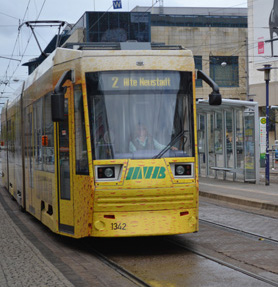
(left to right) Colorful street of buildings on Otto-Richter-Strasse; Magdeburg Town Hall with Statue of Otto I (912 – 973), Magdeburg, Germany. Otto I, or Otto the Great, was the founder of the Holy Roman Empire, reigning as German king from 936 until his death in 973.; Tram system in Magdeburg
NUMEROUS ART VENUES Today Magdeburg features numerous museums, art galleries, theaters and performing venues including the AMO, a multifunctional complex for shows, concerts and conferences. There is also the Stadthalle Magdeburg, the city’s civic hall. The hall was constructed in the style of the Neues Bauen modern architecture movement in 1927 for use as a showplace on the occasion of the German Theatre Exhibition. It has hosted a wide range of events such as classical concerts, theater performances, musicals, revues, ballets, galas, sports shows and rock and pop concerts.
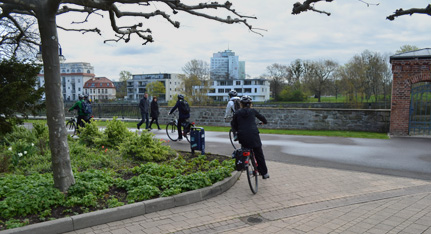
Magdeburg features miles of bike paths—this one is near the Elbe River.
MAGDEBURG ZOO Magdeburg Zoo is located at the heart of Vogelgesang Park, a natural and garden landscape that covers 47 acres. The zoo features 835 animals representing 176 different species. The man-made savannah landscape in the zoo covers an area of 215,000 square feet; the Savannah Viewing Point enables visitors to enjoy a panoramic view over the Africa area and the Water Bird Pond.
Magdeburg was the site of the 2016 German Travel Mart, attended by 1,500 participants from all over the world. Editor/Publisher Don Heimburger was on hand and filed this report about the green city of Magdeburg.













 European Traveler