Echoes of the Past Enchant Istanbul Hotel Guests

The Pera Palace Hotel, in business since the late 19th century, retains its Old World panache, captivating patrons with elite amenities and Belle Epoque charm

By Randy Mink

Just about every major European city has a historic luxury hotel that begs nostalgia-minded folks like me to come take a peek or maybe bed down for a night or two. I tend to make a beeline to such hostelries—those with a story to tell and grand trappings to go with it—even if it’s just for a brief walk through the lobby or to soak up the ambience over a drink in the bar.

In Istanbul, the Pera Palace Hotel started life in the 1890s when the Turkish city (then called Constantinople) needed a place suitable for hosting wealthy passengers arriving from Paris and other points in Western Europe on the Orient Express, the luxury train made famous by English author Agatha Christie. It’s said that she wrote some of Murder on the Orient Express while staying at the Pera Palace in the 1930s.

The hotel has endured through the reigns of three Ottoman sultans, the fall of the Ottoman Empire and the rise of the new Turkish Republic in the 1920s. Between World Wars I and II, it was at the center of international intrigue in the Pera neighborhood, then a hotbed of espionage and geopolitical machinations involving players from throughout the Continent. Pera, with its numerous military and diplomatic posts, was once called Little Europe.

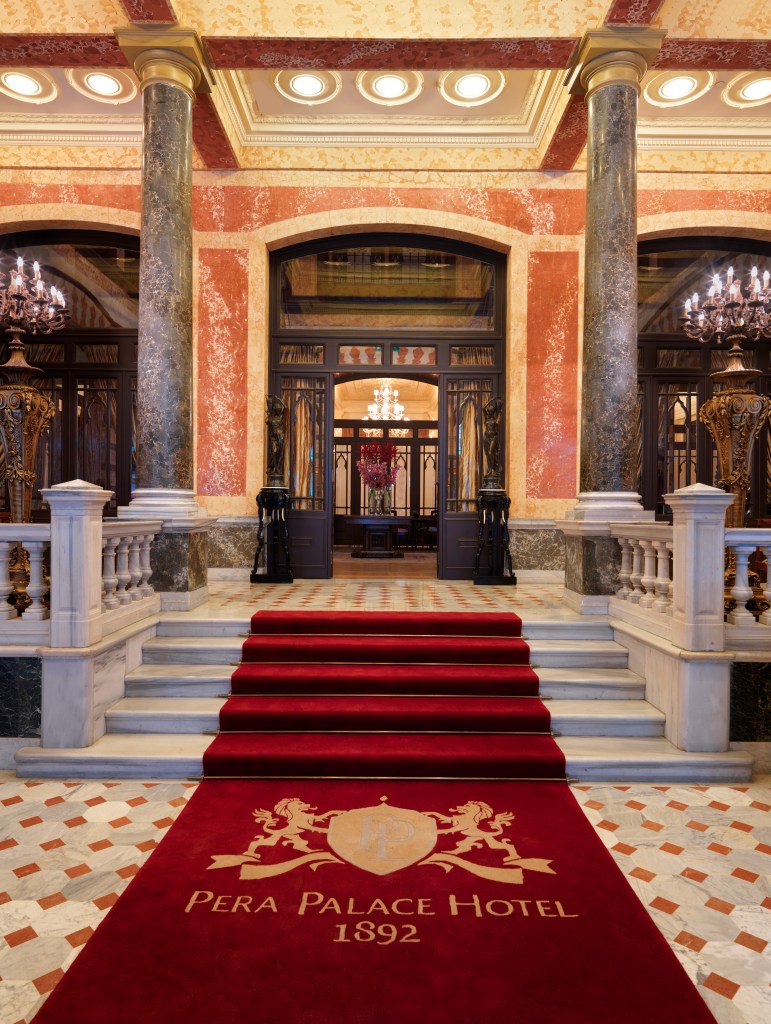
The Pera Palace today retains its lofty position as a place to see and be seen. Trying not to gape, I entered the high-ceilinged lobby on the red carpet inscribed with the hotel’s name in gold letters, glancing up at the crystal chandeliers and plush red draperies on my way to the reception desk.  Gleaming marble walls, floors and balustrades, along with brass urns brimming with palm fronds, set the tone as well.
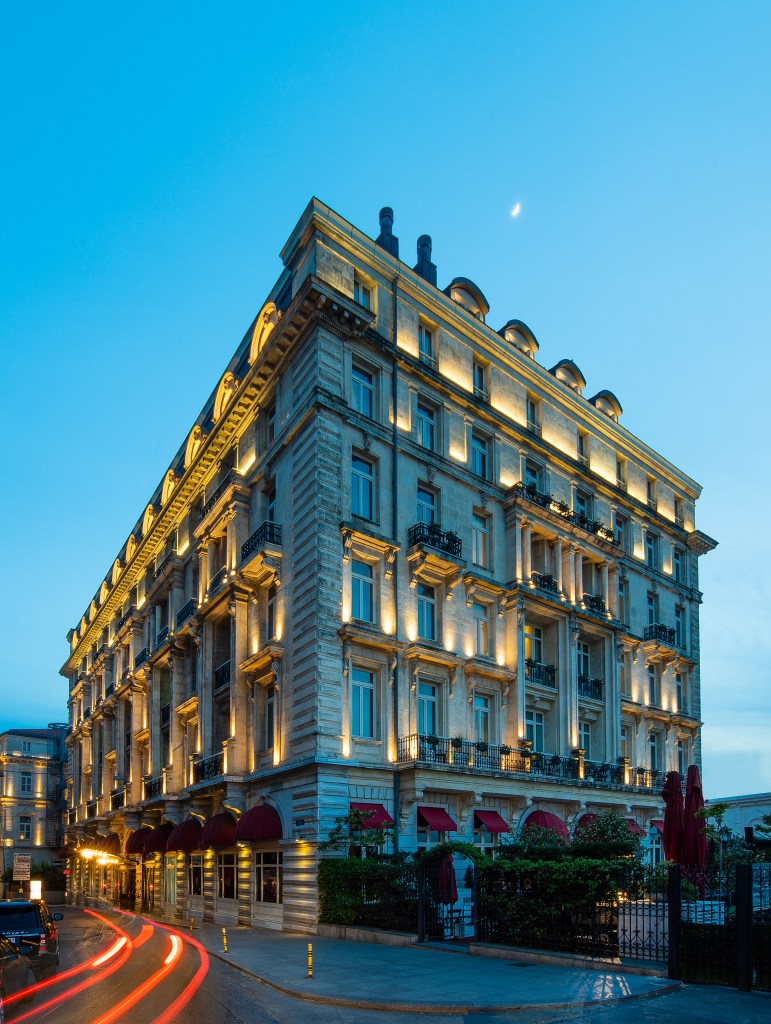
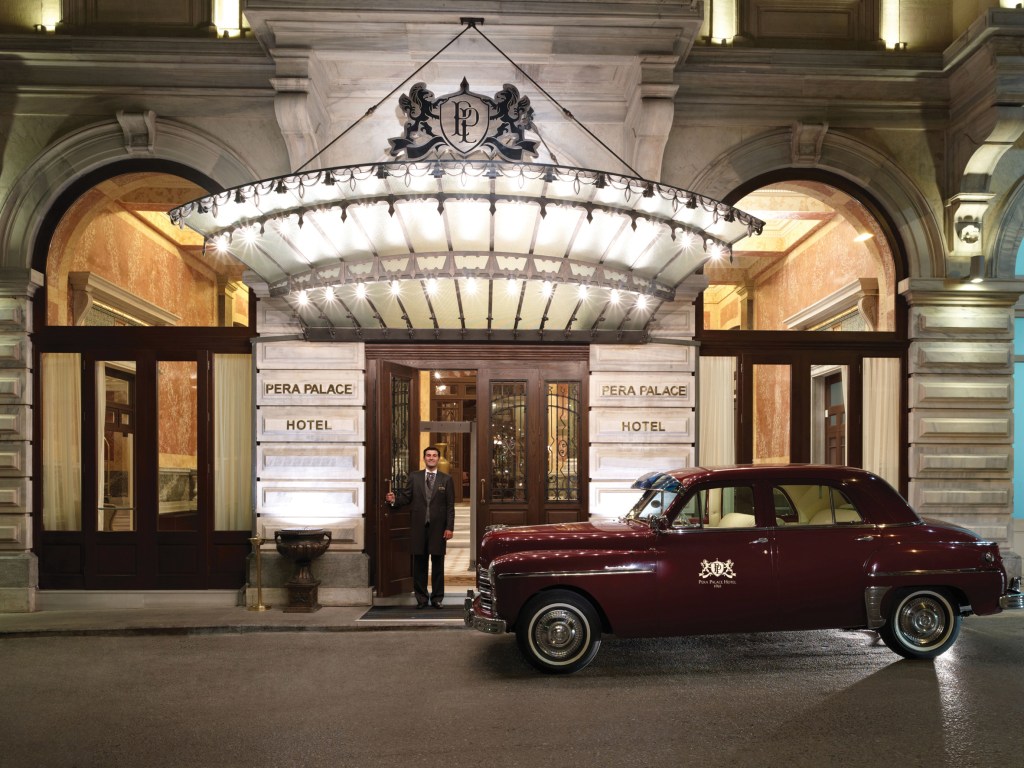
The Pera Palace Hotel is one of Istanbul’s elite addresses. (Photo credit: Pera Palace Hotel)

Famous Guests of the Pera Palace

Over the years, the same grandeur has greeted notables like England’s King Edward VIII and Queen Elizabeth II, Austro-Hungarian Emperor Franz Josef, Shah Reza Pahlavi of Iran, President Tito of Yugoslavia and Jacqueline Kennedy Onassis. Hollywood royalty has included Zsa Zsa Gabor, Greta Garbo and Alfred Hitchcock. As a reporter after World War I, Ernest Hemingway was a hotel resident.

In Turkish eyes, the most important figure to grace the Pera Palace was Mustafa Kemal Ataturk, revered as the father of modern Turkey. When in Istanbul between 1917 and 1926, the country’s first president resided in Suite 101, which is now a museum devoted to him. A stern-looking Ataturk mannequin—holding a cane and dressed in a green army uniform and black cape and hat—stands in the sitting room. Along with vintage photographs, newspaper clippings and a Time magazine cover bearing Ataturk’s image, personal possessions on display include the national hero’s eyeglasses, goggles, pajamas, shoes, white linen suit jacket and black silk prayer rug. The museum, free to hotel guests, is open to the public for a fee.
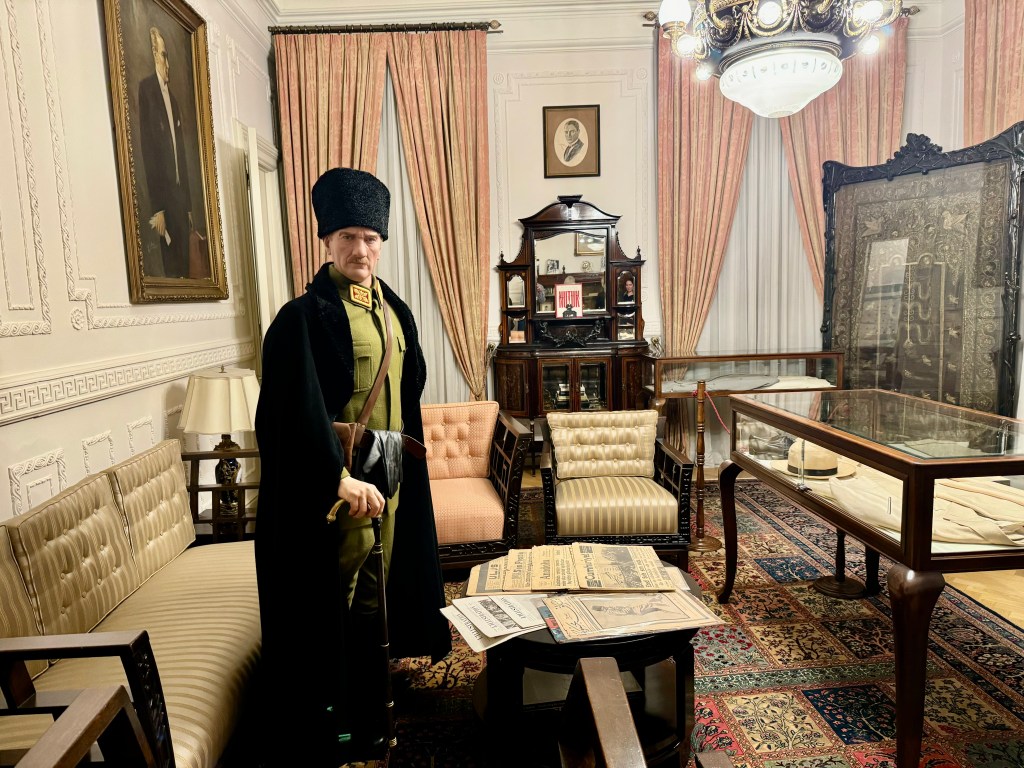
Suite 101 in Istanbul’s Pera Palace Hotel is a museum dedicated to the memory of Mustafa Kemal Ataturk, founder of the modern republic of Turkey. (Randy Mink Photo)

The guest room where Christie stayed, number 411, now carries her name, and the hotel restaurant is named Agatha. Framed black-and-white photographs of past guests, including Garbo, Hemingway, Zsa Zsa and Jackie O, adorn the restaurant’s back wall.

Dining at Istanbul’s Pera Palace Hotel

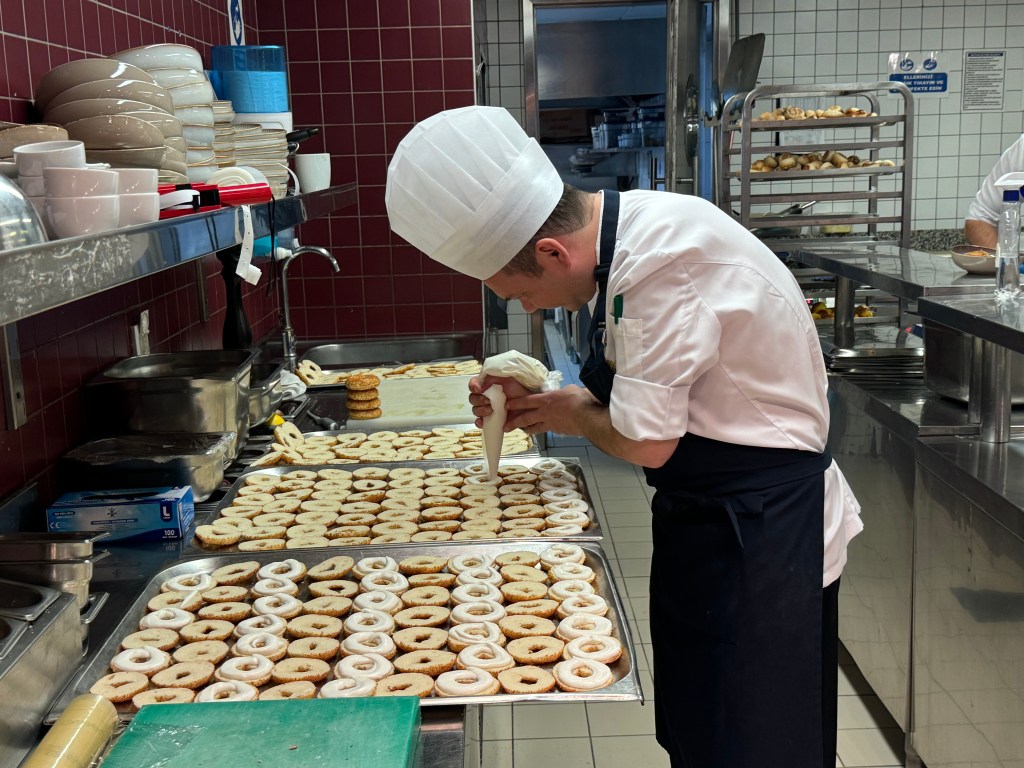
Agatha Restaurant’s bountiful buffet breakfast offers everything from salads and olives to cheeses, cold cuts and quail eggs. Pastries include mini donuts, mini croissants and simits, the sesame-seeded dough rings found throughout Turkey. For spreading on breads and rolls, I made good use of the honeycomb, tahini, grape molasses, jams and clotted cream. I had more than my share of the cheese balls covered in sesame seeds, black cumin, pistachios or poppy seeds. Among the hot dishes: cheese quiche, cheese soufflé, falafel, artichoke soup, pancakes and porridge.
The breakfast buffet at Agatha Restaurant offers many choices, including a wide variety of olives. (Randy Mink Photo)

More treats await at Patisserie de Pera, an intimate cafe reached from the hotel lobby or separate street entrance. Rose-colored walls and furnishings lend a soft touch, and red-accented Venetian glass chandeliers hang from the pink ceiling in each of the two salons. This is the place for a leisurely mid-morning coffee or tea break accompanied by a decadent fruit tart, slice of cheesecake or an assortment of chocolates or macarons.

The gift shop just outside the cafe (actually just a glass cabinet) provides a wide variety of Pera Palace mementoes. Items include socks, umbrellas, bathrobes and other things bearing the hotel logo. There are coasters, coffee mugs and souvenir plates. How about an Ataturk tea set or the paperback Murder on the Orient Express?

Patisserie de Pera is the place to linger over pastries and a cup of coffee or tea. (Randy Mink Photo)

Steps from the merchandise cabinet is an original sedan chair once used to carry Orient Express passengers from the train station to the Pera Palace.

A traditional afternoon tea with piano music is served under the six skylight domes of the Kubbeli Lounge. Featuring elements of Islamic architecture, the two-story-high room is decorated in dark reds and deep plums, as is the nearby Orient Bar, another plush spot to drink in visions of a bygone era. The equally stylish Library Room seating area, complete with bookcases and antique globes, extends from the lounge and bar.
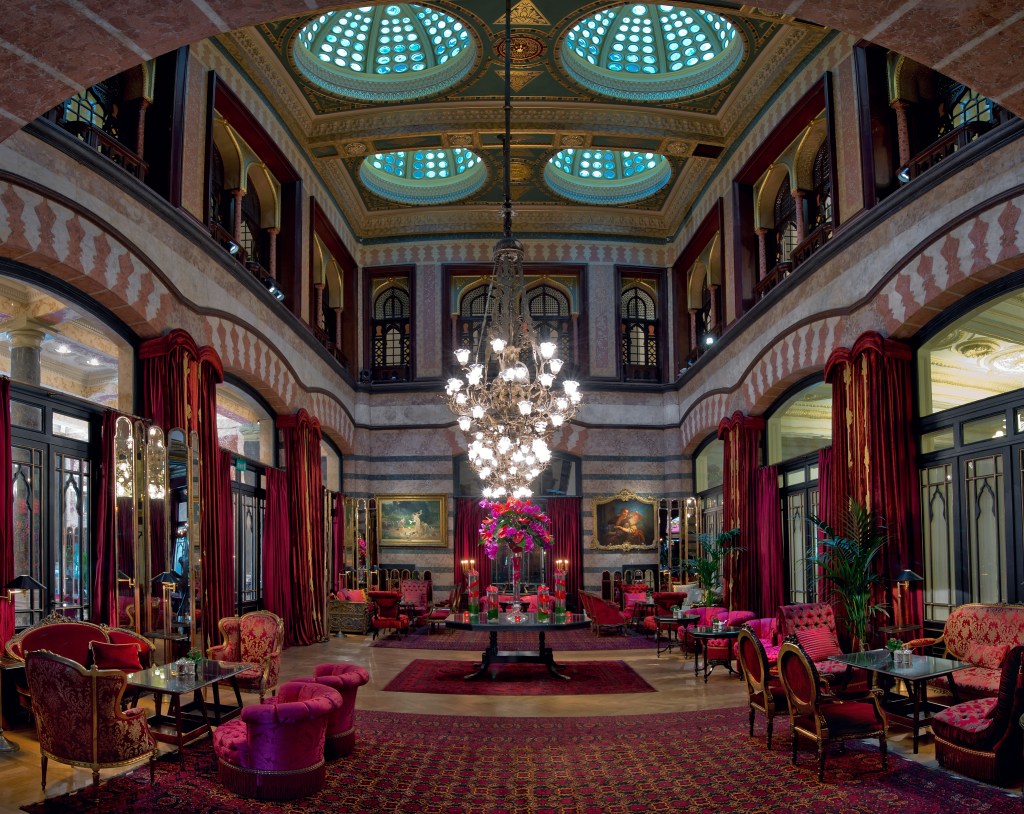
The hotel’s Kubbelli Lounge hosts a traditional afternoon tea. (Photo credit: Pera Palace Hotel)
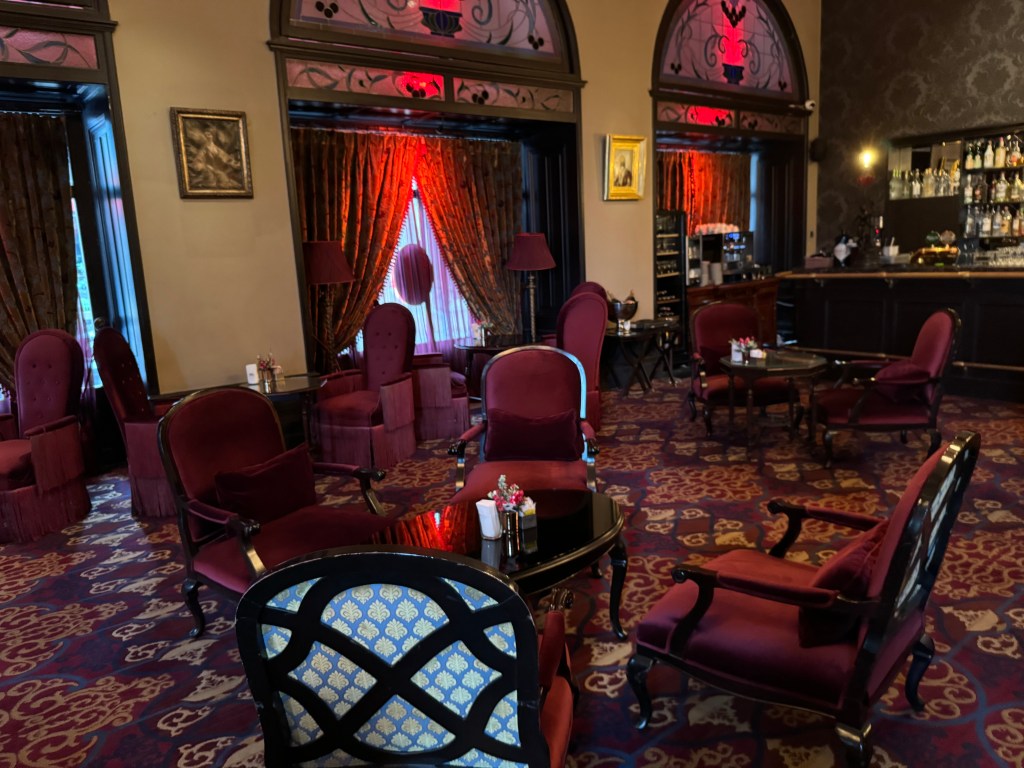
The Pera Palace’s Orient Bar provides an elegant setting for cocktails. (Randy Mink Photo)

Guest Rooms at the Pera Palace Hotel

More flashbacks to yesteryear are in store on a fun ride in the hotel’s original electric elevator, installed only three years after the Eiffel Tower’s elevator. The wood-and-cast-iron cage, operated by a staff member, is used only for arriving hotel guests. For normal use, a set of modern elevators services the six guest room floors.

The original elevator’s wood-and-cast-iron cage is well over a century old. (Photo credit: Pera Palace Hotel)

From tall windows in my room, number 506 in the Deluxe Golden Horn category, I had views of the Golden Horn, the waterway that separates modern Istanbul from the Old City on the other shore—and the primary inlet of the Bosphorus Strait. Amenities in the marble bath included thick white towels and robes. The pillow cases, hand towels and robes all bore the gold Pera Palace heraldic crest.

Deluxe King and Deluxe Twin rooms at the hotel feature pillowcases and plush robes that bear the Pera Palace’s heraldic crest.
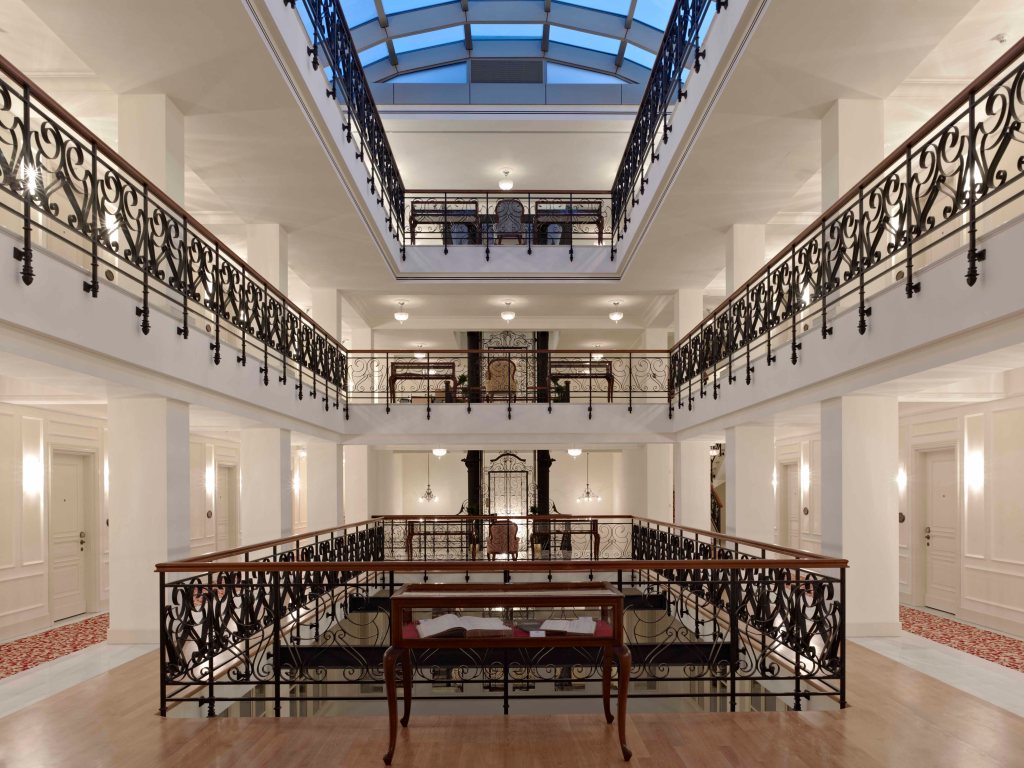
Guest rooms at the Pera Palace are spread across six floors. Each floor has display cases filled with artifacts that illustrate the hotel’s colorful history. (Photo credit: Pera Palace Hotel)

On the morning before checking out, I made a point of visiting all six floors to peruse the display cases exhibiting old photos, menus, ledgers, china and silverware from the hotel and Orient Express. On the fourth floor I found the Agatha Christie Room, wishing the door would be open so I could see inside. For me, it will always be a mystery.
Biting Into Basel

Wedged between Germany and France, this northern Swiss city abounds with traditional restaurants offering classic fare and Old World flair

By Randy Mink

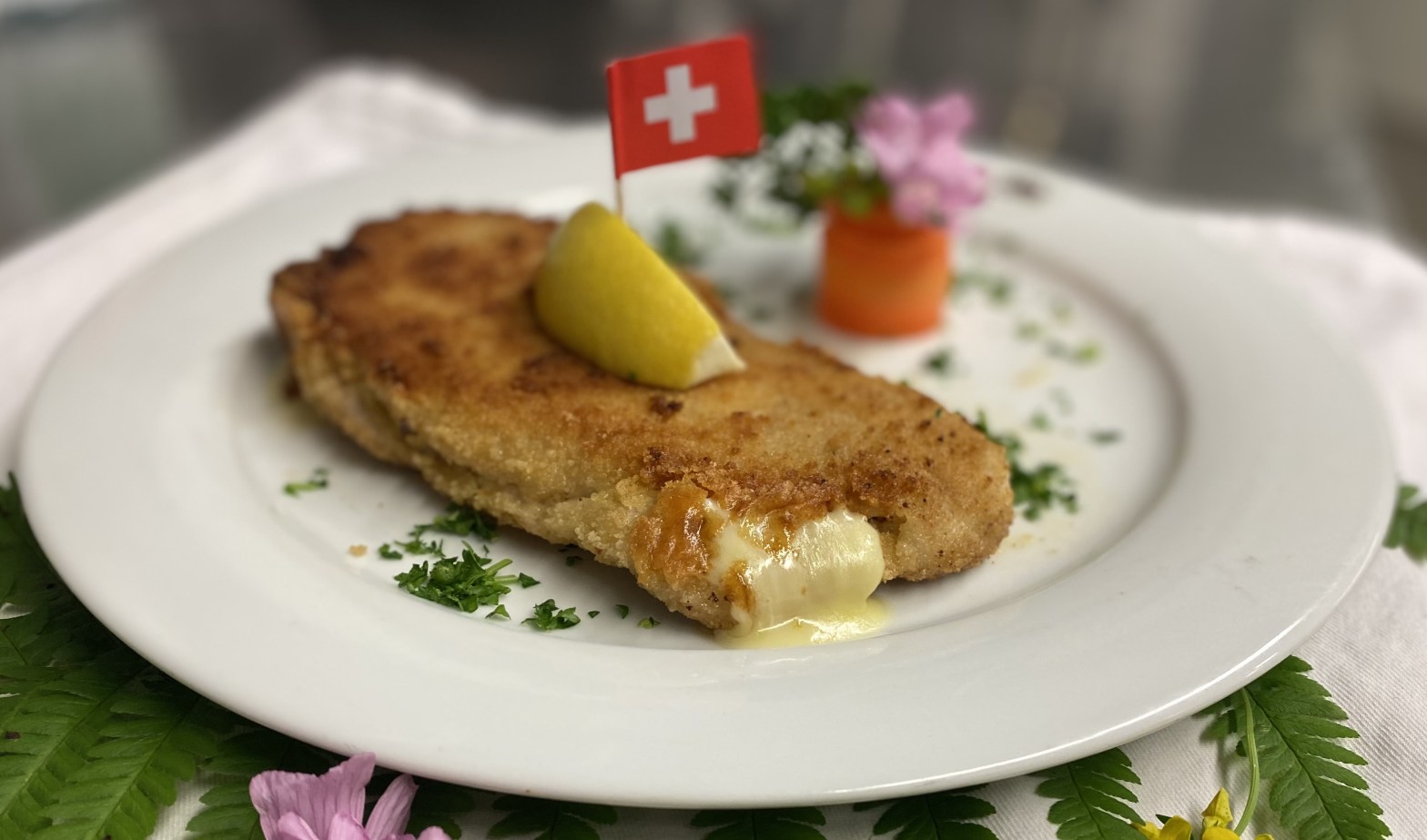
Served piping-hot and oozing with cheesy goodness, the veal cordon bleu at Zum Gifthüttli restaurant is something to savor, even drool over. Lunch in the wood-paneled dining room remains the warmest memory of my visit to Basel, the third-largest city in Switzerland.

After disembarking there from my week-long Rhine River cruise, I was most looking forward to exploring the medieval Old Town with its museums, churches, riverside promenades and specialty shops lining atmospheric alleyways paved with cobblestones. What turned out to be just as inviting, though, were the traditional, pub-style restaurants scattered about the historic core.

Cordon bleu is the house specialty at Zum Gifthüttli. We ordered the Classique, a juicy, golden-breaded schnitzel filled with ham and melted cheese, taking advantage of the Tagesteller (“daily plate”), a deal for 36.50 Swiss francs (about $43) that included french fries, pumpkin soup and dessert.

Gifthüttli, a traditional restaurant in Basel’s atmospheric Old Town, offers dining in the main-floor Bierstube, the upstairs Weinstube and at outdoor tables ideal for people-watching. (Randy Mink Photo)

Zum Gifthüttli’s menu lists cordon bleu variations, like the one with ham, cheese, asparagus, cherry tomatoes and Hollandaise sauce. Another consists of chorizo, mozzarella and herbs. The Florentiner has ham, cheese, spinach and a fried egg on top, while the Schweizer features two Swiss delicacies—Bündner air-dried ham and scrapings of raclette cheese. Opting for pork cordon bleu, instead of veal, can shave a bit off your bill, but any meal in Switzerland will cost much more than at home.

Guests at Gifthüttli can dine in the main-floor Bierstube, upstairs in the white-tablecloth Weinstube or, in warm weather, at outdoor tables offering the bonus of people-watching in Old Town’s pedestrian zone.

The white-tablecloth Weinstube at Gifthüttli offers a refined atmosphere. (Photo credit: Basel Tourism)


Fans of cordon bleu and antique charm also gravitate to Old Town eateries like Zum Braunen Mutz and Restaurant Löwenzorn. The latter offers tables in its historic rooms and in the idyllic courtyard garden, where blankets, furs and electric heaters keep patrons toasty in cooler weather. Löwenzorn favorites include the wienerschnitzel and traditional Swiss fondue.

Löwenzorn, a traditional restaurant in Basel’s Old Town, offers seating in historic rooms and in the courtyard garden. (Photo credit: Basel Tourism)


Restaurant Kunsthalle, a sophisticated but friendly Old World restaurant in the same building as the Kunsthalle Basel contemporary art museum, every winter opens its Fondue Stübli, a cozy fondue chalet next to the landmark Tinguely Fountain. Additional city-center spots for fondue (and other Swiss classics) are Walliserkanne and Safran Zunft.

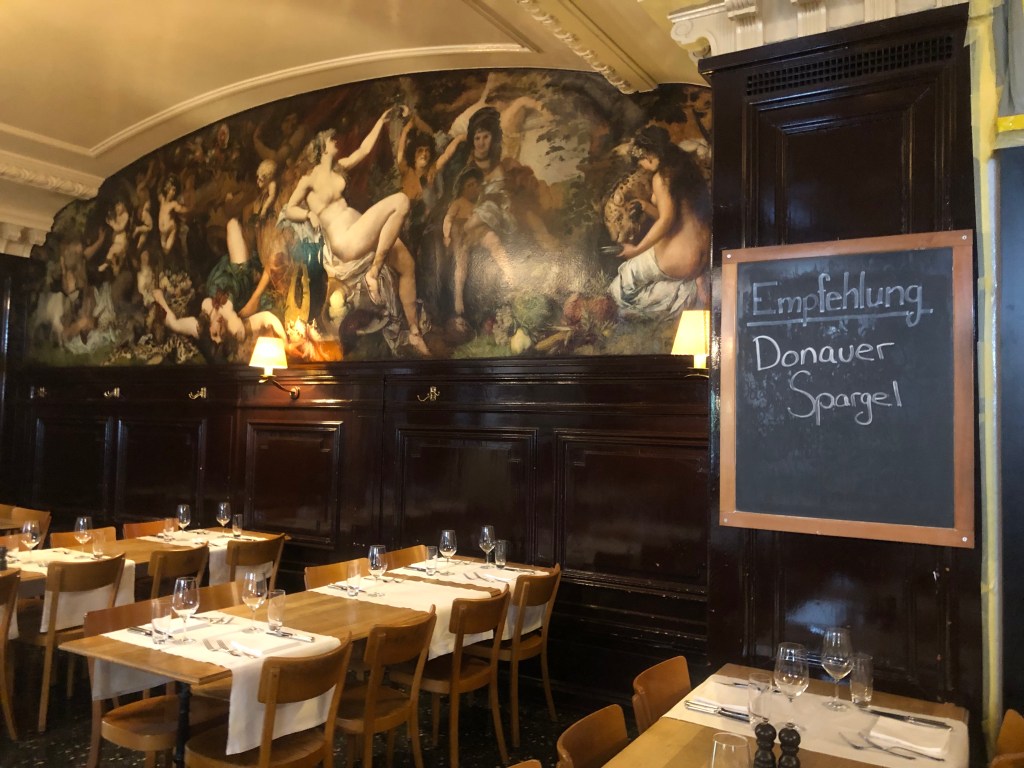
Patrons at Basel’s Restaurant Kunsthalle enjoy an Old World atmosphere in the vaulted Schluuch room. (Randy Mink Photo)


On our springtime visit to Restaurant Kunsthalle, we had a lunch of pasta amidst dark wood and classical cherub murals in the cozy, vaulted Schluuch room. The more formal “white” room overlooks the chestnut tree-shaded patio, one of Basel’s prime spots for alfresco dining. The Kunsthalle’s menu reveals typical Swiss fare, including Zürcher Geschnetzeltes (veal strips in a sauce of white wine, cream and mushrooms) with rösti, the ubiquitous Swiss version of hash browns offered at most restaurants that serve french fries.

No discussion of traditional dining spots is complete without a mention of Gasthof zum Goldenen Sternen, Basel’s oldest restaurant. Though it’s been at its current riverside location for only 50-some years, it date backs to 1412. In the 1970s the ancient building was dismantled and rebuilt stone by stone along with the original ceiling paintings and all the wood paneling. Highlighting the menu are highly regarded fish dishes—I had the lightly fried salmon filet with linguine. It also offers lamb shank, steaks and wienerschnitzel, among other entrees. The restaurant looks out on the Rhine River, and there’s outdoor seating under trees on the riverfront promenade.

Gasthof zum Goldenen Sternen, Basel’s oldest restaurant, enjoys a setting on the Rhine River. There is seating under trees on the riverfront promenade. (Photo credit: Basel Tourism)


The Goldenen Sternen (“Golden Star”) is located in the picturesque St. Alban quarter, a quiet neighborhood noted for its patrician townhouses, half-timbered buildings, narrow streets and a stream that powers the waterwheel at the Basel Paper Mill. Now a fascinating museum about the history of paper making and printing, the medieval mill, just steps from the Rhine and not far from Old Town, was one of many in St. Alban that made Basel a book publishing center for centuries.

Though skeptical about how interesting a paper museum could be, we found it eye-opening. Especially fun was watching demonstrations of how a pulpy goop is transformed into paper. We had a chance to make our own sheet as a souvenir. And we were surprised to learn that until the 19th century paper was made almost entirely from old rags and ropes that were sorted, cleaned, cut into strips and left to decay in a rag cellar’s rotting vats. There are even exhibits on the evolution of toilet paper, which was considered a luxury product when first introduced in the late 1800s.

Visitors learn about the history of paper and witness the paper-making process at the Basel Paper Mill, a museum housed in a medieval paper mill. (Randy Mink Photo)


Claiming nearly 40 museums, Basel has a museum for every interest, showcasing subjects ranging from cartoons and musical instruments to city history and Jewish culture. Most visited are its two leading art museums.

Kunstmuseum Basel, whose three-building complex holds the world’s oldest municipally owned public art collection, presents seven centuries of European art and boasts the world’s largest collection of paintings by the Holbein family. On the outskirts of Basel, Fondation Beyeler, comprising a main building designed by noted architect Renzo Piano, houses some 400 masterpieces of modern and contemporary art, including pieces by Picasso, Monet, Matisse and Cezanne.

Kunstmuseum Basel holds an impressive collection of paintings by Hans Holbein. (Photo credit: Basel Tourism)


The Basel Historical Museum, with exhibition halls under the vaulted ceilings of a former 13th century church, focuses on the intersection of the cultures of Switzerland, France and Germany. (From Basel, Germany and France are just a hike or bike ride away. Visible on the horizon are the Vosges Mountains of France and Germany’s Black Forest.)

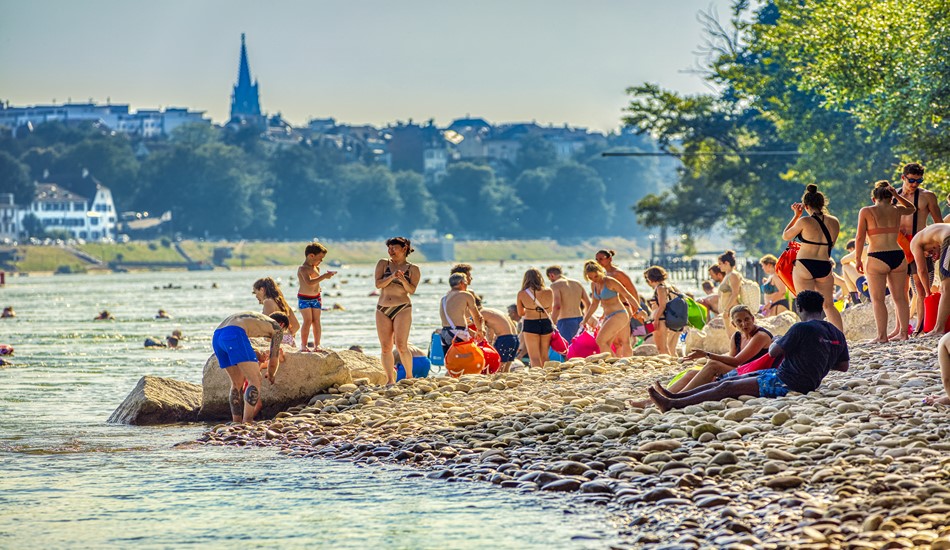
In the summer you’ll see people sunning on the riverbanks and swimming or floating in the river. Basel Tourism offices and retail stores sell something called a Wickelfisch, a brightly colored, fish-shaped waterproof bag for keeping your clothes dry as you whoosh down the river past city landmarks. It’s not to be used as a flotation device.

Frolicking in the Rhine River is a popular pastime with tourists and locals alike. (Photo credit: Basel Tourism)


Sightseeing cruises provide another way of experiencing the Rhine. Or you can take one of the small passenger ferries that shuttle back and forth between the larger southern part of the city (Grossbasel, or Greater Basel) to the northern side (Kleinbasel, or Little Basel) at four crossing points. Attached to a cable that spans the river, the non-motorized boats are guided deftly by expert ferry operators.

We took the five-minute ride from St. Alban to the opposite bank, then walked along the riverside path for 11 minutes before reaching the Museum Tinguely, a showplace for monumental mechanical sculptures created by world-renowned artist Jean Tinguely (1925-1991), who grew up and studied in Basel. Buttons allow visitors to activate some of the playful, mischievous and wacky creations, causing them to rattle, shake and whirl.

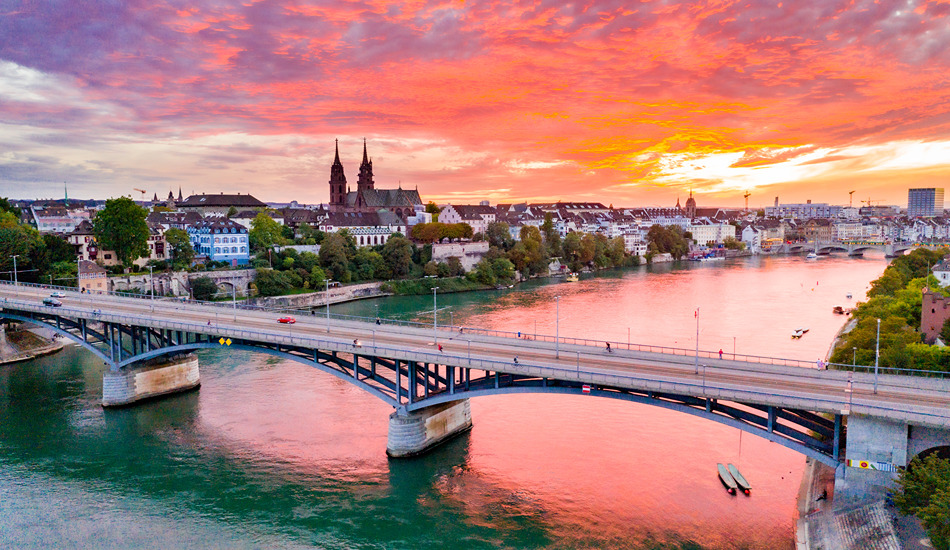
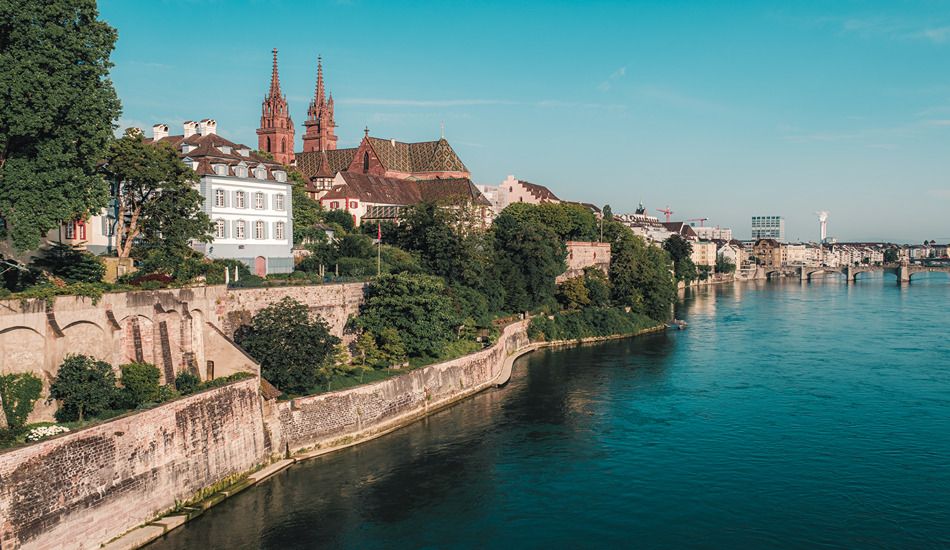
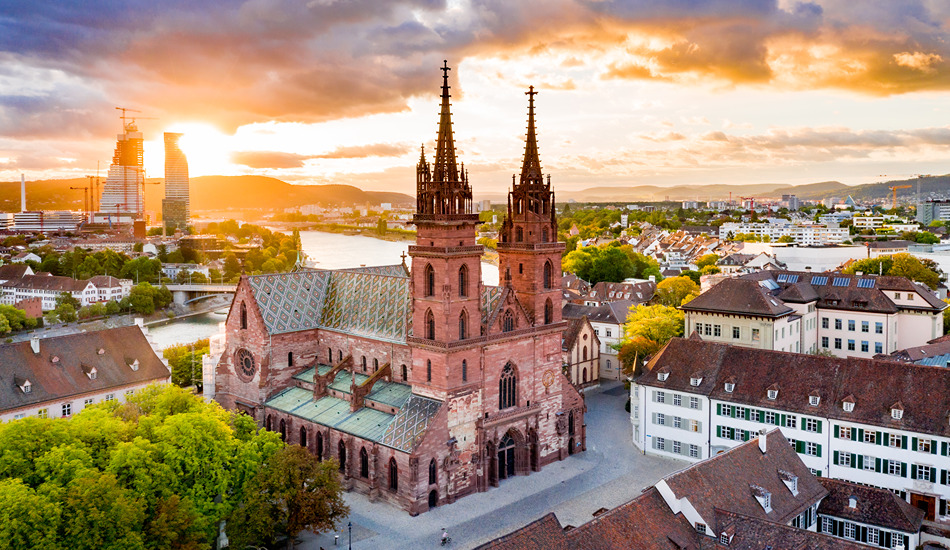
Sweeping views of the Rhine can be enjoyed from the tree-shaded terrace of Basel Cathedral. Sporting impressive twin towers, it is the city’s most prominent landmark. Built mainly in the 12th and 13th centuries, the Romanesque-Gothic church contains the tomb of the Dutch humanist Erasmus (1466-1536), who lived in Basel. Ambitious types can climb the towers’ narrow staircases (about 250 steps).

The twin spires of Basel Cathedral dominate the skyline of Basel, which lies on the Rhine River in northern Switzerland. (Photo credit: Basel Tourism)

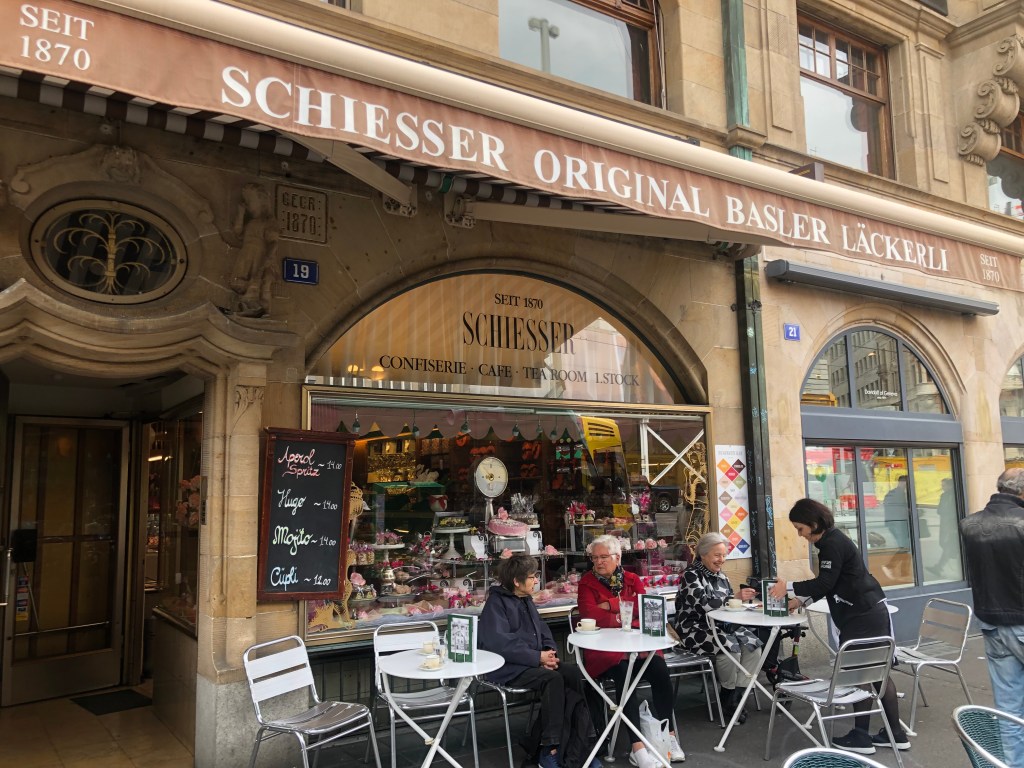
One of the best places to take a break from sightseeing is Confiserie Schiesser, a cafe/tea room/confectionery with an on-site chocolate factory and bakery. Founded in 1870 and now in its fifth generation of family ownership, Schiesser faces Old Town’s vivid red Rathaus (Town Hall) and market square. A tantalizing array of chocolates, cookies and pastries tempts the sweet tooth. Distinctive to Basel are the Basler Läckerli, a ginger cookie made with honey, spices, almonds, and candied orange and lemon peel.

Confiserie Schiesser, a cafe/tea room/confectionery founded in 1870, is famous for its chocolates, cookies and pastries. (Randy Mink Photo)


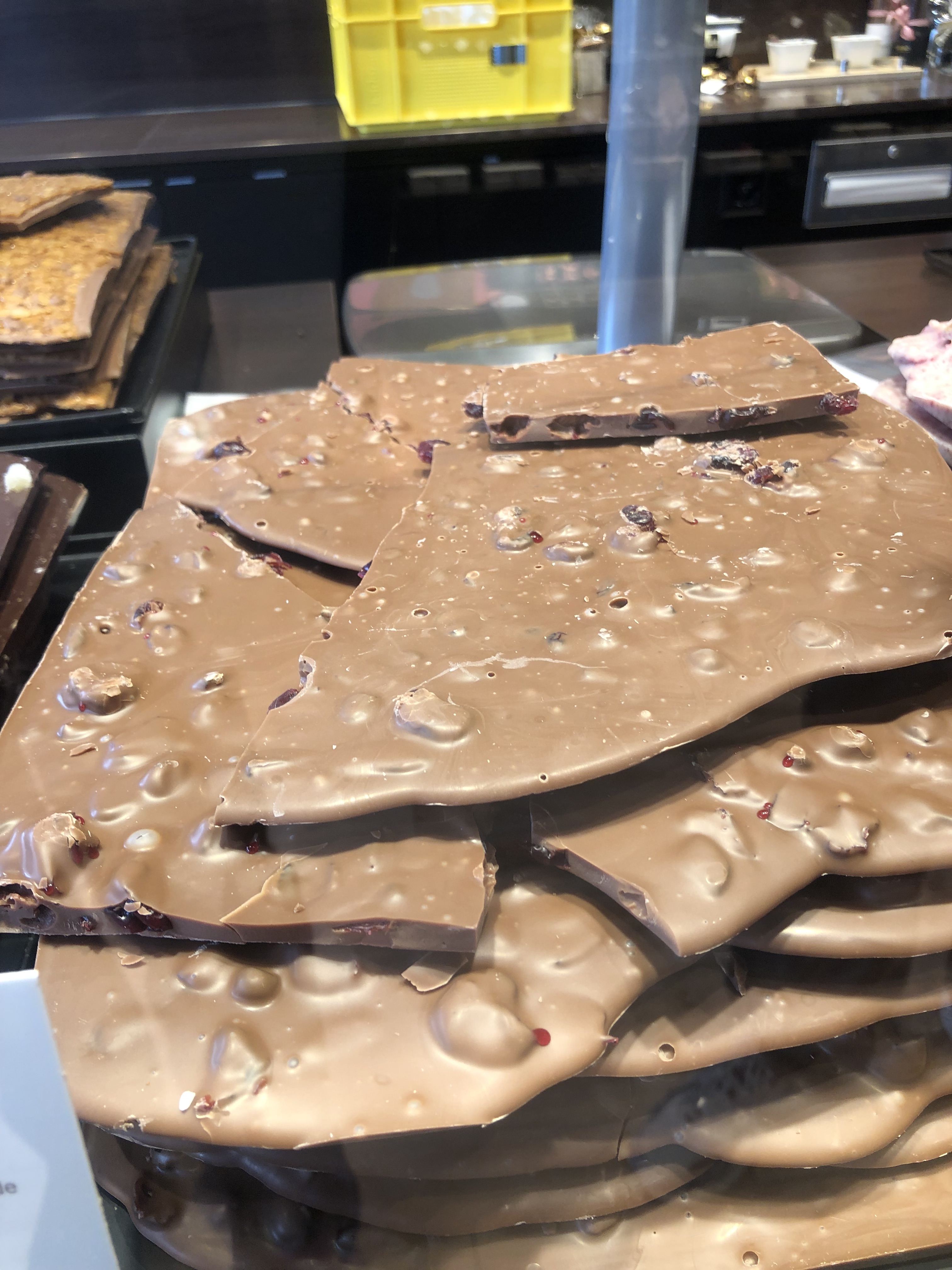
A few doors down from Confiserie Schiesser, high-end Läderach chocolatier sells slabs of melt-in-your-mouth chocolate called Frisch Schoggi. Sold by the gram, the uneven pieces are studded with everything from hazelnuts and almonds to cranberries and cornflakes.

Visitors in Basel’s Old Town can indulge their sweet tooth at Läderach, a high-end Swiss chocolatier. (Randy Mink Photo)


Indulging in Basel’s tasty treats is the epitome of Swiss bliss.

For more information, visit the Basel Tourism website, www.basel.com.

Saxony’s Sweets and Treats Take the Cake

Story and photos by Alison Ramsey

There’s something irresistible about German bakeries—the fresh brötchen and Berliners, croissants, and the bold espresso you can order alongside—something that makes it feel okay to stop at various locales throughout the day, even beyond just a morning coffee and pastry. It seems that a thick slice of cake and a mug of strong, steaming coffee any time of day makes a whole lot of sense when you’re in a region with such a rich baking history. Dresden, the capital of Saxony in Germany, and nearby Meissen and Leipzig have much to offer snack lovers when it comes to pastries and cakes. So pour a fresh cup, heat up a bun, and read all about the role Saxony played in the rise of gluten-filled goodness.  
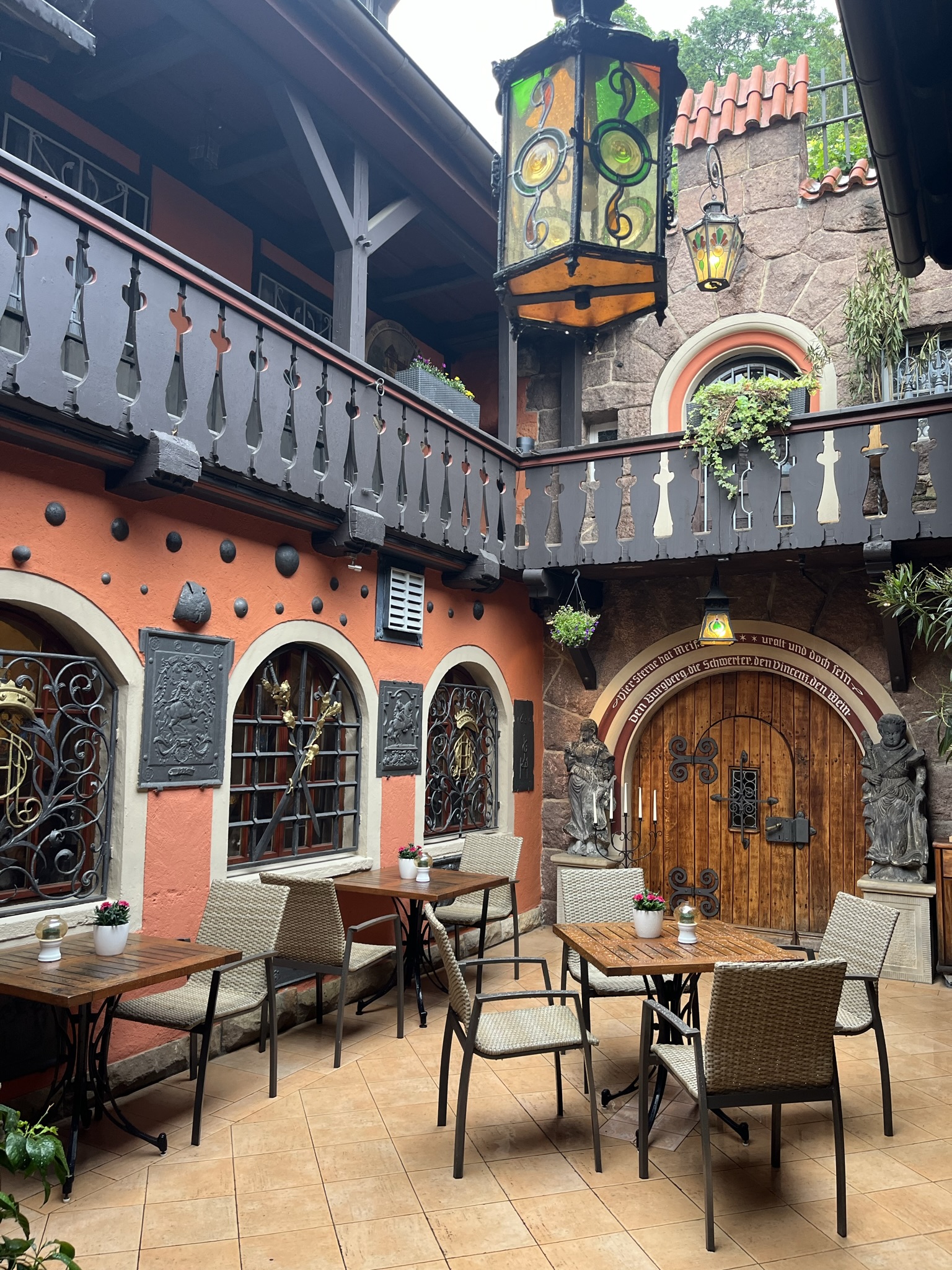
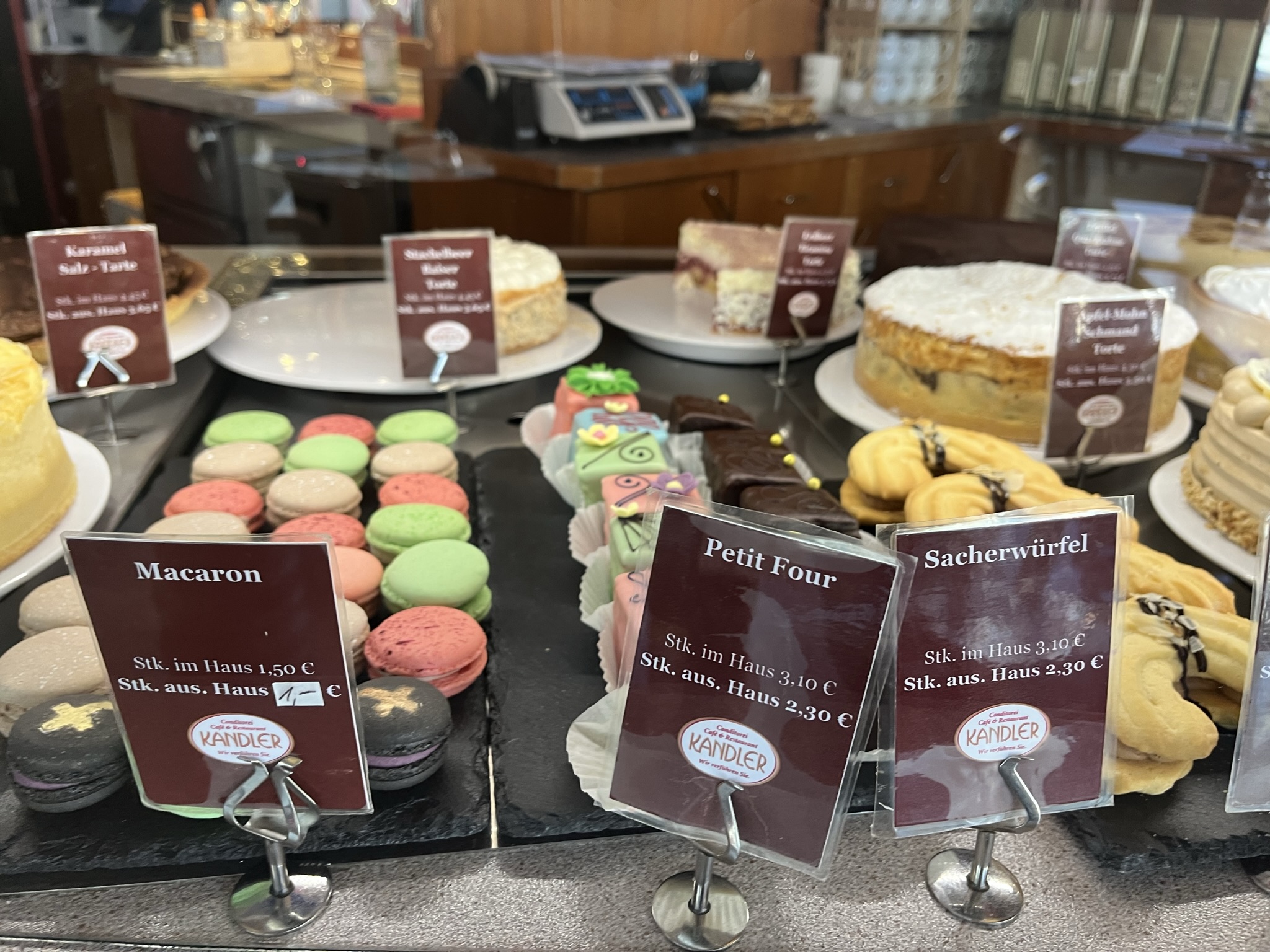
The five locations of Kandler Konditerei in Leipzig are always stocked with sweet temptations.

Russisch Brot
During the late 19th century, Dresden-based master baker Wilhelm Hanke adopted the 1845 St. Petersburg, Russia, recipe for Russisch Brot (Russian bread), which are crunchy glazed cookies made from sugar, egg whites, water, and flavoring, and formed into the shapes of alphabet letters. These are sold under the Dr. Quendt label and remain a popular Christmas treat or a delicious snack to help teach reading. The letters “M” and “W” are too fragile to be stable, so Dr. Hartmut Quendt ensured bags contain mirrored 1’s that snackers can use to create their own “M” and “W” shapes. It’s clear permission to play with your food!

Stollen
Dresden is also the birthplace of the authentic stollen Christmas cake—the Dresdner Christstollen. When stollen was first baked in the 1400’s, under the supervision of the church council, the bread was not allowed to contain butter or milk during Advent, so it was a dry and bland pastry consisting of flour, yeast, oil, and water. Ernst of Saxony and his brother Albrecht appealed to the Pope and asked that the dairy ban be lifted, so they could replace the oil with butter, as butter was cheaper than oil at the time. The appeal was denied, but finally, five popes later, Pope Innocent VIII sent Dresden the famous 1491 “Butter Letter,” in which he granted permission for dairy ingredients to be used in the stollen—although the Dresden bakers must, in return, pay a fine to be used toward the building of churches.

In 1730, Augustus the Strong, a stollen lover, commissioned a group of 100 Dresden bakers to bake an almost 4,000-pound loaf, which was brought to the king’s table using eight horses. A giant oven was built especially for this occasion, and an oversized knife was designed specifically for the event. This is the basis for the annual Dresdner Stollenfest (or “Striezelmarkt”), which takes place in Dresden the Saturday before the second Sunday in Advent. The festival is a highlight of the pre-Christmas season and celebrates the stollen baking tradition, featuring a colorful parade and the sale of varieties of stollen.

A huge stollen is still made annually and divided into smaller pieces on a specially shaped stollen cutting board—using a 26-pound replica of the original baroque knife from the Residenzschloss (Royal Palace) Court Silver Collection of Augustus the Strong—with cake portions sold to raise money for charity. The Stollenfest knife design features a swooping stainless-steel blade and Augustus the Strong’s coat of arms and rose tendril.

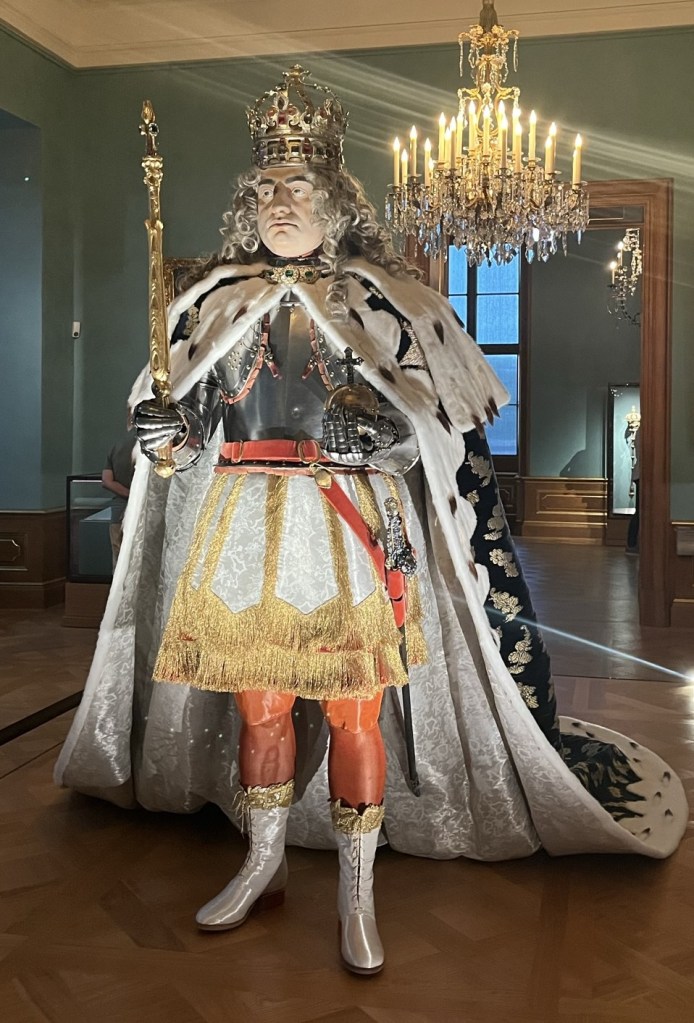
Left: A Dresden bakery displays its stollen seal. Right: This life-sized figure of Augustus the Strong is displayed in the Dresden Residenzschloss.

Stollen has its own protected name and registered trademark, and the recipe needs to follow certain guidelines to earn the golden, oval “stollen seal.” The cake only passes the test for high quality and validity if it contains no margarine and no artificial flavors or preservatives. The Dresdner Stollen Association requires that each cake contain butter, rum-soaked raisins, candied orange peels and lemon peels, and sweet and bitter almonds to receive the seal. Outside of these requirements, the approximately 110 Dresden bakeries that produce this sweet each use their own secret spice mixture, passed down through generations, which results in varied and distinctive flavors from bakery to bakery. Each stollen is labeled with a 6-digit seal number, to identify and track the bakery of origin. Also identifiable by the European Union-protected geographical indication, true Dresdner Christstollen is marked with a blue and yellow Geschϋtzte Geografische Angabe (“protected geographical indication”) sticker. Dresdner Christstollen can only be produced within Dresden itself or within specific boundaries surrounding the capital. This cake is best enjoyed by removing slices from the middle and pushing together the ends, eating the cake from the center outward. It is seen as traditional Dresden “finger food,” with no need to use a fork.

Eierschecke
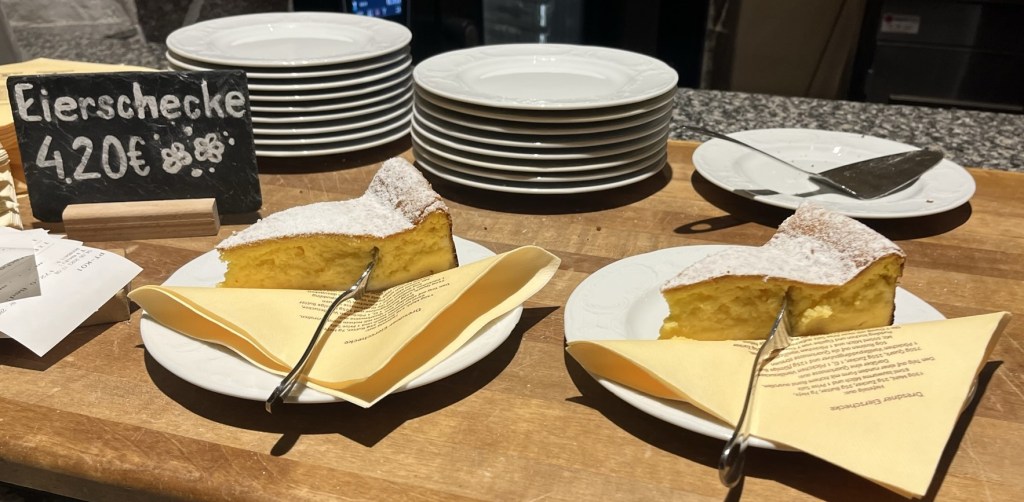
For something slightly sweeter, the Dresdner Eierschecke is a popular pastry choice. It’s a 3-layer confection consisting of a cake base topped with a custard-like quark cheesecake center, and a layer of sweet vanilla egg white on top, dusted with powdered sugar. Only found in Saxony and neighboring regions, this treat is often served with coffee or tea, and makes its way into celebratory menus for birthdays, weddings, and holidays. Some bakeries add chocolate, dried fruit, and sliced nuts, but the original recipe is simply the three-layered stack of varied texture.

Eierschecke and other traditional Saxon specialties are served at the Pulverturm.

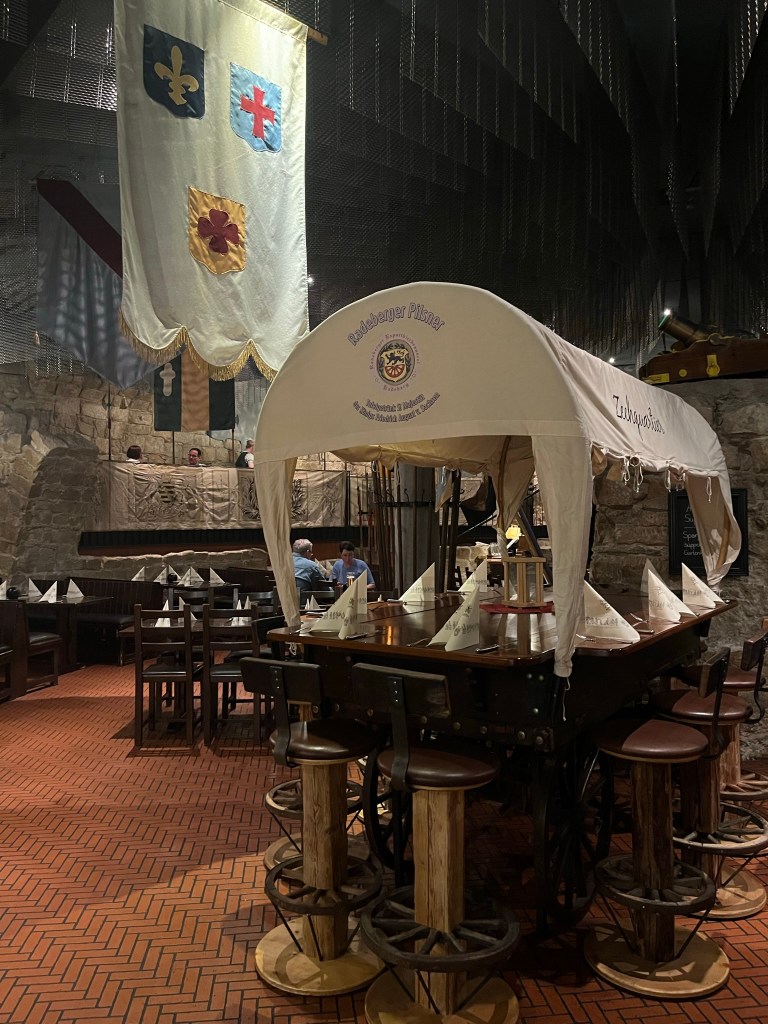
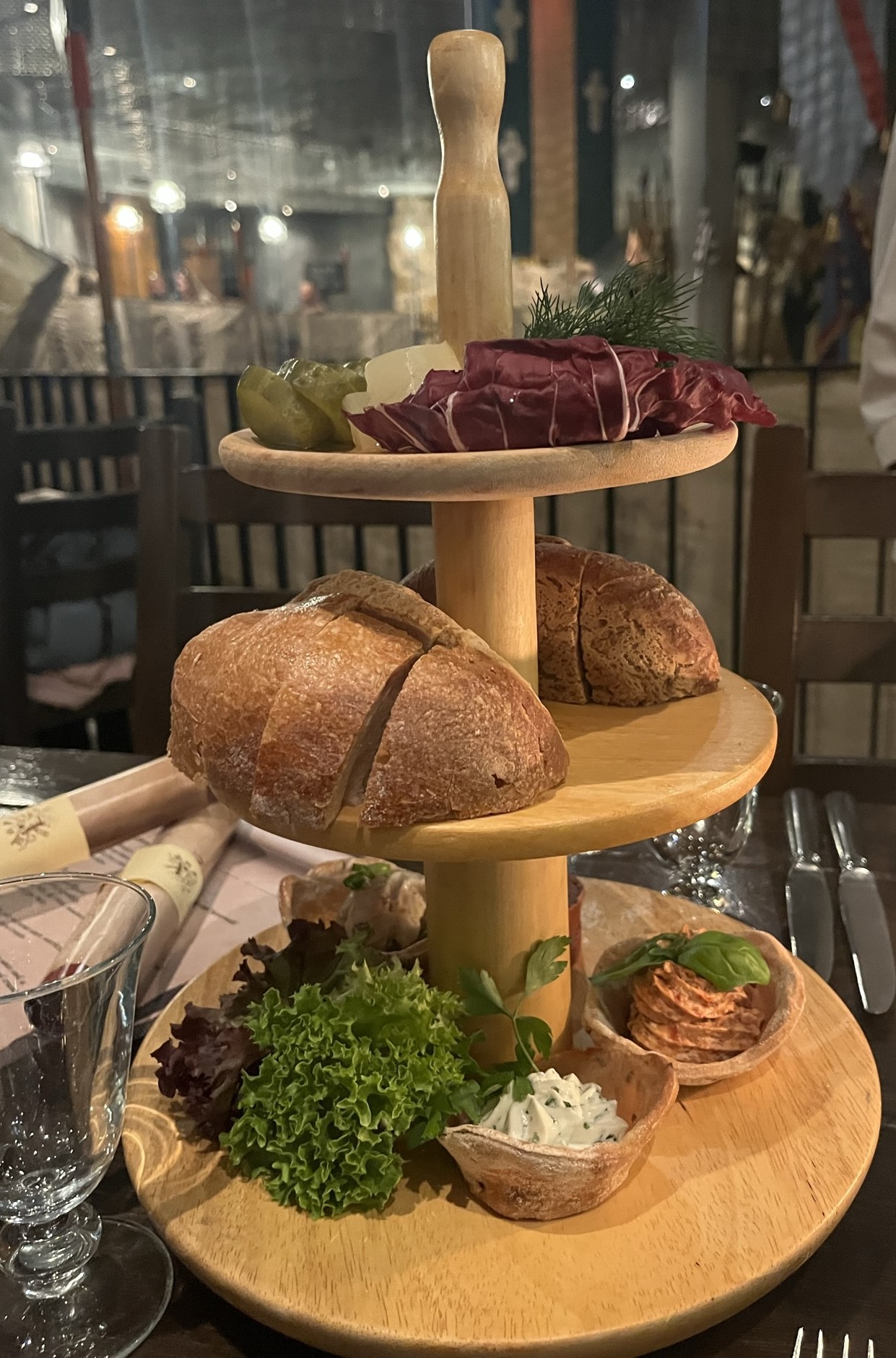
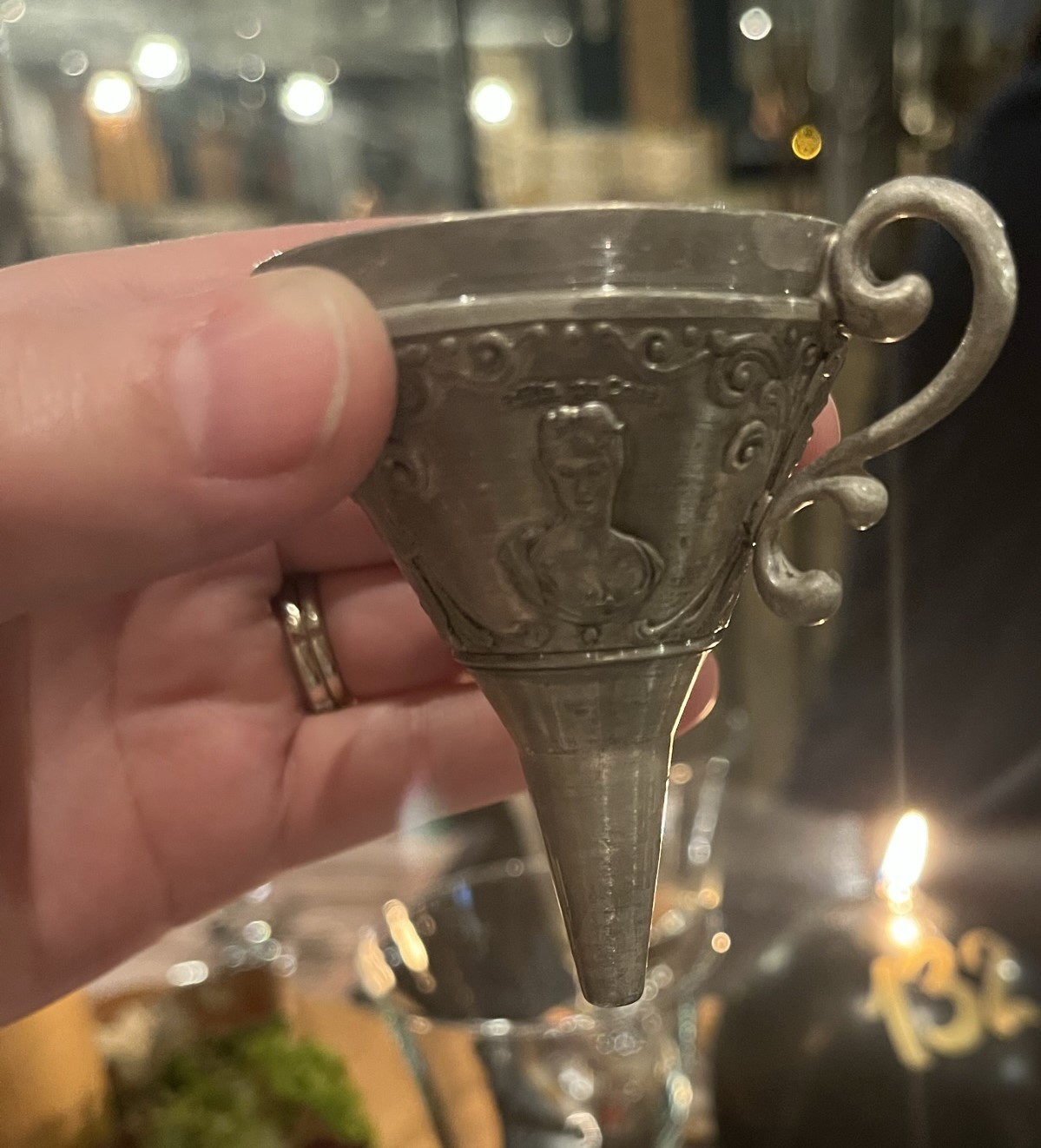
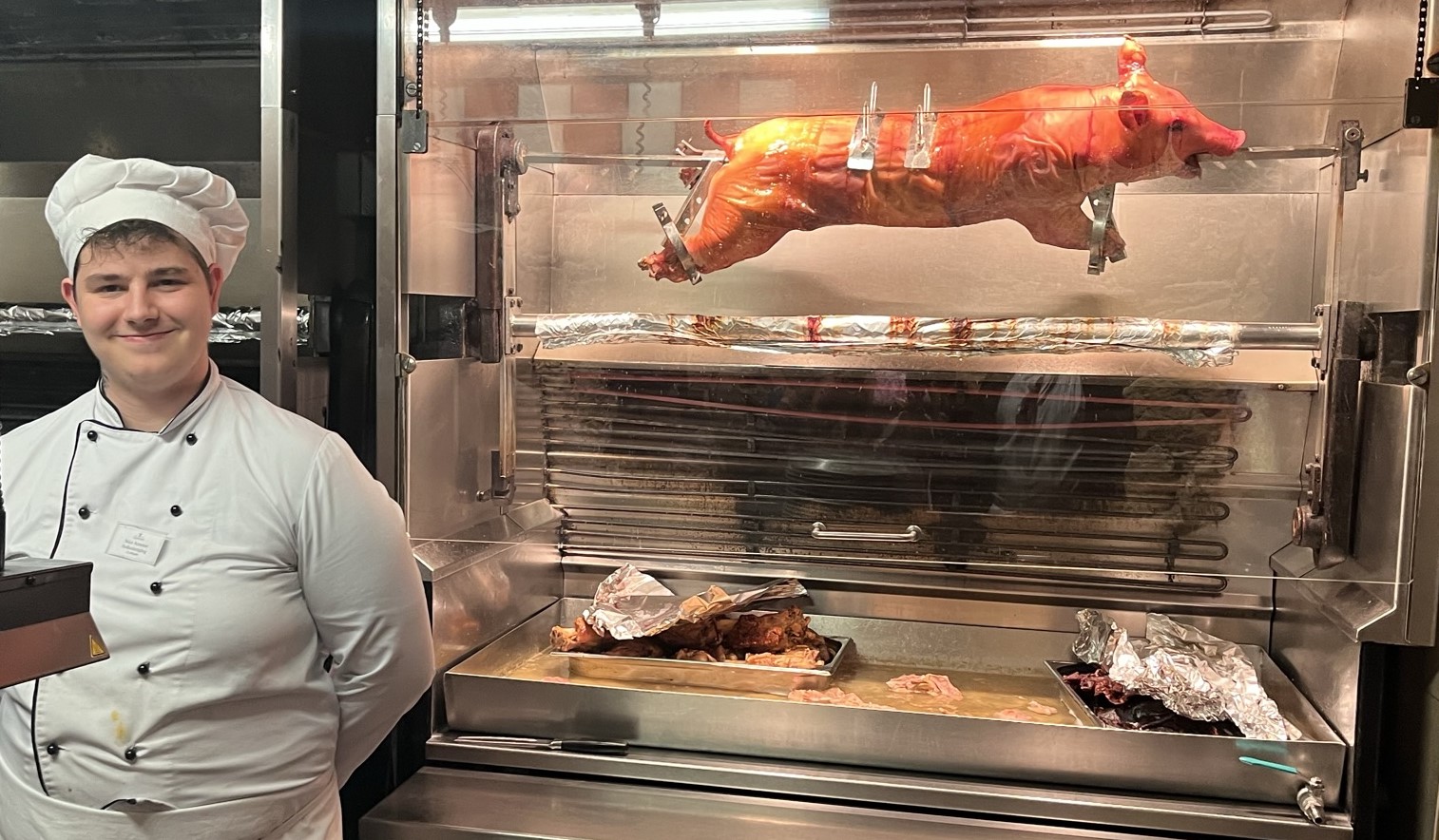
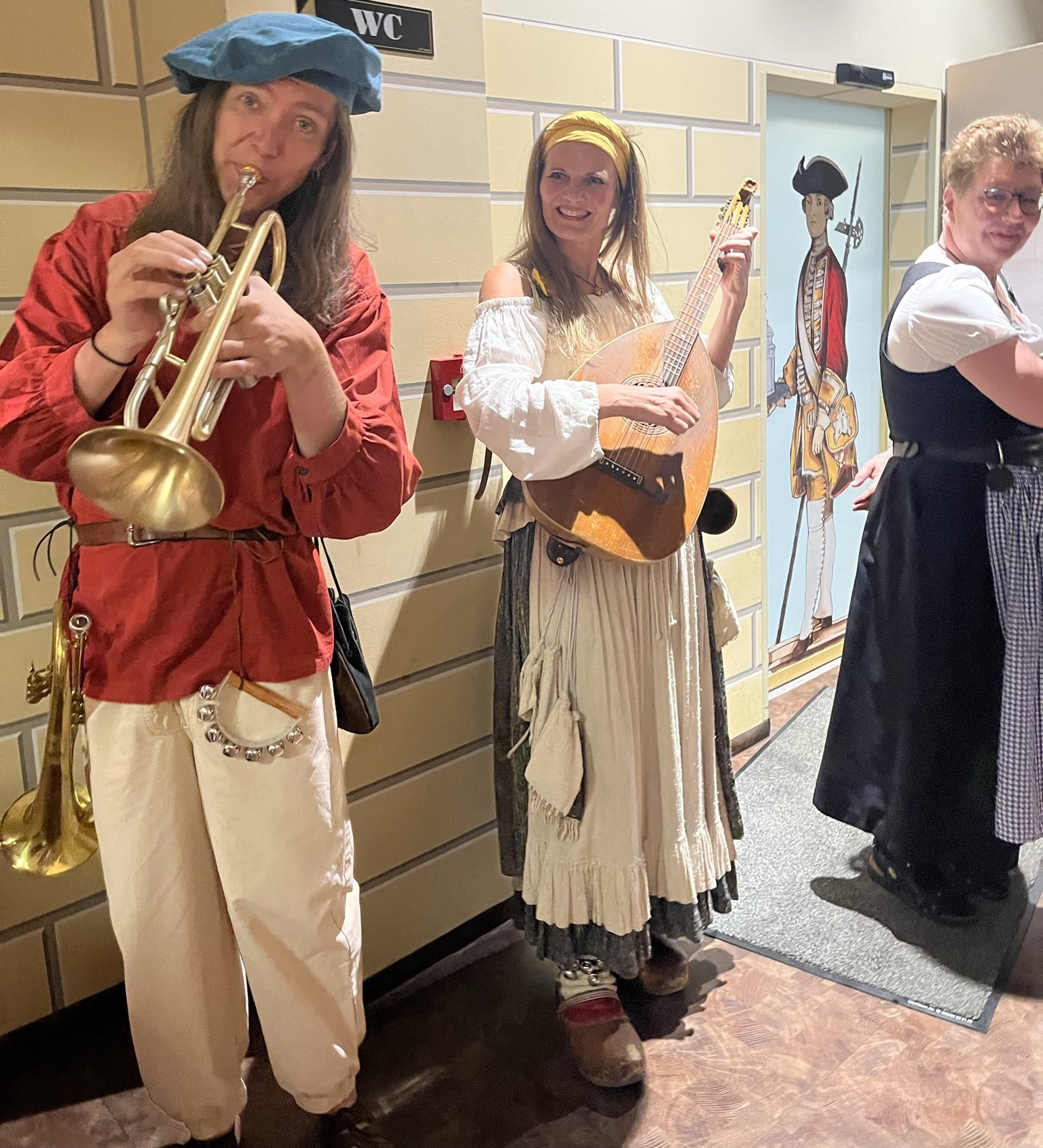
Eierschecke is on the dessert menu at the Pulverturm restaurant next to the Frauenkirche. A historic vaulted powder tower containing portions of the original walls, Pulverturm delights guests with Saxon specialties, homecooked suckling pig, and rousing tableside performances by lively, costumed, character musicians. Be sure to try your hand at funnel-drinking here—a practice that stems from Augustus the Strong’s love of Saxon wines but his court’s dislike for washing numerous wine glasses. The court created a special funnel fit to Augustus’ mouth measurements, so servants could pour the wine directly through the funnel into his open mouth. At the Pulverturm, a variation on this method involves drinking herbed liquor from tiny funnels. Named “Cosel’s Tears,” the drink’s herbs were said to grow from the tears of Augustus’ former mistress, the Countess of Cosel, whom he banished to Stolpen Castle for more than 40 years because of her interfering interest in politics. After a satisfying Saxon meal, have a sugar-dusted slice of Eierschecke and cup of espresso to complete the full Pulverturm experience.

Pulverturm restaurant in Dresden is a full-service, medieval-themed entertainment and dining experience.

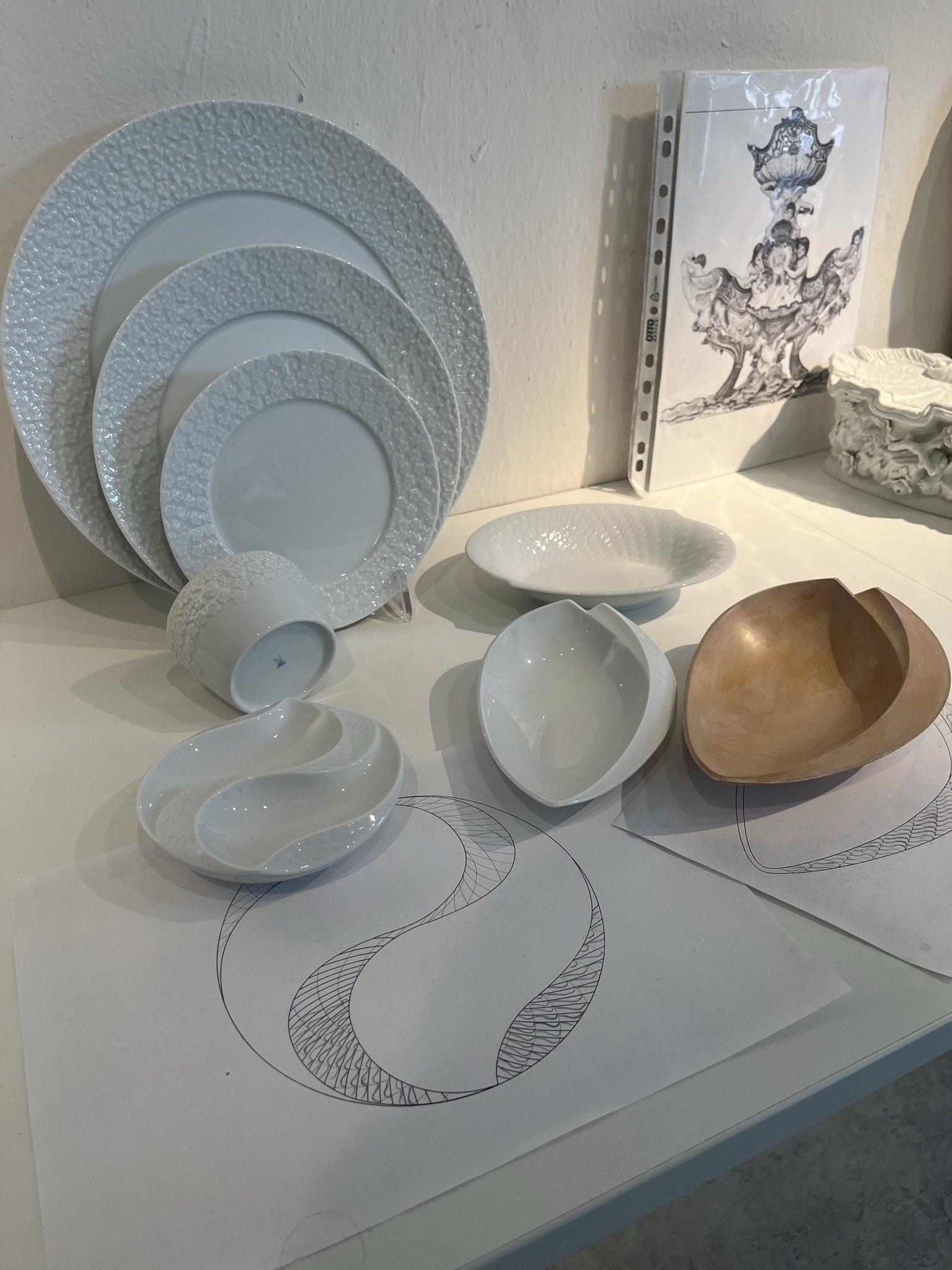
To make your own Eierschecke, try the recipe provided by Meissen porcelain manufactory underglaze painter Marlies Moser in the cookbook Cooking With Meissen. A 30-minute drive from Dresden, the Meissen manufactory creates fine porcelain vessels on which to serve tempting treats. At this company that labels its pieces with the forgery-proof “Crossed Swords” trademark, Moser worked for 40 years in production, painting underglaze onto unfired, porous porcelain—a skill that requires much training, a high level of precision, and years of experience—because the paint immediately penetrates and spreads, making later touchups impossible. The work of an underglaze painter is especially important for iconic Meissen designs like the 1731-created “Blue Onion,” whose luminous, metal oxide cobalt blue color only releases upon final firing. Moser now works in the demonstration workshop at the House of Meissen, and contributed her “Leutewitz Eierschecke” recipe for the company cookbook. Imagine a piece of this cake presented on a beautiful artisan-decorated Meissen porcelain dish!

The Meissen company cookbook features 24 recipes from appetizers to desserts. Saxon potato soup, Saxon meatballs, beef sauerbraten, quark dumplings with plum compote, and an inverted apple tart are among the list, and each submission includes a biography of the Meissen employee who contributed it. This beautiful, full-color hardbound book shows the food plated on fine porcelain tableware and includes sections about dining etiquette and the history of the craft.

Meissner Fummel
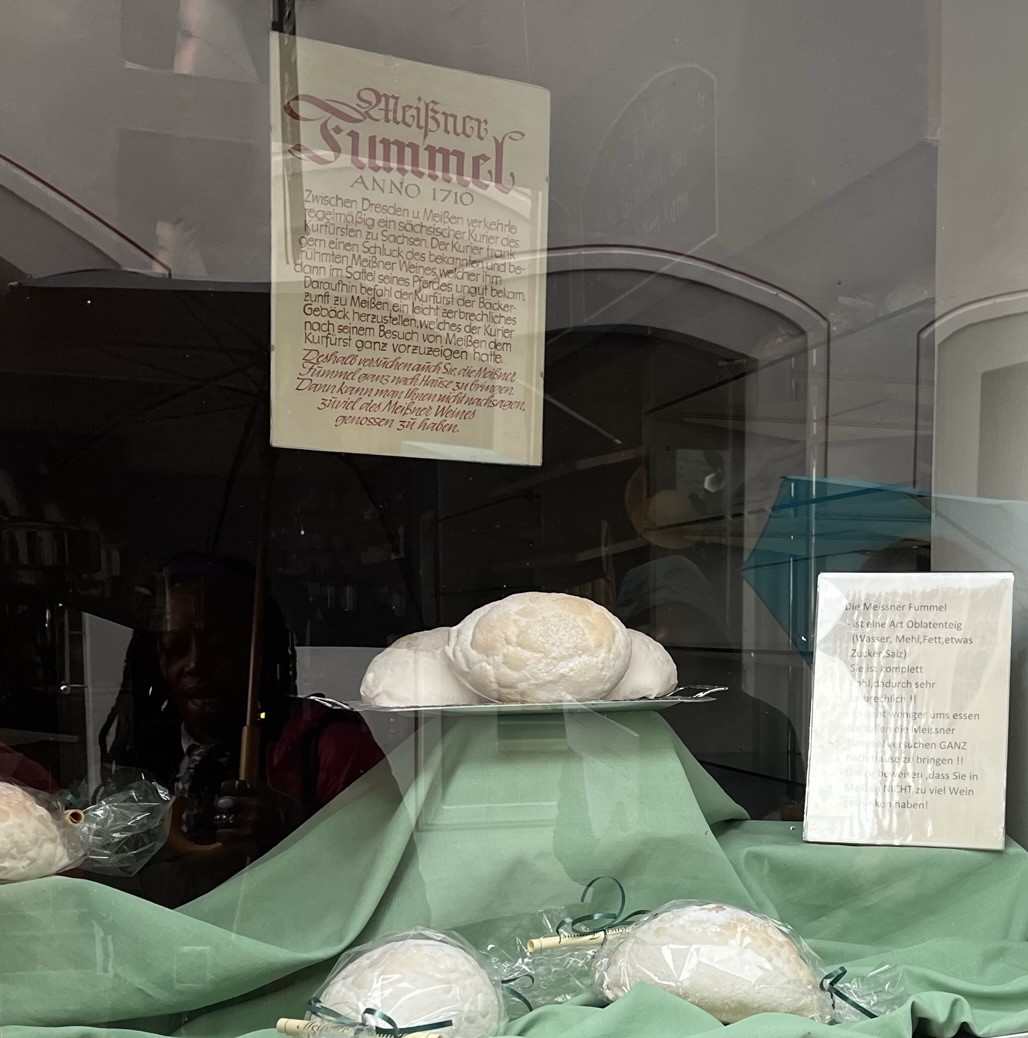
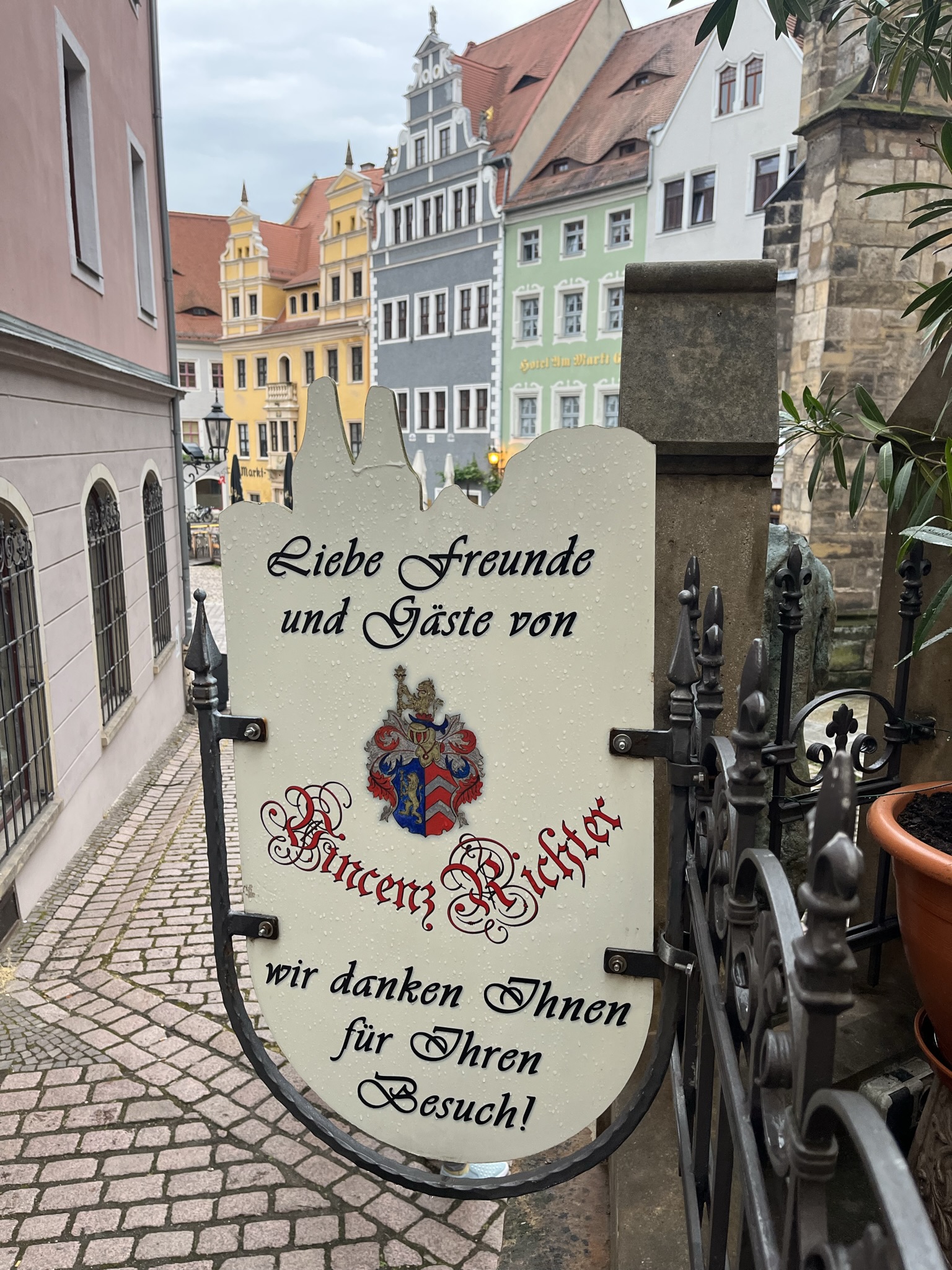
Eighteenth century legend tells that Augustus the Strong, who first commissioned the now-famous Meissen porcelain, used to send couriers back and forth between Meissen and Dresden with factory status updates. The town of Meissen is known for its excellent wine production (try the romantic, antique-filled Vincenz Richter wine restaurant!) and the couriers would often arrive back at the Dresden court intoxicated. Augustus’ solution was to instruct Meissen bakers to invent a pastry so fragile that it could remain intact only if delivered by a sober courier. The result was the hollow, brittle, extremely delicate Meissner Fummel cake, which had to be safely delivered to the Saxon Elector along with the progress reports about the porcelain. Made only with simple ingredients, Fummel is essentially a shell of flaky bread sprinkled with powdered sugar. Zieger Konditerei in Meissen produces this balloon-like baked good, which has been a protected geographical indication since 2000 and can only be manufactured in Meissen. The Fummel is often given to newly married couples in Meissen as a symbol of love’s fragility, and small gifts or cards are sometimes tucked into the center.

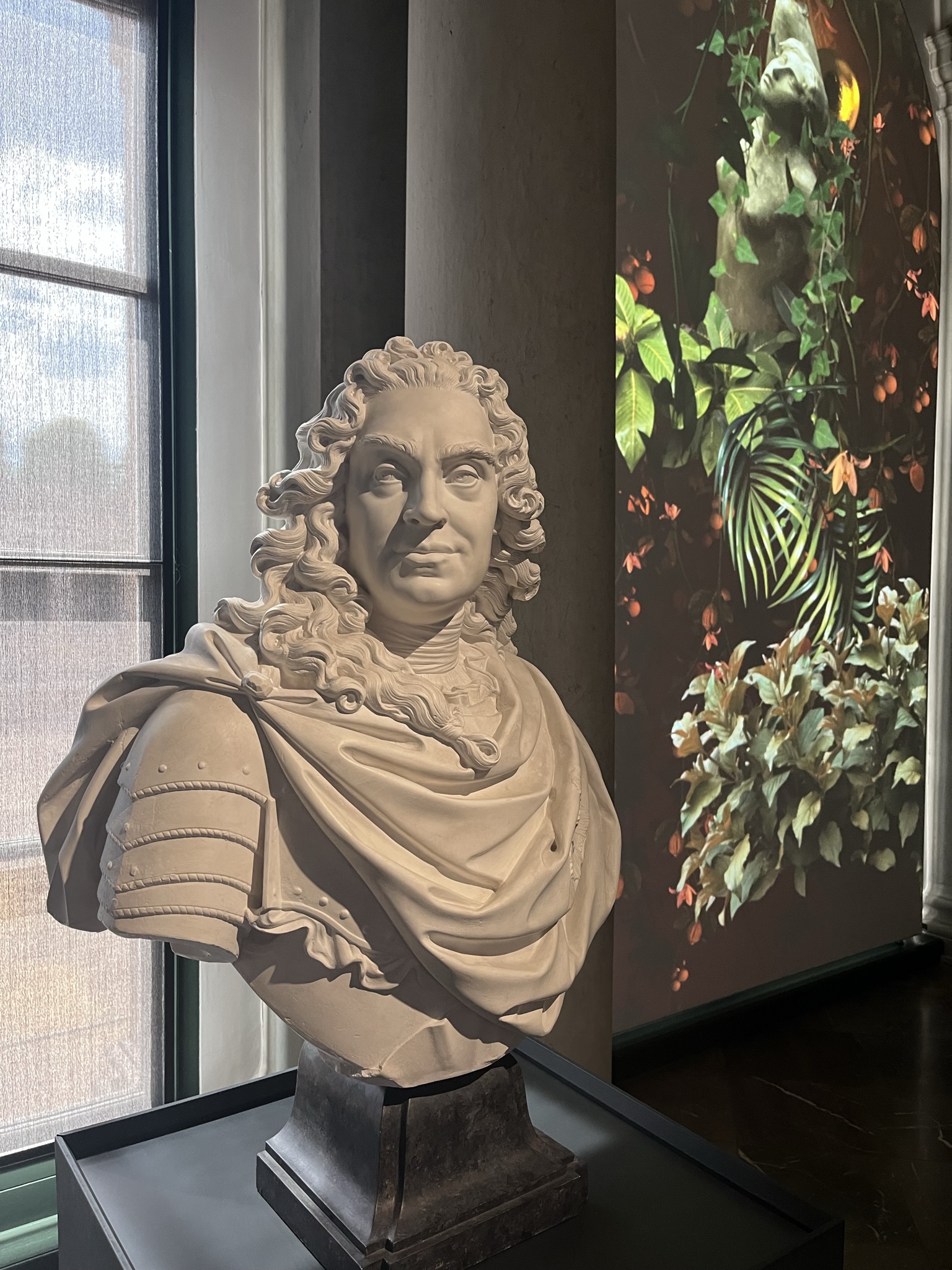
Left: A bust of Augustus the Strong appears in the interactive Zwinger Xperience, a multi-media immersion into the story of the baroque Zwinger building and festival area commissioned by Augustus. Right: This street window in Meissen displays loaves of Fummel along with a poster telling the humorous German story of why the bread recipe was initially invented.

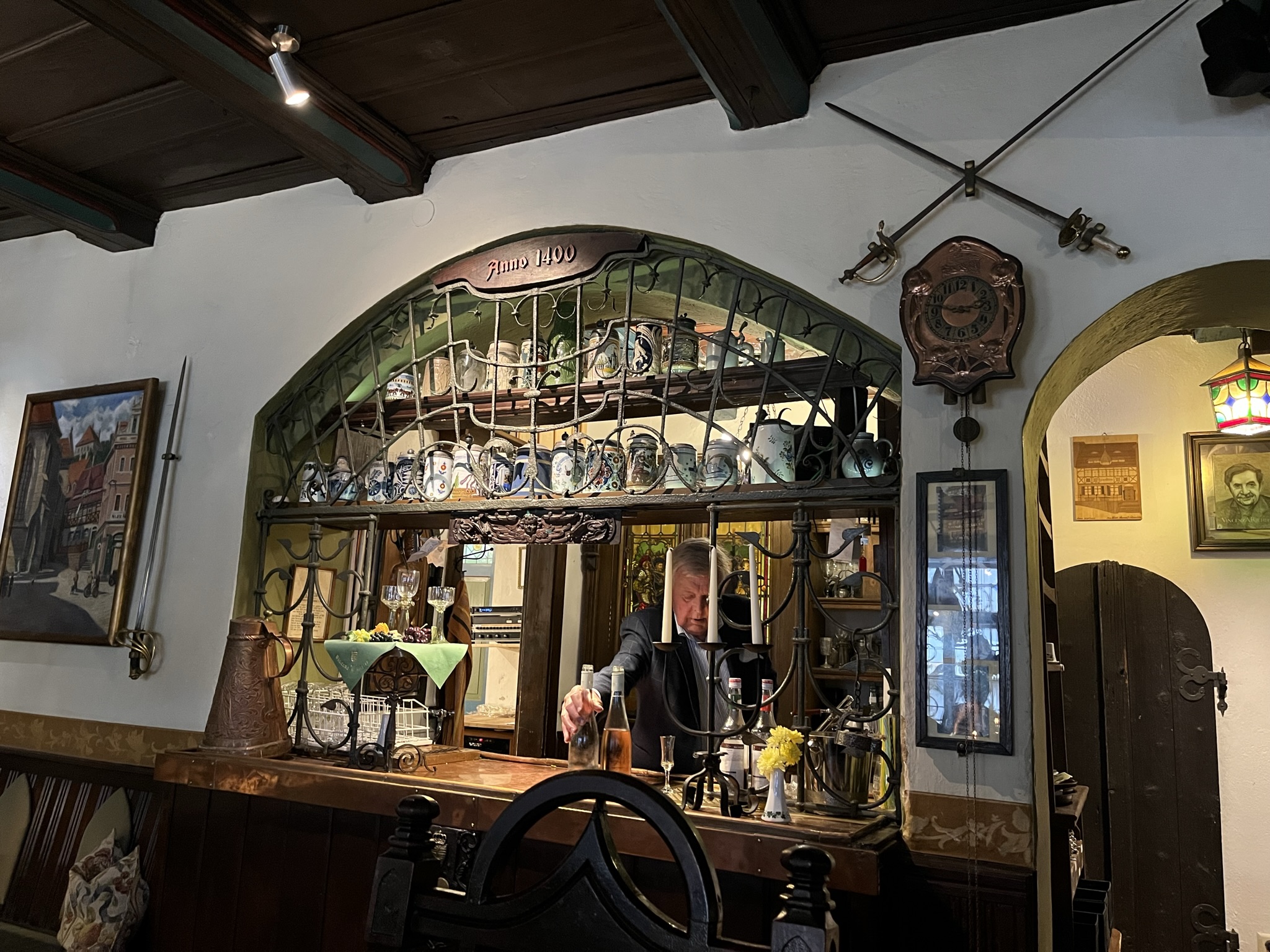
You’ll be sure to fumble that Fummel after a few glasses of wine here! Vincenz Richter wine restaurant in Meissen celebrates its 150th anniversary this year. The 500-year-old building that houses hundreds of antiques and historical items is known as one of Germany’s most romantic places. The family winery produces its delicious wine varietals on the steep slopes of Meissen’s Elbe River valley.

Leipziger Lerche
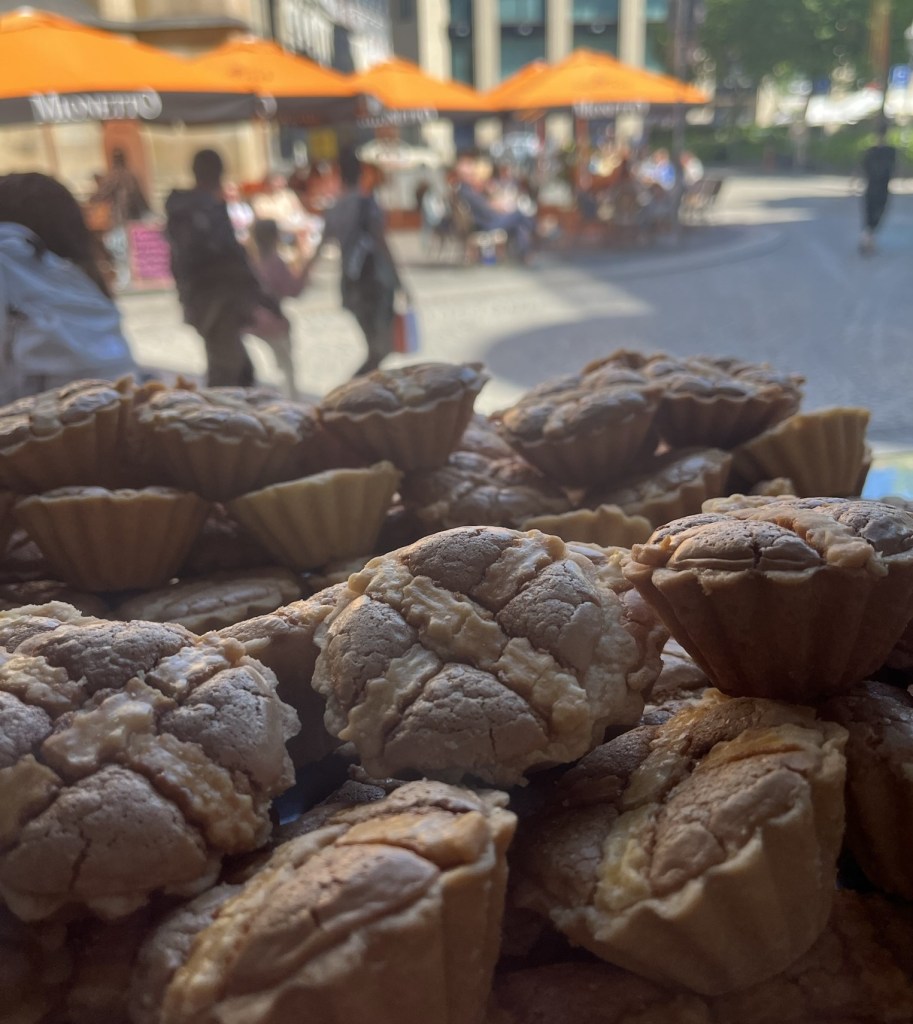
The Leipziger Lerche (“Leipzig Lark”) dessert was born as part of the animal protection movement in the 19th century. Songbird larks used to be hunted and baked with herbs and eggs into a pastry crust and then served as a hearty delicacy. This culinary luxury was enjoyed in Leipzig and beyond, and many bird carcasses were bound in twine and shipped from Saxony to various countries around the continent for others to cook. The bird-baking business boomed, and the bird population declined. In 1876, after overhunting and a severe storm had killed off many of these birds, King Albert of Saxony banned lark trapping. To combat the suffering of this Leipzig business, some clever confectionaries in Leipzig then created a marzipan-stuffed shortcrust tart as a substitute for the traditional meat quiche. Now served in a small, fluted muffin cup, like a miniature pie, this baked good features two strips of dough crossed over the top to represent the trussing used to tie up stuffed larks. Beneath the ground almond and egg white mixture of the tartlet, there is often a cherry or dollop of jam to symbolize the heart of the lark. Kandler Konditerei in Leipzig is a popular source for “Kandler Lerche” pastries of this style, baked fresh daily and as naturally and preservative-free as possible, with numerous packaged options sold for a sweet, Saxony-specific souvenir.

Save a songbird and let Kandler Konditerei tempt you with a Leipziger Lerche.

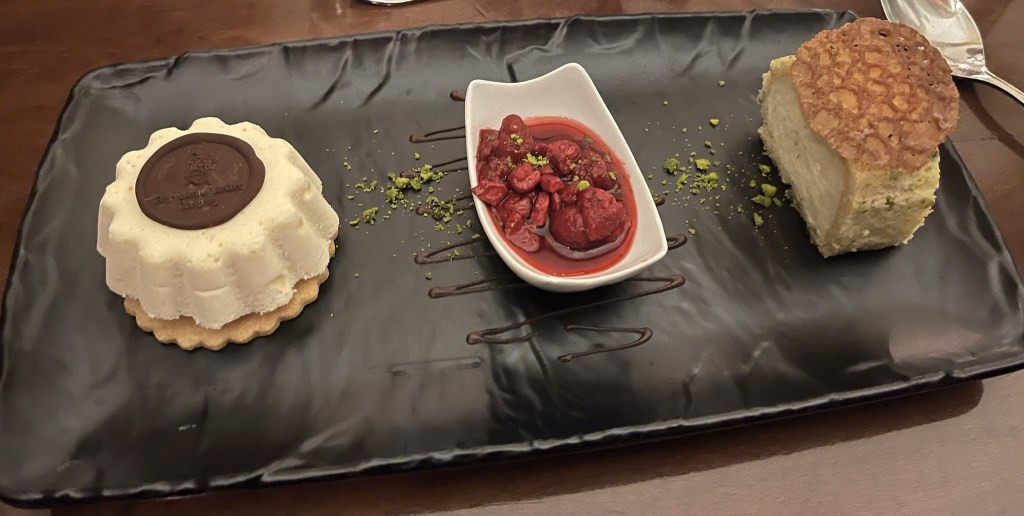
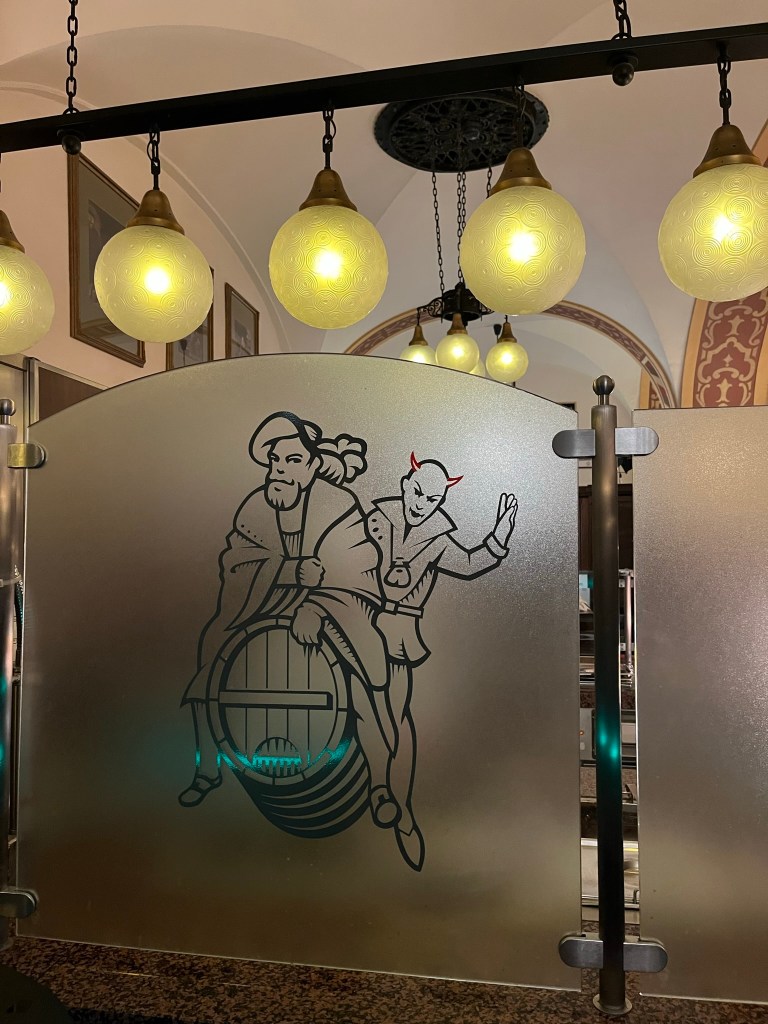
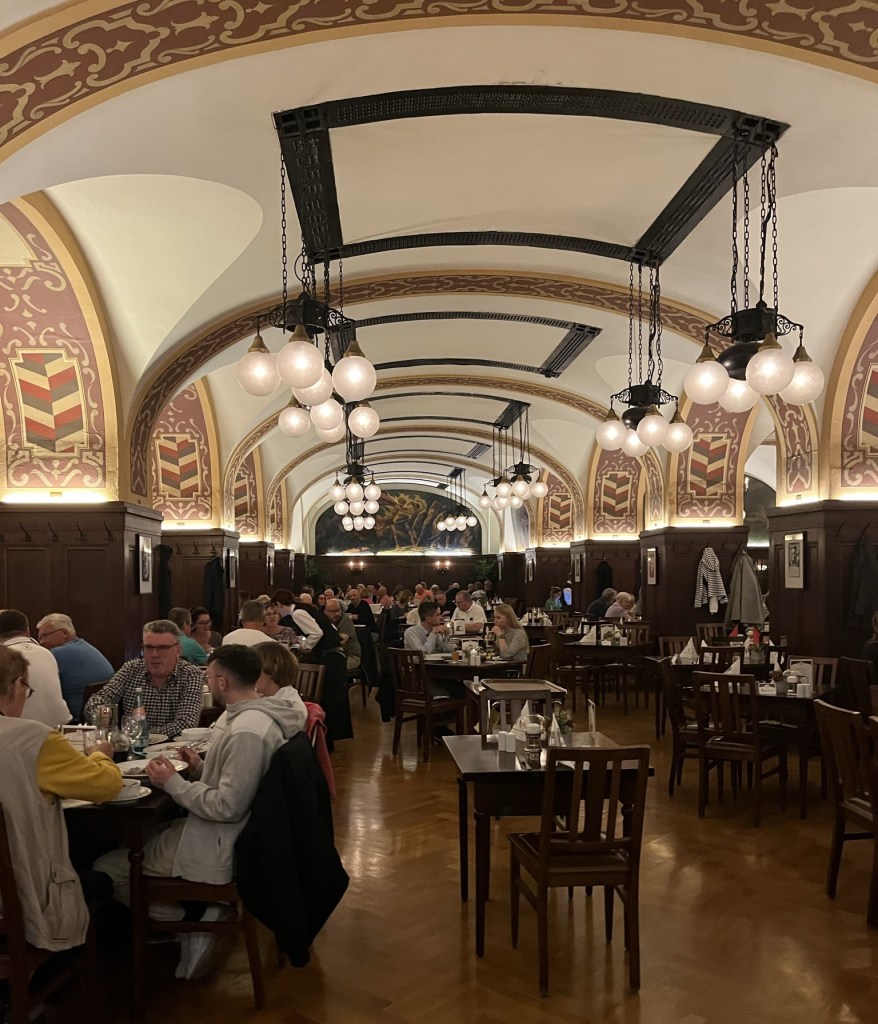
For a tasty variation of Leipziger Lerche, try the ice cream version served at Auerbachs Keller in Leipzig. This bundt-cake-shaped mound of ice cream is seated on a petaled crust and topped with a dark chocolate medallion stamped with “Auerbachs Keller Leipzig” and an image of Dr. Faust riding astride a wine barrel. Goethe and Martin Luther were regular guests of Auerbachs Keller, and it’s a treat to dine in the historic basement rooms of the Mädler Passage where they sat and to eat traditional Saxonian cuisine, including this new take on a famous regional dessert.

Auerbachs Keller Leipzig serves a special iced Leipziger Lerche with curd-cheese-lime-mousse and raspberry sauce.

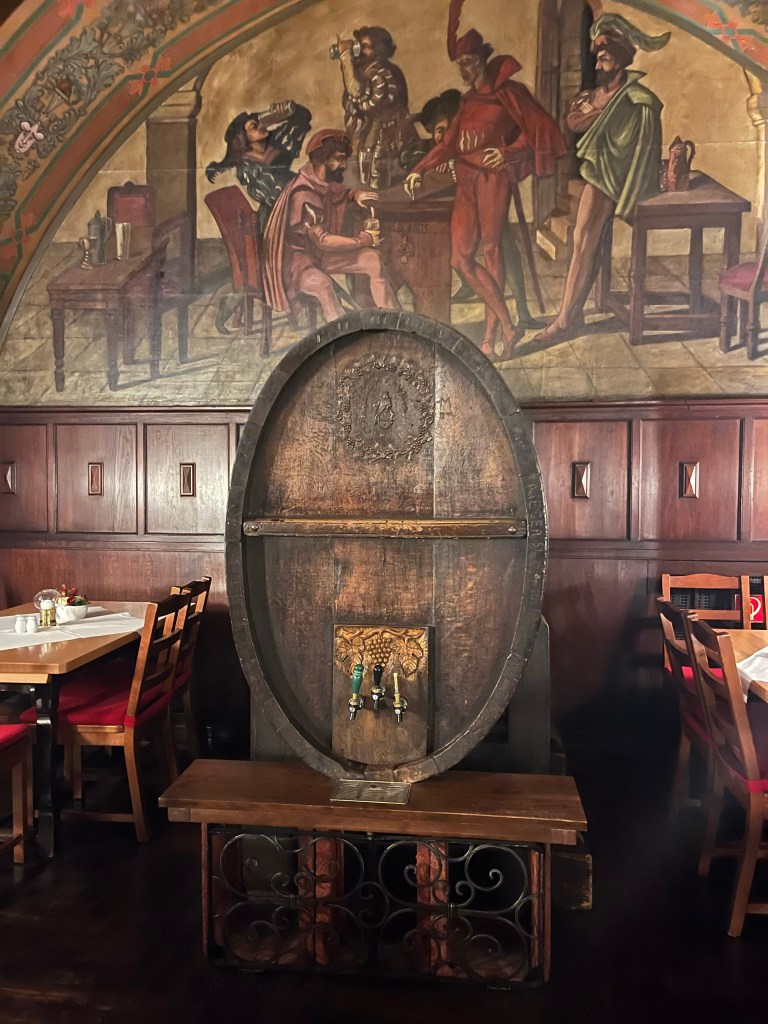
Auerbachs Keller in the Mädler Passage is the most famous and second oldest restaurant in Leipzig, and was one of the most popular places for wine in the 16th century.

Visiting Saxony?
Take an audio guided tour through the Meissen Manufactory and visit the Meissen Porcelain Foundation Museum. Enjoy coffee and delicacies at the Café & Restaurant Meissen, where your snacks are served on fine porcelain and you can sample the specially created Meissen cake featuring the crossed swords trademark. Register for a porcelain casting class or creative workshop and make your own Meissen masterpiece—available for adults and kids alike—or personalize a Meissen coffee mug and have your unique creation safely shipped directly to your home. Sign up your kids for an etiquette class to learn the art of fine dining or join a themed specialty meal (brunch with organ recital, Advent dinner, Christmas dinner, or Ladies Crime Night dinner). The one-hour “Women at Meissen” social history class highlights the significant role women have played in the manufactory’s workforce since the 18th century. The “Tea, Coffee, and Chocolate” event is offered once a month and teaches participants about the three “pleasure drinks” that were popular luxury goods during the Baroque period and how Meissen porcelain played a role in providing many varieties of elegant drinkware.

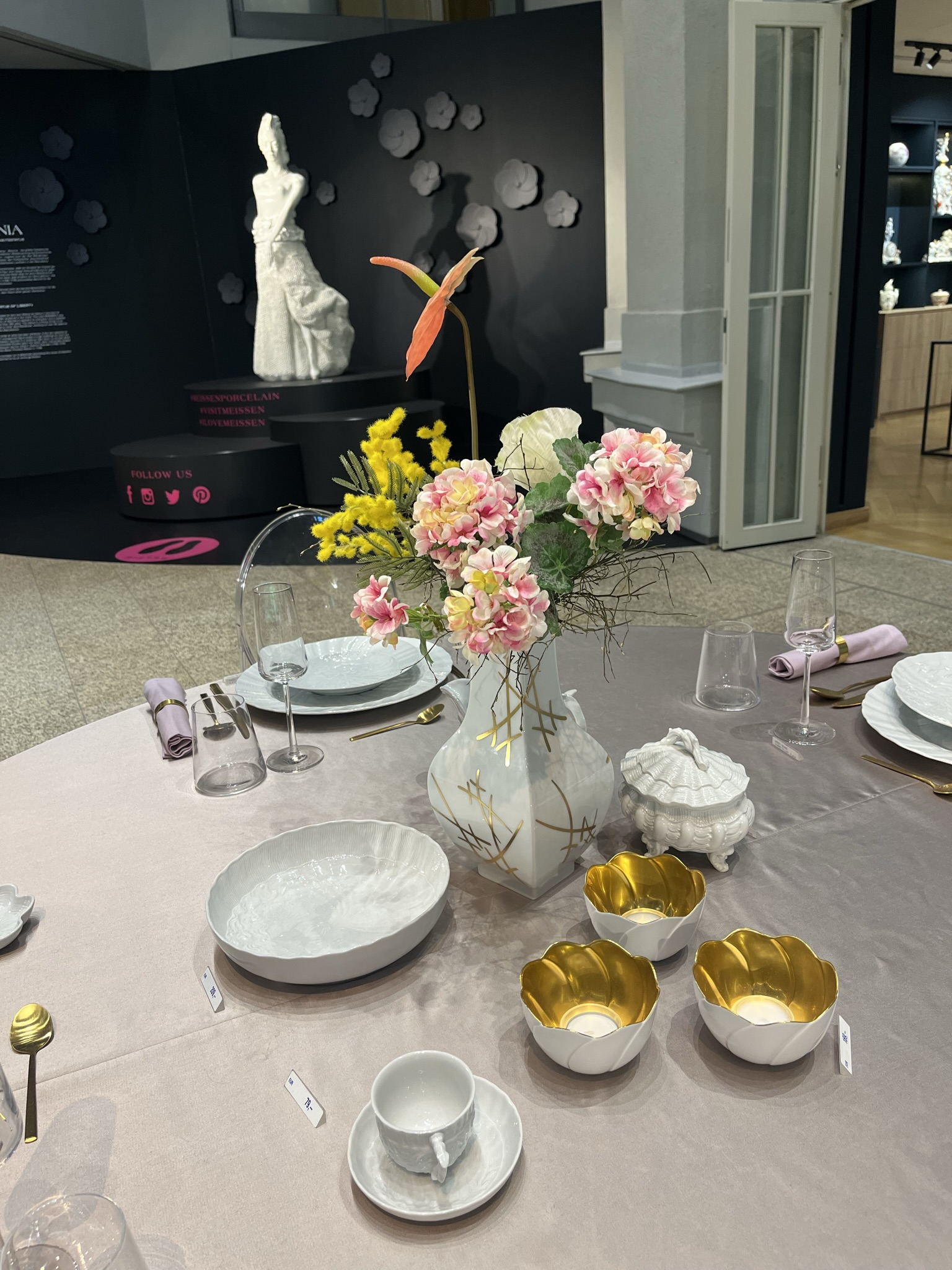
Meissen porcelain tableware makes every cake look better. Sweets and special place settings are a suggested Saxony souvenir.