The NH Collection Amistad Cordoba, a splendid hotel within easy walking distance of historical landmarks, ensures delightful dining and pleasant dreams
By Randy Mink
Ensconced in the picturesque Jewish Quarter, the four-star NH Collection Amistad Cordoba made the perfect base camp for my explorations of Cordoba’s sprawling old town, the highlight of my recent travels in the south of Spain.
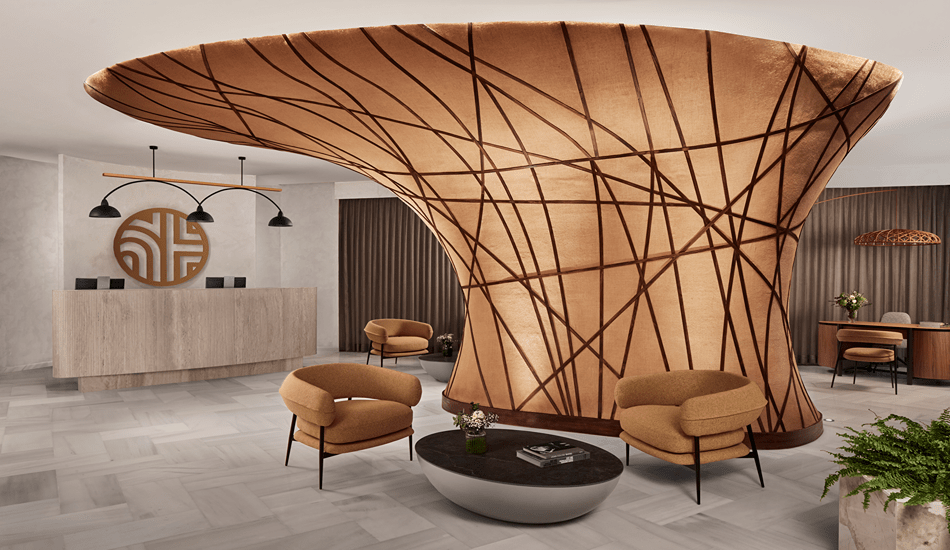
As soon as I passed through the lobby and walked out the door, there I was—in the quiet Plaza Maimonides, ready to prowl the cobbled lanes threading the city’s historic center, a maze of whitewashed buildings dating as far back as the Middle Ages. The Bullfighting Museum, housed in two old palaces, holds court across the way. A short stroll leads to the Mezquita, or Mosque-Cathedral, the greatest legacy of the city’s Muslim past.
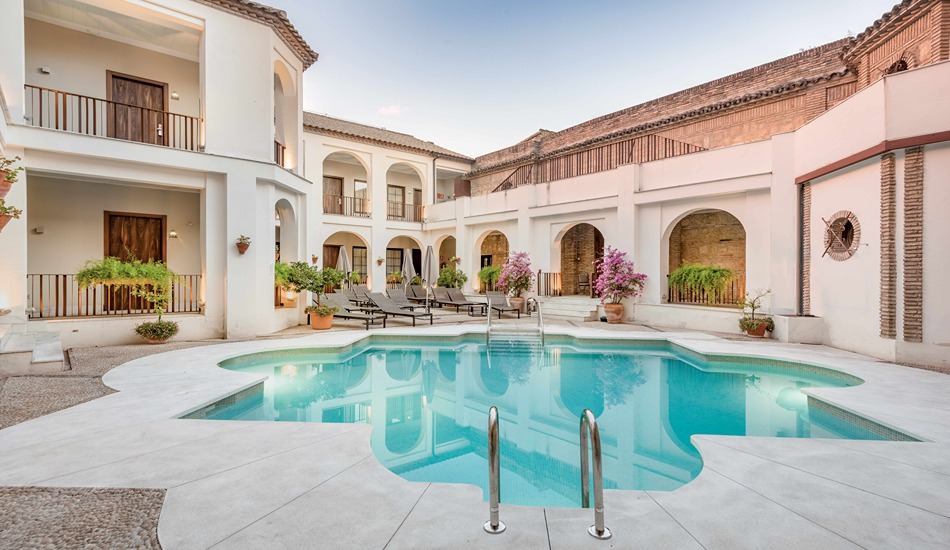
Occupying a pair of 17th and 18th century mansions, the 108-room NH Collection Amistad Cordoba has two outdoor courtyards, one of them with an Arab star-shaped swimming pool. Islamic ornamental and architectural touches grace other public areas as well. (At the time of writing, the larger courtyard was closed for renovation.)
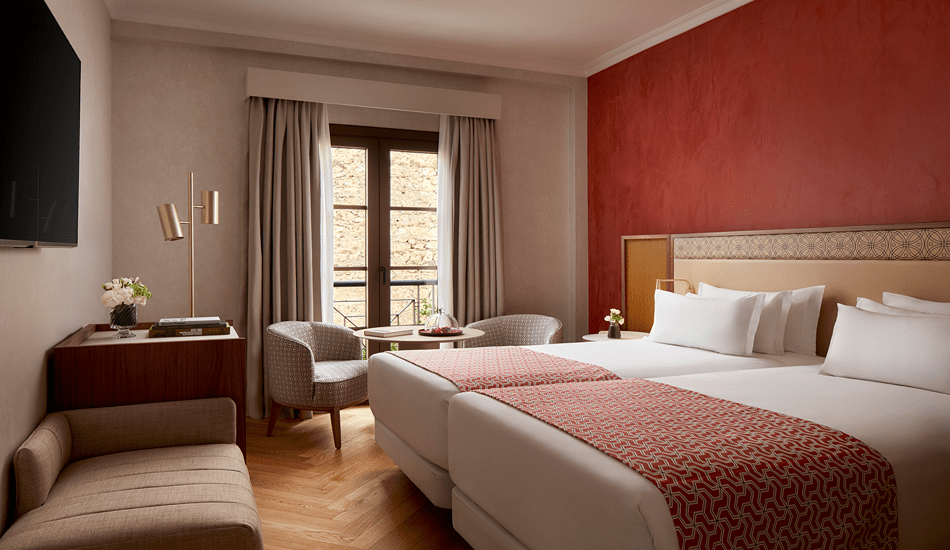
The property offers a variety of guest room categories, including rooms with private patio. My French balcony looked out on remains of a wall that separated the Jewish Quarter from the rest of the city. Other rooms overlook the courtyards or Plaza Maimonides.
My third-floor nest had all the amenities you’d expect from an upscale hotel—refrigerated mini-bar, coffee machine, magnifying make-up mirror, robe and slippers, and turndown service with chocolate. I especially liked the walk-in rainfall shower.
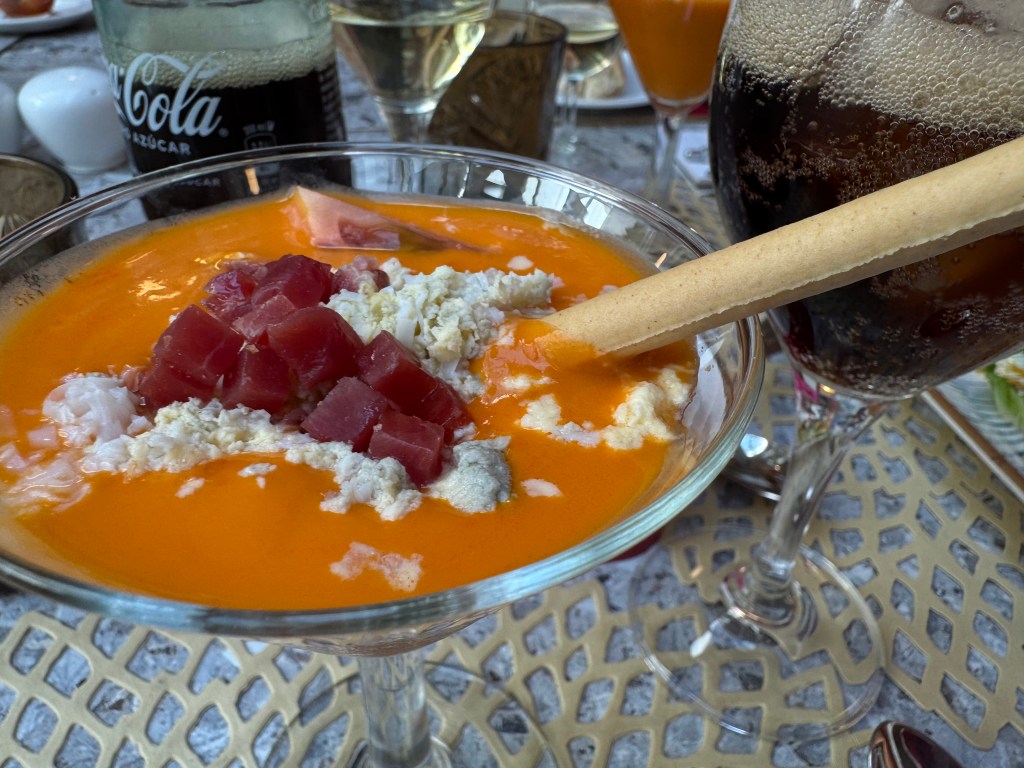
Savoring Regional Specialties in the Hotel Restaurant At one lunch in the restaurant, our group feasted on the five-course Cordoba tasting menu, which featured typical local specialties. We all loved the salmorejo, a cold tomato soup thickened with bread and topped with bits of hard-boiled egg and ham. After a salad and creamy oxtail croquettes, the main course was flamenquín, a fried roll of sliced pork and ham with cheese and red peppers. We finished with pastel cordobés, a sweet, squash-filled pastry. The price was 37 euros per person, two drinks included.
Photos by Randy Mink. The restaurant’s menu features typical local specialties, including salmorejo, a cold tomato soup thickened with bread and topped with bits of hard-boiled egg and ham.
The NH Collection’s cultural/gastronomic package in Cordoba is part of the brand’s Spain Designed for Feeling program of special experiences. (www.spaindesignedforfeeling.com/categoria/lifestyle). The plan includes both the tasting menu and a guided four-hour tour visiting the Mezquita, Jewish Quarter and Viana Palace.
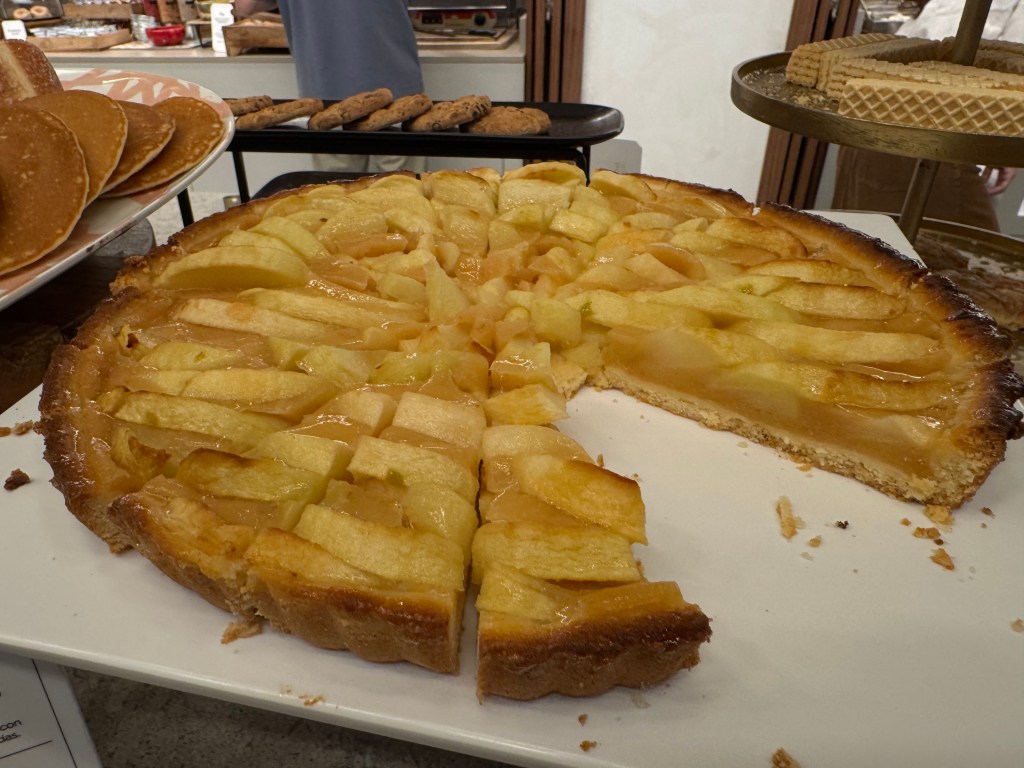
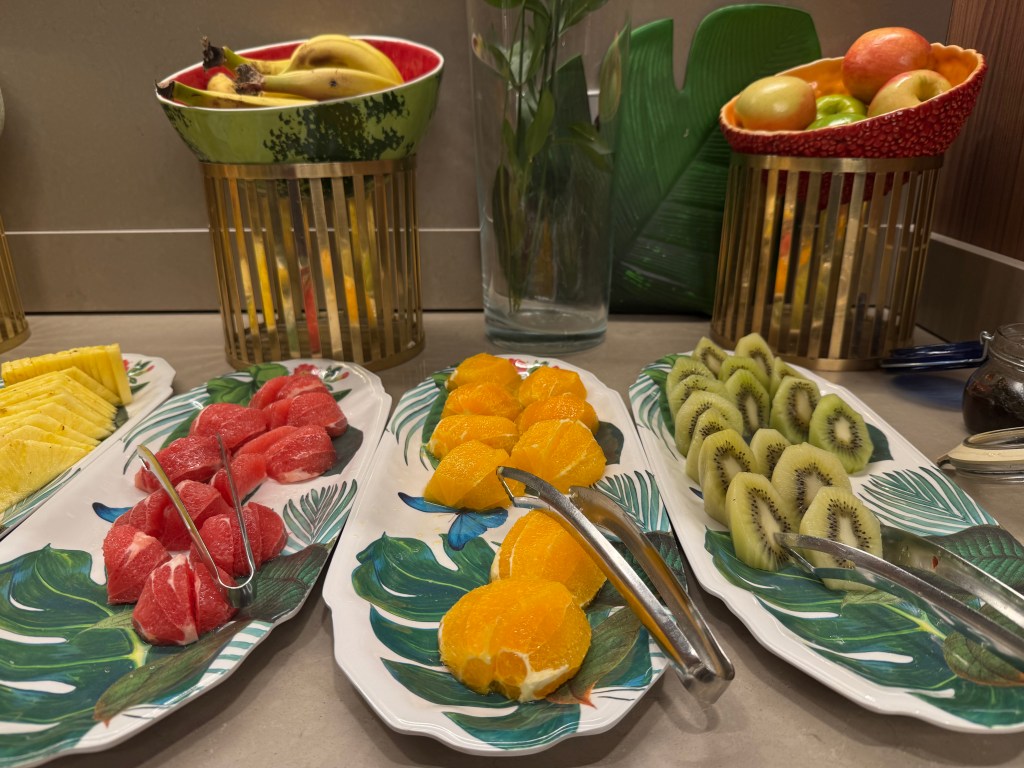
The hotel’s lavish breakfast buffet offered salmorejo (a morning treat for one group member who couldn’t get enough of it) along with a bounty of meats, cheeses, fruits, vegetables, juices and baked goods. As a sweet tooth, I went for the chocolate tart wedges and sugar-dusted squares of pastel cordobés.
A concierge in the lobby assists travelers with making the most of their Cordoba stay, and the front desk gives out a detailed list of museums and other attractions with opening hours and admission prices.
NH Collection Hotels & Resorts is the high-end brand of Minor Hotels, which has lodgings across six continents. I had not been aware of the chain, but after stays in Cordoba and at Madrid’s NH Collection Palacio de Tepa days before, I am now a big fan.
Photos of courtyard, guest room (Superior category), and lobby, courtesy of NH Collection Hotels & Resorts.
For more information on NH Collection Hotels & Resorts, log on to www.nhcollection.com.
There’s something irresistible about German bakeries—the fresh brötchen and Berliners, croissants, and the bold espresso you can order alongside—something that makes it feel okay to stop at various locales throughout the day, even beyond just a morning coffee and pastry. It seems that a thick slice of cake and a mug of strong, steaming coffee any time of day makes a whole lot of sense when you’re in a region with such a rich baking history. Dresden, the capital of Saxony in Germany, and nearby Meissen and Leipzig have much to offer snack lovers when it comes to pastries and cakes. So pour a fresh cup, heat up a bun, and read all about the role Saxony played in the rise of gluten-filled goodness.
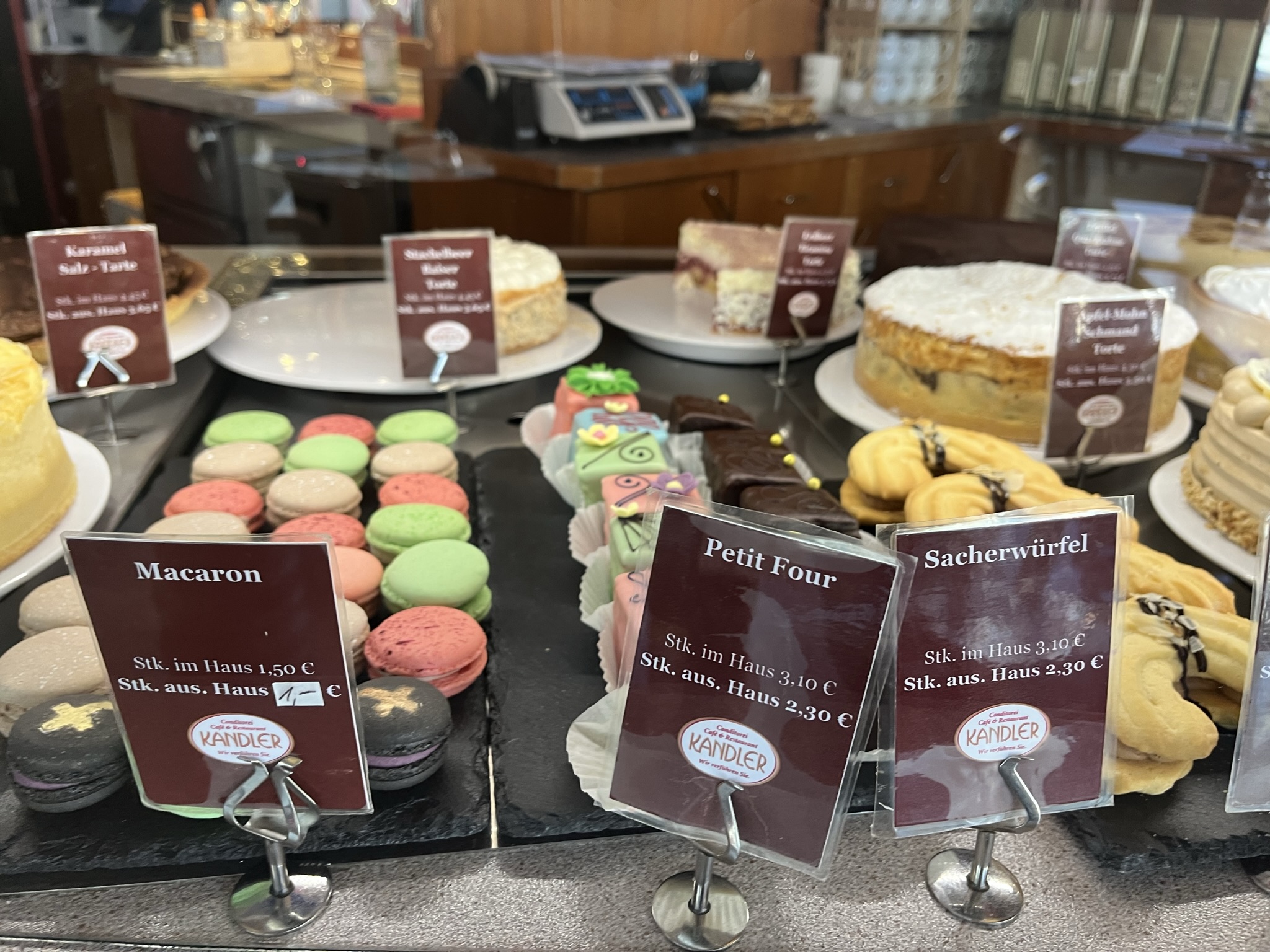
The five locations of Kandler Konditerei in Leipzig are always stocked with sweet temptations.
Russisch Brot During the late 19th century, Dresden-based master baker Wilhelm Hanke adopted the 1845 St. Petersburg, Russia, recipe for Russisch Brot (Russian bread), which are crunchy glazed cookies made from sugar, egg whites, water, and flavoring, and formed into the shapes of alphabet letters. These are sold under the Dr. Quendt label and remain a popular Christmas treat or a delicious snack to help teach reading. The letters “M” and “W” are too fragile to be stable, so Dr. Hartmut Quendt ensured bags contain mirrored 1’s that snackers can use to create their own “M” and “W” shapes. It’s clear permission to play with your food!
Stollen Dresden is also the birthplace of the authentic stollen Christmas cake—the Dresdner Christstollen. When stollen was first baked in the 1400’s, under the supervision of the church council, the bread was not allowed to contain butter or milk during Advent, so it was a dry and bland pastry consisting of flour, yeast, oil, and water. Ernst of Saxony and his brother Albrecht appealed to the Pope and asked that the dairy ban be lifted, so they could replace the oil with butter, as butter was cheaper than oil at the time. The appeal was denied, but finally, five popes later, Pope Innocent VIII sent Dresden the famous 1491 “Butter Letter,” in which he granted permission for dairy ingredients to be used in the stollen—although the Dresden bakers must, in return, pay a fine to be used toward the building of churches.
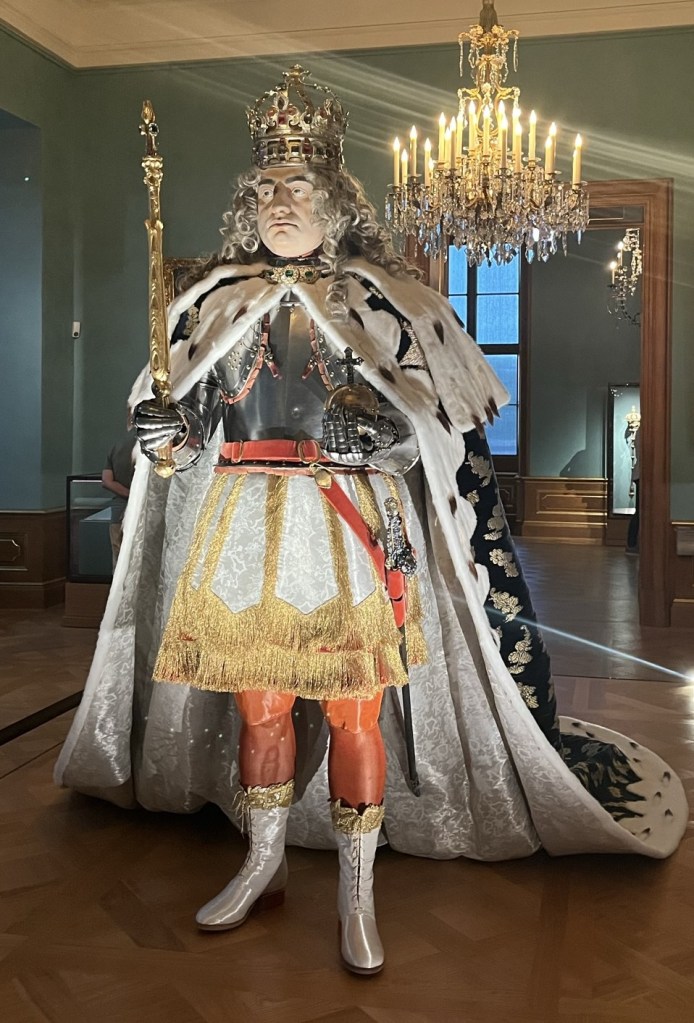
In 1730, Augustus the Strong, a stollen lover, commissioned a group of 100 Dresden bakers to bake an almost 4,000-pound loaf, which was brought to the king’s table using eight horses. A giant oven was built especially for this occasion, and an oversized knife was designed specifically for the event. This is the basis for the annual Dresdner Stollenfest (or “Striezelmarkt”), which takes place in Dresden the Saturday before the second Sunday in Advent. The festival is a highlight of the pre-Christmas season and celebrates the stollen baking tradition, featuring a colorful parade and the sale of varieties of stollen.
A huge stollen is still made annually and divided into smaller pieces on a specially shaped stollen cutting board—using a 26-pound replica of the original baroque knife from the Residenzschloss (Royal Palace) Court Silver Collection of Augustus the Strong—with cake portions sold to raise money for charity. The Stollenfest knife design features a swooping stainless-steel blade and Augustus the Strong’s coat of arms and rose tendril.
Left: A Dresden bakery displays its stollen seal.Right: This life-sized figure of Augustus the Strong is displayed in the Dresden Residenzschloss.
Stollen has its own protected name and registered trademark, and the recipe needs to follow certain guidelines to earn the golden, oval “stollen seal.” The cake only passes the test for high quality and validity if it contains no margarine and no artificial flavors or preservatives. The Dresdner Stollen Association requires that each cake contain butter, rum-soaked raisins, candied orange peels and lemon peels, and sweet and bitter almonds to receive the seal. Outside of these requirements, the approximately 110 Dresden bakeries that produce this sweet each use their own secret spice mixture, passed down through generations, which results in varied and distinctive flavors from bakery to bakery. Each stollen is labeled with a 6-digit seal number, to identify and track the bakery of origin. Also identifiable by the European Union-protected geographical indication, true Dresdner Christstollen is marked with a blue and yellow Geschϋtzte Geografische Angabe (“protected geographical indication”) sticker. Dresdner Christstollen can only be produced within Dresden itself or within specific boundaries surrounding the capital. This cake is best enjoyed by removing slices from the middle and pushing together the ends, eating the cake from the center outward. It is seen as traditional Dresden “finger food,” with no need to use a fork.
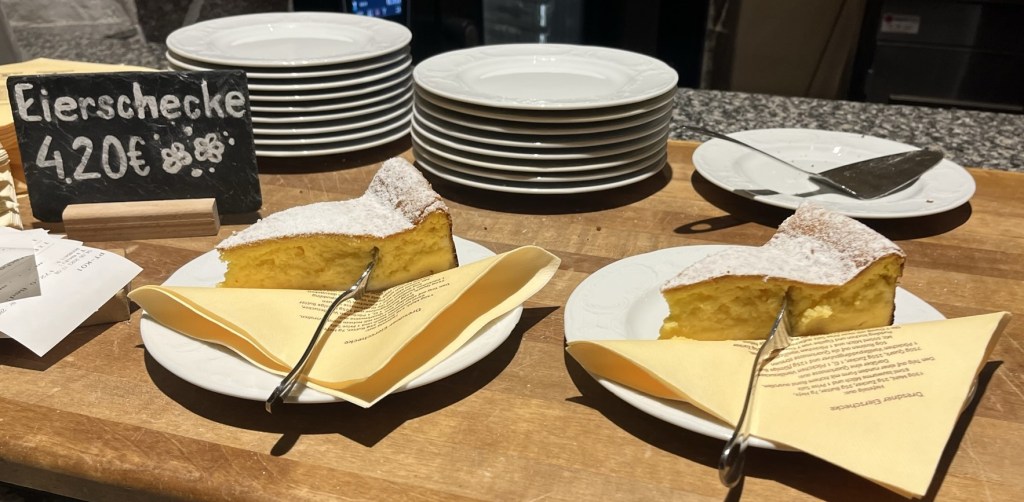
Eierschecke For something slightly sweeter, the Dresdner Eierschecke is a popular pastry choice. It’s a 3-layer confection consisting of a cake base topped with a custard-like quark cheesecake center, and a layer of sweet vanilla egg white on top, dusted with powdered sugar. Only found in Saxony and neighboring regions, this treat is often served with coffee or tea, and makes its way into celebratory menus for birthdays, weddings, and holidays. Some bakeries add chocolate, dried fruit, and sliced nuts, but the original recipe is simply the three-layered stack of varied texture.
Eierschecke and other traditional Saxon specialties are served at the Pulverturm.
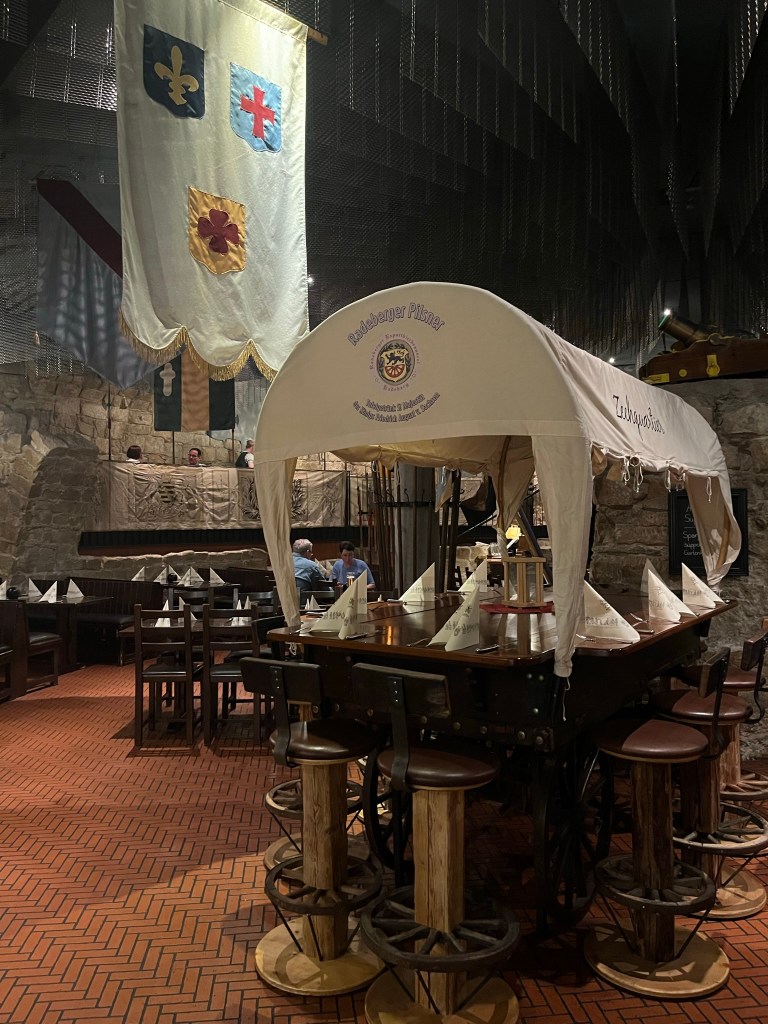
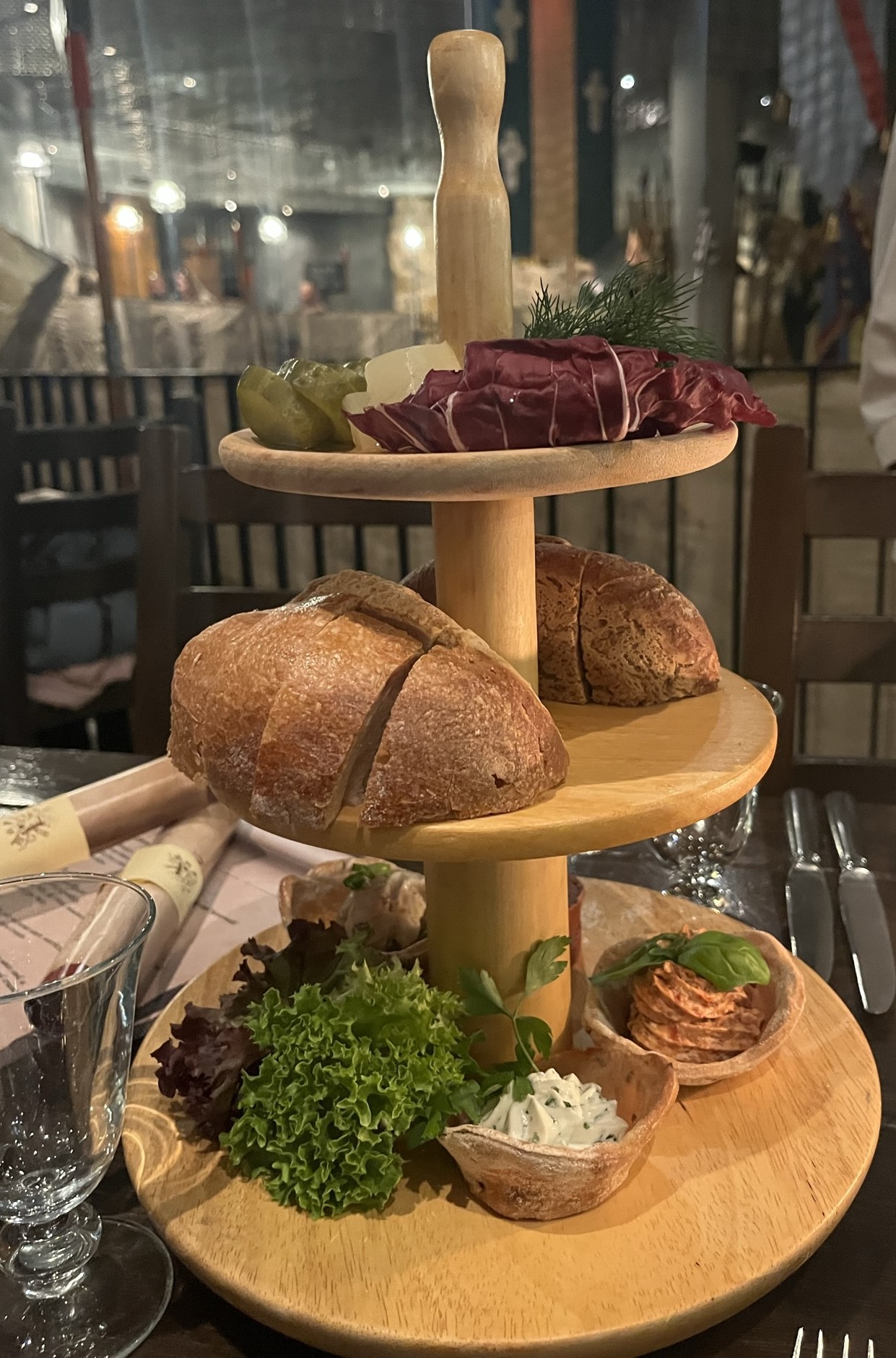
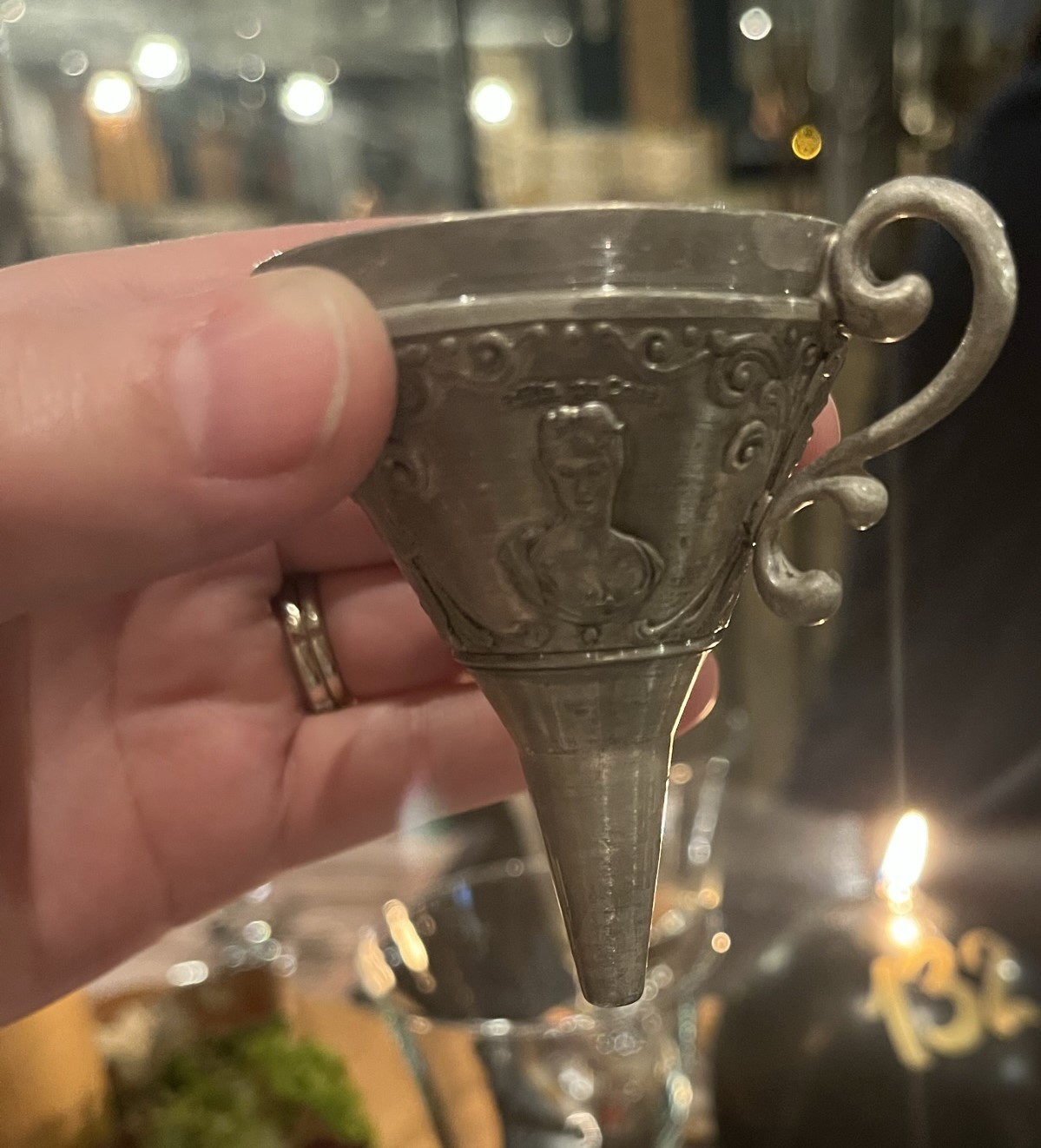
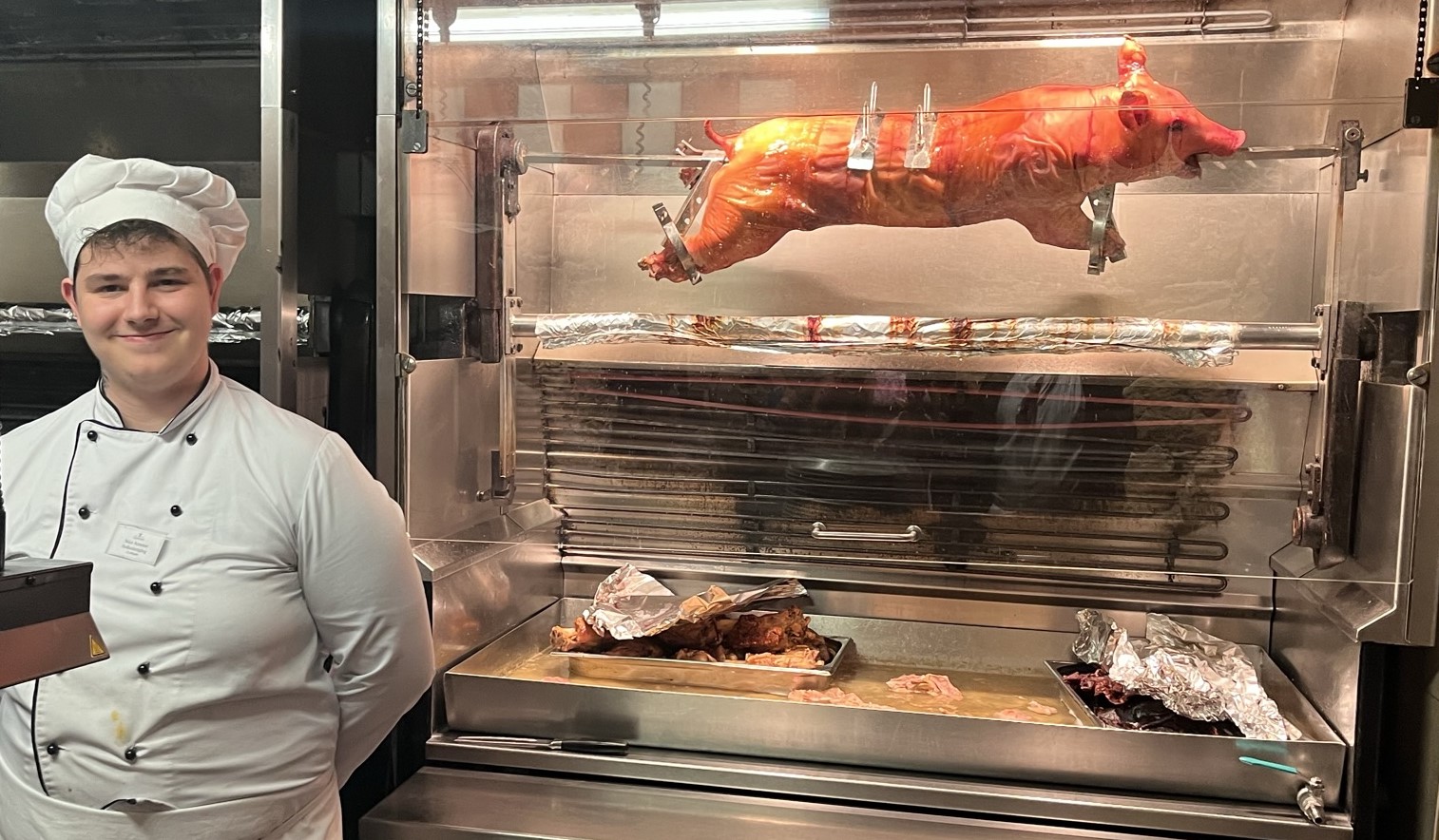
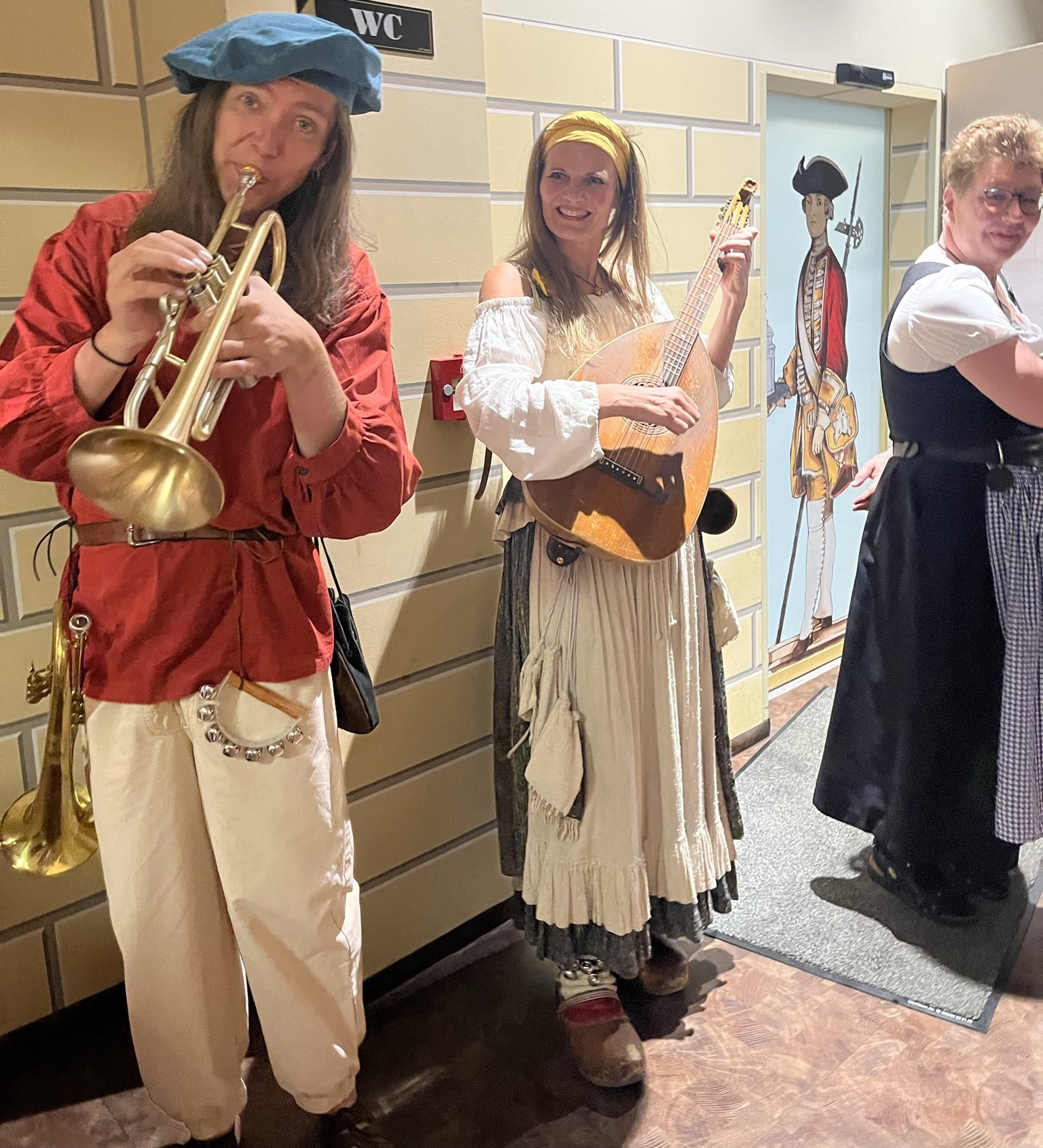
Eierschecke is on the dessert menu at the Pulverturm restaurant next to the Frauenkirche. A historic vaulted powder tower containing portions of the original walls, Pulverturm delights guests with Saxon specialties, homecooked suckling pig, and rousing tableside performances by lively, costumed, character musicians. Be sure to try your hand at funnel-drinking here—a practice that stems from Augustus the Strong’s love of Saxon wines but his court’s dislike for washing numerous wine glasses. The court created a special funnel fit to Augustus’ mouth measurements, so servants could pour the wine directly through the funnel into his open mouth. At the Pulverturm, a variation on this method involves drinking herbed liquor from tiny funnels. Named “Cosel’s Tears,” the drink’s herbs were said to grow from the tears of Augustus’ former mistress, the Countess of Cosel, whom he banished to Stolpen Castle for more than 40 years because of her interfering interest in politics. After a satisfying Saxon meal, have a sugar-dusted slice of Eierschecke and cup of espresso to complete the full Pulverturm experience.
Pulverturm restaurant in Dresden is a full-service, medieval-themed entertainment and dining experience.
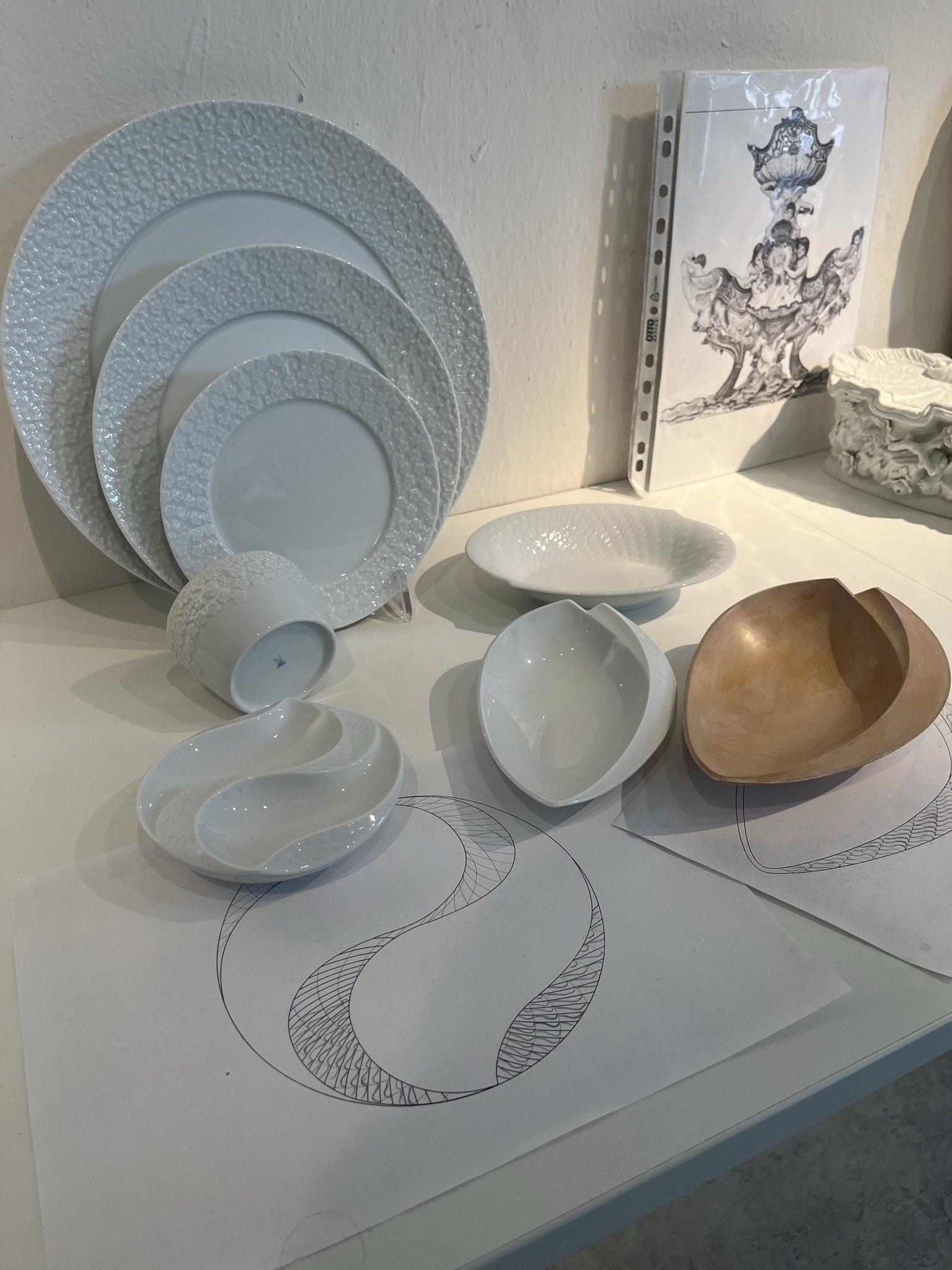
To make your own Eierschecke, try the recipe provided by Meissen porcelain manufactory underglaze painter Marlies Moser in the cookbook Cooking With Meissen. A 30-minute drive from Dresden, the Meissen manufactory creates fine porcelain vessels on which to serve tempting treats. At this company that labels its pieces with the forgery-proof “Crossed Swords” trademark, Moser worked for 40 years in production, painting underglaze onto unfired, porous porcelain—a skill that requires much training, a high level of precision, and years of experience—because the paint immediately penetrates and spreads, making later touchups impossible. The work of an underglaze painter is especially important for iconic Meissen designs like the 1731-created “Blue Onion,” whose luminous, metal oxide cobalt blue color only releases upon final firing. Moser now works in the demonstration workshop at the House of Meissen, and contributed her “Leutewitz Eierschecke” recipe for the company cookbook. Imagine a piece of this cake presented on a beautiful artisan-decorated Meissen porcelain dish!
The Meissen company cookbook features 24 recipes from appetizers to desserts. Saxon potato soup, Saxon meatballs, beef sauerbraten, quark dumplings with plum compote, and an inverted apple tart are among the list, and each submission includes a biography of the Meissen employee who contributed it. This beautiful, full-color hardbound book shows the food plated on fine porcelain tableware and includes sections about dining etiquette and the history of the craft.
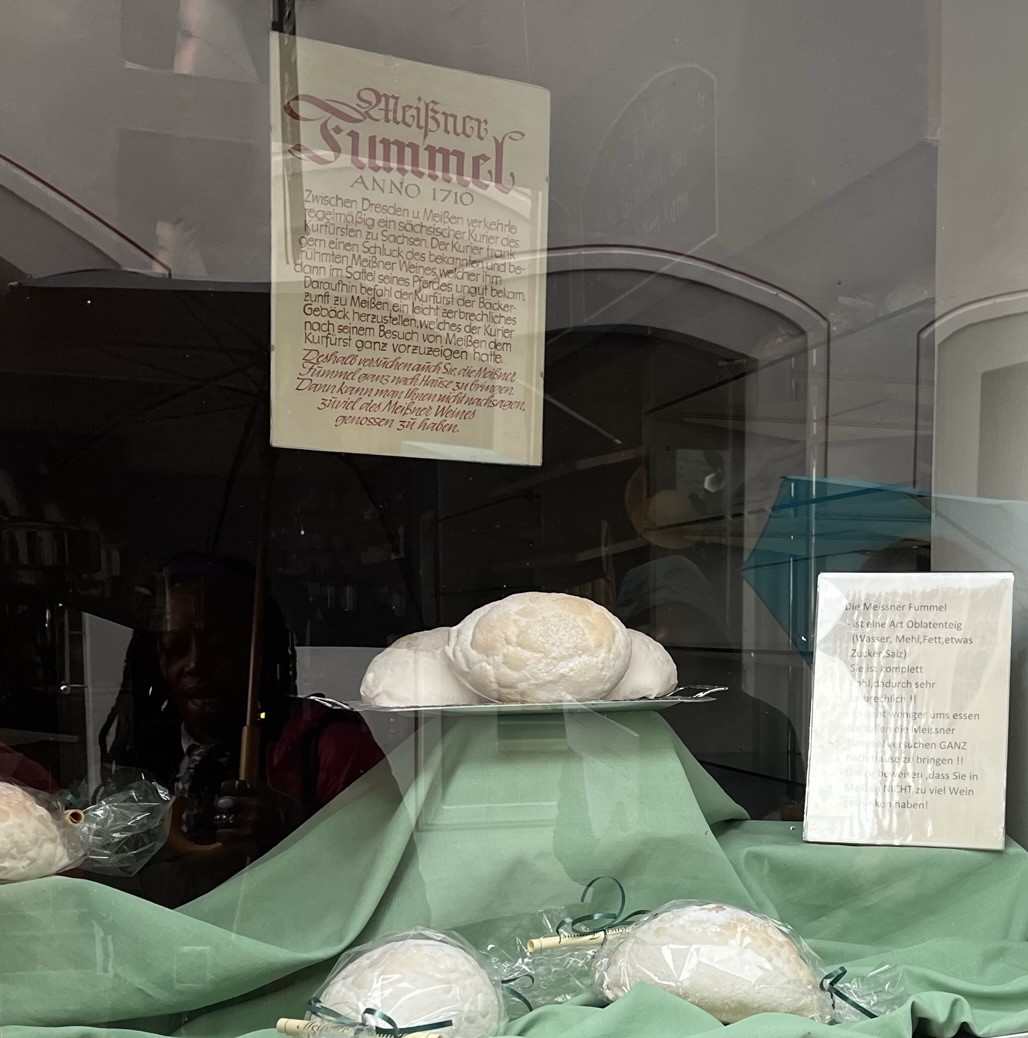
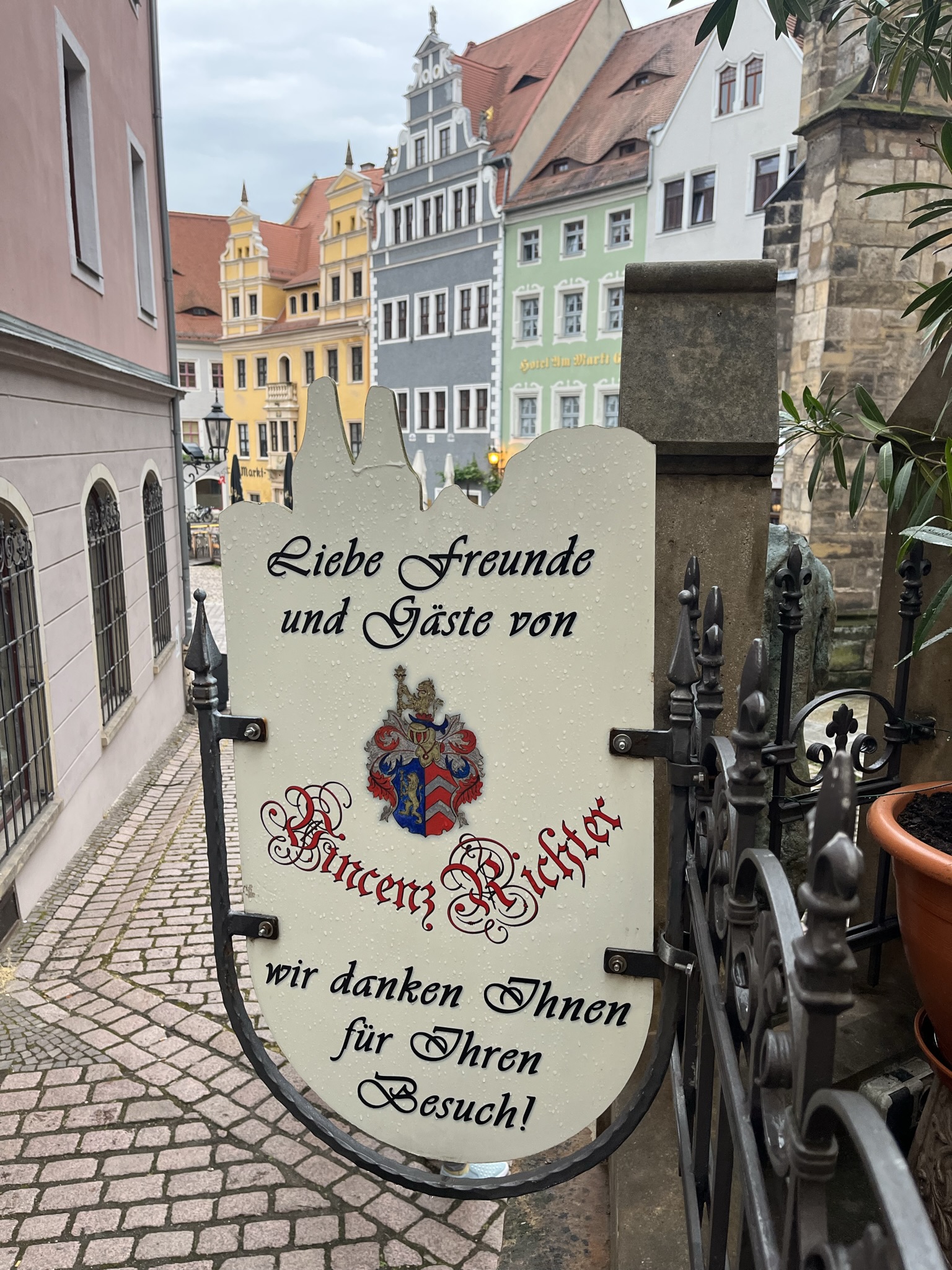
Meissner Fummel Eighteenth century legend tells that Augustus the Strong, who first commissioned the now-famous Meissen porcelain, used to send couriers back and forth between Meissen and Dresden with factory status updates. The town of Meissen is known for its excellent wine production (try the romantic, antique-filled Vincenz Richter wine restaurant!) and the couriers would often arrive back at the Dresden court intoxicated. Augustus’ solution was to instruct Meissen bakers to invent a pastry so fragile that it could remain intact only if delivered by a sober courier. The result was the hollow, brittle, extremely delicate Meissner Fummel cake, which had to be safely delivered to the Saxon Elector along with the progress reports about the porcelain. Made only with simple ingredients, Fummel is essentially a shell of flaky bread sprinkled with powdered sugar. Zieger Konditerei in Meissen produces this balloon-like baked good, which has been a protected geographical indication since 2000 and can only be manufactured in Meissen. The Fummel is often given to newly married couples in Meissen as a symbol of love’s fragility, and small gifts or cards are sometimes tucked into the center.
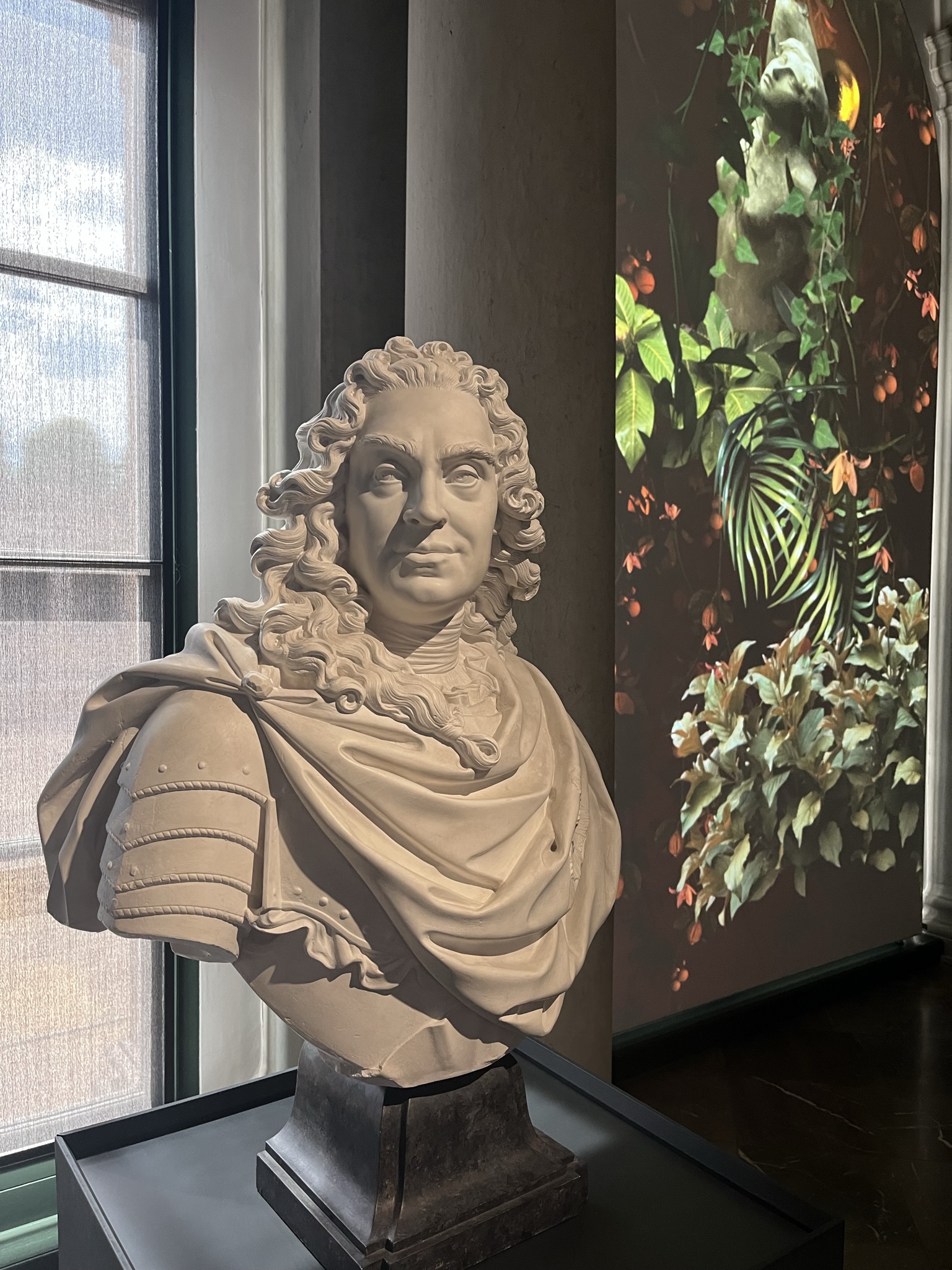
Left: A bust of Augustus the Strong appears in the interactive Zwinger Xperience, a multi-media immersion into the story of the baroque Zwinger building and festival area commissioned by Augustus. Right: This street window in Meissen displays loaves of Fummel along with a poster telling the humorous German story of why the bread recipe was initially invented.
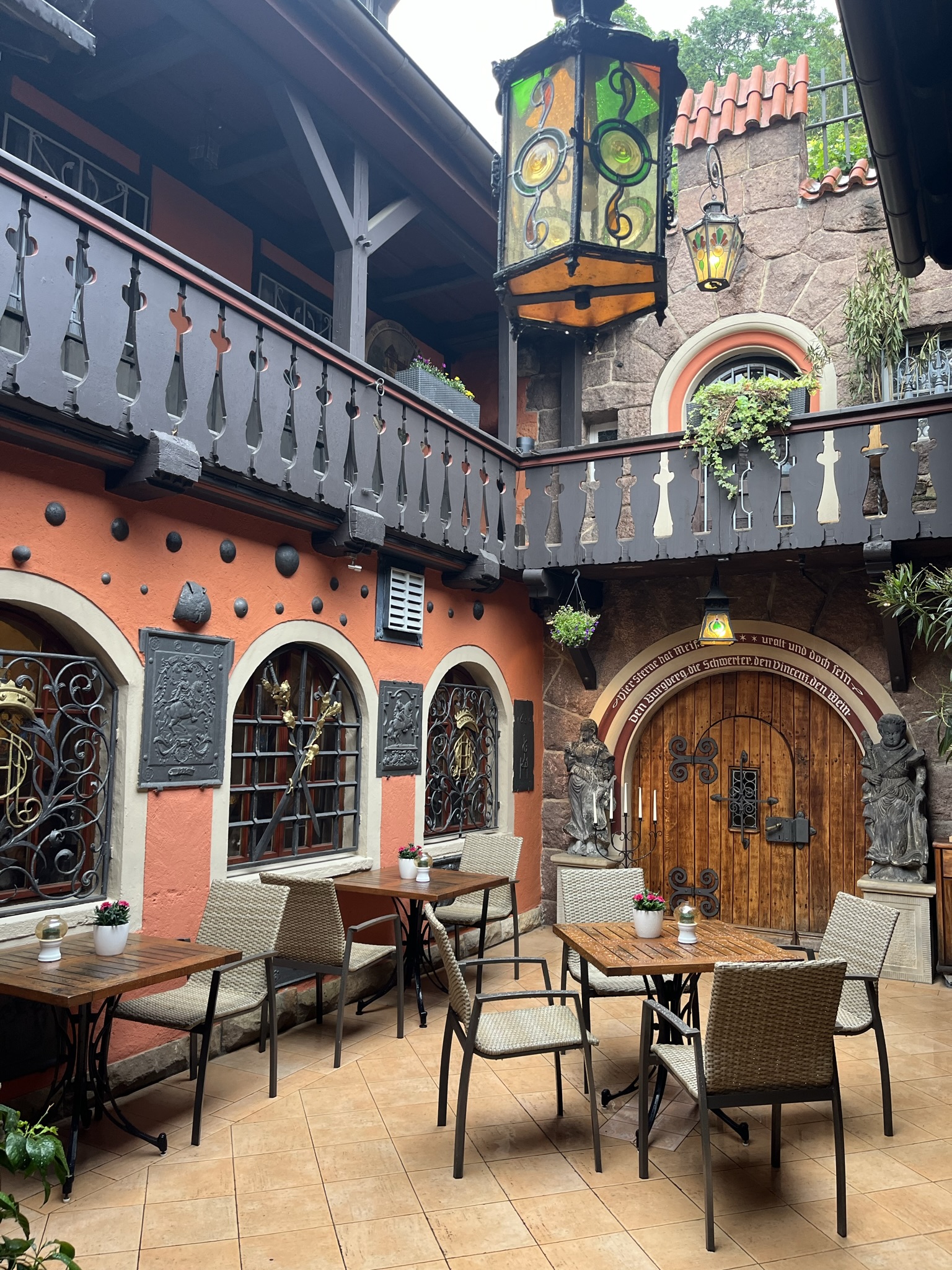
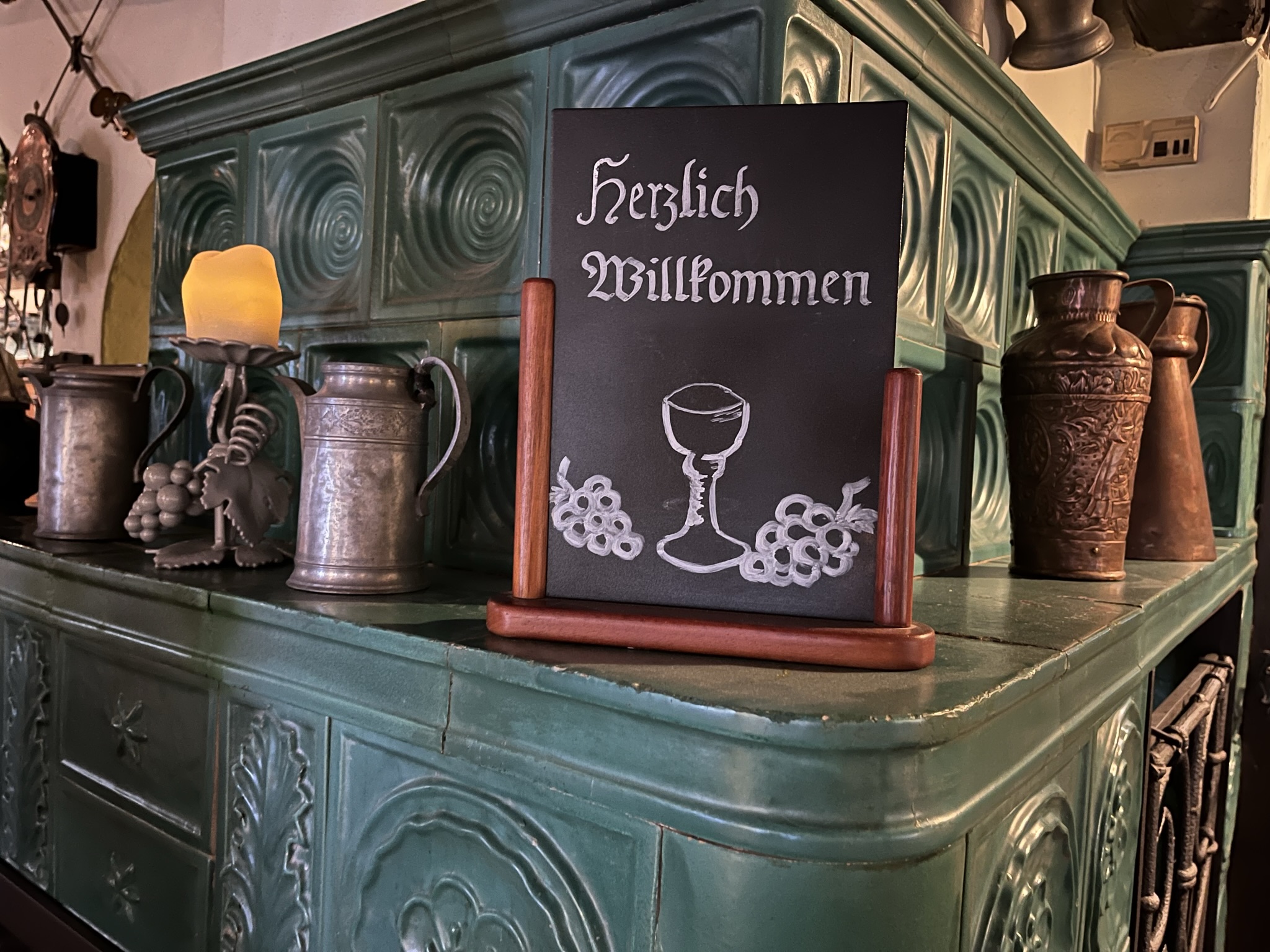
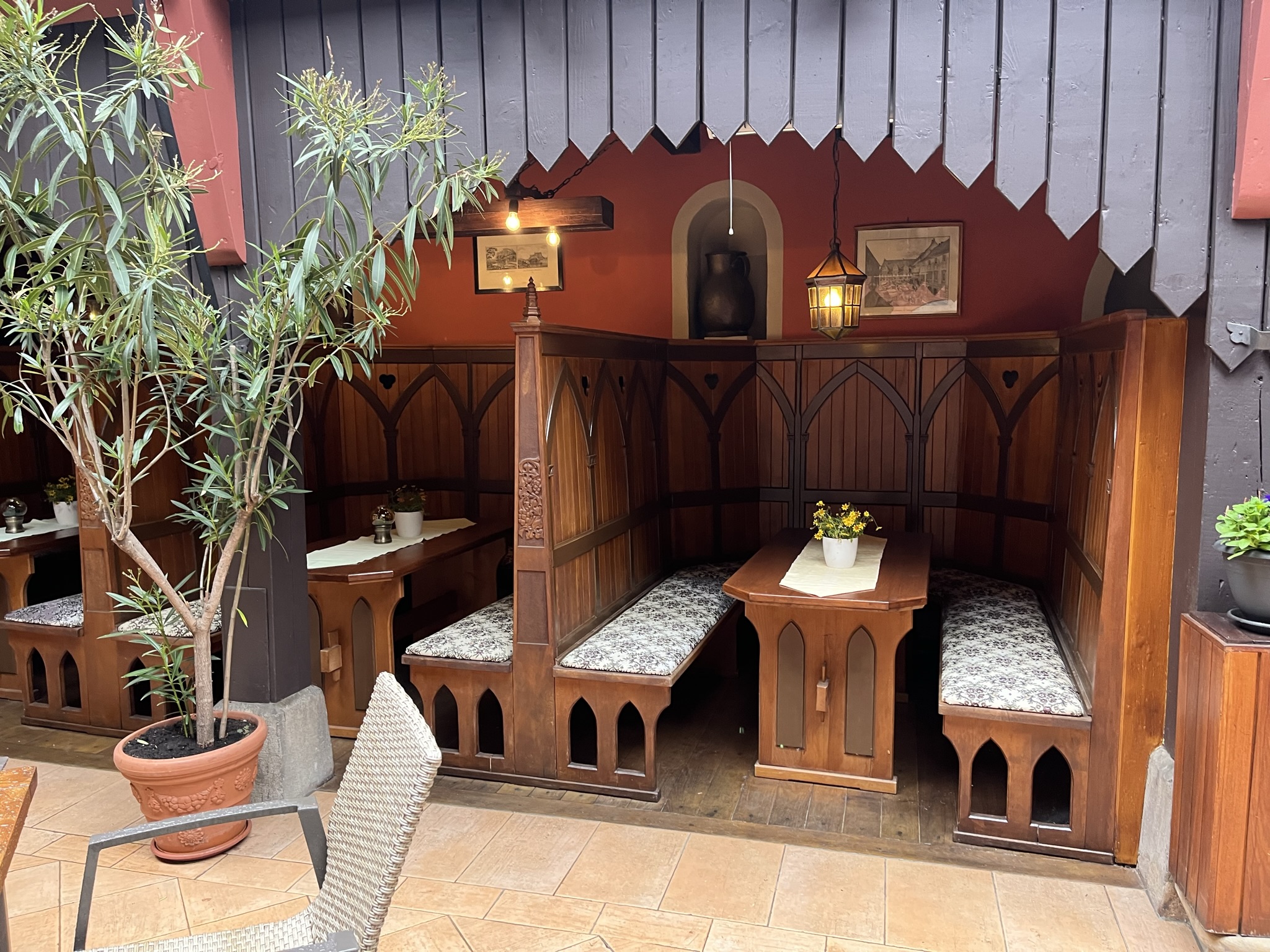
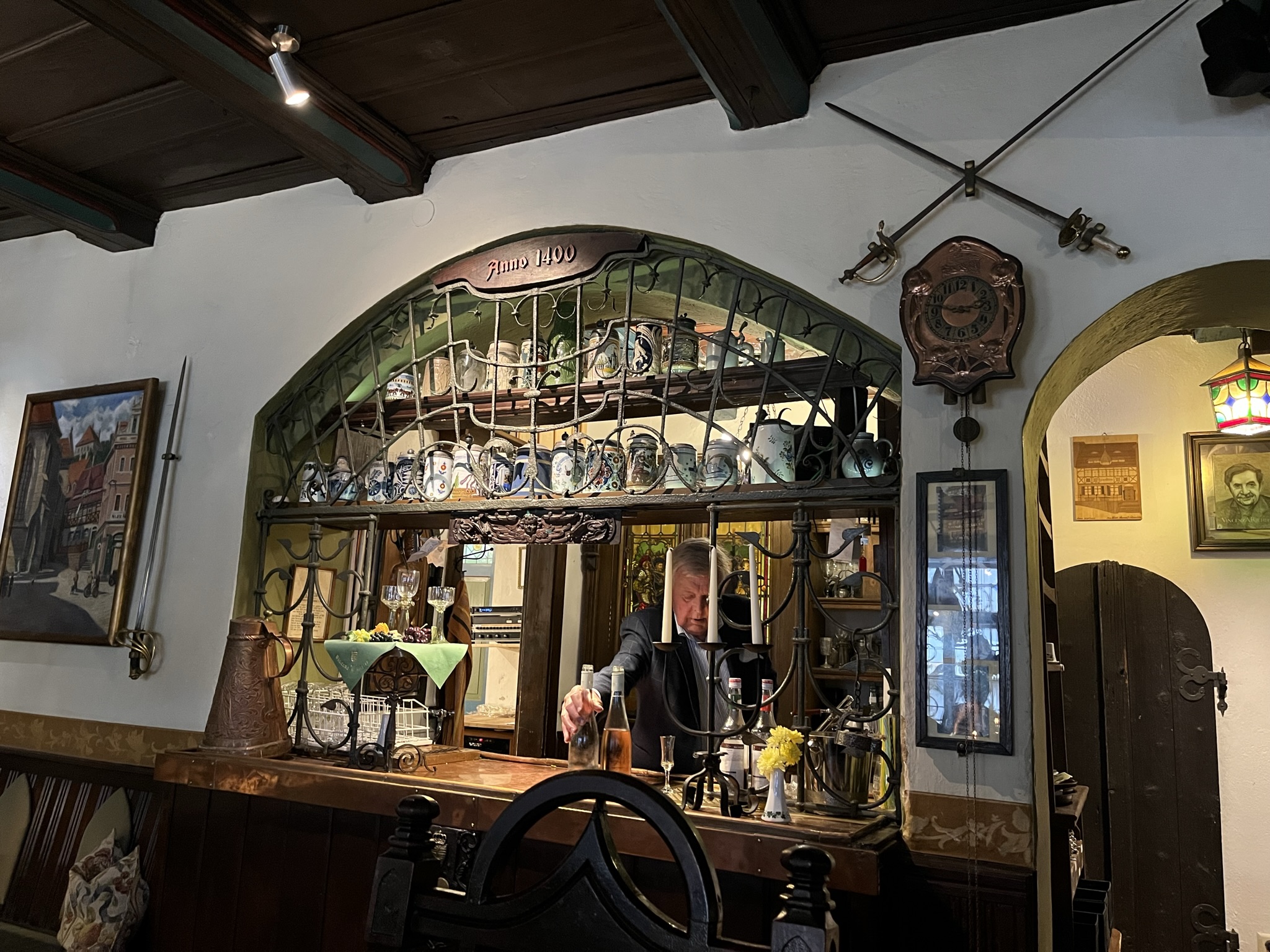
You’ll be sure to fumble that Fummel after a few glasses of wine here!Vincenz Richter wine restaurant in Meissen celebrates its 150th anniversary this year. The 500-year-old building that houses hundreds of antiques and historical items is known as one of Germany’s most romantic places. The family winery produces its delicious wine varietals on the steep slopes of Meissen’s Elbe River valley.
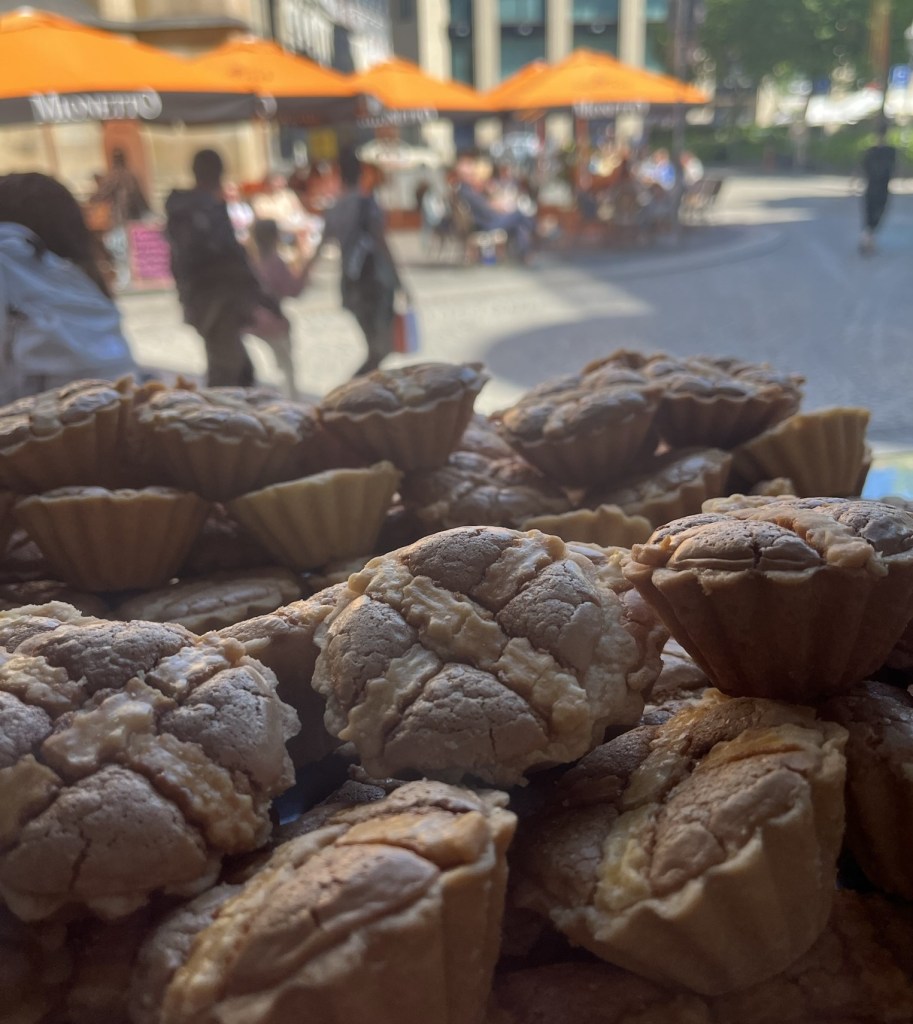
Leipziger Lerche The Leipziger Lerche (“Leipzig Lark”) dessert was born as part of the animal protection movement in the 19th century. Songbird larks used to be hunted and baked with herbs and eggs into a pastry crust and then served as a hearty delicacy. This culinary luxury was enjoyed in Leipzig and beyond, and many bird carcasses were bound in twine and shipped from Saxony to various countries around the continent for others to cook. The bird-baking business boomed, and the bird population declined. In 1876, after overhunting and a severe storm had killed off many of these birds, King Albert of Saxony banned lark trapping. To combat the suffering of this Leipzig business, some clever confectionaries in Leipzig then created a marzipan-stuffed shortcrust tart as a substitute for the traditional meat quiche. Now served in a small, fluted muffin cup, like a miniature pie, this baked good features two strips of dough crossed over the top to represent the trussing used to tie up stuffed larks. Beneath the ground almond and egg white mixture of the tartlet, there is often a cherry or dollop of jam to symbolize the heart of the lark. Kandler Konditerei in Leipzig is a popular source for “Kandler Lerche” pastries of this style, baked fresh daily and as naturally and preservative-free as possible, with numerous packaged options sold for a sweet, Saxony-specific souvenir.
Save a songbird and let Kandler Konditerei tempt you with a Leipziger Lerche.
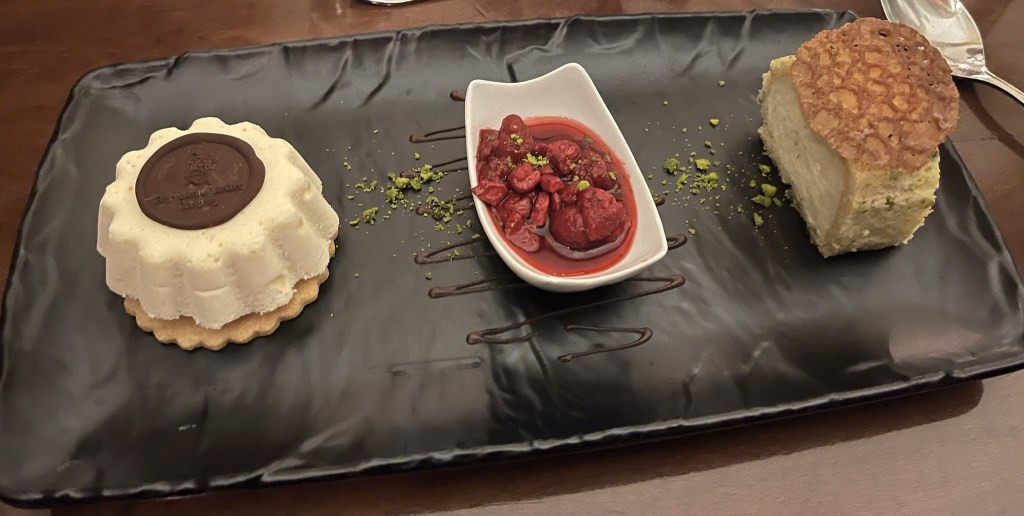
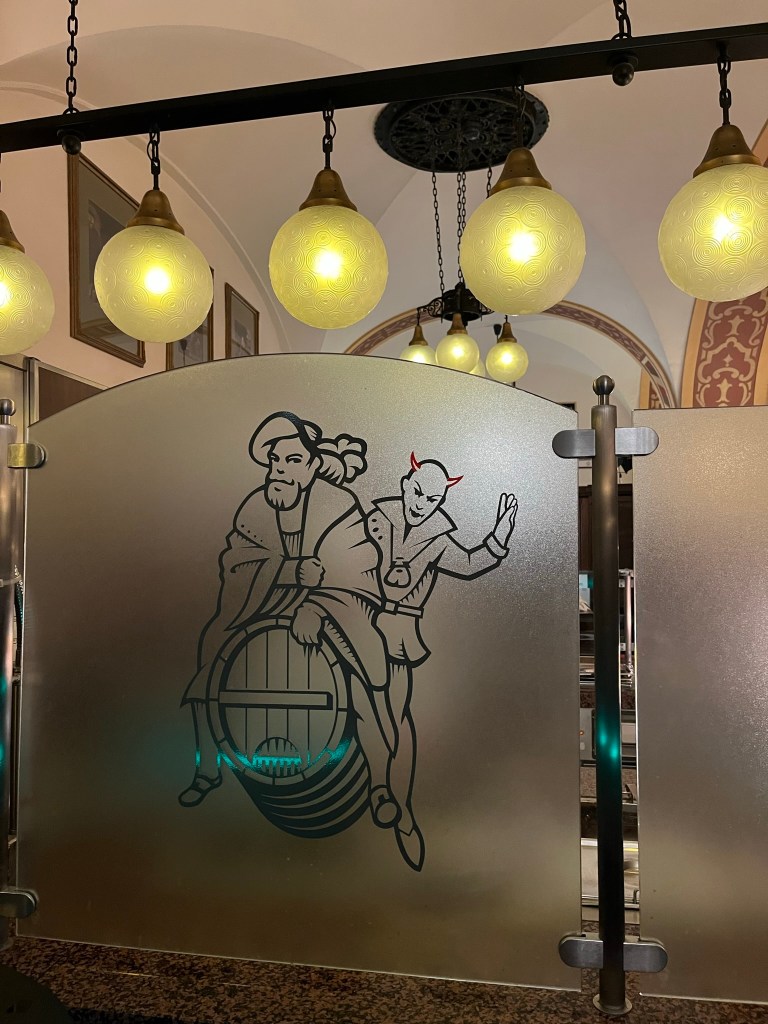
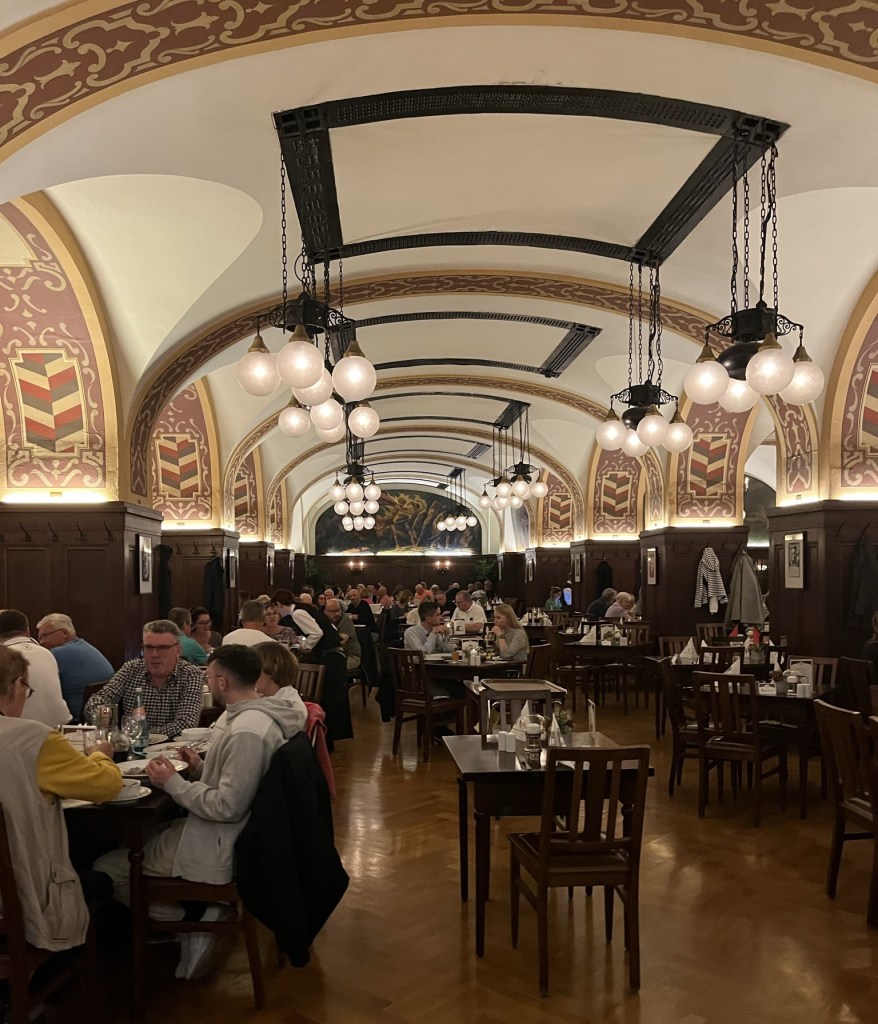
For a tasty variation of Leipziger Lerche, try the ice cream version served at Auerbachs Keller in Leipzig. This bundt-cake-shaped mound of ice cream is seated on a petaled crust and topped with a dark chocolate medallion stamped with “Auerbachs Keller Leipzig” and an image of Dr. Faust riding astride a wine barrel. Goethe and Martin Luther were regular guests of Auerbachs Keller, and it’s a treat to dine in the historic basement rooms of the Mädler Passage where they sat and to eat traditional Saxonian cuisine, including this new take on a famous regional dessert.
Auerbachs Keller Leipzig serves a special iced Leipziger Lerche with curd-cheese-lime-mousse and raspberry sauce.
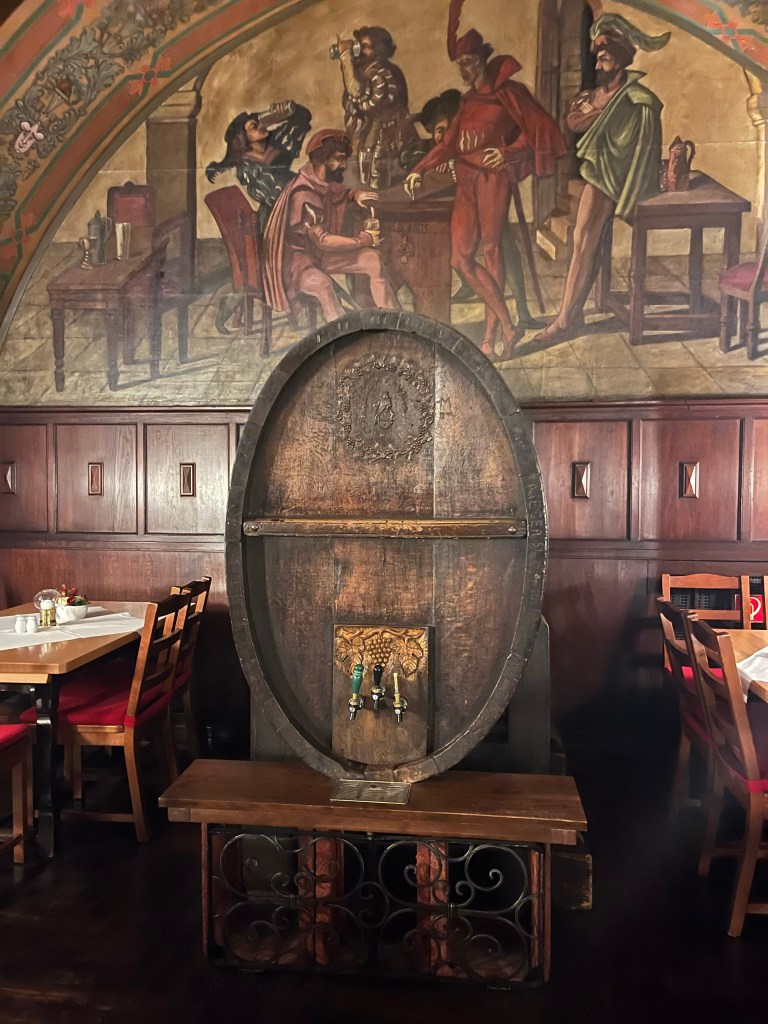
Auerbachs Keller in the Mädler Passage is the most famous and second oldest restaurant in Leipzig, and was one of the most popular places for wine in the 16th century.
Visiting Saxony? Take an audio guided tour through the Meissen Manufactory and visit the Meissen Porcelain Foundation Museum. Enjoy coffee and delicacies at the Café & Restaurant Meissen, where your snacks are served on fine porcelain and you can sample the specially created Meissen cake featuring the crossed swords trademark. Register for a porcelain casting class or creative workshop and make your own Meissen masterpiece—available for adults and kids alike—or personalize a Meissen coffee mug and have your unique creation safely shipped directly to your home. Sign up your kids for an etiquette class to learn the art of fine dining or join a themed specialty meal (brunch with organ recital, Advent dinner, Christmas dinner, or Ladies Crime Night dinner). The one-hour “Women at Meissen” social history class highlights the significant role women have played in the manufactory’s workforce since the 18th century. The “Tea, Coffee, and Chocolate” event is offered once a month and teaches participants about the three “pleasure drinks” that were popular luxury goods during the Baroque period and how Meissen porcelain played a role in providing many varieties of elegant drinkware.
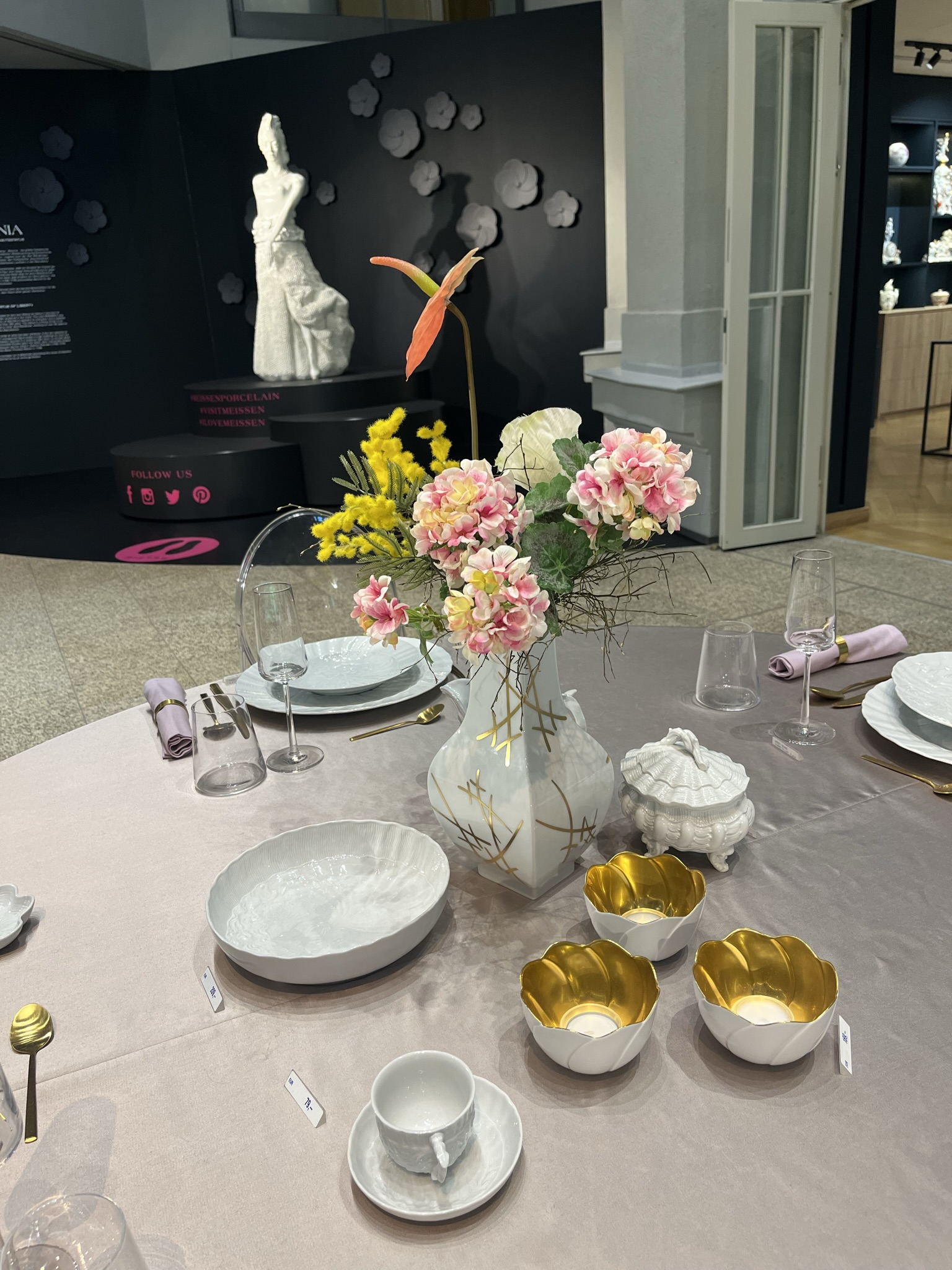
Meissen porcelain tableware makes every cake look better. Sweets and special place settings are a suggested Saxony souvenir.
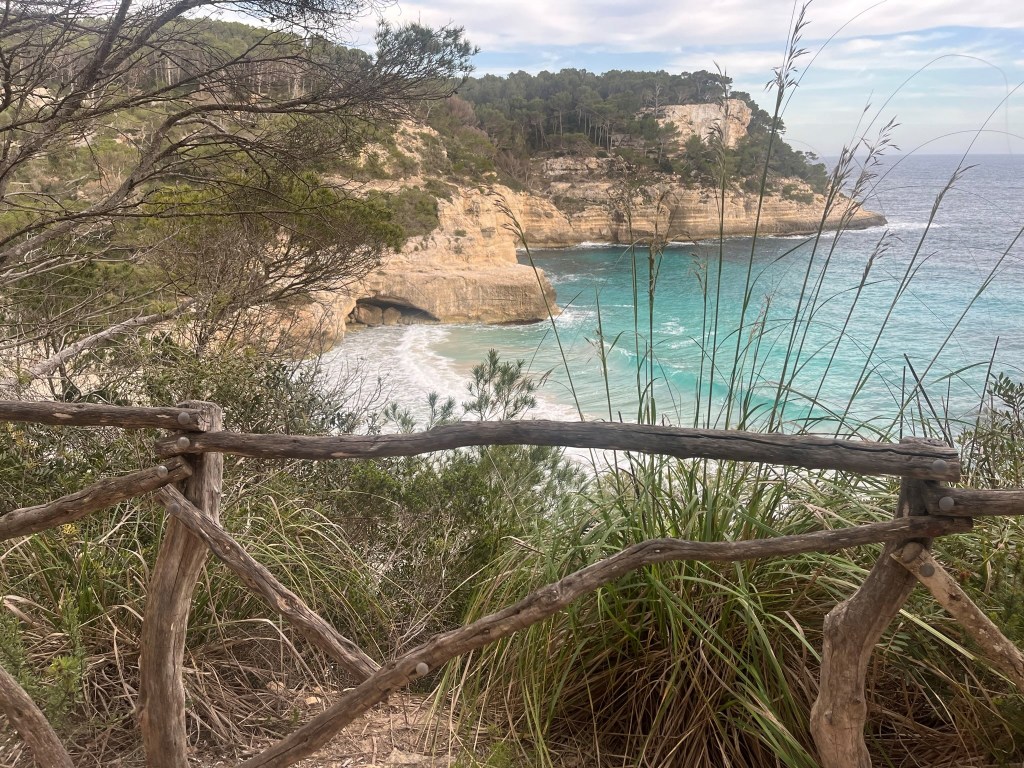
In the west Mediterranean Sea, the Balearic Islands’ Menorca makes the most of its natural resources. And for being only about 30 miles long and 10 miles wide, it has a lot! This haven of coves and turquoise water licking untouched white sand beaches has been a Biosphere Reserve since 1993, and due to its wide diversity of habitats and landscape it is UNESCO-designated as the headquarters for the World Network of Island and Coastal Biosphere Reserves for matters pertaining to sustainable development. Local farming practices focus on sustainability and preserving the island’s natural heritage. Using environmental resources found within the island’s ecosystem, resident farmers and artisans make a living from the offerings provided by landscape and livestock.
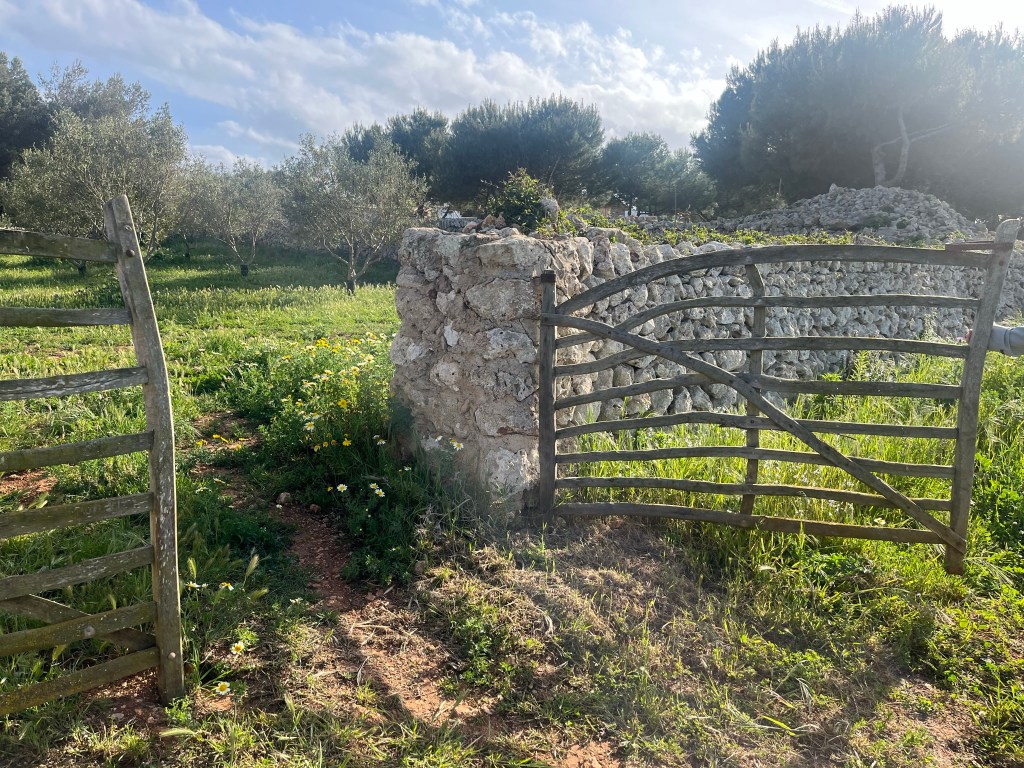
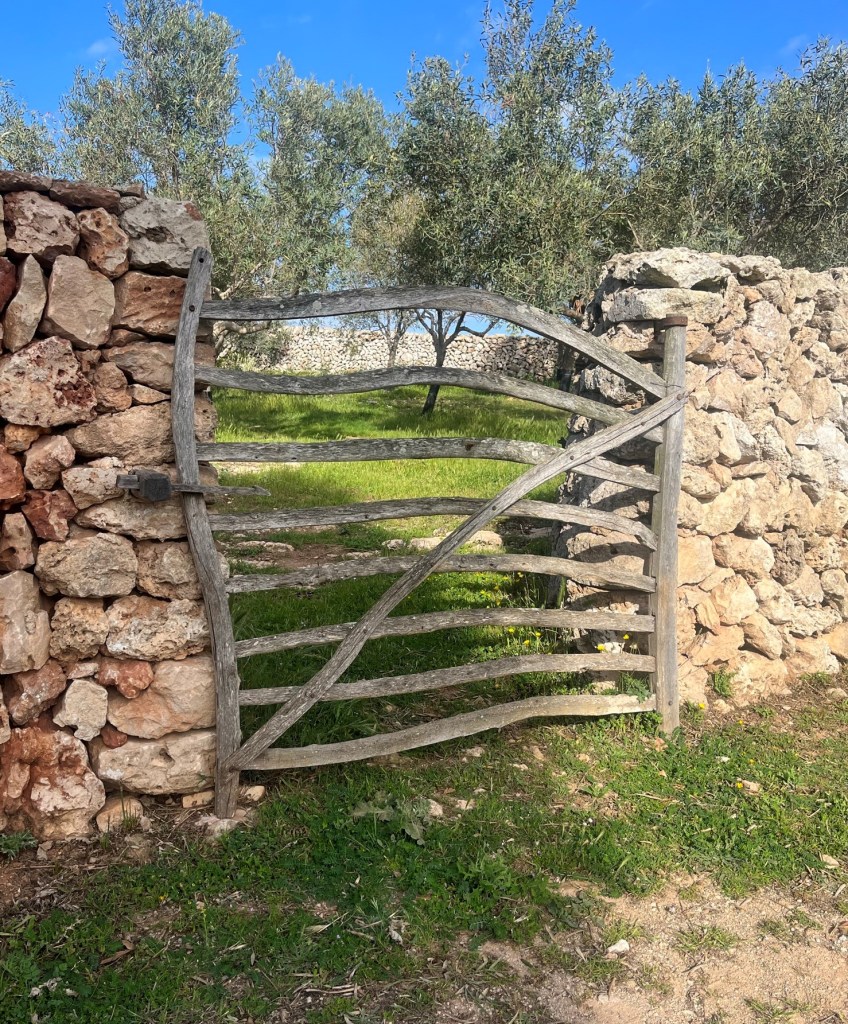
Across the island, wild olive tree wood is fashioned into fences to divide land and act as guard rails.
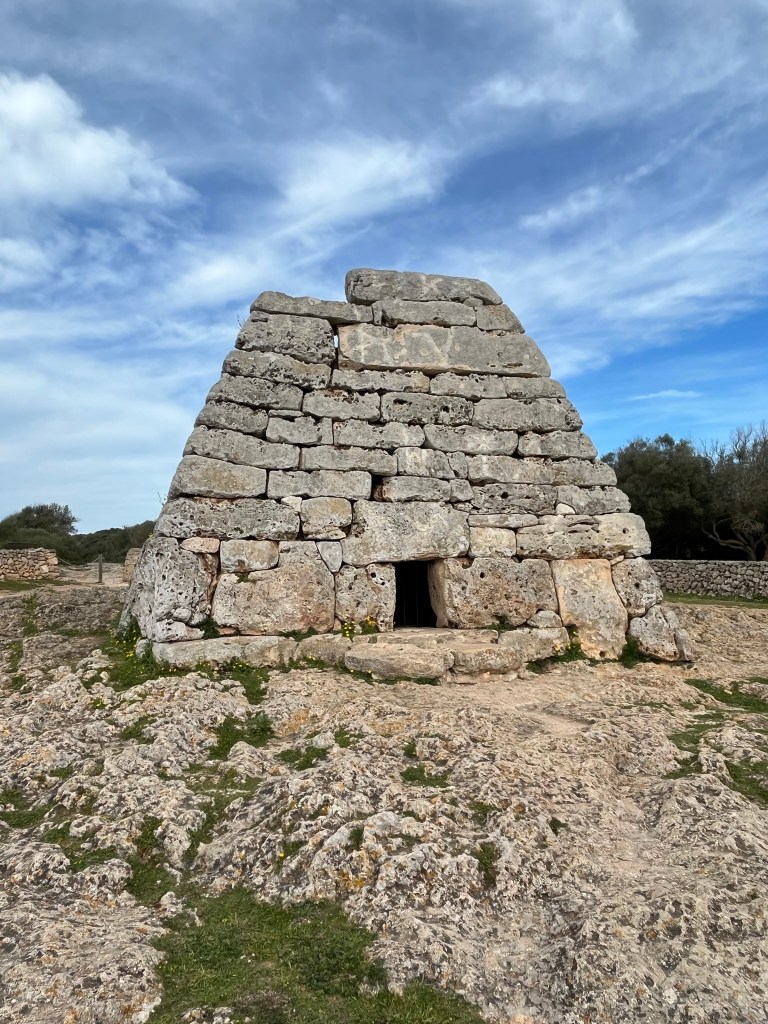
Menorca’s “mosaic landscape” of varying ecosystems consists of farmland, forests, and villages, with a bird’s-eye view revealing small plots of land divided by a network of dry-stone walls. Since ancient times, agrarians have gleaned rocks from the soil to build these mortar-less barriers that cover about 6,835 miles of the island (more than half the length of the Great Wall of China) and reduce erosion by blocking the wind from shifting soil to neighboring plots. Even the island’s prehistoric navetas (burial chambers) and talayots (shrines) were built by carefully selecting stones of varied size and shape, filling gaps with sand, and relying on gravity to secure them together.
(left) Unique to the island, Menorca’s navetas are pre-Talaiotic burial monuments shaped like an inverted boat and built using only large stone blocks. (middle) The island’s naturally rocky soil is gleaned to build stone walls that separate land plots. Wild olive trees with olives not suitable for harvesting are formed into farm gates using their distinctive, curvy wood. (right) Prevalent on Menorca are cement-free stacked-stone walls and sturdy gates crafted from wild olive trees.
Vineyards on Menorca are typically surrounded by these stone walls, a drainage situation that adequately waters the vines without leaving them overly damp. Local beverages created from the natural flora offerings of the land include the Vi de la Terra Illa de Menorca indication of quality wine, aromatic Menorcan gin (the oldest in Spain) produced using wine-based alcohol distilled with native herbs and juniper berries in old copper stills, and herb liquor digestifs.
The olive tree is another landscape prevalence, including the Spanish arbequina variety, which is used to produce a popular extra virgin olive oil with a mild, creamy flavor and slow kick. Oral history says the famous condiment mayonnaise heralds from Menorca, where the invading French Duke of Richelieu first tried the local sauce (a simple mixture of olive oil, egg, and salt) and brought it back to the French court, naming the recipe “mahonnaise” after the town Mahón. The oldest written source of Menorcan recipes is Art de la Cuina, a book by Fra Francesc Roger detailing the island’s cultural gastronomy in more than 200 18th century recipes, including a recipe for mayo using native olive oil. Not only are olives used for oil production, the strong wood from wild olive trees whose olives aren’t large enough to harvest is crafted into rustic, swing farm gates in a distinctive curvy design seen all across the island.
The oldest written source of Menorcan recipes is Art de la Cuina, a book by Fra Francesc Roger detailing the island’s cultural gastronomy in more than 200 18th century recipes, including a recipe for mayo using native olive oil.
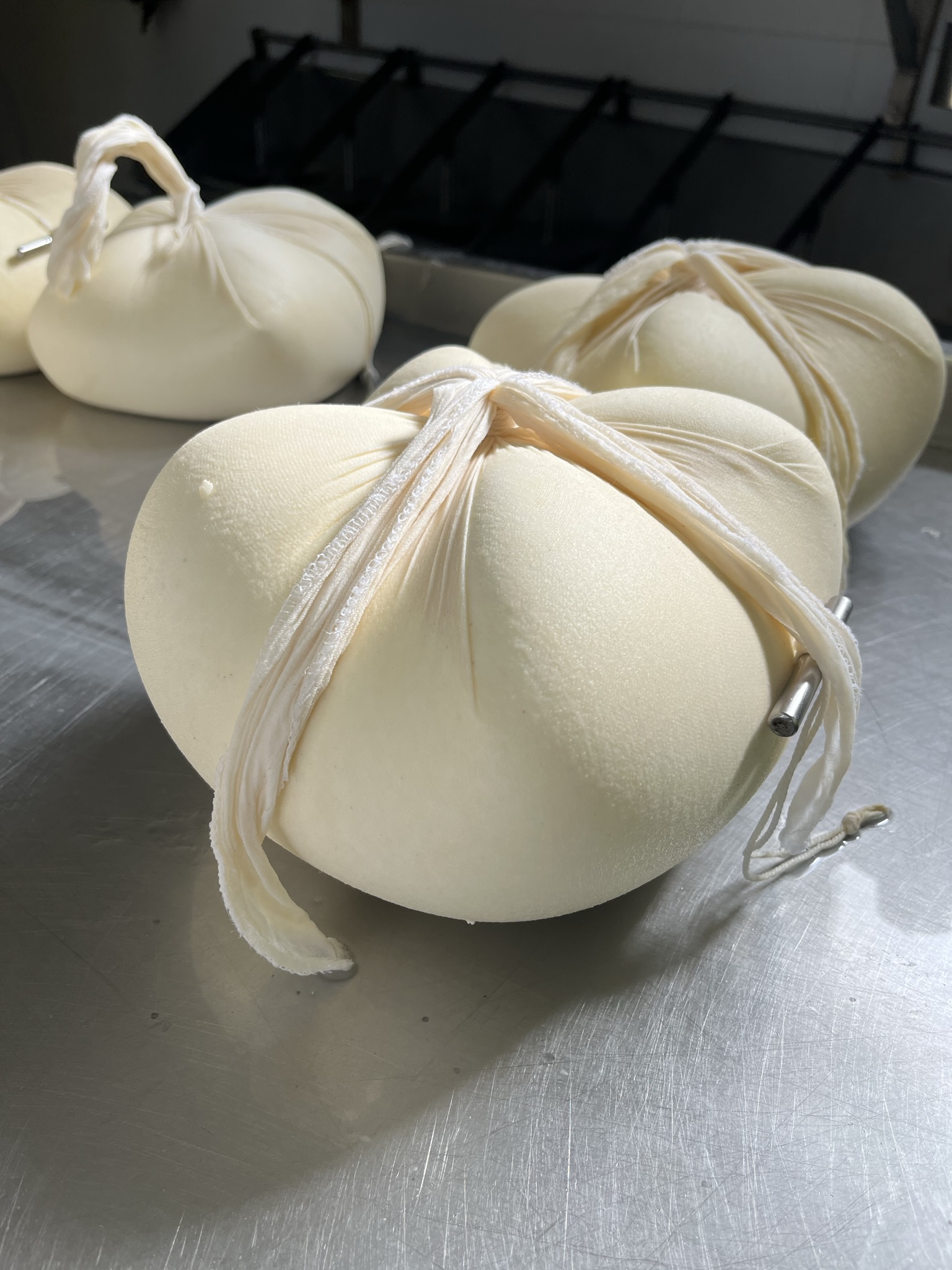
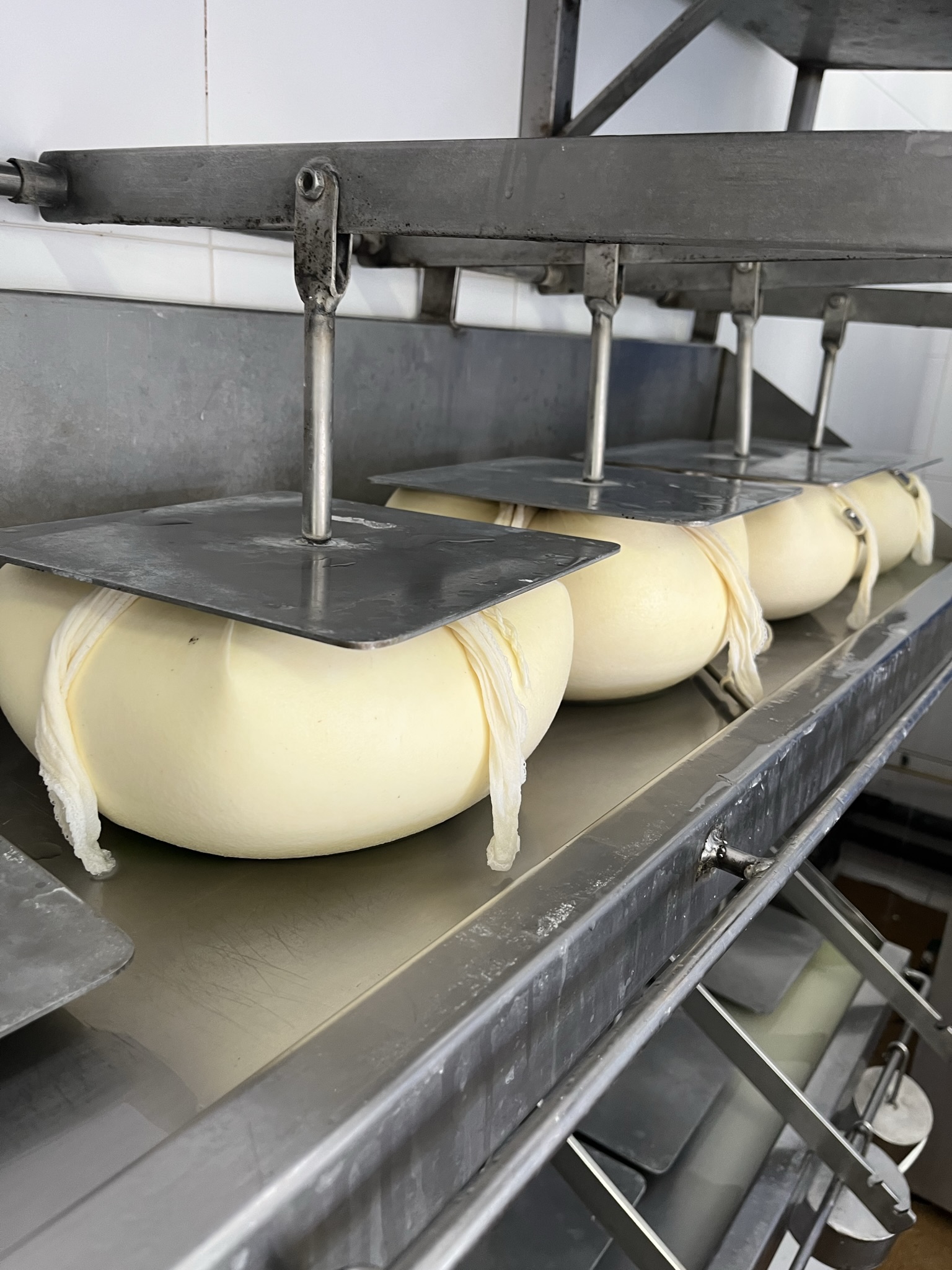
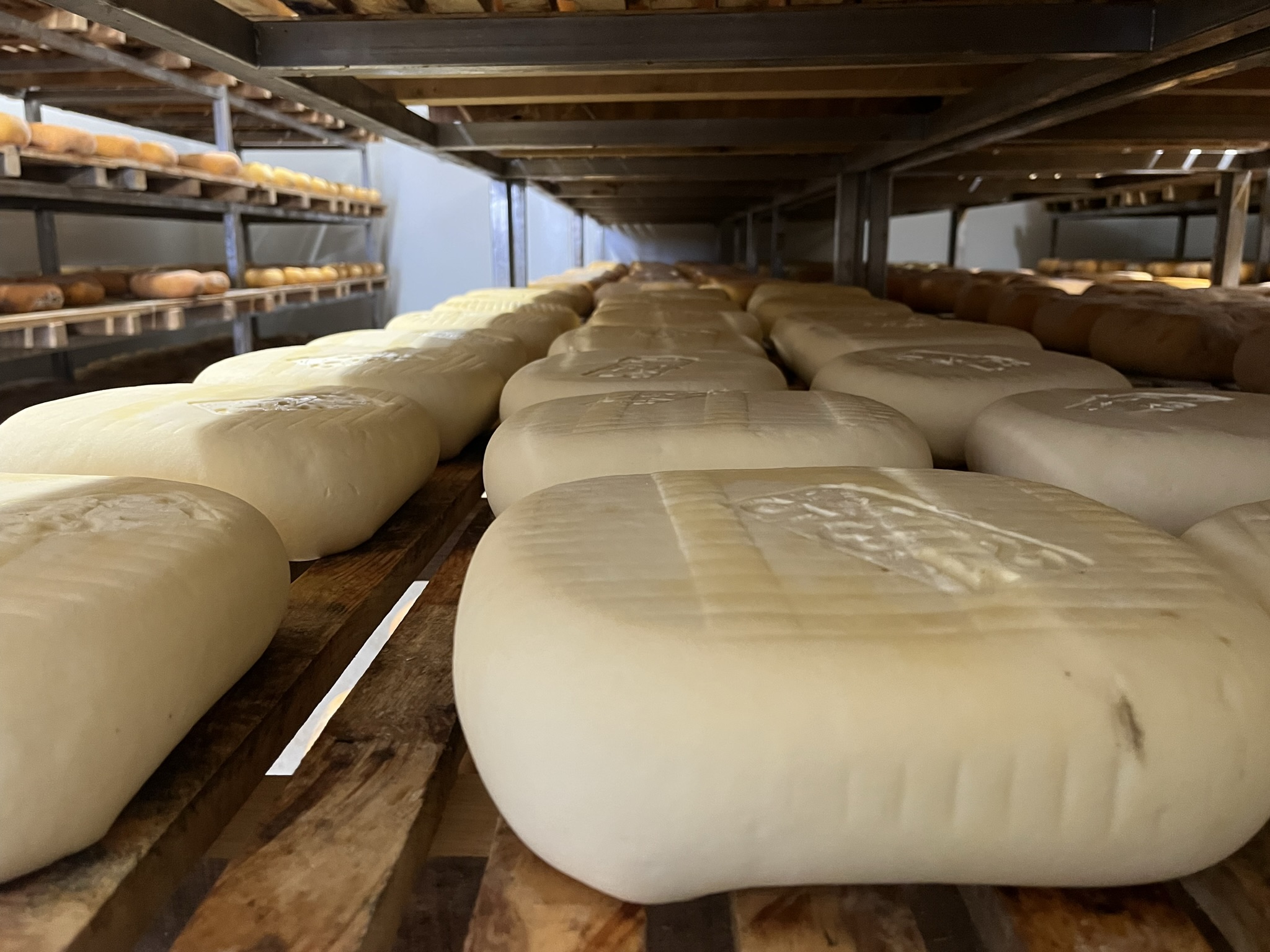
Using age-old methods, farmers use milk from Menorcan cows to produce rounded-edge square blocks of Mahón-Menorca Denomination of Origin cheese with a flavorful, oily dark rind (even Arabic documents from the year 1000 describe the tasty qualities of cow’s milk Menorcan cheese). Farms like Son Piris produce artisan cheese (made with raw milk and intended for immediate consumption) or the more industrialized and slightly sweeter pasteurized-milk cheeses. Martina Fedelich of Son Piris explained that it is difficult to imitate the Menorcan bacteria used in their cheese, as they are unique and isolated from other cheeses and even differ from those on neighboring island Mallorca. Easy to identify, Mahón-Menorca cheese’s unique shape comes from the cheesecloth used during the pressing process, and fabric lines from the cloth remain visible in the rind.
(clockwise from upper left) The unique shape of Mahón-Menorca cheese comes from the cheesecloth used during the pressing process, and fabric lines from the cloth remain visible in the rind; Son Piris cheeses are wrapped tightly in cheesecloth, which holds together the solid cheese curd while allowing for drainage of liquid whey; Wrapped cheeses are pressed to remove excess moisture; After their tightly wrapped cloths are removed, the cheese is set out to dry; Martina Fedelich of Son Piris serves the famous farm-to-table Mahón-Menorca Denomination of Origin cheese.
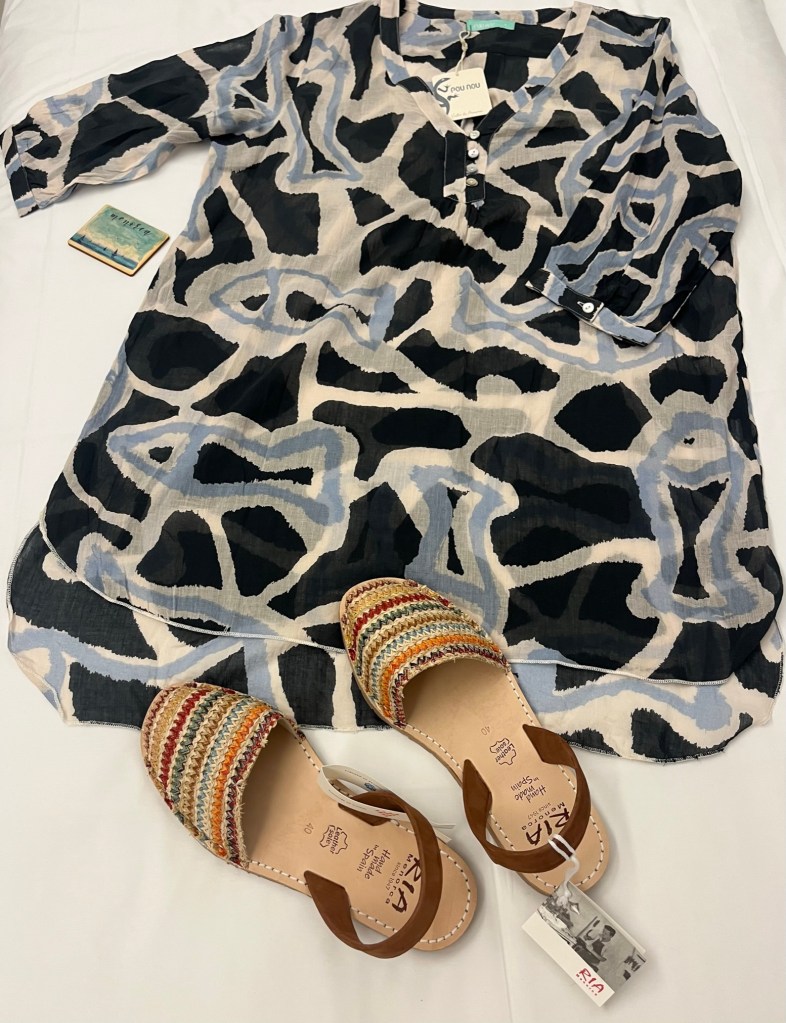
Agriculture is a key trade on Menorca; however, the most important manufacturing business on the island is shoe design and production—an industry dating back to the 18th century. Footwear made in Menorca is known for its high quality and meticulous craftsmanship. The most famous sandal shape, with a cowhide leather upper and sole, was first created to protect farmers’ feet while working the rocky soil. Nowadays, these avarcas (also called abarcas or menorquinas) are sold with heels and straps of all styles and colors, but use recycled tires as a hardy sole. Popularity and production have been increasing especially over the past few years, and they are worn by Menorcans and visitors alike.
RIA brand avarcas fashioned from leather with a colorful woven upper are a stylish update to traditional peasant footwear. Pou Nou clothing motifs echo the sea life and landscape of the island, like this fish-print tunic in shades of blue.
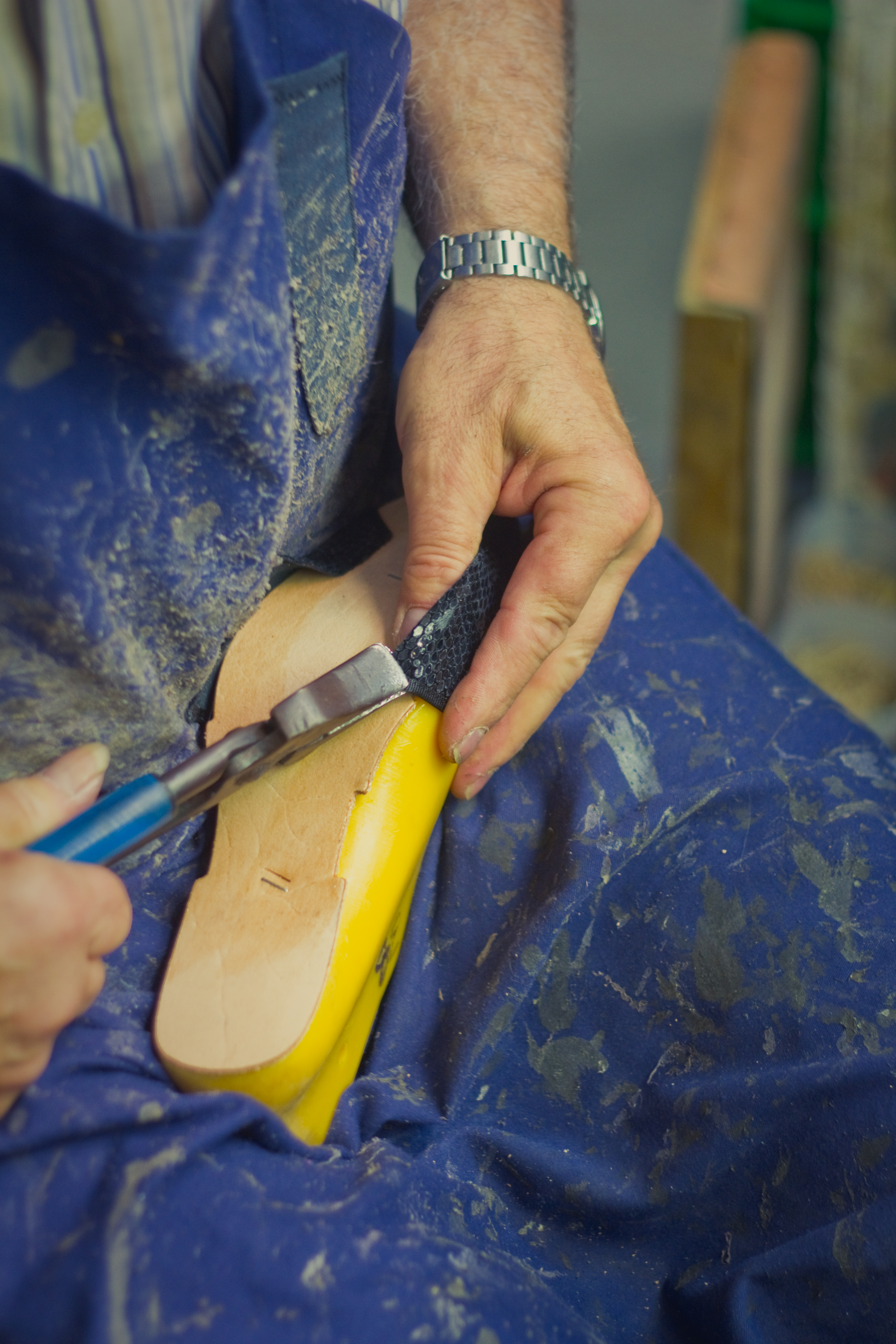
Avarca company MIBO proudly carries the Avarca de Menorca hallmark—another island-specific denomination of origin—which guarantees that their footwear is crafted locally and made with high-quality materials. Founded in 1998 by Miguel Pascual and Bosco Moll, MIBO designs and manufactures these iconic Menorcan sandals using traditional methodology combined with modern technology. Moll said, “The process to make a pair of avarcas from Menorca has about 25 operations, which all need the hands of craftsmen to be able to make them. We also use technology that helps the craftsmen, but it always requires expert hands. … The future of our product and our brand passes through the qualified training of our craftsmen-workers since there are no schools or training cycles that help this task.”
(left) A traditional style with modern updates, some MIBO avarcas feature trendy details like cut-outs, bows, and textured mosaic prints. (right) A MIBO artisan carefully guides a hallmark-stamped leather sole through machine stitching. Photos courtesy of MIBO.
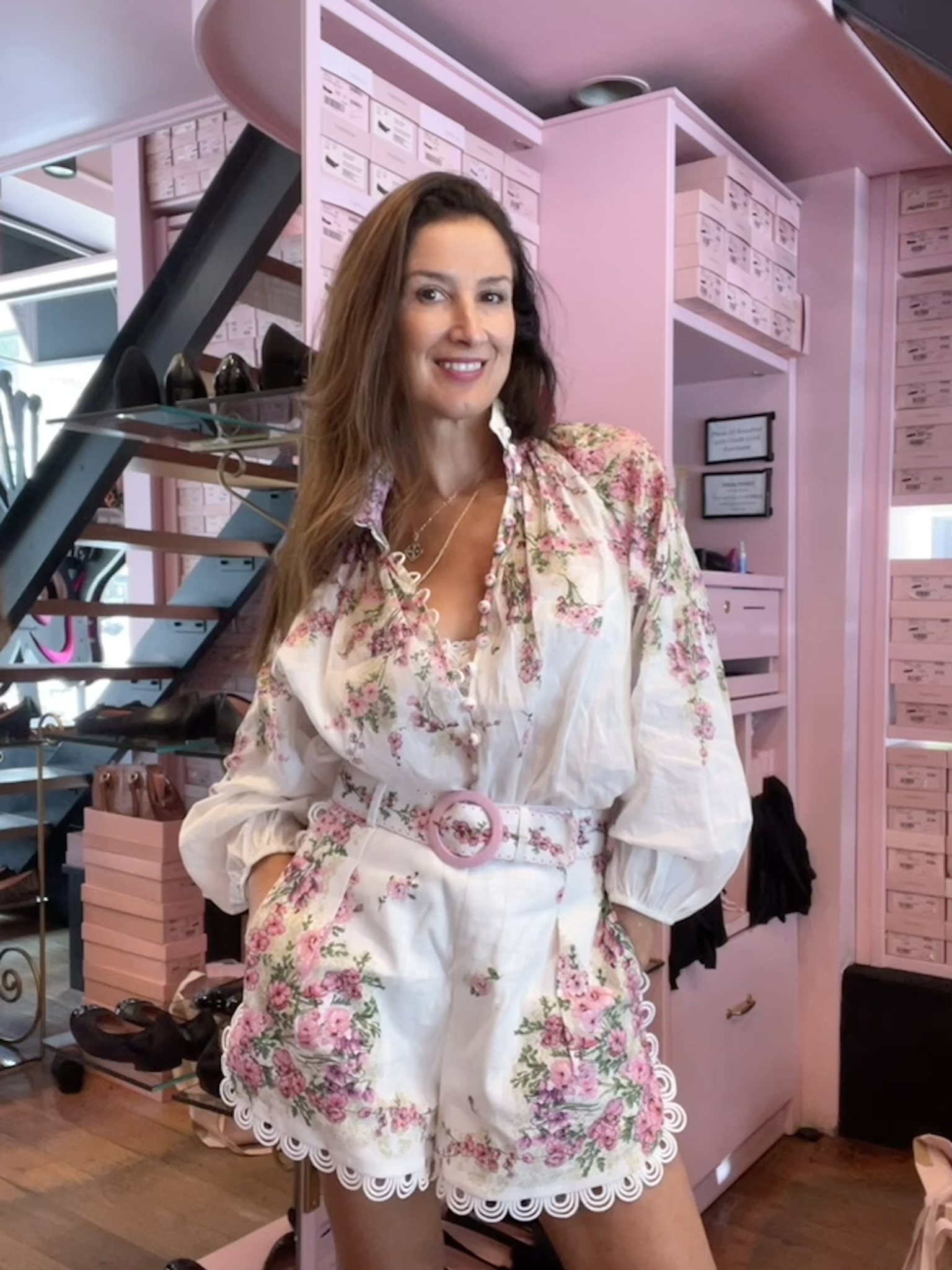
Another prestigious Menorcan shoe brand known internationally for its impeccable quality and innovative designs is Pretty Ballerinas, a unique line of leather flats produced by the Mascaró Group footwear company. These fashions have been famously worn by Kate Moss, Kate Middleton, the Queen of Spain, Elle Macpherson, Claudia Schiffer, and Angelina Jolie, among other celebrities. Fanny Cano, vivacious franchisee and owner of Pretty Ballerinas U.S. (the sole U.S. store, located in New York City), was born on Mallorca and has worked for the Mascaró brand since 1998. Fanny said:
“I love when through our very personal customer service we get to transmit to our customers the island’s vibes. They know they are wearing a unique piece crafted by hand on a small island in the Mediterranean. They feel the quality and the time invested in their pair of shoes. Explaining to the clients where and how the shoes are made—in a very artisanal and old-fashioned method—it really helps them to get tele-transported to the smell of the leather, the artisan hands sewing the shoes, mixed with the breeze of the sea and the taste of the food.”
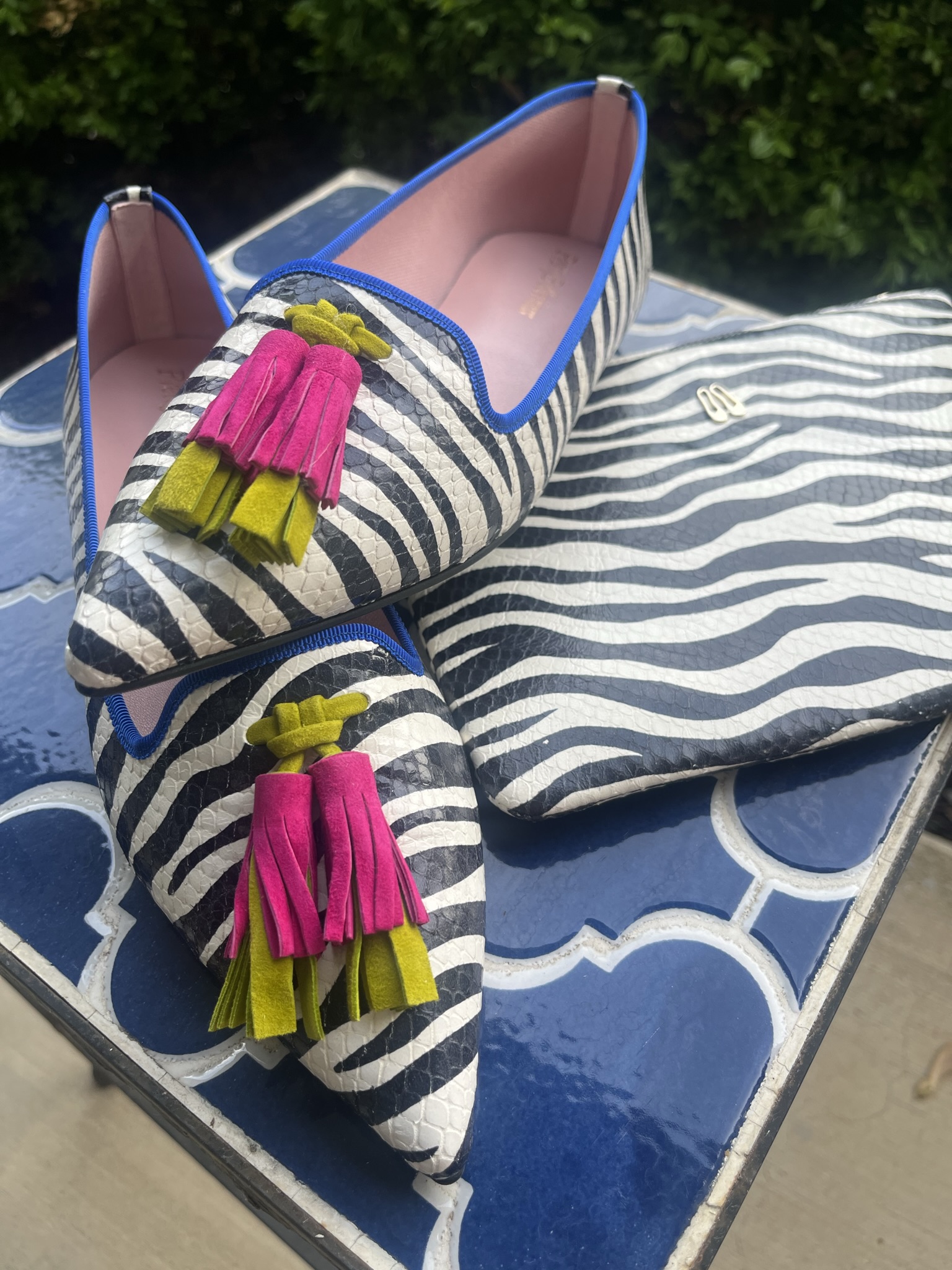
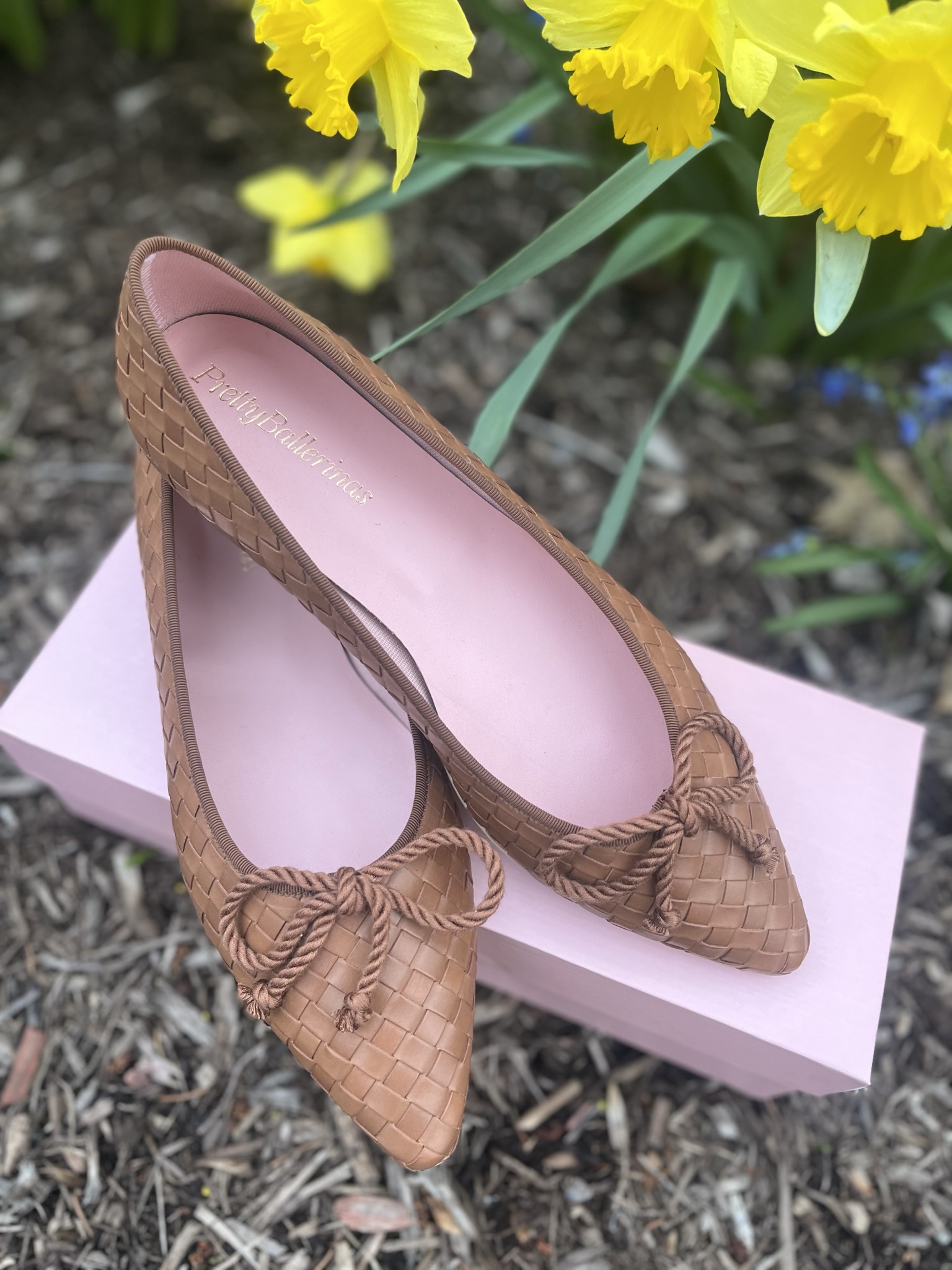
Fanny Cano, Pretty Ballerinas franchisee and owner of the New York City store, poses before the iconic pink boxes and glamorous storefront that identify this high-quality brand of Menorca-made women’s leather flats. Easily identifiable by a pink lining and stamped ballerina slipper icon on the underside, Pretty Ballerinas flats and matching handbags exhibit a unique style and luxurious leather silhouette. Top-left and bottom-right photos courtesy of Fanny Cano.
Woodworking, earthenware, basket weaving, traditional llaüt wooden boat carpentry, and other crafts using fabrics, stone, and paper are sold in island shops and markets during the summer months. The quality of local, professional artisans’ work is acknowledged by the Artesanía de Menorca (Craft of Menorca) hallmark, and the Centre Artesanal de Menorca (Artisan Centre of Menorca) at the Es Mercadal fairground exhibits and sells many of these handmade products.
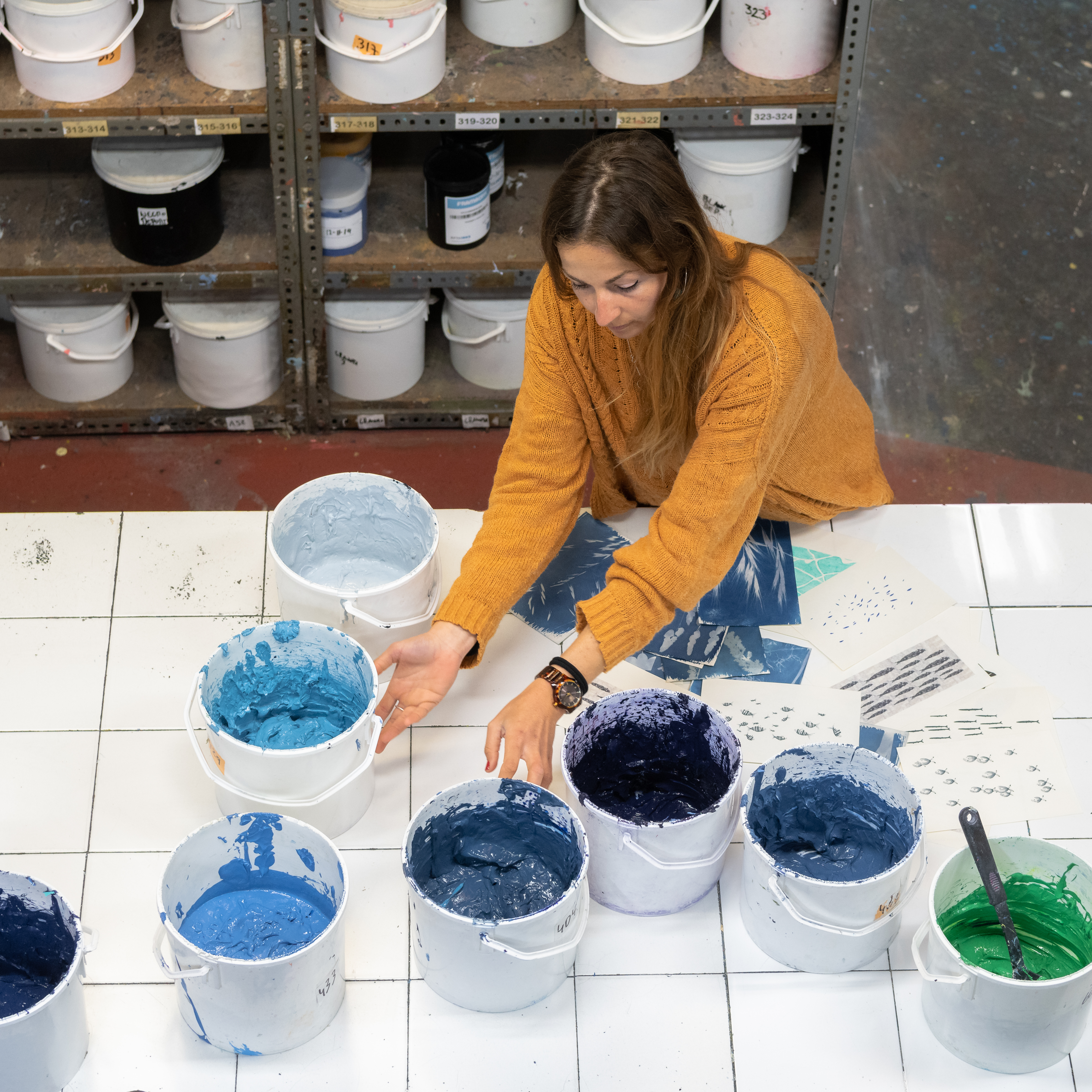
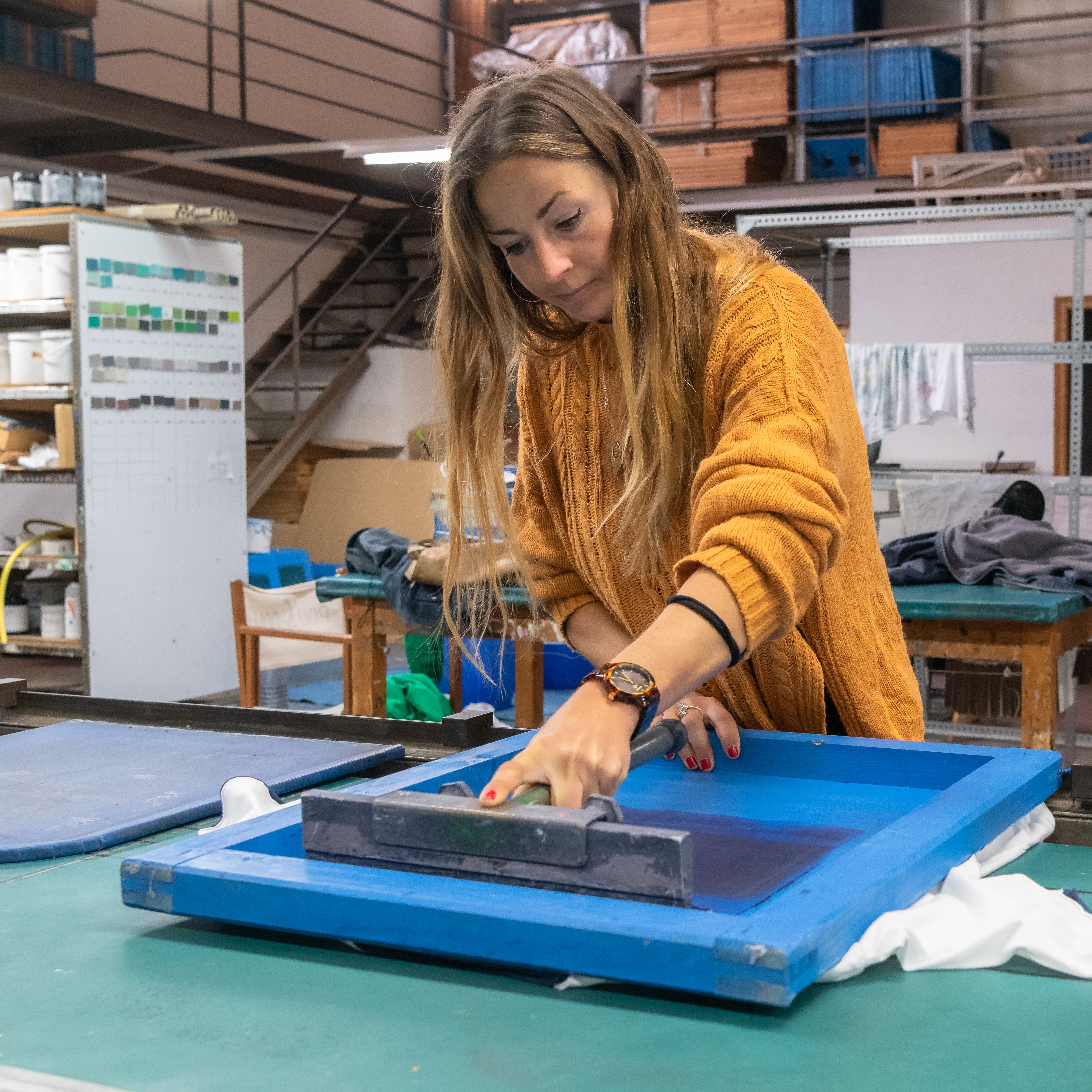
A Menorca-born leader in local artistry is Pou Nou clothing company, whose designers work closely with area artists to produce contemporary designs and stylish garments that reflect the colors and shapes of Mediterranean life. Drawing inspiration from the sea, sky, and island itself, Pou Nou creates hand-printed T-shirts and breezy, comfortable fashions for all ages using natural fibers like linen and cotton.
(clockwise from left) Pou Nou team members select nature-inspired artwork for clothing designs; Pou Nou colors and designs are inspired by Menorca’s flora and fauna, sea, and sky; Using a Mediterranean-inspired color palette, a Pou Nou team member tests a screen-print design. Photos courtesy of Pou Nou.
Collaboration with local artists results in Pou Nou’s unique island-wear designs.
Owner Joan Carrés said, “I am proud of having been in the business for 36 years, following my original idea of combining good quality garments with original artwork from local artists.” Pou Nou’s easy-to-wear styles and unique artist collaborations feature screen-printed sea creatures, flowers, geckos, insects, boats, bikes, palm leaves, and nautical themes. With Pou Nou only available for purchase in Spain and other European countries, U.S. travelers looking for this island-wear can reach the Balearic Islands by flying directly from New York/Newark (EWR) to Palma de Mallorca (PMI) through United Airlines’ new, seasonal direct flight offerings. Menorca has been like a hidden treasure for many years, largely reached only from mainland Spain, but these new direct flights from the United States allow easier access to Menorca-made specialty items and scenic views of iconic landscape features. The island’s varied ecosystems and natural offerings provide ample resources for a thriving artisan business, with agriculture, footwear, fashion, and handcraft industries using materials and inspiration offered by the beautiful land and sea.
In Germany, the arrival of asparagus, or Spargel, is an eagerly anticipated sign of spring.
Baden-Wuerttemberg is Germany’s third largest state and home to the famed Black Forest, the premier spa town Baden-Baden, Cuckoo clocks, and one of the most productive asparagus regions in Germany. Located in southern Germany and west of Bavaria, Baden-Wuerttemberg also borders France in the west and Switzerland and the Alps in the south.
In Germany, the arrival of asparagus, or Spargel, is an eagerly anticipated sign of spring. During the season, which lasts from April until mid-June, almost every eatery in Germany, from the tiniest Brauhaus to the most elegant restaurant offers a Spargelkarte, a special asparagus menu, in addition to their regular menu.
Although there are variations depending on the region, most have the same staples: asparagus with butter or hollandais; with cooked potatoes; and asparagus with salmon or ham. You can also choose between a serving of one pound or a half pound of asparagus; some restaurants even offer an all-you-can-eat feast. In Baden-Wuerttemberg a regional speciality awaits the hungry guest: Black Forest ham, a spiced and smoked version of ham.
Baden-Wuerttemberg has established an “Asparagus Road” which winds through some of the most famous asparagus producing towns in the region, including Schwetzingen, Reilingen, Karlsruhe and Rastatt. Along with asparagus farms, visitors can delight in various asparagus festivals and enjoy local asparagus dishes found along this scenic route. In fact, the sandy soil around Schwetzingen in Baden-Wuertemberg is ideal for growing asparagus, and it has helped this area become famous for its excellent quality of asparagus.
Once a year during the asparagus season Schwetzingen devotes an entire day to the “royal vegetable.” On “Asparagus Saturday” (May 3) a plethora of food stalls tempt visitors with asparagus-based delicacies, while dancing and music keep visitors entertained. The day just wouldn’t be the same without its asparagus peeling competition, and every year the program includes the crowning of the asparagus king. (www.schwetzingen.de – German only)
The Pfaelzer Forest in Baden-Wuerttemberg’s northwest corner is famous for its asparagus production and the spring festival celebrating this. In Buechenau the asparagus season is celebrated with creative and traditional asparagus treats, presented by local and international exhibitors from May 31 to June 2. (www.harmonie-buechenau.de – German only)
Europe’s largest asparagus festival however is held in Bruchsal, near Stuttgart, which lies on the Upper Rhine plain. Local and international vendors offer visitors a tasty delight from May 16 – 18. Visitors can also admire the baroque palace of Bruchsal with its magnificent Balthasar Neumann staircase. (www.germany-tourism.de)
Along with the tasty asparagus dishes goes another specialty of Baden-Wuerttemberg: the famous wines of the region. Mostly known for its red wines, the variety in Baden-Wuerttemberg ranges from the famous reds including “Trollinger” and “Spätburgunder” to white wines such as “Riesling.” The main production area is along the Neckar river between Stuttgart and Heilbronn. More wine is consumed in this region than anywhere else in Germany–actually twice as much! The grape varieties of the red wine Trollinger, Schwarzriesling and Lemberger are well-known even beyond Baden-Wuerttemberg’s borders and have received various international awards.
Liechtenstein is a small country with a big appetite for good food.
Wedged in between Austria and Switzerland, this country of only 62 square miles is bisected south to north by the Rhine River, with majestic mountains rising steeply on both sides of the lush Rhine Valley. Corn, cabbages, beets, onions and asparagus grow on the fertile Rhine plain. Wild game such as deer, boar, pheasant and grouse roam the forests and meadows on the mountainsides, and silvery trout swim in the cold Alpine streams.
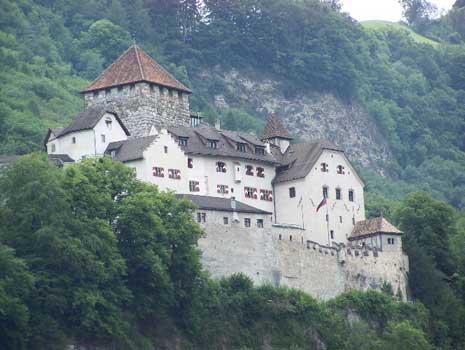
Perched high on one of the mountains, the medieval castle of the princely family of Liechtenstein towers over Vaduz, the capital city (population 5,500). Liechtenstein is officially a principality, where the Prince still rules as a hereditary monarch in conjunction with a democratically elected parliament. The Prince also owns the Hofkellerei (Princely Wine Cellars) in Vaduz, where you can taste his excellent wines. Afterward, walk along an educational wine trail in his local vineyard, where detailed signs describe the 50 different grape varieties growing there. More than 100 other vintners throughout the country also produce red and white wines of their own.
ALPINE FUSION FOOD The cooking of Liechtenstein is a creative combination of German, Austrian, Swiss, Italian and French culinary influences, producing a kind of local “Alpine fusion” cuisine. Soups are especially popular, from hearty meat-and-vegetable stews (split pea and sausage, smoked pork and sauerkraut) to elegant foamy white-wine soups served in stemmed glasses. Asparagus is a favorite vegetable, and the primary meats are beef, pork, and mountain trout.
Dumplings and potatoes are the main starches of traditional Liechtensteiner cooking, which includes shredded potato pancakes like Swiss Rösti and a variety of dumplings made from wheat flour, cornmeal or potatoes. Cheese is an important ingredient in the cuisine, from rich Alpine hard and semi-soft cheeses to Sauerkas, a kind of lightly aged fresh cheese made from soured milk. Desserts are as rich as you’d expect in a country situated between Austria and Switzerland. And wine has an important place on the table, befitting a country that prides itself in its small, but high quality, wine industry.
There’s a big difference between farmhouse fare in an Alpine climate and the fine cooking of Liechtenstein’s shrines of haute cuisine, several of which have garnered Michelin stars and high Gault Millau ratings. In the rustic restaurants you’ll find the stick-to-your ribs dishes like breaded pork cutlets, fried chicken, roast pork and Käsknöpfle, a large portion of little egg dumplings (like German-Schwabian Spätzle) tossed with a copious amount of cheese and garnished with plenty of crisply fried onions. Known as Liechtenstein’s “national dish,” Käsknöpfle is usually served with a separate portion of applesauce or a green salad, to counter the richness of the cheese.
FINE DINING Only 36,000 people live in this wealthy little enclave in the heart of Europe, where banking and financial services produce a GDP per capita that puts Liechtenstein in the top tier of the world’s richest countries. Such wealth supports a number of fine restaurants, rated among the best places to dine in Europe. These high-end restaurants tend to focus on lighter fare, artistically arranged on fancy plates—the kind of cuisine that combines respect for the country’s culinary traditions, an emphasis on local, seasonal ingredients and the imaginative use of modern kitchen techniques.
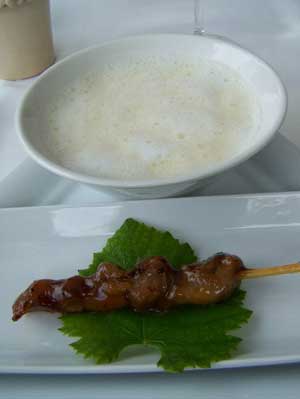
Highly acclaimed by many restaurant guides, chef Rolf Berger’s Restaurant Torkel serves haute cuisine in a beautiful setting. Located in a historic medieval building that was once a wine press, on the grounds of the royal vineyards in Vaduz, Restaurant Torkel is known not only for the quality of its cooking and its delightful ambience, but also for its excellent wine cellar. Choices on a recent daily menu in the summer included a delicious white wine soup with small yakitori dumplings on a skewer, Swiss prime beef filet in Port wine sauce, grilled sea bass in foamy smoked trout sauce, fresh berry parfait garnished with more berries and a good selection of cheeses. In nice weather, the perfect place to dine is on the pleasant stone-paved terrace overlooking the lush vineyards and the dramatic mountains beyond.
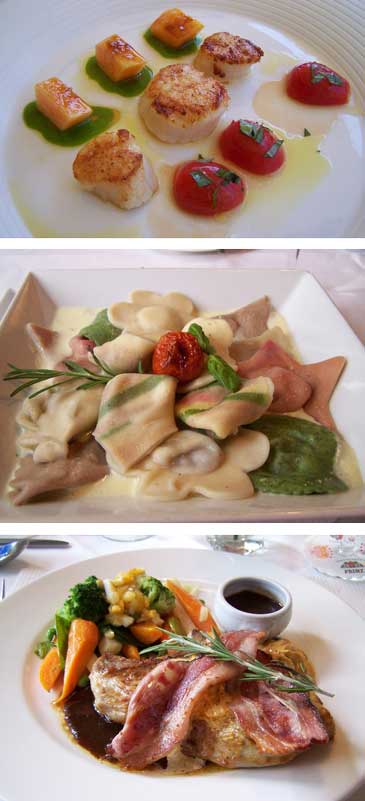
Another outstanding restaurant in Vaduz, the Marée at the Park Hotel Sonnenhof has won one Michelin star, two Gault Millau toques, and numerous other accolades. This is the place for fine dining in luxurious surroundings, from the elegantly furnished dining rooms to the large covered terrace facing the mountains and surrounded by gardens. The menu changes seasonally, four times a year, and features both traditional and modern dishes, all prepared with a light touch and plated artistically. Selections at a recent summer lunch included an appetizer of roasted scallops with melon, tomatoes, and fresh basil, followed by a main dish of crispy glazed breast of pork with fresh chanterelle mushrooms and cherries. Notable desserts were the colorful artist’s palette of house-made sorbets, and the basil sorbet with fresh strawberries and elderberry foam.
TRADITIONAL INNS For very good food at reasonable prices, the Landgasthof Mühle is the place to go. Located on the site of an old mill on the edge of Vaduz, this lovely little inn offers an interesting menu that matches the quality of the restaurant’s décor. Try the creamy Vaduz wine soup or the excellent house-made terrine with a large salad, followed by multicolored ravioli with foamy herb sauce, and elderberry sabayon garnished with fresh berries for dessert. Highly recommended for the quality of the food, large portions and friendly staff.
Long a favorite of locals and tourists alike, the Wirtschaft zum Löwen in Schellenberg is a traditional old inn located in a wood-shingled farmhouse with red geraniums blooming in the window boxes. Dine in one of the cozy, wood-paneled dining rooms or on the pleasant terrace with a spectacular view across the border to Austria. House specialties include the head cheese with onion rings and mustard sauce, and classic Käsknöpfle, those cheese-drenched dumplings with applesauce and green salad. Large portions of good traditional food served in a nice setting.
MOUNTAIN HIGHS Located in the Vögeli Alpenhotel in Malbun, a ski resort 5,000 feet above sea level, the Restaurant Alpenhotel is a cozy, rustic, pine-paneled restaurant—just the place where you want to retreat after a long day of hiking in the Alps or skiing down the mountainsides. The food is good here, and the portions are huge, apparently to satisfy those hungry hikers and skiers. The extensive menu seems to have something for every taste, including hearty meat dishes, a variety of big Rösti potato pancakes with garnishes, several pastas and cheese fondue. Warm up with garlic cream soup or creamy pumpkin soup with Styrian pumpkin seed oil, then chow down on the house-made game bratwurst with onion sauce, or deer Schnitzel with mushroom sauce. Be sure to save room for the traditional desserts (crêpes with chocolate sauce and whipped cream, battered-and-fried apple slices with vanilla sauce) or a big slice of the excellent cakes.
The Hotel-Restaurant Galina in Malbun is run by another member of the Vögeli family who owns the nearby Alpenhof hotel and restaurant there. At the Galina, the talented Norman Vögeli wears several hats: the hotel’s manager and falcon master (he stages an interesting falcon show several times a week), as well as the restaurant’s chef and pastry-maker (he supplies the delicious creamy cakes, fresh daily, for the Alpenhof Restaurant down the road). The food is very good here, including several large salads garnished with meats and cheeses, hearty soups, vegetarian main dishes, pizzas, cheese fondue and chef Vögeli’s tempting cakes for dessert.
And finally, down the mountain road from Malbun, stop off at the Cafe-Konditorei Gulfina in Triesenberg, for its luscious cakes and pastries, open-face sandwiches, and good variety of breads, all made fresh daily. Sip a cup of hot coffee and indulge in a slice of rich Engadiner Nusstorte—a regional pastry specialty, filled with caramel and walnuts—while sitting outside on the terrace that hangs precipitously over the mountainside, with a spectacular view of the valley below.

























 European Traveler