Chowing Down in Catalonia

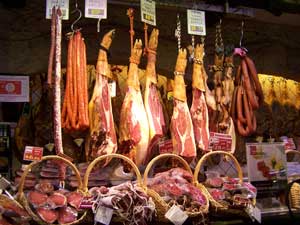
Spanish hams and sausages at Barcelona’s La Boqueria food market

By Sharon Hudgins
Photos by the author

Catalonia has long been one of my favorite gastronomic regions in Spain, years before star chefs such as Ferran Adrià, Santi Santamaria and Carme Ruscalleda catapulted it to fame on the international stage.

During two recent trips there, I ate at my favorite old restaurants, dined at new ones, and visited wineries and food producers throughout the area. And I was pleased to confirm that Catalonia is in no danger of losing its reputation for fine food, from traditional to modern, from home cooking to haute cuisine.

Tempting sweets at La Colmena pastry shop in Barcelona.

BEGIN IN BARCELONA
Barcelona, the capital of Catalunya (as it’s called in the Catalan language), is a prime destination for connoisseurs of good food. You could easily spend a couple of weeks eating your way around the city and still barely scratch the surface of its culinary possibilities.

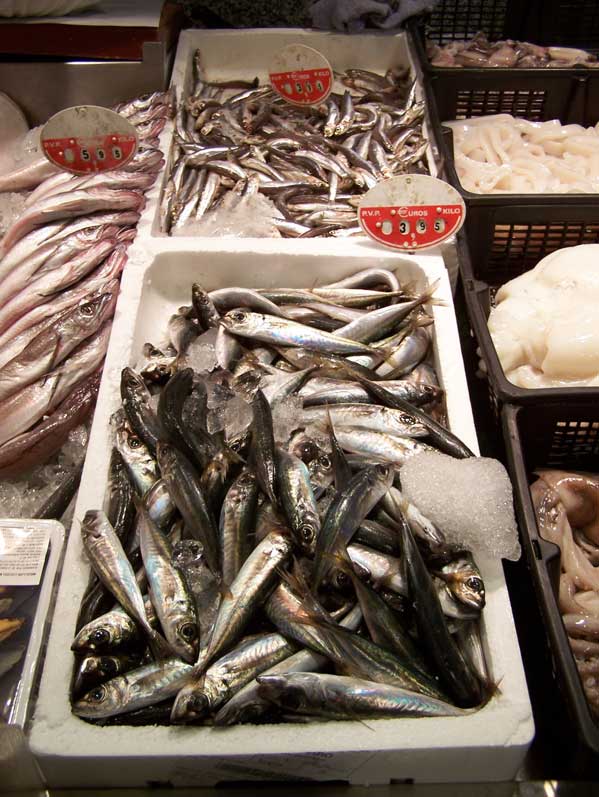
Foodies flock to the colorful Mercat de Sant Josep (also known as La Boqueria), Barcelona’s best known big covered market, with its tantalizing displays of edibles from freshly caught Mediterranean fish to aged mountain cheeses, from exotic tropical fruits to pigs’ private parts. Grazers stroll from one tapas bar to another along the busy boulevards and the casual waterfront, drinking a glass of wine or beer and nibbling on tasty tidbits at each stop. Anyone’s sweet tooth will soon be satisfied at the city’s elegant pastry and confection shops, including Caelum which features pastries made in the many monasteries and convents around Spain. And don’t miss a visit to the Chocolate Museum, followed by a cup of thick hot chocolate at the bar in the museum’s shop.

But Barcelona is just the beginning of a memorable culinary experience in Catalonia. To understand the roots of Catalan cuisine, you need to spend time in the countryside, slowly savoring the sights, sounds and smells of a land that produces some of the best wines and food products in Spain.

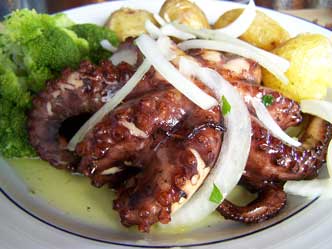
Turbot with eggplant slices at El Rincon de Diego restaurant in Cambrils.

WINE COUNTRY
Catalonia is famous for its wines, including sparkling white and rosé cavas. Drive south from Barcelona into the picturesque Penedès wine country, the largest of Catalonia’s wine districts and one of the oldest wine-making regions in Europe. Although best known for its cava wines, processed in the same manner as French Champagnes, Penedès also produces many other fine wines, especially whites.

To learn about the history of wine-making in Catalonia, start at the Wine Museum in Vilafranca del Penedès. Then visit two of the largest producers of cava, Cordoníu and Freixenet, both located in Sant Sadurní d’Anoia. After seeing how those big commercial wineries operate, you’ll learn even more on a personal guided tour around one of the smaller, family-run wineries, such as J. Miquel Jané in Font Rubí, which provides very informative vineyard tours, cellar tours, and wine tastings, in English, and Pagès Entrena in Sant Jaume Sesoliveres, which also offers wine seminars and other activities such as horseback riding and bicycle excursions.

The rugged district of Priorat is known for its outstanding wines, particularly reds. Visit the new Wine Museum in Falset, the capital of this wine region, then drive to the little town of Gratallops, on a hill high above the Siurana River, to taste some of the excellent wines produced at the Buil & Giné winery there.

Not far inland from the popular coastal cities of Cambrils and Tarragona, the sparsely populated, mountainous Priorat region is a place of medieval villages, old monasteries and dramatic landscapes. Although off the beaten tourist path, it’s well known for its high-quality olive oils as well as its wines. Take the winding road up to the little village of Siurana, perched on a cliff with vertiginous views over the olive orchards and distant valleys below. Then enjoy a good meal accompanied by local wines at the little Restaurant els Tallers, in the small (six-room) Hotel la Siuranella.

Finally, finish up your tour of this part of the Catalan wine country by heading north a few miles into the Conca de Barberà wine district to see the Wine Museum in L’Espluga de Francolí. Housed in a landmark Modernist-style building constructed in 1913, it features three floors of exhibits on the history of grape growing and wine making in this area.

MÓN SANT BENET
For a completely different culinary experience, spend a weekend at Món Sant Benet, a complex of old and new buildings set amid the quiet countryside of Bages, a rural region just northwest of Barcelona, near the town of Manresa. Check into the ultramodern Hotel Món and enjoy a stroll through the nearby gardens before dining at either the Restaurant Món or Restaurant L’Angle (one Michelin star) within the hotel. Another restaurant, La Fonda, offers moderately priced lunches and snacks in the Factory building nearby on the complex’s grounds. The Factory also has an interesting shop selling local wines, food products and handicrafts.

Make a reservation to take a one-hour tour of the Alicia Foundation, a unique scientific and gastronomic research center established by Ferran Adrià at Món Sant Benet. You’ll visit the cutting-edge research laboratories and participate in an instructive workshop that focuses on the relationship between all of our senses and the foods we eat.

A highlight of the Món Sant Benet experience is a tour of the 10th century monastery there. The impressive multi-media tour cleverly uses video projections, 3-D holographic images and surround sound to tell the dramatic story of the monastery’s history. A separate, equally fascinating multi-media tour through the adjacent villa of the Modernist artist Ramon Casas gives an intimate glimpse into the daily life of the family who lived in the opulent villa during their summer holidays in the early 1900s. The combined tours through the monastery and villa take a total of two hours, leaving you plenty of time to relax in the soothing atmosphere of Món Sant Benet.

Wherever you choose to travel in Catalonia, from bustling Barcelona to tranquil Món Sant Benet, from the sunny seacoast to the high mountains of the Priorat, you’re never far from a fine meal with excellent wines. As the Catalans say when you begin to eat, “Bon profit!” (may you eat and drink well!).

Bread basket at El Rincon de Diego restaurant in Cambrils.
Handpainted Spanish ceramic coffee service at the Ramon Casas villa at Mon Sant Benet.

Where to eat:


Wineries to visit:


Wine Museums:

Flavors of Christmas in Spain

Photos courtesy Spain Tourist Office

Christmas delights the palate in Spain. You will have no shortage of opportunities to give way to temptation as you experience Spanish gastronomy during the festive Christmas season.

Dinner on Christmas Eve and New Year’s Eve, lunch on Christmas Day and New Year’s Day, along with January 6, Feast of the Epiphany, are the most essential dates. However, throughout the month of December, bars, restaurants and hotels are decked out for the season. Their tables are decorated with candles, bows and Christmas motifs, and they offer special menus and delicious dishes.

HEAVENLY TABLES
Christmas meals are usually copious. They tend to start with a selection of starters and appetizers, either hot or cold. Then comes several courses and dessert. You can try a bit of everything: shellfish, fish, meat, roasted meat, soups, Iberian cured meats—all prepared in an especially delicious way. Some of the most popular foods include turkey, lamb, red cabbage, sea bream, oysters, elvers and ham. As the dishes are served, you will see how hard it is to resist. And to accompany them are good Spanish wines, both white and red. At the end of the meal, good wishes are toasted with a glass of cava sparkling wine or cider.

SWEETS
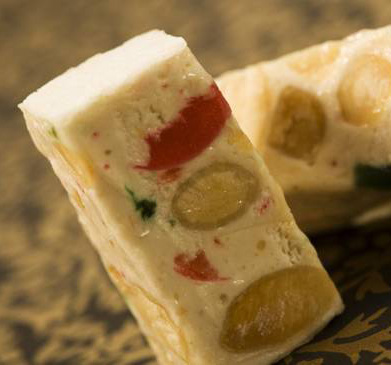
Sweets deserve a mention of their own, filling the table with color when it is time for dessert. Made with almonds, honey, sugar, chocolate and fruit, among other ingredients, they are a real treat for those with a sweet tooth. There is a wide array, and each region of Spain has its own typical recipes. However, the real star at Christmas is “turrón,” with a flavor admired around the world.

There are many different types of turrón, but you should try the Jijona variety—soft and sweet—and the Alicante type, which is hard and crunchy. Other traditional desserts are marzipan, polvorones (a crumbly shortbread) and mantecados (made with almonds and lard). Finally, on January 6, Day of the Three Kings (Epiphany), children are excited to receive their presents, while grownups get to savour a Roscón de Reyes (seasonal cake) with a cup of hot chocolate.

For more info, go to Spain Tourism

Europe’s Fascinating Food Markets

By Sharon Hudgins
Photos by the author

Sweet juicy plums. Pungent goat cheeses. Briny black olives. Homemade pâtés studded with pistachios. Paper-thin slices of farmhouse cured ham. Multi-grain buns and rosemary-scented flatbreads. Chestnut honey and walnut tartes.

Are you hungry yet?

On my first trip to Europe many years ago, I became hooked on shopping for food at the colorful local markets. Not the sterile supermarkets or gargantuan hypermarkets of today, which, except for the package labels in different languages, could be anywhere in the developed world. The markets that captured my imagination—and still keep drawing me back—are the ones where fresh foods are sold by individual vendors hawking their wares from wooden stalls, customized vans, folding tables, or even blankets spread on the ground.

I go. I see. I buy. I eat.

TYPES OF MARKETS
These food markets can be entirely outdoors, in the open air; or inside a cavernous covered market building; or in a combination of settings, with an indoor market surrounded by an open-air market that varies with the season. They can be permanent markets, operating year round at the same location, usually with the same vendors; or temporary events occurring only on specific days, once or twice a week, in a public square or country field, with local vendors as well as those who travel from one market to the next to sell their goods.

Some are truly farmers’ markets, where all the fruits, vegetables, meats and cheeses were grown, raised or processed by the people selling them. Others are outlets run by middlemen selling foods from a variety of suppliers, from small-time farmers to larger commercial companies. And some are a mixture of both.

London, Paris, Vienna, Madrid, Rome, and other major cities have many of these food markets located in neighborhoods throughout each metropolis. Smaller towns might have only one central market, whereas in a village there might be an open-air market only once a week, usually on Saturday. Check with the tourist office for the locations, dates and opening/closing times.

LOCAL SPECIALTIES, GLOBAL CHOICES
At these markets you can see, smell and taste authentic local and regional specialties, some of them found nowhere else. In different regions of France, I’ve bought farmhouse cheeses made just down the road and jams preserved by the woman selling them. In Sicily and Greece, I’ve wandered through markets stocked with fish caught that morning in the nearby seas. At German markets I’ve left with my shopping bags filled with potatoes and apples grown in the surrounding fields, and with big loaves of rye bread still warm from the wood-fired oven in which they were baked.

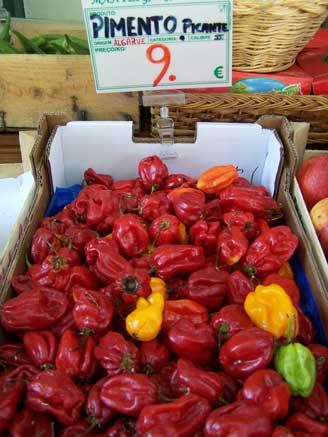
A visit to a large metropolitan market can also be a lesson in globalization. In addition to local Catalan and regional Spanish food products, Barcelona’s big Boqueria covered market also sells hot sauces from the USA, moles from Mexico, and guavas from South America. At Munich’s central Viktualienmarkt, you’ll find not only Bavarian meats and cheeses but also chermimoyas from North Africa, hot chiles from Southeast Asia, and exotic tropical fruits from the Philippines.

Each season brings its own specialties to European markets: strawberries, cherries and asparagus in spring and early summer; raspberries and blueberries later in the summer; mushrooms, apples and pears in the autumn; and oranges, nuts, and root vegetables in winter. Of course markets have more fresh produce during harvest time from spring through early autumn. And on any day you’ll always find the best selection early in the morning, just after the market opens.

LOOK, DON’T TOUCH
European markets are a great place to buy food for a picnic in your hotel room or in a park on a pretty day. Some even have a section with tables and chairs for public use, and German markets often include a beer garden on the premises, where you can bring your own food.

Tips: Always carry a shopping bag for your purchases. When you stop at a stand to buy fresh fruits or vegetables for your meal, don’t poke around in the produce and pick your own selection. At most markets, customers are expected to tell the vendor what they want, and the vendor chooses the best pieces, based on their ripeness and good condition, then weighs out the amount requested.

Don’t let your lack of the local language deter you from shopping in Europe’s food markets. Just point to the particular food you want and write the amount on a slip of paper: 100 grams (about one-fourth of a pound), 500 grams (close to a pound), 1 kilo (a bit over two pounds). Better yet, learn some basic numbers in that foreign language and let the product labels in the market teach you the names of the foods you want to eat. Soon you’ll be shopping like a European yourself.

LINKS TO FAVORITE FOOD MARKETS IN EUROPE
London Farmer’s Markets
Paris Food Markets
Rome Markets
Barcelona Food Markets
Madrid Markets
Berlin Markets
Munich Fresh Food Market
Hamburg Fish Market
Amsterdam’s Food and Antique Markets Guide
Guide to Seasonal Produce Markets of Brussels
Vienna Food and Farmer’s Markets
Guide to Vienna Food Markets
Budapest Markets
Athens Food and Flea Markets
Athens Farmer’s Markets

B is for ‘Brusselicious’

By Don Heimburger
Photos by the author and courtesy Visitbelgium.com

What’s a 13-letter word that starts with a “B” and combines the capital city of Belgium with the concept of excellent food?

“Brusselicious” is the 2012 theme for Brussels’ Gourmet Year, and a fitting description of this city of 1.1 million that boasts no less than 19 Michelin stars among its dozens of top restaurants.

In 2006 Brussels was the capital of Fashion and Design, followed soon after in 2009 as the capital of the Comic Strip. Now it becomes the city of Culinary Delights, but locals and in-the-know visitors to this cosmopolitan city, with German, French and Flemish influences, enjoy their Brusselicious lunches and dinners every day of the year.

FRENCH FINESSE, GERMAN PORTIONS
The old saying is that the Belgians cook their food with the finesse of the French, but serve it in generous German-sized portions. Some specialties of Belgian cuisine include moules frites (mussels and fries), Waterzoo (fish or chicken stew), Stoemp potato (potatoes and vegetables mixed together), and Salade Liégeoise.

So what’s cooking in Brussels in 2012?

There’s a fairly long list, but it all begins with Brussels’ traditional menus, which start with fresh meats and produce, and are then honed with a top chef’s creativity and skill. In Brussels this is just the way they do it. After all, they have a reputation developed over the years, that they refined plate after plate.

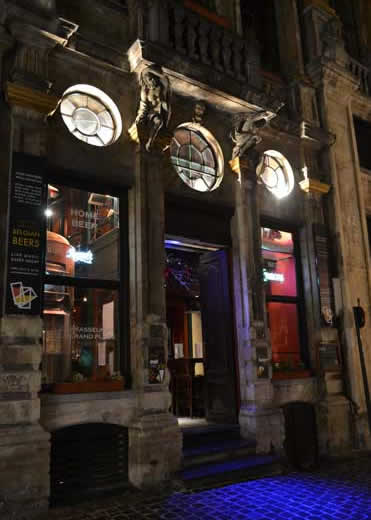
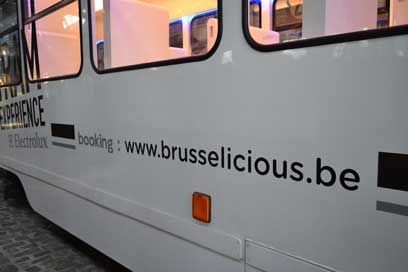
  • Brussels’ gastronomy will be on the move this year when a new designer tram will be introduced that will provide meals on board as guests roll around the city. Menus will be arranged by two-star chefs, and food will be served to 34 people on board the train during two-hour-long dinner parties. Departures start on Tuesdays and go through Sundays. This novel “meals on wheels” idea will appeal to the combination railfan and foodie.
  • As many as 35 giant artist’s reproductions will be introduced to the streets of Brussels during 2012 as well. Early in the year, artists were finalizing their creations in an old factory building called Carthago Delenda Est. Giant brussel sprouts, chocolate bars, mussels, pints of beer and giant cones of fries were masterfully being sawed, glued and screwed together to remind the city of its food heritage.
  • As many as eight themed dinners are being sponsored, from a Banquet des Miserables to mark 150 years of the finishing of Victor Hugo’s novel Les Miserables, to a Belgian Wine Growers Dinner, a Five Senses Dinner (sight, hearing, smell, taste, touch) and a Medieval Ommegang Banquet (Ommegang recreates a famous celebration of 1549 on the Grand Place in honor of Charles V and his son Philippe II).
  • The Bocuse D’Or Europe is the highly prestigious gastronomic competition held for 20 of the world’s top chefs this year in Brussels, who compete over a two-day period to claim top honors. The dozen best chefs then are entered into next year’s world finals in Lyon, France.
  • How about a Chocolate Week? With evening events, visits to chocolate workshops and a Chocolate’s Fair in town, what’s not to like?
  • A restaurant festival, publicized as the biggest gourmet event in Belgium, is coming to Brussels September 6-9. Imagine 100 restaurants and bars serving up their best dishes—with cooking on the spot—in a Brussels park.

TOP OF FOOD CHAIN
The 2012 culinary program doesn’t stop there, not for a city that loves to be at the top of the food chain. There’s a “Chipstands Festival” (you heard it correctly). So the city with some of the best frites (French fries) in the world will sponsor a competition and special events based on the fry. Would you like ketchup or mayo with that?

On a cooking platform 15 feet above the ground, Brussels’ star-studded top chefs will surprise and delight audiences with their “Dinner in the Sky” skills in the middle of the city. Also in August and September, the famed 650 tasty Belgian beers get their due during a weekend at the Grand’Place with tastings and more.

The city is also offering its own bottle of Brusselicious Beer, made by adding brown sugar to a bitter lambic. Lambic beer is produced by spontaneous fermentation: it is exposed to wild yeasts and bacteria that are said to be native to the Senne Valley, in which Brussels lies. It is this unusual process which gives the beer its distinctive flavor.

Other events are also planned, such as a Thai Food Festival, a Savoring Brussels Festival (dedicated to the flavors of fresh produce), and a Brussels Wine Weekend with open houses at some of the wine cellars and wine bars throughout the city.

Brussels’ ornate Town Hall

BUSINESS, BUT RELAXED
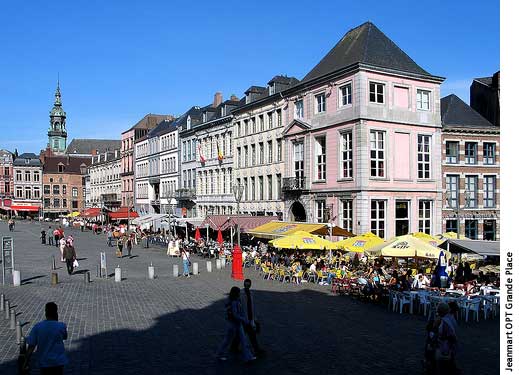
Brussels is, despite its European Parliament designation, a business center that appears to be relaxed at the same time. A tour of this multilingual city revolves around the Grand Place and its many gilded houses and the ornate town hall building (see it at night for a spectacular view).

Check out the Mont des Arts and its museums: the René Magritte Museum occupies the house in which the Belgian surrealist painter worked.  On the ground floor of the museum is the apartment where the painter lived and worked from 1930 to 1954;  exhibits of the artist are on two upper floors.

At the Belgian Comic Strip Center you can meet the comic strip character Tintin and his sidekicks, created by Belgian artist Georges Remi, who wrote under the pen name of Herge.

Walk to another part of the city and see the huge stone columns and a good view of the lower part of the city from the immense Palais de Justice, and visit the Atomium, with its gleaming spheres. It’s said to be “neither tower, nor pyramid, a little bit cubic, a little bit spherical, half-way between sculpture and architecture, a relic of the past with a determinedly futuristic look, museum and exhibition center; the Atomium is, at once, an object, a place, a space, a Utopia and the only symbol of its kind in the world which eludes any kind of classification.” The Atomium was the main pavilion and icon of the World’s Fair of Brussels in 1958.

If you’re in the market for shopping—or just window shopping—Brussels has it. Walk over to Avenue Louise and see its shopping arcade, or Boulevard de Waterloo, Rue de Namur or Avenue de la Toison d’Or for some upscale finds from classic to trendy.

Now back to Brusselicious food. One other very famous food delight is the Belgian waffle. I learned there are actually two types. One is the Belgian waffle, a light, fluffy waffle eaten with or without syrup and served at the more prestigious restaurants and hotels. Then there’s the thicker Liege waffle that is smaller, sweeter, heavier and more filling. You can find the heavier waffles served at stands everywhere in Brussels, usually with toppings such as whipped cream, strawberries, cherries, confectioner’s sugar, or chocolate spread.

If Belgium has a national cookie it is the Speculoos. Originally created for children to celebrate Saint Nicholas day on December 6, the treat is now widely popular and often found along with a cup of coffee in restaurants and bars as a side treat.

So add waffles and Speculoos to the large selection of foods that keep visitors going back to this vivacious gourmet city.

And to think, all this high cuisine started with the lowly Brussel sprout, from which the city gets its name. It just goes to show how inventive the Belgians are in the kitchen. They’ve taken the art of preparing and cooking food to new heights over the last few decades. Some would call that a Brusselicious endeavor. I’d say it was a call for dinner…in Brussels, of course.

For more information, go to www.visitbrussels.be or www.visitbelgium.com.

IF YOU GO…
Brussels has a number of interesting districts to visit.  The Brussels Card is valid for 72, 48 or 24 hours and allows you to visit 30 Brussels museums. It includes a public transport ticket and a full-color guidebook, as well as discounts at some tourist attractions and stores. Go to www.brusselscard.be.

The 2012 Michelin Guide shows the following Brussels restaurants have earned Michelin stars:

 2 STARS 
Sea Grill
Comme Chez Soi
Le Chalet de la Forêt (New addition)

1 STAR 
Alexandre
Jaloa (New addition)
La Truffe Noire
La Paix
Bruneau
San Daniele
Kamo
Senza Nome
Le Passage
Bon-Bon
Michel
Terborght
‘t Stoveke

Magnificent Marzipan

By Sharon Hudgins
Photos by the author

I’ve been in love marzipan ever since I first tasted it as a child. Back then, marzipan candy was a rare and expensive treat, often difficult to find in the United States. But when I later moved to Europe, I discovered a whole world of marzipan, enough to nourish my lifelong love affair with this seductive sweet.

I’ll admit it: I’ve never met a marzipan I didn’t like.

Marzipan is nothing more than a smooth paste of finely ground blanched sweet almonds mixed with sugar. Other ingredients are sometimes added, too, such as water, egg whites, sugar syrup, honey, almond extract, a small amount of bitter almonds, rosewater, orange blossom water and food colorings. But that description doesn’t do justice to the tantalizing taste of this tempting treat, nor to the many ways in which marzipan is used today by professional confectioners and home cooks.

On the grocery shelf, the difference between “almond paste” and “marzipan” is mainly the ratio of sugar to almonds, with marzipan containing more sugar. That ratio varies, depending on the individual producers and the various countries where this confection is made, some of which have laws regulating the proportion of each ingredient. The finest German marzipans contain two parts (or more) of ground almonds to one part of sugar. Others contain 50% almonds and 50% sugar. Danish Odense marzipan, the European brand marketed widely in the United States, has only 28% almonds. (Odense “Pure Almond Paste” contains 45% almonds.)

MARZIPAN MIGRATION
Culinary historians think that marzipan originally came to Europe from the Middle East, where almond trees and sugar cane have been grown since ancient times, and where there’s a long history of making sweets from almond paste. Even though the early Greeks and Phoenicians planted almond trees around the Mediterranean region, it was the Arabs who expanded the almond orchards, introduced sugar cane cultivation, and began producing marzipan in the areas of southern Europe they conquered and colonized between the 8th and 11th centuries. After Arab power waned in those parts of the Mediterranean, during the 11th to 15th centuries, the secrets of marzipan-making were preserved by nuns in Catholic convents, who produced these sinful sweets for sale to support themselves. That’s why former Arab-ruled lands such as Spain, Sicily, and Malta still have strong marzipan traditions today.

Historians surmise that marzipan spread to northern Europe from Venice and the eastern Mediterranean during the time of the Christian Crusades, from the 11th through 13th centuries. Certainly by the Middle Ages marzipan was known in France, England, and Germany, although in many places it was considered a costly medicine, sold only in pharmacies. It soon became a favored confection of the upper classes, whose cooks molded marzipan into elaborate and fantastic shapes for use as showy centerpieces or edible finales to medieval feasts.

Sign for the Mazapan Artesano

MARZIPAN MANUFACTURE
A traditional confection in Europe for several centuries, marzipan is made today by both artisan confectioners and big industrial plants. Centers of marzipan manufacture include Toledo, Spain; Palermo, Sicily; Budapest, Hungary; and Lübeck, Germany. Each has its own style of marzipan, with more or less sugar, baked or unbaked, and modeled into more shapes than you can imagine. At marzipan stores in Europe, I’ve seen this sweetened, colored almond paste formed into fruits, vegetables and flowers, from miniature to life-size; animals from penguins, polar bears and “good luck” pigs (for the New Year) to walruses, lions, hedgehogs and squirrels; Easter eggs and Easter rabbits; Santas and angels; fish and shellfish; lifelike sandwiches, cheeses and sausages; even modern marzipan cell phones and McDonald’s-like cardboard packets full of french fries.

Marzipan has other uses, too. Europeans fill chocolates with marzipan; wrap it around nuts, candied fruits and other sweet fillings; bake it inside cookies; and stuff dates, prunes, peaches and apples with it. They roll marzipan into thin sheets as a covering for fancy cakes and use it as ingredient in tortes and tartes, pies and pastries, sorbets and ice creams, even sweet dumplings, ravioli and roast pork. I once ate at a restaurant in Lübeck that featured “marzipan lasagna” for dessert, made with layers of white marzipan “pasta” and a red and green fondant filling.

MARZIPAN MUSEUMS
Several cities in Europe have marzipan museums, most of them attached to a confection company’s coffee shop, candy shop or factory store. The Niederegger Marzipan Salon, on the second floor of the Konditorei-Café Niederegger in Lübeck, Germany, has a display about the history of marzipan. But the actual shop on the ground floor is even more interesting, where you can buy more than 300 types of the company’s products, including whimsical edibles made out of marzipan and Niederegger’s irresistible Cuandolé marzipan liqueur.

Leu’s Marzipan-Land in Lübeck features a “Marzipan-Show” on Tuesdays, Wednesdays, and Thursdays. You’ll see all the stages in the manufacture of marzipan, as well as an unusual exhibition of large marzipan sculptures, before pigging out in the shop where you’ll be tempted to buy more marzipan than you should ever eat in one sitting.

Hungary boasts three marzipan museums, all owned by the Szabo confectionery company. My favorite is the Szabo Marzipan Museum in Szentendre, a pleasant (but now overly touristy) little artists’ village not far from Budapest. This small museum is chock full of displays of colored marzipan shaped into Disney characters, a Cinderella coach, a massive wedding cake, a cactus garden and even a detailed replica of the Hungarian parliament building. On the ground floor there’s a traditional confectionery kitchen where you can watch marzipan being made and a shop where you can buy goodies to go. Next door the Szabo café-and-pastry shop offers a wide variety of luscious Hungarian cakes, tortes, ice cream concoctions, marzipan candies, coffees and teas.

The smaller Szabo Marzipan Museum in Budapest features large marzipan sculptures of the Matthias Church, the Fishermen’s Bastion, and the Chain Bridge across the Danube (all local landmarks), a Chinese pagoda, several Harry Potter characters and other curiosities, some made from more than 100 pounds of marzipan. And there’s another Szabo Marzipan Museum in Pécs, also connected with one of their coffee-and-pastry shops.

In Sonseca, Spain, just south of historic Toledo, you can visit the interesting Delaviuda Marzipan Museum at the Delaviuda candy factory, which shows how Spain’s distinctive (and delicious) marzipan is made. And finally, Tallinn, the capital of Estonia, also has a couple of small marzipan museums in the Old Town. I just haven’t managed to eat my way that far north yet.

ADDRESSES AND WEBSITES:
Konditorei-Café Niederegger, Breit Strasse 89, Lübeck, Germany
www.niederegger.de/en/cafe_niederegger/marzipansalon/
marzipansalon.php

Leu’s Marzipan-Land, Drechlerstrasse 6, Lübeck, Germany
www.marzipanland.de/eng.html

Szabo Marzipan Museum, Hilton Budapest, Hungary
Szabo Marzipan Museum, Dumtsa Jeno St. 14, Szentendre, Hungary
Szabo Marzipan Museum, Apaca St. 1, Pécs, Hungary
www.szabomarcipan.hu/angol.html

Delaviuda Marzipan Museum, Calle Santa Maria 4, Sonseca, Spain www.delaviuda.com