Mechelen: An Undiscovered Belgium Gem

By Don Heimburger
Photos by the author

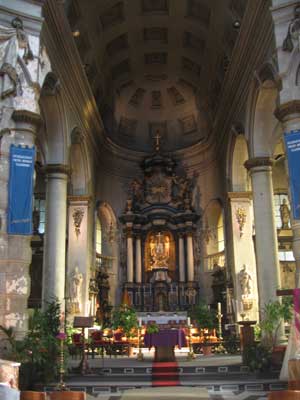
Mechelen, Belgium, about 15 miles north of Brussels, is a city of about 79,000 that features more than 300 monuments, eight historic Catholic churches and four UNESCO world heritage sights. You can reach the city by a short train ride from the main railway station in Brussels.

Mechelen is worth visiting not only because of its sights, but its people flourish because of a built-in determination and a friendliness that transcends nationalities. Maybe its because the Mecheleners have been perfecting humanity since 500 BC, when the first traces of human habitation of the area were discovered.

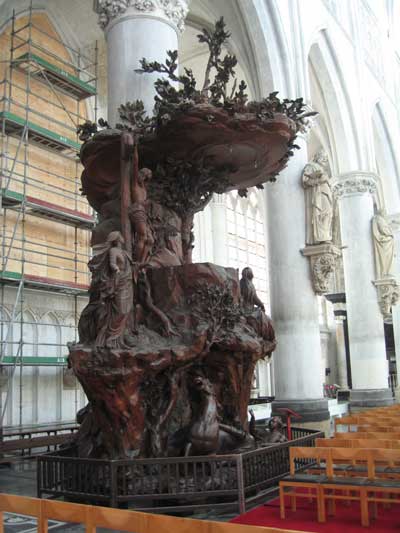
At one time, more than 100 firms in the city made furniture and word carvings, as evidenced by the many large and ornate church carvings seen here. Be sure to look for them as you discover this cobblestoned town, whose city center is only about a half mile across.

Some of the city’s sights include the early Gothic Brussels Gate, the last remnant of the medieval fortification constructed around the inner part of the city, built about 1300. At one time, all traffic entering and leaving had to pass through its limestone gates.

ST. RUMBOLD TOWER
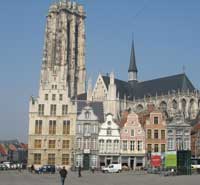
You can’t miss St. Rumbold Tower—it dominates the city skyline. If you have the time, conquer the 514 steps to the top of the tower to the skywalk for a great view of the area. Original plans for the tower were made when Mechelen was a rich and powerful commercial and political center, and thus the tower of St. Rumbold’s Cathedral was to become the highest tower in the Low Countries. Completed, it would have reached the dizzying height of 547 feet. Financial problems in the 16th century halted construction. The tower now reaches a height of 318 feet, still plenty tall.

Inside the cathedral is a scale model of what the tower should have looked like had it been completed. Also inside the church are two of the largest stained glass windows in Europe. Jo Haazen and other guest carillonneurs present a carillon concert at the church every Monday evening from 8.30 p.m. to 9.30 p.m. These recitals are free.

A third highlight of the city is the Large Beguinage, where widows and unmarried women of class were invited to live together, submitting themselves to pledges of obedience and chastity. Parts of this community are still visible and are inter-woven into the city’s many old structures that line narrow streets in the center. Still in tact are the Beguines’ church, the infirmary, the house of the grand mistress and other structures.
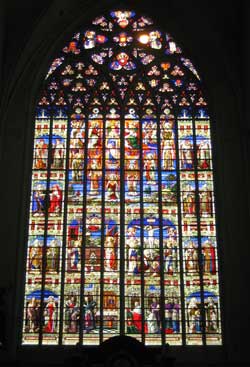
(middle) One of the largest stained glass windows in Europe in Mechelen’s cathedral.

PALACE OF MARGARET OF AUSTRIA
Another important site is the Palace of Margaret of Austria of the Court of Savoy. This was the first renaissance building in the Low Countries and perhaps outside of Italy. The facade features Margaret’s coat of arms, and between 1616 to 1795 it was the seat of the Great Council. Its interior garden area is a fine place to rest your feet for a while.

Another spot worth visiting is St. John’s Church, which is open to the public. A very fine wood carving on the interior is one of Ruben’s masterpieces, The Adoration of the Magi. The church furniture, paintings and statues date largely from the 17th and 18th centuries.

For a respite from walking or touring the city, find Windels at Iron Leen 48 (not far from the main railway station), the oldest cigar store in Belgium (from 1875) that continues to make fine cigars, and offers them in beautiful hand-made wooden boxes. The store, now being run by the fifth generation of Windels, also carries a good selection of whiskeys.

The Jef Denyn Royal Carillon School, at Frederik de Merodestraat 63, is a state-subsidized educational institute that offers a six-year program to obtain a laureate’s diploma. Even the Vienna Boys Choir visited the school during the last few years. When you realize Belgium is one of the carillon capitals of the world, this school makes sense, and attracts students from as many as a dozen different countries. The heaviest carillon in Belgium—there are five different carillons in town–is in one of the local church towers.
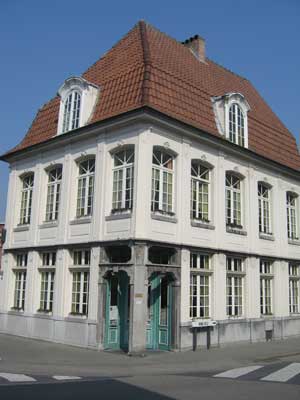
The Jef Denyn Royal Carillon School in Mechelen

The De Wit Royal Manufacturers of Tapestry, operating since 1889, is the only workshop in Flanders to retain this age-old tradition. Offering a complete range of tapestry services, the firm offers individual tours on Saturdays at 10:30 a.m. and group tours on other days. The De Wit is housed in a beautiful old Abbey at Schoutetraat 7, and plays a key role in many old and expensive tapestry restorations throughout Europe.

TIME FOR SOME CUCKOO
Perhaps at lunch time you’ll want something unique and that is a local delicacy. Find a restaurant that serves the town’s famous Mechelse koekoek, or Mechelen cuckoo (chicken). This chicken, with black-gray feathers, is a feature on many local menus, and is often served with fresh vegetables or with a Mechelen beer sauce. You’ ll likely get a large side dish of round roasted potatoes to go with the chicken.
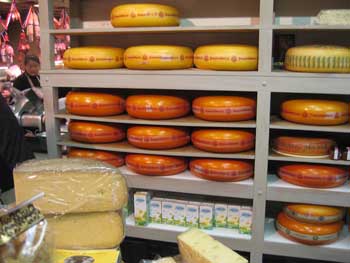
Delicious cheese lines the shelves in a Mechelen shop.

After lunch, stop in at one of the two local Gauthier chocolate shops (one is at Guldenstraat 2), and soak in the atmosphere. Store candies are hand-made, made from traditional Belgium customs, and follow a unique recipe, so you’ll likely leave with a bag full of something good to eat. The Gauthier family, with master chocolate maker Edouard Gauthier, has been making candy in town since 1964.
Round out your afternoon with a boat trip on the Inner Dyle River. A multilingual audio-guide tells you about the sights along the river banks. The departure is at the Jetty at Lamot/Haverwerf and costs €6 for adults.

MUCH MORE TO SEE
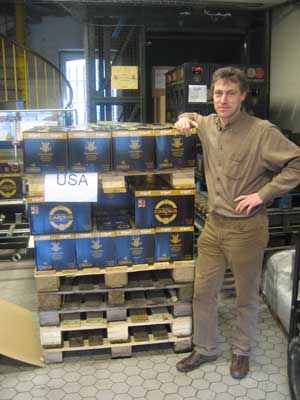
Many more Mechelen sights are available if you have the time, such as the Watchmaker’s Museum, the Jewish Museum of Deportation and Resistance, the Museum in City Hall (the old Rathaus), and the Het Anker Brewery Museum. At this small family brewery, best known for its local beers such as Gouden Carolus, you’ll get a feel for quality. The brewery also has its own restaurant and 22-room hotel.

Around the year 1500 more than 100 breweries operated in Mechelen, but like most things, the businesses and other important history of the city has faded over time. But this quaint Belgium town continues to re-count its traditions and rich past, and brings it forth today for all to enjoy.

For more information, go to www.tourismmechelen.be or www.visitflanders.us.

Traditional British Christmas Pudding

Courtesy David Ross/ www.britainexpress.com

INGREDIENTS
l lb. of each: raisins, currants, golden raisins, breadcrumbs, brown sugar
8 oz. suet
4 oz. each: mixed peel, glace cherries chopped, almonds chopped
1 each: lemon – grate rind, orange – grate rind, carrot – grated, apple – grated
1 tbs. flour
1 tsp. mixed spice
Pinch salt
6-8 eggs
10 oz. stout (bottle) or dark beer (Guiness is good)
OR 5 ozs. each: brandy and milk
 
PREPARATION
Mix dry ingredients first then mix with lightly beaten eggs & liquid. Grease the bottom of a bowl large enough to hold pudding and press mixture into it. Place wax paper over the top and then foil over that, crimping it around the edges to keep firm. Either cook for 2 hours in pressure cooker with about 2 inches water or put in pan with water on stove for 4 hours. Keep checking water in pan to prevent burning. Store well wrapped for as long as possible for better flavor. Some people make them one year to eat the next. Serve with hot custard, cream, or brandy sauce.

Why steam for so long? Christmas puddings are quite dense because of all the fruit, nuts, etc. they contain. Steaming is the best method of cooking because it allows a slow cooking which ensures a moist and palatable result (cakes being less dense can cook for less time and still remain moist, so baking is the best method). If you used a faster cooking method for a Christmas pudding you would get a crusty pudding. A pudding steamed for 2 hours, rather than 4, would probably still have some uncooked mixture in the center. So, while the cooking time obviously depends on the size of the pudding. (This is when it is cooked on the stove – not the pressure cooker)
Related: Quick Christmas Pudding
Recipe used by kind permission of Hazel Whyte

For more recipes from Britain, go to: http://www.britainexpress.com/articles/Food/index.htm

Great German Beers

by Sharon Hudgins

Fifteen years of living in Germany convinced me that I was in beer-drinker’s heaven. Actually, I think it took only 15 minutes of intimate contact with my first mug of the local brew to convert me into a lifelong lover of “the national drink of Germany.”

I also discovered that Germans take their beer seriously. In 1516 the Dukes of Bavaria issued an edict in the city of Ingolstadt specifying that only water, barley and hops could be used in the brewing of beer.

Known as the Reinheitsgebot, or Purity Law, it was later amended to include processed yeasts (instead of wild yeasts from the air) and wheat (the only grain allowed besides barley). Still in effect, this early food safety law protects the integrity of German beers and insures the quality of the product. And today, German brewers of “organic beers” even go a step further, using only grains and hops that haven’t been treated with chemical pesticides and artificial fertilizers.

TWELVE HUNDRED BREWERIES
Germany boasts more breweries than anywhere else on the globe—1,282 throughout the country, nearly half of them concentrated in the southern state of Bavaria. And Germans happily consume most of the output, quaffing 115 liters (more than 30 gallons) per person annually, while exporting only 13% of the tasty brew to the rest of us.

Beer brewing is a controlled, scientific process, developed over centuries of experimentation. And German brewers are masters of the art. Germany claims the world’s oldest brewery—Brauerei Weihenstephan, in Bavaria, where beer has been brewed on that site since 1040. It’s also home to the world’s oldest monastic brewery—Klosterbrauerei Weltenburg, in Bavaria—dating from 1050, and the oldest wheat beer brewery, established in the Bavarian town of Kelheim, in 1607.

STYLISH BREWS
Large or small, old or new, secular or monastic, German breweries now produce more than 5,000 different beers in a variety of colors, tastes and strengths. Each of these beers belongs to a specific category, or style, determined by the way it’s made. But whatever the particular style, all German beers are either top-fermented (an older method in which the yeast rises to the top during heated fermentation) or bottom-fermented (a process perfected in the 19th century in which the yeast sinks to the bottom during a cooler fermentation). Today, the majority of German beers are of the bottom-fermented type.

Many of these beers are also categorized as lagers, which means that they have been lagered, or stored, in wooden barrels or steel tanks to mature over a period of time in a cool place such as a cellar, cave or under refrigeration.

Alcohol content is another way of classifying beers. Beer described as Schankbier is lightest in alcohol, with 2% to 3% alcohol by weight. Most German beers fall into the Vollbier category, with an alcohol content of 3.5% to 4.5% by weight. Stronger beers, such as Bocks and Double Bocks, with 5% or more alcohol, are called Starkbiere.

Germans also produce a few alcohol-free beers, as well as a type called Mälzbier, with little or no alcohol and a sweet, malty flavor, made from malt extract.

Sure, you can enjoy drinking German beers even if you don’t know much about them. But it’s a lot more fun if you know what to order when given a choice between a Helles or a Dunkles, a Rauchbier or a Weissbier.

Germany produces several classic styles of beer, which also have variations within each style. Bottom-fermented styles include:

* Hell / Helles – “Light-colored beer,” a common style of pale-colored, full-bodied lager, most often a Bavarian brew.

* Pilsener – A premium-quality pale lager with a distinctive flavor of hops and a dry finish; brewed throughout Germany but particularly associated with the northern part of the country, especially the city of Hamburg.

* Export – A light-colored but stronger lager, typically from the city of Dortmund, one of the largest producers of beer in Europe.

* Bock – Stronger in alcohol, traditionally brewed in the spring, especially in the cities of Einbeck and Munich.

* Doppelbock – “Double Bock,” an even stronger beer, traditionally dark in color but sometimes pale, made for wintertime, particularly in Munich and Kulmbach. Double Bock beers with names ending in “-ator” are especially strong in alcohol (Kulminator, Triumphator, Celebrator, and others).

* Märzenbier – “March beer,” a medium-strong, malty-tasting, amber-red beer traditionally drunk at Oktoberfest. In the past, before refrigeration, March was the last month that beer could be brewed before summer, and the beer had to be strong enough to remain in storage during the warmer months without spoiling. The last March beer in the barrels was drunk in September and Oktober as the next brewing season was about to begin.

* Dunkel / Dunkles – “Dark beer,” brewed in several locations but especially in Bavaria.

* Rauchbier – “Smoky beer,” a dark beer with a distinctly smoky taste, brewed in the city of Bamberg; sometimes described as the beer equivalent of single-malt Scotch whisky because of its smoky character.

Top-fermented German beer styles include:

* Altbier – “Old-style beer,” copper-colored and with a distinct taste of hops, brewed in the city of Düsseldorf.

* Kölsch – Pale, golden, light-bodied beer. By law, only beers brewed in the north German city of Köln (Cologne) may be labeled Kölsch.

* Weizenbier or Weissbier – “Wheat beer,” so called because it’s brewed from a combination of wheat and barley (instead of barley alone); also known as “white beer” because of the light-colored yeast that floats on the top during the brewing process. Most wheat beers are pale golden to light amber in color, although a dark type is produced, too. “Hefeweizen” beer is a richly flavored, cloudy looking, unfiltered wheat beer with the yeast sediment floating in the brew. Wheat beers are especially popular as summer drinks, often served at a slightly cooler temperature than other German beers and sometimes garnished with a slice of lemon. Wheat beers are made in many parts of Germany, but are especially associated with Bavaria in the south and Berlin and Bremen in the north.

SPECIALTY BEERS
In addition to the classic beer styles, German brewers produce a variety of specialty beers for holidays, festivals and other important occasions. Other beers are local types made only by a single brewery and seldom available beyond that locale.

Special beer types include heavy Bock beers brewed for the Lenten season; Oktoberfestbier for Germany’s most famous beer bash, in Munich; and Weihnachtsbier, or “Christmas beer” for the Christmas and New Year season.

Unique Steinbier (stone beer) is a top-fermented brown beer whose smoky flavor comes from stones heated over a beechwood fire, then added to the liquid at two different stages during the brewing process. A very strong beer known as Eisbock (ice beer) is produced by freezing Double Bock beer, then removing the ice that forms in it, leaving a brew with an even higher proportion of alcohol.

FLAVORINGS AHEAD
Germans also occasionally add flavorings other than hops to their beers. Under an exemption from the Beer Purity Law, top-fermented Gose, a spicy-tasting, deep-amber-colored beer from Leipzig, is flavored during the brewing process with coriander and salt. Berlin’s refreshing, low-alcohol Berlinerweisse white beer—sometimes called “the champagne of beers”—is often served with a splash of raspberry syrup, which sweetens the beer and tints it rosy-red, or with Waldmeister Sirop made with woodruff, a natural herbal additive, which colors the beer green.

A brewer in Abensburg even concocted a Spargelweissbier (asparagus white beer) for a special dinner during the Spargel (asparagus) season in Germany. And special beers are also brewed for the annual Tag des Deutschen Bieres, “German Beer Day,” on April 23, when Germans celebrate the establishment of that Beer Purity Law (Reinheitsgebot) enacted nearly 500 years ago.

BEER HALLS AND BEER GARDENS
“Wherever you travel in Germany, you’re never far from a glass of good beer.”

Although the state of Bavaria—and especially the region of Franconia—has the largest number of breweries per square mile, beer direct from the barrel (vom Fass, or Fassbier) or in bottles (Flaschenbier) is available at almost every place that serves food, from snack bars to the most upscale restaurants.

Some of the best places to taste barrel-fresh beers are the big beer halls owned by major breweries, especially those in Munich; at any Brauerei-Gasthaus (brewery with a restaurant attached) in many parts of Germany; historic monastic breweries such as Kloster Andechs in the scenic Bavarian Alps; open-air beer gardens shaded by spreading chestnut trees; friendly little family-owned inns throughout the country; and at the hundreds of festivals held every year in Germany, from local fests in tiny villages to the world-famous 16-day Oktoberfest in Munich.

BEER TANKARDS
German beer is drunk from a wide variety of containers. Beer tankards and mugs are an art form in themselves, made from glass, ceramics, wood, pewter, and even leather and ivory in earlier times. (Several German museums display fascinating collections of colorful, intricately crafted, beer mugs.) And certain beers are traditionally served in specially shaped glasses: Dortmund’s Altbier in short cylindrical glasses; Kölsch from Köln in tall, narrow, cylindrical glasses called Stange; Bavarian wheat beers in tall glasses, narrow at the bottom and wide at the top, that show off the beer’s carbonation; and Berlinerweisse wheat beer in large, heavy, bowl-shaped stemmed goblets like schooners or oversized Champagne coûpes.

But be forewarned: When you order “ein Bier, bitte” (“a beer, please”) at a Munich beer hall or Bavarian beer garden, your beer is likely to be served in a heavy glass or stoneware Masskrug, a mug containing a whopping one liter (just over a quart) of foamy beer. No, it’s not a pitcher for the whole table—so don’t ask for extra glasses. That one liter is entirely for you! If you want a smaller beer, ask for “ein Halbe,” meaning a half liter.

In other parts of Germany, however, “ein Bier” or “ein grosses Bier” (“a large beer”) is .5 liter or only .4 liter, and “ein kleines Bier” (“a small beer”) will be half of that, .25 liter or .2 liter (barely enough to quench your thirst, in my humble opinion).

CHOWING DOWN
“Beer is even considered one of the basic food groups in Germany.”

“Made from the same ingredients as bread—grain, water and yeast—beer is known as “flüssige Brot” (“liquid bread”). And like bread, German beer is an excellent accompaniment to many foods. Connoisseurs match beers with foods in the same way that wine lovers pair reds, whites, and rosés with different dishes: heavy dark beers with roasted meats, Bavarian Helles beer with thinly sliced white radishes, Kölsch with blood sausages and raw onions and elegant pale Pilseners with lighter fare.

Guzzling and gastronomy go hand-in-hand in Germany. At beer halls, beer gardens, and festivals you’ll find a variety of foods traditionally consumed with German beers: roast pork with sauerkraut, smoked ham, grilled sausages, rotisserie chicken, braised pork knuckles, smoked fish, potato pancakes, goulash soup, red cabbage, rye bread, sliced cheeses and cheese spreads, soft yeasty pretzels and German potato salad. There are distinct regional differences, too. Typical beer cuisine in Bavaria is different from what you’ll taste in Hamburg or Dortmund. Beer also shows up as an ingredient in many German dishes, from soups to sauces to desserts. Would you believe Prussian hot beer soup or Mälzbier ice cream?

As you drink your way through a meal in a German beer hall, brew pub or beer garden, whenever the waiter brings you another beer he often keeps tab by penning a mark for each beer on the coaster under your glass. These colorful cardboard coasters—many with the logo of the brewery or tavern—are nice little souvenirs to bring back from your trip to Germany. The waiters don’t mind if you take a couple of them from the table (after all, beer coasters are advertisements for the brew), and they’re lightweight to pack in your luggage.

Zum Wohl (Here’s to you!) and Prosit! (Bottoms up!)

ET EXTRA
For more information about Germany’s tasty beers, go to:

www.beerhunter.com
www.germanbeerinstitute.com
www.germannews.com/bier
www.bavarian-beer.de
www.franconianbeerguide.com
www.europeanbeerguide.net

Christmas Is a Time of Food and Fun

European Traveler has gathered Christmas holiday recipes from around Europe, and we present them here in a special tribute to the countries from which they come. You’ll find a variety of tasty foods in these selections, from desserts and breads to main dishes, to cookies and candies. As December progresses, we plan to add more, so stay tuned!

Please note that some of the recipes are in metric measurements and may need to be converted.

Bon Appetit!

AUSTRIA

VIENNESE VANILLA CRESCENTS (VANILLEKIPFERL)

Eva Draxler / Vienna Tourist Board

INGREDIENTS
1 1/2 sticks (6 ounces) unsalted butter
2/3 cup finely ground nuts (almonds or hazelnuts)
1/2 cup confectioner’s sugar
2 egg yolks
1 1/2 cups all purpose flour
dash of salt

PREPARATION
Knead all ingredients together quickly – keep them cool. Cool in refrigerator for several hours. When forming crescents, take out only the amount of dough you are working with. Form into large, sausage-like rolls with a diameter of about 2 inches. Cut thin slices and quickly roll each of them in the palms of your hands, thus forming small crescents. Place on greased cookie sheet. Bake at 325 degrees Fahrenheit for about 20 minutes. Let cool for no more than five minutes. While still warm, roll in vanilla sugar.

THE AZORES

HOTEL MARINA ATLANTICO
THE AZORES

Courtesy Monica Bensaude Fernandes/Bensaude Turismo

COD “COM TODOS” STYLE

INGREDIENTS
2 cod steaks
300 grs of cooked chickpeas
1 Portuguese cabbage
200 grs carrots chopped in thin circles
2 dls extra virgin olive oil
30 grs fresh coriander
1 salted pickled red pepper cut length wise
6 dry garlic cloves
200 grs crumbed corn bread
100 ml cream
Salt and white pepper
PREPARATION
Boil cod for 5 minutes. Remove skin and bones. Grate chickpeas in a tasse-vite. Add cream and season with salt and pepper. Blanch cabbage, drain and sauté in olive oil and garlic.
Sauté carrots in olive oil and garlic.
PLATE PRESENTATION
Using a rim, first layer chickpeas, and then carrots. On top, place cod, broken apart. Cover it with sautéed cabbage and lastly, the crumbed corn bread. Give it a little color by briefly placing in a very hot oven. Decorate with olive oil and fresh coriander.

DUCK BREAST WITH ORANGE AND DRIED FRUITS
INGREDIENTS
2 boneless duck breasts
300 grs red cabbage, julienned
4 oranges
300 grs potatoes, cut in extra fine rounds (chip style)
50 grs crushed walnuts
50 grs crushed pine nuts
50 grs S.Jorge cheese sliced thin
½ cup Brandy
Salt and white pepper
2 tablespoons balsamic vinegar
10 grs sugar
PREPARATION
Sauté duck in high heat for 5 minutes. Season with salt and pepper. Zest the orange. Set aside. Juice the oranges and add it to pan. Let it reduce and set aside the sauce. Bake potatoes in a fan format with the thinly sliced cheese on top. Sauté cabbage with a little olive oil. Add balsamic vinegar, sugar and dried fruit.
PLATE PRESENTATION
At the top, place the fanned potatoes. In the center, place red cabbage and beneath position the laminated duck. Cover with sauce and orange zest.

VEAL LOIN VERDELHO
INGREDIENTS
400 grs veal loin
300 grs potatoes
400 grs carrots
Verdelho wine from Pico Island
Onions
Leeks
Salt and pepper (local, if possible)
PREPARATION
Season veal with salt and pepper. Blush or sauté loin in high heat for 5 minutes. Remove veal, add onions and leeks and brown. Add red wine and let it reduce. Season and sift sauce. Grate carrots and sauté in a little olive oil. Bake potatoes, which have been previously stuffed with a bay leaf and bacon, in alternating cuts.
PLATE PRESENTATION
Place carrots at the center, potatoes in the back, veal in the front of plate, and cover with sauce.

GERMANY

MULLED WINE
(GLUHWEIN)
Victoria Keefe Larson/German National Tourist Office

Perfect for those dark and cold winter evenings.

INGREDIENTS:
2 bottles red wine
1 cup sugar
3 cups water
1 lemon, sliced
20 whole cloves
6 to 8 cinnamon sticks
1 orange, sliced for garnish

PREPARATION:
Mix water, lemon and spices and simmer for an hour. Strain. Heat but do not boil the red wine. Add wine to hot water mixture. Ladle into cups and serve with half a slice of orange.

HUNGARY

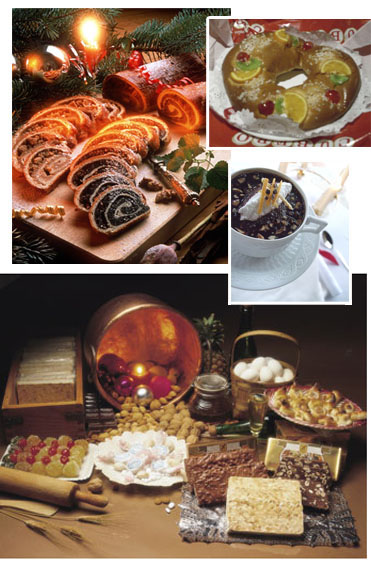
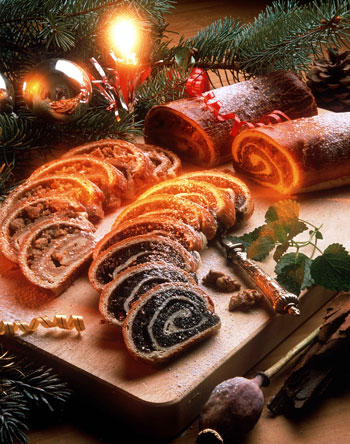
Dios es Makos beigli
Poppy seed and nut rolls (bagels)

From Culinary Hungary/courtesy Elvira Vida/Hungarian National Tourist Office

Makes 4 rolls; the filling ingredients are calculated for 2 rolls respectively.

INGREDIENTS
For the dough:
1 cup sugar
1/2 cup/120 ml milk
1 cake/15 g compressed yeast
1/2 cup/5O g confectioner’s sugar
3 1/4 cup/500 g flour
6 1/2 tbsp/100 g butter
6 1/2 tbsp/100 g lard
2 eggs
1 tsp grated lemon zest
pinch of salt

For the nut filling:
Scant 1/2 cup/100 ml milk
1OO g superfine sugar
1 envelope of vanilla sugar
1/2 tsp grated lemon zest
3 tbsp/30 g raisins
Pinch of cinnamon
3 cups/250 g ground nuts
3-4 tsp honey (or 1-2 apples or 2-3 tsp apricot jam)

For the poppy seed filling:
Scant 1/2 cup/lOO ml milk
1 1/4 cups/250 g confectioners sugar
1 sachet of vanilla sugar
1 2/3 cups/250 g ground poppy seeds
3 tbsp/30 g raisins
1 tsp grated lemon zest
4 tbsp honey

Other:
Butter or lard for the baking sheet
1 egg yolk for glazing

PREPARATION:
Dissolve the sugar in the lukewarm milk, then add the yeast. Mix the remaining dough ingredients wilh the yeast mixture and knead thoroughly. Cover the dough with a dish towel and leave to rise for about 30 minutes.

To make the nut filling, put the milk in a pan with the sugar and vanilla sugar and bring to a boil. Add the lemon zest, raisins, cinnamon, nuts, and honey (or peeled, grated apples or apricot jam).

For the poppy seed filling, mix the milk with the confectioners’ sugar and vanilla sugar. Bring to a boil and add the poppy seeds and raisins. Simmer for a few minutes, stirring constantly, then remove from the heat and stir in the lemon zest and honey.

Divide the dough into four and roll out each piece into a rectangle measuring about 12 x 14 inches/30 x 35 cm. Spread the dough with the nut or poppy seed filling and roll up lengthwise, ensuring that the rolls remain firm. Grease a baking sheet and carefully transfer the rolls onto the sheet and brush with egg yolk.

Bake in a preheated (medium) oven until golden brown. Only remove from the oven when completely cool. If kept covered and stored in a cool, dry place the bagel will stay fresh for a long time. Do not slice until just before serving, arranging the slices like roof tiles on a plate, and sprinkle with confectioners’ sugar.

PORTUGAL

REBANADAS CASA OS MOINHOS

INGREDIENTS

16 egg yolks
500 g sugar
1 kg Portuguese white bread
Cinnamon
Lemon

PREPARATION
Mix the eggs with 16 tablespoons sugar until it is a thick mix — make a thin syrup out of the rest of the sugar. Use one glass of water for this, then slice the bread, — after letting it sit for one day. Dip the slices into the syrup, drain, and dip in the egg yolk mix. Gently pan sear on a medium stove top, and sprinkle with cinnamon and lemon zest.

SPAIN

ROSCON DE REYES
(Holiday Bread)

This recipe is from The Foods and Wines of Spain by Penelope Casas
Courtesy Patricia Wood Winn/Tourist Office of Spain

No holiday is more eagerly awaited in Spain than El Dia de los Reyes Magos-the Day of the Three Kings (Epiphany) on January 6. On this date every year, so the legend goes, the Three Wise Men journey to Spain on camels, bearing gifts for all Spanish children. They use ladders to gain access to city apartments aud leave presents in the children’s shoes, which have been carefully laid out the night before, along with fodder for the hungry camels. Kids who have not been good during the year fear the worst: that the kings will fill their shoes with black coal instead of toys.

Rascon de Reyes is baked and eaten only at this time of year. It is a delicious sweetened bread, coated with sugar and candied fruits, and it always contains a surprise-either a coin or a small ceramic figurine, which is to bring luck for the year to the fortunate person who finds it in his piece of bread.

Makes 1 large bread ring

INGREDIENTS
1 package dry yeast
3/4 cup warm water
1 tablespoon orange flower water (often found in Italian food shops. If unavailable, substitute strong tea)
1/2 teaspoon grated lemon rind 6 cloves
1/4 pound butter
1 tablespoon lard or vegetable shortening
1/2 cup sugar
1/2 teaspoon salt
2 eggs
1 tablespoon brandy, preferably Spanish brandy, or Cognac
1/2 cup milk, scalded and cooled
5 cups unbleached, all-purpose flour
Candied fruit slices (orange, lemon, etc.)
1 egg, lightly beaten
1 1/2 tablespoons sugar, preferably coarse, for sprinkling

PREPARATION
Dissolve the yeast in 1/4 cup of the warm water. Simmer the remaining 1/2 cup of warm water with the orange flower water, lemon rind, and cloves for 10 minutes, covered. Cool. Discard the cloves. Cream the butter, lard, the sugar, and the salt. Beat in the 2 eggs, then add the brandy, milk, the water-and-lemon mixture, and the softened yeast. Gradually mix in the flour with a wooden spoon until a soft and slightly sticky dough is obtained. Knead on a floured working surface, adding more flour as needed, about 5 minutes, until smooth and elastic. Place the dough in a large oiled bowl, turn to coat with the oil, cover with a towel, and place in a warm spot, such as an unlit oven, to double in size, about 2 hours. Punch down and knead again 5 minutes. Insert a good luck coin – perhaps a silver dollar or half-dollar – or some other appropriate object, such as a cute miniature ceramic animal.

Shape the dough into a large ring, pinching the ends to seal. Place on a lightly greased cookie sheet. Decorate with the fruit slices, pushing them slightly into the dough. Let the ring rise in a warm spot about 1 hour, or until double in size. Brush with the egg, which has been mixed with a teaspoon of water, sprinkle with sugar, and bake in a 350° F oven 35-40 minutes, or until a deep golden brown.

A Culinary Tour in Germany: Stalking White Asparagus in Baden-Wuerttemberg

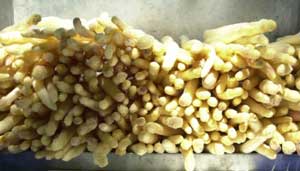
In Germany, the arrival of asparagus, or Spargel, is an eagerly anticipated sign of spring.

Baden-Wuerttemberg is Germany’s third largest state and home to the famed Black Forest, the premier spa town Baden-Baden, Cuckoo clocks, and one of the most productive asparagus regions in Germany. Located in southern Germany and west of Bavaria, Baden-Wuerttemberg also borders France in the west and Switzerland and the Alps in the south.

In Germany, the arrival of asparagus, or Spargel, is an eagerly anticipated sign of spring. During the season, which lasts from April until mid-June, almost every eatery in Germany, from the tiniest Brauhaus to the most elegant restaurant offers a Spargelkarte, a special asparagus menu, in addition to their regular menu.

Although there are variations depending on the region, most have the same staples: asparagus with butter or hollandais; with cooked potatoes; and asparagus with salmon or ham. You can also choose between a serving of one pound or a half pound of asparagus; some restaurants even offer an all-you-can-eat feast. In Baden-Wuerttemberg a regional speciality awaits the hungry guest: Black Forest ham, a spiced and smoked version of ham.

Baden-Wuerttemberg has established an “Asparagus Road” which winds through some of the most famous asparagus producing towns in the region, including Schwetzingen, Reilingen, Karlsruhe and Rastatt. Along with asparagus farms, visitors can delight in various asparagus festivals and enjoy local asparagus dishes found along this scenic route. In fact, the sandy soil around Schwetzingen in Baden-Wuertemberg is ideal for growing asparagus, and it has helped this area become famous for its excellent quality of asparagus.

Once a year during the asparagus season Schwetzingen devotes an entire day to the “royal vegetable.” On “Asparagus Saturday” (May 3) a plethora of food stalls tempt visitors with asparagus-based delicacies, while dancing and music keep visitors entertained. The day just wouldn’t be the same without its asparagus peeling competition, and every year the program includes the crowning of the asparagus king. (www.schwetzingen.de – German only)

The Pfaelzer Forest in Baden-Wuerttemberg’s northwest corner is famous for its asparagus production and the spring festival celebrating this. In Buechenau the asparagus season is celebrated with creative and traditional asparagus treats, presented by local and international exhibitors from May 31 to June 2. (www.harmonie-buechenau.de – German only)

Europe’s largest asparagus festival however is held in Bruchsal, near Stuttgart, which lies on the Upper Rhine plain. Local and international vendors offer visitors a tasty delight from May 16 – 18. Visitors can also admire the baroque palace of Bruchsal with its magnificent Balthasar Neumann staircase. (www.germany-tourism.de)

Along with the tasty asparagus dishes goes another specialty of Baden-Wuerttemberg: the famous wines of the region. Mostly known for its red wines, the variety in Baden-Wuerttemberg ranges from the famous reds including “Trollinger” and “Spätburgunder” to white wines such as “Riesling.” The main production area is along the Neckar river between Stuttgart and Heilbronn. More wine is consumed in this region than anywhere else in Germany–actually twice as much! The grape varieties of the red wine Trollinger, Schwarzriesling and Lemberger are well-known even beyond Baden-Wuerttemberg’s borders and have received various international awards.

For more information also visit: www.tourismus-bw.co.uk