By Marilyn Heimburger Photos by Don and Marilyn Heimburger
As spring approaches, thoughts of chocolate come to mind, just because we’re always looking for an excuse to eat chocolate! As the saying goes, “Chocolate–it’s not just for breakfast anymore!”
After a recent trip to Cologne, Germany, and after visiting the Cathedral and Roman ruins, I added a trip to the Chocolate Museum to my itinerary. You’ll learn all there is to know about this treat and have the opportunity to taste and see why the ancients called chocolate the “food of the gods.”
Opened on Halloween Day in 1993, the museum was the idea of Dr. Hans Imhoff, an entrepreneur who was the head of the Stollwerck Chocolate Company of Cologne. The three-story museum is located on the banks of the Rhine, within sight of the Cologne Cathedral.
Designed to look like a ship in the harbor, its modern glass and metal architecture surrounds the historic central customs office, which was built in the 1890’s. The museum welcomes an average of 1,700 visitors a day and about 650,000 per year.
3,000-YEAR-OLD HISTORY
Visitors can see chocolate being made at the museum.
As you walk through the three-story museum, you’ll see exhibits covering the 3,000-year history of chocolate. Growing and harvesting raw cocoa is shown with photographs, harvesting tools and a full size log boat from Ghana. Next is a 100-square-meter tropical greenhouse containing real cocoa plants and more than 60 other rainforest species. You’ll learn that the flowers of the cocoa plant grow directly on the trunk of the tree, so that pollinating insects can find them more easily in the thick jungle!
Chocolate’s popularity began as a luxury drink. An extensive exhibit brings you through the pre-Columbian Olmec, Aztec and Mayan culture, where cocoa was the drink of the gods, and was sometimes used as currency, or “brown gold.”
Next you’ll see the beautiful porcelain and silver cups and pitchers that were crafted to serve this luxury item in 17th and 18th century Europe. The chocolate culture of the 19th and 20th centuries is depicted in a full-sized shop, with chocolate tins and boxes on display, as if you had stepped back in time.
Front and back of a Santa mold
Beautifully preserved chocolate vending machines and advertising posters give insight into the popularity of chocolate. A film room continuously shows old television ads for chocolate. Chocolate packaging from apparently any brand of chocolate that ever existed is on display. Even American brands of chocolate are represented, although Astrid Hage, press representative of the museum, admitted that it was difficult to find someone willing to eat the American-made chocolate in order to empty the packaging. She explained that the Europeans follow a different standard in their chocolate production, and that their formula produces a superior taste.
DECIDE FOR YOURSELF
You’ll have the chance to decide that for yourself in another part of the museum, where, thanks to the Lindt and Spruengli Company, a two-floor exhibit demonstrates the production of chocolate today. From the processing, roasting, grinding of the bean to the pouring of hollow molded chocolate figures and a truffle production line, this small-scale system makes about 400 kg of chocolate every day for visitors to see, smell and finally, to taste.
A nearly 10-foot tall chocolate fountain stands on the production floor, and a museum staff member stands ready to offer a waffle cookie dipped in the warm melted chocolate that pours from the spouts.
THERE’S MORE, TOO
Do you want more of the “food of the gods?” A gift shop offering chocolate, souvenirs and gifts is ready to serve you. The museum also has a restaurant with a view of the Rhine.
Admission fees are 6.50 EUR for adults. Children under six or visiting on their birthdays are free. All exhibit texts are in both German and English.
The museum is closed on Mondays. Check their web page for information on hours, tours and special events: www.schokoladenmuseum.de
By Carol Price Spurling Photos by the author and courtesy Belfast Welcome Center
The first time I visited the Emerald Isle more than 20 years ago I steered clear of troubled Belfast. But I’m older and wiser now, and Belfast, too, has grown up, transformed from a self-absorbed, divided town into an extroverted and welcoming world-class city.
Belfast offers Victorian charm in every quarter and has retained the best of what Ireland is famous for: warm hospitality, atmospheric historic and cultural sites, and easy access to the lush unspoiled countryside. In Belfast, they’re glad to see you, not just your wallet, and what a difference that makes.
BELFAST HIGHLIGHTS West Belfast’s Shankill and Falls neighborhoods saw most of the “Troubles” that erupted in the early 1970s. The Peace Walls that separate them are still standing, but visitors are welcomed on both sides and the practice of customers being searched before entering a store or office was retired years ago. For those interested in an insider’s view of Belfast’s political divide, Coiste Political Tours (www.coiste.ie/p_tours.htm) offers guided tours by Republican ex-political prisoners. Or, take a taxi tour to see wall murals and other relics from the bad old days (West Belfast Taxi Association, www.wbta.net).
The center of Belfast, Donegall Square, features Belfast City Hall (www.belfastcity.gov.uk), an embellished stone edifice built in 1888 as a monument to Belfast’s bright future.
All metro buses lead to the bustling square, also home to literary gem Linen Hall Library (www.linenhall.com). In this old linen warehouse, transformed into a library in 1788, visitors can access the cozy library’s unique archives such as the Northern Ireland Political Collection and the C.S. Lewis Collection. Enjoy the library’s tranquil wood-paneled ambiance and a view of City Hall by taking a tea break in the upstairs café.
A horse-drawn carriage strolls past the Ulster Transport Museum
On Fridays and Saturdays the oldest Victorian-era covered market in Ireland, St. George’s, fills up with local shoppers intent on finding a bargain or tracking down the best fresh food in the region (www.belfastcity.gov.uk/markets). The Saturday market is devoted to food. You won’t go away hungry, with 250 stands offering everything from oysters to Irish cheeses to seaweed tapenade to tapas to sausages in curry sauce. Look for locally made “Belfast in a box” chocolates that celebrate Belfast landmarks, accompanied by an illustrated booklet (www.citycentres.com).
Everyone knows where the Titanic met her end but did you know she was born in Belfast? The city’s proud shipbuilding heritage is still obvious with the huge yellow cranes in the Harland and Wolff shipyard –- nicknamed Samson and Goliath — towering over Queen’s Island and the Titanic Quarter on the city’s eastern edge.
(left) Sampling seaweed at St. George’s Market
Belfast celebrates its past with the Titanic Made in Belfast Festival every March (www.belfastcity.gov.uk/titanicfestival), when free bus tours of Queen’s Island are offered by the city on Saturdays and Sundays.
My personal favorite from the tour: the inside of the design room at Harland and Wolff’s offices, where draftsmen labored under a cathedral-like arched ceiling to draw the ship’s plans.
Shores of the River Lagan
DO YOU NEED A CAR? Although Ireland and Northern Ireland aren’t famous for their extensive rail networks, between trains, buses, and taxis you can get anywhere you need to go in the greater Belfast area and environs without having to rent a car –- or drive on the left. Coach tours and trains also run directly north to Portrush, with convenient connections to Giant’s Causeway, Dunluce Castle, and Bushmills Distillery. Along the northern and southern shores of Belfast Lough, rail service is frequent and affordable, so getting to top attractions just outside Belfast, like Carrickfergus Castle (www.ehsni.gov.uk/carrick.shtml) or the must-see Ulster Folk and Transport Museum (www.uftm.org.uk/) is easy peasy. Day return tickets are offered at 1/3 off the standard rate if you leave after the morning rush hour, and families can get special ticket deals too (www.translink.co.uk).
But to see some of Northern Ireland’s diverse natural beauty and historic architecture (Environment and Heritage Service, www.ehsni.gov.uk/other-index/places.htm), a car will be very helpful. Most recommended is to make a day of driving north along County Antrim’s Causeway Coastal Route, where the craggy cliffs and wild sea spray on one side is balanced by charming villages and green pastures dotted with tranquil sheep on the other. Giant’s Causeway — a stunning outcropping of columnar basalt — can be busy during the tourist season but has been kept remarkably uncommercialized. Visit in the early morning or late afternoon for the best light at this geological wonderland (www.causewaycoastandglens.com).
Another lovely drive is west through the Fermanagh Lakelands, home of Belleek pottery, and National Trust gem Castle Coole (www.fermanaghlakelands.com).
WHERE TO EAT AND DRINK Celebrity chefs Paul and Jeanne Rankin have put Belfast on the culinary map with Cayenne Restaurant (www.rankingroup.co.uk) and Roscoff Brasserie. Up and down the Golden Mile on Dublin Road, foodies will be spoiled for choices of great pubs, cafés, bistros and restaurants.
Chef Michael Deane runs Northern Ireland’s only Michelin-starred eatery at Deane’s Restaurant (www.michaeldeane.co.uk); his newest venture is the contemporary bar and grill Deanes at Queens, located in the Queen’s University Common Rooms.
Coffee addicts never fear, Belfast baristas know what they’re doing. You can’t go wrong visiting any one of the seven Clement’s coffee shops, where coffee drinking is practically a spiritual pursuit, and the creamy hot chocolates are served in a large bowl.
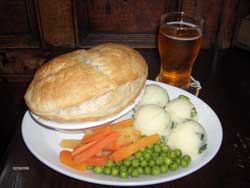
(left to right) Dining at one of Chef Michael Deane’s Belfast restaurants; Steak and Guinness pie is an Irish specialty
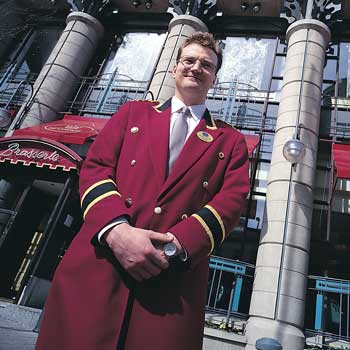
WHERE TO STAY In downtown Belfast itself, a famous landmark is the 4-star Europa Hotel (www.hastingshotels.com) conveniently located just in front of Great Victoria Street rail station and the Europa Buscentre. Head concierge Martin Mulholland will make sure you get everything you need, even if you’re not as famous as some guests who’ve stayed there, like Bill Clinton, Julia Roberts and Elton John.
For a more secluded getaway try the 5-star Culloden Hotel in Holywood, overlooking Belfast Lough (www.hastingshotels.com), or The Old Inn in picture-perfect Crawfordsburn (www.theoldinn.com), both within easy reach of the city.
For less expansive budgets there are dozens of guestshouses, B&Bs, self-catering holiday apartments, hostels, and budget hotels both in Belfast and in neighboring communities. Some are chic, some charming; choose according to your mood.
The Premier Inn hotel (www.premierinn.com) boasts a great central location and is spanking new to boot. The Ash-Rowan Town House (tel. 9066 1758) offers a choice of nine gourmet breakfasts, with a side of historic significance: the Ash-Rowan was once the home of Titanic designer Thomas Andrews.
If you get out into the Fermanagh Lakelands and wish you could stay, check out Belle Isle Castle (www.belleisle-estate.com), outside Enniskillen near Lisbellaw. The old stables and coach house have been transformed into comfortable holiday rentals, with a variety of outdoor activities available, as well as day-long cooking classes taught by Irish chef Liz Moore. You can even rent the castle for a group stay, or a small wedding.
WHEN YOU GO If you’re planning a trip to Belfast and Northern Ireland, be sure to visit the Belfast Welcome Centre website, www.gotobelfast.com. Like the office itself located at 47 Donegall Place in the city center, it is user-friendly, multi-lingual, and comprehensive. Be sure to pick up copies of their excellent themed city guides.
The Northern Ireland Tourist Board website is www.discovernorthernireland.com. Another free publication to pick up: Belfast In Your Pocket (www.inyourpocket.com). Published every couple of months, it always has the most up-to-date happenings, complete with maps of the city.
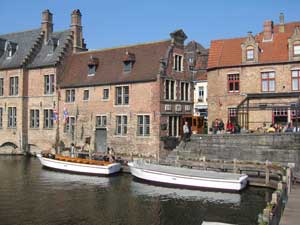
From the look of the crowds on the streets, it appears everyone has fallen in love with Bruges. And I visited in early April when there were fewer people visiting.
But that’s about the only negative thing you might be able to say about such a beautifully-preserved medieval city. It’s truly a must-see on any tour of Flanders, and you could easily spend several days visiting its wonders.
If Disney could have laid claim to Bruges, he would have: it’s that charming.
Bruges is easily walkable, but beware the cobblestone walks—make sure you have good walking shoes. Also, plenty of horse and buggies are for hire, or you can take a boat tour of the city or ride in a mini-bus.
UNESCO SITE The whole of the city center is a historical landmark, designated by UNESCO as a World Heritage Site, and so it should be. It’s hard not to become enamored with Bruges, its twisting streets and alleyways, its network of canals, and its charm. It’s a complicated network of narrow passageways, brick buildings and waterways, but that’s what makes this city so fascinating. You’ll love it.
VISIT THE BEGUINAGE In most cases, you’ll cross Minnewater Bridge to enter the Beguinage, founded in 1245. Now populated by nuns from the Order of Saint Benedict, you’ll see the beautiful courtyard garden, where yellow daffodils pop up in spring, the whitewashed house fronts that line the Beguinage, and the peaceful beauty of the area. A posted sign even asks visitors to be quiet and be beware of their surroundings.
THE BELFRY In case of war—or fire, or anything—the belfry was where it was first noticed. The marketplace is still dominated by this high tower, and it looks out onto the bustling plaza where life comes together in Bruges. You can climb to the top of the belfry (it will cost you 366 steps), and get a good view of the town as well as the two statues in the square, one of Jan Breydel and one of Pieter de Conick, both heroes who resisted the French in 1302.
The Stadsschouwburg is the royal theater building dating from 1869 and is said to be Europe’s best preserved city theater. Behind the Gothic revival architecture is a palatial auditorium and an elegant foyer.
The Little Bear of Bruges, located in a niche in the Burghers Lodge at Poortersloge, a 15th century private club building, is an important city symbol. I tried finding it, to no avail, but perhaps you’ll have better luck. It’s worth a photograph.
Kempinski Dukes’ Palace, at Prinsenhof 8, now an excellent five-star luxury hotel, was a former 15th century Dukes of Burgundy castle, and features 93 rooms, including 22 palatial suites, of which six are historically listed. Each room contains original features from 1429, but they have been completely modernized with elegant furnishings and marble bathrooms, and the hotel offers the latest technology such as flat screen television and high speed internet. Even just a look from the outside at this hotel is impressive; it’s located at the end of a short street, and is easy to miss.
LAST REMAINING BREWERY Bruges’ last remaining city brewery is De Halve Maan (The Half Moon), established in 1546; their specialty beer is called Brugse Zot, which refers to the nickname of the townspeople, conferred upon them by Maximilian of Austria. You can take a 45-minute tour of the brewery and museum; cost is 5.50 euros.
Churches are abundant and worthy of a look. There’s the Beguinage Church, the Episcopal Palace, the English Convent, Basilica of the Holy Blood, Church of the Holy Magdalena, the Military Chapel, Church of our Lady of the Pottery, and the Welcome Church of Our Lady (see the art collection inside including Michelangelo’s famous Madonna and Child, and the 15th and 16 century mausoleums of Mary of Burgundy and Charles the Bold). Saint James’ Church benefited from the Dukes of Burgundy and the many foreign merchants, and their gifts have left their glittering marks on the interior of this church. A guidebook, which you can pick up at the local tourism office in town or at the Bruges railway station, will sort out these churches and other points of interest for you. www.brugge.be/tourism
The Frietmuseum is all about the Belgian potato fry, located in the Saaihalle. Here you’ll learn all about the history of potatoes, and fries, and the condiments which are served with them. Kids will especially enjoy the fun things this museum offers, and you can even taste fries in the cellar of this medieval 14th century building.
WHAT ABOUT CHOCOLATE? Belgian chocolates, and their history, are served up in good measure at the Chocolate Museum, a four-story compilation of everything chocolate. The museum explains chocolate started with the Mayans and Aztec civilizations in pre-Colombian Central America, and after adding sugar, was imported to Europe around 1500 AD. Chocolate as we know it became popular around 1800, and as they say, the rest is history. The museum is a must-see in Bruges at Wijnzakstraat 2.
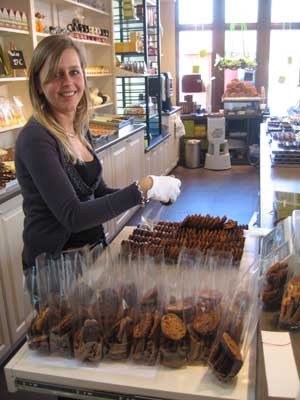
To taste more fine Belgian chocolate, you’ll want to check out The Chocolate Line at Simon Stevinplein 19. Master chocolatier Dominique Persoone, one of the owners, is a dynamic chef with advanced ideas on the making and blending of chocolates and other flavors. Chef Persoone blends chocolate with such tastes as cigars, fried onions and passion fruit. His shop is one of only three chocolate shops listed in the Michelin Guide, and the shop’s customers include such top-notch restaurants as Comme Chez Soi, Oud Sluis and Hof van Cleve. He even has a new book out where he travels through Mexico in search of the origins of cocoa, visiting Maya settlements and discovering the secret of the first chocolate drink and today’s Pozol. If you happen to get to meet Dominique, you will enjoy his demeanor and his chocolates. www.thechocolateline.be
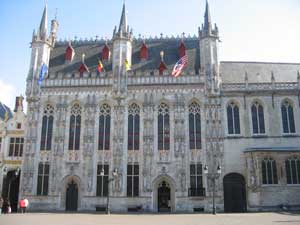
Bruges is also known for its many guild halls, which are scattered throughout the town. Bruges Town Hall, built between 1376 and 1420, is one of the oldest in the Low Countries. A ceremonial staircase leads from the entrance hall to the first floor, where visitors can view the Gothic Chamber. This former council chamber continues to play an important part in the life of the city. The wooden, polychrome ceiling is decorated with a profusion of late-medieval carvings. The murals illustrating Bruges’ past were added during the chamber’s restoration in the late 19th century.
Where to stay? There are dozens of hotels, youth hostels, apartments and bed and breakfasts to choose from. The Bruges Tourist Office can supply a booklet listing these.
Bruges is colorful, inviting and lively, and the food and beer there is some of the best in Europe. You couldn’t find a better combination of history, fun and food. For more information, go to www.visitflanders.us or www.brugge.be
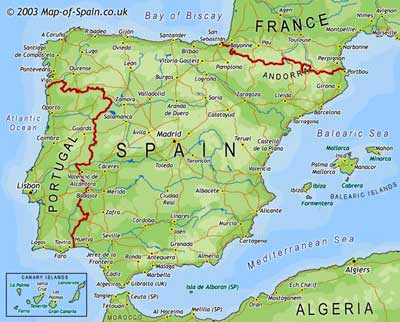
Costa Blanca … Costa Daurada … the mere words conjure up images of warmth, sand and sunshine, just the antidote to chilly North American winter weather. Now is the time to head to the Mediterranean coast of Spain, where the weather is already warm. Going in the spring or fall offers great weather along with fewer tourists and lower, shoulder-season prices.
Spain is hot, hot, hot right now — from cuisine to fashion. Let’s go, amigos!
MAGICAL MADRID
Most flights from the United States fly into Madrid, and then connect to coastal cities such as Valencia or Barcelona. (Fly Iberian Airlines to get yourself into the Spanish state of mind.) Allow a few days for a Madrid sojourn before heading to the coast. The capital city is beautiful, packed with museums, great restaurants and many things to see and do.
The Gran Hotel Canarias Madrid makes a great home base. It is right in the center of town, across from the recently expanded Prado Museum and next to the Thyssen Museum.
Dining is a great pastime in Madrid, and Plaza Mayor is a good place to start. The area around the plaza is loaded with restaurants, such as Casa Botin, famous for its Castilian specialties and its listing in the Guinness Book of Records as the oldest restaurant in the world (circa 1725). Plaza Santa Ana, a short walk from the hotel and many museums, is home to lively tapas bars and wine bars. Near the Royal Palace, try the Café de Oriente. At the Thyssen Museum, dine in the terrace garden of the museum restaurant. For a simple and fun meal, check out the Museo del Jamon (Ham Museum), a chain of deli-cafes where you can see hanging hams, have a glass of sherry and a plate of sliced ham.
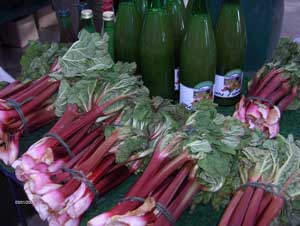
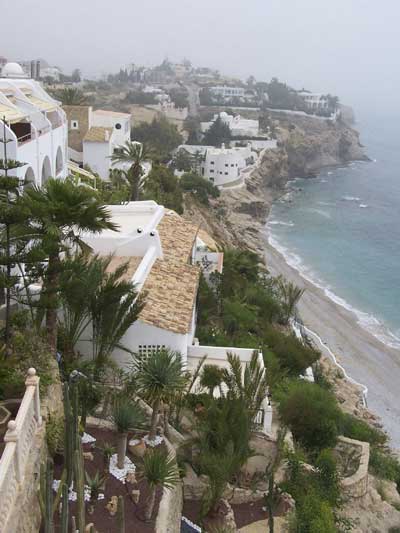
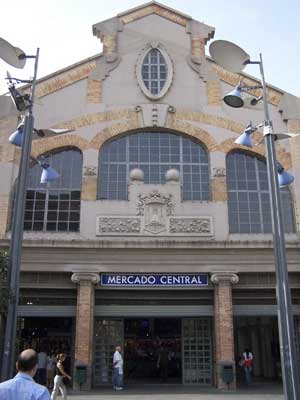
Hotel El Montiboli is perched on the Costa Blanca on the Mediterranean coast.The central market of Alicante is in the heart of the city.
THE COSTA BLANCA
Tearing yourself away from Madrid, hop a plane or train and head to Alicante to begin your coastal voyage, then work your way northward along the coast to Barcelona, with as many stops along the way as your schedule will allow (or start in Barcelona and head south). Travel by rental car, plane or train, according to your preference and budget.
Alicante is on the Costa Blanca, or White Coast, and its beaches are spectacular. But there’s much more to do than lie on the sand and soak up the rays. Whether you take a guided city tour or wander on your own, don’t miss the imposing Santa Barbara Castle, which towers 500 feet above the city center, with panoramic views of the city below and the Mediterranean Sea. Early risers will enjoy the traditional covered market, the Mercado Centrale, bustling with vendors. Enjoy dinner at La Taberna del Gourmet or Nou Manolin.
A good base for exploring this area is the Hotel Hospes Amerigo, a beautifully renovated convent in the heart of Alicante. While the exterior is historic, the interior is ultra modern and comfortable.
Nearby towns include Elche and Villajoyosa, each worth a visit. In Elche, a majestic date palm grove with 600,000 trees, planted by the Phoenicians and later cultivated by the Moors, will take your breath away. Palm fronds from these trees are used for Palm Sunday celebrations throughout Spain. The grove itself is a UNESCO World Heritage Site. Take time to visit the Basilica of Santa Maria, the Huerto del Cura Botanic Gardens and the Archaeological Museum. Enjoy lunch (paella, anyone?) at Els Capellans Restaurant in the peaceful and beautiful surroundings of Hotel Huerto del Cura.
The picturesque fishing port of Villajoyosa is a major center of Spain’s chocolate production. A must stop is the Valor Chocolate Factory and the Chocolate Museum. You’ll want to stock up on Valor chocolate for gifts for the folks back home. For a scenic lunch stop, try the luxurious Hotel El Montiboli, perched on a cliff overlooking the Mediterranean. The dining room is wrapped in windows, with a view as divine as the food.
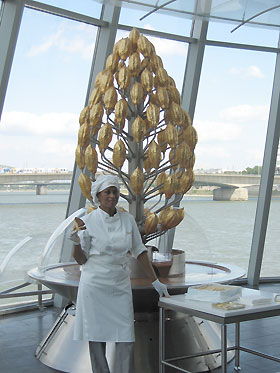
Elaborate chocolate sculpture at the Valor Chocolate Museum.The likeness of the Lady of Elche is found all over town, from floral representations to fountains to sculptures.
VIVACIOUS VALENCIA
Next stop: Valencia, one of the most exciting cities in Europe, with its cosmopolitan mixture of old and new, tradition and trendiness, sophistication and casualness. The Hotel Astoria Palace, in the heart of the Old Quarter, is a great place to call home in Valencia.
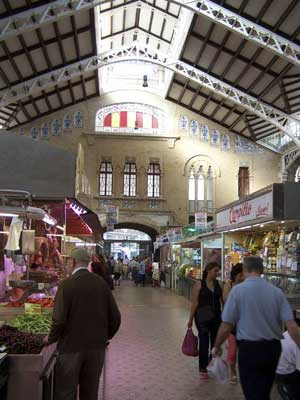
Begin your visit with a walking tour of the historic Old Quarter, with the Central Market, fascinating La Lonja Silk Exchange, unique Lace Market, Plaza Redonda and the beautiful St. Mary’s cathedral with its legendary Holy Chalice, believed to be the chalice used by Jesus Christ at the Last Supper.
For a complete change of pace, head to the ultra-modern City of Arts and Sciences, a museum where the building and grounds are as spectacular as what is inside. Other good choices include the Fine Arts Museum, Valencian Institute of Modern Art or the National Ceramics Museum.
Be sure to visit the bustling, revitalized port area, home of the 32nd America’s Cup competition in 2007, and future home of the 33rd America’s Cup in 2009. There will be a pre-regatta in July 2008.
If you like being next to the water, you might opt to stay at the new and beautiful Hotel Las Arenas, with its lush gardens and stunning pavilions overlooking the sea. Indulge in its luxurious spa, or dine in the elegant Restaurante Sorolla.
(left to right) The central market at Valencia is always bustling.; The National Ceramics Museum in Valencia has a remarkable exterior.; The ultra-modern City of Arts and Sciences is a must-see in Valencia.
For food to fuel your sightseeing, consider a stop for fideua, a paella made with noodles instead of rice, at Restaurante Submarino in the Oceanografico, or sample tapas at one of the many restaurants in the Old Quarter.
Be sure to try horchata, the artisanal beverage for which Valencia is known. A great place to get the real thing is in the suburb of Alboraya, where the chufa (tiger nut), the key ingredient in horchata, grows. The Horchateria Daniel serves a delicious horchata with the traditional accompaniment of freshly baked pastries.
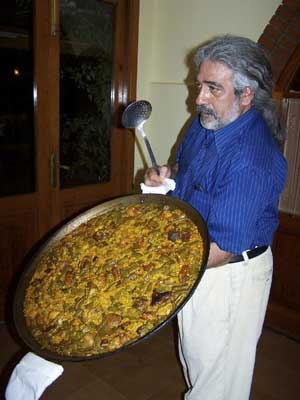
For a charming outing and an authentic heartland paella, head out of town to the Albufhera, where you can take a boat ride through the shallow freshwater lagoon, a natural park known for many species of birds and fish, and visit a barraca, a traditional fisherman’s hut near the rice paddies and orange groves. La Matandeta is a rural farmhouse restaurant where the paella is cooked over firewood in a huge pan.
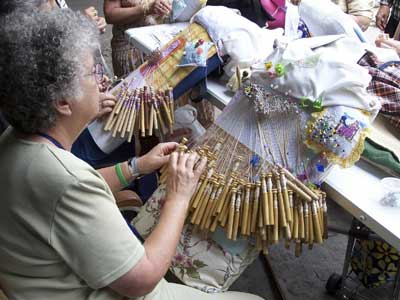
Paella is cooked in a huge pan over a wood fire at La Matandeta restaurant in the Albufhera area.Local women make lace in the time-honored fashion in the center of the round plaza that houses Valencia’s Lace Market.
FROM HISTORIC CASTLE TO MODERN SPA
For a historic stop on your route north, make a slight detour to the medieval town of Tortosa and spend the night in the charming Castillo de la Zuda Parador, a 10th-century castle. Be sure to get there in time to wander the streets of this picturesque village and explore the castle itself. For dinner, sample regional specialties in the parador’s restaurant.
(clockwise) The convent garden is an oasis of peace within the bustling city of Tarragona.; Exquisite Roman mosaics are preserved in museums in Tarragona.; The Le Meridien Ra Beach Hotel and Spa in El Vendrell must be seen and experienced to be believed.
After a long day at sea, fishermen still have work to do, mending their nets. These are at the port of Tarragona.
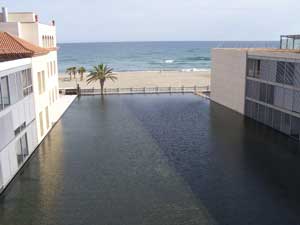
Heading on to the Costa Daurada (Golden Coast), stop in the town of El Vendrell and spend a night –- or two or three -– at the ultra-modern and ultra-luxe Le Meridien Ra Beach Hotel and Spa. Splurge for spa treatments, such as the chocolate massage. Enjoy the beach, or play in one of the pools. Be sure to dine at least once in the hotel’s La Vinya del Penedes restaurant.
ROMAN ECHOES IN TARRAGONA
The next stop on your northward route is Tarragona, an ancient Roman city with layer upon layer of ruins, designated a World Heritage Site by UNESCO. Be sure to take a guided tour of the old town so you can understand the many layers of history upon which Tarragona is built. Each spring the town celebrates its heritage with Tarraco Viva, a Roman festival and games.
Visit Tarragona’s port and see the fishing boats arrive in the late afternoon. Watch the fisherman as they auction their fish and mend their nets. For a traditional mariner’s menu, dine in the seaside Restaurante La Puda and sample Tarragona’s famous Romesco sauce. Or, savor authentic tapas at Restaurante La Nau, tucked away on Calle La Nau in the old town.
BEAUTIFUL BARCELONA
The final stop (or the first, if you travel in the opposite direction), is Barcelona, the jewel of Catalonia. It would take another entire article to do justice to the wonders of Barcelona and its environs. Check with the local tourist office for maps and current events, then head out to see the sites. The celebrated architectural marvels of Antoni Gaudi are a must, and you’ll see them in many places throughout the city. Be sure to climb the steep towers of the iconic Sagrada Familia, or temple of the Sacred Family, for an up close and personal look at this architectural wonder.
While wandering along La Rambla through the heart of the city, duck into La Boqueria market, the largest in all of Spain. After whetting your appetite in the market, you might want to sign up for a cooking class at the Hofmann Escuela de Hosteleria (Hofmann Hospitality School) to learn how to cook Catalan specialties.
The Hotel Catalonia Berna is a great location for the hub of your explorations, within walking distance of many sites and close to the subway for longer trips.
A side trip to the Black Madonna Shrine of Montserrat, perched impossibly upon the steep mountains outside of Barcelona, is a must.
For more information about Spain, contact the Tourist Office of Spain in New York (212-265-8822); Miami (305-358-1992); Chicago (312-642-1992) or Los Angeles (323-658-7188) or go to www.spain.info.
By Susan MacCallum-Whitcomb Photos courtesy Costa Del Sol Tourism
Sometimes it helps to follow your nose.
For days we’d heard rumors about ancient baths located just below Casares, in southeastern Spain. But reliable information was hard to come by. The tourist brochures made only passing reference to them, and even the directions that we finally did get were vague to say the least: head down the mountain and through the quarry, turn onto the foot path, then walk toward the water. Precisely how far we should go and which of the half-hidden paths we should take remained a mystery, though.
So on we plodded in Andalusia’s autumnal sunshine dodging killer cacti and recalcitrant donkeys, until we smelt it — the sulfurous pool that first brought the area a measure of fame more than 2,000 years before.
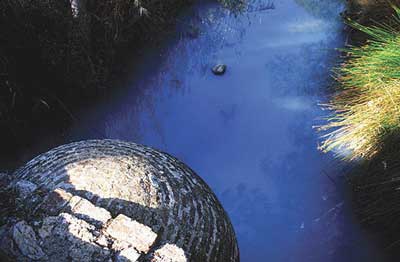
According to legend, Julius Caesar stumbled upon this same spot in 61 BC, when he was merely a provincial administrator with a nasty skin condition, and was so impressed by the pool’s medicinal properties that he became a frequent visitor. The Roman-built structure that encloses it (known as Baños de la Hedionda) is a simple dome with a sheltering wall around the perimeter. Rising about eight feet above ground level, it is broken only by two low arches through which you enter directly into the water by way of either a rough wooden ladder or a stone ramp. Taking the plunge can be unnerving. Darkness makes the depth of the pool difficult to determine, and two subterranean vaults add to the sense of foreboding.
WATER IS DIVINE
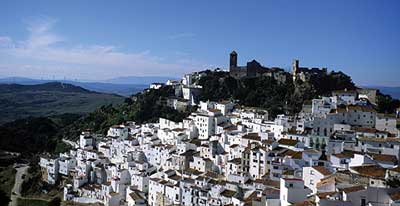
Caesar, however, was absolutely right: the water is divine and warm enough for swimming well into the fall. For him, its healing power seemed miraculous. For us, on the other hand, the real miracle was that the baños—despite their proximity to the Costa del Sol, one of Europe’s most congested tourist strips—have no signs, lines or admission fees. In short, they’ve yet to be invaded by the hordes of vacationers who have overrun the Mediterranean coast from Malaga to Algeciras. The same can also be said of Casares, the pueblo blanco or “white village” reputedly named for Caesar that overlooks the baths. And it, too, can seem rather daunting at first.
In part that’s because of its dramatic location: set 1,425 feet up in the Sierra Bermeja Mountains, Casares’ sugar-cube buildings perch precariously on twin plateaus and tumble into the deep crevice between. But it is also because of the quiet. You see, the village is a study in serenity, which is unsettling for those who’ve come to equate holidays with site-filled itineraries and Amazing Race-style activities.
The truth is that, save for the late afternoon (when children take to the soccer field) or dusk (when adults tread the cobbled pedestrian-only streets on their nightly paseo) sounds here are as muted as the almond blossoms that enliven the landscape, which is precisely why Casares is a perfect place to rediscover the lost art of lounging. The first step, literally, is to stroll over to Plaza España where you can browse shops bordering the square and watch locals play pétanque beside a centuries-old fountain. Afterwards, you might putter about in Casares’ small ethno-history museum or pay homage to Blas Infante, the “Father of Andalusian Nationalism,” at his restored birthplace.
SATISFY YOUR HUNGER Next, having satisfied your curiosity, you can concentrate on satisfying your hunger. It’s a pleasant prospect considering Casareño eateries dish up simple fare prepared with Andalusian flare. Specialties include morcilla de chivo sausages and artisanal goat cheese accompanied by dense brown bread. Hearty soups are harvest-time favorites, and game (most notably rabbit rolled in wild herbs) is popular in season.
If you’d like to enjoy these with a side order of scenery, the best bet for dining is Bodeguita de en Medio, which has a rooftop terrace offering views of the ruins that stand guard over the village. The very presence of these, of course, proves life in Casares hasn’t always been quite so peaceful. Its strategic position made it a popular hideout for bandoleros in the 19th century. Before that it was favored stop for armed forces, from the earliest Iberians through to the French who attempted a takeover during the Napoleonic Wars. Those who succeeded left an indelible mark that earned Casares recognition as a National Historic-Artistic Site in 1978, and their legacy is nowhere more apparent than at this isolated spot.
Fortified by the Romans, it was further developed by Moors who gained control of the region in 711. By the 13th century, they’d erected a castle on the seemingly impregnable promontory. Within a few hundred years, Queen Isabella’s Christian soldiers had put an end to Arab domination, and the Encarnación church was built atop it. Now that, too, is an empty shell, and the evocatively decaying structure reaches heavenward with a different purpose: aerials have been attached to it to improve television reception! Contemporary life has brought other changes as well. The climb to the ruins admittedly remains steep. The sweeping views – up to the mountains, down to the sea and across to the northernmost reaches of Africa – are as magnificent as ever.
ROCK OF GIBRALTAR But while the ancients could only gaze out and imagine these distant locales, today’s visitors can easily reach them. Estepona, the closest of the Mediterranean resort towns, is just 25 minutes east by car, and a morning’s drive west through the clouds will take you to Ronda, the stunning gorge-straddling city that has been dubbed the “Birthplace of Bullfighting.” The iconic Rock of Gibraltar, situated an hour south, promises Barbary Apes plus a quick taste of the British Empire. Even Tangier — Morocco’s infamous, undeniably exotic port city — is accessible to early risers, thanks to the packaged daytrips sold all along the seaboard.
Closer to home, Paraje Natural de Sierra Crestellina now beckons ramblers, and diehard duffers are welcome to hit a few balls at a new area golf course. Remember, though, the true beauty of this place is that you don’t have to break a sweat to enjoy it. When you allow yourself to fully surrender to Casares’ laconic spell, simply sitting on a deck chair can provide ample entertainment. It’s easy enough, after all, to idle away hours watching farmers tend the olive and cork groves below, or marveling at the belled goats that graze at impossible heights on the rocky outcroppings above. Once you’ve had your fill of that, you can always soak up the atmosphere in Baños de la Hedionda. Trust me, the water’s fine…
The Fine Print: If relaxing is your primary goal, choosing where to stay is as important as deciding where to go. So while you can bed down in a basic room Hotel Casares for about €60 a night, renting a vacation home is a more restful, and budget-friendly, alternative. We booked ours through Just Casares, a local company which lists traditional white-washed townhouses starting at €300 per week in autumn. Those off-season rates kick in September 1, even though the village hosts two favorite ferias (or fairs) during that month: one honoring La Virgen del Rosario, the other El Cristo. These run respectively the first Saturday in September and over a long weekend in mid-September to coincide with the end of the summer harvest.