
Story and photos by Alison Ramsey
In the west Mediterranean Sea, the Balearic Islands’ Menorca makes the most of its natural resources. And for being only about 30 miles long and 10 miles wide, it has a lot! This haven of coves and turquoise water licking untouched white sand beaches has been a Biosphere Reserve since 1993, and due to its wide diversity of habitats and landscape it is UNESCO-designated as the headquarters for the World Network of Island and Coastal Biosphere Reserves for matters pertaining to sustainable development. Local farming practices focus on sustainability and preserving the island’s natural heritage. Using environmental resources found within the island’s ecosystem, resident farmers and artisans make a living from the offerings provided by landscape and livestock.
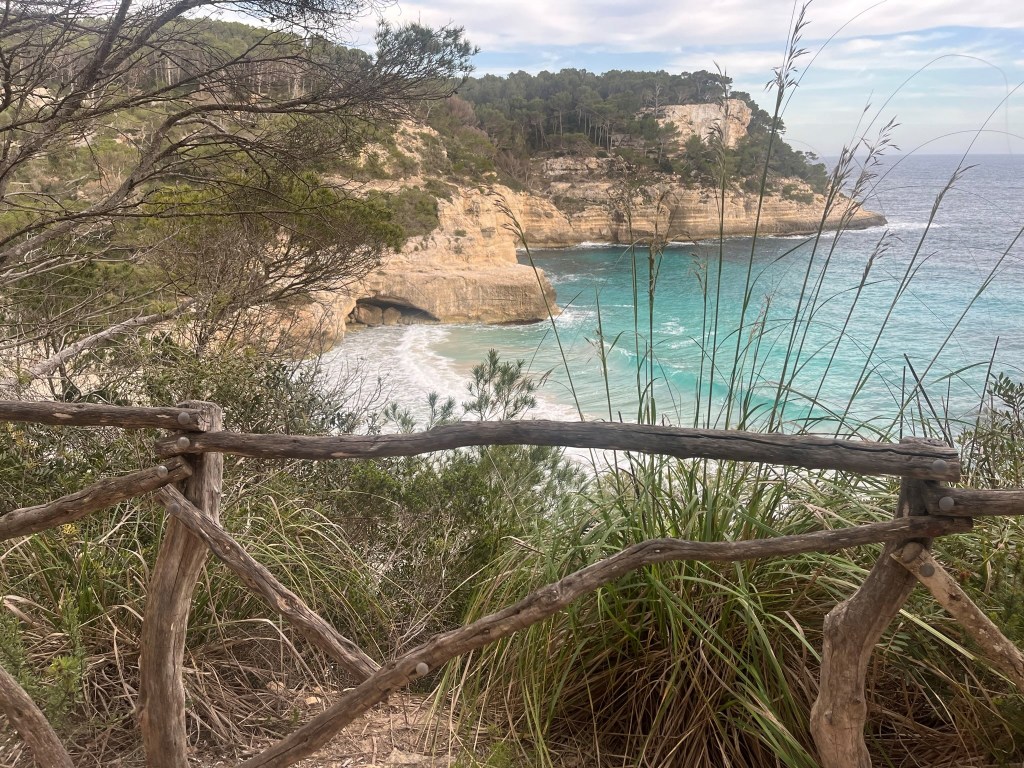
Across the island, wild olive tree wood is fashioned into fences to divide land and act as guard rails.
Menorca’s “mosaic landscape” of varying ecosystems consists of farmland, forests, and villages, with a bird’s-eye view revealing small plots of land divided by a network of dry-stone walls. Since ancient times, agrarians have gleaned rocks from the soil to build these mortar-less barriers that cover about 6,835 miles of the island (more than half the length of the Great Wall of China) and reduce erosion by blocking the wind from shifting soil to neighboring plots. Even the island’s prehistoric navetas (burial chambers) and talayots (shrines) were built by carefully selecting stones of varied size and shape, filling gaps with sand, and relying on gravity to secure them together.
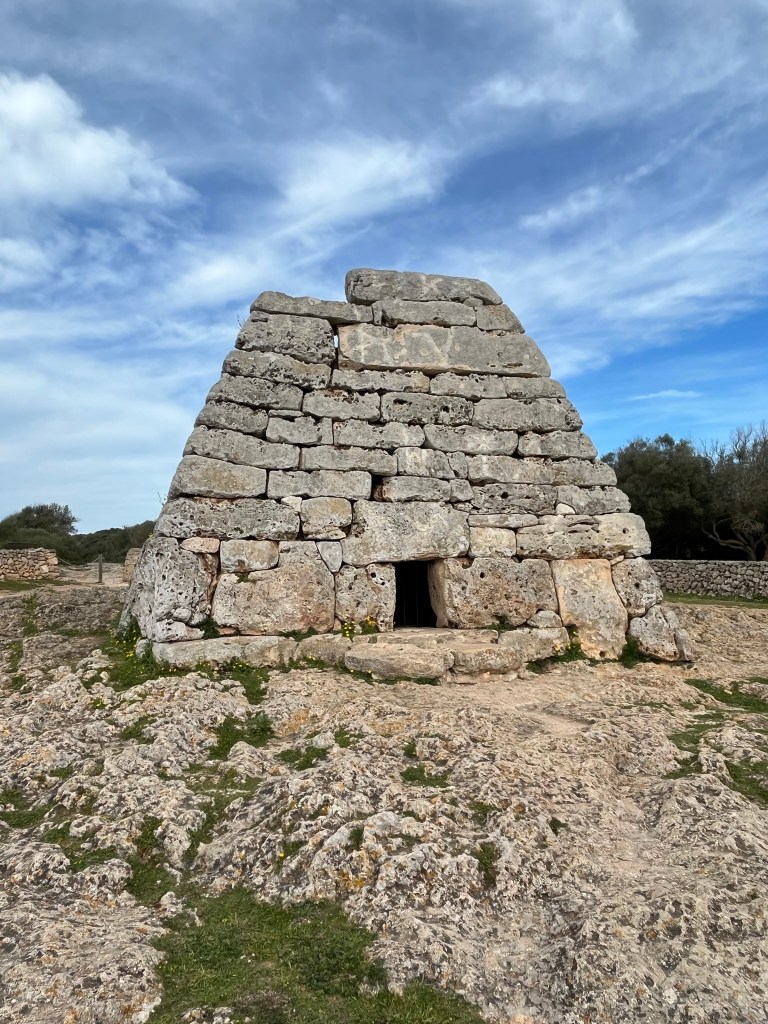
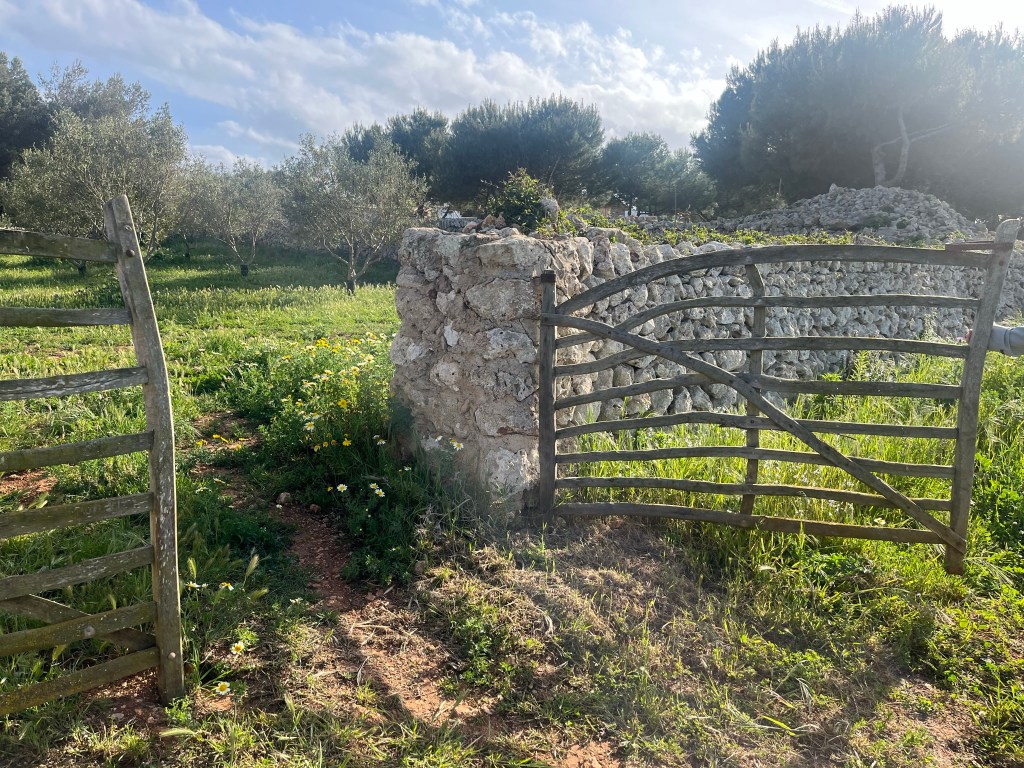
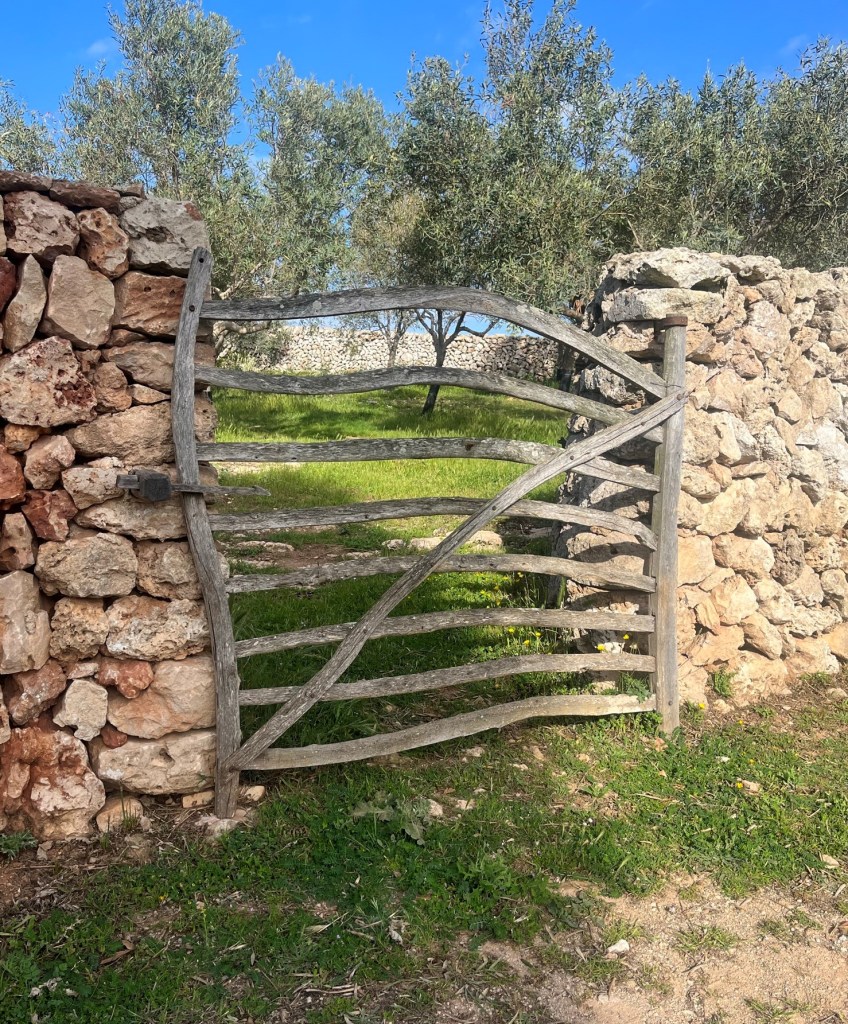
(left) Unique to the island, Menorca’s navetas are pre-Talaiotic burial monuments shaped like an inverted boat and built using only large stone blocks. (middle) The island’s naturally rocky soil is gleaned to build stone walls that separate land plots. Wild olive trees with olives not suitable for harvesting are formed into farm gates using their distinctive, curvy wood. (right) Prevalent on Menorca are cement-free stacked-stone walls and sturdy gates crafted from wild olive trees.
Vineyards on Menorca are typically surrounded by these stone walls, a drainage situation that adequately waters the vines without leaving them overly damp. Local beverages created from the natural flora offerings of the land include the Vi de la Terra Illa de Menorca indication of quality wine, aromatic Menorcan gin (the oldest in Spain) produced using wine-based alcohol distilled with native herbs and juniper berries in old copper stills, and herb liquor digestifs.
The olive tree is another landscape prevalence, including the Spanish arbequina variety, which is used to produce a popular extra virgin olive oil with a mild, creamy flavor and slow kick. Oral history says the famous condiment mayonnaise heralds from Menorca, where the invading French Duke of Richelieu first tried the local sauce (a simple mixture of olive oil, egg, and salt) and brought it back to the French court, naming the recipe “mahonnaise” after the town Mahón. The oldest written source of Menorcan recipes is Art de la Cuina, a book by Fra Francesc Roger detailing the island’s cultural gastronomy in more than 200 18th century recipes, including a recipe for mayo using native olive oil. Not only are olives used for oil production, the strong wood from wild olive trees whose olives aren’t large enough to harvest is crafted into rustic, swing farm gates in a distinctive curvy design seen all across the island.

The oldest written source of Menorcan recipes is Art de la Cuina, a book by Fra Francesc Roger detailing the island’s cultural gastronomy in more than 200 18th century recipes, including a recipe for mayo using native olive oil.
Using age-old methods, farmers use milk from Menorcan cows to produce rounded-edge square blocks of Mahón-Menorca Denomination of Origin cheese with a flavorful, oily dark rind (even Arabic documents from the year 1000 describe the tasty qualities of cow’s milk Menorcan cheese). Farms like Son Piris produce artisan cheese (made with raw milk and intended for immediate consumption) or the more industrialized and slightly sweeter pasteurized-milk cheeses. Martina Fedelich of Son Piris explained that it is difficult to imitate the Menorcan bacteria used in their cheese, as they are unique and isolated from other cheeses and even differ from those on neighboring island Mallorca. Easy to identify, Mahón-Menorca cheese’s unique shape comes from the cheesecloth used during the pressing process, and fabric lines from the cloth remain visible in the rind.

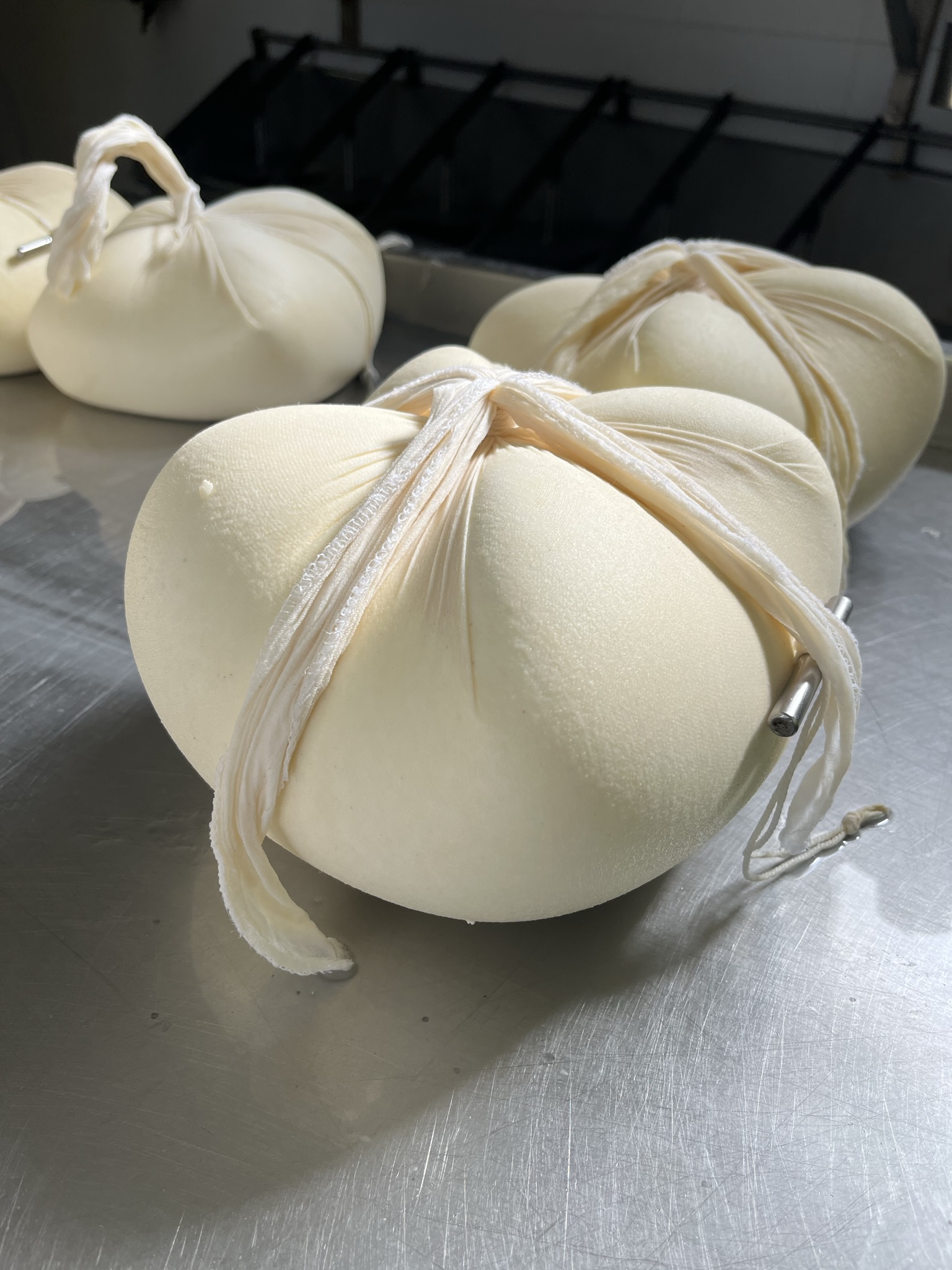
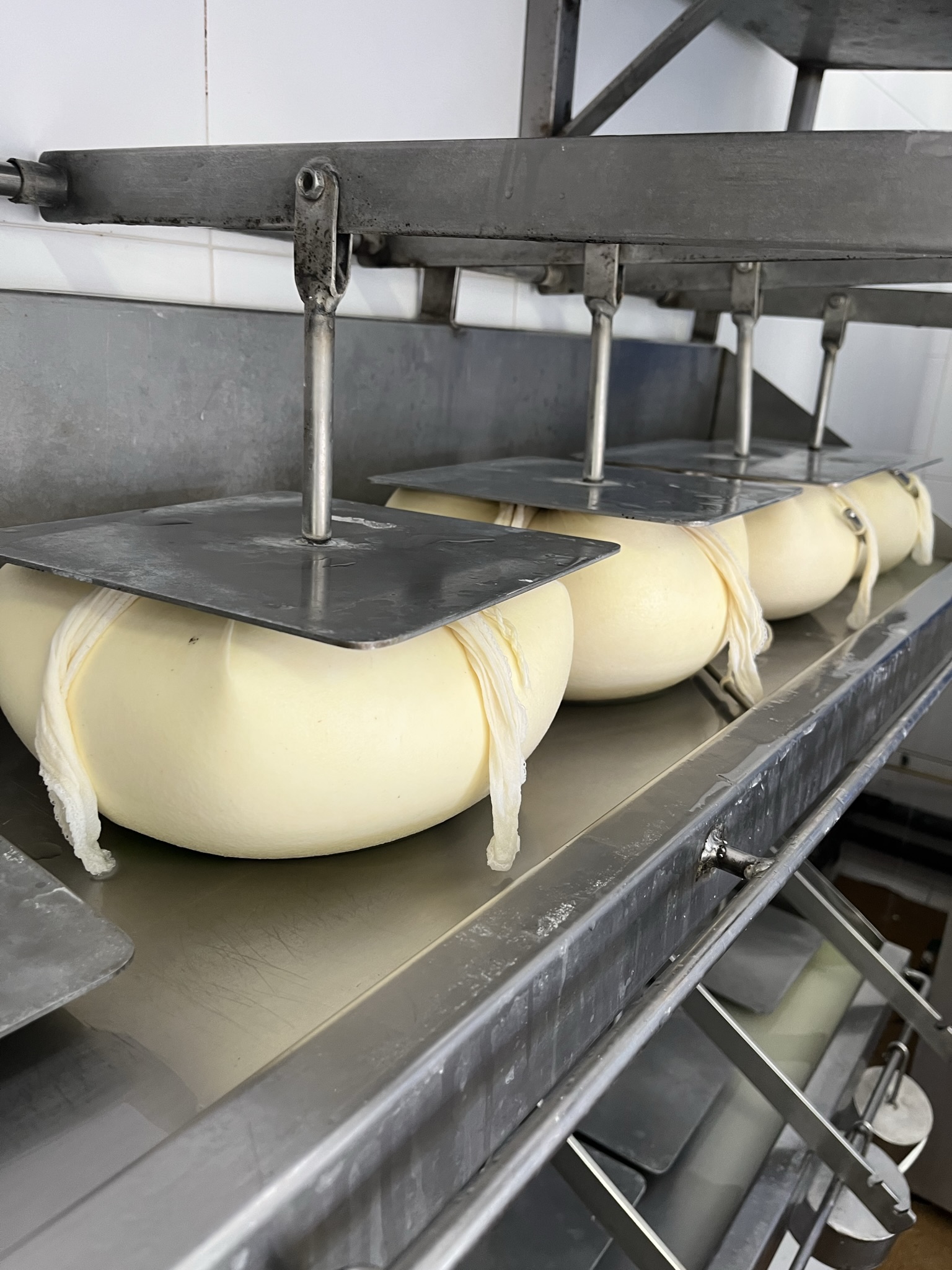
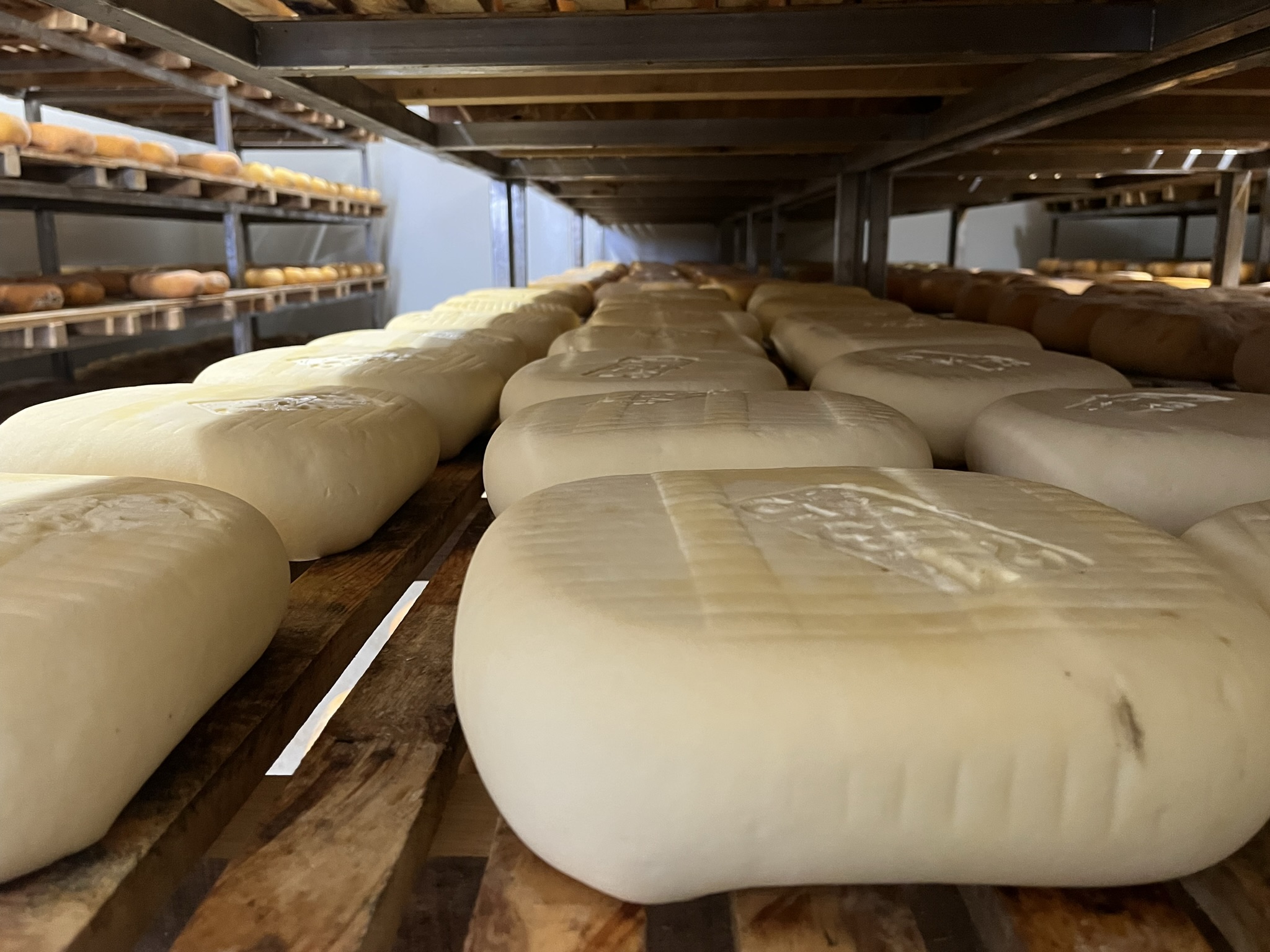

(clockwise from upper left) The unique shape of Mahón-Menorca cheese comes from the cheesecloth used during the pressing process, and fabric lines from the cloth remain visible in the rind; Son Piris cheeses are wrapped tightly in cheesecloth, which holds together the solid cheese curd while allowing for drainage of liquid whey; Wrapped cheeses are pressed to remove excess moisture; After their tightly wrapped cloths are removed, the cheese is set out to dry; Martina Fedelich of Son Piris serves the famous farm-to-table Mahón-Menorca Denomination of Origin cheese.
Agriculture is a key trade on Menorca; however, the most important manufacturing business on the island is shoe design and production—an industry dating back to the 18th century. Footwear made in Menorca is known for its high quality and meticulous craftsmanship. The most famous sandal shape, with a cowhide leather upper and sole, was first created to protect farmers’ feet while working the rocky soil. Nowadays, these avarcas (also called abarcas or menorquinas) are sold with heels and straps of all styles and colors, but use recycled tires as a hardy sole. Popularity and production have been increasing especially over the past few years, and they are worn by Menorcans and visitors alike.
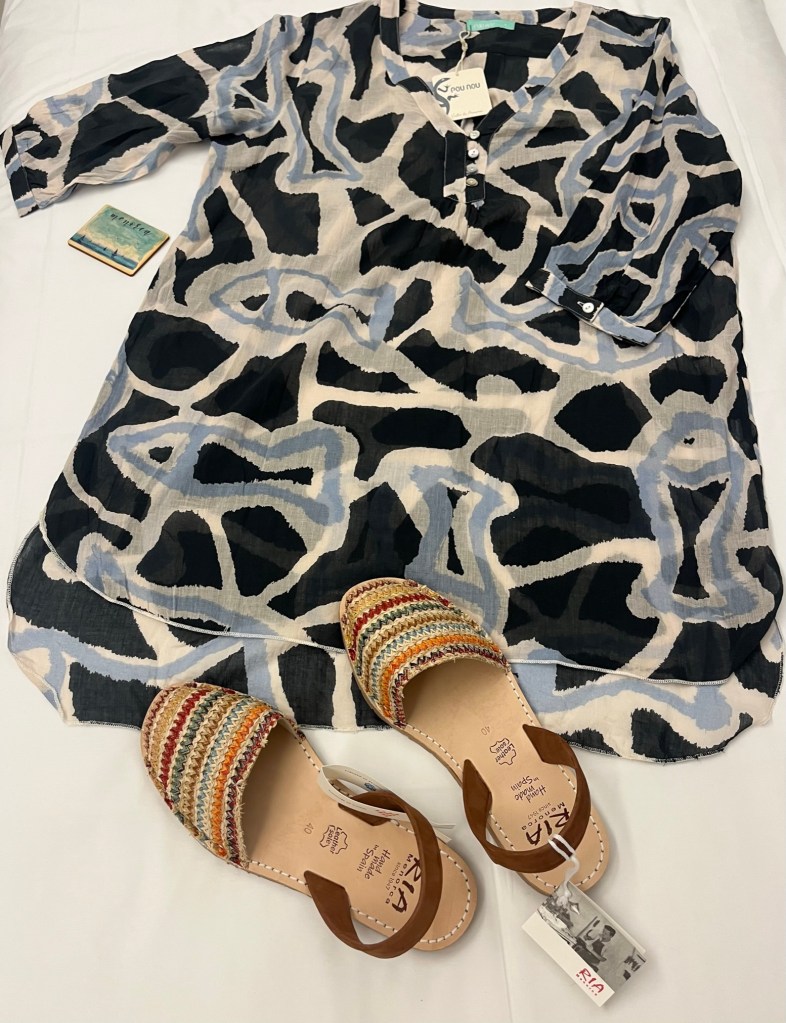
RIA brand avarcas fashioned from leather with a colorful woven upper are a stylish update to traditional peasant footwear. Pou Nou clothing motifs echo the sea life and landscape of the island, like this fish-print tunic in shades of blue.
Avarca company MIBO proudly carries the Avarca de Menorca hallmark—another island-specific denomination of origin—which guarantees that their footwear is crafted locally and made with high-quality materials. Founded in 1998 by Miguel Pascual and Bosco Moll, MIBO designs and manufactures these iconic Menorcan sandals using traditional methodology combined with modern technology. Moll said, “The process to make a pair of avarcas from Menorca has about 25 operations, which all need the hands of craftsmen to be able to make them. We also use technology that helps the craftsmen, but it always requires expert hands. … The future of our product and our brand passes through the qualified training of our craftsmen-workers since there are no schools or training cycles that help this task.”
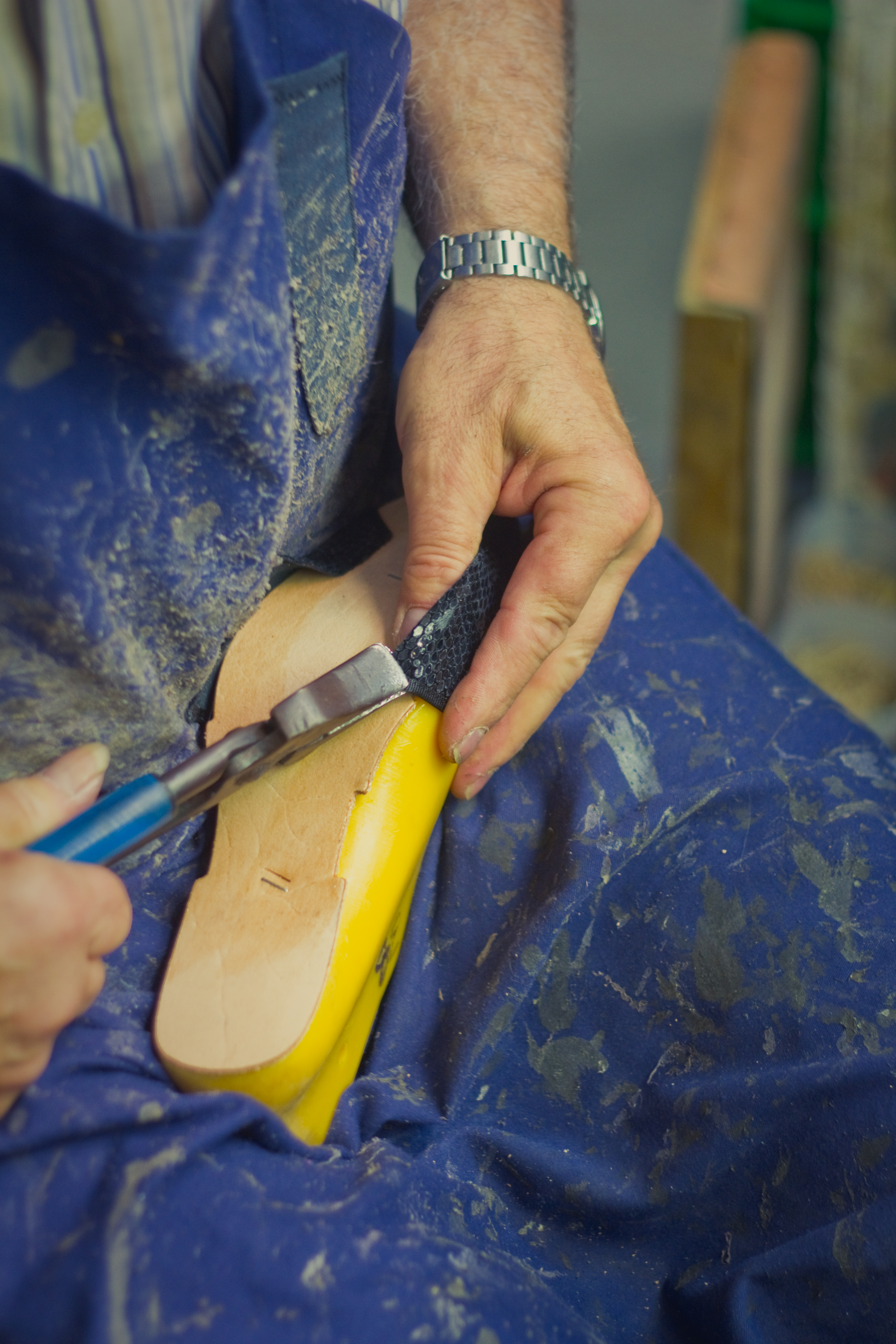

(left) A traditional style with modern updates, some MIBO avarcas feature trendy details like cut-outs, bows, and textured mosaic prints. (right) A MIBO artisan carefully guides a hallmark-stamped leather sole through machine stitching. Photos courtesy of MIBO.
Another prestigious Menorcan shoe brand known internationally for its impeccable quality and innovative designs is Pretty Ballerinas, a unique line of leather flats produced by the Mascaró Group footwear company. These fashions have been famously worn by Kate Moss, Kate Middleton, the Queen of Spain, Elle Macpherson, Claudia Schiffer, and Angelina Jolie, among other celebrities. Fanny Cano, vivacious franchisee and owner of Pretty Ballerinas U.S. (the sole U.S. store, located in New York City), was born on Mallorca and has worked for the Mascaró brand since 1998. Fanny said:
“I love when through our very personal customer service we get to transmit to our customers the island’s vibes. They know they are wearing a unique piece crafted by hand on a small island in the Mediterranean. They feel the quality and the time invested in their pair of shoes. Explaining to the clients where and how the shoes are made—in a very artisanal and old-fashioned method—it really helps them to get tele-transported to the smell of the leather, the artisan hands sewing the shoes, mixed with the breeze of the sea and the taste of the food.”
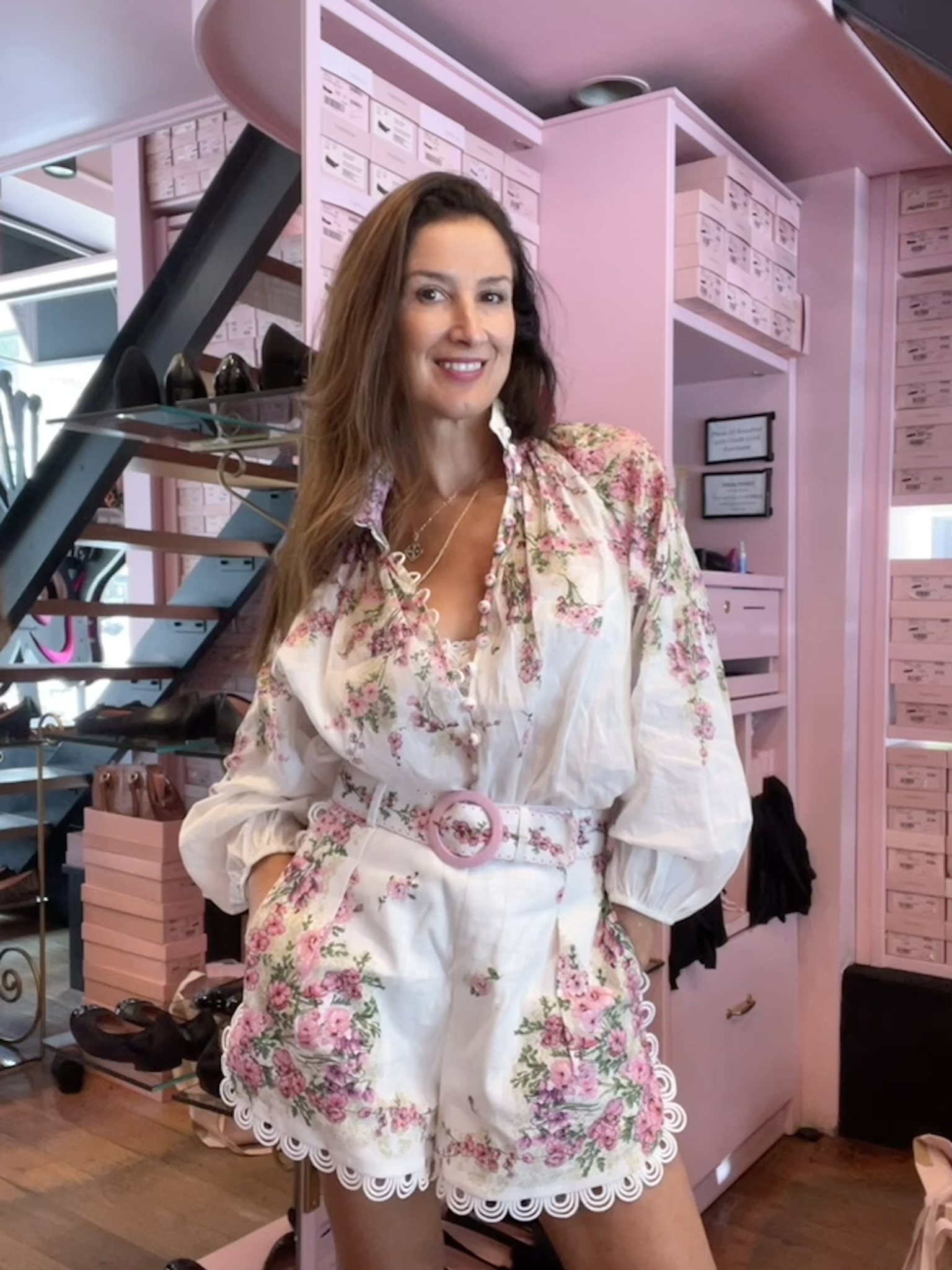
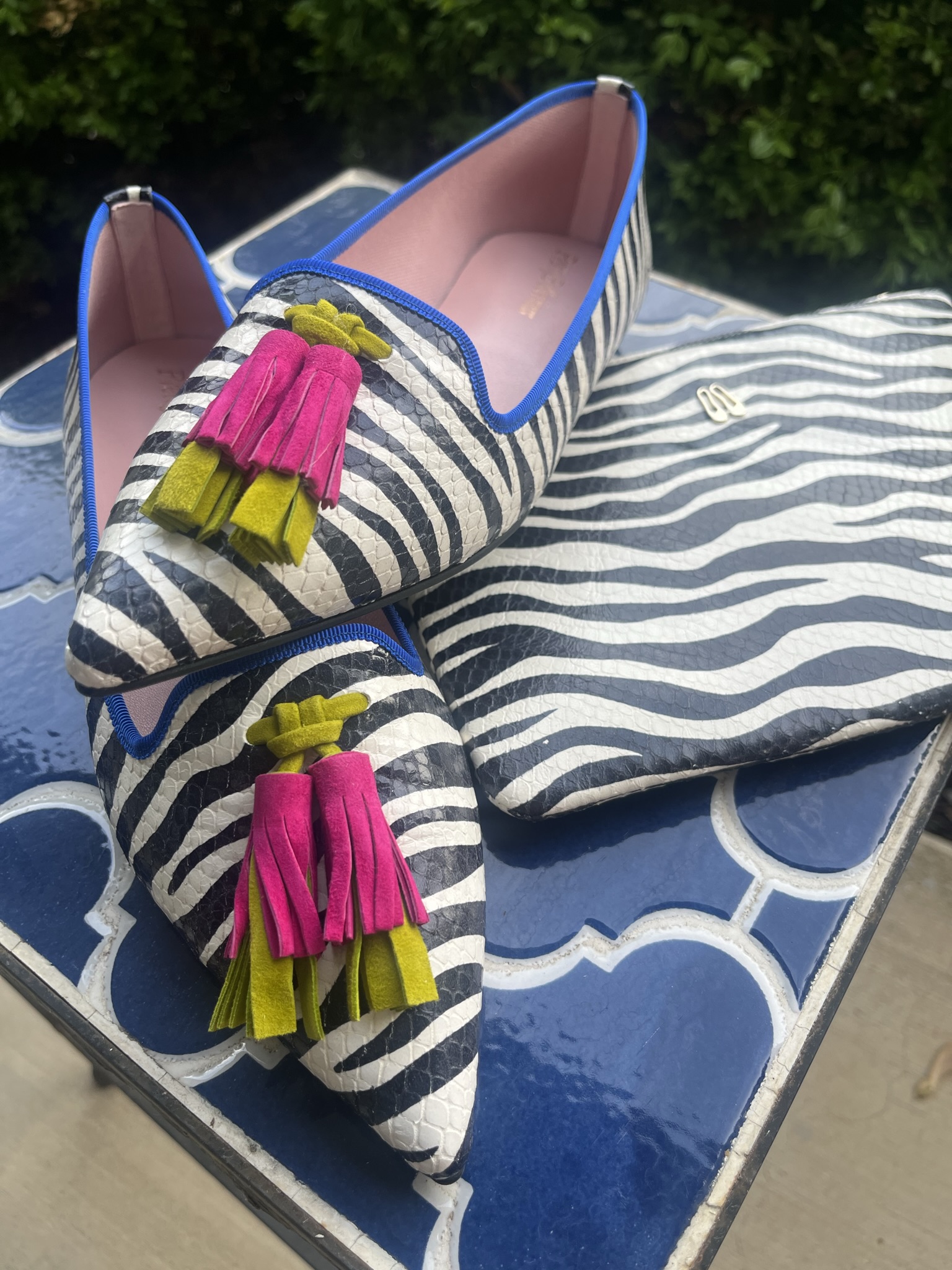

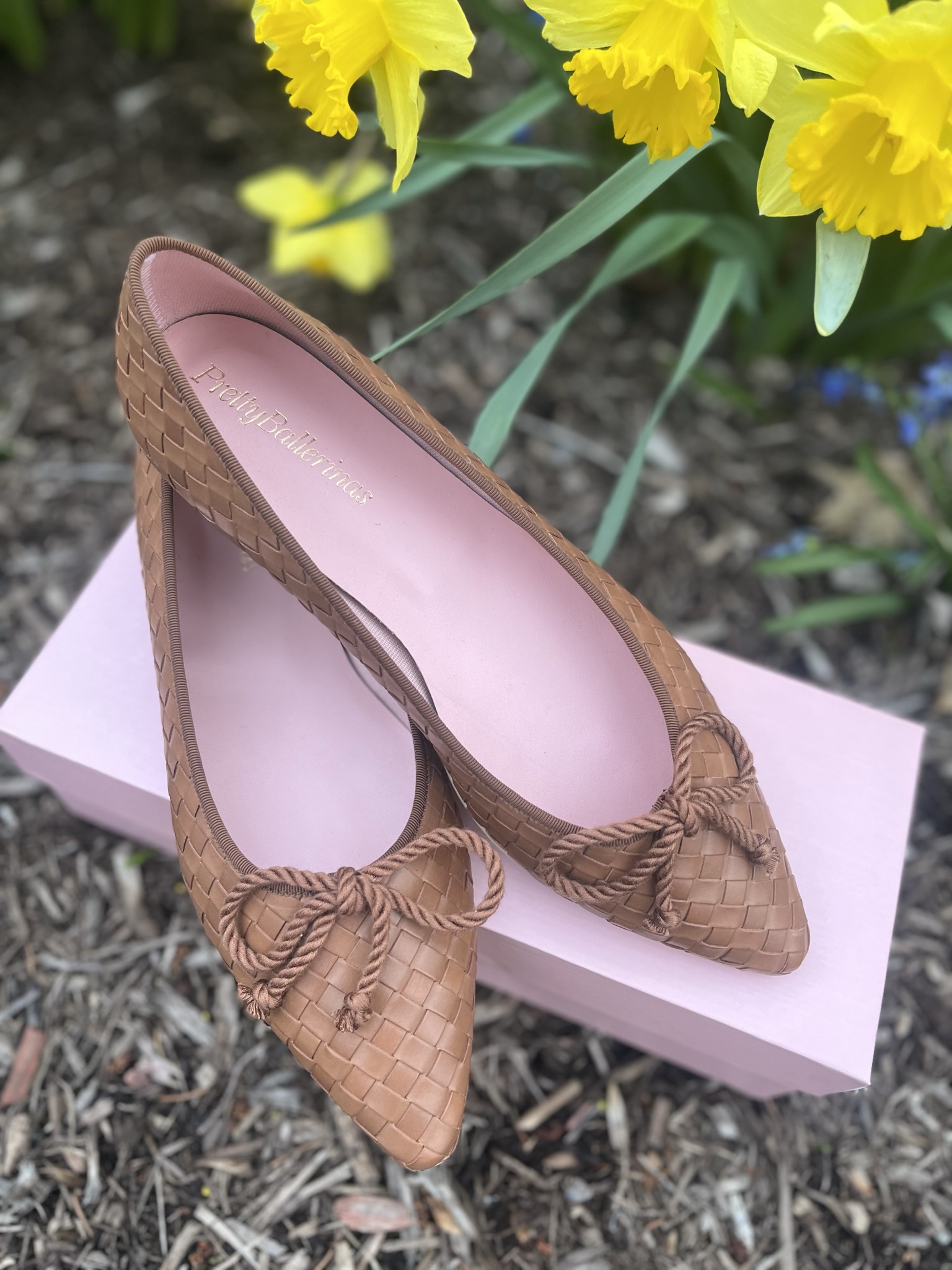


Fanny Cano, Pretty Ballerinas franchisee and owner of the New York City store, poses before the iconic pink boxes and glamorous storefront that identify this high-quality brand of Menorca-made women’s leather flats. Easily identifiable by a pink lining and stamped ballerina slipper icon on the underside, Pretty Ballerinas flats and matching handbags exhibit a unique style and luxurious leather silhouette. Top-left and bottom-right photos courtesy of Fanny Cano.
Woodworking, earthenware, basket weaving, traditional llaüt wooden boat carpentry, and other crafts using fabrics, stone, and paper are sold in island shops and markets during the summer months. The quality of local, professional artisans’ work is acknowledged by the Artesanía de Menorca (Craft of Menorca) hallmark, and the Centre Artesanal de Menorca (Artisan Centre of Menorca) at the Es Mercadal fairground exhibits and sells many of these handmade products.
A Menorca-born leader in local artistry is Pou Nou clothing company, whose designers work closely with area artists to produce contemporary designs and stylish garments that reflect the colors and shapes of Mediterranean life. Drawing inspiration from the sea, sky, and island itself, Pou Nou creates hand-printed T-shirts and breezy, comfortable fashions for all ages using natural fibers like linen and cotton.

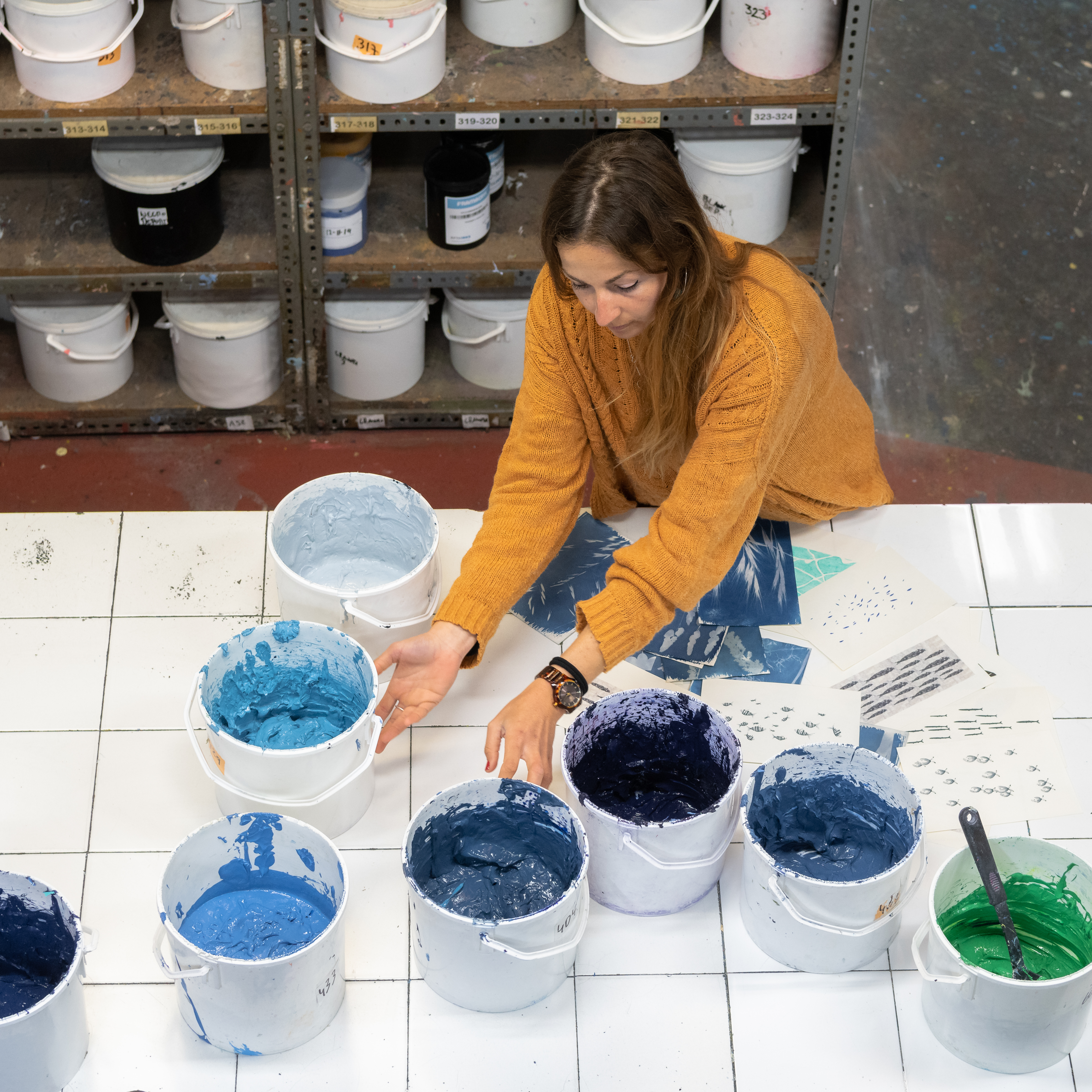
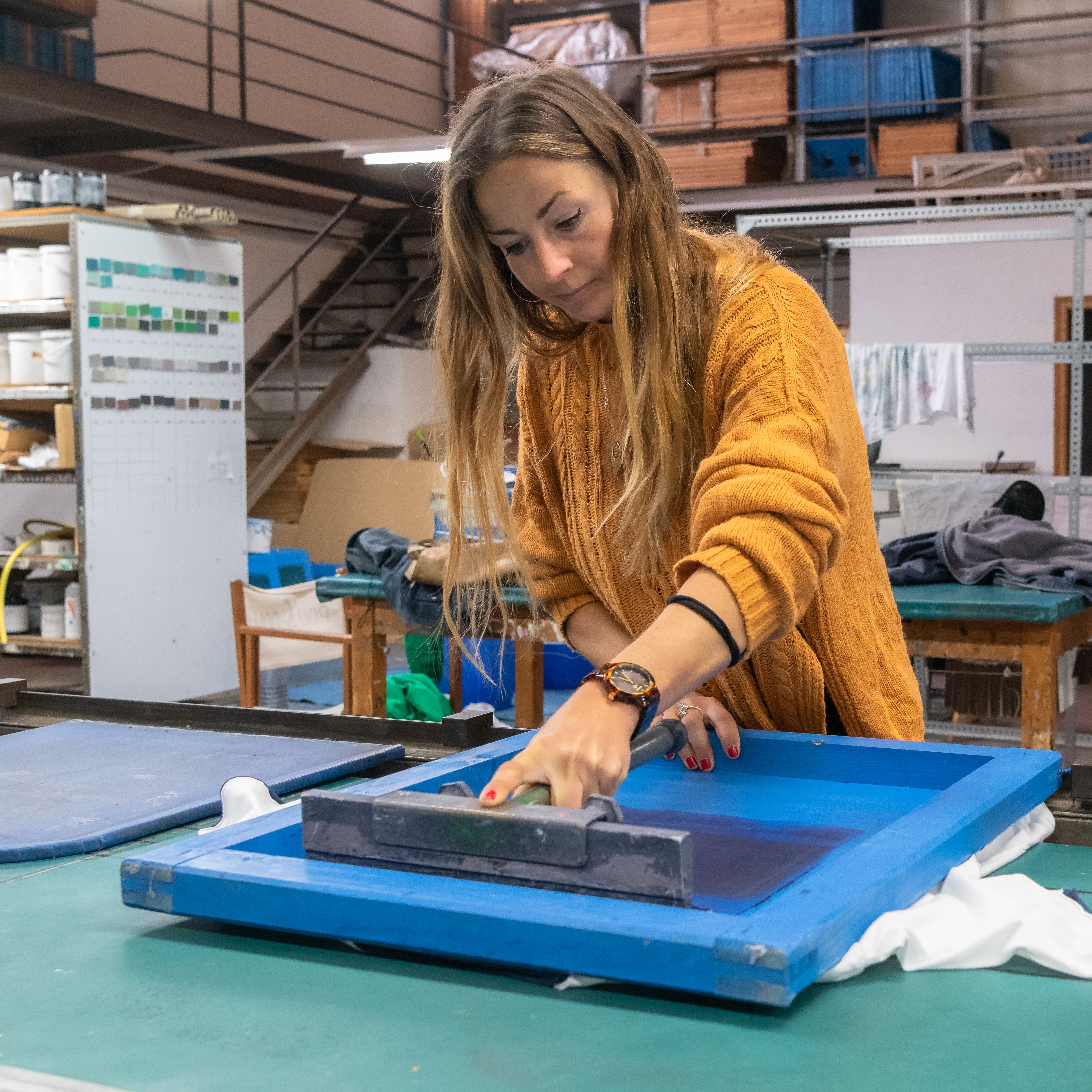
(clockwise from left) Pou Nou team members select nature-inspired artwork for clothing designs; Pou Nou colors and designs are inspired by Menorca’s flora and fauna, sea, and sky; Using a Mediterranean-inspired color palette, a Pou Nou team member tests a screen-print design.
Photos courtesy of Pou Nou.

Collaboration with local artists results in Pou Nou’s unique island-wear designs.
Owner Joan Carrés said, “I am proud of having been in the business for 36 years, following my original idea of combining good quality garments with original artwork from local artists.” Pou Nou’s easy-to-wear styles and unique artist collaborations feature screen-printed sea creatures, flowers, geckos, insects, boats, bikes, palm leaves, and nautical themes. With Pou Nou only available for purchase in Spain and other European countries, U.S. travelers looking for this island-wear can reach the Balearic Islands by flying directly from New York/Newark (EWR) to Palma de Mallorca (PMI) through United Airlines’ new, seasonal direct flight offerings. Menorca has been like a hidden treasure for many years, largely reached only from mainland Spain, but these new direct flights from the United States allow easier access to Menorca-made specialty items and scenic views of iconic landscape features. The island’s varied ecosystems and natural offerings provide ample resources for a thriving artisan business, with agriculture, footwear, fashion, and handcraft industries using materials and inspiration offered by the beautiful land and sea.



 European Traveler