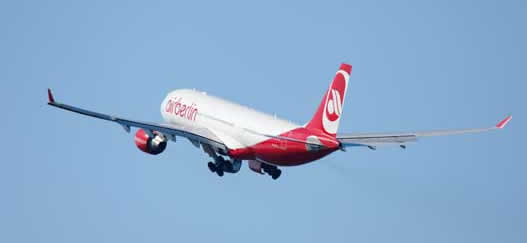
Since 2013 when Air Berlin began flying from Chicago to Berlin, I’ve wanted to see what the service was like, because in Chicago at least, Air Berlin is a new airline. Those traveling to Germany from Chicago have a choice of several good airlines to choose from.
My flight from Chicago started with spending some time in the American Airlines lounge at O’Hare International Airport, admission to which is offered to Air Berlin business class passengers because the two airlines have a code share/partnership agreement.
Needless to say if you’ve flown in first or business class before, spending time before the flight in the lounge is a whole lot better than sitting in the noisy gate area. Plus, you have the convenience of close washrooms, complimentary coffee, snacks and soft drinks, a bar, and magazines and newspapers to read.
SERVICE BEGINS ASAP Once on board, Air Berlin’s service begins immediately after you find your seat in Business Class (Air Berlin calls their first class section Business Class).
To begin my journey, I was offered a glass of champagne and a small dish of mixed nuts, and spent the time before take-off learning how my seat operated. I could leave it in the upright position, place it in a “relaxed” position or bring it all the way down for a completely flat bed if I wanted. I just had to make sure my legs were then propped up above the chair/bed as it automatically moved to a flat position.
A small folding table was positioned in front of me to the right for meals, and I received large headphones to plug in for television and music listening, a black bag filled with earplugs, moisturizer, toothpaste and toothbrush, eye covers, slippers, and a pair of knit socks.
I later noticed that the economy passengers had found their seats in the rear of the plane, but the usual commotion of this completely passed me by, as only 20 Business Class seats were available, and the 18 passengers in this section on this trip were very quiet. The pilot announced it would be a smooth flight as large, comfy blankets were passed out if needed by the flight attendant, as were magazines (in both English and German), and we were on our way.
I was gratified that the three attendants in my section were very attentive in the beginning, because riding in a business class section can prompt questions if you’re not used to the gadgetry and the luxurious routine. Later, they understood how much attention I needed/wanted, and were helpful to not disturb me when I was reading, intent on watching a movie, or sleeping. They must teach this style of service in flight attendant school.
LIGHTS ARE DIMMED FOR SLEEPING When dinner time came, I had to do a bit of studying, as there was a broad selection of appetizers, hot dishes, desserts, a cold meal available and snacks, as well as beverages. A printed menu with all the choices was given to me upon boarding.
I chose fresh seasonal salad with Italian dressing, and Rillette of Shrimp with Mango and Chili. For the main menu, I had the grilled chicken breast in a Tuscan tomato sauce and roasted vegetables and potatoes. Dessert? I chose the blueberry tart with vanilla sauce (this was very tasty).
The wine selection consisted of three whites and four reds, champagne, a long list of spirits, beer, soft drinks and hot beverages. I chose the white wine from Italy, 2012 Anselmi Canole Veneta Bianco, made from Garganega grapes.
For about four to five hours of the 7-hour flight the overhead lights were dimmed in the Business Class section so passengers could sleep, but a flight attendant was always “on duty” if needed.
After a restful sleep (I can never sleep on planes, but I actually did on this flight), I could smell coffee brewing, and along with several cups of that and orange juice, enjoyed a breakfast of fruit yogurt, fresh fruit plate, a croissant, butter, cream cheese and jam.
The selection of in-flight entertainment was enough to keep me from sleeping, had I not wanted to. There were numerous movies—first-run plus classic ones—plus a music channel, news, a channel on Air Berlin information, and games such as solitaire, sudoku, backgammon, brain teasers for kids, and others.
SMOOTH FLIGHT How about the flight itself? It was a very smooth flight, we arrived at the gate on time, and the experience was refreshing.
The airline recently refurbished its Business Class section on its long haul fleet and they now feature FullFlat seats with a massage function, USB port, personal entertainment system featuring a 15-inch monitor and gourmet culinary selections. And as a member of Oneworld, Air Berlin passengers can accrue and redeem miles on any Oneworld partner airline in addition to Air Berlin.
Air Berlin flies to three continents. The Air Berlin mileage award program is called topbonus. Air Berlin flies direct to Germany (Dusseldorf and Berlin) from Chicago, Los Angeles, New York, Fort Myers and Miami.
A unique European hotel chain with individual flavor
by Don Heimburger
Are you headed for Germany soon?
Ready to order your airline tickets for this Western Europe’s most populous country?
“I want to see Germany in 2008,” says one traveler, “but I’m looking for a better-than-average place to stay, and I want something different and dependable.”
Let’s say you are flying into Frankfurt, then heading by train or automobile to Hamburg, Berlin, Dresden, and down to Nuremberg before heading back to Frankfurt.
You’ve scanned the websites of several hotels on your next trip to Germany (estimates are that 50% of guests now book on-line) and read a few guidebooks, but you find the smaller hotels or pensions aren’t rated, and the larger chain hotels all look the same, and it’s hard to distinguish one chain from another.
The four Steigenbergers, proprietors of Europe’s largest family-owned hotel chain.
ANY ZIMMER WON’T DO You don’t want just any Zimmer (room), because a few bad nights could ruin your trip. And you like hotels with some charm and some history.
The 2006 J.D. Power and Associates Study of European Hotel Guest Satisfaction (12,090 guests surveyed) found that nearly 70% of hotel guests in Europe prefer a smoke-free environment that exceeds the boundaries of their room.
And among 37 different possible amenities and services, complimentary breakfast (Fruhstuck) was the single most important amenity for hotel guests in Germany, France, Spain, Italy and Sweden. Only in the United Kingdom did complimentary breakfast follow coffee/tea as the most important amenity.
In the upper upscale segment of the European hotel market, the smallish family-owned, Frankfurt-based Steigenberger Hotels and Resorts group (81 hotels, mostly in Germany), received top 2006 J.D. Power survey ratings from guests in all seven key factors of guest satisfaction. The categories included reservations, check-in/check-out, guest rooms, food and beverages, hotel services, hotel facilities, and costs and fees. Steigenberger received 795 points on a 1,000-point scale, with Sheraton second and Hilton third.
In addition, Business Traveller magazine voted the firm in 2000, 2001, 2002 and 2005 as the Best Hotel Group in Germany.
TWO CLASSES OF HOTELS Today, the chain of European hotels (53 four- and five-star hotels in the upper category, and 28 InterCity Hotels in the mid-range and business category which are located near key transportation hubs such as railway stations and airports), is owned by Anne-Marie Steigenberger and her daughters, Christine, Claudia and Bettina. Together, they own 99.6% of the company’s shares, with the remaining shares owned by others.
The firm’s shares aren’t listed on the stock exchange, so other hotel chains or investment firms can’t purchase controlling interest, and the Steigenbergers can run the hotels according to their distinct management philosophy.
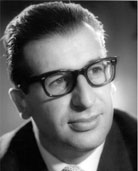
(left to right) Albert Steigenberger; Egon Steigenberger
FAMILY ACTIVE IN COMPANY The third generation of the Steigenberger family is active in the management of the firm, and together they assure patrons of their loyalty to the hotels they own and continuing growth and stability of the company. “For more than 75 years the name Steigenberger has stood for the very best in the European hotel industry, for tradition and innovation,” says company spokeswoman Mrs. Angelika Heyer.
The firm is the largest European hotel company still in family ownership. Three of the four female Steigenbergers live in Frankfurt, and one resides in Vienna.
The Steigenberger family of four women have very specific ideas of what their hotels should do for customers. “For many years, our hotels have symbolized top-class European hotels providing incomparable hospitality and perfect services,” explains Karl Schattmaier, chief executive officer. “Our current offerings mirror the wishes and demands of our guests.”
In 2006, the chain had its most successful year, with a 10.6% increase in gross revenues to 475.4 million euros ($636.5 million dollars) from 429.8 million euros ($575.5 million dollars), while operating profit rose by 31.4% to 11.3 million euros ($15.13 million dollars).
The firm attributes the increase to a good economic climate, an exceptional Football World Cup and pairing down of its corporate structure.
With majority interest in the firm, the four Steigenbergers can direct the hotel’s growth, customer and business affairs. “We offer every convenience and service that guests expect from modern luxury hotels,” says Heyer.
INDIVIDUALITY OF EACH HOTEL The Steigenbergers don’t consider their Hotel and Resort grouping as a hotel chain per se. The individuality of each hotel is retained by the management, and there are substantial differences in the interior and exterior appearances of the structures themselves.
Even the personal service from the hotel staff is by special design; it starts at its own Steigenberger Academy in Bad Reichenhall, Germany. The hotel company is the only European group with its own private training academy and state-approved vocational hotel college.
The academy programs include training in restaurants and hotels, and business administration with one-, two- and three-year programs. About 250 students are enrolled at any one time, and the Steigenberger Hotel group often recruits its own staff from the academy. “We offer them training positions as well as permanent positions in the hotels,” explains Heyer.
Despite its small size, the firm has big plans, and last year augmented its hotels by six more: Hotel de Saxe in the center of Dresden, a 178-room four-star facility with seven suites and 10 conference rooms; the 121-room Strandhotel Zingst on the Baltic peninsula, a first-class hotel built in the classical spa style; and the four-star, 135-room golf hotel Treudelberg in Hamburg features an 18-hole championship golf course.
HOTEL DE SAXE, DRESDEN The Hotel de Saxe in the center of Dresden, across from the Frauenkirche on the Neumarkt, was constructed following the style of the first Hotel de saxe built in 1756, which was one of the best hotels in the Saxon metropolis.
“I stayed here in August 2006,” said a visitor from London who was quoted on http://www.TripAdvisor.com. “The hotel had just opened; even the carpets had that fresh smell. My room was of a good size, impeccably clean, good bed and bathroom.”
Another said, “The location couldn’t have been better—right across from the main part of town, (within) walking distance to everything in Dresden. The hotel staff was very friendly and helpful.”
BALTIC SEA RESORT: STRANDHOTEL ZINGST At the Strandhotel Zingst, located on the sandy beach and the Baltic Sea north of Hamburg, rates for a two-night stay in September were quoted at between 82 Euros for a room type assigned when you arrive and 186 Euros for a deluxe room. A highlight of the hotel is a very large Spa Pavilion in the hotel garden with inside and outside pools, and many spa-like amenities and facilities.
At the Hotel Treudelberg in Hamburg, 30 minutes from downtown Hamburg, a visitor said the hotel would rate between a 4- and 5- star experience with comfortable beds and a good breakfast buffet. In 2008 the hotel is expected to add another 95 rooms and extend the golf course to 27 holes.
At Trivago.com, the hotel is rated overall 95 points out of 100, with Rooms rated at 100, Amenities at 98, Food & Beverage at 98 and Location and Surroundings at 92. Not all travelers are going to find Steigenberger or other hotels to their liking, naturally.
The other three new hotels the firm added recently were in Italy and Egypt. Their InterCity Hotel division plans on building three new hotels in Essen, Dresden and Mainz, Germany in 2008, and a luxury four-star hotel in Vienna Old Town (Austria) is also slated by the company.
BACKGROUND: FROM WASH HOUSE TO FIRST-CLASS RESORT The first Steigenberger Hotel was once the municipal washhouse for Baden-Baden, where townswomen of Medieval times went to do their washing.
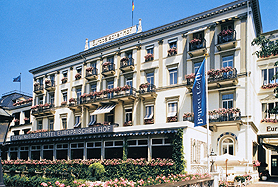
In the mid 19th century, when Baden-Baden, located in the Black Forest, began to flourish as a spa, the site was taken over by the Hotel Europaischer Hof. Heads of state stayed at the hotel, and its location across from the pump rooms and assembly rooms attracted good business and an international reputation.
When a world economic crisis arose, the hotel borrowed heavily from a businessman in Lower Bavaria by the name of Albert Steigenberger. As business remained poor, the hotel was auctioned, and Steigenberger became a hotel owner.
In determining how the hotel had done poorly, Steigenberger did something unusual: he tried out every room in his hotel and decided to invest in modern comfort and convenience.
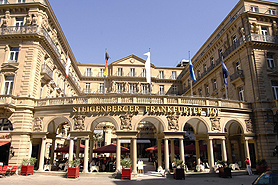
BUYS FRANKFURTER HOF Later, in 1950, he acquired the rundown Frankfurter Hof in Frankfurt am Main, which is today’s flagship five-star hotel and now lavishly refurbished (in 2006). The hotel was selected as one of the top 50 hotels in the world for its standards and services in 2005 and has won other recent awards, as well.
The next hotel acquired was the Vier Jahreszeiten in Wiesbaden. And then the Monopol-Metropol at Frankfurt’s main train station. Many more acquisitions followed in Baden-Baden, Dusseldorf, Mannheim and Stuttgart.
In 1958 Albert’s son, Egon, took over the business, and in 1963 the firm purchased their first hotel outside of Germany. In 1972, the Hotel Training College was added to the fold, and in 1985 the firm was made a joint stock ownership company.
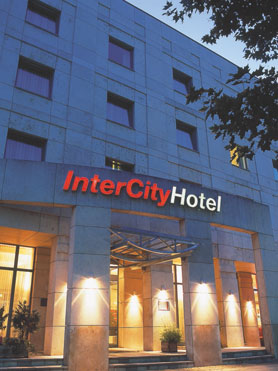
Last year the company employed 5,580 staff. The firm runs the Hotels & Resorts Group which preserves classical elegance in the style of the great European hotel tradition, and the InterCity Hotel group which provides business class comfort in a strategically located hub near airports and train stations. InterCity Hotel guests are offered tickets for local public transportation gratis.
During the next few years, l50 million euros will be invested in the hotel’s operations via extensive rebuilding and modernization, with emphasis on the restaurants and spa areas. Resort hotels will focus on spa/wellness, golf, sports or leisure activities or families.
As an example, if the hotel caters to golfers, a special concierge with knowledge of the local golf facilities will be made available to guests, says Steigenberger.
Overall, Steigenberger properties seem to be a good deal, with above-average visitor reviews, and more capital investment expeditures coming through 2008 to their hotels and resorts.
European Traveler reporter Steve Ramsey visited Steigenberger’s Frankfurt Airport Hotel and filed this report:
EUROPEAN TRAVELER’S ON-THE-SPOT VISIT
During a recent visit to Frankfurt, I stayed at the Steigenberger Hotel, located just minutes from Frankfurt’s International Airport. From the courteous greeting at the reception desk upon arriving to an efficient checkout the following day, I appreciated the Steigenberger’s modern style and comforts.
Don’t let the plain exterior of the building fool you: the contemporary interior is very appealing. A relaxing lounge sits directly across from the vibrant reception desk as you enter the hotel. The three-winged building has long, blue, carpeted hallways, which house more than 550 rooms on eight floors. Quiet music, only played during the day, and a chic lighting system illuminated the hallways as I made my way to my room.
The room was very well kept and was furnished with two comfortable twin beds. A desk and leather chair sat beneath two large windows, which overlooked nearby surrounding forest. Located in the wing facing away from the airport, I did not hear any airplanes, even with the window open. The bathroom really makes a statement and sets the hotel apart from its competition. It contained a cylindrical shower with a curved sliding glass door. An overhead rain-shower faucet was adorned with small blue starlights embedded in the ceiling. A raised bowl sink and green marble floors provided additional nice touches.
A quick note to inexperienced travelers–if you have trouble turning any of the room lights on, put your keycard in the slot next to the door as you walk into the room!
The breakfast buffet, which is not included in the room price, had a lot to offer. Included were several different types of breads, juices, omelets, cereals, meats and fruits… everything was fresh, and they were well prepared to satisfy international guests. While it may seem pricey by American standards, 23 euros is pretty standard for hotels in the area. As a cheaper alternative, try one of the shops in the train station.
I enjoyed my brief visit at the Steigenberger, and I would recommend it to anyone staying near the airport. The staff was professional, yet personable, and quick to offer their help. There is a free shuttle that runs every 15 minutes to and from the airport, and the downtown area was about a 10-minute car ride from the hotel, so be sure to visit the city center, even if you are in town just for the night!
IF YOU GO…
Location Next to the forest, Frankfurt airport 0.9 km, A3/A5 motorways 1 km., airport railway station 1.8 km, city center 10 km, Frankfurt main train station 10 km, fair and exhibition center 12 km
Accommodation 553 rooms and 20 suites, air-conditioning, sound proofed, telephone with voicemail, modem link, high speed Internet access, non-smoking floors, special room for the disabled
Restaurants and Bars 4 restaurants including 1 gourmet restaurant, 1 lobby-bistro-bar (24-hr.), 3 terraces
By Marilyn Heimburger Photos by Don Heimburger and courtesy Munich Tourist Office
I have always liked Munich. Actually, it’s more than just liking the city. I feel moved by its vibrant life, its stimulating nature and its friendly people. Apparently many more feel the way I do, since it is Germany’s most-visited city.
Last year, during Munich’s 850th birthday, the city of 1.3 million hosted the following:
City Foundation Festival in June in the heart of the city, featuring traditional Bavarian culture and international folk culture. A highlight of the fest was a Gaufest, or regional festival, of the many associations for folk culture where dancing and costumes from the Isargau region were prominent. As many as 10,000 participants were involved in this. A group of 100 rafters from the Oberland region showed how to build a raft. Dance masters showed how to learn the “Munich-Francaise” dance.
In July, the Old Town Ring, which was free from automobile traffic, served as the center for a celebration of theater, music, dance, games and sports on many stages. Scenes from peasant life in Munich with markets, street theater and beer gardens were staged. There also was music from international bands and more.
In August, the three-day Isar Bridges Festival, centered around the Cornelius, Ludwig and Maximilian bridges, highlighted the Isar River (which flows through the city) as the city’s life-giving artery. There was music under the bridge, dancing along its banks, glittering lights on the water, and with this came Munich’s famous culinary delights. An action theater group, which encouraged audience participation, also presented skits. There were also night-time water and laser shows
Additional highlights included the world premier of a work commissioned from composer Victoria Borisova-Ollas especially for the 850th anniversary. In June the Cuvillies Theater, one of German’s most elegant Rococo theaters, reopened after a spectacular renovation. In the newly re-designed St. Jakobs-Platz, many of the local museums and community organizations held programs of music ranging from classical to klezmer (a musical genre), dancing and creative street theater, exhibitions, tours and more.
Many of Munich museums featured exhibits of famous Munich artists, writers and Munich’s cultural heritage.
As Munich’s Lord Mayor Christian Ude said, “(Munich’s) celebrating its 850th foundation day…is nothing exceptional. What is remarkable is the city’s rapid growth from a monastery on a hill to a European metropolis with over a million inhabitants and a high-tech hub.”
As Ude says, the city is special because of its enduring and much-praised flair as a place with a zest for life.
The settlement of Munichen was originally granted the right to market goods and mint coins in June of 1158. In 1214 it was granted status as a town, and in 1255 it became the seat of the Wittelsbach dynasty. Under Kind Ludwig I, many famous buildings were erected, making Munich a major cultural center, and in 1918 the Free State of Bavaria was formed.
For travelers, the city offers 355 hotels and pensions with 45,500 hotel beds available. In 2006, 4.4. million tourists booked nearly nine million overnight stays, with 47% of them from overseas, with the USA bringing in the most, followed by Italy, Great Britain, Austria and Switzerland.
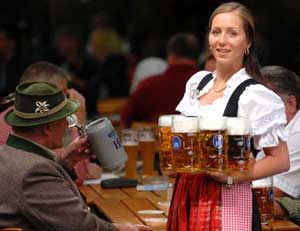
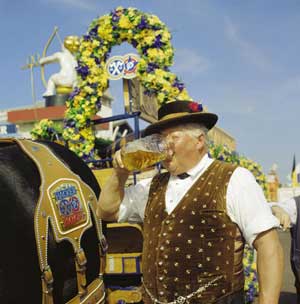
The city boasts three universities and eight colleges, 60 theaters and an opera house, 45 major museums, three symphony orchestras—and it hosts the famous 16-day Octoberfest beginning on the Saturday two weeks before October.
Favorites for visitors to see in Munich include:
The city’s twin onion-domed towers of the Frauenkirche, Church of our Lady, Frauenplatz 1, is the city’s best-known landmark.
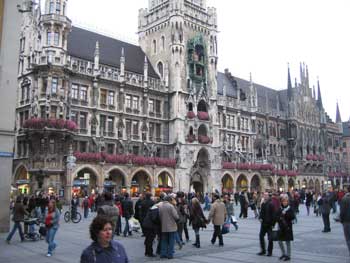
Marienplatz and the glockenspiel on the Marienplatz in the city center displays the mechanical dancers in the tower of the Rathaus (Town Hall) at 11 a.m. and noon (and 5 p.m. in the summer).
Schloss Nymphenburg is the impressive Baroque palace built as the summer residence for the Bavarian Electors. Today the main building houses a museum.
The Viktualienmarkt is Munich’s oldest market, originally begun as a farmer’s market and now a favorite place for a wide range of produce, Bavarian specialties and more.
The Hofbrauhaus deserves a visit, as its one of Munich’s best-known restaurant-breweries at Am Platz 9. Great dining is available, or just casual drinking and listening to oom-pah music. For information on the Hofbrauhaus, visit www.hofbraeuhaus.de.
There are many churches to visit, including the Asamkirche built by the Asam brothers in the 18th century with its spectacular interior at Sendlinger Strasse 62; Church of the Sacred Heart, a cubed-shaped structure with an innovative facade at Romanstrasse 6; and Saint Peter’s, Munich’s oldest parish at Rindermarkt 1.
The Deutsches Museum at Museumsinsel 1 houses sailboats, windmills, space probes, robots, ships, trains, planes and much more. Allot a whole day for this attraction.
Octoberfest Museum, at Sterneckerstrasse 2, will tell you all about the history of beer including how it started as a drink at monasteries, and all about the city’s famous Octoberfest celebration.
The expanded BMW Museum is a must-see if you are fascinated with automobiles and engineering. Tours are available.
Munich is waiting to wow you.
IF YOU GO… You can arrive at Munich’s Airport, which is like a city within itself. Flights from numerous major hubs arrive and depart from here daily. Train is another good option if you are coming from another European city.
If you’ll be in town for at least a day, pick up the City Tour Card (one- and three-day tickets are available), which is good not only for all public transportation, but also includes discounts of up to 50% on more than 30 attractions such as sights, bike rentals, museums, theaters and restaurants. www.citytourcard.com.
A close-in, convenient four-star hotel is the Platzl Hotel at Sparkassenstrasse 10. It is located near the Hofbrauhaus and is within a a couple of minutes walk of the Marienplatz. Visit www.platzl.de.
Guided tours of Munich are available. Visit www.muenchen.de for more information. The tourism office is located in the Rathaus, first floor, at Marienplatz.
Wine festivals in August and September are spread throughout Germany’s 13 wine-producing regions. There is no better way to get to know Germany and its people than whiling away a few hours (or days) at local wine festivals. There is little doubt you will end up in discussion with the people at the next table or with the owner about the harvest or quality of the grapes, this year’s weather and local goings-on. And, before you know it, you have made some nice acquaintances, learned some German, soaked up the atmosphere and tried some wines that you might never find outside Germany.
More than 2,000 years ago, the Romans identified the mineral-rich terrain in Germany and laid the foundations of the vineyards that today cover more than 245,000 acres. Winding rivers, steep hillsides and medieval castle ruins characterize the various regions and their wine towns.
At the tip of the southern Black Forest in Germany’s southernmost wine region of Baden, Freiburg offers a taste of the academic pace of life in one of Germany’s oldest university towns. A direct high-speed rail connection from Frankfurt to Basel is available, as well as the local Black Forest Bahn, which offers views of the Black Forest hills and villages. A typical day is characterized by spending time at the open air market with all of the products from the local farmers and craftspeople, and then enjoying a glass of wine in the Weinhaus Alte Wache with a view of the marketplace activities. The Landmann Winery is particularly notable for its organic wines and the local wine festival from September 2 to September 9 is a particularly festive time. In November Freiburg hosts the Plaza Culinaria, a culinary trade fair with many local products from Freiburg’s partner cities.
Nestled between two of Germany’s most famous wine regions, where the Moselle and the Rhine come together, Koblenz stars as the host to the National Garden Show. In honor of the show, Koblenz opened a new winery at the Fortress Ehrenbreitstein, which boasts not only wines from the region, but also offers a history of the 2,000 years of wine-making in the Rhineland Pfalz. Koblenz has long been a stop for wine lovers. The well-known brand of Deinhard offers tastings of sparkling wine in the middle of the old city and the Weinbar Gerhards wine cellar and bar can be found nearby.
Deep in the Rhineland but still only a half hour from Frankfurt, Mainz is known as the Great Wine Capital, as it is the only German city belonging to this worldwide network. It’s easy to while away a few afternoon hours in Mainz’s wine market at the cathedral square. On Saturdays, local farmers bring in an endless stream of regional and seasonal foods and wines that you can try as well as buy in a friendly and relaxed atmosphere.
One particularly sweet time is August 25-28 and September 1-4, when the Mainz Wine Festival takes place. You can wend your way from stand to stand trying different wines, enjoy music and peruse the crafts for sale. Two tips: The new Hofgut Laubenheimer Hoehe winery, along with the Wine Institute created the Riesling Lounge, where rieslings from each of Germany’s 13 wine-producing regions are offered. An especially enjoyable stop is the Zum Beichtstuhl wine bar.
In the middle of Germany’s oldest wine territory, close to the steeps banks of the Moselle River and famous for its Roman gate and walls, Trier is where the Romans first planted their vines in Germany. The oldest winery is the Vereinigte Hospitien, where you can still see the wall of the original Roman storehouse. The wine producer Bischoefliche Weingueter can be found underground in the center of Trier; most tourists don’t realize as they walk through the pedestrian zone in the central city that a famous wine cellar lies beneath them. The Bar Weinsinnig is where you can get a sense of the region’s great variety, as the list of wines offered changes daily.
In the spa town of Wiesbaden, the Rheingau Wine Week in August kicks off a celebration smack in the middle of town on the Castle Square. Known for its ornate and elaborate casino, beautiful spa buildings and hotels, elegant streets and antique galleries, Wiesbaden is a prime starting point to explore the Rheingau. The State Winery of Hessen in Eberbach, a former Cistercian monastery, is one such example, and it is also worthwhile to take the tour and a tasting at Henkel, the famous producer of sparkling wine.
On the other side of Frankfurt is the baroque city of Wuerzburg in the heart of the Franconian wine region, where wine is bottled only in the famous bulbous bottles, called Bocksbeutel. The wines of Franconia are outstanding and one place to enjoy them is in Wuerzburg’s Residenz (castle). The wine cellar recently won an architectural prize for its renovation.
WINE FESTIVALS August 31 – September 9, 2011 Rheingau Wine Festival, Frankfurt More than 600 wines and sparkling wines from the Rheingau region will be tasted at 30 vintner stands. These range from the finest wines to light and zesty summer wines, with wines from alternative grape varieties being offered alongside the dominant Rheingau riesling. www.frankfurt-tourismus.de
September 1 – 5, 2011 Middle Moselle Wine Festival, Bernkastel Kues The “Middle Mosel Wine Festival” enjoys legendary fame. The fireworks, the winemakers’ procession, the artisan market and all of the happenings on the wine road and at the locales in Old Town as well as the large amusement park are the attractions featured at the Moselle region’s largest wine festival. More than 30 wine booths present famous riesling wines. www.bernkastel.de
September 2 -12, 2011 Vintners’ Festival, Bingen in Rhinehessen near Frankfurt There is something special about the wine in Bingen. Here the so-called ice wine was invented in the suburb of Dromersheim. It is no coincidence that the festival lasts 11 days, because so much time is needed to taste all the wines offered. www.bingen.de
September 24 – October 3, 2011 Red Wine Festival, Ingelheim, close to Mainz and Frankfurt There is virtually no other wine festival in the Rhine Hessen region which takes place in such an attractive setting, surrounded by vineyards, as the Ingelheim Red Wine Festival. Every year on the last weekend in September this popular wine festival is opened with the ceremonial crowning of the Red Wine Queen. www.ingelheim.de










 European Traveler