Magdeburg: State Capital of Saxony-Anhalt and the ‘City of Otto’

From an historic Cathedral to a Green Citadel and a Millennium Tower, this city is thriving
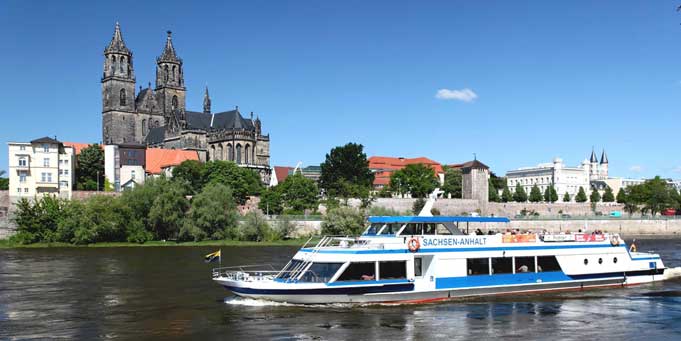
Magdeburg Cathedral ©www.AndreasLander.de

By Don Heimburger
Photos courtesy of the author, German National Tourist Office and Magdeburg Marketing

The Elbe River cuts through the heart of Magdeburg, offering this historic German city an idyllic landscape and picture-perfect views through a camera. But the city has seen its share of severe destruction over the centuries, such as in the Thirty Years War and World War II.

Today, this city of 240,000 in central Germany has rebounded nicely and combines its important and long history with new architecture, innovative cultural events and green spaces to make it an appealing attraction for tourists.

Aerial view of Magdeburg on the Elbe River
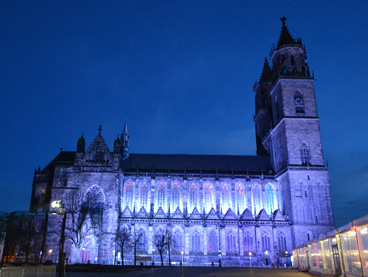
Magdeburg Cathedral shines at night.

MAGDEBURG CATHEDRAL
The town’s huge cathedral is a “must-see” and is the largest church building in this part of Germany. Surprisingly, the Magdeburg Cathedral can be traced back as early as 937, when Emperor Otto the First founded a monastery dedicated to St. Maurice. In 955, the church building was extended before becoming the cathedral of the established bishopric of Magdeburg in 968. Otto the First had a number of high quality pieces of antique art shipped to Magdeburg from northern Italy to the cathedral. These included columns made of purple-red porphyry, marble and granite, many of which still provide finishing touches to the architecture of the cathedral today.

Magdeburg Cathedral architecture

When Emperor Otto died in 973, his remains were brought to Magdeburg Cathedral, where he was buried in a stone sarcophagus. In 1207, the Ottonian cathedral was damaged in a city fire. Archbishop Albrecht II then began construction on a new Gothic cathedral, which was consecrated in 1362. The cathedral’s 341-foot-high west towers were completed in 1520.

Today, visitors to Magdeburg Cathedral can see the rich interior stone work which displays impressive architecture. The building is also full of unique and internationally renowned original exhibits representing nearly all periods of art history, including spolia from the building’s Ottonian predecessor, the original tomb of Emperor Otto I and his first wife Edith.
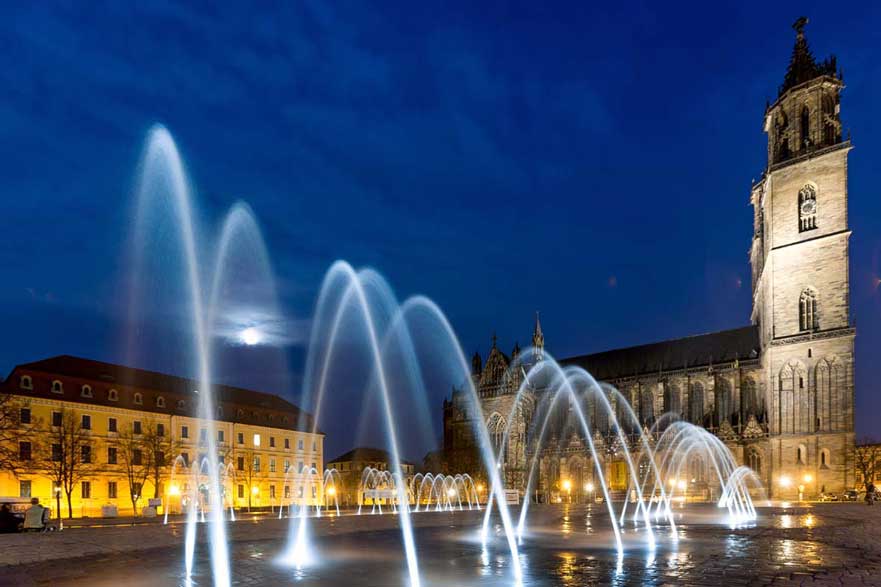
Magdeburg Cathedral ©www.AndreasLander.de

In addition, there are Romanesque bronze grave markers, early Gothic sandstone sculptures including the famous figures of the “Clever and Stupid Virgins,” the carvings on the choir stalls of the canons dating back to the 14th century, and Renaissance paintings, as well as 20th century art such as the famous war memorial designed by Ernst Barlach. The cathedral, which became protestant in 1567, is now the seat of a Protestant bishopric and home to members of a congregation in the city center.
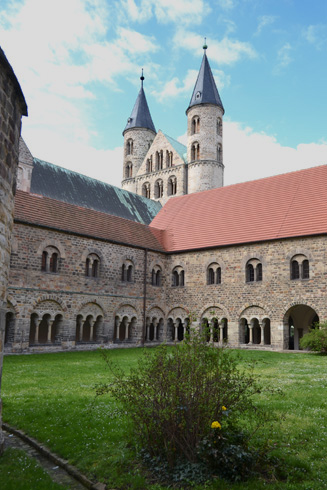
Monastery of Our Lady

MONASTERY OF OUR LADY
Said to be the “pearl of the Romanesque Road,” the Monastery of our Lady in Magdeburg is considered the oldest surviving building in the city.

The unique well-house, magnificent barrel-vaults and sublime monastery church with its slender towers comprise an architectural marvel which is the centerpiece of all Romanesque buildings in Saxony-Anhalt. The structure holds both the Magdeburg Art Museum and the Georg Philipp Telemann concert hall. Archbishop Gero of Magdeburg ordered the erection of the building in 1017-18. However, nothing remained of the original construction, and it was Archbishop Werner (1063-1078) who arranged for the reconstruction which was finally completed in the 12th century by the Premonstratensian order.

The rotunda with its pointing cones, resembling a monk’s tonsure, is a remarkable architectural feature of the eastern wing. Together with its 32 arcades, the rotunda forms an ensemble considered one of the most amazing and interesting structures in European monastery architecture. After 1220, the monastery church was vaulted in early Gothic style. Also deserving a special mention is a collection of sculptures ranging from medieval to contemporary in the museum of the monastery. The surrounding area includes a sculpture park created in 1989.

St. John’s Church is Magdeburg’s oldest parish church, first mentioned in 941. The western section of the church, which features a late Romanesque design, and the Gothic hall church, have both been preserved. A monument of Martin Luther and the crypt of the Otto von Guericke family can be found in front of and inside the church.

The history of the church was marked by many changes: St. John’s fell victim to many city fires and was destroyed when General Tilly’s army invaded Magdeburg in 1631. However, the citizens never tired of rebuilding the church. St. John’s Church left its mark on history when an important and far-reaching event took place: on June 26, 1524, Martin Luther held a famous sermon on right and wrong justice in the greatly overcrowded church, whereupon all parishes of the city center converted to Protestantism, as laid down in the annals of Magdeburg.

Today St. John’s is open to the public and has become a popular venue for a wide variety of events.
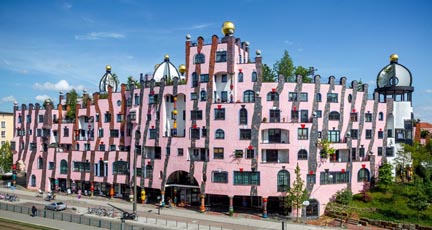
Hundertwasser’s Green Citadel ©www.AndreasLander.de

GREEN CITADEL OF MAGDEBURG
One of Magdeburg’s most eye-catching attractions for visitors is also one of the last architectural masterpieces designed by the artist Friedensreich Hundertwasser. The Green Citadel of Magdeburg is located among a mixture of Baroque facades and examples of modern design and provides the Breiter Weg with a landmark structure and a burst of colorful culture.

This architectural retail/apartment building has been the subject of much discussion since it was constructed in 2005. It was the last building Hundertwasser designed before his death. The artist said the building was an “oasis for humanity and nature within a sea of rational houses” at the heart of the “concrete desert” of Magdeburg.

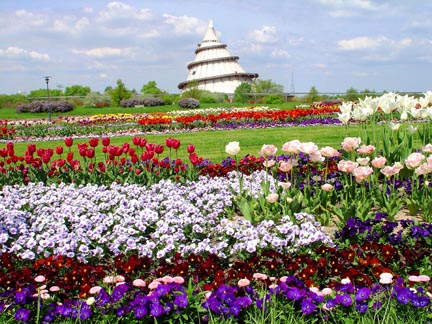
(left to right) Science demonstration at Millennium Tower; Millennium Tower

To explore the green of Magdeburg, visitors also want to investigate Elbauenpark. The park, which covers an area of 222 acres and was awarded the title of Germany’s second most attractive park in 2005, is home to many attractions that visitors can explore.

Since being created, the unique park has gained its place as one of Magdeburg’s most important landmarks. It is home to the Millennium Tower (the world’s tallest wooden construction of its kind), Lake Stage, Butterfly House and a number of playgrounds, sports areas, pieces of art, themed gardens and other attractions.

The park is home to a wide range of activities and facilities for sports fans, including golf, skating, rock climbing, hiking, biking, a high-rope park and even a toboggan run.

TOWN HALL OF MAGDEBURG
The Town Hall of Magdeburg dates to the 12th and 13th century, with the oldest remains in the vaults which form part of today’s Ratskeller restaurant. Pelt dressers, tanners and dealers in hides and skins met here in the long hall to trade and stock their goods. After the turmoil of the 30 Years War, a two-story sandstone town hall building was erected in Dutch Renaissance style including Italian Renaissance architecture, and in the 19th century it underwent a number of changes and extensions.

In January 1945, the Town Hall was completely destroyed during an air raid, but reconstruction work on it began in 1965, and it was rebuilt and restored according to its original blueprints. The hall features bronze doors designed by Heinrich Apel and carved with historical figures and stories from the city’s past as well as features an impressive bell carillon with four octaves. The carillon is played on market days and also for concerts.

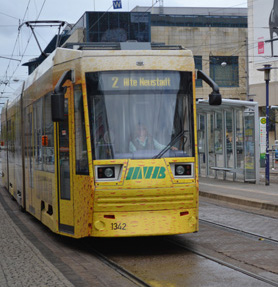
(left to right) Colorful street of buildings on Otto-Richter-Strasse; Magdeburg Town Hall with Statue of Otto I (912 – 973), Magdeburg, Germany. Otto I, or Otto the Great, was the founder of the Holy Roman Empire, reigning as German king from 936 until his death in 973.; Tram system in Magdeburg

NUMEROUS ART VENUES
Today Magdeburg features numerous museums, art galleries, theaters and performing venues including the AMO, a multifunctional complex for shows, concerts and conferences. There is also the Stadthalle Magdeburg, the city’s civic hall. The hall was constructed in the style of the Neues Bauen modern architecture movement in 1927 for use as a showplace on the occasion of the German Theatre Exhibition. It has hosted a wide range of events such as classical concerts, theater performances, musicals, revues, ballets, galas, sports shows and rock and pop concerts.
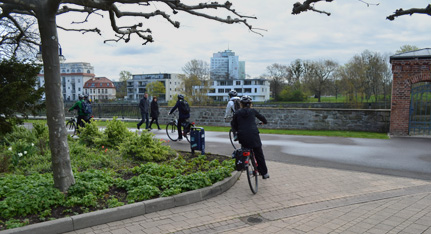
Magdeburg features miles of bike pathsthis one is near the Elbe River.

MAGDEBURG ZOO
Magdeburg Zoo is located at the heart of Vogelgesang Park, a natural and garden landscape that covers 47 acres. The zoo features 835 animals representing 176 different species. The man-made savannah landscape in the zoo covers an area of 215,000 square feet; the Savannah Viewing Point enables visitors to enjoy a panoramic view over the Africa area and the Water Bird Pond.

Magdeburg was the site of the 2016 German Travel Mart, attended by 1,500 participants from all over the world. Editor/Publisher Don Heimburger was on hand and filed this report about the green city of Magdeburg.

Traveling in Time Through Bingen

Bingen, Germany

Photos courtesy Germany TourComm

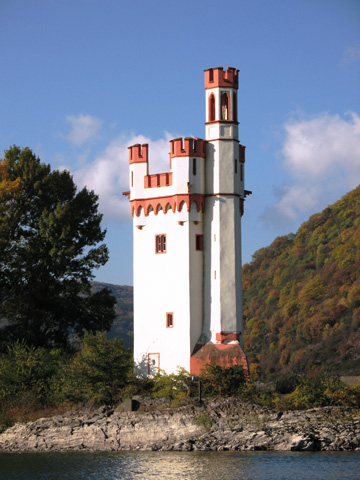
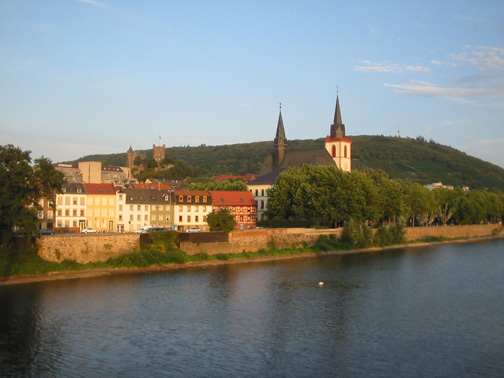
Bingen, Germany, is renowned as the gateway to the Upper Middle Rhine Valley, an official UNESCO World Heritage Site. With its breathtaking landscapes, medieval castles and quaint country towns, the valley is the quintessence of a romantic and picturesque setting. The fully reconstructed Klopp Castle is scenically set atop the Kloppberg in the heart of Bingen. The town’s most famous landmark, the so-called “Mouse Tower,” situated on a small island on the River Rhine, is approximately 1,000 years old.
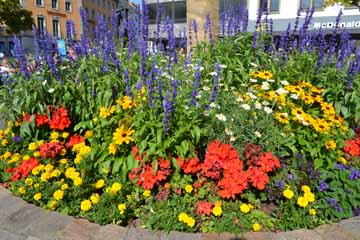
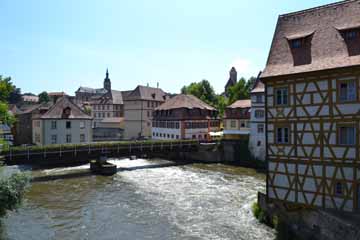
Bingen’s Rhine embankment is more than where water meets land: it is an historical site of significance, gateway to the Upper Middle Rhine Valley and a UNESCO World Heritage site. With transformation of the grounds into a magnificent cultural embankment, the banks of the River Rhine have been given a new look. Together with its natural, architectural, horticultural and cultural attractions, the embankment invites visitors to enjoy the mixture of culture, nature and recreation. The cultural embankment is a combination of scenery, playground, open-air stage, park, museum and gallery.

BINGEN MÄUSETURM (MOUSE TOWER)
There are historical records and legends about the tower on the small island in the Rhine near Bingen. The Romans built a small defensive fortification here and during the period of the Franks it went into disrepair. Only when Hatto II took over the leadership in Mainz in 968 and ruled over Bingen did the tower awake from its long slumber. In 1298 the tower was part of the customs system involving Ehrenfels Castle.

(left to right) Klopp Castle; Mäuseturm

KLOPP CASTLE
Klopp Castle houses the main administration of the town and the office of the mayor. The hill was once part of a defensive belt surrounded by a wall, in which the small town of Bingium was located. In 355 AD the fortification was a victim of the Alemannen.

It was not until the middle of the last century that the merchant Ludwig Cron from Cologne began reconstruction; in 1897 the castle was placed into the possession of the town of Bingen.

Saint Martin Basilica

SAINT MARTIN BASILICA
The basilica of St. Martin is built on the foundations of a Roman temple. It is here that visitors get an insight into the history of Bingen. The Romans built a temple on this site in the years before Jesus’s birth. The basilica was first mentioned in 793 in a list of gifts of the Abtei (abbey) in Lorsch. A place of worship of special beauty awaits the visitor.

Rochus Chapel

ROCHUS CHAPEL
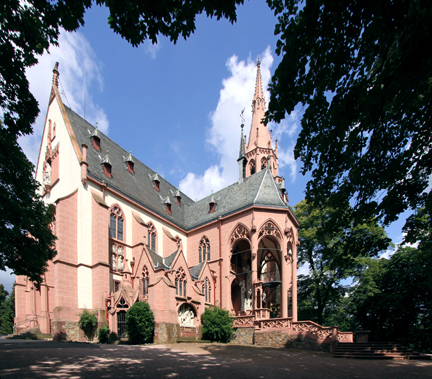
Johann Wolfgang von Goethe went on an annual pilgrimage to Rochus Hill. In 1889 lightning struck the Rochus Chapel, just after elaborate restoration work had been completed and the resulting fire destroyed everything apart from the walls. On the foundations of the former Baroque building a three-nave late Gothic church was built with an exterior choir. That is what is seen today.

DRUSUS BRIDGE AND BRIDGE CHAPEL
One of the oldest stone bridges in Germany is the Drusus Bridge in Bingen.

Bridges have a long tradition at the mouth of the River Nahe. The first was built a decade before the birth of Jesus. A special commando unit blew up the bridge in March 1945 before the approaching Allied troops could reach it. Today Drusus Bridge plays an important part in the appearance of the town.

(left to right) Drusus Bridge ceiling detail; Museum; Stefan George portrait

STEFAN – GEORGE MUSEUM
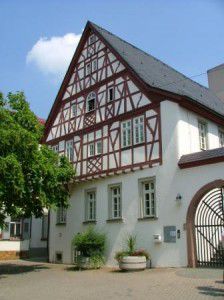
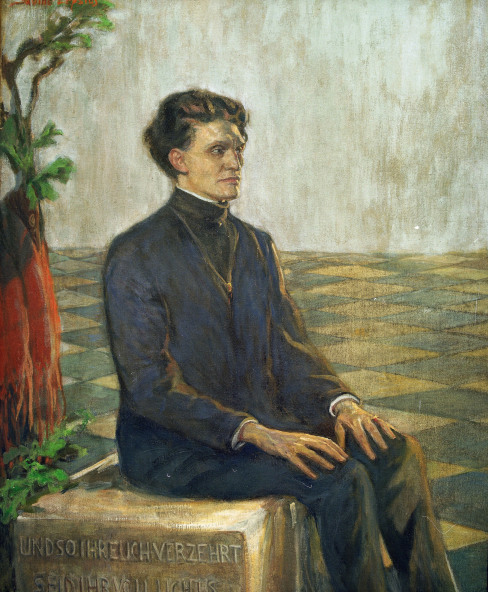
One of the most famous German poets, Stefan George, was born in Bingen-Büdesheim. This museum traces his life in the Stefan-George-Haus in the so-called “Haferkasten,” an impressive half-timbered house from the 18th century.

For more info, go to www.tourcomm-germany.com/en

Cruising Through Central Germany

By Marilyn Heimburger
Photos by Don Heimburger

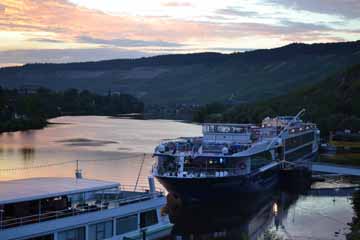
Are you are looking for a vacation that combines relaxation, a bit of history, romantic castles, charming medieval villages, and excellent cuisine? This week-long river cruise on the Moselle, Rhine and Main rivers in Germany, offered by Avalon Waterways, may be the perfect choice for you.

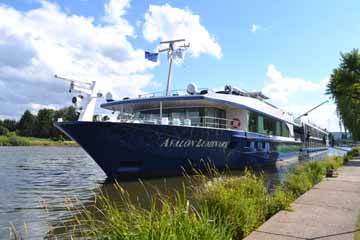
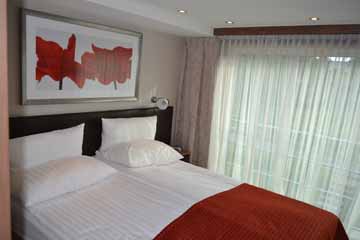
The MS Avalon Luminary, our ship for this cruise, was just recently added to Avalon’s fleet. Its 69 staterooms and suites are designed for efficiency, with plenty of space to stow personal items and luggage. Each room had a small bathroom with shower, comfortable memory foam mattress, a desk, lamp, mirror, fresh flowers, mini bar, and a safe for valuables. A television provided satellite programming and broadcast the view from a camera at the front of the ship. Floor-to-ceiling windows open to a private balcony in most rooms. It’s a luxury of river cruising to just unpack once and let the ship transport you with ease to each destination.

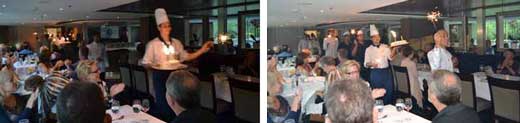
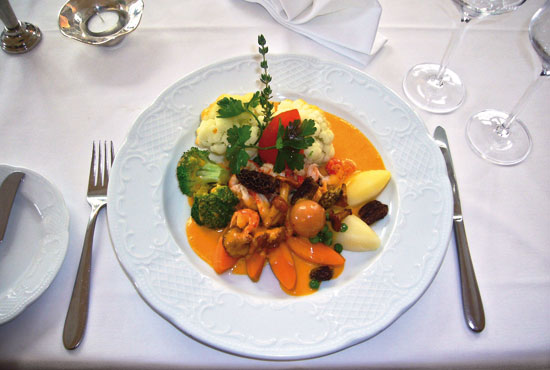
Another luxury on a cruise such as this is the excellent cuisine. The sumptuous breakfast buffet included breads, pastries and cereals, fruits, eggs, potatoes, sausages and bacon, and made-to-order entrees. The full lunch buffet served each day in the main dining room offered soups, salads, choice of main course and desserts. A lighter lunch option was also available in the lounge one deck above. Five-course dinners included an appetizer, choice of soups, salad, choice of meat, fish or vegetarian main course, and several dessert options. The well-trained staff served red, rose, or white wine or beer upon request.

BOARD IN LUXEMBOURG
Boarding the Luminary in Remich, Luxembourg, we were welcomed by cruise director Jean Loup Domart. Entertaining, energetic, and extremely organized, Jean excelled at keeping everything running smoothly.

Although we set sail while dinner was being served, we missed none of the excitement, since the dining room was designed for maximum viewing, with panoramic windows on both sides. A sense of intimacy was provided with fresh orchids in lighted open rectangles dividing the large space without interrupting with the view. The lounge on the level directly above the dining room was also designed for watching Germany glide by in the most comfortable of settings.

Our first stop was Trier, Germany, which boasts amazingly intact structures from the Roman Empire, including imperial baths, an amphitheater, and Constantine’s reception hall, which now serves as a protestant church. Did you ever wonder why Roman ruins always seem to be discovered 6 feet underground? We learned from our local guide that after Roman towns were abandoned, local residents built homes by taking usable stones from the old Roman buildings. Over the course of 600 years, this practice left a 6-foot-deep base of rubble, upon which the medieval towns were built. Trier’s Porta Nigra (black gate) is black from wood fire smoke from Roman times, and was left standing because it was a site that attracted pilgrims, who brought money to the church.

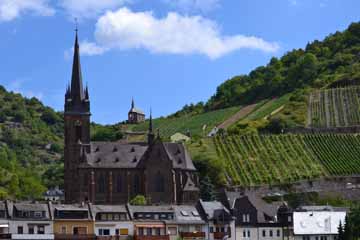
As our trip continued down the Moselle, we passed vineyard after vineyard and peaceful patchwork slopes, dotted with small villages and church steeples. The southern facing slopes provide the perfect environment for catching warm sunlight needed to grow grapes for Germany’s famous Riesling wines. And the ship’s outdoor decks were perfect for relaxing with a cup of coffee or listening to birds along the shore as the ship glided quietly along.
BERNKASTEL-KUES WEINFEST
Our late afternoon arrival in Bernkastel-Kues allowed just enough time to explore the Old Town around the quaint market square. This town hosts the biggest Weinfest on the Moselle in September. One vineyard overlooking the town is the source of their “Doktor” wine. Legend has it that drinking some of the wine from this vineyard cured an archbishop of an ailment, so the wine became known as the “Doktor.”


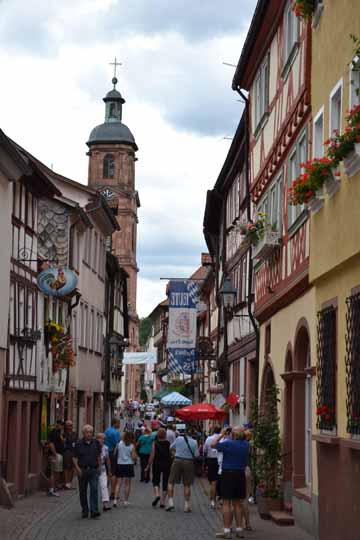
Half-timbered buildings in Bernkastel

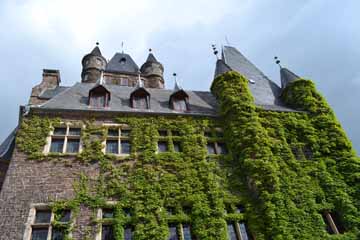
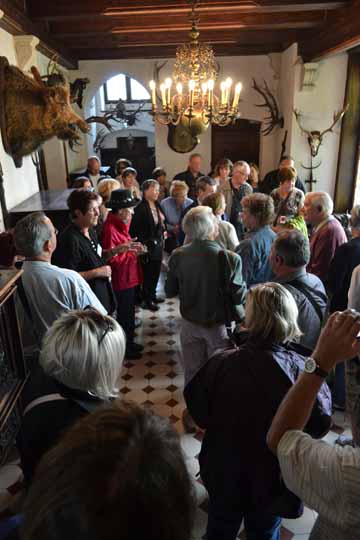
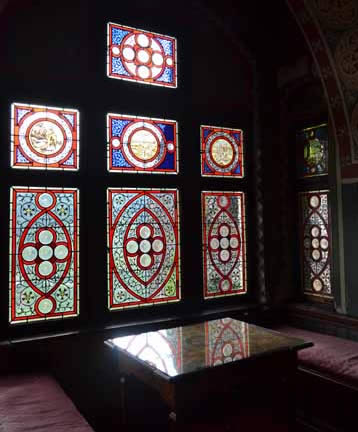
The next day brought us to the wine town of Cochem and a tour of Reichsburg Castle. The interior of the castle highlights not only only medieval artifacts, but Renaissance and Baroque furnishings selected by the 19th century restorers. The tour was informative and the view from the castle — spectacular.

 Passengers tour the castle

The Moselle joins the Rhine at Koblenz, an important center of trade during the Middle Ages. An imposing statue of Kaiser Wilhelm I mounted on a horse dominates the Deutches Eck (German Corner) where the two rivers meet. We arrived just before dinner, with enough time for a short walk into the square to see the many shops and restaurants. The fortress Ehrenbreitstein stands on the opposite bank of the river and provides a beautiful panoramic view of the area.

To begin our cruise down the Rhine Gorge (some say the most beautiful part of the Rhine) first thing in the morning, we docked overnight at Koblenz, and were entertained on board after dinner by a small ensemble of classical musicians.

THE MIDDLE RHINE
The next morning was filled with the history, legends and romance of the Middle Rhine. Cruise Director Jean Loup provided informative narration as the ship glided along, with passengers enjoying the view while relaxing on the sundeck. We learned that during the Middle Ages the Rhine River Gorge posed many hazards for travelers, and provided many opportunities for powerful kings to levy tolls for safe passage. They built castles and fortresses in the 12th and 13th centuries along the banks to collect tolls, make money, and enlarge territories.

Reichsburg Castle

The castles were usually built high on hills, close to a spring, and often on a curve with a view of the river. Stones for the castles were lifted with wheels and ropes, and the building projects provided work and security for locals, whose lifespan at the time was only about 40 years. Most castles were built with limestone, which was easier to work with than granite. Later palaces were built with marble, as techniques improved. To attack a fortress, enemies could try to break down a wall or door with a battering ram on wheels with a roof as protection from arrows shot from the castle. Or a catapult could throw fire over the castle walls. Castles residents used beehives, hot tar or hot water to fend off attackers. Some fortresses housed armies of 600.

In the town of Boppard we saw Sterrenberg and Liebenstein, known as the castles of the enemy brothers, and heard the legend: Two brothers both fell in love with their adopted sister. She wanted none of this, and entered a monastery in town to live as a nun. The brothers fought and finally built two castles next to each other with a wall in between.

The 430-foot-high Lorelei rock is located where the river narrows, creating treacherous currents dangerous to ships. The famous legend of the beautiful maiden who sat on the rock luring sailors to their destruction with her singing is commemorated with a bronze statue.

The town of Oberwesel, below Schoenburg Castle, still has many fortification walls and towers still standing. When the river water is low, travelers can see the “rocks of the seven virgins.” Legend has it that a lord with seven sons wanted to arrange marriages for them. The seven chosen virgins didn’t want to marry, and threw themselves into the Rhine, where, because they were so hardhearted, they turned to stone.

Pfalz Castle (whose gold lion was to symbolize strength and power) was built in the 16-17th century as a customs tollhouse on a little island in the middle of the river. Gutenfels Fortress was built on the bank opposite Oberwesel to protect the tollhouse.

Sooneck Castle, a toll-enforcing castle from the 11th century, also housed pirates. It is one of the oldest along the Rhine and is restored as a cafe.

In an attempt to preserve the beauty and tranquility of the shoreline, many of the houses along the shore are painted in soft pastels, often pale yellow, a color made popular by Maria Theresa. Train tunnel entrances on this stretch of the river are built to look like castles, in order to blend in with the style of the area.

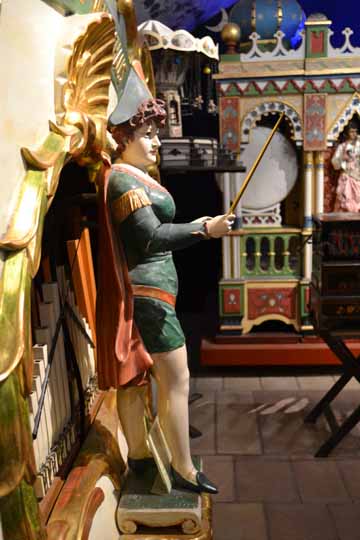
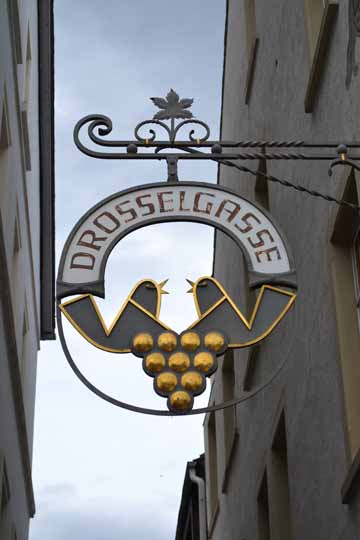
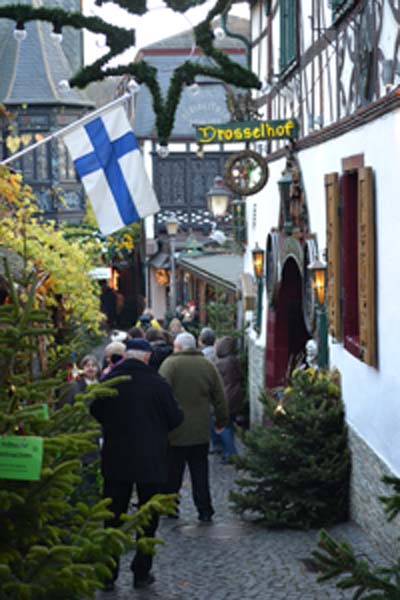
(left to right) Siegfried’s Mechanical Musical Instrument Museum; Drosselgasse, a lively street in Rudesheim.

DROSSELGASSE A FAVORITE
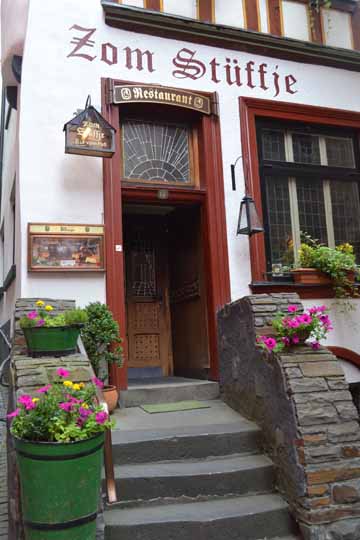
Our last stop on the Rhine River was in Rudesheim, where we enjoyed a guided tour of the Museum of Mechanical Musical Instruments (some imitating entire orchestras in one huge contraption!), and a local winery. Be sure to take time to explore the exciting main street, the Drosselgasse, with its many restaurants and shops.

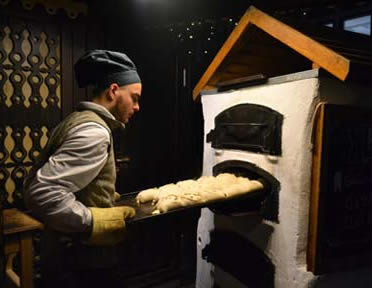
Navigating the Main River is a slow process because of the many locks needed to raise or lower the ship along the route. So our ever resourceful cruise director kept passengers busy on board with an entertaining German lesson, and a cookie-baking demonstration by an “almost nun” from Miltenberg, our next port of call on the Main.

Miltenberg

Miltenberg was built against a hill at a curve in the river, a perfect place to collect tolls for the archbishop of Mainz. Many half-timbered houses are still preserved because the people here were too poor to tear them down and rebuild. If a floor sagged and sank, it was filled with sand and covered with another floor. In some recently renovated buildings, 30 centimeters of sand/wood layers were discovered beneath the floor. The original red “paint” on the houses was a mixture containing, among other things, oxblood and cattle dung, which provided the desired red color and also killed worms that might live in the wood. A unique naturally cool icehouse is located in the hill at the rear of the town.

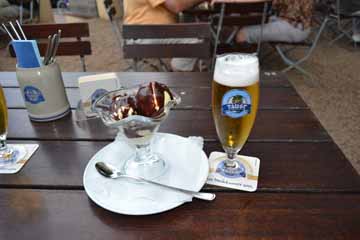
Cold beer and ice cream

While the ship slowly navigated through more locks, passengers rode by bus to Wurzburg, and met the ship when it finally docked after our tour. Wurzburg is the site of the Prince Bishop’s Residenz, which is one of the finest examples of a baroque palace, and also a UNESCO World Heritage Site. It was built to rival Versailles in France and the Schoenbrunn in Vienna. The unique mirrored room features the difficult technique of reverse painting. The famous ceiling fresco by Tiepolo miraculously survived bombing, and the original marble floor is still in the main reception hall. The “marble” pillars are actually a stone core with a ground marble coating so that colors could be controlled, a technique that was more expensive than using solid marble.

Wurzburg

WURZBURG AND X-RAYS
Wurzburg was also the home of Professor William Conrad Rundkin, winner of the Nobel Prize for the discovery of X-rays. Residents in Wurzburg are not x-rayed; they are “Rundkined.”

Bamberg

The terrain along the river from Wurzburg to Bamberg changes and becomes flatter, with fewer vineyards, more trees and shrubs, and more locks. This quiet time was perfect for relaxing with a book from the ship’s library, located in the small lounge at the rear of the ship. There passengers found English language books of all genres, games, and the most wonderful coffee machine which dispensed espresso drinks that rivaled any coffee shop. Iced tea, shortbread cookies and other snacks were available 24/7. The ship also had an exercise room with a treadmill, two types of exercycles and flat screen TV, and a small beauty salon.

Cruise ship surprises

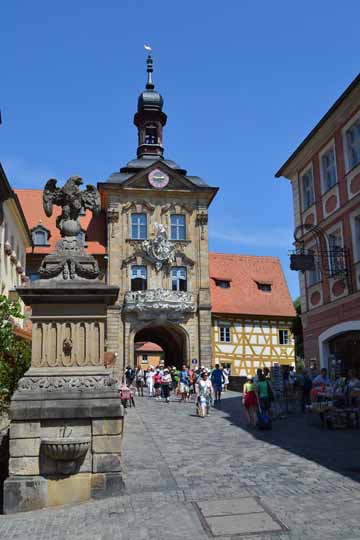
Busses again transported us to meet local tour guides in Bamberg, another UNESCO World Heritage Site. There we learned the local history of the cathedral, the Old Town Hall, which straddles the River Regnitz, had an opportunity to taste the local specialty, “Rauchbier” (smoked beer), and had time for browsing in the main pedestrian shopping area.

Our cruise ended the next morning upon arrival in Nuremberg, from which some passengers continued by bus to Prague, and others to charming Rothenburg ob der Tauber.

IF YOU GO..
Avalon Waterways, which has been in business for 80 years, has a number of different river cruises available in Europe. Their river cruise ships are small compared to ocean liners, which makes the service and trip more personal. They also have Europe’s youngest fleet of ships, with their fleet averaging just two years old, compared to seven years for other cruise companies.

There are full floor to ceiling sliding glass doors in 85% of the deluxe staterooms on Avalon’s fleet. Also, the Luminary had lots of space in the central passenger areas such as the dining room, lounge and library.

The Luminary offered five categories of rooms including Royal Deck suites; Royal Deck Category P; Sapphire Deck Forward, Category A; Sapphire Deck Aft, Category B; and Indigo Deck, Category E.

For more information, go to www.avalonwaterways.com or call 877-797-8791.

Leipzig on a Platter

This city is a multi-course meal for visitors

By Don Heimburger
Photos by Don Heimburger and Leipzig Tourism Office

If you were to spoon out Leipzig and put it on a plate, you’d discover a salad, a main meat course, vegetable course, a sorbet interlude and a delicious dessert.

I’d designate the salad course as the city’s unusual green belt at the Auenwald; the meat course is the art, architecture and music; the vegetable course Martin Luther and the Peaceful Revolution; the sorbet interlude is this town’s love of coffee; and the dessert is the city’s zest for living and its nightlife.

The city of Leipzig in central Germany, population 500,000, has a colorful history stretching back more than 800 years, and many events have shaped this former East German city. The city’s people and several major historical events have fashioned this town, and made it what it is.

SORBS FIRST SETTLED HERE

Sorbs first settled here in the 7th century, establishing a trading post known as Lipzk or “place near the lime trees.” After Leipzig was granted a town charter and market privileges around 1165, it quickly developed into an important center of commerce.

Maximilian I decided to award Leipzig imperial trade fair privileges in 1497, which helped turn the city into one of Europe’s leading trade fair centers, and it remains so today. Following the world’s first samples fair held in Leipzig in 1895, the city remained one of the global trading hubs until World War II put a hold on that.

Leipzig Zoo’s Gondowanaland

It’s hard to believe, but Leipzig has a floodplain forest that runs straight through its center, one of the largest of its kind in Europe. Consisting of eight square miles of trees, every year more trees are planted, and the green space is enlarged. A variety of protected plants and animals are found here, including a rare butterfly species.

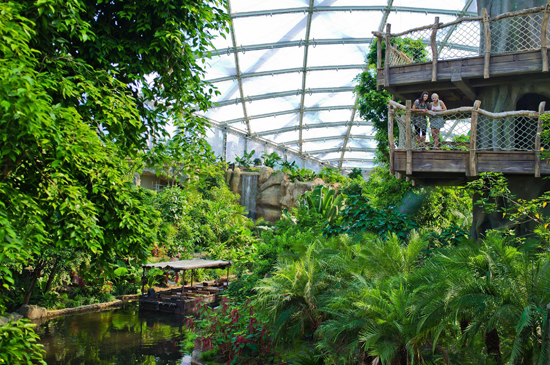
This “salad area” or greenbelt is easy to spot on a roadmap, with a large green area running north to south through the city. Four streams also flow through the city. Another part of the city that has been “greened up” is the Leipzig Zoo, where tropical Gondowanaland just opened. This lush section of the zoo, larger than two football fields, allows visitors to come into close contact with the tropical rain forests of Africa, Asia and South America. It features 40 exotic animal species and approximately 500 different plant and animal species, and more than 17,000 plants started their journey in nursery gardens in Thailand, Malaysia and Florida to create this tropical environment.

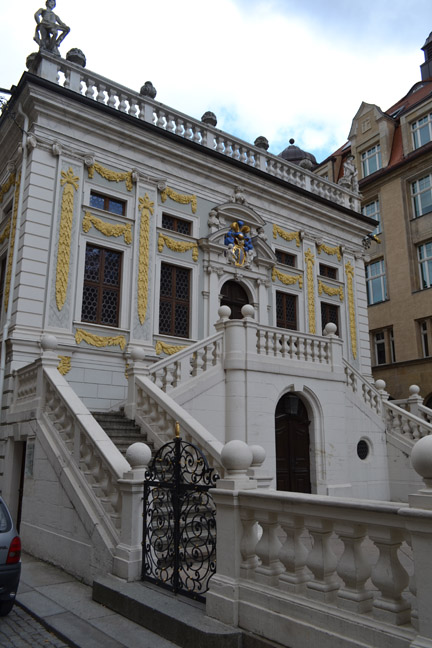
The Alte Börse, built in 1678-87 by Christian Richter, was originally used as a trading floor for merchants.

MAIN COURSE: ART-ARCHITECTURE AND MUSIC
As Leipzigers are fond of saying, for the young and creative Leipzig is no longer an insider’s tip. Word has spread that the city’s working and living conditions are just right, and three universities with an artistic or cultural profile, as well as Leipzig University, constantly feed the pool of ideas. Leipzig is known for its vibrant arts, music and festival scene; this place not only appeals to artists and actors, but is also becoming a trendy destination for leisure travelers.

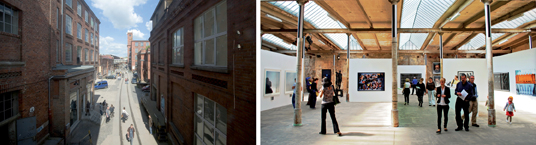
Leipzig’s dynamic art scene enjoys an excellent reputation worldwide. Interestingly, a former cotton mill, Spinnerei, in the trendy Plagwitz district, is home to a number of galleries and studios. Formerly the largest cotton mill in continental Europe, Spinnerei now has the highest density of galleries in Germany. In this old factory complex are 80 artists, 14 galleries and exhibition spaces which house creative professionals like architects, designers, craftspeople, retailers and printers.

Spinnerei Museum

Artist and professor Neo Rauch of the New Leipzig School, whose paintings combine his personal history with the politics of industrial alienation, reflects on the influence of social realism. Hollywood star Brad Pitt recently purchased one of his works.

The GRASSI Museum of Applied Art, with its world class collection, opened as Germany’s second museum of applied arts in 1874. It is considered one of Europe’s leading museums of arts and crafts. The high point of the year within the GRASSI museum’s special exhibition is a trade fair for applied art and design, an international forum of contemporary applied art and experimental design.

Then there’s another part of the Grassimesse, the Designers’ Open, which is a well-established independent design festival. An extensive program including lectures, workshops, movies and fashion shows complete the fair.

In 1996 the Leipzig Fair’s new exhibition complex opened, featuring trailblazing architecture, spacious avenues and the stunning Glass Hall at its core.

THE CITY OF MUSIC

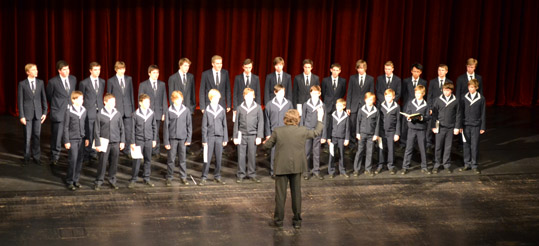
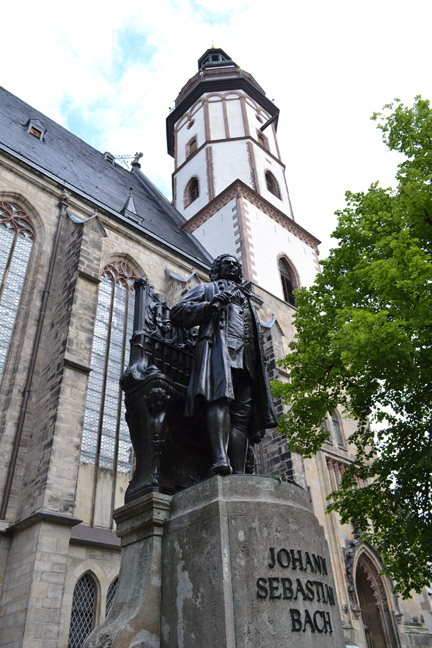
If you go to Leipzig, a visit to St. Thomas’s Church is a must, since it is the home of the world-famous St. Thomas Boys Choir and where Johann Sebastian Bach was employed for 27 years as organist and choirmaster.

His grave can be seen in the chancel. Motets are performed every Friday and Saturday by the choir, and there are concerts in front of the statue of Bach outside in July and August. The Bach Museum is located opposite the church.

St. Thomas Boys Choir

Another regular musical highlight is the Sunday recitals at Mendelssohn House. Felix Mendelssohn-Bartholdy used to live in the building, which now contains the only museum dedicated to the composer.

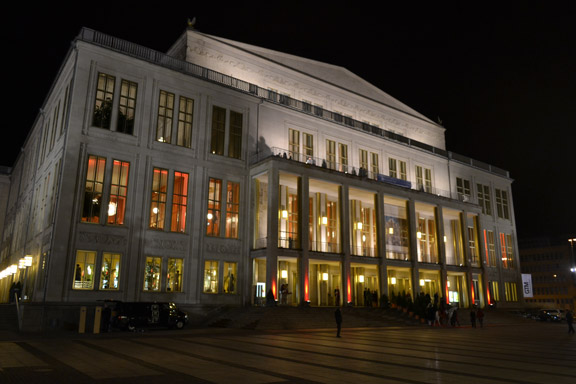
There are two additional important centers of music in Leipzig: the Leipzig Opera House and the Gewandhaus Concert Hall.

The Gewandhaus Orchestra, dating back more than 250 years, regularly performs in both venues. The Opera House is the third oldest civilian music theater stage in Europe. And Schumann House is dedicated to the memory of Robert Schumann, one of the greatest composers of the 19th century Romantic era.

Bach concert at St. Thomas Church

Leipzig also hosts several music festivals, large and small, including the International Bach Festival, the A Capella Festival, the Leipzig Jazz Festival and the Mendelssohn Festival.

MARTIN LUTHER AND THE PEACEFUL REVOLUTION
Our vegetable course includes reformer Martin Luther, who was known to come to Leipzig to face the Catholic Church hierarchy to explain his ideas about Christianity and indulgences. Martin Luther, who lived in nearby Wittenberg, stayed in Leipzig on no less than 17 occasions. His most important visit was for his participation in the Leipzig Disputation, or series of debates, held in Pleissenburg Castle in the summer of 1519.

After Duke George died, the Reformation was introduced in Leipzig in 1539. On August 12, 1545 Luther inaugurated the former Dominican monastery church of St. Paul’s as a protestant university church.

St. Nicholas Church exterior

Leipzig was particularly significant in the rise of the Reformation movement, because Luther’s writings and numerous evangelical hymn books were distributed in large numbers from this city of printing shops and publishing houses. In Melchior Lotter’s printing shop alone, between 1517 and 1520, more than 40 works written by the great reformer were published.

In the Grafisches Viertel or Graphics Quarter of the city, the publishing industry flourishes. In 1912, 300 printers and nearly 1,000 publishing houses and specialized book shops, as well as 173 bookbinders, operated in Leipzig.

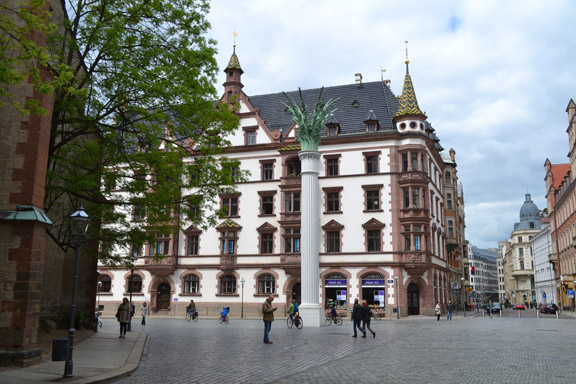
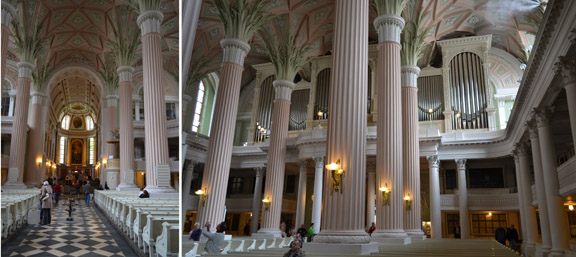
Leipzig is also known for helping overcome the GDR government. St. Nicholas Church—the oldest and biggest church in Leipzig—rose to fame in 1989 as the cradle of the Peaceful Revolution. Services for peace were and still are held there every Monday, and the following demonstrations at the end of the 1980s toppled the East German government, paving the way for German reunification. In the church, note the interior columns: they are designed to resemble palms.

St. Nicholas Church interior

A few other important sights to see in the city include:

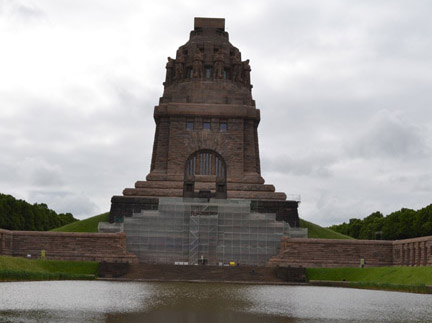
  • The Monument to the Battle of the Nations—the tallest monument in Germany—was erected to commemorate those who fell during the Battle of the Nations (also known as the Battle of Leipzig) fought against Napoleon’s forces in October 1813.
  • In the Battle of the Nations, Austrians, Prussians, Russians and Swedes fought —500,000 soldiers in all— the biggest battle ever in world history, marking the decisive turning point in the war of liberation from Napoleonic rule.

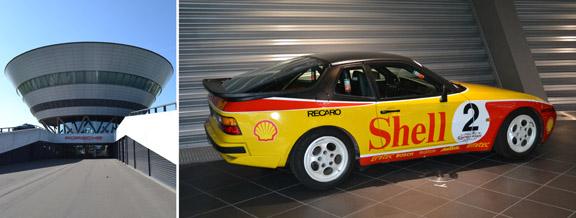
(left to right) Battle of the Nations Monument; Porsche Leipzig Headquarters

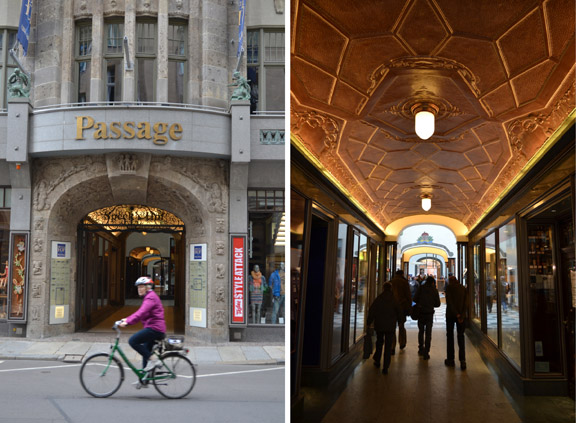
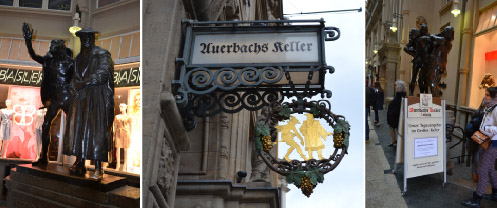
The Mädler Passage, for centuries the city’s most exclusive arcade (one of 30 arcades in the city), is home to the famous Auerbachs Keller. Serving wine since 1525, this tavern/restaurant was immortalized in Faust by Johann Wolfgang Goethe, the father of German literature.

YOUR SORBET IS SERVED
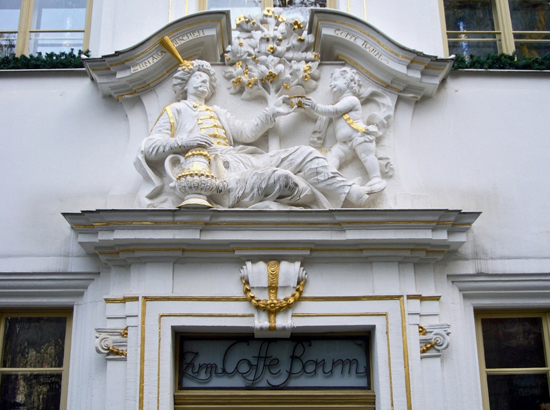
The café-cum-restaurant Zum Arabischen Coffe Baum is one of Europe’s oldest coffee houses (dating from 1694) and it used to number composer Robert Schumann among its regulars. Today the coffee museum on the third floor of the building contains 500 exhibition items on the history of coffee, the Saxons’ “national drink.”

Zum Coffe Baum
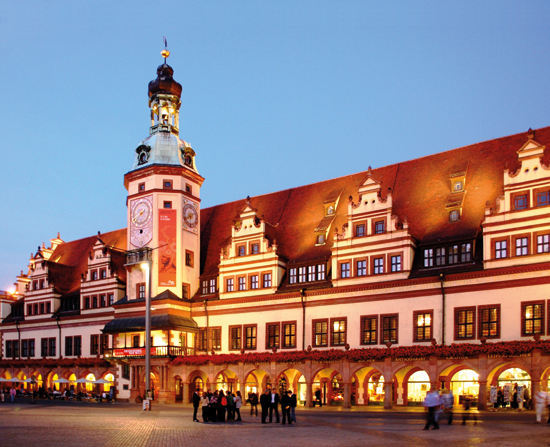
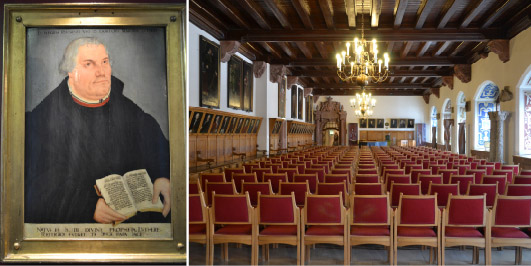
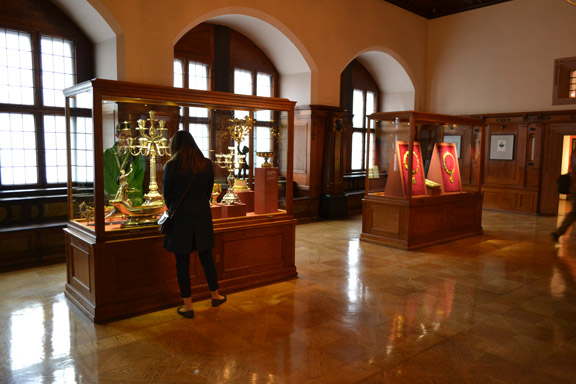
  • The Old City Hall, one of the finest Renaissance buildings in Germany, can be admired on the Market Square; it houses the Museum of City History. Inside is Katharina von Bora’s (Martin Luther’s wife) wedding ring and a pulpit in which Luther preached.

Town Hall Museum where a number of Martin Luther artifacts are exhibited.

NIGHTLIFE ABOUNDS
If you happen to be a night person, there is plenty to do in the evening, with all the city’s theaters, concert halls, variety shows and casinos. There are several dining and nightlife districts as well, such as Drallewatsch, Schauspielviertel, Südmeile, Münzgasse, Gohlis and Plagwitz. And when you arrive in one of the many clubs or bars, you’ll learn that often the term “closing time” is not in the vocabulary. There are 1,400 pubs and restaurants in this city, so dessert is not a problem.


And there you have it: a complete Leipzig meal with all the courses. Emperor Maximilan I knew something in 1497 when he granted the town imperial trade fair rights. He knew that one day Leipzig would be a multi-course city, and he was correct.

Auerbachs Keller Restaurant, located below the Mädlerpassage, is the best known and second oldest restaurant in Leipzig, described in Johann Wolfgang von Goethe’s play Faust I, as the first place Mephistopheles takes Faust on their travels. The restaurant owes much of its fame to Goethe, who frequented Auerbach’s Cellar as a student and called it his favorite wine bar.

For more information, go to www.leipzig.dewww.leipzig.travel, or www.germany.travel


Hotel Fuerstenhof
An upscale Leipzig tradition

Not far from the main train station in Leipzig is the Hotel Fuerstenhof, a five-star gem with marble, gold-rimmed archways, high ceilings and soaring windows.

At one time a classic patrician’s palace, the 92-room air-conditioned hotel with 12 suites, features myrtle wood furniture, marble bathrooms and a friendly, dedicated staff. The staff is geared to making your stay a pleasant one, knowing your name when you come to the registration desk for questions, and providing service with a smile. I had more than a few special requests from the staff which were quickly and pleasantly taken care of.

There’s an indoor 7,000-square-foot pool area, equipped with saunas, fitness room, solarium, cosmetic and massage stations. Also, the hotel features a nice piano bar area with comfortable, plush seats, and tables, fine dining in the 18th-century style neo-classical Villers restaurant (with a choice of more than 200 wines), a complete breakfast area and a wine bar round out some of the amenities of this hotel.

The hotel was first mentioned in 1770 when Karl Eberhard Loehr, a banker, lived in the palatial home, built between 1770 and 1772. It was called the Loehr Haus. It opened as a hotel in 1889, and underwent a complete renovation and restoration in 1993. It is part of the Luxury Collection of Hotels, one of 62 worldwide luxury hotels. 

For more information, go to www.hotelfuerstenhofleipzig.com/en

Hotel Fuerstenhof

Castles, Christmas Markets and Cruising

By Marilyn Heimburger
Photos by Don Heimburger

Taking a river cruise is always a good idea. A river cruise that includes both historic castles and colorful Christmas Markets along Germany’s Rhine River is the best idea ever. So on Thanksgiving Day I happily ignored Black Friday and escaped the pre-Christmas shopping frenzy of the USA to spend a week on the AmaKristina, cruising from Amsterdam to Basel, Switzerland. Romantic castles and Christmas Markets along the Rhine River ushered in the Christmas spirit for me this year.

The newest AMA ship, the AmaKristina

The AmaKristina is essentially a floating luxury hotel for 158 guests. Our roomy cabin had a queen-sized bed, private bathroom with shower and double sink, desk, large format Apple screen and keyboard for internet, TV, or movies. Built in 2017, the ship’s hallways and guest suites were filled with Gustav Klimt art prints, and seasonally decorated with lights, Christmas trees, wreaths, garlands, and gingerbread houses. We boarded in Amsterdam, unpacked, and had our first dinner on board. Open seating at each meal encourages mingling of guests.

AMSTERDAM ATTRACTIONS
Fortified with a sumptuous on-board breakfast buffet, including an omelet station and daily vitamin “shot,” we departed the ship for an informative canal cruise, a panoramic city bus tour of Amsterdam with an up-close look at a local working windmill, and free time for exploring. Although there were no Christmas markets in Amsterdam, there were plenty of opportunities for shopping near the central train station, and street entertainment in Dam Square: a saxophone player, giant bubble maker, dancing dinosaurs, and impromptu yoga. Just be sure to watch out for the numerous killer bicycles that demand the right-of-way.

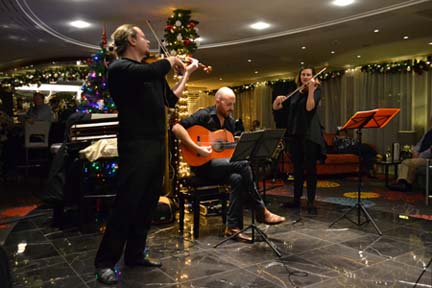
The AmaKristina set sail from Amsterdam in the afternoon, and I had time to explore the ship’s main lounge and bar, massage and hair salon, fitness room, gift shop, and even a heated pool and giant chess set on the sun deck. A cruise overview presented by our cruise director, plus Christmas tree decorating and an evening classical music performance by the three talented string players known as “La Strada” kept passengers entertained. The cruise ships cleverly bring nightly entertainment on and off the ship when stopped at the locks on the river.

Onboard entertainment by La Strada

COLORFUL COLOGNE
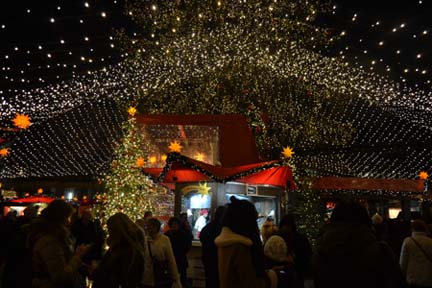
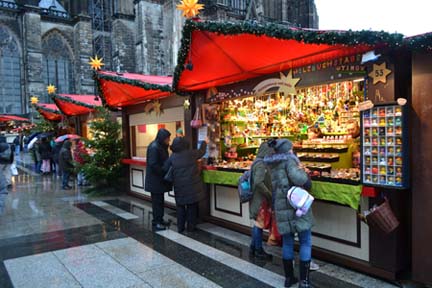
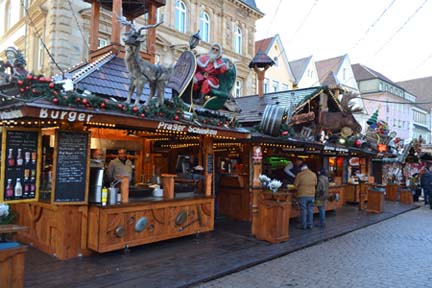
After cruising all morning, we docked in Cologne, Germany, where shuttle buses brought us to our first Christmas Market in Cathedral Square. Although the earliest Christmas Markets in Germany date from the late Middle Ages, the one in the shadow of Cologne’s impressive Cathedral is a relative newcomer, opening in 1995. Under a dazzling canopy of thousands of tiny lights, 150 vendor huts with bright red awnings and brilliant multi-faceted stars displayed handicrafts, comfort foods, gifts of all types, decorations, wooden toys and much more.

Canopy of Christmas lights in Cologne’s Cathedral Square

Cologne Cathedral Square market

HOME OF THE ELVES
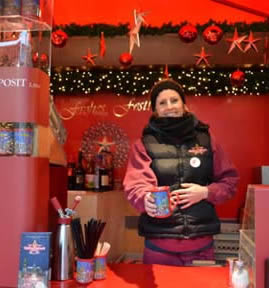
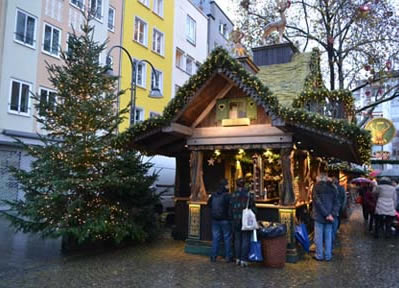
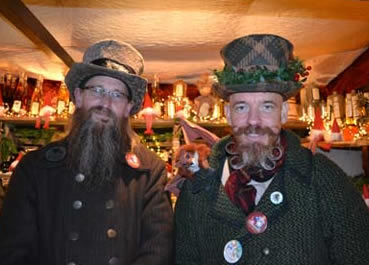
A few blocks away in the Altstadt and Heumarkt was an older and much larger Christmas Market called the “Heimat der Heinzel” or Home of the Elves. These were little creatures from a Cologne legend who used to do all the housework until they were annoyed by an inquisitive housewife, and disappeared. I loved this market. Aisles were arranged by theme, and the large wooden huts had Old World, wood-carved details, thick green garlands and costumed vendors. Little “Heinzelmännchen” rode in gondolas above an expansive ice rink. Each souvenir mug of Glühwein (the traditional hot mulled wine so popular at the Christmas Markets) had a different elf pictured on one side, and his particular work specialty described in verse on the other. Cologne boasted three additional smaller markets, but time was too short to visit all of them on this trip.

Home of the Elves’ Market in Cologne

CASTLE DAY ON THE RIVER
The morning cruise from Cologne to the next stop in Rüdesheim passed through the UNESCO World Heritage Rhine Gorge. What a treat to sit in the ship’s expansive lounge with panoramic windows, coffee in hand, gazing at vineyard- covered slopes, picturesque villages, historic castles, and the famous Lorelei Rock, with commentary by the cruise director. This romantic part of the trip alone is a highlight of any Rhine River cruise.

RÜDESHEIM’S CHRISTMAS MARKET OF THE NATIONS
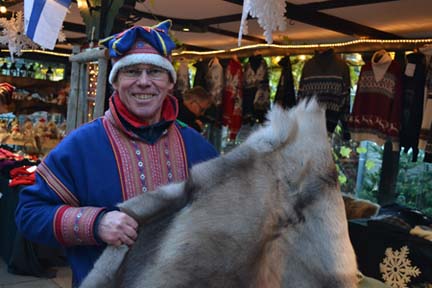
After a gourmet lunch of traditional German specialties, we docked in Rüdesheim, where the “Christmas Market of the Nations” wound up and down the narrow streets of this wine town of about 7,000 citizens. Vendors from France sold mushrooms, lavender and cheese, Tunesia vendors brought wares made of olive wood, smoked salmon came from Norway, furs came from Finland and even the United States was represented with a local vendor offering homemade cookies, Dr. Pepper, Fanta, marshmallows, and Hershey’s chocolate. Christmas choir music piped throughout the market added to the festive atmosphere as shoppers strolled past inviting vendor stalls and village shops. A new discovery at this market was hot mulled Glühbier from Belgium.

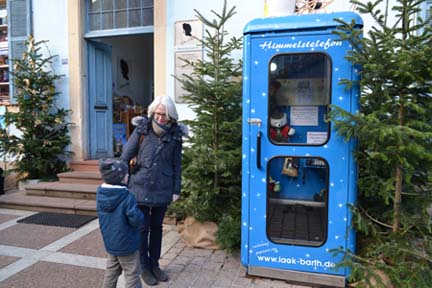
(clockwise) Hot lunch in Rüdesheim; Fur from Finland at Rüdesheim’s Christmas Market of the Nations; “Hallo” from the gnomes in Rüdesheim; Placing a phone call to the Christkind in Speyer

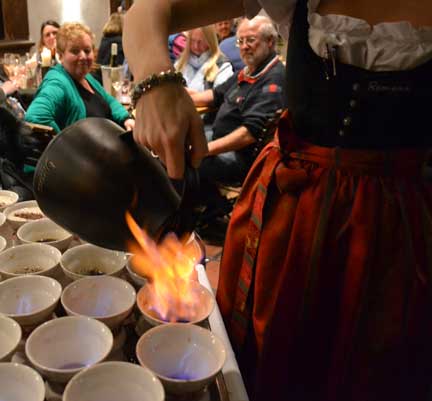
Throughout the ship’s seven-day cruise, each day’s program offered passengers quiet, regular and active excursions. Rüdesheim excursions offered by the AMAKristina included wine tasting, a hike, bike or gondola tour through the vineyards. A late night, fun option was experiencing Rüdesheimer coffee – coffee set on fire with Asbach brandy and sugar, topped with whipped cream and chocolate flakes – at Eiscafe Engel on Rüdesheim’s famous Drosselgasse.

Rüdesheimer coffee
Atmospheric narrow Rüdesheim street

THE IMPERIAL CITY OF SPEYER
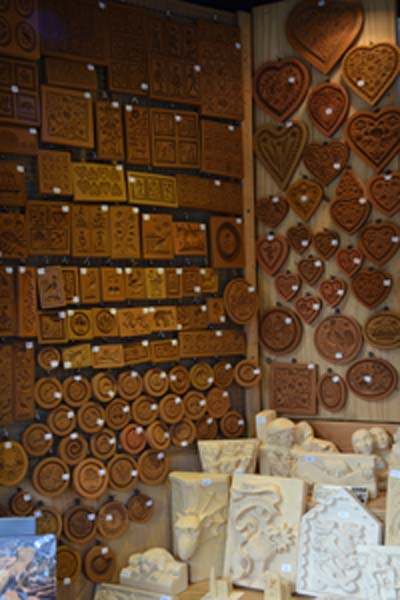
By noon the next day we docked in Mannheim and could choose a bus excursion to Heidelberg or to Speyer. Having visited Heidelberg several times already, we chose to see the 2,000-year-old Imperial city of Speyer. Here the Christmas Market extended down Maximilianstrasse from the UNESCO World Heritage Speyer Cathedral, the largest Romanesque cathedral in the world. Though smaller than the Cologne Christmas Markets, Speyer’s market had all the requisite comfort foods: Glühwein, grilled sausages, roasted almonds, and even waffles, potato soup and dumplings. Vendors offered wood handicrafts, colorful candles, jewelry, scarves, kitchen gadgets and unique cookie cutters. Especially for children were an ice rink, kiddie car rides and a telephone booth with direct access to the Christkind in Heaven!

Back onboard the AmaKristina we had a tea time treat of traditional Spekulatius cookies and Stollen, while we set sail for our next stop: Strasbourg and Le Petite Alsace in France.

INVITING STRASBOURG AND LE PETITE ALSACE
As with each stop on our route, AmaWaterways provided an energetic and knowledgable guide for a walking tour of the area on the way to the Christmas Markets. This morning we learned about the Alsace region, which changed hands between France and Germany four times in 75 years. The name “Alsace” derives from a German phrase meaning “seated on the Ill.” While our guide led us along the Ill River, past the beautiful half-timbered houses lining both sides, she explained that this charming area was historically the least desirable place to live. It had been the site of fortifications and a prison, the home of executioners and the location of the tanning trade, with its smelly byproducts. Today it is a photographic highlight of any trip.

CHRISTMAS MARKETS WITH A FRENCH TWIST
Christmas Markets first appeared in Strasbourg in 1570, making this German/French town the location of one of the oldest markets in Europe. Although much was similar to the Christmas Markets we saw in Germany, here the food vendors offered toasted baguettes topped with cheese as the warm comfort food, instead of the ubiquitous wursts in the German markets.

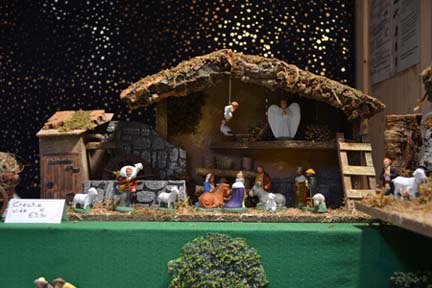
The traditional market was near the cathedral, with some vendor huts topped with storks, that famously nest in Strasbourg’s Parc de l’Orangerie. More than 300 vendor chalets filled the historic city center. Entertaining metal sculptures depicting different professions caught my eye, as did the detailed, intricately carved figures for nativity sets. A market area featuring Strasbourg’s service organizations surrounded a towering decorated Christmas tree and grassy area which was perfect for family photos. A small market in Gutenberg Square annually invites vendors from other countries: this year it welcomed Iceland.

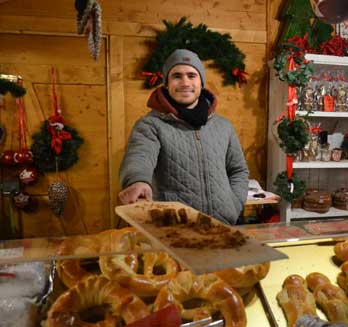
Try some gingerbread in Gengenbach

GENGENBACH’S GIGANTIC ADVENT CALENDAR
We were back on the German side of the Rhine River by late afternoon, and on a shuttle bus from the AmaKristina to the beautiful village of Gengenbach. A guided tour down Engelgasse led to the Christmas Market which stretched down the main street from the town hall square.

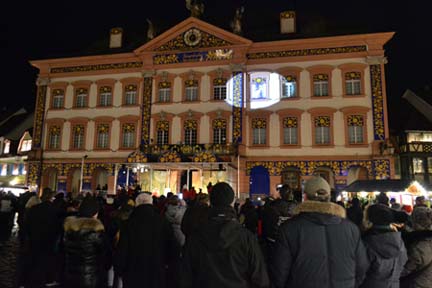
Gengenbach Town Hall Advent Calendar

Gengenbach boasts the world’s largest Advent calendar in its neo-classical town hall, where each night one of its 24 windows is opened to reveal a picture by a famous artist. This year’s calendar featured paintings by Andy Warhol. We arrived just in time for the first night’s opening ceremony: a narrated short skit performed by children from the town. After browsing through the market’s matching vendor huts, with hot Glühwein in a mug depicting the town hall Advent calendar, we returned to the ship to be delightfully entertained by a French cabaret singer and her accordion accompanist.

LAST FULL DAY ONBOARD
Shuttle busses from the AmaKristina were the order of the day with options to Riquewihr, France, or to Freiburg and Breisach, Germany. Deciding to aim for German-speaking vendors, we took the second option, and explored the market in the heart of Freiburg’s beautiful old quarter. Traditional craft products, including glass blowing and colorful wooden toys were offered beneath the green and white lights that trimmed the roofs of the more than 130 vendor huts.

Time was too short to see all of the ceramics, candles, hand puppets, amber jewelry and Christmas decorations, but we enjoyed a quick wurst and Glühwein lunch before leaving for Breisach. Unfortunately this town’s tiny Christmas Market was not yet open for business, so after strolling down the pedestrian-only shopping zone, we walked back to the boat dock, to sail to Basel and enjoy the captain’s farewell dinner and our final evening on board.

Early the next morning, with our luggage packed with Christmas Market treasures, we left for home filled with Christmas spirit and with wonderful memories from this romantic river cruise of Christmas Markets and Castles on the Rhine.

TIPS AND FINAL NOTES
An AmaWaterways river cruise makes visiting so many sites along the Rhine extremely easy. You unpack only once in a roomy cabin. Meals are well-planned, complete and delicious, with perfect portions and special dietary options. Wine and beer are included with lunch and dinner. The fabulous coffee bar is open all the time. Special surprises delight passengers as well, such as serving a location’s specialty treats during afternoon tea time, recognizing St. Nicholas Tag by putting treats in passengers’ shoes left outside cabin doors, and providing hot towels and beverages upon re-boarding after cold excursions. The company will cheerfully arrange for your transfers to and from the cruise ship.

The cruise director is the key to having a wonderful time on any cruise, and this AmaWaterways trip had a great one. David Rosell was organized, energetic, accommodating and entertaining.

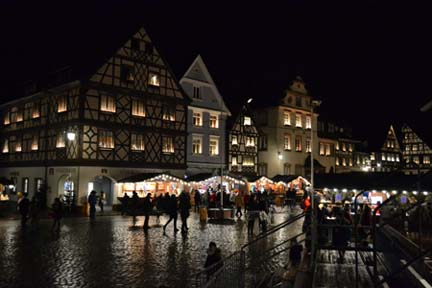
Most Christmas Markets are open from the beginning of Advent through Christmas, although some larger markets stay open longer, and some smaller ones have limited open hours. Bring euros – most small vendors don’t accept credit cards.

Pack warm layers of clothes, boots and umbrellas. The weather can be chilly and damp during November and December.

AmaWaterways provides a post-cruise option, if you want to extend your trip. This Christmas Market/Rhine River castle cruise offered an excursion to Lucerne and Zurich after disembarkation in Basel. For more AmaWaterways information and schedules, go to: www.amawaterways.com.

If you go: The Mövenpick Hotel Central in Amsterdam is a great place to stay before you board. This new, 4-star hotel is located within walking distance of the train station, the city center and the cruise ship loading docks. A sumptuous breakfast buffet is included with the room, and a knowledgable concierge team can help you plan your free time in Amsterdam before the cruise. For more information go to: www.movenpick.com/en/europe/netherlands/amsterdam.