Best Art Museums & Architecture for a Weekend in Barcelona

By Megan Kudla

Barcelona is a haven for art, especially being home to some of Antoni Gaudí’s most famous architectural wonders. The city also has world-class museums, with works that date back from the medieval times to more contemporary eras. If you’ve only got one weekend in Barcelona, but want to see as much art as possible, here’s a guide to the some of the best art museums and architecture tours.

Tip: If you’re extending your trip, you can purchase the ArticketBCN pass, which gets you entry into 6 of the top art museums across the city for a flat fee of 38€. (Plus, it comes in the form of a little red passport that gets stamped along the way. How cute is that?)

Sagrada Familia
The pinnacle piece of architecture in Barcelona, the Sagrada Familia, should be first on your list. It’s also the most popular attraction in the area—when you are booking your flight and your hotel, go ahead and book this, too. Tickets range from 26€ to 40€. Marvel at the intricate sculptures adorning the outside and the mesmerizing colors that dance below the stained glass on the inside of this architectural monster, which is still under construction to this day.

Tip: The beginning and end of the self-guided tour are located on the outside of the Sagrada Familia, where you can admire the intricacies of Gaudí’s designs that display the Nativity Façade and the Passion Façade. This means that you should bring a jacket if you’re visiting during the fall or winter months.
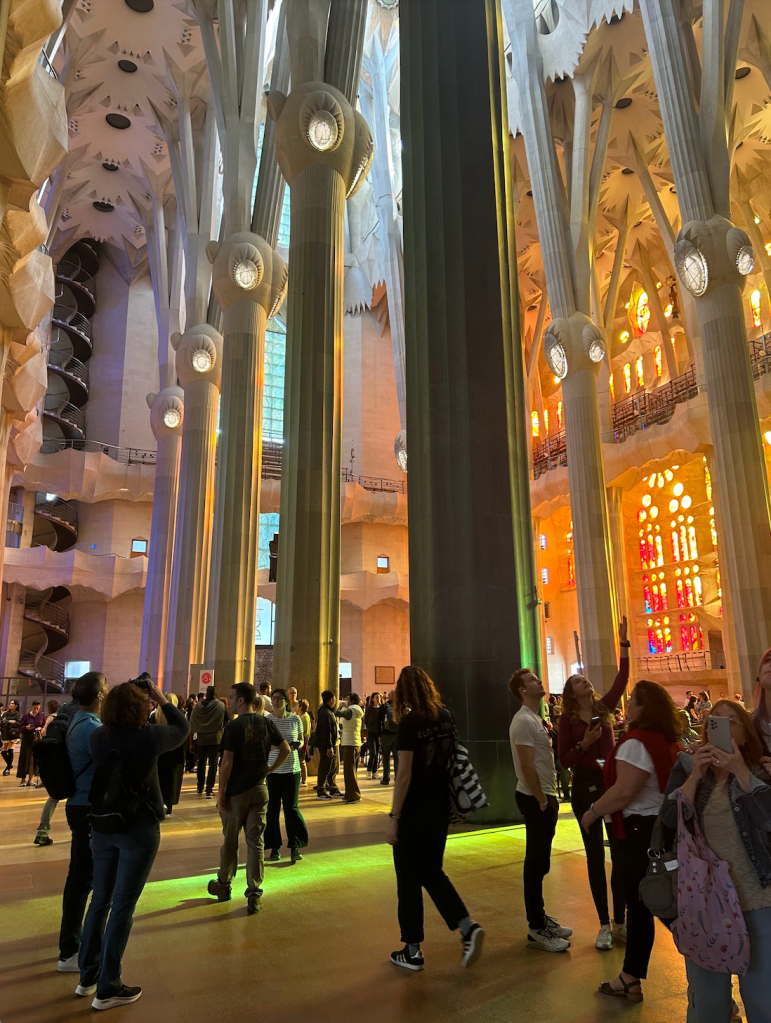
Gaudí’s designs at the Sagrada Familia feature intricate sculptures.

Park Güell
The second most popular Gaudí architectural site is probably Park Güell, a maze of green
spaces, viaducts, terraces, colorful mosaics, and more. Tickets are 18€ starting in 2025, and
you’ll also want to buy these ahead of your trip. As soon as you enter the park, you can
download an app with a helpful map that will direct you to the different parts of the park to
enjoy at your own leisure.

Tip: The Gaudí House Museum, where he lived from 1906 to 1925, is a separate ticket you can add on to your park entrance fee.
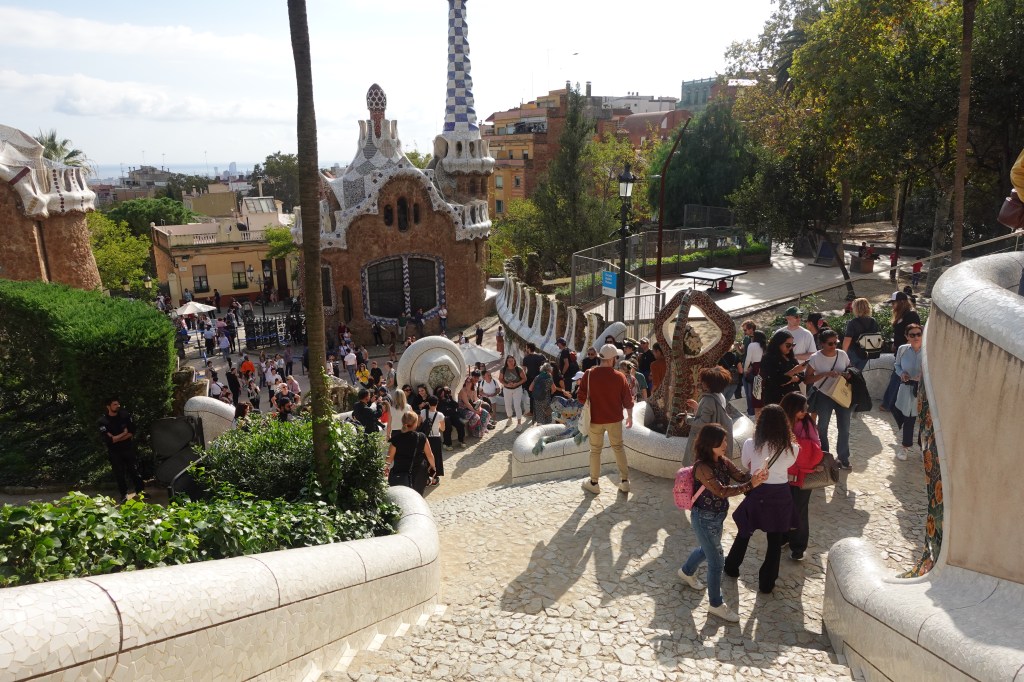
The beautiful Park Güell offers much to explore.

Casa Batlló
The final Gaudí tour to book in Barcelona would be Casa Batlló. Gaudí was commissioned by D. Josep Batlló in the early 1900s to redesign this building that would have been otherwise demolished. His inspiration pulled heavily from water, paying heed to organic shapes in the structure, as well as how natural light played with color upon ascending the multiple levels. Budget around 30€ for a general ticket.

Tip: Book an early time slot; the rooms are small, with lots of visitors clamoring to see this one-of-a-kind house. Then, if you find yourself particularly interested in the Gaudí style, put Casa Milá and Casa Vicens on your list.

Gaudí’s redesign of the Casa Batlló building is water-inspired.

Palau de la Música
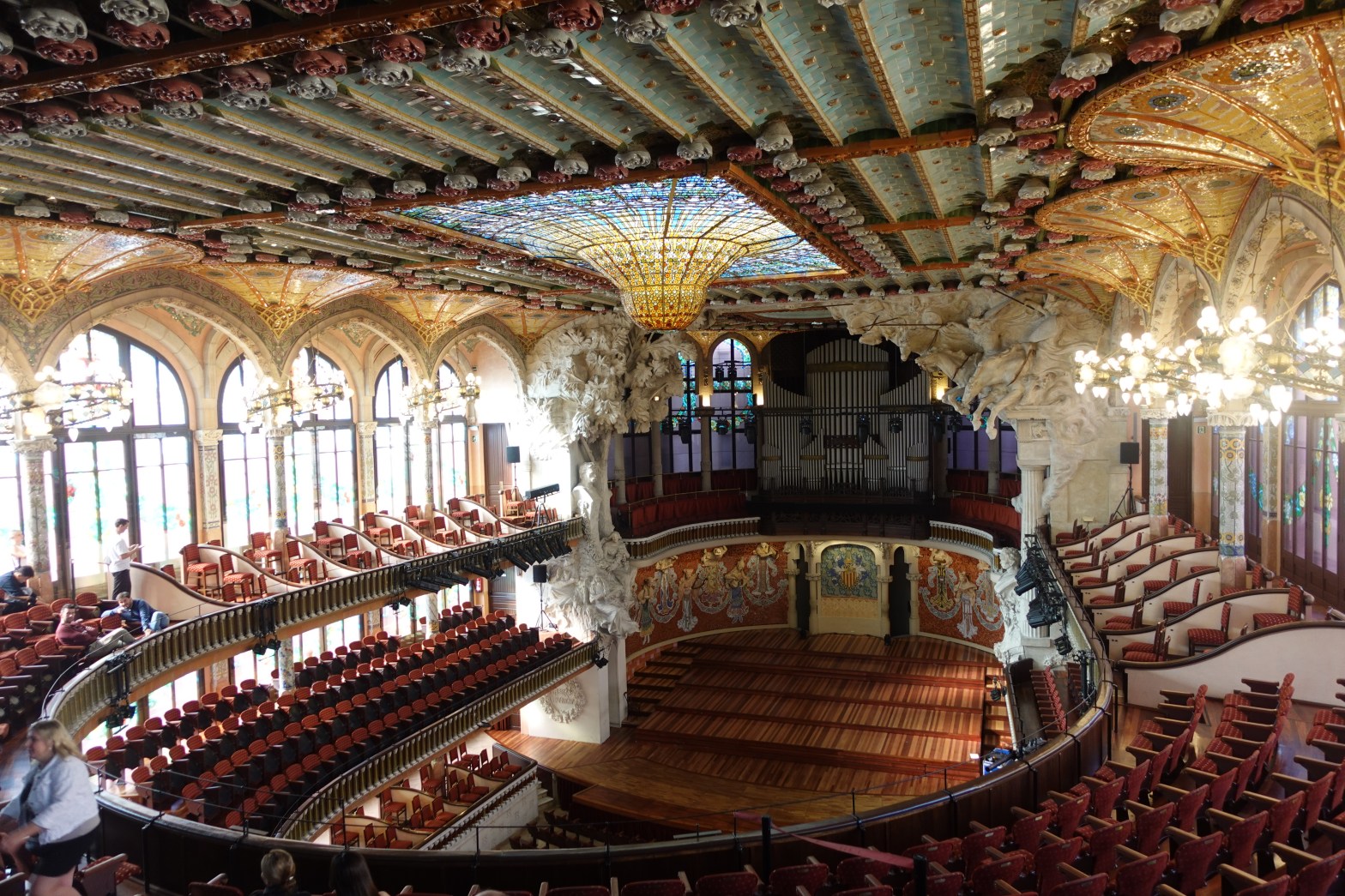
The shorter, slightly cheaper tour of the Palau de la Música was worth the time and money. Tickets are 22€, or only 16€ if you are over 65 or under 35 years old. The guided tour pairs you with an expert who will take you through the beautiful Lluís Millet Room and balcony, the busy foyer (which doubles as a restaurant-cafeteria), and, of course, the colorful and breathtaking Concert Hall.

Tip: The concert schedule is filled with opera, flamenco, coral, symphonic acts, and more. Plan a tour in the afternoon, then buy tickets to see the venue live and in action in the evening.

Palau de la Música’s Concert Hall is an exquisite venue for musical events.

Museu Picasso
Part of the ArticketBCN, Museu Picasso was one of my favorite art museums. Not only does it house around 5,000 of Picasso’s works, but it’s a great showcase of the wide range of his
artistic talents. The cubism that Picasso is known for is not the only style he’s mastered. When visiting, you’ll get to see work from all periods of his life, from the classical work when he began studying art, to his Blue Period, and even ceramics.

Tip: It’s right next door to the Modern Contemporary (Moco) Museum and across the small
street from the Museu Etnològic i de Cultures del Món. Why not make it a full day, with a stop at the corner Brunells pastry shop in between?
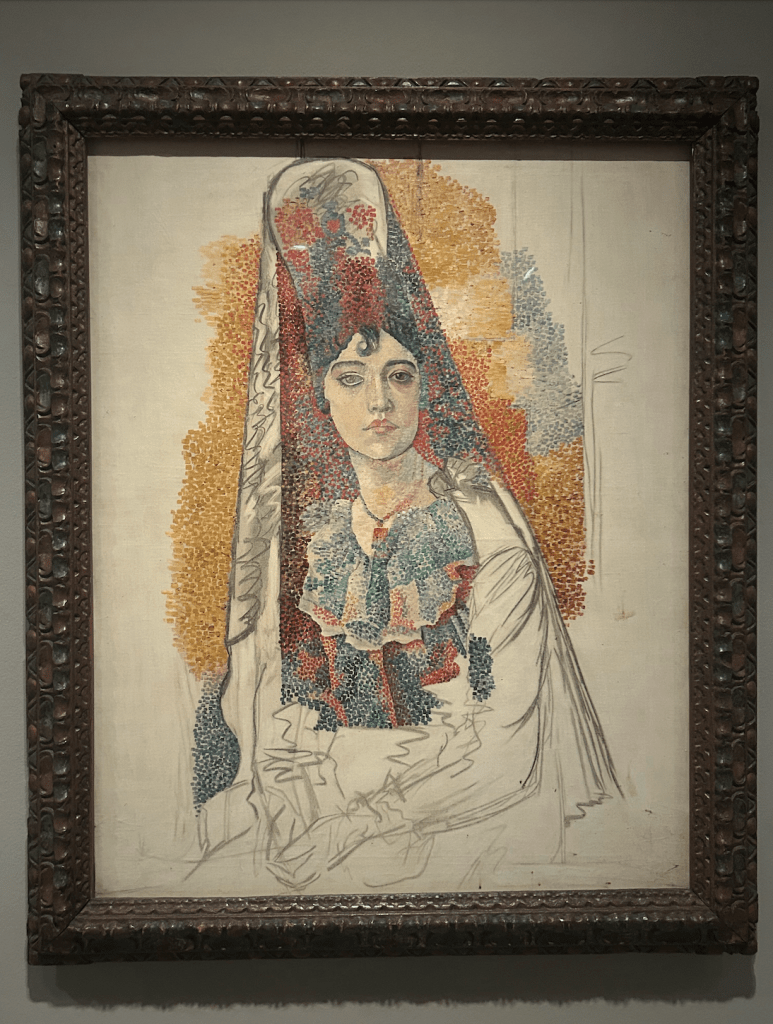
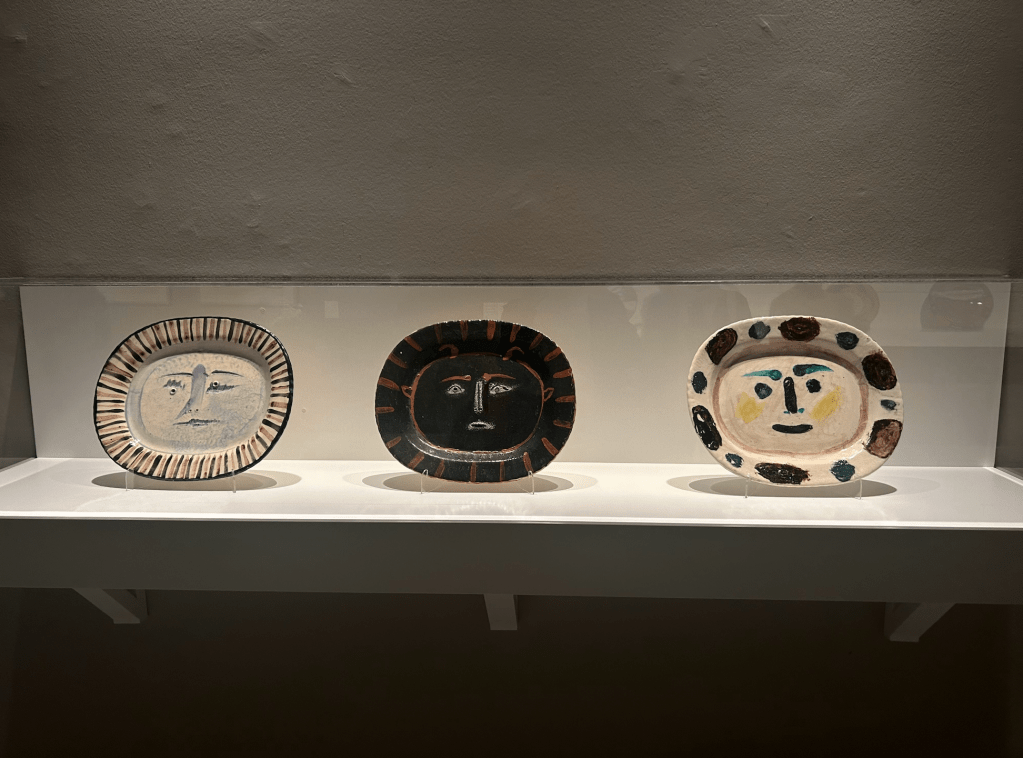
Museu Picasso features more than 5,000 of Picasso’s works.

Museu Nacional d’Art de Catalunya
The Museu Nacional d’Art de Catalunya is as much an architectural site as it is an art museum. Located in the Parc de Montjuïc, you won’t miss the towering Palau Nacional on top of a huge hill. Take the many steps (or public escalators!) to the top, and hours of browsing artwork is at your fingertips. A top highlight is the collection of Romanesque art with murals that date back to the 11th to 13th centuries.

Tip: This is also a great stop for an aerial view of the city and mountains. If you’ve been looking for a photo opp, here it is!
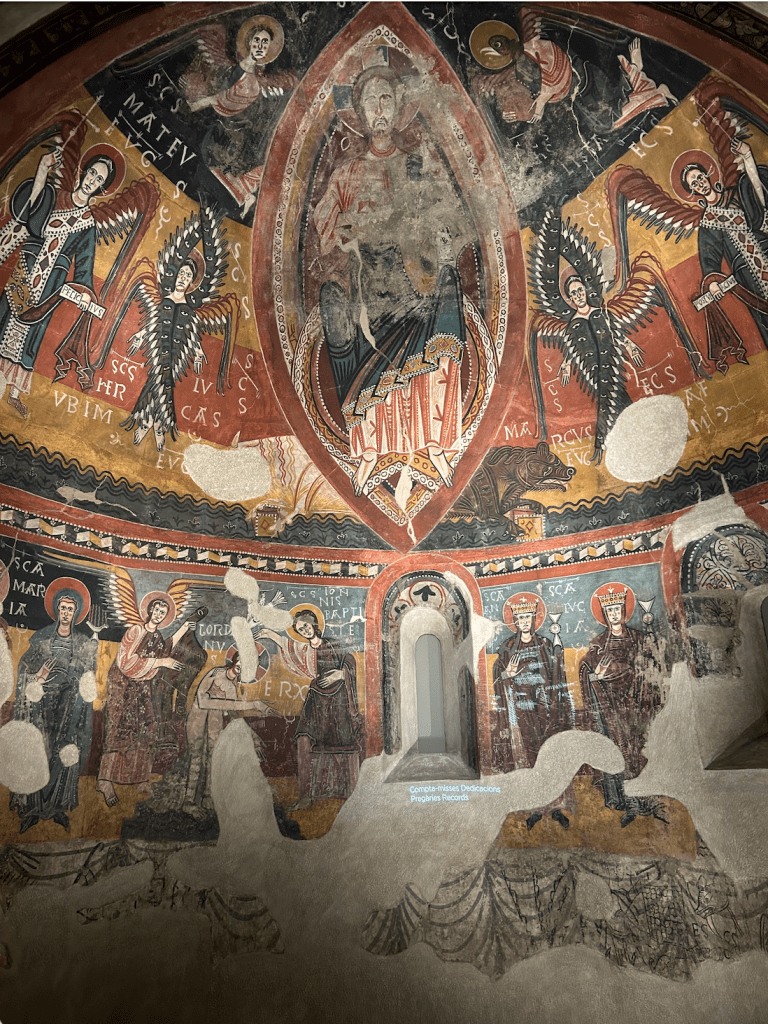
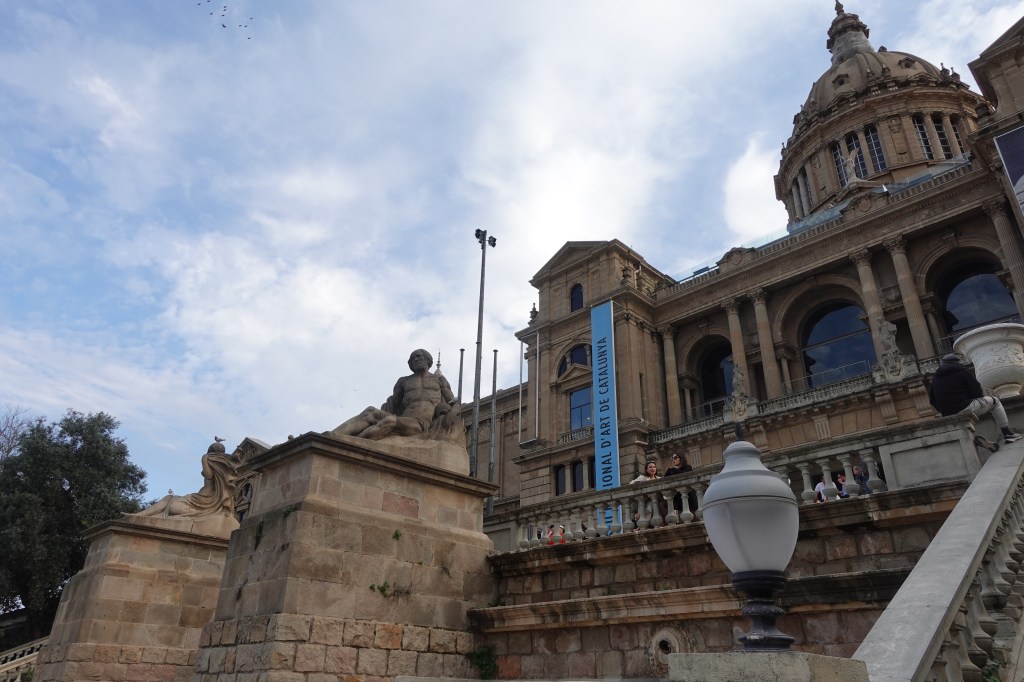
Artwork and photo opps abound at Museu Nacional d’Art de Catalunya.

You can make a whole weekend surrounding just the art and architecture of Barcelona.
Between galleries, house tours, and live performances, you’ve got a city that’s filled with
centuries of artistic feats that now make this European city one of the most sought-after tourist destinations. Plan ahead, but don’t overbook each day—you’ll want time to savor each special site.
Hitting the Heights in Cuenca

A medieval gem awaits travelers in the Castilla-La Mancha region of central Spain

Story and Photos by Randy Mink  

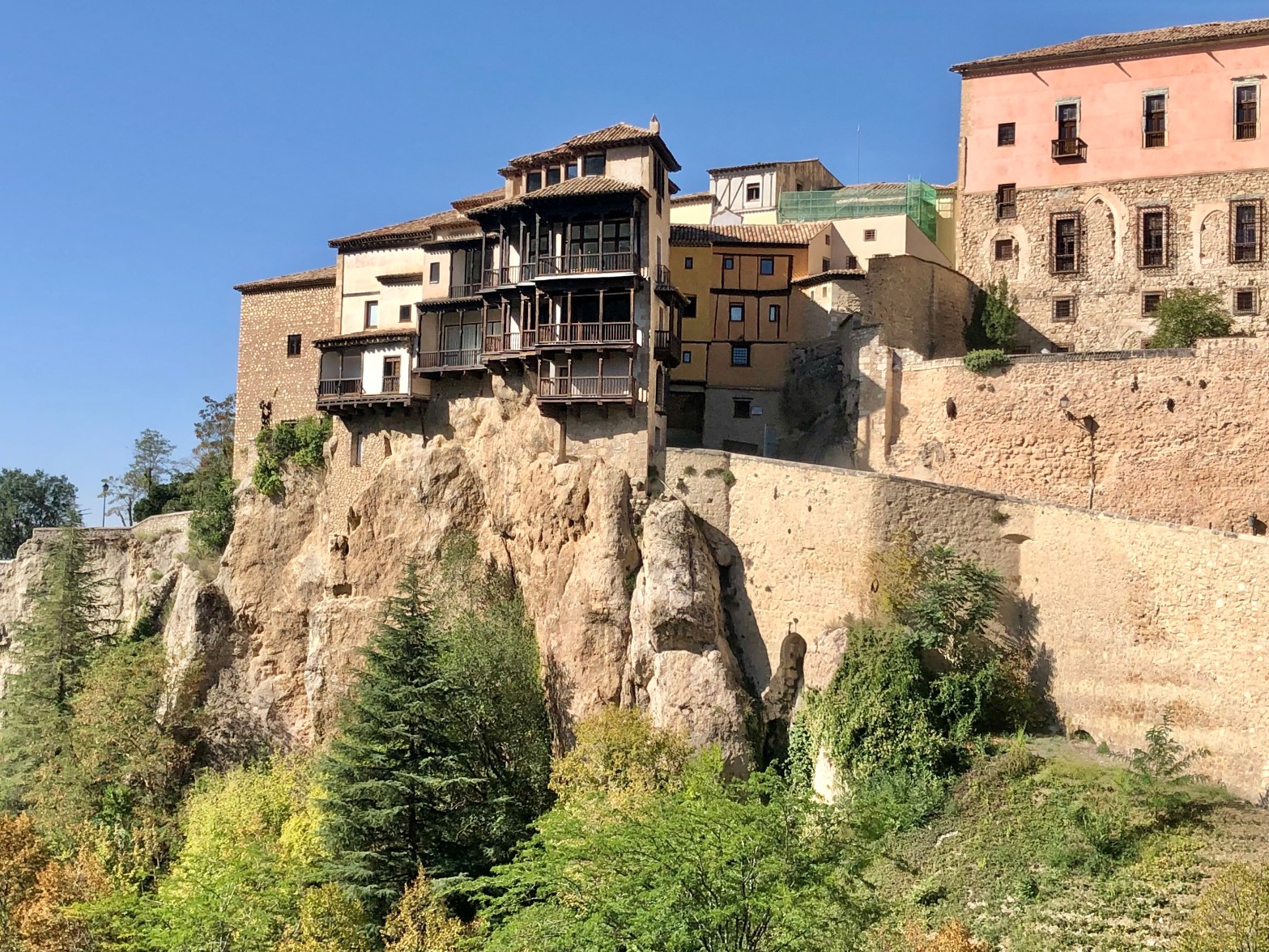
With ancient buildings stacked on a steep promontory at the meeting of two deep river gorges, Cuenca projects a dramatic profile, one different from any other city in Spain. Because it’s not on the traditional tour circuit, this somewhat isolated medieval gem, about two hours southeast of Madrid, is off the radar of most North American travelers, a fact that just adds to its beguiling appeal.

In Cuenca it’s all about the heights. Think vertical. Looking up or gazing down, you’ll find yourself constantly taking in the views. Traipsing around narrow meandering streets and passageways, you’ll encounter one vantage point after another that provides a fresh new slant on cliff-clinging houses high above the gorges. There’s a new vista at every turn.

Those afraid of heights get nervous crossing San Pablo footbridge, a wooden plank walkway that spans the Huécar River 200 feet below. But it’s a major attraction in itself, an Instagrammable spot for sure. If you’re staying at Parador de Cuenca, as our group was, the bridge is the most direct way of getting to the core of the enchanting Ciudad Alta, or Old City. We crossed it several times a day, often wondering how many people it could hold at one time.

San Pablo footbridge and the Hanging Houses (left) dominate this view of Cuenca’s Old City.

From the bridge you have the best view of Cuenca’s most emblematic attraction—the Hanging Houses, or Casas Colgadas. The wooden balconies of this trio of 14th century dwellings jut out over a sheer cliff. Appearing to defy gravity, the buildings seem about to topple off their perch and into the abyss. You can actually stand on one of the cantilevered balconies if you visit the Museum of Spanish Abstract Art or gourmet restaurant Casas Colgadas Jesus Segura, both tenants of the Hanging Houses. Some art lovers prefer the Antonio Perez Foundation, a museum of modern art housed within a former Carmelite convent, another cliff-hugger.

The Antonio Perez Foundation is a modern art museum housed in a former convent.

In medieval times, why did many builders push to the precipice? The answer: real estate was scarce atop the escarpment and every square foot counted. Because land was at a premium, some houses were built eight to 12 stories high. Constructed of wood and adobe, these “skyscrapers,” many of them painted in bright colors today, were among the tallest buildings in Europe until the introduction of reinforced concrete in the 20th century. At its economic peak in the 15th century, the crowded old quarter had a population of 17,000. Now the number is 2,000.

Cuenca does not have a long checklist of must-see sights, which suits me just fine. I’m happy just wandering and getting lost in the medieval lanes, soaking up all the history that crosses my path—and taking picture after picture. The refreshing lack of tourists in Cuenca makes it even more delightful.

The narrow alleyways of Cuenca’s historic core invite discovery.

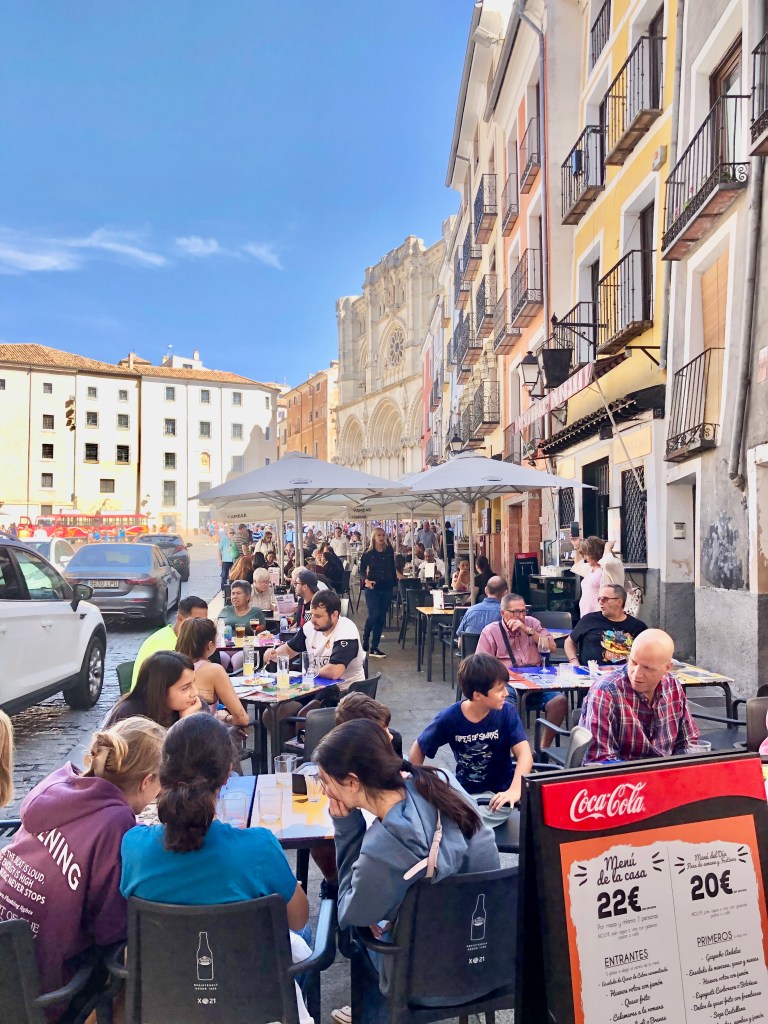
The heart of this UNESCO World Heritage city is the Plaza Mayor, which spreads in a linear fashion from the Cathedral of Cuenca, passing through the arch of the town hall. Outdoor cafes lend a lively air, and the red tram departs from the square for a tour of the Old City, an ideal option for those who want to avoid tackling the steep inclines on foot.

The Plaza Mayor, with its outdoor cafes, is the focal point for tourists in Cuenca’s historic core.

The Cathedral in Cuenca is a treasure house of art and architecture.

Sightseeing trams take tourists up and down the hilly lanes of Cuenca’s Old City.

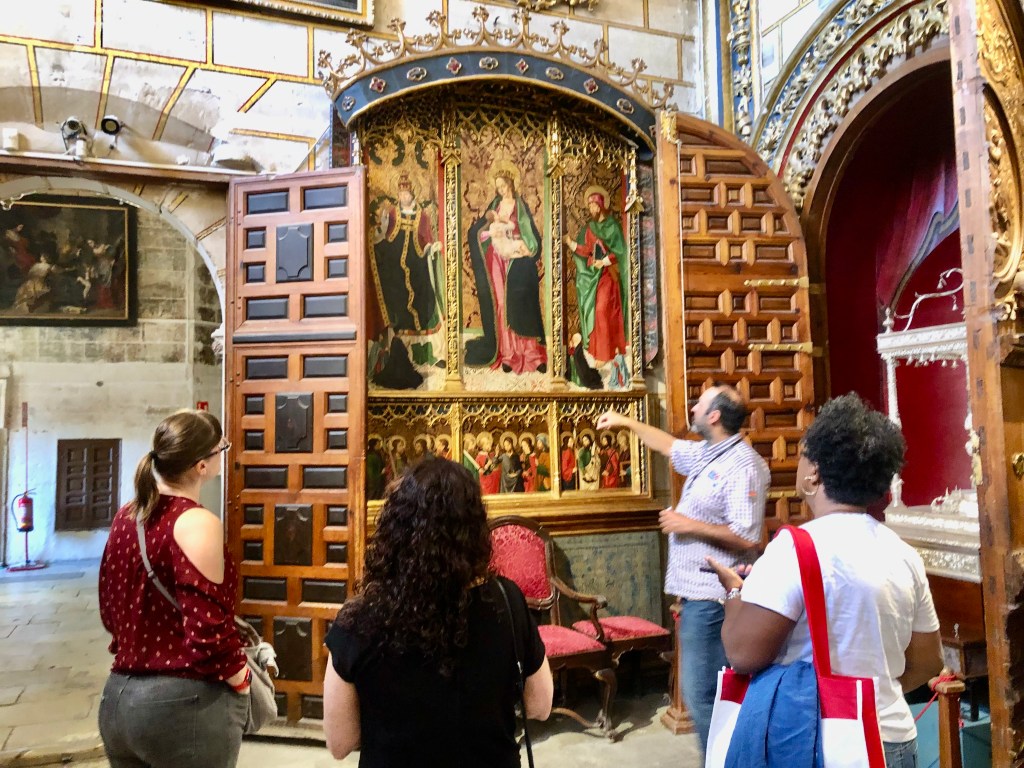
While Spain has better known churches, the Cathedral of Nuestra Senora de Gracia is truly impressive and worth a look inside. Largely built between 1156 and 1256, it was the first Gothic church on the Iberian peninsula. Statuary, paintings, expanses of marble and lavishly adorned chapels reflected the city’s wealth in medieval days. The two pipe organs date from the 18th century. Our group heard their melodious sounds while seated in the ornately carved wooden choir stalls during an evening concert.

Rock climbers scale the cliffs just down the road from Parador de Cuenca, a monastery-turned-hotel.

If you haven’t had enough in the way of heights after taking in the panoramas from all angles and crossing the footbridge a number of times, consider a zipline ride or go rock climbing. On a short walk from Parador de Cuenca, I came upon harnessed men and women scaling vertical walls and people of all ages whooshing across the valley on a sturdy cable. And on two mornings I saw hot air balloons high in the sky. I wasn’t adventurous enough to pursue those options but wished I’d had time to hike the path that zigzags up to the giant mountaintop statue of Christ, Cerro del Socorro. The two-mile trail is marked by 14 Stations of the Cross. The statue is illuminated at night, as is the entire rock face of medieval Cuenca, a romantic vision that lingers long after your visit to this fascinating city off the beaten path.

Communing With the Past in Tantalizing Toledo

The city of swords, marzipan and El Greco is a perennial favorite with tourists in Spain

By Randy Mink

I could spend hours roaming through the tangle of cobbled pathways that thread the historic core of Toledo, one of the best places in all of Europe for getting lost in a medieval dreamscape. Loaded with Old World magic, Toledo projects the very essence of Spain and was once its capital.

On a recent visit to this intriguing city rich in Christian, Jewish and Muslim heritage, I never tired of probing the labyrinth’s nooks and crannies while popping into souvenir stores, touring museums, and traipsing through an ancient synagogue, the world’s fourth-largest cathedral and a former mosque built during the Moorish occupation.

The Mosque of Cristo de la Luz, later a Catholic chapel, was one of 10 mosques in Toledo during the Moorish period. (Randy Mink Photo)

Like the Old City district of Cuenca, another tourist favorite in Spain’s Castilla-La Mancha region, Toledo’s extensive medieval quarter sprawls across a rocky mount bounded by the original city walls and surrounded by a river below.

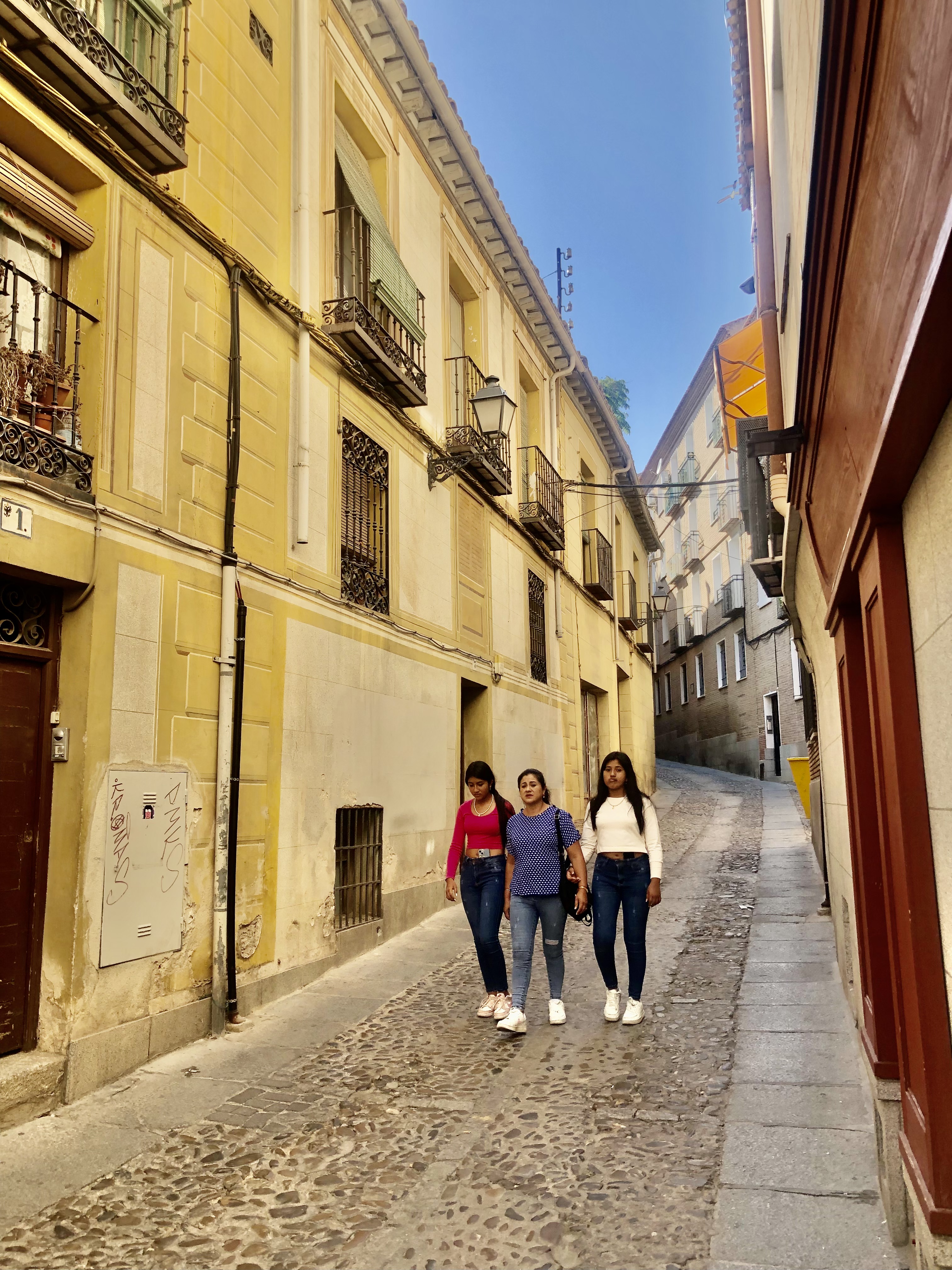
Located 55 miles southwest of Madrid, Toledo (pronounced “to-LAY-do” in Spanish) overflows with tourists—attracting a million of them every year—and its pedestrian alleyways abound with gift shops. I’m not ashamed to say I loved shopping for refrigerator magnets and other tchotchkes in Toledo, but I also liked stepping away from the commercialism to explore shady back lanes and sunlit plazas accented with wrought-iron balconies, grillwork windows and massive, centuries-old wooden doors. Some of Toledo’s narrow winding streets do allow cars, however, so be prepared to stand flat against the buildings to spare your feet from being run over by drivers barreling up and down the steep inclines.

The narrow streets of Toledo’s Old City beckon tourists who relish getting lost in the past. (Randy Mink Photo)

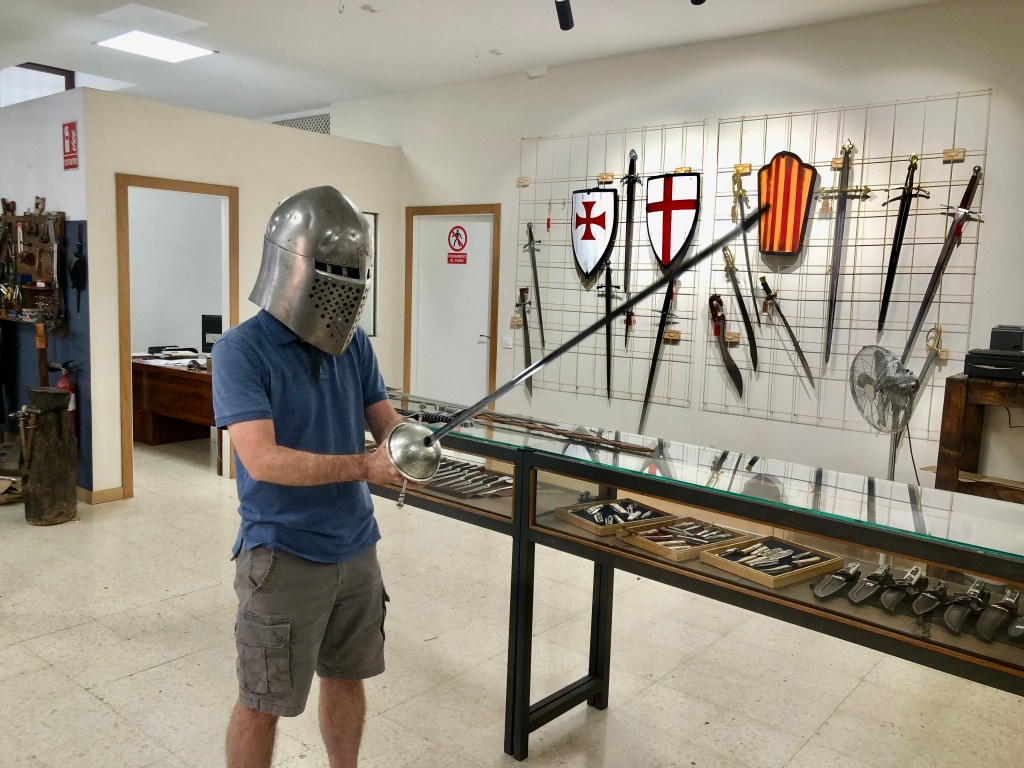
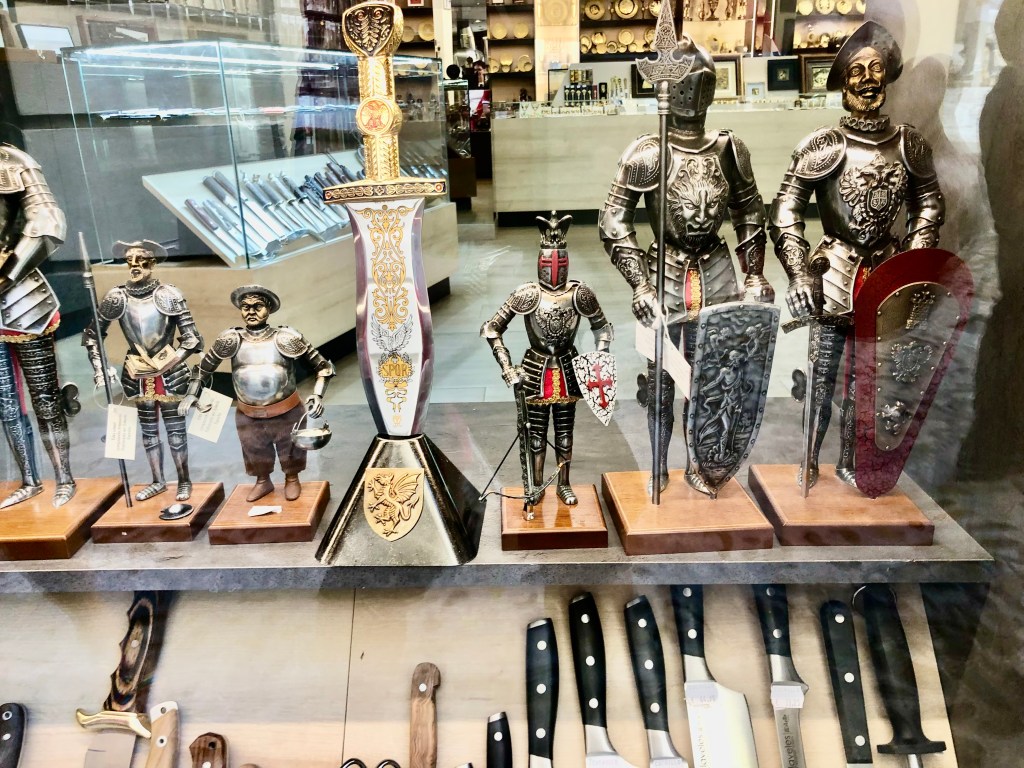
Long known for its quality cutlery, Toledo has many sword stores and calls itself the Sword Capital of the World. At the Zamorano sword factory, where we watched craftsmen at work, one fellow traveler shipped home two swords, fitting reminders of this fortified city that harks back to the days of knights in shining armor. Since the Middle Ages, Toledo has excelled in steel craftsmanship. Stores offer fine selections of knives, letter openers and scissors as well as swords, plus knight figurines in all sizes.

Also catching shoppers’ eyes is the art of damascene—the inlay of intricate gold and silver threads into a steel base. Top sellers include damascene jewelry, scissors and tableware.

Toledo’s historic core counts numerous shops that specialize in swords, daggers, knives, scissors and knights in shining armor. (Randy Mink Photo)

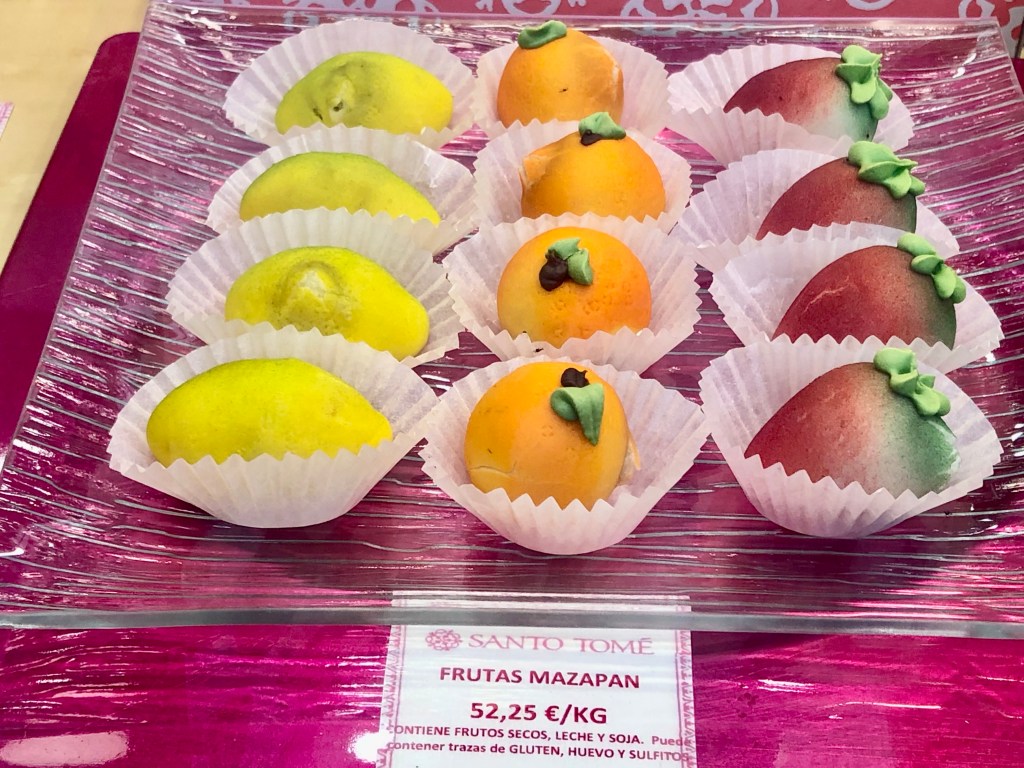
Candy is always a good thing to bring home, and I stocked up on marzipan at Santo Tomé’s flagship store. The seventh-generation family company has been making its famous almond paste confection since 1856. For gift-giving, I bought wrapped boxes of six-inch marzipan bars inscribed “T-O-L-E-D-O,” but my own bag of marzipan pieces was gobbled up before I got to the Madrid airport. (I even started on the bag originally intended for the neighbor watching my cats—it was so irresistibly fresh.)

Santo Tomé marzipan consists of 57 percent crushed almonds, 40 percent sugar and 3 percent honey, with no preservatives or extra ingredients. The most colorful items are in the shape of fruits—oranges, lemons, strawberries, etc. Some pieces are studded with pine nuts or whole almonds or come with a dab of jam. The flagship store/bakery on Calle Santo Tomé occupies a former convent. (Nuns were once the main provider of marzipan, and a few convents in Toledo still sell it.) Santo Tomé has three other locations in town, including one on Plaza de Zocodover, the main square.

Tours of Santo Tomé marzipan bakery include a peek into the kitchen where bakers are making the almond-based confection. (Photo credit: Santo Tomé)

Santo Tomé marzipan is the perfect souvenir of Toledo and makes the perfect gift for those back home. (Randy Mink Photo)

In between shopping and wandering footloose in the dense medieval mazes, I checked off a few places from my must-see list.

The Alcazar, a former fortress and royal residence, crowns the highest point in the city and is now a vast military museum with excellent exhibits on the history of Spain. Rebuilt under dictator Francisco Franco after the Spanish Civil War, the Alcazar had been heavily damaged during the siege by loyalists in 1936. 

At the other extreme, Underground Toledo is worth a look. Archaeologist and tourism guide Diego Esteban Sánchez takes small groups into the bowels of the medieval district, unlocking doors that lead to well-lit restored sites like a Roman bath, a Jewish house and an ancient well.

The same sense of discovery is offered by cozy, atmospheric eateries like Restaurante La Cave, a historic building with brick-lined rooms in cave-like spaces below street level.

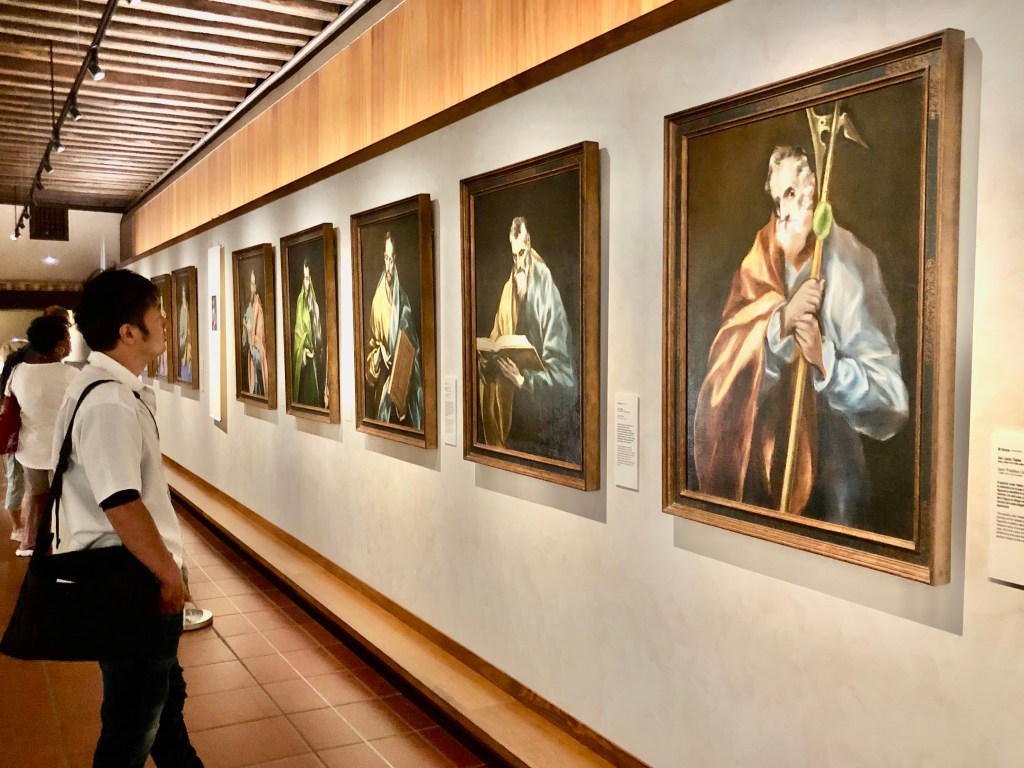
To art lovers, Toledo is virtually synonymous with the Greek-born painter Domenikos Theotokopoulos, better known as El Greco, or “The Greek.” He moved to Spain in 1571 from the island of Crete and, after centuries of neglect, is today venerated as one of the country’s old masters, along with Goya and Velazquez.

The El Greco Museum is one of Toledo’s top visitor attractions. (Randy Mink Photo)

El Greco’s religious canvases, distinguished by bold colors and elongated figures in voluminous robes, can be admired at several locations, including the El Greco Museum. Other El Grecos are found in the Santa Cruz Museum, the Gothic-style Cathedral of Toledo (along with works by Raphael, Titian, Goya and Caravaggio) and the Convent of Santo Domingo el Antiguo, which houses the crypt where the artist is believed to be buried. 

In Toledo’s old Jewish Quarter, El Transito Synagogue is a prime tourist draw. (Randy Mink Photo)

One could a whole morning or afternoon admiring the statuary, artwork and architectural flourishes of the Gothic-style Cathedral of Toledo, one of Spain’s most impressive churches. (Randy Mink Photo)

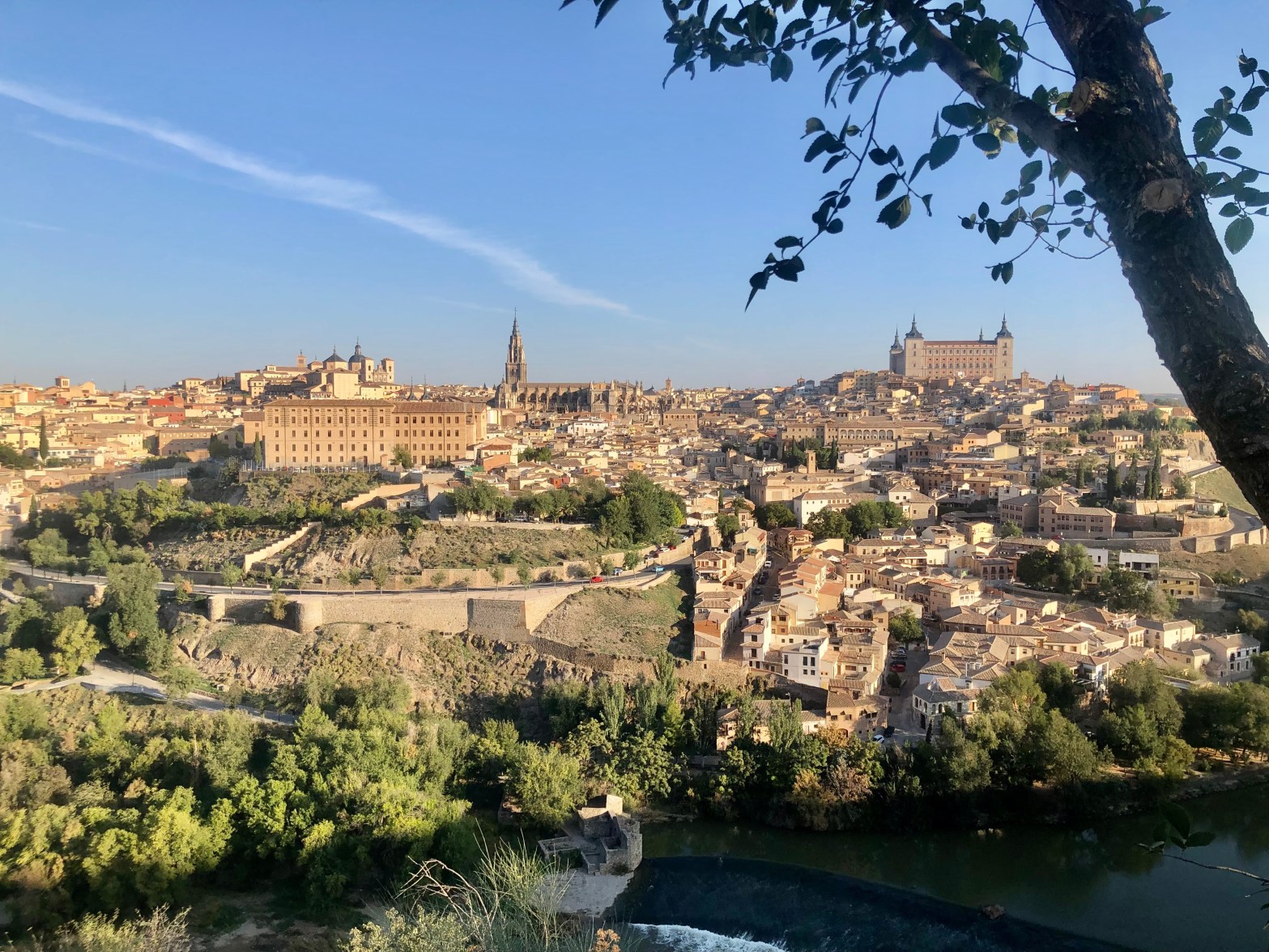
The El Greco Museum resides next door to the 14th century El Transito Synagogue with its Arabic-influenced interior decoration, magnificent coffered ceiling and museum of Sephardic Jewish culture. Here in the old Jewish Quarter, the park across the street has a memorial to El Greco and a terrace affording panoramic views of the Tagus River (Rio Tajo) and city of Toledo, truly one of the most captivating places in all of Spain.

For more information on Toledo, Cuenca and other cities in Castilla-La Mancha, visit www.turismocastillalamancha.com.

Love Picasso? Europe Is Where to Be in 2023

By Abbey Algiers

Breaking news! 2023 is the year of a man named Pablo Diego José Francisco de Paula Juan Nepomuceno María de los Remedios Cipriano de la Santísima Trinidad Martyr Patricio Clito Ruíz y Picasso? Confused? 

Let’s try it again.

2023 has been officially declared “The Year of Picasso” in honor of the 50th anniversary of the artist we know as Pablo Picasso.

Born in Malaga, Spain, on October 25, 1881, Pablo Picasso is best known for his contributions to modern art in the 20th century. Chances are, when you think of Picasso, cubism comes to mind. But the depth of Picasso’s work is far and wide—so wide, in fact, that it’s only fitting that a year is dedicated to showcasing this great master’s contributions to art and our world. That’s why Spain and France have teamed up to arrange exhibitions in Spain, France, and worldwide in order to celebrate Picasso and commemorate the 50th anniversary of his death (April 8, 1973). This is great news for Picasso lovers with plans to travel to Spain or France in 2023—there are plenty of opportunities to see his works. 

2023 Picasso Exhibitions Worldwide

To pay tribute to Picasso, Spain and France have joined forces to arrange more than 40 Picasso exhibitions in both countries—16 in Spain, with the other exhibitions in France and various cities throughout Europe and North America, offering plenty of opportunities around the globe to enjoy the masterpieces of Picasso.  

A list of worldwide Picasso Exhibitions in 2023 can be found at the Official Celebration of Picasso site.

A few upcoming exhibitions in Madrid include: 

Exhibitions and Education: The Year of Picasso Offers Something for Everyone

The Year of Picasso will go beyond exhibitions – in addition to showcasing Picasso’s works, the commemorative year will offer educational opportunities to showcase Picasso’s influence and relevance throughout the ages.  Those interested in deepening their knowledge of Picasso’s life and legacy can attend conferences and special events at museums and other venues in Madrid, Paris, Barcelona, Malaga, and other cities throughout Europe and North America.

A Celebration That’s Been Long in the Works

The 2023 Year of Picasso is a celebration that’s been a year and a half in the making. From the first event, “Picasso – El Greco” at the Kunst Museo Basel in Basel, Switzerland, to Madrid’s Picasso premiere, presented by Madrid’s Fundación MAPFRE this September, “Julio González, Pablo Picasso and the Dematerialization of Sculpture” to the last event ending in April 2024 at Paris’ Petit Palais, there are many opportunities to remember and appreciate the great Spanish artist Pablo Picasso.

A list of all events related to the “Year of Picasso” can be found here. Many of the exhibitions are being orchestrated through the Picasso Museum in Paris.  
Picasso Around the World… Beyond 2023

If you miss one of the 2023 exhibitions, there are plenty of opportunities to appreciate the work of Picasso at Picasso Museums throughout Europe:

Picasso Museum in Paris, France
Picasso Museum in Barcelona, Spain
Picasso Museum in Antibes, France
Picasso Museum in Malaga, Spain
Reina Sofia in Madrid, Spain
Rosengart Collection in Lucerne, Switzerland
Ludwig Museum in Cologne, Germany
National Picasso Museum in Vallauris, France

Picasso – Such a Master That a Year Wasn’t Long Enough for His Tribute

While 2023 marks the official Year of Picasso, Spain actually started the celebration in 2022, when Fundación MAPFRE in Madrid kicked off the celebration on September 23 with the exhibition “Julio González, Pablo Picasso and the Dematerialization of Sculpture” at the Fundación MAPFRE Recoletos Exhibition Hall. The exhibition was organized by Fundación MAPFRE with the collaboration of the Musée National Picasso-Paris, the Spanish National Commission for the Commemoration of the 50th Anniversary of the Death of Spanish Artist Pablo Picasso, and the González Administration. The exhibition highlighted the collaboration between Pablo Picasso and another Spanish artist, sculptor Julio González, and how they essentially began the iron sculpture movement, thus greatly influencing the artistic creation of the 1920s and early 1930s.   

Fundación MAPFRE’s Rocio Herrero, Assistant Director of Education and Audience, explained the importance of this collaboration between Picasso and Gonzalez. “Both artists were colleagues and friends who admired each other’s works. When they worked together, they were able to develop and mature even more as artists. Thanks to Gonzalez, Picasso learned the welding technique he would use in new iron sculptures. And, thanks to Picasso, González trusted in his own skills, and he made his most important sculptures. Both men came out ahead through their collaboration.” 

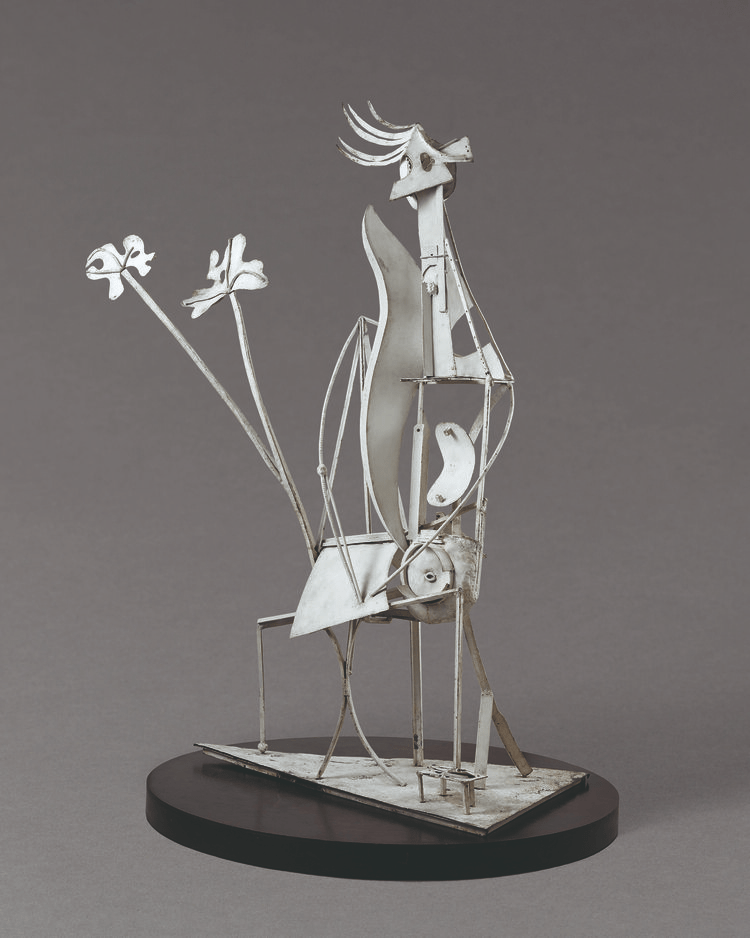
Pablo Picasso. Woman in the Garden, París, 1930. Soldered iron painted white, 206 × 117 × 85 cm. Musée National Picasso-Paris. Pablo Picasso Gift in Lieu, 1979. MP267, © Sucesión Pablo Picasso. VEGAP, Madrid, 2022. Foto © RMN-Grand Palais (Musée national Picasso-Paris) / Adrien Didierjean / Mathieu Rabeau


Inspiration Through Art

As Picasso said, “The meaning of life is to find your gift. The purpose of life is to give it away.” Perhaps through the gifts of Picasso’s work, we can all find the inspiration to go out into the world and share our own.