The humble onion is the star of the show at the Onion Market held in Weimar, Germany every October. These are no ordinary onions lumped together in crates or sacks; these are onions arranged together in the traditional way and decorated with dried flowers of yellow, white or lilac. They come in all sizes, too—from tiny ones to whopping big ones.
MARKET FOR BEASTS AND ONIONS The market was first recorded in 1653 as a “market for beasts and onions” on what is today the Frauenplan, at a time when Weimar barely had a population of 5,000. There are many instances of the links between the German writer Goethe and the Market; he is said to have secured onion hearts to his desk, to have decorated his house with them, and to have praised the role of the onion in promoting good health.
In the 19th century, the market moved to today’s Schillerstrasse and developed into the major onion purchasing center for the whole of central Germany. Dealers came mainly from Heldrungen, 29 miles away, and that is still the case today.
In 1861 the market was extended to three days. In 1872 the city of Weimar passed an Onion Market Ordinance. Onions are offered as well as celery, radishes, garlic, leeks and marjoram, as well as other types of spices and vegetables. During the 20th century, world wars and inflation led to the decline of the market, and it was reduced to one day due to the limited produce available and high prices. It was not until the 1950s that the market began to pick up again, and by 1971 a record was set when 200,000 visitors attended.
ONION GARLAND The sale of the famous market souvenir, the onion garland, has grown to 70,000 pieces, and onions and other vegetables, fruits, spices and handicrafts began to make their mark. In 1990 the Onion Market again became a three-day event. The market has also grown in size in the interim and now occupies the whole of the historic inner city. The number of visitors is now 350,000 annually.
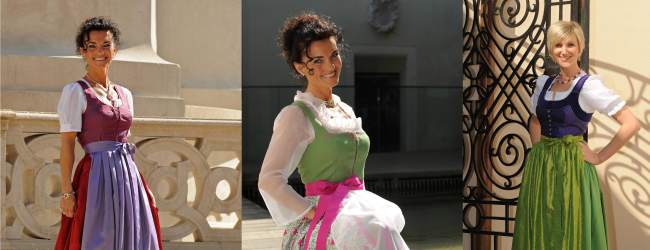
What is a Dirndl? If you have seen the movie “The Sound of Music,” you already know the basic elements that make up a Dirndl: skirt, bodice, apron and blouse. Simple, right? Far from it!
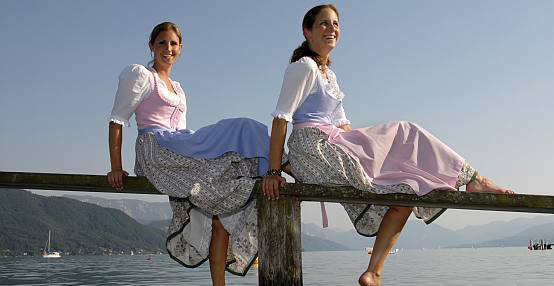
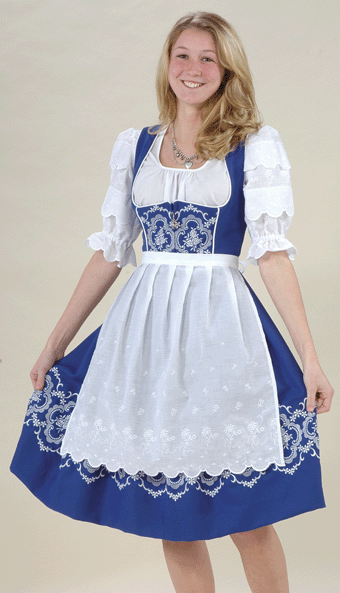
There is a veritable science to Dirndl cuts, fabric patterns, colors and embroidery.The main elements that make up a Dirndl are the wide skirt attached to a “Leiberl,” or fitted bodice, an apron (often with a hidden pocket) and a short Dirndl blouse.
The skirt usually starts at the waist or a little lower. You can choose between various lengths, depending on current fashion trends. The bodice used to be a separate item, but since the 1930s is sewn to the skirt. It comes in many different styles: with a high or low, round or square neckline, it is fastened with buttons, hooks, or ribbons.
An important element is the Dirndl blouse. It is generally very short (ends above the waist), with long, short or puffed sleeves. It can have many different necklines and is usually made of white cotton or linen. The Dirndl blouse accentuates the style of your Dirndl: Choose between delicately hand-embroidered pieces, blouses with extravagant ruffles and lace, or simple ones with straight sleeves.
Finally, there is the apron. Formerly worn to protect the dress underneath, it is now a purely decorative item. There are aprons for every-day wear and aprons for festive occasions which are usually of a more elegant fabric than the simple linen or cotton ones. Before you tie the knot—be sure to check on which side to place it—otherwise you might unwittingly send out the wrong message.
Different combinations of these elements make up the traditional Dirndl. There are different Dirndl styles for different occasions, even Dirndl styles that tell which region in Austria the wearer is from. With the recent “Dirndl Renaissance,” there are countless downright “unorthodox” styles that experiment with different fabrics, cross cultural references and punk elements.
If all these options seem daunting at first, remember: the most important thing is to have fun with the many different colors and patterns, and to choose a Dirndl that fits your personality.
FROM PEASANT GARB TO HIGH FASHION The Dirndl has evolved from its humble origins centuries past as the work garb of peasants to a modern-day fashion superstar. With its feminine silhouette, its versatility and simple elegance, the Dirndl is a fashion “evergreen.” But where does it come from, and how did it get so popular?
Allegedly, the short Dirndl blouse we know today was originally a long shirt. Way back when, the shirt was actually one of the “basics” in the contemporary wardrobe of the rural population. Women wore a bodice, or even just a tightly wound cloth as an undergarment for warmth and support. Aprons were tied around the shirt to protect it from stains and dust. When people came home from the fields, the apron was simply switched to a different one for house work, or one for festive occasions.
Eventually, for reasons of practicality and perhaps vanity, the shirt was sometimes worn underneath the bodice and so the Dirndl was born. For a long time it was the garb of women in the countryside, and different styles developed for different regions.
Finally, in the middle of the 19th century, Emperor Franz Joseph and his court used to vacation in the Salzburg Lake district. The emperor took to wearing Lederhosen during his hunting exhibitions there, and a fashion trend was born. Suddenly, the Dirndl was all the rage and the Viennese aristocracy wore Dirndls and Lederhosen during their stay in the country.
In the 1920s, the founders of the Salzburg Festival contributed to the popularity of the Dirndl by making it acceptable to wear during performances and society events. The Salzburger Dirndl manufacturer Lanz and the world-wide success of the operetta “Weisses Roessl” made the Dirndl an international hit.
Since then the Dirndl has conquered the international fashion world. In the last 10-15 years, the Dirndl and traditional costumes in general have experienced another huge surge in popularity, even outside of the regions in Austria where it has been an everyday item for generations.
WHERE TO BUY A DIRNDL? With so many different styles to choose from, where do you start your own quest for the perfect Dirndl? Where to find authentic, traditional styles, and which Dirndl designers are known for fun and tasteful modern versions?
The best place to buy your Dirndl, of course, is at the “source.” The “real” Maria von Trapp used to mainly wear Dirndls and ordered new outfits with her favorite Dirndl tailor whenever she went back to her native Salzburg. Today, with Dirndls and Lederhosen in high demand, there are enough Dirndl manufacturers and stores to make your head spin.
Flanders is a bucket-list destination for music lovers—big bands, unique scenes and tons of genres. With more than 280 festivals each year, there’s plenty to choose from.
Every summer millions of people gather in Flanders—a region full of history. You can enjoy live music in cities such as Antwerp, Ghent, Brugg and Boom as well as historical sites, exquisite food and shopping possibilities.
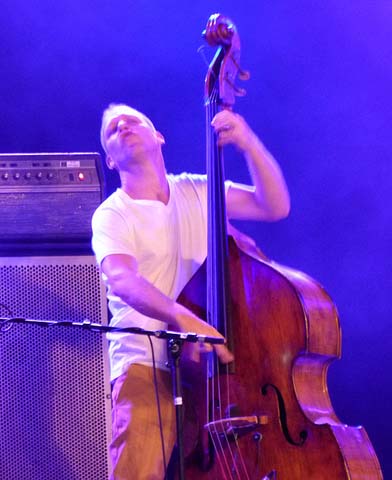
JAZZ MIDDELHEIM
Jazz Middelheim, founded in the late 1960s, has become an iconic jazz festival. The festival grounds in Antwerp are within walking distance of the famous sculpture park. The green surroundings of the Park den Brandt with a high quality infrastructure, including a playground for children and gourmet catering, attract not only a vast jazz crowd but also families with children who love to linger in the park and enjoy the live music.
GHENT FESTIVALS After more than 160 years of existence, the Ghent Festivities have become one of the best festivals in Europe. Four international festivals take place there over a period of 10 days, with free music on 10 squares, children’s entertainment at various different locations in the city and hundreds of indoor and outdoor activities.
MAFESTIVAL One of the oldest classical music festivals with an international reputation takes place in Brugge. Daily concerts, competitions, workshops and lectures focus on the historical performance.
TOMORROWLAND Yesterday is History, Today is a Gift, Tomorrow is Mystery. What started out in 2005 as a one-day festival has grown into a three-day festival. Two weekends are being organized for the 10th anniversary of Tomorrowland in Boom. Tomorrowland is one of the largest festivals with 360,000 attendees. Tickets sell out in one day for this popular festival.
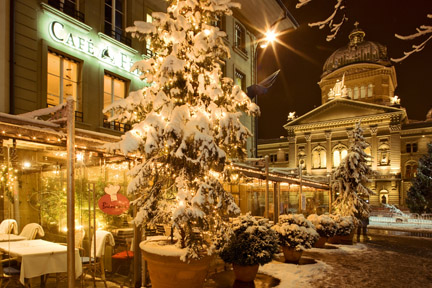
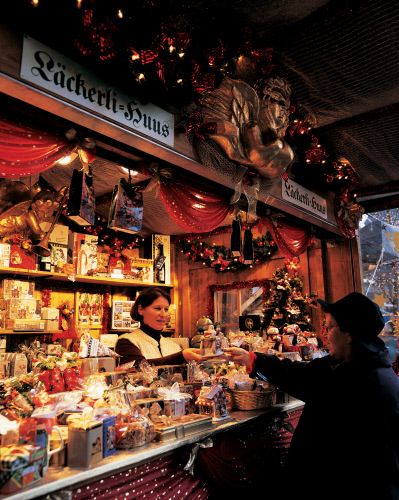
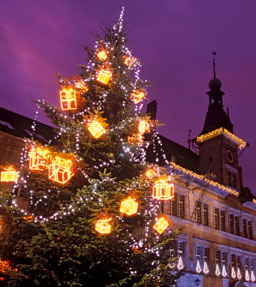
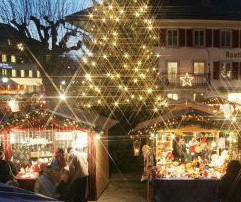
Christmas is around the corner. In Switzerland, Christmas markets and events are as much a part of the holiday tradition as chocolates, cookie baking and family gatherings. Here is a sampling of festivities that vary in scope from the month-long markets in St. Gallen to weekend events in villages like Bad Ragaz, yet all share the basics: Christmas ornaments, gifts, local specialties, plenty of traditional Swiss atmosphere and snow.
Handmade products of Switzerland and local treats bring visitors from around the globe.Swiss Christmas Markets combine holiday festivities and historic locations.Switzerland sparkles at Christmas.
By Marilyn Heimburger Photos by Don Heimburger and courtesy Munich Tourist Office
I have always liked Munich. Actually, it’s more than just liking the city. I feel moved by its vibrant life, its stimulating nature and its friendly people. Apparently many more feel the way I do, since it is Germany’s most-visited city.
Last year, during Munich’s 850th birthday, the city of 1.3 million hosted the following:
City Foundation Festival in June in the heart of the city, featuring traditional Bavarian culture and international folk culture. A highlight of the fest was a Gaufest, or regional festival, of the many associations for folk culture where dancing and costumes from the Isargau region were prominent. As many as 10,000 participants were involved in this. A group of 100 rafters from the Oberland region showed how to build a raft. Dance masters showed how to learn the “Munich-Francaise” dance.
In July, the Old Town Ring, which was free from automobile traffic, served as the center for a celebration of theater, music, dance, games and sports on many stages. Scenes from peasant life in Munich with markets, street theater and beer gardens were staged. There also was music from international bands and more.
In August, the three-day Isar Bridges Festival, centered around the Cornelius, Ludwig and Maximilian bridges, highlighted the Isar River (which flows through the city) as the city’s life-giving artery. There was music under the bridge, dancing along its banks, glittering lights on the water, and with this came Munich’s famous culinary delights. An action theater group, which encouraged audience participation, also presented skits. There were also night-time water and laser shows
Additional highlights included the world premier of a work commissioned from composer Victoria Borisova-Ollas especially for the 850th anniversary. In June the Cuvillies Theater, one of German’s most elegant Rococo theaters, reopened after a spectacular renovation. In the newly re-designed St. Jakobs-Platz, many of the local museums and community organizations held programs of music ranging from classical to klezmer (a musical genre), dancing and creative street theater, exhibitions, tours and more.
Many of Munich museums featured exhibits of famous Munich artists, writers and Munich’s cultural heritage.
As Munich’s Lord Mayor Christian Ude said, “(Munich’s) celebrating its 850th foundation day…is nothing exceptional. What is remarkable is the city’s rapid growth from a monastery on a hill to a European metropolis with over a million inhabitants and a high-tech hub.”
As Ude says, the city is special because of its enduring and much-praised flair as a place with a zest for life.
The settlement of Munichen was originally granted the right to market goods and mint coins in June of 1158. In 1214 it was granted status as a town, and in 1255 it became the seat of the Wittelsbach dynasty. Under Kind Ludwig I, many famous buildings were erected, making Munich a major cultural center, and in 1918 the Free State of Bavaria was formed.
For travelers, the city offers 355 hotels and pensions with 45,500 hotel beds available. In 2006, 4.4. million tourists booked nearly nine million overnight stays, with 47% of them from overseas, with the USA bringing in the most, followed by Italy, Great Britain, Austria and Switzerland.
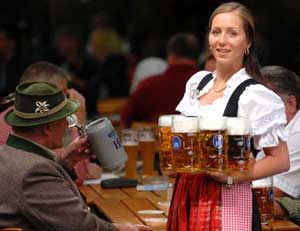
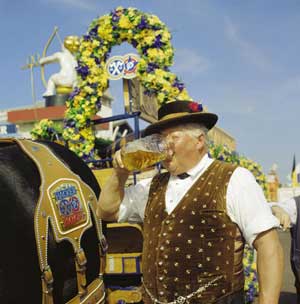
The city boasts three universities and eight colleges, 60 theaters and an opera house, 45 major museums, three symphony orchestras—and it hosts the famous 16-day Octoberfest beginning on the Saturday two weeks before October.
Favorites for visitors to see in Munich include:
The city’s twin onion-domed towers of the Frauenkirche, Church of our Lady, Frauenplatz 1, is the city’s best-known landmark.
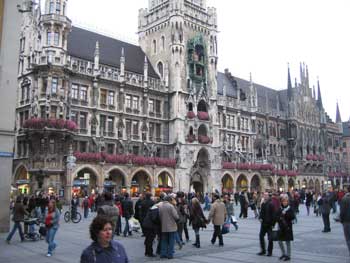
Marienplatz and the glockenspiel on the Marienplatz in the city center displays the mechanical dancers in the tower of the Rathaus (Town Hall) at 11 a.m. and noon (and 5 p.m. in the summer).
Schloss Nymphenburg is the impressive Baroque palace built as the summer residence for the Bavarian Electors. Today the main building houses a museum.
The Viktualienmarkt is Munich’s oldest market, originally begun as a farmer’s market and now a favorite place for a wide range of produce, Bavarian specialties and more.
The Hofbrauhaus deserves a visit, as its one of Munich’s best-known restaurant-breweries at Am Platz 9. Great dining is available, or just casual drinking and listening to oom-pah music. For information on the Hofbrauhaus, visit www.hofbraeuhaus.de.
There are many churches to visit, including the Asamkirche built by the Asam brothers in the 18th century with its spectacular interior at Sendlinger Strasse 62; Church of the Sacred Heart, a cubed-shaped structure with an innovative facade at Romanstrasse 6; and Saint Peter’s, Munich’s oldest parish at Rindermarkt 1.
The Deutsches Museum at Museumsinsel 1 houses sailboats, windmills, space probes, robots, ships, trains, planes and much more. Allot a whole day for this attraction.
Octoberfest Museum, at Sterneckerstrasse 2, will tell you all about the history of beer including how it started as a drink at monasteries, and all about the city’s famous Octoberfest celebration.
The expanded BMW Museum is a must-see if you are fascinated with automobiles and engineering. Tours are available.
Munich is waiting to wow you.
IF YOU GO… You can arrive at Munich’s Airport, which is like a city within itself. Flights from numerous major hubs arrive and depart from here daily. Train is another good option if you are coming from another European city.
If you’ll be in town for at least a day, pick up the City Tour Card (one- and three-day tickets are available), which is good not only for all public transportation, but also includes discounts of up to 50% on more than 30 attractions such as sights, bike rentals, museums, theaters and restaurants. www.citytourcard.com.
A close-in, convenient four-star hotel is the Platzl Hotel at Sparkassenstrasse 10. It is located near the Hofbrauhaus and is within a a couple of minutes walk of the Marienplatz. Visit www.platzl.de.
Guided tours of Munich are available. Visit www.muenchen.de for more information. The tourism office is located in the Rathaus, first floor, at Marienplatz.










 European Traveler