Wedged between Germany and France, this northern Swiss city abounds with traditional restaurants offering classic fare and Old World flair
By Randy Mink
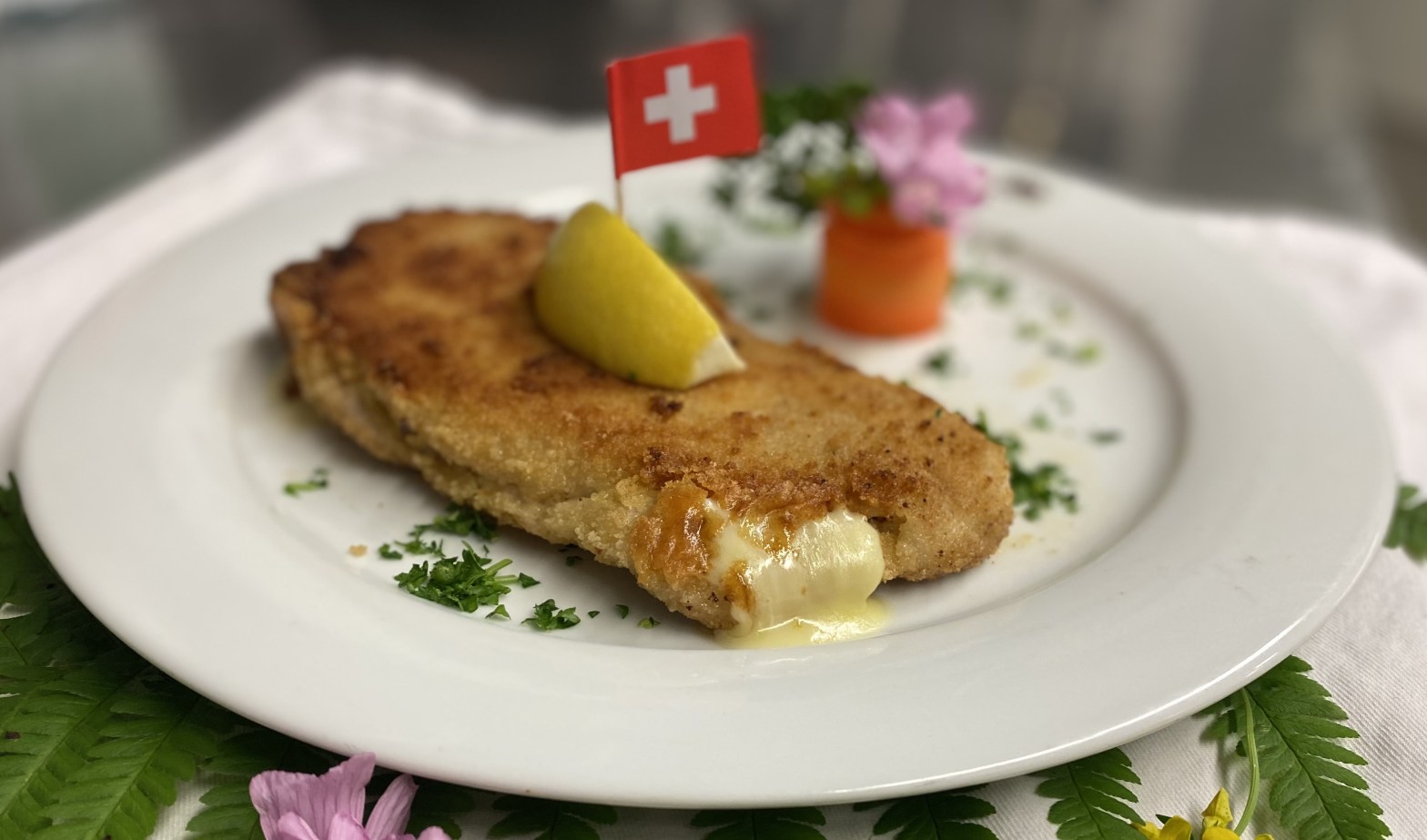
Served piping-hot and oozing with cheesy goodness, the veal cordon bleu at Zum Gifthüttli restaurant is something to savor, even drool over. Lunch in the wood-paneled dining room remains the warmest memory of my visit to Basel, the third-largest city in Switzerland.
After disembarking there from my week-long Rhine River cruise, I was most looking forward to exploring the medieval Old Town with its museums, churches, riverside promenades and specialty shops lining atmospheric alleyways paved with cobblestones. What turned out to be just as inviting, though, were the traditional, pub-style restaurants scattered about the historic core.
Cordon bleu is the house specialty at Zum Gifthüttli. We ordered the Classique, a juicy, golden-breaded schnitzel filled with ham and melted cheese, taking advantage of the Tagesteller (“daily plate”), a deal for 36.50 Swiss francs (about $43) that included french fries, pumpkin soup and dessert.

Gifthüttli, a traditional restaurant in Basel’s atmospheric Old Town, offers dining in the main-floor Bierstube, the upstairs Weinstube and at outdoor tables ideal for people-watching. (Randy Mink Photo)
Zum Gifthüttli’s menu lists cordon bleu variations, like the one with ham, cheese, asparagus, cherry tomatoes and Hollandaise sauce. Another consists of chorizo, mozzarella and herbs. The Florentiner has ham, cheese, spinach and a fried egg on top, while the Schweizer features two Swiss delicacies—Bündner air-dried ham and scrapings of raclette cheese. Opting for pork cordon bleu, instead of veal, can shave a bit off your bill, but any meal in Switzerland will cost much more than at home.
Guests at Gifthüttli can dine in the main-floor Bierstube, upstairs in the white-tablecloth Weinstube or, in warm weather, at outdoor tables offering the bonus of people-watching in Old Town’s pedestrian zone.


The white-tablecloth Weinstube at Gifthüttli offers a refined atmosphere. (Photo credit: Basel Tourism)
Fans of cordon bleu and antique charm also gravitate to Old Town eateries like Zum Braunen Mutz and Restaurant Löwenzorn. The latter offers tables in its historic rooms and in the idyllic courtyard garden, where blankets, furs and electric heaters keep patrons toasty in cooler weather. Löwenzorn favorites include the wienerschnitzel and traditional Swiss fondue.

Löwenzorn, a traditional restaurant in Basel’s Old Town, offers seating in historic rooms and in the courtyard garden. (Photo credit: Basel Tourism)
Restaurant Kunsthalle, a sophisticated but friendly Old World restaurant in the same building as the Kunsthalle Basel contemporary art museum, every winter opens its Fondue Stübli, a cozy fondue chalet next to the landmark Tinguely Fountain. Additional city-center spots for fondue (and other Swiss classics) are Walliserkanne and Safran Zunft.
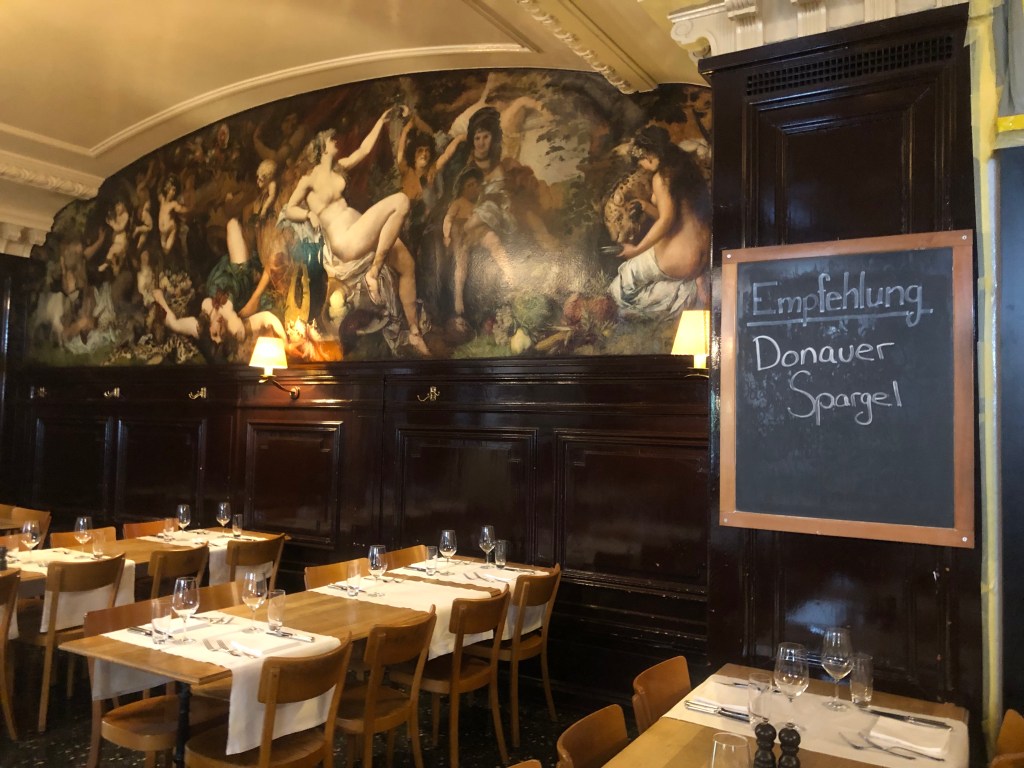
Patrons at Basel’s Restaurant Kunsthalle enjoy an Old World atmosphere in the vaulted Schluuch room. (Randy Mink Photo)
On our springtime visit to Restaurant Kunsthalle, we had a lunch of pasta amidst dark wood and classical cherub murals in the cozy, vaulted Schluuch room. The more formal “white” room overlooks the chestnut tree-shaded patio, one of Basel’s prime spots for alfresco dining. The Kunsthalle’s menu reveals typical Swiss fare, including Zürcher Geschnetzeltes (veal strips in a sauce of white wine, cream and mushrooms) with rösti, the ubiquitous Swiss version of hash browns offered at most restaurants that serve french fries.
No discussion of traditional dining spots is complete without a mention of Gasthof zum Goldenen Sternen, Basel’s oldest restaurant. Though it’s been at its current riverside location for only 50-some years, it date backs to 1412. In the 1970s the ancient building was dismantled and rebuilt stone by stone along with the original ceiling paintings and all the wood paneling. Highlighting the menu are highly regarded fish dishes—I had the lightly fried salmon filet with linguine. It also offers lamb shank, steaks and wienerschnitzel, among other entrees. The restaurant looks out on the Rhine River, and there’s outdoor seating under trees on the riverfront promenade.

Gasthof zum Goldenen Sternen, Basel’s oldest restaurant, enjoys a setting on the Rhine River. There is seating under trees on the riverfront promenade. (Photo credit: Basel Tourism)
The Goldenen Sternen (“Golden Star”) is located in the picturesque St. Alban quarter, a quiet neighborhood noted for its patrician townhouses, half-timbered buildings, narrow streets and a stream that powers the waterwheel at the Basel Paper Mill. Now a fascinating museum about the history of paper making and printing, the medieval mill, just steps from the Rhine and not far from Old Town, was one of many in St. Alban that made Basel a book publishing center for centuries.
Though skeptical about how interesting a paper museum could be, we found it eye-opening. Especially fun was watching demonstrations of how a pulpy goop is transformed into paper. We had a chance to make our own sheet as a souvenir. And we were surprised to learn that until the 19th century paper was made almost entirely from old rags and ropes that were sorted, cleaned, cut into strips and left to decay in a rag cellar’s rotting vats. There are even exhibits on the evolution of toilet paper, which was considered a luxury product when first introduced in the late 1800s.


Visitors learn about the history of paper and witness the paper-making process at the Basel Paper Mill, a museum housed in a medieval paper mill. (Randy Mink Photo)
Claiming nearly 40 museums, Basel has a museum for every interest, showcasing subjects ranging from cartoons and musical instruments to city history and Jewish culture. Most visited are its two leading art museums.
Kunstmuseum Basel, whose three-building complex holds the world’s oldest municipally owned public art collection, presents seven centuries of European art and boasts the world’s largest collection of paintings by the Holbein family. On the outskirts of Basel, Fondation Beyeler, comprising a main building designed by noted architect Renzo Piano, houses some 400 masterpieces of modern and contemporary art, including pieces by Picasso, Monet, Matisse and Cezanne.

Kunstmuseum Basel holds an impressive collection of paintings by Hans Holbein. (Photo credit: Basel Tourism)
The Basel Historical Museum, with exhibition halls under the vaulted ceilings of a former 13th century church, focuses on the intersection of the cultures of Switzerland, France and Germany. (From Basel, Germany and France are just a hike or bike ride away. Visible on the horizon are the Vosges Mountains of France and Germany’s Black Forest.)
In the summer you’ll see people sunning on the riverbanks and swimming or floating in the river. Basel Tourism offices and retail stores sell something called a Wickelfisch, a brightly colored, fish-shaped waterproof bag for keeping your clothes dry as you whoosh down the river past city landmarks. It’s not to be used as a flotation device.
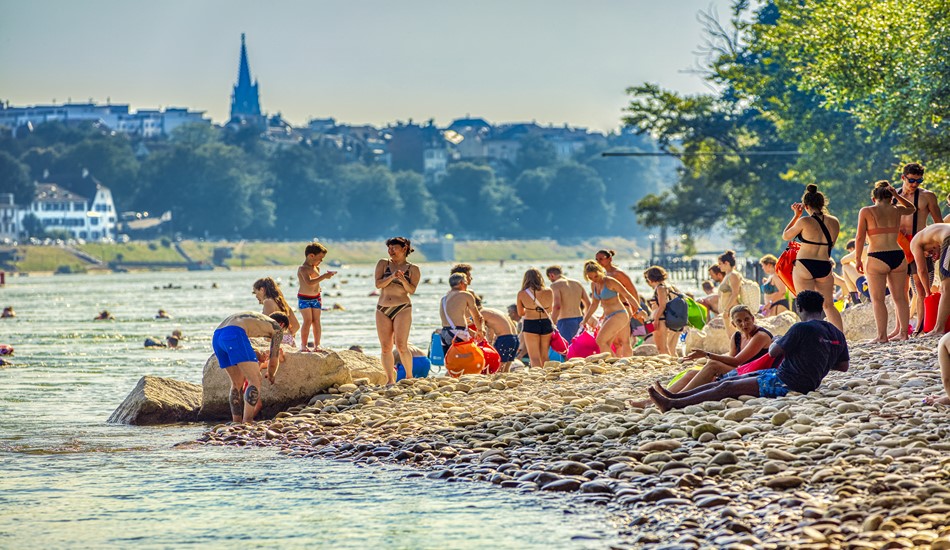
Frolicking in the Rhine River is a popular pastime with tourists and locals alike. (Photo credit: Basel Tourism)
Sightseeing cruises provide another way of experiencing the Rhine. Or you can take one of the small passenger ferries that shuttle back and forth between the larger southern part of the city (Grossbasel, or Greater Basel) to the northern side (Kleinbasel, or Little Basel) at four crossing points. Attached to a cable that spans the river, the non-motorized boats are guided deftly by expert ferry operators.
We took the five-minute ride from St. Alban to the opposite bank, then walked along the riverside path for 11 minutes before reaching the Museum Tinguely, a showplace for monumental mechanical sculptures created by world-renowned artist Jean Tinguely (1925-1991), who grew up and studied in Basel. Buttons allow visitors to activate some of the playful, mischievous and wacky creations, causing them to rattle, shake and whirl.
Sweeping views of the Rhine can be enjoyed from the tree-shaded terrace of Basel Cathedral. Sporting impressive twin towers, it is the city’s most prominent landmark. Built mainly in the 12th and 13th centuries, the Romanesque-Gothic church contains the tomb of the Dutch humanist Erasmus (1466-1536), who lived in Basel. Ambitious types can climb the towers’ narrow staircases (about 250 steps).
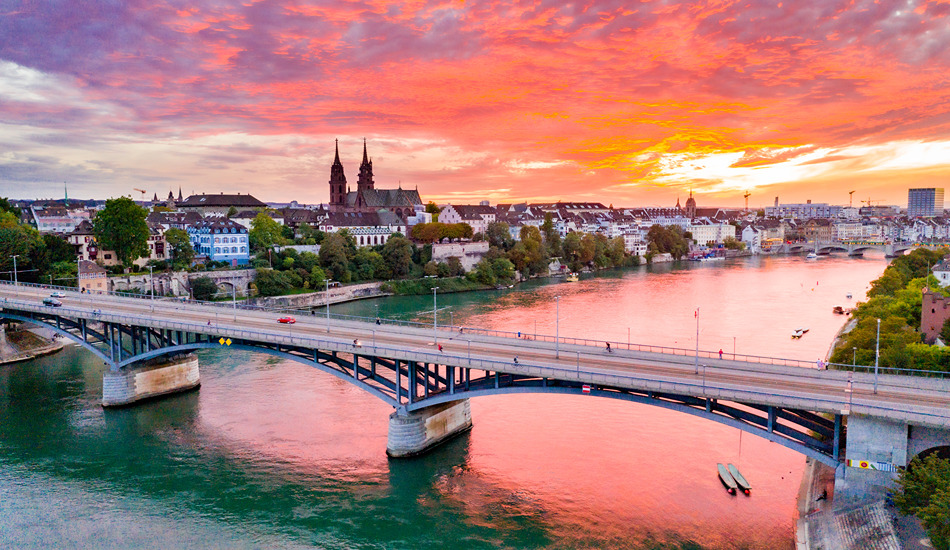
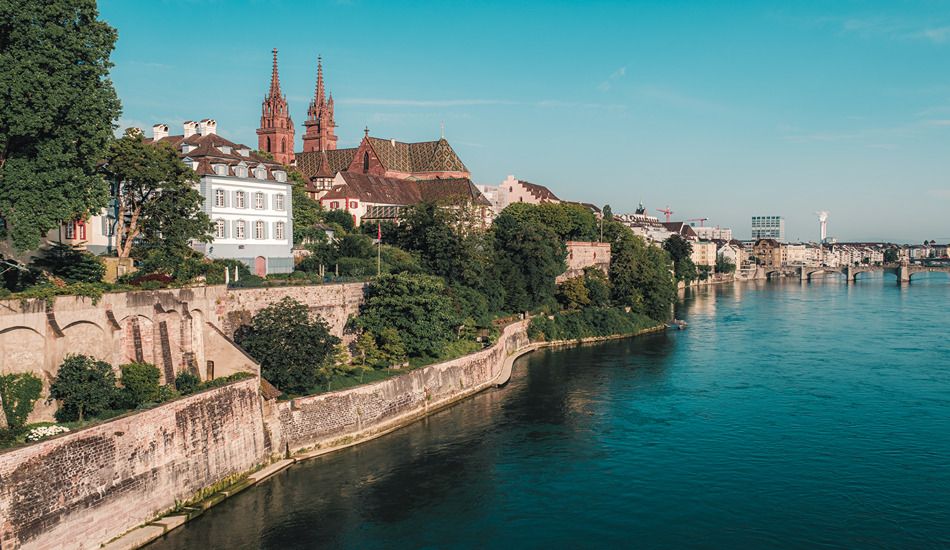
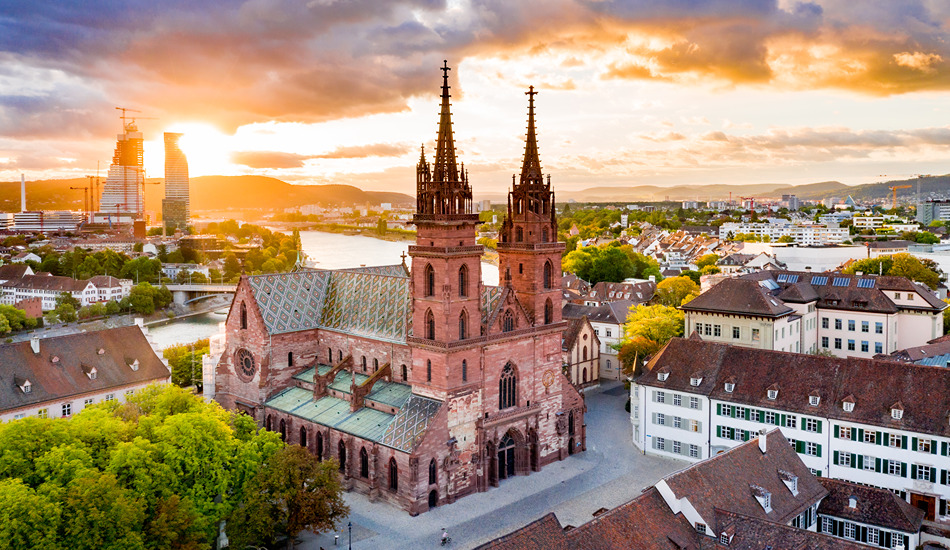
The twin spires of Basel Cathedral dominate the skyline of Basel, which lies on the Rhine River in northern Switzerland. (Photo credit: Basel Tourism)
One of the best places to take a break from sightseeing is Confiserie Schiesser, a cafe/tea room/confectionery with an on-site chocolate factory and bakery. Founded in 1870 and now in its fifth generation of family ownership, Schiesser faces Old Town’s vivid red Rathaus (Town Hall) and market square. A tantalizing array of chocolates, cookies and pastries tempts the sweet tooth. Distinctive to Basel are the Basler Läckerli, a ginger cookie made with honey, spices, almonds, and candied orange and lemon peel.
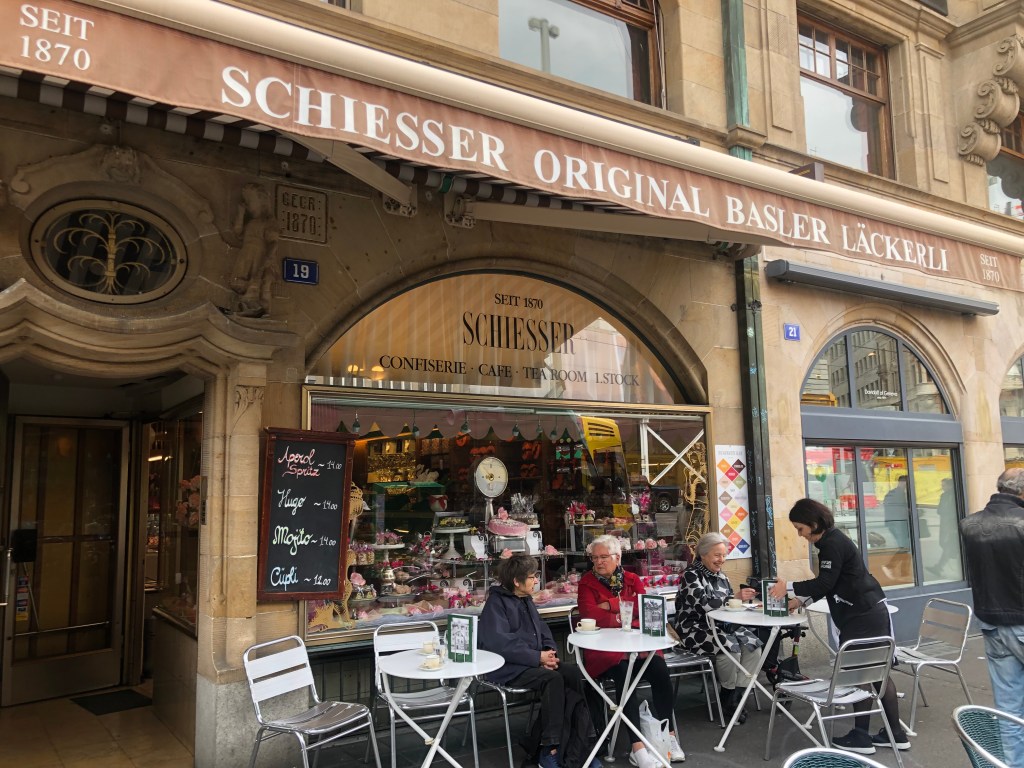

Confiserie Schiesser, a cafe/tea room/confectionery founded in 1870, is famous for its chocolates, cookies and pastries. (Randy Mink Photo)
A few doors down from Confiserie Schiesser, high-end Läderach chocolatier sells slabs of melt-in-your-mouth chocolate called Frisch Schoggi. Sold by the gram, the uneven pieces are studded with everything from hazelnuts and almonds to cranberries and cornflakes.
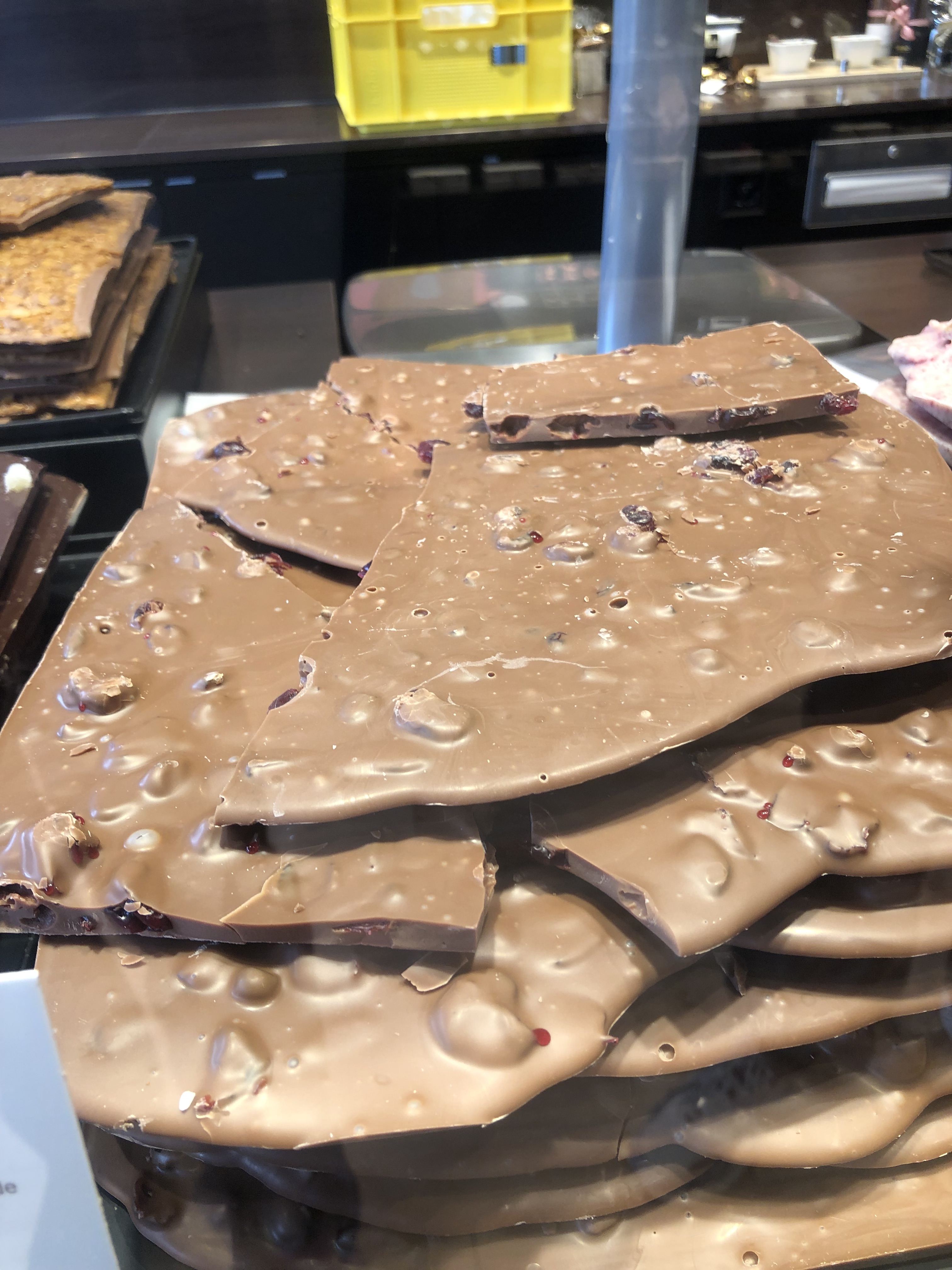

Visitors in Basel’s Old Town can indulge their sweet tooth at Läderach, a high-end Swiss chocolatier. (Randy Mink Photo)
Indulging in Basel’s tasty treats is the epitome of Swiss bliss.
For more information, visit the Basel Tourism website, www.basel.com.





















 European Traveler