By Don Heimburger
Photos by the author and courtesy York Tourism
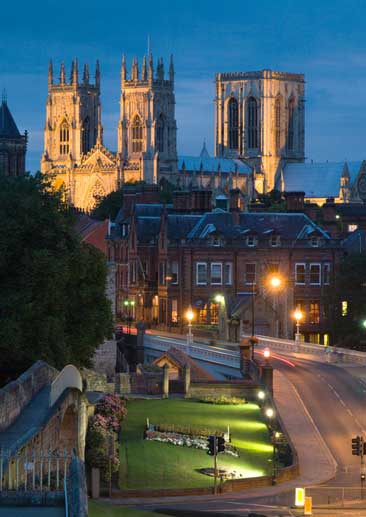
While London plays a key role in tourism in the United Kingdom, there are other cities in the U.K. that, while perhaps not as large in size or offering as many attractions, still rank high on the thrill meter.
One of these is York, which is worth a couple of days to explore and get to know. It’s accessible from Manchester Airport, an international hub that sees hundreds of flights each day from around the world. By train from the airport, York is about an hour’s ride.
Let’s take a tour of the walled city of York.
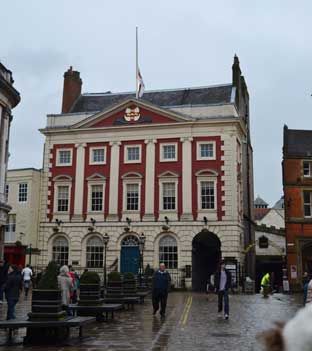

“I was born in York and grew up there,” says actor Judi Dench, “so I have a great fondness for this remarkable city with its winding, cobbled streets and beautiful architecture.”
“The city has evolved over the years, with…a wealth of interesting shops and a vibrant cafe and evening culture,” she continues.
In the 18th century, York was seen by the monied class as an attractive alternative to London, and today many Georgian townhouses and buildings can be seen in the town because of this. At Fairfax House, for example, you can see what’s called the most distinguished 18th century townhouse in Britain.
Likely the first thing to grab your attention in York is the Minster, renowned around the world as the largest medieval gothic cathedral in northern Europe. Taking 250 years to build, it dominates the city, with its central tower rising 200 feet skyward. “…That first glimpse of the magnificent Minster towering above the city will never cease to inspire and move me,” states Dench.
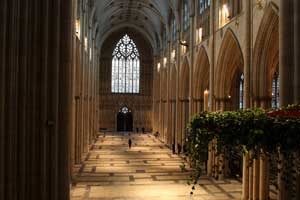

The cathedral, 500 feet in length and 100 feet wide, has the largest concentration of medieval stained glass in Britain. While there, you can also visit the undercroft, treasury and crypts. The church’s collections, open to the public, are a rich time capsule of the Minster’s history. The collection consists of silver, textiles, furnishings, monuments, stone and glass objects.


(left) Roman ruins underneath York’s business district
WALK THE WALLS
“Walking the walls” is a favorite thing for visitors to do. Since Roman times, these walls have helped defend the city, and now add interest as an attraction. Four main gatehouses, or bars—Monk, Bootham, Micklegate and Walmgate—were once used to extract tolls and act as defensive towers. There are a little more than two miles of walls around the city.
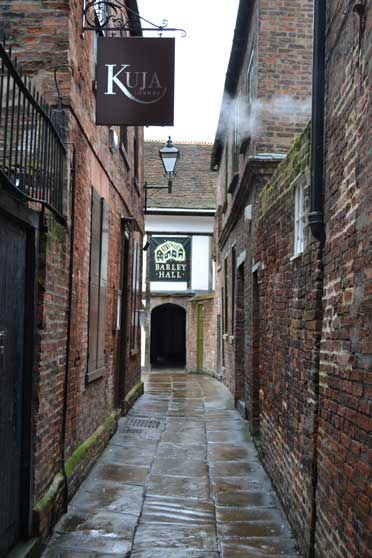
A odd thing about York are the snickelways and ginnels, or passages, some quite narrow and obscure. These short cuts conveniently connect sections of the town, and can save a lot of walking. After a day in York, I started using the snickelways like I was a resident.
The main shopping area is traffic-free, meaning the erratic streets are quiet and pleasant to stroll around, day and night. The medieval streets and buildings are beautifully preserved, especially 2,000-year-old Stonegate and Petergate streets, York’s main shopping arteries. These two streets were used by the Romans, leading to a massive Roman headquarters structure which is now occupied by the Minster.
SHAMBLES STREET
Visitors will enjoy reading the names of streets as they wind through the city. Mad Alice Lane, Grape Lane, Swinegate and Coffee Yard all can be found here, as can Shambles, a former street for butchers: you can still see the wide windowsills used by butchers to display their goods, and in some cases the meat hooks remain above the shop windows, as well.


If you like chocolate—and who doesn’t—York might surprise you. It’s been making the delicious treat now for 150 years, and was named Britain’s Home of Chocolate in 2012. It even has a Chocolate Trail that will take you into York’s Chocolate Story shop and museum, where you can mold and decorate your own chocolate bar, York’s Cocoa House where you can enjoy a cup of hot chocolate and Monk Bar Chocolatiers who hand make every blissful piece. Also, the York Kit Kat factory, one of the largest in the world, turns out six million chocolate bars every day.
The Treasurer’s House, which claims the most haunted cellar in York, is worth a visit to hear about royal visits, servant life and see four centuries of interiors and antiques. When the garden is open, you can also enjoy home-cooked meals here as well.
CLIFFORD’S TOWER
While most of York was the result of Roman and Viking construction, the original mound of Clifford’s Tower, with a timber structure at the top, was constructed by the Norman William the Conqueror in 1068 as a statement of his power over the region. The tower is 50 feet tall and 200 feet in diameter with four overlapping circles, resembling a four-leafed clover. The design pattern was unique in England and after being decimated by fire, wind and even water (the castle sunk into the moat causing the walls to crack in the 1350s) the castle’s jailer began demolishing the tower and selling the stone himself.

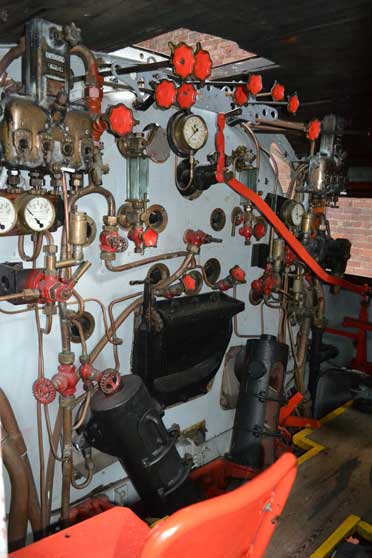
For those with a technical interest, the National Railway Museum near the railway station is a must, and it’s free. Here is the largest railway museum in the world, boasting a host of record-breakers and history makers, attracting 800,000 visitors annually.


National Railway Museum
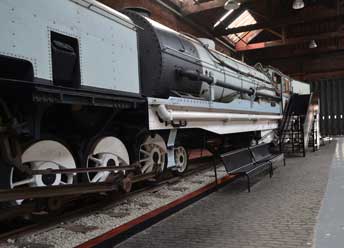
It is home to a wide range of railway icons and literally millions of artifacts, from the opulent Royal trains to the record-breaking Mallard. Many of the museum’s collection of more than 300 locomotives and pieces of rolling stock are displayed in the Great Hall. Some of the featured pieces include the Flying Scotsman, famous for being the first steam engine to travel at 100 mph, and the collection of royal trains, including the royal carriages used by Queen Victoria to those used today by Queen Elizabeth II.


Permanent displays in the museum include “Palaces on Wheels.” Based in the Station Hall, this exhibition features royal saloons dating to the Victorian era, giving visitors a glimpse into the sumptuous bedrooms, dining rooms and day saloons that were palaces on wheels.
At York’s Art galley, you can view more than 600 years of British and European art, from 14th century Italian panels to 17th century Dutch masterpieces to Victorian narrative paintings.
Also, the Yorkshire Museum houses some of the finest collections of archaeological and geological treasures in Europe, from prehistoric to medieval times. You can also walk on a Roman mosaic floor or kneel at St. William’s medieval shrine while here. This museum features new, interactive galleries and audio-visual shows.

As the locals like to say, York has many “tucked-away” attractions, including museums, bars and restaurants, interesting shops, peculiar old signs, strange stone figures, gateways and medieval battlements.
York is a fun, history-filled city, with numerous attractions that will interest nearly every age group.
WHERE TO STAY IN YORK
Grays Court in York near the Minster, is probably the oldest continuously occupied house in Britain, and as such, is a special place to stay, if you get the chance. It is built on the site of a Roman legionary fortress.
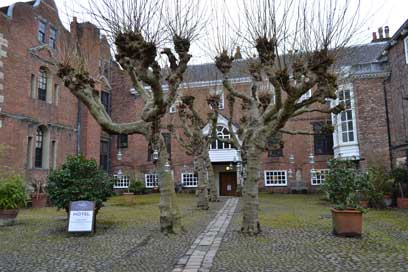
The staff is small and will likely remember your name after you’ve registered for the night. Grays Court is a family-owned and run country house with seven bedrooms, all filled with antique and contemporary furniture, and you’ll find the atmosphere around Grays Court quiet and friendly. A protected lawn and garden face the rear of the house, and the common areas invite you to wander throughout the house and get to know it.
Grays Court was once owned by the Duke of Somerset, Queen Jane Seymour’s brother, and was visited by King James 1st, James 2nd and the Duke of Cumberland. Sir Thomas Fairfax, Archbishop Robert Holgate and Archbishop Thomas Young have also lived here.
At one time the house was the original Treasurer’s House, commissioned by the first Norman Archbishop of York Minster, Thomas of Bayeux (1070-1100).
James I dined once at Grays Court with Edmond, Lord Sheffield, the Lord President of the North, and knighted eight nobleman in the house’s Long Gallery one evening.

Guests will find breakfast is served in a large open room with good views of the garden, and the wait staff is pleasant and accommodating. In the evening you can curl up on one of the large comfy sofas with a book and a glass of wine in the Long Gallery, or try the quiet Library to relax in.
Located on Chapter House Street, York. www.grayscourtyork.com.
For more information about the city of York, go to www.visityork.org.







 European Traveler