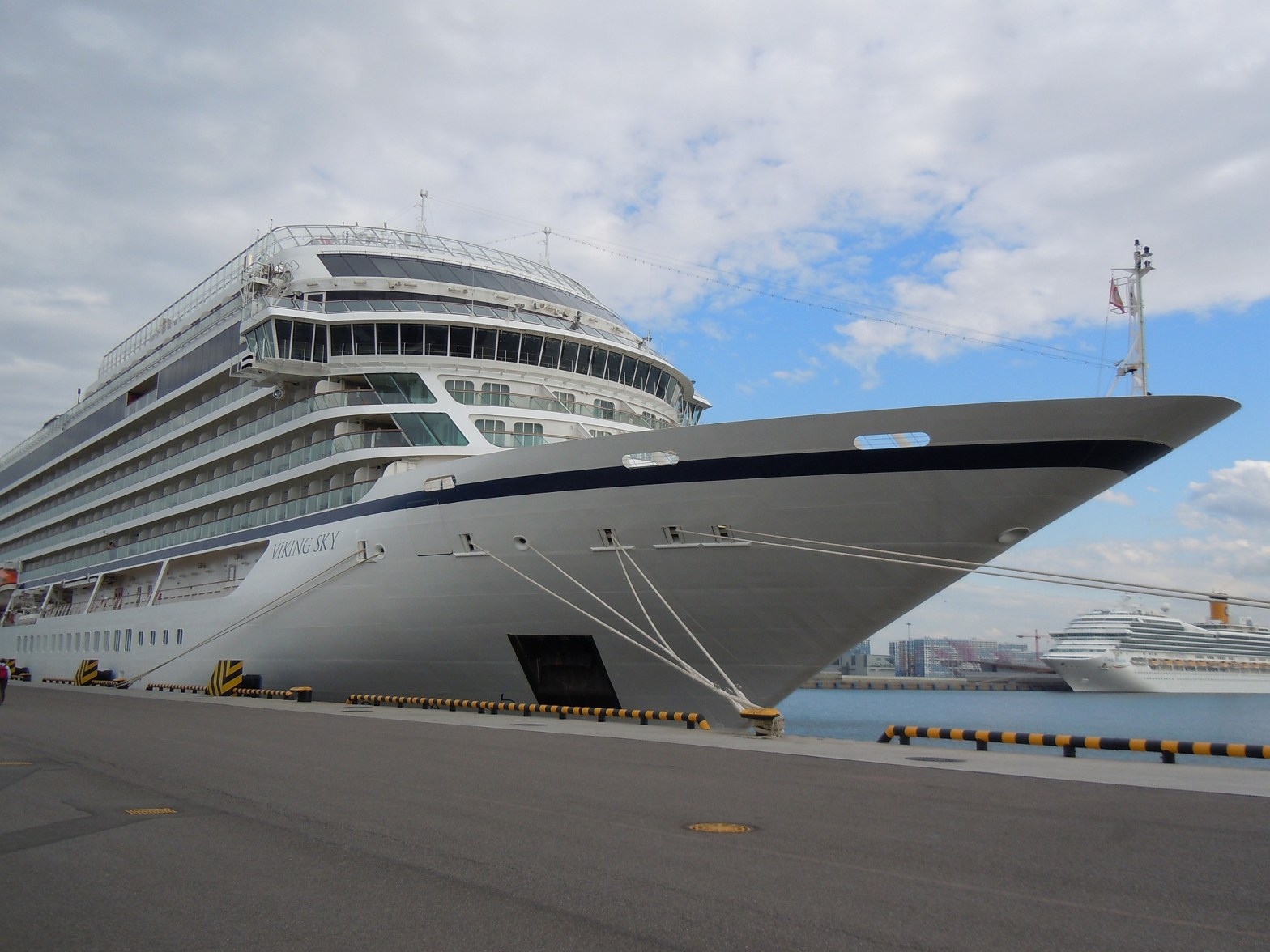
Even a 45-minute lecture can prepare you for the sights and scenes of Germany
Story and photos by Sharon Hudgins
Cruise Lecture Teaches History, Culture
If you watch Masterpiece and other programs on public television in America, you’re probably familiar with the phrase, “Viking. Proud sponsor of…”—accompanied by images from Viking’s “longboat” cruises on the Rhine, Mosel, and Danube rivers in Europe. Other times you see wanderlust-invoking scenes from Viking’s ocean-going fleet, which sails the Atlantic and Pacific oceans, the Baltic and Mediterranean seas, and beyond, encircling the globe. And occasionally you’ll see the two new Viking polar-class expedition ships, the “Octantis” and “Polaris,” that sail to Antarctica in the Southern Hemisphere and the Great Lakes in the Northern Hemisphere.
Since 2017 I’ve had the pleasure of being a guest speaker on Viking Ocean Cruises in Europe, giving lectures on historical, cultural, and culinary topics aboard ships sailing from Viking’s home port in Bergen, Norway, to most of the countries bordering on the Baltic Sea.

The “Viking Sea” ship docked at a Baltic port.
That itinerary follows the routes of the Hanseatic League, the medieval trading confederation that linked the countries of England, northern Europe, and Russia, and also the routes of the earlier, historical Vikings, who plied the waters of the Baltic, too.
Viking prides itself on focusing on the history and cultures of every country on its itineraries. So the cruise director on each ship schedules lectures about those destinations one or two days before the ship arrives in a port, to prepare passengers for the sights, sounds, and tastes of each new country they visit.
While the cruise ship guests are away during the day on shore excursions to a variety of places in those countries, the ship’s staff refills the vessel’s fuel tanks, cleans the guest rooms and public spaces, restocks food supplies, and prepares meals for hungry passengers when they come back on board. The singers, dancers, and musicians also use that time to rehearse their next shows on stage.
Cultural Stereotypes and Truths
So what does that have to do with Germany? Many cruise lines sailing in the Baltic dock at the busy German port of Warnemünde. I’ve lost count of how many times I’ve been to Warnemünde and the surrounding area, as a guest speaker on Viking, National Geographic-Lindblad, and Oceania cruises, as well as on press trips for journalists gathering new material for articles to write. But only on Viking cruises have I had the opportunity to present a 45-minute illustrated lecture about that entire country of Germany, a nation I often think of as “my second home.”
I begin with a short introduction telling how long I lived in Germany (15 years) and what I was doing there (teaching for the University of Maryland’s education programs at U.S. military bases, writing for the Stars and Stripes newspaper). I also mention that for 28 years I was a writer for German Life magazine in America, too. Then I launch into my lecture: “Germany: Land of Laptops and Lederhosen.”
A lecture on “all-of-Germany” in 45 minutes? How is that possible? Not easy without being superficial, I assure you. And that’s exactly how I begin my lecture, showing pictures of the stereotypes that many people have about Germany: Men in Lederhosen. Women wearing Dirndls. Oompah bands and choral groups clothed in traditional Trachten, too. Half-timbered houses and fairy-tale castles. Foaming mugs of beer. Strings of sausages. Pretzels!
Then I point out that stereotypes often contain a grain of truth. But they’re only one part of a many-faceted story (or country), factors that exist side-by-side with all of them being true simultaneously.
Modern Germany – Regions and Festivals
So I segue easily into modern Germany: High-speed highways. High-speed trains. High-tech industries. High fashion. Avant-garde art and architecture. Michelin-starred restaurants and Turkish döner kebab stands. And all those oh-so-wonderful German breads and pastries!
There’s no way anyone could condense centuries of German history into such a lecture. So I focus on Germany today, starting with Berlin and the country’s government (with a nod to the rise and fall of the Berlin Wall), and an overview of Germany’s population, literacy rate, national health insurance program, religions, and economy. The rest of my presentation is about the characteristics of its four main regions, from North to South, East to West, including those regions’ differing landscapes, architecture, industries, and cuisines. Then I conclude with—what else?—Oktoberfest! That world-renowned German beer festival brings me full circle back to the beginning of my lecture: The coexistence of stereotypes and deeper, often contrasting, realities in Germany today, a land of computers and cowbells indeed.
Viking Ships and Excursions
Viking’s ocean vessels carry 960 guests, plus a large, well-trained crew. While in port, most of the passengers head off on shore excursions, and even some of the ship’s employees have a few hours of shore leave, too. When the ship is docked in Warnemünde, Viking offers half-day and full-day excursions to several locations in northern Germany: the Hanseatic cities of Rostok, Lübeck, and Wismar; a classic 19th-century spa town reached by steam train; the magnificent castle in Schwerin; the grim concentration camp at Sachsenhausen.
But the most popular destination is Berlin—six hours round-trip by special train, plus six hours of touring various parts of the city and its historical sites, by chartered buses and on foot with knowledgeable guides, or just exploring Berlin on your own. One excursion even includes lunch at the Reichstag, along with a special tour of that iconic building so important in Germany’s history.


Clockwise from left: The German Reichstag in Berlin, as seen from the Spree River.
The modernistic Marie-Elizabeth-Lueders-Haus government building near the Reichstag in Berlin.
The facades of many Berlin buildings are best viewed from a boat ride on the Spree River.
On my first Baltic cruise with Viking, the only time available for my Germany lecture was at 9 p.m. on the night before we docked at Warnemünde. Since half the 960 guests on that ship had signed up for the 12-hour shore excursions to Berlin the next day—and since they all had to get up at 5 a.m. to board the train at 6 that morning—I expected only a few people to attend my lecture that night. After all, passengers could always watch a video of it on television in their own cabins, any time later during the cruise. So I was surprised when half the ship showed up for that introduction-to-Germany lecture, filling the lecture hall.
The next evening we all returned from Berlin, tired but happy, after a full day of riding the rails through the German countryside, visiting one of the world’s great capital cities, and learning so much about Berlin’s special place in history. But another treat awaited us back in Warnemünde. A red carpet led from the cruise ship terminal across the pier to the ship’s gangway. Lined up along the sides were the ship’s officers and staff, from the captain to the cabin cleaners. At the terminal each guest was handed a glass of sparkling wine, which we all tried to balance in one hand while dancing along the red carpet to lively music, with many of the crew joining in, as we made our way back to the ship.


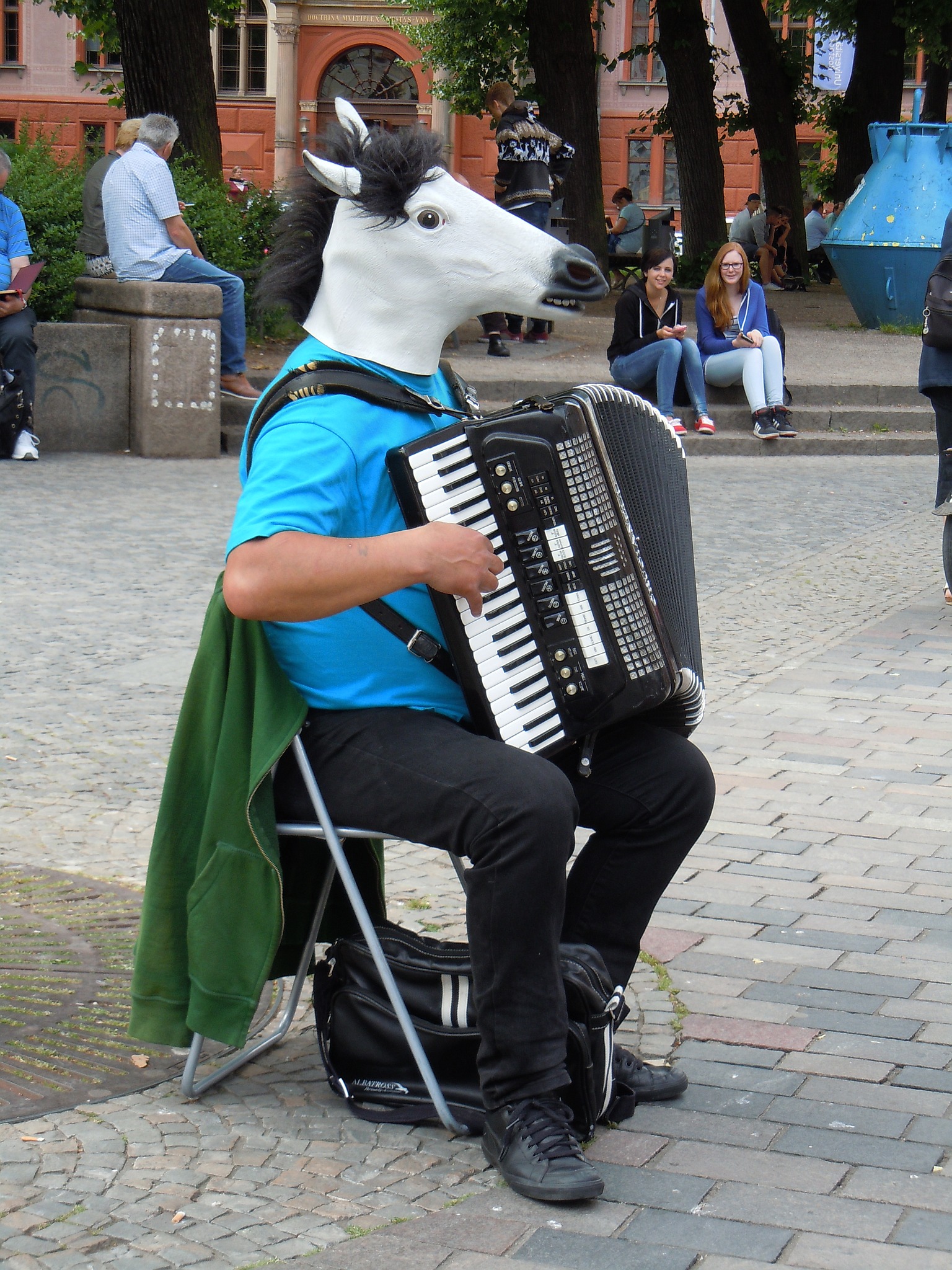
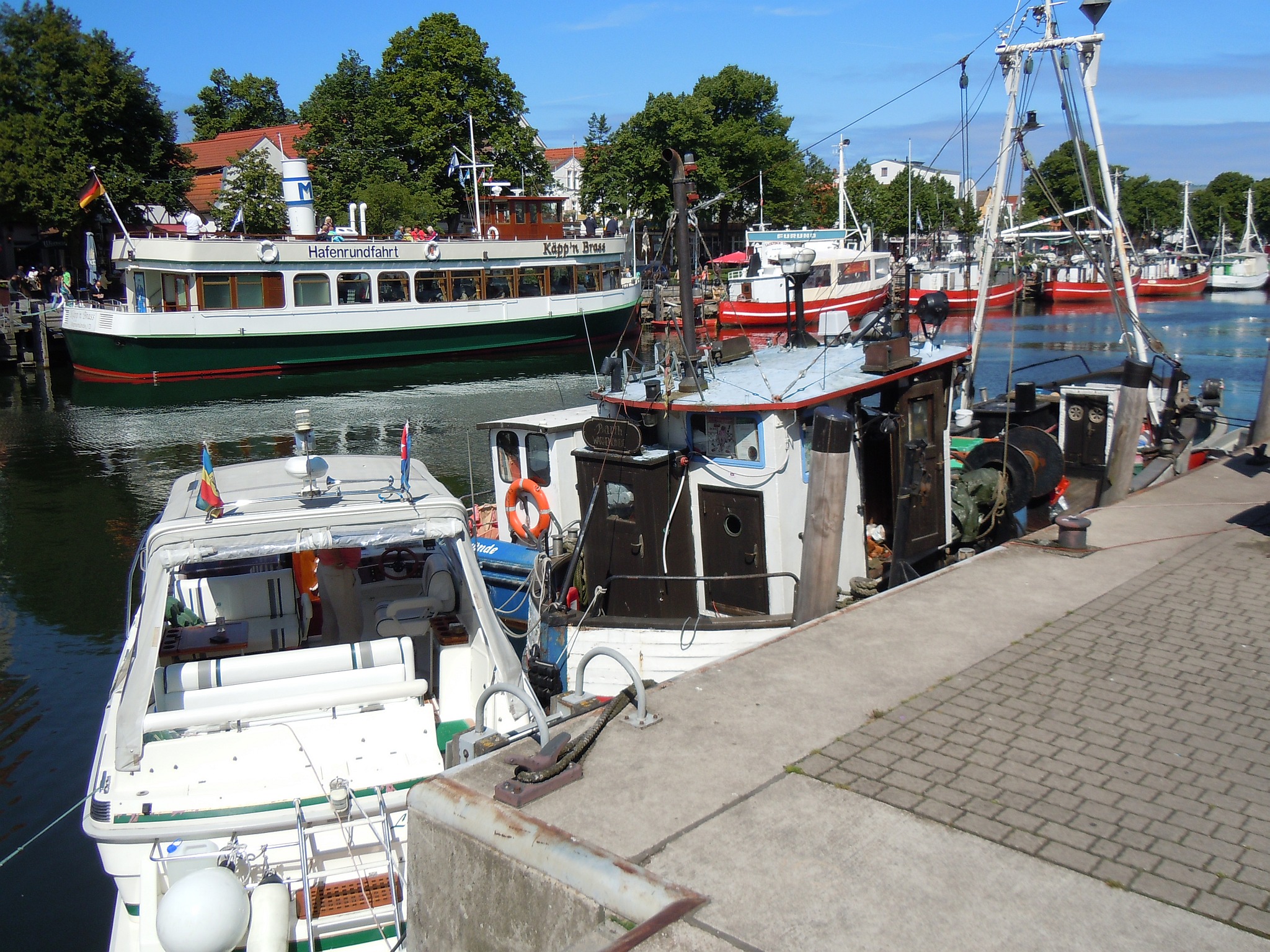

Top: One of the modernistic fountains in Rostock, a shore excursion destination on Viking Baltic cruises.
Lower left: Street musician in Rostock, one of the cities on shore excursions from Viking ships docked at Warnemünde, Germany, on Baltic cruises.
Middle and lower right: The colorful Alter Strom inner harbor at Warnemünde is always filled with small fishing boats and sightseeing boats.
German Culinary Delights on Deck
Dinners on board that evening featured traditional German specialties, from Sauerbraten to Schnitzel, Black Forest Cherry Cake to Bavarian Cream. And of course plenty of German beers and wines, too! As we sailed away from Warnemünde, the only regret for me was leaving a country where I have such deep roots. But we still had five other Baltic countries to visit on that cruise, so who was I to complain about new adventures awaiting the next day? And there was always the prospect of another cruise, or even a different kind of job, bringing me back to Germany in the future.
One of the greatest rewards of working on tours in Germany has been introducing other people to such a fascinating country. Nothing compares with the feeling I get when a member of our tour group comes up to me and says, “Thank you for your lecture about Germany. Because of you, I saw the country with different eyes when we were there.”
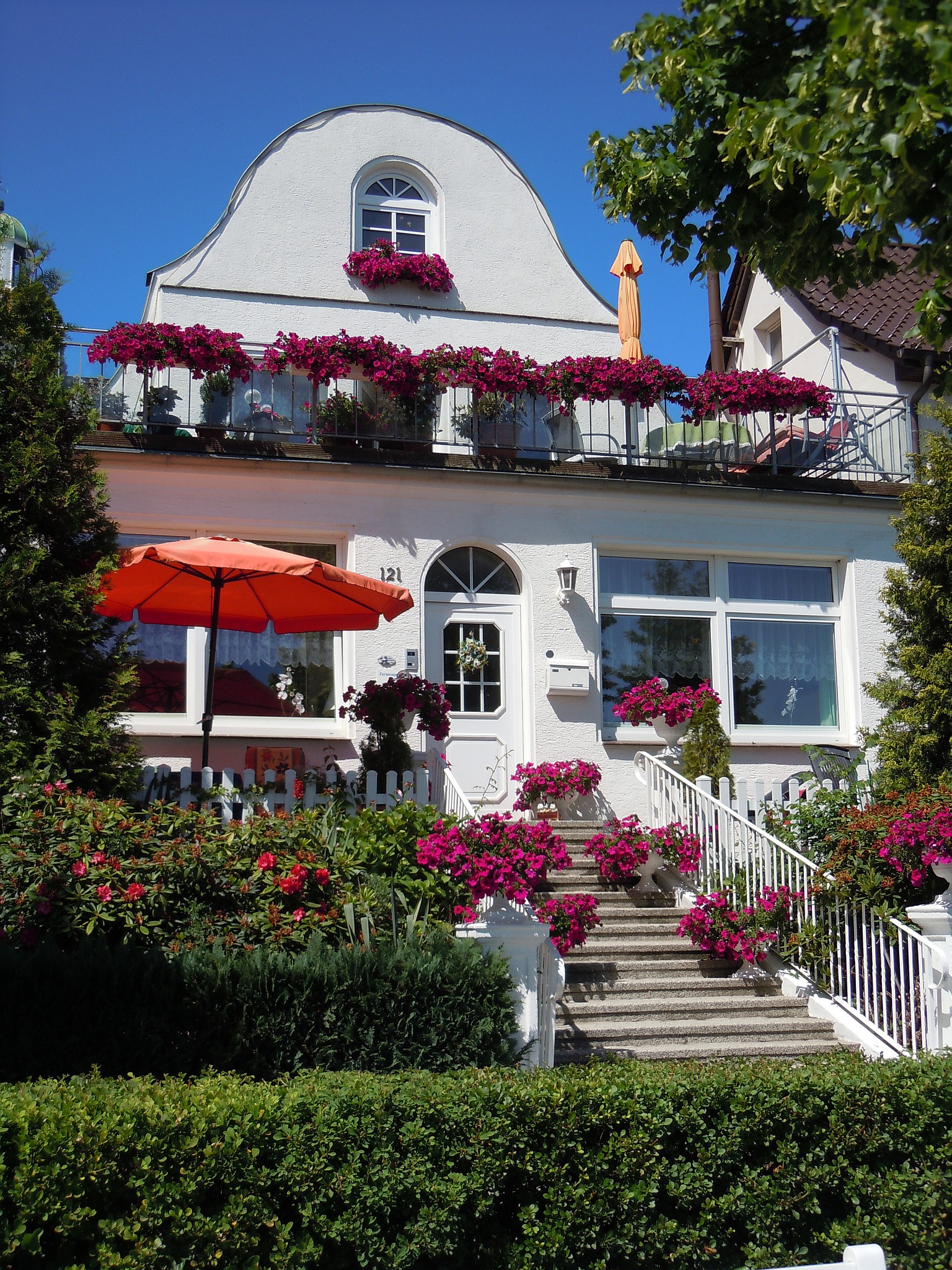

Left: One of the many pretty villas overlooking the waterfront at Warnemünde.
Right: Sand sculpture at the cruise ship dock in Warnemünde.
Sharon Hudgins is a professional writer and a lecturer on educational tours to Europe, Alaska, and North Asia. See more at www.sharonhudgins.com
Visit Viking Cruises to explore cruise destinations and itineraries.

 European Traveler