Falling for Casares

Ancient baths in a dramatic location

By Susan MacCallum-Whitcomb
Photos courtesy Costa Del Sol Tourism

Sometimes it helps to follow your nose.

For days we’d heard rumors about ancient baths located just below Casares, in southeastern Spain. But reliable information was hard to come by. The tourist brochures made only passing reference to them, and even the directions that we finally did get were vague to say the least: head down the mountain and through the quarry, turn onto the foot path, then walk toward the water. Precisely how far we should go and which of the half-hidden paths we should take remained a mystery, though.

So on we plodded in Andalusia’s autumnal sunshine dodging killer cacti and recalcitrant donkeys, until we smelt it — the sulfurous pool that first brought the area a measure of fame more than 2,000 years before.

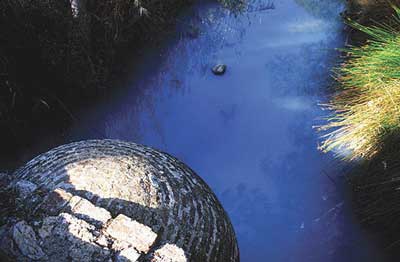
According to legend, Julius Caesar stumbled upon this same spot in 61 BC, when he was merely a provincial administrator with a nasty skin condition, and was so impressed by the pool’s medicinal properties that he became a frequent visitor. The Roman-built structure that encloses it (known as Baños de la Hedionda) is a simple dome with a sheltering wall around the perimeter. Rising about eight feet above ground level, it is broken only by two low arches through which you enter directly into the water by way of either a rough wooden ladder or a stone ramp. Taking the plunge can be unnerving. Darkness makes the depth of the pool difficult to determine, and two subterranean vaults add to the sense of foreboding.

WATER IS DIVINE

Caesar, however, was absolutely right: the water is divine and warm enough for swimming well into the fall. For him, its healing power seemed miraculous. For us, on the other hand, the real miracle was that the baños—despite their proximity to the Costa del Sol, one of Europe’s most congested tourist strips—have no signs, lines or admission fees. In short, they’ve yet to be invaded by the hordes of vacationers who have overrun the Mediterranean coast from Malaga to Algeciras. The same can also be said of Casares, the pueblo blanco or “white village” reputedly named for Caesar that overlooks the baths. And it, too, can seem rather daunting at first.

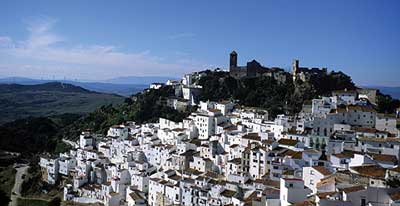
In part that’s because of its dramatic location: set 1,425 feet up in the Sierra Bermeja Mountains, Casares’ sugar-cube buildings perch precariously on twin plateaus and tumble into the deep crevice between. But it is also because of the quiet. You see, the village is a study in serenity, which is unsettling for those who’ve come to equate holidays with site-filled itineraries and Amazing Race-style activities.

The truth is that, save for the late afternoon (when children take to the soccer field) or dusk (when adults tread the cobbled pedestrian-only streets on their nightly paseo) sounds here are as muted as the almond blossoms that enliven the landscape, which is precisely why Casares is a perfect place to rediscover the lost art of lounging.
The first step, literally, is to stroll over to Plaza España where you can browse shops bordering the square and watch locals play pétanque beside a centuries-old fountain. Afterwards, you might putter about in Casares’ small ethno-history museum or pay homage to Blas Infante, the “Father of Andalusian Nationalism,” at his restored birthplace.

SATISFY YOUR HUNGER
Next, having satisfied your curiosity, you can concentrate on satisfying your hunger. It’s a pleasant prospect considering Casareño eateries dish up simple fare prepared with Andalusian flare. Specialties include morcilla de chivo sausages and artisanal goat cheese accompanied by dense brown bread. Hearty soups are harvest-time favorites, and game (most notably rabbit rolled in wild herbs) is popular in season.

If you’d like to enjoy these with a side order of scenery, the best bet for dining is Bodeguita de en Medio, which has a rooftop terrace offering views of the ruins that stand guard over the village. The very presence of these, of course, proves life in Casares hasn’t always been quite so peaceful. Its strategic position made it a popular hideout for bandoleros in the 19th century. Before that it was favored stop for armed forces, from the earliest Iberians through to the French who attempted a takeover during the Napoleonic Wars. Those who succeeded left an indelible mark that earned Casares recognition as a National Historic-Artistic Site in 1978, and their legacy is nowhere more apparent than at this isolated spot.

Fortified by the Romans, it was further developed by Moors who gained control of the region in 711. By the 13th century, they’d erected a castle on the seemingly impregnable promontory. Within a few hundred years, Queen Isabella’s Christian soldiers had put an end to Arab domination, and the Encarnación church was built atop it. Now that, too, is an empty shell, and the evocatively decaying structure reaches heavenward with a different purpose: aerials have been attached to it to improve television reception! Contemporary life has brought other changes as well. The climb to the ruins admittedly remains steep. The sweeping views – up to the mountains, down to the sea and across to the northernmost reaches of Africa – are as magnificent as ever.

ROCK OF GIBRALTAR
But while the ancients could only gaze out and imagine these distant locales, today’s visitors can easily reach them. Estepona, the closest of the Mediterranean resort towns, is just 25 minutes east by car, and a morning’s drive west through the clouds will take you to Ronda, the stunning gorge-straddling city that has been dubbed the “Birthplace of Bullfighting.” The iconic Rock of Gibraltar, situated an hour south, promises Barbary Apes plus a quick taste of the British Empire. Even Tangier — Morocco’s infamous, undeniably exotic port city — is accessible to early risers, thanks to the packaged daytrips sold all along the seaboard.

Closer to home, Paraje Natural de Sierra Crestellina now beckons ramblers, and diehard duffers are welcome to hit a few balls at a new area golf course. Remember, though, the true beauty of this place is that you don’t have to break a sweat to enjoy it. When you allow yourself to fully surrender to Casares’ laconic spell, simply sitting on a deck chair can provide ample entertainment. It’s easy enough, after all, to idle away hours watching farmers tend the olive and cork groves below, or marveling at the belled goats that graze at impossible heights on the rocky outcroppings above. Once you’ve had your fill of that, you can always soak up the atmosphere in Baños de la Hedionda. Trust me, the water’s fine…

The Fine Print: If relaxing is your primary goal, choosing where to stay is as important as deciding where to go. So while you can bed down in a basic room Hotel Casares for about €60 a night, renting a vacation home is a more restful, and budget-friendly, alternative. We booked ours through Just Casares, a local company which lists traditional white-washed townhouses starting at €300 per week in autumn. Those off-season rates kick in September 1, even though the village hosts two favorite ferias (or fairs) during that month: one honoring La Virgen del Rosario, the other El Cristo. These run respectively the first Saturday in September and over a long weekend in mid-September to coincide with the end of the summer harvest.

The Museum Shops of Paris

Photos courtesy the Paris Convention and Visitor’s Bureau


Museum shops. Parisian museums present the opportunity to combine culture with shopping. After a visit, you can pick up the hottest new design object to take home; find a special work on architecture, science, or cinema; or choose the latest trendy image or object as a souvenir.

THEMATIC AND SPECIFIC SHOPS
Museum shops offer works and objects of a high quality representative of those found in the exhibitions themselves. They often present the opportunity to find rare or very specialized objects, recordings, or books.

Close to the Jardin des Plantes, the bookshop of the Institut du Monde Arabe, designed by Jean Nouvel, has many precious items. Once through the entrance of this magnificent institution encased in moucharabiehs, the shop offers insight into Arab culture with high-quality exhibition catalogs and books on photography, architecture and craftsmanship.

Cinematique Francaise
Cinémathèque Française

In the Bercy district, the bookshop of the Cinémathèque Française is housed in a building designed by the architect Frank O. Gerhy. This bookshop for cinema buffs is situated on the mezzanine of the Cinèmathèque and is the main reference for cinema in Paris. Books about the history of cinema, experimental cinema and film music, as well as posters, and photos are for sale.

The bookshop at the Jeu de Paume, at the Place Concorde, is a landmark bookshop for all areas of photography, the visual arts and cinema, and has built a collection of more than 10,000 titles. The bookshop also operates a high-quality mail-order service for visitors abroad.

The huge bookshop Harmonia Mundi is located between the concert hall and the Musee de la Cita de la Musique, at the entrance to the Parc de la Villette, in north Paris. Lovers of classic, jazz and world music can choose from among the 9,000 CD and DVD references and benefit from the advice of professionals.

Linked to the Cité de l’Architecture et du Patrimoine, just across from the Eiffel Tower, the Moniteur Bookshop is entirely devoted to the subject of architecture and stocks works on architecture, town planning and heritage.

NATIONAL MUSEUMS
The national museums in Paris also have their prestigious shops. The Musée du Louvre shops, in several locations at the Carrousel, sell elegant objects like reproductions of jewelery and sculpture from the museum’s collections, as well as a selection of monographs by artists, essays and art books.

The Musée d’Orsay, a former train station built for the World Fair of 1900, has a delightful shop inspired by the collections of the museum selling posters, table and home decor objects, and exhibition catalogs.

Finally, the Flammarion bookshop at Beaubourg, in the Centre Pompidou, offers exhibition catalogs, postcards and multimedia products as well as a large selection of publications on art and design.

Musee d’Orsay

CONTEMPORARY SHOPS
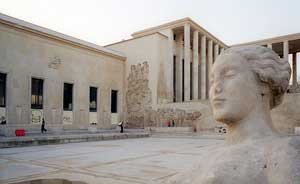
Some museums boast highly-contemporary shops designed like a second exhibition area to extend the length of a visit and offer a sales area with a striking decor. The ultra-trendy Palais de Tokyo, powerhouse of the contemporary artistic avant-garde, close to the Eiffel Tower, asked the graffiti artist André, the creator of the character of Monsieur A., to design its Blackblock gift shop. The design of the shop was inspired by a gas station in the suburbs of Stockholm. Encircled by refrigerated glass windows with integrated pink lights, the shop displays rare objects and limited editions. The space is also regularly used for special events.

In another vein, Le Laboratoire has opened near the Louvre; it is an experimental venue at the crossroads of science and contemporary creation with a bookshop called Laboshop. A veritable bubble in white, the shop invites visitors to discover a variety of prototypes that have been devised and created by participants at the venue, and which it is possible to test or buy. Among the most astonishing, “the Whiff” is a process which enables you to eat by inhalation, while “the Bel-Air” is a filter that enables plants to filter the air. These unique objects are signed by Designer Mathieu Lehanneur, and scientist and founder of this unique place, David Edwards.

The mezzanine of the Centre Pompidou, a dynamic Parisian cultural institution, houses the Printemps du Design, a shop with a grey concrete floor and minimalist windows. It offers 3,000 types of objects around five themes: living, savoring, charming, communicating, getting around and playing. Eggcups, seats, cameras, jewelery, sweets and spinning tops catch the eye. Striking for its selection and display of objects, it offers design classics as well as the latest in contemporary creations.

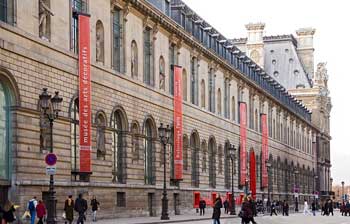
The 107 Rivoli is the sales area of the Musée des Arts Décoratifs, close to the Tuileries Gardens in the center of the capital. Specializing in specific areas of the decorative arts, fashion and design, the shop offers a rare selection of books, accessories, stationary, tableware and toys. For more up-to-date shopping, celebrities and designers are invited to suggest a selection of special objects for the duration of an exhibition or an event.

The new Galerie de l’Opéra is a gem of a shop situated within the prestigious Palais Garnier. A place to discover talents and trends in Europe, it specializes in the operatic and choreographic arts and is divided into four areas: multimedia library, art for children, memory, and performance, and is linked to the artistic program of the famous institution. Educational games, designer objects, books, technological or even signature and showcase objects already make this a cult address for the latest in museum shopping.

Shop of l'Opera
Galerie de l’Opéra

Palais de Tokyo

The prestigious Pinacothèque de Paris, situated opposite the Madeleine church, rounds off this tour of contemporary museum shops. Its shop showcases French and European designers who are not well-known to the general public, like the La Tonkinoise jewelery brand, for example. There is also a great selection of items for children: memory games, card games, wooden toys; and for adults, superb decorative objects and even luxury stationary.

For the curious and contemporary art buffs, there is the Merle Moqueur, situated in the north wing of the Halle Curial at the Centquatre, the city of Paris art establishment in northeast Paris. The shop features an epoxy floor, suspended acoustic cassettes and ramps with fluorescent lighting. Reference works for children and adults are offered in the different sections: general, youth and arts.

Also centered on contemporary creations, the bookshop of the Maison Rouge in Paris, Bookstorming, has wall decoration by the artist Jean-Michel Alberola. Books on art, monographic works, and critical essays, as well as many original works are on sale. Numerous events and encounters with artists and authors, like book signings, talks and video displays are featured regularly.

The bookshop of the Musée du Quai-Branly, situated on the Seine quayside near the Eiffel Tower, is devoted to art from outside Europe. This unique place offers a variety of ethnic objects while advocating the values of fair trade, for example with A-Typik and its Colombian jewelery, whose profits go to the reconstruction of schools in Colombia.

UNUSUAL SHOPS
Reflecting the museums in which they are housed, this type of shop offers unusual and miscellaneous articles.

At the Musée de la Poste, the shop Correspondances offers a fine choice of objects linked to the role and history of the Post Office: original postcards, objects and ideas for gifts.

Below Sacré-Coeur in Montmartre, the Halle Saint-Pierre is an exhibition area showing unusual and popular primitive art. The bookshop of the Halle Saint-Pierre is as surprising as the museum. Built of iron and glass, it houses books on art and literature, often illustrated and covering all types of contemporary creation.

Not far from the Halle Saint-Pierre, in north Paris, the shop of the Musée de l’Érotisme caters to shopping with an aphrodisiac edge. On sale are books of modern art and erotic photographs, and old films and comic strips on the same theme.

There is also the bookshop of the Hôtel de Sully, located in a 17th-century mansion. This exceptional establishment presents national heritage treasures and heritage publications.

The shop of the Monnaie de Paris delights fans of coins, medals and jewelery.

The bookshop of the Musée de la Chasse et de la Nature, situated near City Hall, offers atypical shopping opportunities with very specialized literary and artistic publications on the subjects of nature and hunting.

For honing technical and scientific knowledge, the shop of the Musée des Arts et Métiers offers fine objects and books linked to the current exhibitions. Badges, fans, model aircraft, and literary works provide a close-up view of the fascinating world of technology.

Finally, in the Hôtel de Saint-Aigan, in the heart of the Marais, the bookshop of the Musée d’Art et d’Histoire du Judaïsme offers a selection of varied objects and books on religion, philosophy, history and ethnography, continually updated according to what’s at the museum.

Musee des Arts Decoratifs
Hotel de Sully

Mechelen: An Undiscovered Belgium Gem

By Don Heimburger
Photos by the author

Mechelen, Belgium, about 15 miles north of Brussels, is a city of about 79,000 that features more than 300 monuments, eight historic Catholic churches and four UNESCO world heritage sights. You can reach the city by a short train ride from the main railway station in Brussels.

Mechelen is worth visiting not only because of its sights, but its people flourish because of a built-in determination and a friendliness that transcends nationalities. Maybe its because the Mecheleners have been perfecting humanity since 500 BC, when the first traces of human habitation of the area were discovered.

At one time, more than 100 firms in the city made furniture and word carvings, as evidenced by the many large and ornate church carvings seen here. Be sure to look for them as you discover this cobblestoned town, whose city center is only about a half mile across.

Some of the city’s sights include the early Gothic Brussels Gate, the last remnant of the medieval fortification constructed around the inner part of the city, built about 1300. At one time, all traffic entering and leaving had to pass through its limestone gates.

ST. RUMBOLD TOWER
You can’t miss St. Rumbold Tower—it dominates the city skyline. If you have the time, conquer the 514 steps to the top of the tower to the skywalk for a great view of the area. Original plans for the tower were made when Mechelen was a rich and powerful commercial and political center, and thus the tower of St. Rumbold’s Cathedral was to become the highest tower in the Low Countries. Completed, it would have reached the dizzying height of 547 feet. Financial problems in the 16th century halted construction. The tower now reaches a height of 318 feet, still plenty tall.

Inside the cathedral is a scale model of what the tower should have looked like had it been completed. Also inside the church are two of the largest stained glass windows in Europe. Jo Haazen and other guest carillonneurs present a carillon concert at the church every Monday evening from 8.30 p.m. to 9.30 p.m. These recitals are free.

A third highlight of the city is the Large Beguinage, where widows and unmarried women of class were invited to live together, submitting themselves to pledges of obedience and chastity. Parts of this community are still visible and are inter-woven into the city’s many old structures that line narrow streets in the center. Still in tact are the Beguines’ church, the infirmary, the house of the grand mistress and other structures.

(middle) One of the largest stained glass windows in Europe in Mechelen’s cathedral.

PALACE OF MARGARET OF AUSTRIA
Another important site is the Palace of Margaret of Austria of the Court of Savoy. This was the first renaissance building in the Low Countries and perhaps outside of Italy. The facade features Margaret’s coat of arms, and between 1616 to 1795 it was the seat of the Great Council. Its interior garden area is a fine place to rest your feet for a while.

Another spot worth visiting is St. John’s Church, which is open to the public. A very fine wood carving on the interior is one of Ruben’s masterpieces, The Adoration of the Magi. The church furniture, paintings and statues date largely from the 17th and 18th centuries.

For a respite from walking or touring the city, find Windels at Iron Leen 48 (not far from the main railway station), the oldest cigar store in Belgium (from 1875) that continues to make fine cigars, and offers them in beautiful hand-made wooden boxes. The store, now being run by the fifth generation of Windels, also carries a good selection of whiskeys.

The Jef Denyn Royal Carillon School, at Frederik de Merodestraat 63, is a state-subsidized educational institute that offers a six-year program to obtain a laureate’s diploma. Even the Vienna Boys Choir visited the school during the last few years. When you realize Belgium is one of the carillon capitals of the world, this school makes sense, and attracts students from as many as a dozen different countries. The heaviest carillon in Belgium—there are five different carillons in town–is in one of the local church towers.

The Jef Denyn Royal Carillon School in Mechelen

The De Wit Royal Manufacturers of Tapestry, operating since 1889, is the only workshop in Flanders to retain this age-old tradition. Offering a complete range of tapestry services, the firm offers individual tours on Saturdays at 10:30 a.m. and group tours on other days. The De Wit is housed in a beautiful old Abbey at Schoutetraat 7, and plays a key role in many old and expensive tapestry restorations throughout Europe.

TIME FOR SOME CUCKOO
Perhaps at lunch time you’ll want something unique and that is a local delicacy. Find a restaurant that serves the town’s famous Mechelse koekoek, or Mechelen cuckoo (chicken). This chicken, with black-gray feathers, is a feature on many local menus, and is often served with fresh vegetables or with a Mechelen beer sauce. You’ ll likely get a large side dish of round roasted potatoes to go with the chicken.

Delicious cheese lines the shelves in a Mechelen shop.

After lunch, stop in at one of the two local Gauthier chocolate shops (one is at Guldenstraat 2), and soak in the atmosphere. Store candies are hand-made, made from traditional Belgium customs, and follow a unique recipe, so you’ll likely leave with a bag full of something good to eat. The Gauthier family, with master chocolate maker Edouard Gauthier, has been making candy in town since 1964.

Round out your afternoon with a boat trip on the Inner Dyle River. A multilingual audio-guide tells you about the sights along the river banks. The departure is at the Jetty at Lamot/Haverwerf and costs €6 for adults.

MUCH MORE TO SEE
Many more Mechelen sights are available if you have the time, such as the Watchmaker’s Museum, the Jewish Museum of Deportation and Resistance, the Museum in City Hall (the old Rathaus), and the Het Anker Brewery Museum. At this small family brewery, best known for its local beers such as Gouden Carolus, you’ll get a feel for quality. The brewery also has its own restaurant and 22-room hotel.

Around the year 1500 more than 100 breweries operated in Mechelen, but like most things, the businesses and other important history of the city has faded over time. But this quaint Belgium town continues to re-count its traditions and rich past, and brings it forth today for all to enjoy.

For more information, go to www.tourismmechelen.be or www.visitflanders.us.

New Designer Hotels in Germany’s ‘Magic Cities’

Photos courtesy German National Tourist Office

The cities belonging to Germany’s “Magic Cities” association, including Berlin, Cologne, Dresden, Duesseldorf, Frankfurt, Hamburg, Hannover, Leipzig, Munich and Stuttgart are centers of art, architecture, history and culture. Discover some of the newest additions of designer hotels that these cities offer:

In Berlin, the Soho House concept is being implemented for the first time in Germany. Stylish branches of this chain can already be found in London and New York. In the former “House of Unity” at the foot of Prenzlauer Berg, the hotel has 50 bedrooms. The luxurious fitness area, modern conference rooms and hotel with spacious apartments on the third and fourth floor will be open to all visitors. There will also be an exclusive area for club members only. Another highlight is planned on the second floor, where the office of the former State President of the GDR, Wilhelm Pieck, is being restored to its original condition.

Cologne

In Cologne, one hour from Frankfurt on the Rhine River, there is a new four-star hotel, Art’otel Cologne, in a prime location on the banks of the Rhine. Alongside the trapezoidal design and the colorful windows, the chief attraction of the hotel is the art-inspired interior design with a permanent exhibition of the works of the Korean artist SEO, a former master student of Georg Baselitz. The hotel has 218 rooms with a special twist: the glass walls partitioning the bath or shower rooms are colorfully painted with some of the best of SEO’s designs.

Duesseldorf lives up to its artistic reputation (Academy of Arts) with its own new designer hotels. The Stage 47 Hotel features a completely new, unique design. All 27 suites and rooms are named after famous artists. Their portraits adorn the walls of the individual rooms, creating a special atmosphere. British elegance combined with unpretentious comfort describe the Sir & Lady Astor hotels. Lovingly arranged details and charming decorations as well as discreet, attentive service give guests a feeling of a homecoming.

Dresden, the royal metropolis on the River Elbe in the eastern state of Saxony, has been restored to one of the most beautiful Baroque cities in Europe. Dresden offers beautiful architecture, world-class art and a variety of luxury hotels. A perfect example for the modern reinvention in the classic tradition is the QF Hotel, perfectly located near the Church of Our Lady in the heart of Dresden. The hotel, formerly the “Hotel Stadt Berlin,” has been known since 1804 as one of the best hotels in the city. The 96 rooms combine comfort and luxury with a clean and modern design.

Frankfurt, the financial metropolis in the middle of Germany, is not only the major airport hub, but also a fascinating city where great history meets modernity, world class contemporary art museums and galleries are placed alongside cultural giants such as Goethe. A new highlight of the hotel scene is the Roomers design hotel in the city center. This luxury hotel combines classic lines and innovative design in its 117 rooms.

Hamburg: The designer hotels in this port city combine themed interiors with the comforts and conveniences of the highest standard. Hamburg is also where you’ll find Germany’s highest-rated boutique hotel. The Side Hotel combines luxury and design with aplomb. This award-winning five-star establishment is characterized by a minimalist interior of dark wood and beige elements illuminated by unique lighting.

The George Hamburg holds an entirely different appeal as a four-star hotel with British charm. Rooms furnished in warm colors, an elegant library and an English Garden are all part of its homage to British style.

Hannover, in Germany’s north, has a long history as a royal seat of the English kings and queens, but also as a modern city that hosts many world-class conventions. A special place to overnight is the Sheraton Pelikan Hotel. Located in the former Pelikan factory, one of the most famous brands of fountain pens, the architects integrated the architecture of the old production facilities into the hotel design to create a distinctive loft atmosphere.

Leipzig

Leipzig, one of the most exciting cities in eastern Germany, invites visitors to stay in style in the newly-redesigned Pentahotel. The hotel was given a complete makeover in 2009 by Italian star designer Matteo Thun. The 356 new stylish and comfortable rooms have 32″ flat screen TVs, iPod or game consoles like Nintendo Wii, and other features catering to the needs of the modern and tech-savvy traveler.

Munich in southern Bavaria is known for its royal splendor. The new Louis Hotel that opened in September 2009 fits right in. The name Louis is intended as a reference to the appreciation of beauty as professed by King Ludwig II of Bavaria. Located in the heart of Munich, globetrotters will feel at home in the 72 rooms with carefully selected details and handcrafted furnishings. Natural stone and elegant tiling are reminiscent of the Parisian Metro and make the rooms an unforgettable experience.

Stuttgart

Stuttgart, home to the iconic car brands Mercedes and Porsche, now offers a very special experience for motorsports enthusiast. The V8 Hotel opened last fall and offers everything for high-octane car lovers. Individually designed rooms, antique and unique car models make this hotel a great experience. Its Bauhaus style combines function and comfort.

Pamplona

Worth a visit, even when the bulls aren’t running

Since ancient Pamplona could not build outside of the city walls, expansion had to be up, resulting in tall, narrow buildings. During the Fiesta de San Fermin the bulls run here on Estafeta Street, where there is no excape for the runners except in the doorways of the buildings.

By Marilyn Heimburger
Photos by Don and Marilyn Heimburger

Mention Pamplona, Spain, and most people will respond, “Oh, the running of the bulls!”

Although the Fiesta of San Fermin (July 6-14), made known internationally by Ernest Hemingway’s novel The Sun Also Rises, is Pamplona’s most familiar claim to fame, the city boasts many other reasons for tourists to visit, even when the bulls aren’t running.

Pamplona is the capital city of the region of Navarre, a beautiful and diverse area in northern Spain, bordering France along the Pyrenees Mountains. It is just one hour by air and a little more than three hours by train from Madrid. Barcelona is a three and a half hour train ride away.

WHERE TO START
Once you’ve arrived and settled into your hotel (the city has one five-star, eight four-star and 20 three-star hotels) start your walking tour at the heart and soul of the city, the Plaza del Castillo.

This tree-lined square was named after the 14th century castle which used to be at one of its corners, and was the site of bullfights from the mid-14th century until 1844 when a bull ring was constructed. Now it has a bandstand in the center and is a popular place for leisure activities and for meeting friends. Cafes line the square, and the streets leading from the square are filled with tapas bars and small shops.

The Cafe Iruna, which looks out onto the Plaza del Castillo, was a favorite meeting place of Ernest Hemingway. It includes the Hemingway Bar, where a life-sized statue of Hemingway leans on the counter, awaiting your Kodak moment. This large cafe was the first location in Pamplona to install electric lights. With its mirrored walls and mirrored mosaic trim bordering the ceiling, the cafe demonstrated the new lights in 1888. Residents gathered inside with anticipation, and as the electric lights were turned on, they rushed in terror to the exits, suspecting witchcraft was responsible for the illumination. The cafe remains an everyday meeting place for the locals. A two-course meal with dessert and beverage costs 13 euros. Or just have coffee while you plan the rest of your route.

SEE THE PAST IN THE PRESENT
Be sure to visit the Cathedral of Santa Maria, in what was the old Borough of La Navarreria. Look for the magnificent alabaster tomb of King Carlos III of Navarre and his wife Eleanor, the 16th century stained glass windows and the 13th-14th century Gothic cloister, which is considered one of the finest in Europe. When the church’s ancient Romanesque exterior collapsed, it was replaced during the 17th century with a Neo-Classical facade, hiding the French-Gothic interior. The figure of Mary in the main altar under the silver canopy has been nicknamed “Mary of the Adopted Child,” since the child in the sculpture is a replacement for the original, stolen during the 16th century. For that reason many families present their adopted children here.

If you visit during the spring, notice the blossom-filled chestnut trees that surround the cathedral. In the fall, pick up a fallen chestnut and put it in your pocket. Locals believe carrying the chestnut will protect you from aches and pains in your bones!

The fortified Church of San Cernin from the ancient borough of that same name also boasts a Gothic interior. The Pocico on the outside of the church marks the location of the well where San Cernin baptized the first Christians in Pamplona. Among those baptized was San Fermin, the son of a Roman general. He became a bishop and was eventually beheaded, giving some historic significance to the red scarves worn around one’s neck during the Fiesta of San Fermin.

The Church of San Nicolas, another fortified church from the 12th century, features a watchtower, a Gothic interior, and the largest Baroque organ in Pamplona.

Gothic cloister of the Cathedral of Santa Maria.
The racket made by turning the crank of this wooden noisemaker still serves as the “Call to worship” at the Cathedral when the bells are silenced from Good Friday until Easter morning.

UNIQUE TOWN HALL
The Town Hall with its remarkable Baroque facade was built between 1753 and 1759 to replace the old one from the 15th century, which was falling into ruin. The launch of a rocket from the upper floor balcony at noon on July 6th each year marks the official beginning of the Festival of San Fermin.

The Navarre History Museum is worth the two-euro cost of admission. A short walk from the Plaza del Castillo, the former 16th century hospital, houses art and archeological exhibits which are arranged from the Prehistoric and Roman ages in the basement through the 20th century on the fourth floor. Included in the collection are intricate Roman mosaics, a Spanish-Muslim casket from the Monastery of Leyere and a painting by Goya.

Pamplona’s town hall — a rocket launched from the upper floor balcony marks the beginning of the Fiesta de San Fermin.

WALK THE BULL ROUTE
The route that the bulls run during the Sanfermines is much easier to see without dodging the bulls. Since medieval times the bulls have been driven through the streets to where the bullfights are held, first to the Plaza del Castillo and then to the bullring.

Follow the 1/2-mile route from the corral at the base of Santo Domingo Street to the niche in the wall holding a small statue of San Fermin. Here the runners pause and sing to San Fermin, asking for protection.

Continue up the street to the Town Hall Square, where the area is wider and runners have many places to escape. Make the 90-degree turn where the bulls often slip and fall, onto Estafeta Street, and look up at the second floor balcony of the Gran Hotel La Perla, from which Hemingway watched the action. Here the route is narrow and the only escape from the bulls is in the doorways of buildings.

At the end of the street the route slopes slightly downhill and narrows through wooden fences that funnel the bulls and runners into the bullring. During the few minutes that the bullrun lasts, all stoplights are kept at red to allow quick passage of emergency vehicles, should they be needed.

ONE MILLION VISITORS
One million people come to Pamplona for the Sanfermines, which opens with a rocket blast from the balcony of the Town Hall at noon on July 6. The bulls run every morning at 8 am from July 7-14. Viewing space on private balconies lining the route can sell for 150 euros per tourist per day. Of the 6,000 runners, on average each year three people are gored, 80 injured and one dies about every 10 years. The runners are dressed in white with a red scarf around the neck, and carry a rolled-up newspaper to hold in front of the bull’s eyes, in case they get too close. A Sanfermines museum is being planned for 2012, so tourists can experience the July event throughout the year.

Pamplona’s Plaza de Toros (bullring) is the third largest in the world, after those in Mexico City and Madrid. The caretaker of the bullring lives year-round with his family in an adjoining house. This “concierge of the bull ring” takes great pride in keeping the building and grounds in beautiful condition, including the small chapel where the bullfighters kneel and pray before entering the ring. Tickets to the bullfights, held each day during the week of the Sanfermines, range from 400 euros in the shaded seats to 10 euros in the sun. Rumor has it that those in the sun usually have more fun partying than those watching the bullfight from the expensive seats. The money collected from ticket sales goes to charity, as does half of the meat from the bulls, which are butchered on site after the fights.

The chapel where bullfighters pray before entering the ring.

Outside of the bullring stands a statue of Ernest Hemingway, who made the Fiesta of San Fermin and the running of the bulls internationally famous. On the morning of July 6, the opening day of the Fiesta, a group of young people traditionally tie a huge red scarf around the statue’s neck, declaring that the festivities can now begin, since Hemingway has joined the party.

DRAMATIC STATUE
The Encierro statue, which vividly depicts the excitement of the running of the bulls, is located a short walk from the Plaza del Castillo, in modern Pamplona. First erected with fewer figures, the statue was so well received that the artist was asked to add to it. The enlarged statue was completed in 2006. The artist put his own face on the figure in the front, about to be stepped on by the bull.

TASTY TAPAS
Known here as “pinchos” (the Basque word for tapas) these tasty, unique small portions of seafood, vegetables, meat and pastries are served in bars on the streets that fan out from the Plaza del Castillo. Although pinchos are available all day, eating dinner late is the norm here, so after 9:30 p.m. wander in and out of the small bars and sample a variety of the offerings while standing at the bar with a glass of wine. Many of the recipes are award winners in local and national competitions. Look for the framed certificates proudly displayed on the walls. Baserri won first place for its vegetable Rubik’s cube. Bar Gaucho is also popular with the locals. An award-winning pincho in the “textures” category features slow-cooked salmon topped with a paper-thin loop of raw white asparagus.

Baserri’s award-winning pincho, the vegetable Rubik’s cube.

FINE DINING
Pamplona and the region of Navarre boast three restaurants with a one-star Michelin rating. One of them is Rodero, located near the bullring and offering a creative tasting menu of an appetizer, three starters, two second courses and two desserts for around 60 euros.

Relatively new to Pamplona is La Mar Salada, featuring chef Martin Iturri, who worked briefly in Chicago with the Lettuce Entertain You organization. His tasting menu, including two types of paella, a rice dish, is outstanding.

Chef Martin Iturri prepares paella.

A BIT OF HISTORY
Originally a Vasconian settlement called Iruna (meaning “city”), Pamplona was named after Roman General Pompey, who founded the city in 75 BC, complete with drains, walls, moats, public baths, temples and houses. Remains of the Roman baths were recently found under the streets of the old quarter while upgrading the town’s infrastructure.

Occupied by Visigoths and Muslims between the 6th and 9th centuries, the Kingdom of Pamplona was founded in the 10th century by the city’s nobles. The city grew during the next two centuries primarily because of the steady stream of pilgrims trekking over the Pyrenees Mountains through Pamplona to the tomb of St. James at Santiago de Compostela. Travelers who decided to stay in Pamplona, and French traders and free artisans who came to provide services for the pilgrims, founded the Boroughs of San Cernin and San Nicolas. These two boroughs, along with the Borough of the Navarreria, which was inhabited by the locals, were each surrounded by walls, had its own fortified cathedral, and was governed separately.

In 1423 King Carlos III ordered walls between the boroughs to be removed, unified their outer walls, and built a city hall where the current 18th century city hall now stands. Pamplona became a fortress city with the construction of a Citadel and was a stronghold for defending Spain against France. The Citadel, considered the best example of Spanish renaissance military architecture, is now the site of beautiful parks and gardens. More than three miles of the medieval walls are still in beautiful condition, inviting a walk through historic gates, to ancient bastions and over bridges.

Expansion outside of the city walls didn’t begin until the end of the 19th century. Until then, growth within the walls meant not more but taller buildings, an unusual sight in Spanish cities, where 2-3 story structures are the norm. You can see these tall and colorful buildings in the old quarter along the streets that fan out from the Plaza del Castillo.

The symbol of a shell identifies the hostel where pilgrims can spend the night for six euros.
A pilgrim from Canada with her credentials for walking the Way of St. James.

PILGRIMAGE PATH THROUGH PAMPLONA
The Pilgrim’s Way to St. James (Camino de Santiago) has passed through Pamplona for centuries. According to legend, the body of St. James the Apostle was brought by boat to the “end of the western world,” after he was beheaded by in Jerusalem in 44 AD. It is said that his body arrived in the boat covered in scallop shells, and was buried in secret in Compostela, forgotten until re-discovered in 812. Compostela became an important pilgrimage site, with the number of pilgrims reaching its peak in the 12th century.

In the 1980’s interest in the Way to St. James rebounded. A total of 82,000 pilgrims are expected this year because the Feast of St. James (July 25) falls on a Sunday, an event which doesn’t happen again for 11 years. Pilgrims register their name, age, country of origin, and motivation for making the pilgrimage, and carry a credential, which is stamped each time they reach the next destination on their trek. Once spring begins, pilgrims can be seen throughout Pamplona, wearing hiking shoes, large backpacks, and carrying the symbolic scallop shell somewhere on their load. The pathway is marked with the shell symbol and yellow arrows. Hostels provide a place to sleep along the way for a few euros a night.

GREEN CITY
Pamplona, with a population of 180,000, is very proud of its parks, which comprise more than 20% of the city. In fact, the city claims to be the greenest city in Spain, with almost 34 square yards of green space per resident.

An English-style garden (the largest park in the city) is built on the facing of the Citadel. The interior of the Citadel houses the Ciudadela Park. There you’ll find an open-air sculpture museum and military buildings housing art exhibitions. Taconera Park is on a bastion of the ancient walls, and contains a zoo (yes, a zoo) within the moat.

In addition to many other parks, including a Japanese garden, there is a 7-1/2-mile walking path along the Arga River with areas to picnic and fish. Most are easily accessible by foot from the old quarter, ready to explore and enjoy.

EXCURSIONS OUTSIDE OF PAMPLONA
The region of Navarre offers diverse landscapes and opportunities for excursions outside of Pamplona, from the Pyrenees in the north to desert in the south.

The 13th century Romanesque Church of Saint Mary of Eunate is located southwest of Pamplona toward Estella, on the Pilgrim’s Way to St James. The origin of the peculiar octagonal stone building is unclear. Some legends connect it with the Templars, some as a shelter or hospital for 13th century pilgrims, many of whom appear to have been buried there. Some attribute to it the same mystical energies as that of Stonehenge and the pyramids. It continues to be a popular stop for pilgrims today.

HOW ABOUT A WINERY TOUR?
Navarre is known for its fine wines. The Arinzano Winery operated by the Chivite family has been awarded Pago status, which is the highest level of wine in Spain, an achievement shared with only four other estates in the country. The beautiful estate and winery lies along the Ega River, and is open for tours.

The Arinzano Winery
Chef Jose at Restaurante Principe de Viana serves vegetables harvested that morning from his market garden.

The area around Tudela, about 60 miles south of Pamplona, is known for its market gardens, producing excellent vegetables from the rich soils in the flood plain of the Ebro River. Visit Restaurante Principe de Viana in Murchante, where Chef Jose Aguado prepares vegetables harvested that morning from his family’s garden. A local specialty served only in April and May is menestra, a vegetable stew with asparagus, artichokes, lettuce hearts, peas, beans and chunks of ham.

Menestra, a vegetable stew served only in April and May, is a local specialty. Photo courtesy Restaurante Príncipe de Viana

OIL FROM OLIVES
It is a little known fact that Spain produces more olive oil than Italy. To find out how it’s done, visit Hacienda Queiles, an olive oil producer in the Tudela area, that prides itself on green technology and excellent quality. Its olive oil is sold in the United States at Dean and DeLuca, Williams Sonoma and Whole Foods. Tours are available for individuals, families, or groups; e-mail Juan.barral@haciendaqueiles.com

Olive oil from the Hacienda Queiles

WHERE TO STAY
The city’s only five-star hotel is the historic Gran Hotel La Perla, ideally located in the heart of the old quarter on the Plaza del Castillo. Ernest Hemingway stayed here each time he returned to Pamplona. In fact, his room (which was number 217 until the hotel was extensively remodeled and renumbered to 201) is still as it was when he stayed in it. His balcony overlooks Estafeta Street, where he watched the running of the bulls without leaving his room. Only the bathroom has been enlarged and modernized. Other celebrities, including Orson Welles and violinist Pable Sarasate, also stayed here.

Owned by the same family for three centuries, the hotel’s renovated lobby of glass and stainless steel with white marble floors and stairways is punctuated with antiques from its earlier days: among them an original switchboard, mailbox, and the first elevator in Pamplona, which was still in use until 1991. The hotel also purchased some furnishings, including wooden chairs now in the hotel library, and original recipes (still used with some personal touches) in the hotel restaurant, La cocina de Alex Mugica, from Hemingway’s favorite restaurant when it closed.

Among Pamplona’s eight four-star hotels is the elegant Palacio Guendulain, built in the 18th century palace of the Viceroy of New Granada. Located a short walk from the Plaza del Castillo, it was the residence of the Guendulain family (now living in Madrid) for over two centuries until the end of 2008, and opened as a hotel in September 2009. It has 25 guest rooms, a lounge bar and facilities for meetings and events. Some of the guest rooms use furnishings original to the palace. The carriage on the hotel logo pays homage to the exquisite gilded carriage, also original to the palace, which is on display in the lobby.

Antique switchboard from earlier days at the Gran Hotel la Perla

SLEEP IN A PALACE
The Royal Palace of Olite is a beautifully restored 15th century palace, part of which is now a Parador, or hotel. It was commissioned by Carlos III, the king of Navarre who unified Pamplona, and whose alabaster tomb lies in the Cathedral of Santa Maria. It was one of the most luxurious palaces in Europe in its day and contains a hanging garden designed for the king’s wife. Stay in the palace overnight, or for a delightful day trip from Pamplona, take a tour of the palace and the adjoining chapel of St. George, and eat your midday meal at the Parador restaurant.

Restaurant at the Parador of Olite

LOCAL GUIDE
For an English-speaking tour guide who can lead you through Pamplona with insight, humor and local anecdotes, contact Francisco Glaria with Novotur guias.

A knight in armor stands guard at
the Parador of Olite.

TRAVELING THROUGH MADRID?
If you stay overnight in Madrid at the beginning or end of your Pamplona adventure, stay at the Hotel Meninas, located a short walk from Madrid’s Royal Palace and the Madrid Opera House. The adjoining El Cafe de La Opera features professional opera singers who serve you and perform arias while you enjoy your meal.

For information about Pamlona, go to: www.pamplona.es; for complete information about accommodations in Pamplona and the region of Navarre see: www.visitnavarra.info, or www.hostelerianavarra.com; for Spain, www.spain.info.