Shopping in Switzerland’s Capitol

Bern’s Old Town Arcades

The Bernese love laid-back, hour-long shopping trips – and will do so in any weather. Thanks to the longest weather-protected stretch of shopping promenade in Europe, this is in fact quite feasible. The “Lauben,” as the Bernese call their arcades, are admirably suited for a stroll in the historic city center.

It is in the Bernese Old Town in particular where the unique historical ambiance combines shopping with a journey through time into the past. The Kramgasse forms the centerpiece of the Bern Old Town. This alley was once Bern’s busiest trade route for marketers and shopkeepers who loudly advertised and sold their goods here, and swapped the latest news. Almost 4 miles of arcades form a distinctive feature of the Old Town. The history of this arcade passage reaches back to the earliest city development (1191), and even then served to accommodate market stalls and businesses. Traders could thus trade and earn their living in any weather.

The Bernese also demonstrated their practical sense in putting their basements to good use. They built vaulted cellars under every house in order to be able to store their goods. Nowadays, entirely different treasures are hidden in these cellars. Descend the steep stone steps, and find yourself in a different world. The underground reveals trendy and traditional bars, clubs, theatres, cellar cinemas and special fashion shops.

Magical Hum of Istria in Croatia

Hum of Istria

Photos courtesy Croatian National Tourism Board

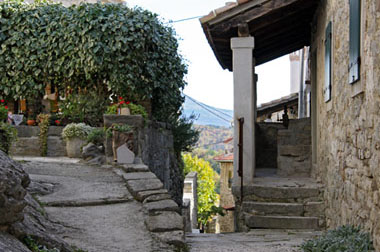
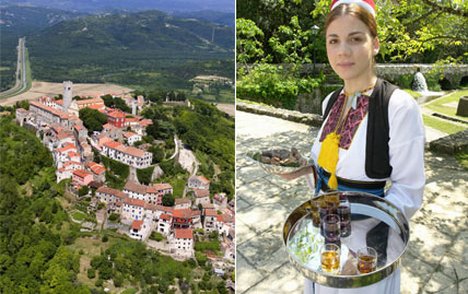
Hum, the smallest town in the world, is one of the rare preserved examples of urban development located exclusively within early medieval walls. It was mentioned for the first time in 1102. Town walls protected the town from frequent intrusions of the Venetians and the Turks. For almost a thousand years, nothing has been built outside the walls of Hum. Frescoes with biblical themes, unique artwork created by an unknown author in the 12th century, are a unique feature of the town.

Apart from being famous as the smallest town in the world, it has also been recently promoted as the Town of Biska. Biska is mistletoe brandy whose original recipe comes from Hum. Every year at the end of October Hum is the host of a brandy exhibit where a competition for the best brandy in Istria is organized.

The traditional custom of electing the county prefect for a year has been preserved to this day. Many tourists come to see the election proceedings and join in the culminating festival celebration.

Today Hum has about 20 inhabitants. You can tour the town in about five minutes, but after that be sure to stop at Humska Konoba (Hum Tavern) to taste some of the typical Istrian specialties.

For more info, go to www.istra.hr

Wacker’s at Kornmarkt 9

A coffee shop with history and flavor

By Don Heimburger
Photos by the author or as noted

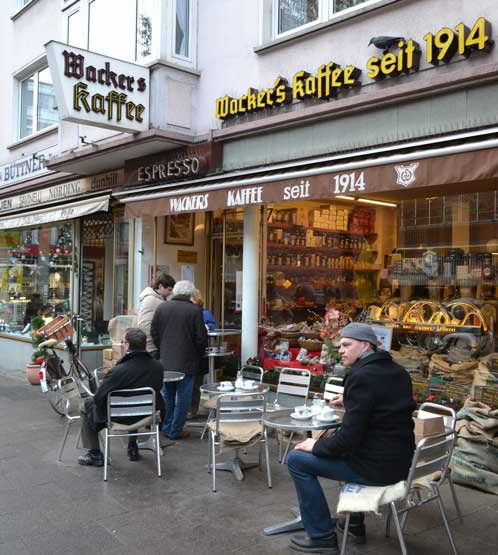
Wacker’s Kaffee is a third generation family-owned and run coffee shop in Frankfurt, Germany, which I heard about while on a city tour bus.

As the bus zipped past the small shop at Kornmart 9, I had just enough time to see its facade and notice all the customers lined up for coffee. The tour guide recommended the little establishment, which has been in business since 1914, or nearly 100 years.

It’s taken a while for me to actually “like” a good cup of strong German coffee, but now when I return to the U.S., I miss its rich flavor. So a taste-testing trip to this shop was in order, especially since I knew how to find it, and the small shop looked interesting.

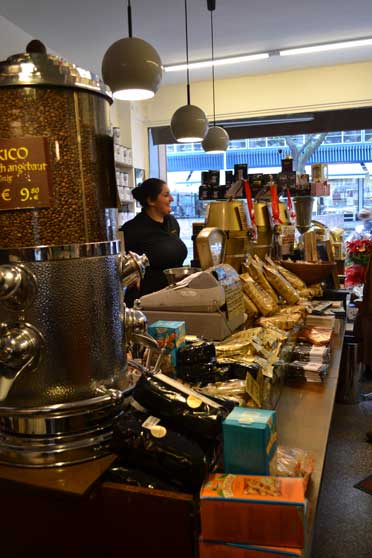
When time allowed, it was back to the shop, and trying to squeeze in the shop among the other customers was a challenge. Customers were lined up both for coffee to drink right there—Germany hasn’t become tuned in yet to the term “to go”—and to buy coffee beans in bags.

FILLED WITH CUSTOMERS
The several tables outside were filled with customers in December savoring their hot cups of Wacker’s kaffee, while others at the inside counter were purchasing bags of coffee beans and other Wacker’s products (they sell coffee mugs and other coffee-related items).

To keep customers a bit warmer outside, the seats are covered in the burlap bags from the coffee beans, a nice touch.

In the rear of the shop, customers were crowded around several tables, enjoying their coffee and kuchen, which is also served.

The business began when Luise Wacker opened a coffee shop at the location in 1914. Previous to this, a store was located here where the famous writer Johann Wolfgang von Goethe purchased his milk supplies.

Comments about the store on Trip Advisor include these two:

“Definitely the best coffee shop in Frankfurt. There are generally two lines, both often stretching out the door; the one on the left is for those who want to order drinks, while the one on the right is for those who want to buy coffee beans. The shop is also very small with limited seating, so when the weather is nice (or even just tolerable), you will see customers spread out both in front of the shop, and sitting on the stone wall across the street, enjoying their coffee and pastries.

“What non-German speakers may find intimidating is that, when the shop is quite busy, the cashier will shout out to customers further back in the line, asking them for their order. Luckily, the words for cappuccino, espresso and latte are generally the same in both English and German, so you should feel comfortable simply shouting your order back to her. “

Another customer said: “Great coffee. The smell is worth it alone.”

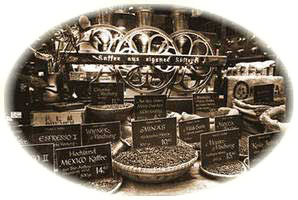
Wacker’s offers a long list of ready to drink coffees, and beans, so you’ll need a moment to figure out what you want. Coffee beans, available in bags of 500 grams each, include beans from Mexico, Java, India, Nicaragua, Galapagos, Cuba and Brazil, and expresso beans come from Jamaica, Guatemala, Costa Rica and other locations. I counted 40 bean types available from the shop.

Once your order is ready, you’ll be treated to some really good coffee, German-style!

For more information, go to www.wackers-kaffee.de.

InterContinental Hotel at Frankfurt City Center

By Don Heimburger
Photos by the author

I haven’t been to perhaps more than six InterContinental hotels in my lifetime, but I have to admit that each one more than exceeded my expectations.

Many are oases in the middle of busy cities, with street noise and lots of hustle and bustle; yet, entering the lobby of the Frankfurt (Germany) hotel, I found myself already starting to relax.

The Frankfurt City Center hotel on Wilhelm-Leuschner Strasse, managed by Thomas Hilberath, who has a knack for pleasing his upscale guests, attracts a clientele with above average income. This includes many businessmen, but also leisure travelers, who come to Frankfurt to take in the sites. And when the annual Christmas Market begins in Advent, it’s just a 15 minute walk from the hotel to the Roemer Platz, where this popular event is held.

BUSY LOBBY
The lobby exudes a warm atmosphere and is a very busy place at 10 a.m., with professionals having discussions in the hotel’s lobby lounges. At the same time, bags await transfer to waiting cabs, and the hotel staff keeps busy helping guests find directions, check out and check in.

This 21-story hotel towers above the Main River and affords spectacular views of the city center as well as the Main. One of my night shots of the river from the top floor could probably win a prize.

The 770 rooms available are classed as standard, deluxe and suites, and a different range of services and room footage come with each type of room.

From my corner room I got a sweeping view of the skyscrapers from one set of windows and what was going on near the river on the other side of the room out the other windows.

Standard rooms of 280 square feet feature warm room colors and are equipped with high-speed internet connections. Bathrooms feature a black and cream and gold design. Bathrobes, hair dryers, in-room safe, coffee maker/tea-maker, mini-bar and iron/ironing board are featured in all standard rooms, as is a work desk, television with cable and satellite channels.

Deluxe rooms are on the 19th and 20th floors of the River Wing (the hotel has two wings, one across the street from the other), and measure about 540 square feet. There is turn-down service at night, complimentary morning newspaper and a separate check-in area at the front desk for these guests. Deluxe rooms also feature a separate sitting area, and the bathrooms are roomier and even more upscale with more features. A valet service is also available in Deluxe rooms.

The Panorama Suites feature an elegant living room, a more luxurious bedroom, a whirlpool and even a complimentary meeting room.

24-HOUR FITNESS ROOM
Strolling around the hotel, you’ll find a 24-hour health-fitness center on the ground floor, which is complimentary; massages, manicures and facials can be arranged. The business center offers high speed internet and wireless LAN in public areas such as the hotel lobby.

On the 21st floor is the Club InterContinental Lounge for guests of this floor. The bar on the first floor, which takes its name from the German stock market index, DAX, and Frankfurt’s skyscraper-inspired nickname, DAXx Mainhattan’s Bar, is located just off the lobby and stays open until 1 a.m.

Two restaurants offer guests modern cuisine as well as Italian specialties. Signatures Veranda Restaurant features a fusion of haute cuisine from across Europe, with a menu to suit every palate featuring varying themes. Regional dishes, steak, or fish are available and served in the private dining room, summer terrace or veranda, depending on the weather. The dining room is also where breakfast is served.

Breakfast is a hearty meal, with juice, eggs, scrambled or to order, sausages, bacon, potatoes, toast, tomatoes, beans, breads, jams and jellies, cold cuts, cereals, coffee and even champagne, plus plenty more for those who need to carb up for a long day. The wait staff is pleasant and courteous.

Leons Italian Restaurant, inside the hotel, is where you can enjoy a long, leisurely meal in the ambiance of a 1920s-style Italian cafe. Popular classics include pasta, pizza and meat and fish dishes, and a cold glass of beer or wine tops off the meal. The large bar area and live piano music lure young professionals, who often stop by for drinks after work.

Trip Advisor customer comments about the hotel include these two: “Excellent, quick check-in. Room may have been small, but it was clean and comfortable, along with nice large towels. Breakfast was very good with great coffee. Very close to the train station and a beautiful walk along the river to the Christmas market. “

A second comment was, “The staff (was) quick to complete the check-in formalities. The travel desk is also very informative. Breakfast is good and location is very close to main station.”

I’d stay at the InterContinental again. Good location next to the busy train station and to the main part of busy “Mainhattan,” good food and service, and a competitive price add up to what I’d call a hotel with staying power.

For more information, go to www.frankfurt.intercontinental.com or www.intercontinental.com.

Vienna Celebrates the 150th Birthday of Gustav Klimt

Photos courtesy Albertina Museum, Vienna

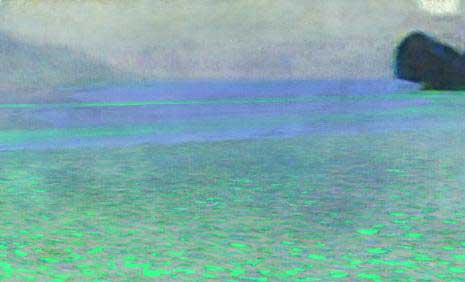
The year 2012 marks the 150th anniversary of the birth of Gustav Klimt (1862-1918). Vienna’s Kunsthistorisches MuseumLeopold Museum and Albertina are all staging major exhibitions dedicated to the work of this great turn-of-the-century modernist pioneer.

The Leopold Museum will be staging an exhibition titled “Gustave Klimt: A (time) Journey,” from February 24 to June 11 which will focus on the museum’s collection of hundreds of postcards, photographs and letters written by Gustav Klimt for over two decades to his partner in life Emilie Flöge. Among them there are art cards designed by the Wiener Werkstätte, tube mail, and telegrams as well as the correspondence that Klimt conducted with his friends and family in Vienna while enjoying his seasonal summer retreat at the Salzkammergut, at the Attersee and in Gastein or during his journeys that led him all across Europe to Italy, Paris, Brussels and London.

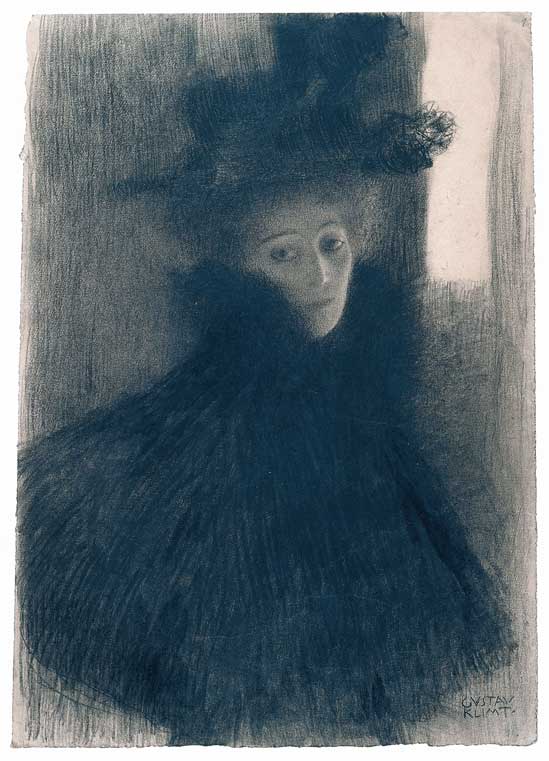
From March 16 until October 6, the Albertina Museum will celebrate Klimt’s 150th birthday with the exhibition “Klimt – Drawings” that will present the majority of the museum’s 170 drawings, as well as other items on loan. As a center for research on Gustav Klimt’s drawings, the museum will present pieces from all phases of the artist’s work. The focus will be on the unique drawing talent of Gustav Klimt, whose way of thinking and working is revealed in numerous figure studies and the precisely told allegories.

The Kunsthistorisches Museum in Vienna will hold a special exhibition from February 14-May 6 focusing on the 13 major paintings completed by Klimt for the grand staircase of the museum and the sketches they were based on. In 1890 Klimt, together with his brother Ernst and Franz Matsch, were entrusted with creating spandrel paintings and other narrow pieces to fill the spaces between the columns lining the grand staircase of the Kunsthistorisches Museum.

While Ernst Klimt and Franz Matsch kept to a more conservative style, the first signs of Art Nouveau symbolism can be clearly seen in Gustav Klimt’s pictures. These key paintings set the stylistic tone for Klimt’s world-famous work from about 1900 onwards.