The Best of Outdoor and Camping Near Prague

In a city where the average daily temperature ranges from 30 °F to 66 °F across the entire year, camping and other outdoor activities are popular. From May to September, the temps are typically in the mid 60s to low 70s, so it is perfect weather for water sports. The only time it gets really cold is November to March, when it is in the 30s. 

Whether you want to camp in a tent in the woods or do some glamping in a fancy cabin, Prague has all of that and more. Many of the campgrounds are along the Vltava River—the longest river in the Czech Republic—so you can fish, swim, and do some boating. Leave your bags with a Prague suitcase storage facility first for safekeeping while you have a great time outdoors. 
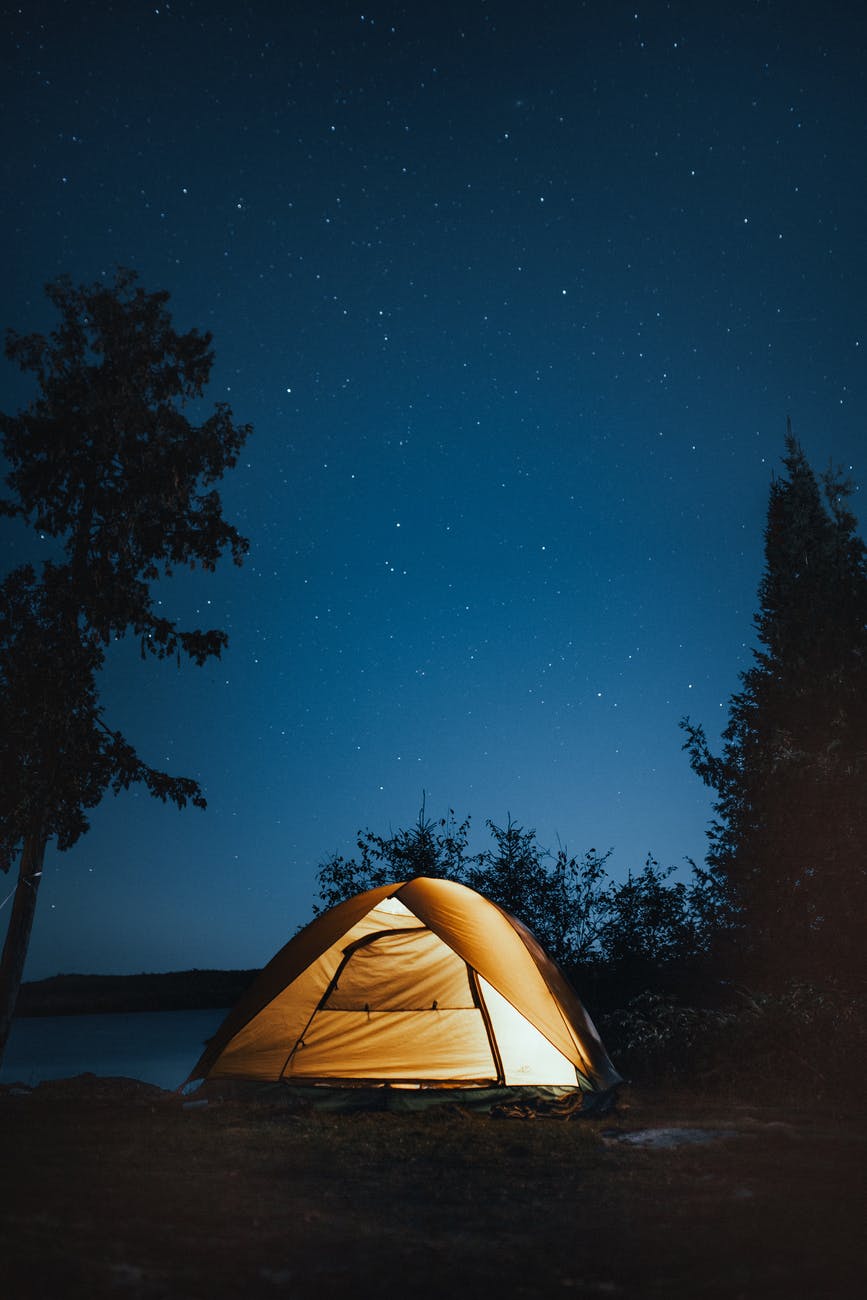
Photo by Josh Hild on Pexels.com

The most popular camp in the city, Oase Praha boasts 167 sites and seven cabins. The basic sites have 328 square feet without any hookups; standards include 328 square feet with electricity. The comfort sites have 328 to 492 square feet, water, and electricity. The premium sites have 558 square feet, water, and electricity.

The cabins (luxury mobile homes) have room for up to six people, with three bedrooms, a kitchen with appliances, satellite TV, a bathroom, and a shower. Onsite you can find a restaurant, playgrounds, indoor and outdoor pools, a dog park, a horse trail and horses, and pedal go-karts, and much more. Showers, dishwashers, and washing machines are also onsite.

Centrally located in Prague, its name says it all. River Camping Prague is right on the Vltava River, so you can enjoy lots of water fun. A neighboring water sport facility rents out kayaks, rafts, and canoes. The restaurant has delicious Czech cuisine, and you can order rolls to be delivered for breakfast in the morning. Pets are welcome.

Rent a bike to get to the zoo or botanical gardens just a few minutes away. The snack shop is fully stocked, many sites have fire pits or grills, and you can get wood from the reception area. Electric hookups are also available, and you can shower or wash clothes at the wash facility.

Near the river as well as the zoo, botanical garden, and Troja Palace, Autocamp Petrokova is the perfect place for those who want to be near the major attractions. They boast large sites for tents, caravans, or motor homes, with hookups for electricity and water. Pets are welcome. 

You’ll be right near a tram stop, and a bus stop where the bus can take you to the train station so you can get around to the palaces, museums, and Charles Bridge. The park provides showers, washing machines, and a kitchen for cooking. There is a private road that runs along the Vltava River where you can walk, bike, or skate. 

Whether you want to pitch a tent, park your RV, or rent a bungalow, Matyas Camp has all that and more. Fall asleep to sounds of the river just feet from your site, with a view of the hills in the background. The campground boasts clean facilities, home cooking in the restaurant, and a fun-for-all-ages pool.

Electricity and water are available, and pets are welcome. Washing machines and showers are available nearby, and you can also rent a boat or bike for your enjoyment. The kids will love the playground, swings and hammocks, fishing pier, sandbox, and table tennis while you enjoy an adult beverage at the bar

Photo by Dominika Roseclay on Pexels.com

In the middle of the Vltava River on the island of Císařská louka, under the stars across from the Vyšehrad Castle, you’ll find Caravan Park Prague. Whether you want to park a trailer or pitch a tent, there is plenty of open space to enjoy. Electricity and water are available for use as well. 

You have a variety of choices at Triocamp. Bungalows offer room for six with beds, AC, bathroom, and a kitchen. Cabins boast room for four with beds, a small fridge, heat, and dining set with 24-hour restrooms and showers. They also have a hotel with beds for up to three people, and private restrooms with showers. 

For a really unique way to camp, try the safari tents. Up to six people will enjoy two bedrooms, a kitchen, seating area, and a deck with furniture. They also have large sites for tents and RVs with electricity, restrooms with showers, and a kitchen. In addition, they have a pool, play areas, and a bistro featuring live music nights. 

Just 15 minutes from the zoo, botanical garden, and Troja Castle, Camp Dana has lots of space to park your RV, van, or pitch a tent. You will have electricity and water, as well as the use of hot showers and toilets 24 hours a day. Cook in the outdoor kitchen and shop at the camp market while the kids play on the equipment.

Enjoy the terrace and garden or watch television in the lounge area. The hotel has rooms for 2-4 people, with a seating area, shared bathrooms, and an onsite laundry. The Stromovka Park is also nearby, where they have ponds, playgrounds, and a restaurant. 

Just a few minutes from downtown Prague, Camp Džbán is right on the edge of a nature reserve with hiking, swimming, and the national forest. The campsite boasts 320 spots for RVs or tents with electricity, picnic tables, and lots of green space to enjoy. The chalets have beds for four, kitchens, and outdoor seating. 

There is a playground, tennis/badminton/volleyball courts, and a golf driving range right at the campground. No need to go anywhere else unless you really want to. The café serves meals and a wide range of drinks and beer. Showers, toilets, and washing machines are also available. 

Camping Drusus has room for 70 RVs or tents as well as eight cabins, and a guesthouse that accommodates visitors year-round. Campsites have electricity and plenty of space as well as access to showers, restrooms, kitchen facilities, and laundry. Several rooms at the guesthouse hold up to four people, and some have private baths. You can dine at the onsite restaurant, GUSTA, with its own mini-brewery for home-brewed beer.

Be sure to check with these campgrounds to see if you need reservations in advance. Also, verify the rules about pets, because some do not allow them. And don’t miss your chance to go into the city and visit the attractions like the Řepora Museum, Koněpruské Caves, and Karlštejn Castle.

Photo by Todd Trapani on Pexels.com

Prague to Goslar

This train ride features Eurocity, Intercity and Regional trains

By Don Heimburger
Photos by the author

My travel plans had taken me to Prague, and I wanted to visit the medieval town of Goslar, Germany near the Harz Mountains. I had time to get there, and opted for a seven hour train ride so I could relax, unwind and see the scenery. Besides, trains are magic, and it’s much more fun to see the countryside from a train than it is from 30,000 feet up in the clouds.

Leaving my Prague hotel early morning, I take a short tram ride to a subway, and 15 minutes later walk up into the light of day where Prague’s Holesovice train station awaits me.

My particular concern is that I can’t read a word of Czech: Nada. Rien. Nichts.

FINDING MY TRAIN
Waiting in line at the station to check the status of seating on my Eurocity train leaving at 6:40 a.m.—that’s correct a.m.—a man darts in front of me. I can’t even say “excuse me” in Czech. And I can’t get much information that I can understand from the railway clerk, who sends me to another office down the corridor.

But I eventually learn that EC 178 (Eurocity) to Berlin is on time, that I likely won’t need a reservation in addition to my first class ticket, and that I’ll need to wait a few more minutes before I go out onto the platform. Once I make it to the platform, people stream out a few minutes before the train is due in, and once the train is stopped, they all board relatively fast. You have to in Europe, or the train leaves without you.

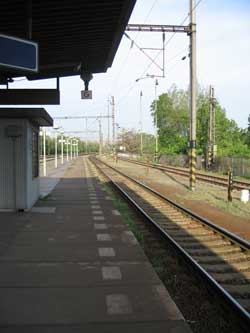
Praha-Holesovice station

I noted that the departure/arrival screen in the station–-not a large board like in most major European cities–was very small, and that there wasn’t room for more than several train listings at a time; perhaps not many intercity trains come and go from Prague.

ON BOARD
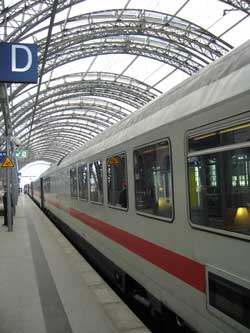
The car I sit in features good, comfortable seats–there are two first class cars, and I’m next to the on-board restaurant car. At my first class seat, tables fold down from the seat in front (like on an airplane), the chairs are adjustable, the windows are large in width and height, there are foot rests, and there’s luggage space above the seat. I could cross my legs and not block traffic as I sat in the aisle seat.

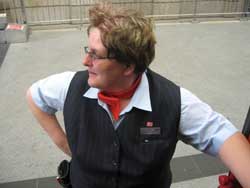
Conductor waits for passengers to board

As the train pushed through Prague and into the countryside, I could tell me were accelerating, and the engineer was using his electric locomotive to give us “the juice.” I suspect we were doing at least 100 mph at times.

When meal time came—enough of the menu was in English, with the help of some of the German I know—that I didn’t starve.

There were plenty of beverages available from coffee, lattes and espresso, to tea, wine and beer. Or you could order a Pepsi Cola. Other foods available included croissants, cheeses, sandwiches, soups and a vegetarian plate.

Dresden was the first stop once the train crossed the border into Germany.

CHANGE IN BERLIN
At the new Berlin train station, I had 18 minutes to hoof it to track 13 from track 7 (on a different level of the station)…and the conductor told me and the schedule in my hand called for me to change levels in the station. From there I boarded an ICE train (Intercity Express) for Braunschweig, Germany and with a 26-minute wait there, I had plenty of time. From there a Regionalbahn train took me to Goslar, arriving at 2:08 p.m., right on time.

A big part of the trip is its predictability; you can nearly always count on Rail Europe trains to do what they say they’re going to do. And it’s fun riding, and watching the little towns, the historic castles and rivers fly by outside your window.

For more information and to get your ticket for an overseas train ride, go to www.raileurope.com.

Let the journey begin.

European Easter Egg Traditions

Goose and duck eggs from Poland, decorated with paint and colored straw.

By Sharon Hudgins
Photos by the author and courtesy German National Tourist Board

Europeans take their Easter egg traditions seriously.

From Scandinavia and Britain in the north to Italy and Greece in the south, from the Slavic countries to Germany, Romania and Hungary, eggs at Easter time are dyed in many colors, decorated with intricate designs, hung from tree branches, strung onto wires, buried in the ground, featured in games, exchanged among friends, baked into breads and taken to church to be blessed on Easter morning.

Easter egg tree at a Russian Orthodox church.

PRE-CHRISTIAN TRADITION
Although colored eggs are the most salient symbol of Easter today, their association with springtime reaches much farther into the past. Archeologists in Europe have uncovered egg-shaped artifacts with ornate designs made thousands of years before the Christian era.

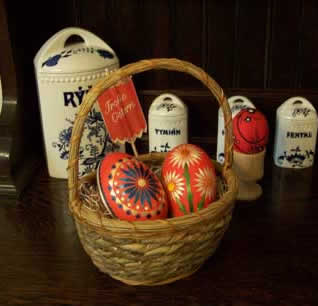
Etched goose and duck eggs from the Czech Republic.

Folklorists say that decorated eggs were part of pagan spring festivals, for which eggs were painted in bright colors to symbolize blossoming plants. So it’s not surprising that the egg, representing the creation of new life, would also find a place in religious celebrations of the resurrection of Christ. The decorating of Easter eggs is a long-established folk art in many parts of Europe, still practiced today. During the 40-day Lenten fast preceding Easter, many Christians abstain from eating certain foods, including eggs. But the hens keep on laying. Some of these excess eggs are dyed a solid color: red is especially symbolic, representing drops of Christ’s blood as well as the regeneration of life.

Others are decorated with intricate floral or geometric motifs. Several countries and regions in Europe—Poland, Ukraine, Belarus, Moravia, Slovakia, Bohemia, Hungary, Slovenia, Romania, Germany, Austria—are well known for their production of beautifully decorated eggs, using age-old techniques and designs, many of which are unique to that particular place. The connoisseur of folk art eggs can tell at a glance whether an egg has come from the eastern or western part of the Czech Republic, from Slovakia, from northern Croatia or from central Austria.

Easter fountain in Ginsheim/Rhine near Mainz, Germany. Photo: Eric Eichberger

MAUNDY THURSDAY
In many parts of Europe, Maundy Thursday (the day before Good Friday) is the traditional day for decorating Easter eggs. Up through the 19th century, superstitions from earlier times survived in the belief that eggs laid on Maundy Thursday, Good Friday or Easter Sunday had magical powers: to prevent illness, to bring good luck, to act as an aphrodisiac, to ensure that the next baby will be a boy, to forestall an early death, to foretell the future. In some places, Easter eggs were fed to the livestock to protect the animals, or buried in the fields to help produce abundant crops. And Eastern European bee-keepers put a colored Easter egg under each hive to guarantee a good supply of honey.

A charming custom that dates from the 19th century is the making of an egg tree at Easter. Long branches of budding pussy willows or yellow forsythia are arranged in a vase, and eggs are hung on the branches like Christmas ornaments on an evergreen tree. Traditionally the eggs are hollow chicken or duck eggs, the whites and yolks first removed through pin holes before the eggshells are dyed and decorated, then a loop of ribbon or yarn pulled through the holes for suspending the eggs from the boughs. Sometimes brightly painted wooden eggs are also hung from the branches, along with little wooden birds. These egg trees are especially popular in Germany (where they’re known as Ostersträusse, Easter bouquets, or Osterbäume, Easter trees) and in several other parts of Central Europe, too.

Easter fountain in St. Wendel, in Germany’s Saarland region. Photo: Amt fuer Stadtmarketing, St. Wendel

OUTDOOR EASTER TREES
In some regions you’ll even see outdoor Easter trees, with real or plastic eggs suspended from the branches of live bushes or trees. In the Franconian Alps of northern Bavaria, the fountain or well in the center of many villages is decorated with garlands of evergreens, colorful streamers, fresh flowers and hundreds of painted eggs. For two weeks beginning on Good Friday, more than 200 of these traditional Osterbrunnen (Easter wells) are on display in Franconian towns.

In Europe today, Easter eggs are made from a wide variety of materials: natural egg shells—chicken, duck, goose—with the egg white and yolk blown out of the shell; uncooked eggs with their shells intact; hard-boiled eggs; edible substances such as sugar, chocolate and marzipan; precious metals, enameled metals, wood, wax, porcelain, onyx, marble, glass, cinnabar, cardboard and papier-mâché.

Decorations range from solid colors to painted, etched or batiked designs. Beads, lace, straw, colored paper and decals are also glued onto eggshells. The designs can be geometric, floral, symbolic—whatever suits the egg decorator’s fancy. And sizes extend from miniature jeweled eggs made with precious stones to the giant chocolate eggs, up to a meter tall, so beloved by Italian children.

An Easter egg tree decorated with eggs from many Central and Eastern European countries.

You can see hundreds of handcrafted eggs at the many Easter markets held in Europe during the spring. Prices range from just a few euros for simply painted hens’ eggs to several thousand euros for large exotic-bird eggs painted by internationally renowned artists. One of the most stunning eggs I saw at a Munich Ostereiermarkt (Easter egg market) was a huge ostrich egg acid-etched to look like lace. It was priced way beyond my budget, but I still came home with some lovely smaller samples of folk-art eggs by local artists. Now it’s time for me to find some pussy willow boughs and start decorating my own egg tree for the season.

Goose eggs from the Czech Republic, decorated with colored straw.

A SELECTION OF EUROPEAN EASTER EGG MARKETS

Germany
www.ostereier-maerkte.de/ (German only)
www.german-easter-holiday.com
www.voelkerkundemuseum.com

www.burgsatzvey.de/eng_index
www.volkskultur.sorben.com (German only)
www.ostereiermarkt.com (German Only)
www.ostern-in-deutschland.de (German only) 
www.stripes.com/

Austria
www.ostermarkt.co.at/
www.tyrol.tl/en/news_141
www.virtualvienna.net/

Czech Republic
www.pragueexperience.com
www.carnifest.com/
www.marys.cz/
www.jizni-morava.cz

Slovakia
www.goeasteurope.about.com

Poland
www.wieninternational.at

Hungary
www.budapesttimes.hu

Switzerland
www.swissinfo.ch

InterContinental Hotel Prague

Restful haven in a bustling capital

By Don Heimburger
Photos by the author

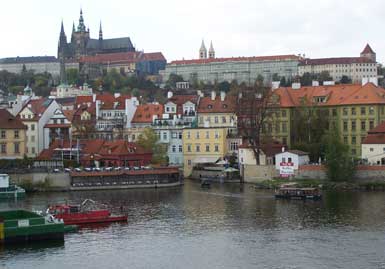
The InterContinental Hotel in Prague sits on the banks of the Vltava River in the city’s Jewish Quarter.

This is important because it offers a great view of the city and the Prague Castle and the river’s activities, but it also is convenient to the historical center, as well as transportation. The high-end shopping area called Parizska Street is a few steps outside the door.

I didn’t realize all this when I first spotted the hotel, but soon I realized that location sometimes can be everything. But for his hotel, it goes beyond that. It’s a luxury accommodation on the inside, as well as being centrally located.

OFFERS 372 ROOMS
The hotel offers 372 rooms and suites and another important feature, especially for the business traveler—the Club InterContinental (concierge service, a library, free internet access, copy machine, newspapers and refreshments).

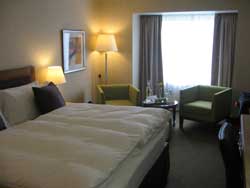
The hotel’s rooms feature goose-down duvets, blackout curtains, Italian marble bathrooms, mini-bar, in-room safe, color television with 47 channels, telephone, voice mail, coffee machine, iron and ironing board and individually-controlled air conditioning.

I found plush towels in my room, fluffy pillows, chocolates at turn down time, bright, cheerful rooms with two comfy chairs and 3.4 ounce bottles of shampoo, lotion, conditioner and shower gel. The bathroom had two hand towels, two face towels and two shower towels. There was plenty of closet space, a storage cabinet and nice plush carpeting. The flat screen television was of the newest model, and the swimming pool was nice.

BREAKFAST: GOOD VARIETY
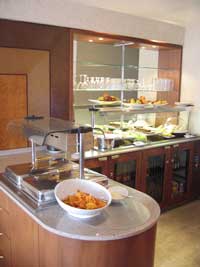
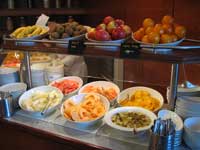
Breakfast, an important meal for business and leisure travelers alike, featured a large variety of meats and sausages, cheeses, cereals, potatoes, hot plates such as waffles or scrambled or fried eggs made to order, breads and rolls, juices, coffee and tea, and fruit, as well as whole fruit. The breakfast was delicious and there was plenty of it. The wait staff was pleasant and efficient.

The hotel’s staff is multilingual–good when you can’t understand the local language.

The Zlata Praha Restaurant in the hotel serves a wide variety of dishes, including Czech and international cuisine. A Sunday brunch is also offered between 11 a.m. and 3 p.m. A second restaurant on the first floor, the Primator, offers excellent views of the river. Duke’s Bar & Cafe offers a pleasant setting for a quiet drink or two, with live entertainment on Friday and Saturday evenings.

A Health club and spa are part of the hotel offerings, with whirlpool, saunas and solariums, as well as five treatment rooms.

To make a reservation, go to www.intercontinental.com/prague or www.icprague.com. The five-star InterContinental hotel is located at Curieovych 43/5, Prague 1, 110 00, Czech Republic. E-mail is prague@ihg.com.

Prague’s Beer Taverns — A Czech Tradition

By Sharon Hudgins
Photos by the author

Many people consider Czech beer to be the best in the world. The Czechs think so, too: they’re the biggest consumers of beer on the planet, drinking an average of 161 liters (42.5 gallons) per person annually (about 30% more than their beer-loving neighbors next door in Germany).

Prague is famous for both its architecture and its beer.

The Czechs prefer to drink their beer on tap, in local taverns, fresh from the barrel, not from bottles or cans. “Cans are for sauerkraut,” they say. Another Czech saying emphasizes the importance of the taverns: “The brewmaster brews the beer, the innkeeper makes it great.”

Prague’s oldest tavern, U Fleku, was founded in 1499.

BEER TAVERNS IN PRAGUE
Prague, the capital of the Czech Republic, has long been known for its beer taverns, some of which date from the Middle Ages. They’ve always been the haunts of workers and students, as well as those writers, artists and revolutionaries who preferred the classless camaraderie of the humble taverns to the social and intellectual pretensions of the city’s more elegant coffeehouses.

Before the Velvet Revolution of 1989, some of the beer taverns in Communist-era Prague were known as places where tourists (and spies) from the West could rendezvous with people from the Soviet Union and Eastern Europe, who were allowed to travel to Czechoslovakia but could not go to Western Europe or the United States. Of course those same taverns also attracted agents of Czechoslovakia’s secret police, who spied on the “suspects” from East and West meeting over mugs of beer in the smoke-filled rooms. Back then, some of Prague’s public taverns seemed like settings for a John le Carré novel.

After 1989, in the new capitalistic Czech Republic, some of those beer taverns cleaned up their grungy interiors but kept their traditional ambience. Others went completely glitzy-modern. A few old, defunct brewery taverns were brought back to life, and new microbrew pubs opened, too.

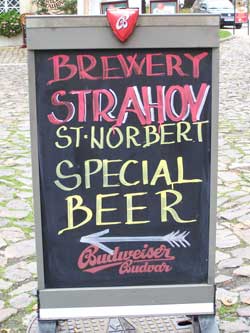
(left to right) Sign for the St. Norbert brewery in the Strahov district of Prague;
Entrance to the St. Norbert brewery;
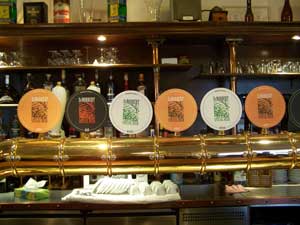
Interior of the St. Norbert brewery, with a display of the different beers on tap.

Today Prague, a metropolis of 1.2 million people, has hundreds of beer taverns, from well-known hangouts in the central part of the city to little neighborhood pubs patronized only by locals. Prague’s classic beer taverns are also good places to eat, offering traditional Czech dishes like grandmother used to make, at reasonable prices that won’t break your budget.

U FLEKŮ
Prague’s oldest, best known, and most touristy tavern is U Fleků (At Flek’s Place), which dates back to 1499. Today, U Fleků’s famous strong dark beer is still brewed on the premises, attracting hordes of beer-lovers from around the globe.

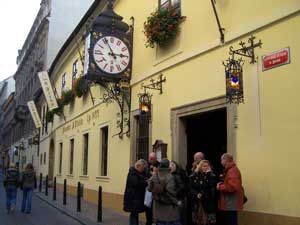
The building’s rather plain exterior is distinguished only by the large gilded ironwork clock, the tavern’s symbol, on the front. Inside you’ll find several “Old World” rooms with dark wood paneling, vaulted ceilings, stained-glass windows, and beams painted with barley and hops motifs. Part of the building surrounds two open-air courtyards used as beer gardens in warm weather.

The food is decent and moderately priced. The multilingual menu includes roast duck with sauerkraut and dumplings, beef with sour cream sauce and bread dumplings, goulash with bacon dumplings, smoked pork with sauerkraut and potato dumplings.

Pork with sauerkraut and dumplings or sliced braised beef with bread dumplings and sour cream sauce are specialties at U Dvou Kocek.

U Fleků seats a total of 1,200 people in its various dining areas, and it’s often packed in peak periods. In tourist season, go there in mid-morning or mid-afternoon if you want to find a seat. The tavern also features live music, an “Old Prague cabaret” in the evenings, and a brewery museum for serious students of the suds.

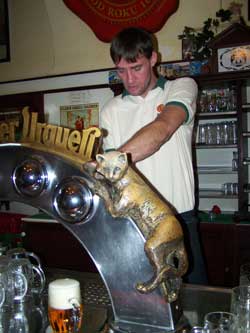
Drawing Pilsner Urquell beer from the tap at U Dvou Koček.

U MEDVÍDKŮ
U Medvídků (At the Little Bears) is an old historic tavern, recently renovated, where beer has been served since 1466. Today’s tavern retains the vaulted ceilings of the original structure in several rooms and features an open-air beer garden, too.

The wood-paneled restaurant has an extensive, multilingual menu of Central European dishes, including a game menu (in autumn) of venison, wild sheep, wild duck and pheasant accompanied by red cabbage, potatoes and dumplings. Many of the hot and cold appetizers are portioned large enough to make a light meal in themselves: try the “Medvědí tlapky,” the tavern’s own version of “devil’s toast” with a piquant meat mixture on top; or four slices of fried rye bread with house-made beer-cheese spread. The “Čertovo kolo” (“devil’s wheel”), is a delicious plate-size potato pancake topped with a spicy mixture of meat and vegetables.

The tavern serves Budvar (original Budweiser) beer on tap, as well as semi-dark Oldgott and very strong X-Beer from the new microbrewery upstairs, the smallest brewery in Prague, established in 2005. There’s also a cabaret section, a small museum, and a shop selling several kinds of beer and beer paraphernalia.

U RUDOLFINA
Many locals consider U Rudolfina, near the Rudofinum concert hall, to have the best Pilsner Urquell beer in Prague. They also consider it to be a “real” Czech beer tavern, which hasn’t made any concession to the rampant tourism that has overtaken central Prague during the past two decades. Most of the people drinking there are Czechs.

Czechs enjoying their beer at U Rudolfina.

Beyond the nondescript exterior, just inside the front door you’ll find a small, simple, wood-paneled room with a small bar. Downstairs is a larger area, just as plain in decor, and as smoky and noisy as the little room upstairs. Way in the back is a separate dining room set aside for non-smokers.

In addition to the excellent beer, U Rudofina serves some of the best beer-tavern food in town. Start with a basket of “topinky,” slices of dark rye bread fried on both sides, sprinkled with salt, and accompanied by whole cloves of garlic for you to rub on the bread, as much or as little as you like; or a plate of “beer cheese,” a mound of soft cheese with mustard and chopped onions on the side, which you mash together with your fork and spread on fresh bread. The main dishes emphasize meat—beef, pork, sausages, chicken—and are very well prepared, large portioned and reasonably priced.

Reservations are recommended because this is such a popular place—and well worth visiting for an authentic, no frills, Prague beer tavern experience.

Typical sign for a Prague beer tavern and restaurant. Many signs are in English to attract foreign customers.

RECOMMENDED PRAGUE BEER TAVERNS
U Fleků, Křemencová 11, Prague 1, www.ufleku.cz. Open daily 9 a.m. to 11 p.m.

U Medvídků, Na Perštýné 7, Prague 1, www.umedvidku.cz. Open 11:30 a.m. to 11 p.m.

U Rudolfina, Křížovnická 10, Prague 1. Open 11 a.m. to 11 p.m.

For current reviews and ratings of more than 60 Prague beer taverns, see www.praguepubs.co.uk.