There’s something irresistible about German bakeries—the fresh brötchen and Berliners, croissants, and the bold espresso you can order alongside—something that makes it feel okay to stop at various locales throughout the day, even beyond just a morning coffee and pastry. It seems that a thick slice of cake and a mug of strong, steaming coffee any time of day makes a whole lot of sense when you’re in a region with such a rich baking history. Dresden, the capital of Saxony in Germany, and nearby Meissen and Leipzig have much to offer snack lovers when it comes to pastries and cakes. So pour a fresh cup, heat up a bun, and read all about the role Saxony played in the rise of gluten-filled goodness.
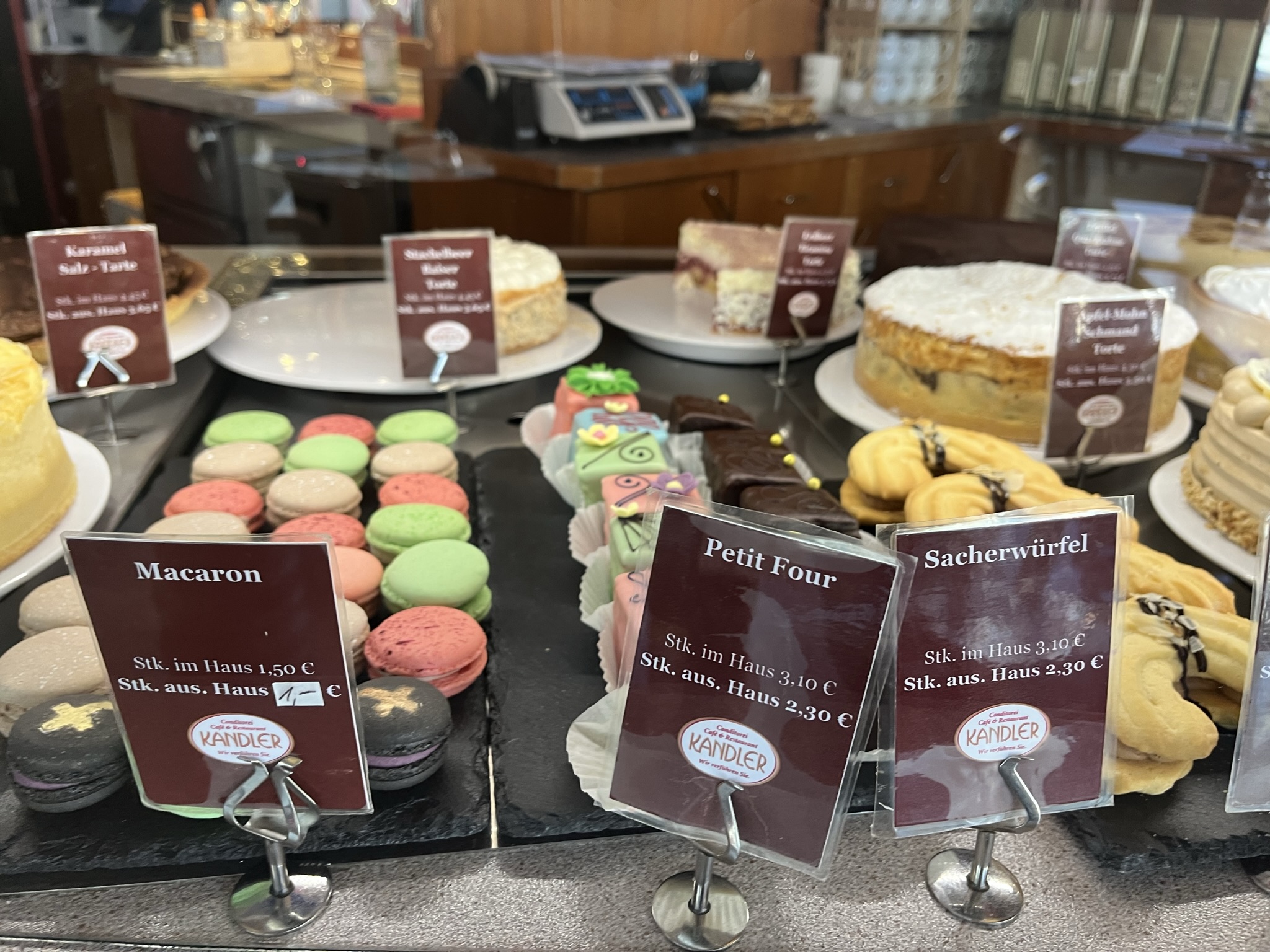
The five locations of Kandler Konditerei in Leipzig are always stocked with sweet temptations.
Russisch Brot During the late 19th century, Dresden-based master baker Wilhelm Hanke adopted the 1845 St. Petersburg, Russia, recipe for Russisch Brot (Russian bread), which are crunchy glazed cookies made from sugar, egg whites, water, and flavoring, and formed into the shapes of alphabet letters. These are sold under the Dr. Quendt label and remain a popular Christmas treat or a delicious snack to help teach reading. The letters “M” and “W” are too fragile to be stable, so Dr. Hartmut Quendt ensured bags contain mirrored 1’s that snackers can use to create their own “M” and “W” shapes. It’s clear permission to play with your food!
Stollen Dresden is also the birthplace of the authentic stollen Christmas cake—the Dresdner Christstollen. When stollen was first baked in the 1400’s, under the supervision of the church council, the bread was not allowed to contain butter or milk during Advent, so it was a dry and bland pastry consisting of flour, yeast, oil, and water. Ernst of Saxony and his brother Albrecht appealed to the Pope and asked that the dairy ban be lifted, so they could replace the oil with butter, as butter was cheaper than oil at the time. The appeal was denied, but finally, five popes later, Pope Innocent VIII sent Dresden the famous 1491 “Butter Letter,” in which he granted permission for dairy ingredients to be used in the stollen—although the Dresden bakers must, in return, pay a fine to be used toward the building of churches.
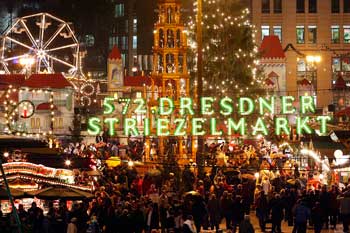
In 1730, Augustus the Strong, a stollen lover, commissioned a group of 100 Dresden bakers to bake an almost 4,000-pound loaf, which was brought to the king’s table using eight horses. A giant oven was built especially for this occasion, and an oversized knife was designed specifically for the event. This is the basis for the annual Dresdner Stollenfest (or “Striezelmarkt”), which takes place in Dresden the Saturday before the second Sunday in Advent. The festival is a highlight of the pre-Christmas season and celebrates the stollen baking tradition, featuring a colorful parade and the sale of varieties of stollen.
A huge stollen is still made annually and divided into smaller pieces on a specially shaped stollen cutting board—using a 26-pound replica of the original baroque knife from the Residenzschloss (Royal Palace) Court Silver Collection of Augustus the Strong—with cake portions sold to raise money for charity. The Stollenfest knife design features a swooping stainless-steel blade and Augustus the Strong’s coat of arms and rose tendril.
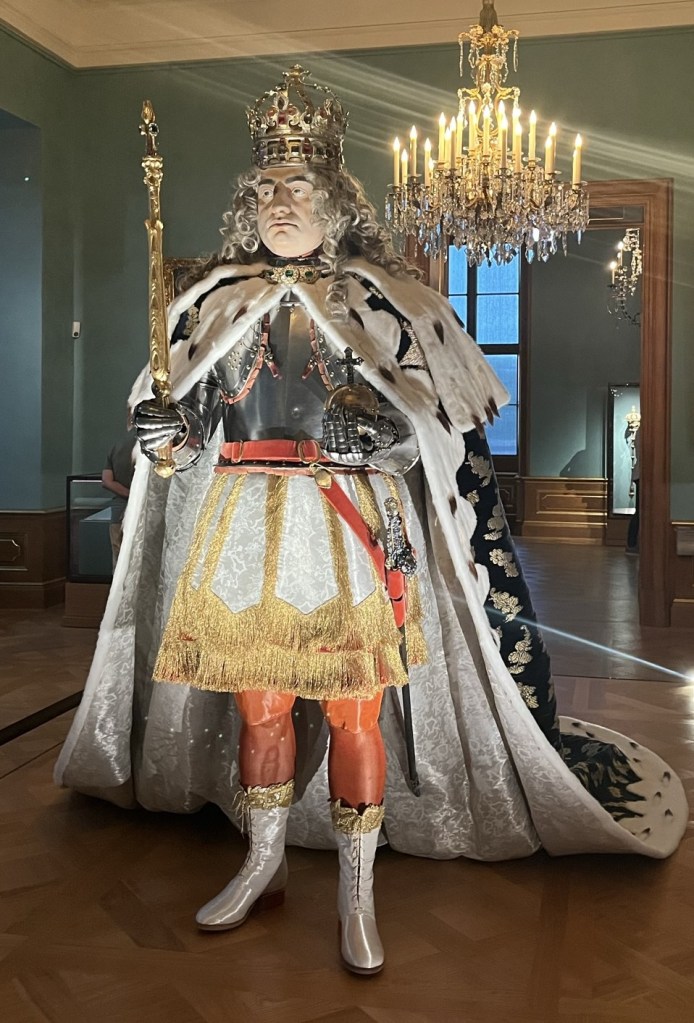
Left: A Dresden bakery displays its stollen seal.Right: This life-sized figure of Augustus the Strong is displayed in the Dresden Residenzschloss.
Stollen has its own protected name and registered trademark, and the recipe needs to follow certain guidelines to earn the golden, oval “stollen seal.” The cake only passes the test for high quality and validity if it contains no margarine and no artificial flavors or preservatives. The Dresdner Stollen Association requires that each cake contain butter, rum-soaked raisins, candied orange peels and lemon peels, and sweet and bitter almonds to receive the seal. Outside of these requirements, the approximately 110 Dresden bakeries that produce this sweet each use their own secret spice mixture, passed down through generations, which results in varied and distinctive flavors from bakery to bakery. Each stollen is labeled with a 6-digit seal number, to identify and track the bakery of origin. Also identifiable by the European Union-protected geographical indication, true Dresdner Christstollen is marked with a blue and yellow Geschϋtzte Geografische Angabe (“protected geographical indication”) sticker. Dresdner Christstollen can only be produced within Dresden itself or within specific boundaries surrounding the capital. This cake is best enjoyed by removing slices from the middle and pushing together the ends, eating the cake from the center outward. It is seen as traditional Dresden “finger food,” with no need to use a fork.
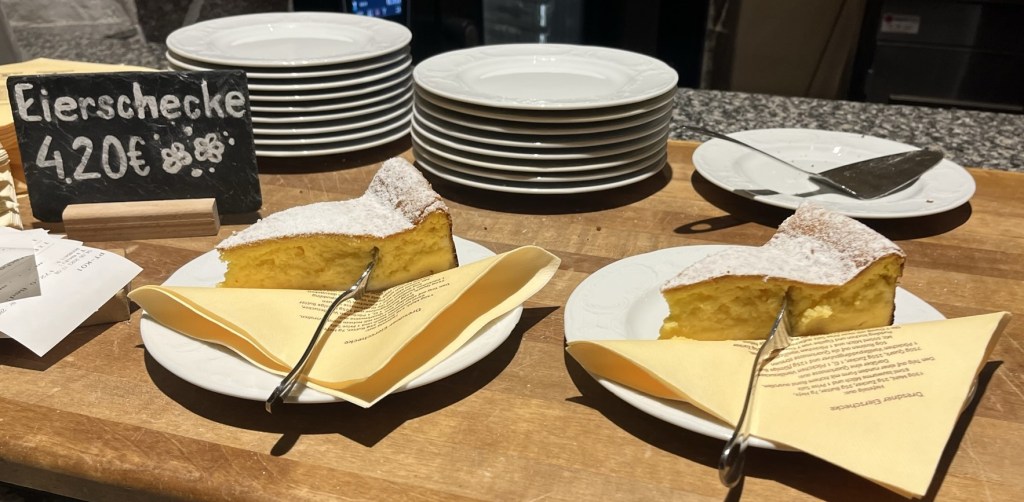
Eierschecke For something slightly sweeter, the Dresdner Eierschecke is a popular pastry choice. It’s a 3-layer confection consisting of a cake base topped with a custard-like quark cheesecake center, and a layer of sweet vanilla egg white on top, dusted with powdered sugar. Only found in Saxony and neighboring regions, this treat is often served with coffee or tea, and makes its way into celebratory menus for birthdays, weddings, and holidays. Some bakeries add chocolate, dried fruit, and sliced nuts, but the original recipe is simply the three-layered stack of varied texture.
Eierschecke and other traditional Saxon specialties are served at the Pulverturm.
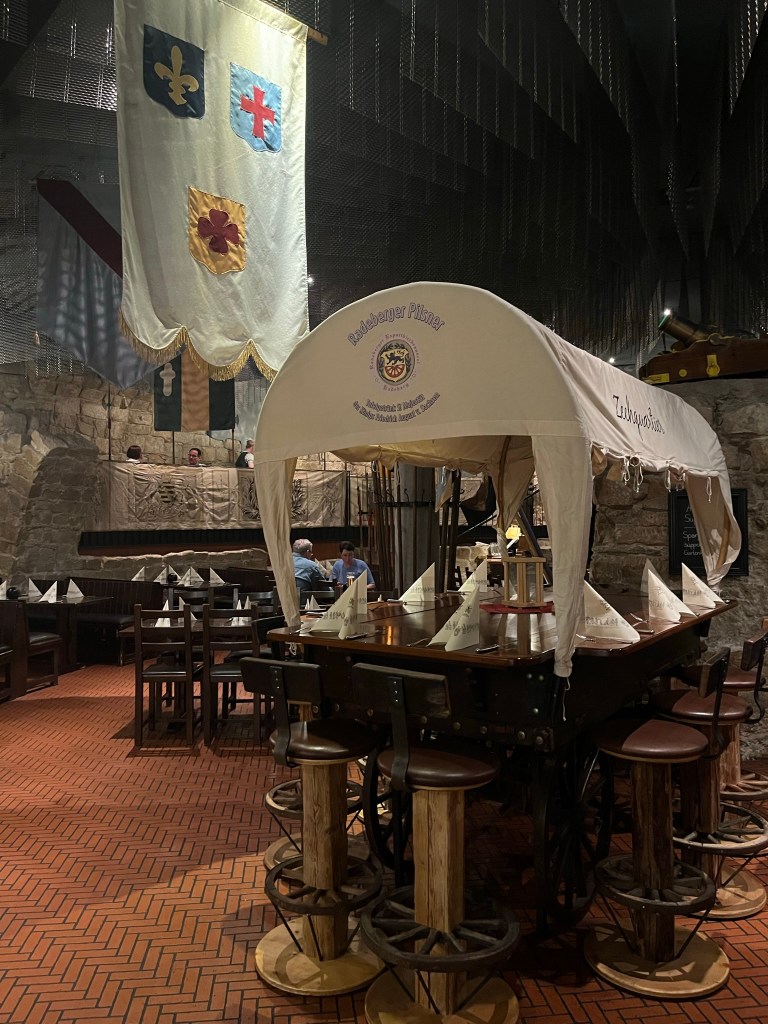
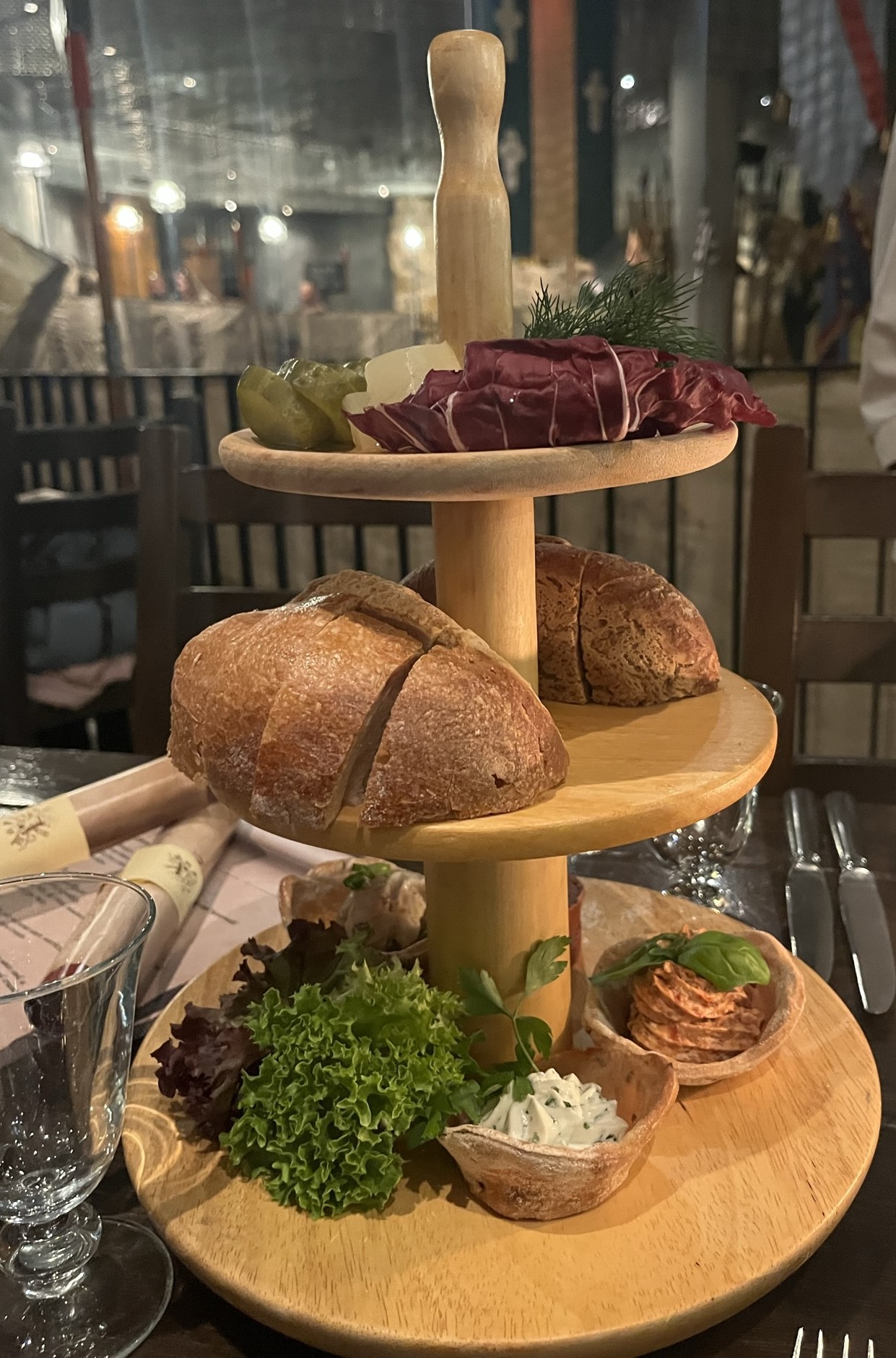
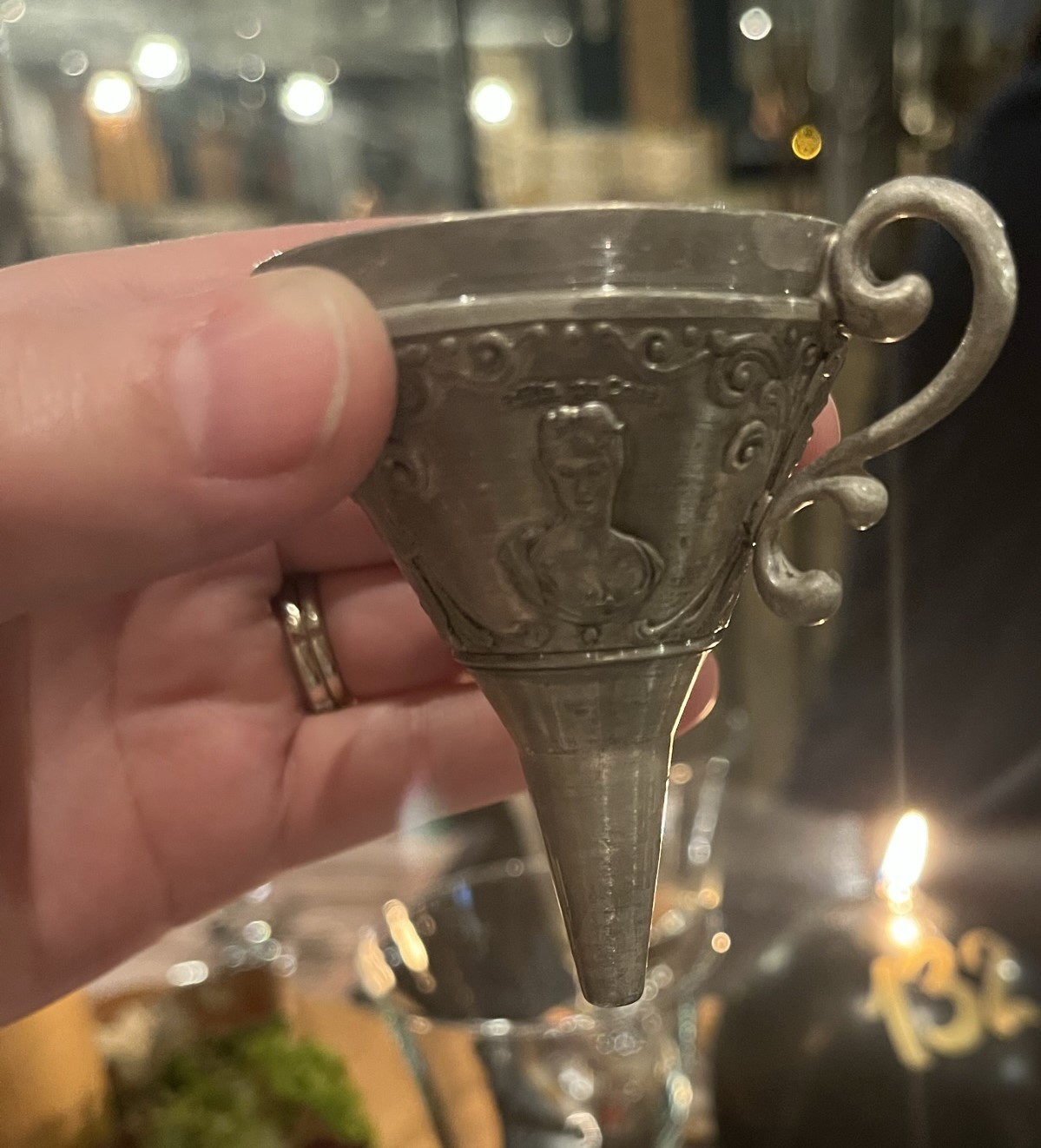
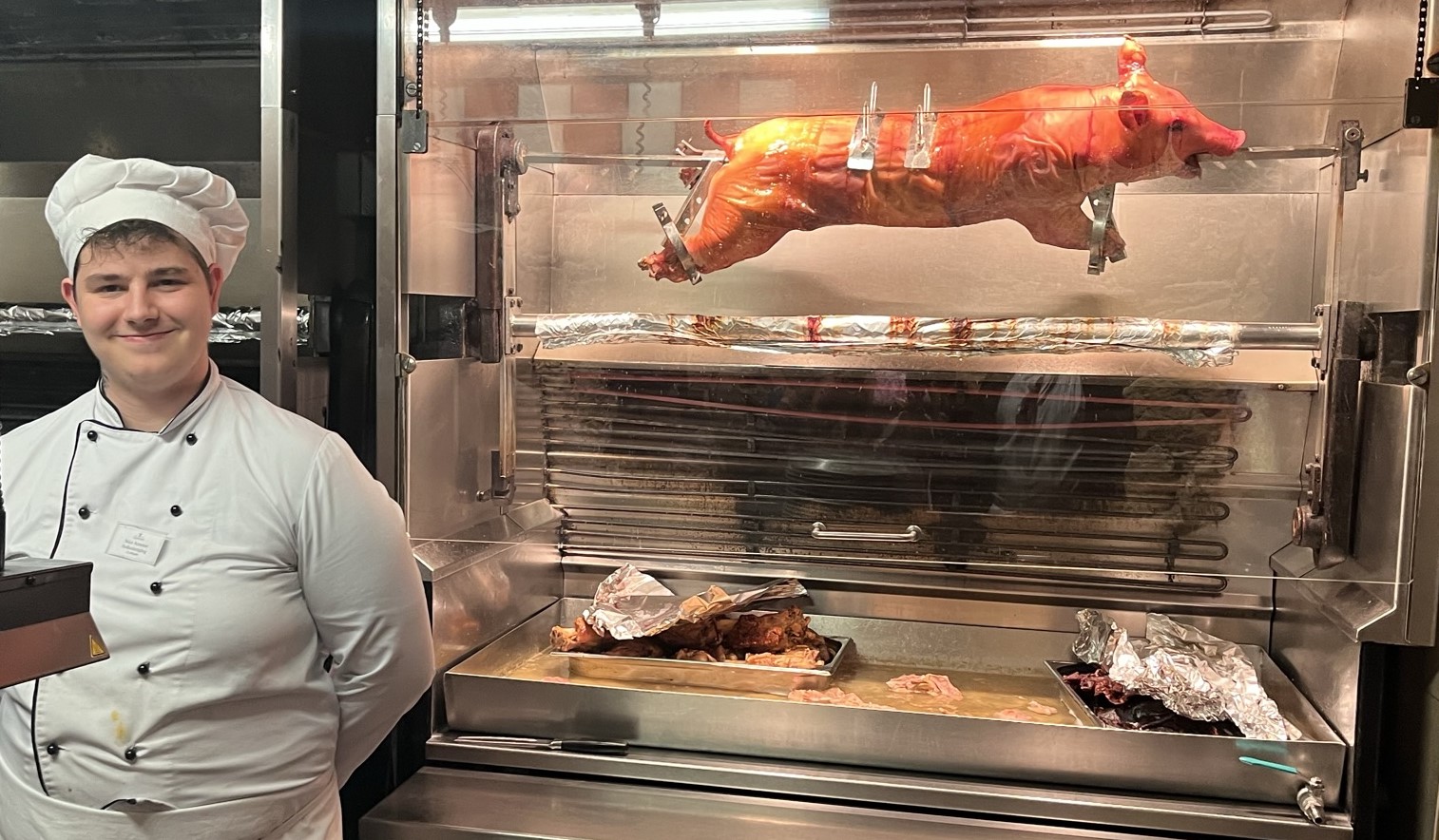
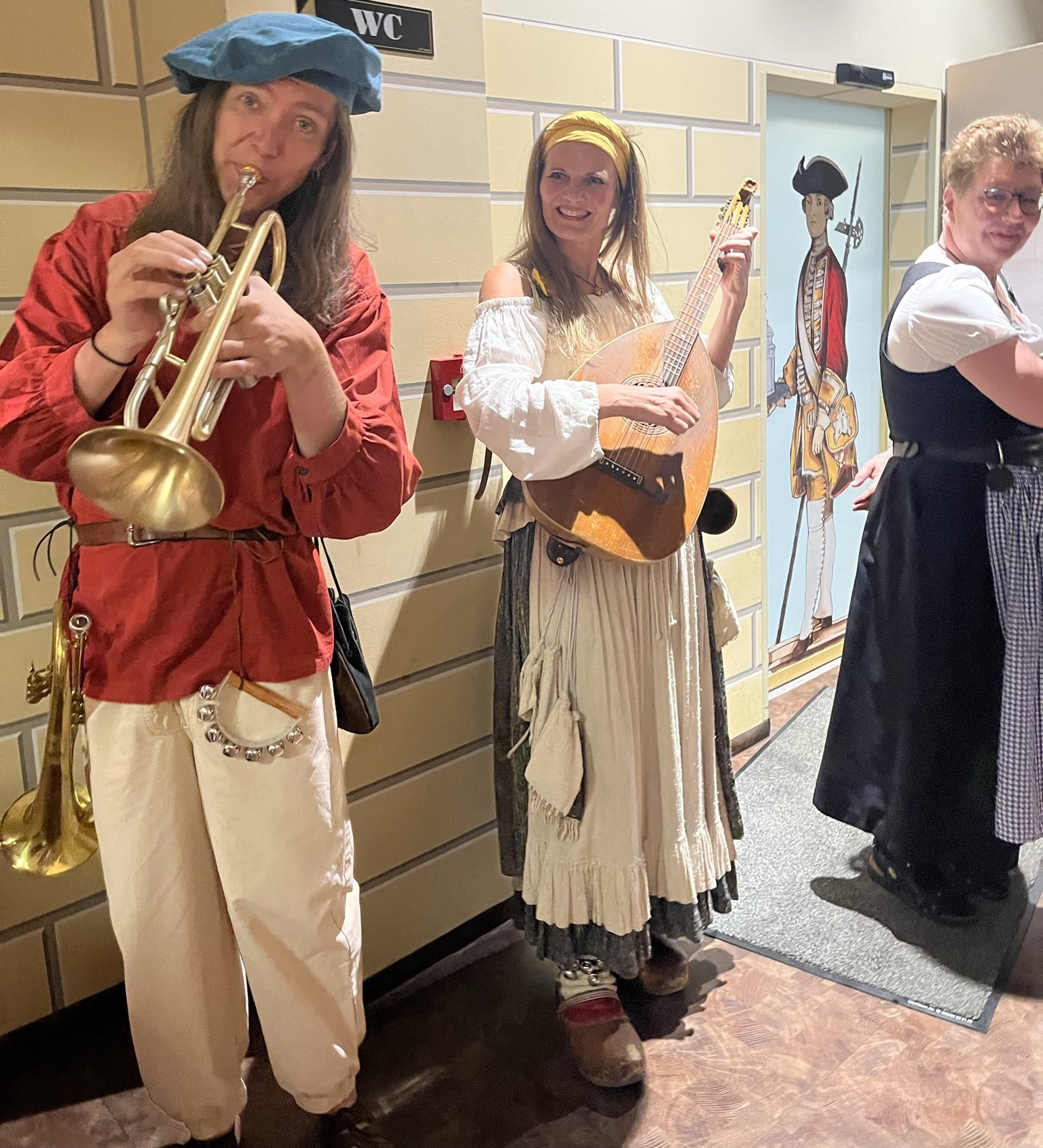
Eierschecke is on the dessert menu at the Pulverturm restaurant next to the Frauenkirche. A historic vaulted powder tower containing portions of the original walls, Pulverturm delights guests with Saxon specialties, homecooked suckling pig, and rousing tableside performances by lively, costumed, character musicians. Be sure to try your hand at funnel-drinking here—a practice that stems from Augustus the Strong’s love of Saxon wines but his court’s dislike for washing numerous wine glasses. The court created a special funnel fit to Augustus’ mouth measurements, so servants could pour the wine directly through the funnel into his open mouth. At the Pulverturm, a variation on this method involves drinking herbed liquor from tiny funnels. Named “Cosel’s Tears,” the drink’s herbs were said to grow from the tears of Augustus’ former mistress, the Countess of Cosel, whom he banished to Stolpen Castle for more than 40 years because of her interfering interest in politics. After a satisfying Saxon meal, have a sugar-dusted slice of Eierschecke and cup of espresso to complete the full Pulverturm experience.
Pulverturm restaurant in Dresden is a full-service, medieval-themed entertainment and dining experience.
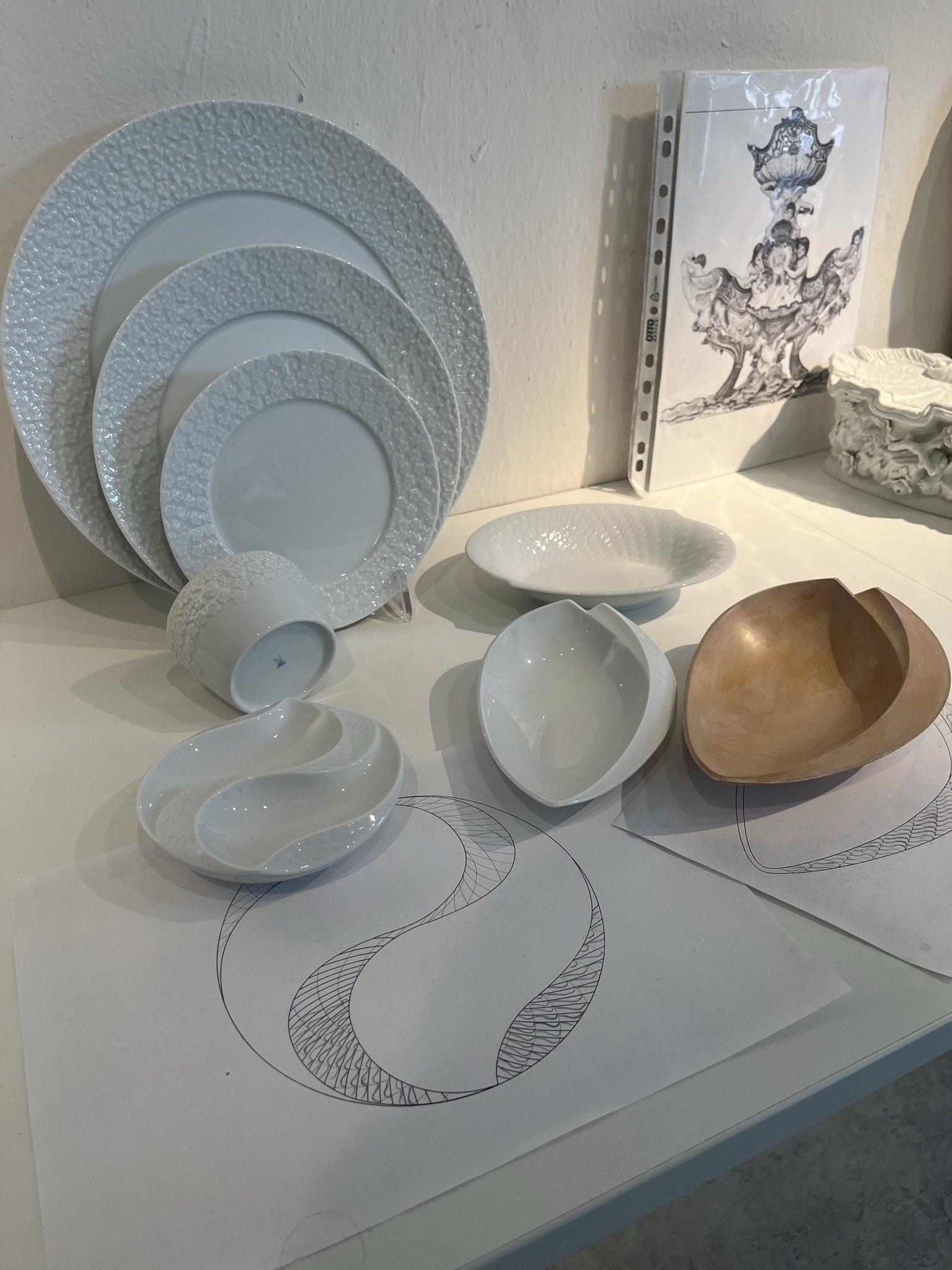
To make your own Eierschecke, try the recipe provided by Meissen porcelain manufactory underglaze painter Marlies Moser in the cookbook Cooking With Meissen. A 30-minute drive from Dresden, the Meissen manufactory creates fine porcelain vessels on which to serve tempting treats. At this company that labels its pieces with the forgery-proof “Crossed Swords” trademark, Moser worked for 40 years in production, painting underglaze onto unfired, porous porcelain—a skill that requires much training, a high level of precision, and years of experience—because the paint immediately penetrates and spreads, making later touchups impossible. The work of an underglaze painter is especially important for iconic Meissen designs like the 1731-created “Blue Onion,” whose luminous, metal oxide cobalt blue color only releases upon final firing. Moser now works in the demonstration workshop at the House of Meissen, and contributed her “Leutewitz Eierschecke” recipe for the company cookbook. Imagine a piece of this cake presented on a beautiful artisan-decorated Meissen porcelain dish!
The Meissen company cookbook features 24 recipes from appetizers to desserts. Saxon potato soup, Saxon meatballs, beef sauerbraten, quark dumplings with plum compote, and an inverted apple tart are among the list, and each submission includes a biography of the Meissen employee who contributed it. This beautiful, full-color hardbound book shows the food plated on fine porcelain tableware and includes sections about dining etiquette and the history of the craft.
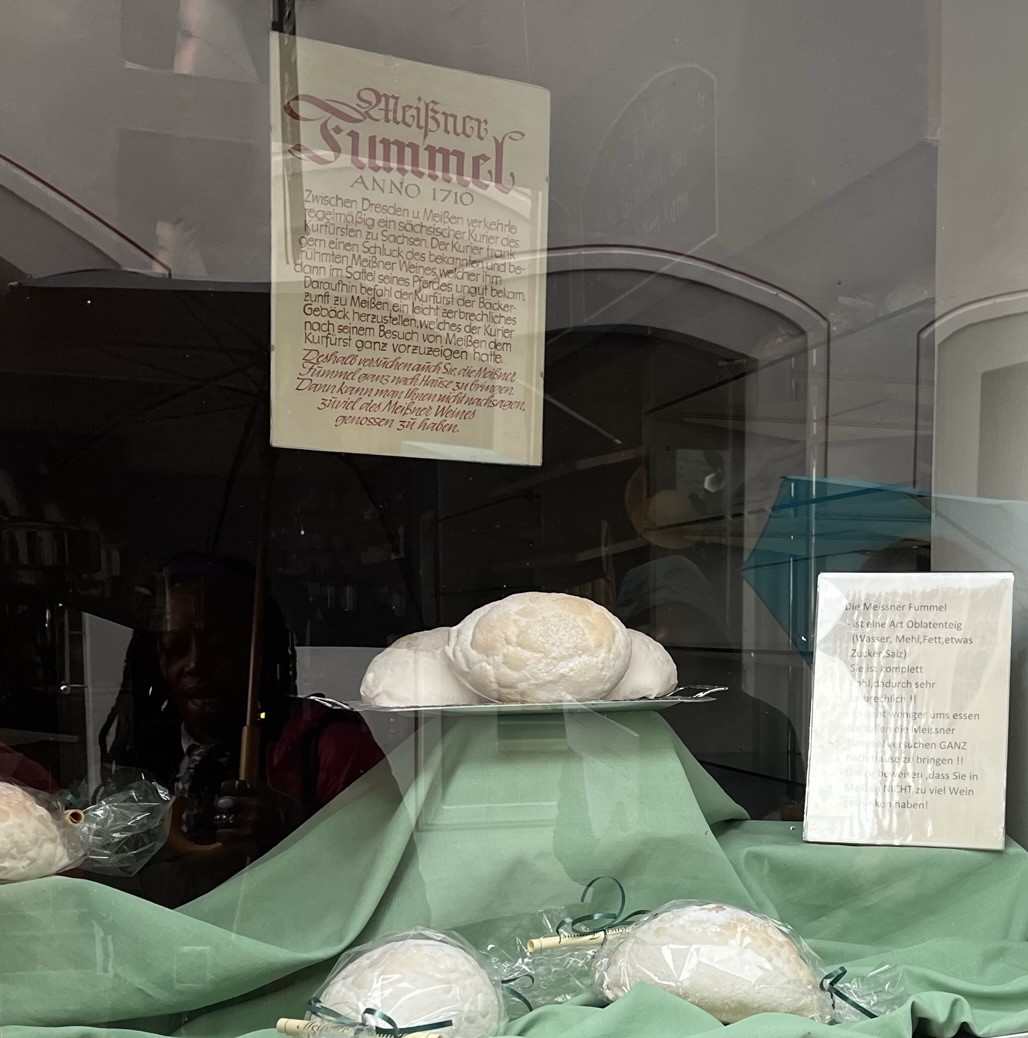
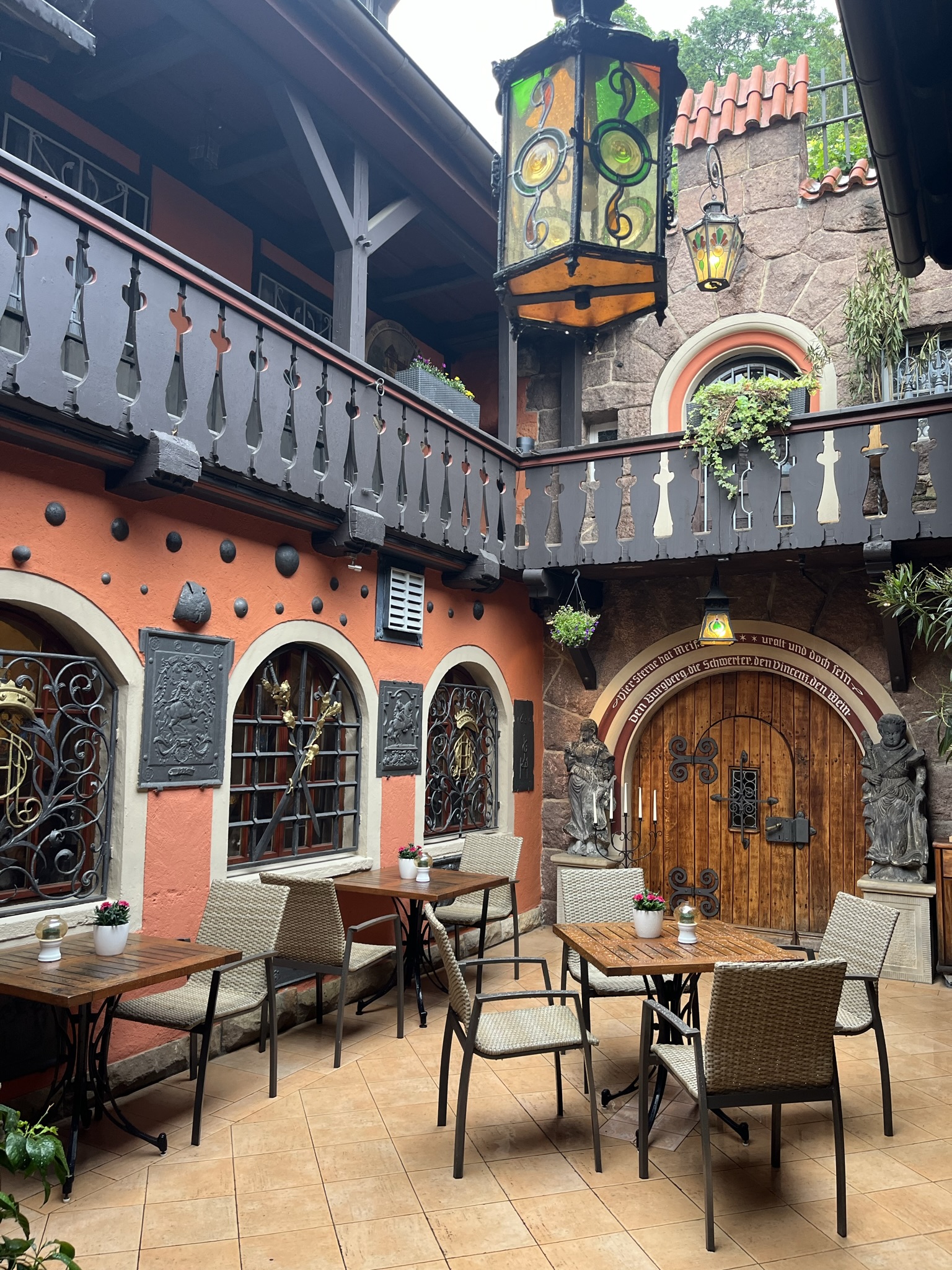
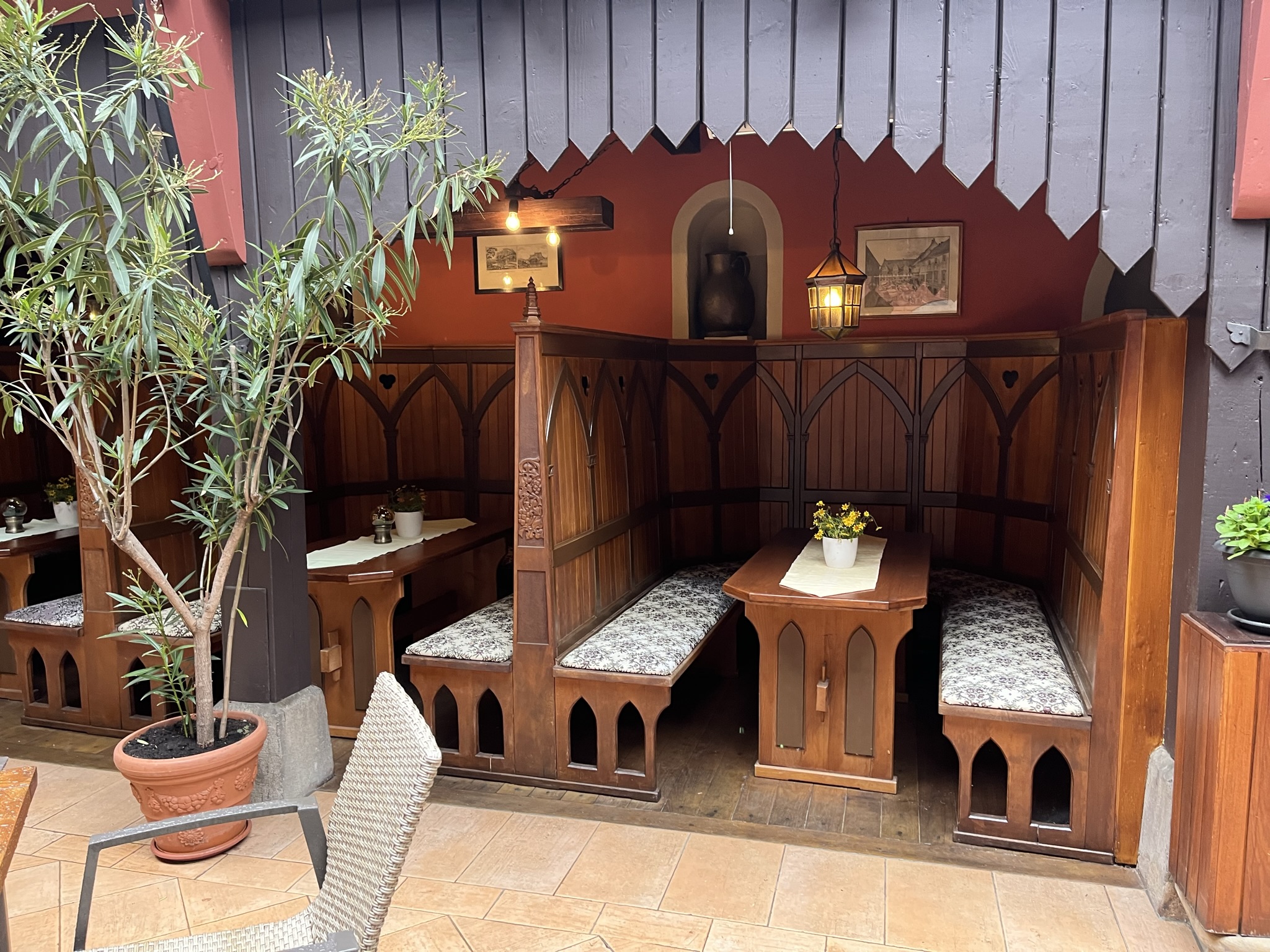
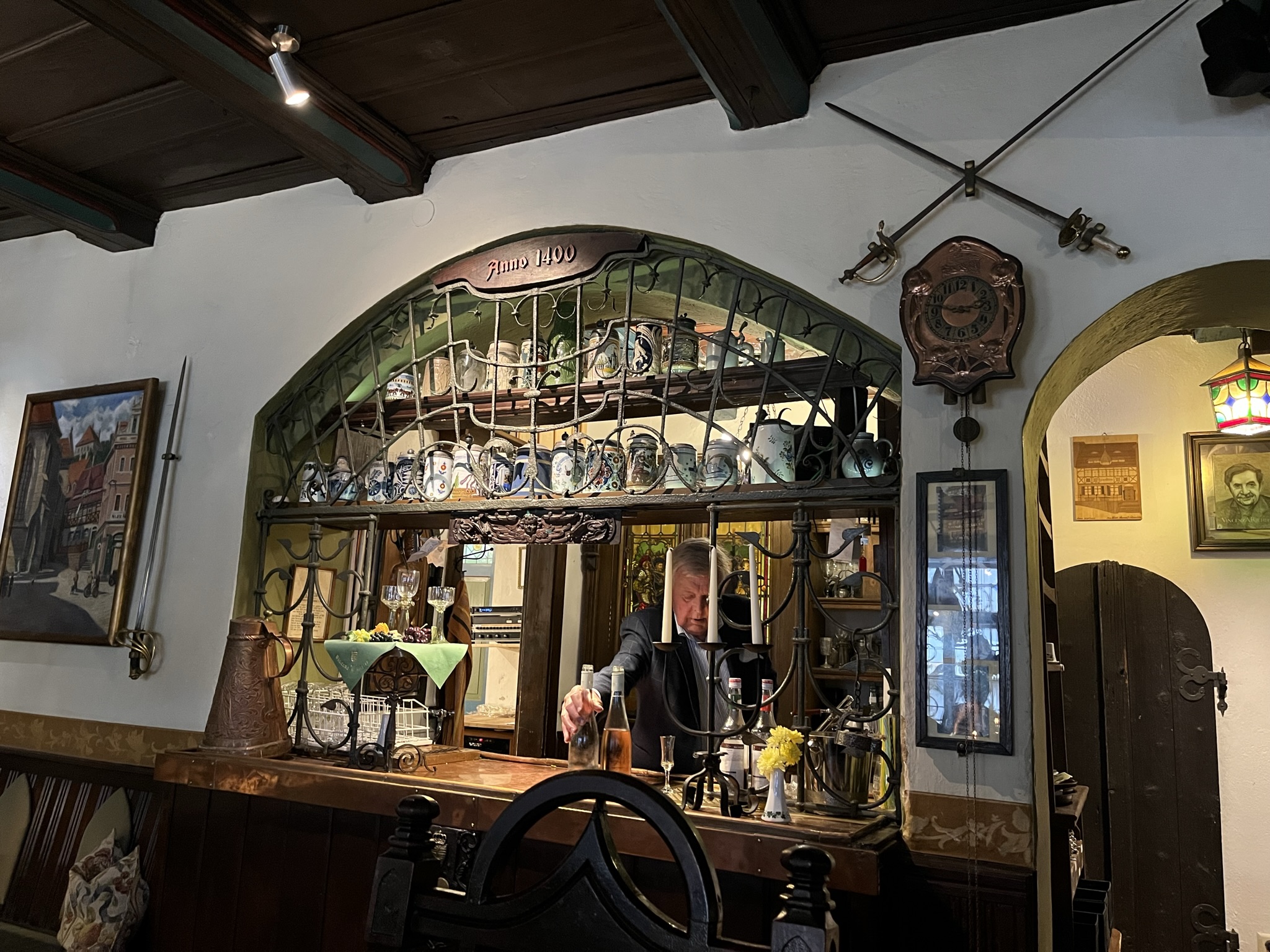
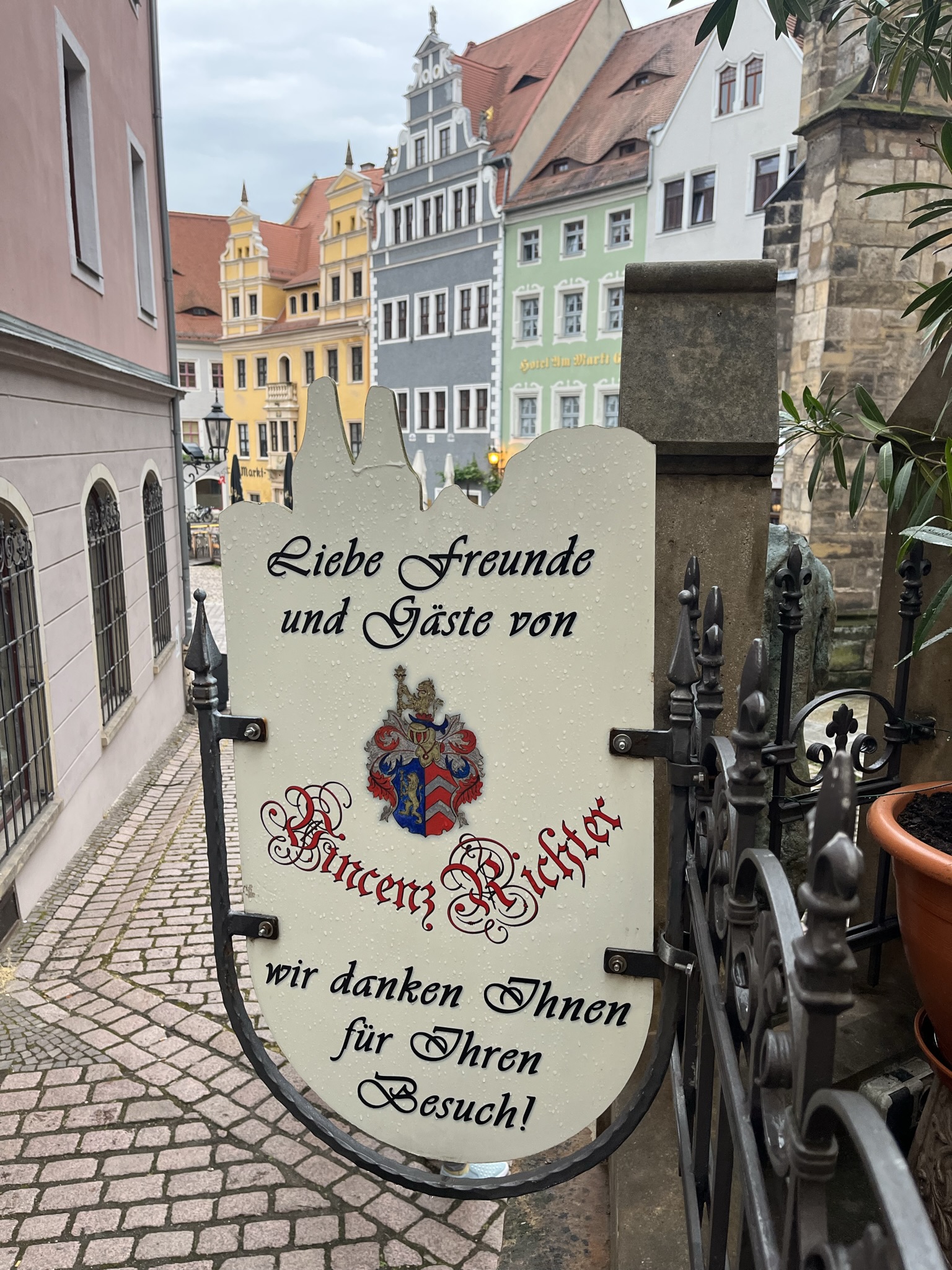
Meissner Fummel Eighteenth century legend tells that Augustus the Strong, who first commissioned the now-famous Meissen porcelain, used to send couriers back and forth between Meissen and Dresden with factory status updates. The town of Meissen is known for its excellent wine production (try the romantic, antique-filled Vincenz Richter wine restaurant!) and the couriers would often arrive back at the Dresden court intoxicated. Augustus’ solution was to instruct Meissen bakers to invent a pastry so fragile that it could remain intact only if delivered by a sober courier. The result was the hollow, brittle, extremely delicate Meissner Fummel cake, which had to be safely delivered to the Saxon Elector along with the progress reports about the porcelain. Made only with simple ingredients, Fummel is essentially a shell of flaky bread sprinkled with powdered sugar. Zieger Konditerei in Meissen produces this balloon-like baked good, which has been a protected geographical indication since 2000 and can only be manufactured in Meissen. The Fummel is often given to newly married couples in Meissen as a symbol of love’s fragility, and small gifts or cards are sometimes tucked into the center.
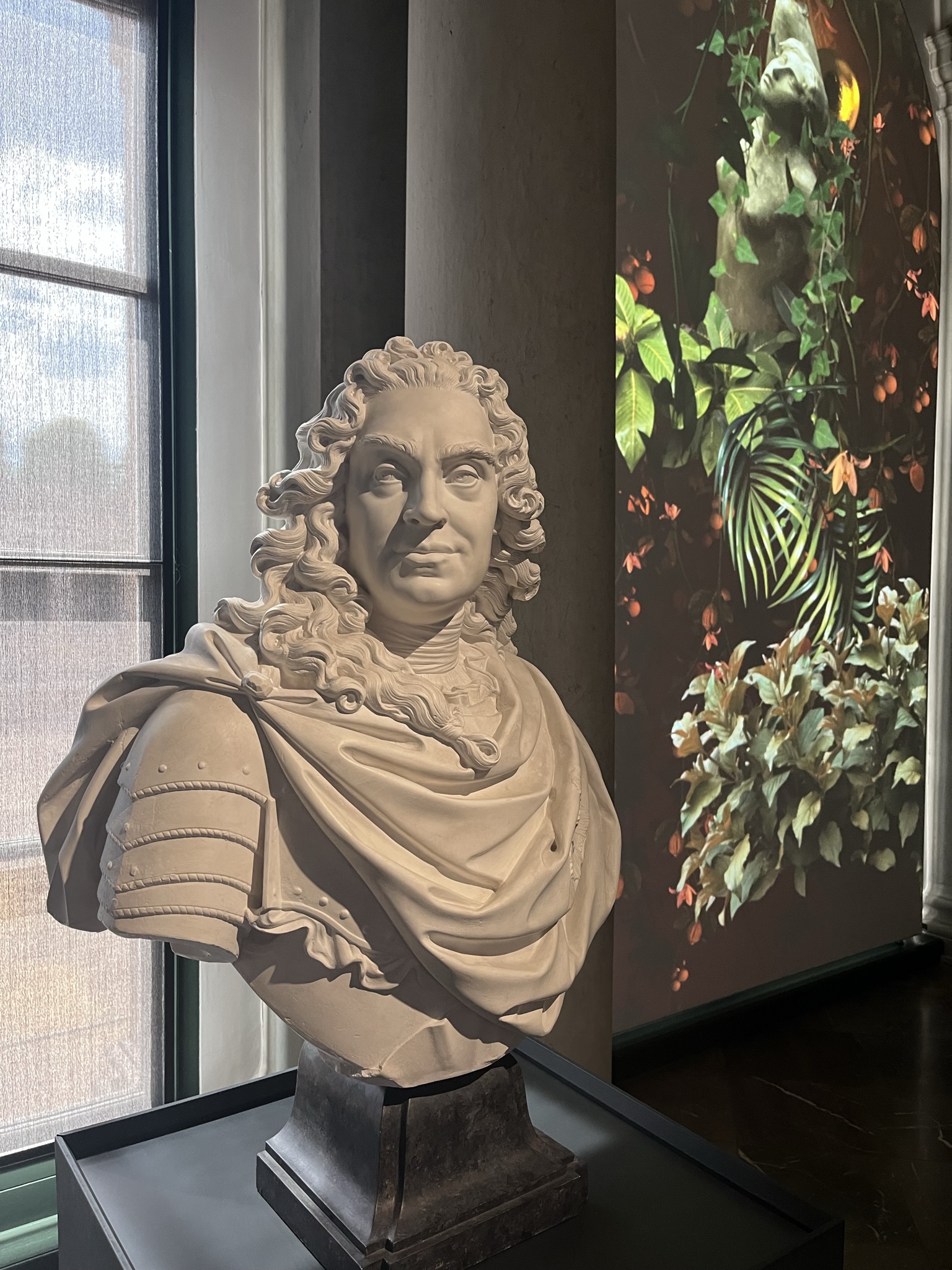
Left: A bust of Augustus the Strong appears in the interactive Zwinger Xperience, a multi-media immersion into the story of the baroque Zwinger building and festival area commissioned by Augustus. Right: This street window in Meissen displays loaves of Fummel along with a poster telling the humorous German story of why the bread recipe was initially invented.
You’ll be sure to fumble that Fummel after a few glasses of wine here!Vincenz Richter wine restaurant in Meissen celebrates its 150th anniversary this year. The 500-year-old building that houses hundreds of antiques and historical items is known as one of Germany’s most romantic places. The family winery produces its delicious wine varietals on the steep slopes of Meissen’s Elbe River valley.
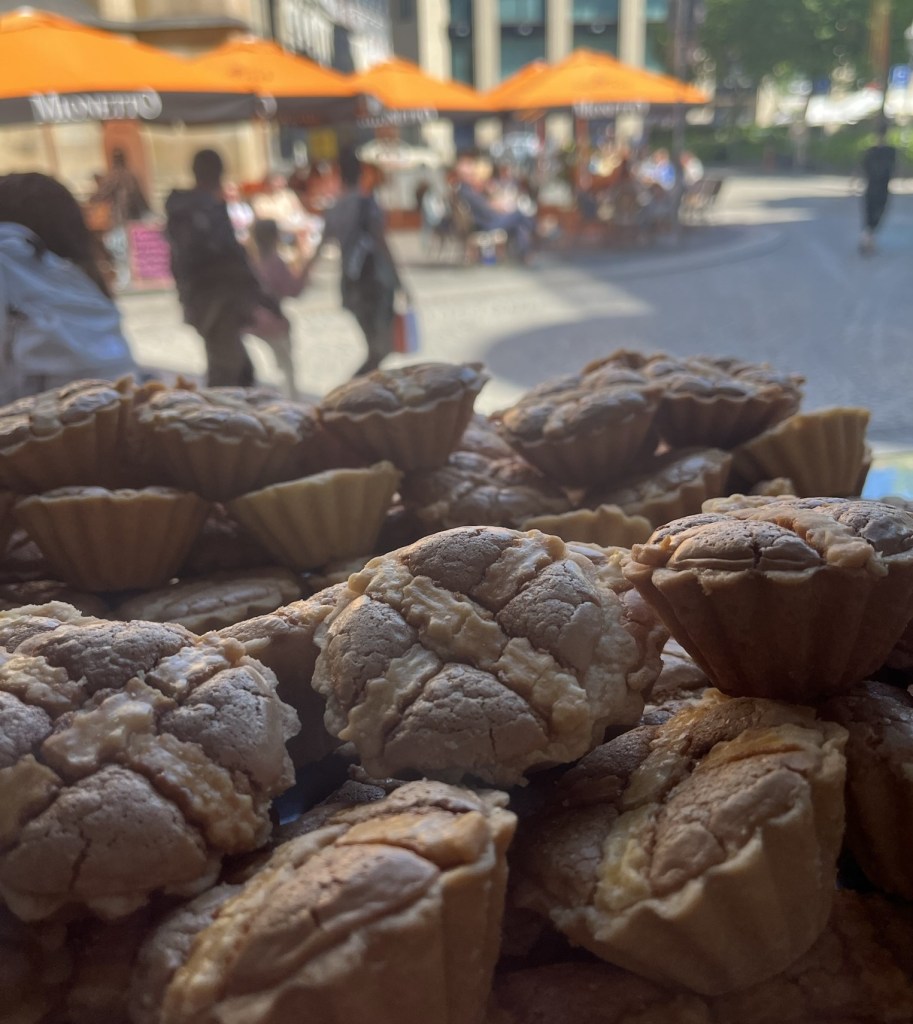
Leipziger Lerche The Leipziger Lerche (“Leipzig Lark”) dessert was born as part of the animal protection movement in the 19th century. Songbird larks used to be hunted and baked with herbs and eggs into a pastry crust and then served as a hearty delicacy. This culinary luxury was enjoyed in Leipzig and beyond, and many bird carcasses were bound in twine and shipped from Saxony to various countries around the continent for others to cook. The bird-baking business boomed, and the bird population declined. In 1876, after overhunting and a severe storm had killed off many of these birds, King Albert of Saxony banned lark trapping. To combat the suffering of this Leipzig business, some clever confectionaries in Leipzig then created a marzipan-stuffed shortcrust tart as a substitute for the traditional meat quiche. Now served in a small, fluted muffin cup, like a miniature pie, this baked good features two strips of dough crossed over the top to represent the trussing used to tie up stuffed larks. Beneath the ground almond and egg white mixture of the tartlet, there is often a cherry or dollop of jam to symbolize the heart of the lark. Kandler Konditerei in Leipzig is a popular source for “Kandler Lerche” pastries of this style, baked fresh daily and as naturally and preservative-free as possible, with numerous packaged options sold for a sweet, Saxony-specific souvenir.
Save a songbird and let Kandler Konditerei tempt you with a Leipziger Lerche.
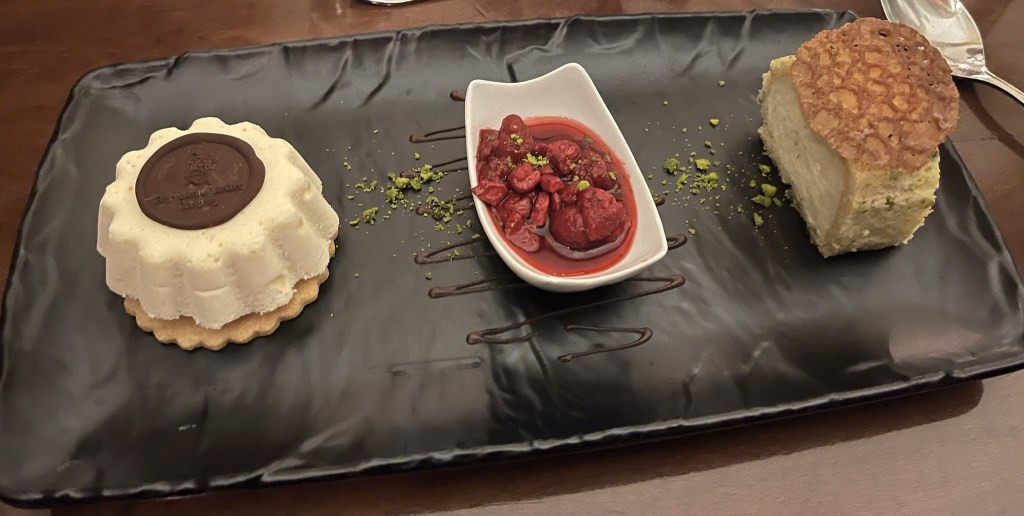
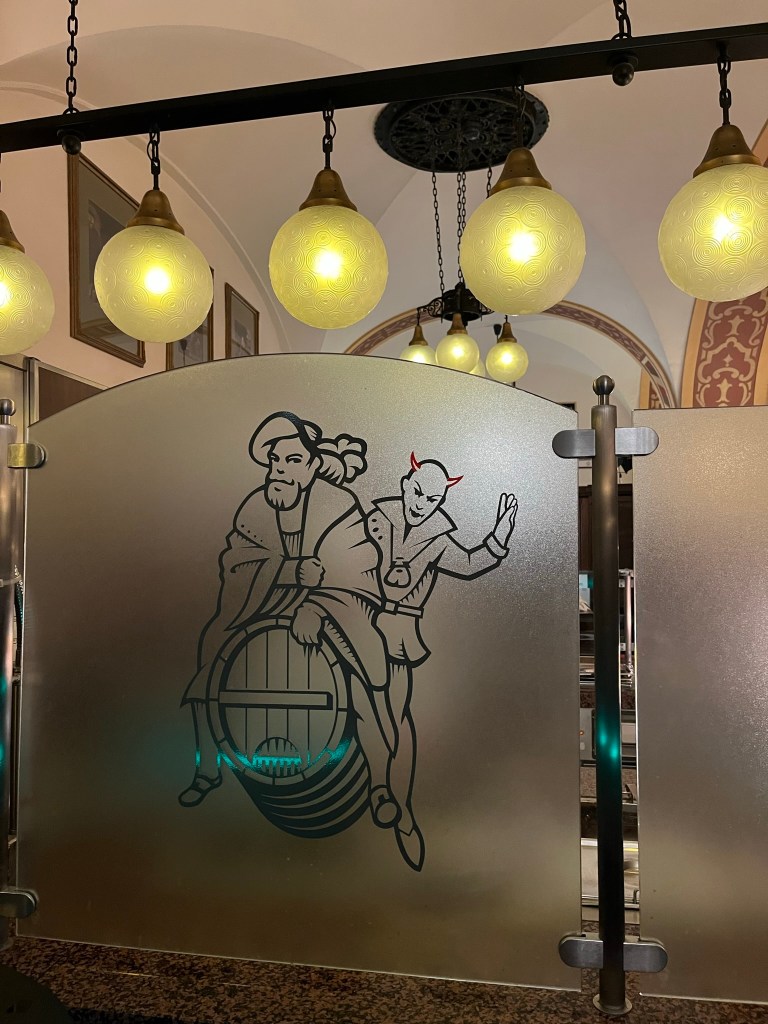
For a tasty variation of Leipziger Lerche, try the ice cream version served at Auerbachs Keller in Leipzig. This bundt-cake-shaped mound of ice cream is seated on a petaled crust and topped with a dark chocolate medallion stamped with “Auerbachs Keller Leipzig” and an image of Dr. Faust riding astride a wine barrel. Goethe and Martin Luther were regular guests of Auerbachs Keller, and it’s a treat to dine in the historic basement rooms of the Mädler Passage where they sat and to eat traditional Saxonian cuisine, including this new take on a famous regional dessert.
Auerbachs Keller Leipzig serves a special iced Leipziger Lerche with curd-cheese-lime-mousse and raspberry sauce.
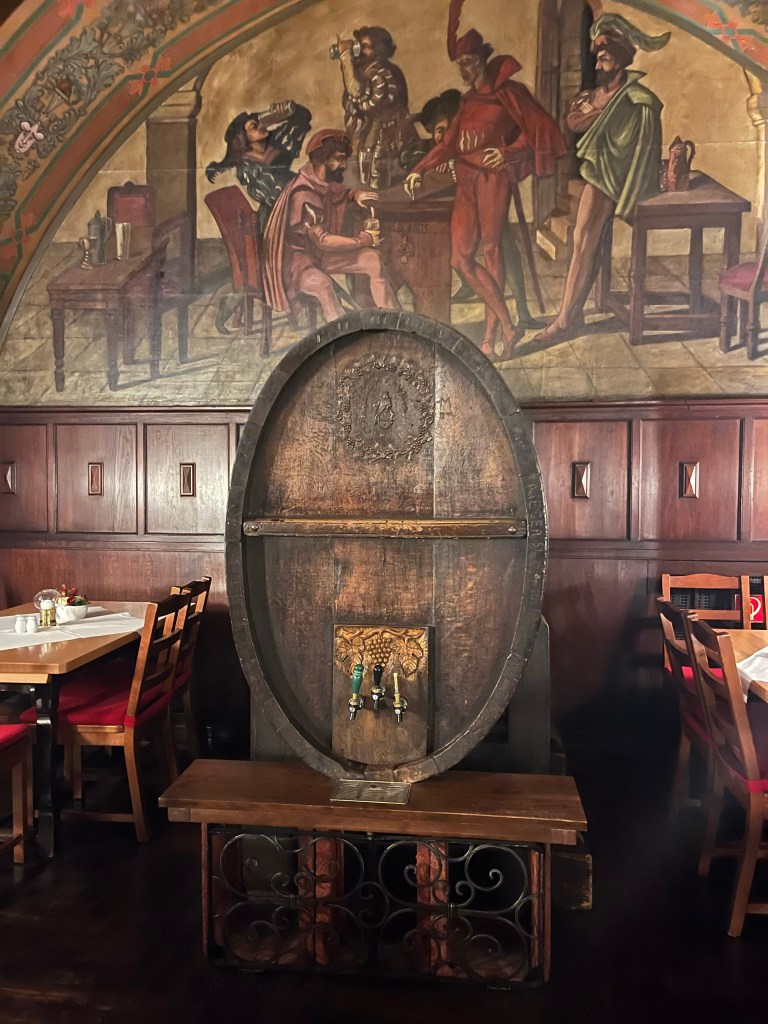
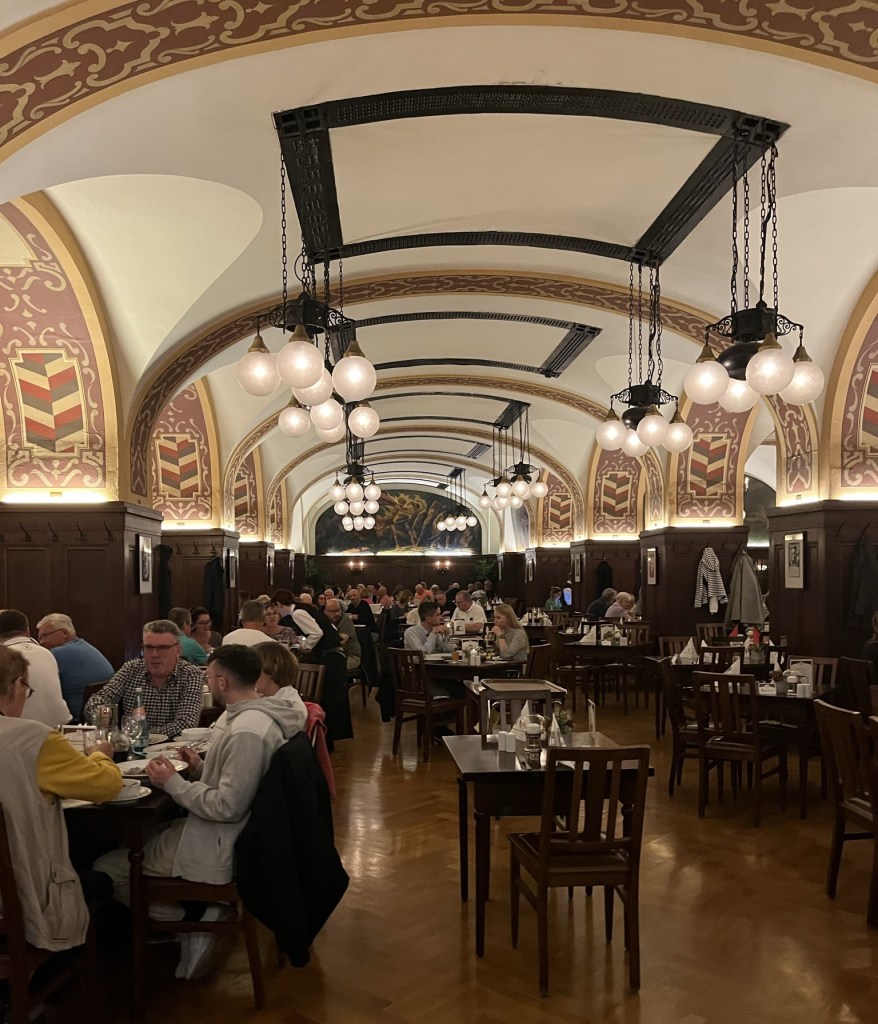
Auerbachs Keller in the Mädler Passage is the most famous and second oldest restaurant in Leipzig, and was one of the most popular places for wine in the 16th century.
Visiting Saxony? Take an audio guided tour through the Meissen Manufactory and visit the Meissen Porcelain Foundation Museum. Enjoy coffee and delicacies at the Café & Restaurant Meissen, where your snacks are served on fine porcelain and you can sample the specially created Meissen cake featuring the crossed swords trademark. Register for a porcelain casting class or creative workshop and make your own Meissen masterpiece—available for adults and kids alike—or personalize a Meissen coffee mug and have your unique creation safely shipped directly to your home. Sign up your kids for an etiquette class to learn the art of fine dining or join a themed specialty meal (brunch with organ recital, Advent dinner, Christmas dinner, or Ladies Crime Night dinner). The one-hour “Women at Meissen” social history class highlights the significant role women have played in the manufactory’s workforce since the 18th century. The “Tea, Coffee, and Chocolate” event is offered once a month and teaches participants about the three “pleasure drinks” that were popular luxury goods during the Baroque period and how Meissen porcelain played a role in providing many varieties of elegant drinkware.
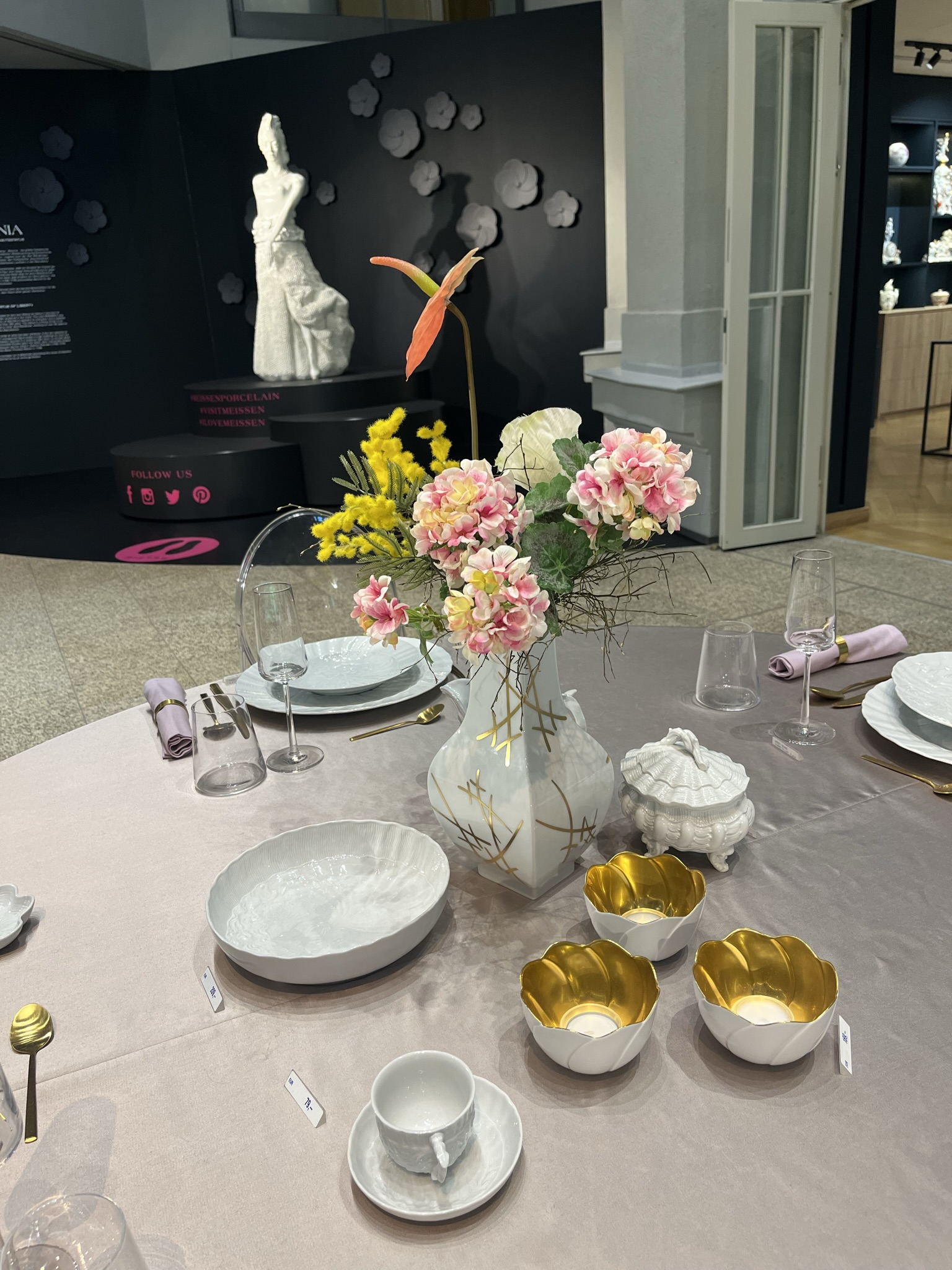
Meissen porcelain tableware makes every cake look better. Sweets and special place settings are a suggested Saxony souvenir.
The biggest cities in Europe are oftentimes the most convenient to fly into and to build travel itineraries around. There’s a host of information to find when researching your trip, including hotels, sites, and tours. Munich, Germany, is one of these key places that tourists look to book for a few days when taking a European journey. And it’s a great city for history and art buffs, as some of the main sites include royal residences.
There are plenty of palaces to visit by walking or taking a short train ride from Munich’s Marienplatz (the main square); however, a trip to the countryside to see castles built into the Bavarian Alps can also be a perfect way to break up your time spent in the big city and to learn about the history of the larger area. We’ll start with the palaces most easily reached from the Munich city center, and then move to those that are probably best to drive to.
By Foot or Train
Residenz München
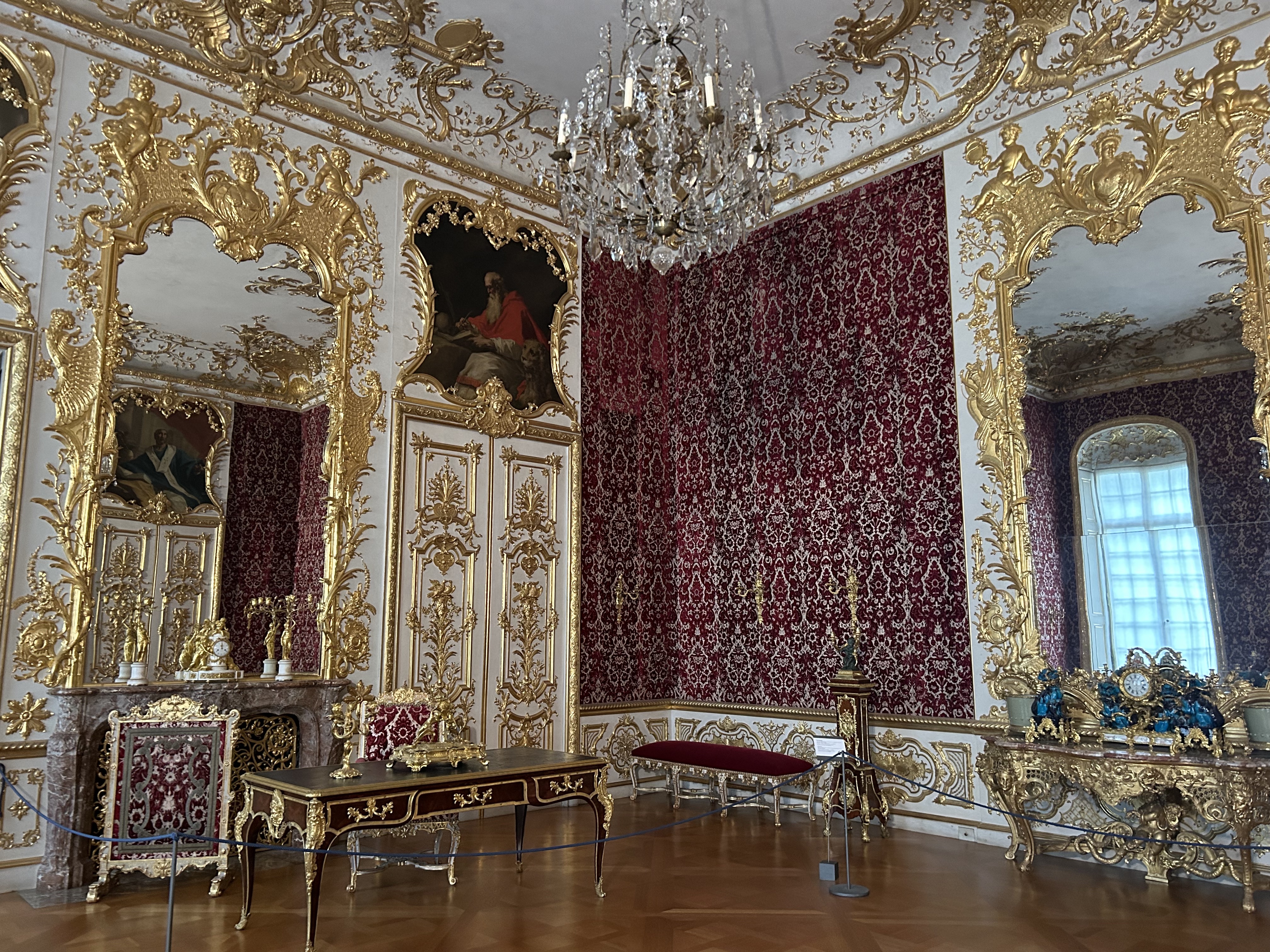
From 1508 to 1918, the Residenz München was the official home of the Wittelsbach family dynasty: the dukes, electors, and kings of Bavaria. Located in Old Town and just a 5-minute walk from Marienplatz, you’ll find that it’s one of the most easily accessible sites if you’re staying in the historic center of Munich.
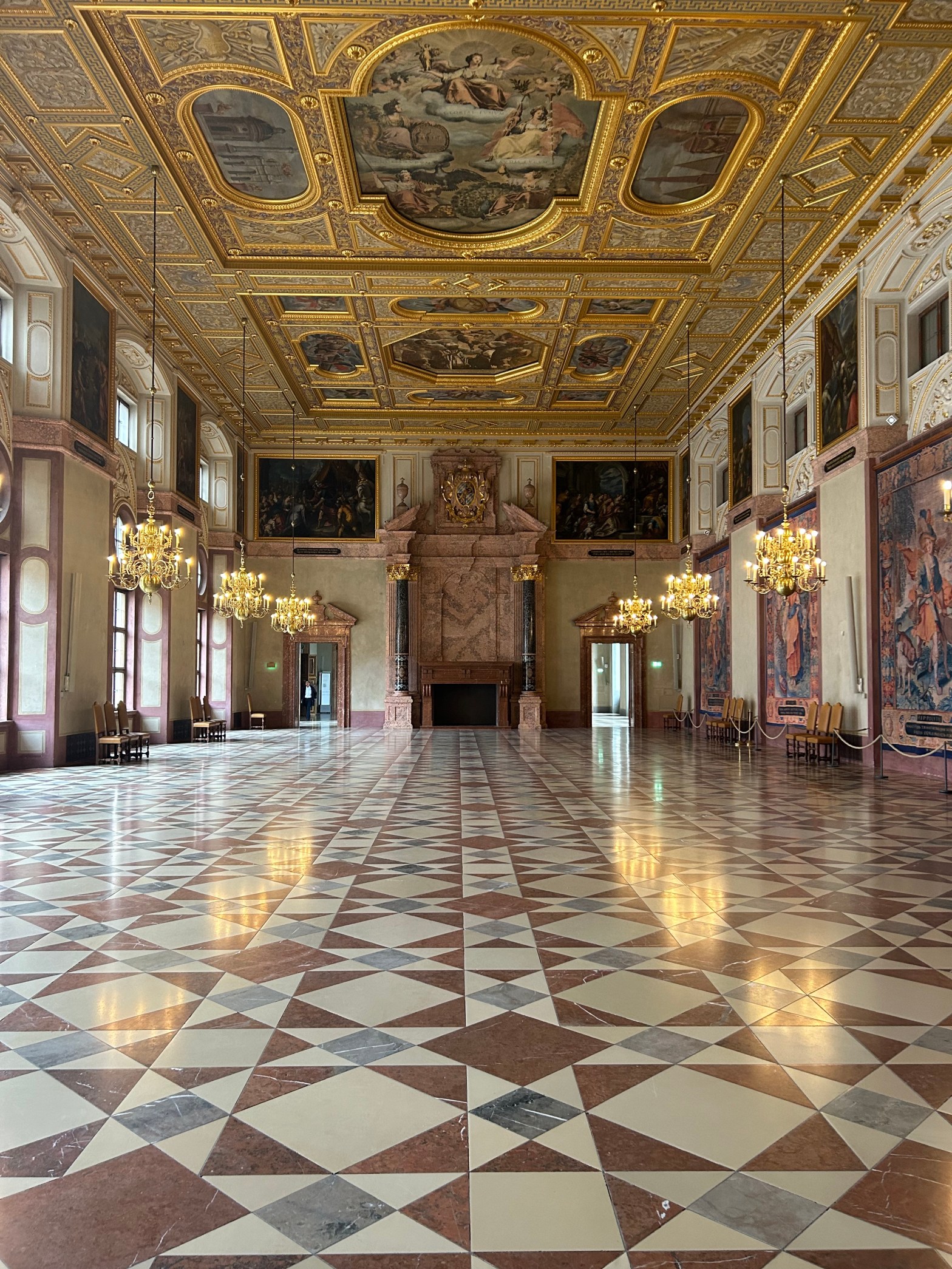
The palace hosts a dizzying maze of rooms upon rooms—antechambers, galleries, places of worship—of elegant design in the Baroque, Rococo, and Neoclassical styles, according to the tastes of the late rulers. Much was destroyed in the 1945 bombings during World War II, but it has been reconstructed to what you see today. Although some of the furnishings were saved, many were remade to authentically resemble what it would have been.
Your journey to see the tapestries, furniture, and grand art is self-paced. You can get a singular ticket to tour the royal rooms, or you can purchase a combination ticket that includes entrance into the royal treasury exhibition and the Cuvilliés Theatre.
Schloss Nymphenburg
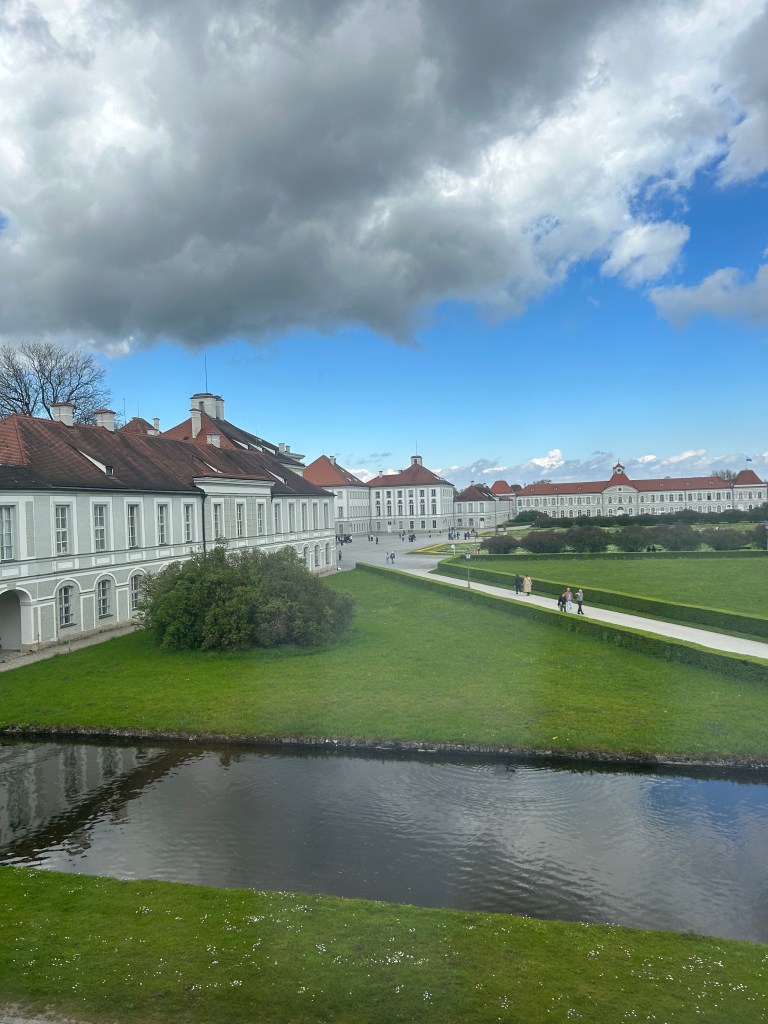
One of the most popular sites to visit in Munich, the Schloss Nymphenburg, began its construction in 1664 as the Bavarian electors’ summer residence. The grounds are expansive, so a trip here could take up as much as a half to a whole day, depending on how much time you wish to spend wandering the acres of residence and park. It’s fewer than 30 minutes away from the Marienplatz by public transit.
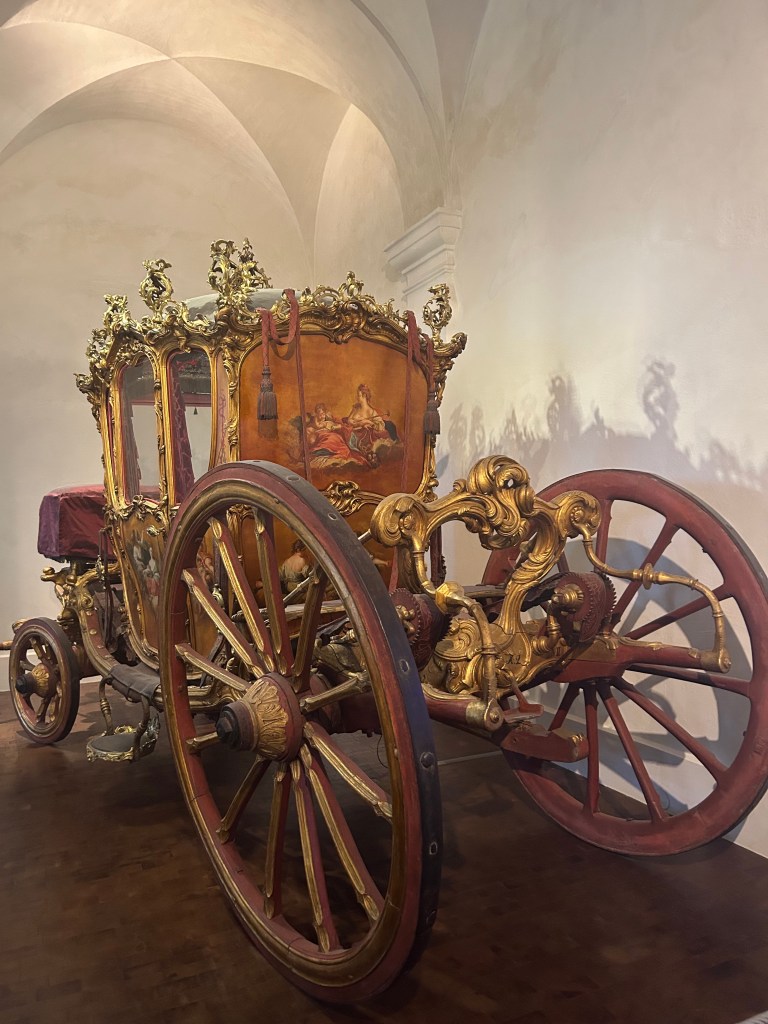
Like the Residenz München, you can purchase separate tickets to each museum and site, or you can purchase a combination ticket. The combination ticket will get you entrance into the palace rooms, the Marstallmuseum (where you can see the original royal carriages and sleighs of the past), the Museum of Nymphenburg Porcelain (where you learn about how the secret of Chinese porcelain came to Germany), and the park palaces.
The park palaces are worth noting. They are spread out across the grounds but, if you’re up for it, can add up to quite a nice day walking around and exploring. Each park palace had a different function and design, so the buildings you enter will give you even more of a look into the extravagant life of the royal family.
By Car
Ready to get out into the Bavarian countryside? A popular day trip, and one that’s easy to find group tours of, is the ride to Neuschwanstein Castle near Füssen and the Linderhof Palace in Ettal. Group tours can be as large as 40 people in a big bus. You can also get smaller tours that are capped at 20 people, which, of course, will cost a bit extra, but will give you a more intimate relationship with the tour guide and the fellow travelers. Or, you can opt to map it out yourself. Just ensure you grab tickets ahead of time, as there are timed entries for these popular German castles.
Schloss Neuschwanstein
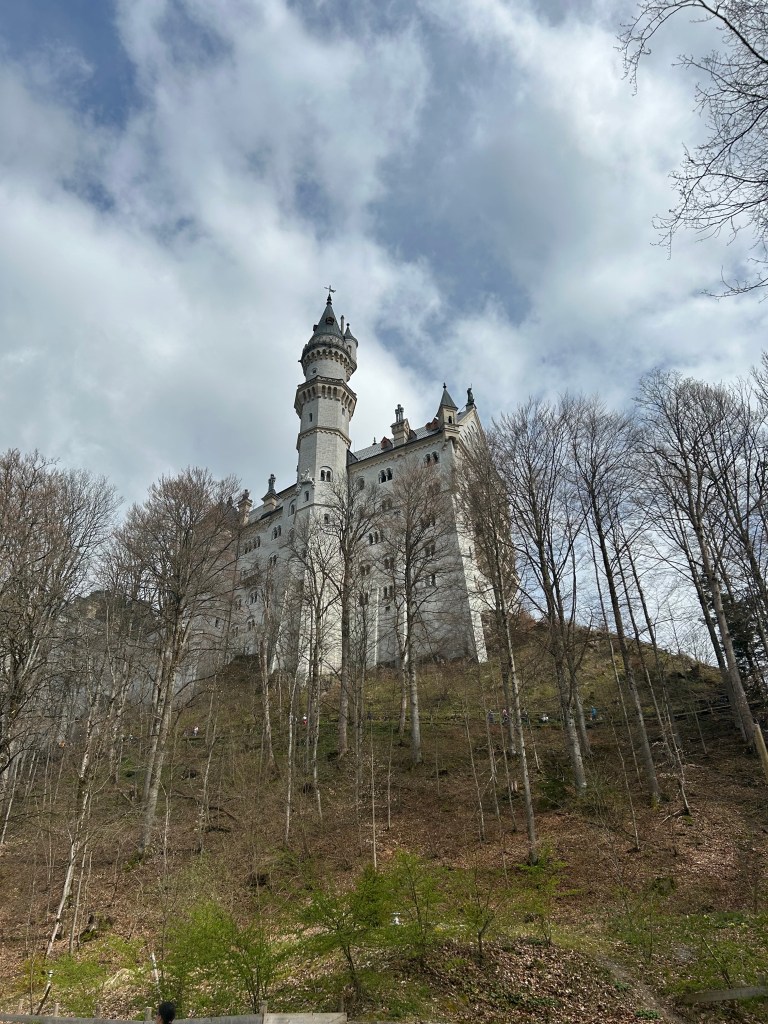
Around a 2-hour drive from the Munich city center, Schloss Neuschwanstein is often known as the “Sleeping Beauty” or “Cinderella” castle, as this is the famous structure that inspired Walt Disney’s depictions of the iconic Disney World and Disneyland main castles. Although the Schloss Neuschwanstein is medieval-looking, it wasn’t actually built during that era. King Ludwig II of Bavaria was simply inspired in 1869 to build his lofty castle in the medieval style. It actually has a state-of-the-art kitchen with the newest technology, including a stove and roasting oven with a plate warmer.
The story goes that castle construction did not go as quickly and smoothly as the young king had hoped—plus, it got rather cold living there in the winter—so he focused his attention on the creation of the Linderhof Palace for his winter residence. Therefore, the Neuschwanstein Castle tour only takes you through the two upper levels; the palace is largely unfinished. What you do get to see is still mind-blowing, with wall murals depicting medieval scenes, ceilings that seem to tower over you forever, and artistic odes to his favorite composer, Richard Wagner.
The location is right across the way from his father’s castle—Prince Maximilian II’s Schloss Hohenschwangau, where Ludwig grew up and which he cherished dearly. You can also visit the Hohenschwangau Castle, but note that it involves some steep steps to reach.
Schloss Linderhof
When Ludwig put his fairytale Neuschwanstein Castle on pause, construction of the Schloss Linderhof—just a one-hour drive away from Neuschwanstein—went into full swing. This palace was the only one that was completed during his lifetime. He was largely inspired by Versailles and King Louis XIV of France, otherwise known as the Sun King, and you will see obvious nods to the French king as soon as you walk into the palace. As Ludwig II’s winter home, you can almost imagine snow falling and Ludwig riding through the land on his royal sled at nightfall…
As with the Neuschwanstein Castle, you cannot take pictures on the inside. And it can take a lot to describe the grandeur of the rooms in this palace. The rooms feel smaller and give off a cozier feel, but there’s nothing quaint about the rococo decor. You will find yourself surrounded by objects of great worth and artistic merit, as well as walls and ceilings that are gilded in gold. There is even a “magic table” that could rise and lower from the king’s quarters down into a room where servants, staying unseen, filled His Majesty’s table with meals.
No less thought went into the Linderhof gardens and park, and especially not the fountain that graces the front of the palace. Every 30 minutes, you’ll get the chance to see water rush up into the air, reaching above 70 feet high. It’s quite an impressive sight.
Ready to Explore!
To ensure you don’t feel rushed, give these four German palaces and castles at least a full 3 days to explore. There are many other sites in Munich to pair with a day visiting the Residenz München, too, because Marienplatz offers markets, churches, biergartens, the nearby Englischer Garten, and more. You’ll find that although Munich is a modern city, it also grants you the opportunity to take a step backward in time to learn about Bavaria’s past.
This holiday season, Rail Europe presents the “German Christmas Markets,” a seven day itinerary to five enchanting Christmas markets throughout Germany.
These unique and unforgettable markets invite travelers to experience the sights, smells and traditions of European Christmas festivities. Visitors can dive into a winter wonderland of regional traditions, handcrafts and culinary specialties such as Christmas Stollen (German Christmas cake), Lebkuchen (gingerbread) and Gluehwein (hot spiced wine). They can stroll through festively-decorated streets lit by thousands of twinkling lights and explore historic town centers as Christmas carols echo through the streets.
Travelers can begin their journey in Dresden, home to one of the most well-known Christmas Markets in the world. Best known for its long royal and political history, Dresden has emerged as the cultural and educational center of Germany.
Then, travel by train to Weimar, a city known for its rich history and architecture and home to scholars such as Goethe, Schiller and Herder. During the month of December, the city’s Gothic town hall on the market square is transformed into a life-sized Advent Calendar, where three children open a new window each day as Father Christmas greets them with a small gift. From Weimar, travelers will be whisked away to the medieval streets of Erfurt, where Christmas carols ring out and the air is filled with the aroma of gingerbread.
Next stop–Eisenach–where travelers fall head over heels for the romantic market nestled within Wartburg Castle’s walls. One of the best kept medieval castles in Germany, the Wartburg boasts a medieval marketplace with Christmas concerts and artists, craftsmen and knights, and colorful booths decked with boughs of holly.
The trip concludes in Frankfurt, a buzzing financial metropolis housing one of the oldest and most elaborate markets in Germany, attracting more than three million international visitors each year. Over 200 stalls offer arts and crafts, festive cuisine and a varied program of Advent concerts and trumpets playing from the balcony of St. Nicholas’ Church.
It’s an unforgettable experience–Christmas, Germany and trains!
Rail Europe offers hotels and train travel in their German Christmas Market package. For more information, go to www.raileurope.com.
Spreading a colorful 22″ x 30″ Deutsche Bahn (DB) railroad map out on the dining room table one evening, I savored the prospects of a European rail adventure.
I had seen many photos of the exciting and sleek European trains, and could actually name some of them, such as the Eurostar, the fast TGV’s and the ICE (InterCity Express) trains. I just had to ride some of the 160,000 miles of Europe’s railway lines to experience them for myself.
The DB rail map showed so many lines—there were electrified lines, lines for both long-distance and short-distance trains, private railways and high-speed lines under construction. There were even bus lines and rack railways.
As the first 15 minutes of map scanning lapsed into almost an hour because of all the rail possibilities, and places I wanted to go, I recognized that I’d have to scale back my plans for a 10-day trip, otherwise I’d never return home again. Besides, once I called up the DB rail schedules on the internet (www.bahn.de), I realized it would take as much as a full day of train riding to journey to some of the towns I wanted to see.
I knew I’d be able to secure good March airfares before the official traveling season began through American Airlines Vacations. I had found AA to offer quality air-hotel packages, so I booked one night in London (to recoup from the seven-hour trans-Atlantic flight), and an evening in Frankfort, Germany, the last city we’d visit.
My wife, Marilyn, would be an excellent travel companion as she could speak and understand enough German to allow us to eat (this is very important). We had planned a number of tight train connections during the trip, so her knowledge of German was a vital component in keeping to our schedule. She had a number of years of German in high school and college, as well as helped chaperone a tour group to Germany before. And the last time we went on a tour of Germany together, people from our bus followed us down the street so they could eat at the same establishments that we did, thinking they could ask Marilyn for help in translating the menu!
COMPLETELY ON OUR OWN
I had been to Europe several times before, as had Marilyn, but this would be a trip completely on our own without the help of a guide or any tourist service or agency. Thus it was with determination, and a bit of humility, that I set out to see just exactly how we could piece a 10-day European trip together using many original sources and no middlemen or travel agencies.
My idea was to travel on as many trains as possible, and on as many different trains as possible, see numerous points of popular interest and historic sites along the way, and also do some very specific sightseeing that we had in mind.
While American Airlines was the air carrier, Rail Europe (www.raileurope.com or call 888-382-7245) issued first class Eurail Flexipasses (cost $778 per person) which allowed us to travel 15 days during a two-month period in 17 countries, including Belgium, Denmark, Germany, France, Luxemburg, Spain, Switzerland, Portugal and Italy, among others. This was an absolute bargain because of the number of trains we could ride and the locations to which we could travel.
Other types of Rail Europe passes and terms are also available at different prices.
With the Eurailpass, you are afforded unlimited travel, as well as discounts for tourist railways, hotels and car rentals. You must purchase your ticket while in the U.S. prior to traveling to these places, however. Another requirement is that you have your ticket validated prior to boarding your first train (more on this later). Naturally, you’ll also need a passport, which you can obtain from designated post offices.
Our itinerary would take us to London, then Paris for two nights, then to Wernigerode in the Harz Mountains in former East Germany to ride the steam trains there, and then through Leipzig to Seiffen (the “toy village”) near the Czech Republic border, then to Frankfort. Between all these points were numerous towns we would travel through or at which we would change trains, and we were looking forward to making these connections part of our rail experience.
RAILFAN DREAM TRIP
What I had planned was a railfan’s dream trip throughout a portion of Europe that would not involve any transportation other than trains (both above ground or the underground species)—or the occasional DB bus. In Europe, you don’t need a taxi or a car in most cities if you’re willing to do some walking. The “ring” area of many European cities is best seen by walking anyway.
We left Chicago’s O’Hare International Airport on a cold, damp Thursday afternoon on a direct flight to London. After dinner, we had learned from previous flights to begin to relax and try to get some sleep. First-timers will find it hard to get much sleep because of all the excitement, but if you sleep even a few hours, it can pay off once you land.
On a seven-hour flight that begins at 5:20 p.m., you eat supper by 7 or 8 p.m., watch an in-flight movie, get some rest, and before you know it the flight attendants are serving breakfast prior to landing at Heathrow Airport.
We negotiated the famous London Tube from the airport okay, having purchased just a one-way tube ticket to a stop near the four-star Melia White House Hotel near Regent’s Park. After checking in at about 10 a.m. and finding that our room wasn’t ready, we were ushered to a comfortable sunken dining area of the hotel where hot coffee, fresh-squeezed orange juice and pastries were being served. This was very welcoming after a long flight and the cold, damp London winds that literally blew us into the hotel’s front door. When our room was ready about an hour and a half later, we found that the hotel clerk had upgraded us to a better room because we had to wait. I kinda like those British.
After sleeping off the effects of jet lag, we decided we still had time to walk to the British Museum, where a friend had said the Magna Carta was on display. While the Magna Carta is no longer in the museum, we did enjoy the museum’s food court. It’s a large, open space under a high sun roof that rivals most American shopping mall food courts. Later we were told the Magna Carta was moved to the British Library, but we did see plenty of ancient sculptures, rare books and paintings, nonetheless.
After a candlelight dinner of English fish and chips and Pilsner beer at the Green Man pub across the street from the hotel, we headed back to our room. By 7:30 p.m. we were asleep; that is, except for the unmistakable sound of Far Eastern religious chanting emanating from the next room, which mercifully stopped about 2 a.m.
We were up by 6:15 a.m. and carbed up on the hotel’s “Full English Breakfast” promised us. We noted we had only 10 British pounds left to spend, so we were glad the Eurostar beckoned.
EUROSTAR BECKONS
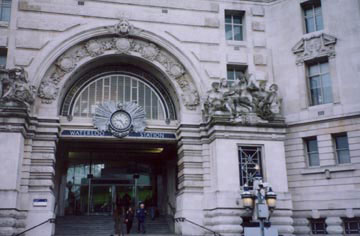
We had made reservations on the 10:39 a.m. Eurostar from London’s Waterloo Station, located not far from the Eye of London and the Royal Festival Hall. Just a couple of weeks before, I had spotted the Waterloo Station facade on a television travel program, and wanted to make sure I arrived in plenty of time to get a photo of it. It seems few people around the station actually know where the front of the station is because there are so many entrances to the structure, but finally a rail information clerk was able to tell me where it was.
After taking pictures (it has a marvelous front—nothing like that of most rail stations in the United States), and grabbing a quick mocha coffee, we headed for the Eurostar gate. I noticed seating in the station was at a premium, but a “Station News” bulletin in a rack mentioned that 40 additional station seats were to be added in early 2004.
The Eurostar departure gate is situated a long walk from the regular train platforms, and in this part of the station there’s another entire retail outlet section where I could have purchased coffee as well, plus numerous other items. But this section is really in need of more seating.
Seems like everyone north of the Thames was riding with us on the Eurostar to Paris that morning. We passed through security, but the attendant said I didn’t have to take off my shoes (which I usually do at airport security screenings because of the steel bars that support my Rockports). “Our X-ray machines aren’t that strong,” said a clerk.
After security came Passport Control, but our agent quickly waved us through and didn’t ask any questions such as, “Are you one of those insane railfans?”
My excitement mounted as the station clock ticked closer to departure time, and finally the doors were opened to the train platform. There were neatly-dressed, accommodating rail agents at nearly every passenger car door to help passengers. We found our seats in first class (there are 58 standard seats per car, for a total capacity of 560 passengers in standard class). In first class cars, there are up to 39 seats, for a total of 206 first class seats. Car #9 is reserved for 24 premium passengers.
I was able to get off the train for a few minutes before departure to photograph the front of the sleek train. After settling in my comfortable seat, I learned we’d be served champagne en route, followed by a complimentary three-course meal at our seats with a choice of wine. Premium passengers are served a four-course meal. I was already beginning to like this trip.
At 10:39 a.m. I noticed that we were moving, but had to tell Marilyn that we had begun our rail adventure—the departure from the station was so smooth she hadn’t even noticed. A Eurostar test train in 2003 hit a speed of 208 miles an hour. I must say, speeding from central London to Paris in 2-1/2 hours on this express train left me wondering why anyone would want to fly. Since 1994, the Eurostar has transformed cross-channel (they call it the Chunnel) travel, taking people to Avignon in Southern France for skiing, to Calais, to Disneyland Resort-Paris or to Lille. Of course, Paris itself never fails to charm and delight.
Last year, the Eurostar carried 1.7 million passengers in the fourth quarter alone, an increase of 15% from the year before. Eurostar says it savors a 66% share of the London to Paris rail/air route, and a new Channel Tunnel rail link in the United Kingdom cuts the journey by 40 minutes.
FEW BUMPS OR SQUEAKS
As the train left the outskirts of London, there was a noticeable difference in speed, but fewer bumps or squeaks than you’d encounter here in the U.S. on such a fast ride. The cars feature excellent lighting, they’re carpeted, seats are nearly 20″ across and windows are four feet long and 24″ high for good viewing. Each seat features footrests, and trays that unfold for food service. The cars have wide aisles and gray and red cloth interiors.
Our car purser (“chef de cabin”) was named Virginia Caron, a most pleasant and courteous young woman, who along with two other crew members, served us in their dark grey and charcoal Jacqueline de Baer-designed “non-uniform uniforms” which have a more relaxed, casual look to them.
Our train engineer (the English call them drivers), was Detlef Hofmann, the only German-born driver the Eurostar employs. David Hake, the train manager, reported that the train travels 186 miles or 300 kilometers an hour. He explained the line was built originally for TGV trains, and later used by the Eurostar. Watching out the window as we passed automobiles on the highway, I couldn’t help but wonder how fast the cars were going and how fast we were going. All I know is that we were passing cars faster than I’ve ever passed anything on land in my life, and I wasn’t all that used to it.
The scenery passed by so quickly that no sooner did I see it when another panorama appeared, and they all ran together. Crossing the English Channel, on the bottom side no less, might make some anxious, but it amounts to only 15 to 20 minutes of no scenery; anyway, by then first class passengers are well into their champagne, lunch and wine, and soon the enchanting rural French countryside appears. We never were able to see the tunnel entrance from the train, which is probably a good thing.
The Eurostar experience drew to a close as we headed into the Gard du Nord (North Station) in Paris. As the train drew near the station, I brushed up on a few more French phases just to make sure I had the language correct. One that I worked particularly hard on was, “Je ne parle pas francais.” The words mean, “I don’t speak any French.” If all else failed, at least I would have that excuse.
SERVED AT SEAT Not too far from Paris we were served a delicious breakfast at our seat, consisting of juice, coffee, rolls, a croissant with jelly, a chocolate pastry, several small pieces of cheese, ham and a prune fruit bowl.
The Thalys zipped through the countryside on a high-speed line with concrete ties and superelevated curves. There were more bumps than on the Eurostar, and when we passed another train, the air pressure between the two was noticeable.
In looking over my rail map, I saw we were to travel through Belgium, adding another country to our list of traveled lands. I really hadn’t noticed until then that Belgium was on the rail route to Cologne.
What I was already be-ginning to notice was that in Europe, modern, smooth-riding, comfortable passenger trains are taken for granted. You get on, sit in a comfortable seat, sometimes you’re served snacks, coffee or meals at your seat while the comfortable, clean trains zip you to your destination at great speed and on time. There’s little or no commotion about this feat, it’s just a fact of life.
I was getting a bit nervous that I might be enjoying this trip way too much already. It was easy to just sit back and relax, watch the scenery or read. My travel was in the hands of rail people who knew how to get me there on time and in style. I couldn’t help but think of the horror stories I’d heard about passenger train travel in the U.S., and I was glad I was in Europe.
Our train travel today would take about 9-1/2 hours, but I couldn’t think of anything else I’d rather be doing. We’d get to see the countryside, with several train changes that would allow us to stretch our feet.
IMPRESSIVE CATHEDRAL As we pulled into Cologne, from the train window we saw the tall, impressive two-spired cathedral in the city center near the station, something Marilyn had learned about in a high school German project, and recognized instantly. We had 41 minutes to wait at Cologne for our ICE train (InterCity Express) to Hannover. It was a chance to purchase a salami and/or turkey sandwich on fresh-baked bread in the station. Our train hadn’t appeared on the train schedule board yet, so I finally asked a DB agent who told us the platform was #2, and the departure time was 11:49 a.m, not 11:30. I guess you need to occasionally verify train information even in Germany. The ICE is an all-white train with what seem to be even roomier cars than on the Eurostar or the Thalys. Certainly there were wider aisles, large windows, light interiors and plastic and cloth seats and armrests. The ICE pulled out right on time, headed for Hannover.
The weather alternated between sunshine and rain; station stops along the way included Remscheid, Wuppertal, Hagen and Dortmund. I watched the overhead illuminated board from time to time to see the speed of the train—it reached 200 kilometers an hour at one point. I liked the ICE because it was roomy, and the large windows helped us enjoy the countryside.
TRICKY PART OF TRIP Probably the trickiest part of our entire journey was waiting for us at Hannover. As we left the ICE, we walked into the main train station area to find the typical train departure board, but our Regional Express (RE 3613) due to depart at 14:32 p.m. (2:32 p.m.) wasn’t listed on the departure board. Besides, Hannover station was a busy place, and everyone seemed to be in a hurry. As the minutes ticked away, and not having been able to determine which platform our train was to depart from, I scrambled up a platform stairway and asked a DB service agent for help. I knew time was getting very short, so I was anxious to find the right track quickly.
The DB agent, who spoke little or no English, looked at our schedule, grabbed Marilyn’s bags and motioned us to follow him as he hightailed it down one flight of stairs, and then shot up another flight of stairs to the tracks. As we ascended, I could hear the conductor’s whistle blow prior to departure, and my stomach knotted up when I realized that could be our train!
It was. The DB agent yelled to the conductor to wait as we literally jumped into the open car door, at which moment the train lurched forward and out of the station. Talk about a DB angel. We had one that day.
But now we were on the Regional Express, sitting in first class, out of breathe, but on board and on our way. This was the last train of the day, and it was still a two-hour trip to Wernigerode. The RE was a red two-car train with a distinctive whine, much like a gas-electric motorcar. It also could notch up the speed when the track allowed.
At Baddeckenstedt I spotted a small switch steam locomotive and an old coach on a siding near the station. I had no other information about it, but I did get a photo.
NEAR THE HARZ MOUNTAINS
Prior to our trip I had read about the intriguing Harz Mountains, and the railway map showed we were going to be traveling next to them. The lush forests in the Harz are home to many wild animals, and the entire region is dotted with towns and tiny old burgs of historical interest.
One of the significant towns near the Harz is the imperial town of Goslar. This medievel village boasts the Royal Chapel of St. Ulrich, the Imperial Palace and nearby 1,000-year-old Rammelsberg ore mine. Our train made only a quick stop here, but it is on a future agenda for us to visit.
The Harz is home to the Brocken Mountains, the highest point in northern Germany, and they began to loom in the distance, complete with layers of white clouds stacked above the peaks. A few miles from Wernigerode, the stately Schloss (castle) Wernigerode, built in the 13th Century, appeared dangling off the edge of a high cliff.
The town of Wernigerode itself is known for its many half-timbered buildings, but the real treat for railfans comes as you enter the station area. Off to one side I saw three—count ’em—three 2-10-2 steam locomotives all in shiny black paint with red trim sitting at the engine facilities.
These well-maintained steam locomotives pull passenger cars through the mountains and forests of the Harz.
STEAM IN 2004 I had to remind myself that this was 2004, and that these coal-powered locomotives ran nearly every day of the year here, and have been for 100 years! This was the Harzer Schmalspurbahnen (www.hsb-wr.de), and it features an extensive network of rails running 60 km between Nordhausen and Wernigerode, passing many of the Harz Mountains attractions. Other steam rail branches sprout in other directions into the mountains, and you’d need three solid days to see it all. It’s definitely a destination for dampflok (steam engine) railfans.
Because of our schedule, we had planned to ride the 9:10 a.m. train to the Brocken Mountain, arriving at the top at 12:04. We would return at 1:33 p.m. and arrive back at Wernigerode at 3:20 p.m, enough time to explore the town.
Upon arrival at the new and modern Ramada-Treff Hotel (www.ramada-treff.de), just a few short blocks from the Harz steam train station and the DB station, we learned the Brocken line was closed the day before because of 110 mph winds at the top! We made alternative train plans that evening pending the outcome of the morning’s weather report.
After a delicious German supper at the Ratskeller in the center of town, we awaited the next day’s adventure. Early in the morning we asked the hotel clerk to call the railroad for us to see what the weather was like on the mountain. Fortunately, the weather was clear, and there was no new snow or high winds, so we got to the station about 20 minutes prior to departure, enough time to check out the engine and cars. On the ready track was a 2-10-2 3-foot-gauge black-with-red-trim engine (very smart) with orange and white coaches; a snack car was also attached.
After having my picture taken in front of the locomotive (always a must), the train headed out (right on time) for the 1,125-meter ascent to the Brocken, the highest peak in northern Germany.
400 BRIDGES ON THE ROUTE The Harz railroad owns 25 steam engines, 17 of which are used to provide rail service between 41 stations all year round. The oldest locomotive dates to 1897. On the entire line there are three major routes, 400 bridges and the only tunnel in former East Germany.
About three quarters of the way up the mountain, snow began to appear on the right-of-way, and as the train chugged up the last few miles near the top, the landscape began to look like Antartica, with snow and ice caked on the mountains and trees.
At the top was a station, several restaurants and a viewing station, but we decided to take the next train down at 11:03 a.m. so we could change trains at Drei Annen Hohne for Eisfelder Talmuhle. That train left at 12:03, on the way down I think we were the only people on board besides the crew—we had our pick of seats.
The rest of the day we traveled by steam train through the forests and hills of the Harz; it’s a beautiful area with plenty of hunting, picnicking and hiking opportunities. We could have spent much longer investigating the various Harz rail lines, half of which we left unvisited.
The next day was another non-steam all-train day (and one bus), departing from the Wernigerode station at 8:32 a.m. One woman on the train, who spoke fairly good English, promised to send me details on the town of Heimburg, which the train passed from a few miles away.
LEIPZIG TRAIN STATION We again changed to the intercity train at Halle, then to another regional express at Leipzig. I like the Leipzig train station—it’s such a grand structure. I had been there about four years earlier and toured the station with a railfan friend. We caught the regional express here at 12:05 p.m. (after downing a delicious bratwurst from a station vendor). This train took us to Chemnitz, where we boarded a regional train for a 35 minute ride to Grunhainichen-Borstendorf, which was a very small unmanned station at the end of the line near forests and a fast-moving mountain stream.
We departed the train, walked through the tiny station and boarded a waiting DB bus, which took us to Seiffen. This 1 hour 11 minute ride took us through very hilly country, over curving roads where the tree trunks were nearly into the roadway, and where the woman bus “agent” asked us how long we’d be in Seiffen. We thought she wanted to know our length of stay so she would make sure we left the area afterwards! But she and the bus driver were very friendly, and even called our hotel on their cell phone as we arrived at the bus stop in Seiffen to have them pick us up. Otherwise it was a two-mile trek uphill in the snow with our luggage to the beautiful 64-room Hotel Wettiner Hohe.
Our four-year-old hotel overlooked beautiful forests and hills (always ask for a “zimmer mit blick” [room with a view]); we planned on staying here three nights. Seiffen, near the Czech Republic border, is a remote spot situated in “the land of the toys.” It’s here that about 100 families have produced handcrafted Christmas toys and decorations for the last 300 years. The small industry yields a town full of wonderful wooden toys and Christmas decoration surprises, marked by great German craftsmanship, and a toy museum.
Marilyn in Seiffen at a large outdoor pyramid and at a pyramid store.
FUN IN THE ERZGEBIRGE The region is dubbed the Erzgebirge, and small treasure-filled shops line the street. But it’s best if you speak some German here, because we found no one in town who could speak English, except Katja Frenzel, a reservation clerk at our hotel. It also helps to know the phrase “Guten Tag.” We toured the well-known octagonal Seiffen church after which many of the decorations are fashioned.
You may have heard of the German nutcracker, the smoking man, the flower child, the candleholder angel, the Christmas pyramid, the German music box, candle arch and others—all lovingly made here in the old-fashioned German way.
The first evening we were the only people staying at the hotel (March was their off season), and we woke up the next morning to our own buffet breakfast in the dining room. Talk about being pampered! We were served muesli, yogurt, breads, meats, cheeses, two types of juice and coffee. At the hotel that evening we met our friendly 19-year-old chef who also knew some English and who had traveled to England for two weeks.
After loading up with toys, including some wooden toy trains, we had to depart this unusual village and head for Frankfurt for our flight home. While at Seiffen, we had considered visiting the 3-foot-gauge steam train of the Fichtelbergbahn at Cranzahl, a 17-kilometer line to Oberwiesenthal, and the railway’s management graciously sent us tickets. But without a car, transportation in that part of Germany is only by bus and train, and the 40-mile trip would have taken about 3 hours. We decided to take a pass on this steam train and try to visit it on a future trip.
ON TO FRANKFORT AND HOME We caught the 9:46 a.m. bus from Seiffen and reversed the process to get back to Chemnitz, where we caught the 12:02 p.m. regional train to Nurnberg. This city has another German station I love! The grand train shed allows light to pour through onto the many tracks, and both the passenger and train activity is vibrant. Our InterCity train departed on time at 3:34 p.m, and we traveled the last two hours and five minutes by train, arriving at the main Frankfurt train station.
Our hotel was directly across the street, and we prepared for a quick “night on the town,” settling on the Ristorante Rustico near the downtown pedestrian plaza. We ordered a four-cheese pizza and a salmon/pasta/zucchini entree, and our favorite Pilsner beer. The atmosphere was quiet and warm inside the little cafe. Outside was chilly as we returned to the hotel, and we realized this year spring had not come early to Europe.
After breakfast we decided to get a few last shots of the trains at the station, and noticed that the station clock was an hour ahead of what we had on our watches. A thought struck us that perhaps Germany had “sprung” forward, and we had lost an hour. Sure enough, that was the case, and we scurried back to the hotel, checked out and boarded the S Bahn to the airport.
Our flight on American had been overbooked, and we toyed briefly with the idea of staying another night and getting free tickets on another future flight—return tickets to Europe perhaps? After 10 days away and a business to run back home, we decided we just couldn’t stay another day longer.
NEXT ADVENTURE MIGHT BE We landed safely on U.S. soil and were already dreaming about what our next European adventure might be. This trip was fun, exciting, and a lot less harried than we thought it would be. The people we met were friendly, even when we could only manage a few words in their language. The trains were excellent. On a scale of 1 to 10, we had to rate all of them a 10. They were punctual, clean and fast. Next time we’ll try to tour more of the small steam lines near Dresden. There are several of them worth investigating for a railfan. If you’re tired of trains in the U.S., try Europe. They have thousands of trains worth riding, and you’ll gain an appreciation of European history at the same time.
We’ll always remember this trip. It was a golden opportunity to meet people from other countries and see things we never thought existed or knew about. That’s what makes travel so exciting.
What do you do when an engine fails over the Atlantic Ocean?
What can you do? What can the pilot do?
As regular international travelers know, the number of engines on the newer jet lines (Boeing 767s and 777s) has gone from a comforting four to a more disquieting two.
I had never thought about this situation or that it could occur on a flight I was on, but our group was about to find out.
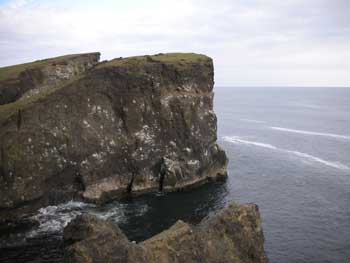
The scene: a packed Delta Airlines flight from Munich to Atlanta. About three hours out of Munich, the overhead television monitor of our progress over the Atlantic showed we were passing just south of Iceland. There was only mild interest on my part.
An hour later, the calm and reassuring voice of the captain interrupted our flight movie to tell us that the right engine of our 767 has ceased to function, and that we would be flying to Keflavik Airport in Iceland as a safety precaution.
Admittedly, I was dozing when the announcement was made, but most people later indicated they hadn’t noticed anything when the engine went out. The captain added that these well-made Boeing planes were easily able to fly on one engine, and–thankfully–he was right.
17 GERMAN STUDENTS
My wife, Carol, and I were accompanying a group of 17 high school German students on their way home to Chicago via Atlanta after three weeks participating in a stimulating German exchange with their sister school in Hamburg, Germany. The kids were elated at the thought of spending the last hours of their trip in a country they had never hoped to visit.
“Parents can wait,” they thought. “We’re going to Iceland!” We chaperones thought, “If one engine can go out, what happens if the other one stops as silently and without warning like the first?” We hurriedly checked our life jackets and raft launching procedures on the flight safety card.
The rest of the trip was both a bit surreal and entertaining. Landing with only one engine was just a little different than other landings, as the pilot had to be careful using only one engine to assist with braking. We did notice the emergency fire equipment at the end of the runway when we landed, which the captain had assured us would be there as part of “normal procedure.”
We were told shortly before debarking, that a replacement plane would be flown from New York to pick us up, and that we should check the airport departure monitors to determine when to board the replacement plane.
THREE-HOUR TOUR
Thoughtfully, the airline had already made arrangements for all 280 passengers to take a three-hour tour of interesting sites surrounding the airport. Within an hour of landing they had found five luxury buses for our tour, even though Delta had no airline representative anywhere close to Iceland. We wished the drivers of the buses had given us more information about the sites we were seeing, but we sensed they had been hired to drive our group and not guide us, and that their English language skills were limited. We can understand that it would have been even harder for local officials to find five buses, drivers and guides for us on an emergency basis at 4:00 on a Sunday afternoon in a remote area of Iceland.
So on our own we enjoyed “The Blue Lagoon,” a smelly sulfur springs, a quiet fishing village, a bridge spanning a major Atlantic fault, and some hill climbing through the volcanic rocks which dominate this desolate part of Iceland. At each site, the kids hopped off the bus with great enthusiasm, cameras in tow.
After our sunny late afternoon tour, we returned to Keflavik Airport, were given supper in the single airport cafeteria, and, because by then flight monitors showed we wouldn’t be taking off on the reserve plane until 6:00 a.m., everyone started looking for a place to sack out for a few hours. No one objected when our students started pushing black leatherette chairs together to create a manger-like individual sleeping environment.
SHOPS STAY OPEN
There are no flights from Keflavik Airport after midnight, but the thoughtful personnel in the airport cafeteria and duty-free shop stayed open to meet the appetites and shopping needs of 280 unexpected visitors. Passengers had an entire airport to themselves, and the airport personnel couldn’t have been nicer or more tolerant.
In a continuing giddy mood, three of the girls in our group used some of the free cosmetics available in the duty-free shop to make up the faces of two willing boys, finally escorting them around for a little “makeup show.” Others purchased black T-shirts with the ironic inscription “Lost in Iceland.”
Fifteen hours after landing in Iceland, we took off in the morning dawn with the same flight crew we had out of Munich. Twelve hours later, weary students running on their last adrenaline, greeted their relieved parents at Chicago’s O’Hare International Airport. The trip was finally over.
Before leaving, the amiable kids we had just spent three weeks and a day with, were cautioned not to forget they had just spent three glorious weeks in Germany, and not to talk exclusively about Iceland when asked about their exchange trip.
Despite our warnings, we don’t doubt that many of them told friends that “Germany was great, but we had to make an emergency landing in Iceland!” One of the students started to write out plans for an exchange trip to Iceland, with volcanic rocks as “host parents.” Funny kids.





















 European Traveler