Afloat on the Rhine and Moselle

A dream river voyage on the Scenic Opal spotlights cozy towns in the heart of Europe

By Randy Mink

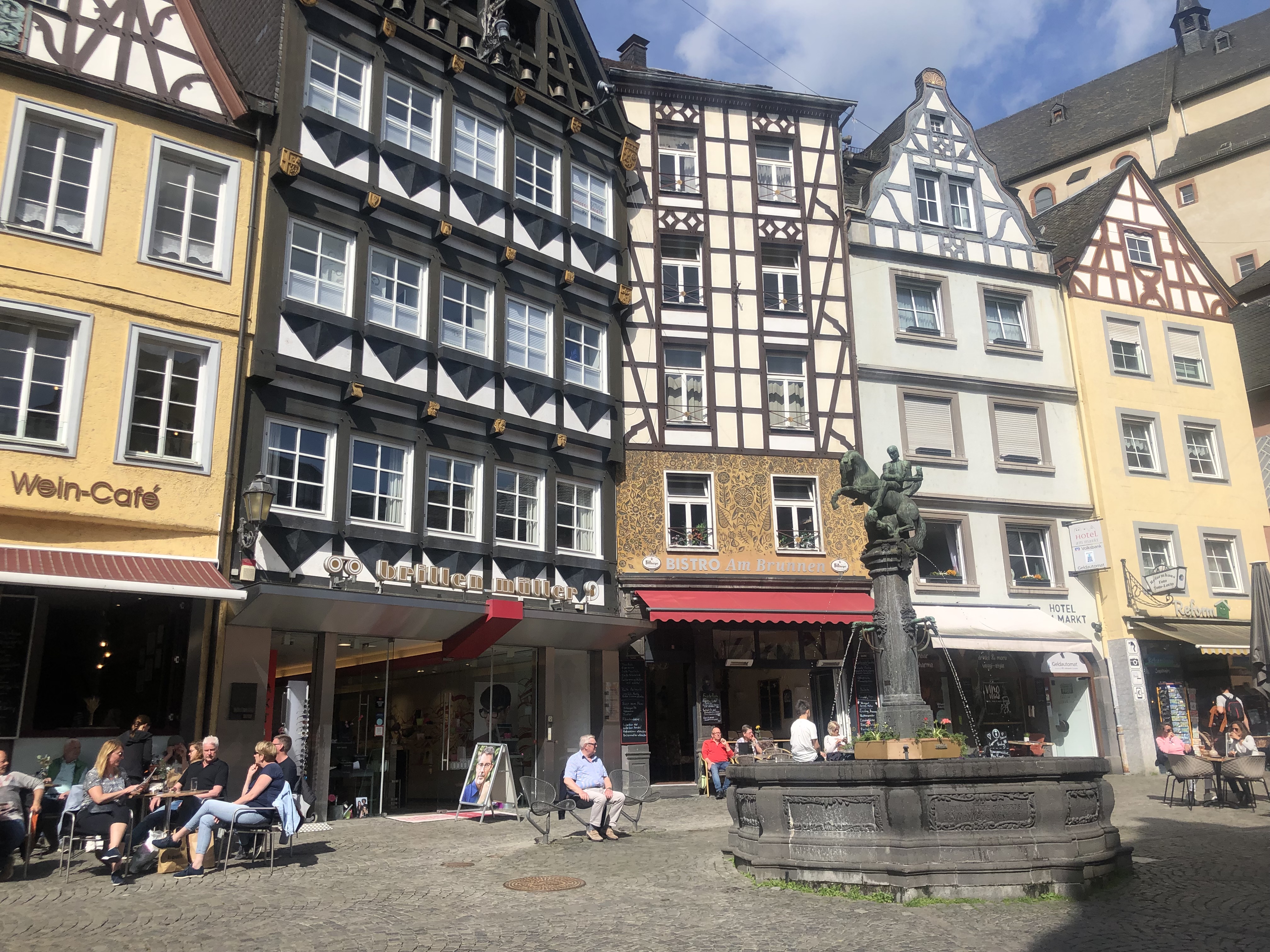
With its half-timbered houses, tangle of cobbled alleyways and picture-perfect castle perched on a crag high above the market square, the German village of Cochem struck me as something plucked from a medieval fairy tale.

Almost too good to be true, the Moselle River town of 5,500 was one of several stops on “Charming Castles & Vineyards of the Rhine & Moselle,” a seven-night cruise itinerary offered by Scenic, an Australia-based company with 12 luxury river ships in Europe. My brother and I were aboard the 163-passenger Scenic Opal, our floating hotel for the week.

Happily, in Cochem and some other ports of call, the historic town centers lay just steps from the ship’s gangway. I love being in the middle of everything within minutes of disembarking.

Clockwise: The Moselle River town of Cochem, Germany, as seen from hilltop Reichsburg Castle. (Photo credit: German National Tourist Board)
Reichsburg Castle looms high above the Moselle River town of Cochem.  (Larry Mink Photo)
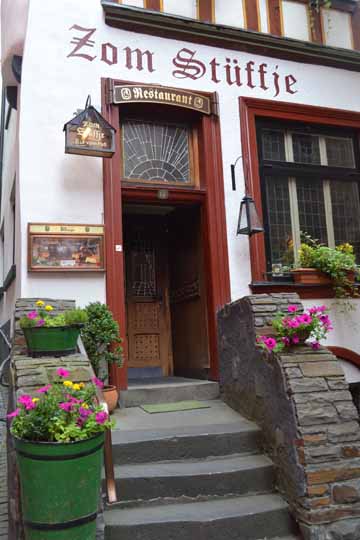
Cochem charms visitors with its ancient, half-timbered buildings. (Randy Mink Photo)

Because of my ancestry and the fact that my first trip to Europe was a summer German language program in Austria, I’ve always had an affinity for German-speaking countries. Until this cruise, however, I had never been to the Rhine or Moselle valleys.

It was the Moselle’s inclusion that steered me to the itinerary, as not all Rhine cruises venture to this narrower, slower-moving, more intimate tributary, which twists and turns more than 100 picturesque miles between the German cities of Trier and Koblenz. Many Rhine journeys spend time in the more industrial stretches to the north.

I also liked this particular circuit because it touched four countries. Besides shore excursions in Germany, Scenic offered tours in France and the Grand Duchy of Luxembourg. The cruise ended in Basel, Switzerland, where we stayed two nights in a hotel before flying home.

The Rhine travels nearly 800 miles from the Swiss Alps to Rotterdam on the North Sea, forming the border of southwestern Germany and eastern France. From the Vosges Mountains, the Moselle flows through northeastern France and Luxembourg to Germany, joining the Rhine at Koblenz, our first port after embarking the day before at Mainz, a city of 200,000 about 40 minutes from the Frankfurt airport.

Both waterways dish up a passing parade of vineyard-covered slopes, hilltop castles and idyllic towns with gabled houses, church steeples and leafy riverside promenades—an eye-popping feast for those of us who thronged the railings or drank it in from deck chairs. Steady streams of barges, sightseeing boats and pleasure craft also kept us engaged. One afternoon on the Moselle, the Scenic Opal went through three locks, the first one upon leaving Koblenz for the pretty Moselle Valley, my favorite part of the trip.

Koblenz: At the Confluence

In Koblenz I opted for a ship-arranged walking tour but easily could have wandered on my own. The colorful squares and alleys of Old Town, a largely pedestrianized shopping zone with plenty of cafes and bakeries, were a short walk from our berth at the beautifully landscaped Rhine Promenade. (My brother chose the e-biking excursion, exploring on one of the ship’s electrically assisted bicycles.)

The park-like river walk led to Deutsches Eck, or German Corner, the point where the mighty Rhine meets little sister Moselle. Lording over the tip of land is a monumental equestrian statue of Kaiser Wilhelm I (1797-1888), first emperor of the New German Empire. Destroyed in World War II and replaced in 1993 after the fall of the Berlin Wall, the statue now represents German unity. Nearby stand three concrete slabs from the infamous wall and text about life under Communism in East Germany. Overlooking the confluence is Ehrenbreitstein Fortress, a massive complex reached by cable car from the promenade.

Clockwise (Randy Mink Photos): An equestrian statue of Kaiser Wilhelm I, the first emperor of the New German Empire, overlooks the confluence of the Rhine and Moselle rivers in Koblenz, Germany. The meeting point is called Deutsches Eck, or German Corner.
Scenic Opal passengers explore Koblenz, Germany, on a guided bike tour.
Tempting bakeries and cafes are just a few blocks from cruise ships’ Rhine River berths.

Little Luxembourg

From our next stop, the Moselle Valley town of Bernkastel, we took a morning excursion to Luxembourg City, an hour-and-a-half away. Our guided ramble through the capital city’s oldest quarter, famed for the stone bastions and battlements rising above dramatic ravines, focused on the shop-filled pedestrian zone and included panoramic lookout points. After the tour my brother and I relaxed over hot chocolate at the Chocolate House, snaring an outdoor table across from the Grand Ducal Palace, where we earlier had snapped pictures of the soldiers on guard duty. Passengers who didn’t sign up for Luxembourg could choose to visit a Bernkastel winery and sample the valley’s renowned Rieslings.
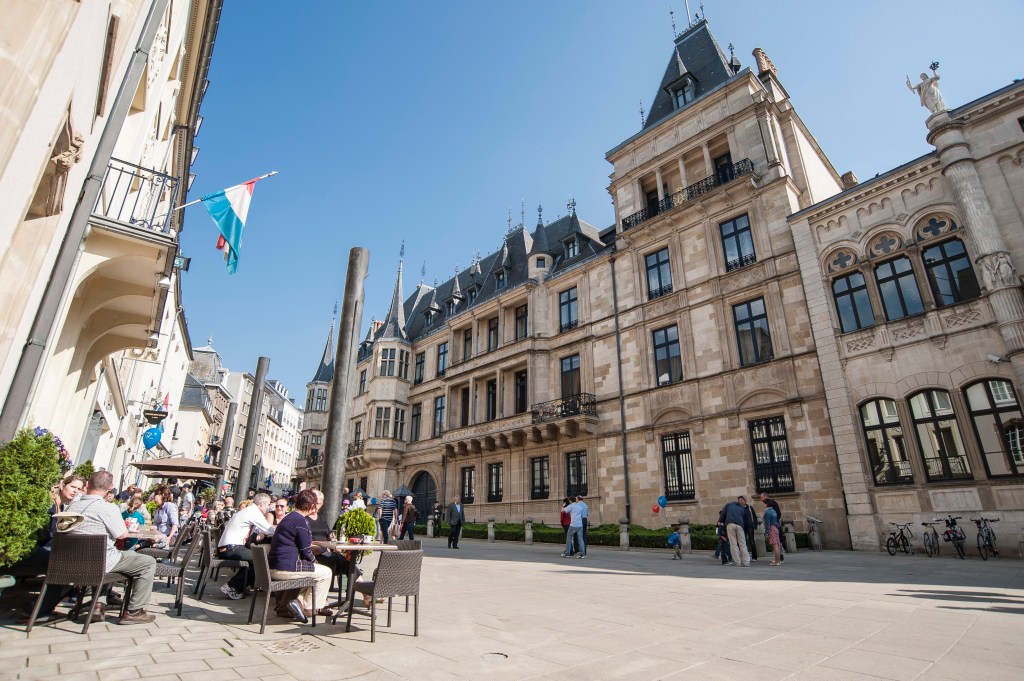
1: The imposing Grand Ducal Palace captivates river cruise passengers on the Luxembourg City shore excursion. (Photo credit: LFT/Christian Millen)
2: Soldiers stand guard at the Grand Ducal Palace. (Randy Mink Photo)
3: Ancient fortifications charm visitors to Luxembourg City, a shore excursion option from the Moselle River town of Bernkastel, Germany. (Photo credit: LFT/Alfonso Sagueiro)
4: Stunning panoramas abound in Luxembourg City. (Randy Mink Photo)

Moselle Crowd-Pleasers: Bernkastel & Cochem

After lunch on the Scenic Opal, moored across the bridge from Bernkastel, we explored the storybook German town. Its riverfront facade didn’t look unusually quaint, but as we probed deeper into the web of little streets, the place just kept getting cuter and cuter. I wanted to photograph every square, crooked lane and antique building in my path, and slip into every wine tavern. Had we more time, I would have hiked up to Landshut Castle, frequented centuries ago by the territorial lords of Trier. Built in 1277 and in partial decay since 1692, it houses a restaurant and cafe.
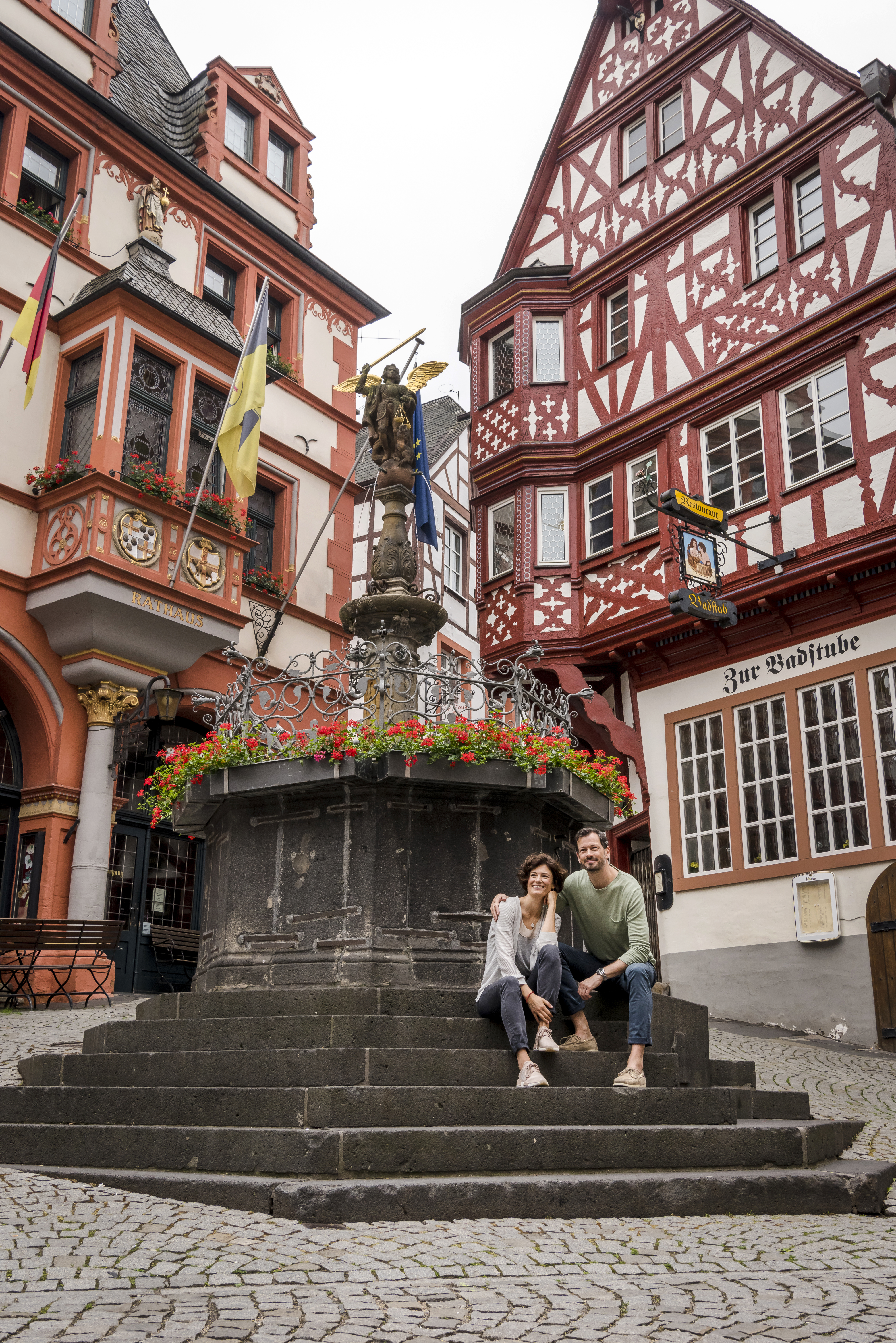
Left: The fairy-tale town of Bernkastel is a popular stop on Moselle River cruises in Germany. (Photo credit: German National Tourist Board)
Right: Landshut Castle, dating back to 1277, overlooks Bernkastel.  (Randy Mink Photo)

In the evening, we all boarded buses for Trier, where Scenic had arranged a private classical concert staged amid the Gothic grandeur of the 13th century Liebfrauenkirche. Riding through Germany’s oldest city to reach the church, we grabbed glimpses of the famous Porta Nigra, the best-preserved Roman city gate north of the Alps.

Scenic Opal passengers attended a private classical concert at the 13th century Liebfrauenkirche in Trier, Germany. (Randy Mink Photo)

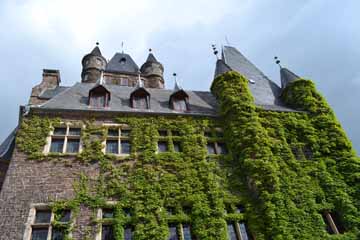
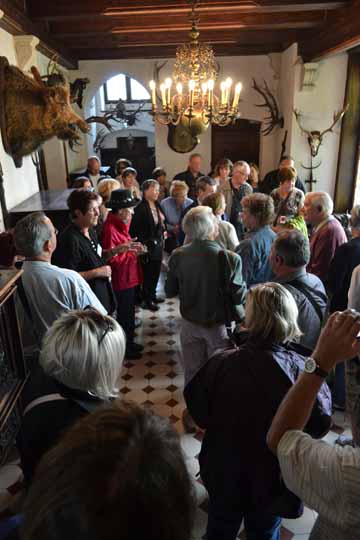
In Cochem, the hub of the Middle Moselle, our excursion featured a visit to Reichsburg Castle. From its lofty vantage point we enjoyed sweeping views of the river, the steep vineyard abutting the castle grounds and a skyline dominated by the onion-dome spire of St. Martin Church. Dating from the 11th century, Reichsburg was restored in the late 1800s by a wealthy Berliner who created an idealized version of a medieval stronghold. Although not architecturally faithful, it certainly gives Cochem a photogenic landmark, and three-fourths of the main tower is original. Mounted animal heads, suits of armor and period furniture set the mood inside. Afterwards, our walking tour of Cochem showcased its compact central square, Baroque town hall and ancient town gates.

Clockwise (Photo credits: German National Tourist Board): Cochem’s Reichsburg Castle has all the trappings of a rustic baronial estate.
The Middle Ages come alive on tours of Reichsburg Castle.
Reichsburg Castle and the onion-dome spire of St. Martin Church frame this view of the Moselle River town of Cochem, Germany.

On the Romantic Rhine

Next we traveled the 32 miles from Cochem back to Koblenz, where our ship overnighted in order to get in position for a morning journey to Rüdesheim that would spotlight the Upper Middle Rhine Valley, or Rhine Gorge, the river’s most castle-studded corridor. This would be our big day, the one we’d been waiting for.

As we looked out from the breezy top deck, it was castle after castle, many of them, romantically, in various states of ruin. Some crowned distant summits, others rose straight from the shore. Vine-ribboned hillsides and timeless villages seemed to be waiting around every bend.

As we learned from the cruise director’s narration and from Tailormade (the Scenic smartphone app), some of the fortresses have been repurposed as museums, restaurants, hotels or private residences. Castle Stahlek in Bacharach, now a youth hostel, once served as a Nazi indoctrination center and military hospital during World War II.  (The app’s commentary also came in handy for exploring ashore and helped us identify the towns and landmarks we passed while cruising.)

In Rüdesheim, a tourist-packed village crammed with wine taverns and souvenir shops, we hiked through vineyards to Niederwald Monument, a grandiose memorial that commemorates the 1871 founding of the German Empire after the end of the Franco-Prussian War. Our uphill trek was challenging, the cable car ride down a lot more fun.
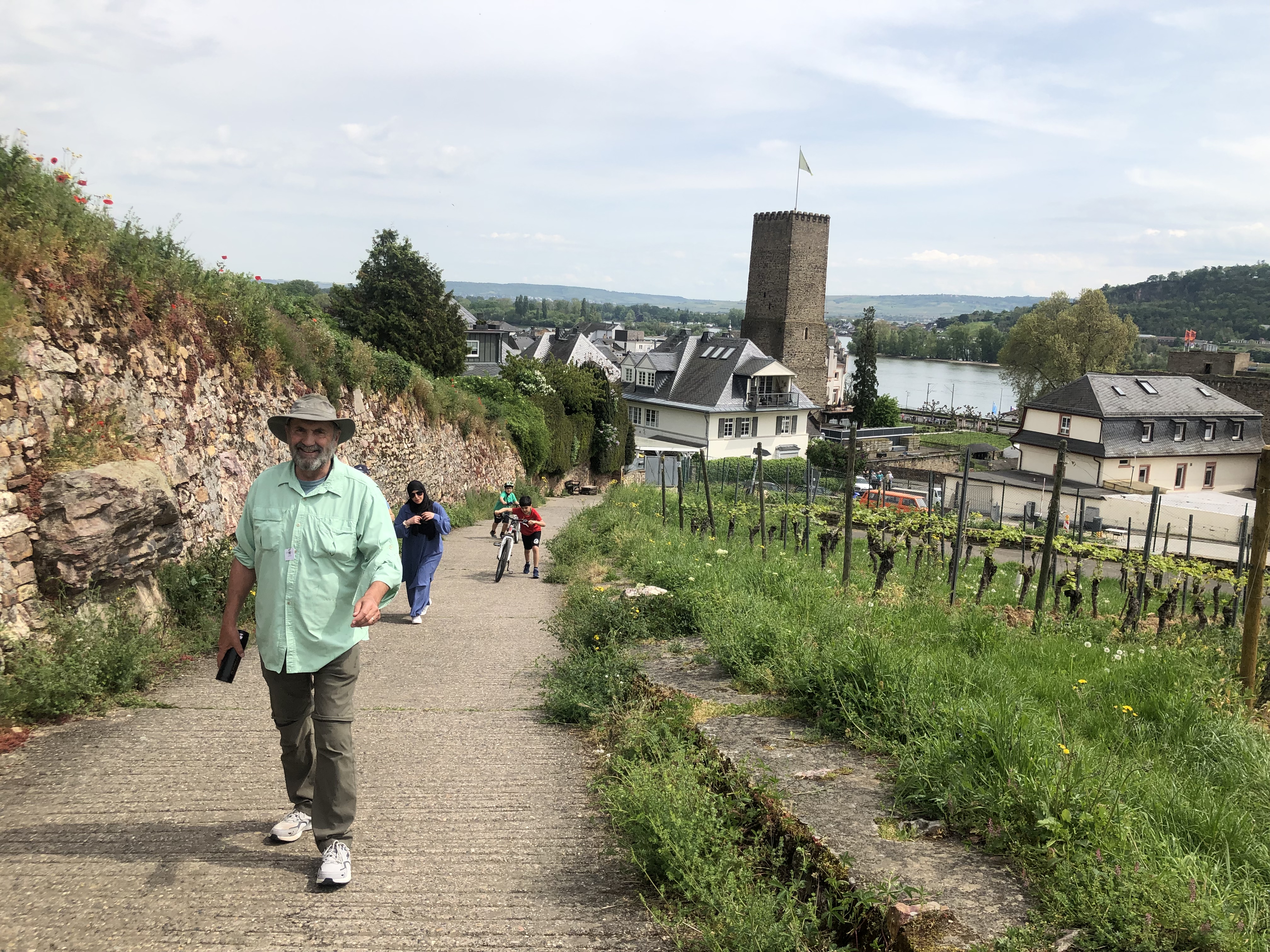
Left: It’s an uphill trek for Scenic Opal passengers who choose to walk to the hilltop Niederwald Monument high above Rüdesheim. (Randy Mink Photo)
Right: Shore excursions in the Rhine River town of Rüdesheim visit the Niederwald Monument, a grandiose memorial that celebrates the 1871 founding of the German Empire after the end of the Franco-Prussian War. (Photo credit: German Tourist Board)

Forays into France

Heading south on the Rhine, the Scenic Opal tied up at two more German towns. From Rastatt we were torn between a tour to the German spa town of Baden-Baden and one to Strasbourg, capital of France’s Alsace, a region that historically has flipped back and forth between German and French control. In Breisach, our last port of call before Basel, we had to weigh Colmar, Alsace’s most beautiful town, against Freiburg, a Black Forest gem renowned for its medieval Old Town.

Since we had seen plenty of Germany, we went all in for Alsace and enjoyed walking tours of Strasbourg and Colmar, both with cozy, traffic-free historic cores chockablock with pastel, flower-laden, Hansel-and-Gretel houses. It’s just that touch of fairy-tale fantasy we needed to put a happily-ever-after ending to our trip through the enchanting heart of Europe—the Europe of our dreams.

Left: The Cathedral of Notre-Dame, a towering landmark cast in red sandstone, dominates this view of Strasbourg’s historic core. (Randy Mink Photo)
Right: Rheinstein Castle, near the German town of Trechtingshausen, is one of many medieval castles that captivates Rhine River cruise passengers. (Photo credit: German National Tourist Board)


To read about the Scenic Opal luxury river ship, including its accommodations and dining experiences, please visit https://europeantraveler.net/2023/10/19/cruising-through-the-heart-of-europe/

Cruising Through the Heart of Europe

In comfort and style aboard the Scenic Opal

By Randy Mink

I can’t think of a more relaxing way of seeing Europe than cruising in luxury along its great rivers. Unlike a multi-country bus tour or train journey, you unpack just once, as your ship is home sweet home for the week. And as these sleek white vessels often dock in the center of town, the tourist highlights lie just steps from the gangway.

My most recent magic-carpet ride to adventure was “Charming Castles & Vineyards of the Rhine and Moselle,” a seven-night trip filled with shore excursions in southwestern Germany, northeastern France and the Grand Duchy of Luxembourg. Delivering us to these enchanting places was the 163-passenger Scenic Opal, one of 12 ships in the Europe fleet of Scenic, an Australian-owned cruise line geared to English-speaking guests.

The 163-passenger Scenic Opal, shown here on the Moselle River in Bernkastel, Germany, is one of Scenic’s 12 luxury river ships in Europe. (Randy Mink Photo)

The Scenic Difference

At first glance, most river ships in Europe seem to offer a similar product, but Scenic stands out in two ways. First, guests have a little more elbow room, as the vessels offer a higher-than-usual passenger-to-space ratio. Whereas many ships of the same size take on 180 or more passengers, Scenic’s four-deck floating hotels carry 163 guests maximum. (Our sailing counted 129 passengers, including 53 Americans, 27 Canadians, 37 British, nine Australians and a smattering of other nationalities.) The Scenic Opal and sister ships Scenic Amber and Scenic Jasper were built in 2015/2016 and refurbished in 2019.

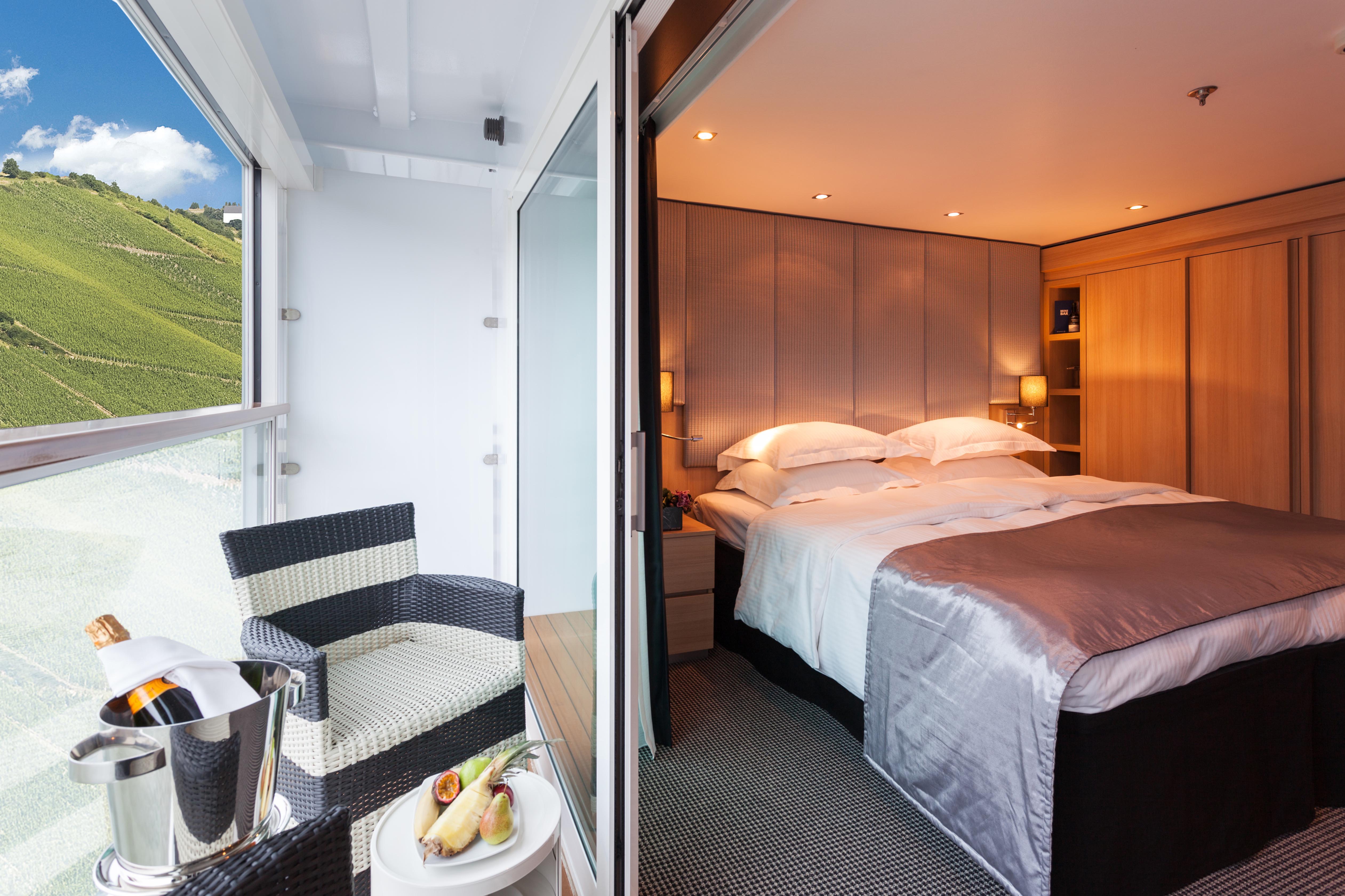
Floor-to-ceiling windows in both public areas and most staterooms, moreover, give the feeling of added space. All cabins on the Sapphire and Diamond (second and third) decks feature a full-length, enclosed balcony with two padded wicker chairs, a table and a wide horizontal window that glides up or down at the push of a button. A curtain and a glass door can be used to close off the bedroom from the peaceful nook, called a Scenic Sun Lounge. For this sense of extra space, Scenic ships are marketed as “Space-Ships” (not because they’re futuristic-looking). Smaller staterooms on the less-populated lower deck, the Jewel Deck, have a large picture window but no balcony.

The other chief takeaway about Scenic is the all-inclusive price. You never have to take out your wallet and won’t even be asked for a credit card at check-in. The cruise fare includes not only gratuities, airport and hotel transfers, laundry service once per cruise, shore excursions and multiple dining options but also unlimited complimentary beverages (soda, beer, wine, cocktails, spirits) all day, not just with meals. You don’t even need to worry about using your room’s mini-bar—just help yourself to free drinks and snacks when the mood strikes. Treats in my cabin included Pringles chips and a favorite of mine—Manner cocoa-flavored hazelnut-creme wafers from Vienna. The refrigerator, replenished daily, was stocked with everything from Coke, beer and juices to German wines and miniature bottles of rum, gin and whiskey.

Left: Most cabins on the Scenic Opal have an enclosed balcony, or Sun Lounge, with a window that glides up and down at the push of a button. (Photo credit: Gillies & Zaiser)
Right: The Junior Balcony Suite offers a little more space than standard staterooms on the Scenic Opal. (Photo credit: Gillies & Zaiser)

Food, Glorious Food

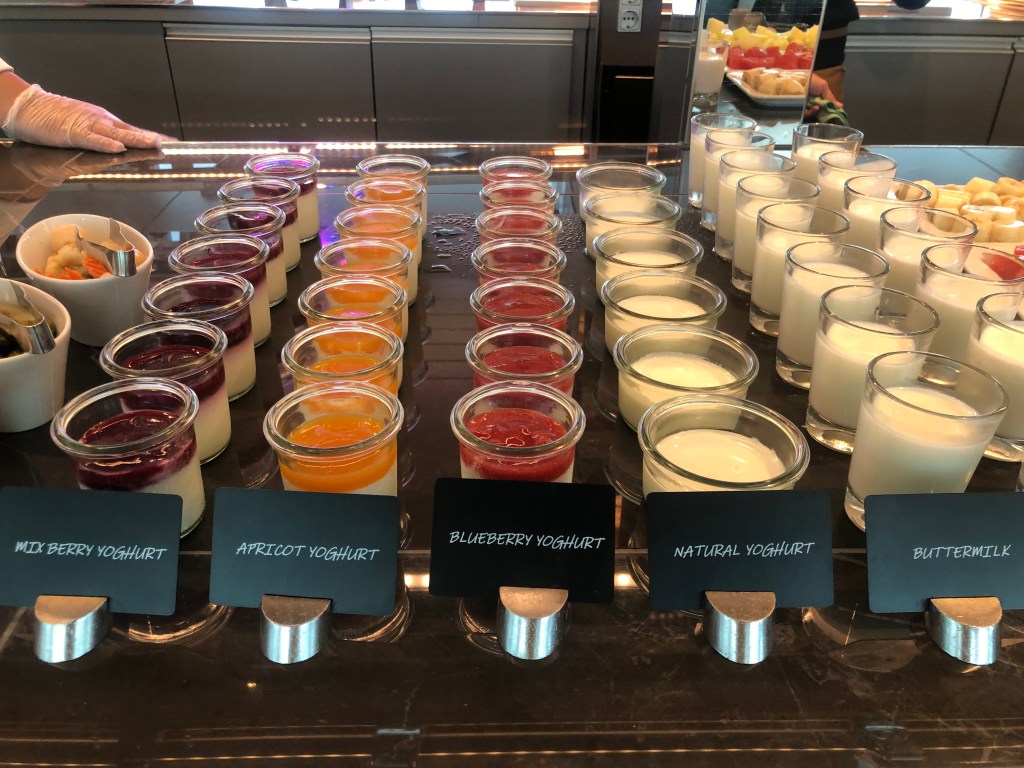
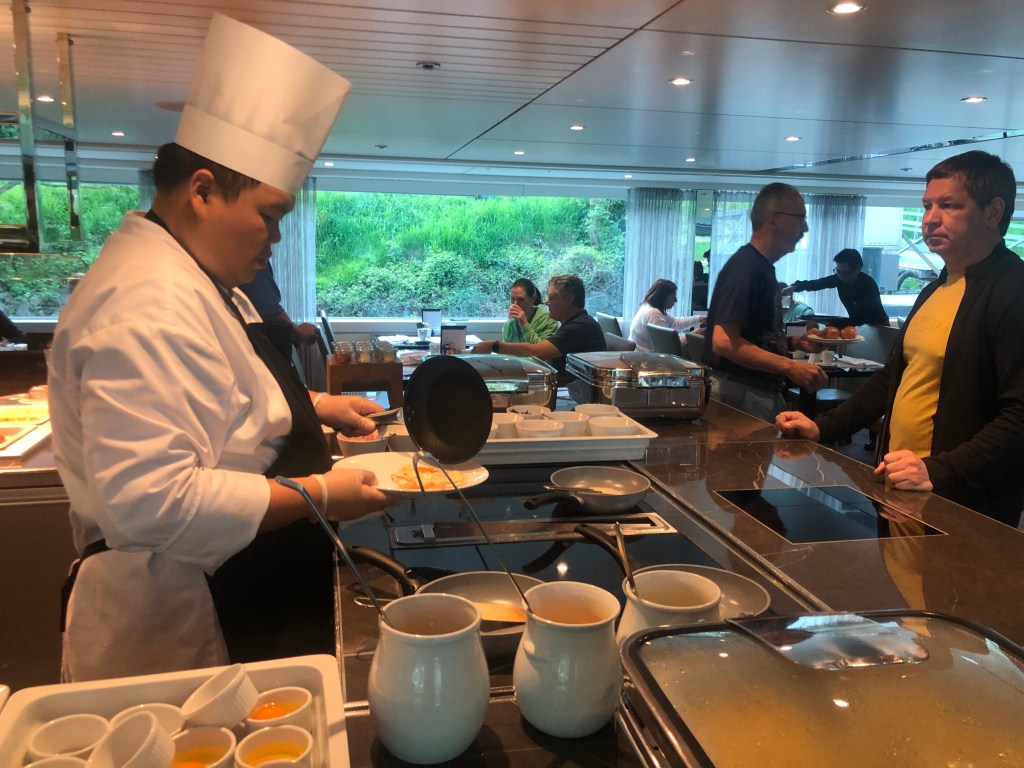
In the Crystal Dining Room, I always tried to get a window table so as to look out on the sloping vineyards and fairy-tale towns flanking the Rhine and Moselle rivers. The daily breakfast buffet featured a million different items—well, at least 100 anyway—and even offered chilled Champagne. There were bagels and artisan breads, yogurts and fruits of all kinds, and hot-off-the-griddle pancakes or waffles, not to mention made-to-order omelets. The Brits and Australians appreciated the baked beans, porridge, English bacon, and grilled tomatoes and mushrooms. One morning we had bread-and-butter pudding.

The breakfast buffet also offered cheeses, cold cuts and smoked fish (herring, rollmops, halibut, salmon). What’s more, we could order from a menu that featured lamb chops, French toast and perfectly done, oh-so-decadent eggs Benedict.

Lunch also was a smorgasbord. I really enjoyed the German buffet, a special meal that put an exclamation point on our morning transit through the castle-studded Rhine Gorge and got us in a jolly mood for the tourist-thronged wine town of Rüdesheim. The spread included three types of sausage—bratwurst, Käsekrainer (cheese-filled) and Weisswurst (white veal sausage)—and three mustards. There were sauerkraut, parsley potatoes and both bread and potato dumplings. Cheesy spaetzle, freshly tossed, was served hot from the pan. I didn’t have room for the fried chicken (Backhendl), pan-seared river trout in almond butter or even a morsel of the pork knuckle.

Recorded oom-pah band music lent a Munich beer hall vibe as I washed down traditional German foods with a tall glass of Erdinger Weissbier, a classic wheat brew. Dessert was Dampfnudel, a pillowy steamed dumpling filled with blueberries. Other lunch buffets usually featured at least one food representative of the region we were traveling through.

On King Charles III’s coronation day, the River Cafe, an area of the Opal Lounge that offers a daily lunch buffet, we had fish ’n’ chips while watching the ceremony on big-screen TVs. The lounge’s coffee and tea stations had scones with jam and clotted cream, another British touch.

The River Cafe, open during the day for sandwiches, salads, ice cream and pastries, is transformed each evening into Portobellos, a five-course Italian dining experience for which each guest receives a printed invitation once during the week. Table La Rive, a sophisticated chef’s table offered once a cruise to Diamond Deck and Junior Suite guests, stars innovative fare with wine matching in a small-group setting in the dining room.

Every night, the restaurant’s a la carte dinner menu gave us appetizer, main course and dessert choices. If we didn’t want one of the three entree selections, we could order a salmon steak, sirloin steak or chicken breast.

Rather eat in privacy on your balcony? An extensive room service menu is available from 6 a.m. to midnight.

On any cruise, I tend to overeat (don’t we all?), so every day I hit the walking track on the expansive Sun Deck, a breezy area with tables, chairs, loungers and a vitality pool. Happily for me, the track was lighted after dark. I recall one night making my rounds as floodlit Reichsburg Castle loomed beyond the storybook Moselle River town of Cochem, Germany, a magical moment indeed.

Left to right: The Scenic Opal’s daily breakfast buffet offers choices galore, including many varieties of yogurt. (Randy Mink Photo)
An omelet station is part of the Crystal Dining Room’s breakfast buffet. (Randy Mink Photo)
Alcoholic drinks in the Opal Lounge and dining room are included in the cruise fare. (Photo credit: Gillies & Zaiser)
The River Cafe is the place for a wide variety of tempting small bites throughout the day. (Photo credit: Gillies & Zaiser)

A Superlative Staff

Every evening we all gathered in the spacious lounge with cruise director Alex Thurein, who briefed us on the next day’s schedule. An affable German who was born in Wiesbaden and currently lives in Salzburg, Austria, he set the upbeat tone of the cruise. From Day 1 we knew we could go to Alex for travel advice or any problem. (On a personal note, I will be forever grateful to him for helping me contact credit card companies after a pickpocket incident during a shore excursion in Colmar, France.)

One morning Alex gave a brilliant presentation on “Germany and the Germans: A Brief Overview of 1,200 Years of Central European History.” Another day his topic was Europe’s rivers, canals and lock systems.

The Scenic Opal’s crew, 53 in all, represented 14 nationalities, from Thai and Indonesian to Serbian and Polish. Our captain was Hungarian. The women staffing the reception desk always had smiles and couldn’t wait to assist or answer a question.

Also smoothing the way was the stateroom’s TV, an encyclopedia of information and entertainment options. We could watch television shows (I mostly caught the live BBC newscasts), choose from a wide selection of movies and music, view the daily schedule and lounge presentations, and bone up on the ports of call. A keyboard even let us use the screen as a computer.

With high-tech gadgetry, an all-inclusive approach and plenty of space to unwind, Scenic has thought of everything to ensure a worry-free journey on the rivers of Europe.

1: Champagne is served at the first-night welcome reception onboard the Scenic Opal. (Photo credit: Gillies & Zaiser)
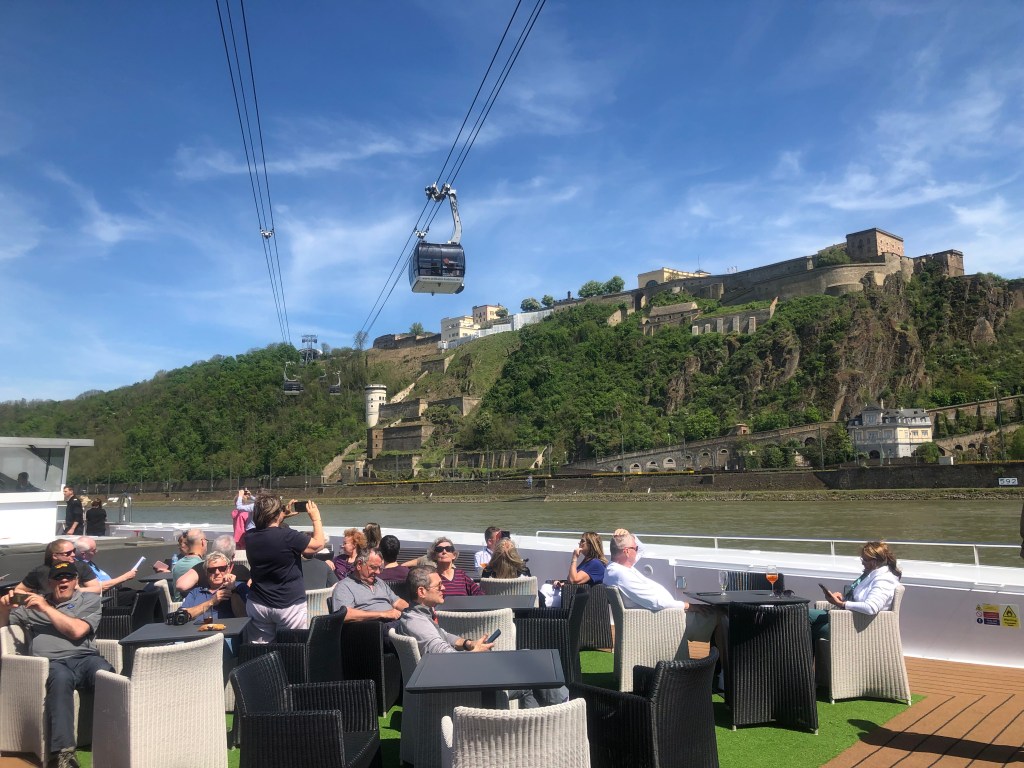
2: In the Rhine River city of Koblenz, passengers relax on the Sun Deck of the Scenic Opal as cable cars to Ehrenbreitstein Fortress pass overhead. (Randy Mink Photo)
3: The Scenic Opal’s reception desk is located just off the Opal Lounge. (Photo credit: Gillies & Zaiser)
4: A passing parade of hilltop castles enchants passengers on the Scenic Opal. (Photo credit: Scenic)

Cruising Through Central Germany

By Marilyn Heimburger
Photos by Don Heimburger

Are you are looking for a vacation that combines relaxation, a bit of history, romantic castles, charming medieval villages, and excellent cuisine? This week-long river cruise on the Moselle, Rhine and Main rivers in Germany, offered by Avalon Waterways, may be the perfect choice for you.

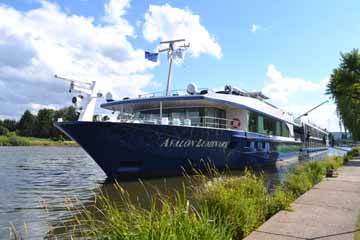
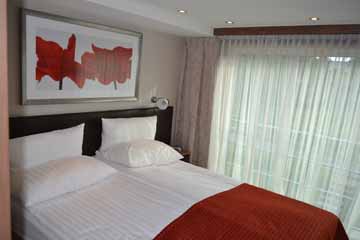
The MS Avalon Luminary, our ship for this cruise, was just recently added to Avalon’s fleet. Its 69 staterooms and suites are designed for efficiency, with plenty of space to stow personal items and luggage. Each room had a small bathroom with shower, comfortable memory foam mattress, a desk, lamp, mirror, fresh flowers, mini bar, and a safe for valuables. A television provided satellite programming and broadcast the view from a camera at the front of the ship. Floor-to-ceiling windows open to a private balcony in most rooms. It’s a luxury of river cruising to just unpack once and let the ship transport you with ease to each destination.

Another luxury on a cruise such as this is the excellent cuisine. The sumptuous breakfast buffet included breads, pastries and cereals, fruits, eggs, potatoes, sausages and bacon, and made-to-order entrees. The full lunch buffet served each day in the main dining room offered soups, salads, choice of main course and desserts. A lighter lunch option was also available in the lounge one deck above. Five-course dinners included an appetizer, choice of soups, salad, choice of meat, fish or vegetarian main course, and several dessert options. The well-trained staff served red, rose, or white wine or beer upon request.

BOARD IN LUXEMBOURG
Boarding the Luminary in Remich, Luxembourg, we were welcomed by cruise director Jean Loup Domart. Entertaining, energetic, and extremely organized, Jean excelled at keeping everything running smoothly.

Although we set sail while dinner was being served, we missed none of the excitement, since the dining room was designed for maximum viewing, with panoramic windows on both sides. A sense of intimacy was provided with fresh orchids in lighted open rectangles dividing the large space without interrupting with the view. The lounge on the level directly above the dining room was also designed for watching Germany glide by in the most comfortable of settings.

Our first stop was Trier, Germany, which boasts amazingly intact structures from the Roman Empire, including imperial baths, an amphitheater, and Constantine’s reception hall, which now serves as a protestant church. Did you ever wonder why Roman ruins always seem to be discovered 6 feet underground? We learned from our local guide that after Roman towns were abandoned, local residents built homes by taking usable stones from the old Roman buildings. Over the course of 600 years, this practice left a 6-foot-deep base of rubble, upon which the medieval towns were built. Trier’s Porta Nigra (black gate) is black from wood fire smoke from Roman times, and was left standing because it was a site that attracted pilgrims, who brought money to the church.

As our trip continued down the Moselle, we passed vineyard after vineyard and peaceful patchwork slopes, dotted with small villages and church steeples. The southern facing slopes provide the perfect environment for catching warm sunlight needed to grow grapes for Germany’s famous Riesling wines. And the ship’s outdoor decks were perfect for relaxing with a cup of coffee or listening to birds along the shore as the ship glided quietly along.

BERNKASTEL-KUES WEINFEST
Our late afternoon arrival in Bernkastel-Kues allowed just enough time to explore the Old Town around the quaint market square. This town hosts the biggest Weinfest on the Moselle in September. One vineyard overlooking the town is the source of their “Doktor” wine. Legend has it that drinking some of the wine from this vineyard cured an archbishop of an ailment, so the wine became known as the “Doktor.”


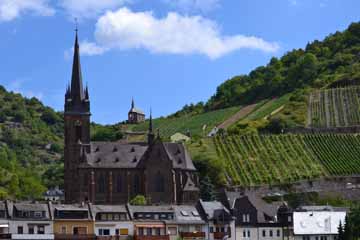
Half-timbered buildings in Bernkastel

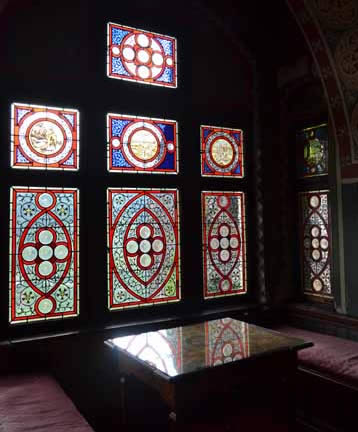
The next day brought us to the wine town of Cochem and a tour of Reichsburg Castle. The interior of the castle highlights not only only medieval artifacts, but Renaissance and Baroque furnishings selected by the 19th century restorers. The tour was informative and the view from the castle — spectacular.

 Passengers tour the castle

The Moselle joins the Rhine at Koblenz, an important center of trade during the Middle Ages. An imposing statue of Kaiser Wilhelm I mounted on a horse dominates the Deutches Eck (German Corner) where the two rivers meet. We arrived just before dinner, with enough time for a short walk into the square to see the many shops and restaurants. The fortress Ehrenbreitstein stands on the opposite bank of the river and provides a beautiful panoramic view of the area.

To begin our cruise down the Rhine Gorge (some say the most beautiful part of the Rhine) first thing in the morning, we docked overnight at Koblenz, and were entertained on board after dinner by a small ensemble of classical musicians.

THE MIDDLE RHINE
The next morning was filled with the history, legends and romance of the Middle Rhine. Cruise Director Jean Loup provided informative narration as the ship glided along, with passengers enjoying the view while relaxing on the sundeck. We learned that during the Middle Ages the Rhine River Gorge posed many hazards for travelers, and provided many opportunities for powerful kings to levy tolls for safe passage. They built castles and fortresses in the 12th and 13th centuries along the banks to collect tolls, make money, and enlarge territories.

Reichsburg Castle

The castles were usually built high on hills, close to a spring, and often on a curve with a view of the river. Stones for the castles were lifted with wheels and ropes, and the building projects provided work and security for locals, whose lifespan at the time was only about 40 years. Most castles were built with limestone, which was easier to work with than granite. Later palaces were built with marble, as techniques improved. To attack a fortress, enemies could try to break down a wall or door with a battering ram on wheels with a roof as protection from arrows shot from the castle. Or a catapult could throw fire over the castle walls. Castles residents used beehives, hot tar or hot water to fend off attackers. Some fortresses housed armies of 600.

In the town of Boppard we saw Sterrenberg and Liebenstein, known as the castles of the enemy brothers, and heard the legend: Two brothers both fell in love with their adopted sister. She wanted none of this, and entered a monastery in town to live as a nun. The brothers fought and finally built two castles next to each other with a wall in between.

The 430-foot-high Lorelei rock is located where the river narrows, creating treacherous currents dangerous to ships. The famous legend of the beautiful maiden who sat on the rock luring sailors to their destruction with her singing is commemorated with a bronze statue.

The town of Oberwesel, below Schoenburg Castle, still has many fortification walls and towers still standing. When the river water is low, travelers can see the “rocks of the seven virgins.” Legend has it that a lord with seven sons wanted to arrange marriages for them. The seven chosen virgins didn’t want to marry, and threw themselves into the Rhine, where, because they were so hardhearted, they turned to stone.

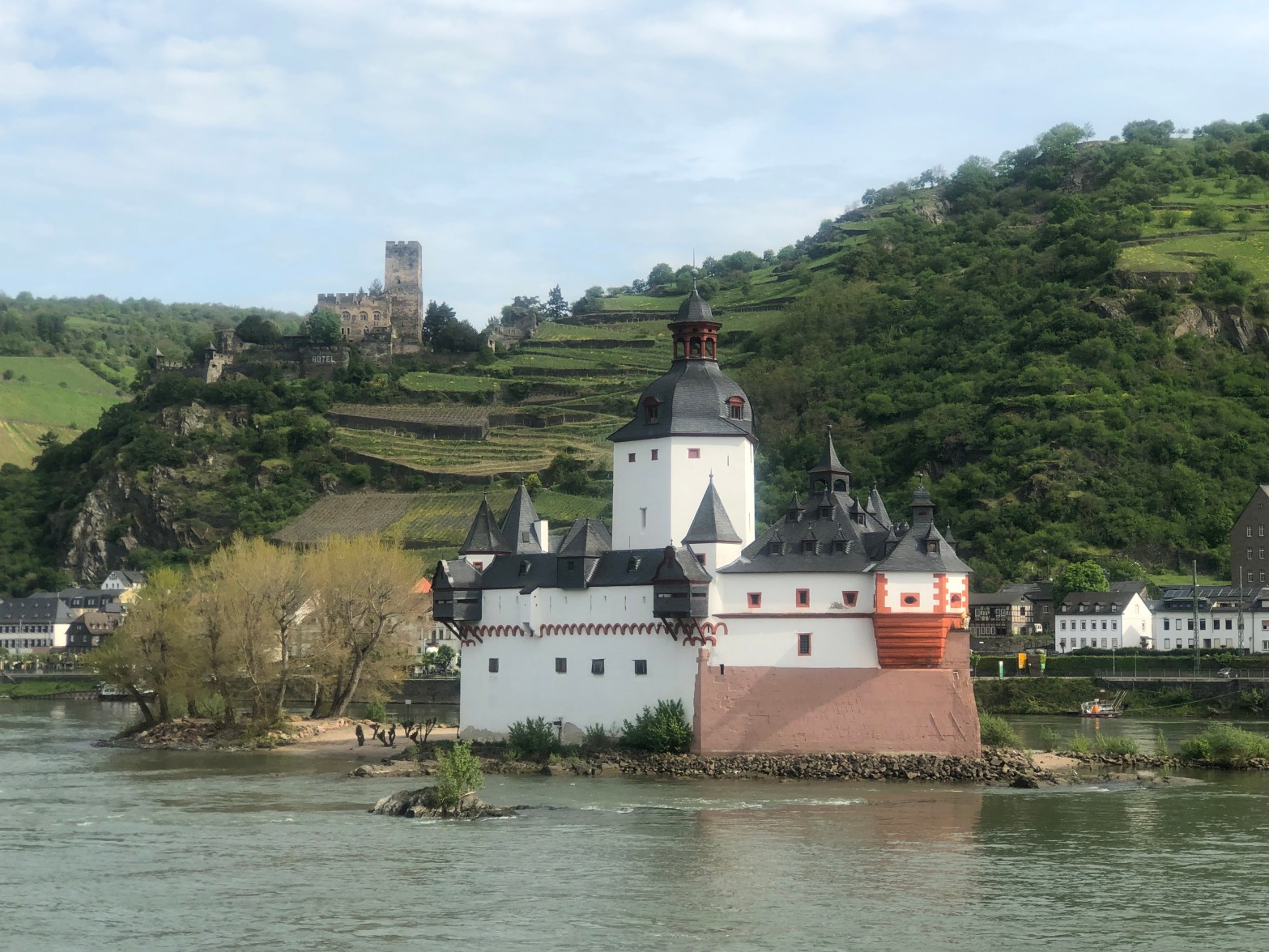
Pfalz Castle (whose gold lion was to symbolize strength and power) was built in the 16-17th century as a customs tollhouse on a little island in the middle of the river. Gutenfels Fortress was built on the bank opposite Oberwesel to protect the tollhouse.

Sooneck Castle, a toll-enforcing castle from the 11th century, also housed pirates. It is one of the oldest along the Rhine and is restored as a cafe.

In an attempt to preserve the beauty and tranquility of the shoreline, many of the houses along the shore are painted in soft pastels, often pale yellow, a color made popular by Maria Theresa. Train tunnel entrances on this stretch of the river are built to look like castles, in order to blend in with the style of the area.

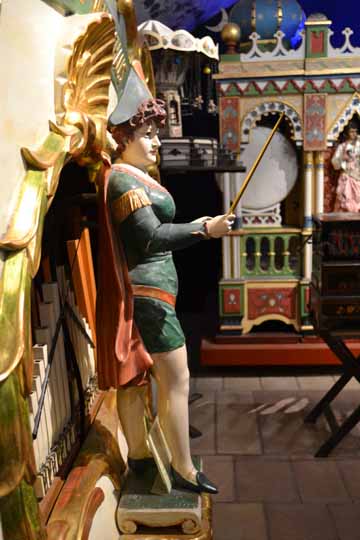
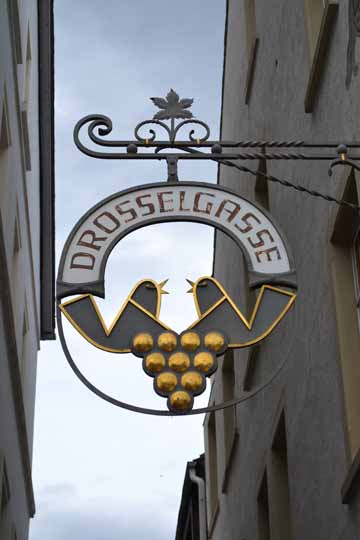
(left to right) Siegfried’s Mechanical Musical Instrument Museum; Drosselgasse, a lively street in Rudesheim.

DROSSELGASSE A FAVORITE
Our last stop on the Rhine River was in Rudesheim, where we enjoyed a guided tour of the Museum of Mechanical Musical Instruments (some imitating entire orchestras in one huge contraption!), and a local winery. Be sure to take time to explore the exciting main street, the Drosselgasse, with its many restaurants and shops.

Navigating the Main River is a slow process because of the many locks needed to raise or lower the ship along the route. So our ever resourceful cruise director kept passengers busy on board with an entertaining German lesson, and a cookie-baking demonstration by an “almost nun” from Miltenberg, our next port of call on the Main.

Miltenberg

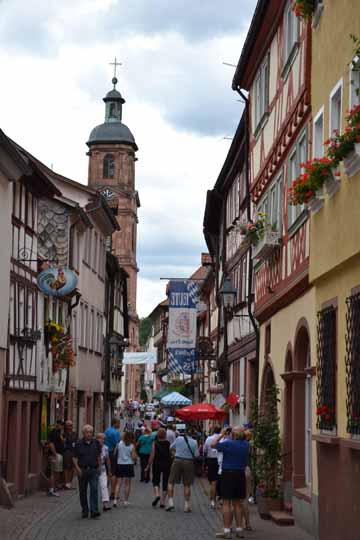
Miltenberg was built against a hill at a curve in the river, a perfect place to collect tolls for the archbishop of Mainz. Many half-timbered houses are still preserved because the people here were too poor to tear them down and rebuild. If a floor sagged and sank, it was filled with sand and covered with another floor. In some recently renovated buildings, 30 centimeters of sand/wood layers were discovered beneath the floor. The original red “paint” on the houses was a mixture containing, among other things, oxblood and cattle dung, which provided the desired red color and also killed worms that might live in the wood. A unique naturally cool icehouse is located in the hill at the rear of the town.

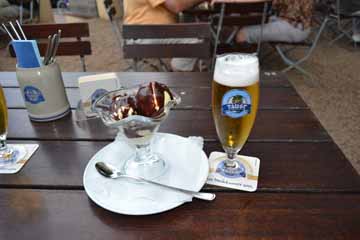
Cold beer and ice cream

While the ship slowly navigated through more locks, passengers rode by bus to Wurzburg, and met the ship when it finally docked after our tour. Wurzburg is the site of the Prince Bishop’s Residenz, which is one of the finest examples of a baroque palace, and also a UNESCO World Heritage Site. It was built to rival Versailles in France and the Schoenbrunn in Vienna. The unique mirrored room features the difficult technique of reverse painting. The famous ceiling fresco by Tiepolo miraculously survived bombing, and the original marble floor is still in the main reception hall. The “marble” pillars are actually a stone core with a ground marble coating so that colors could be controlled, a technique that was more expensive than using solid marble.

Wurzburg

WURZBURG AND X-RAYS
Wurzburg was also the home of Professor William Conrad Rundkin, winner of the Nobel Prize for the discovery of X-rays. Residents in Wurzburg are not x-rayed; they are “Rundkined.”

Bamberg

The terrain along the river from Wurzburg to Bamberg changes and becomes flatter, with fewer vineyards, more trees and shrubs, and more locks. This quiet time was perfect for relaxing with a book from the ship’s library, located in the small lounge at the rear of the ship. There passengers found English language books of all genres, games, and the most wonderful coffee machine which dispensed espresso drinks that rivaled any coffee shop. Iced tea, shortbread cookies and other snacks were available 24/7. The ship also had an exercise room with a treadmill, two types of exercycles and flat screen TV, and a small beauty salon.

Cruise ship surprises

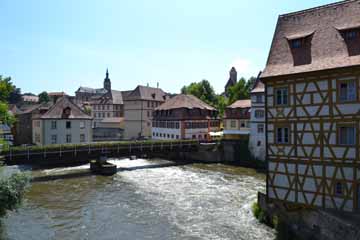
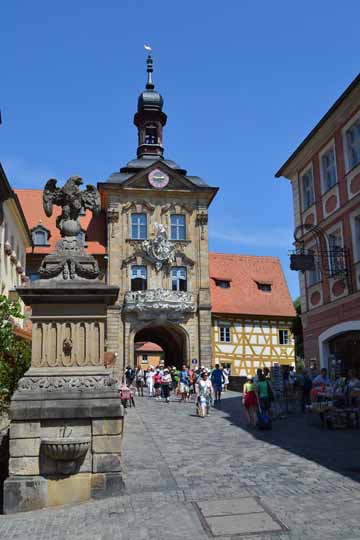
Busses again transported us to meet local tour guides in Bamberg, another UNESCO World Heritage Site. There we learned the local history of the cathedral, the Old Town Hall, which straddles the River Regnitz, had an opportunity to taste the local specialty, “Rauchbier” (smoked beer), and had time for browsing in the main pedestrian shopping area.

Our cruise ended the next morning upon arrival in Nuremberg, from which some passengers continued by bus to Prague, and others to charming Rothenburg ob der Tauber.

IF YOU GO..
Avalon Waterways, which has been in business for 80 years, has a number of different river cruises available in Europe. Their river cruise ships are small compared to ocean liners, which makes the service and trip more personal. They also have Europe’s youngest fleet of ships, with their fleet averaging just two years old, compared to seven years for other cruise companies.

There are full floor to ceiling sliding glass doors in 85% of the deluxe staterooms on Avalon’s fleet. Also, the Luminary had lots of space in the central passenger areas such as the dining room, lounge and library.

The Luminary offered five categories of rooms including Royal Deck suites; Royal Deck Category P; Sapphire Deck Forward, Category A; Sapphire Deck Aft, Category B; and Indigo Deck, Category E.

For more information, go to www.avalonwaterways.com or call 877-797-8791.