Many people consider Czech beer to be the best in the world. The Czechs think so, too: they’re the biggest consumers of beer on the planet, drinking an average of 161 liters (42.5 gallons) per person annually (about 30% more than their beer-loving neighbors next door in Germany).
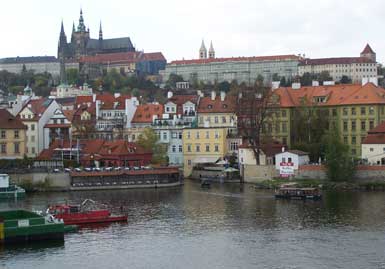
Prague is famous for both its architecture and its beer.
The Czechs prefer to drink their beer on tap, in local taverns, fresh from the barrel, not from bottles or cans. “Cans are for sauerkraut,” they say. Another Czech saying emphasizes the importance of the taverns: “The brewmaster brews the beer, the innkeeper makes it great.”
Prague’s oldest tavern, U Fleku, was founded in 1499.
BEER TAVERNS IN PRAGUE Prague, the capital of the Czech Republic, has long been known for its beer taverns, some of which date from the Middle Ages. They’ve always been the haunts of workers and students, as well as those writers, artists and revolutionaries who preferred the classless camaraderie of the humble taverns to the social and intellectual pretensions of the city’s more elegant coffeehouses.
Before the Velvet Revolution of 1989, some of the beer taverns in Communist-era Prague were known as places where tourists (and spies) from the West could rendezvous with people from the Soviet Union and Eastern Europe, who were allowed to travel to Czechoslovakia but could not go to Western Europe or the United States. Of course those same taverns also attracted agents of Czechoslovakia’s secret police, who spied on the “suspects” from East and West meeting over mugs of beer in the smoke-filled rooms. Back then, some of Prague’s public taverns seemed like settings for a John le Carré novel.
After 1989, in the new capitalistic Czech Republic, some of those beer taverns cleaned up their grungy interiors but kept their traditional ambience. Others went completely glitzy-modern. A few old, defunct brewery taverns were brought back to life, and new microbrew pubs opened, too.
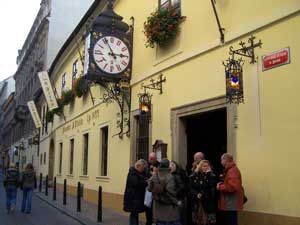
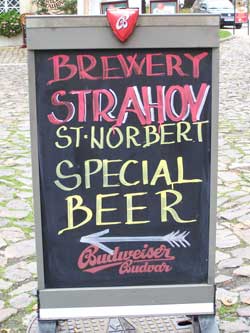
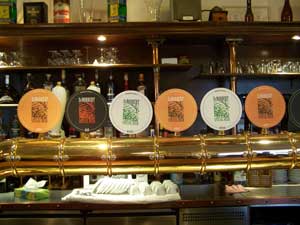
(left to right) Sign for the St. Norbert brewery in the Strahov district of Prague; Entrance to the St. Norbert brewery; Interior of the St. Norbert brewery, with a display of the different beers on tap.
Today Prague, a metropolis of 1.2 million people, has hundreds of beer taverns, from well-known hangouts in the central part of the city to little neighborhood pubs patronized only by locals. Prague’s classic beer taverns are also good places to eat, offering traditional Czech dishes like grandmother used to make, at reasonable prices that won’t break your budget.
U FLEKŮ Prague’s oldest, best known, and most touristy tavern is U Fleků (At Flek’s Place), which dates back to 1499. Today, U Fleků’s famous strong dark beer is still brewed on the premises, attracting hordes of beer-lovers from around the globe.
The building’s rather plain exterior is distinguished only by the large gilded ironwork clock, the tavern’s symbol, on the front. Inside you’ll find several “Old World” rooms with dark wood paneling, vaulted ceilings, stained-glass windows, and beams painted with barley and hops motifs. Part of the building surrounds two open-air courtyards used as beer gardens in warm weather.
The food is decent and moderately priced. The multilingual menu includes roast duck with sauerkraut and dumplings, beef with sour cream sauce and bread dumplings, goulash with bacon dumplings, smoked pork with sauerkraut and potato dumplings.
Pork with sauerkraut and dumplings or sliced braised beef with bread dumplings and sour cream sauce are specialties at U Dvou Kocek.
U Fleků seats a total of 1,200 people in its various dining areas, and it’s often packed in peak periods. In tourist season, go there in mid-morning or mid-afternoon if you want to find a seat. The tavern also features live music, an “Old Prague cabaret” in the evenings, and a brewery museum for serious students of the suds.
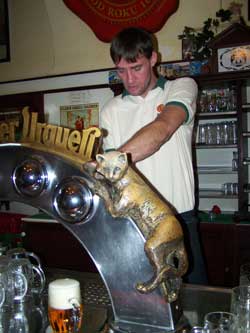
Drawing Pilsner Urquell beer from the tap at U Dvou Koček.
U MEDVÍDKŮ U Medvídků (At the Little Bears) is an old historic tavern, recently renovated, where beer has been served since 1466. Today’s tavern retains the vaulted ceilings of the original structure in several rooms and features an open-air beer garden, too.
The wood-paneled restaurant has an extensive, multilingual menu of Central European dishes, including a game menu (in autumn) of venison, wild sheep, wild duck and pheasant accompanied by red cabbage, potatoes and dumplings. Many of the hot and cold appetizers are portioned large enough to make a light meal in themselves: try the “Medvědí tlapky,” the tavern’s own version of “devil’s toast” with a piquant meat mixture on top; or four slices of fried rye bread with house-made beer-cheese spread. The “Čertovo kolo” (“devil’s wheel”), is a delicious plate-size potato pancake topped with a spicy mixture of meat and vegetables.
The tavern serves Budvar (original Budweiser) beer on tap, as well as semi-dark Oldgott and very strong X-Beer from the new microbrewery upstairs, the smallest brewery in Prague, established in 2005. There’s also a cabaret section, a small museum, and a shop selling several kinds of beer and beer paraphernalia.
U RUDOLFINA Many locals consider U Rudolfina, near the Rudofinum concert hall, to have the best Pilsner Urquell beer in Prague. They also consider it to be a “real” Czech beer tavern, which hasn’t made any concession to the rampant tourism that has overtaken central Prague during the past two decades. Most of the people drinking there are Czechs.
Czechs enjoying their beer at U Rudolfina.
Beyond the nondescript exterior, just inside the front door you’ll find a small, simple, wood-paneled room with a small bar. Downstairs is a larger area, just as plain in decor, and as smoky and noisy as the little room upstairs. Way in the back is a separate dining room set aside for non-smokers.
In addition to the excellent beer, U Rudofina serves some of the best beer-tavern food in town. Start with a basket of “topinky,” slices of dark rye bread fried on both sides, sprinkled with salt, and accompanied by whole cloves of garlic for you to rub on the bread, as much or as little as you like; or a plate of “beer cheese,” a mound of soft cheese with mustard and chopped onions on the side, which you mash together with your fork and spread on fresh bread. The main dishes emphasize meat—beef, pork, sausages, chicken—and are very well prepared, large portioned and reasonably priced.
Reservations are recommended because this is such a popular place—and well worth visiting for an authentic, no frills, Prague beer tavern experience.
Typical sign for a Prague beer tavern and restaurant. Many signs are in English to attract foreign customers.
RECOMMENDED PRAGUE BEER TAVERNS U Fleků, Křemencová 11, Prague 1, www.ufleku.cz. Open daily 9 a.m. to 11 p.m.
U Medvídků, Na Perštýné 7, Prague 1, www.umedvidku.cz. Open 11:30 a.m. to 11 p.m.
U Rudolfina, Křížovnická 10, Prague 1. Open 11 a.m. to 11 p.m.
For current reviews and ratings of more than 60 Prague beer taverns, see www.praguepubs.co.uk.
Northern Ireland is one place you don’t want to miss as you travel around Europe. The country’s capital, Belfast, is a charming city known for being the location where the famous Titanic was built.
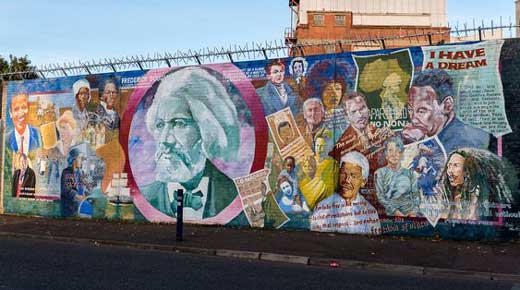
It’s also home to political murals that reflect the “The Troubles”—the conflict that has defined the country’s contemporary history. A little further outside of the city you can see picturesque views of the countryside as well as beautiful cliffs overlooking the sea.
Here are some top experiences you should have on your bucket list when visiting Northern Ireland.
LEARN ABOUT SHIPBUILDING IN THE TITANIC BELFAST MUSEUM Made popular by the 1997 epic film, the widespread history of the Titanic makes this attraction one of the most popular in the city. The self-guided museum takes guests through a series of galleries where you can learn about the RMS Titanic, which was originally built in Belfast by shipbuilders Harland & Wolff. The museum goes well beyond the ship’s building however, and touches on its launch, its maiden voyage, the tragic sinking and its aftermath. However, it’s important to note that as this is one of the most popular attractions in the city, Independent Travel Cats advises getting your ticket in advance to avoid waiting in line.
STROLL AROUND THE BELFAST PEACE WALLS The conflict known as “The Troubles” was a trying time in the city of Belfast. The violence between the unionists and nationalists resulted in 3,500 deaths and 50,000 injuries. During the 1970s, a Peace Line was created which separated the conflicting sides from each other. However, human spirit and kindness also prevailed. Save the Children’s Northern Ireland 1971 report details how children and mothers from both sides of the Peace Line would interact with each other in a friendly and relaxed way, with no sign of animosity. These small interactions weren’t enough to stop the growing conflict, however, and the Peace Walls was erected. This was to prevent violence from erupting between the two sides.
Now, decades later, the walls are painted with colourful murals on either side. Each side depicts the sentiments of the community, and gives a snapshot of the culture and history that runs through the town. One way of exploring these murals is through strolling around and taking your time with each piece. However, if you want a more guided experience, another option would be to take a Black Cab tour. Jump in a black cab and drive around the different murals and points of interest along the Peace Wall. While you’re traveling around, a local guide will tell stories about their own personal experiences of “The Troubles.” Hearing stories from a local’s perspective is always a good way to immerse yourself in a city’s history.
MARVEL AT THE GIANT’S CAUSEWAY Giant’s Causeway is a UNESCO World Heritage Site located on the north coast. The site holds about 40,000 natural columns jutting out to the sea. The columns were formed due to a volcanic eruption that happened many centuries ago.
Legend has it that the giants of Ireland and Scotland were challenged to a fight, and for the duel to take place, the giants created a causeway over the ocean leading to Scotland. Interestingly, you can find the same types of columns at Fingal’s Cave in Scotland which supposedly comes from the same flow of lava or were made by the same giants, whichever you choose to believe. Remember that visiting the Giant’s Causeway is free, although you do have to pay more if you want to explore the Visitor’s Center. To access the Causeway for free, follow the archway to the side of the Visitor’s Center.
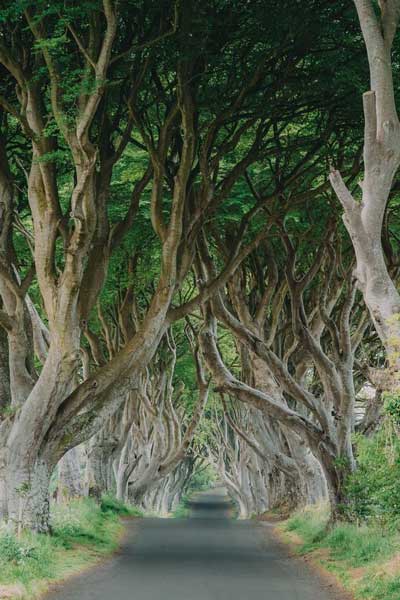
DRIVE THROUGH THE DARK HEDGES Similar to Wales, Northern Ireland is composed of beautiful sprawling countryside. The Dark Hedges is a quiet road near the rural town of Ballymoney in County Antrim where beech trees line each side, creating an eerily imposing tunnel-like entrance. Planted almost 300 years ago, they were made famous when they appeared in the hit TV series Game of Thrones. The hedges originated in the 18th century when the Stuart family planted the trees to impress visitors as they approached their mansion, the Gracehill House. The hedges are just a 50-minute drive from Belfast, so it’s a perfect stopover before going further to explore the north coast.
Fans of the Fab Four can immerse themselves in Beatlemania on a visit to Liverpool, a historic port city that gleams with a revitalized downtown waterfront.
Paul McCartney, John Lennon, George Harrison and Ringo Starr; Liverpool, England, is proud to be the birthplace of the best band in the world, and Beatles fans making a pilgrimage to the city won’t be disappointed. Visit Liverpool
By Randy Mink Photos by author unless noted
Most pop culture icons come and ago, but some seem to live forever. Take the Beatles, for instance.
The band broke up in 1970, but 45 years later the Fab Four’s songs are heard everywhere, and their legacy continues to be a huge tourist draw in Liverpool, their hometown in northwest England.
Decades after Paul McCartney, John Lennon, George Harrison and Ringo Starr took the music world by storm, their fans from the 1960s descend on Liverpool as if it were a religious pilgrimage site.
I recall Beatlemania from my high school days, and though I wasn’t totally wrapped up in it, recently I made my way to Liverpool with Beatle sites at the top of my to-see list.
The Magical Mystery Tour bus excursion and The Beatles Story Museum brought back memories and had me humming Beatles tunes for the next week. While I encountered plenty of nostalgia-hungry tourists of my generation, I was surprised to see so many young people eager to know about the mop-haired group that belted out “Twist and Shout” and “I Want to Hold Your Hand.”
Most of those taking the self-guided audio tour of The Beatles Story the day I visited, in fact, were a third my age. The tour, which follows the boys from their humble beginnings in working-class Liverpool to fame and fortune, has 36 stops and features recorded comments from family members, fans, business associates and the Beatles themselves. Artifacts range from guitars to stage outfits.
The exhibition includes black and white film clips of the Beatles and their adoring female fans, plus glimpses of their movies like “A Hard Day’s Night,” “Help!” and “Yellow Submarine.” I was especially interested in the re-telling of their first American tour and how they captivated U.S. teens. When the four lads appeared for the first time on TV’s Ed Sullivan Show in 1964, 40% of the country was watching.
A Beatles tribute show at the Cavern Club, the famous Liverpool music club where the Fab Four performed prior to their worldwide fame.
Visitors to The Beatles Story also see a re-creation of the Cavern Club, the Liverpool nightspot where the group performed early in their careers. Though the club was demolished in 1973, it was rebuilt with the same bricks to the same dimensions at the same Mathew Street location. Today the Cavern Club plays host to hundreds of bands, but tourists are most interested in the Beatles connection. I attended a Saturday night Beatles tribute show that featured Beatles impersonators who sang a string of hits—“Love Me Do,” “Day Tripper” and “I Saw Her Standing There,” to name a few.
Many older fans were singing along or mouthing the words. One group was celebrating a woman’s 70th birthday. But most in the standing-room-only crowd were born long after the Beatles disbanded.
Music blares out of other bars on pedestrianized Mathew Street, the entertainment hotspot of central Liverpool. Nearby, statues of the Fab Four adorn the Hard Day’s Night Hotel, the only Beatles-themed hotel. Its public areas are filled with Beatles memorabilia. Souvenir stores in the Cavern Quarter abound with Beatles items, from bobbleheads to snow globes.
Adjacent to the Mathew Street corridor is Liverpool ONE, a 42-acre, car-free development that has revitalized downtown. To tell the truth, I wasn’t expecting to find something so glitzy in this old port city. Outdoor escalators connect three levels of stores, which include familiar names like Disney, Toys R Us and Forever 21. Festivals enliven its plazas.
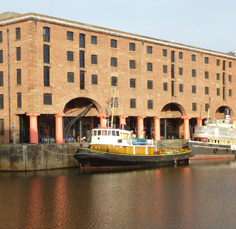
Liverpool ONE is right across the road from the spiffed-up Mersey River waterfront. Albert Dock, a nautically-themed collection of converted 19th century port buildings, houses museums, shops and eateries. The Beatles Story is one of its tenants. Also occupying the red-brick warehouses are the Merseyside Maritime Museum and International Slavery Museum.
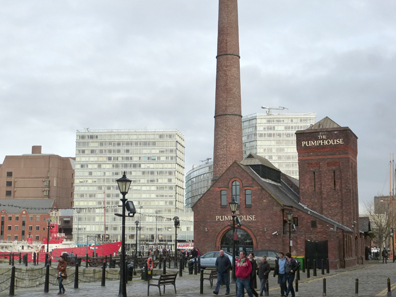
(left to right) Albert Dock, a collection of renovated warehouses on the Liverpool waterfront, abounds with shops, eateries and tourist attractions, including The Beatles Story Museum.; The Pump House, in a former pumping station, is one of many restaurants at Albert Dock in Liverpool.
For lunch one day I visited the Pump House, the old pumping station at Albert Dock, and chowed down on steak and ale pie with mashed potatoes and peas. Dessert was also very British—sticky toffee pudding, a warm square of toffee-flavored sponge cake drizzled with toffee sauce and swimming in a bowl of custard sauce. For dinner I feasted on Indian cuisine at The Spice Lounge, an Albert Dock restaurant around the corner from The Beatles Story. The butter chicken—chunks of chicken bathed in a mild tomato gravy and served over rice—was a culinary highlight of my whole trip to England.
If I had time for another Albert Dock restaurant, I would have chosen Circo and enjoyed circus acts with my meal. Also on the waterfront is the state-of-the-art Museum of Liverpool, a free-admission national museum that tells the story of Liverpool through interactive exhibits. Don’t miss the immersive, 360-degree Beatles film. And there’s a branch of The Beatles Story at Pier Head, the Mersey River ferry terminal. Now showing is the excellent GRAMMY Museum exhibition “The British Invasion: How 1960s Beat Groups Conquered America.” It showcases groups like the Rolling Stones and Dave Clark Five as well as the Beatles.
For a relaxing introduction to Liverpool, take a River Explorer Cruise aboard Mersey Ferries. The narrated 50-minute cruise begins and ends to the strains of “Ferry ’Cross the Mersey,” the 1960s hit by another British pop group, Gerry and the Pacemakers.
The Magical Mystery Tour visits Liverpool sites that inspired Beatles tunes. Visit Liverpool
Perhaps the highlight of my brief visit to Liverpool was the Magical Mystery Tour, a two-hour bus circuit that spotlights places where the Beatles spent their early days in working-class neighborhoods. Filled with revealing tidbits about their lives and how they met each other, the tour visits locations that inspired songs such as “Penny Lane” (a street) and “Strawberry Fields” (an orphanage).
The humble birthplace of George Harrison is a stop on the Magical Mystery Tour, a bus tour to sites associated with the Beatles.
Besides those two spots, we had photo stops at Paul’s family home (where John and Paul wrote 100 songs) and George’s birthplace, a humble brick rowhouse that’s now a private residence. Paul’s place is owned by the National Trust and open for tours. Our guide pointed out the primary school that George and John attended, the church where John met Paul in 1959, John’s house (a National Trust property) and massive Liverpool Cathedral, where Paul auditioned for the choir but didn’t get accepted.
Beatles tunes were interspersed with the Magical Mystical Tour commentary. Passengers on the bus were all ages and from all over the world.
For sheer pampering in Liverpool, I would recommend 2 Blackburne Place, a chic bed and breakfast inside an 1826 Georgian house that’s been divided into six town homes. Run by Glenn Whitter, a former musician and interior designer, and his wife Sarah, a former teacher, it’s an oasis of calm just a few blocks from Liverpool Cathedral and a 15-minute walk from the city center.
The word “plush” best describes 2 Blackburne Place. Think plush towels, plush bathrobes and thick-thick rugs. The deep tub and heated bathroom floor also will spoil you. My room, done in beige and blues, was decorated with original artwork, art objects (including a Chinese vase) and six framed black-and-white photos of the Cathedral. Waiting for me after a day of sightseeing was a special treat—a plate of macarons and a crystal decanter of sloe gin.
At breakfast, serenaded by classical music while seated at a gorgeous, purple lacquered table in a dining room with a built-in bookcase, I appreciated all the helpful tips our guide Sarah gave me for making the most of my time in Liverpool. Cocooned in such comfort, though, I didn’t want to leave.
The Whitters can serve smoked salmon or kippers (smoked herring), but I chose a typical English breakfast of bacon, sausage, scrambled eggs, and baked beans with minced onions and tomatoes. That was after the yogurt course with plump blueberries and slices of kiwi and watermelon. For the toast I had many choices of spreads—from French lavender honey to passion fruit/lemon curd.
Touches of luxury also awaited me the next day at the sleek Epic Apart Hotel on Seel Street, just minutes from the city center. I had a whole apartment, complete with kitchen, living and dining areas and a giant flat-screen TV. Contemporary in design and loaded with upscale amenities, Epic makes the ideal “home” in Liverpool. The friendly people at the front desk, staffed 24 hours a day, were attentive to my needs and had all the answers to my questions about getting around Liverpool. I appreciated their warmth and cheerfulness on the blustery, rainy day. After some soggy sightseeing, the hot chocolate packets I found in the kitchen really revved my spirits, and it was nice to relax on the comfy couch in front of the giant, flat-screen TV.
The kitchen had an oven, microwave, refrigerator and toaster, along with a full range of dishware and utensils. I also liked the oversized rain shower with dual shower heads and the premium towels. Bed linens were Egyptian cotton. Accommodations at Epic Apart Hotel range from studios to two-and three-bedroom apartments.
From the gritty to the luxurious, Liverpool provides a great look at English urban life outside of London.
A dozen days of unique European history, adult fun, fantastic food, and a good bit of pampering
Photo: Courtesy Viking River Cruises
By Don Heimburger Photos by the author
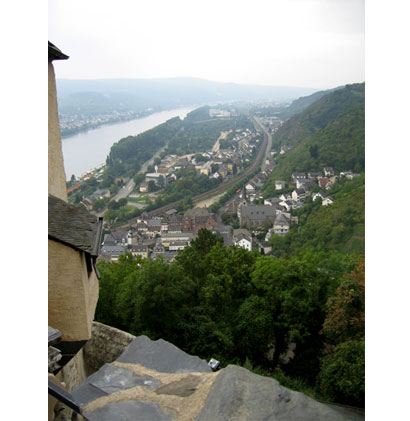
Gazing down on the wide and meandering Rhine River, from a spot at the outer courtyard of high Marksburg Castle that overlooks the 1,300-year-old German town of Braubach, the historic significance of where I am begins to sink in. And it hits me hard, in a good sort of way.
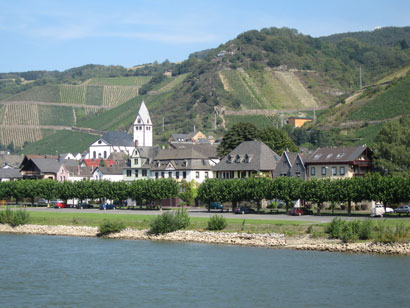
I’m in the midst of fortresses and castles, neatly-planted vineyards, small ancient villages, all in close proximity to the driving force behind this beautiful valley–Germany’s beautiful and romantic Rhine River.
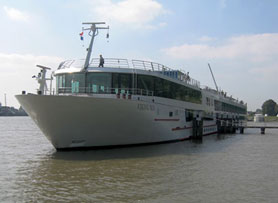
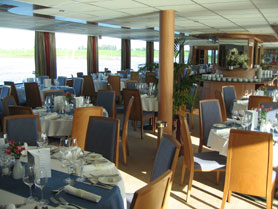
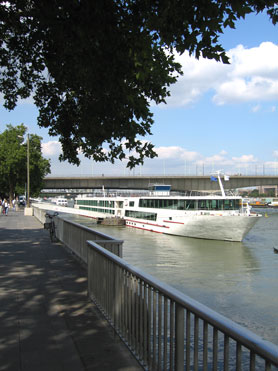
My adventure is a 12-day floating history tour on the sleek Viking Sun, one of many cruise ships that Viking operates on the Rhine, Main, Moselle and Danube rivers in Europe and elsewhere. This ship, a three-deck, 198-passenger liner with its own restaurant with panoramic views, large observation lounge, library and an internet cafe, cruises from Antwerp to Basel, Switzerland, a 677-mile journey back into time.
BRUSSELS AND BAGS
Many passengers arrive in Brussels, a 45-minute train ride away, before boarding the ship that caters to English-speaking travelers. With bags tucked away in the cabin (there are 89 deluxe and 10 standard cabins on the ship, all with outside river views), passengers settle into a sit-down dinner in the evening.
But the meals are only a small, but very inviting, reason for taking this cruise. The historic sights and beautiful scenery is dazzling, and it is laid out before me every day, all the time, from the comfort of a lounge chair, or a sundeck chair, or even the comfort of my on-board bedroom if I chose not to wander about the ship.
BRUGGE IS BEAUTIFUL
The first off-ship tour was by bus to Brugge, a beautifully preserved medieval town from 1128 that was famous for its wool and weaving. Much of the historic city center remains intact. The town boasts the Church of Our Lady with one of the world’s highest brick towers at 400 feet high. Walking through the historic section, with classic buildings and elegant houses of former wealthy textile merchants, I felt like time had stood still, and that I was a resident of this quiet village in its heyday.
At Rotterdam, passengers boarded buses for a trip to Delft to see the birthplace of the famous Dutch Master Jan Vermeer. Delft is known for its pottery called delftware, produced in this town for more than 500 years. A tour through this small but amazing factory, and a look at the numerous products it makes, gave me an insight into what makes this blue-and-white glazed earthenware, highly prized throughout the world.
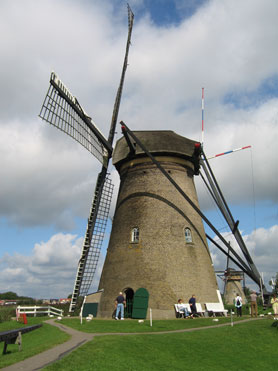
Holland is more water than land, it seems, and the Viking Sun floats through Rhine waterways and canals until it reaches Schoonhoven, a quaint 12,000-population riverside town, full of charm, canals of its own, and a large Town Gate (Ferry Gate) as you enter.
The town formed around a castle that was built here in 1220, and shipping, brewing, fishing and agriculture have been the main industry. Little shops, with plenty of jewelry stores loaded with tempting rings, necklaces and bracelets, line the main street, which is divided by–you guessed it—a canal. This was an inviting town to visit, and the local beer tasted good as well which I sampled under a cafe umbrella on the town square.
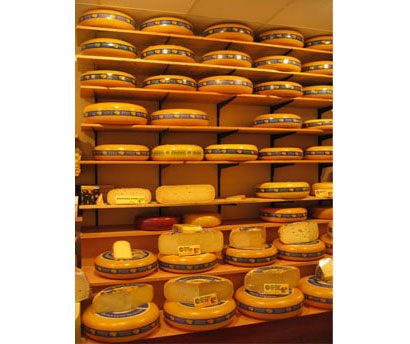
Next up on the land tours was Gouda, one of Holland’s most famous cheese-making towns. In the center of town and the market square, a beautiful Gothic Town Hall sits smack in the middle, drawing lots of attention to itself. Try the cheeses while you’re there!
AMSTERDAM AND ANNE FRANK The Viking Sun’s arrival on a Sunday in Amsterdam was greeted by a crowd of, I’d guess, 50,000 people near the dock. Well, at least I thought they were welcoming us, until I realized that they were attending an annual Music Festival that weekend which was held right at the main cruise ship dock in downtown Amsterdam.
Let me say a bit about Amsterdam. I had not been to this city of three-quarters of a million people before, but I had heard about the red light district and how multi-cultural the city was. Well, it’s true.
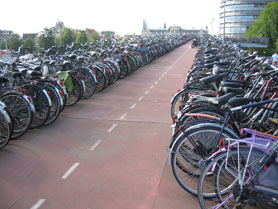
During the Dutch Golden Age, this 12th century fishing village was the most important port in the world, and likely because of its location, the city has attracted people from 177 different nationalities who now live there. With all the canals running through the city (it’s called the Venice of the North), trams, autos, cabs, trains and especially bikes, there is no shortage of means to get around town, and it’s densely populated. The “extra fare” entertainment districts (red light area) and the “liberal” coffeeshops that dot the city are interesting only by the fact that they exist. There is no redeeming social value to that segment of the city.
On a higher plane, what is worth seeing is Anne Frank’s home where she hid from the Nazis until she was betrayed and sent to her death in Bergen-Belsen. This is not a long walk (20-25 minutes) from the Central Train Station, but a cab, tram or a bicycle is also an alternative. There are 50 museums in Amsterdam that beckon you as well—more museums per square mile than any other European city.
After a busy day in this large city, relaxing in the evening on the boat was welcome. After breakfast the next morning, the ship had docked at Arnhem, the last Netherlands port before entering Germany.
THREE DELICIOUS MEALS A DAY At this point in the trip, passengers had already became spoiled with dinners such as Greek salad and warm bread; cream of cauliflower soup; pink grilled Duck breast with orange sauce; or napkin dumplings with creamy mushroom ragout and herbs; and cr̬eme brulee with chocolate ice cream. Of course, each dinner menu had several choices of appetizers, main dish and dessert. There was also a complimentary selection of international cheeses offered at each meal, as well as beers, wines and apertifs (at additional cost).
Wait staff on board the Viking Sun.; Sven Hansen, Viking Sun’s Maitre d’ (left) and Executive Chef Reiner Eggert.
A lighter buffet-style luncheon was offered in the lounge or a more complete sit-down meal at noon in the restaurant. I found that the lighter lunch was more than I would eat anyway, and usually opted for that. For breakfast a complete menu was available by 7 a.m. of hot and cold meats, cereals, eggs, waffles, fruits, breads and rolls, juices, coffee, and even champagne and made-to-order dishes like omelets and French Toast. Believe me, I never eat that much at breakfast, and there was a treasure trove of goodies each morning that the cooks had been working on the night before. For early birds, there were even fresh pastries and richly-flavored coffee from 6 to 7 a.m. Meals on board were always delicious, there was plenty of food, and it was displayed as a work of art. The servers were often funny and always accommodating (hello Cata and Michael–may I have another cup of coffee please?).
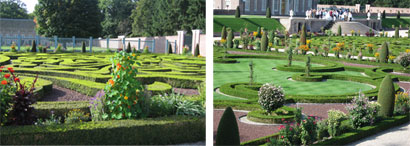
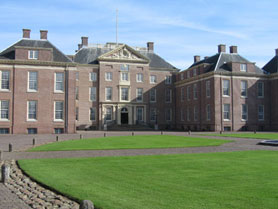
From the dock at Arnhem, we boarded buses (it took five busloads to hold all the ships’ passengers, plus local tour guides), and traveled to the magnificent Paleis Het Loo, and I emphasize the word magnificent. This large, sprawling complex was the summer residence of the Royal House of Orange from 1686 to 1975, and royal indeed it was–and still is. Walking through the house or the colorful formal gardens is a rare treat to the eye. The gardens, especially, combine classical planting symmetry with intricate landscaping. You can, and I did, spend a lot of time in the gardens. If you have time, grab a hot coffee and sweet pastry at the coffee shop and enjoy it outside in the palace courtyard. Then stroll down a long row of trees to the barns where a large collection of royal sleighs, carriages and coaches are on display. It’s worth the walk.
INTO THE DEUTSCHE DOMAIN
Around dinnertime, our ship got under way again and headed for Cologne, arriving there the next morning around breakfast. Many passengers were eager to enter the German Rhine because the Middle Rhine, where the many fortresses and castles are located, was something they had heard about, and it was a main draw of the trip.
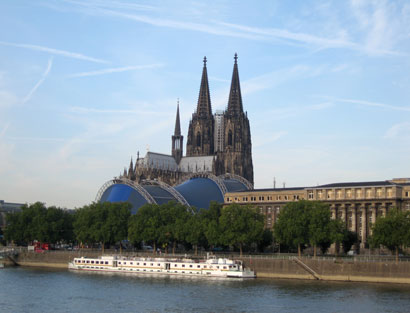
Cologne is noted for the tall, striking Gothic cathedral seen from anywhere in the old part of the city. Passengers crowded along the sundeck railings as we entered Cologne to admire the stately church spires and the city’s imposing skyline.
In Cologne we received a guided walking tour, after which there was just enough time to check out the shops selling Erzgebirge items such as smokers and nutcrackers, or visit the Roman Museum or visit the Brauhaus (included in the ship’s tour) to partake of one of the city’s delights: Kolsch beer, a very tasty beverage made in Cologne. Many passengers returned to the city for an evening walk after dinner on the boat. I could have easily spent more time here, but the rest of Germany beckoned, and I literally didn’t want to miss the boat.
Stained glass windows inside the Gothic cathedral in Cologne.
Next up was Koblenz, the spot where the Moselle and Rhine rivers come together; the exact spot is called the German Corner, punctuated by a massive statue of Wilhelm I on a horse. Our ship docked right down from the statue.
Koblenz was originally a Roman outpost, so when they said the town was 2,000 years old, I could believe it; it was founded in 9 B.C. Even the fortress across the Rhine at Kolenz, the Ehrenbreitstein, with its vast fortified construction and enormous parade ground, was built in the 11th century, and was re-built in 1816-1823. It was never attacked, but looking up at it from across the river, I could see why an army would have difficulty making any headway.
MOSELLE MOMENTS
To see the Moselle and its neat, green vineyards, we boarded buses and headed to Cochem, located about 30 miles west of Koblenz. In this little riverside town, dominated by the 1,000-year-old Reichsburg Castle built by the Palatinate Dukes, the atmosphere was that of fun, with local wine being sold in many shops. Half-timbered houses dot the cityscape, narrow cobblestone streets lead to taverns and quaint cafes, and everyone seemed to be in a party mood.
At Braubach, a treat was in store. The Marksburg Castle, one of the few along the Rhine that was never destroyed, sits high above the town, and passengers were taken by bus to the castle “parking lot” where we walked steep steps to continue to the castle gate. From there, a tour guide with a very large castle key gave a detailed tour in English. References to this remarkable fortress go back as early as the 13th century, and little has changed inside since then. You can see the Knight’s Hall and the castle chapel, dedicated to Saint Mark, from whom the castle gets its name.
From the garden area of the castle, I could look down on the Rhine and see the vast, commanding view of the entire countryside north, south and east. I could see why enemies would not be able to storm the castle as they could be easily watched from this fortress.
On the way to Rudesheim, we pass the cat-and-mouse castles (Katz Castle and Maus Castle–neither of which have anything to do with animals), and the Pfalzgrafenstein fortress that sits on a rock in the river. In high water, you can’t even see the rock: the castle appears as if it’s floating.
At this point the Viking Sun also passed the Lorelei, a 440-foot-high legendary rock that I could see on the left as the ship cruised south. The Lorelei gets its name from the German word ley or rock, and the Middle High German word lure, which means treacherous.
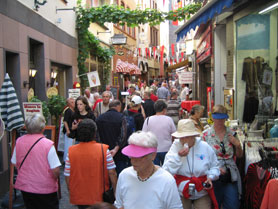
Docking at Rudesheim, a small village next to the Rhine, allowed passengers to walk the streets to visits shops and cafes, or to visit a colorful, narrow street called the Drosselgasse, featuring live German music and dancing, charming taverns and restaurants, and beckoning shops. An evening stroll down this street with twinkling lights, delicious smells and friendly laughter is a must.
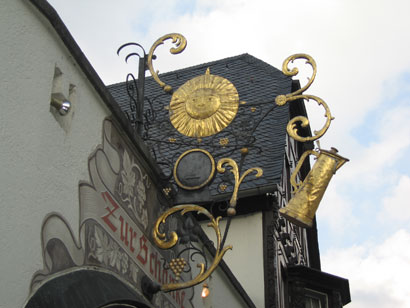
(left to right) The Kammerzell House is a famous restaurant in Strasbourg, France.; A store-front sign in Rudesheim, Germany.
At Mannheim, tour buses whisked passengers to romantic Heidelberg, noted as a university town which sits in a narrow gorge on the Neckar River. Built in the 17th century, the beautiful city is dominated by Heidelberg Castle which sits above the city, and which is being restored. A guided tour of this vast fortress was part of our tour package. Another dominate marker of the city is the handsome, turreted Old Bridge, built in 1788 on the banks of the Neckar. Not far from that is a very long street which winds its way for seemingly miles. It’s a good place to sit for a while and order some German food and bier (during warm weather), and watch people.
GRAND SPEYER
Speyer, an important center of Jewish culture, is best described as a grand city. Everything is large here–the buildings, the monuments, the city park and the Kirches (churches). The town’s Old Gate, a centerpiece of the city, still stands today, dating to 1176. The massive tower is 180 feet high. The Kaiserdom, founded in 1030 and consecrated in 1060, is Germany’s largest Romanesque building and is a UNESCO World Heritage site. Peeking in one of the churches further up the street, I listened to a men’s choir practice for an upcoming service. In the quiet of the church, with only a handful of others listening before the service, I was awestruck at the power of mens’ singing voices, and grateful for the chance to hear the soothing German songs in such a magnificant setting.
Docked in the Strasbourg suburb of Kehl, we boarded buses for a guided tour of this multicultural city. Strasbourg is where the Palais de L’Europe is located and where the European Parliament meets. It’s one of the richest medieval cities in Europe, and its Old Town is completely surrounded by the Ill River. Cozy cafes and restaurants abound here, such as the Kammerzell House, next to the Hirsch Chemist (www.maison-kammerzell.com).
My trip was nearing an end, but not without a bit of fanfare! At the captain’s farewell dinner on board, passengers and crew were in a celebratory mood, with a special menu of meat pate with cumberland sauce and Waldorf salad; cappuccino of forest mushrooms; honey glazed salmon or grilled beef tenderloin with truffle crust, vegetable basket and macaire potatoes; baked Alaska and pralines. Music and sparklers added a festival atmosphere during the dessert, followed by brief remarks from the crew.
On the last day before docking in Basel, our end point, the ship came into Breisach in the early morning, and after breakfast, the group took an excursion to the Black Forest. This densely-forested, mountainous region encompasses 7,500 square miles in southwestern Germany. It’s long and narrow (124 miles long, 37 miles wide), and tourism is the most important industry in the region. Pines and firs make up the foliage, and a number of birds and small creatures populate the forest. Cuckoo clocks, wood carvings and cherry schnapps are favorite souvenirs for visitors. I could have spent more time in the Black Forest area–the villages seemed so neat, tranquil and friendly, and the surrounding forests and mountains were unbelievably quiet and beautiful.
BASEL BECKONS
After 12 days, the cruise ship pulled quietly into Basel, which borders Switzerland and France, and is Switzerland’s third largest city. After our final breakfast–at which everyone lingered a bit longer–and farewells were made to friends that we met on board, we all departed for planes, trains or other transportation to take us home or to continue our journey.
It had been a dozen days of cruising one of the most famous rivers in Europe in total comfort and passing some of the most important historical towns and places in Europe. It had been educational, relaxing and fun, and I’d do it again in a heartbeat.
The trip was an up-close, personal encounter with European history, people and culture that would have been hard to duplicate on my own. And it was done in style, with a shipload of friends, and at a pace that was relaxing and enjoyable. Hopefully, my first river adventure down the Rhine won’t be my last!
HELPFUL HINTS:
To catch any of the numerous river cruises that Viking offers, call 877-668-4546 or visit vikingrivercruises.com. There is a wide range of itineraries, rivers, countries and prices to choose from. Viking cruises may also have add-on features that allow you to extend your vacation even longer. Viking can also book flights to your ship’s arrival and departure destinations.
All meals on board are included in the price. You won’t go hungry. Room service is not provided.
All off-ship tours are included in the price, except those that are announced as special tours once you board. Viking offers English-speaking tours (such as this one), as well as international tours that encompass other languages.
The three-deck Viking Sun (built in 2005/2006) holds 198 passengers and has a crew of 44. Rooms have a private bathroom/shower, phone, television, safe, hairdryer and individual climate controls. On-board voltage is 220V; razor outlet is 115V.
The ship’s Category A, B and C cabins at 155 square feet are larger than I thought they would be. Standard cabins are 120 square feet. The queen-size bed in my room was quite wide. There were drawers in the room to hold all of my belongings.
The ship’s promenade deck and its many panoramic windows allowed passengers good viewing in all kinds of weather.
The ship’s personnel will do your laundry (for a fee), sell you a limited amount of clothing should you need it, or if you forget something, provide internet service and phone service for a fee, and offer you a special drink package that saves money.
Shore excursion details were announced the evening before by the Cruise Manager in the lounge. His talks were detailed and informative, as well as funny, and passengers depended on him and his able assistants for answers to their many questions. He made the trip fun.
Special demonstrations and activities on board during the evenings–such as dancing troupes, silversmithing exhibits or games—were entertaining, and helped passengers mingle with others on board.
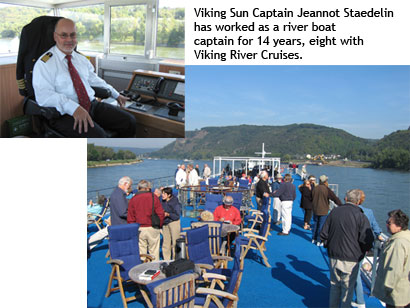
A galley tour, and a tour of the wheelhouse with the captain, were provided for those to wanted to participate.
A doctor was not on board, but the ship was always within a few minutes of the shore if a medical emergency arose, which it did not. All the crew are trained in life-saving techniques.
By all means, bring comfortable clothing and comfortable shoes. Ties and jackets are not required, but I found that many passengers dressed up for evening dinners. Tipping on board was also not required, but was encouraged, although it was not a hard sell. By the end of the trip, I wanted to offer some of the crew a tip for the excellent service I received.
Was 12 days on board a ship too long? Viking offers shorter trips, but I found that passengers took numerous shore excursions that made the time on board go quickly. The 12 days were nicely offset by the guided land tours.
I found a number of passengers had already been on a river cruise–a Viking cruise, in fact–and a number of them had been on at least two previous Viking river cruises. A number of passengers were vacationing with another couple or a group of friends.
The crew made the trip very pleasant; they were always accommodating. Returning from some land trips, the crew stood at the ship’s entrance with hot towels and glasses of fresh, chilled orange juice.
For those who get seasick easily, the Rhine is tame. I barely felt a wave all trip.
This multi-cultural fast food has overcome its humble origins to obtain cult status in Germany, even rating its own museum.
What could be more German than currywurst: chunks of sausage slathered with a sauce based on the same ingredients as Anglo-American tomato ketchup spiced with English Worcestershire sauce, Hungarian paprika and Indian-inspired curry powder (by way of Britain), served with French fries on the side?
Some German cooks even add another multicultural twist: spiking the sauce with Caribbean and South American peppers, as a challenge to macho munchers competing for the top-dog spot in their local currywurst “Hall of Fame.”
From its humble origin as a street food in the country’s war-torn capital, currywurst has risen to culinary cult status in Germany, even rating its own museum. That’s right: a museum devoted entirely to currywurst opened in Berlin in 2009, on the dish’s 60th birthday, with exhibits on everything you always wanted to know about currywurst (but didn’t know you wanted to ask).
SUCCESS STORY Currywurst was invented in Berlin in 1949, when a woman named Herta Heuwer supposedly acquired some English curry powder (and maybe also Worcestershire sauce) from soldiers stationed in the British sector of the occupied city. Experimenting in her home kitchen, she concocted a tomato-based sauce as a topping for cooked sausages, which she sold at a street stand to construction workers rebuilding the rubble-strewn metropolis.
Heuwer’s currywurst was such a success that she was able to open a small restaurant in the red light district, which soon became a popular hangout for celebrities. In 1951, early in her career as the queen of currywurst, she also patented the secret recipe for her seductive sauce, which she called “Chillup,” its name a contraction of “chili” and “ketchup.”
Currywurst went on to take the country by storm. All over Germany street stands, festival stalls, food trucks and even restaurants now sell their own versions of this simple dish. More than 800 million currywursts are consumed annually in Germany—that’s nearly 10 sauce-covered sausages for every man, woman, child and foreign tourist in the whole country.
VARIETY SPICES LIFE Currywurst sausages, sauces and sides vary widely, not only from one region of Germany to another, but also from one vendor to the next, even in the same neighborhood.
The recipe for Herta Heuwer’s original Berliner currywurst sauce remains a secret, although many cooks have tried to replicate it. Some street vendors and restaurant chefs take pride in making their own signature sauce from scratch, refusing to reveal their personal recipes. Others take the easy way out by merely adding spices to bottled ketchup. And big companies such as Heinz and Knorr market a variety of “Curry Ketchups” in Germany. Just squeeze the bottle and squirt.
Most sauce recipes include curry powder and paprika, along with other seasonings such as vinegar, sugar, garlic and onion. The sausages are first simmered in water, broth or beer, then finished on a griddle or grill, or pan-fried in a skillet. Usually they’re cut crosswise into pieces before being covered with sauce. German engineers even invented a commercial cutter to slice the sausages in one whack, quickly and uniformly. (Cutting 800 million by hand just wouldn’t be efficient.)
An exhibit at Berlin’s Currywurst Museum showcases several varieties of this favorite German fast food. The original West Berlin version is considered the classic currywurst: a thick sausage (usually Bockwurst, sometimes Knockwurst) cut crosswise into chunks, topped with a red tomato-based sauce, garnished with curry powder and served with a bread roll. The East German version uses skinless sausages, supposedly invented out of necessity when sausage skins were scarce in the early era of post-war rationing. In the Rhineland, bratwurst is favored, doused with a thinner dark-red sauce (with the curry mixed in but not sprinkled on top) and served with French fries on the side.
A “Manta plate” consists of currywurst and French fries, with ketchup and mayonnaise dolloped on the spuds. (In Cologne and Düsseldorf the same combo goes by another name, whereas in Hannover it’s called “the Chancellor’s plate.”) And a “taxi plate” is a caloric triumph of multiculturalism: currywurst with French fries, barbecue sauce, and mayonnaise, plus Greek gyros (thin slices of spit-roasted meat) and tzatziki (yoghurt-cucumber-garlic sauce).
There’s even a “Luxus” version (“for those very special moments in life”), a prime example of Berlin ironic humor: a whole sausage with a piece of gold leaf draped over the top, surrounded by a pool of currywurst sauce on a white china plate and accompanied by a glass of Sekt (German sparkling wine). And at Aqua, the Michelin 3-star restaurant in the Ritz-Carlton Hotel in Wolfsburg, I was served a cute little dessert amuse-bouche consisting of marzipan “sausages” wedged between macaroon “buns,” garnished with red strawberry sauce and sprinkled with cinnamon—the ultimate currywurst haute dog.
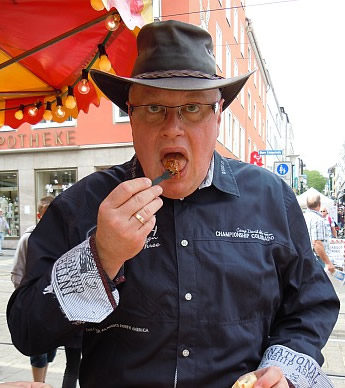
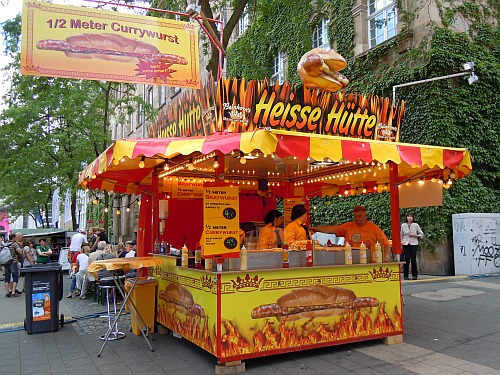
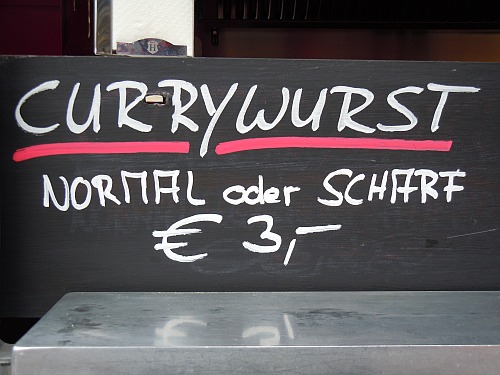
STAND UP FOR YOUR SAUSAGE Despite its many riffs, currywurst is still just a simple, inexpensive take-away food, most often bought at a Schnellimbiss or Currywurstbude (fast-food stand) and eaten while standing up. (Even McDonald’s felt compelled to add “McCurry Wurst” to its menu in Germany.) Currywurst traditionally comes in an oval-shaped white cardboard bowl, along with a little wooden or plastic fork and a small white paper napkin for blotting up the messy drips of sauce—although some eat-in restaurants serve their sausages on a plate.
Currywurst connoisseurs are well known for their unswerving loyalty to a particular currywurst stand, disdaining all others as unworthy of their patronage. Claiming your favorite currywurst stand as the “best” can quickly get you into a heated discussion at a German bar.
Eaten by everyone from proletarians to high-level politicians, currywurst is particularly popular in its hometown of Berlin, where 70 million of these saucy sausages are sold every year. Many critics consider the currywurst at Konnopke’s Imbiss (two locations in Berlin) to be the best classic version in the city. A few years ago, two other stands, Curry 66 and Curry & Chili, entered the scene, both claiming to serve the hot-spiciest currywurst in Berlin, the sauces made with such tongue tinglers as habanero peppers and Black Death bottled hot sauce. And Curry 36 in Berlin bottles its own original curry ketchup for customers to take home, in case they get a craving for currywurst in the middle of the night.
Hamburg is another hotbed of currywurst consumption, with 72 million eaten annually in the Elbe port city, famous historically as a gateway for spices imported into Germany. Hamburg also claims to be the original home of currywurst, an assertion roundly rejected by Berliners.
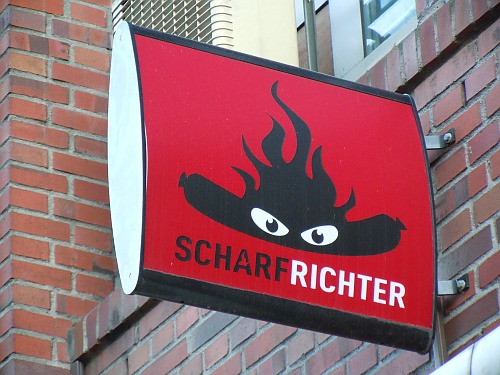
Other popular places for eating currywurst in Germany include Scharfrichter, a restaurant that specializes in hot-spicy currywurst with sauces rated on a heat scale of 1 to 10. Curry 24 in Dresden advertises “the hottest currywurst in the city,” with a clever illustration on the menu showing a red sausage “rocket” with seven “burn levels” of rocket fuel. The owner uses different liquid chile pepper concentrates to fuel his rocket sauces—and sells over 250,000 of these mouth-flaming currywursts every year.
HUMBLE FARE Who would have ever thought this humble fare could inspire not only cooks, inventors and museum curators, but also singers, writers and artists? Currywurst is featured regularly on a German television series, and in 2009 it was the subject of a cartoon contest on the Internet. Currywurst has its own page on Facebook, and you can listen to “The Currywurst Song” on both Facebook and YouTube. But you might get a bigger kick out of watching some of the currywurst eating contests posted online—that is, if you get turned on by red-faced men with bulging tongues, tears streaming down their cheeks, stuffing themselves with German sausages.
About the writer Sharon Hudgins is an award-winning writer with four books and more than 700 articles published worldwide. Her food and travel writing has appeared in National Geographic Traveler, Saveur, Gastronomica, German Life, Russian Life, The World and I, Chile Pepper, Fiery Foods & Barbecue, major newspapers in the United States, and periodicals in Germany, Russia, and the Czech Republic. For several years she was the food columnist for The Stars and Stripes newspaper in Europe, and since 1997 has been the food columnist for German Life magazine in the United States. A former editor of Chile Pepper magazine, she has also worked as a cookbook editor, photographer, filmmaker, university professor, and lecturer on international tours offered by National Geographic Expeditions, Lindblad, Road Scholar, and Silversea Cruises.
Sharon Hudgins has lived in nine countries of Europe and Asia and traveled in 50 countries across the globe. Her European experience includes living in Germany for 15 years, as well as in several European capitals and small towns from northern Scotland to southern Spain to the Greek island of Crete. She is the author of an award-winning cookbook about the regional cuisines of Spain, and her personal memoir, The Other Side of Russia: A Slice of Life in Siberia and the Russian Far East, won two national awards for travel and food writing.























 European Traveler