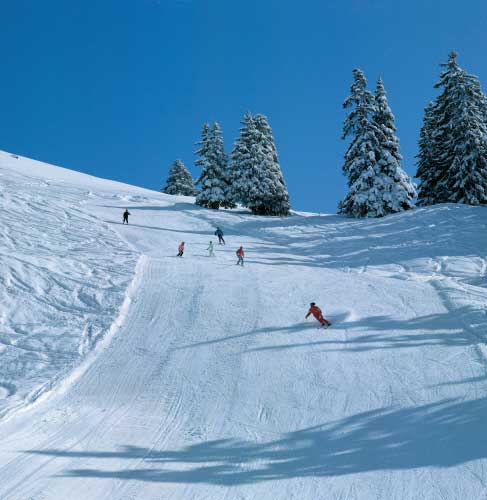
Perched on a wooded, sunny plateau above the Rhône Valley about halfway between Martigny and the Chateau de Chillon end of Lake Geneva, Villars offers activities that find the balance between recreation and relaxation.
Ever since the famous Orient Express arrived here, visitors to Villars have enjoyed the healthy air to be found on the natural balcony it rests on. At about 1,300 meters (4,225 feet) in the heart of the Vaud Alps, this idyllic setting has stunning views stretching from Lake Geneva to Mont Blanc.
Winter sports fans can enjoy the wide range of attractions the area offers, including 125 kilometers (78 miles) of skiing terrain. In all, there are 52 runs which are 50 percent beginner, 42 percent intermediate and eight percent advanced. Sports enthusiasts wanting to be challenged can try the glacier at Les Diablerets, about 20 kilometers (13 miles) from Villars. There are four glaciers in the area available for heliskiing.
Those in search of relaxation can enjoy the facilities and wellness benefits of the thermal baths (Lavey-les-Bains). Children can enjoy the family programs that cater to adults and kids.
Pinkel! The word is strange enough, but I recently learned how these six little letters can stir a whole region to party the day away in true Germanic style.
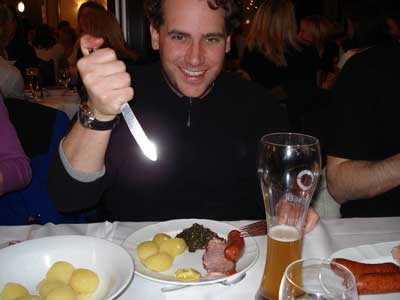
I thought I knew roughly what to expect in terms of German traditions and festivities. I was familiar, of course, with festivals like Oktoberfest and Weihnachtsmarkt, and with traditional victuals like cabbage and wurst. But little did I know I had yet to discover one of Bremen, Germany’s most unique traditions–one centered on green cabbage, a mysterious meat product called Pinkel, and plenty of alcoholic spirits.
It’s called “Kohlfahrt” (translation— “cabbage tour”) and recently I was told what this festival was all about.
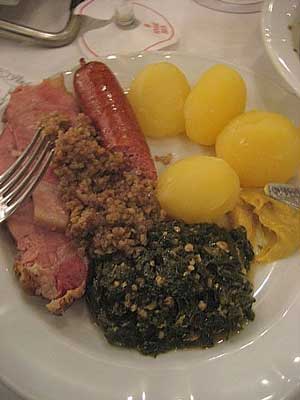
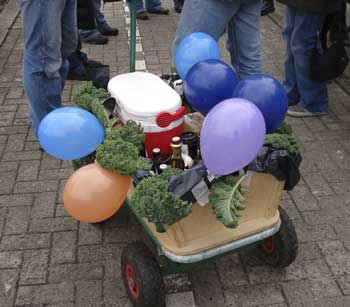
Kohlfart is a tradition practiced only in Northwest Germany, and is a beloved annual ritual in the Bremen area. The idea is that a group of friends or colleagues assemble on a Saturday afternoon in January or February, load up a “Bollerwagen” with an assortment of schnapps, whiskeys and beer, and amble through the countryside playing wacky party games and replenishing liquor at every opportunity. The event is organized months in advance by the group’s Kohlkoenig and Kohlkoenigin— the cabbage king and queen. After a couple hours of walking, when the participants’ bladders are full and their stomachs growling, the group descends on a pub or restaurant to enjoy the culmination of the day’s festivities–a meal of Kohl und Pinkel (the Kohl is green cabbage and Pinkel is something along the lines of bacon, oats, lard and spices packed together). And then they dance the night away—literally. I never knew the Germans loved to dance so much, especially to cheesy ’80’s cover bands. Although I will admit I hit the dance floor for several numbers (who can resist the Abba and AC/DC tribute?).
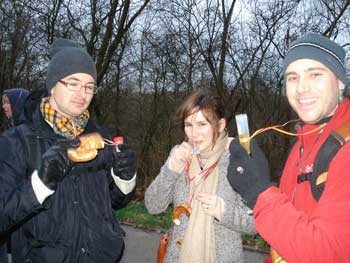
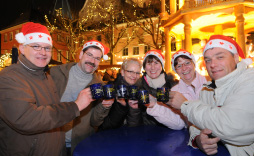
I didn’t know much about Kohlfahrt going into it, but once our group was assembled, and we were handed pretzels (sustenance is crucial) and plastic scientific sample vials to wear around our necks (it really is a cheap and logical way to hold liquor), I knew we were in for some surprises. It only got more interesting when our first two games tested who could maneuver a spoon down their shirt and pants the fastest, and who could throw a teabag the farthest using only their teeth.
Kohlfahrt was definitely worth experiencing for the sheer fun and folly of it all. But it’s a serious business here in Bremen, as evidenced by the multiple Kohlfahrt parties we passed on the road, some of which sported Bollerwagens decked out with flashing lights and loud speakers. The restaurant resembled more of a banquet hall, with about 100 long tables full of rosy-cheeked Kohlfahrters, swaying arm in arm and singing along to “Que Sera, Sera.” It’s experiences like these that remind me how different some things are here than in the States. Germans have no open container law to contend with and are perfectly free (and encouraged, in this case) to walk around toting shot-glass necklaces, singing songs, and pulling a wagon full of alcohol.
Although my observation is that even during the public inebriation and silliness of Kohlfahrt, Germans still manage to act fairly civilized. But civilized or not, it was obvious that everyone was having what seemed like the best Kohlfahrt ever. Until next year, that is…
Every year the magic of German Christmas Markets enchants millions of visitors. Crafts, culinary specialties like Gluhwein (mulled wine), baked apples and gingerbread biscuits (Lebkuchen) contribute to the traditional atmosphere.
Frankfurt (until Dec 22) Situated in the Roemerberg marketplace with St. Paul’s church as a backdrop, the Frankfurt Christmas Market is regarded as one of Germany’s most important. Organized events include the tower concert on the balcony of the Nikolai church, the Christmas Market of Frankfurt’s artists and the Frankfurt city peal of bells. Children can ride on multiple carousels, marvel at the gigantic Christmas tree and meet St. Nicholas on December 6. Guided tours of Frankfurt are also available. www.frankfurt.de
Mainz Christmas Market
Mainz (until Dec 23) The Mainz Christmas Market is set in the historic market square against the impressive backdrop of the 1,000-year-old cathedral of St. Martins. Highlights of the Christmas Market include the traditional fairy-tale performance in the city theater, the popular print shop of the Gutenberg museum and the 36-foot-high Christmas pyramid with its numerous figures and lights. Also, there is a wide choice of family programs at the Liebfrauenplatz. www.mainz.de
Wiesbaden (through Dec 23) “Twinkling Star Market” is the name of the Wiesbaden Christmas Market. Visitors enter the old castle square through four gates decorated with stars. Not to miss is the crèche with its life-sized wooden figures representing the Christmas story. www.wiesbaden.de/en
Wiesbaden Christmas Market
Aschaffenburg (through Dec 22) The Christmas Market is situated against the picturesque backdrop of the castle, with the Franconian Christmas crèche as its center. Also, during this festive season various other charming Christmas Markets can be found in the Aschaffenburg region. www.aschaffenburg.eu
Aschaffenburg Christmas Market
Bad Homburg (All advent weekends) One of the most beautiful Christmas markets in Germany is the romantic Christmas Market Bad Homburg at the Castle “Landgrafenschloss,” which is surrounded by an historical setting. Highlights include the traditional fairy-tale performances on the Kurtheater Bad Homburg. www.bad-homburg.de (German only)
Stuttgart Christmas Market
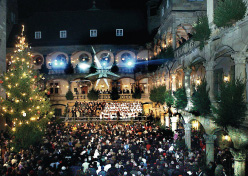
Stuttgart (through Dec 23) With its more than 280 decorated stands, is one of the oldest and largest Christmas markets in Europe. The Stuttgart Christmas Market is traditionally opened with a ceremonial concert in the inner courtyard of the Old Palace (Altes Schloss). Around the Altes Schloss, Schillerplatz, Kirchstrasse, Marktplatz and Hirschstrasse, small decorated wooden houses offer a range of Christmas items and gift ideas including Christmas tree decorations, crib figures, toys, woodcuts, puppets, lambskin shoes and candles. Culinary delights include hot chestnuts, German lebkuchen (gingerbread), roasted almonds, grilled sausages and mulled wine.www.stuttgart-tourist.de
Bremen Christmas Market
Bremen, on the River Weser close to the northern coast, puts a maritime twist on the classic Christmas market when the promenade along the river is transformed into Schlachte magic, a festive market offering historical, seasonal and maritime attractions. Another market with more than 160 beautifully decorated Christmas stalls are clustered in front of Bremen’s Church of Our Lady and the Roland Statue in the historical market square. www.bremen-tourism.de
Ruedesheim (through Dec 21) The Christmas market in Ruedesheim on the Rhine brings a festive feel to the romantic old town and its popular Drosselgasse Lane. More than 120 stands from 12 nations offer Christmas customs and traditions from around the world. Europe’s biggest Nativity scene can also be found in the market square. www.ruedesheim.de
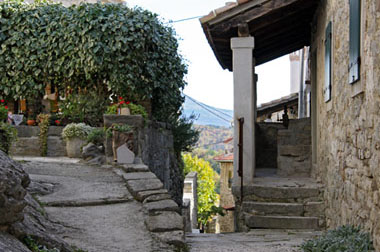
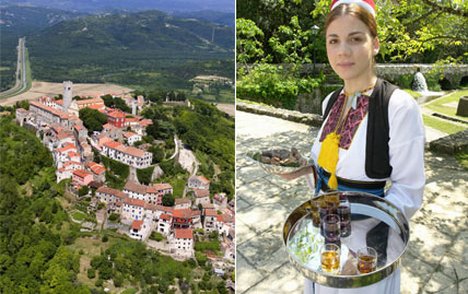
Hum, the smallest town in the world, is one of the rare preserved examples of urban development located exclusively within early medieval walls. It was mentioned for the first time in 1102. Town walls protected the town from frequent intrusions of the Venetians and the Turks. For almost a thousand years, nothing has been built outside the walls of Hum. Frescoes with biblical themes, unique artwork created by an unknown author in the 12th century, are a unique feature of the town.
Apart from being famous as the smallest town in the world, it has also been recently promoted as the Town of Biska. Biska is mistletoe brandy whose original recipe comes from Hum. Every year at the end of October Hum is the host of a brandy exhibit where a competition for the best brandy in Istria is organized.
The traditional custom of electing the county prefect for a year has been preserved to this day. Many tourists come to see the election proceedings and join in the culminating festival celebration.
Today Hum has about 20 inhabitants. You can tour the town in about five minutes, but after that be sure to stop at Humska Konoba (Hum Tavern) to taste some of the typical Istrian specialties.
The year 2012 marks the 150th anniversary of the birth of Gustav Klimt (1862-1918). Vienna’s Kunsthistorisches Museum, Leopold Museum and Albertina are all staging major exhibitions dedicated to the work of this great turn-of-the-century modernist pioneer.
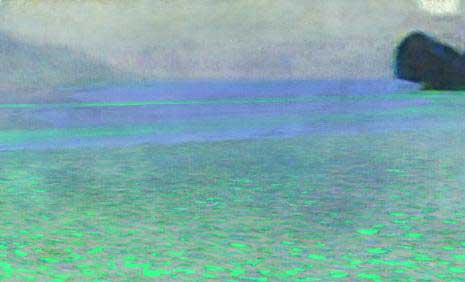
The Leopold Museum will be staging an exhibition titled “Gustave Klimt: A (time) Journey,” from February 24 to June 11 which will focus on the museum’s collection of hundreds of postcards, photographs and letters written by Gustav Klimt for over two decades to his partner in life Emilie Flöge. Among them there are art cards designed by the Wiener Werkstätte, tube mail, and telegrams as well as the correspondence that Klimt conducted with his friends and family in Vienna while enjoying his seasonal summer retreat at the Salzkammergut, at the Attersee and in Gastein or during his journeys that led him all across Europe to Italy, Paris, Brussels and London.
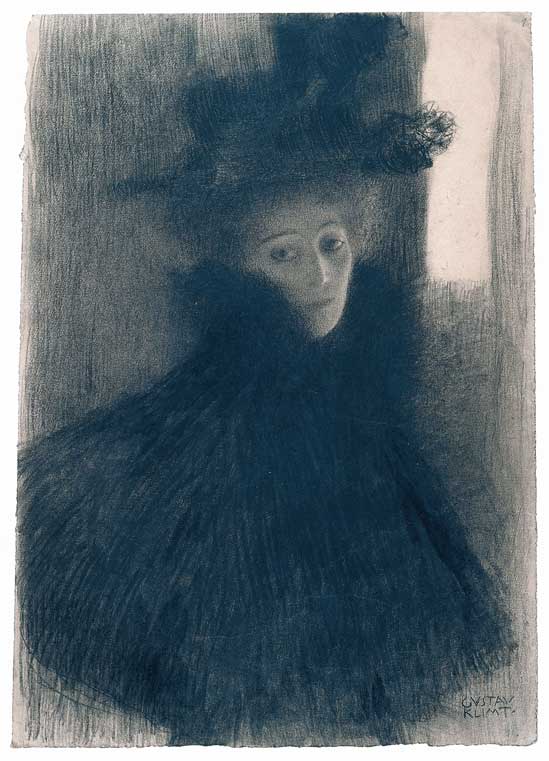
From March 16 until October 6, the Albertina Museum will celebrate Klimt’s 150th birthday with the exhibition “Klimt – Drawings” that will present the majority of the museum’s 170 drawings, as well as other items on loan. As a center for research on Gustav Klimt’s drawings, the museum will present pieces from all phases of the artist’s work. The focus will be on the unique drawing talent of Gustav Klimt, whose way of thinking and working is revealed in numerous figure studies and the precisely told allegories.
The Kunsthistorisches Museum in Vienna will hold a special exhibition from February 14-May 6 focusing on the 13 major paintings completed by Klimt for the grand staircase of the museum and the sketches they were based on. In 1890 Klimt, together with his brother Ernst and Franz Matsch, were entrusted with creating spandrel paintings and other narrow pieces to fill the spaces between the columns lining the grand staircase of the Kunsthistorisches Museum.
While Ernst Klimt and Franz Matsch kept to a more conservative style, the first signs of Art Nouveau symbolism can be clearly seen in Gustav Klimt’s pictures. These key paintings set the stylistic tone for Klimt’s world-famous work from about 1900 onwards.