Atlanta, We Have a Problem!

Flying with one engine on Delta Flight #131
By William Ewald
Photos by Tom Sullivan

What do you do when an engine fails over the Atlantic Ocean?

What can you do? What can the pilot do?

As regular international travelers know, the number of engines on the newer jet lines (Boeing 767s and 777s) has gone from a comforting four to a more disquieting two.

I had never thought about this situation or that it could occur on a flight I was on, but our group was about to find out.

The scene: a packed Delta Airlines flight from Munich to Atlanta. About three hours out of Munich, the overhead television monitor of our progress over the Atlantic showed we were passing just south of Iceland. There was only mild interest on my part.

An hour later, the calm and reassuring voice of the captain interrupted our flight movie to tell us that the right engine of our 767 has ceased to function, and that we would be flying to Keflavik Airport in Iceland as a safety precaution.

Admittedly, I was dozing when the announcement was made, but most people later indicated they hadn’t noticed anything when the engine went out. The captain added that these well-made Boeing planes were easily able to fly on one engine, and–thankfully–he was right.

17 GERMAN STUDENTS

My wife, Carol, and I were accompanying a group of 17 high school German students on their way home to Chicago via Atlanta after three weeks participating in a stimulating German exchange with their sister school in Hamburg, Germany. The kids were elated at the thought of spending the last hours of their trip in a country they had never hoped to visit.

“Parents can wait,” they thought. “We’re going to Iceland!” We chaperones thought, “If one engine can go out, what happens if the other one stops as silently and without warning like the first?” We hurriedly checked our life jackets and raft launching procedures on the flight safety card.

The rest of the trip was both a bit surreal and entertaining. Landing with only one engine was just a little different than other landings, as the pilot had to be careful using only one engine to assist with braking. We did notice the emergency fire equipment at the end of the runway when we landed, which the captain had assured us would be there as part of “normal procedure.”

We were told shortly before debarking, that a replacement plane would be flown from New York to pick us up, and that we should check the airport departure monitors to determine when to board the replacement plane.

THREE-HOUR TOUR

Thoughtfully, the airline had already made arrangements for all 280 passengers to take a three-hour tour of interesting sites surrounding the airport. Within an hour of landing they had found five luxury buses for our tour, even though Delta had no airline representative anywhere close to Iceland. We wished the drivers of the buses had given us more information about the sites we were seeing, but we sensed they had been hired to drive our group and not guide us, and that their English language skills were limited. We can understand that it would have been even harder for local officials to find five buses, drivers and guides for us on an emergency basis at 4:00 on a Sunday afternoon in a remote area of Iceland.

So on our own we enjoyed “The Blue Lagoon,” a smelly sulfur springs, a quiet fishing village, a bridge spanning a major Atlantic fault, and some hill climbing through the volcanic rocks which dominate this desolate part of Iceland. At each site, the kids hopped off the bus with great enthusiasm, cameras in tow.

After our sunny late afternoon tour, we returned to Keflavik Airport, were given supper in the single airport cafeteria, and, because by then flight monitors showed we wouldn’t be taking off on the reserve plane until 6:00 a.m., everyone started looking for a place to sack out for a few hours. No one objected when our students started pushing black leatherette chairs together to create a manger-like individual sleeping environment.

SHOPS STAY OPEN

There are no flights from Keflavik Airport after midnight, but the thoughtful personnel in the airport cafeteria and duty-free shop stayed open to meet the appetites and shopping needs of 280 unexpected visitors. Passengers had an entire airport to themselves, and the airport personnel couldn’t have been nicer or more tolerant.

In a continuing giddy mood, three of the girls in our group used some of the free cosmetics available in the duty-free shop to make up the faces of two willing boys, finally escorting them around for a little “makeup show.” Others purchased black T-shirts with the ironic inscription “Lost in Iceland.”

Fifteen hours after landing in Iceland, we took off in the morning dawn with the same flight crew we had out of Munich. Twelve hours later, weary students running on their last adrenaline, greeted their relieved parents at Chicago’s O’Hare International Airport. The trip was finally over.

Before leaving, the amiable kids we had just spent three weeks and a day with, were cautioned not to forget they had just spent three glorious weeks in Germany, and not to talk exclusively about Iceland when asked about their exchange trip.

Despite our warnings, we don’t doubt that many of them told friends that “Germany was great, but we had to make an emergency landing in Iceland!” One of the students started to write out plans for an exchange trip to Iceland, with volcanic rocks as “host parents.” Funny kids.
Gotthard Tunnel Celebrates its 125th Anniversary

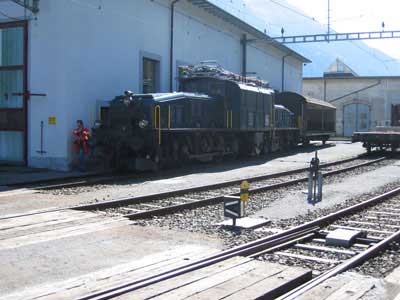
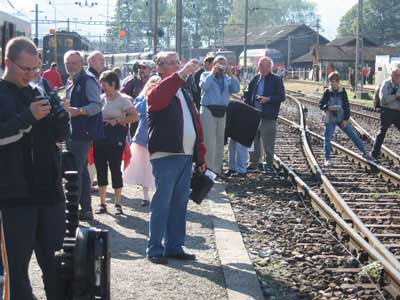
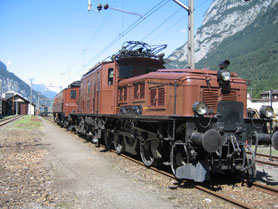
A giant electric Crocodile locomotive was on display September 8 and 9 in Erstfeld, Switzerland when 50,000 visitors showed up there and in Biasca to celebrate the 125th anniversary of the opening of the famous 15-mile-long Gotthard Tunnel. Heimburger’s European Traveler was at the giant party and recorded these photos. As many as seven steam engines and dozens of vintage pieces of equipment were available for viewing. There were also many interactive displays. For more information, go to www.sbbhistoric.ch.

Chocolate Museum Is Sweet

By Marilyn Heimburger
Photos by Don and Marilyn Heimburger

As spring approaches, thoughts of chocolate come to mind, just because we’re always looking for an excuse to eat chocolate! As the saying goes, “Chocolate–it’s not just for breakfast anymore!”

After a recent trip to Cologne, Germany, and after visiting the Cathedral and Roman ruins, I added a trip to the Chocolate Museum to my itinerary. You’ll learn all there is to know about this treat and have the opportunity to taste and see why the ancients called chocolate the “food of the gods.”

Opened on Halloween Day in 1993, the museum was the idea of Dr. Hans Imhoff, an entrepreneur who was the head of the Stollwerck Chocolate Company of Cologne. The three-story museum is located on the banks of the Rhine, within sight of the Cologne Cathedral.

Designed to look like a ship in the harbor, its modern glass and metal architecture surrounds the historic central customs office, which was built in the 1890’s. The museum welcomes an average of 1,700 visitors a day and about 650,000 per year.

3,000-YEAR-OLD HISTORY

Visitors can see chocolate being made at the museum.

As you walk through the three-story museum, you’ll see exhibits covering the 3,000-year history of chocolate. Growing and harvesting raw cocoa is shown with photographs, harvesting tools and a full size log boat from Ghana. Next is a 100-square-meter tropical greenhouse containing real cocoa plants and more than 60 other rainforest species. You’ll learn that the flowers of the cocoa plant grow directly on the trunk of the tree, so that pollinating insects can find them more easily in the thick jungle!

Chocolate’s popularity began as a luxury drink. An extensive exhibit brings you through the pre-Columbian Olmec, Aztec and Mayan culture, where cocoa was the drink of the gods, and was sometimes used as currency, or “brown gold.”

Next you’ll see the beautiful porcelain and silver cups and pitchers that were crafted to serve this luxury item in 17th and 18th century Europe. The chocolate culture of the 19th and 20th centuries is depicted in a full-sized shop, with chocolate tins and boxes on display, as if you had stepped back in time.

Front and back of a Santa mold

Beautifully preserved chocolate vending machines and advertising posters give insight into the popularity of chocolate. A film room continuously shows old television ads for chocolate. Chocolate packaging from apparently any brand of chocolate that ever existed is on display. Even American brands of chocolate are represented, although Astrid Hage, press representative of the museum, admitted that it was difficult to find someone willing to eat the American-made chocolate in order to empty the packaging. She explained that the Europeans follow a different standard in their chocolate production, and that their formula produces a superior taste.

DECIDE FOR YOURSELF

You’ll have the chance to decide that for yourself in another part of the museum, where, thanks to the Lindt and Spruengli Company, a two-floor exhibit demonstrates the production of chocolate today. From the processing, roasting, grinding of the bean to the pouring of hollow molded chocolate figures and a truffle production line, this small-scale system makes about 400 kg of chocolate every day for visitors to see, smell and finally, to taste.

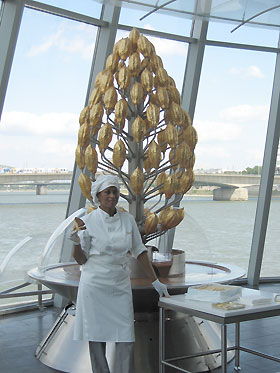
A nearly 10-foot tall chocolate fountain stands on the production floor, and a museum staff member stands ready to offer a waffle cookie dipped in the warm melted chocolate that pours from the spouts.

THERE’S MORE, TOO

Do you want more of the “food of the gods?” A gift shop offering chocolate, souvenirs and gifts is ready to serve you. The museum also has a restaurant with a view of the Rhine.

Admission fees are 6.50 EUR for adults. Children under six or visiting on their birthdays are free. All exhibit texts are in both German and English.

The museum is closed on Mondays. Check their web page for information on hours, tours and special events: www.schokoladenmuseum.de

Rail Europe: Trendsetter for Land Transportation

By Don Heimburger

In terms of speed, comfort, travel connections and schedules, frequency and rail facilities, the countries served by Rail Europe offer travelers the best land transportation by almost any standards.

With Rail Europe’s newly-designed website now up and running, we interviewed both Frederick Buhr, vice president of eBusiness for Rail Europe and Samina Sabir, public relations manager for Rail Europe.

The European trains of today already seem miles ahead of what the U.S.– or most other countries — offer in terms of speed, comfort and on-time reliability. Would you agree with that assessment, and expound on the differences you see between European rails and those of other countries.
The Swiss Federal Railways and French National Railroads are investing a great amount of public and private funds into a new hi-speed rail infrastructure which has resulted in a faster and more efficient form of train travel in Europe. Due to a high volume of travelers who use the European train network, there is a high frequency of train service that results in greater efficiency and punctuality. Train travel in Europe also allows people to seamlessly travel on multiple rail networks as European countries work together on public transportation. Rail Europe allows travelers to purchase train passes without restrictions that allows them to travel throughout the European continent.

If you could ride any European train for fun, which one would it be and why?
The Chocolate Train in Switzerland. This involves a roundtrip panoramic train journey from Montreux in the Swiss Riviera to Gruyères, home of the Gruyères cheeses, and then onto the Nestle chocolate factory where chocolate sampling is included. The Chocolate Train is included in the price of a Swiss pass.

Name some important upcoming routes where you expect dramatic changes in terms of service, speed or new equipment.
The TGV East in France now allows travelers to ride from Paris to the eastern regions of France faster and more conveniently than ever before. A route growing in popularity is the Paris/Reims journey–in just 45 minutes travelers are transported from the heart of Paris to the heart of the Champagne region.

The Spanish AVE train travels at speeds of 300 km/hour (186 mph) and covers the distance of 550 km (342 miles) between Madrid and Barcelona in less than 3 hours (travel time was previously 4 hours). New high-speed lines have also reduced travel times between Madrid and Valladolid; the journey, which previously took 2 hours, 30 minutes, now takes only 55 minutes. And what was a four-hour journey from Madrid to Málaga, now takes only 2 hours, 30 minutes. The city of Zaragoza is on the Madrid/Barcelona AVE line (1 hour, 18 minutes from Madrid, 1 hour, 29 minutes from Barcelona) and this is expected to be an emerging destination in Spain.

The Thalys train takes just 1 hour, 22 minutes to go from downtown Paris to Brussels, most of the journey made at 186 mph. By 2009, all Thalys tracks will be high-speed, and travel times Paris-Amsterdam (currently 4 hrs 11 min.) and Paris-Cologne (presently 3 hrs 50 min) will be cut to 3 hrs 9 min and 2 hrs 50 min, respectively. Up to 27 trains travel between Paris and Brussels in each direction daily, making the service convenient as well as fast.

In 10-15 years, how will the European rail travel scene have changed?
At Rail Europe we believe that the developments in high-speed rail and the investments being made to continue to develop the rail networks of Europe will make Europe more easily and quickly accessible to all travelers. Day trips from the major cities to smaller towns and villages connected by train will become more popular.

European train travel also offers the time-saving benefit of bringing travelers right into the city center, eliminating the need for airport/city transfers. It is expected that this convenience, along with a growing awareness that trains are an eco-friendly way to travel, will continue to influence a shift from air traffic to rail.

What is the fastest train right now on Rail Europe tracks?
The TGV in France runs at speeds of up to 200 mph and currently holds the world record for the fastest train.

For a first-time rail traveler in Europe, what can they expect when traveling on, say, an ICE train, the Eurostar and a regional train?
All German Inter City Express (ICE) trains connect all the major German cities such as Frankfurt, Hamburg, Stuttgart, Munich, Cologne and Berlin. All trains feature comfortable amenities and cutting-edge services, including reclining seats with built-in tables and video screens, an integral audio system, notebook and laptop connections, as well as cellular-friendly zones that allow for undisturbed service.

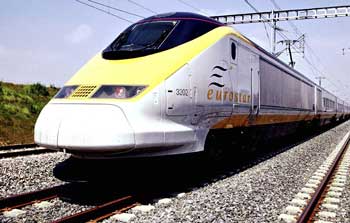
Eurostar takes you seamlessly from city center to city center within Belgium, France and the UK, as well as provides connecting services to more than 100 destinations. Business Premier class, which is the highest level of service, offers reclining seats and power outlets at each seat giving business passengers the freedom to work in comfortable surroundings. It also offers a choice of full service “at-seat” dining with champagne and wine and an “Express Breakfast” option. All 1st class cars for Leisure passengers offer comfortable seating, complimentary magazines/newspapers and the “at-seat” dining includes wine and hot and cold refreshments.

Regional trains are not high-speed trains and make more stops at more stations along the journey. At least one regional train journey is advisable, especially for the first time leisure traveler; it is a very real experience and has a certain air of romance to it. Buffet cars are available on most regional trains and offer sandwiches or hot and cold snacks.

Let’s say I wanted to fly to Frankfort and then travel by train to Passau and on to Vienna. What kind of travel times and service for this route would I find on your new website?
You can choose a train which connects in Wein (Vienna) or choose the fastest train which is direct from Passau to Vienna – see example below:

TRAIN 21Fastest

10:33AM
Passau Hbf,
Germany
1:22PM
Wien Westbahnhof,
Austria
2 hr 49 min

I’ve heard there are a number of “Scenic Trains” available for shorter, fun excursions. Which ones are most popular and why?
One very popular scenic train is The Glacier Express that connects the world-famous resorts of St. Moritz and Zermatt. Rail Europe offers a Glacier Express Tour which includes a Swiss Card with three transfers of rail travel, two nights accommodation in 3-star hotels (w/breakfast) and one night each in Zermatt and St. Moritz.

RAILTEAM AFFORDS ‘SEAMLESS’ TRAVEL

According to Buhr, Railteam (www.railteam.eu), a new venture, will make traveling on the European rail network easier and more seamless. Buhr says it will help “shrink Europe.”

It is a collaboration between Europe’s leading high-speed rail operators, currently DB (Germany), SNCF (France), Eurostar UK LTD (UK), NS Hispeed (Netherlands), ÖBB (Austria), SBB (Switzerland) and SNCB (Belgium), as well as their high-speed subsidiaries Thalys, Lyria and the DB/SNCF cooperation between France and Germany, with more train operators possibly joining in the future.

Access to the Railteam network is easy with interconnections at city center stations and Ffst local transfer services to and from departure points.

Unlike airports, when you travel with Railteam there are no lengthy boarding procedures, which means no lines. Swiftly on-board and settled in your reserved seat, travelers are able to work on their laptops, read, eat or relax.

Buhr also says that the European Union supplies large amounts of money to help the high-speed rail infrastructure budget for Europe, which allows more construction of new trackage and rail facilities throughout the continent.

Buhr is interested in hearing from passengers about how the new Rail Europe website works for them.

Fred Buhr, Vice President eBusiness, Rail Europe

Fred Buhr began his career with Rail Europe in 2000 to start up EuroVacations.com, the online one-stop shop for European vacation packages. In 2003 he became Rail Europe’s Director of Online Marketing, where he initiated the SEM and SEO strategies to grow market share. He currently holds the position of Vice President eBusiness and is in charge of eCommerce and online marketing. Fred was involved in leading a project dedicated to creating the newest version of the company’s website, RailEurope.com. He has extensive experience in the online travel industry and was responsible along with a business partner for creating one of the first full-service online agencies in Europe. Educated in Strasbourg, France, Fred also attended the Paris Business School where he earned a degree in International Business Relations.

Samina Sabir was educated in Ireland, and began her career in the retail/fashion industry. She joined Rail Europe in 1993, working in the Sales Department dealing specifically with Rail Europe National Accounts. In 2008 she became public relations manager for Rail Europ

Berlin: An Exciting 21st Century City Steeped in History

GNT/Christopher Nehls

By Don Heimburger
Photos by the author

Usually before arriving in a large European city, I obtain a map of the main “ring” area and study it for hours.

A city map tells me where the Bahnhof (train station) is, the major tourist attractions such as museums, monuments, parks and buildings, as well as major streets and rivers or lakes. What I’m trying to obtain is a general impression of the size of the city and its environs, and the general layout of the city center.

When I first looked at the map of Berlin–the capital of Germany–after a few minutes I realized we were talking about a very large city, the square mileage of which is 552.

It wasn’t until I got to Berlin and starting walking around that I was able to piece together the whole Berlin attractions scene, and after two days there, started to get the picture. Berlin is big (it’s eight times the area of Paris), with 3.4 million people; nearly 140 million visit this northern Deutsche city each year.

Berlin is German’s greenest city, with more space devoted to woods, parks and cultivated areas than any other: there’s the very large English-style Tiergarten (originally a royal hunting reserve), the Botanical Gardens and the Zoological Gardens (the largest zoo in Europe with 13,000 animals representing 1,400 species). In walking the Tiergarten area, I was glad I had on comfortable shoes. In fact, in any larger city, be sure to take along comfortable shoes!

BERLIN ATTRACTS MILLIONS

With the fall of the infamous 13-foot, 99.4-mile-long Berlin Wall (erected August 3, 1961 by the Socialist Unity Party of Germany) in November of 1989, Berlin has come together to preserve its history, and celebrate the future with new, modern buildings of note. Europe by Rail, a Thomas Cook publication, says Berlin “now oozes cosmopolitan chic.”

Founded by traveling merchants as the twin settlements of Berlin and Coelin in the last quarter of the 12th century, the first mention in documents was in 1237 for Coelin and 1244 for Berlin.

Around 1650, and after nearly complete destruction of the city during the Thirty Years’ War, Berlin experienced an unprecedented cultural and economic boom, thanks to Elector Friedrich Wilhelm. He invited immigrants to settle the city, notably Jews and Hugenots, and by 1700 one of every five Berliners was a Hugenot.

In recent history, Berlin proper was divided up between the U.S., Britain, France and the USSR after World War II, with the Soviets instituting the People’s Democratic Republic. In June of 1991, the Bundestag decided by vote that Berlin should become the capital of the unified Germany.

If you go to Berlin for the first time, I suggest you take at least three full days to tour the city. Less than that, you won’t be able to spend much time at any one attraction. You will have gotten a quick overview only. Lines for some of the attractions such as the museums and the Reichstag Parliament Building can be very long, even in the “non-tourist” months.

GNT/Jochen Keute

TOP SIGHTS IN BERLIN

Some of the top sights in Berlin on your travel agenda should be:

–The impressive neo-Renaissance style Reichstag, which features a glass dome by Sir Norman Foster and offers a good overall view of the city. The building was opened in 1999 after restoration. It houses the Bundestag, the Lower House of the German Parliament. It’s open daily from 8 a.m. to midnight, with the last entry at 10 p.m.

–Brandenburg Gate (Tor)—This is Berlin’s most famous landmark and a symbol of the city’s reunification. It’s almost always crowded with people, but it encompasses a large area, and the area which it’s located can accommodate a large number of people. The gate was incorporated into the Wall at one time. Six Doric columns which are incorporated into the stonework support an antique entablature. It was built in 1789.

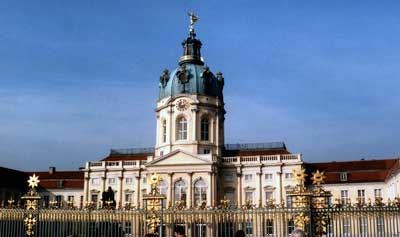
–Charlottenburg Palace is one of the oldest palaces in Berlin, built for Prussian Empress Sophie Charlotte. It’s said to be Berlin’s answer to Versailles, housing a great collection of German Romantic art. The castle offers guided tours only. Be sure to note the Porcelain Room, which contains beautiful vases, figurines and plates, mostly from China. Also note the White Room, which served as a banquet hall and throne room. Next to the castle is the Berggruen Museum which displays a 20th century collection of art, especially Picasso and Matisse. Both the castle and museum are closed on Mondays.

–Berlin Cathedral (Berliner Dom) is the largest 19th century Protestant church with a beautiful Sauer church organ and the Hohenzollern family crypt, part of which is open to the public. The church seats 1,500.

–The Kaiser Wilhelm Memorial Church, built at the end of the 19th century, was destroyed in 1943 during WWII and another new church built next to the ruins. It’s an interesting study in old and new.

–Topography of Terror is an outdoor exhibition on Nazi terror and crimes in the Third Reich, visited by thousands of people every day on Niederkirchnerstrasse. This exhibit is always well attended.

–Memorial to the Murdered Jews of Europe near the Brandenberg Gate is comprised of 2,700 concrete blocks which represent an “uneasy and confusing” atmosphere in an otherwise orderly society. Each concrete slab is between 8” and 15′ 9” tall.

–Checkpoint Charlie at Friedrichstrasse 43-45 in a busy shopping district is a museum that gives the history of the Berlin Wall, tells incidents that happened there, and displays original objects from successful escapes. The several-story museum is open daily from 9 a.m. to 10 p.m.

–New National Gallery at Potsdamer Strasse 50 features 20th century art, the ground floor of the Altes Museum (the first museum in Berlin in 1830) displays a collection of Classical Roman and Greek art and sculpture while the upper floor is devoted to an Egyptian Museum. The Bode-Museum features a sculpture collection and a museum of Byzantine Arts and a coin collection. The German Historical Museum on Unter den Linden is a permanent German history exhibition while the Gemaldegalerie Art Collection is ranked among the most important collections of 13th-to-18th-century European paintings in the world.

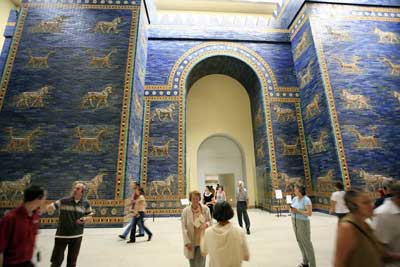
Three more museums of special note are the Museum of Contemporary Art, the Jewish Museum Berlin with an exhibition of on every aspect of German-Jewish history from the end of the Roman area to today, and the Pergamon Museum with its collection of classical antiquities, Museum of Islamic art, and Museum of ancient near-Eastern antiquities.

GNT/Eric Eichberger

170 MUSEUMS TO SEE

Berlin has more than 170 museums, more than enough to keep you interested; you can see why you’ll need extra time in Berlin.

Even the city squares in Berlin evoke interest, such as Alexanderplatz (named after Tsar Alexander’s visit to Berlin in 1805). This important public transportation junction is a focal point of city life in the eastern part of Berlin. The Gendarmenmarkt Square, named after Kind-Sergeant Frederick Wilhelm I’s “Gens d’Armes” regiment, is another location to see.

All sorts of other diversions are available in Berlin as well. There are eight major symphony orchestras including the Berlin Philharmonic, three opera houses, cabaret, variety and revue theaters, musicals and comedy. The Konzerthaus Berlin at Gendarmenmarkt- Mitte was built in 1818-1821 by the renowned Berlin architect Karl Friedrich Schinkel.

Numerous exclusive designer boutiques, international brand name outlet shops and more await shoppers in the Mitte district on Friedrichstrasse. Then there are the flagship stores, malls and the giant KaDeWe, a nearly 200,000-square-foot department store packed with attractive foods, clothing and all kinds of products and goods. It’s like a giant Harrods or the old Chicago Marshall Field’s store, with glitzy displays, helpful sales people and a do-it-right attitude.

Berlin hotels provide upwards of 11,000 beds in the luxury hotel category alone and a total of 88,000 beds overall. A click on http://www.visitBerlin.de will offer you more information and also offer 350 choices of where to stay. A list of youth hostels are also available at www.bock-auf-berlin.de.

GNT/Hans Peter Merten

TAKE A TOUR, SEE THE CITY

To see the city without all the walking necessary to cover the main attractions, try one of the several tour bus companies. You have a choice of BBS Berliner Baren Stadrundfahrt (www.sightseeing.de and www.bbsberlin.de) that offers tours in eight languages; Berlin City Tour, a 1 3/4-hour English and German tour on double-decker buses (www.berlin-city-tour.de), and Berliner City Tour-Eick’s Rundfahrten Berlin with open-topped buses (www.eick-berlin.de). Each tour line allows patrons to hop on and off the bus along the route.

Or, if you take city bus No. 100, which runs between the Zoo station, past the Tiergarten, Brandenberg Gate and along Unter den Linden (the main east-west thoroughfare), you’ll get to see a number of sites. Buses also run in the evening.

You can rent a bike for a city tour from 5 euros a day, with guided bike tours from 10 Euros a day (www.fahrradstation.de). There are also walking tours and boat tours provided by other companies.

Berlin has a new Hauptbahnhof that opened in 2006; it’s a clean railway station and easy to navigate, but the older European railway stations have more character. It’s also said the station lacks enough public toilets and seating for passengers. Shops and cafes are abundant in the station, and they are open seven days a week.

Berlin offers a good system of buses, trams, underground and surface trains (there are 24 different lines), and free maps showing these routes are available at tourist offices and hotel lobbies. A Berlin Welcome Card (valid 48 or 72 hours for 16 euros or 12 euros) allows unlimited travel on all public transportation and also a 50% reduction on city tours, museums, theaters and other attractions in Berlin and Potsdam (www.berlin-welcomecard.de).

There are numerous hotels to choose from in Berlin, with the more up-scale ones located in the center of the city; less expensive hotels and hostels are grouped around the Mitte district in the eastern part of central Berlin.

The #1 rated hotel out of a total of 552 Berlin hotels is the Ritz-Carlton, priced on average at $319 a night, with the Mercure Hotel rated #2 at $304 (average) a night. The Swissotel Berlin rated #3 is $144 a night and the Movenpick at #4 is $277 a night.

Berlin is certainly one of the more interesting cities in Germany, and I’m glad I went. From my visit, I only see Berlin as growing and becoming more popular in the future: it has a lot going for it!

For more information about Berlin, go to:
www.berlin-tourist-information.de