Munich’s Big Bash

Celebrating 850 Years of Bavarian Delights

By Marilyn Heimburger
Photos by Don Heimburger and courtesy Munich Tourist Office

I have always liked Munich. Actually, it’s more than just liking the city. I feel moved by its vibrant life, its stimulating nature and its friendly people. Apparently many more feel the way I do, since it is Germany’s most-visited city.

Last year, during Munich’s 850th birthday, the city of 1.3 million hosted the following:

  • City Foundation Festival in June in the heart of the city, featuring traditional Bavarian culture and international folk culture. A highlight of the fest was a Gaufest, or regional festival, of the many associations for folk culture where dancing and costumes from the Isargau region were prominent. As many as 10,000 participants were involved in this. A group of 100 rafters from the Oberland region showed how to build a raft. Dance masters showed how to learn the “Munich-Francaise” dance.
  • In July, the Old Town Ring, which was free from automobile traffic, served as the center for a celebration of theater, music, dance, games and sports on many stages. Scenes from peasant life in Munich with markets, street theater and beer gardens were staged. There also was music from international bands and more.
  • In August, the three-day Isar Bridges Festival, centered around the Cornelius, Ludwig and Maximilian bridges, highlighted the Isar River (which flows through the city) as the city’s life-giving artery. There was music under the bridge, dancing along its banks, glittering lights on the water, and with this came Munich’s famous culinary delights. An action theater group, which encouraged audience participation, also presented skits. There were also night-time water and laser shows
  • Additional highlights included the world premier of a work commissioned from composer Victoria Borisova-Ollas especially for the 850th anniversary. In June the Cuvillies Theater, one of German’s most elegant Rococo theaters, reopened after a spectacular renovation. In the newly re-designed St. Jakobs-Platz, many of the local museums and community organizations held programs of music ranging from classical to klezmer (a musical genre), dancing and creative street theater, exhibitions, tours and more.
  • Many of Munich museums featured exhibits of famous Munich artists, writers and Munich’s cultural heritage.

As Munich’s Lord Mayor Christian Ude said, “(Munich’s) celebrating its 850th foundation day…is nothing exceptional. What is remarkable is the city’s rapid growth from a monastery on a hill to a European metropolis with over a million inhabitants and a high-tech hub.”

As Ude says, the city is special because of its enduring and much-praised flair as a place with a zest for life.

The settlement of Munichen was originally granted the right to market goods and mint coins in June of 1158. In 1214 it was granted status as a town, and in 1255 it became the seat of the Wittelsbach dynasty. Under Kind Ludwig I, many famous buildings were erected, making Munich a major cultural center, and in 1918 the Free State of Bavaria was formed.

For travelers, the city offers 355 hotels and pensions with 45,500 hotel beds available. In 2006, 4.4. million tourists booked nearly nine million overnight stays, with 47% of them from overseas, with the USA bringing in the most, followed by Italy, Great Britain, Austria and Switzerland.

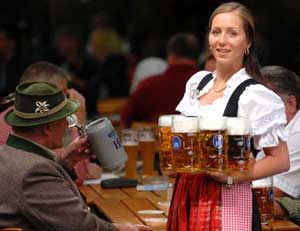
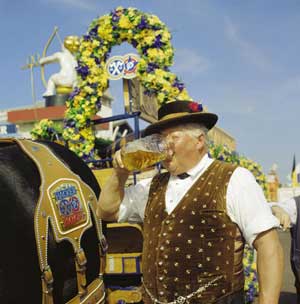
The city boasts three universities and eight colleges, 60 theaters and an opera house, 45 major museums, three symphony orchestras—and it hosts the famous 16-day Octoberfest beginning on the Saturday two weeks before October.

Favorites for visitors to see in Munich include:

  • The city’s twin onion-domed towers of the Frauenkirche, Church of our Lady, Frauenplatz 1, is the city’s best-known landmark.
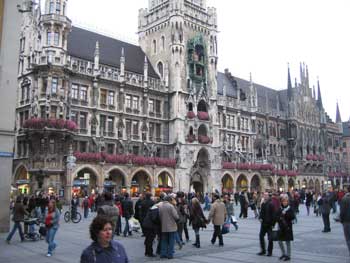
  • Marienplatz and the glockenspiel on the Marienplatz in the city center displays the mechanical dancers in the tower of the Rathaus (Town Hall) at 11 a.m. and noon (and 5 p.m. in the summer).
  • Schloss Nymphenburg is the impressive Baroque palace built as the summer residence for the Bavarian Electors. Today the main building houses a museum.
  • The Viktualienmarkt is Munich’s oldest market, originally begun as a farmer’s market and now a favorite place for a wide range of produce, Bavarian specialties and more.
  • The Hofbrauhaus deserves a visit, as its one of Munich’s best-known restaurant-breweries at Am Platz 9. Great dining is available, or just casual drinking and listening to oom-pah music. For information on the Hofbrauhaus, visit www.hofbraeuhaus.de.
  • There are many churches to visit, including the Asamkirche built by the Asam brothers in the 18th century with its spectacular interior at Sendlinger Strasse 62; Church of the Sacred Heart, a cubed-shaped structure with an innovative facade at Romanstrasse 6; and Saint Peter’s, Munich’s oldest parish at Rindermarkt 1.
  • The Deutsches Museum at Museumsinsel 1 houses sailboats, windmills, space probes, robots, ships, trains, planes and much more. Allot a whole day for this attraction.
  • Octoberfest Museum, at Sterneckerstrasse 2, will tell you all about the history of beer including how it started as a drink at monasteries, and all about the city’s famous Octoberfest celebration.
  • The expanded BMW Museum is a must-see if you are fascinated with automobiles and engineering. Tours are available.

Munich is waiting to wow you.

IF YOU GO…
You can arrive at Munich’s Airport, which is like a city within itself. Flights from numerous major hubs arrive and depart from here daily. Train is another good option if you are coming from another European city.

If you’ll be in town for at least a day, pick up the City Tour Card (one- and three-day tickets are available), which is good not only for all public transportation, but also includes discounts of up to 50% on more than 30 attractions such as sights, bike rentals, museums, theaters and restaurants. www.citytourcard.com.

A close-in, convenient four-star hotel is the Platzl Hotel at Sparkassenstrasse 10. It is located near the Hofbrauhaus and is within a a couple of minutes walk of the Marienplatz. Visit www.platzl.de.

Guided tours of Munich are available. Visit www.muenchen.de for more information. The tourism office is located in the Rathaus, first floor, at Marienplatz.

Ski or Just Relax in the Shadow of Mount Blanc

Photos courtesy Swiss Tourism

Perched on a wooded, sunny plateau above the Rhône Valley about halfway between Martigny and the Chateau de Chillon end of Lake Geneva, Villars offers activities that find the balance between recreation and relaxation.

Ever since the famous Orient Express arrived here, visitors to Villars have enjoyed the healthy air to be found on the natural balcony it rests on. At about 1,300 meters (4,225 feet) in the heart of the Vaud Alps, this idyllic setting has stunning views stretching from Lake Geneva to Mont Blanc.

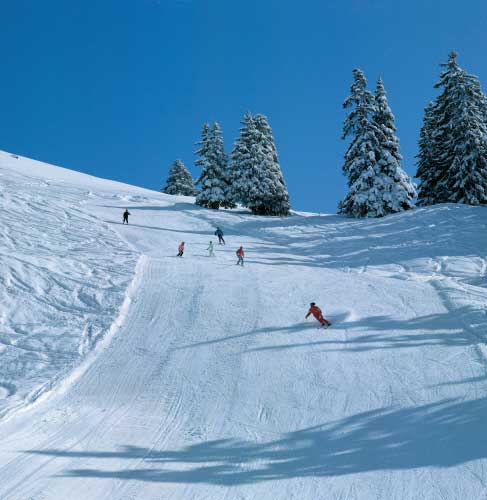
Winter sports fans can enjoy the wide range of attractions the area offers, including 125 kilometers (78 miles) of skiing terrain. In all, there are 52 runs which are 50 percent beginner, 42 percent intermediate and eight percent advanced. Sports enthusiasts wanting to be challenged can try the glacier at Les Diablerets, about 20 kilometers (13 miles) from Villars. There are four glaciers in the area available for heliskiing.

Those in search of relaxation can enjoy the facilities and wellness benefits of the thermal baths (Lavey-les-Bains). Children can enjoy the family programs that cater to adults and kids.

More information can be found at www.ski-europe.com/resorts/villars

Lismore Castle

A place where you can make your own magic

A Spectacular Irish Castle

By Don Heimburger

Lismore Castle is a unique destination ideal for family holidays, a special gathering of friends or even a romantic wedding. The layout of the castle means it can feel intimate with 8-12 guests yet spacious with up to 27 and there is room for many more in the Banqueting Hall for larger events. A dedicated staff is on hand to offer help on every aspect of your stay.

Originally built in 1185 by King John, Lismore Castle was owned in turn by Sir Walter Raleigh and Richard Boyle, First Earl of Cork, before passing to the Fourth Duke of Devonshire in 1753. The castle, located in the southern county of West Waterford, is designed in Gothic style and contains some of the finest examples of domestic Pugin furniture still in private hands. The gardens, laid out over eight acres within the 17th Century outer defensive walls, are believed to be the oldest in Ireland and retain much of their original Jacobean form. In recent years, the castle has been extensively restored and upgraded by successive Dukes but the historic charm remains intact.  In addition, the West Wing has been renovated as a contemporary art gallery.

Continually cultivated gardens

FINE FOOD
Fine food is the highlight of any guest’s stay; everything is made from scratch in the castle kitchens. Seasonal food is a must for Lismore Castle chefs, and the ever-expanding kitchen gardens offer a plentiful supply of home grown produce to provide accompaniments to locally sourced seafood, fish and meat.

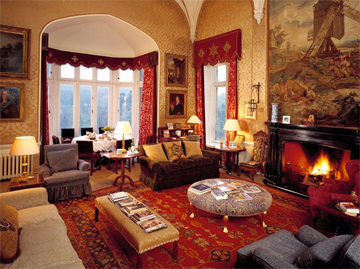
Afternoon tea in the drawing room
19th Century decor adorns the Dining Room

From hikes and hot air balloon rides in and over the nearby Knockmealdown Mountains to beachcombing and rock-pooling with botanists on White Bay Strand, to sea kayaking and surfing in Ardmore Bay, to cycle tours along the river and leisurely strolls along Lady Louisa’ Walk, Lismore and the surrounding area is paradise for lovers of the outdoors.  Take part in the Sean Kelly Cycle Tour and pedal the hills and valleys where Ireland’s greatest cyclist’s bike once flashed over the cobbles or enjoy a day out at the Tramore Races Festival.

The Blackwater fishing season, an example of one of many festivals in the area, runs from February 1st to September 30th.  Enjoy casual casting on a charming stretch of river beneath the castle walls or test your skills and on famed stretches nearby. The Kilkenny Arts Festival (renowned multi-arts festival) and Spraoi, a free urban festival in Waterford city are also within easy reach of Lismore.

Lismore Castle offers packages which include multi-night accommodation with breakfast, afternoon tea and dinner; private airport transfers and more.

www.lismorecastle.com

Hike Around Wales on the Wales Coast Path

Consists of 870 miles of trails from soaring cliffs to golden sands

Photos courtesy Visit Britain

The Wales Coast Path creates a complete path along the whole Welsh coastline, and together with the Offa’s Dyke Path, the total route extends to more than 1,000 miles. The Coast Path winds its way through towns and villages, across cliff tops and sandy beaches, sometimes darting inland before emerging at a sheltered cove or tiny hamlet that you would forever miss when traveling by car, bus or train.

The Wales Coast Path has been developed by the Welsh Government in partnership with the Countryside Council for Wales, 16 local authorities and two national parks. In addition to funding from the Welsh Government and the coastal local authorities of approximately $3.15 million per year, the European Regional Development Fund has allocated $6.29 million over four years in support of the project.

Improvements to the quality and alignment of the route will continue during 2012 and 2013 to ensure that the path follows the Welsh coastline as close as it is safe and practical. Over time, the Wales Coast Path is expected to lead to the creation of circular coastal routes as links to inland towns and villages are improved.

Wales is a country blessed with a beautiful coast and stunning scenery. The Wales Coast Path will ensure improved access to the coastline and encourage people to live a healthier and more active lifestyle.

SHAPE OF THE NATION

In the northeast, on the border between Wales and England, the path sets off near Offa’s Dyke, near the coastal town of Prestatyn on the shores of the Irish Sea. This historic dyke is named after the 8th century King Offa, who ordered the dyke be built to separate his kingdom of Mercia from rival kingdoms in what is now Wales. This 177-mile path, forming one of Wales’ three national trails, runs along the Anglo-Wales borderlands. With the development of the coastal path, this will enable visitors to walk around the whole of Wales.

This historical journey continues as the path winds through nearby Conwy with its impressive 13th century castle built by Edward I. The coastal path passes a number of other medieval castles along its way such as Caernarfon, Beaumaris, Criccieth and Harlech in the north, Aberystwyth in mid Wales, and Cardiff and Caldicot in the south. It passes by ancient churches such as St. Hywyn’s in Aberdaron on the Lleyn Peninsula, where since medieval times, pilgrims have come on their way to Bardsey Island, the legendary Isle of 20,000 saints.

All along the coastal path there is breathtaking scenery; places such as Anglesey in the north and Pembrokeshire in the south are especially beautiful. In western Wales, a half mile section of the path recently opened joins the Ceredigion Coast Path with the Pembrokeshire Coast Path National Trail creating a 250-mile unbroken path. Last year, National Geographic voted Pembrokeshire “one of the best coastal destinations in the world, a wonderful part of Wales that must be seen and explored.” There are a variety of beaches along the way, ranging from expansive stretches of sand to tiny sheltered coves.

The wildlife that can be seen while exploring Wales’ coastal path is rich and diverse. Exploration of the coastline along the path reveals bays, headlands, towering cliffs and inlets, all provide stunning views of nesting seabirds, guillemots, razorbills, puffins and shearwaters. Out to sea off the Ceredigion Coast in Cardigan Bay, bottlenose dolphins and porpoises can be seen playing in the surf, and its sheltered inlets and coves harbor Atlantic grey seals basking on the beach or bobbing up and down in the sea.

Wales is famous for its seaside resorts. Among others, the path passes through Tenby in the Southwest, a town steeped in history, renowned as being one of Britain’s finest holiday resorts, and in the north, Llandudno, Wales’ largest resort, a town that has kept its Victorian and Edwardian splendor and boasts two great beaches.

Situated along the coastal path are some of Wales’ finest inns such as the Ty Coch Inn nestled in the tiny fishing village of Porthdinllaen on the north coast of the Lleyn Peninsula, with views across the Irish Sea and with a sandy beach on its doorstep, boasting a fine selection of food and ales.

The number of walkers along the coast is increasing continually, but the path is also suitable for cyclists and horseriding on large stretches and also invites the disabled along its length.

For more info, go to www.visitbritain.com.

Swabia’s Very Own Theme Park

Set deep in the countryside, surrounded by forests and vineyards, Tripsdrill opened in 1929—Germany’s first theme park.

About an hour’s drive southeast of Heidelberg, the park revels in nostalgia, reflecting the Swabian region’s tradition and history. Tripsdrill is set on 190 acres, with 100 one-of-a-kind attractions, including the 100-foot-high “Mammoth” wooden roller coaster. Activities include water sports for the whole family, action rides for thrill seekers and interactive play for children.

In 2012, the Village Street will be enlarged. The new timbered house is typical of Southwest Germany, and its three floors will be devoted to a variety of games for older and also younger children. The year 2012 also marks the 60th birthday of the federal state of Southwest Germany (Baden-Württemberg), and Tripsdrill is joining in the fun with a series of special events to celebrate all aspects of Swabian culture.

The neighboring Wildparadies Tripsdrill (wildlife park) is devoted to wild animals native to Europe. Celebrating its 40th birthday in 2012 with plenty of wildlife action and excursions, this park also has a new feature: overnight stays. Visitors can stay in a shepherds’ wagon or a comfortable treehouse deep in the forest.

For more info, go to www.tripsdrill.de/en