Magic, Yoga, and Positive Energy Await You in Southern Spain

By Abbey Algiers

You know that feeling when you have an amazing vacation, and you want to tell absolutely EVERYONE you know about it… and then you do, and you see that they “get” you had a good time but don’t quite “get” HOW AMAZING the experience was? And no amount of Instagramming can truly relay what you experienced because not even you understand exactly what happened.

My experience at the Suryalila Retreat Centre in southern Spain felt like that. 

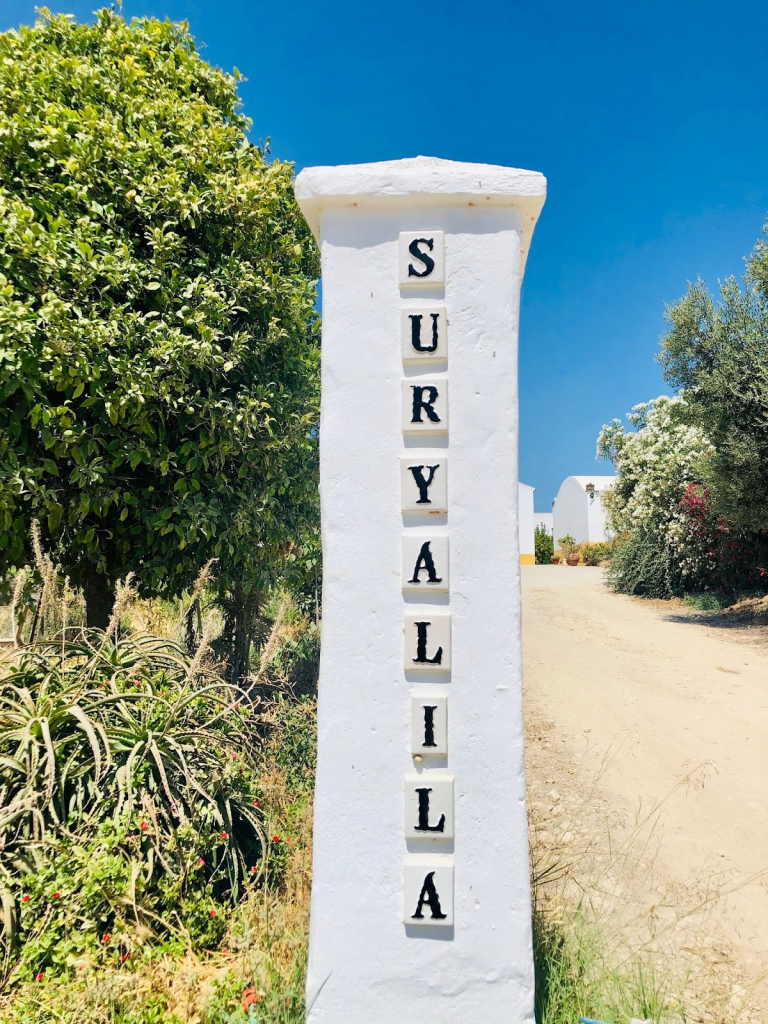
As I approached the road to Suryalila, I sensed I was in for something special.

The short story—I led a Wellness Retreat & English Immersion at Suryalila Retreat Centre in southern Spain. We could end this here, and no doubt you’d get the feeling it was amazing, even if you weren’t in need of English immersion. The mention of southern Spain probably puts visions of rolling hills, white-washed villages, sunflower fields, olive oil, wine… beauty. Right? And then add that we’re at a yoga retreat and discussing wellness topics—I’d bet you’re on board with the possibilities for Zen and relaxation.

Suryalila Retreat Centre… it’s Different. And Special. 

If you visit this centre, be prepared to be inspired and changed. Located on a renovated olive farm, the setting of the Suryalila Retreat Centre makes you feel like you’ve been transported to the beginning scenes of The Alchemist, set in the rolling hills of Andalucia. If you’re unfamiliar with this story, it’s the mystical tale of Santiago, an Andalusian shepherd boy who sets out to travel the world in search of treasure. While searching, he learns to listen to his heart’s calling and the guidance he receives from the “language of the world.” The “alchemy” of the story is Santiago’s evolution,  or “discovering his Personal Legend.”  Here’s the tie-in—the longer you stay at Suryalila, the more you feel the same sense of alchemy.

This alchemy is just one of the reasons Suryalila is so magical. Something about its very energy begs you to connect with yourself on a level that perhaps you hadn’t reached before.

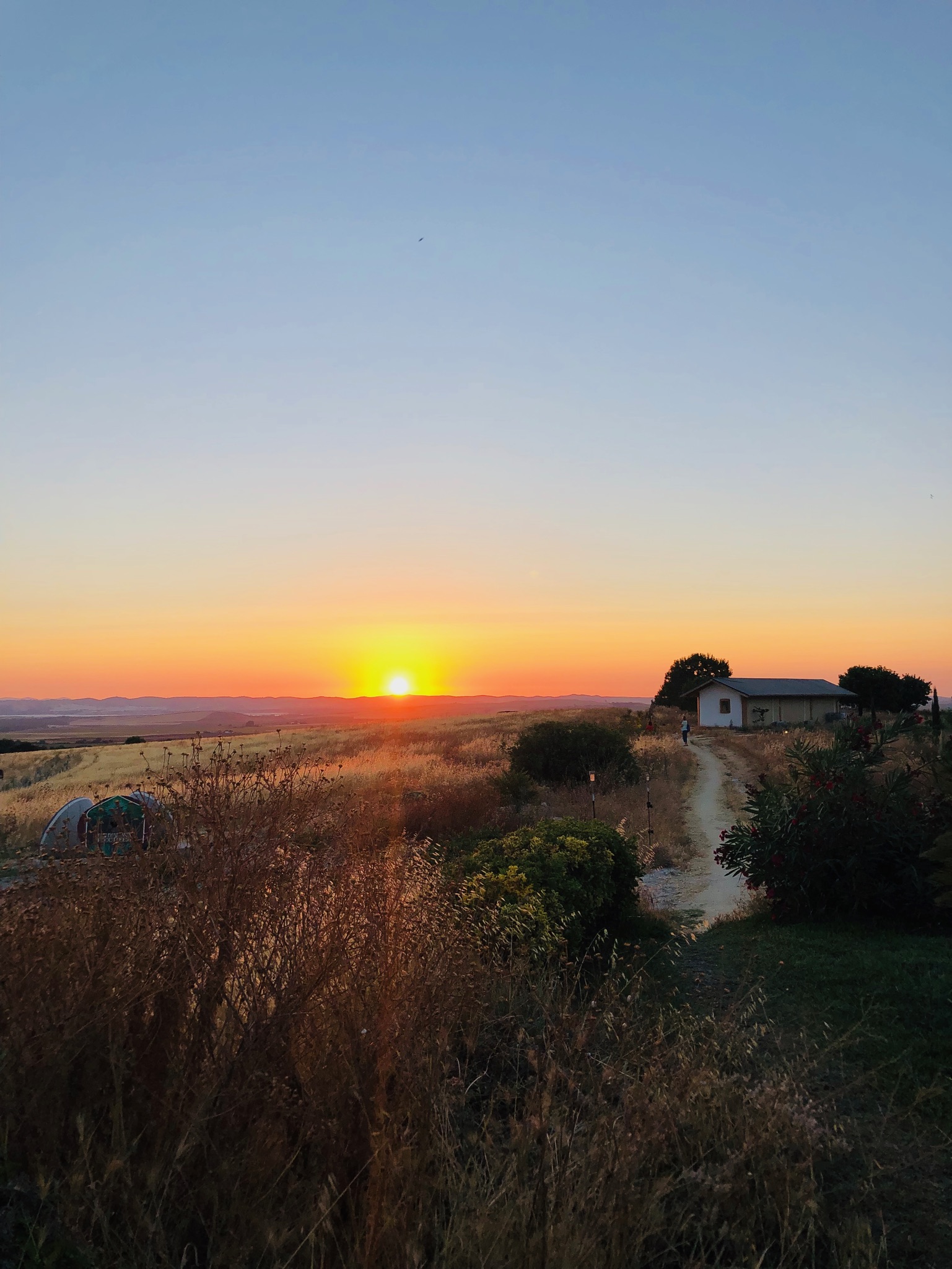
The rolling hills of Suryalila will both “wow” you and make you feel incredibly at peace.

The Energy of Suryalila Retreat Centre

One can sense an unmistakable positive and mystical energy at Suryalila, which I believe stems from its location. Set in a large open valley in the foothills of the Sierra de Grazelema, the retreat offers views of a majestic mountain range peeking out on the horizon, and every direction holds awe-inspiring surprises—rolling hills, fields of sunflowers as you’ve never seen, farmhouses, and even an abandoned monastery. Moreover, its 45 acres of land hold a working olive farm with 350 olive trees and organic vegetables, fruits, chickens, horses, goats, sheep, dogs, and cats.

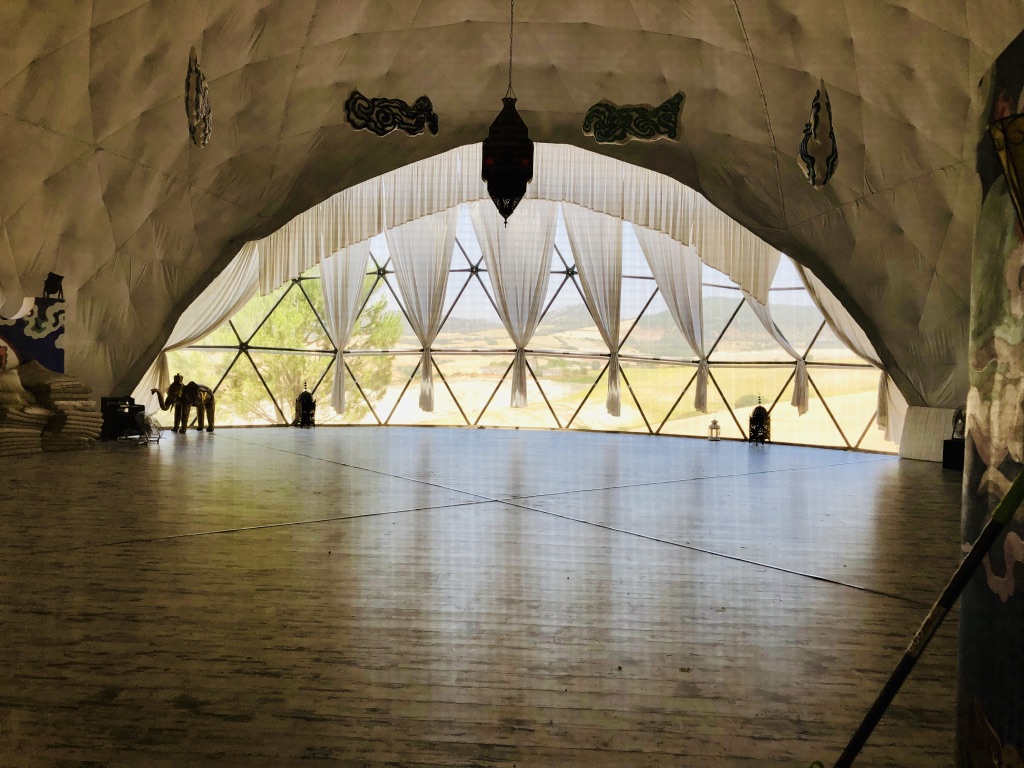
Not sure how to take in all of the views? Start with the property’s yoga halls. There are three, and each provides a unique place to enhance your practice and achieve inner peace. The biggest is the majestic Om Dome, which was the realization of a dream years in the making and is what Yoga Journal called  “the most magnificent yoga hall in Europe.” The dome’s massive bay window offers views of beautiful rolling hills and an abandoned convent while you take in the special energy of the dome. Two other spaces allow for even more options for awe-inspiring yoga. The Moon Shala is a sustainable cobb (straw bale and mud building) organic structure located in the olive grove, offering its own stunning vistas. The Ganesha Yoga Shala is part of the retreat’s main house, with windows on both sides allowing plenty of light and fresh air.

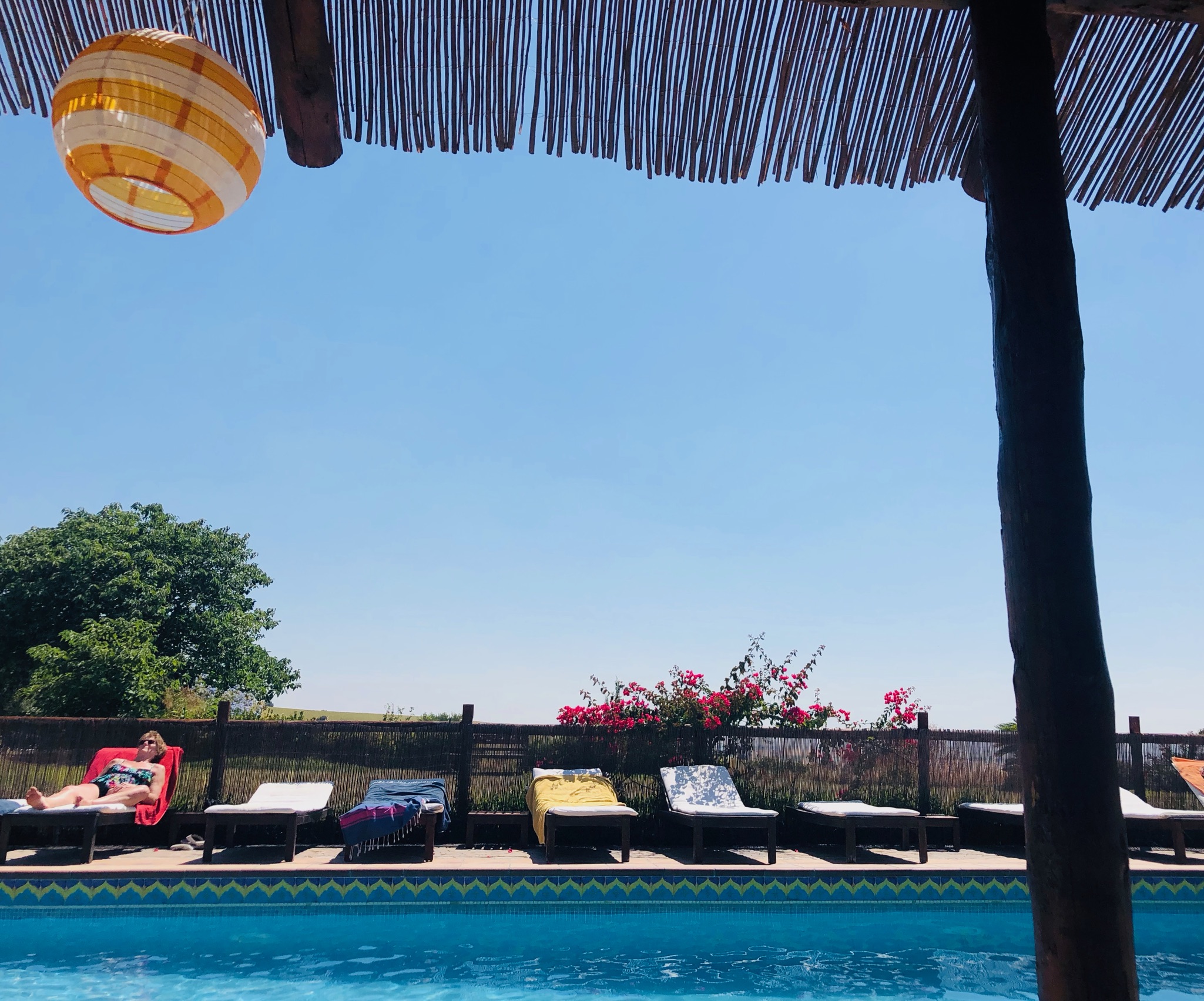
Not achieving a zen state is not a problem, even when you’re not practicing yoga. The property offers a multitude of places to relax and reflect. Whether you cool off in the saltwater eco pool, nap in the Moroccan Pavilion, or sip tea on one of the benches, chairs, or pagodas aesthetically and strategically placed throughout the property, you’re promised unparalleled views and serenity.

Every meal was as gorgeous and delicious as this.

While nourishing your spirit and soul, your body will also be cared for. The menu consists of perhaps the most nourishing and lovingly prepared vegan/vegetarian organic food I’ve ever had. To say it is beautifully presented could be the understatement of the century.  With ingredients sourced from the property, each meal is planned by a (very happy and friendly) group of chefs. There’s even a view of the site’s organic vegetable garden from the kitchen window.  

As you can see, the setting of Suryalila is quite simply perfect. But the story can’t end here because the setting can’t get all the credit for the magic of Suryalila.

The magic can be found and felt in every one of the people behind it. Bringing it back to The Alchemist, it’s clear that Vidya, the woman behind Suryalila, followed her personal legend to bring this beautiful place to life in 2011. (Her story is found here.) Her positive energy and unrelenting spirit created this magical escape that attracts like-minded yoga instructors, chefs, property managers, massage therapists, and support staff.  

Each of them is on course to discover their personal legends as well. They come from all over the world, each searching for something different but with the common spirit of making Suryalila (and the world) a better, brighter place. In doing so, they’ve created a vibe that shines as bright as the sunrises and sunsets gracing Suryalila daily. If you want to know (and feel) what I’m talking about, arrange a trip to Suryalila. You can participate in one of the many yoga retreats offered throughout the year, or simply stay in the centre’s yoga hotel, with accommodations to fit every budget. 

Whatever way you choose to experience Suryalila Retreat Centre, I promise you, it will be magical.

Love Picasso? Europe Is Where to Be in 2023

By Abbey Algiers

Breaking news! 2023 is the year of a man named Pablo Diego José Francisco de Paula Juan Nepomuceno María de los Remedios Cipriano de la Santísima Trinidad Martyr Patricio Clito Ruíz y Picasso? Confused? 

Let’s try it again.

2023 has been officially declared “The Year of Picasso” in honor of the 50th anniversary of the artist we know as Pablo Picasso.

Born in Malaga, Spain, on October 25, 1881, Pablo Picasso is best known for his contributions to modern art in the 20th century. Chances are, when you think of Picasso, cubism comes to mind. But the depth of Picasso’s work is far and wide—so wide, in fact, that it’s only fitting that a year is dedicated to showcasing this great master’s contributions to art and our world. That’s why Spain and France have teamed up to arrange exhibitions in Spain, France, and worldwide in order to celebrate Picasso and commemorate the 50th anniversary of his death (April 8, 1973). This is great news for Picasso lovers with plans to travel to Spain or France in 2023—there are plenty of opportunities to see his works. 

2023 Picasso Exhibitions Worldwide

To pay tribute to Picasso, Spain and France have joined forces to arrange more than 40 Picasso exhibitions in both countries—16 in Spain, with the other exhibitions in France and various cities throughout Europe and North America, offering plenty of opportunities around the globe to enjoy the masterpieces of Picasso.  

A list of worldwide Picasso Exhibitions in 2023 can be found at the Official Celebration of Picasso site.

A few upcoming exhibitions in Madrid include: 

Exhibitions and Education: The Year of Picasso Offers Something for Everyone

The Year of Picasso will go beyond exhibitions – in addition to showcasing Picasso’s works, the commemorative year will offer educational opportunities to showcase Picasso’s influence and relevance throughout the ages.  Those interested in deepening their knowledge of Picasso’s life and legacy can attend conferences and special events at museums and other venues in Madrid, Paris, Barcelona, Malaga, and other cities throughout Europe and North America.

A Celebration That’s Been Long in the Works

The 2023 Year of Picasso is a celebration that’s been a year and a half in the making. From the first event, “Picasso – El Greco” at the Kunst Museo Basel in Basel, Switzerland, to Madrid’s Picasso premiere, presented by Madrid’s Fundación MAPFRE this September, “Julio González, Pablo Picasso and the Dematerialization of Sculpture” to the last event ending in April 2024 at Paris’ Petit Palais, there are many opportunities to remember and appreciate the great Spanish artist Pablo Picasso.

A list of all events related to the “Year of Picasso” can be found here. Many of the exhibitions are being orchestrated through the Picasso Museum in Paris.  

Picasso Around the World… Beyond 2023

If you miss one of the 2023 exhibitions, there are plenty of opportunities to appreciate the work of Picasso at Picasso Museums throughout Europe:

Picasso Museum in Paris, France
Picasso Museum in Barcelona, Spain
Picasso Museum in Antibes, France
Picasso Museum in Malaga, Spain
Reina Sofia in Madrid, Spain
Rosengart Collection in Lucerne, Switzerland
Ludwig Museum in Cologne, Germany
National Picasso Museum in Vallauris, France

Picasso – Such a Master That a Year Wasn’t Long Enough for His Tribute

While 2023 marks the official Year of Picasso, Spain actually started the celebration in 2022, when Fundación MAPFRE in Madrid kicked off the celebration on September 23 with the exhibition “Julio González, Pablo Picasso and the Dematerialization of Sculpture” at the Fundación MAPFRE Recoletos Exhibition Hall. The exhibition was organized by Fundación MAPFRE with the collaboration of the Musée National Picasso-Paris, the Spanish National Commission for the Commemoration of the 50th Anniversary of the Death of Spanish Artist Pablo Picasso, and the González Administration. The exhibition highlighted the collaboration between Pablo Picasso and another Spanish artist, sculptor Julio González, and how they essentially began the iron sculpture movement, thus greatly influencing the artistic creation of the 1920s and early 1930s.   

Fundación MAPFRE’s Rocio Herrero, Assistant Director of Education and Audience, explained the importance of this collaboration between Picasso and Gonzalez. “Both artists were colleagues and friends who admired each other’s works. When they worked together, they were able to develop and mature even more as artists. Thanks to Gonzalez, Picasso learned the welding technique he would use in new iron sculptures. And, thanks to Picasso, González trusted in his own skills, and he made his most important sculptures. Both men came out ahead through their collaboration.” 

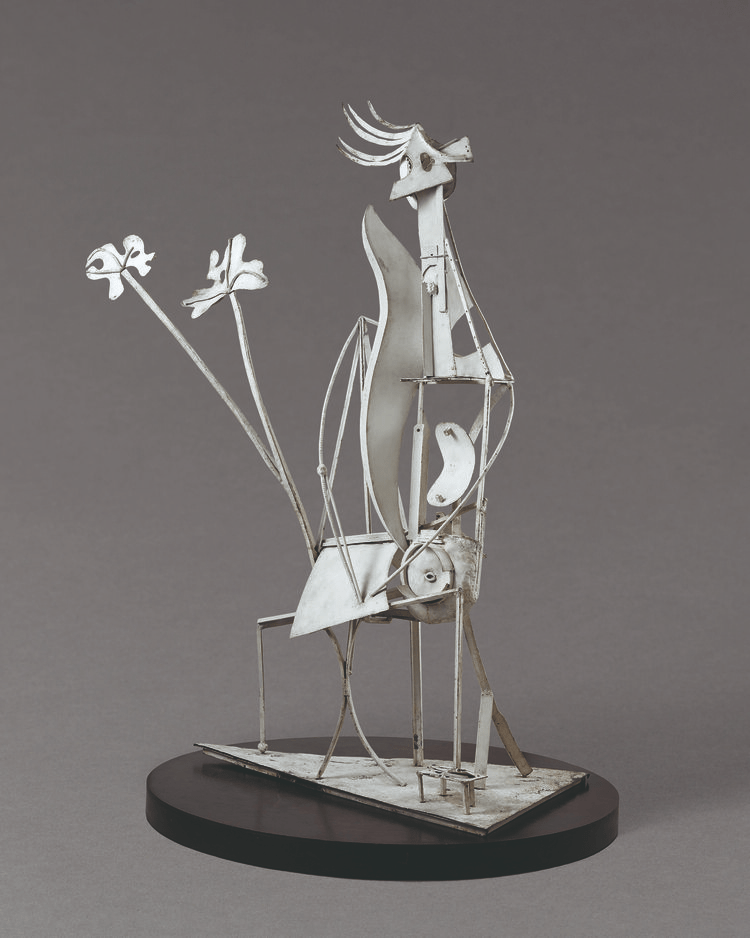
Pablo Picasso. Woman in the Garden, París, 1930. Soldered iron painted white, 206 × 117 × 85 cm. Musée National Picasso-Paris. Pablo Picasso Gift in Lieu, 1979. MP267, © Sucesión Pablo Picasso. VEGAP, Madrid, 2022. Foto © RMN-Grand Palais (Musée national Picasso-Paris) / Adrien Didierjean / Mathieu Rabeau


Inspiration Through Art

As Picasso said, “The meaning of life is to find your gift. The purpose of life is to give it away.” Perhaps through the gifts of Picasso’s work, we can all find the inspiration to go out into the world and share our own.

Salamanca Is Spain at its Most Majestic

Salamanca’s Old Town boasts one of the largest and most beautiful town squares in Spain. Its labyrinth of pedestrian streets is a stroller’s paradise.

Story and photos by Randy Mink

Two of my favorite things to do in Europe are: 1) communing with the past in historic city centers with rambling pedestrian zones and 2) watching the world go by while noshing away at an outdoor cafe. For me, life doesn’t get better than this.

In west-central Spain, the perfect place to pursue both passions is Salamanca, a medium-size city just 100 minutes away from Madrid by high-speed train.

Salamanca’s Plaza Mayor, one of the most magnificent town squares in Spain, is ringed with cafes serving up tapas, those delectable little bites craved by locals and tourists alike. Steps away, cobbled, car-free streets invite carefree wanderers to travel back centuries, as distant as the Middle Ages. Giving this outdoor museum a youthful vibe are students from around the world who attend the University of Salamanca, Spain’s oldest. It’s all there for a true European experience in this UNESCO World Heritage City.

Salamanca’s Plaza Mayor is one of the largest and most beautiful central squares in Spain. The Baroque architecture dates from the 1700s.

Salamanca is not exactly on the way to other big destinations—you have to seek it out. That gives the city a feeling of being undiscovered.

Tourist-friendly but not too crowded, the historic core is compact and manageable. The number of sights is not overwhelming, so there’s time to pause, reflect and loll about eating tapas on the Plaza or Calle Rua Mayor, the main pedestrian artery. Salamanca’s Old Town, to my mind, is Spain in a nutshell.

Salamanca’s Majestic Plaza Mayor

From your umbrella table on the Plaza Mayor, once a bullring and now criss-crossed by constant foot traffic, you can take in the sweeping expanse of Baroque architectural grandeur dating from the 1700s. Cement benches provide seating in the middle of the square, and three floors of stately, balconied apartments rise above the archways that rim its perimeter.

In the arcades, you’ll find not only cafes but restaurants, bakeries, ice cream shops and the tourist office as well. The flag-bedecked clock tower building, a common meeting point, houses the Town Hall. Stone medallions on the colonnades depict great Spanish writers, kings and queens, and explorers like Columbus and Cortes. (After years of controversy, the image of former dictator Francisco Franco was taken down in 2017.) Sort of a community living room, the Plaza Mayor is the heart and soul of Salamanca.

Tapa Tasting in Salamanca’s Old Town

On a bright spring day, I surveyed the splendor from my perch at Las Torres, nibbling on items from the tapas menu at the venerable cafe/bar, a Plaza Mayor fixture since 1927. My favorite was hornazo, a meat lover’s dream. This Salamanca province specialty consists of layers of pork chorizo, pork loin and ham wrapped in lattice-crusted yellow dough, and sometimes includes bits of hard-boiled egg. I also indulged in fried eggplant slices drizzled with honey (crujiente de berenjena-miel in Spanish), more of an Andalusia specialty (from that region’s historical North African influences).

Hornazo,” a specialty of Salamanca province, consists of layers of pork chorizo, pork loin and ham wrapped in lattice-crusted yellow dough. It is served as a tapa at cafes and restaurants, and sold at bakeries and food shops in larger quantities.

During my two days in Salamanca, I had other memorable tapas:

  • At the Plaza’s Cafeteria Los Escudos, I chose two classics—Iberian cured ham (jamon iberico), thinly sliced on the spot, and a wedge of Spanish omelette (tortilla de patatas), a simple egg-and-potato dish.
  • On a visit to Los Escudos the next day, I tried ensaladilla rusa—called paloma in Salamanca—a mayonnaise-y tapa with potato, peas and tiny bits of tuna, carrot, olive and hard-boiled egg, served with a wavy, shell-like crisp.
  • On Calle Rua Mayor, another prime spot for people-watching, I stopped at Cuatro Gatos for revuelto de farinato, a pretty orange-yellow concoction made of farinato (pork fat mixed with bread crumbs and paprika) and fried egg. Flavored with onion, salt, anise seed and other seasonings, farinato is called the “poor man’s chorizo.”
  • At several places, I ordered ham, chicken or Roquefort cheese croquettes. A favorite of mine, the croquette (croqueta) is a diminutive, deep-fried log of mush filled with the hot, creamy goodness of bechamel sauce (olive oil, butter, flour, milk). Yum.
  • For dinner at Lilicook Gastropub, I started with a plate of patatas bravas from the menu’s tapas section. The hefty portion of fried potatoes in spicy tomato/mayonnaise sauce could have been my whole meal.

(left) Among the many tapa choices in Salamanca, Spain is “revuelto de farinato,” a mixture of farinato (pork fat with bread crumbs and paprika) and fried egg. (center) Wedges of Spanish omelette, or “tortilla de patatas,” are popular with tapa lovers throughout Spain. This beauty is a creation of Cafeteria Los Escudos, a cafe on Salamanca’s Plaza Mayor. (right) Iberian cured ham (“jamon iberico”), a favorite tapa in Spain, is thinly sliced on the spot at Cafeteria Los Escudos, a cafe on Salamanca’s Plaza Mayor.

Seeing Salamanca From on High

In Europe, whenever the chance arises, I climb to the top of a major landmark—for bird’s-eye views and just the challenge and bragging rights of making it to the summit. Salamanca’s Old Town presented me opportunities at two buildings a short walk from the Plaza Mayor.

At La Clerecia Church, I ascended the wooden Scala Coeli, or “Stairway of Heaven,” on a 200-step trek to the passageway connecting its two bell towers. Setting my sights even higher, I then took the spiral, bell ringer’s stairwell for a look at the big iron bells. Besides enjoying panoramas of the city’s ancient churches, convents and palaces, I spied migratory storks nesting on the dome of the colossal Baroque church, which began life in 1617 as a training school for Jesuit missionaries and now is home to Pontificia University, a private Roman Catholic school.

I also tackled the 328-foot-tall bell tower—and tried my hand at bell ringing—at Salamanca’s somewhat quirky double-cathedral complex. Built centuries apart, the Old Cathedral and New Cathedral are actually attached—they share buttresses. In fact, you can’t visit the 13th century Romanesque church (Cathedral of Santa Maria) without going through the Cathedral of La Asuncion de la Virgen, or New Cathedral, which isn’t new at all—it was built hundreds of years ago in the Gothic, Renaissance and Baroque styles. The bell tower is the highest historic tower in Spain after La Giralda in Seville.

From a viewing platform, visitors can admire the Gothic-style nave of Salamanca’s New Cathedral.

For those who don’t make it to the bell room at the top, lower-level terraces offer fine views of the town and the cathedrals’ exteriors. A cell phone tour of the interiors, a cool activity on a hot day, highlights sumptuous wood carvings, murals and a massive organ.

The University Plays a Big Role in Salamanca

For its first 200 years, the University of Salamanca was in the Old Cathedral. Founded in 1218 by King Alfonso IX of Leon, it ranks as one of the oldest universities in Europe, and, though its prestige peaked in the 16th century, clearly enhances the city’s image.

On a walk through the Old Town’s student quarter, it’s not uncommon to hear English spoken, as many American study-abroad programs take place at the university, which includes both historic buildings—some from the 15th century—and modern ones. Besides Spanish language courses, foreigners take classes in Spanish culture and literature.

(left and center) Cafes in the student quarter give Old Town Salamanca a youthful vibe. The University of Salamanca, Spain’s oldest, dates back to 1218. (right) The University of Salamanca, the oldest university in Spain, is among the many points of interest in Old Town, a warren of pedestrianized streets filled with examples of architectural splendor.

Intricate stone carvings on the facade of the main university building (Escuelas Mayores, or Upper Schools) provide the focal point for tourists exploring the hallowed streets of academia. The decorative style of ornamentation, popular during the late Spanish Renaissance, is called Plateresque because the filigree-like carvings resemble fine silver jewelry, plata being the Spanish word for “silver.” At any time of day, you’ll see people craning their necks trying to spot the “hidden” frog sitting on a human skull. (Vendors sell croaking toy frogs, and souvenir stores are full of frog trinkets.)

Frescoes and intricate stone carvings impress visitors touring Salamanca’s 13th-century Old Cathedral, a lovingly preserved survivor of the Middle Ages.

Also gracing the splendid facade are carvings of King Ferdinand and Queen Isabella, who financed the university; their grandson, Hapsburg Emperor Charles V; and the pope at the time, plus mythical heroes, religious scenes and coats of arms. (This type of tapestry in sandstone, an Arabic influence, also is found adorning the New Cathedral, St. Stephen’s Monastery and other Old Town buildings from the period.) For an admission fee, tourists can go inside the academic shrine and see the original classrooms and lecture halls, now museum exhibits.

Savoring Salamanca’s Old World Splendor and its Golden Glow

The sandstone used in Old Town’s buildings, quarried in nearby Villamayor, takes on a golden cast as it ages, giving Salamanca a special patina and the nickname Golden City. New buildings constructed with the same stone exhibit a lighter shade.

The best place for photographing the Old World splendor from a distance is the Roman Bridge, a pedestrian span over the River Tormes. Located just outside the city walls, this 1st century relic comprises 26 arches, 15 of them originals. Standing by the bridge is the oldest monument in Salamanca—a weathered stone bull created by pre-Roman settlers about 2,300 years ago. From the bridge you see that the New Cathedral is much bigger than the Old Cathedral. A riverfront park has benches, bike paths and boats for rent.

The Roman Bridge, a walkway spanning the River Tormes, affords fine views dominated by the church towers and domes of Salamanca’s Old Town.

Salamanca Invites Strolling Day and Night

Salamanca’s Old Town doesn’t roll up the sidewalks after dark. Floodlit church towers, domes and facades cast a romantic spell, and ornate iron lampposts illuminate the stone streets. Strolling around this enchanting labyrinth one night around 11:30, I witnessed people thronging restaurants and cafes, lining up at ice cream stands, and sitting on park benches and church steps as they watched the crowds parade by. (I’ll never get used to the Spanish penchant for late-night dinners.) There were even families out with young kids, and a few souvenir stores were open as midnight approached. I loved the ambience—lively but relaxed.

Why was I pounding the pavement well past my bedtime? Having been seduced by the Golden City, I just wanted to soak up every last drop of magic before I had to leave by train the next morning for Madrid and my flight home to Chicago. Salamanca is truly a treasure to savor.

Floodlit buildings cast a romantic spell on Salamanca’s Old Town, a lively district that stays open late.

Le Petit Chef Dishes Up Big Fun

Story and photos by Alison Ramsey

A simple white charger plate and smooth white table turn into a texture-rich artistic musical experience, culinary history lesson, and elaborate feast right before your eyes! Fairmont Chicago’s Le Petit Chef: An Immersive Dining Experience features a 2.5-inch animated French character created by artists at Skullmapping. Rising from the center of your plate via groundbreaking 3D projection mapping that requires no special eyeglasses or visors, Le Petit Chef illustrates through colorful storytelling the history of ingredients used in the meal, the joy of being a chef, and the art of creative plating inspired by famous painters. It’s a dining experience like no other, and Fairmont Chicago, in partnership with TableMation™, opened this exclusive gastronomical adventure to the public on January 19, 2023. The lobby level Cuvée Room at Fairmont Chicago houses this 90-minute themed dinner with curated wine pairings.

Projected from the ceiling down to the tables and plates, 3D scenes and designs bring the dining area to life, illustrating gardens, sculpted fountains, raging battles, as well as busy cooktops boiling potatoes and searing meat. Between humorous anecdotes, musical numbers featuring dancing vegetables, lessons about ingredient composition, and tips on flavor combinations, guests are served a beautifully prepared, delectable 5-course meal featuring the elements showcased.

Each dish is rich with taste, texture, and color, but not heavy or saturated with creams and dressings. The delicious natural flavors of fresh produce and meat are perfectly seasoned to surprise and satisfy. Those with allergies or special dietary needs and preferences are graciously accommodated, making the menu safe for all who want to partake.  

“I think all kinds of eaters will find something to enjoy in this experience,” said diner Marc Berry after his meal with Le Petit Chef. “Even non-foodies can enjoy each interesting yet accessible course, and the joy of the 3D segments accompanying them.”

Fairmont Chicago General Manager, Clay Spencer, said, “We are thrilled to bring this unique dining experience to our guests, the city of Chicago, and the larger Midwest region. … We’re delighted for diners to experience this culinary adventure through animation. It is a dinner like no other.”

Pricing per person begins at $155 (exclusive of tax and gratuities), with an optional French wine pairing of $42. The first seating starts at 6:00 p.m. and the second at 8:00 p.m. every Thursday through Saturday, through the end of 2023.  For more information about Fairmont Chicago and to book your special dining experience at Le Petit Chef, please visit fairmontchicago.com.

For Valentine’s Day, treat your sweetheart to Le Petit Chef’s fun and fancy French meal, or consider these other Chicago area specials:

Love is in the air! Skydeck Chicago’s “Pie in the Sky” VIP Valentine’s Day Dinner offers a three-course meal that includes a delicious Giordano’s heart-shaped deep-dish pizza, salad, and dessert, served with a stunning view of the city. This 10 p.m. after-hours experience is intimate, with only seven tables per evening, maximum, and it takes place after Skydeck Chicago is closed to the public. Before ascending to the 103rd floor to step out on the glass-bottomed The Ledge, explore the ground-level museum and exhibits featuring Chicago’s diverse neighborhoods and architecture. A small-scale Bean (Cloud Gate), Second City stage setup, giant hot dog and deep-dish pizza, full-scale “L” train car, replica Chicago Picasso – there are photo opportunities galore! Book your Pie in the Sky table here for Valentine’s Day, February 14, 2023, or celebrate early by booking for Thursday, February 10, or Friday, February 11.

Photo courtesy of Skydeck Chicago

The “Love, Alma” package at stylish Hotel Zachary at Gallagher Way is a tribute to architect Zachary Taylor Davis’ true love and muse, Alma Davis. This romantic overnight includes a $50 food and beverage credit at The Bar, upgraded Wrigley Field ballpark view accommodations, and an extended 1 p.m. late checkout. Book your reservation here.

Photo courtesy of Hotel Zachary

Spread the love on Friday, February 10, from 6:00 p.m. to 10:00 p.m. at Hotel Zachary’s The Bar “Galentine’s Day Social Hour,” where you can craft a custom flower bouquet, enjoy live R&B DJ entertainment, snack on light bites and desserts, savor wine or a build-your-own-spritz concoction, and observe the on-site creation of an original painting by an artist. This event is hosted by Chicago influencer @FoodiexFancy in partnership with Bombay. Guests in attendance are encouraged to sign cards to be donated to a local Chicago children’s hospital. Purchase your Galentine’s Day Social Hour passes here.

Photo courtesy of Hotel Zachary

Museum of Illusions (MOI), in the heart of downtown Chicago, is a unique and interactive date spot to explore with your special someone. MOI offers a 2-for-1 Valentine’s Day ticket special for those wanting a mind-bending experience at a fraction of the cost. Reserve your February 14 tickets here, and the discount will automatically apply at checkout on Adult tickets.     

Photo courtesy of Museum of Illusions

Clixo Fidgety Fun Inspires Creativity During Travel and Beyond

By Alison Ramsey

A unique toy for kids and adults alike, the easy-to-pack Clixo magnetic play system encourages freeform building and exploration—no rules or instructions required! Tuck a set of these flat, flexible building pieces into your day bag and pull them out to see your fussy or feisty traveling companions turn into creative geniuses.

Photos courtesy of Clixo.

Visored motorcycle helmet, floppy beagle ears, a colorful handbag—within five minutes of opening a package of Clixo lightweight and flexible magnetic shapes, my kids’ creativity using these colorful pieces resulted in a plethora of fun creations. This award-winning building toy from Toyish Labs is packed with endless possibilities for playtime on the go or at home. The durable and compact flexible pieces can be stored flat and easily cleaned and sanitized. Secure magnets are safely fastened to key edges, allowing toy enthusiasts of all ages to snap together pieces and discover limitless creative possibilities. Creations can be stuck to the fridge, worn as accessories or, as with the Grip and Stick Pack, secured via suction cups to a window or flat surface—great for road trips and sticking to the interior of car windows! Some packages include special units that allow attached pieces to spin or roll on wheels, encouraging construction of propellers, vehicles, and other movement-inspired shapes.

Clixo needs no instructions or preamble. My kids were initially confused about what they were opening, but within several moments were excitedly clicking and snapping together pieces with no assistance or explanation needed. Open-ended, screen-free, hands-on play is Clixo’s strength, offering opportunities to create fun 3D structures from 2D pieces. These unique building sets were a finalist for the 2021 Toy of the Year Award, won the Top Toy of the Year Award from the 2022 Creative Child Awards, and have won the Oppenheim Toy Portfolio Gold Seal Best Toy Award and the Tillywig Toy Awards Best Creative Fun Award.

This summer, Clixo partnered with the Museum of Ice Cream (MOIC) in Chicago, Austin, and New York City to launch an interactive experience that allows guests to build colorful 3D creations on magnetic building walls. A special MOIC Clixo pack is sold on-location at these three venues, and features strawberry- and cherry-colored shapes. If your travels bring you to these cities, stop into the MOIC and add some creative constructions to the wall.

Photos courtesy of Clixo.

Assaf Eshet, CEO and Founder of Toyish Labs and creator of Clixo said, “We’re very excited to be working with Museum of Ice Cream on this collaboration and sharing Clixo with MOIC visitors. Museum of Ice Cream provides a fun and engaging experience for all kids and their parents. At Clixo, we share the same values of bringing play and creativity to kids and kids at heart.”

Photo courtesy of Clixo.

For more information or to purchase Clixo building sets, please visit www.clixo.com. The Black Friday Super Sale is currently offering up to 40% off sitewide, so take advantage of the sale prices for these colorful stocking stuffers or Christmas gifts while you can! May your holidays and holiday travel be peaceful, joy-filled, and inspiring.