Kaitlyn and Kellen get “sized up” by this big Swiss Air DC-3.
Photos by Amy Luetgert
Wow! Cool! That’s what visitors, and especially children, say after a few minutes in this 21,500-sq-foot museum in Lucerne, located right on Lake Lucerne.
With as many as 850,000 visitors a year, the museum is Switzerland’s most popular attraction of its type.
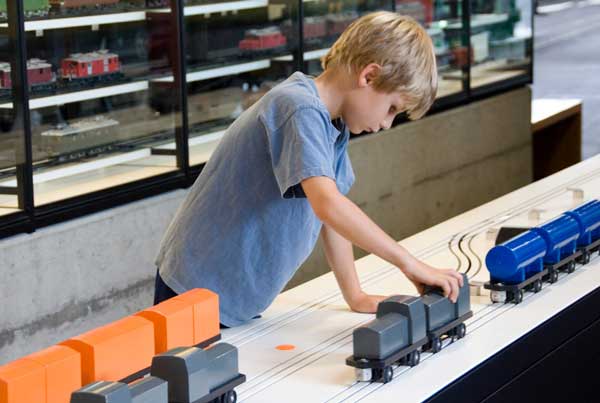
From space capsules to trains (big ones, as well as miniature ones that run through the grounds), to airplanes and helicopters and automobiles, from the latest media technologies and interactive hands-on exhibits to a cycle park, the Swiss Transport Museum displays more than 3,000 objects, plenty to keep two kids busy for a while.
Kaitlyn Luetgert, 9, and her brother Kellen, 6, from the Chicagoland area, spent an afternoon at the Museum with their parents, and their mother Amy Luetgert filed this photo report of their experiences.
The Luetgert kids “sign on” as airline pilots and flight attendants.Kellen says, “I could spend a whole day here!”“No problem, let’s walk under this steam engine,” urges Kellen.With a facade like this, anything is possible inside the Museum.
Founded in 1710, Meissen Porcelain is one of the world’s most successful luxury brands. It stands for the timeless connection between past and present, classic design and hand-made quality. This year Germany is celebrating the 300th anniversary of Meissen Porcelain with more than 40 special events and exhibitions.
Some of this year’s highlights included these exhibitions: Triumph of the Blue Swords at the Japanisches Palais in Dresden, focusing on the first 100 years of Meissen, showing masterpieces that are not usually displayed in public; All Nations are Welcome in the nearby town and modern factory of Meissen (January 23 – December 31); Philosopher’s Stone, a collection in the original workshop in Castle Albrechtsburg also in Meissen (May 8 – October 31); and The Fascination of Fragility with 500 pieces from Dresden’s state collection in the Ephraim Palace in Berlin.
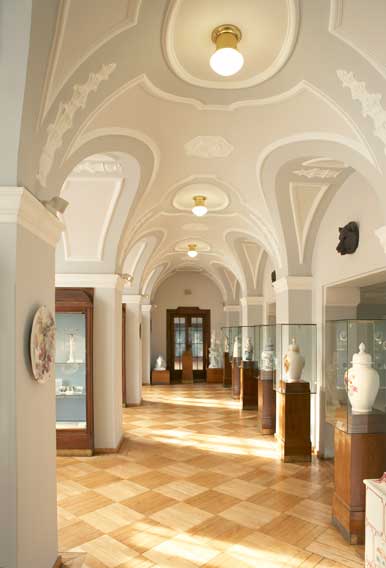
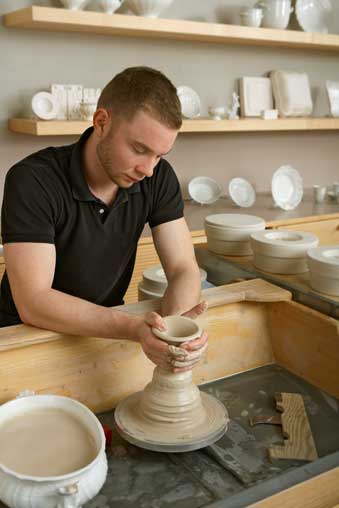
Porcelain in Meissen and Dresden is not only available to the public during this jubilee year. The Saxon nobelman Augustus the Strong’s permanent collection is housed in Dresden’s Zwinger Museum in the rooms beautifully restored by the New York designer Peter Marino. The modern production center, its connected museum in Meissen and the original factory in the Albrechtsburg, are only 45 minutes outside of Dresden and accessible by fast train to visitors throughout the year. You can dine on Meissen porcelain, participate in workshops, watch the production and, of course, buy the products.
Porcelain manufacturing and collection is a major attraction throughout Germany, with special routes, museums and production centers. Two porcelain routes link places of interest with the manufacturing of porcelain: Along the 340-mile-long route in the north-east of Bavaria visitors can discover famous factories, the European Industrial Museum of Porcelain, the Rosenthal Museum and the European Museum of Technical Ceramics. www.porzellanstrasse.de
A second themed route in Thuringia features factories where porcelain is made and decorated and where visitors can visit factory outlets, demonstration workshops and several museums. www.thueringerporzellanstrasse.de
Another highly acclaimed porcelain factory is based in Munich in the beautiful Nymphenburg Palace. For 260 years the Nymphenburg production center produced dinner services and figurines for the Bavarian kings. At the adjacent museum more than 1,000 pieces of Nymphenburg porcelain from different periods are exhibited. www.nymphenburg.com/us/nymphenburg
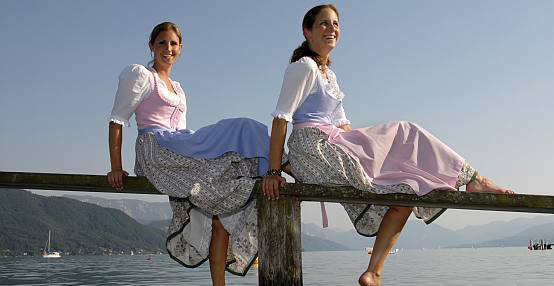
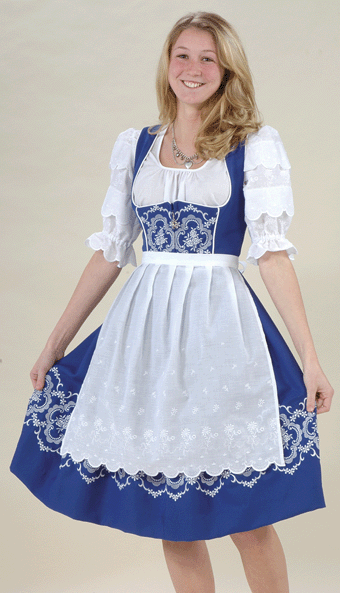
What is a Dirndl? If you have seen the movie “The Sound of Music,” you already know the basic elements that make up a Dirndl: skirt, bodice, apron and blouse. Simple, right? Far from it!
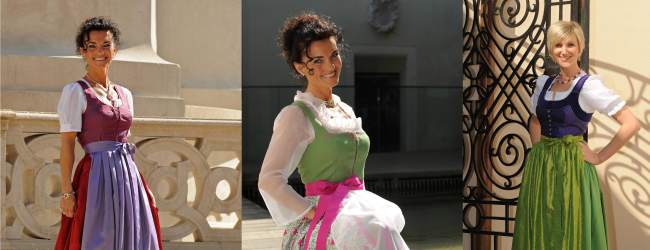
There is a veritable science to Dirndl cuts, fabric patterns, colors and embroidery.The main elements that make up a Dirndl are the wide skirt attached to a “Leiberl,” or fitted bodice, an apron (often with a hidden pocket) and a short Dirndl blouse.
The skirt usually starts at the waist or a little lower. You can choose between various lengths, depending on current fashion trends. The bodice used to be a separate item, but since the 1930s is sewn to the skirt. It comes in many different styles: with a high or low, round or square neckline, it is fastened with buttons, hooks, or ribbons.
An important element is the Dirndl blouse. It is generally very short (ends above the waist), with long, short or puffed sleeves. It can have many different necklines and is usually made of white cotton or linen. The Dirndl blouse accentuates the style of your Dirndl: Choose between delicately hand-embroidered pieces, blouses with extravagant ruffles and lace, or simple ones with straight sleeves.
Finally, there is the apron. Formerly worn to protect the dress underneath, it is now a purely decorative item. There are aprons for every-day wear and aprons for festive occasions which are usually of a more elegant fabric than the simple linen or cotton ones. Before you tie the knot—be sure to check on which side to place it—otherwise you might unwittingly send out the wrong message.
Different combinations of these elements make up the traditional Dirndl. There are different Dirndl styles for different occasions, even Dirndl styles that tell which region in Austria the wearer is from. With the recent “Dirndl Renaissance,” there are countless downright “unorthodox” styles that experiment with different fabrics, cross cultural references and punk elements.
If all these options seem daunting at first, remember: the most important thing is to have fun with the many different colors and patterns, and to choose a Dirndl that fits your personality.
FROM PEASANT GARB TO HIGH FASHION The Dirndl has evolved from its humble origins centuries past as the work garb of peasants to a modern-day fashion superstar. With its feminine silhouette, its versatility and simple elegance, the Dirndl is a fashion “evergreen.” But where does it come from, and how did it get so popular?
Allegedly, the short Dirndl blouse we know today was originally a long shirt. Way back when, the shirt was actually one of the “basics” in the contemporary wardrobe of the rural population. Women wore a bodice, or even just a tightly wound cloth as an undergarment for warmth and support. Aprons were tied around the shirt to protect it from stains and dust. When people came home from the fields, the apron was simply switched to a different one for house work, or one for festive occasions.
Eventually, for reasons of practicality and perhaps vanity, the shirt was sometimes worn underneath the bodice and so the Dirndl was born. For a long time it was the garb of women in the countryside, and different styles developed for different regions.
Finally, in the middle of the 19th century, Emperor Franz Joseph and his court used to vacation in the Salzburg Lake district. The emperor took to wearing Lederhosen during his hunting exhibitions there, and a fashion trend was born. Suddenly, the Dirndl was all the rage and the Viennese aristocracy wore Dirndls and Lederhosen during their stay in the country.
In the 1920s, the founders of the Salzburg Festival contributed to the popularity of the Dirndl by making it acceptable to wear during performances and society events. The Salzburger Dirndl manufacturer Lanz and the world-wide success of the operetta “Weisses Roessl” made the Dirndl an international hit.
Since then the Dirndl has conquered the international fashion world. In the last 10-15 years, the Dirndl and traditional costumes in general have experienced another huge surge in popularity, even outside of the regions in Austria where it has been an everyday item for generations.
WHERE TO BUY A DIRNDL? With so many different styles to choose from, where do you start your own quest for the perfect Dirndl? Where to find authentic, traditional styles, and which Dirndl designers are known for fun and tasteful modern versions?
The best place to buy your Dirndl, of course, is at the “source.” The “real” Maria von Trapp used to mainly wear Dirndls and ordered new outfits with her favorite Dirndl tailor whenever she went back to her native Salzburg. Today, with Dirndls and Lederhosen in high demand, there are enough Dirndl manufacturers and stores to make your head spin.
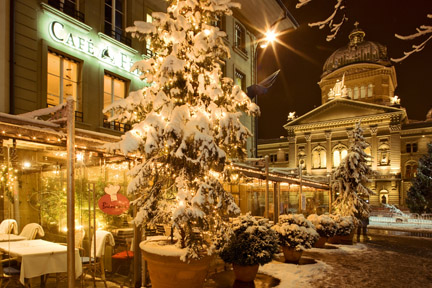
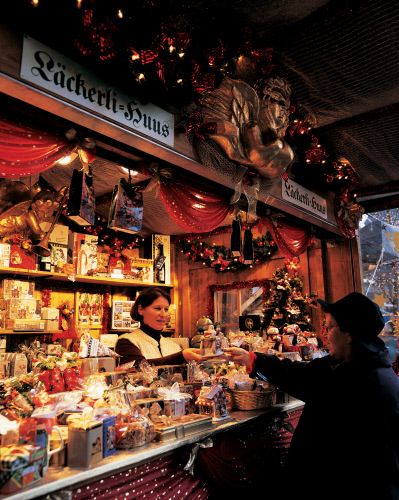
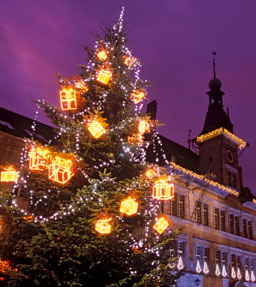
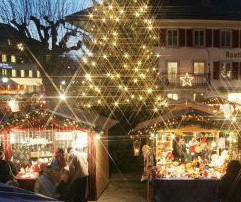
Christmas is around the corner. In Switzerland, Christmas markets and events are as much a part of the holiday tradition as chocolates, cookie baking and family gatherings. Here is a sampling of festivities that vary in scope from the month-long markets in St. Gallen to weekend events in villages like Bad Ragaz, yet all share the basics: Christmas ornaments, gifts, local specialties, plenty of traditional Swiss atmosphere and snow.
Handmade products of Switzerland and local treats bring visitors from around the globe.Swiss Christmas Markets combine holiday festivities and historic locations.Switzerland sparkles at Christmas.
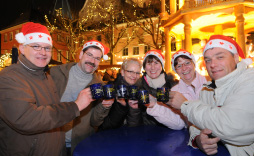
Every year the magic of German Christmas Markets enchants millions of visitors. Crafts, culinary specialties like Gluhwein (mulled wine), baked apples and gingerbread biscuits (Lebkuchen) contribute to the traditional atmosphere.
Frankfurt (until Dec 22) Situated in the Roemerberg marketplace with St. Paul’s church as a backdrop, the Frankfurt Christmas Market is regarded as one of Germany’s most important. Organized events include the tower concert on the balcony of the Nikolai church, the Christmas Market of Frankfurt’s artists and the Frankfurt city peal of bells. Children can ride on multiple carousels, marvel at the gigantic Christmas tree and meet St. Nicholas on December 6. Guided tours of Frankfurt are also available. www.frankfurt.de
Mainz Christmas Market
Mainz (until Dec 23) The Mainz Christmas Market is set in the historic market square against the impressive backdrop of the 1,000-year-old cathedral of St. Martins. Highlights of the Christmas Market include the traditional fairy-tale performance in the city theater, the popular print shop of the Gutenberg museum and the 36-foot-high Christmas pyramid with its numerous figures and lights. Also, there is a wide choice of family programs at the Liebfrauenplatz. www.mainz.de
Wiesbaden (through Dec 23) “Twinkling Star Market” is the name of the Wiesbaden Christmas Market. Visitors enter the old castle square through four gates decorated with stars. Not to miss is the crèche with its life-sized wooden figures representing the Christmas story. www.wiesbaden.de/en
Wiesbaden Christmas Market
Aschaffenburg (through Dec 22) The Christmas Market is situated against the picturesque backdrop of the castle, with the Franconian Christmas crèche as its center. Also, during this festive season various other charming Christmas Markets can be found in the Aschaffenburg region. www.aschaffenburg.eu
Aschaffenburg Christmas Market
Bad Homburg (All advent weekends) One of the most beautiful Christmas markets in Germany is the romantic Christmas Market Bad Homburg at the Castle “Landgrafenschloss,” which is surrounded by an historical setting. Highlights include the traditional fairy-tale performances on the Kurtheater Bad Homburg. www.bad-homburg.de (German only)
Stuttgart Christmas Market
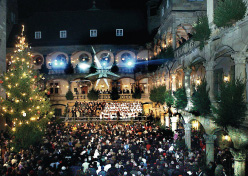
Stuttgart (through Dec 23) With its more than 280 decorated stands, is one of the oldest and largest Christmas markets in Europe. The Stuttgart Christmas Market is traditionally opened with a ceremonial concert in the inner courtyard of the Old Palace (Altes Schloss). Around the Altes Schloss, Schillerplatz, Kirchstrasse, Marktplatz and Hirschstrasse, small decorated wooden houses offer a range of Christmas items and gift ideas including Christmas tree decorations, crib figures, toys, woodcuts, puppets, lambskin shoes and candles. Culinary delights include hot chestnuts, German lebkuchen (gingerbread), roasted almonds, grilled sausages and mulled wine.www.stuttgart-tourist.de
Bremen Christmas Market
Bremen, on the River Weser close to the northern coast, puts a maritime twist on the classic Christmas market when the promenade along the river is transformed into Schlachte magic, a festive market offering historical, seasonal and maritime attractions. Another market with more than 160 beautifully decorated Christmas stalls are clustered in front of Bremen’s Church of Our Lady and the Roland Statue in the historical market square. www.bremen-tourism.de
Ruedesheim (through Dec 21) The Christmas market in Ruedesheim on the Rhine brings a festive feel to the romantic old town and its popular Drosselgasse Lane. More than 120 stands from 12 nations offer Christmas customs and traditions from around the world. Europe’s biggest Nativity scene can also be found in the market square. www.ruedesheim.de