Cruising Through the Heart of Europe

In comfort and style aboard the Scenic Opal

By Randy Mink

I can’t think of a more relaxing way of seeing Europe than cruising in luxury along its great rivers. Unlike a multi-country bus tour or train journey, you unpack just once, as your ship is home sweet home for the week. And as these sleek white vessels often dock in the center of town, the tourist highlights lie just steps from the gangway.

My most recent magic-carpet ride to adventure was “Charming Castles & Vineyards of the Rhine and Moselle,” a seven-night trip filled with shore excursions in southwestern Germany, northeastern France and the Grand Duchy of Luxembourg. Delivering us to these enchanting places was the 163-passenger Scenic Opal, one of 12 ships in the Europe fleet of Scenic, an Australian-owned cruise line geared to English-speaking guests.

The 163-passenger Scenic Opal, shown here on the Moselle River in Bernkastel, Germany, is one of Scenic’s 12 luxury river ships in Europe. (Randy Mink Photo)

The Scenic Difference

At first glance, most river ships in Europe seem to offer a similar product, but Scenic stands out in two ways. First, guests have a little more elbow room, as the vessels offer a higher-than-usual passenger-to-space ratio. Whereas many ships of the same size take on 180 or more passengers, Scenic’s four-deck floating hotels carry 163 guests maximum. (Our sailing counted 129 passengers, including 53 Americans, 27 Canadians, 37 British, nine Australians and a smattering of other nationalities.) The Scenic Opal and sister ships Scenic Amber and Scenic Jasper were built in 2015/2016 and refurbished in 2019.

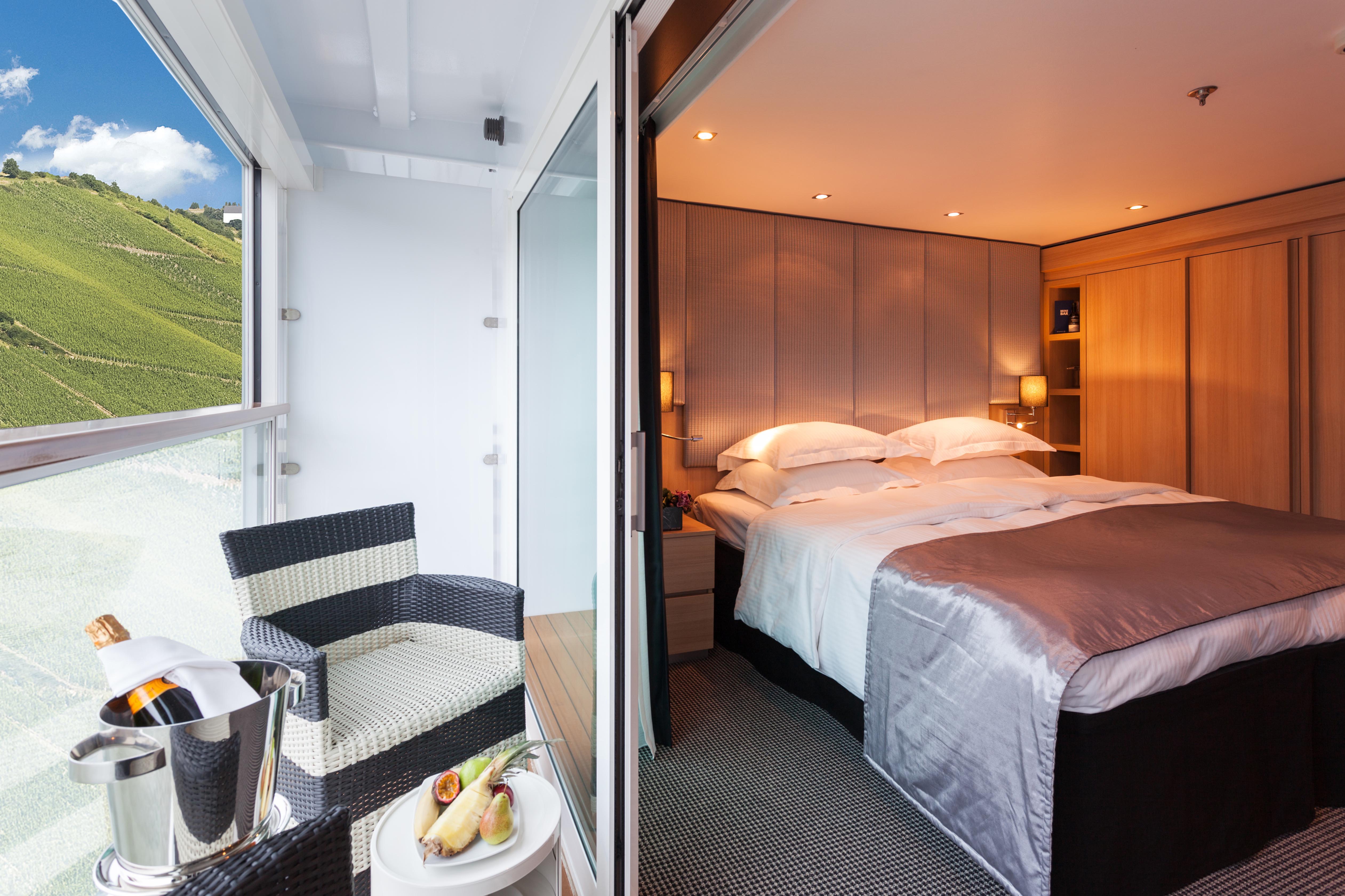
Floor-to-ceiling windows in both public areas and most staterooms, moreover, give the feeling of added space. All cabins on the Sapphire and Diamond (second and third) decks feature a full-length, enclosed balcony with two padded wicker chairs, a table and a wide horizontal window that glides up or down at the push of a button. A curtain and a glass door can be used to close off the bedroom from the peaceful nook, called a Scenic Sun Lounge. For this sense of extra space, Scenic ships are marketed as “Space-Ships” (not because they’re futuristic-looking). Smaller staterooms on the less-populated lower deck, the Jewel Deck, have a large picture window but no balcony.

The other chief takeaway about Scenic is the all-inclusive price. You never have to take out your wallet and won’t even be asked for a credit card at check-in. The cruise fare includes not only gratuities, airport and hotel transfers, laundry service once per cruise, shore excursions and multiple dining options but also unlimited complimentary beverages (soda, beer, wine, cocktails, spirits) all day, not just with meals. You don’t even need to worry about using your room’s mini-bar—just help yourself to free drinks and snacks when the mood strikes. Treats in my cabin included Pringles chips and a favorite of mine—Manner cocoa-flavored hazelnut-creme wafers from Vienna. The refrigerator, replenished daily, was stocked with everything from Coke, beer and juices to German wines and miniature bottles of rum, gin and whiskey.

Left: Most cabins on the Scenic Opal have an enclosed balcony, or Sun Lounge, with a window that glides up and down at the push of a button. (Photo credit: Gillies & Zaiser)
Right: The Junior Balcony Suite offers a little more space than standard staterooms on the Scenic Opal. (Photo credit: Gillies & Zaiser)

Food, Glorious Food

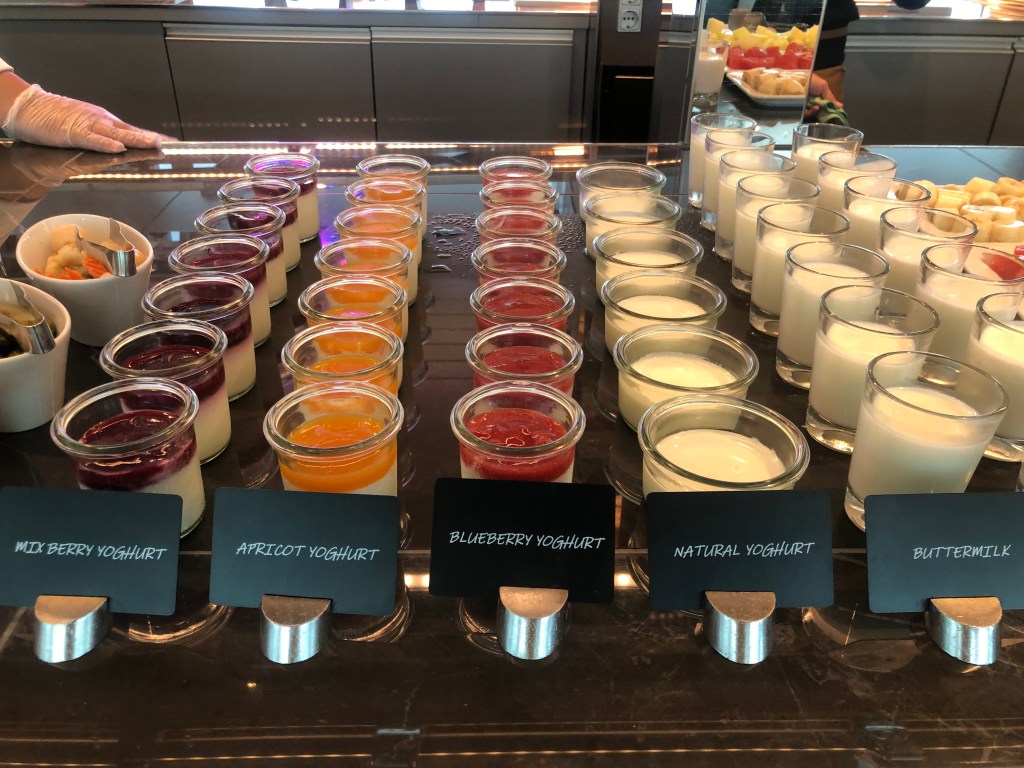
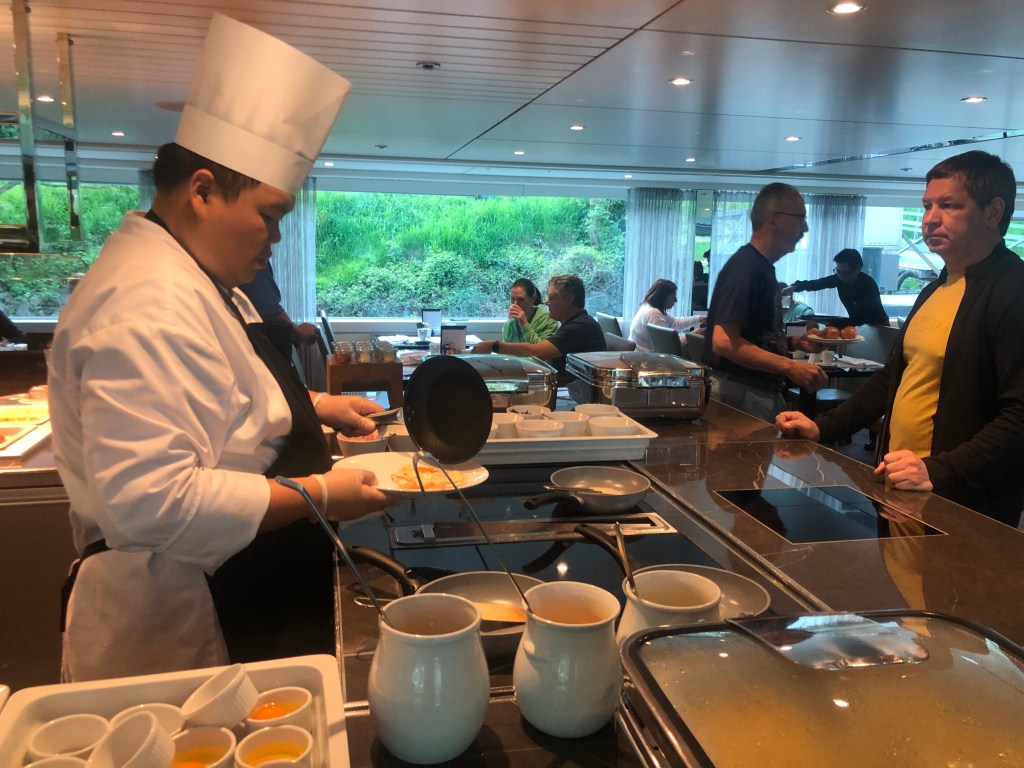
In the Crystal Dining Room, I always tried to get a window table so as to look out on the sloping vineyards and fairy-tale towns flanking the Rhine and Moselle rivers. The daily breakfast buffet featured a million different items—well, at least 100 anyway—and even offered chilled Champagne. There were bagels and artisan breads, yogurts and fruits of all kinds, and hot-off-the-griddle pancakes or waffles, not to mention made-to-order omelets. The Brits and Australians appreciated the baked beans, porridge, English bacon, and grilled tomatoes and mushrooms. One morning we had bread-and-butter pudding.

The breakfast buffet also offered cheeses, cold cuts and smoked fish (herring, rollmops, halibut, salmon). What’s more, we could order from a menu that featured lamb chops, French toast and perfectly done, oh-so-decadent eggs Benedict.

Lunch also was a smorgasbord. I really enjoyed the German buffet, a special meal that put an exclamation point on our morning transit through the castle-studded Rhine Gorge and got us in a jolly mood for the tourist-thronged wine town of Rüdesheim. The spread included three types of sausage—bratwurst, Käsekrainer (cheese-filled) and Weisswurst (white veal sausage)—and three mustards. There were sauerkraut, parsley potatoes and both bread and potato dumplings. Cheesy spaetzle, freshly tossed, was served hot from the pan. I didn’t have room for the fried chicken (Backhendl), pan-seared river trout in almond butter or even a morsel of the pork knuckle.

Recorded oom-pah band music lent a Munich beer hall vibe as I washed down traditional German foods with a tall glass of Erdinger Weissbier, a classic wheat brew. Dessert was Dampfnudel, a pillowy steamed dumpling filled with blueberries. Other lunch buffets usually featured at least one food representative of the region we were traveling through.

On King Charles III’s coronation day, the River Cafe, an area of the Opal Lounge that offers a daily lunch buffet, we had fish ’n’ chips while watching the ceremony on big-screen TVs. The lounge’s coffee and tea stations had scones with jam and clotted cream, another British touch.

The River Cafe, open during the day for sandwiches, salads, ice cream and pastries, is transformed each evening into Portobellos, a five-course Italian dining experience for which each guest receives a printed invitation once during the week. Table La Rive, a sophisticated chef’s table offered once a cruise to Diamond Deck and Junior Suite guests, stars innovative fare with wine matching in a small-group setting in the dining room.

Every night, the restaurant’s a la carte dinner menu gave us appetizer, main course and dessert choices. If we didn’t want one of the three entree selections, we could order a salmon steak, sirloin steak or chicken breast.

Rather eat in privacy on your balcony? An extensive room service menu is available from 6 a.m. to midnight.
On any cruise, I tend to overeat (don’t we all?), so every day I hit the walking track on the expansive Sun Deck, a breezy area with tables, chairs, loungers and a vitality pool. Happily for me, the track was lighted after dark. I recall one night making my rounds as floodlit Reichsburg Castle loomed beyond the storybook Moselle River town of Cochem, Germany, a magical moment indeed.

Left to right: The Scenic Opal’s daily breakfast buffet offers choices galore, including many varieties of yogurt. (Randy Mink Photo)
An omelet station is part of the Crystal Dining Room’s breakfast buffet. (Randy Mink Photo)
Alcoholic drinks in the Opal Lounge and dining room are included in the cruise fare. (Photo credit: Gillies & Zaiser)
The River Cafe is the place for a wide variety of tempting small bites throughout the day. (Photo credit: Gillies & Zaiser)

A Superlative Staff

Every evening we all gathered in the spacious lounge with cruise director Alex Thurein, who briefed us on the next day’s schedule. An affable German who was born in Wiesbaden and currently lives in Salzburg, Austria, he set the upbeat tone of the cruise. From Day 1 we knew we could go to Alex for travel advice or any problem. (On a personal note, I will be forever grateful to him for helping me contact credit card companies after a pickpocket incident during a shore excursion in Colmar, France.)

One morning Alex gave a brilliant presentation on “Germany and the Germans: A Brief Overview of 1,200 Years of Central European History.” Another day his topic was Europe’s rivers, canals and lock systems.

The Scenic Opal’s crew, 53 in all, represented 14 nationalities, from Thai and Indonesian to Serbian and Polish. Our captain was Hungarian. The women staffing the reception desk always had smiles and couldn’t wait to assist or answer a question.

Also smoothing the way was the stateroom’s TV, an encyclopedia of information and entertainment options. We could watch television shows (I mostly caught the live BBC newscasts), choose from a wide selection of movies and music, view the daily schedule and lounge presentations, and bone up on the ports of call. A keyboard even let us use the screen as a computer.

With high-tech gadgetry, an all-inclusive approach and plenty of space to unwind, Scenic has thought of everything to ensure a worry-free journey on the rivers of Europe.

1: Champagne is served at the first-night welcome reception onboard the Scenic Opal. (Photo credit: Gillies & Zaiser)
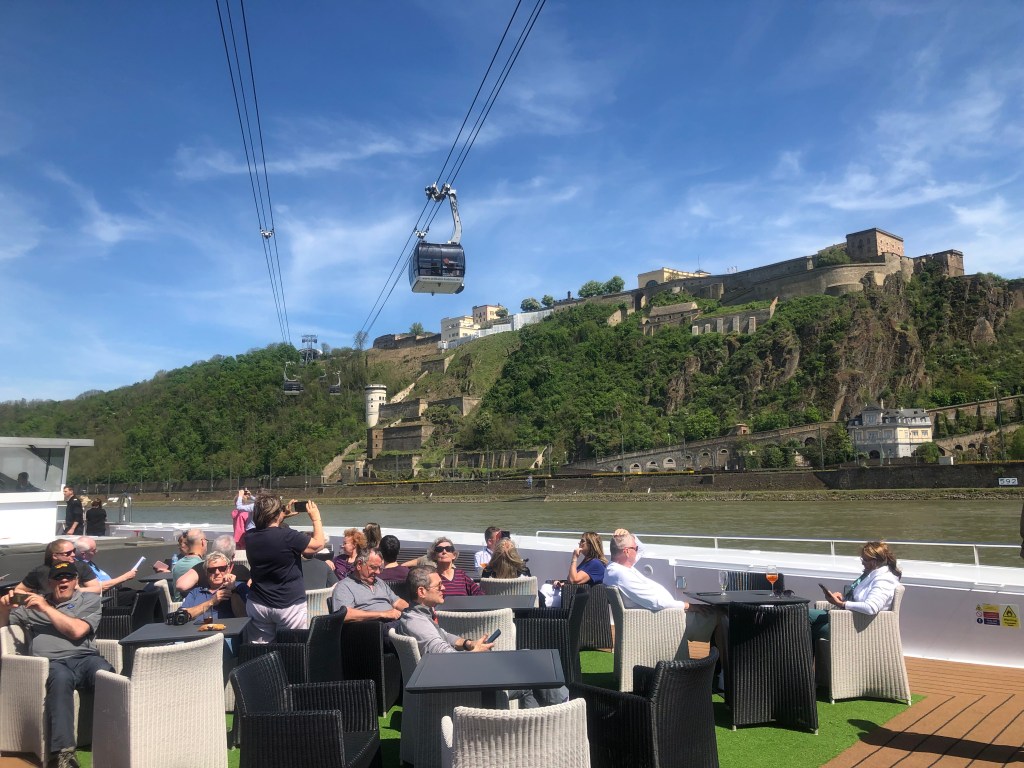
2: In the Rhine River city of Koblenz, passengers relax on the Sun Deck of the Scenic Opal as cable cars to Ehrenbreitstein Fortress pass overhead. (Randy Mink Photo)
3: The Scenic Opal’s reception desk is located just off the Opal Lounge. (Photo credit: Gillies & Zaiser)
4: A passing parade of hilltop castles enchants passengers on the Scenic Opal. (Photo credit: Scenic)

Saxony’s Sweets and Treats Take the Cake

Story and photos by Alison Ramsey

There’s something irresistible about German bakeries—the fresh brötchen and Berliners, croissants, and the bold espresso you can order alongside—something that makes it feel okay to stop at various locales throughout the day, even beyond just a morning coffee and pastry. It seems that a thick slice of cake and a mug of strong, steaming coffee any time of day makes a whole lot of sense when you’re in a region with such a rich baking history. Dresden, the capital of Saxony in Germany, and nearby Meissen and Leipzig have much to offer snack lovers when it comes to pastries and cakes. So pour a fresh cup, heat up a bun, and read all about the role Saxony played in the rise of gluten-filled goodness.  

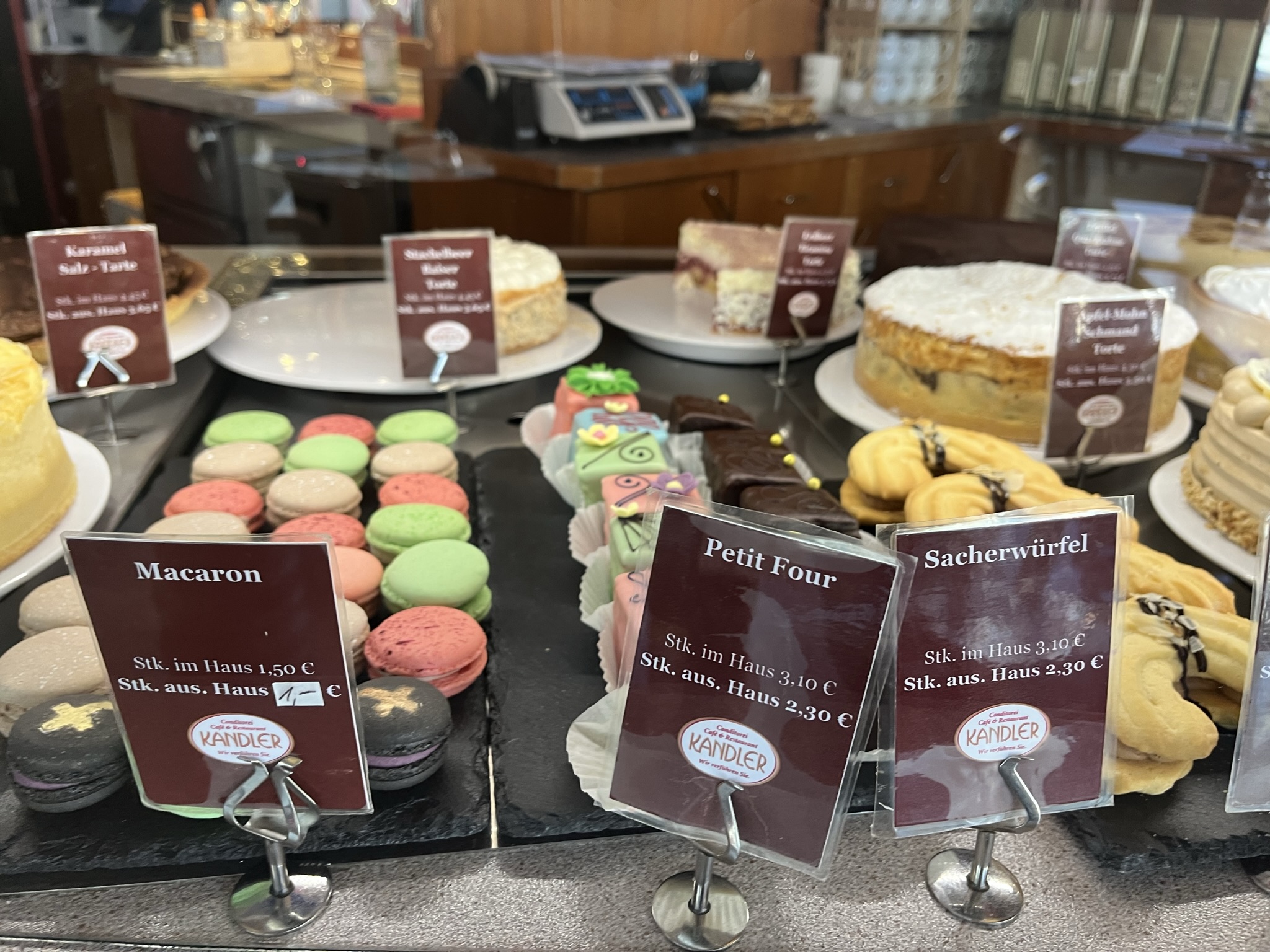
The five locations of Kandler Konditerei in Leipzig are always stocked with sweet temptations.

Russisch Brot
During the late 19th century, Dresden-based master baker Wilhelm Hanke adopted the 1845 St. Petersburg, Russia, recipe for Russisch Brot (Russian bread), which are crunchy glazed cookies made from sugar, egg whites, water, and flavoring, and formed into the shapes of alphabet letters. These are sold under the Dr. Quendt label and remain a popular Christmas treat or a delicious snack to help teach reading. The letters “M” and “W” are too fragile to be stable, so Dr. Hartmut Quendt ensured bags contain mirrored 1’s that snackers can use to create their own “M” and “W” shapes. It’s clear permission to play with your food!

Stollen
Dresden is also the birthplace of the authentic stollen Christmas cake—the Dresdner Christstollen. When stollen was first baked in the 1400’s, under the supervision of the church council, the bread was not allowed to contain butter or milk during Advent, so it was a dry and bland pastry consisting of flour, yeast, oil, and water. Ernst of Saxony and his brother Albrecht appealed to the Pope and asked that the dairy ban be lifted, so they could replace the oil with butter, as butter was cheaper than oil at the time. The appeal was denied, but finally, five popes later, Pope Innocent VIII sent Dresden the famous 1491 “Butter Letter,” in which he granted permission for dairy ingredients to be used in the stollen—although the Dresden bakers must, in return, pay a fine to be used toward the building of churches.

In 1730, Augustus the Strong, a stollen lover, commissioned a group of 100 Dresden bakers to bake an almost 4,000-pound loaf, which was brought to the king’s table using eight horses. A giant oven was built especially for this occasion, and an oversized knife was designed specifically for the event. This is the basis for the annual Dresdner Stollenfest (or “Striezelmarkt”), which takes place in Dresden the Saturday before the second Sunday in Advent. The festival is a highlight of the pre-Christmas season and celebrates the stollen baking tradition, featuring a colorful parade and the sale of varieties of stollen.

A huge stollen is still made annually and divided into smaller pieces on a specially shaped stollen cutting board—using a 26-pound replica of the original baroque knife from the Residenzschloss (Royal Palace) Court Silver Collection of Augustus the Strong—with cake portions sold to raise money for charity. The Stollenfest knife design features a swooping stainless-steel blade and Augustus the Strong’s coat of arms and rose tendril.

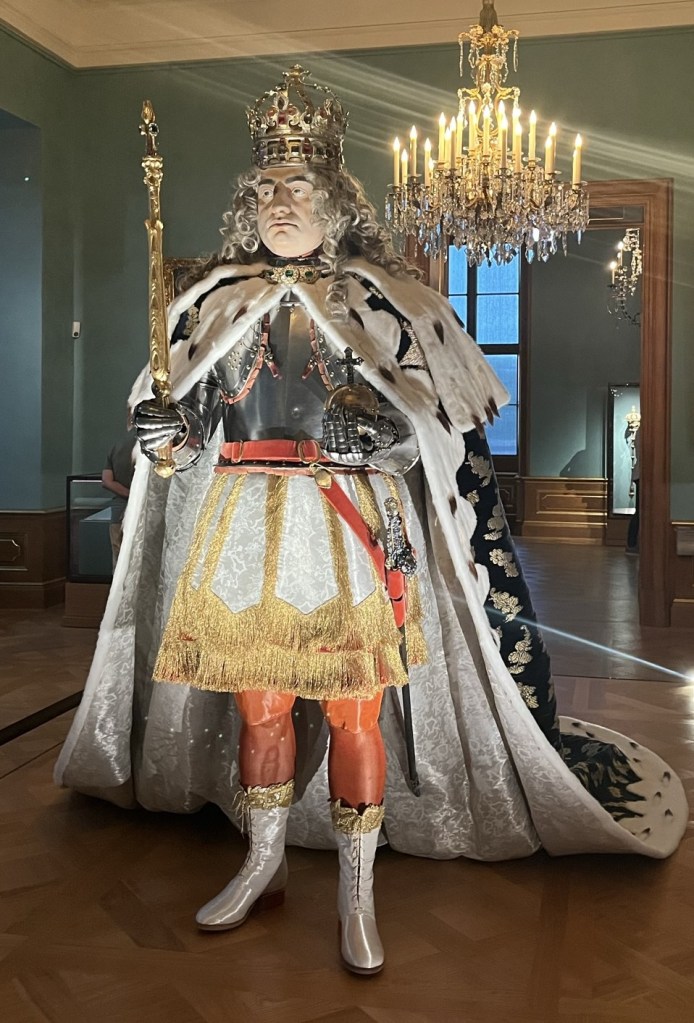
Left: A Dresden bakery displays its stollen seal. Right: This life-sized figure of Augustus the Strong is displayed in the Dresden Residenzschloss.

Stollen has its own protected name and registered trademark, and the recipe needs to follow certain guidelines to earn the golden, oval “stollen seal.” The cake only passes the test for high quality and validity if it contains no margarine and no artificial flavors or preservatives. The Dresdner Stollen Association requires that each cake contain butter, rum-soaked raisins, candied orange peels and lemon peels, and sweet and bitter almonds to receive the seal. Outside of these requirements, the approximately 110 Dresden bakeries that produce this sweet each use their own secret spice mixture, passed down through generations, which results in varied and distinctive flavors from bakery to bakery. Each stollen is labeled with a 6-digit seal number, to identify and track the bakery of origin. Also identifiable by the European Union-protected geographical indication, true Dresdner Christstollen is marked with a blue and yellow Geschϋtzte Geografische Angabe (“protected geographical indication”) sticker. Dresdner Christstollen can only be produced within Dresden itself or within specific boundaries surrounding the capital. This cake is best enjoyed by removing slices from the middle and pushing together the ends, eating the cake from the center outward. It is seen as traditional Dresden “finger food,” with no need to use a fork.

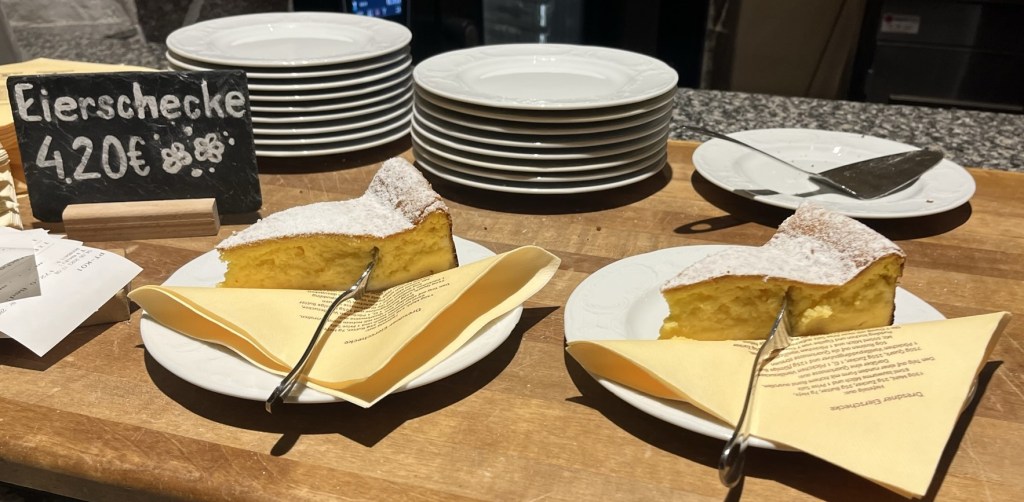
Eierschecke
For something slightly sweeter, the Dresdner Eierschecke is a popular pastry choice. It’s a 3-layer confection consisting of a cake base topped with a custard-like quark cheesecake center, and a layer of sweet vanilla egg white on top, dusted with powdered sugar. Only found in Saxony and neighboring regions, this treat is often served with coffee or tea, and makes its way into celebratory menus for birthdays, weddings, and holidays. Some bakeries add chocolate, dried fruit, and sliced nuts, but the original recipe is simply the three-layered stack of varied texture.

Eierschecke and other traditional Saxon specialties are served at the Pulverturm.

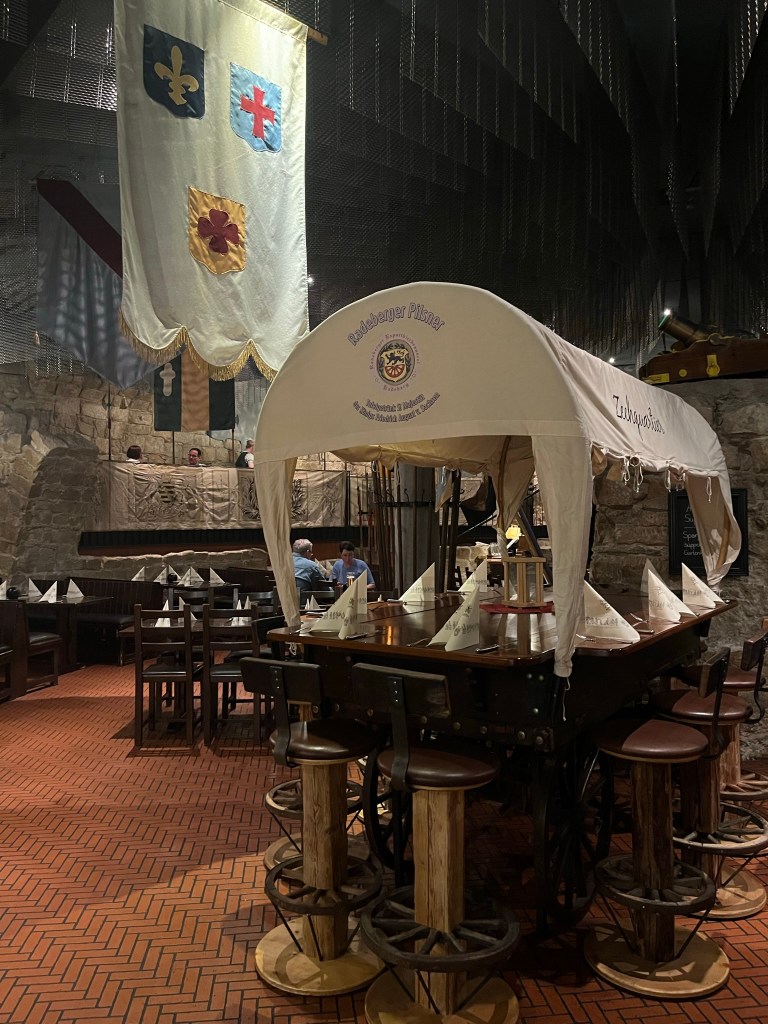
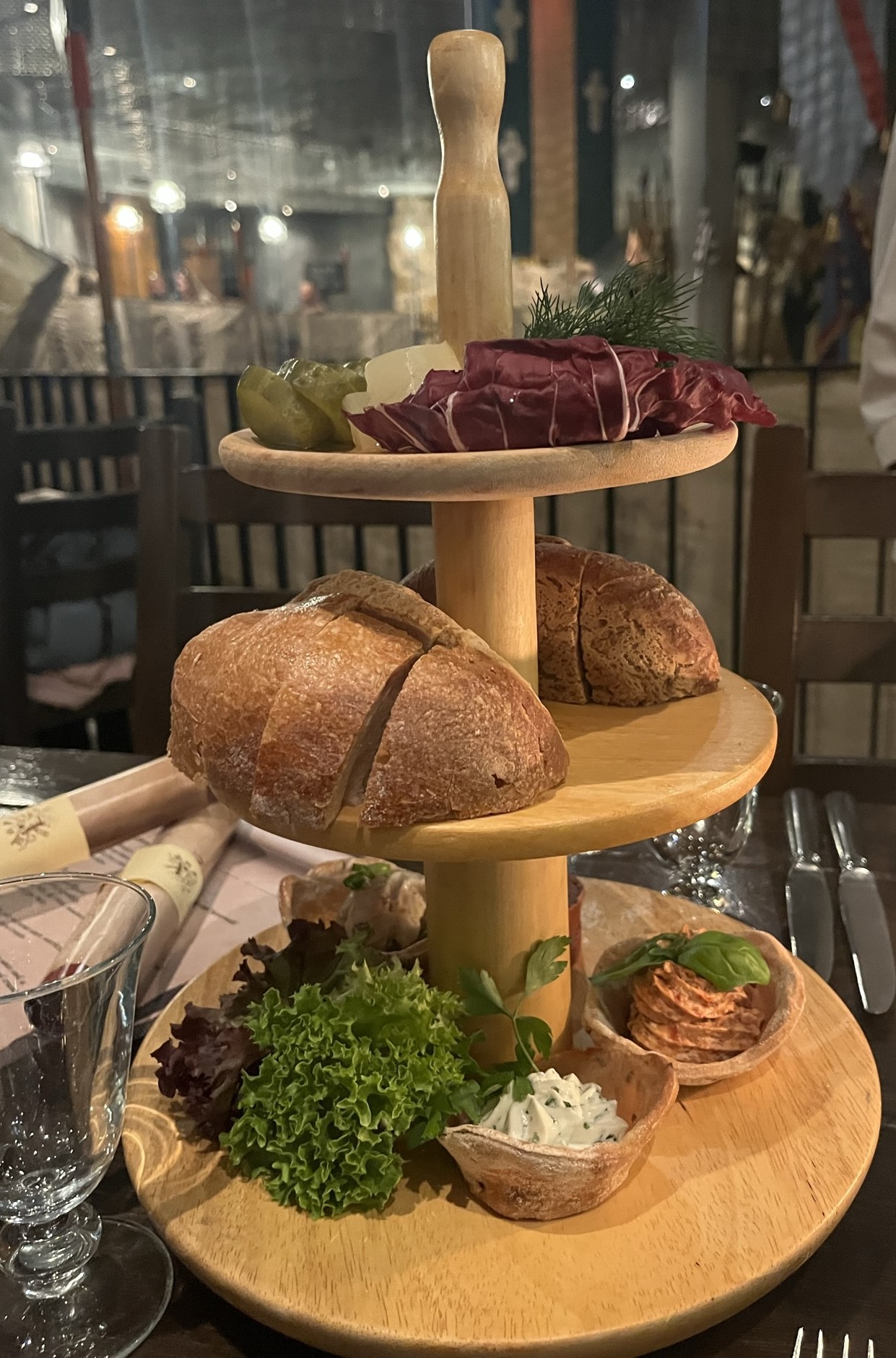
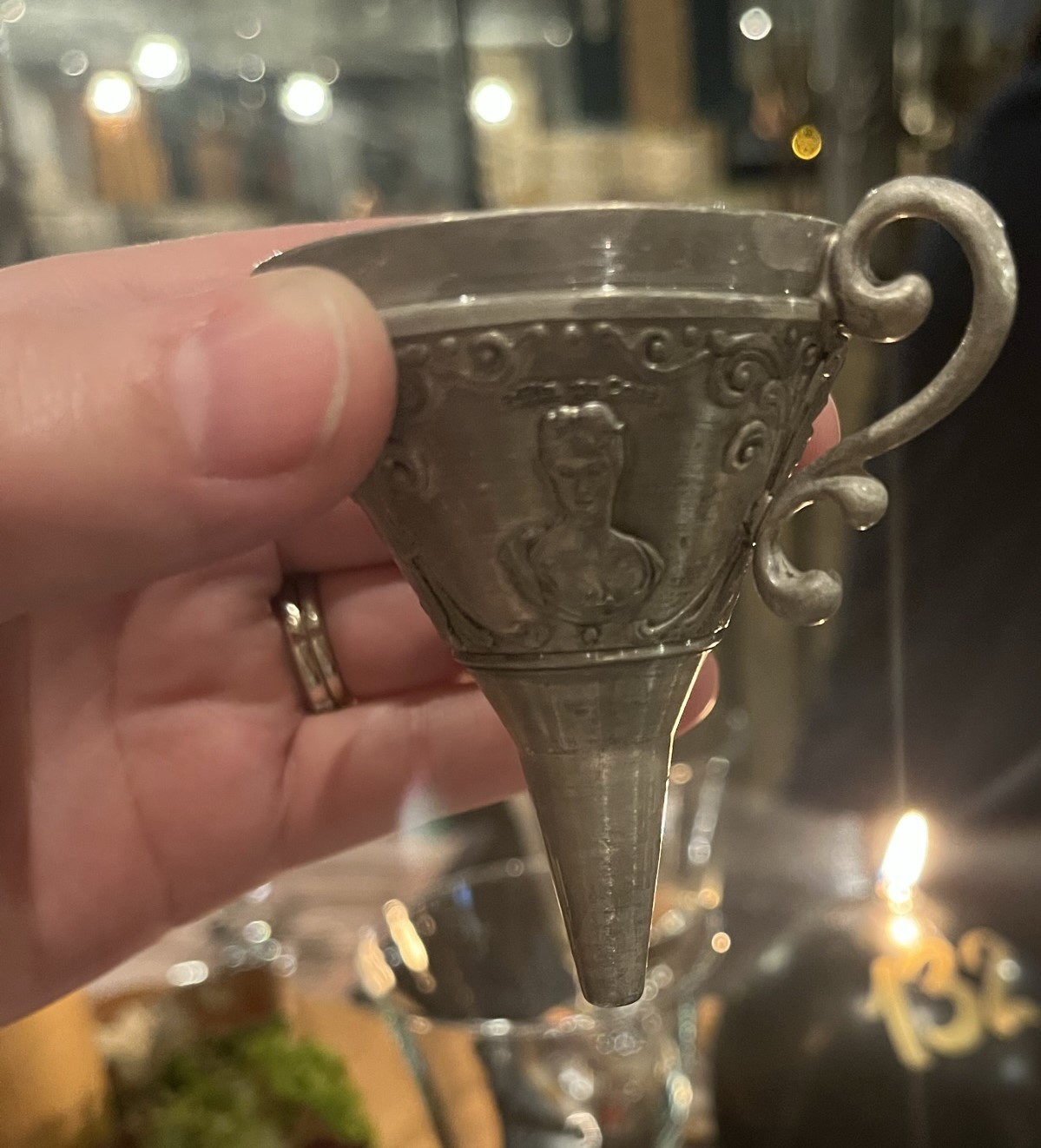
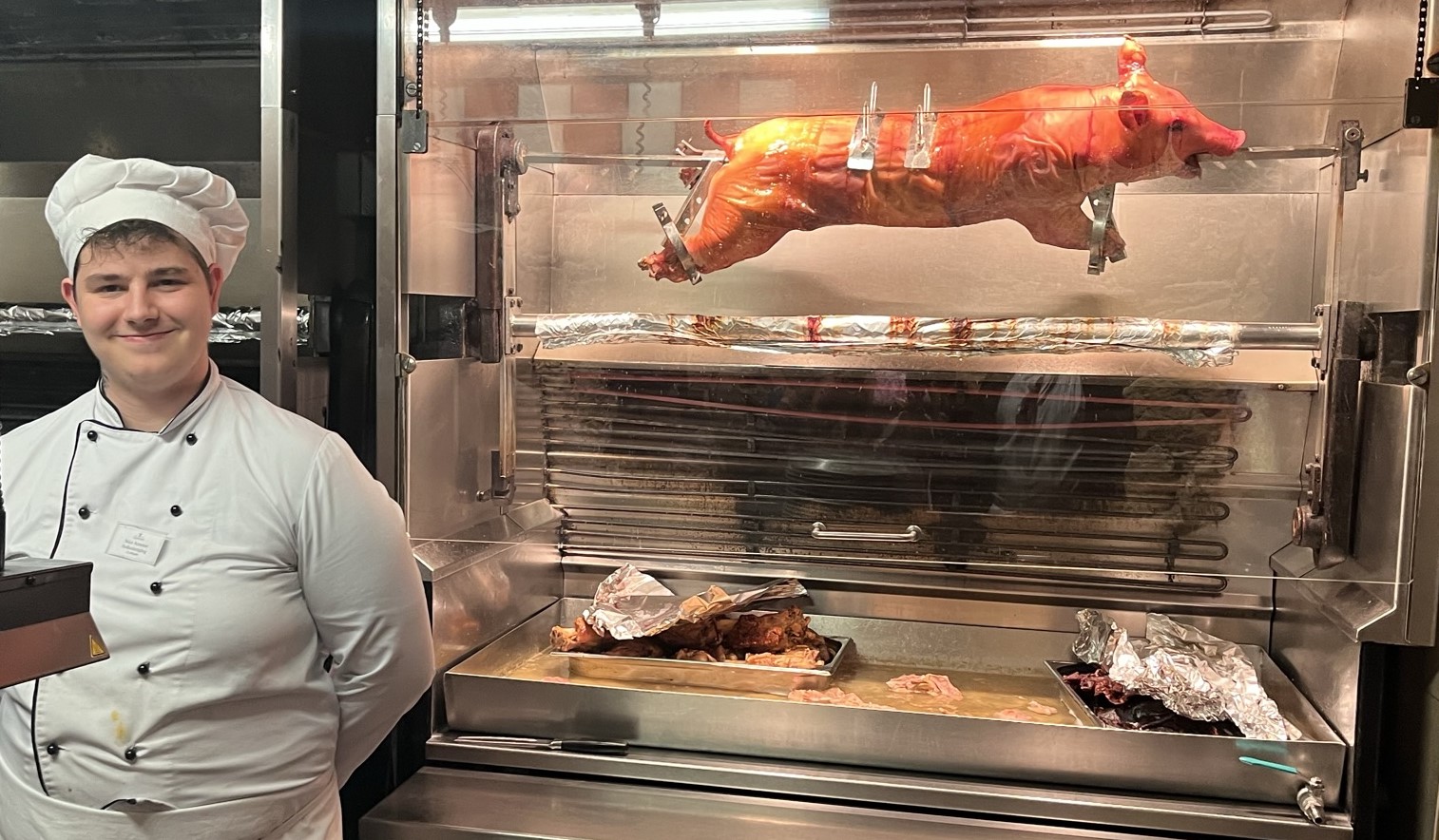
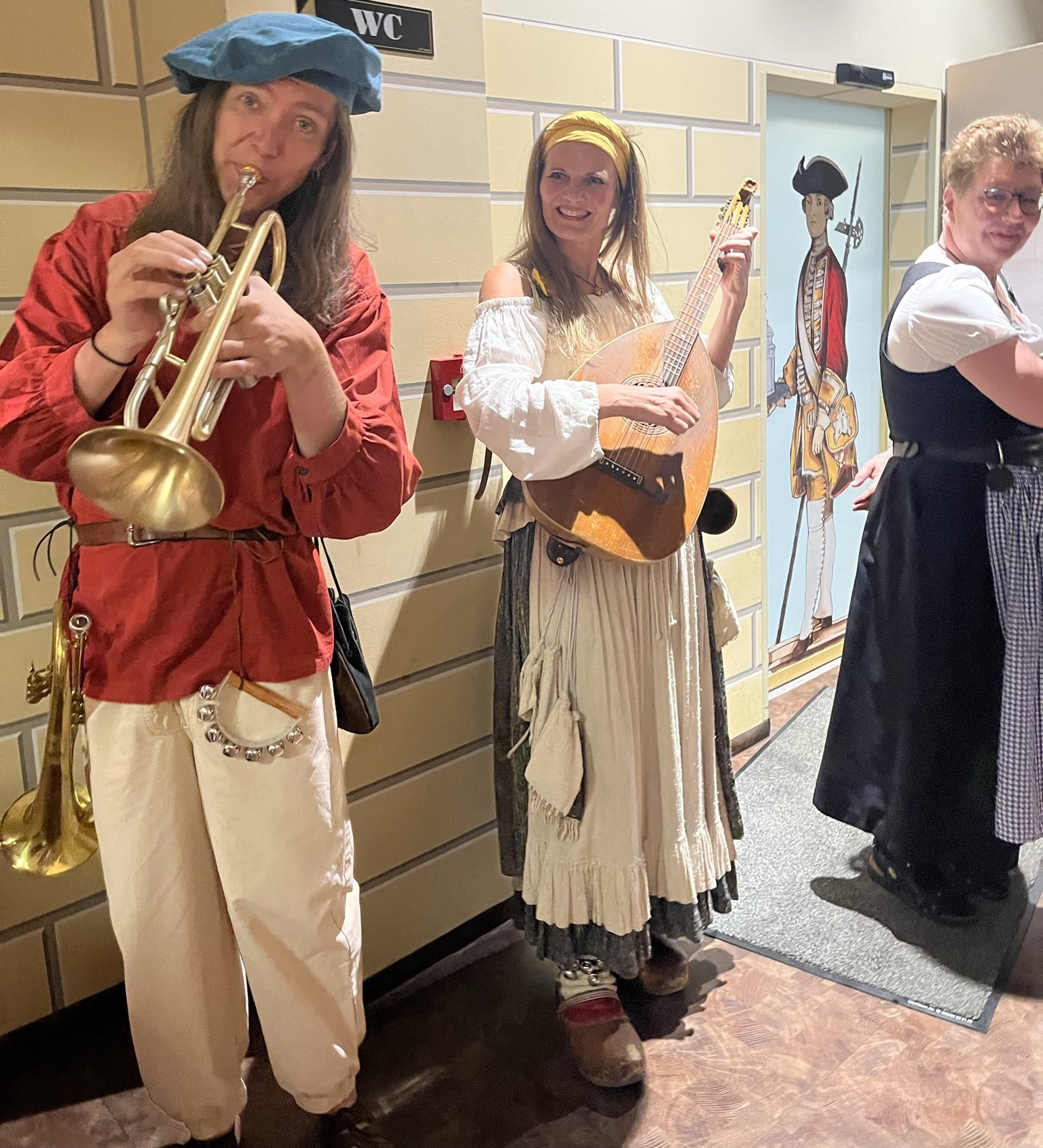
Eierschecke is on the dessert menu at the Pulverturm restaurant next to the Frauenkirche. A historic vaulted powder tower containing portions of the original walls, Pulverturm delights guests with Saxon specialties, homecooked suckling pig, and rousing tableside performances by lively, costumed, character musicians. Be sure to try your hand at funnel-drinking here—a practice that stems from Augustus the Strong’s love of Saxon wines but his court’s dislike for washing numerous wine glasses. The court created a special funnel fit to Augustus’ mouth measurements, so servants could pour the wine directly through the funnel into his open mouth. At the Pulverturm, a variation on this method involves drinking herbed liquor from tiny funnels. Named “Cosel’s Tears,” the drink’s herbs were said to grow from the tears of Augustus’ former mistress, the Countess of Cosel, whom he banished to Stolpen Castle for more than 40 years because of her interfering interest in politics. After a satisfying Saxon meal, have a sugar-dusted slice of Eierschecke and cup of espresso to complete the full Pulverturm experience.

Pulverturm restaurant in Dresden is a full-service, medieval-themed entertainment and dining experience.

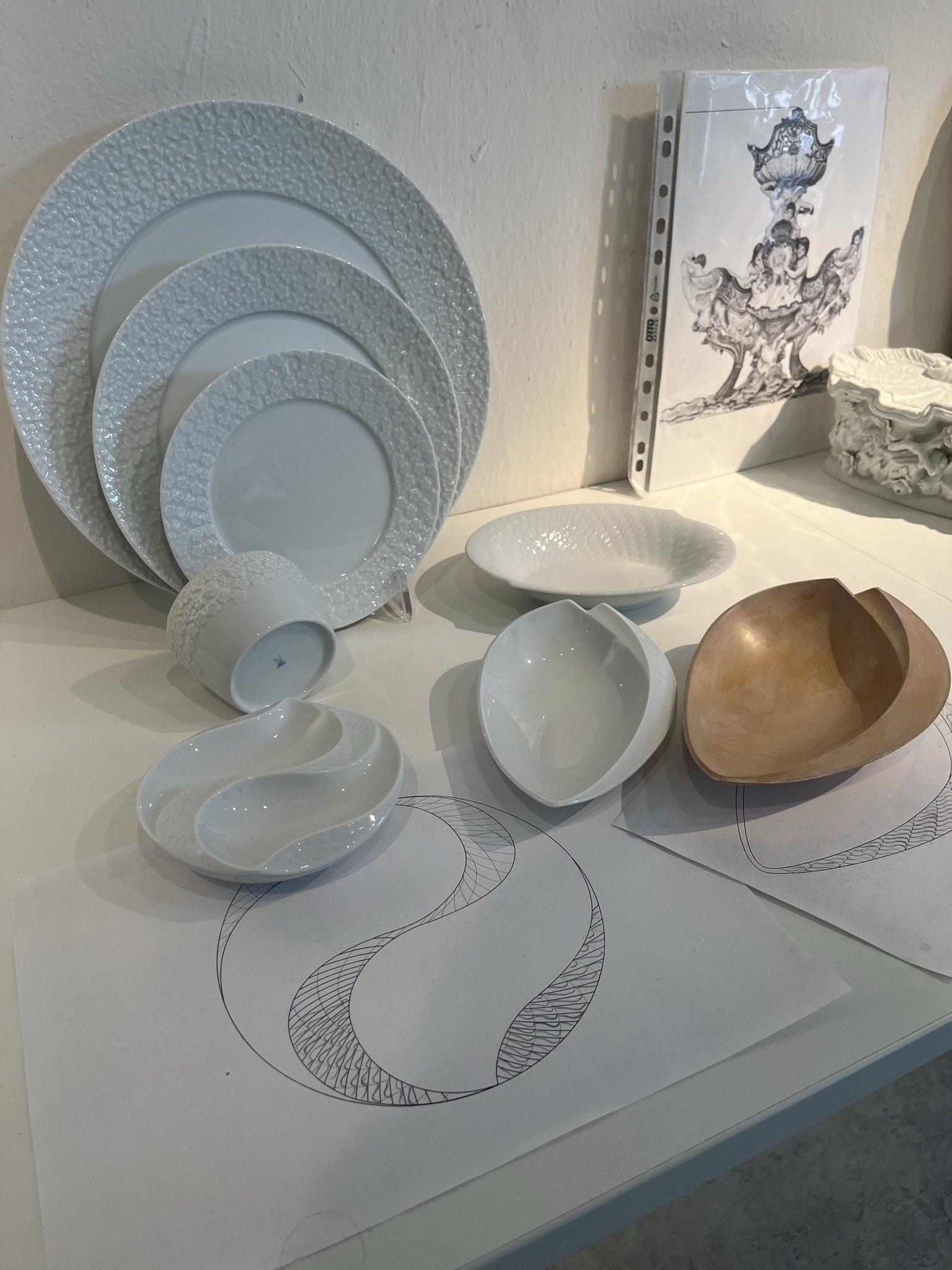
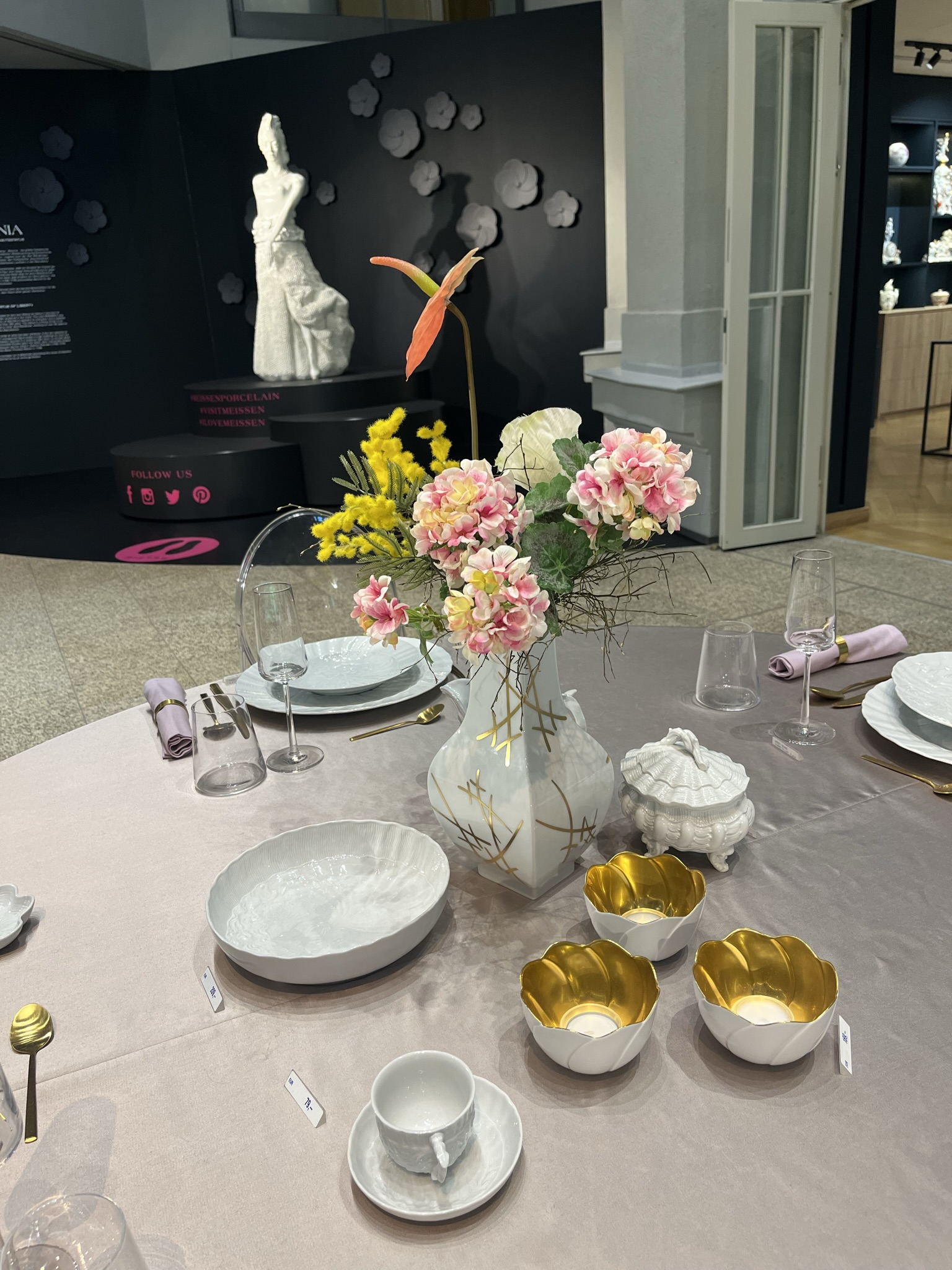
To make your own Eierschecke, try the recipe provided by Meissen porcelain manufactory underglaze painter Marlies Moser in the cookbook Cooking With Meissen. A 30-minute drive from Dresden, the Meissen manufactory creates fine porcelain vessels on which to serve tempting treats. At this company that labels its pieces with the forgery-proof “Crossed Swords” trademark, Moser worked for 40 years in production, painting underglaze onto unfired, porous porcelain—a skill that requires much training, a high level of precision, and years of experience—because the paint immediately penetrates and spreads, making later touchups impossible. The work of an underglaze painter is especially important for iconic Meissen designs like the 1731-created “Blue Onion,” whose luminous, metal oxide cobalt blue color only releases upon final firing. Moser now works in the demonstration workshop at the House of Meissen, and contributed her “Leutewitz Eierschecke” recipe for the company cookbook. Imagine a piece of this cake presented on a beautiful artisan-decorated Meissen porcelain dish!

The Meissen company cookbook features 24 recipes from appetizers to desserts. Saxon potato soup, Saxon meatballs, beef sauerbraten, quark dumplings with plum compote, and an inverted apple tart are among the list, and each submission includes a biography of the Meissen employee who contributed it. This beautiful, full-color hardbound book shows the food plated on fine porcelain tableware and includes sections about dining etiquette and the history of the craft.

Meissner Fummel
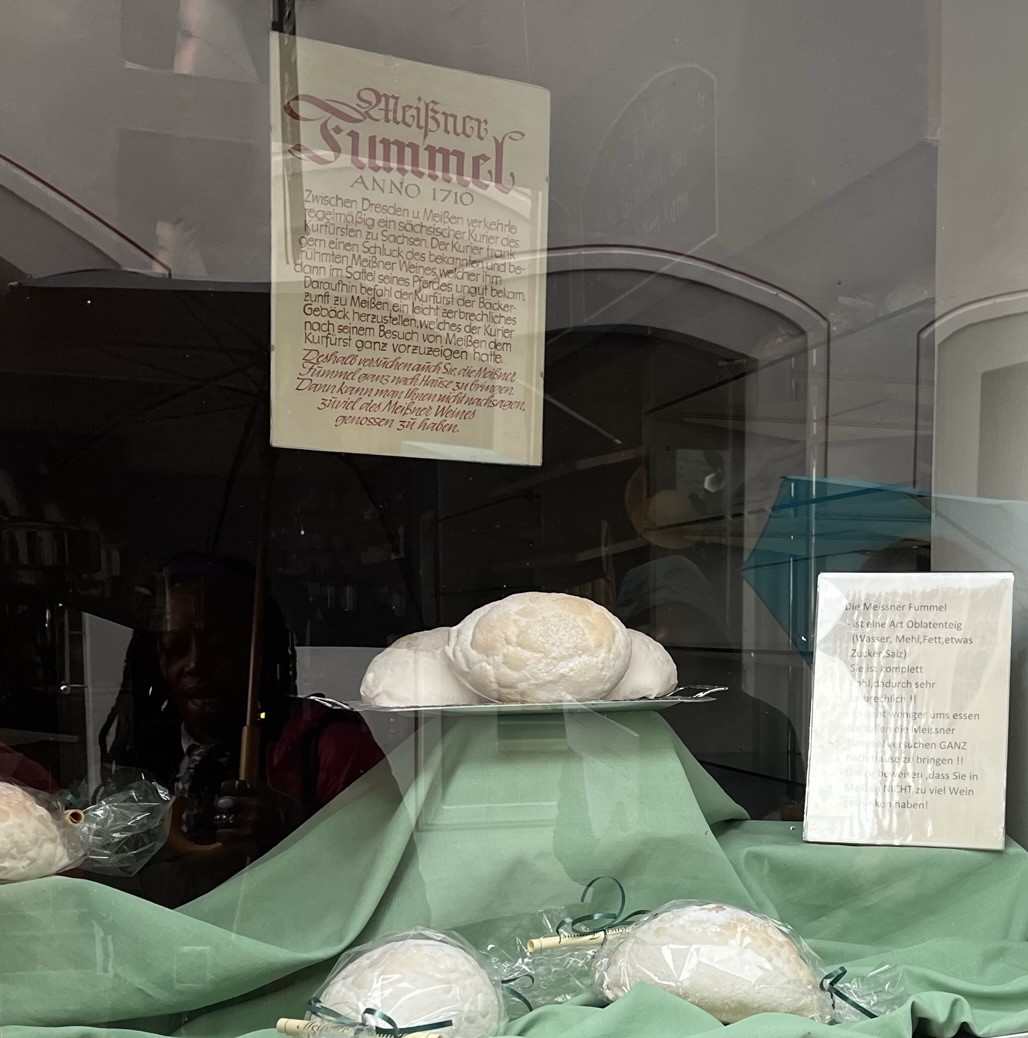
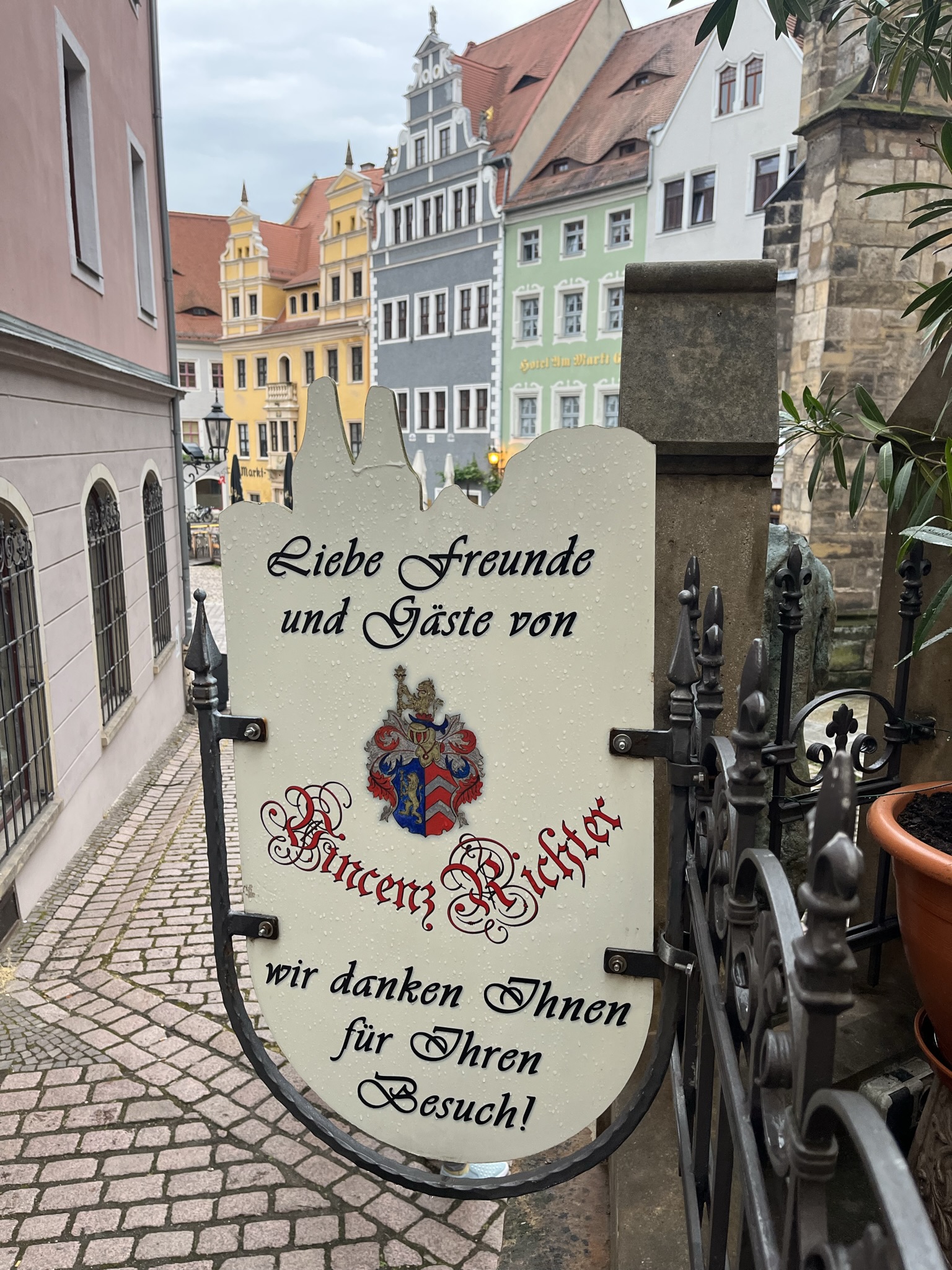
Eighteenth century legend tells that Augustus the Strong, who first commissioned the now-famous Meissen porcelain, used to send couriers back and forth between Meissen and Dresden with factory status updates. The town of Meissen is known for its excellent wine production (try the romantic, antique-filled Vincenz Richter wine restaurant!) and the couriers would often arrive back at the Dresden court intoxicated. Augustus’ solution was to instruct Meissen bakers to invent a pastry so fragile that it could remain intact only if delivered by a sober courier. The result was the hollow, brittle, extremely delicate Meissner Fummel cake, which had to be safely delivered to the Saxon Elector along with the progress reports about the porcelain. Made only with simple ingredients, Fummel is essentially a shell of flaky bread sprinkled with powdered sugar. Zieger Konditerei in Meissen produces this balloon-like baked good, which has been a protected geographical indication since 2000 and can only be manufactured in Meissen. The Fummel is often given to newly married couples in Meissen as a symbol of love’s fragility, and small gifts or cards are sometimes tucked into the center.

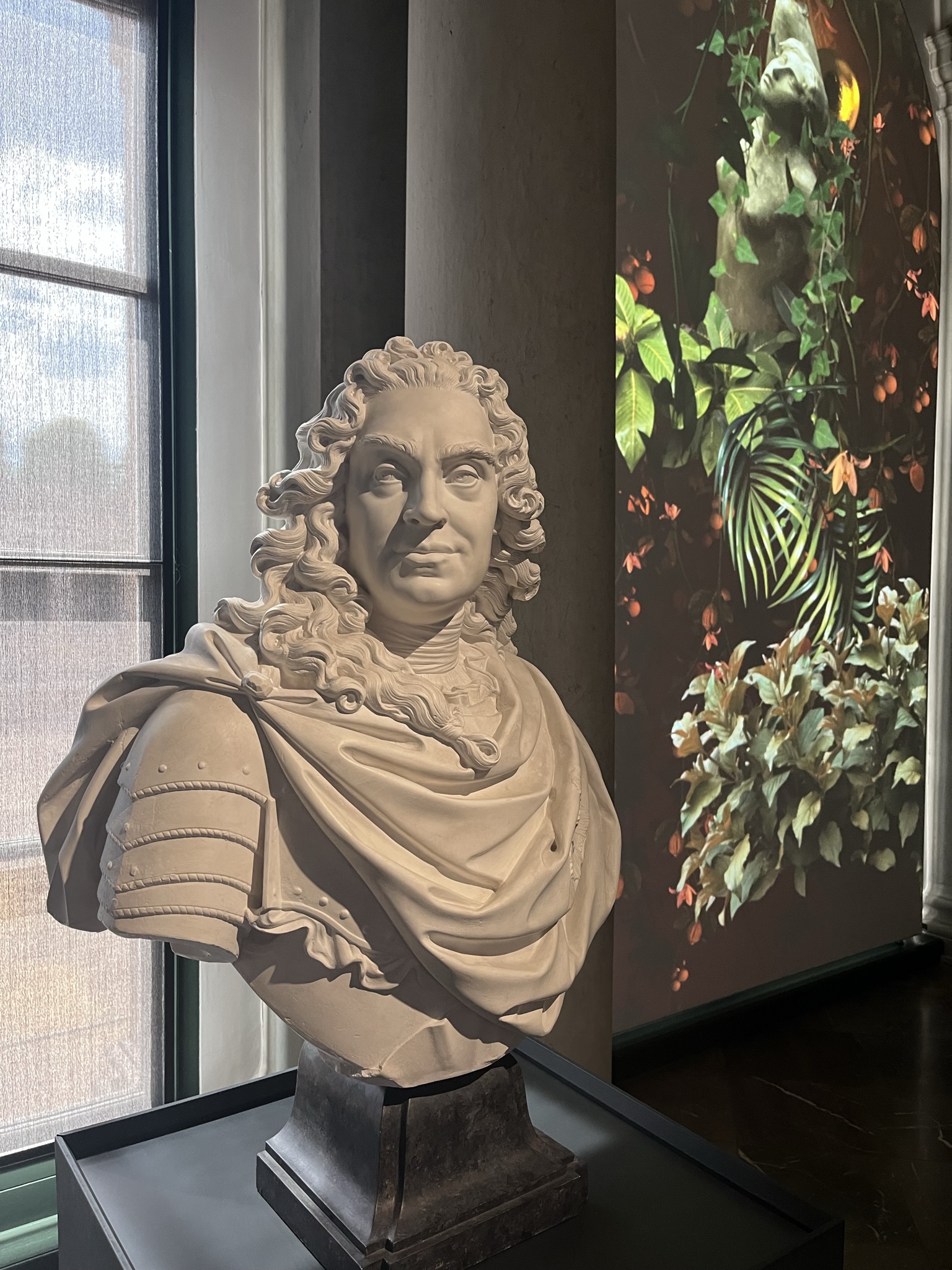
Left: A bust of Augustus the Strong appears in the interactive Zwinger Xperience, a multi-media immersion into the story of the baroque Zwinger building and festival area commissioned by Augustus. Right: This street window in Meissen displays loaves of Fummel along with a poster telling the humorous German story of why the bread recipe was initially invented.

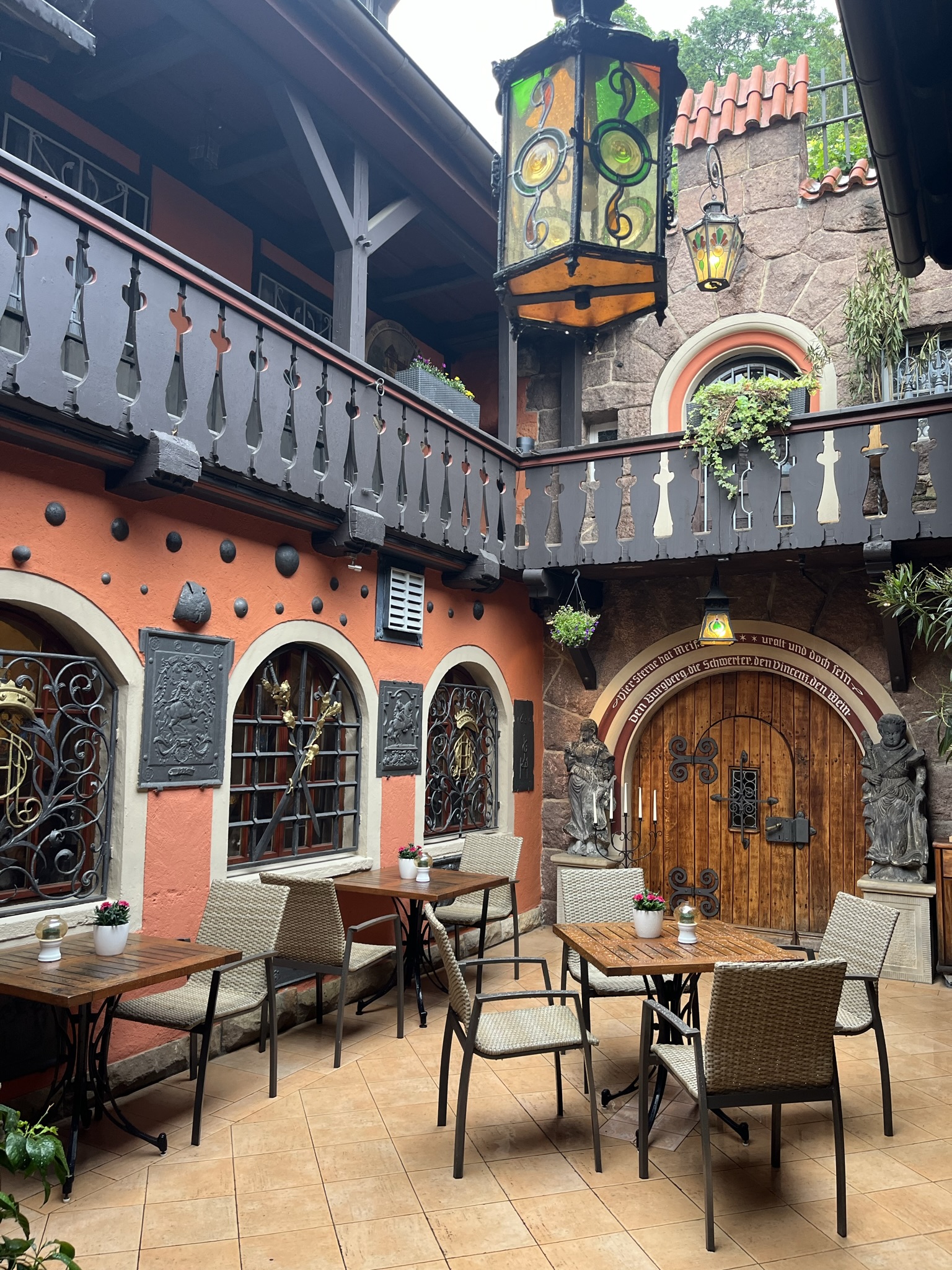
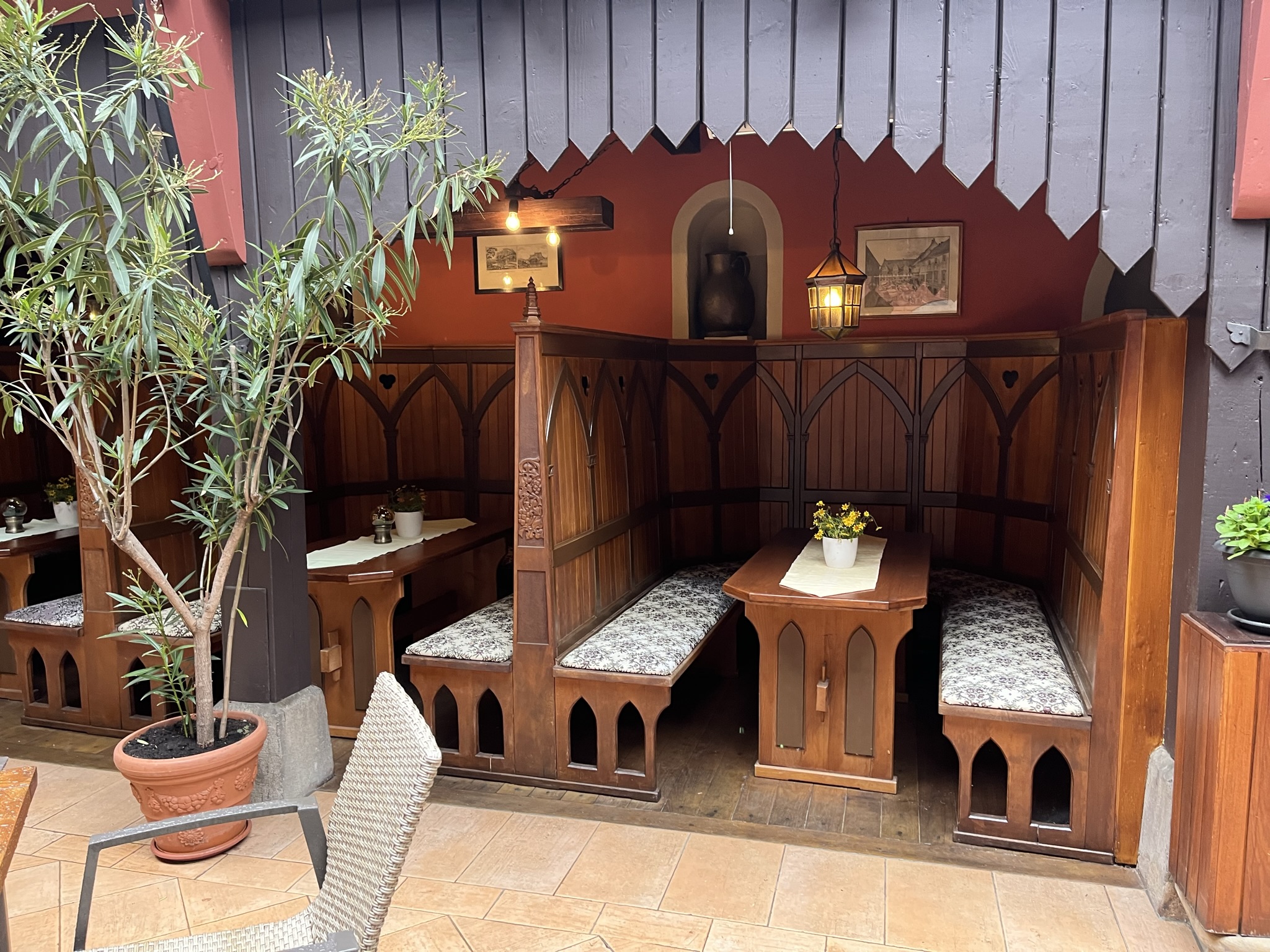
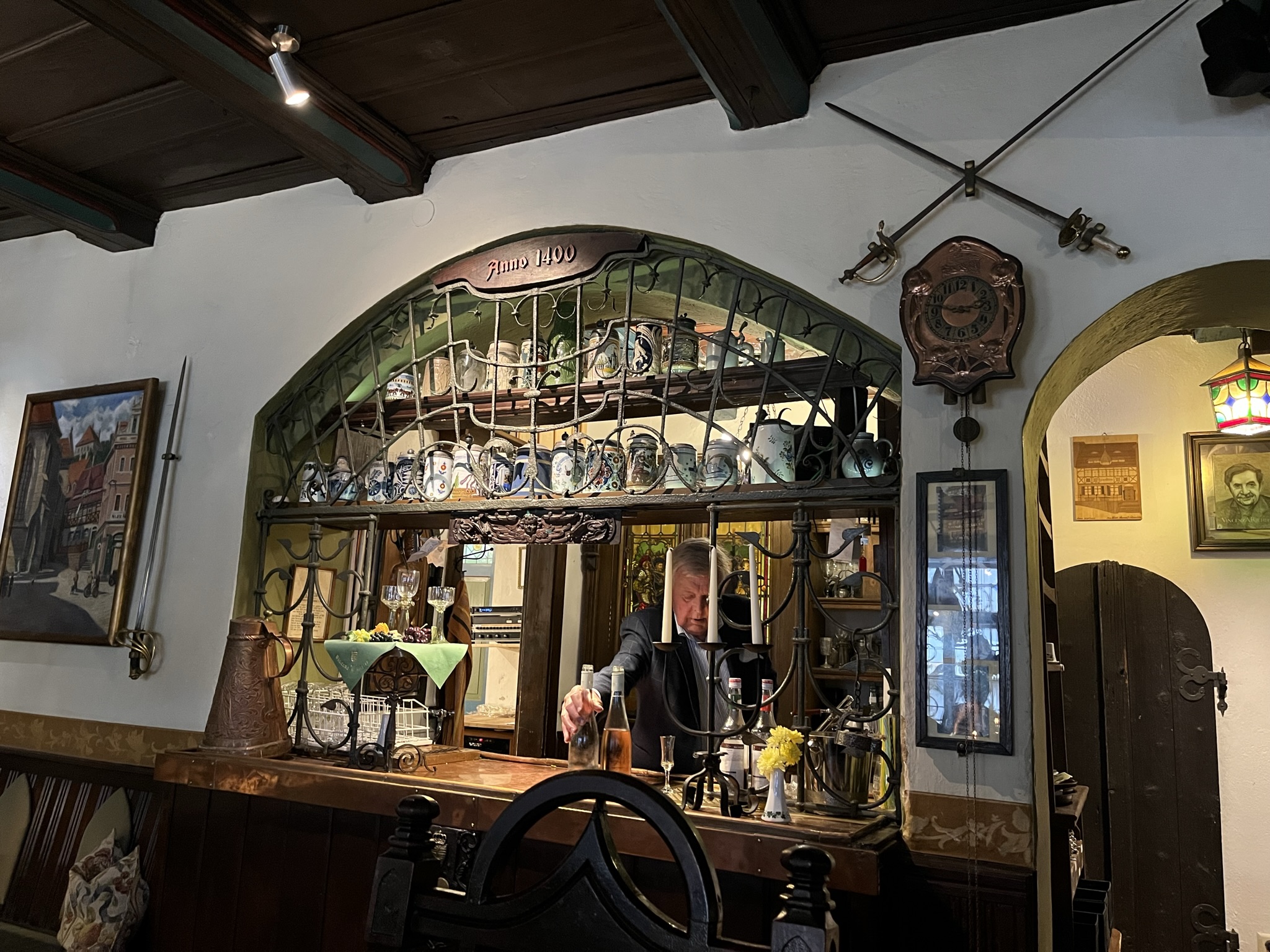
You’ll be sure to fumble that Fummel after a few glasses of wine here! Vincenz Richter wine restaurant in Meissen celebrates its 150th anniversary this year. The 500-year-old building that houses hundreds of antiques and historical items is known as one of Germany’s most romantic places. The family winery produces its delicious wine varietals on the steep slopes of Meissen’s Elbe River valley.

Leipziger Lerche
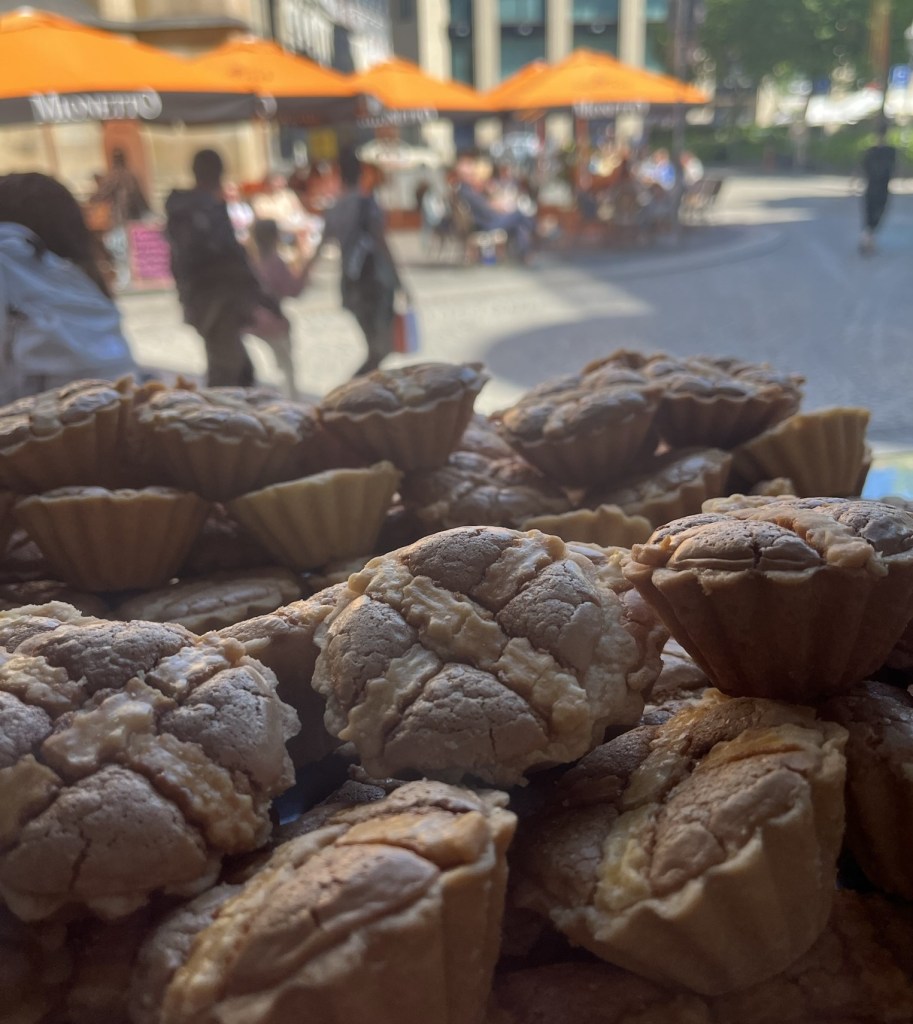
The Leipziger Lerche (“Leipzig Lark”) dessert was born as part of the animal protection movement in the 19th century. Songbird larks used to be hunted and baked with herbs and eggs into a pastry crust and then served as a hearty delicacy. This culinary luxury was enjoyed in Leipzig and beyond, and many bird carcasses were bound in twine and shipped from Saxony to various countries around the continent for others to cook. The bird-baking business boomed, and the bird population declined. In 1876, after overhunting and a severe storm had killed off many of these birds, King Albert of Saxony banned lark trapping. To combat the suffering of this Leipzig business, some clever confectionaries in Leipzig then created a marzipan-stuffed shortcrust tart as a substitute for the traditional meat quiche. Now served in a small, fluted muffin cup, like a miniature pie, this baked good features two strips of dough crossed over the top to represent the trussing used to tie up stuffed larks. Beneath the ground almond and egg white mixture of the tartlet, there is often a cherry or dollop of jam to symbolize the heart of the lark. Kandler Konditerei in Leipzig is a popular source for “Kandler Lerche” pastries of this style, baked fresh daily and as naturally and preservative-free as possible, with numerous packaged options sold for a sweet, Saxony-specific souvenir.

Save a songbird and let Kandler Konditerei tempt you with a Leipziger Lerche.

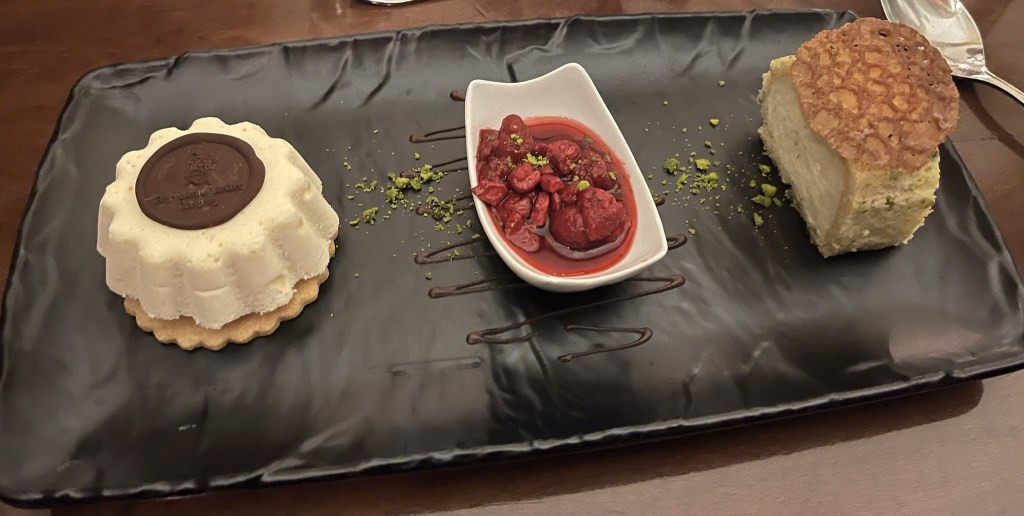
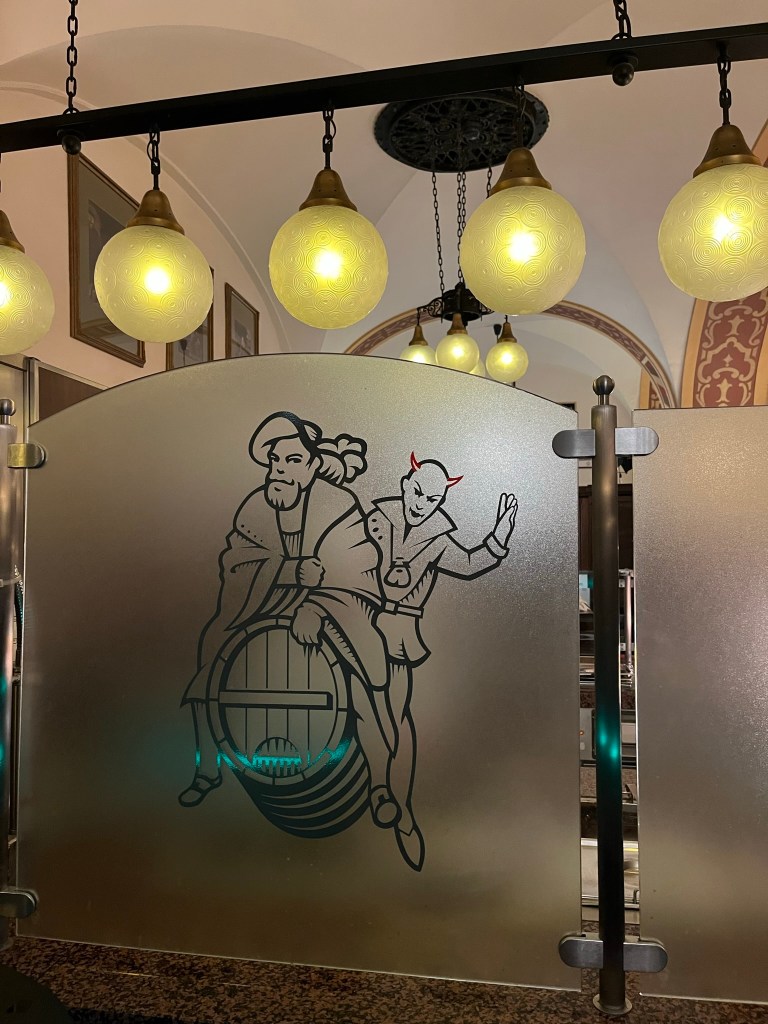
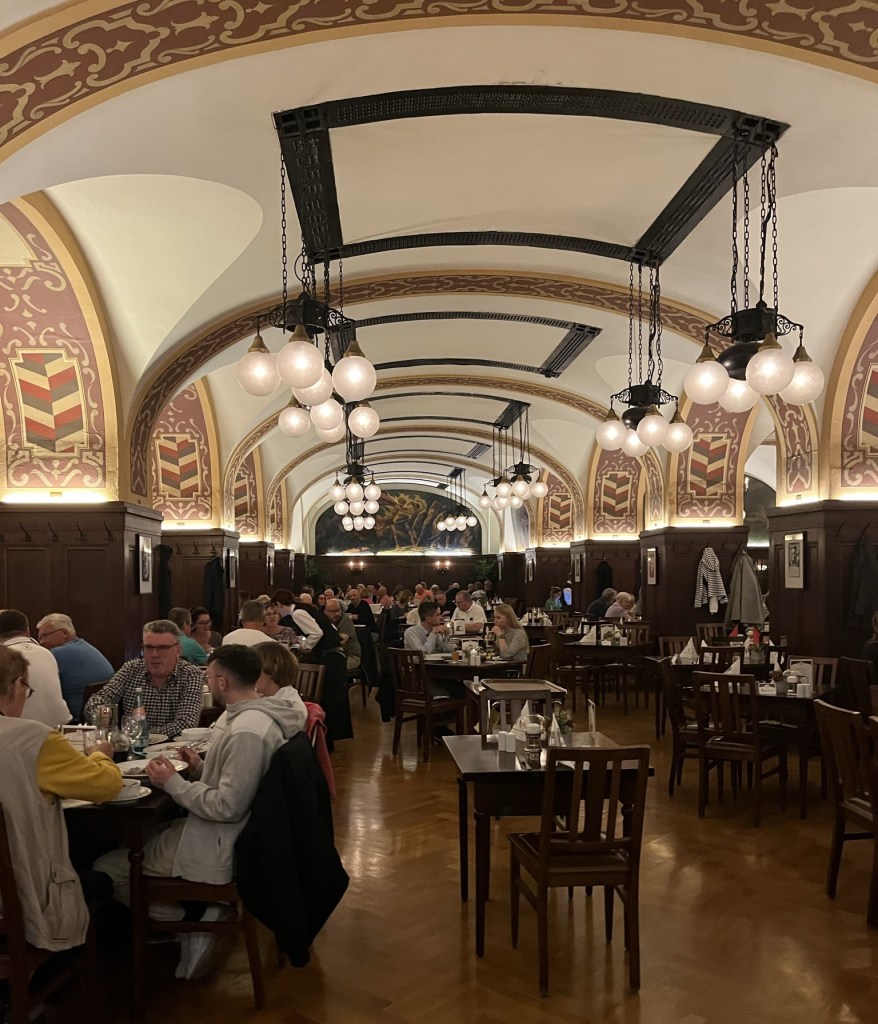
For a tasty variation of Leipziger Lerche, try the ice cream version served at Auerbachs Keller in Leipzig. This bundt-cake-shaped mound of ice cream is seated on a petaled crust and topped with a dark chocolate medallion stamped with “Auerbachs Keller Leipzig” and an image of Dr. Faust riding astride a wine barrel. Goethe and Martin Luther were regular guests of Auerbachs Keller, and it’s a treat to dine in the historic basement rooms of the Mädler Passage where they sat and to eat traditional Saxonian cuisine, including this new take on a famous regional dessert.

Auerbachs Keller Leipzig serves a special iced Leipziger Lerche with curd-cheese-lime-mousse and raspberry sauce.

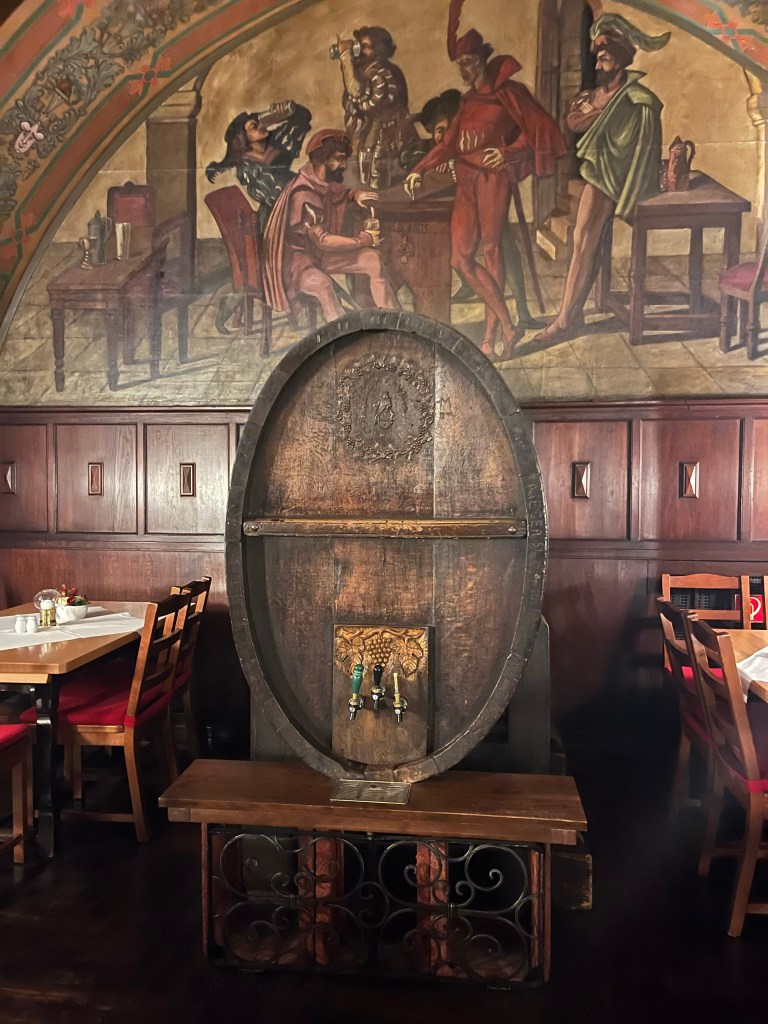
Auerbachs Keller in the Mädler Passage is the most famous and second oldest restaurant in Leipzig, and was one of the most popular places for wine in the 16th century.

Visiting Saxony?
Take an audio guided tour through the Meissen Manufactory and visit the Meissen Porcelain Foundation Museum. Enjoy coffee and delicacies at the Café & Restaurant Meissen, where your snacks are served on fine porcelain and you can sample the specially created Meissen cake featuring the crossed swords trademark. Register for a porcelain casting class or creative workshop and make your own Meissen masterpiece—available for adults and kids alike—or personalize a Meissen coffee mug and have your unique creation safely shipped directly to your home. Sign up your kids for an etiquette class to learn the art of fine dining or join a themed specialty meal (brunch with organ recital, Advent dinner, Christmas dinner, or Ladies Crime Night dinner). The one-hour “Women at Meissen” social history class highlights the significant role women have played in the manufactory’s workforce since the 18th century. The “Tea, Coffee, and Chocolate” event is offered once a month and teaches participants about the three “pleasure drinks” that were popular luxury goods during the Baroque period and how Meissen porcelain played a role in providing many varieties of elegant drinkware.

Meissen porcelain tableware makes every cake look better. Sweets and special place settings are a suggested Saxony souvenir.

Munich Day Trips: Castles and Palaces of Bavaria

Story and photos by Megan Kudla

The biggest cities in Europe are oftentimes the most convenient to fly into and to build travel itineraries around. There’s a host of information to find when researching your trip, including hotels, sites, and tours. Munich, Germany, is one of these key places that tourists look to book for a few days when taking a European journey. And it’s a great city for history and art buffs, as some of the main sites include royal residences. 

There are plenty of palaces to visit by walking or taking a short train ride from Munich’s Marienplatz (the main square); however, a trip to the countryside to see castles built into the Bavarian Alps can also be a perfect way to break up your time spent in the big city and to learn about the history of the larger area. We’ll start with the palaces most easily reached from the Munich city center, and then move to those that are probably best to drive to.


By Foot or Train

Residenz München

From 1508 to 1918, the Residenz München was the official home of the Wittelsbach family dynasty: the dukes, electors, and kings of Bavaria. Located in Old Town and just a 5-minute walk from Marienplatz, you’ll find that it’s one of the most easily accessible sites if you’re staying in the historic center of Munich. 

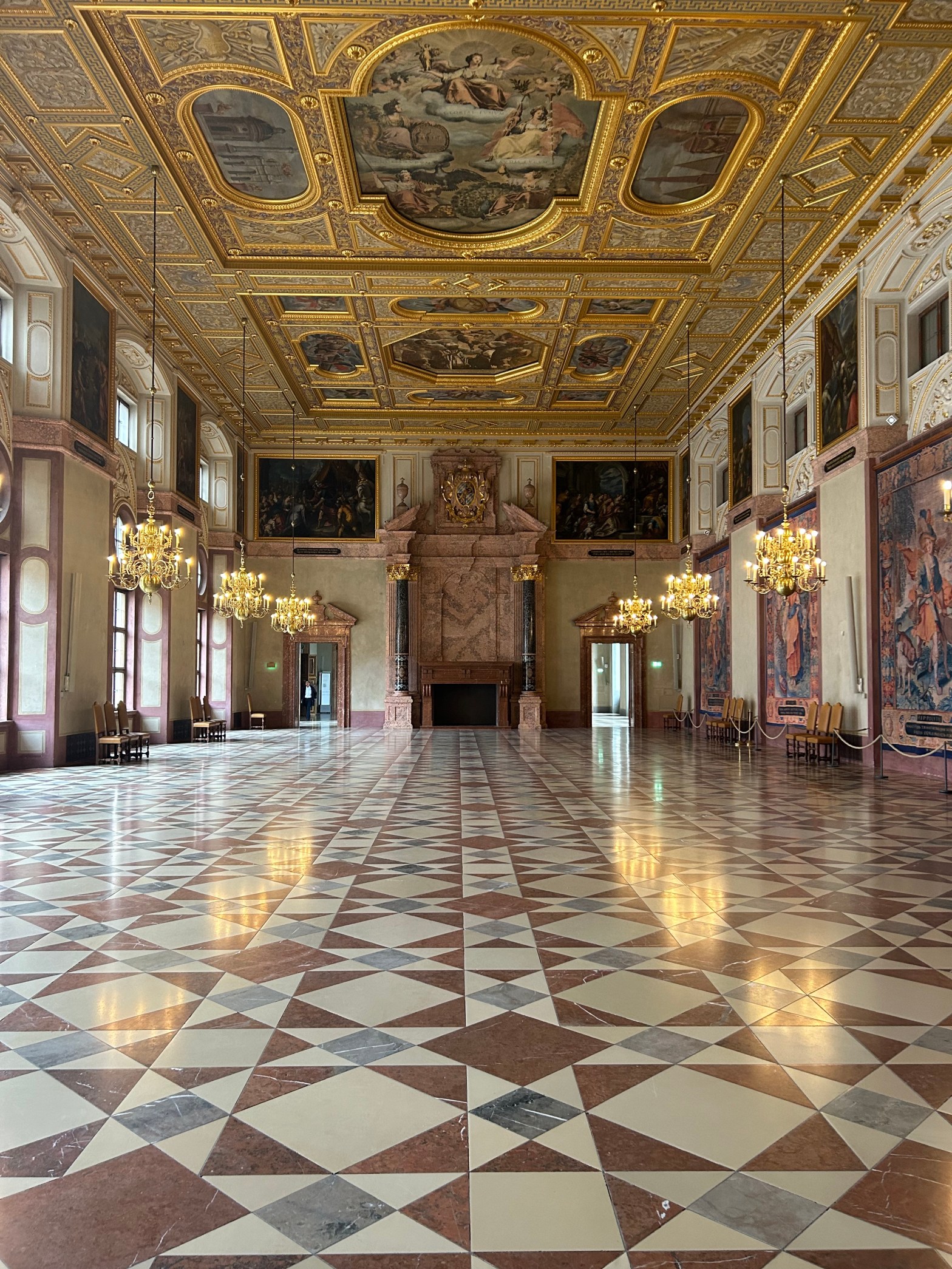
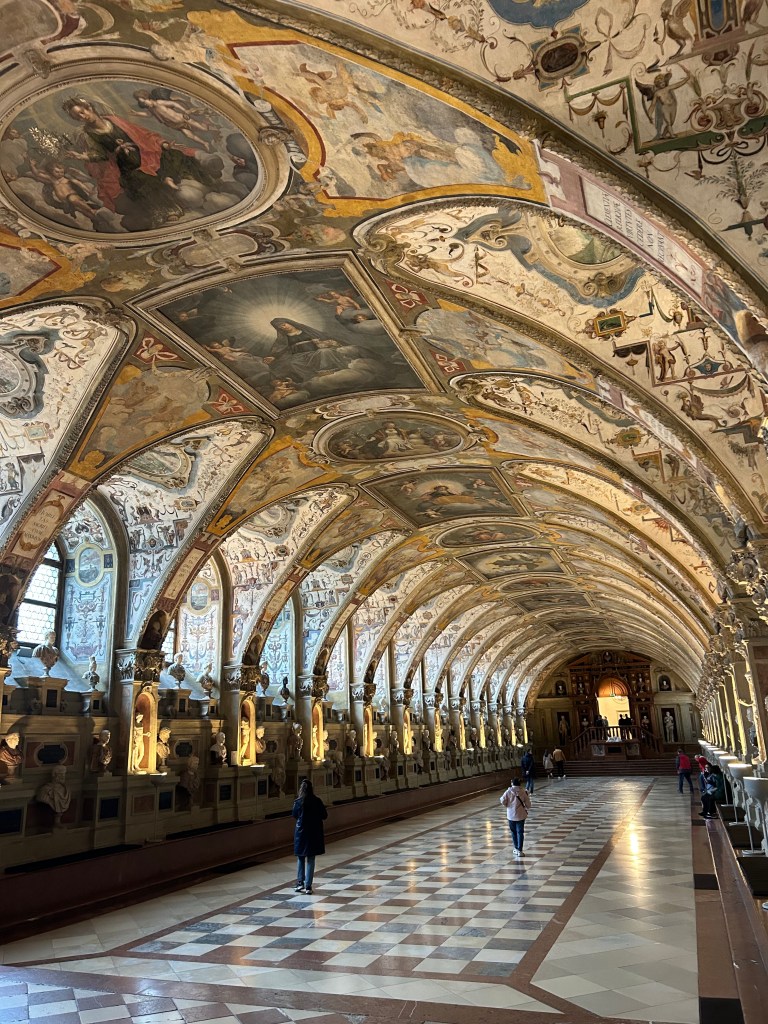
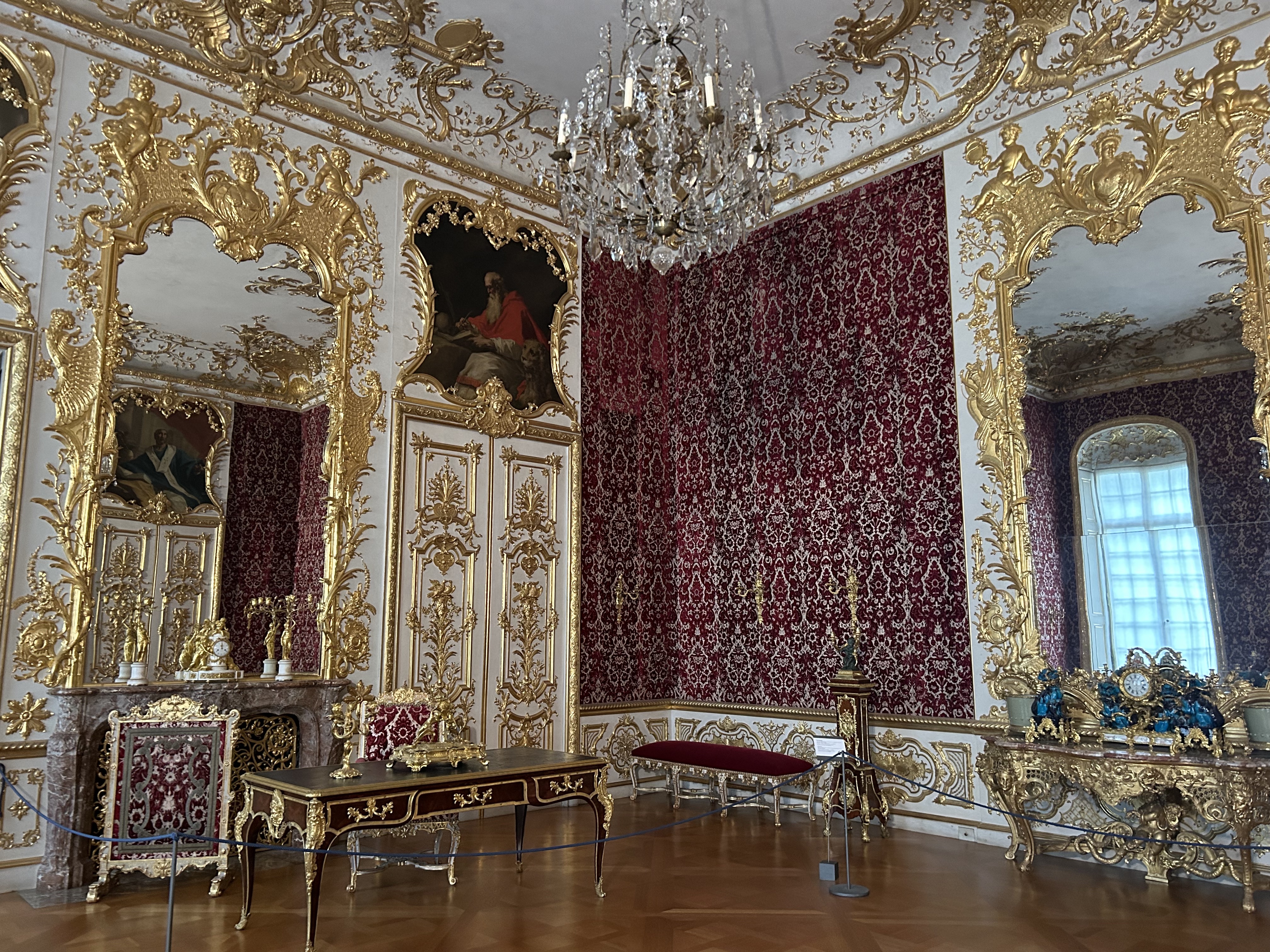
The palace hosts a dizzying maze of rooms upon rooms—antechambers, galleries, places of worship—of elegant design in the Baroque, Rococo, and Neoclassical styles, according to the tastes of the late rulers. Much was destroyed in the 1945 bombings during World War II, but it has been reconstructed to what you see today. Although some of the furnishings were saved, many were remade to authentically resemble what it would have been. 

Your journey to see the tapestries, furniture, and grand art is self-paced. You can get a singular ticket to tour the royal rooms, or you can purchase a combination ticket that includes entrance into the royal treasury exhibition and the Cuvilliés Theatre. 


Schloss Nymphenburg

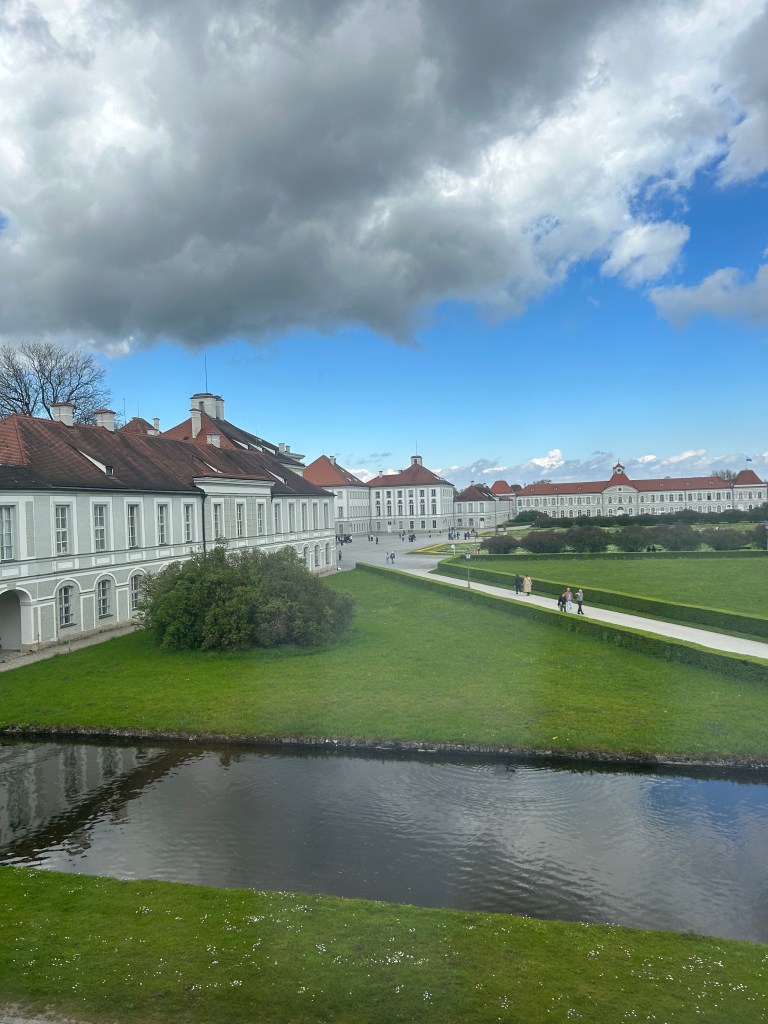
One of the most popular sites to visit in Munich, the Schloss Nymphenburg, began its construction in 1664 as the Bavarian electors’ summer residence. The grounds are expansive, so a trip here could take up as much as a half to a whole day, depending on how much time you wish to spend wandering the acres of residence and park. It’s fewer than 30 minutes away from the Marienplatz by public transit. 

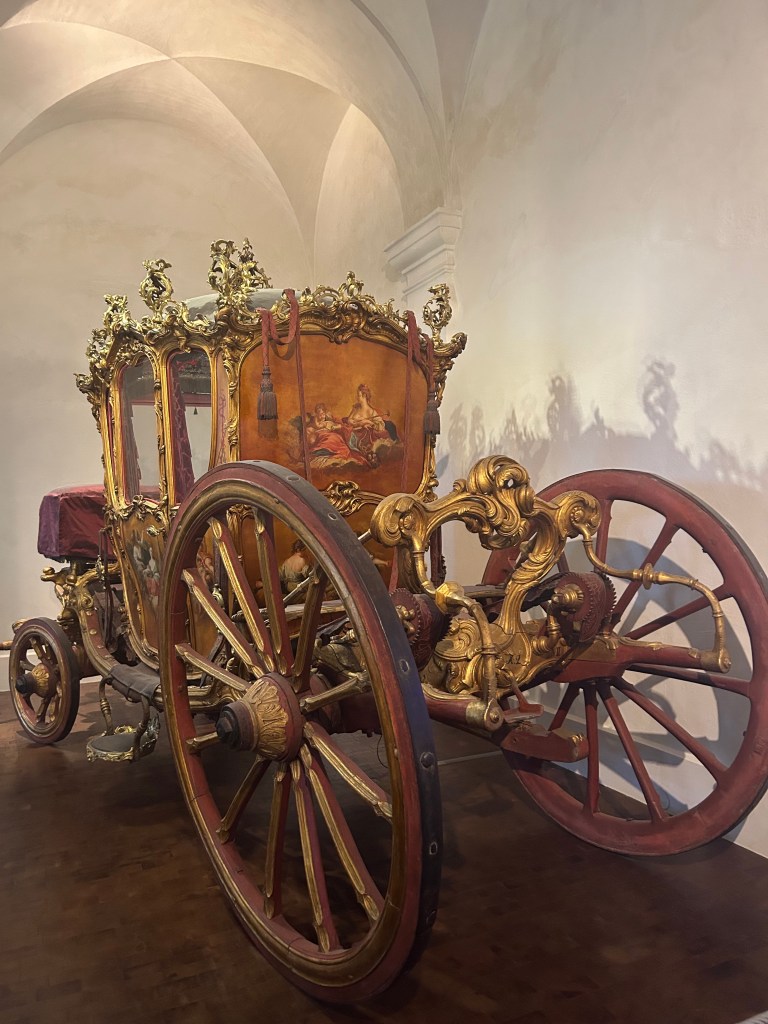
Like the Residenz München, you can purchase separate tickets to each museum and site, or you can purchase a combination ticket. The combination ticket will get you entrance into the palace rooms, the Marstallmuseum (where you can see the original royal carriages and sleighs of the past), the Museum of Nymphenburg Porcelain (where you learn about how the secret of Chinese porcelain came to Germany), and the park palaces.

The park palaces are worth noting. They are spread out across the grounds but, if you’re up for it, can add up to quite a nice day walking around and exploring. Each park palace had a different function and design, so the buildings you enter will give you even more of a look into the extravagant life of the royal family. 


By Car

Ready to get out into the Bavarian countryside? A popular day trip, and one that’s easy to find group tours of, is the ride to Neuschwanstein Castle near Füssen and the Linderhof Palace in Ettal. Group tours can be as large as 40 people in a big bus. You can also get smaller tours that are capped at 20 people, which, of course, will cost a bit extra, but will give you a more intimate relationship with the tour guide and the fellow travelers. Or, you can opt to map it out yourself. Just ensure you grab tickets ahead of time, as there are timed entries for these popular German castles.

Schloss Neuschwanstein

Around a 2-hour drive from the Munich city center, Schloss Neuschwanstein is often known as the “Sleeping Beauty” or “Cinderella” castle, as this is the famous structure that inspired Walt Disney’s depictions of the iconic Disney World and Disneyland main castles. Although the Schloss Neuschwanstein is medieval-looking, it wasn’t actually built during that era. King Ludwig II of Bavaria was simply inspired in 1869 to build his lofty castle in the medieval style. It actually has a state-of-the-art kitchen with the newest technology, including a stove and roasting oven with a plate warmer.

The story goes that castle construction did not go as quickly and smoothly as the young king had hoped—plus, it got rather cold living there in the winter—so he focused his attention on the creation of the Linderhof Palace for his winter residence. Therefore, the Neuschwanstein Castle tour only takes you through the two upper levels; the palace is largely unfinished. What you do get to see is still mind-blowing, with wall murals depicting medieval scenes, ceilings that seem to tower over you forever, and artistic odes to his favorite composer, Richard Wagner.

The location is right across the way from his father’s castle—Prince Maximilian II’s Schloss Hohenschwangau, where Ludwig grew up and which he cherished dearly. You can also visit the Hohenschwangau Castle, but note that it involves some steep steps to reach.

Schloss Linderhof

When Ludwig put his fairytale Neuschwanstein Castle on pause, construction of the Schloss Linderhof—just a one-hour drive away from Neuschwanstein—went into full swing. This palace was the only one that was completed during his lifetime. He was largely inspired by Versailles and King Louis XIV of France, otherwise known as the Sun King, and you will see obvious nods to the French king as soon as you walk into the palace. As Ludwig II’s winter home, you can almost imagine snow falling and Ludwig riding through the land on his royal sled at nightfall…

As with the Neuschwanstein Castle, you cannot take pictures on the inside. And it can take a lot to describe the grandeur of the rooms in this palace. The rooms feel smaller and give off a cozier feel, but there’s nothing quaint about the rococo decor. You will find yourself surrounded by objects of great worth and artistic merit, as well as walls and ceilings that are gilded in gold. There is even a “magic table” that could rise and lower from the king’s quarters down into a room where servants, staying unseen, filled His Majesty’s table with meals.

No less thought went into the Linderhof gardens and park, and especially not the fountain that graces the front of the palace. Every 30 minutes, you’ll get the chance to see water rush up into the air, reaching above 70 feet high. It’s quite an impressive sight.

Ready to Explore!

To ensure you don’t feel rushed, give these four German palaces and castles at least a full 3 days to explore. There are many other sites in Munich to pair with a day visiting the Residenz München, too, because Marienplatz offers markets, churches, biergartens, the nearby Englischer Garten, and more. You’ll find that although Munich is a modern city, it also grants you the opportunity to take a step backward in time to learn about Bavaria’s past.

Magic, Yoga, and Positive Energy Await You in Southern Spain

By Abbey Algiers

You know that feeling when you have an amazing vacation, and you want to tell absolutely EVERYONE you know about it… and then you do, and you see that they “get” you had a good time but don’t quite “get” HOW AMAZING the experience was? And no amount of Instagramming can truly relay what you experienced because not even you understand exactly what happened.

My experience at the Suryalila Retreat Centre in southern Spain felt like that. 

As I approached the road to Suryalila, I sensed I was in for something special.

The short story—I led a Wellness Retreat & English Immersion at Suryalila Retreat Centre in southern Spain. We could end this here, and no doubt you’d get the feeling it was amazing, even if you weren’t in need of English immersion. The mention of southern Spain probably puts visions of rolling hills, white-washed villages, sunflower fields, olive oil, wine… beauty. Right? And then add that we’re at a yoga retreat and discussing wellness topics—I’d bet you’re on board with the possibilities for Zen and relaxation.

Suryalila Retreat Centre… it’s Different. And Special. 

If you visit this centre, be prepared to be inspired and changed. Located on a renovated olive farm, the setting of the Suryalila Retreat Centre makes you feel like you’ve been transported to the beginning scenes of The Alchemist, set in the rolling hills of Andalucia. If you’re unfamiliar with this story, it’s the mystical tale of Santiago, an Andalusian shepherd boy who sets out to travel the world in search of treasure. While searching, he learns to listen to his heart’s calling and the guidance he receives from the “language of the world.” The “alchemy” of the story is Santiago’s evolution,  or “discovering his Personal Legend.”  Here’s the tie-in—the longer you stay at Suryalila, the more you feel the same sense of alchemy.

This alchemy is just one of the reasons Suryalila is so magical. Something about its very energy begs you to connect with yourself on a level that perhaps you hadn’t reached before.

The rolling hills of Suryalila will both “wow” you and make you feel incredibly at peace.

The Energy of Suryalila Retreat Centre

One can sense an unmistakable positive and mystical energy at Suryalila, which I believe stems from its location. Set in a large open valley in the foothills of the Sierra de Grazelema, the retreat offers views of a majestic mountain range peeking out on the horizon, and every direction holds awe-inspiring surprises—rolling hills, fields of sunflowers as you’ve never seen, farmhouses, and even an abandoned monastery. Moreover, its 45 acres of land hold a working olive farm with 350 olive trees and organic vegetables, fruits, chickens, horses, goats, sheep, dogs, and cats.

Not sure how to take in all of the views? Start with the property’s yoga halls. There are three, and each provides a unique place to enhance your practice and achieve inner peace. The biggest is the majestic Om Dome, which was the realization of a dream years in the making and is what Yoga Journal called  “the most magnificent yoga hall in Europe.” The dome’s massive bay window offers views of beautiful rolling hills and an abandoned convent while you take in the special energy of the dome. Two other spaces allow for even more options for awe-inspiring yoga. The Moon Shala is a sustainable cobb (straw bale and mud building) organic structure located in the olive grove, offering its own stunning vistas. The Ganesha Yoga Shala is part of the retreat’s main house, with windows on both sides allowing plenty of light and fresh air.

Not achieving a zen state is not a problem, even when you’re not practicing yoga. The property offers a multitude of places to relax and reflect. Whether you cool off in the saltwater eco pool, nap in the Moroccan Pavilion, or sip tea on one of the benches, chairs, or pagodas aesthetically and strategically placed throughout the property, you’re promised unparalleled views and serenity.

Every meal was as gorgeous and delicious as this.

While nourishing your spirit and soul, your body will also be cared for. The menu consists of perhaps the most nourishing and lovingly prepared vegan/vegetarian organic food I’ve ever had. To say it is beautifully presented could be the understatement of the century.  With ingredients sourced from the property, each meal is planned by a (very happy and friendly) group of chefs. There’s even a view of the site’s organic vegetable garden from the kitchen window.  

As you can see, the setting of Suryalila is quite simply perfect. But the story can’t end here because the setting can’t get all the credit for the magic of Suryalila.

The magic can be found and felt in every one of the people behind it. Bringing it back to The Alchemist, it’s clear that Vidya, the woman behind Suryalila, followed her personal legend to bring this beautiful place to life in 2011. (Her story is found here.) Her positive energy and unrelenting spirit created this magical escape that attracts like-minded yoga instructors, chefs, property managers, massage therapists, and support staff.  

Each of them is on course to discover their personal legends as well. They come from all over the world, each searching for something different but with the common spirit of making Suryalila (and the world) a better, brighter place. In doing so, they’ve created a vibe that shines as bright as the sunrises and sunsets gracing Suryalila daily. If you want to know (and feel) what I’m talking about, arrange a trip to Suryalila. You can participate in one of the many yoga retreats offered throughout the year, or simply stay in the centre’s yoga hotel, with accommodations to fit every budget. 

Whatever way you choose to experience Suryalila Retreat Centre, I promise you, it will be magical.

Love Picasso? Europe Is Where to Be in 2023

By Abbey Algiers

Breaking news! 2023 is the year of a man named Pablo Diego José Francisco de Paula Juan Nepomuceno María de los Remedios Cipriano de la Santísima Trinidad Martyr Patricio Clito Ruíz y Picasso? Confused? 

Let’s try it again.

2023 has been officially declared “The Year of Picasso” in honor of the 50th anniversary of the artist we know as Pablo Picasso.

Born in Malaga, Spain, on October 25, 1881, Pablo Picasso is best known for his contributions to modern art in the 20th century. Chances are, when you think of Picasso, cubism comes to mind. But the depth of Picasso’s work is far and wide—so wide, in fact, that it’s only fitting that a year is dedicated to showcasing this great master’s contributions to art and our world. That’s why Spain and France have teamed up to arrange exhibitions in Spain, France, and worldwide in order to celebrate Picasso and commemorate the 50th anniversary of his death (April 8, 1973). This is great news for Picasso lovers with plans to travel to Spain or France in 2023—there are plenty of opportunities to see his works. 

2023 Picasso Exhibitions Worldwide

To pay tribute to Picasso, Spain and France have joined forces to arrange more than 40 Picasso exhibitions in both countries—16 in Spain, with the other exhibitions in France and various cities throughout Europe and North America, offering plenty of opportunities around the globe to enjoy the masterpieces of Picasso.  

A list of worldwide Picasso Exhibitions in 2023 can be found at the Official Celebration of Picasso site.

A few upcoming exhibitions in Madrid include: 

Exhibitions and Education: The Year of Picasso Offers Something for Everyone

The Year of Picasso will go beyond exhibitions – in addition to showcasing Picasso’s works, the commemorative year will offer educational opportunities to showcase Picasso’s influence and relevance throughout the ages.  Those interested in deepening their knowledge of Picasso’s life and legacy can attend conferences and special events at museums and other venues in Madrid, Paris, Barcelona, Malaga, and other cities throughout Europe and North America.

A Celebration That’s Been Long in the Works

The 2023 Year of Picasso is a celebration that’s been a year and a half in the making. From the first event, “Picasso – El Greco” at the Kunst Museo Basel in Basel, Switzerland, to Madrid’s Picasso premiere, presented by Madrid’s Fundación MAPFRE this September, “Julio González, Pablo Picasso and the Dematerialization of Sculpture” to the last event ending in April 2024 at Paris’ Petit Palais, there are many opportunities to remember and appreciate the great Spanish artist Pablo Picasso.

A list of all events related to the “Year of Picasso” can be found here. Many of the exhibitions are being orchestrated through the Picasso Museum in Paris.  

Picasso Around the World… Beyond 2023

If you miss one of the 2023 exhibitions, there are plenty of opportunities to appreciate the work of Picasso at Picasso Museums throughout Europe:

Picasso Museum in Paris, France
Picasso Museum in Barcelona, Spain
Picasso Museum in Antibes, France
Picasso Museum in Malaga, Spain
Reina Sofia in Madrid, Spain
Rosengart Collection in Lucerne, Switzerland
Ludwig Museum in Cologne, Germany
National Picasso Museum in Vallauris, France

Picasso – Such a Master That a Year Wasn’t Long Enough for His Tribute

While 2023 marks the official Year of Picasso, Spain actually started the celebration in 2022, when Fundación MAPFRE in Madrid kicked off the celebration on September 23 with the exhibition “Julio González, Pablo Picasso and the Dematerialization of Sculpture” at the Fundación MAPFRE Recoletos Exhibition Hall. The exhibition was organized by Fundación MAPFRE with the collaboration of the Musée National Picasso-Paris, the Spanish National Commission for the Commemoration of the 50th Anniversary of the Death of Spanish Artist Pablo Picasso, and the González Administration. The exhibition highlighted the collaboration between Pablo Picasso and another Spanish artist, sculptor Julio González, and how they essentially began the iron sculpture movement, thus greatly influencing the artistic creation of the 1920s and early 1930s.   

Fundación MAPFRE’s Rocio Herrero, Assistant Director of Education and Audience, explained the importance of this collaboration between Picasso and Gonzalez. “Both artists were colleagues and friends who admired each other’s works. When they worked together, they were able to develop and mature even more as artists. Thanks to Gonzalez, Picasso learned the welding technique he would use in new iron sculptures. And, thanks to Picasso, González trusted in his own skills, and he made his most important sculptures. Both men came out ahead through their collaboration.” 

Pablo Picasso. Woman in the Garden, París, 1930. Soldered iron painted white, 206 × 117 × 85 cm. Musée National Picasso-Paris. Pablo Picasso Gift in Lieu, 1979. MP267, © Sucesión Pablo Picasso. VEGAP, Madrid, 2022. Foto © RMN-Grand Palais (Musée national Picasso-Paris) / Adrien Didierjean / Mathieu Rabeau


Inspiration Through Art

As Picasso said, “The meaning of life is to find your gift. The purpose of life is to give it away.” Perhaps through the gifts of Picasso’s work, we can all find the inspiration to go out into the world and share our own.