Bingen, Germany, is renowned as the gateway to the Upper Middle Rhine Valley, an official UNESCO World Heritage Site. With its breathtaking landscapes, medieval castles and quaint country towns, the valley is the quintessence of a romantic and picturesque setting. The fully reconstructed Klopp Castle is scenically set atop the Kloppberg in the heart of Bingen. The town’s most famous landmark, the so-called “Mouse Tower,” situated on a small island on the River Rhine, is approximately 1,000 years old.
Bingen’s Rhine embankment is more than where water meets land: it is an historical site of significance, gateway to the Upper Middle Rhine Valley and a UNESCO World Heritage site. With transformation of the grounds into a magnificent cultural embankment, the banks of the River Rhine have been given a new look. Together with its natural, architectural, horticultural and cultural attractions, the embankment invites visitors to enjoy the mixture of culture, nature and recreation. The cultural embankment is a combination of scenery, playground, open-air stage, park, museum and gallery.
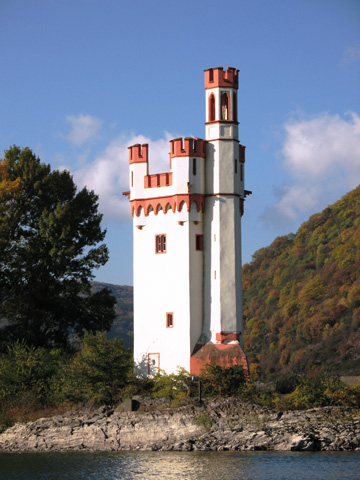
BINGEN MÄUSETURM (MOUSE TOWER) There are historical records and legends about the tower on the small island in the Rhine near Bingen. The Romans built a small defensive fortification here and during the period of the Franks it went into disrepair. Only when Hatto II took over the leadership in Mainz in 968 and ruled over Bingen did the tower awake from its long slumber. In 1298 the tower was part of the customs system involving Ehrenfels Castle.
(left to right) Klopp Castle; Mäuseturm
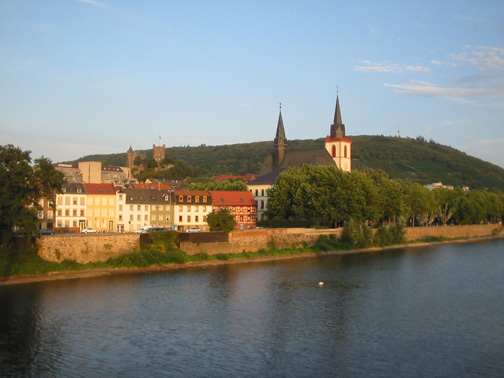
KLOPP CASTLE Klopp Castle houses the main administration of the town and the office of the mayor. The hill was once part of a defensive belt surrounded by a wall, in which the small town of Bingium was located. In 355 AD the fortification was a victim of the Alemannen.
It was not until the middle of the last century that the merchant Ludwig Cron from Cologne began reconstruction; in 1897 the castle was placed into the possession of the town of Bingen.
Saint Martin Basilica
SAINT MARTIN BASILICA The basilica of St. Martin is built on the foundations of a Roman temple. It is here that visitors get an insight into the history of Bingen. The Romans built a temple on this site in the years before Jesus’s birth. The basilica was first mentioned in 793 in a list of gifts of the Abtei (abbey) in Lorsch. A place of worship of special beauty awaits the visitor.
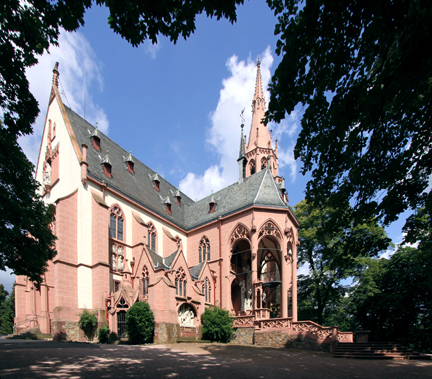
Rochus Chapel
ROCHUS CHAPEL Johann Wolfgang von Goethe went on an annual pilgrimage to Rochus Hill. In 1889 lightning struck the Rochus Chapel, just after elaborate restoration work had been completed and the resulting fire destroyed everything apart from the walls. On the foundations of the former Baroque building a three-nave late Gothic church was built with an exterior choir. That is what is seen today.
DRUSUS BRIDGE AND BRIDGE CHAPEL One of the oldest stone bridges in Germany is the Drusus Bridge in Bingen.
Bridges have a long tradition at the mouth of the River Nahe. The first was built a decade before the birth of Jesus. A special commando unit blew up the bridge in March 1945 before the approaching Allied troops could reach it. Today Drusus Bridge plays an important part in the appearance of the town.
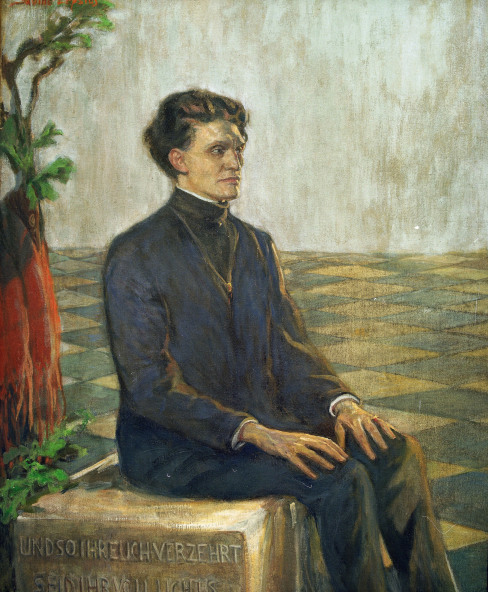
(left to right) Drusus Bridge ceiling detail; Museum; Stefan George portrait
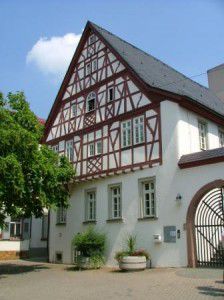
STEFAN – GEORGE MUSEUM One of the most famous German poets, Stefan George, was born in Bingen-Büdesheim. This museum traces his life in the Stefan-George-Haus in the so-called “Haferkasten,” an impressive half-timbered house from the 18th century.
By Don Heimburger Photos by Don Heimburger and Leipzig Tourism Office
If you were to spoon out Leipzig and put it on a plate, you’d discover a salad, a main meat course, vegetable course, a sorbet interlude and a delicious dessert.
I’d designate the salad course as the city’s unusual green belt at the Auenwald; the meat course is the art, architecture and music; the vegetable course Martin Luther and the Peaceful Revolution; the sorbet interlude is this town’s love of coffee; and the dessert is the city’s zest for living and its nightlife.
The city of Leipzig in central Germany, population 500,000, has a colorful history stretching back more than 800 years, and many events have shaped this former East German city. The city’s people and several major historical events have fashioned this town, and made it what it is.
SORBS FIRST SETTLED HERE
Sorbs first settled here in the 7th century, establishing a trading post known as Lipzk or “place near the lime trees.” After Leipzig was granted a town charter and market privileges around 1165, it quickly developed into an important center of commerce.
Maximilian I decided to award Leipzig imperial trade fair privileges in 1497, which helped turn the city into one of Europe’s leading trade fair centers, and it remains so today. Following the world’s first samples fair held in Leipzig in 1895, the city remained one of the global trading hubs until World War II put a hold on that.
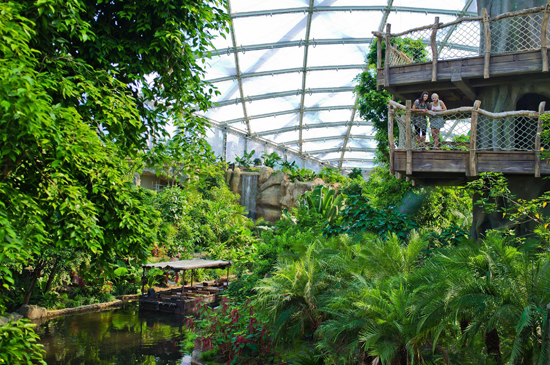
Leipzig Zoo’s Gondowanaland
It’s hard to believe, but Leipzig has a floodplain forest that runs straight through its center, one of the largest of its kind in Europe. Consisting of eight square miles of trees, every year more trees are planted, and the green space is enlarged. A variety of protected plants and animals are found here, including a rare butterfly species.
This “salad area” or greenbelt is easy to spot on a roadmap, with a large green area running north to south through the city. Four streams also flow through the city. Another part of the city that has been “greened up” is the Leipzig Zoo, where tropical Gondowanaland just opened. This lush section of the zoo, larger than two football fields, allows visitors to come into close contact with the tropical rain forests of Africa, Asia and South America. It features 40 exotic animal species and approximately 500 different plant and animal species, and more than 17,000 plants started their journey in nursery gardens in Thailand, Malaysia and Florida to create this tropical environment.
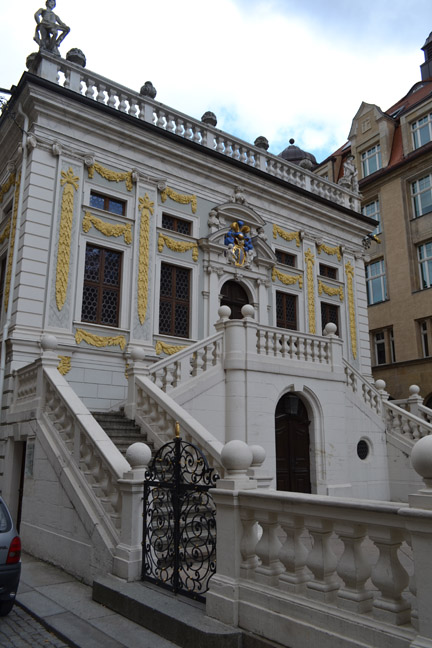
The Alte Börse, built in 1678-87 by Christian Richter, was originally used as a trading floor for merchants.
MAIN COURSE: ART-ARCHITECTURE AND MUSIC As Leipzigers are fond of saying, for the young and creative Leipzig is no longer an insider’s tip. Word has spread that the city’s working and living conditions are just right, and three universities with an artistic or cultural profile, as well as Leipzig University, constantly feed the pool of ideas. Leipzig is known for its vibrant arts, music and festival scene; this place not only appeals to artists and actors, but is also becoming a trendy destination for leisure travelers.
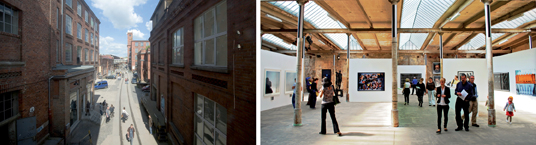
Leipzig’s dynamic art scene enjoys an excellent reputation worldwide. Interestingly, a former cotton mill, Spinnerei, in the trendy Plagwitz district, is home to a number of galleries and studios. Formerly the largest cotton mill in continental Europe, Spinnerei now has the highest density of galleries in Germany. In this old factory complex are 80 artists, 14 galleries and exhibition spaces which house creative professionals like architects, designers, craftspeople, retailers and printers.
Spinnerei Museum
Artist and professor Neo Rauch of the New Leipzig School, whose paintings combine his personal history with the politics of industrial alienation, reflects on the influence of social realism. Hollywood star Brad Pitt recently purchased one of his works.
The GRASSI Museum of Applied Art, with its world class collection, opened as Germany’s second museum of applied arts in 1874. It is considered one of Europe’s leading museums of arts and crafts. The high point of the year within the GRASSI museum’s special exhibition is a trade fair for applied art and design, an international forum of contemporary applied art and experimental design.
Then there’s another part of the Grassimesse, the Designers’ Open, which is a well-established independent design festival. An extensive program including lectures, workshops, movies and fashion shows complete the fair.
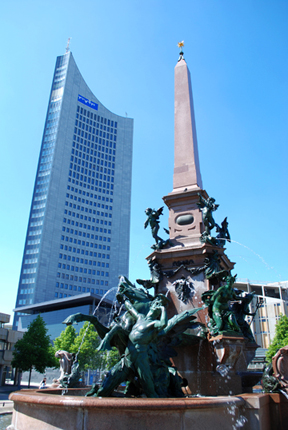
In 1996 the Leipzig Fair’s new exhibition complex opened, featuring trailblazing architecture, spacious avenues and the stunning Glass Hall at its core.
THE CITY OF MUSIC
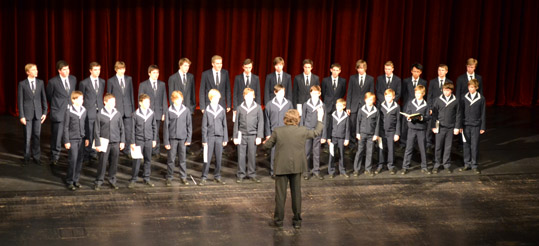
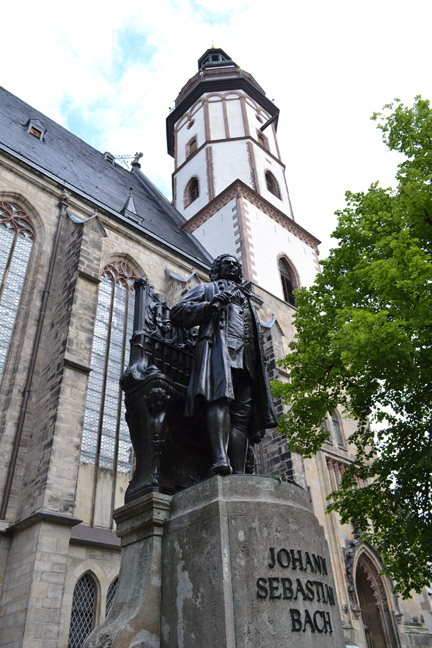
If you go to Leipzig, a visit to St. Thomas’s Church is a must, since it is the home of the world-famous St. Thomas Boys Choir and where Johann Sebastian Bach was employed for 27 years as organist and choirmaster.
His grave can be seen in the chancel. Motets are performed every Friday and Saturday by the choir, and there are concerts in front of the statue of Bach outside in July and August. The Bach Museum is located opposite the church.
St. Thomas Boys Choir
Another regular musical highlight is the Sunday recitals at Mendelssohn House. Felix Mendelssohn-Bartholdy used to live in the building, which now contains the only museum dedicated to the composer.
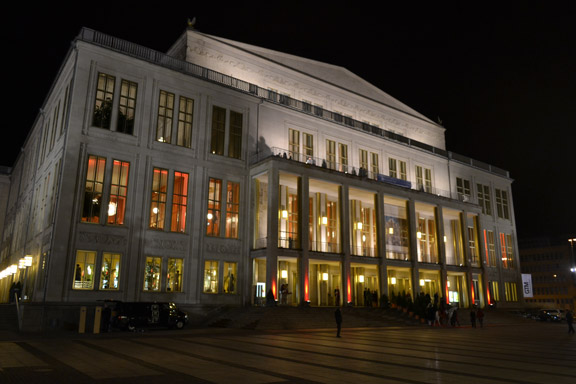
There are two additional important centers of music in Leipzig: the Leipzig Opera House and the Gewandhaus Concert Hall.
The Gewandhaus Orchestra, dating back more than 250 years, regularly performs in both venues. The Opera House is the third oldest civilian music theater stage in Europe. And Schumann House is dedicated to the memory of Robert Schumann, one of the greatest composers of the 19th century Romantic era.
Bach concert at St. Thomas Church
Leipzig also hosts several music festivals, large and small, including the International Bach Festival, the A Capella Festival, the Leipzig Jazz Festival and the Mendelssohn Festival.
MARTIN LUTHER AND THE PEACEFUL REVOLUTION Our vegetable course includes reformer Martin Luther, who was known to come to Leipzig to face the Catholic Church hierarchy to explain his ideas about Christianity and indulgences. Martin Luther, who lived in nearby Wittenberg, stayed in Leipzig on no less than 17 occasions. His most important visit was for his participation in the Leipzig Disputation, or series of debates, held in Pleissenburg Castle in the summer of 1519.
After Duke George died, the Reformation was introduced in Leipzig in 1539. On August 12, 1545 Luther inaugurated the former Dominican monastery church of St. Paul’s as a protestant university church.
St. Nicholas Church exterior
Leipzig was particularly significant in the rise of the Reformation movement, because Luther’s writings and numerous evangelical hymn books were distributed in large numbers from this city of printing shops and publishing houses. In Melchior Lotter’s printing shop alone, between 1517 and 1520, more than 40 works written by the great reformer were published.
In the Grafisches Viertel or Graphics Quarter of the city, the publishing industry flourishes. In 1912, 300 printers and nearly 1,000 publishing houses and specialized book shops, as well as 173 bookbinders, operated in Leipzig.
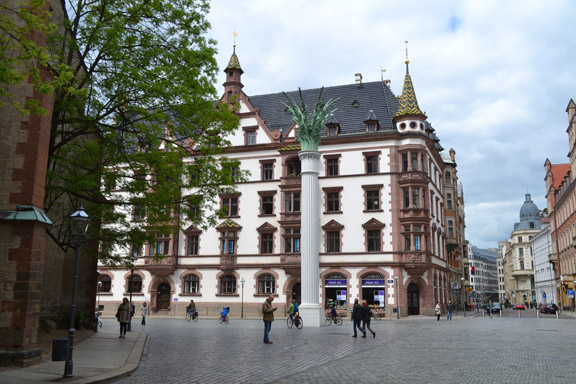
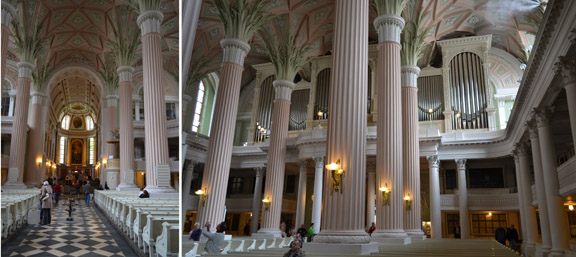
Leipzig is also known for helping overcome the GDR government. St. Nicholas Church—the oldest and biggest church in Leipzig—rose to fame in 1989 as the cradle of the Peaceful Revolution. Services for peace were and still are held there every Monday, and the following demonstrations at the end of the 1980s toppled the East German government, paving the way for German reunification. In the church, note the interior columns: they are designed to resemble palms.
St. Nicholas Church interior
A few other important sights to see in the city include:
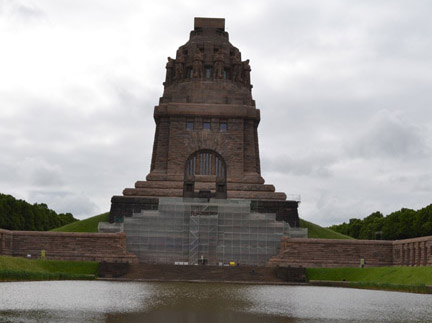
The Monument to the Battle of the Nations—the tallest monument in Germany—was erected to commemorate those who fell during the Battle of the Nations (also known as the Battle of Leipzig) fought against Napoleon’s forces in October 1813.
In the Battle of the Nations, Austrians, Prussians, Russians and Swedes fought —500,000 soldiers in all— the biggest battle ever in world history, marking the decisive turning point in the war of liberation from Napoleonic rule.
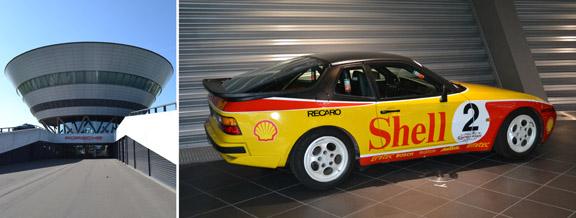
(left to right) Battle of the Nations Monument; Porsche Leipzig Headquarters
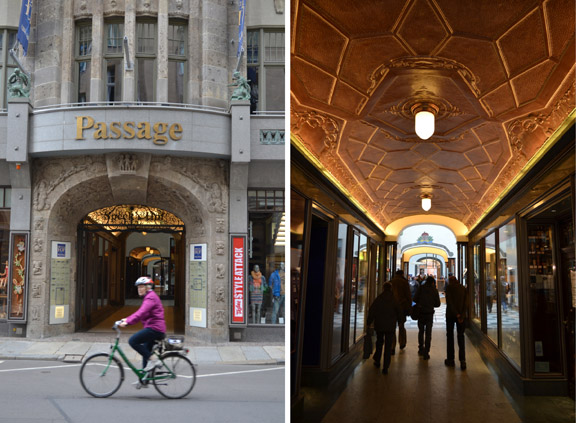
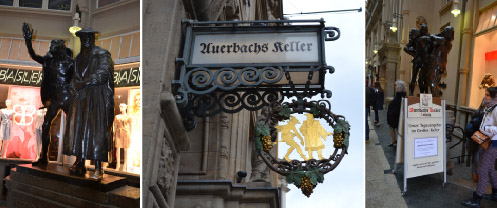
The Mädler Passage, for centuries the city’s most exclusive arcade (one of 30 arcades in the city), is home to the famous Auerbachs Keller. Serving wine since 1525, this tavern/restaurant was immortalized in Faust by Johann Wolfgang Goethe, the father of German literature.
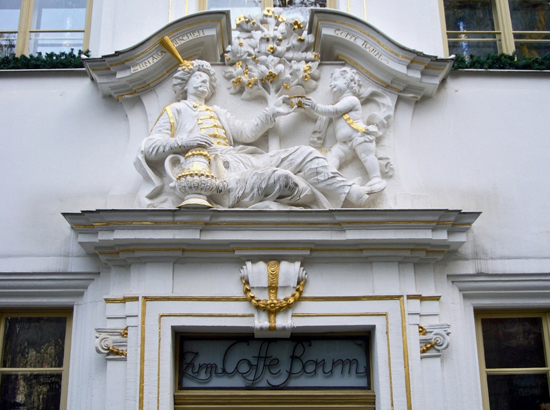
YOUR SORBET IS SERVED The café-cum-restaurant Zum Arabischen Coffe Baum is one of Europe’s oldest coffee houses (dating from 1694) and it used to number composer Robert Schumann among its regulars. Today the coffee museum on the third floor of the building contains 500 exhibition items on the history of coffee, the Saxons’ “national drink.”
Zum Coffe Baum
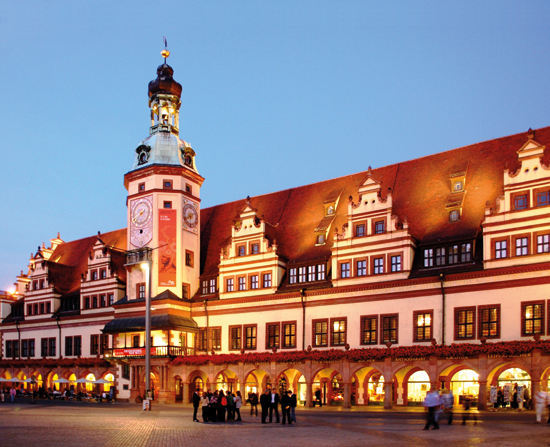
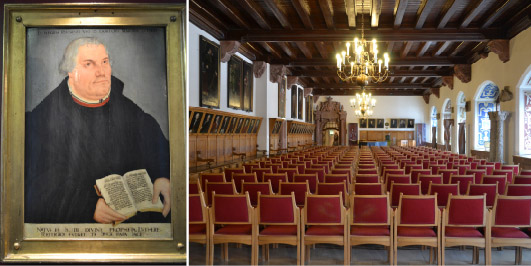
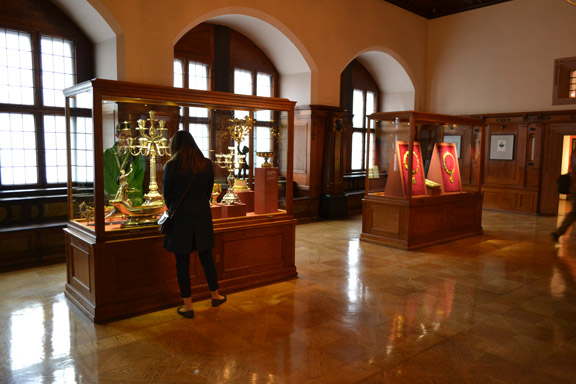
The Old City Hall, one of the finest Renaissance buildings in Germany, can be admired on the Market Square; it houses the Museum of City History. Inside is Katharina von Bora’s (Martin Luther’s wife) wedding ring and a pulpit in which Luther preached.
Town Hall Museum where a number of Martin Luther artifacts are exhibited.
NIGHTLIFE ABOUNDS If you happen to be a night person, there is plenty to do in the evening, with all the city’s theaters, concert halls, variety shows and casinos. There are several dining and nightlife districts as well, such as Drallewatsch, Schauspielviertel, Südmeile, Münzgasse, Gohlis and Plagwitz. And when you arrive in one of the many clubs or bars, you’ll learn that often the term “closing time” is not in the vocabulary. There are 1,400 pubs and restaurants in this city, so dessert is not a problem.
And there you have it: a complete Leipzig meal with all the courses. Emperor Maximilan I knew something in 1497 when he granted the town imperial trade fair rights. He knew that one day Leipzig would be a multi-course city, and he was correct.
Auerbachs Keller Restaurant, located below the Mädlerpassage, is the best known and second oldest restaurant in Leipzig, described in Johann Wolfgang von Goethe’s play Faust I, as the first place Mephistopheles takes Faust on their travels. The restaurant owes much of its fame to Goethe, who frequented Auerbach’s Cellar as a student and called it his favorite wine bar.
Not far from the main train station in Leipzig is the Hotel Fuerstenhof, a five-star gem with marble, gold-rimmed archways, high ceilings and soaring windows.
At one time a classic patrician’s palace, the 92-room air-conditioned hotel with 12 suites, features myrtle wood furniture, marble bathrooms and a friendly, dedicated staff. The staff is geared to making your stay a pleasant one, knowing your name when you come to the registration desk for questions, and providing service with a smile. I had more than a few special requests from the staff which were quickly and pleasantly taken care of.
There’s an indoor 7,000-square-foot pool area, equipped with saunas, fitness room, solarium, cosmetic and massage stations. Also, the hotel features a nice piano bar area with comfortable, plush seats, and tables, fine dining in the 18th-century style neo-classical Villers restaurant (with a choice of more than 200 wines), a complete breakfast area and a wine bar round out some of the amenities of this hotel.
The hotel was first mentioned in 1770 when Karl Eberhard Loehr, a banker, lived in the palatial home, built between 1770 and 1772. It was called the Loehr Haus. It opened as a hotel in 1889, and underwent a complete renovation and restoration in 1993. It is part of the Luxury Collection of Hotels, one of 62 worldwide luxury hotels.
I’ve always been enthusiastic about the work I do.
Art Wolfe
ET: Of the many European countries, which country or countries do you like to photograph the most – and why?
AW: I’ve traveled to Europe a number of times over the years. In fact, my first overseas trip was to England, and 28 days later I wound up in Greece. It was very early on, and one could argue I wasn’t much of a photographer, although I thought I was at the time. Italy definitely has been one of my favorite places to go, not only for the antiquity but for the stunning scenery: the craggy Dolomites in the north, and the south’s rumbling volcanoes of Mt. Etna and Stromboli. These have yielded great opportunities and photographs over the years; I love Italy!
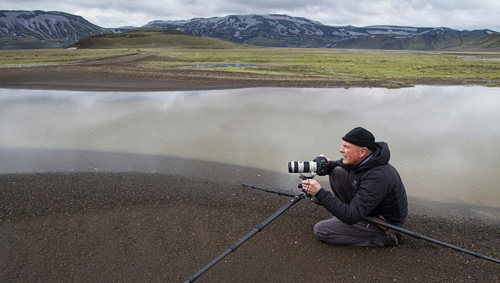
Equally strong for me has been France; photographing in the French Alps, in and around the Rhone River delta and up into Provence has resulted in some of my most delightful photos over the years. Iceland surely is not to be missed―its young landscape is different every time I visit.
There are huge gaps in my coverage of Europe; I dream of the day I can travel through Spain. My long-time photo assistant is from Romania, though I have yet to get to central and eastern Europe. All these places draw my attention, and it’s just a matter of time before I get there.
ET: If you were to recommend to someone to photograph the European landscape, where would you “send” them and why?
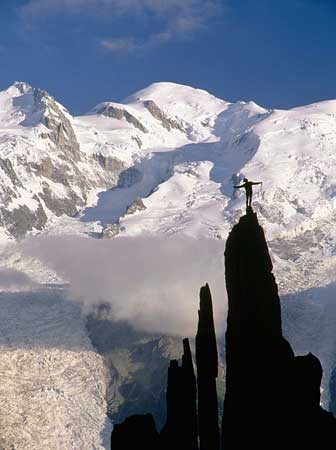
AW: Certainly it’s hard to beat the Alps, both French and Swiss. One of the striking things about the Alps is their verticality; they are very accessible initially but many of the peaks are among the most difficult peaks to climb on earth. One of my best locations has been Lac Blanc just above the ski town of Chamonix, France. I can’t overstate how stunningly beautiful Lac Blanc is as it reflects the extraordinary Chamonix Needles and Mont Blanc rising beyond.
I just love the Italian landscape, too. I love the whimsical ways the Italian farmers in Tuscany and Umbria have separated their fields by rows of cypress and pine. In addition, the rural landscapes of northern Scotland and the Isle of Skye are quite simply stunning; I have been there in the spring, when the forests around the icy, deep lochs are green and studded with bluebells. It is quite enchanting.
ET: Can you remember the first time you realized that maybe you were an “above average” photographer? How did your parents’ commercial artist business help you in your life’s work?
AW: My background initially was drawing and painting from early childhood all the way through graduating from the University of Washington, earning a degree in Fine Arts and Art Education. As far as realizing I was an above average photographer, it’s hard for me to just state that unequivocally; I would address it by saying I always realized I had an above average drive and focus. I’m rapidly approaching year 60 in my life, and the drive has not diminished. I’ve always been enthusiastic about the work that I do and sharing it with others.
Very early on I knew that whatever I wanted to do I could do it. My parents were commercial artists, and I watched my dad run his own small business. It was ingrained in me that I could do this as well. Children very often follow in the footsteps of their parents. Thankfully, my parents allowed me to pursue whatever I wanted. They had nothing but encouragement toward the arts, and in retrospect that was a blessing.
ET: You always seem to have so much fun and enthusiasm when you are photographing. Can you explain how this is?
AW: I think fun and enthusiasm is part and parcel to anyone’s occupation or passion. It’s rare in life for people to truly find their passion, especially when it’s their occupation. I feel blessed. I feel that I was destined to be a storyteller through the photographic medium, and I don’t take that lightly.
I sacrifice a lot being a photographer; I don’t have a family, I don’t have vacations, I don’t have a lot of things that people take for granted. But what I do have is a highly refined passion that gives me a deep sense of fulfillment. I can’t help but be enthusiastic and can’t help but having fun. I have a very impish sense of humor, a very free spirit about the work that I do and that just transfers to my photos. My enthusiasm is infectious; I am able to photograph people without trepidation. I have a very light spirit when I’m working around wild animals, I don’t stress about them, and they pick up on that energy so it’s a very positive experience. I wholly believe it enables me to get close to my subjects.
ET: Bad weather conditions typically thwart photography efforts. What do you think?
AW: My belief is bad weather often makes a shot. Whether it’s high winds, blowing snow or soaking rain, I get out there as long as I can protect myself and my camera. Weather makes for painterly effects: wind can be transferred into long impressionistic exposures where that sense of contrast between blurred motion and sharp focus subjects is often the difference between a mediocre photo and a great photo. So I look at bad weather conditions as the time to bundle up and get out the door!
ET: What is your advice for someone wanting to become a better than average photographer? What does it take to do this?
AW: No restraints! Just do it! There is an amazing amount of education being offered free through the internet. And some of the world’s best photographers offer amazing trips and workshops. I’d take advantage of that. Just jump in and immerse yourself into the world of photography and you will learn quickly.
ET: How do you determine where to go when you’re going to film your next show and how long does it take to arrange each edition of your show?
AW: My location choices for “Art Wolfe’s Travels to the Edge” were based on 30 years of knowledge about the world. After months of research and arrangements, each episode took an average of two weeks to film. The post production process added another couple months. It is a long process to get from idea to actual broadcast.
ET: Where did the name “Travels to the Edge” come from? (It’s a great line!)
AW: “Travels to the Edge” is based on my book Edge of the Earth, Corner of the Sky. It seemed like I traveled to the edges of the earth to photograph for that book. For the show name, my staff and I threw out words and started mixing and matching and ultimately settled upon “Travels to the Edge.” I thank you for the compliment and I agree, it’s a great line!
By Don Heimburger Photos by the author and courtesy York Tourism
While London plays a key role in tourism in the United Kingdom, there are other cities in the U.K. that, while perhaps not as large in size or offering as many attractions, still rank high on the thrill meter.
One of these is York, which is worth a couple of days to explore and get to know. It’s accessible from Manchester Airport, an international hub that sees hundreds of flights each day from around the world. By train from the airport, York is about an hour’s ride.
Let’s take a tour of the walled city of York.
“I was born in York and grew up there,” says actor Judi Dench, “so I have a great fondness for this remarkable city with its winding, cobbled streets and beautiful architecture.”
“The city has evolved over the years, with…a wealth of interesting shops and a vibrant cafe and evening culture,” she continues.
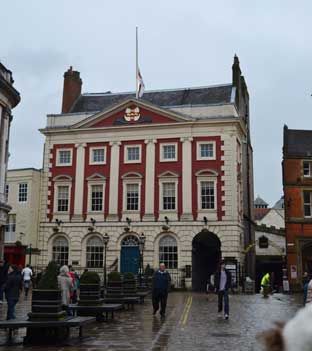
In the 18th century, York was seen by the monied class as an attractive alternative to London, and today many Georgian townhouses and buildings can be seen in the town because of this. At Fairfax House, for example, you can see what’s called the most distinguished 18th century townhouse in Britain.
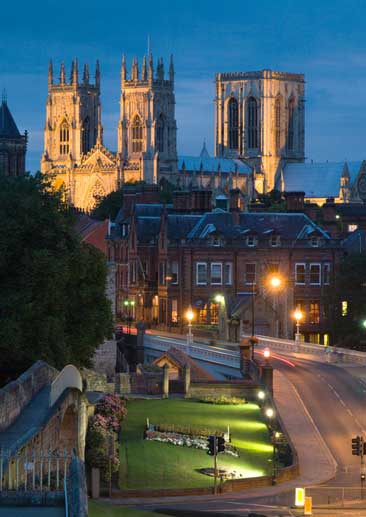
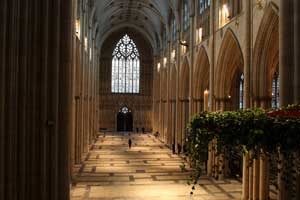
Likely the first thing to grab your attention in York is the Minster, renowned around the world as the largest medieval gothic cathedral in northern Europe. Taking 250 years to build, it dominates the city, with its central tower rising 200 feet skyward. “…That first glimpse of the magnificent Minster towering above the city will never cease to inspire and move me,” states Dench.
The cathedral, 500 feet in length and 100 feet wide, has the largest concentration of medieval stained glass in Britain. While there, you can also visit the undercroft, treasury and crypts. The church’s collections, open to the public, are a rich time capsule of the Minster’s history. The collection consists of silver, textiles, furnishings, monuments, stone and glass objects.
(left) Roman ruins underneath York’s business district
WALK THE WALLS “Walking the walls” is a favorite thing for visitors to do. Since Roman times, these walls have helped defend the city, and now add interest as an attraction. Four main gatehouses, or bars—Monk, Bootham, Micklegate and Walmgate—were once used to extract tolls and act as defensive towers. There are a little more than two miles of walls around the city.
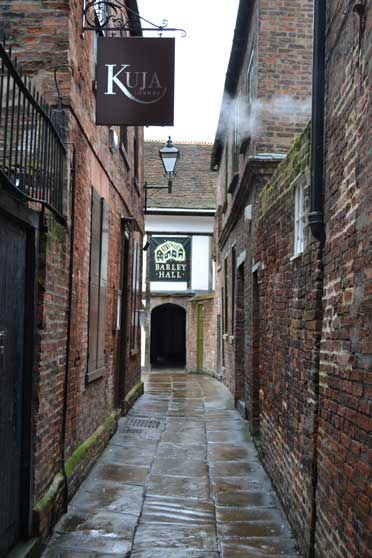
A odd thing about York are the snickelways and ginnels, or passages, some quite narrow and obscure. These short cuts conveniently connect sections of the town, and can save a lot of walking. After a day in York, I started using the snickelways like I was a resident.
The main shopping area is traffic-free, meaning the erratic streets are quiet and pleasant to stroll around, day and night. The medieval streets and buildings are beautifully preserved, especially 2,000-year-old Stonegate and Petergate streets, York’s main shopping arteries. These two streets were used by the Romans, leading to a massive Roman headquarters structure which is now occupied by the Minster.
SHAMBLES STREET Visitors will enjoy reading the names of streets as they wind through the city. Mad Alice Lane, Grape Lane, Swinegate and Coffee Yard all can be found here, as can Shambles, a former street for butchers: you can still see the wide windowsills used by butchers to display their goods, and in some cases the meat hooks remain above the shop windows, as well.
If you like chocolate—and who doesn’t—York might surprise you. It’s been making the delicious treat now for 150 years, and was named Britain’s Home of Chocolate in 2012. It even has a Chocolate Trail that will take you into York’s Chocolate Story shop and museum, where you can mold and decorate your own chocolate bar, York’s Cocoa House where you can enjoy a cup of hot chocolate and Monk Bar Chocolatiers who hand make every blissful piece. Also, the York Kit Kat factory, one of the largest in the world, turns out six million chocolate bars every day.
The Treasurer’s House, which claims the most haunted cellar in York, is worth a visit to hear about royal visits, servant life and see four centuries of interiors and antiques. When the garden is open, you can also enjoy home-cooked meals here as well.
CLIFFORD’S TOWER While most of York was the result of Roman and Viking construction, the original mound of Clifford’s Tower, with a timber structure at the top, was constructed by the Norman William the Conqueror in 1068 as a statement of his power over the region. The tower is 50 feet tall and 200 feet in diameter with four overlapping circles, resembling a four-leafed clover. The design pattern was unique in England and after being decimated by fire, wind and even water (the castle sunk into the moat causing the walls to crack in the 1350s) the castle’s jailer began demolishing the tower and selling the stone himself.
Clifford’s Tower
For those with a technical interest, the National Railway Museum near the railway station is a must, and it’s free. Here is the largest railway museum in the world, boasting a host of record-breakers and history makers, attracting 800,000 visitors annually.
National Railway Museum
It is home to a wide range of railway icons and literally millions of artifacts, from the opulent Royal trains to the record-breaking Mallard. Many of the museum’s collection of more than 300 locomotives and pieces of rolling stock are displayed in the Great Hall. Some of the featured pieces include the Flying Scotsman, famous for being the first steam engine to travel at 100 mph, and the collection of royal trains, including the royal carriages used by Queen Victoria to those used today by Queen Elizabeth II.
Permanent displays in the museum include “Palaces on Wheels.” Based in the Station Hall, this exhibition features royal saloons dating to the Victorian era, giving visitors a glimpse into the sumptuous bedrooms, dining rooms and day saloons that were palaces on wheels.
At York’s Art galley, you can view more than 600 years of British and European art, from 14th century Italian panels to 17th century Dutch masterpieces to Victorian narrative paintings.
Also, the Yorkshire Museum houses some of the finest collections of archaeological and geological treasures in Europe, from prehistoric to medieval times. You can also walk on a Roman mosaic floor or kneel at St. William’s medieval shrine while here. This museum features new, interactive galleries and audio-visual shows.
Yorkshire Museum objects
As the locals like to say, York has many “tucked-away” attractions, including museums, bars and restaurants, interesting shops, peculiar old signs, strange stone figures, gateways and medieval battlements.
York is a fun, history-filled city, with numerous attractions that will interest nearly every age group.
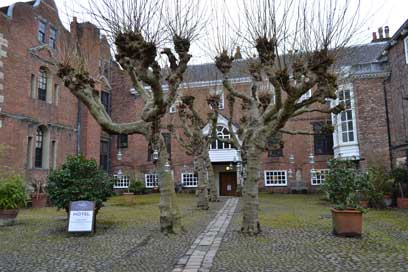
WHERE TO STAY IN YORK Grays Court in York near the Minster, is probably the oldest continuously occupied house in Britain, and as such, is a special place to stay, if you get the chance. It is built on the site of a Roman legionary fortress.
The staff is small and will likely remember your name after you’ve registered for the night. Grays Court is a family-owned and run country house with seven bedrooms, all filled with antique and contemporary furniture, and you’ll find the atmosphere around Grays Court quiet and friendly. A protected lawn and garden face the rear of the house, and the common areas invite you to wander throughout the house and get to know it.
Grays Court was once owned by the Duke of Somerset, Queen Jane Seymour’s brother, and was visited by King James 1st, James 2nd and the Duke of Cumberland. Sir Thomas Fairfax, Archbishop Robert Holgate and Archbishop Thomas Young have also lived here.
At one time the house was the original Treasurer’s House, commissioned by the first Norman Archbishop of York Minster, Thomas of Bayeux (1070-1100).
James I dined once at Grays Court with Edmond, Lord Sheffield, the Lord President of the North, and knighted eight nobleman in the house’s Long Gallery one evening.
Guests will find breakfast is served in a large open room with good views of the garden, and the wait staff is pleasant and accommodating. In the evening you can curl up on one of the large comfy sofas with a book and a glass of wine in the Long Gallery, or try the quiet Library to relax in.





















 European Traveler